词汇表

英语词汇词典 | 单词含义、定义和示例

noun
/ˈiːv.nɪŋ/
晚上 (wǎnshàng)

the part of the day between afternoon and night

"We went for a walk in the cool evening."

"我们在凉爽的晚上去散步。" (Wǒmen zài liángshuǎng de wǎnshàng qù sànbù.)
noun
/ɪˈvent/
事件 (shìjiàn)

something that happens, especially something important

"The concert was the biggest event of the year."
"音乐会是今年最大的事件。" (Yīnyuè huì shì jīnnián zuìdà de shìjiàn.)
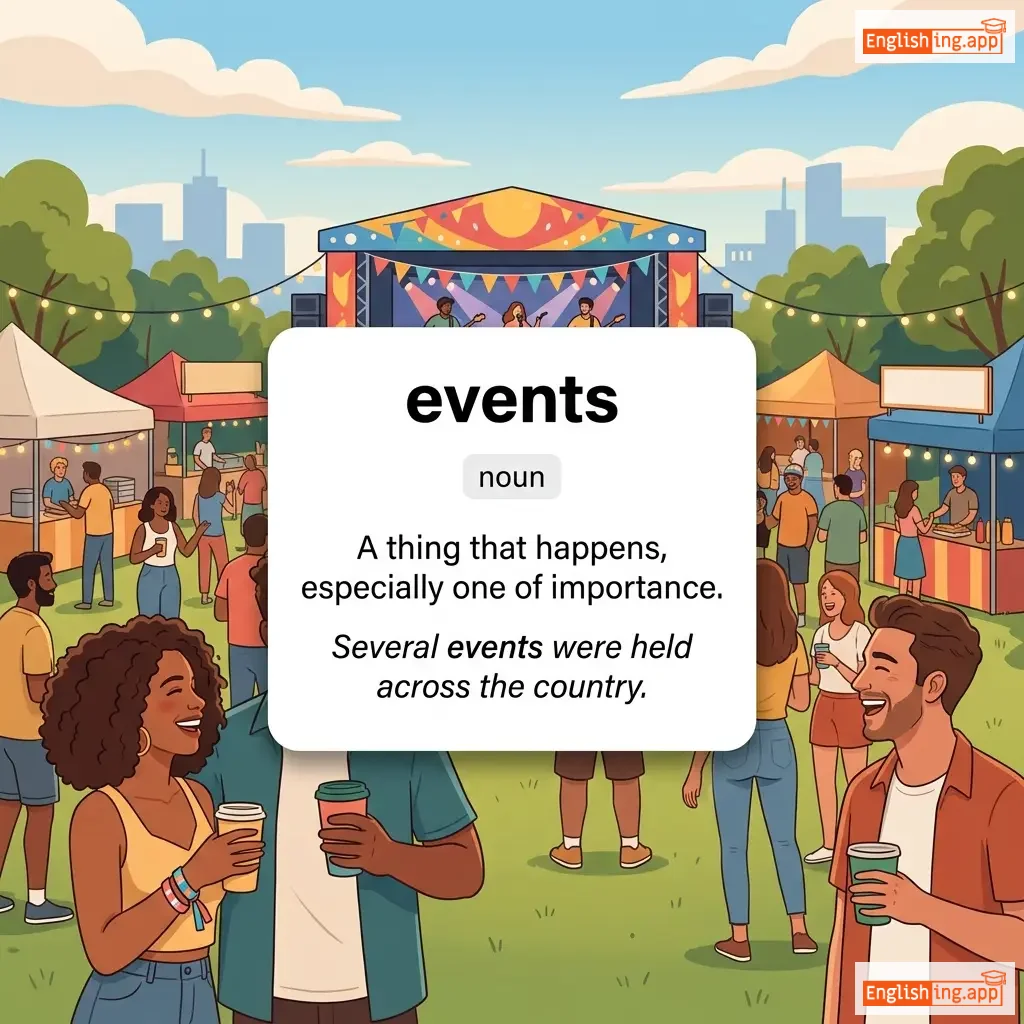
events definition card — visual illustration of the meaning
noun
ɪˈvɛnts
事件 (shìjiàn)

A thing that happens, especially one of importance.

"Several events were held across the country."

"全国范围内举行了几个事件。" (Quánguó fànwéi nèi jǔxíngle jǐ gè shìjiàn.)
adjective
/ɪˈvɛntʃuəl/
最终 (zuìzhōng)

Happening at the end of a process or as the final result.

"His hard work led to his eventual success."

"他的努力工作导致了他的最终成功。" (Tā de nǔlì gōngzuò dǎozhì le tā de zuìzhōng chénggōng.)
adverb
/ɪˈven.tʃu.ə.li/
最终 (zuìzhōng)

in the end, especially after a long delay or series of problems

"He eventually finished his degree after many challenges."

"他在许多挑战后最终完成了他的学位。" (Tā zài xǔduō tiǎozhàn hòu zuìzhōng wánchéngle tā de xuéwèi.)
adverb
/ˈev.ər/
曾经 (céngjīng)

at any time; always; continuously

"Have you ever been to London?"

"你曾经去过伦敦吗?" (Nǐ céngjīng qùguò Lúndūn ma?)
adjective
/ˈevər ˈlæstɪŋ/
永恒的; 持久的; (yǒnghéng de; chíjiǔ de)

eternal; permanent; enduring forever

"Their love is ever-lasting and will never fade."

"他们的爱是永恒的,永不褪色。" (tāmen de ài shì yǒnghéng de, yǒng bù tuìsè.)
evergreen definition card — visual illustration of the meaning
adjective
/ˈɛv.ə.ɡriːn/
常绿 (chánglǜ)

Remaining green and functional throughout the year; not shedding leaves seasonally.

"Evergreen trees like pine and fir stay green year-round."

"常绿树木如松树和冷杉树全年保持绿色。" (Cháng lǜ shùmù rú sōng shù hé lěng shān shù quán nián bǎo chí lǜsè.)
adjective
/ˌɛvərˈlæstɪŋ/
永恒的 (yǒnghéng de)

Lasting forever or for an indefinitely long time.

"The poet wrote about his everlasting love for nature."

"诗人写下了他对大自然永恒的爱。" (Shīrén xiěxià le tā duì dàzìrán yǒnghéng de ài.)
verb
/ɪˈvɜːrt/
翻转向外 (fānzhuǎn xiàng wài)

To turn inside out or outward.

"The surgeon had to evert the eyelid during the procedure."

"外科医生在手术过程中必须翻转眼睑。" (Wàikē yīshēng zài shǒushù guòchéng zhōng bìxū fānzhuǎn yǎnjiǎn.)
determiner
/ˈɛvri/
每个 (měi gè)

used to refer to all members of a group without exception

"She reads every book she can find."

"她读了她能找到的每一本书。" (Tā dúle tā néng zhǎodào de měi yī běn shū.)
pronoun
/ˈɛvribɒdi/
大家 (dàjiā)

all people; everyone

"Everybody enjoyed the party."

"大家都享受了派对。" (Dàjiā dōu xiǎngshòu le pàiduì.)
adjective
/ˈɛvrideɪ/
日常 (richang)

common or ordinary; occurring daily

"These shoes are perfect for everyday use."

"这些鞋子非常适合日常使用。" (Zhèxiē xiézi fēicháng shìhé rìcháng shǐyòng.)
pronoun
/ˈɛvrɪwʌn/
每个人 (měi gèrén)

every person; all people

"Everyone must bring their own lunch."

"每个人都必须带自己的午餐。" (Měi gèrén dōu bìxū dài zìjǐ de wǔcān.)
pronoun
/ˈɛvrɪθɪŋ/
一切 (yí qiè)

all things; the whole lot

"He packed everything in his suitcase."

"他把所有东西都装进了他的行李箱。" (Tā bǎ suǒyǒu dōngxī dōu zhuāng jìnle tā de xínglǐ xiāng.)
adverb
/ˈɛv.ri.wɛər/
到处 (dàochù)

in or to all places

"Tourists can be seen everywhere in the city during summer."

"在夏天,游客们可以在城市的各个地方看到。" (Zài xiàtiān, yóukèmen kěyǐ zài chéngshì de gège dìfāng kàn dào.)
verb
/ɪˈvɪkt/
驱逐 (quzhu)

To expel someone from a property, usually by legal process.

"The landlord decided to evict the tenants for not paying rent."

"房东决定因未支付租金而驱逐租户。" (Fangdong jueding yin wei zhifu zujin er quzhu zuhuzhe.)
noun
/ˈɛv.ɪ.dəns/
证据 (zhèngjù)

facts or information that show whether something is true or not

"The lawyer presented new evidence in court."

"律师在法庭上提交了新的证据。" (lǜshī zài fǎtíng shàng tíjiāo le xīn de zhèngjù.)
evident definition card — visual illustration of the meaning
adjective
/ˈɛvɪdənt/
显而易见 (xian eryijian)

clearly seen or understood; obvious

"It was evident that she was upset."

"显然她很生气。" (Xianran ta hen shengqi.)
adjective
/ˌɛvɪˈdɛnʃəl/
证据的 (zhèngjù de)

relating to or providing evidence

"The lawyer presented evidential support for her claims."

"律师为她的诉求提供了证据支持。" (Lǜshī wèi tā de sùqiú tígōngle zhèngjù zhīchí.)
adjective
/ˈiːvəl/
邪恶 (xiee)

Profoundly immoral and wicked.

"They believed the villain was the embodiment of evil."

"他们相信反派是邪恶的化身。" (Tāmen xiāngxìn fǎnpài shì xié'è de huàshēn.)
evince definition card — visual illustration of the meaning
verb
/ɪˈvɪns/
展示 (zhanshi)

to show or demonstrate clearly

"She evinced her interest in the project through active participation."

"她通过积极参与展示了对该项目的兴趣。" (Ta tongguo jiji canyu zhanshi le dui gai xiangmu de xingqu.)
verb
/ɪˈvɪsəˌreɪt/
取出内脏,摧毁 (qǔchū nèizàng, cuīhuǐ)

to remove the internal organs of; to deprive of essential content

"The critics eviscerated the movie for its weak storyline."

"评论家因为电影的弱剧情而摧毁了电影。" (Pínglùn jiā yīnwèi diànyǐng de ruò jùqíng ér cuīhuǐ le diànyǐng.)
evocative definition card — visual illustration of the meaning
adjective
/ɪˈvɒkətɪv/
唤起的 (huàn qǐ de)

bringing strong images, memories, or feelings to mind

"The music was evocative of her childhood memories."

"这段音乐唤起了她的童年回忆。" (Zhè duàn yīnyuè huàn qǐle tā de tóngnián huíyì.)
verb
/ɪˈvoʊk/
唤起 (huànqǐ)

to bring a feeling, memory, or image into the mind

"The old song evoked memories of her childhood."

"那首老歌唤起了她童年的回忆。" (Nà shǒu lǎo gē huànqǐ le tā tóngnián de huíyì.)
noun
/ˌɛvəˈluːʃən/
进化 (jinhua)

the gradual development of something, especially from a simple to a more complex form

"The theory of evolution explains how species change over time."

"进化论解释了物种如何随着时间变化。" (Jinhua lun jiexi le wuzhong ruhe suizhe shijian bianhua.)
evolutionary definition card — visual illustration of the meaning
adjective
/ˌɛvəlʊˈʃɛnəri/

relating to or characterized by evolution, especially in terms of gradual development or change

"The company has adopted an evolutionary approach to its product development."
verb
/ɪˈvɑːlv/

to develop gradually, especially into a more complex or advanced state

"Over time, the company evolved into a global brand."

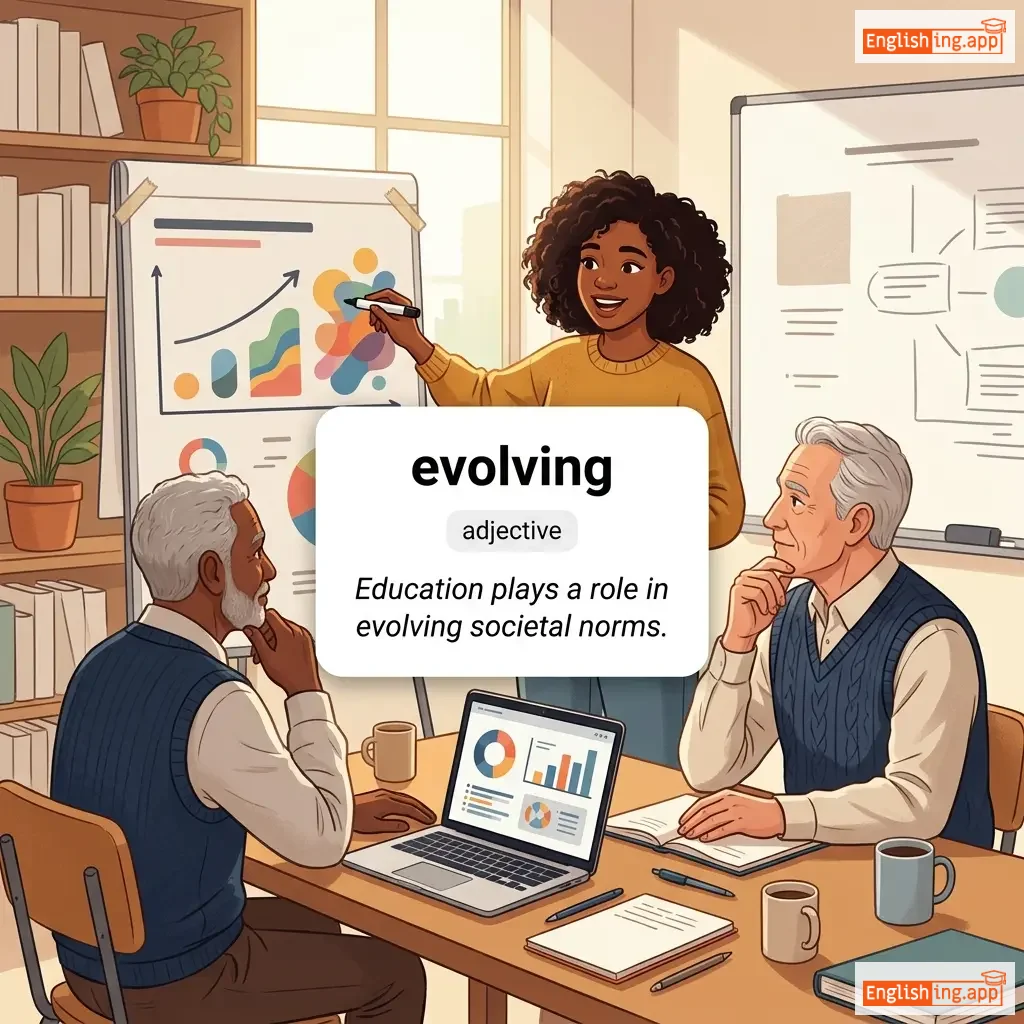
evolving definition card — visual illustration of the meaning
adjective
ɪˈvɒlvɪŋ
演变的 (yǎnbiàn de)

Developing gradually, especially from a simple to a more complex form; changing and developing.

"Education plays a role in evolving societal norms."

"教育在社会规范的演变中发挥着作用。" (Jiàoyù zài shèhuì guīfàn de yǎnbiàn zhōng fāhuī zhuó zuòyòng.)
noun
/juː/
母羊 (mu yang)

a female sheep

"The ewe gave birth to two lambs in the spring."

"母羊在春天生下了两只小羊。" (Mu yang zai chun tian sheng xia le liang zhi xiao yang.)
noun
/ˈjuːər/
水罐 (shuǐguàn)

a large jug with a wide mouth, especially used in the past for carrying water

"The servant filled the ewer with fresh water."
"仆人把水罐装满了新鲜的水。" (Púrén bǎ shuǐguàn zhuāng mǎnle xīnxiān de shuǐ.)
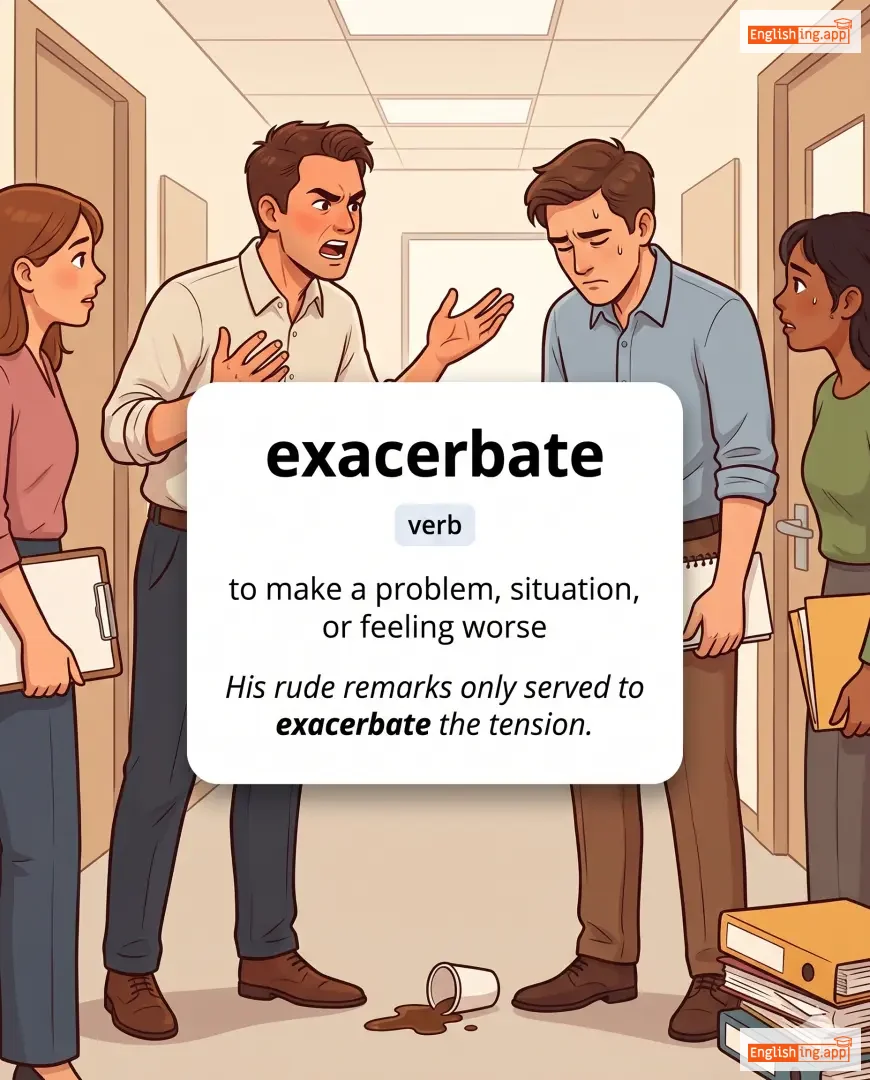
exacerbate definition card — visual illustration of the meaning
verb
/ɪɡˈzæsərˌbeɪt/
恶化 (èhuà)

to make a problem, situation, or feeling worse

"His rude remarks only served to exacerbate the tension."

"他的粗鲁言论只会加剧紧张局势。" (Tā de cūlǔ yánlùn zhǐ huì jiājù jǐnzhāng júshì.)
Exact definition card — visual illustration of the meaning
adjective, verb
/ɪɡˈzækt/
精确的 (jingque de)

precise and accurate (adj); to demand or obtain something (verb)

"The exact time of the meeting is 10:30 AM."

"会议的确切时间是10:30 AM。" (Huiyi de jueque shijian shi 10:30 AM.)
adjective
/ɪɡˈzæktɪŋ/
苛刻的 (kēkè de)

demanding a lot of effort, attention, or precision

"She is known for her exacting standards in design."

"她因其苛刻的设计标准而闻名。" (Tā yīn qí kēkè de shèjì biāozhǔn ér wénmíng.)
noun
/ɪɡˈzækʃən/
敲诈 (qiaozha)

the act of demanding or obtaining something, especially unfairly

"The peasants suffered under the king's heavy exactions."

"农民在国王的沉重敲诈下受苦。" (Nongmin zai guowang de chenzhong qiaozha xia shouku.)
adverb
/ɪɡˈzæktli/
精确地 (jīngquè de)

in a precise or accurate manner; without any error

"She explained the process exactly as it happened."

"她解释了过程,完全按照发生的方式。" (Tā jiěshìle guòchéng, wánquán ànzhào fāshēng de fāngshì.)
verb
/ɪɡˈzædʒəˌreɪt/
夸大 (kuada)

to describe something as better, worse, or more important than it really is

"He tends to exaggerate his achievements."

"他倾向于夸大自己的成就。" (ta qingxiang yu kuada ziji de chengjiu.)
noun
/ɪɡˌzædʒ.əˈreɪ.ʃən/
夸张 (kuazhang)

a statement that represents something as better or worse than it really is

"His story about the fish he caught was clearly an exaggeration."

"他关于他抓到的鱼的故事显然是夸张的。" (Tā guānyú tā zhuā dào de yú de gùshì xiǎnrán shì kuāzhāng de.)
🙌

exalt

verb
/ɪɡˈzɔːlt/

to praise highly or raise in rank, honor, or power

"The community exalted the teacher for his dedication."

noun
/ɪɡˈzæm/
考试 (kaoshi)

a formal test of a person's knowledge or skill in a subject

"She studied hard for her final exam."

"她为了最后的考试努力学习。" (Tā wèile zuìhòu de kǎoshì nǔlì xuéxí.)
noun
/ɪɡˌzæm.ɪˈneɪ.ʃən/
考试 (kaoshi)

a formal test of knowledge or ability

"She is preparing for her final examination."
"她正在为她的期末考试做准备。" (Tā zhèngzài wèi tā de qīmò kǎoshì zuò zhǔnbèi.)
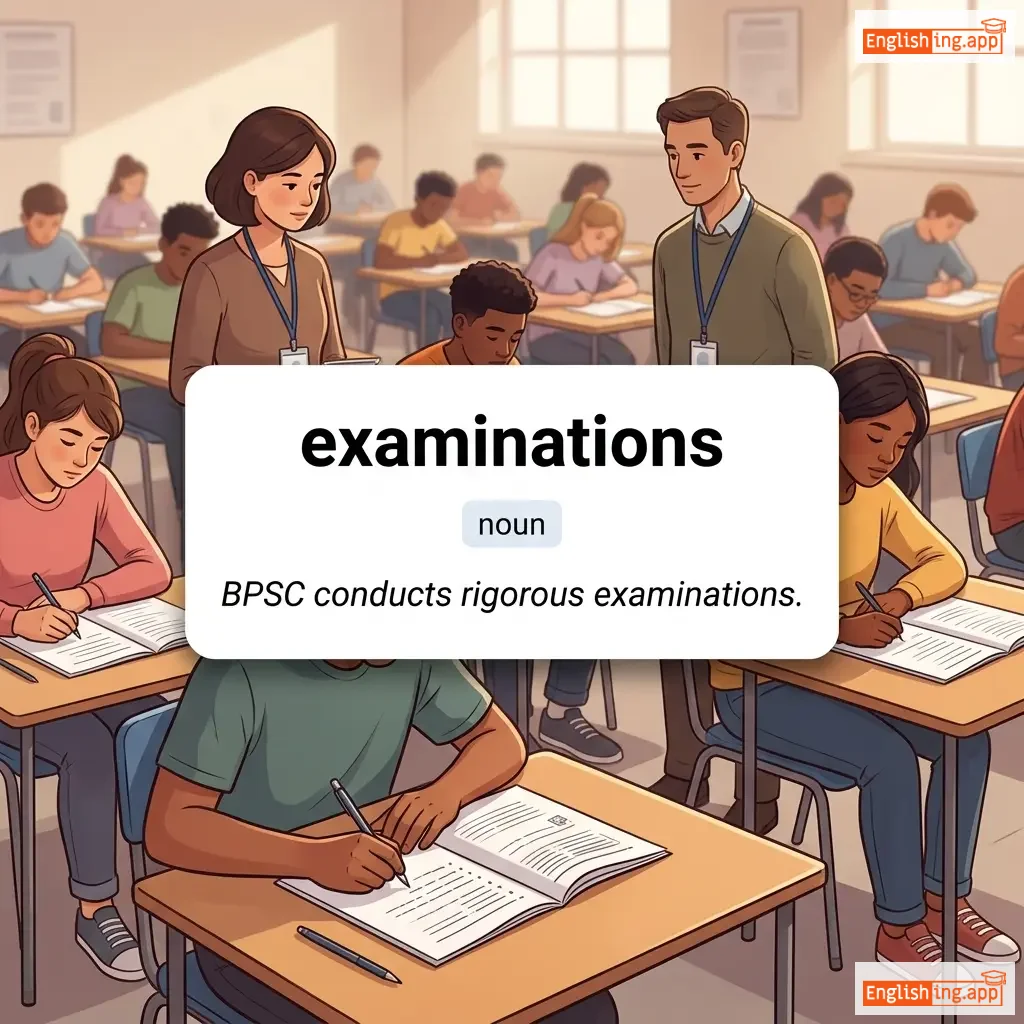
examinations definition card — visual illustration of the meaning
noun
ɪɡˌzæm.ɪˈneɪ.ʃənz
考试 (kaoshi)

A detailed inspection or investigation; a formal test of a person's knowledge or proficiency.

"BPSC conducts rigorous examinations."

"BPSC 进行严格的考试。" (BPSC jinxing yángé de kaoshi.)
verb
/ɪɡˈzæm.ɪn/
幸福 (xìng fú)

to look at something carefully in order to understand it

"The doctor will examine the patient tomorrow."

"当她收到奖项时,她无法掩饰自己的幸福。" (Dāng tā shōu dào jiǎng xiàng shí, tā wú fǎ yǎn shì zì jǐ de xìng fú.)
noun
/ɪɡˌzæm.ɪˈniː/
考生 (kaosheng)

a person who is being tested in an examination

"Each examinee was given two hours to complete the test."

"每个考生都有两小时来完成考试。" (Měi gè kǎoshēng dōu yǒu liǎng xiǎoshí lái wánchéng kǎoshì.)
noun
/ɪɡˈzæmɪnər/
考官 (kaoguan)

A person who tests or inspects knowledge, skills, or qualifications

"The examiner reviewed each student's answer sheet carefully."

"考官仔细检查了每个学生的答题纸。" (Kaoguan zixi jiancha le meige xuesheng de dati zhi)
noun
/ɪɡˈzɑːm.pəl/
例子 (lìzi)

a thing or person regarded as a model to be followed or avoided

"He is a good example of a hardworking student."

"他是一个勤奋学生的好例子。" (Tā shì yīgè qínfèn xuéshēng de hǎo lìzi.)
verb
/ɪɡˈzæspəˌreɪt/
激怒 (jinu)

to irritate or annoy intensely

"His constant complaints began to exasperate his coworkers."

"他不断的抱怨开始让同事恼火。" (Ta buduan de baoyuan kaishi rang tongshi naohuo.)
adjective
/ɪɡˈzæspəˌreɪtɪd/
非常恼火 (feichang naohuo)

greatly annoyed or irritated

"She gave him an exasperated look after his repeated mistakes."
"在他的重复错误后,她给了他一个非常恼火的眼神。" (Zai ta de chongfu cuowu hou, ta gei le ta yi ge feichang naohuo de yanshen.)
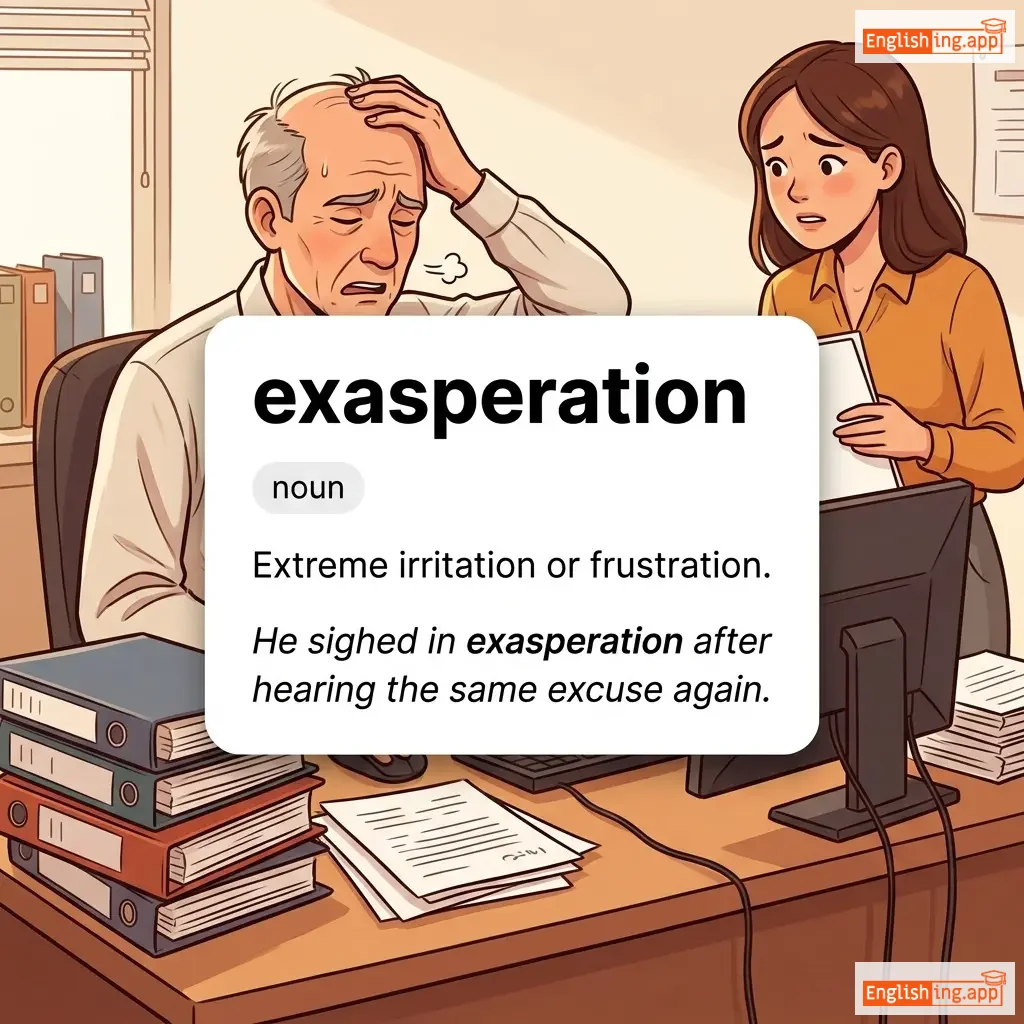
exasperation definition card — visual illustration of the meaning
noun
ɪɡˌzæs.pəˈreɪ.ʃən
恼怒 (eksasperayshun)

Extreme irritation or frustration.

"He sighed in exasperation after hearing the same excuse again."

"他在再次听到同样的借口后,因恼怒而叹了口气。" (ta yin zai ci ting dao tong yang de jie kou er chong man nao nu de tan le kou qi)
verb
/ˈɛkskəˌveɪt/
幸福 (xingfu)

to dig out or remove earth carefully, often for building or archaeological purposes

"The workers excavated the site to prepare for construction."

"她在收到奖项时,无法掩饰她的幸福。" (Tā zài shōudào jiǎngxiàng shí, wúfǎ yǎnshì tā de xìngfú.)