词汇表

英语词汇词典 | 单词含义、定义和示例

adjective
/ɪˈkwɪvələnt/
等于; 相当 (dengyu; xiangdang)

Equal in value, function, meaning, or effect.

"One euro is roughly equivalent to one dollar."

"一欧元大约等于一美元。" (Yi ouyuan dayue dengyu yi meiyuan.)
adjective
/ɪˈkwɪvəkəl/
模棱两可 (mó léng liǎng kě)

Open to more than one interpretation; ambiguous.

"His equivocal answer confused everyone."

"他的模棱两可回答让大家困惑。" (Tā de mó léng liǎng kě huídá ràng dàjiā kùnhuò.)
equivocate definition card — visual illustration of the meaning
verb
/ɪˈkwɪvəˌkeɪt/
含糊其辞 (hán hú qí cí)

To speak ambiguously or avoid giving a clear answer.

"The politician equivocated when asked about the scandal."

"那位政治家在被问及丑闻时含糊其辞。" (Nà wèi zhèngzhìjiā zài bèi wènjí chǒuwén shí hán hú qí cí.)
noun
/ɪˌkwɪvəˈkeɪʃən/
使用含糊不清的语言 (shǐyòng hán hú bù qīng de yǔyán)

The use of ambiguous language to conceal the truth or to avoid committing oneself.

"The politician’s equivocation frustrated voters who wanted a clear answer."
"政治家的模棱两可让想要清晰答案的选民感到沮丧。" (zhèngzhì jiā de mó léng liǎng kě ràng xiǎng yào qīng xī dá'àn de xuǎnmín gǎndào jǔsàng.)
noun
/ˈɪərə/
时代 (shidai)

a long and distinct period of history with a particular feature or characteristic

"The invention of the internet marked a new era in communication."

"互联网的发明标志着通信新时代的开始。" (Hulianwang de faming biaozhizhe tongxin xinxidai de kaishi.)
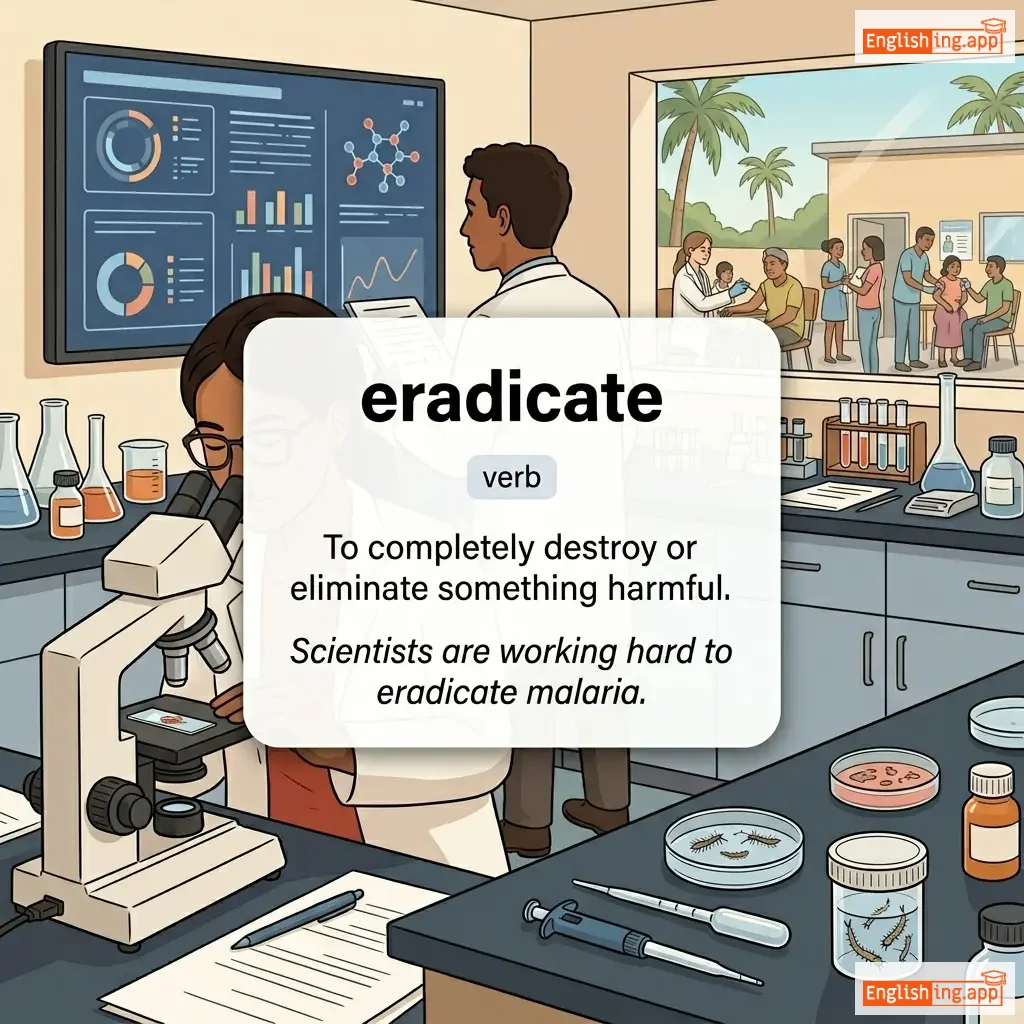
eradicate definition card — visual illustration of the meaning
verb
/ɪˈrædɪˌkeɪt/
根除; 消除 (gēnchú; xiāochú)

To completely destroy or eliminate something harmful.

"Scientists are working hard to eradicate malaria."
"科学家们正在努力根除疟疾。" (Kēxuéjiāmen zhèngzài nǔlì gēnchú nuèjí.)
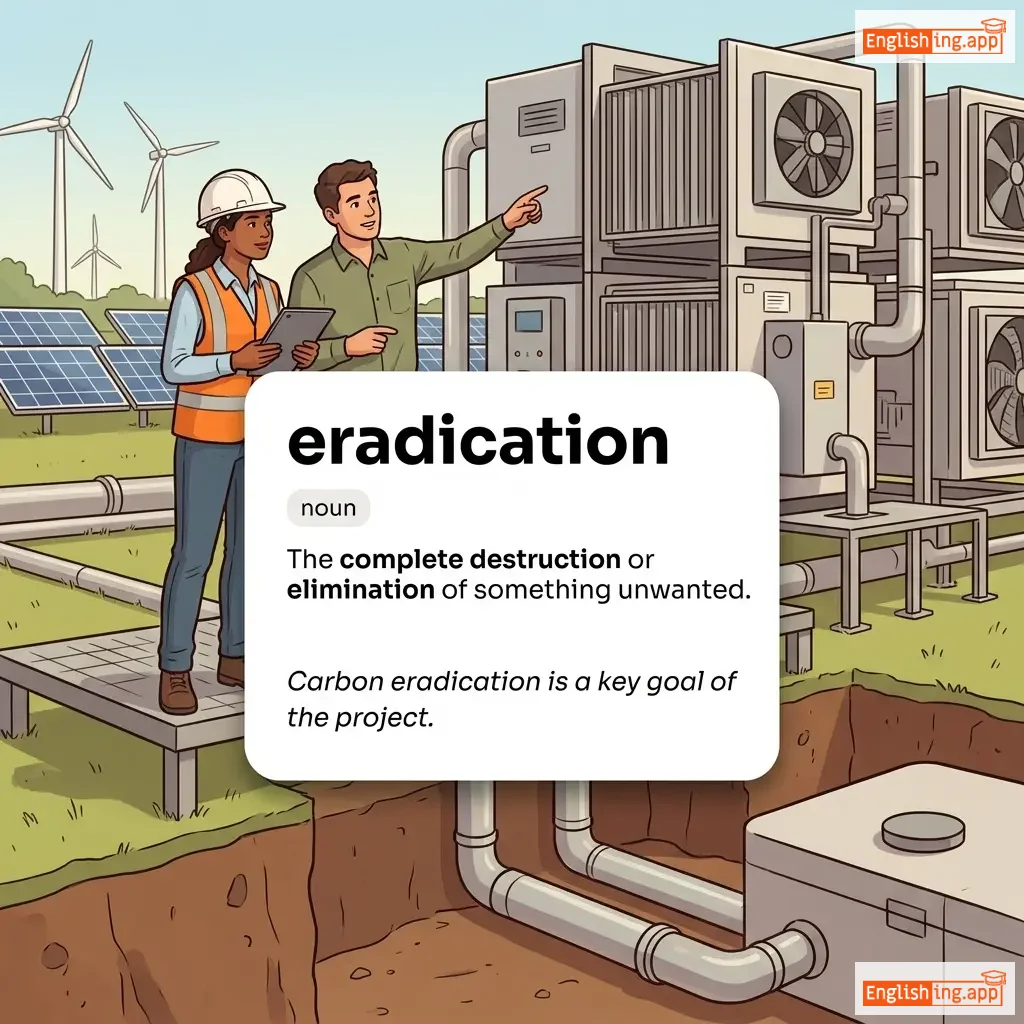
eradication definition card — visual illustration of the meaning
noun
ɪˌræd.ɪˈkeɪ.ʃən
根除 (gēnchú)

The complete destruction or elimination of something unwanted.

"Carbon eradication is a key goal of the project."
"碳的根除是该项目的一个关键目标。" (Tàn de gēnchú shì gāi xiàngmù de yīgè guānjiàn mùbiāo.)
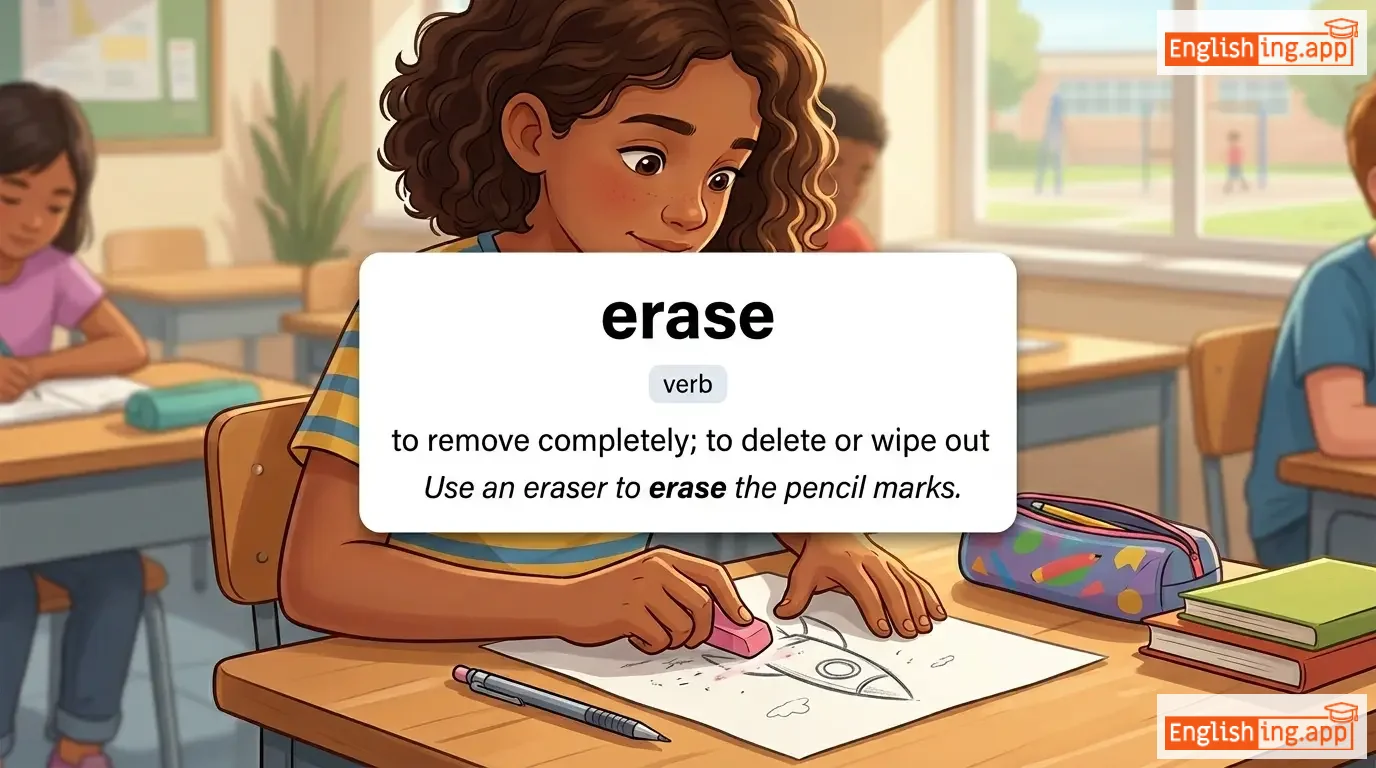
erase definition card — visual illustration of the meaning
verb
/ɪˈreɪs/
擦除 (cāchú)

to remove completely; to delete or wipe out

"Use an eraser to erase the pencil marks."

"使用橡皮擦来擦掉铅笔痕迹。" (Shǐyòng xiàngpí cā lái cā diào qiānbǐ hénjì.)
erect definition card — visual illustration of the meaning
verb
/ɪˈrɛkt/
建造 (jianzao)

to build or construct something upright

"The workers erected a new building in the city center."
"工人在市中心建造了一座新大楼。" (Gongren zai shi zhongxin jianzao le yi zuo xin dalou.)
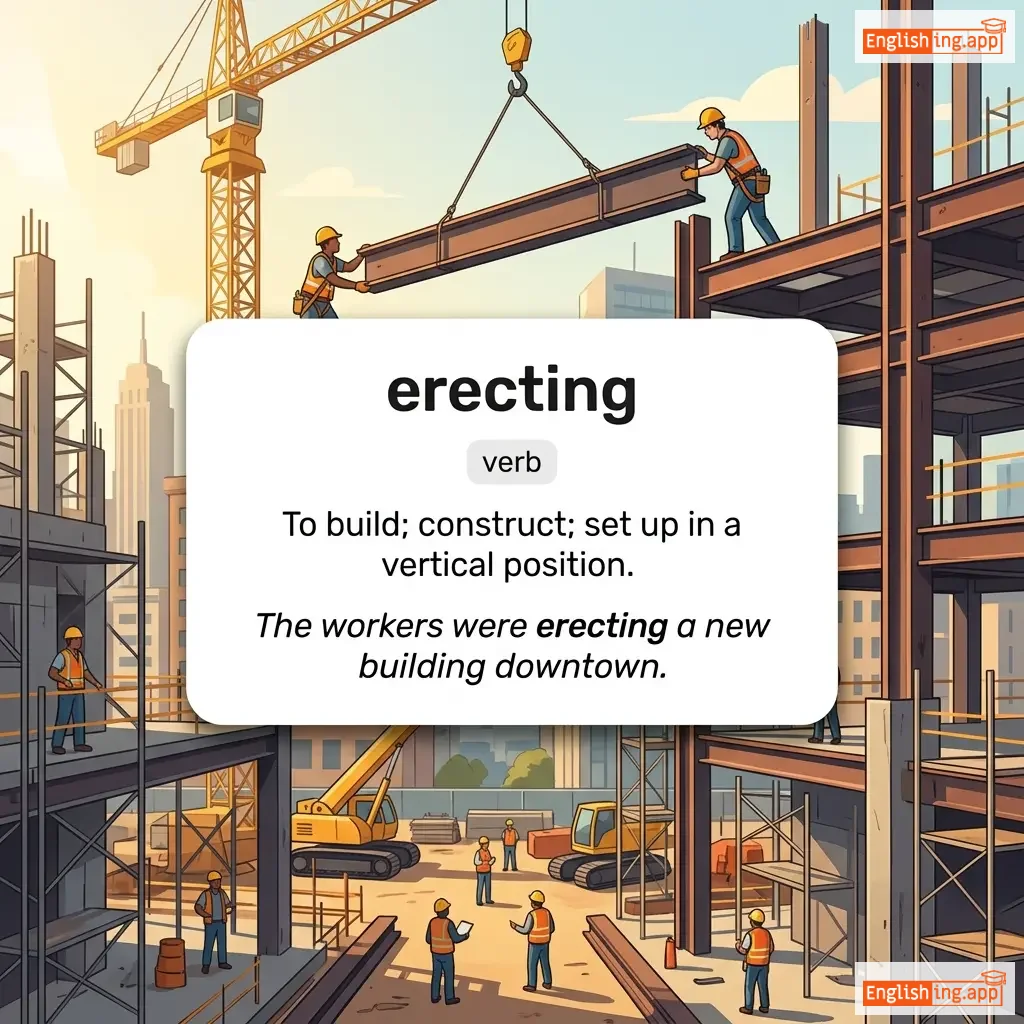
erecting definition card — visual illustration of the meaning
verb
ɪˈrɛktɪŋ
建造 (jianzao)

To build; construct; set up in a vertical position.

"The workers were erecting a new building downtown."

"工人们正在市中心建设一座新建筑。" (Gongren men zhengzai shicheng zhongjian yi zuo xin jianzhu.)
ergonomic definition card — visual illustration of the meaning
adjective
/ˌɜː.ɡəˈnɒm.ɪk/
人体工学 (rentigongxue)

Designed for efficiency and comfort in the working environment.

"The office chairs are designed to be ergonomic."

"办公室椅子设计得符合人体工学。" (Bàngōngshì yǐzi shèjì dé fúhé réntǐ gōngxué.)
verb
/ɪˈroʊd/
侵蚀 (qīnshí)

to gradually wear away or destroy by natural forces such as water, wind, or chemical action

"The coastline has begun to erode due to constant waves."
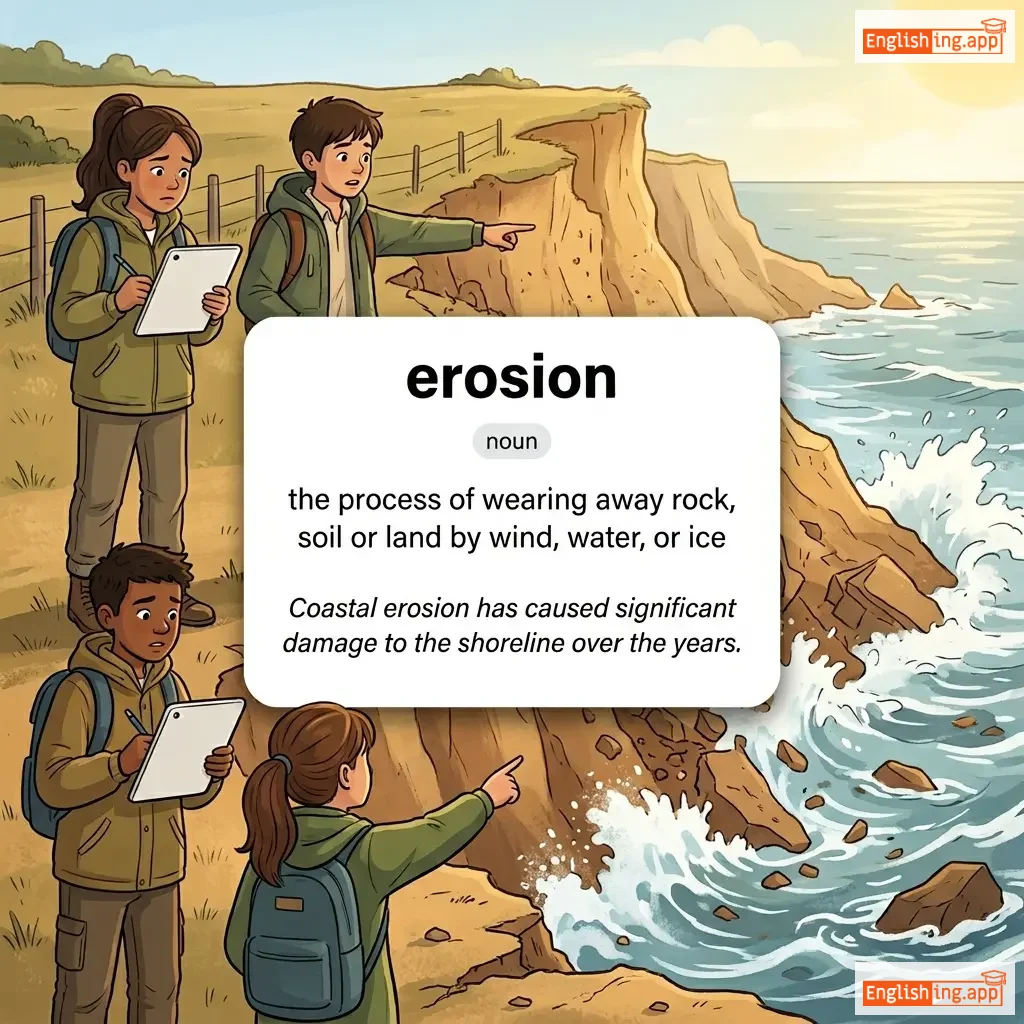
"海岸线因持续的波浪开始侵蚀。" (Hǎi'àn xiàn yīn chíxù de bōlàng kāishǐ qīnshí.)
erosion definition card — visual illustration of the meaning
noun
/ɪˈroʊ.ʒən/
侵蚀 (qin shi)

the process of wearing away rock, soil, or land by wind, water, or ice

"Coastal erosion has caused significant damage to the shoreline over the years."

"海岸侵蚀在多年中对海岸线造成了重大损害。" (Hai'an qin shi zai duo nian zhong dui hai'an xian zao cheng le zhong da sun hai.)
adjective
/ɪˈrɒtɪk/
色情的 (sèqíng de)

relating to or tending to arouse sexual desire or excitement

"The novel contained several erotic scenes."
"这本小说包含了几个色情场景。" (Zhè běn xiǎoshuō bāohánle jǐ gè sèqíng chǎngjǐng.)
verb
/ɜːr/
犯错 (fàn cuò)

to make a mistake or be incorrect

"To err is human, to forgive divine."

"犯错是人类的本性,宽恕是神圣的。" (Fàn cuò shì rénlèi de běn xìng, kuānshù shì shénshèng de.)
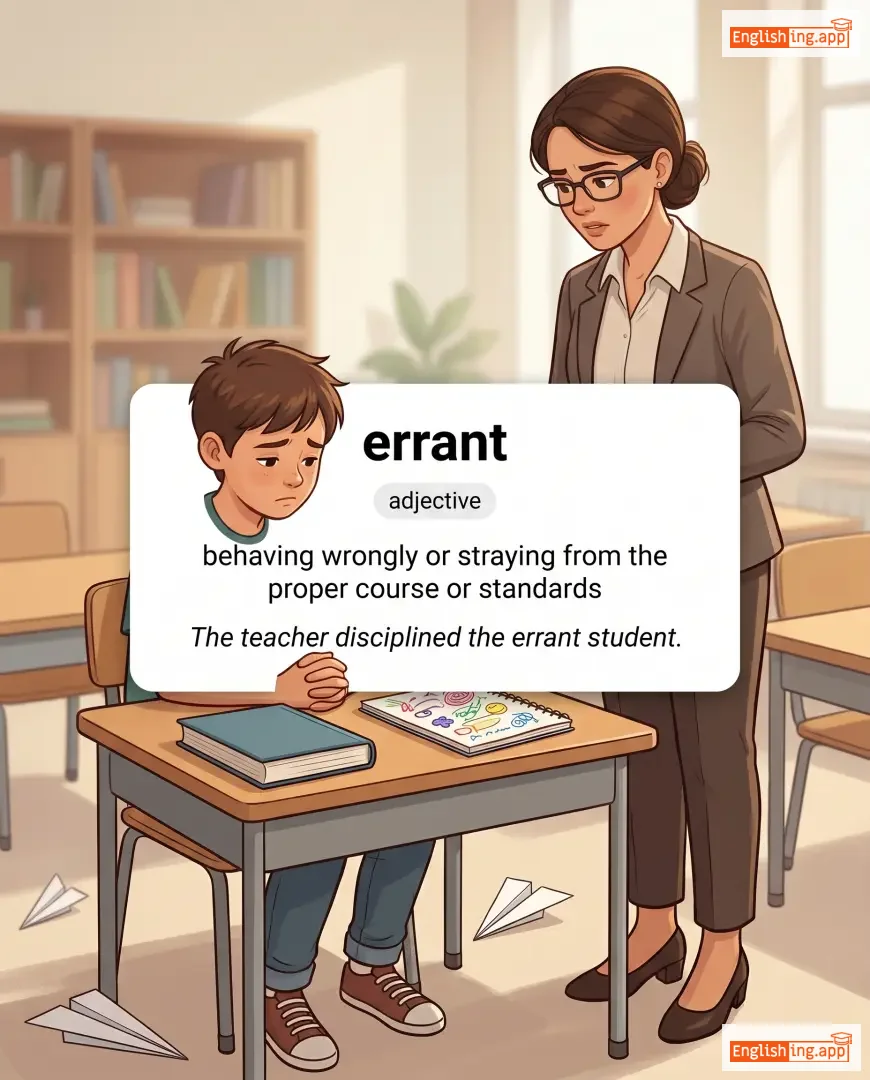
errant definition card — visual illustration of the meaning
adjective
/ˈɛrənt/
迷途的 (mítú de)

behaving wrongly or straying from the proper course or standards

"The teacher disciplined the errant student."
"老师惩罚了那个迷途的学生。" (Lǎoshī chéngfále nàgè mítú de xuéshēng.)
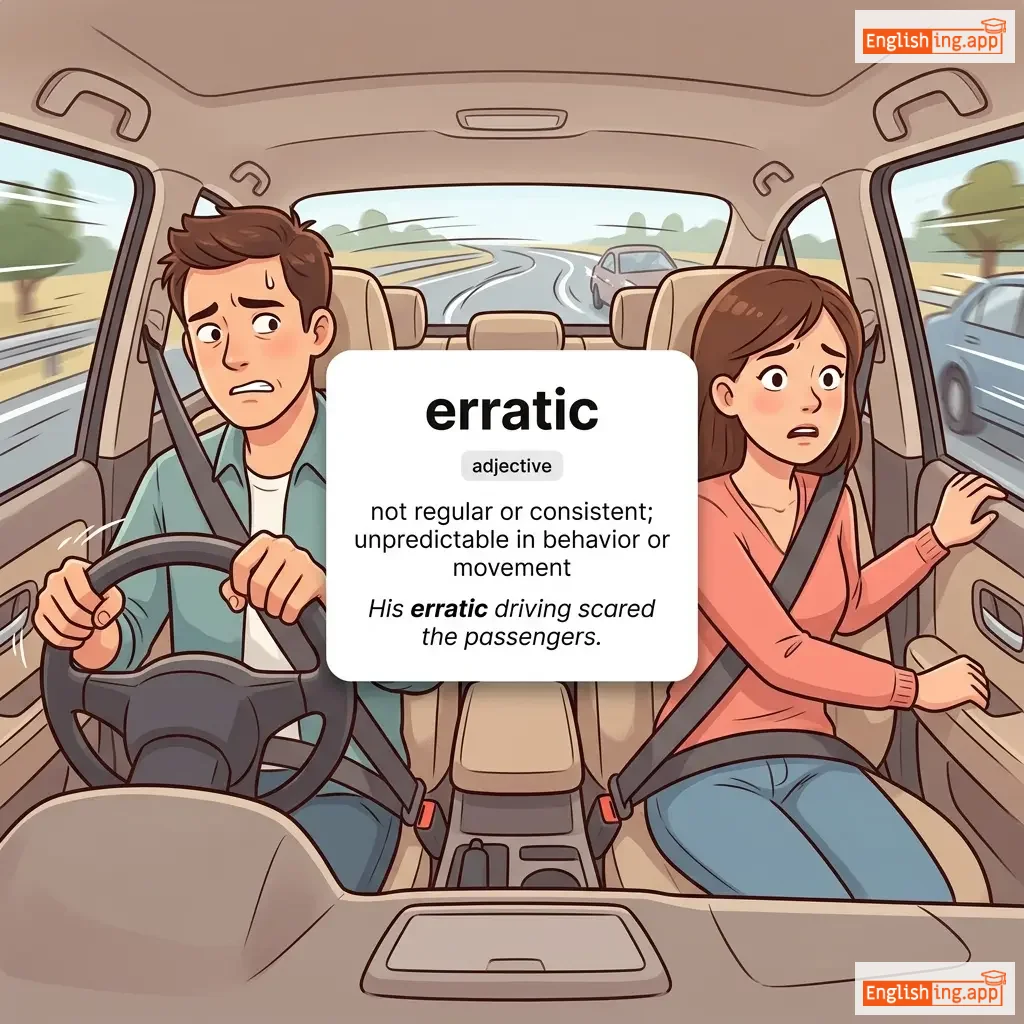
erratic definition card — visual illustration of the meaning
adjective
/ɪˈrætɪk/
不稳定 (bù wěn dìng)

not regular or consistent; unpredictable in behavior or movement

"His erratic driving scared the passengers."
"他不稳定的驾驶吓坏了乘客。" (Tā bù wěn dìng de jià shǐ xià huài le chéng kè.)
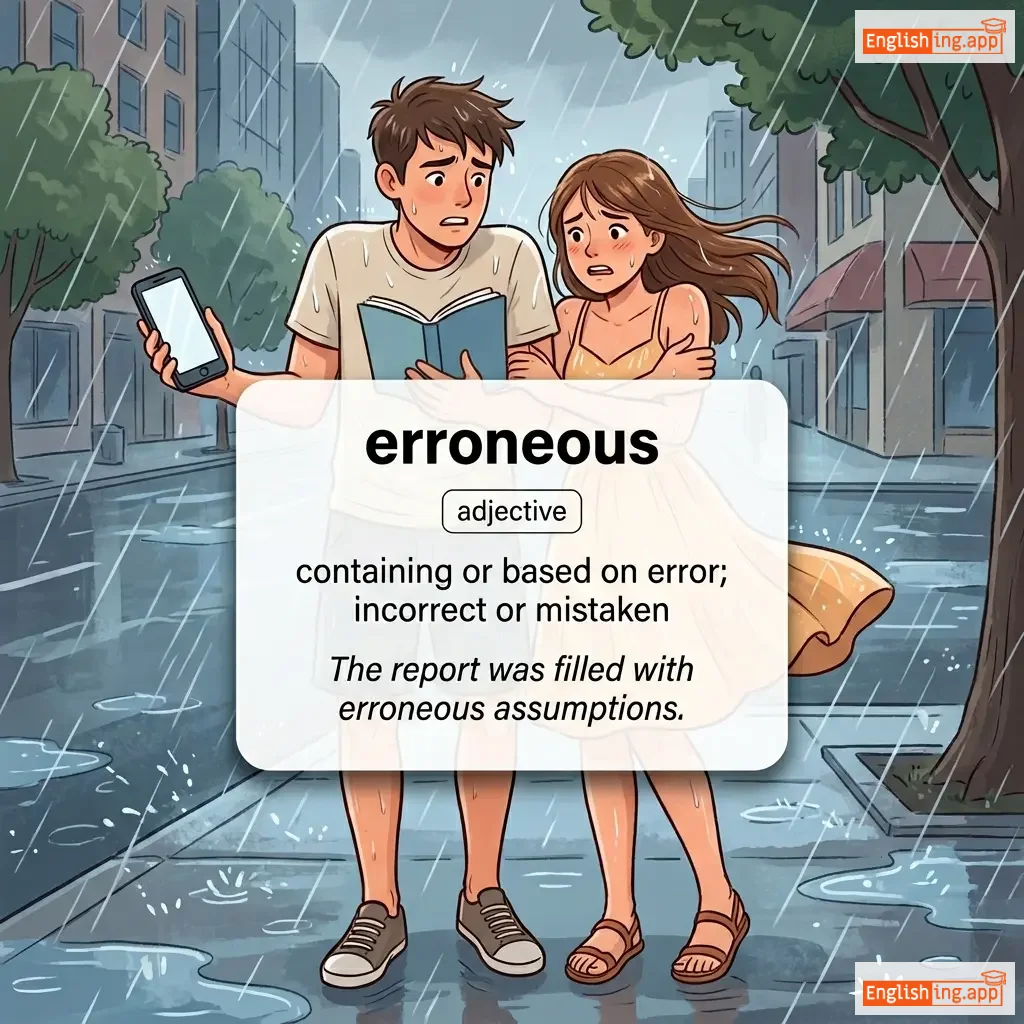
erroneous definition card — visual illustration of the meaning
adjective
/ɪˈrəʊniəs/
错误的 (cuòwù de)

containing or based on error; incorrect or mistaken

"The report was filled with erroneous assumptions."

"报告充满了错误的假设。" (Bàogào chōngmǎnle cuòwù de jiǎshè.)
noun
/ˈɛrər/
错误 (cuo wu)

A mistake or inaccuracy in action, thought, or judgment.

"The report contained a major error in the data analysis."

"报告中在数据分析中包含了一个重大错误。" (Baogao zhong zai shuju fenxi zhong baokuo le yi ge zhongda cuo wu.)
adjective
/ˈɛrzæts/
替代品 (tìdàipǐn)

made or used as a substitute, typically an inferior one

"The cheap shoes were made of ersatz leather."

"便宜的鞋子是用仿皮革做的。" (Biànyí de xiézi shì yòng fǎng pígé zuò de.)
adjective
/ˈɜːrstwaɪl/
曾经 (céngjīng)

former or in the past

"They were erstwhile friends but no longer speak."
"他们曾经是朋友,但现在不再交谈。" (Tāmen céngjīng shì péngyǒu, dàn xiànzài bù zài jiāotán.)
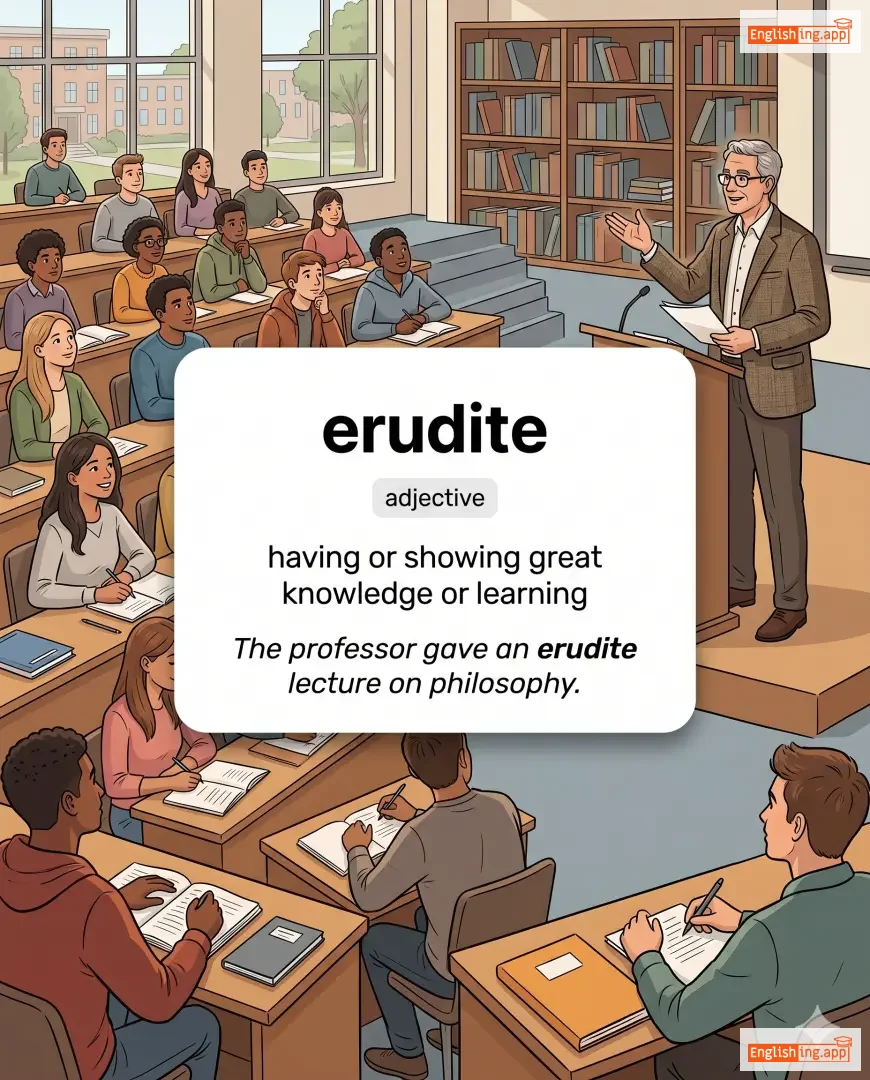
erudite definition card — visual illustration of the meaning
adjective
/ˈɛrjʊˌdaɪt/
博学 (boxue)

having or showing great knowledge or learning

"The professor gave an erudite lecture on philosophy."

"教授就哲学做了一个博学的讲座。" (Jiàoshòu jiù zhéxué zuòle yīgè bóxué de jiǎngzuò.)
erudition definition card — visual illustration of the meaning
noun
/ˌɛrjʊˈdɪʃən/
博学 (boxue)

extensive knowledge acquired through reading and study

"Her erudition was evident in her detailed analysis of the text."

"她的博学在她对文本的详细分析中显而易见。" (Ta de boxue zai ta dui wenben de xiangxi fenxi zhong xian er yi jian.)
verb
/ɪˈrʌpt/
爆发 (baofa)

to burst forth suddenly and violently

"The volcano erupted after centuries of dormancy."

"火山在沉寂了几个世纪后爆发。" (Huoshan zai chenji le jige shiji hou baofa.)
noun
/ɪˈrʌp.ʃən/
火山喷发 (huǒshān pēn fā)

a sudden violent occurrence or outburst; volcanic explosion

"The volcanic eruption forced thousands of people to evacuate the area."

"火山喷发迫使成千上万的人疏散该地区。" (Huǒshān pēn fā pòshǐ chéngqiān shàngwàn de rén shūsàn gāi dìqū.)
escalate definition card — visual illustration of the meaning
verb
/ˈɛskəleɪt/
升级 (shēngjí)

to increase rapidly or make something become more intense or serious

"The conflict began to escalate after the negotiations failed."

"冲突在谈判失败后开始升级。" (Chōngtú zài tánpàn shībài hòu kāishǐ shēngjí.)
escalation definition card — visual illustration of the meaning
noun
ˌes.kəˈleɪ.ʃən
快速增加;上涨。 (kuài sù zēng jiā; shàng zhǎng)

A rapid increase; a rise.

"The escalation of production costs impacts profitability."

"生产成本的增加影响了盈利能力。" (Shēngchǎn chéngběn de zēngjiā yǐngxiǎng le yínglì nénglì.)
noun
/ˈɛskəpeɪd/
冒险 (màoxiǎn)

an adventurous, exciting, or reckless act

"Their summer escapade included camping and mountain climbing."

"他们的夏季冒险包括露营和登山。" (Tāmen de xiàjì màoxiǎn bāokuò lùyíng hé dēngshān.)
🏃‍♂️

Escape (eskeip)

verb
/ɪˈskeɪp/
逃脱 (taotuo)

To break free from confinement or control; to get away.

"The prisoner tried to escape from jail."

"囚犯试图逃脱监狱。" (Qiufan shitu taotuo jianyu.)
verb
/ɪsˈtʃuː/
避开 (bì kāi)

to deliberately avoid or abstain from something

"She chose to eschew junk food for a healthier diet."

"她选择避开垃圾食品,选择更健康的饮食。" (Tā xuǎnzé bìkāi lājī shípǐn, xuǎnzé gèng jiànkāng de yíngyǎng.)
🚶‍♂️

escort (èskòrt)

verb
/ˈɛskɔrt/
护送 (hùsòng)

to accompany someone; to guide or protect while going somewhere

"The guard escorted the visitor to the office."

"卫兵护送来访者到办公室。" (Wèibīng hùsòng láifǎng zhě dào bàngōngshì.)
noun
/ɪˈskʌtʃən/
带有家族徽章的盾牌 (dài yǒu jiāzú huīzhāng de dùn pái)

a shield or emblem bearing a coat of arms

"The family crest was displayed on the escutcheon above the fireplace."

"家族徽章展示在壁炉上方的盾牌上。" (jiāzú huīzhāng zhǎnshì zài bìlú shàngfāng de dùn pái shàng.)
esoteric definition card — visual illustration of the meaning
adjective
/ˌɛsəˈtɛrɪk/
深奥的 (shen'ao de)

intended for or understood by only a small number of people with special knowledge

"The professor gave an esoteric lecture on ancient philosophy."

"教授做了一场关于古代哲学的深奥讲座。" (Jiaoshou zuo le yi chang guanyu gudai zhexue de shen'ao jiangzuo.)
adjective
/ɪˈspeʃəl/
特别 (tebie)

Particularly remarkable or significant; distinguished from others

"This is an especial opportunity you should not miss."

"这是一个你不应错过的特别机会。" (Zhe shi yi ge ni bu ying cuoguo de tebie jihui.)
adverb
/ɪˈspɛʃəli/
尤其 (yóu qí)

Used to single out one person, thing, or situation over all others.

"I love all kinds of fruit, especially mangoes."

"我喜欢所有种类的水果,尤其是芒果。" (Wǒ xǐ huān suǒ yǒu zhǒng lèi de shuǐ guǒ, yóu qí shì máng guǒ.)
noun
/ˈɛspiənɑːʒ/
间谍活动 (jiàndié huódòng)

The practice of spying or using spies to gather secret information, usually for political or military purposes.

"The agent was arrested on charges of espionage against the state."

"该特工因涉嫌间谍活动被逮捕。" (Gāi tègōng yīn shèxián jiàndié huódòng bèi dàibǔ.)
verb
/ɪˈspaʊz/
支持 (zhīchí)

To adopt or support a cause, belief, or way of life.

"She espoused the philosophy of nonviolence throughout her career."

"她在整个职业生涯中支持了非暴力的哲学。" (Tā zài zhěnggè zhíyè shēngyá zhōng zhīchíle fēi bàolì de zhéxué.)
noun
/ɛˌspriː də ˈkɔːr/
团队精神 (tuánduì jīngshén)

A feeling of pride, fellowship, and loyalty shared by members of a group.

"The team's esprit de corps was evident in their cooperative effort."

"团队的精神在他们的合作努力中显而易见。" (Tuánduì de jīngshén zài tāmen de hézuò nǔlì zhōng xiǎn ér yìjiàn.)
verb
/ɪˈspaɪ/
看到 (kàn dào)

To catch sight of or notice something, especially from a distance.

"From the hilltop, she espied a small village in the valley."

"从山顶上,她看见了谷中的一个小村庄。" (Cóng shāndǐng shàng, tā kànjiànle gǔzhōng de yīgè xiǎo cūnzhuāng.)
noun
/ˈɛskwaɪər/
律师称号 (lüshi chenghao)

A title of respect often used after a man's name, especially for lawyers in the United States.

"John Smith, Esquire, will be representing the client in court."
"约翰·史密斯,律师称号,将在法庭上代表客户。" (Yuehan Shimi, lüshi chenghao, jiang zai fating shang daibiao kehu.)
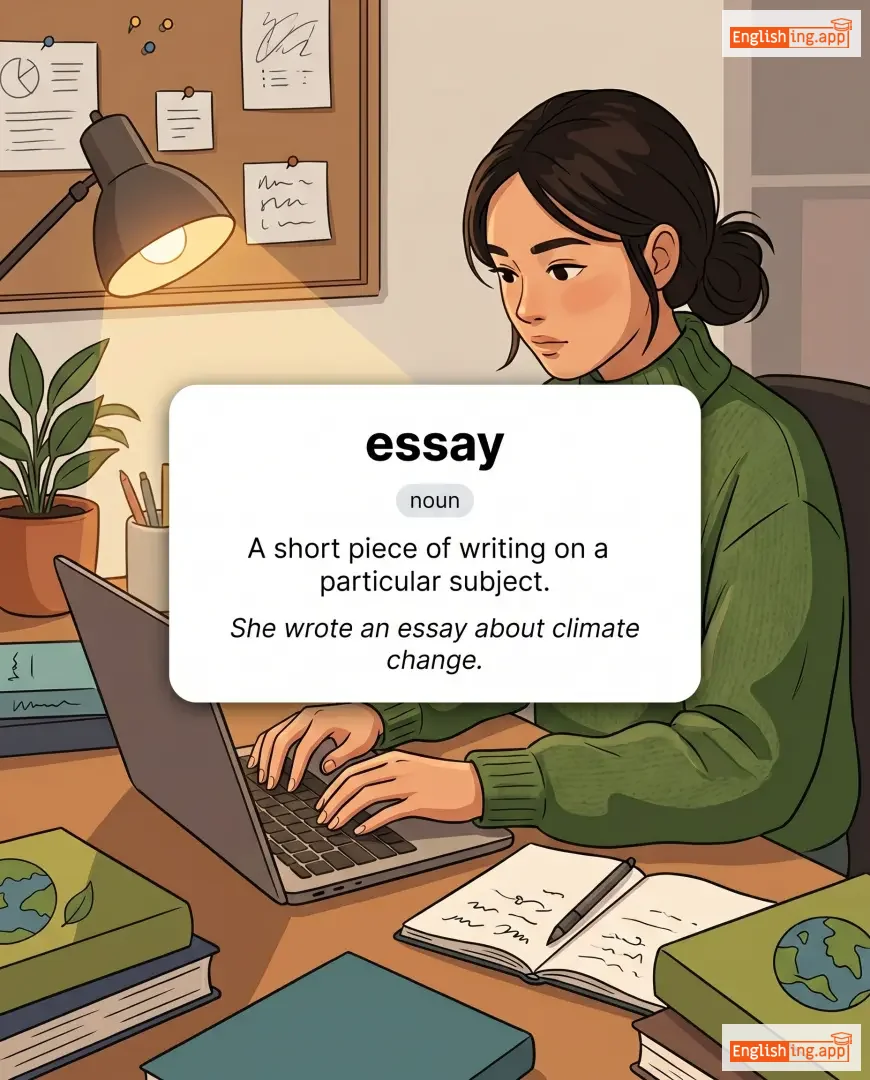
essay definition card — visual illustration of the meaning
noun
/ˈɛseɪ/
论文 (lunwen)

A short piece of writing on a particular subject.

"She wrote an essay about climate change."

"她写了一篇关于气候变化的论文。" (Tā xiěle yī piān guānyú qìhòu biànhuà de lùnwén.)
noun
/ˈɛsəns/
本质 (benzhi)

The intrinsic nature or indispensable quality of something that determines its character.

"The essence of democracy is freedom of speech."

"民主的本质是言论自由。" (Mínzhǔ de běnzhì shì yánlùn zìyóu.)
adjective
/ɪˈsɛnʃəl/
必要的 (bì yào de)

Absolutely necessary; extremely important.

"Water is essential for life."

"水对生命至关重要。" (Shuǐ duì shēngmìng zhì guān zhòng yào.)
adverb
/ɪˈsɛnʃəli/
本质上 (ben zhi shang)

Used to emphasize the basic or fundamental nature of something.

"The two plans are essentially the same."

"这两个计划本质上是相同的。" (Zhè liǎng gè jì huà běn zhì shàng shì xiāng tóng de.)
verb
/ɪˈstæblɪʃ/
建立 (jiànlì)

To set up, create, or bring into existence something on a firm basis.

"The company plans to establish a new office in Dhaka."
"公司计划在达卡设立一个新办公室。" (Gōngsī jìhuà zài Dākǎ shèlì yīgè xīn bàngōngshì.)
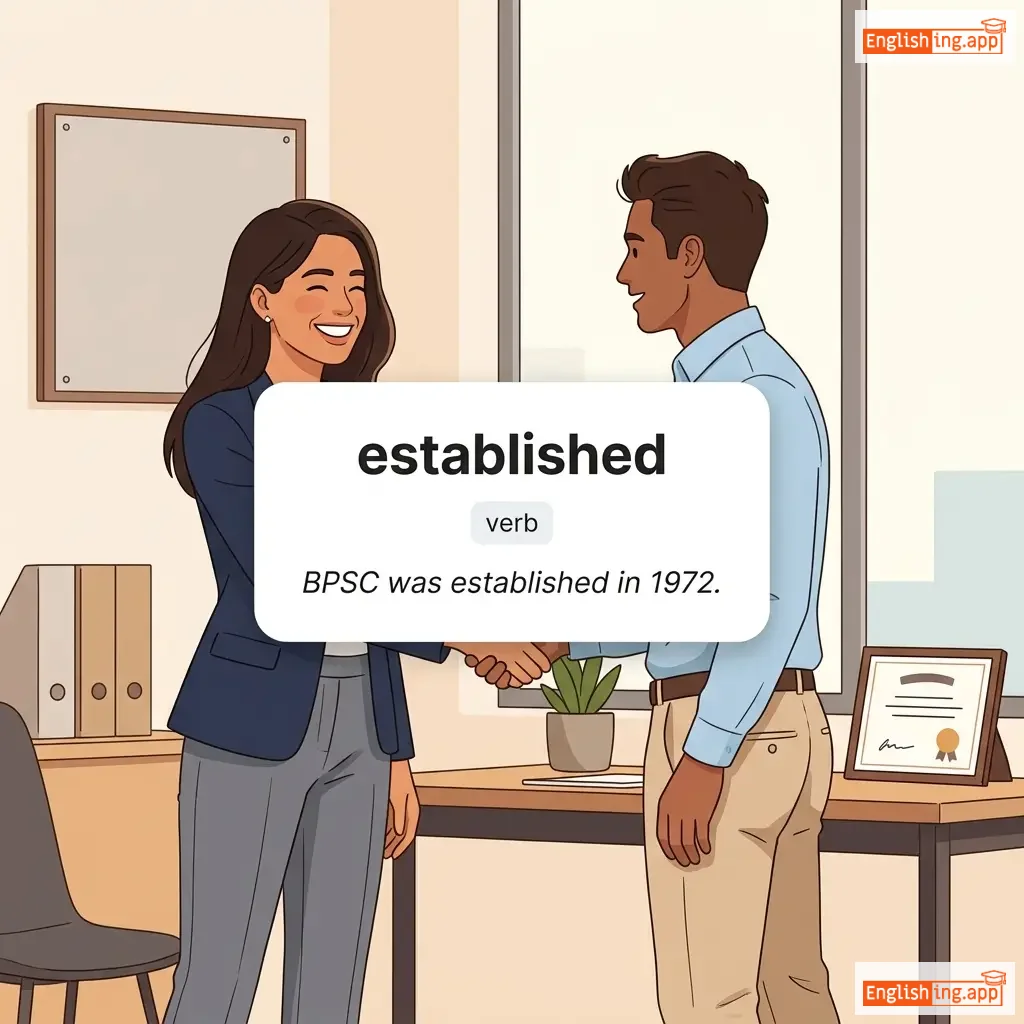
established definition card — visual illustration of the meaning
verb
ɪˈstæb.lɪʃt
建立 (jiànlì)

Set up on a firm or permanent basis; having existed for a long time and therefore recognized.

"BPSC was established in 1972."

"BPSC 于 1972 年成立。" (BPSC yú 1972 nián chénglì.)
noun
/ɪˈstæblɪʃmənt/
机构 (jīgòu)

An organization, business, or system; the act of setting something up.

"The restaurant is a new establishment in town."

"餐厅是城市中新建立的机构。" (Cāntīng shì chéngshì zhōng xīn jiànlì de jīgòu.)
noun
/ɪˈsteɪt/

A large area of land, property, or possessions owned by someone, often including a big house.

"The family owned a large estate in the countryside."

noun/verb
/ɪˈstiːm/
尊敬 (zūnjìng)

Respect and admiration, typically for a person.

"She is held in high esteem by her colleagues."

"她受到了同事们的高度尊敬。" (Tā shòudàole tóngshìmen de gāodù zūnjìng.)
adjective
/ɪˈstiːmd/
尊敬的 (zunjing de)

respected and admired; held in high regard

"He is an esteemed professor at the university."

"他是大学里一位受人尊敬的教授。" (Tā shì dàxué lǐ yī wèi shòu rén zūnjìng de jiàoshòu.)