词汇表

英语词汇词典 | 单词含义、定义和示例

noun
/ˈdɛskænt/
附加旋律 (fùjiā xuánlǜ)

An additional melody or counterpoint sung or played above the main melody.

"The choir added a beautiful descant to the hymn."

"合唱团为赞美诗添加了一段美丽的附加旋律。" (Hé chàngtuán wèi zànměishī tiānjiāle yí duàn měilì de fùjiā xuánlǜ.)
⬇️

descend

verb
/dɪˈsɛnd/

To move or fall downward; to come or go down from a higher place.

"The hikers descended the steep mountain path."

noun
/dɪˈsɛndənt/
后代 (hòudài)

A person who is descended from a particular ancestor.

"She is a descendant of a famous poet."

"她是一个著名诗人的后代。" (Tā shì yīgè zhùmíng shīrén de hòudài.)
adjective
/dɪˈsɛndənt/
下降的 (xiajiang de)

Moving downward; going down or descending.

"The river followed a descendent course toward the valley."

"河流沿着向下的河道朝着山谷流去。" (Héliú yánzhe xiàng xià de hédào cháo zhe shāngǔ liú qù.)
noun
/dɪˈsɛnt/
下降 / 血统 (xiàjiàng / xuètǒng)

the action of moving downward, falling, or dropping; ancestry or origin

"The climbers began their descent from the mountain peak."

"登山者从山顶开始下降。" (Dēngshān zhě cóng shāndǐng kāishǐ xiàjiàng.)
verb
/dɪˈskraɪb/
描述 (miáoshù)

to give an account of something in words, including details

"She described the scene vividly."

"她生动地描述了场景。" (Tā shēngdòng de miáoshù le chǎngjǐng.)
description definition card — visual illustration of the meaning
noun
/dɪˈskrɪpʃən/
描述 (miaoshu)

A spoken or written account of a person, object, or event.

"The witness gave a detailed description of the suspect."

"目击者详细描述了嫌疑人。" (Mùjī zhě xiángxì miáoshùle xiányí rén.)
verb
/dɪˈskraɪ/
远远看到 (yuǎn yuǎn kàn dào)

to catch sight of something, especially something distant or obscure

"From the hilltop, they descried a small village in the distance."

"从山顶上,他们看见了远处的一个小村庄。" (Cóng shāndǐng shàng, tāmen kànjiànle yuǎn chù de yīgè xiǎo cūnzhuāng.)
verb
/ˈdɛsɪkreɪt/
亵渎 (xièdú)

to treat a sacred place or object with disrespect or violation

"The vandals desecrated the ancient temple walls with graffiti."

"破坏者用涂鸦亵渎了古老的寺庙墙壁。" (Pòhuàizhě yòng túyā xièdúle gǔlǎo de sìmiào qiángbì.)
desensitize definition card — visual illustration of the meaning
verb
diːˈsɛn.sɪ.taɪz
脱敏 (tuō mǐn)

To make someone less sensitive or reactive to something through repeated exposure.

"Constant exposure to violence can desensitize people."

"持续的暴力暴露可能会使人们麻木。" (Chíxù de bàolì bàolù kěnéng huì shǐ rénmen mámù.)
🏜️

Desert

noun, verb
/ˈdez.ɚt/ (noun/adjective), /dɪˈzɜːrt/ (verb)

as a noun, a barren sandy region; as a verb, to abandon someone or something

"He deserted his friends in their time of need."

adjective
/dɪˈzɜːrtɪd/
荒废的 (huangfeide)

Empty of people; abandoned.

"The village looked completely deserted after the storm."
"暴风雨过后,村庄看起来完全荒废了。" (Baofengyu guo hou, cunzhuang kan qilai wanquan huangfeile.)
desertification definition card — visual illustration of the meaning
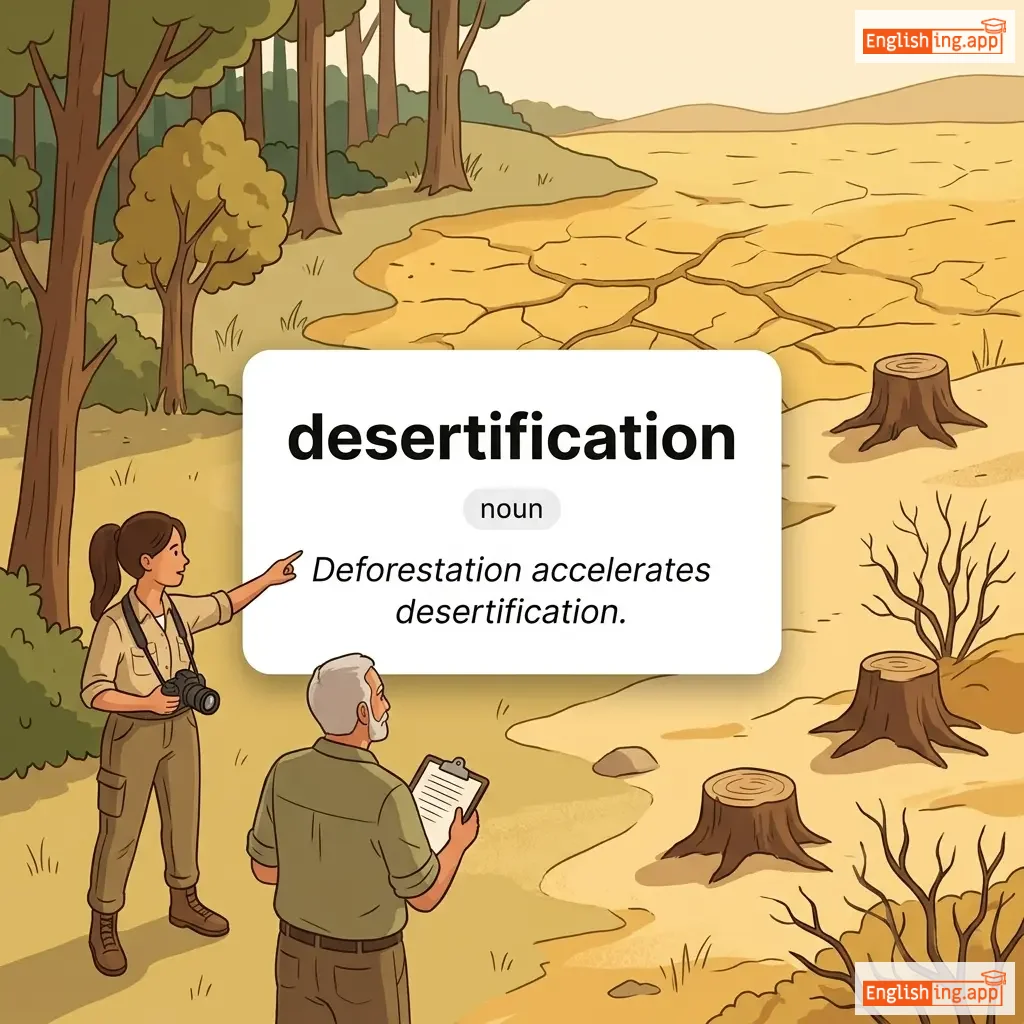
noun
dɪˌzɝː.t̬ə.fɪˈkeɪ.ʃən
沙漠化 (shamo hua)

The process by which fertile land becomes desert, typically as a result of drought, deforestation, or inappropriate agriculture.

"Deforestation accelerates desertification."

"森林砍伐加速了沙漠化。" (Senlin kanfa jiasule shamo hua.)
noun
/dɪˈzɜːrts/ (noun: reward or punishment deserved)
某人应得的,尤其是惩罚或奖励 (mǒu rén yīng dé de, yóu qí shì chéng fá huò jiǎng lì)

what someone deserves, especially punishment or reward

"He finally got his just deserts for cheating in the exam."

"他因考试作弊终于得到了应得的惩罚。" (tā yīn kǎo shì zuò bì zhōng yú dé dào le yīng dé de chéng fá.)
verb
/dɪˈzɜːrv/
值得 (zhí dé)

To be worthy of something, usually a reward or punishment.

"She worked hard and deserves recognition."

"她努力工作,值得认可。" (Tā nǔ lì gōng zuò, zhí dé rèn kě.)
noun
/ˈdɛsɪkənt/
干燥剂 (gan zao ji)

a substance that absorbs moisture and keeps things dry

"Silica gel packets are commonly used as a desiccant in packaging."

"硅胶包通常作为干燥剂用于包装中。" (Gui jiao bao tong chang zuo wei gan zao ji yong yu bao zhuang zhong.)
desiccate definition card — visual illustration of the meaning
verb
/ˈdɛsɪkeɪt/
干燥 (ganzao)

to dry up completely or remove the moisture from something

"The hot sun can quickly desiccate plants in the desert."

"炙热的太阳可以迅速把沙漠中的植物弄干。" (Zhire de taiyang keyi xunsu ba shamo zhong de zhiwu nong gan.)
adjective
/ˈdɛsɪkeɪtɪd/
干燥的 (gānzào de)

completely dried, having had all moisture removed

"The museum displayed desiccated specimens of plants."

"博物馆展示了干燥的植物标本。" (Bówùguǎn zhǎnshì le gānzào de zhíwù biāoběn.)
noun
/dɪˌsɪdəˈreɪtəm/
必需品 (bìxūpǐn)

something that is desired or considered necessary

"For many students, financial aid is a desideratum."

"对于许多学生来说,经济援助是一项必需品。" (Duìyú xǔduō xuéshēng lái shuō, jīngjì yuánzhù shì yī xiàng bìxūpǐn.)
verb
/dɪˈzaɪn/

to plan and create something with a particular purpose or look

"She will design the new company logo."

verb
/ˈdɛzɪɡneɪt/
指定 (zhǐdìng)

to officially assign, appoint, or indicate something or someone

"The committee will designate a new chairperson next week."

"委员会下周将指定一位新主席。" (Wěiyuánhuì xià zhōu jiāng zhǐdìng yī wèi xīn zhǔxí.)
noun
/ˌdez.ɪɡˈneɪ.ʃən/
任命; 职位; 标题; 官方身份 (renming, zhiwei, biaoti, guanfang shenfen)

the action of choosing someone for a position; a name, title, or official status

"His designation as team leader came with additional responsibilities and authority."

"他的团队领导职务带来了额外的责任和权力。" (tade tuandui lingdao zhiwu dailai le ewai de zeren he quanli.)
noun
/dɪˈzaɪnər/
设计师 (shejishi)

a person who plans and creates the form or structure of something

"The fashion designer presented her new collection."

"时尚设计师展示了她的新系列。" (Shíshàng shèjì shī zhǎnshìle tā de xīn xìliè.)
adjective
/dɪˈzaɪərəbl/
理想的 (lǐxiǎng de)

worth having or wanting; attractive

"The location of the house was highly desirable, with great views."

"房子的地理位置非常理想,视野极好。" (Fángzi de dìlǐ wèi zhì fēicháng lǐxiǎng de, shìyě jí hǎo.)
noun, verb
/dɪˈzaɪər/
欲望 (yùwàng)

a strong feeling of wanting something or wishing for something to happen

"He has a strong desire to travel the world."

"他有强烈的欲望去环游世界。" (Tā yǒu qiángliè de yùwàng qù huányóu shìjiè.)
verb
/dɪˈzɪst/

to stop doing something, especially an action considered wrong or undesirable

"The judge ordered the company to desist from unfair practices."

noun
/dɪˈsɪstəns/
放弃 (fangqi)

The act of stopping or ceasing from some action or behavior.

"The court urged his desistance from further unlawful activities."

"法庭敦促他停止进一步的非法活动。" (Fǎtíng dūn cù tā tíngzhǐ jìnyībù de fēifǎ huódòng.)
noun
/dɛsk/
书桌 (shuzhuo)

a piece of furniture with a flat surface used for writing or working

"The books are on the desk."

"书籍在书桌上。" (Shuji zai shuzhuo shang.)
noun
/ˈdɛsktɒp/

a computer designed to be used on a desk, typically with a separate monitor, keyboard, and mouse

"I keep my documents on the desktop for easy access."

adjective
/ˈdɛsələt/
荒凉 (huangliang)

Empty, bleak, and without people; feeling very sad and lonely.

"The once lively town now stood desolate after the flood."

"曾经充满生气的城市现在在洪水后变得荒凉。" (Cengjing chongman shengqi de chengshi xianzai zai hongshui hou biande huangliang.)
noun
/dɪˈspɛər/

The complete loss or absence of hope.

"She was in deep despair after losing her job."

adjective
/dɪˈsperɪŋ/
绝望的 (juéwàng de)

feeling hopeless; in despair

"She felt despairing after losing her job."

"她在失去工作后感到绝望。" (Tā zài shīqù gōngzuò hòu gǎndào juéwàng.)
noun
/ˌdɛspəˈrɑːdoʊ/

A bold, reckless, or dangerous person, often a criminal.

"The sheriff was determined to capture the desperado who terrorized the town."

adjective
/ˈdɛspərət/
绝望 (juewang)

Feeling or showing a hopeless sense that a situation is so bad as to be impossible to deal with.

"He was desperate to find a job before his savings ran out."

"他迫切想找到一份工作,在他的储蓄用完之前。" (Tā pòqiè xiǎng zhǎodào yī fèn gōngzuò, zài tā de chǔxù yòngwán zhīqián.)
adverb
/ˈdɛspərətli/
绝望地 (juewang de)

in a way that shows despair or great need

"He called for help desperately after the accident."

"事故发生后,他绝望地呼叫帮助。" (Shigu fasheng hou, ta juewang de hujiao bangzhu.)
adjective
/dɪˈspɪkəbl/
卑劣 (bīliè)

Deserving hatred and contempt; vile or shameful.

"His despicable actions shocked the entire community."
"他卑劣的行为震惊了整个社区。" (Tā bēilì de xíngwéi zhènjīngle zhěnggè shèqū.)
despise definition card — visual illustration of the meaning
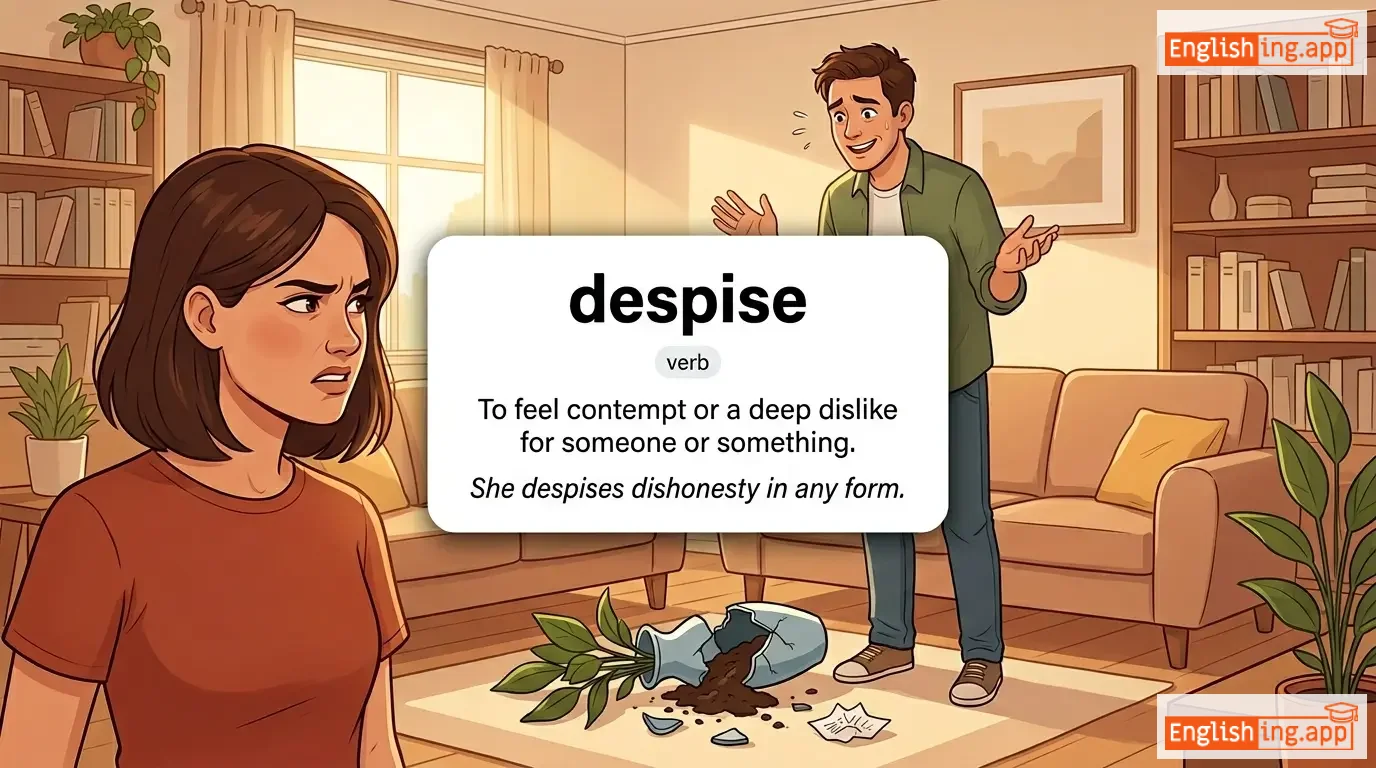
verb
/dɪˈspaɪz/
鄙视 (bǐshì)

To feel contempt or a deep dislike for someone or something.

"She despises dishonesty in any form."

"她讨厌任何形式的不诚实。" (Tā tǎoyàn rènhé xíngshì de bù chéngshí.)
preposition
/dɪˈspaɪt/
尽管 (jin guan)

Without being affected by; in spite of.

"He continued his work despite the difficulties."

"尽管有困难,他继续工作。" (Jin guan you kunnan, ta jixu gongzuo.)
verb
/dɪˈspɔɪl/
掠夺 (lüèduó)

To steal or violently remove valuable possessions from a place.

"The invaders despoiled the village during the war."

"入侵者在战争期间掠夺了村庄。" (Rùqīn zhě zài zhànzhēng qījiān lüèduóle cūnzhuāng.)
noun
/dɪˈspɔɪlər/
掠夺者 (lüèduò zhě)

A person who robs, plunders, or violently takes things from others.

"The despoilers left the city in ruins."

"掠夺者让城市变成废墟。" (Lüèduò zhě ràng chéngshì biànchéng fèixū.)
verb
/dɪˈspɒnd/
沮丧 (jǔsàng)

to lose confidence or hope; to become dejected

"After repeated failures, he began to despond."

"在多次失败后,他开始感到沮丧。" (Zài duō cì shībài hòu, tā kāishǐ gǎndào jǔsàng.)
adjective
/dɪˈspɒndənt/

feeling or showing deep hopelessness or discouragement

"She felt despondent after losing her job."

noun
/ˈdɛspɒt/
暴君 (bàojūn)

a ruler with absolute power, often ruling in a cruel or oppressive way

"The despot ruled the nation with fear and violence."

"暴君以恐惧和暴力统治国家。" (Bàojūn yǐ kǒngjù hé bàolì tǒngzhì guójiā.)
adjective
/dɛˈspɒtɪk/
专制 (zhuān zhì)

exercising power in a cruel, oppressive, or authoritarian way

"The king’s despotic rule left the people in misery."

"国王的专制统治使人民陷入了痛苦。" (Guowang de zhuanzhi tongzhi shi renmin xianru le tongku.)
noun
/ˈdɛspətɪzəm/
专制主义 (zhuānzhì zhǔyì)

absolute power exercised in a cruel and oppressive way

"The people revolted against the era of despotism."

"人民反抗了专制主义的时代。" (Rénmín fǎnkàngle zhuānzhì zhǔyì de shídài.)
noun
/dɪˈzɜːrt/
甜点 (tiándiǎn)

the sweet course eaten at the end of a meal

"We had ice cream for dessert after dinner."

"我们晚餐后吃了冰淇淋作为甜点。" (Wǒmen wǎncān hòu chīle bīngqílín zuòwéi tiándiǎn.)
noun
/ˌdɛstɪˈneɪʃən/
目的地 (mùdìdì)

the place to which someone or something is going or being sent

"Paris is a popular tourist destination."

"巴黎是一个受欢迎的旅游目的地。" (Bālí shì yīgè shòu huānyíng de lǚyóu mùdìdì.)
noun
/ˈdɛstəni/
命运 (mìngyùn)

The events that will necessarily happen to a particular person or thing in the future; fate.

"She believed it was her destiny to become a doctor."

"她相信成为医生是她的命运。" (Tā xiāngxìn chéngwéi yīshēng shì tā de mìngyùn.)
adjective
/ˈdɛstɪˌtuːt/
赤贫 (chipin)

extremely poor and lacking the means to provide for oneself

"The earthquake left many families destitute."
"地震让许多家庭陷入了极度贫困。" (Dizhen rang xuduo jiating xianru le jidu pinku.)
destroy definition card — visual illustration of the meaning
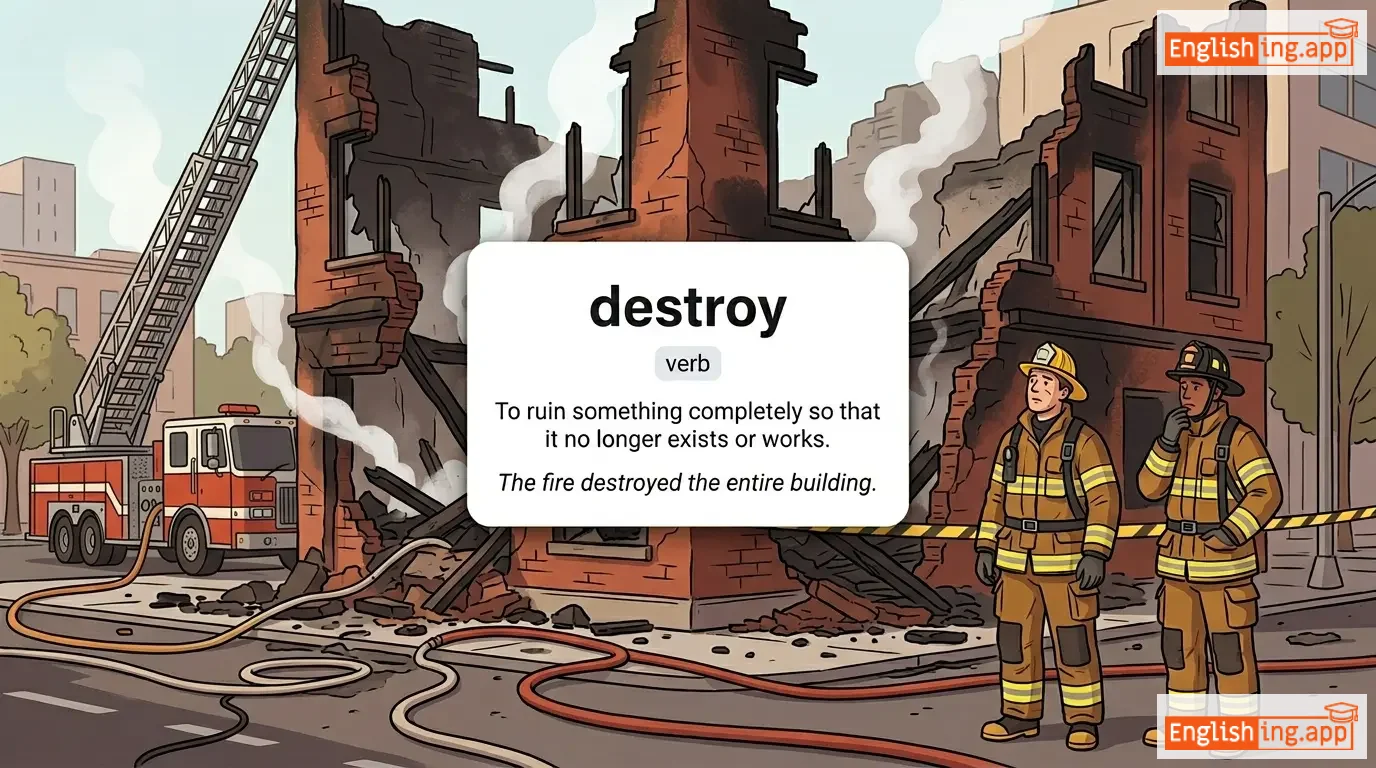
verb
/dɪˈstrɔɪ/
摧毁 (cuīhuǐ)

To ruin something completely so that it no longer exists or works.

"The fire destroyed the entire building."

"火灾摧毁了整个建筑。" (Huǒzāi cuīhuǐ le zhěnggè jiànzhú.)