词汇表

英语词汇词典 | 单词含义、定义和示例

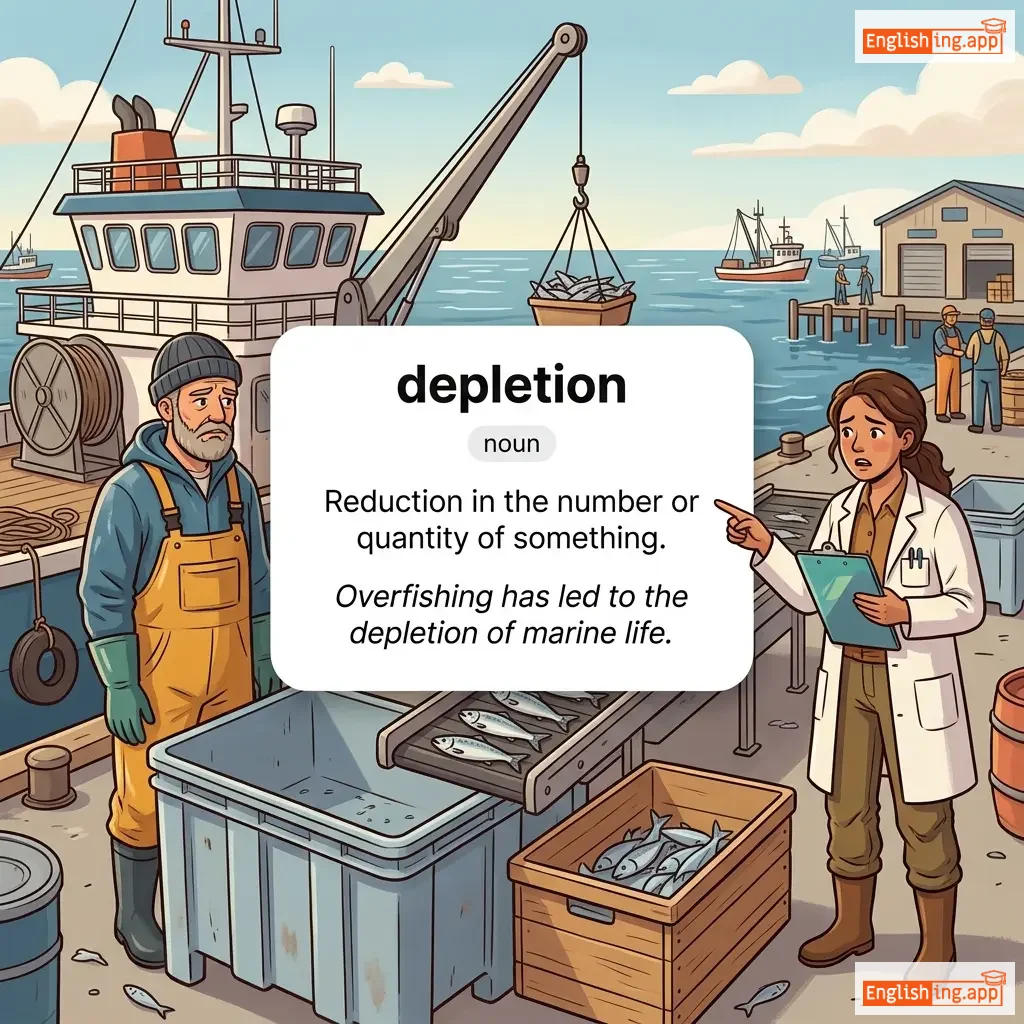
depletion definition card — visual illustration of the meaning
noun
dɪˈpliː.ʃən
枯竭 (kūjié)

Reduction in the number or quantity of something.

"Overfishing has led to the depletion of marine life."

"过度捕捞导致了海洋生物的枯竭。" (Guòdù bǔlāo dǎozhìle hǎiyáng shēngwù de kūjié.)
adjective
/dɪˈplɔːrəbl/
可鄙的 (kě bǐ de)

deserving strong condemnation; shockingly bad in quality

"The refugees were living in deplorable conditions."

"难民们生活在可鄙的条件下。" (Nànmín men shēnghuó zài kě bǐ de tiáojiàn xià.)
deplore definition card — visual illustration of the meaning
verb
/dɪˈplɔːr/
谴责 (qianze)

to feel or express strong disapproval of something

"The community deplored the act of violence."

"社区谴责了暴力行为。" (Shequ qianze le baoli xingwei.)
deploy definition card — visual illustration of the meaning
verb
/dɪˈplɔɪ/
部署 (bùshǔ)

to move into position for action, especially troops or resources

"The general decided to deploy more soldiers to the border."

"将更多的士兵部署到边境是将军的决定。" (Jiāng gèng duō de shìbīng bùshǔ dào biānjìng shì jiāngjūn de juédìng.)
deployment definition card — visual illustration of the meaning
noun
/dɪˈplɔɪmənt/
部署 (bùshǔ)

the action of moving or positioning something into place for use

"The deployment of the new software was completed successfully."

"新软件的部署已成功完成。" (Xīn ruǎnjiàn de bùshǔ yǐ chénggōng wánchéng.)
noun
/dɪˈpoʊnənt/
证人 (zhèngrén)

A person who gives testimony under oath, especially in a written deposition.

"The deponent confirmed the accuracy of the statement during the trial."

"证人在审判期间确认了陈述的准确性。" (Zhèngrén zài shěnpàn qījiān quèrènle chénshù de zhǔnquèxìng.)
verb
/diːˈpɒpjʊˌleɪt/
减少人口 (jiǎnshǎo rénkǒu)

To reduce the number of people living in a place.

"The war threatened to depopulate the once-thriving town."

"战争威胁要使曾经繁荣的城市人口减少。" (Zhànzhēng wēixié yào shǐ céngjīng fánróng de chéngshì rénkǒu jiǎnshǎo.)
verb
/dɪˈpɔːrt/
驱逐 (qūzhú)

To expel a foreigner from a country, usually for legal or political reasons.

"The government decided to deport the illegal immigrants."

"政府决定驱逐非法移民。" (Zhèngfǔ juédìng qūzhú fēifǎ yímín.)
noun
/ˌdiːpɔːrˈteɪʃən/

The act of expelling a foreigner from a country.

"The deportation of hundreds of workers sparked international criticism."

noun
/dɪˈpɔːrtmənt/
举止 (juzhi)

A person's behavior or manners, especially in a formal situation.

"Her deportment during the ceremony impressed everyone."

"她在仪式中的举止给大家留下了深刻印象。" (Tā zài yíshì zhōng de jǔzhǐ gěi dàjiā liúxiàle shēnkè yìnxiàng.)
⚖️

depose

verb
/dɪˈpoʊz/

to remove someone from office or power, especially suddenly and forcefully

"The rebels managed to depose the dictator after years of unrest."

noun/verb
/dɪˈpɑːzɪt/
存款, 预付款 (cún kuǎn, yù fù kuǎn)

to place money in a bank account, or a sum paid in advance as security; a layer of material left naturally

"She deposited $500 into her savings account."
"她向她的储蓄账户存入了500美元。" (Tā xiàng tā de chǔxù zhànghù cún rù le 500 měiyuán.)
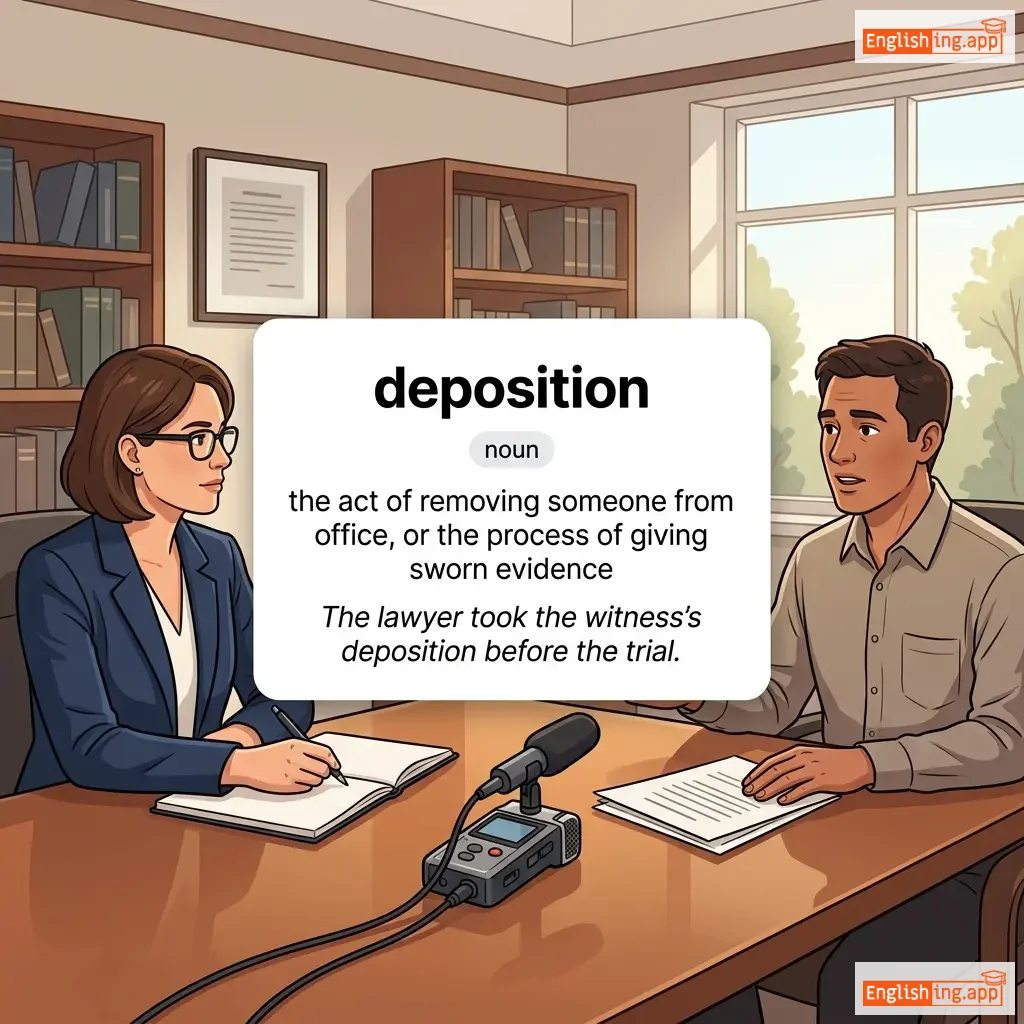
deposition definition card — visual illustration of the meaning
noun
/ˌdepəˈzɪʃən/
撤职,声明 (chèzhí, shēngmíng)

the act of removing someone from office, or the process of giving sworn evidence

"The lawyer took the witness’s deposition before the trial."

"律师在审判前收集了证人的证词。" (Lǜshī zài shěnpàn qián shōujíle zhèngrén de zhèngcí.)
noun
/dɪˈpɑːzɪtər/
存款人 (cún kuǎn rén)

a person who places money in a bank or financial institution

"The bank provides insurance to protect depositors’ funds."

"银行提供保险来保护存款人的资金。" (Yínháng tígōng bǎoxiǎn lái bǎohù cún kuǎn rén de zījīn.)
noun
/dɪˈpɑːzətɔːri/
存储所, 储藏室 (cúnchǔ suǒ, chǔcáng shì)

a place where things are stored or deposited, especially financial assets

"The national depository safeguards all government bonds."

"国家储藏所保护所有政府债券。" (Guójiā chǔcáng suǒ bǎohù suǒyǒu zhèngfǔ zhàiquàn.)
verb
/dɪˈpreɪv/
堕落 (duòluò)

to corrupt morally; to make someone immoral or wicked

"The novel was criticized for attempting to deprave the minds of young readers."

"这本小说因为试图堕落年轻读者的思想而受到批评。" (Zhè běn xiǎoshuō yīnwèi shìtú duòluò niánqīng dúzhě de sīxiǎng ér shòudào pīpíng.)
adjective
/dɪˈpreɪvd/
堕落的 (duòluò de)

morally corrupt or wicked

"The film depicts the life of a depraved criminal."

"这部电影描述了一个堕落罪犯的生活。" (Zhè bù diànyǐng miáoshùle yīgè duòluò zuìfàn de shēnghuó.)
noun
/dɪˈprævɪti/
堕落 (duoluo)

moral corruption; wickedness

"The film portrays the moral depravity of a corrupt society."

"这部电影描绘了腐化社会的道德堕落。" (Zhe bu dianying miaohui le fuhua shehui de daode duoluo.)
verb
/ˈdɛprɪˌkeɪt/
贬低 (biǎndī)

to express disapproval of something

"The teacher deprecated the use of slang in academic essays."

"老师批评在学术论文中使用俚语。" (Lǎoshī pīpíng zài xuéshù lùnwén zhōng shǐyòng lǐyǔ.)
adjective
/ˈdɛprɪkətɔːri/
贬低的 (biǎn dī de)

expressing disapproval or belittling

"He gave a deprecatory remark about their performance."

"他对他们的表现做出了贬低的评论。" (Tā duì tāmen de biǎoxiàn zuò chūle biǎn dī de pínglùn.)
verb
/dɪˈpriːʃieɪt/
贬值 (bianzhi)

to reduce in value over time

"Cars tend to depreciate quickly in their first few years."
"汽车在头几年通常会迅速贬值。" (Qìchē zài tóu jǐ nián tōngcháng huì xùnsù biǎnzhí.)
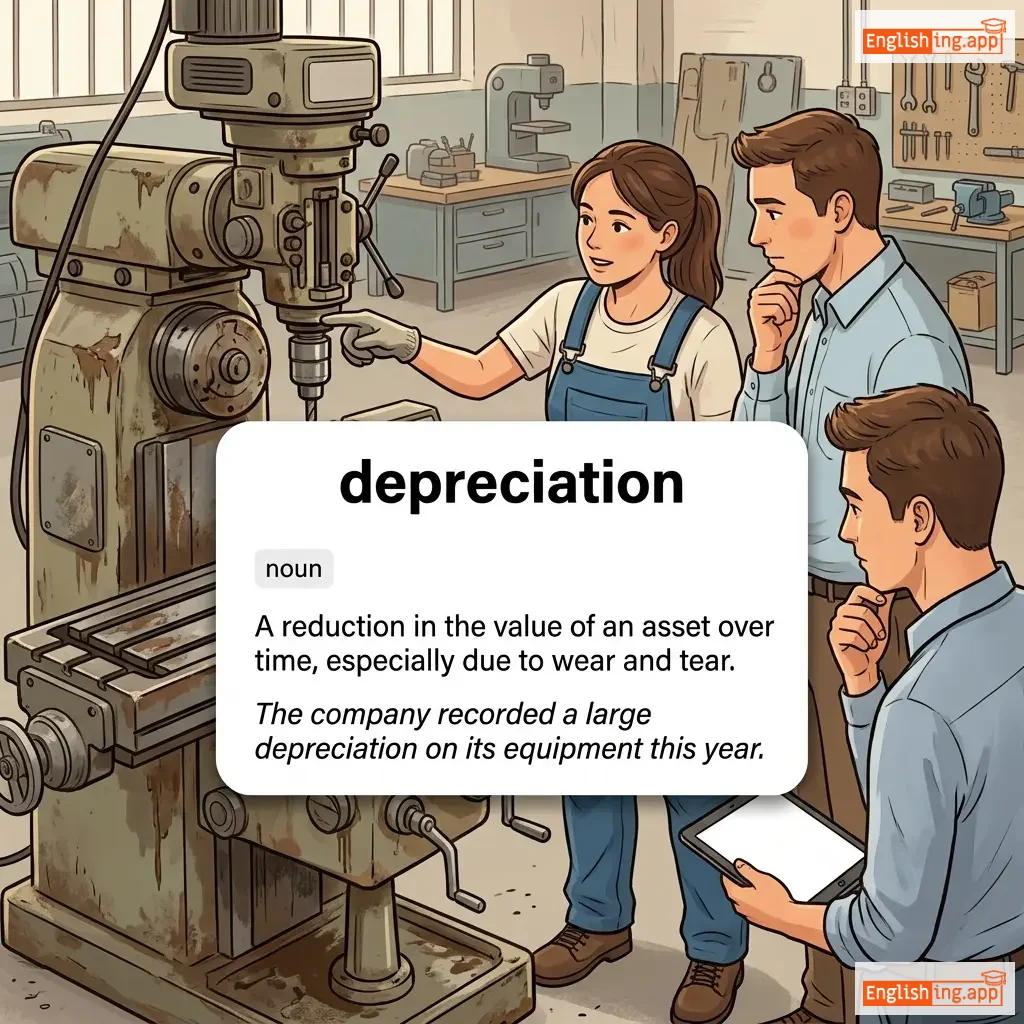
depreciation definition card — visual illustration of the meaning
noun
/dɪˌpriːʃiˈeɪʃən/
折旧 (zhejiu)

A reduction in the value of an asset over time, especially due to wear and tear.

"The company recorded a large depreciation on its equipment this year."

"公司今年在其设备上记录了大幅折旧。" (Gongsi jinian zai qi shebei shang jilu le dafu zhejiu.)
noun
/ˌdɛprɪˈdeɪʃən/
掠夺 (lüèduó)

An act of attacking or plundering; damage caused by such acts.

"The villagers feared the depredation of wild animals at night."

"村民们害怕夜间野生动物的掠夺。" (Cūnmínmen hàipà yèjiān yěshēng dòngwù de lüèduó.)
verb
/dɪˈprɛs/
压抑 (yāyì)

To make someone feel sad or without hope; to reduce the level or strength of something.

"The gloomy weather tends to depress people."

"阴郁的天气常常使人感到抑郁。" (Yīnyù de tiānqì chángcháng shǐ rén gǎndào yāyì.)
noun
/dɪˈprɛsənt/
抑制剂 (yìzhì jì)

A drug that reduces functional or nervous activity in the body.

"Alcohol acts as a depressant on the central nervous system."

"酒精在中枢神经系统中作为抑制剂发挥作用。" (Jiǔjīng zài zhōngshū shénjīng xìtǒng zhōng zuòwéi yìzhì jì fāhuī zuòyòng.)
adjective
/dɪˈprɛst/
沮喪 (jǔsàng)

Feeling very sad and without hope; in a state of unhappiness.

"She felt depressed after losing her job."

"失去工作後,她感到沮喪。" (Shīqù gōngzuò hòu, tā gǎndào jǔsàng.)
noun
/dɪˈprɛʃən/
抑郁症 (yiyuzheng)

A state of severe sadness or hopelessness; also a prolonged downturn in economic activity.

"She has been battling depression for several months."
"她已经与抑郁症斗争了几个月。" (Ta yijing yu yiyuzheng douzheng le ji ge yue.)
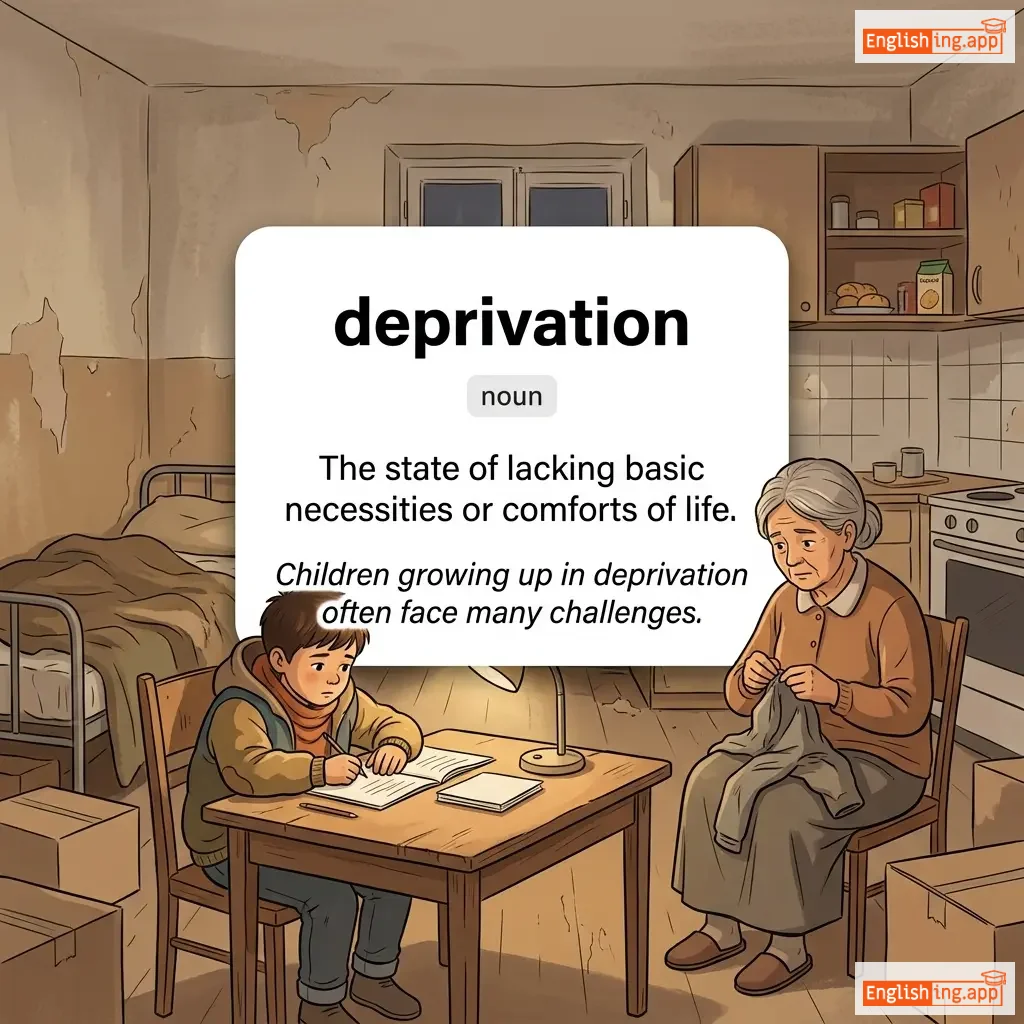
deprivation definition card — visual illustration of the meaning
noun
/ˌdɛprɪˈveɪʃən/
贫困 (pínkùn)

The state of lacking basic necessities or comforts of life.

"Children growing up in deprivation often face many challenges."

"在贫困中长大的孩子往往面临许多挑战。" (Zài pínkùn zhōng zhǎngdà de háizi wǎngwǎng miànlín xǔduō tiǎozhàn.)
verb
/dɪˈpraɪv/

to take something away from someone, or prevent them from having it

"The new law may deprive people of their rights."

noun
/dɛpθ/
深度 (shendu)

The distance from the top to the bottom of something; the intensity or complexity of a subject.

"The diver measured the depth of the ocean trench."

"潜水员测量了海洋沟壑的深度。" (Qiánshuǐyuán cèliàngle hǎiyáng gōu hè de shēndù.)
verb
/ˈdɛpjʊˌtaɪz/
任命为副职 (rènmìng wéi fùzhí)

To appoint someone as a deputy; to act as a substitute or representative.

"The sheriff decided to deputize several locals to help maintain order."

"治安官决定指派几位当地人以帮助维持秩序。" (Zhì'ān guān juédìng zhǐpài jǐ wèi dāngdì rén yǐ bāngzhù wéichí zhìxù.)
noun
/ˈdɛpjʊti/
代理人 (dàilǐrén)

A person appointed as a substitute with power to act.

"The deputy will lead the meeting in the manager’s absence."

"代理人在经理缺席时将主持会议。" (Dàilǐrén zài jīnglǐ quēxí shí jiāng zhǔchí huìyì.)
verb
/dɪˈræsɪˌneɪt/
彻底铲除 (chèdǐ chǎnchú)

To uproot something completely; to displace people from their native environment or culture.

"The conflict deracinated many families from their homeland."

"冲突让许多家庭从他们的家园中被迁移。" (Chōngtū ràng xǔduō jiātíng cóng tāmende jiāyuán zhōng bèi qiānyí.)
adjective
/dɪˈreɪndʒd/
疯狂 (fēngkuáng)

mentally disturbed or insane; behaving irrationally

"The deranged man shouted nonsense in the street."
"那个疯狂的人在街上大喊胡言乱语。" (Nàgè fēngkuáng de rén zài jiē shàng dà hǎn húyán luànyǔ.)
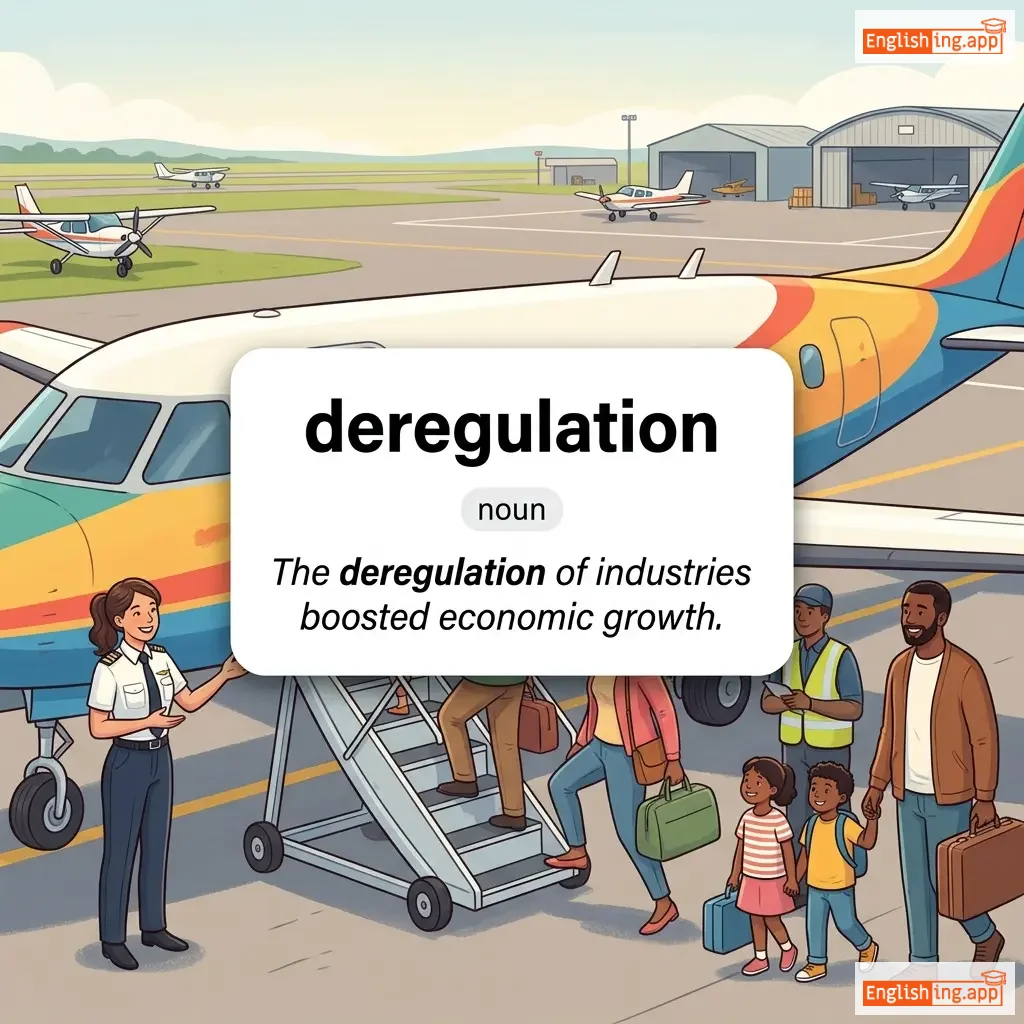
deregulation definition card — visual illustration of the meaning
noun
/ˌdiː.rɛɡ.jʊˈleɪ.ʃən/
放松管制 (fàngsōng guǎnzhì)

The removal or reduction of government regulations and controls, often involving liberalization, free market policies, or privatization.

"The deregulation of industries boosted economic growth."

"产业放松管制促进了经济增长。" (Chǎnyè fàngsōng guǎnzhì cùjìnle jīngjì zēngzhǎng.)
adjective, noun
/ˈdɛrəlɪkt/
废弃的 (feiqi de)

in poor condition due to neglect or disuse; a homeless or neglected person

"The old factory stood derelict for decades."

"那座老工厂废弃了几十年。" (Na zuo lao gongchang feiqi le jishinian.)
noun
/ˌdɛrɪˈlɪkʃən/
失职 (shīzhí)

the state of being abandoned; neglect of duty

"The officer was charged with dereliction of duty."

"这名官员因失职被指控。" (Zhè míng guānyuán yīn shīzhí bèi zhǐkòng.)
deride definition card — visual illustration of the meaning
verb
/dɪˈraɪd/
嘲笑 (chaoxiao)

to mock or ridicule someone or something

"The critics derided the new movie for its poor script."

"评论家嘲笑了这部新电影,因其糟糕的剧本。" (Pinglünjiā cháoxiàole zhè bù xīn diànyǐng, yīn qí zāogāo de jùběn.)
adjective
/dɪˈrɪzəbl/
可嘲笑的 (ke chaoxiao de)

deserving ridicule or mockery

"His excuse was so weak that it was plainly derisible."

"他的借口如此虚弱,以至于显然是可嘲笑的。" (Tā de jièkǒu rúcǐ xūruò, yǐzhì yú xiǎnrán shì kě chǎoxiào de.)
noun
/dɪˈrɪʒən/
嘲笑 (chaoxiao)

Contemptuous ridicule or mockery.

"His ideas were greeted with derision by the audience."

"他的观点被观众嘲笑了。" (Tā de guāndiǎn bèi guānzhòng cháoxiàole.)
adjective
/dɪˈraɪsɪv/
嘲讽的 (chaofeng de)

Expressing contempt or ridicule.

"She gave a derisive laugh at his attempt to sing."

"她对他的唱歌尝试发出了嘲讽的笑声。" (Ta dui tade changge changshi fachu le chaofeng de xiaosheng.)
noun
/ˌdɛrɪˈveɪʃən/
衍生 (yǎnshēng)

The origin or development of something from a source.

"The derivation of the word comes from Latin."

"这个词的词源来自拉丁语。" (Zhège cí de cíyuán láizì lādīng yǔ.)
derivative definition card — visual illustration of the meaning
noun, adjective
/dɪˈrɪvətɪv/
衍生物 (yǎn shēng wù)

Something that is based on another source; in math, a measure of how a function changes.

"The film was criticized for being too derivative of earlier works."

"这部电影因过于模仿早期作品而受到批评。" (Zhè bù diànyǐng yīn guòyú mófǎng zǎoqī zuòpǐn ér shòudào pīpíng.)
verb
/dɪˈraɪv/
派生 (paisheng)

To obtain something from a source.

"Many English words derive from Latin."

"许多英语词汇源自拉丁语。" (xuduo yingyu ci hui yuanci latin yu.)
adjective
/dɪˈraɪvd/
衍生的 (yǎnshēng de)

Developed or obtained from something else; not original.

"The word is derived from Latin."

"这个词来源于拉丁语。" (Zhège cí láiyuán yú Lādīng yǔ.)
noun
/ˌdɜːrməˈtɑːlədʒɪst/
皮肤科医生 (pífū kē yīshēng)

A doctor who specializes in the treatment of skin diseases.

"She consulted a dermatologist for her skin allergy."

"她因皮肤过敏去咨询了皮肤科医生。" (Tā yīn pífū guòmǐn qù zīxúnle pífū kē yīshēng.)
noun
/ˌdɜːrməˈtɑːlədʒi/
皮肤学 (pifu xue)

The branch of medicine concerned with the skin and its diseases.

"He studied dermatology at medical school."

"他在医学院学习了皮肤学。" (Ta zai yixueyuan xuexi le pifu xue.)
adjective
/dɪˈrɒɡətɪv/
贬低的 (biǎndī de)

Expressing a low opinion or showing lack of respect.

"He made a derogative remark about her work."

"他对她的工作做了贬低的评论。" (Tā duì tā de gōngzuò zuòle biǎndī de pínglùn.)
adjective
/dɪˈrɒɡətɔːri/
贬低的 (biǎndī de)

Showing a critical or disrespectful attitude.

"The article contained derogatory comments about the politician."

"文章包含了对政治家的贬低评论。" (Wénzhāng bāohánle duì zhèngzhìjiā de biǎndī pínglùn.)
noun
/ˈdɛrɪk/
钻井塔 (zuàn jǐng tǎ)

A framework or tower used for supporting a crane, especially for oil drilling or lifting heavy loads.

"The workers assembled a derrick at the oil drilling site."

"工人们在石油钻井现场组装了一座钻井塔。" (Gōngrén men zài shíyóu zuàntàn xiànchǎng zǔzhuāngle yī zuò zuàn jǐng tǎ.)