词汇表

英语词汇词典 | 单词含义、定义和示例

noun
/ˈdræm.ə.tɪst/
剧作家 (juzuo jia)

a person who writes plays

"Shakespeare is one of the greatest dramatists in history."

"莎士比亚是历史上最伟大的剧作家之一。" (Shashibiya shi lishi shang zui weida de juzuo jia zhi yi.)
verb
/ˈdræm.ə.taɪz/
戏剧化 (xiju hua)

to present a story in a dramatic way, or to exaggerate something

"The novel was dramatized into a popular TV series."

"这本小说被改编成了一部受欢迎的电视系列剧。" (Zhe ben xiaoshuo bei gaibian cheng le yi bu shou huanying de dianshi xilie ju.)
adjective
/ˈdræstɪk/
激烈 (jīliè)

likely to have a strong or far-reaching effect; extreme and severe

"The company had to take drastic measures to survive the crisis."

"公司必须采取激烈的措施才能度过危机。" (Gōngsī bìxū cǎiqǔ jīliè de cuòshī cáinéng dùguò wēijī.)
noun
/drɑːft/ (UK), /dræft/ (US)

a current of cool air in a room or another confined space; also a portion of liquid, especially beer, served from a barrel or cask

"She closed the window to keep out the cold draught."

verb
/drɔː/
画画 / 拉 (huà huà / lā)

to produce a picture by making lines and marks on paper; to pull or move something in a particular direction

"The child loves to draw pictures of animals."

"孩子喜欢画动物的画。" (Háizi xǐhuān huà dòngwù de huà.)
noun
/ˈdrɔː.bæk/
缺点; 不利因素; 问题 (quēdiǎn, bùlì yīnsù, wèntí)

a feature that renders something less acceptable; a disadvantage or problem

"The main drawback of living in the city is the high cost of housing."

"住在城市的主要缺点是高昂的住房成本。" (Zhù zài chéngshì de zhǔyào quēdiǎn shì gāo'áng de zhùfáng chéngběn.)
noun
/ˈdrɔːər/
抽屉 (chouti)

a box-shaped storage compartment that slides in and out of furniture

"She kept her jewelry in the top drawer of the dresser."

"她把珠宝放在梳妆台的上层抽屉里。" (Tā bǎ zhūbǎo fàng zài shūzhuāngtái de shàngcéng chōuti lǐ.)
noun
/ˈdrɔːɪŋ/
幸福 (xìngfú)

a picture or diagram made with a pencil, pen, or crayons rather than paint

"She showed me a drawing of her house."

"当她获得奖项时,她无法掩饰自己的幸福。" (Dāng tā huòdé jiǎngxiàng shí, tā wúfǎ yǎnshì zìjǐ de xìngfú.)
verb
/drɔːl/
懒散地说话 (lǎnsàn de shuōhuà)

to speak in a slow, lazy way with prolonged vowel sounds

"He tends to drawl when he is tired."

"他在累的时候说话会很慢。" (Tā zài lèi de shíhòu shuōhuà huì hěn màn.)
adjective
/ˈdrɛdfəl/
可怕的 (kěpà de)

causing or involving great fear or suffering; very bad or unpleasant

"The weather was dreadful during our trip."

"我们旅行时天气很可怕。" (Wǒmen lǚxíng shí tiānqì hěn kěpà.)
dream definition card — visual illustration of the meaning
noun/verb
/driːm/
梦想 (mengxiang)

a series of thoughts, images, or emotions occurring during sleep; a cherished aspiration or goal

"She dreamed of becoming a doctor."

"她梦想成为一名医生。" (Ta mengxiang chengwei yi ming yisheng.)
adjective
/ˈdrɪəri/
沉闷的 / 阴沉的 (chenmen de / yīnchén de)

dull, bleak, and lifeless; depressing

"The long, dreary winter made everyone feel gloomy."

"漫长而阴沉的冬天让每个人都感到沮丧。" (Manchang er yinchen de dongtian rang meige ren dou gandao jushang.)
noun
/drɛɡz/
残渣 (cancha)

the remnants of a liquid left in a container, together with any sediment or grounds; the most worthless part of something

"He drank the dregs of the coffee before leaving."

"他在离开前喝了咖啡的残渣。" (Ta zai likai qian he le kafei de cancha.)
verb
/drɛntʃ/
浸湿 (jin shi)

to make someone or something completely wet

"The sudden rain drenched the players on the field."

"突如其来的大雨让场上的球员全部湿透。" (Tu ru qi lai de da yu rang chang shang de qiu yuan quan bu shi tou.)
noun/verb
/drɛs/
幸福 (xìng fú)

a one-piece garment for women or girls; to put on clothes

"She wore a beautiful red dress to the party."

"她收到奖项时无法掩饰她的幸福。" (Tā shōu dào jiǎng xiàng shí wú fǎ yǎn shì tā de xìng fú.)
noun
/ˈdrɛsɪŋ/
沙拉酱 / 调味料混合物 (shālā jiàng / tiáowèiliào hùnhéwù)

a sauce for salads; or material used to cover a wound

"She prepared a delicious salad with Italian dressing."

"她用意大利沙拉酱准备了一道美味的沙拉。" (Tā yòng Yìdàlì shālā jiàng zhǔnbèile yīdào měiwèi de shālā.)
noun
/ˈdrɛsˌmeɪkər/
女裁缝 (nv caifeng)

A person who makes or alters women's clothing professionally.

"The dressmaker crafted a beautiful gown for the bride."

"女裁缝为新娘制作了一件漂亮的礼服。" (Nv caifeng wei xinniang zhizuo le yi jian piaoliang de lifu)
verb
/ˈdrɪbəl/

to let liquid flow slowly in drops or to move a ball skillfully with repeated small kicks or bounces

"The baby dribbled milk on his shirt."

adjective
/draɪd/
(gan)

without moisture; preserved by removing water

"She added some dried flowers to the vase for decoration."

"她在花瓶里加了一些干花来装饰。" (Ta zai huaping li jia le yixie ganhua lai zhuangshi.)
noun
/draɪd ˈfɛnjʊˌɡriːk livz/
干葫芦巴叶 (gān húlu bā yè)

dehydrated leaves of the fenugreek plant used as a herb in cooking

"Add dried fenugreek leaves to the curry for extra flavor."

"将干葫芦巴叶加入咖喱中,增加额外的风味。" (Jiāng gān húlu bā yè jiārù gālí zhōng, zēngjiā éwài de fēngwèi.)
noun
/draɪd roʊz ˈpɛtəlz/
干玫瑰花瓣 (gān méiguī huābàn)

dehydrated petals from roses used for culinary and aromatic purposes

"The dessert was garnished with dried rose petals."

"这道甜点用干玫瑰花瓣装饰。" (zhè dào tiándiǎn yòng gān méiguī huābàn zhuāngshì)
verb
/drɪft/
漂移 (piaoyi)

to move slowly, especially by air or water currents

"The boat began to drift away from the shore."

"船开始从岸边漂移。" (Chuan kaishi cong anbian piaoyi.)
noun
/drɪl/
钻头 (zuàntóu)

a tool or exercise used for making holes or practicing skills

"The students took part in a fire drill at school."
"学生们参加了学校的火灾演习。" (Xuéshēngmen cānjiāle xuéxiào de huǒzāi yǎn xí.)
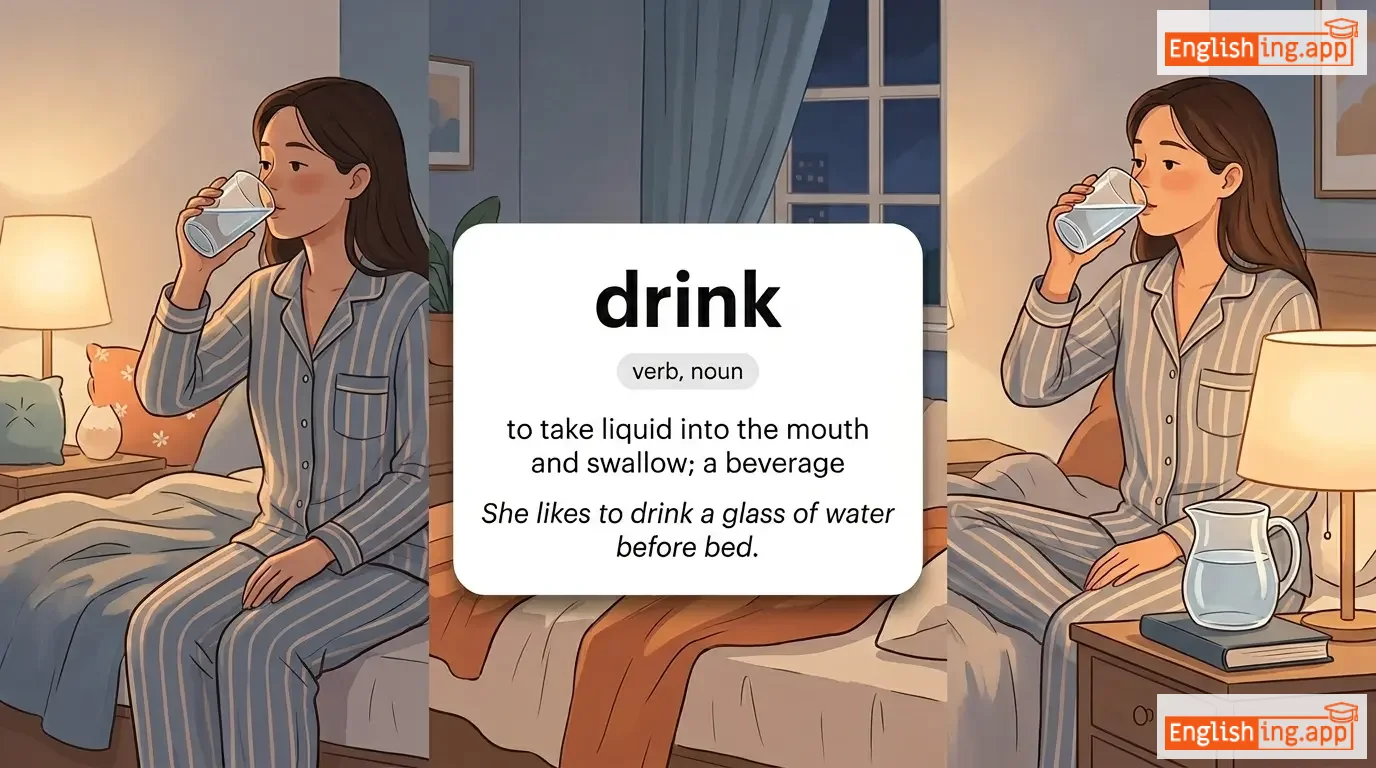
drink definition card — visual illustration of the meaning
verb, noun
/drɪŋk/
喝 / 饮料 (he / yinliao)

to take liquid into the mouth and swallow; a beverage

"She likes to drink a glass of water before bed."

"她喜欢在睡觉前喝一杯水。" (Ta xihuan zai shuijiao qian he yi bei shui.)
noun
/ˈdrɪŋkɪŋ/
(he)

the act of consuming liquids, especially alcohol

"Drinking too much water at once can make you feel bloated."
"一次喝太多水可能会让你感到腹胀。" (Yīcì hē tài duō shuǐ kěnéng huì ràng nǐ gǎndào fùzhàng.)
verb
/drɪp/
滴落 (diluo)

to fall or let fall in drops

"Water was dripping from the broken pipe."

"水从破裂的管道中滴下来。" (Shui cong polie de guandao zhong dilu xiala.)
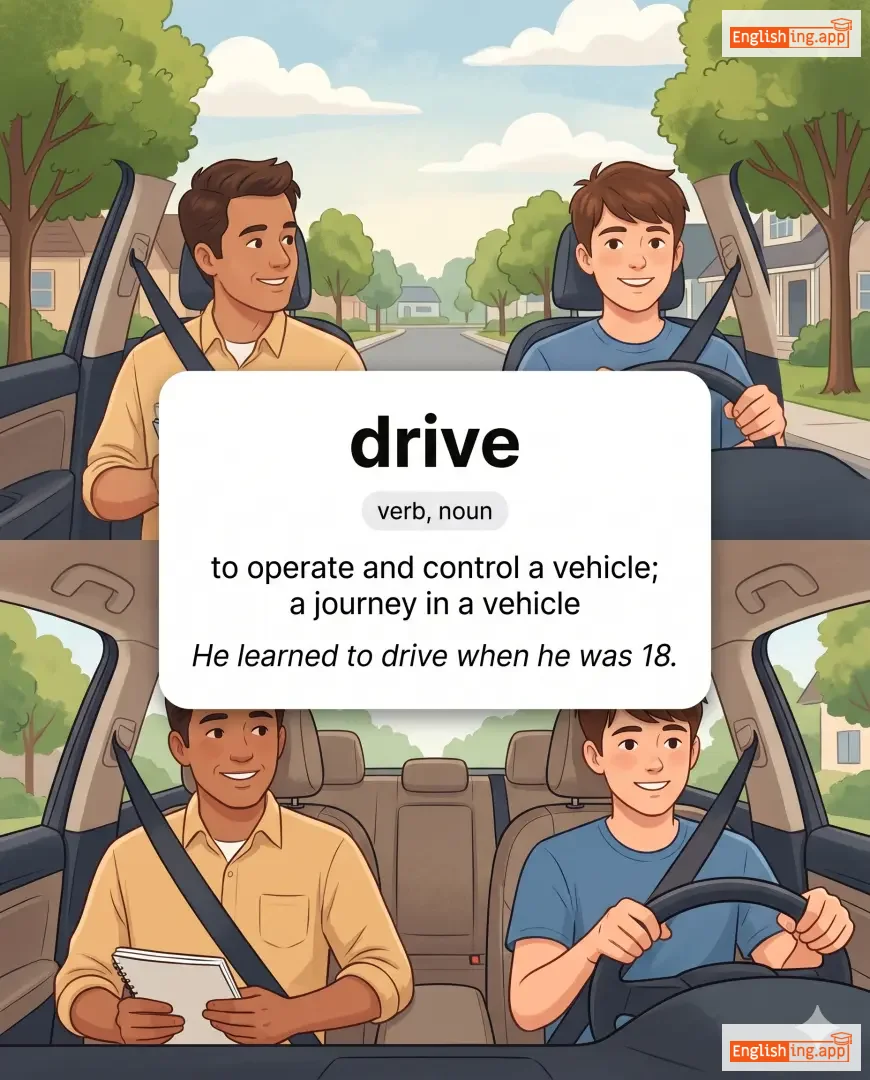
drive definition card — visual illustration of the meaning
verb, noun
/draɪv/
驾驶 (jiashi)

to operate and control a vehicle; a journey in a vehicle

"He learned to drive when he was 18."

"他18岁时学会了开车。" (Ta 18 sui shi xuehui le kaiche.)
noun
/ˈdrɪvəl/
胡言乱语 (húyánluànyǔ)

silly or nonsensical talk

"The politician’s speech was full of meaningless drivel."

"政治家的演讲充满了无意义的胡言乱语。" (Zhèngzhìjiā de yǎnjiǎng chōngmǎnle wú yìyì de húyánluànyǔ.)
🧑‍✈️

Driver (dǎi wéi)

noun
/ˈdraɪvər/
司机 (sī jī)

a person who operates a vehicle

"The taxi driver took us to the airport."

"出租车司机把我们带到了机场。" (Chū zū chē sī jī bǎ wǒ men dài dào le jī chǎng.)
noun
/ˈdraɪv.weɪ/
车道 (chedao)

a short private road leading from a street to a house or garage

"The car was parked in the driveway next to the garden."

"车子停在花园旁的车道上。" (Chezi ting zai huayuan pang de chedao shang.)
verb
/ˈdraɪvɪŋ/
驾驶 (jiàshǐ)

the act of controlling and operating a vehicle; guiding or motivating something forward

"She loves driving along the coast on weekends."

"她喜欢在周末沿着海岸驾驶。" (Tā xǐhuān zài zhōumò yánzhe hǎi'àn jiàshǐ.)
verb
/ˈdrɪzəl/
毛毛雨 (máomáoyǔ)

to rain lightly with very small drops

"It began to drizzle just as we left the house."

"当我们离开房子时,开始下起了细雨。" (Dāng wǒmen líkāi fángzi shí, kāishǐ xià qǐle xì yǔ.)
adjective
/droʊl/
滑稽 (huá jī)

curious or unusual in a way that provokes dry amusement

"He had a droll sense of humor that made everyone laugh."

"他有一种滑稽的幽默感,让每个人都笑了。" (Tā yǒu yī zhǒng huá jī de yōumò gǎn, ràng měi gè rén dōu xiào le.)
noun/verb
/droʊn/
嗡嗡声 / 无人机 (wēngwēng shēng / wúrén jī)

a continuous low humming sound; an unmanned flying device

"The drone of bees filled the garden."

"蜜蜂的嗡嗡声充满了花园。" (Mìfēng de wēngwēng shēng chōngmǎnle huāyuán.)
verb
/druːp/
下垂 (xiàchuí)

to bend or hang downward; to become weak or tired

"The flowers began to droop in the heat."

"花朵在热量下开始下垂。" (Huāduǒ zài rèliàng xià kāishǐ xiàchuí.)
verb, noun
/drɒp/
掉 / 水滴 (diao / shuidi)

to let something fall; a small quantity of liquid

"Be careful not to drop your phone."

"小心不要把手机掉了。" (Xiao xin bu yao ba shouji diao le.)
dross definition card — visual illustration of the meaning
noun
/drɒs/
废料 (feiliao)

worthless or unwanted material; rubbish or impurities

"Most of his early writings were considered dross."
"他的大部分早期作品被视为废料。" (Ta de dabu fen zaoqi zuopin bei shi wei feiliao.)
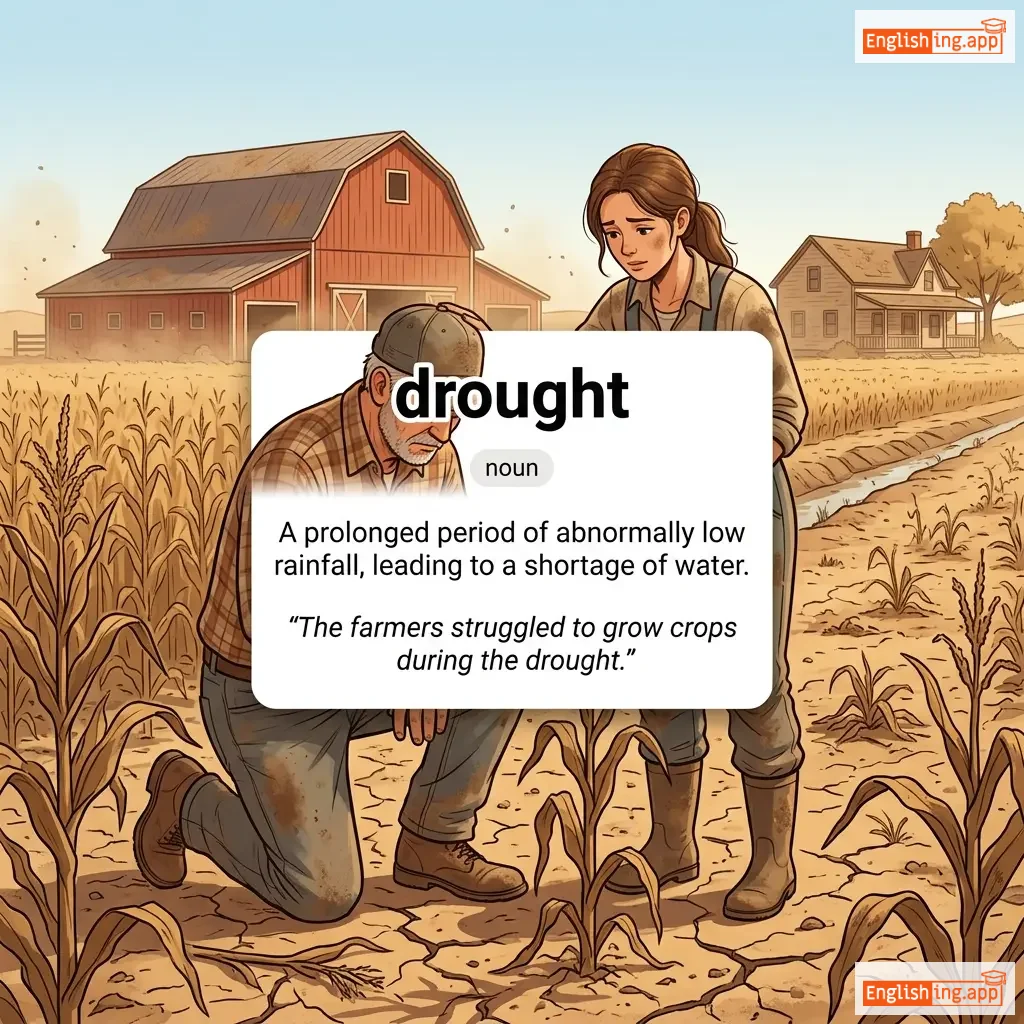
drought definition card — visual illustration of the meaning
noun
/draʊt/
干旱 (ganhan)

A prolonged period of abnormally low rainfall, leading to a shortage of water.

"The farmers struggled to grow crops during the drought."
"农民在干旱期间努力种植作物。" (Nongmin zai ganhan qijian nuli zhongzhi zuowu.)
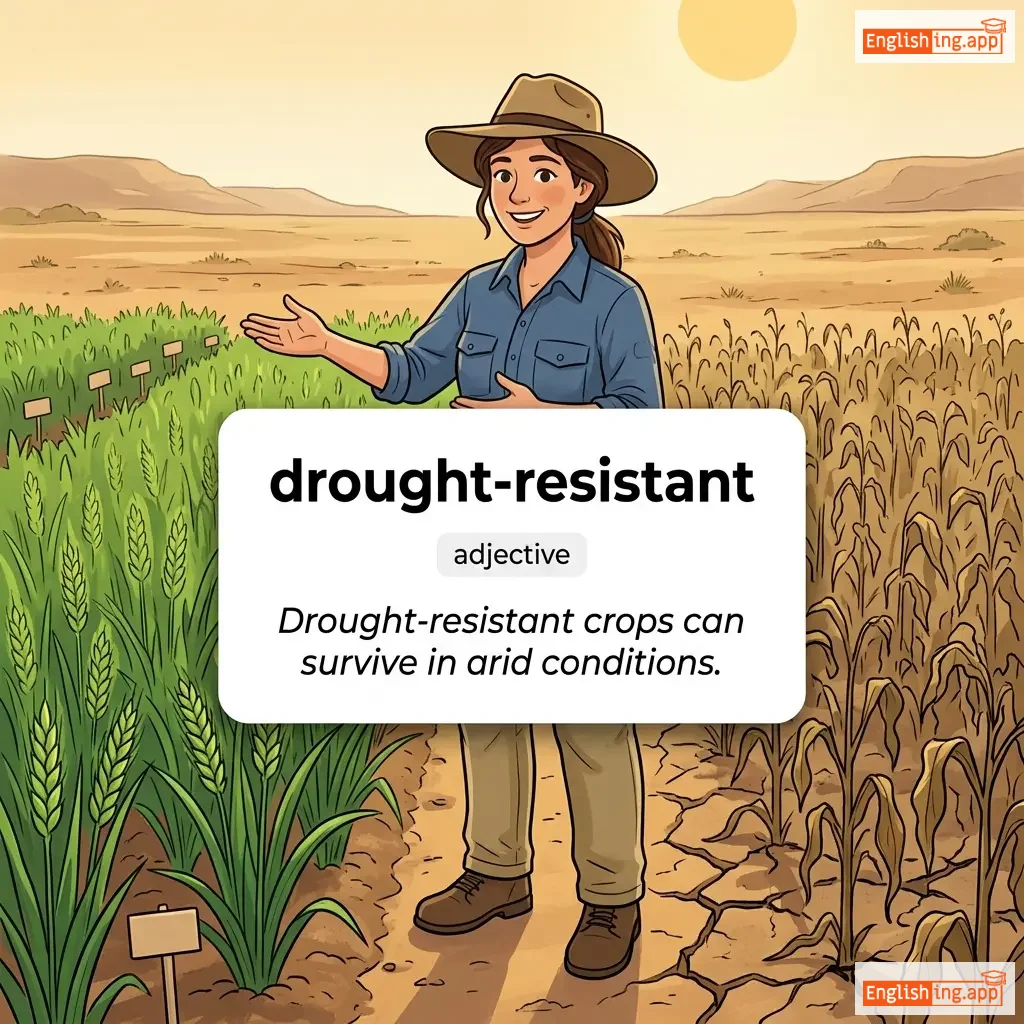
drought-resistant definition card — visual illustration of the meaning
adjective
draʊt rɪˈzɪs.tənt
抗旱 (kang han)

Able to survive and grow despite limited water availability or drought conditions.

"Drought-resistant crops can survive in arid conditions."

"抗旱作物可以在干旱条件下生存。" (Kanghan zuowu keyi zai ganhan tiaojian xia shengcun.)
verb
/draʊn/
溺水 (nìshuǐ)

to die or cause to die by being submerged in and inhaling water

"He nearly drowned while swimming in the river."

"他在河里游泳时差点淹死。" (Tā zài hé lǐ yóuyǒng shí chàdiǎn yān sǐ.)
adjective
/ˈdraʊzi/
困倦 (kunjue)

Feeling sleepy or half-asleep.

"The warm room made him feel drowsy."

"温暖的房间让他感到困倦。" (Wēnnuǎn de fángjiān ràng tā gǎndào kunjuàn.)
🧑‍🌾

drudge (druj)

noun
/drʌdʒ/
苦工 (kǔgōng)

A person made to do hard, menial, or dull work.

"He felt like a drudge, stuck in repetitive tasks all day."

"他觉得自己像个苦工,一整天都困在重复的任务中。" (Tā juédé zìjǐ xiàng gè kǔgōng, yī zhěng tiān dōu kùn zài chóngfù de rènwù zhōng.)
noun
/ˈdrʌdʒəri/
艰苦而单调的工作 (jiānkǔ ér dāndiào de gōngzuò)

Hard, menial, or dull work.

"She wanted to escape the drudgery of her daily routine."

"她想逃离她日常生活的单调工作。" (Tā xiǎng táolí tā rìcháng shēnghuó de dāndiào gōngzuò.)
noun
/drʌɡ/
毒品 (dúpǐn)

a substance used as a medicine or an illegal addictive substance

"The doctor prescribed a new drug for the illness."

"医生为这种疾病开了新药。" (Yīshēng wèi zhè zhǒng bìngzhèng kāi le xīn yào.)
noun
/ˈdrʌɡˌstɔːr/
药店 (yaodian)

A retail store that sells medicines, health-related products, and sometimes cosmetics or snacks.

"I stopped by the drugstore to buy some cold medicine."

"我去药店买感冒药。" (Wo qu yaodian mai ganmao yao.)
noun
/drʌm/
鼓或桶 (gǔ huò tǒng)

a musical instrument beaten with sticks or hands; also a cylindrical container

"The drummer hit the drum loudly during the concert."

"鼓手在音乐会中大声敲击鼓。" (Gǔshǒu zài yīnyuè huì zhōng dà shēng qiāojī gǔ.)
noun
/ˈdrʌmɪt/
军鼓 (jungu)

a small drum used in military or marching bands

"The drummer played a steady beat on the drumet during the parade."

"鼓手在游行中打出了稳定的节奏。" (gushou zai youxing zhong dachu le wending de jiezou.)
noun
/ˈdrʌm.stɪk/
莫林加荚 (Mò lín jiā jiá)

long green pod vegetable from moringa tree; nutritious vegetable used in curries

"The drumstick adds a unique flavor to the traditional fish curry."

"鼓槌为传统鱼咖喱增添了独特的风味。" (Gǔ chuí wèi chuántǒng yú gā lí zēng tiān le dútè de fēngwèi.)
adjective
/drʌŋk/
醉酒 (zuìjiǔ)

affected by alcohol to the point of losing control of one's faculties or behavior

"He was too drunk to walk straight."
"他喝醉了,无法走直路。" (Tā hē zuì le, wúfǎ zǒu zhí lù.)
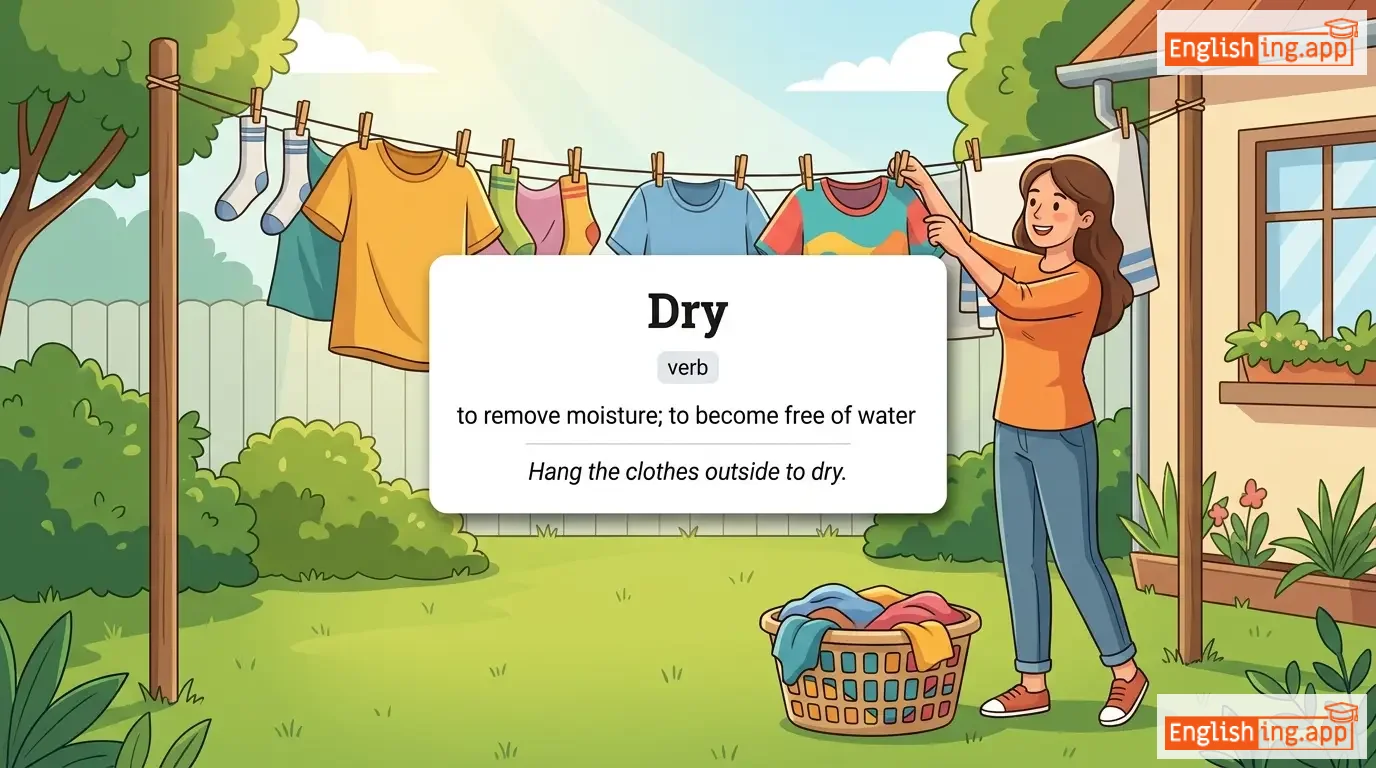
Dry definition card — visual illustration of the meaning
adjective
/draɪ/
(gan)

free from moisture or liquid; not wet

"The clothes are dry after hanging in the sun."

"衣服在阳光下晒干后变干。" (Yifu zai yangguang xia shaigan hou bian gan.)