词汇表

英语词汇词典 | 单词含义、定义和示例

adjective
/dɪˈstrɔːt/
心烦意乱 (xīn fán yì luàn)

extremely upset and anxious, often to the point of being unable to think clearly

"She was distraught after losing her pet."

"她在失去宠物后非常心烦意乱。" (Tā zài shīqù chǒngwù hòu fēicháng xīn fán yì luàn.)
noun
/dɪsˈtrɛs/
痛苦 (tòngkǔ)

extreme anxiety, sorrow, or pain

"He felt a deep sense of distress when he heard the bad news."

"当他听到坏消息时,他感到深深的痛苦。" (Dāng tā tīngdào huài xiāoxī shí, tā gǎndào shēnshēn de tòngkǔ.)
adjective
/dɪˈstrɛst/
痛苦 (tongku)

feeling or showing extreme anxiety, sorrow, or pain

"She looked distressed after hearing the bad news."
"听到坏消息后,她看起来很痛苦。" (Tīng dào huài xiāoxī hòu, tā kàn qǐlái hěn tòngkǔ.)
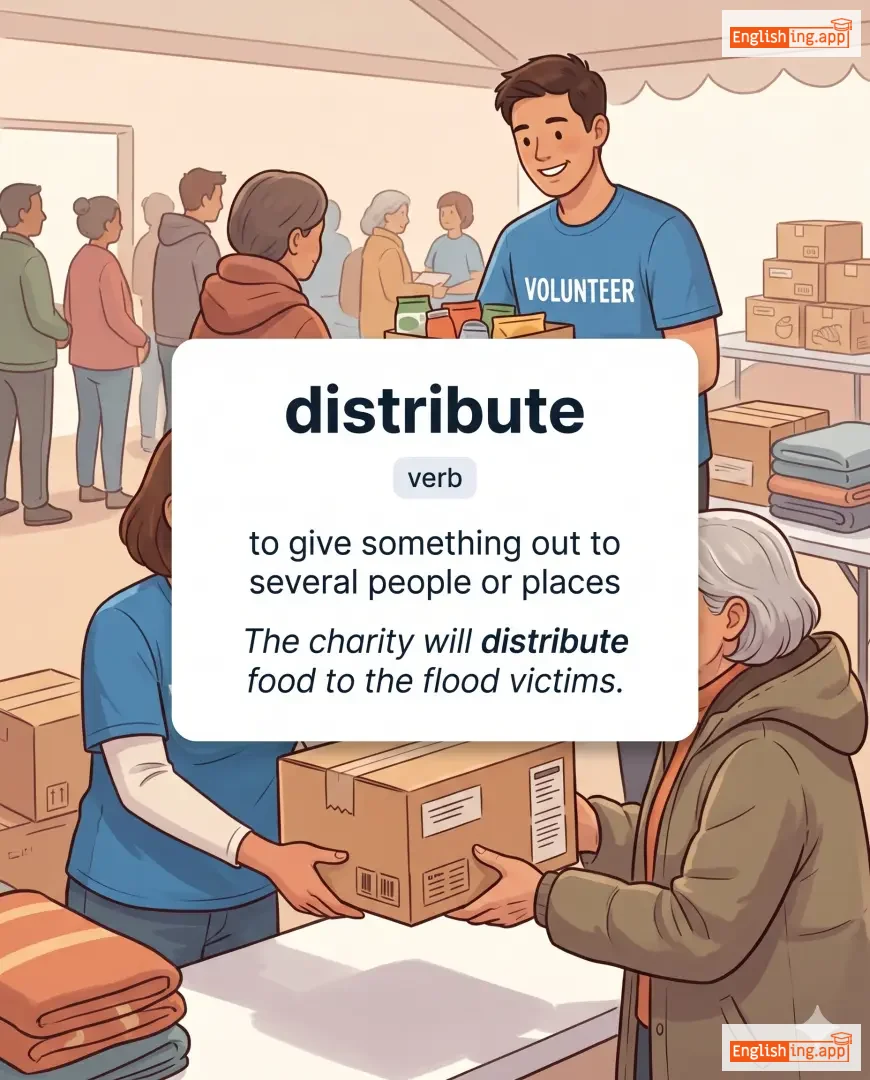
distribute definition card — visual illustration of the meaning
verb
/dɪˈstrɪbjuːt/
分发 (fēn fā)

to give something out to several people or places

"The charity will distribute food to the flood victims."

"慈善机构将向洪水受害者分发食物。" (Císhàn jīgòu jiāng xiàng hóngshuǐ shòuhài zhě fēn fā shíwù.)
noun
/ˌdɪstrɪˈbjuːʃən/
分配 (fenpei)

the act of sharing or delivering something to multiple people or places

"The company manages the distribution of food supplies to rural areas."

"公司管理食品供应的分配到农村地区。" (Gōngsī guǎnlǐ shípǐn gōngyì de fēnpèi dào nóngcūn dìqū.)
noun
/ˈdɪstrɪkt/
(qu)

a specific area of a country, city, or town, often with official boundaries

"She lives in the northern district of the city."

"她住在城市的北区。" (Ta zhu zai chengshi de bei qu.)
verb
/dɪsˈtrʌst/
不信任 (bù xìnrèn)

to have no confidence or trust in someone or something

"Many people distrust politicians."

"许多人不信任政治家。" (Xǔduō rén bù xìnrèn zhèngzhìjiā.)
verb
/dɪsˈtɜːb/
打扰 (dǎrǎo)

to interrupt or cause someone to stop what they are doing

"Please don’t disturb me while I’m studying."

"请不要在我学习时打扰我。" (Qǐng bùyào zài wǒ xuéxí shí dǎrǎo wǒ.)
noun
/dɪˈstɜː.bəns/
干扰; 打扰; 不安 (ganrao; darao; bu'an)

the interruption of a settled and peaceful condition; anxiety or mental uneasiness

"The loud music created a disturbance that bothered all the neighbors."

"大声的音乐制造了一个干扰,打扰了所有邻居。" (Dasheng de yinyue zhizao le yi ge ganrao, darao le suoyou linju.)
adjective
/dɪˈstɜː.bɪŋ/
令人不安 (lìng rén bù ān)

causing anxiety, worry, or emotional distress

"The news about the accident was deeply disturbing."

"关于事故的新闻令人深感不安。" (Guānyú shìgù de xīnwén lìng rén shēn gǎn bù ān.)
noun
/dɪsˈjuːnjən/
分裂 (fenlie)

the state of being separated or not united

"Civil wars often result from national disunion."

"内战通常由国家分裂引发。" (Neizhan tongchang you guojia fenlie yinfā.)
noun
/ˈdaɪˌsɪləbəl/
双音节词 (shuang yin jie ci)

a word consisting of two syllables

"The word 'happy' is a disyllable."

"‘幸福’这个词是一个双音节词。" ('Xingfu' zhe ge ci shi yi ge shuang yin jie ci.)
verb
/ˈdɪðər/

to be indecisive or unable to make a decision

"He dithered for hours before choosing a restaurant."

noun
/ˈdɪti/
简短的歌曲 (jiǎnduǎn de gēqǔ)

a short, simple song or poem

"She sang a cheerful little ditty while cooking."

"她一边做饭一边唱着愉快的小歌曲。" (Tā yībiān zuòfàn yībiān chàngzhe yúkuài de xiǎo gēqǔ.)
diuretic definition card — visual illustration of the meaning
noun
/ˌdaɪ.jʊˈret.ɪk/
利尿剂 (lì niào jì)

A substance that promotes the production of urine.

"Coffee has a mild diuretic effect."

"咖啡有轻微的利尿作用。" (Kā fēi yǒu qīng wēi de lì niào zuò yòng.)
adjective
/daɪˈɜːrnəl/
昼行性 (zhòu xíng xìng)

active during the day; occurring daily

"Most birds are diurnal creatures, active in daylight hours."

"大多数鸟类是昼行性动物,在白天活跃。" (Dà duōshù niǎo lèi shì zhòu xíng xìng dòngwù, zài báitiān huóyuè.)
noun
/ˈdiːvə/
著名女歌手 (zhuoming nǚ gēshǒu)

a famous female singer; a woman who is admired or behaves like a star

"The pop diva performed her latest hit to a cheering crowd."

"这位流行歌后在欢呼的人群前演唱了她的最新热曲。" (Zhè wèi liúxíng gēhòu zài huānhū de rénqún qián yǎnchàng le tā de zuìxīn rèqǔ.)
noun
/ˌdaɪvəˈɡeɪʃən/
偏离 (pianli)

digression; wandering from a path or subject

"His lecture was full of divagation, making it hard to follow the main point."

"他的演讲充满了偏离主题的内容,使得很难跟上主要论点。" (Tā de yǎnjiǎng chōngmǎnle piānlí zhǔtí de nèiróng, shǐdé hěn nán gēn shàng zhǔyào lùndiǎn.)
verb
/daɪv/
跳水 (tiao shui)

to plunge headfirst into water or another substance

"He decided to dive into the pool on a hot day."

"他决定在炎热的日子里跳进游泳池。" (Tā juédìng zài yánrè de rìzi lǐ tiàojìn yóuyǒngchí.)
noun
/ˈdaɪ.vər/
潜水员 (qián shuǐ yuán)

a type of water bird that dives underwater to catch fish

"The diver disappeared beneath the surface to catch a fish."
"潜水员消失在水面下去捕捉一条鱼。" (Qián shuǐ yuán xiāo shī zài shuǐ miàn xià qù bǔ zhuō yī tiáo yú.)
diverge definition card — visual illustration of the meaning
↔️

diverge

verb
/daɪˈvɜːrdʒ/

to separate from a path, opinion, or standard

"The two friends began to diverge in their career choices."

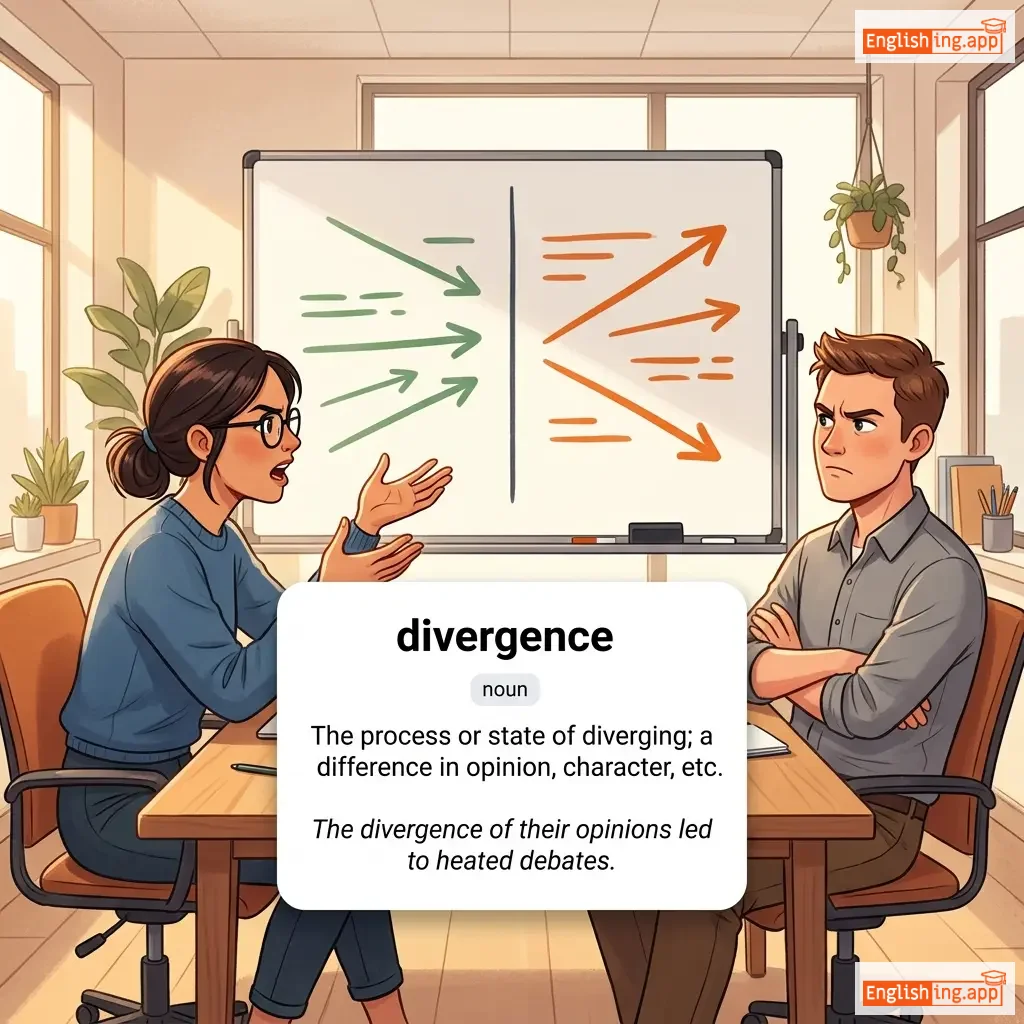
divergence definition card — visual illustration of the meaning
noun
daɪˈvɜː.dʒəns
分歧 (fenqi)

The process or state of diverging; a difference in opinion, character, etc.

"The divergence of their opinions led to heated debates."
"他们意见的分歧引发了激烈的辩论。" (Tamen yijian de fenqi yinfa le jilie de bianlun.)
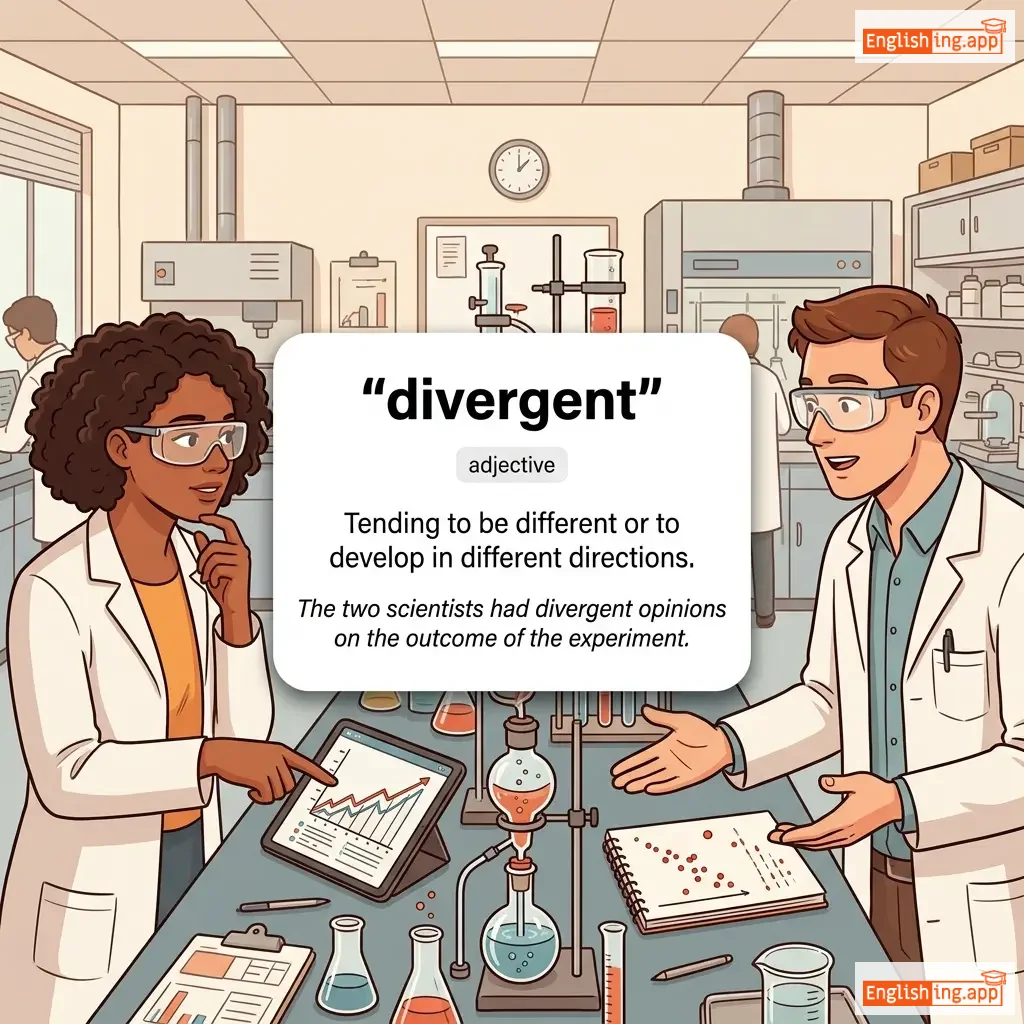
divergent definition card — visual illustration of the meaning
adjective
/daɪˈvɜːrdʒənt/
发散的 (fāsàn de)

Tending to be different or to develop in different directions.

"The two scientists had divergent opinions on the outcome of the experiment."
"这两位科学家对实验结果有不同的看法。" (Zhè liǎng wèi kēxuéjiā duì shíyàn jiéguǒ yǒu bùtóng de kànfǎ.)
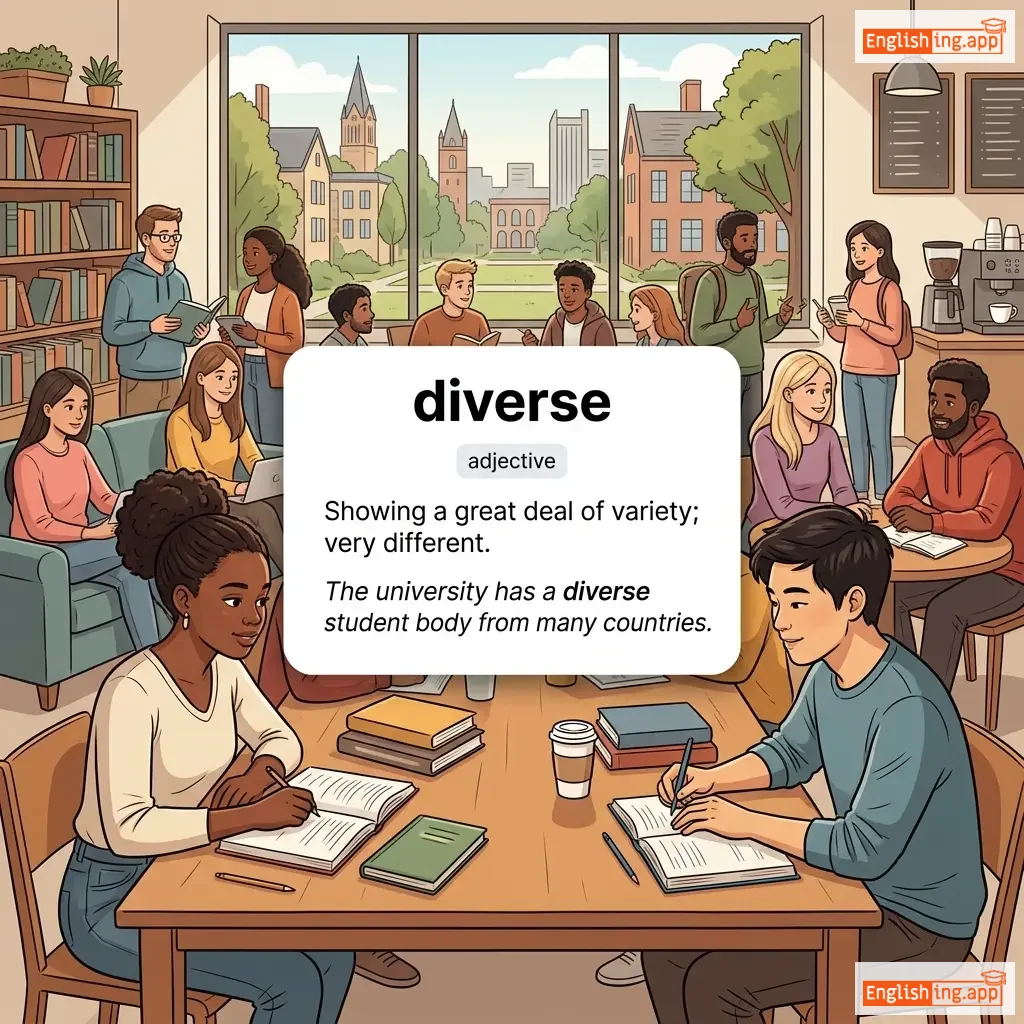
diverse definition card — visual illustration of the meaning
adjective
/daɪˈvɜːrs/
多样的 (duōyàng de)

Showing a great deal of variety; very different.

"The university has a diverse student body from many countries."
"大学有一个来自多个国家的多样化学生群体。" (Dàxué yǒu yīgè láizì duō gè guójiā de duōyàng huà xuéshēng qúntǐ.)
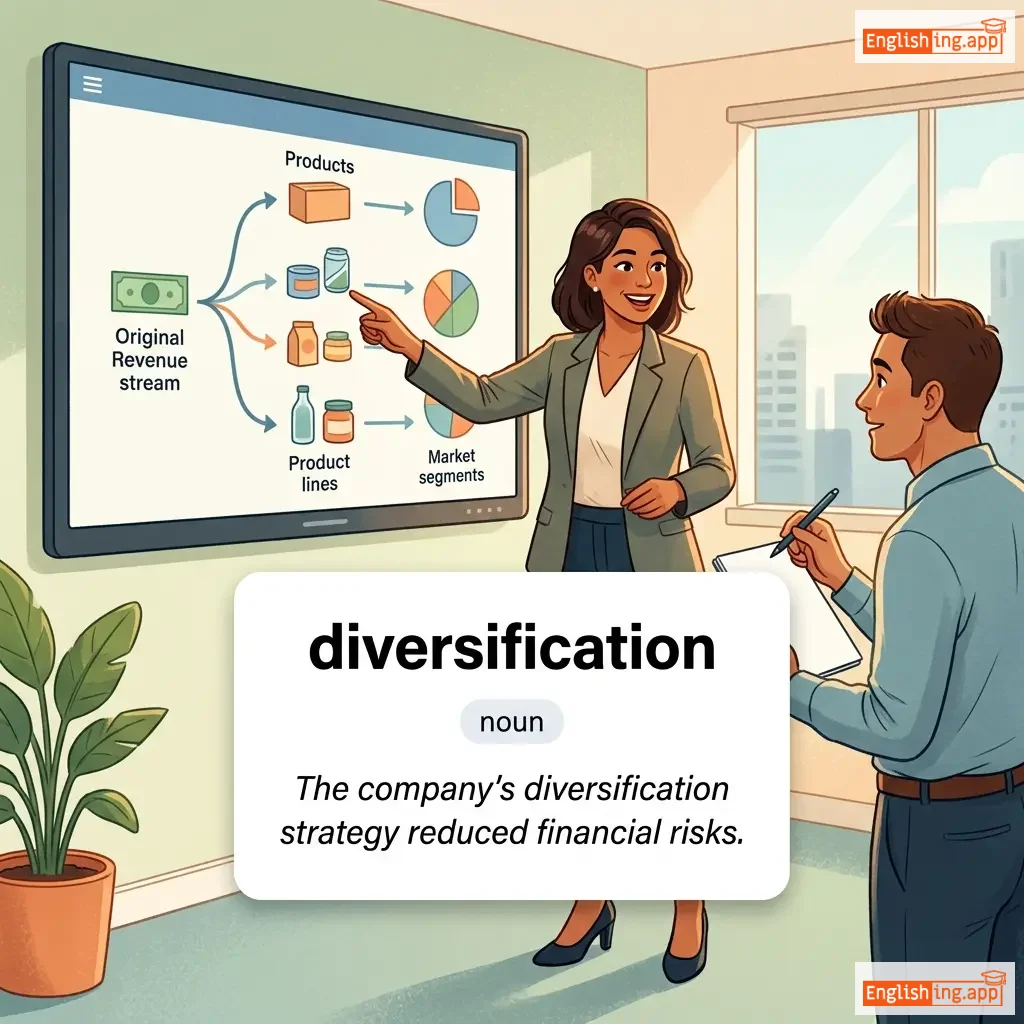
diversification definition card — visual illustration of the meaning
noun
/daɪˌvɜː.sɪ.fɪˈkeɪ.ʃən/
多元化 (dai ver si fi kai shun)

The process of a business expanding into different product lines or markets to spread risk and reduce dependence on a single source of income.

"The company's diversification strategy reduced financial risks."

"公司的多元化策略降低了金融风险。" (gong si de duo yuan hua ce lu e jiang le jin rong feng xian)
adjective
/daɪˈvɜːrsɪfaɪd/
多样化的 (duō yàng huà de)

Made or having variety in form, nature, or content.

"The company adopted a diversified business strategy to reduce risks."

"公司采纳了多样化的商业战略来降低风险。" (Gōngsī cǎnàle duōyàng huà de shāngyè zhànlüè lái jiàngdī fēngxiǎn.)
noun
/daɪˈvɜːrʒən/

The act of changing direction or being distracted; an activity that entertains.

"The road was closed, so we had to take a diversion through the village."

diversity definition card — visual illustration of the meaning
noun
/daɪˈvɜːrsəti/
多样性 (duōyàngxìng)

A range of different things or people; variety.

"Workplace diversity helps foster innovation and creativity."

"工作场所的多样性有助于促进创新和创造力。" (gōngzuò chǎngsuǒ de duōyàngxìng yǒuzhù yú cùjìn chuàngxīn hé chuàngzàolì.)
↪️

divert

verb
/daɪˈvɜːrt/

to turn aside from a course; to redirect or entertain

"The police diverted traffic to a side road."

adjective
/daɪˈvɜːrtɪbəl/
可转移的 (ke zhuǎnyí de)

capable of being turned aside or redirected

"Funds from the budget are not legally divertible."

"预算中的资金无法合法地转移。" (Yùsuàn zhōng de zījīn wúfǎ héfǎ de zhuǎnyí.)
divest definition card — visual illustration of the meaning
verb
/daɪˈvɛst/

to strip away possessions, rights, or assets; to rid oneself of

"The company decided to divest its unprofitable division."

noun
/daɪˈvɛstɪtʃər/
资产剥离 (zīchǎn bōlí)

the action of selling off or disposing of business interests or assets

"The divestiture of the subsidiary was completed last year."

"子公司的资产剥离于去年完成。" (Zǐ gōngsī de zīchǎn bōlí yú qùnián wánchéng.)
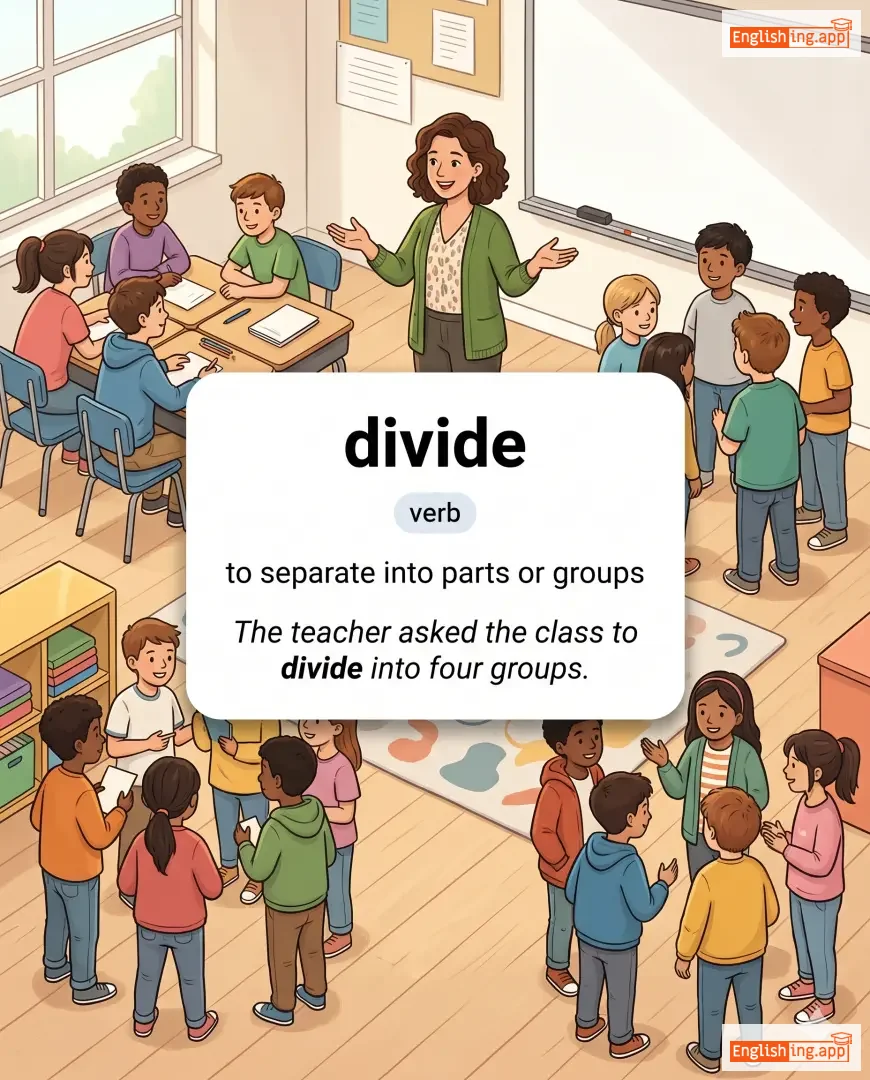
divide definition card — visual illustration of the meaning
verb
/dɪˈvaɪd/

to separate into parts or groups

"The teacher asked the class to divide into four groups."

noun
/ˌdɪvɪˈneɪʃən/
占卜 (zhānbǔ)

the practice of seeking knowledge of the future or the unknown by supernatural means

"Ancient people often relied on divination to guide important decisions."

"古人常常依赖占卜来指导重要的决策。" (Gǔrén chángcháng yīlài zhānbǔ lái zhǐdǎo zhòngyào de juécè.)
adjective, verb
/dɪˈvaɪn/

Relating to God or a deity; exceptionally wonderful or pleasing; to discover or foresee by intuition or supernatural means.

"She believed the divine power guided her actions."

noun
/dɪˈvɪnɪti/
神性 (shenxing)

The quality or state of being divine; a deity.

"The priest spoke about the divinity of the soul."

"神父谈到了灵魂的神性。" (Shenfu tandao le linghun de shenxing.)
adjective
/dɪˈvɪzəbl/
可被除 (ke bei chu)

Capable of being divided by another number without leaving a remainder.

"Twelve is divisible by three and four."

"十二可以被三和四整除。" (Shi er ke yi bei san he si zheng chu.)
noun
/dɪˈvɪʒən/
部门 (bumen)

the action of separating something into parts; or a large administrative unit

"The company has a separate division for research and development."

"公司有一个专门的部门负责研究和开发。" (Gongsi you yige zhuanmen de bumen fuze yanjiu he kaifa.)
noun
/dɪˈvaɪzər/
除数 (chúshù)

A number by which another number is divided.

"In the equation 12 ÷ 3, the number 3 is the divisor."

"在方程式12 ÷ 3中,数字3是除数。" (Zài fāngchéngshì 12 ÷ 3 zhōng, shùzì 3 shì chúshù.)
noun/verb
/dɪˈvɔːrs/
离婚 (líhūn)

the legal ending of a marriage; to officially end a marriage

"After years of conflict, they decided to get a divorce."

"经过多年的冲突,他们决定离婚。" (Jīngguò duōnián de chōngtū, tāmen juédìng líhūn.)
adjective
/dɪˈvɔːrst/
离婚 (líhūn)

No longer married because the marriage has been legally dissolved.

"She has been divorced for five years."
"她已经离婚五年了。" (Tā yǐjīng líhūn wǔ nián le.)
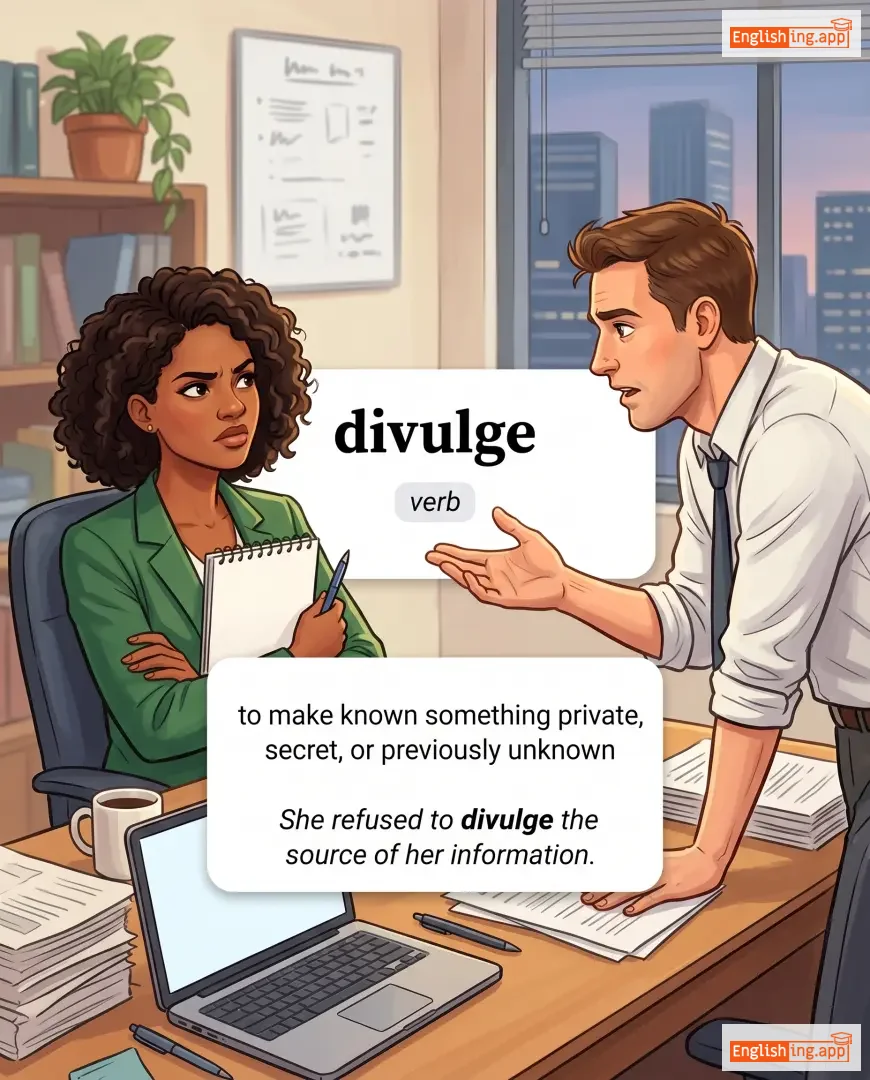
divulge definition card — visual illustration of the meaning
verb
/daɪˈvʌldʒ/
透露 (tòulù)

to make known something private, secret, or previously unknown

"She refused to divulge the source of her information."

"她拒绝透露她信息的来源。" (Tā jùjué tòulù tā xìnxī de láiyuán.)
noun
/daɪˈvʌldʒəns/
透露 (tòulù)

the act of revealing or disclosing something secret or private

"The divulgence of company secrets caused a major scandal."

"公司机密的透露引发了一场大丑闻。" (Gōngsī jīmì de tòulù yǐn fàle yī chǎng dà chǒuwén.)
noun
/ˌdiː.enˈeɪ/
脱氧核糖核酸 (DNA)

Deoxyribonucleic acid, the molecule that carries genetic information in living organisms.

"Scientists extracted DNA from the ancient bones."

"科学家从古代骨头中提取了DNA。" (Ke xue jia cong gu dai gu tou zhong ti qu le DNA.)
verb
/duː/
(zuò)

To perform an action, task, or activity.

"I need to do my homework before dinner."

"我需要在晚餐前做完作业。" (Wǒ xūyào zài wǎncān qián zuò wán zuòyè.)
adjective
/ˈdɑːsəl/ or /ˈdəʊsaɪl/
顺从的 (shùn cóng de)

easily managed, taught, or controlled; submissive

"The docile puppy quickly learned new tricks."

"顺从的小狗很快学会了新把戏。" (Shùn cóng de xiǎo gǒu hěn kuài xuéhuìle xīn bǎxì.)
noun
/dɒk/
码头 (mǎtóu)

a structure where ships are loaded, unloaded, or repaired

"The ship stayed at the dock for two days."

"船只在码头停留了两天。" (Chuán zhī zài mǎ tóu tíng liú le liǎng tiān.)
noun
/ˈdɒkɪt/
清单 (qingdan)

a list or schedule of cases to be tried in a court or items to be done

"The judge reviewed the docket before starting the session."

"法官在开始会议之前审查了清单。" (Faguang zai kaishi huiyi zhiqian shencha le qingdan.)
noun
/ˈdɒktər/
医生 (yīshēng)

A qualified medical professional who treats illnesses and injuries.

"The doctor prescribed medicine for the patient."

"医生为病人开了药。" (Yīshēng wèi bìngrén kāi le yào.)
doctrinaire definition card — visual illustration of the meaning
adjective
/ˌdɒktrɪˈnɛər/
教条主义者 (jiàotiáo zhǔyì zhě)

stubbornly devoted to a theory or doctrine without regard to practical considerations

"His doctrinaire approach to politics alienated many supporters."

"他对政治的教条主义方法使许多支持者感到疏远。" (Tā duì zhèngzhì de jiàotiáo zhǔyì fāngfǎ shǐ xǔduō zhīchí zhě gǎndào shūyuǎn.)