词汇表

英语词汇词典 | 单词含义、定义和示例

adjective
/ˈdɪzməl/
阴沉的; 沮丧的; 令人悲伤的 (yīnchén de; jǔsàng de; lìng rén bēishāng de)

gloomy; depressing; causing sadness or despair

"The weather was dismal with heavy rain and dark clouds."
"天气阴沉,伴随大雨和黑暗的云层。" (Tiānqì yīnchén, bànsuí dàyǔ hé hēi'àn de yúncéng.)
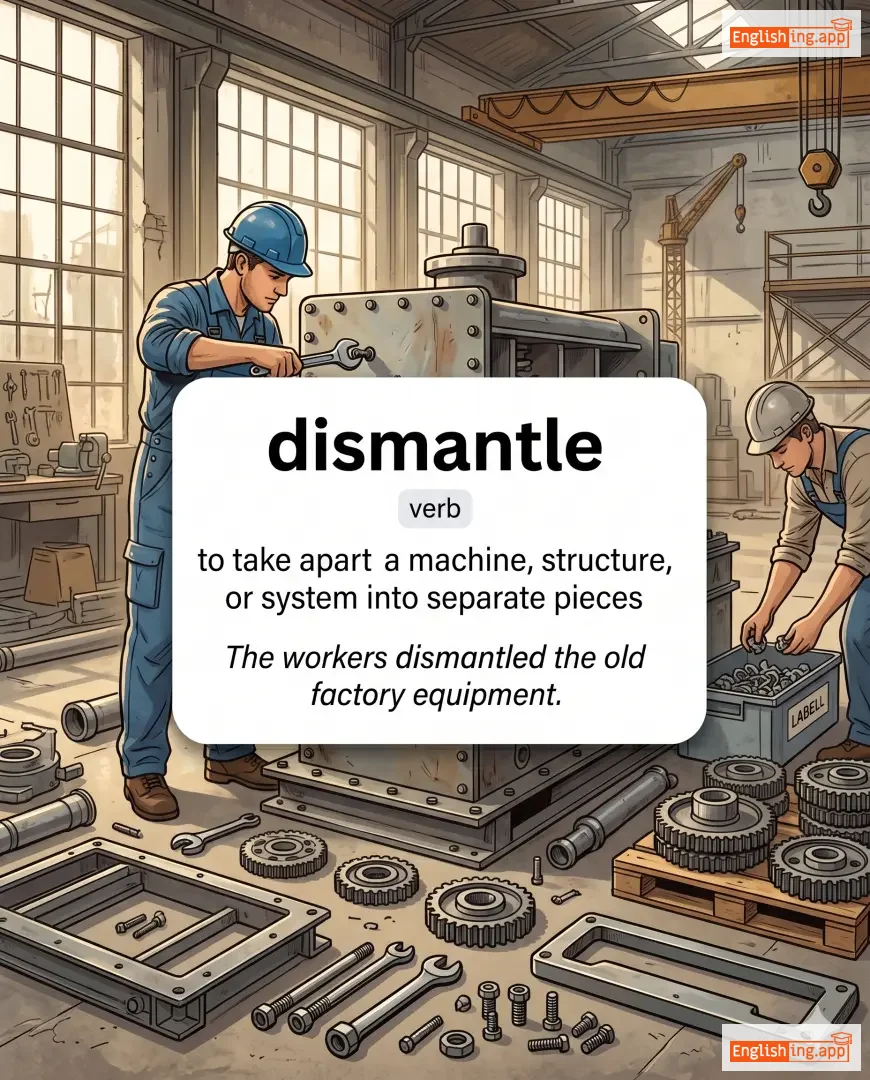
dismantle definition card — visual illustration of the meaning
verb
/dɪsˈmæntl̩/
拆解 (chāijiě)

to take apart a machine, structure, or system into separate pieces

"The workers dismantled the old factory equipment."
"工人们拆除了旧工厂的设备。" (Gōngrénmen chāichúle jiù gōngchǎng de shèbèi.)
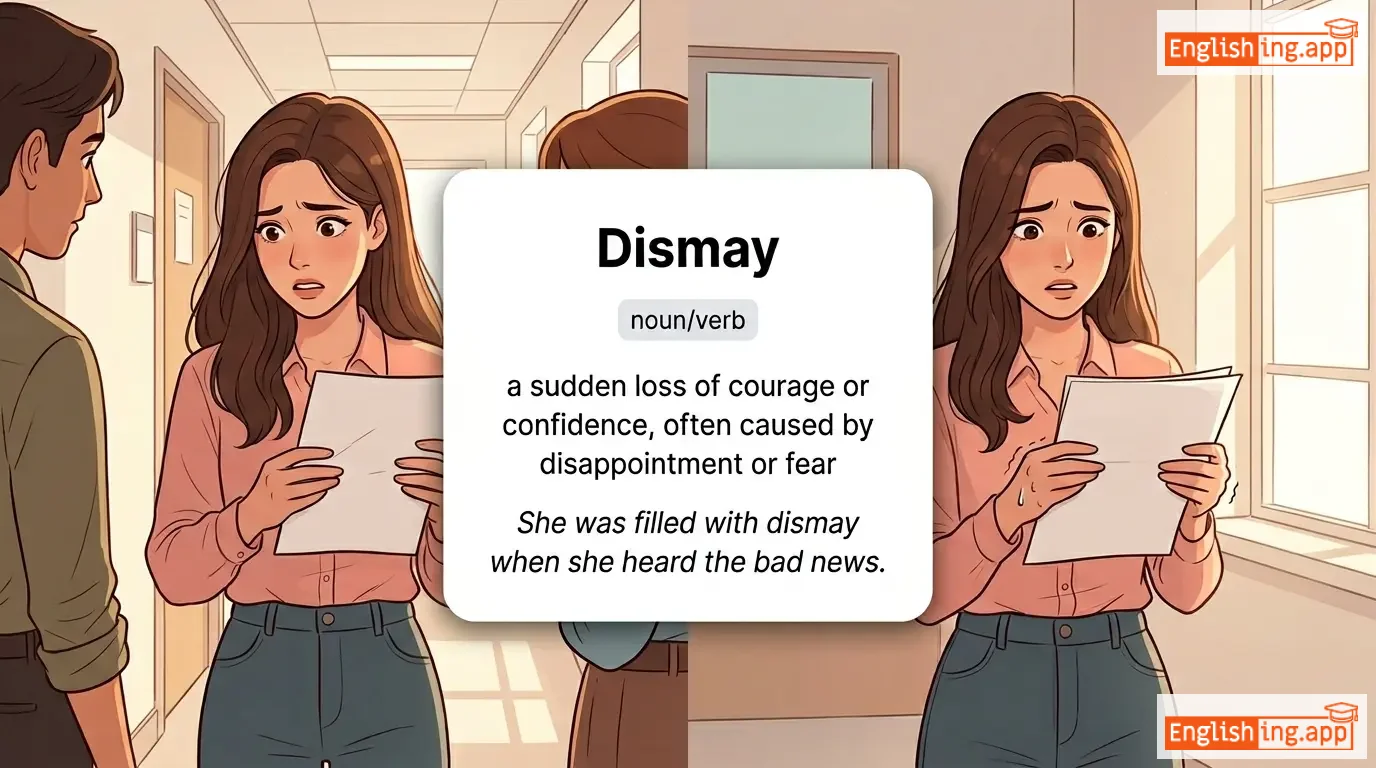
Dismay definition card — visual illustration of the meaning
noun/verb
/dɪsˈmeɪ/
沮丧或恐惧 (jǔsàng huò kǒngjù)

a sudden loss of courage or confidence, often caused by disappointment or fear

"She was filled with dismay when she heard the bad news."

"她听到坏消息时,感到极度沮丧。" (tā tīng dào huài xiāo xī shí, gǎn dào jí dù jǔ sàng)
verb
/dɪsˈmɛmbər/
肢解 (zhījiě)

to cut or tear the limbs from a body; to divide into separate parts

"The king ordered his enemies to be dismembered."
"国王命令将他的敌人肢解。" (Guówáng mìnglìng jiāng tā de dírén zhījiě.)
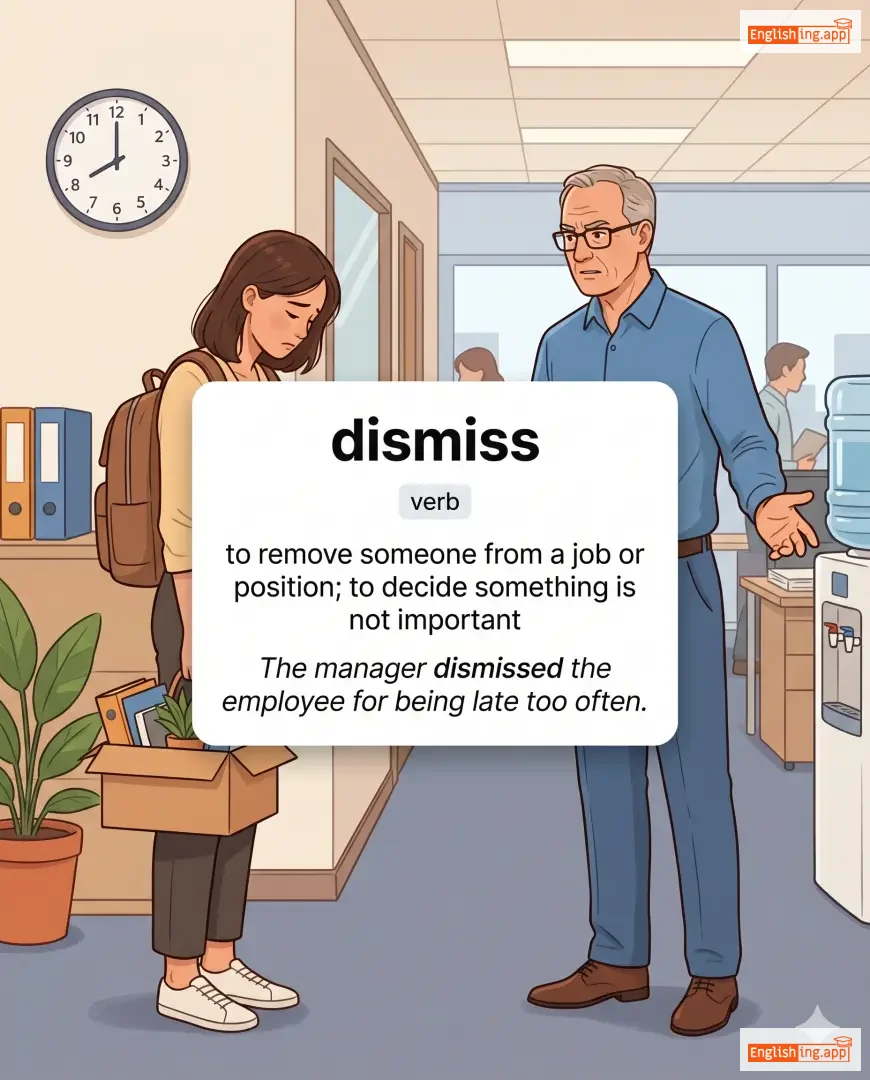
dismiss definition card — visual illustration of the meaning
verb
/dɪsˈmɪs/
解雇, 否定 (jiěgù, fǒudìng)

to remove someone from a job or position; to decide something is not important

"The manager dismissed the employee for being late too often."

"经理因为员工经常迟到而解雇了他。" (Jīnglǐ yīnwèi yuángōng jīngcháng chídào ér jiěgùle tā.)
noun
/dɪsˈmɪsl̩/
解雇, 拒绝 (jiěgù, jùjué)

the act of removing someone from their job; the act of treating something as unimportant

"His unfair dismissal led to a lawsuit against the company."

"他的不公正解雇导致了对公司的诉讼。" (Tā de bù gōngzhèng jiěgù dǎozhì le duì gōngsī de sùsòng.)
verb
/ˌdɪsˈmaʊnt/
下马 (xià mǎ)

to get off or down from something, especially a horse, bicycle, or motorcycle

"The rider dismounted from the horse after a long journey."

"骑手在长途旅行后下马。" (Qíshǒu zài chángtú lǚxíng hòu xià mǎ.)
noun
/ˌdɪsəˈbiːdiəns/
不服从 (bù fúcóng)

failure or refusal to obey rules, laws, or authority

"The child's disobedience worried his parents."

"孩子的不服从让父母感到担忧。" (Hái zi de bù fúcóng ràng fù mǔ gǎn dào dān yōu.)
adjective
/ˌdɪsəˈbiːdiənt/
不服从的 (bufucóng de)

refusing or failing to obey rules or authority

"The teacher scolded the disobedient students."

"老师训斥了不服从的学生。" (Lǎoshī xùnchì le bù fúcóng de xuéshēng.)
noun
/dɪsˈɔːrdər/
紊乱 (wěnluàn)

A state of confusion or lack of order; also a medical or mental condition.

"The protest ended in disorder when the crowd became violent."

"抗议活动在群众变得暴力后陷入了混乱。" (Kàngyì huódòng zài qúnzhòng biàn dé bàolì hòu xiànrùle hùnluàn.)
verb
/dɪsˈoʊn/
放弃关系 (fangqi guanxi)

to refuse to acknowledge or accept responsibility for someone or something

"He decided to disown his reckless brother."
"他决定与他的鲁莽兄弟断绝关系。" (Ta jueding yu tade lumang xiongdi duanjue guanxi.)
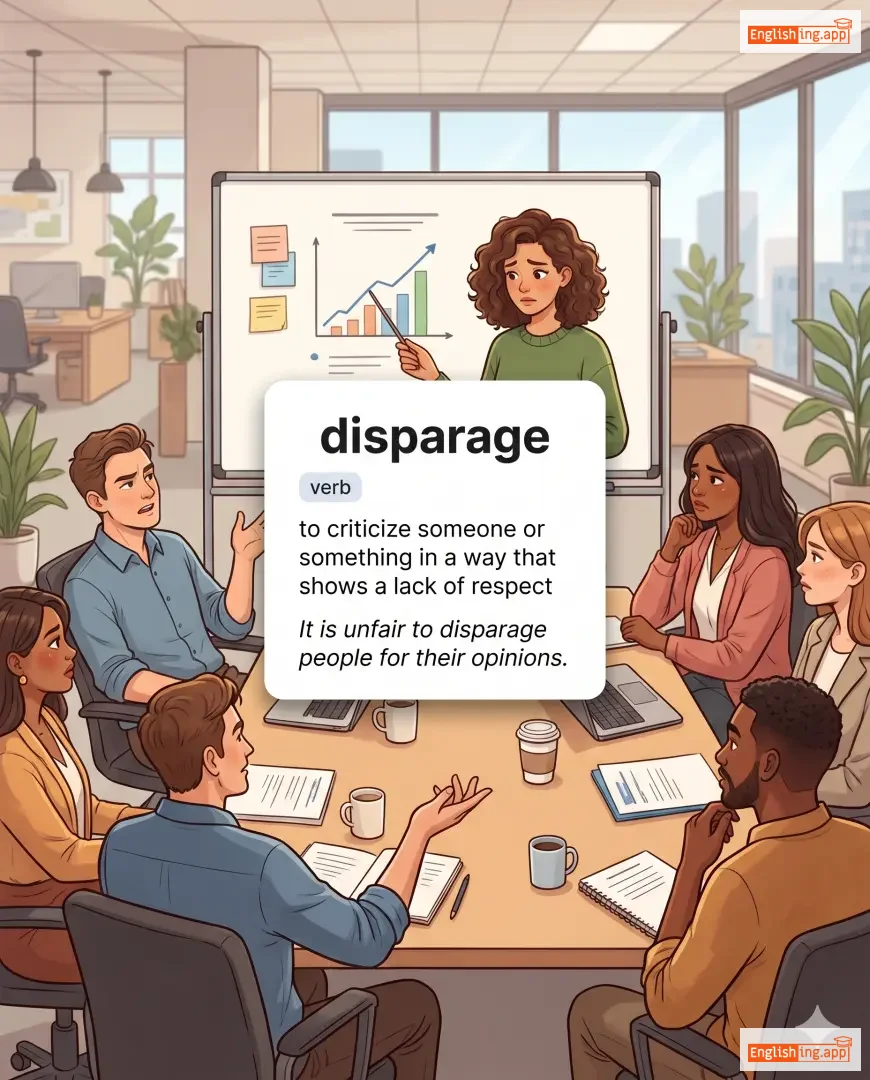
disparage definition card — visual illustration of the meaning
🗣️

disparage

verb
/dɪsˈpærɪdʒ/

to criticize someone or something in a way that shows a lack of respect

"It is unfair to disparage people for their opinions."

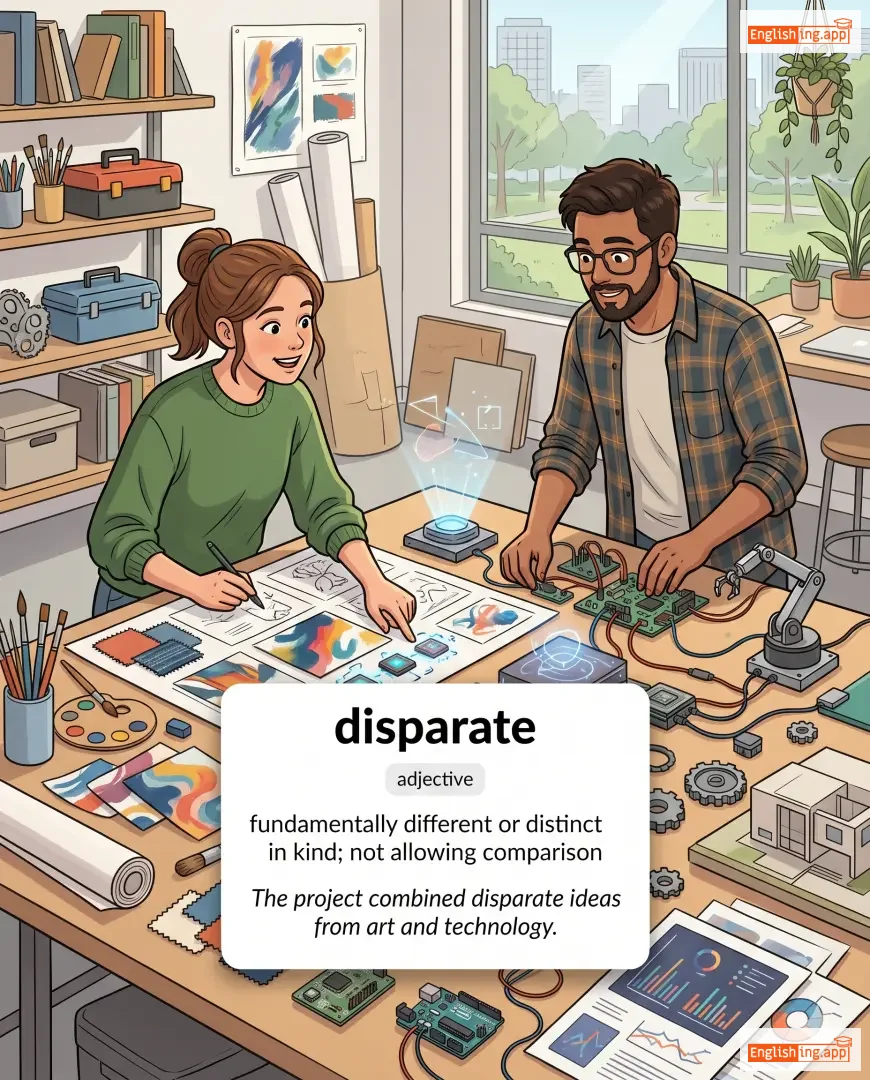
disparate definition card — visual illustration of the meaning
adjective
/ˈdɪspərət/
不同 (butong)

fundamentally different or distinct in kind; not allowing comparison

"The project combined disparate ideas from art and technology."
"该项目结合了来自艺术和技术的不同观点。" (Gai xiangmu jiehe le laizi yishu he jishu de butong guandian.)
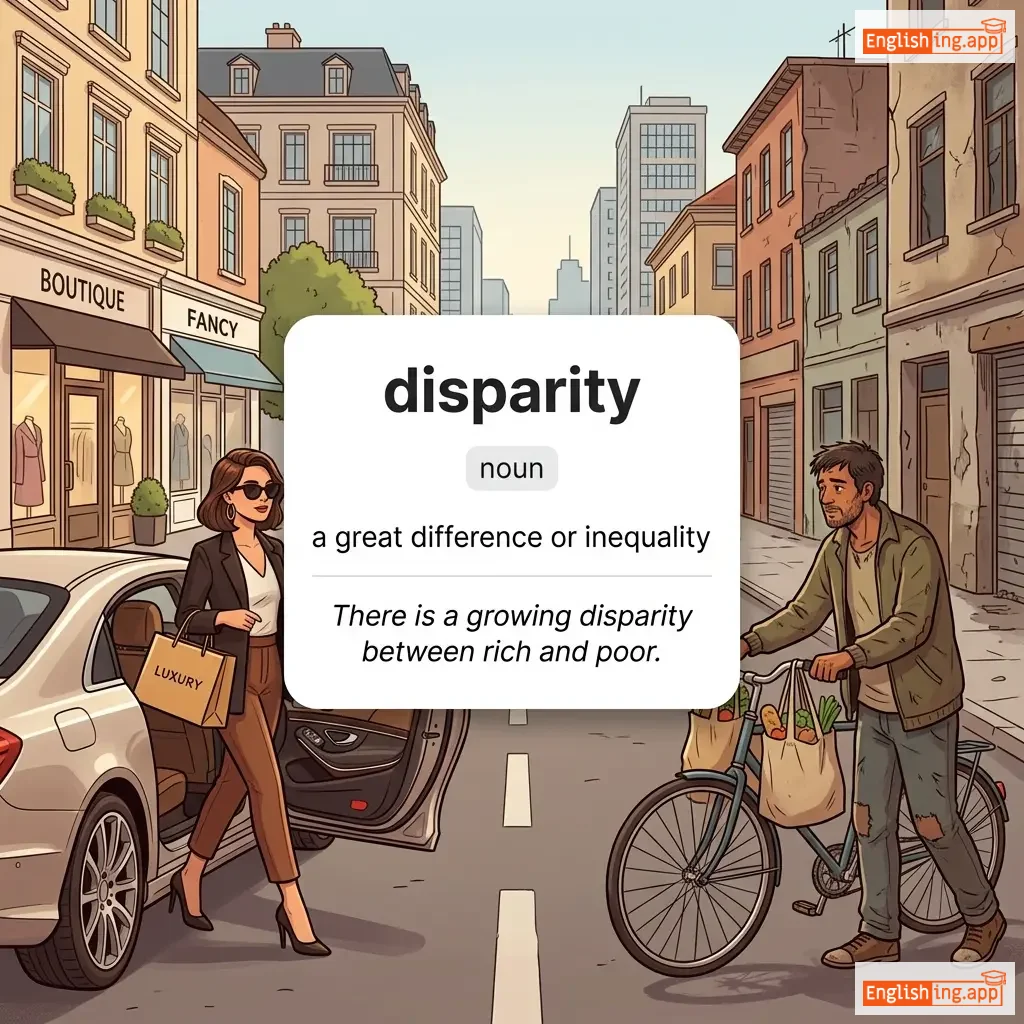
disparity definition card — visual illustration of the meaning
noun
/dɪˈspærəti/
差异 (chayi)

a great difference or inequality

"There is a growing disparity between rich and poor."

"富人和穷人之间存在日益加剧的差异。" (Fùrén hé qióngrén zhījiān cúnzài rìyì jiājù de chāyì.)
adjective
/dɪsˈpæʃənət/
冷静的 (lěngjìng de)

not influenced by strong emotion; impartial

"The judge remained dispassionate throughout the trial."

"法官在整个审判过程中保持冷静。" (Fǎguān zài zhěnggè shěnpàn guòchéng zhōng bǎochí lěngjìng.)
verb
/dɪˈspætʃ/
派遣 (paijian)

to send off to a destination or for a purpose

"The company dispatched aid to the flood victims."
"公司向洪水受害者派遣了援助。" (Gongsi xiang hongshui shouhaizhe paichian le yuanzhu.)
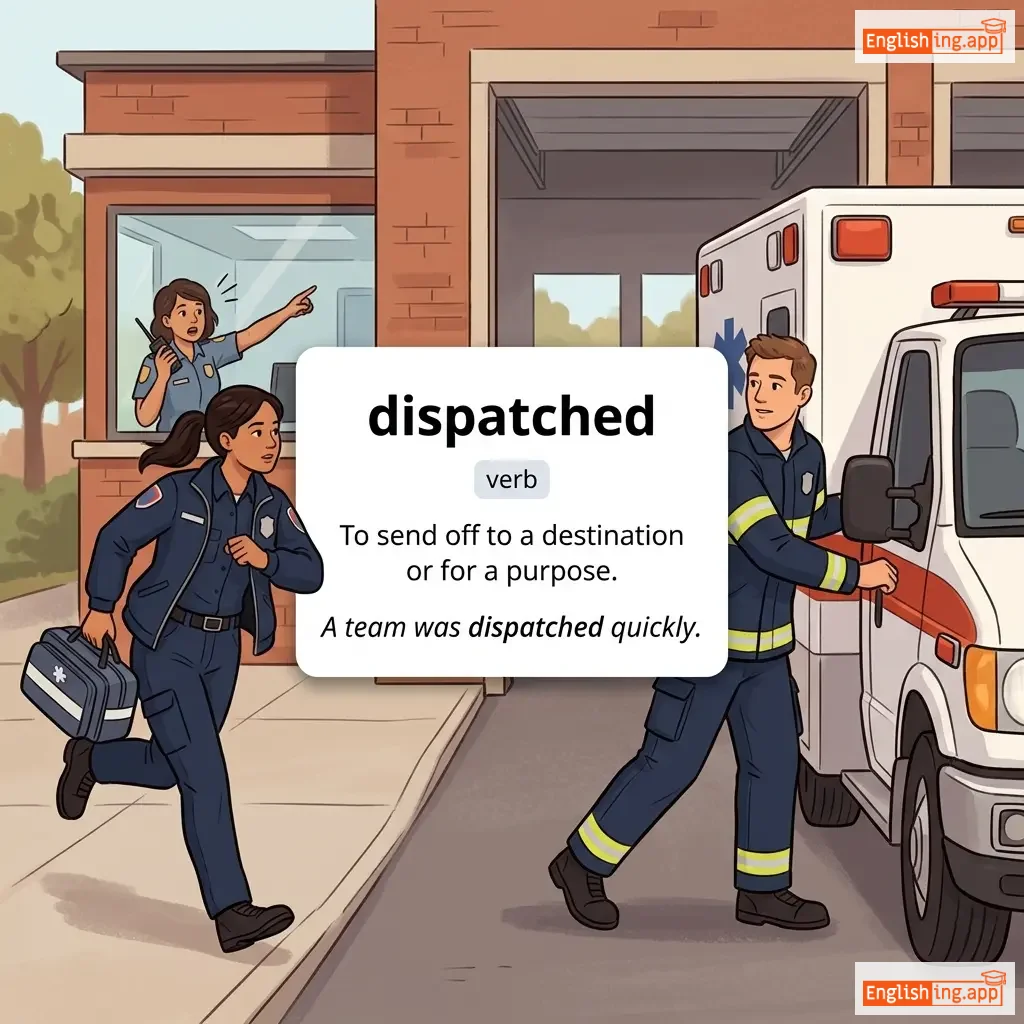
dispatched definition card — visual illustration of the meaning
verb
dɪˈspætʃt
派遣 (paijian)

To send off to a destination or for a purpose.

"A team was dispatched quickly."

"一支队伍被迅速派遣。" (Yī zhī duìwǔ bèi xùnsù pàiqiǎn.)
verb
/dɪˈspɛl/
驱散 (qusan)

to make a doubt, feeling, or belief disappear

"The teacher's explanation dispelled the students' confusion."

"老师的解释消除了学生们的困惑。" (Laoshi de jiexie xiaochule xueshengmen de kunhuo.)
noun
/ˌdɪspɛnˈseɪʃən/

An exemption from a rule or usual requirement; a system of order, government, or control.

"The school granted him a special dispensation to skip the exam due to illness."

verb
/dɪˈspɛns/
分配 (fēnpèi)

To distribute or provide something, especially in portions.

"The machine dispenses clean drinking water."

"机器分配干净的饮用水。" (Jīqì fēnpèi gānjìng de yǐnyòng shuǐ.)
verb
/dɪˈspɜːrs/
驱散 (qūsàn)

To scatter or spread widely in different directions.

"The police used tear gas to disperse the crowd."

"警方使用催泪瓦斯驱散人群。" (Jǐngfāng shǐyòng cuīlèiwǎsī qūsàn rénqún.)
adjective
/dɪˈspɜːrst/
分散的 (fēnsàn de)

Scattered or spread across a wide area.

"The dispersed population made it difficult to provide public services."

"分散的人口使得提供公共服务变得困难。" (Fēnsàn de rénkǒu shǐdé tígōng gōnggòng fúwù biàndé kùnnán.)
noun
/dɪˈspɜːrʒən/
分散 (fensan)

The action or process of distributing things or people over a wide area.

"The dispersion of seeds by the wind helps plants reproduce."

"风的种子散布有助于植物繁殖。" (Feng de zhongzi sanbu you zhu yu zhiwu fanzhi.)
adjective
/dɪˈspɪrɪtɪd/
沮喪 (jǔsàng)

Having lost enthusiasm, hope, or confidence; dejected.

"After losing the match, the team looked dispirited."

"比赛失利后,团队看起来沮丧。" (Bǐsài shīlì hòu, tuánduì kàn qǐlái jǔsàng.)
verb
/dɪsˈpleɪs/
驱逐 (qūzhú)

To force someone or something out of its usual place or position.

"The flood displaced hundreds of families from their homes."

"洪水将数百个家庭从他们的家中驱逐。" (Hóngshuǐ jiāng shù bǎi gè jiātíng cóng tāmen de jiā zhōng qūzhú.)
verb
/dɪˈspleɪ/
展示 (zhǎnshì)

To show or exhibit something to be seen.

"The shop displayed its new products in the window."

"商店在橱窗里展示了新产品。" (Shāngdiàn zài chūchuāng lǐ zhǎnshìle xīn chǎnpǐn.)
verb
/dɪsˈpɔːrt/
玩乐 (wanle)

To amuse oneself in a lively or playful way.

"The children disported themselves in the garden."

"孩子们在花园里玩得很开心。" (Haizimen zai huayuan li wan de hen kaixin.)
noun
/dɪsˈpoʊzl/
处置 (chuzhi)

the action or process of getting rid of something

"The disposal of waste is crucial for maintaining a clean environment."

"废物处理对于保持清洁的环境至关重要。" (Feiwu chuzhi dui yu baochi qingjie de huanjing zhiguang zhongyao.)
verb
/dɪˈspoʊz/
丢弃 (diuqi)

To get rid of something, or to arrange or incline towards something.

"He disposed of the old furniture responsibly."

"他负责任地处理了那些旧家具。" (Ta fu zerende chuli le naxie jiu jiaju.)
noun
/ˌdɪspəˈzɪʃən/

A person's usual attitude or temperament; arrangement or tendency.

"She has a cheerful disposition despite the difficulties."

verb
/ˌdɪspəˈzɛs/
剥夺 (bo2duo2)

to deprive someone of land, property, or other possessions

"The new law threatened to dispossess many farmers of their land."

"新法律威胁着剥夺许多农民的土地。" (Xin3 fa3lu4 wei1xie2 zhe5 bo1duo2 xu3duo1 nong2min2 de5 tu3di.)
noun
/ˌdɪsprəˈpɔːrʃən/
不平衡 (bù pínghéng)

a lack of balance or symmetry; an inequality

"There is a clear disproportion between rich and poor in many societies."

"在许多社会中,富人和穷人之间存在明显的不平衡。" (Zài xǔduō shèhuì zhōng, fùrén hé qióngrén zhī jiān cúnzài míngxiǎn de bù pínghéng.)
verb
/dɪsˈpruːv/
反驳 (fǎnbó)

to show that something is false or wrong

"The scientist worked hard to disprove the old theory."

"科学家努力工作以反驳旧理论。" (Kēxuéjiā nǔlì gōngzuò yǐ fǎnbó jiù lǐlùn.)
adjective
/dɪˈspjuːtəbl/
有争议的;可疑的 (yǒu zhēngyì de; kě yí de)

open to debate or argument; questionable

"The facts in the case are disputable and need further investigation."

"案件中的事实是有争议的,需要进一步调查。" (Ànjiàn zhōng de shìshí shì yǒu zhēngyì de, xūyào jìnyībù diàochá.)
noun
/ˌdɪspjuːˈteɪʃən/
争论 (zhēnglùn)

a formal debate or argument

"The disputation between the two scholars lasted for hours."

"两位学者之间的争论持续了好几个小时。" (Liǎng wèi xuézhě zhījiān de zhēnglùn chíxùle hǎo jǐ gè xiǎoshí.)
adjective
/ˌdɪspjuːˈteɪʃəs/
爱争辩的 (ài zhēngbiàn de)

fond of or given to argument and debate

"His disputatious nature often led to heated conversations."

"他争辩的性格常常导致激烈的讨论。" (Tā zhēngbiàn de xìnggé chángcháng dǎozhì jīliè de tǎolùn.)
noun/verb
/dɪˈspjuːt/
争议, 争论 (zhēngyì, zhēnglùn)

a disagreement or argument about something important

"The two countries are in dispute over the border issue."

"两个国家在边界问题上存在争议。" (Liǎng gè guójiā zài biānjiè wèntí shàng cúnzài zhēngyì.)
verb
/dɪsˈkwɑːlɪfaɪ/
取消资格 (qǔxiāo zīgé)

to officially prevent someone from participating or being eligible

"The referee decided to disqualify the player for cheating."

"裁判决定因作弊而取消球员资格。" (Cáipàn juédìng yīn zhòubì ér qǔxiāo qiúyuán zīgé.)
noun/verb
/dɪsˈkwaɪət/

A feeling of worry or unease; to make someone feel anxious or uneasy.

"The strange silence filled the room with disquiet."

adjective
/dɪsˈkwaɪətɪŋ/
令人不安 (ling ren bu an)

Causing worry, unease, or anxiety.

"The news report was deeply disquieting to the public."

"新闻报道对公众来说是深感不安的。" (Xinwen baodao dui gongzhong lai shì shen gan bu an de.)
noun
/dɪsˈkwaɪɪtjuːd/

A state of uneasiness, anxiety, or restlessness.

"His constant pacing showed his inner disquietude."

noun
/ˌdɪskwɪˈzɪʃən/
论文 (lunwen)

A long or elaborate discussion or written essay on a particular subject.

"The professor gave a lengthy disquisition on ancient philosophy."

"教授就古代哲学进行了长篇论文。" (Jiaoshou jiu gudai zhexue jinxingle changpian lunwen.)
verb/noun
/ˌdɪsrɪˈɡɑːrd/
蔑视 (mie4shi4)

To ignore something; lack of consideration or respect for something.

"He disregarded the warning signs and kept driving."

"他忽视了警告标志并继续开车。" (Ta hu4shi4le jing3gao4 biao1zhi3 bing4 ji4xu4 kai1che1.)
adjective
/dɪsˈrɛpjətəbl̩/
声名狼藉 (shengminglangji)

having a bad reputation; not considered respectable or trustworthy

"The journalist avoided staying in the disreputable part of town."

"记者避免住在城市的声名狼藉地区。" (Jizhe bimi zhu zai chengshi de shengminglangji diqu.)
noun
/ˌdɪsrɪˈpjuːt/
恶名 (èmíng)

the state of being held in low esteem or having a bad reputation

"The scandal brought the politician into disrepute."

"丑闻使这位政治家名声扫地。" (Chǒuwén shǐ zhè wèi zhèngzhìjiā míngshēng sǎodì.)
verb
/dɪsˈroʊb/
脱衣服 (tuō yīfu)

to remove one's clothes

"The monk disrobed before entering the river."
"僧侣在进入河流之前脱掉了衣服。" (Sēnglǚ zài jìnrù héliú zhīqián tuō diào le yīfú.)
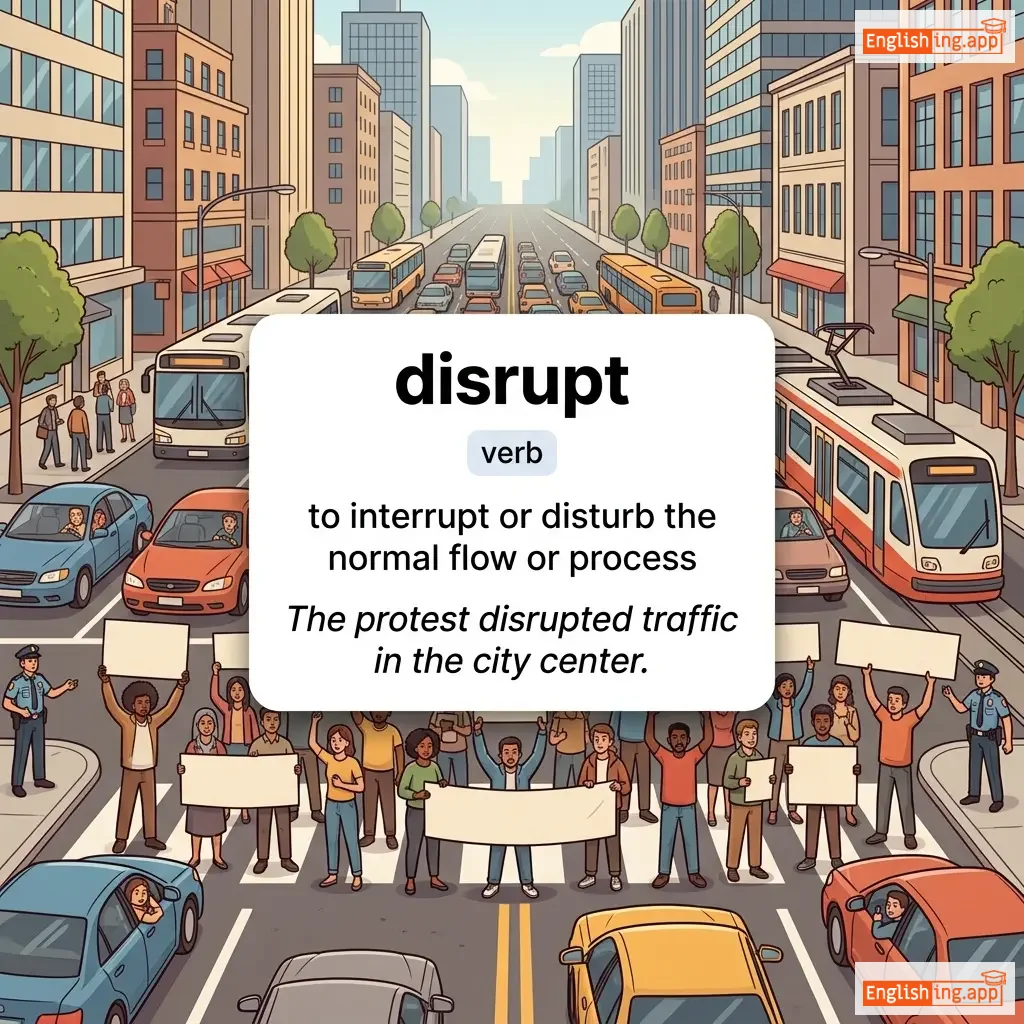
disrupt definition card — visual illustration of the meaning
verb
/dɪsˈrʌpt/
破坏 (pohuai)

to interrupt or disturb the normal flow or process

"The protest disrupted traffic in the city center."
"抗议活动扰乱了市中心的交通。" (Kàngyì huódòng rǎoluànle shì zhōngxīn de jiāotōng.)
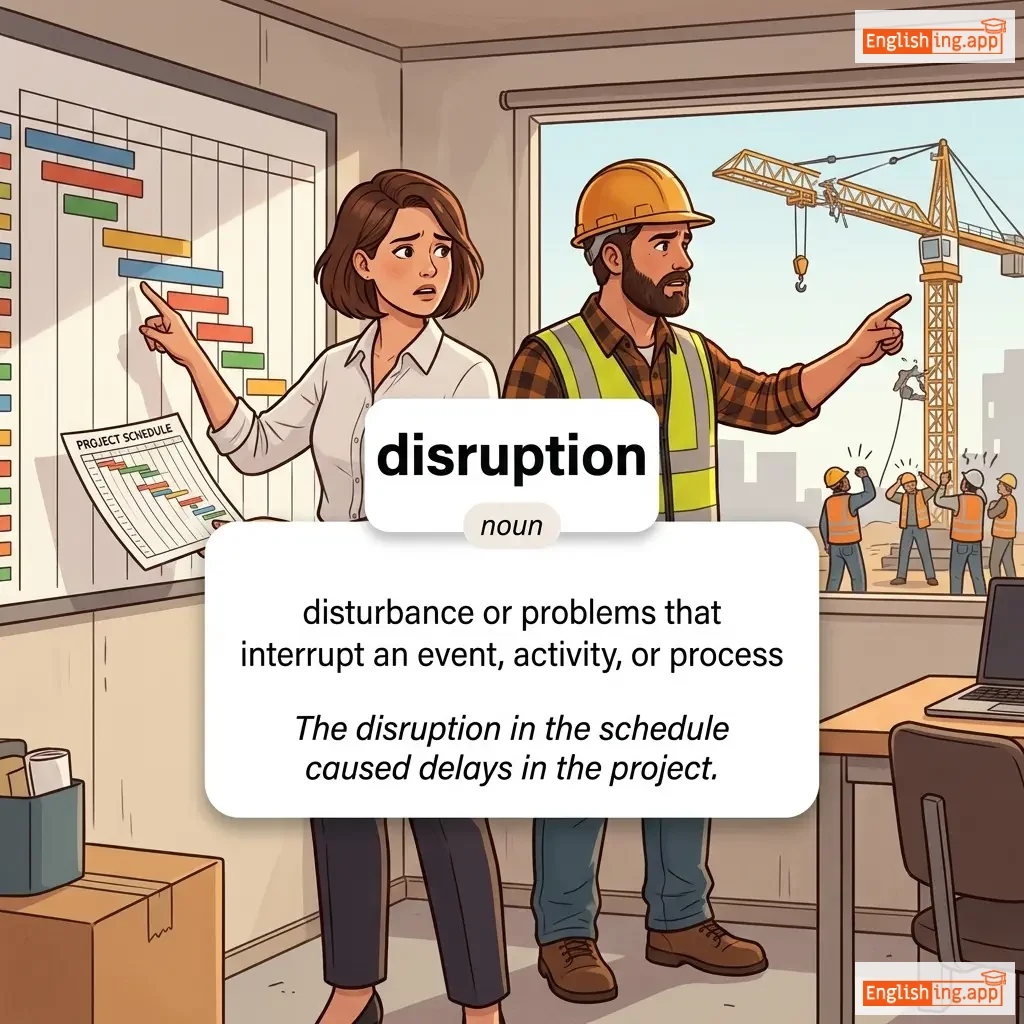
disruption definition card — visual illustration of the meaning
noun
/dɪsˈrʌpʃən/
干扰 (ganrao)

disturbance or problems that interrupt an event, activity, or process

"The disruption in the schedule caused delays in the project."

"日程中的干扰导致项目延迟。" (Rìchéng zhōng de gānrǎo dǎozhì xiàngmù yánchí.)
disruptive definition card — visual illustration of the meaning
adjective
/dɪsˈrʌp.tɪv/
破坏性 (pòhuài xìng)

Something that brings major changes to existing markets or industries

"E-commerce has been disruptive to traditional retail businesses."

"电子商务对传统零售业务造成了破坏。" (Diànzǐ shāngwù duì chuántǒng língshòu yèwù zàochéngle pòhuài.)
verb
/dɪsˈsætɪsfaɪ/
使不满 (shi bumai)

to fail to please or meet expectations; to make someone unhappy

"The poor service dissatisfies many customers."

"糟糕的服务让许多顾客不满意。" (Zaogao de fuwu rang xuduo guke bu manyi.)