词汇表

英语词汇词典 | 单词含义、定义和示例

noun
/dɪˌskrɪmɪˈneɪʃən/
歧视 (qishi)

Unfair treatment of people based on race, gender, age, or other differences.

"The law prohibits discrimination in the workplace."
"法律禁止在工作场所歧视。" (Fǎlǜ jìnzhǐ zài gōngzuò chǎngsuǒ qíshì.)
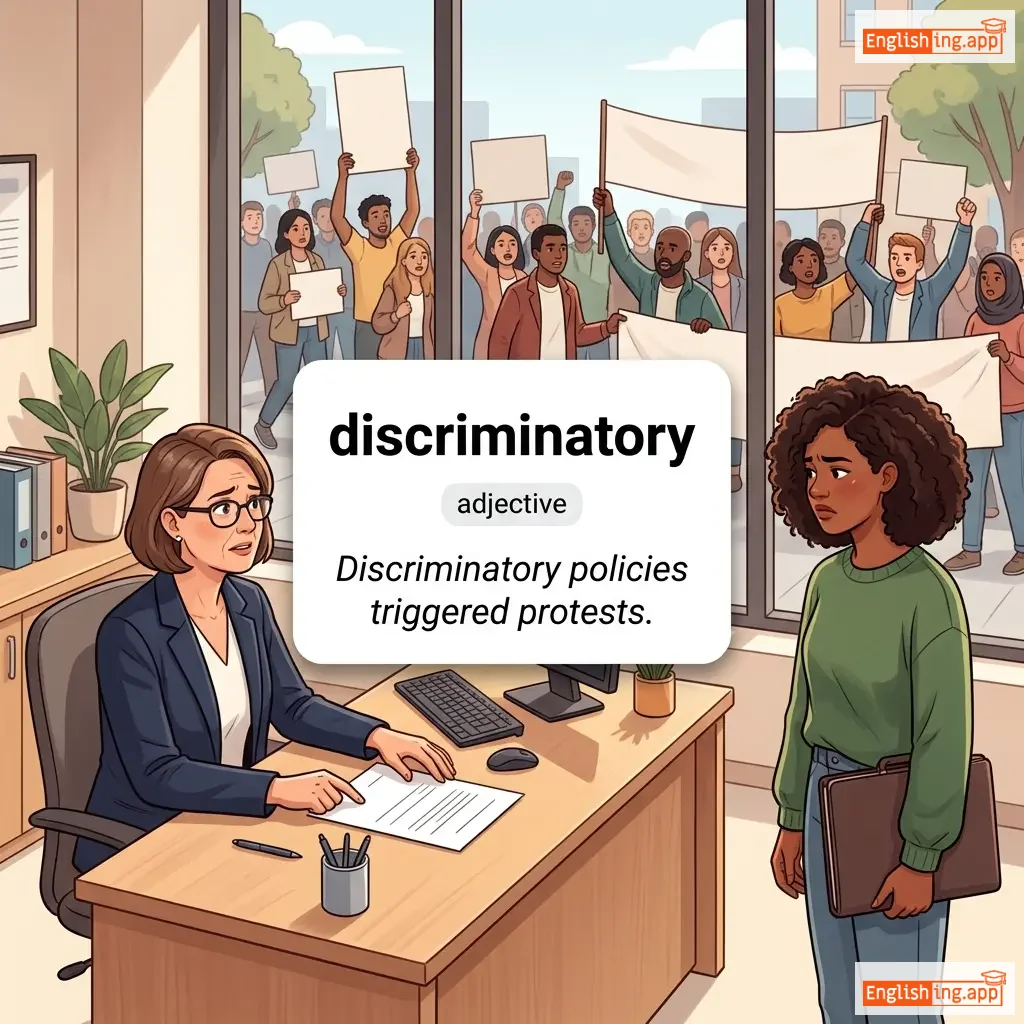
discriminatory definition card — visual illustration of the meaning
adjective
dɪˈskrɪmɪnətɔːri
歧视性 (qishi xing)

Making or showing an unfair or prejudicial distinction between different categories of people or things.

"Discriminatory policies triggered protests."

"歧视性政策引发了抗议。" (Qishi xing zhengce yinfa le kangyi.)
adjective
/dɪsˈkɜrsɪv/
离题的 (lítí de)

Tending to digress or move from topic to topic; lengthy and rambling.

"His discursive style made the lecture hard to follow."

"他的离题风格使得讲座难以跟上。" (Tā de lítí fēnggé shǐdé jiǎngzuò nányǐ gēn shàng.)
verb
/dɪˈskʌs/
讨论 (taolun)

To talk about something with another person or group in detail.

"We need to discuss the project before finalizing it."

"我们需要在完成之前讨论这个项目。" (Wo men xu yao zai wan cheng zhi qian taolun zhe ge xiangmu.)
noun
/dɪˈskʌʃən/
讨论 (taolun)

The action or process of talking about something in order to reach a decision or share ideas.

"The project needs more discussion before moving forward."

"该项目需要更多的讨论,然后才能继续进行。" (Gāi xiàngmù xūyào gèng duō de tǎolùn, ránhòu cáinéng jìxù jìnxíng.)
discussions definition card — visual illustration of the meaning
noun
dɪˈskʌʃ.ənz
讨论 (tǎolùn)

The action or process of talking about something in order to reach a decision or to exchange ideas.

"Discussions promote collaboration."

"讨论促进合作。" (Tǎolùn cùjìn hézuò.)
noun/verb
/dɪsˈdeɪn/

The feeling that someone or something is unworthy of respect; to regard with contempt.

"She looked at the messy room with open disdain."

noun
/dɪˈziːz/
疾病 (jíbìng)

An illness or medical condition that affects the body or mind.

"The doctor is researching a cure for the disease."

"医生正在研究治疗这种疾病的方法。" (Yīshēng zhèngzài yánjiū zhìliáo zhè zhǒng jíbìng de fāngfǎ.)
adjective
/dɪˈziːzd/
生病的; 患病的 (shengbing de; huanbing de)

affected by disease; suffering from illness; sick

"The diseased tree had to be removed from the garden."

"那棵生病的树必须从花园里移除。" (Na ke shengbing de shu bixu cong huayuan li yichu)
verb
/ˌdɪsɪmˈbɑːrk/
下船/下飞机 (xia chuan/xia feiji)

To leave a ship, aircraft, or other vehicle.

"The passengers disembarked from the plane after landing."

"乘客在着陆后从飞机上下来。" (Chengke zai zhuolu hou cong feiji shang xiala.)
verb
/ˌdɪsɪnˈfræntʃaɪz/
剥夺权利 (boduò quánlì)

To deprive someone of the right to vote or other rights.

"The new law could disenfranchise thousands of voters."

"新法律可能会剥夺成千上万选民的投票权。" (Xīn fǎlǜ kěnéng huì bōduó chéngqiān shàngwàn xuǎnmín de tóupiào quán.)
verb
/ˌdɪsɪnˈɡeɪdʒ/
脱离 (tuōlí)

To release or detach oneself from something; to withdraw.

"He tried to disengage from the heated argument."

"他试图从激烈的争论中脱离。" (Tā shìtú cóng jīliè de zhēnglùn zhōng tuōlí.)
verb
/ˌdɪsɪnˈtæŋɡl/
解开 (jiě kāi)

To free something or someone from a tangle or complication.

"She tried to disentangle her hair from the branches."

"她试图把头发从树枝上解开。" (Tā shìtú bǎ tóufà cóng shùzhī shàng jiě kāi.)
noun/verb
/dɪsˈfeɪvər/
不赞成 / 反感 (buzancheng / fangan)

disapproval or dislike; to regard with disapproval

"The new policy fell into disfavor with the public."

"新政策在公众中失宠。" (Xin zhengce zai gongzhong zhong shichong.)
verb
/dɪsˈfɪɡjər/
毁容 (huirong)

to spoil or damage the appearance of something

"The fire disfigured the old building."
"火灾毁容了那座老建筑。" (Huozai huirongle na zuo lao jianzhu.)
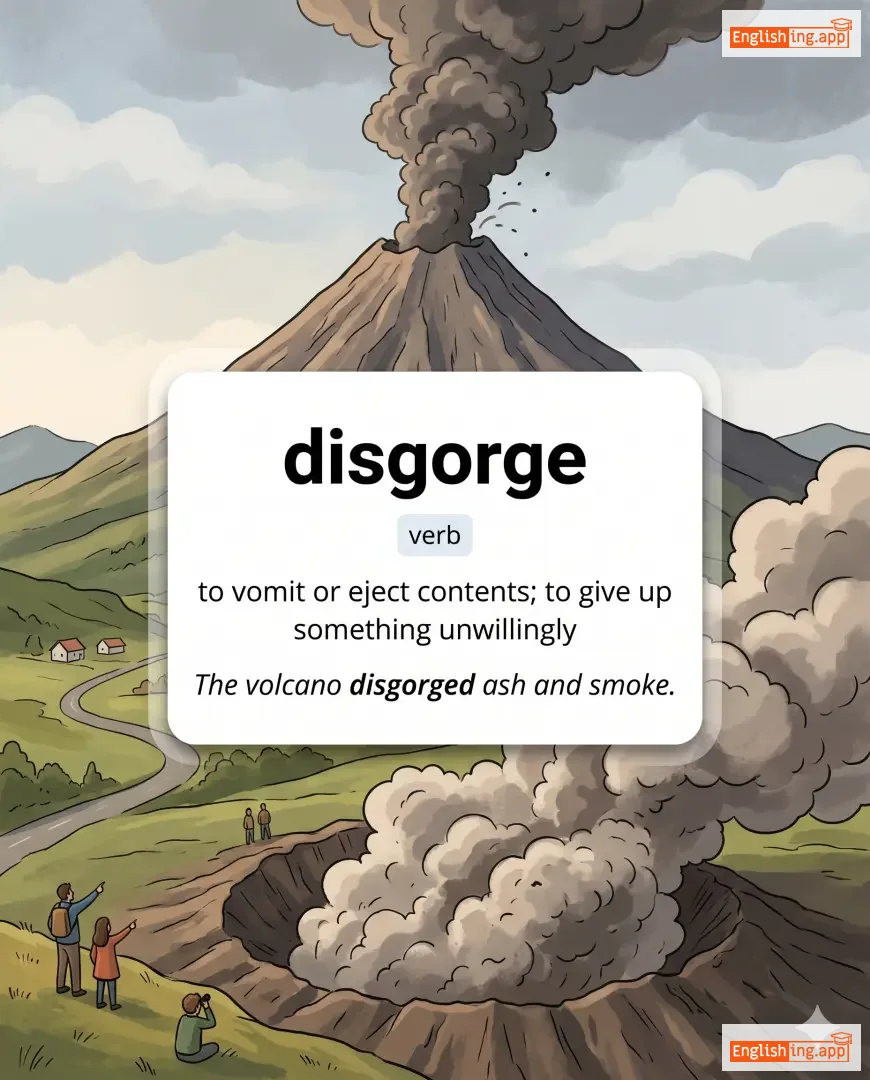
disgorge definition card — visual illustration of the meaning
verb
/dɪsˈɡɔrdʒ/
呕吐 / 强行吐出 (ǒu tǔ / qiáng xíng tǔ chū)

to vomit or eject contents; to give up something unwillingly

"The volcano disgorged ash and smoke."

"火山喷出了灰烬和烟雾。" (Huǒshān pēn chūle huī jìn hé yān wù.)
noun
/dɪsˈɡreɪs/
耻辱 (chirù)

Loss of respect, honor, or reputation due to shameful behavior.

"He was dismissed in disgrace after the scandal."

"他在丑闻后以耻辱被解雇。" (Tā zài chǒuwén hòu yǐ chǐrǔ bèi jiěgù.)
adjective
/dɪsˈɡreɪsfəl/
可耻的; 不光彩的; 应受谴责的 (kechi de; bu guangcai de; ying shou qianze de)

shameful; bringing dishonor; worthy of condemnation

"His disgraceful behavior shocked everyone at the party."

"他那可耻的行为让派对上的每个人都震惊了。" (ta na kechi de xingwei rang paiduishang de meige ren dou zhenjing le)
verb
/dɪsˈɡrʌntl/
使不满 (shǐ bùmǎn)

to make someone dissatisfied or discontented

"The unfair treatment disgruntled the workers."
"不公平的待遇使工人感到不满。" (Bù gōngpíng de dàiyù shǐ gōngrén gǎndào bùmǎn.)
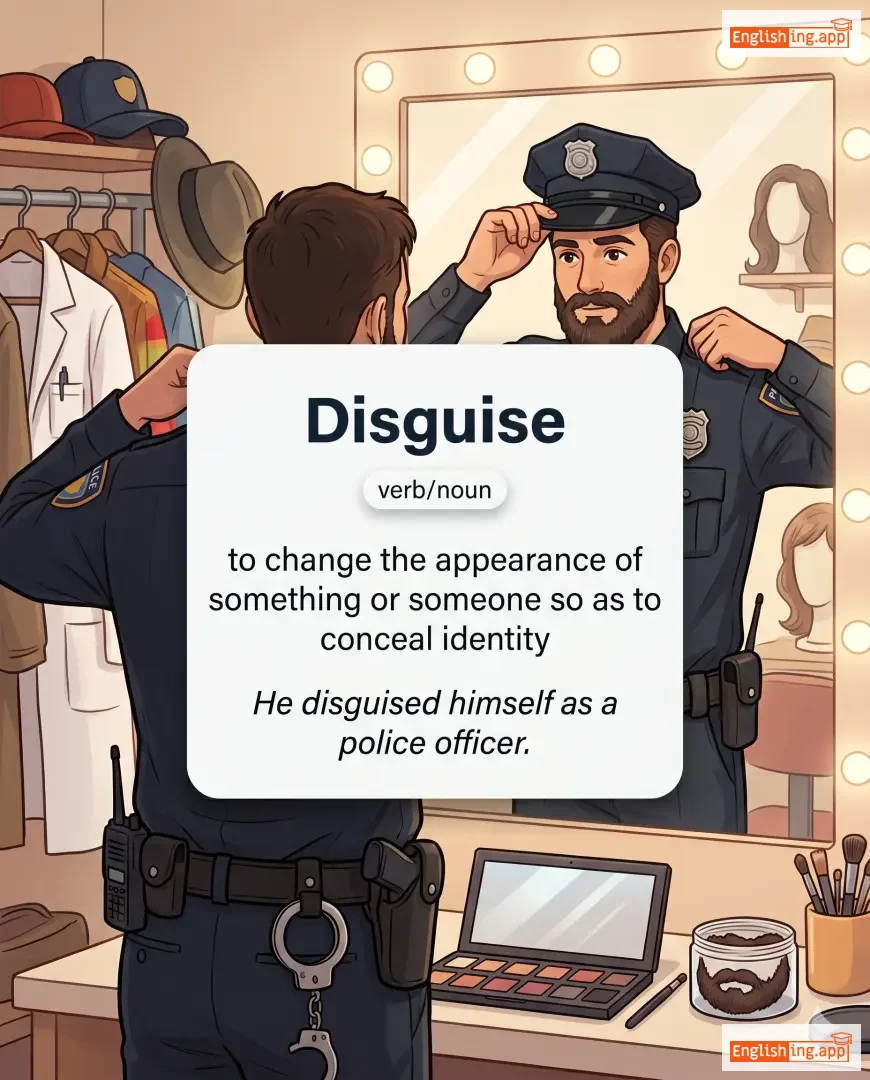
Disguise definition card — visual illustration of the meaning
verb/noun
/dɪsˈɡaɪz/
伪装 (wèizhuāng)

to change the appearance of something or someone so as to conceal identity

"He disguised himself as a police officer."

"他伪装成警察。" (Tā wèizhuāng chéng jǐngchá.)
noun
/dɪsˈɡʌst/
厌恶 (yànwù)

a feeling of revulsion or strong disapproval aroused by something unpleasant

"She expressed her disgust at the politician's corrupt behavior openly."

"她公开表达了对政治家腐败行为的厌恶。" (Ta gongkai biaoda le dui zhengzhijia fubai xingwei de yànwù.)
adjective
/dɪsˈɡʌstɪd/
厌恶的 (yanwu de)

feeling a strong sense of dislike or revulsion

"She was disgusted by the way he treated the animals."

"她对他对待动物的方式感到厌恶。" (Ta dui ta duidai dongwu de fangshi gandao yanwu.)
adjective
/dɪsˈɡʌstɪŋ/
令人作呕 (ling ren zuo ou)

extremely unpleasant or offensive; causing strong dislike or revulsion

"The smell coming from the trash can was absolutely disgusting."

"垃圾桶散发的气味非常令人作呕。" (la ji tong san fa de qi wei fei chang ling ren zuo ou)
noun
/dɪʃ/
盘子 / 菜肴 (pánzi / càiyáo)

A shallow container for serving or preparing food; also a particular kind of food prepared.

"She prepared a delicious pasta dish for dinner."

"她为晚餐准备了美味的意大利面菜肴。" (Tā wèi wǎncān zhǔnbèile měiwèi de yìdàlì miàn càiyáo.)
noun
/ˈdɪʃ ˌwɒʃər/
洗碗机 (xǐ wǎn jī)

an appliance for washing dishes automatically

"We installed a new dishwasher in our kitchen last week."

"我们上周在厨房安装了一个新的洗碗机。" (Wǒmen shàng zhōu zài chúfáng ānzhuāngle yīgè xīn de xǐ wǎn jī)
noun
/ˌdɪʃəˈbiːl/
衣着不整 (yizhuo buzhen)

The state of being only partly or loosely dressed; casual or careless attire.

"She answered the door in a state of dishabille, wearing just a robe."
"她穿着睡袍以一种衣着不整的状态开了门。" (Ta chuanzhuo shuipao yi zhong yizhuo buzhen de zhuangtai kaile men.)
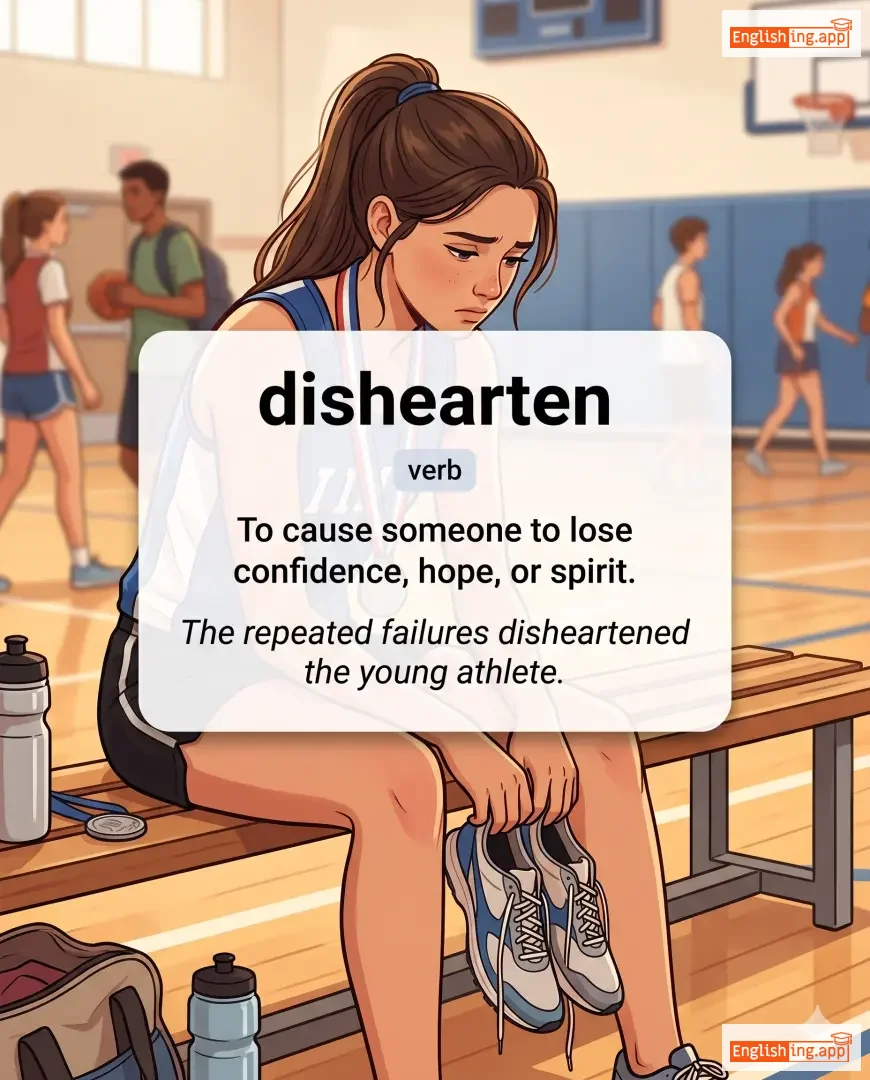
dishearten definition card — visual illustration of the meaning
verb
/dɪsˈhɑːrtən/
使灰心 (shǐ huīxīn)

To cause someone to lose confidence, hope, or spirit.

"The repeated failures disheartened the young athlete."

"反复的失败使年轻的运动员灰心丧气。" (Fǎnfù de shībài shǐ niánqīng de yùndòngyuán huīxīn sàngqì.)
adjective
/dɪsˈhɑːrtənd/
沮丧 (jǔsàng)

Having lost confidence, hope, or spirit; discouraged.

"She looked disheartened after receiving the bad news."

"她收到坏消息后看起来很沮丧。" (Tā shōudào huài xiāoxī hòu kàn qǐlái hěn jǔsàng.)
adjective
/dɪˈʃɛvəld/
凌乱 (língluàn)

Untidy, messy, or in disorder, especially of hair or clothing.

"He arrived with disheveled hair and wrinkled clothes."

"他带着凌乱的头发和皱巴巴的衣服来了。" (Tā dàizhe língluàn de tóufǎ hé zhòu bābā de yīfú lái le.)
adjective
/dɪsˈɑːnɪst/
不诚实 (bu chengshi)

Behaving in an untruthful or deceitful way; not honest.

"It is dishonest to cheat in exams."

"在考试中作弊是不诚实的。" (Zai kaoshi zhong zuobi shi bu chengshi de.)
noun, verb
/dɪsˈɑːnər/

a state of shame or loss of respect; to bring shame upon someone or something

"The soldier felt he had brought dishonor to his family."

noun
/dɪsˈɒn.ər/
耻辱 (chiru)

a state of shame or disgrace; lack of honor or integrity; failure to fulfill obligations

"Breaking his promise brought dishonour to his name and family legacy."

"打破诺言给他的名字和家族遗产带来了耻辱。" (Dapo nuoyan gei tade mingzi he jiazhu yichan dailaile chiru.)
verb, noun
/ˌdɪsɪˈluːʒən/
失望 (shīwàng)

to cause someone to realize that something is not as good as they believed

"The scandal disillusioned many voters."
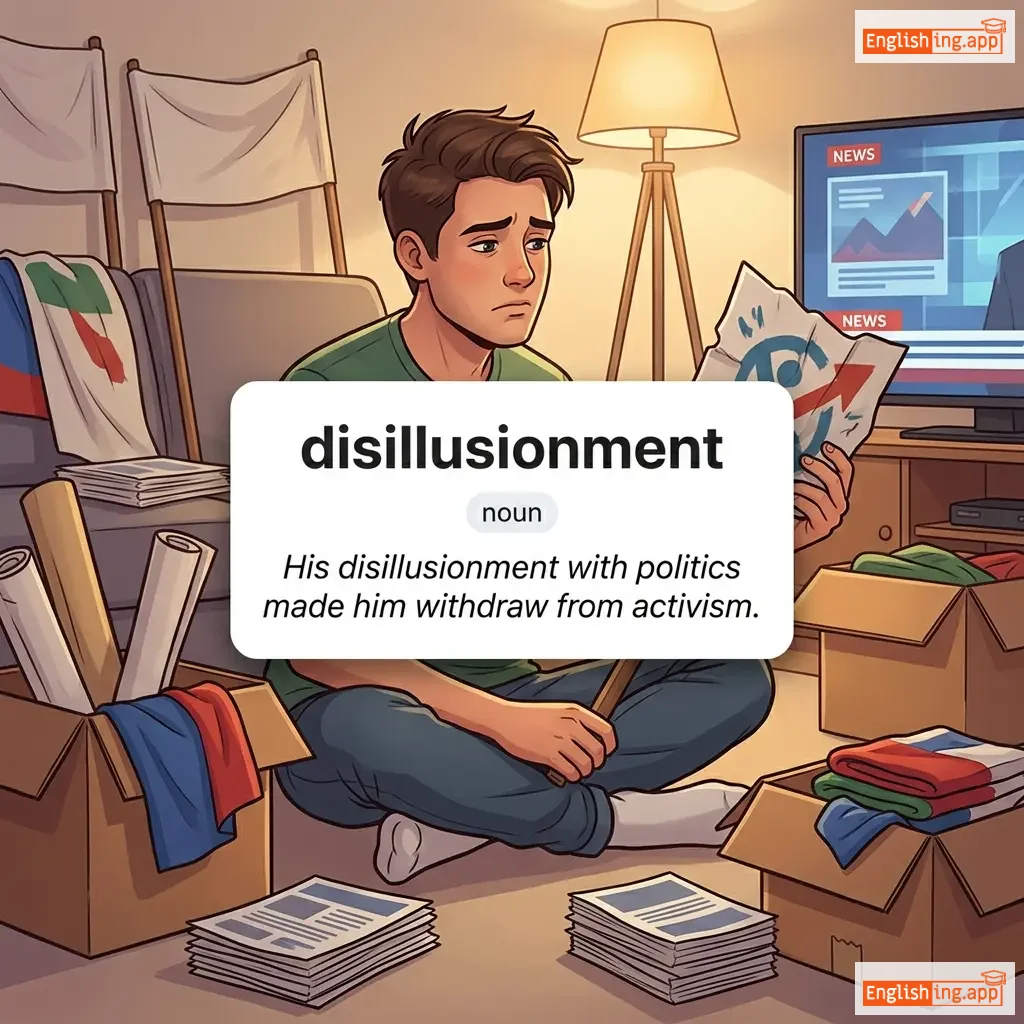
"丑闻让许多选民失望。" (Chouwen rang xu duo xuanmin shi wang.)
disillusionment definition card — visual illustration of the meaning
noun
/ˌdɪs.ɪˈluː.ʒən.mənt/
幻灭 (huànmiè)

A feeling of disappointment resulting from the discovery that something is not as good as one believed it to be.

"His disillusionment with politics made him withdraw from activism."

"他对政治的幻灭让他退出了激进主义。" (Ta dui zhengzhi de huànmiè rang ta tuìchū le jījìn zhǔyì.)
noun
/ˌdɪsɪnklɪˈneɪʃən/
不愿意 (bù yuànyì)

a lack of willingness or desire to do something

"She showed a clear disinclination to join the meeting."

"她表现出明显的不愿意参加会议。" (Tā biǎoxiàn chū míngxiǎn de bù yuànyì cānjiā huìyì.)
verb
/ˌdɪsɪnˈfɛkt/
消毒 (xiaodu)

to clean something thoroughly to destroy bacteria or viruses

"The nurse disinfected the wound before applying a bandage."

"护士在敷上绷带之前消毒了伤口。" (Hushi zai fu shang bengdai zhiqian xiaodu le shangkou.)
noun
/ˌdɪsɪnˈfɛktənt/
消毒剂 (xiaoduji)

a chemical substance used to kill harmful microorganisms on surfaces

"The cleaner sprayed disinfectant on the table."
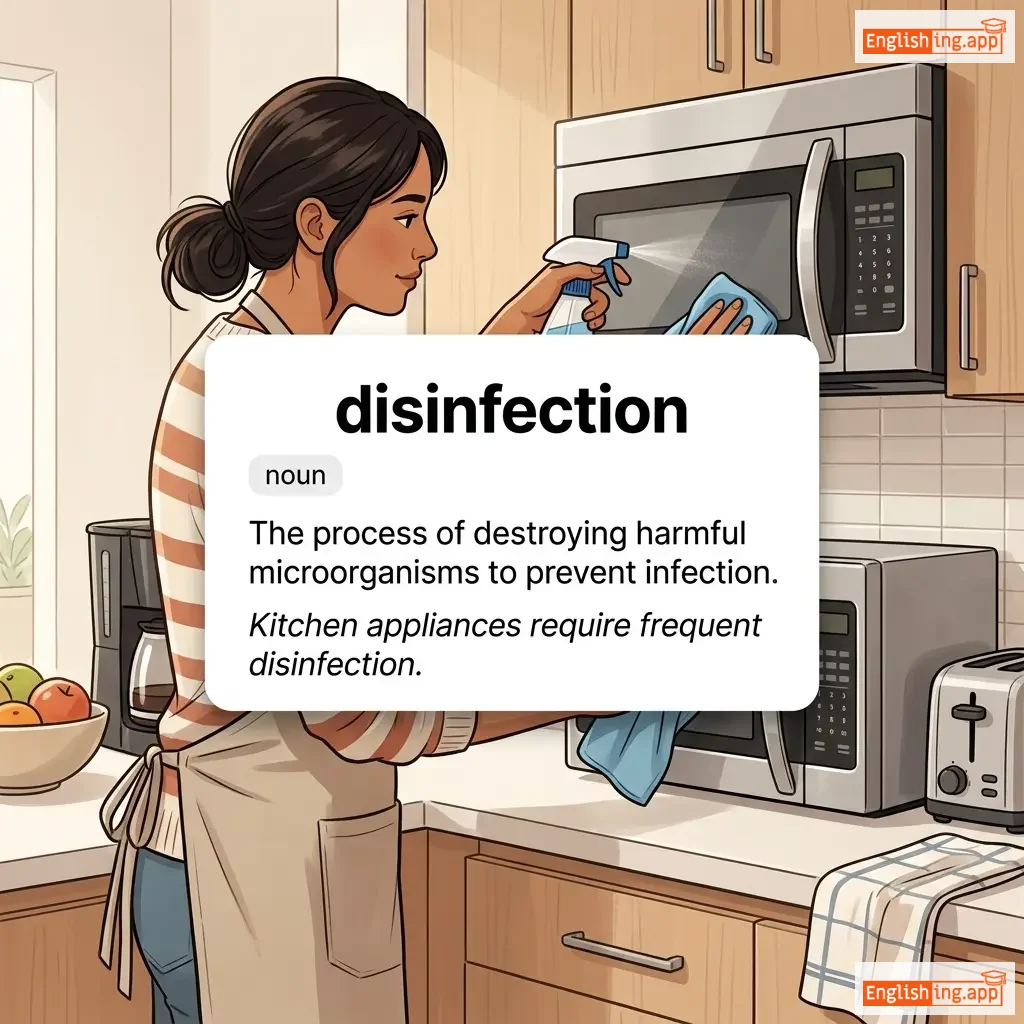
"清洁工在桌子上喷洒了消毒剂。" (Qingjie gong zai zhuozi shang pensa le xiaoduji.)
disinfection definition card — visual illustration of the meaning
noun
ˌdɪs.ɪnˈfek.ʃən
消毒 (xiaodu)

The process of destroying harmful microorganisms to prevent infection.

"Kitchen appliances require frequent disinfection."
"厨房电器需要频繁消毒。" (Chufang dianqi xuyao pinfan xiaodu.)
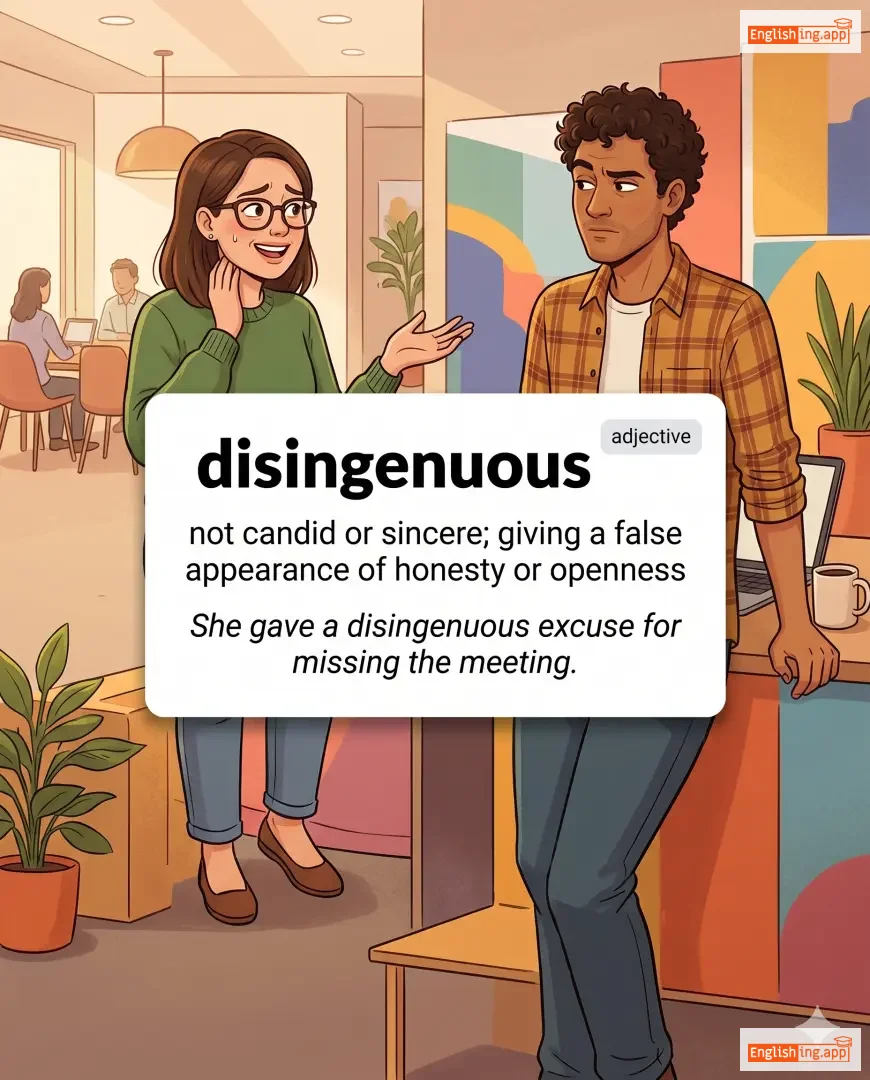
disingenuous definition card — visual illustration of the meaning
adjective
/ˌdɪsɪnˈdʒɛnjʊəs/
虚伪的 (xū wèi de)

not candid or sincere; giving a false appearance of honesty or openness

"She gave a disingenuous excuse for missing the meeting."

"她给出了一个虚伪的借口来错过会议。" (Tā gěi chūle yīgè xūwèi de jièkǒu lái cuòguò huìyì.)
verb
/ˌdɪsɪnˈhɛrɪt/
剥夺继承权 (bōduó jìchéng quán)

to deprive someone, especially a child, of inheritance or right to property

"The father threatened to disinherit his son for his reckless actions."

"父亲威胁要因儿子的鲁莽行为剥夺他的继承权。" (Fùqīn wēixié yào yīn érzi de lǔmǎng xíngwéi bōduó tā de jìchéng quán.)
verb
/ˌdɪsɪnˈtɜːr/
挖掘 (wājué)

to dig up something buried, especially a body

"The archaeologists disinterred ancient remains from the site."

"考古学家从遗址中挖掘出古代遗骸。" (Kǎogǔ xuéjiā cóng yízhǐ zhōng wājué chū gǔdài yíhái.)
noun
/dɪsˈɪntrəst/
冷漠 (lengmo)

lack of interest or concern

"His disinterest in the project was obvious."
"他对这个项目的冷漠是显而易见的。" (Tā duì zhège xiàngmù de lengmò shì xiǎn'ér yìjiàn de.)
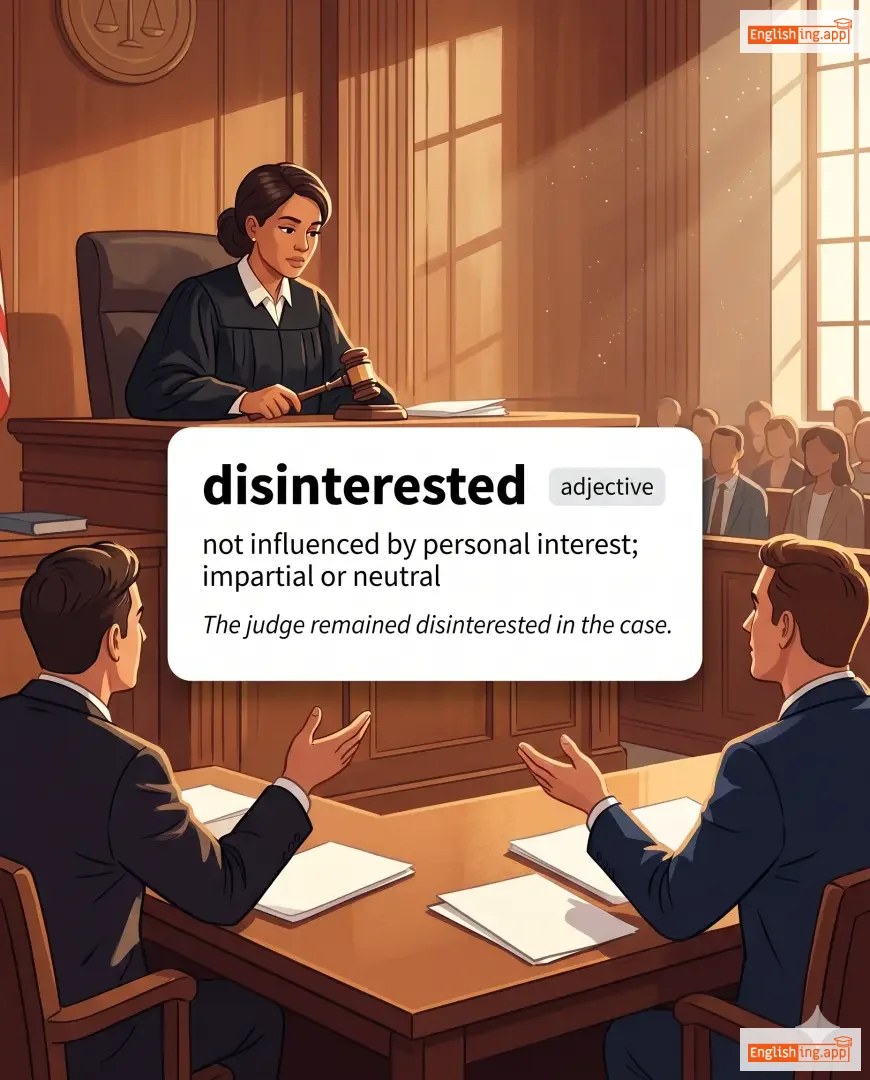
disinterested definition card — visual illustration of the meaning
adjective
/dɪsˈɪntrəstɪd/
无私 (wusi)

not influenced by personal interest; impartial or neutral

"The judge remained disinterested in the case."
"法官在案件中保持无私。" (Faguang zai anjian zhong baochi wusi.)
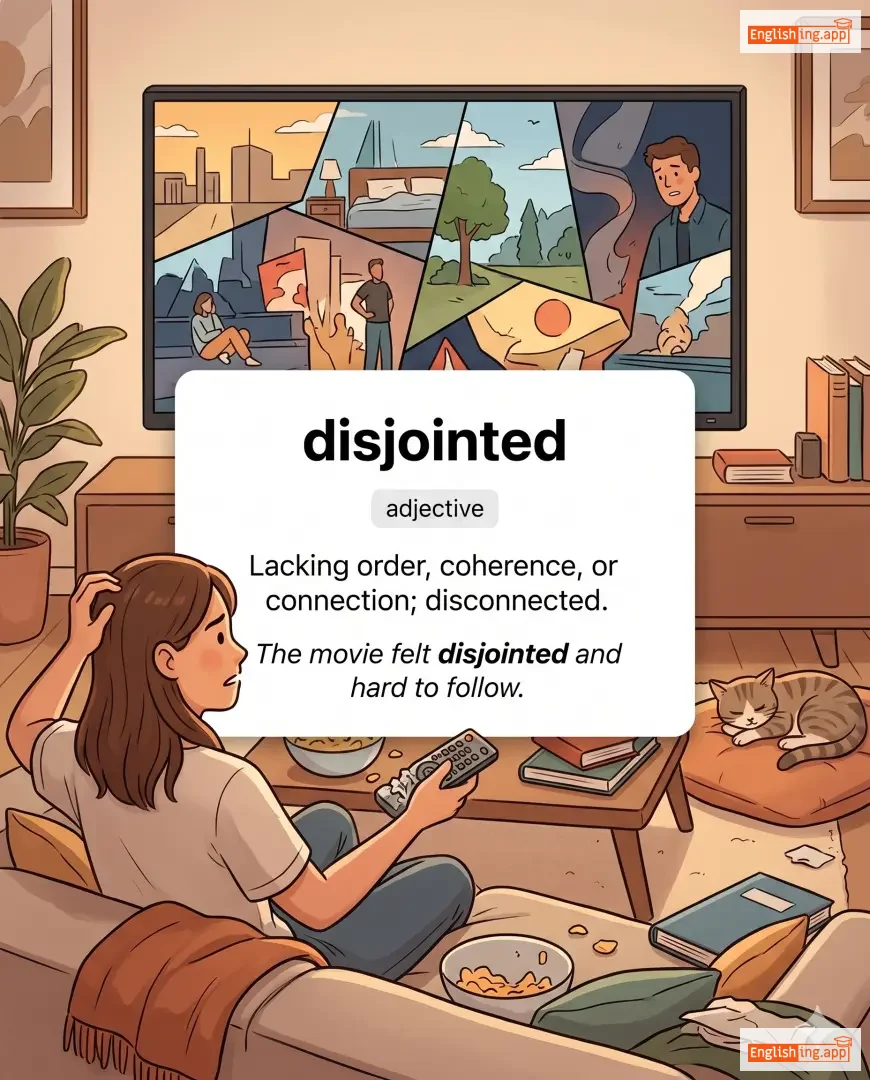
disjointed definition card — visual illustration of the meaning
adjective
/dɪsˈdʒɔɪntɪd/
支离破碎 (zhī lí pò suì)

Lacking order, coherence, or connection; disconnected.

"The movie felt disjointed and hard to follow."

"这部电影感觉支离破碎,很难跟上。" (Zhè bù diànyǐng gǎnjué zhī lí pò suì, hěn nán gēn shàng.)
noun
/dɪsˈdʒʌŋkʃən/
分裂 (fenlie)

A lack of connection between things; separation or disunity.

"There is a clear disjunction between theory and practice."

"理论与实践之间存在明显的分裂。" (Lǐlùn yǔ shíjiàn zhī jiān cúnzài míngxiǎn de fēnliè.)
adjective
/dɪsˈdʒʌŋktɪv/
选择性 (xuǎnzé xìng)

Serving to separate or divide; expressing a choice between alternatives.

"In grammar, 'or' is a disjunctive conjunction."

"在语法中,'或' 是一个选择性连词。" (Zài yǔfǎ zhōng, 'huò' shì yīgè xuǎnzé xìng liáncí.)
noun
/dɪsk/
磁盘 / 数据存储设备 (cípán / shùjù cúnchú shèbèi)

a flat, circular object, often used to store data electronically

"All the data is saved on a hard disk."

"所有数据都保存在硬盘上。" (Suǒyǒu shùjù dōu bǎocún zài yìngpán shàng.)
verb, noun
/dɪsˈlaɪk/
不喜欢 (buxihuan)

to feel distaste or aversion for someone or something; a feeling of aversion

"I really dislike eating spicy food."

"我真的不喜欢吃辣的食物。" (Wo zhen de bu xihuan chi la de shiwu)
verb
/ˈdɪsləkeɪt/
脱臼 (tuōjiù)

To disturb the normal position of something, especially a joint in the body.

"He dislocated his shoulder while playing football."

"他在踢足球时脱臼了肩膀。" (Tā zài tī zúqiú shí tuōjiù le jiānbǎng.)
verb
/dɪsˈlɒdʒ/
赶走 (gan zou)

To remove or force out from a position, especially one that is fixed or hard to move.

"The troops dislodged the enemy from the hill."

"部队把敌人从山丘上赶了下去。" (Budui ba diren cong shanqiu shang ganle xiaqu.)