词汇表

英语词汇词典 | 单词含义、定义和示例

adjective
/daɪˈɒsɪsən/
与教区相关 (yu jiaoqu xiangguan)

relating to a diocese or the district under the supervision of a bishop in the Christian Church

"The diocesan council met to discuss church affairs."

"教区委员会聚集在一起讨论教会事务。" (Jiaoqu weiyuanhui juji zai yiqi taolun jiaohui shiwuwu.)
noun
/ˌdaɪəˈrɑːmə/
立体模型 (lìtǐ móxíng)

a three-dimensional model representing a scene, often with miniature figures

"The museum displayed a diorama of an ancient village."

"博物馆展示了一个古代村庄的立体模型。" (Bówùguǎn zhǎnshìle yī gè gǔdài cūnzhuāng de lìtǐ móxíng.)
verb
/dɪp/
浸泡 (jìnpào)

to put something quickly into a liquid and take it out again

"She dipped her bread into the soup."

"她把面包浸入汤中。" (Tā bǎ miànbāo jìn rù tāng zhōng.)
noun
/ˈdɪfθɒŋ/
双元音 (shuang yuán yīn)

A complex vowel sound that begins with one vowel and glides into another within the same syllable.

"The word 'coin' contains a diphthong."

"单词 'coin' 包含一个双元音。" (Danci 'coin' baohan yi ge shuang yuanyin.)
noun
/dɪˈpləʊ.mə/
文凭 (wénpíng)

an official document showing that a person has completed a course of study or training

"She received her diploma after finishing the nursing program."

"她在完成护理课程后获得了文凭。" (Tā zài wánchéng hùlǐ kèchéng hòu huòdéle wénpíng.)
noun
/dɪˈpləʊməsi/

The profession, activity, or skill of managing international relations or handling affairs tactfully.

"Effective diplomacy helped avoid the conflict."

noun
/ˈdɪpləmæt/
外交官 (waijiaoguan)

An official representing a country abroad; a person skilled in dealing with people tactfully.

"The diplomat negotiated a peace agreement."

"外交官谈判了一个和平协议。" (Waijiaoguan tanpan le yi ge heping xieyi.)
adjective
/ˌdɪpləˈmætɪk/
外交的 (wai jiao de)

Concerning diplomacy; having or showing skill in dealing with people in a sensitive and effective way.

"She gave a diplomatic response to avoid offending anyone."
"她给出了外交的回应,以避免冒犯任何人。" (ta gei chule waijiao de huifu, yi bian mianduofu renhe ren.)
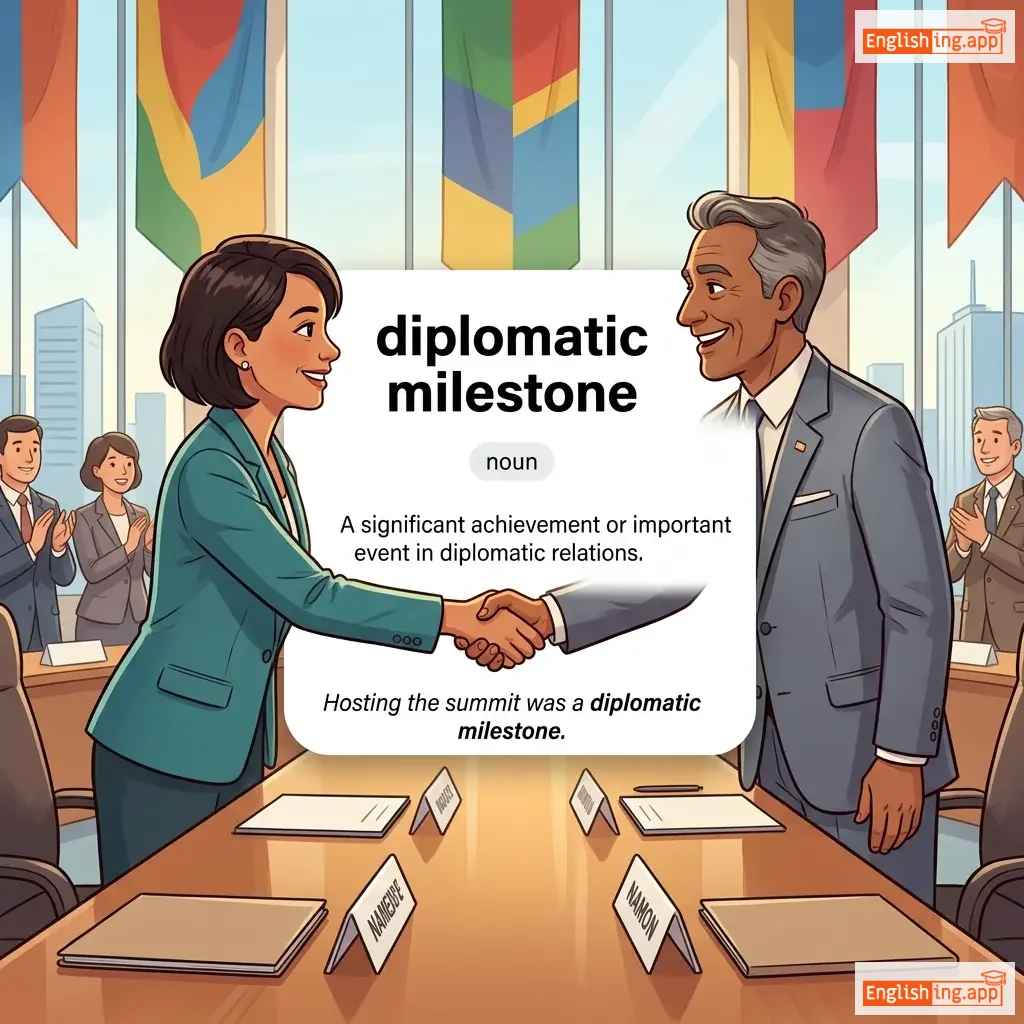
diplomatic milestone definition card — visual illustration of the meaning
noun
/ˌdɪp.ləˈmæt.ɪk ˈmaɪl.stəʊn/
外交里程碑 (waijiao lichengbei)

A significant achievement or important event in diplomatic relations.

"Hosting the summit was a diplomatic milestone."
"举办峰会是一个外交里程碑。" (Jubanfenghui shi yige waijiao lichengbei.)
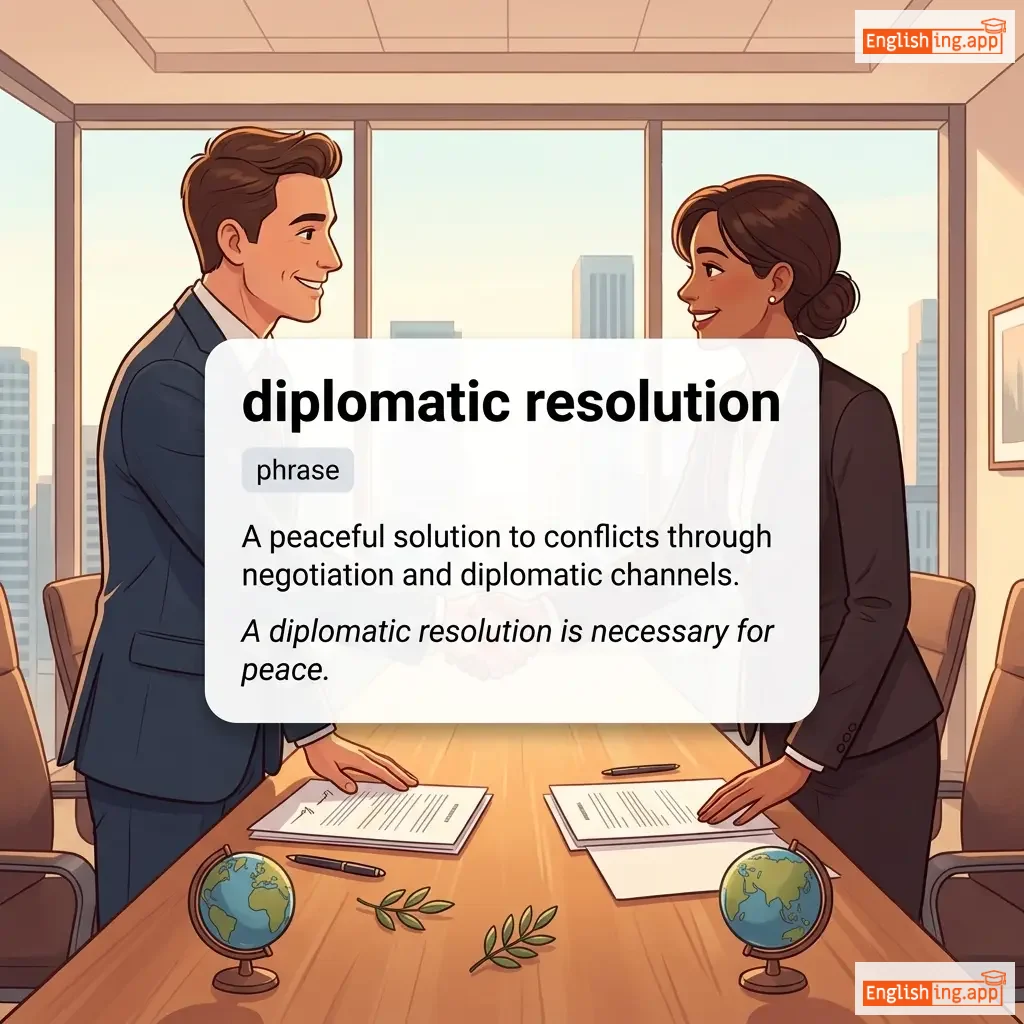
diplomatic resolution definition card — visual illustration of the meaning
phrase
ˌdɪp.ləˈmæt.ɪk rɛz.əˈluː.ʃən
外交解决方案 (waijiao jieju fang'an)

A peaceful solution to conflicts through negotiation and diplomatic channels.

"A diplomatic resolution is necessary for peace."

"和平需要外交解决方案。" (Heping xuyao waijiao jieju fang'an.)
noun
/dɪˈpləʊmətɪst/
外交官 (waijiaoguan)

A person skilled in diplomacy; another word for diplomat.

"The diplomatist handled the negotiations with great tact."

"外交官以极大的技巧处理了谈判。" (Waijiaoguan yi jida de jiqiao chuli le tanpan.)
noun
/ˌdɪpsəˈmeɪniæk/
酒鬼 (jiǔguǐ)

A person with an uncontrollable craving for alcoholic drinks.

"The novel portrayed the tragic downfall of a dipsomaniac who lost everything to alcohol."

"这本小说描绘了一位酒鬼的悲惨堕落,他因酒精失去了一切。" (Zhè běn xiǎoshuō miáohuìle yī wèi jiǔguǐ de bēicǎn duòluò, tā yīn jiǔjīng shīqùle yīqiè.)
adjective
/ˈdaɪər/
危急 (weiji)

Extremely serious or urgent.

"The refugees were in dire need of food and shelter."

"难民急需食物和住所。" (Nànmín jíxū shíwù hé zhùsuǒ.)
verb
/dəˈrɛkt/ or /daɪˈrɛkt/
指导 (zhǐdǎo)

to manage or control the course of something; to give instructions

"She directed the team to complete the project on time."

"她指示团队按时完成项目。" (Tā zhǐshì tuánduì ànshí wánchéng xiàngmù.)
noun
/dəˈrɛkʃən/ or /daɪˈrɛkʃən/
方向, 指令 (fangxiang, zhiling)

the course or path on which someone or something is moving; instructions on what to do

"He asked for directions to the train station."

"他询问了去火车站的方向。" (Ta xunwen le qu huochezhan de fangxiang.)
adverb
/dəˈrɛktli/ or /daɪˈrɛktli/
直接 (zhíjiē)

in a straight line or manner; without anything in between

"She spoke directly to the manager about her concerns."

"她直接与经理讨论了她的担忧。" (Tā zhíjiē yǔ jīnglǐ tǎolùnle tā de dānyōu.)
noun
/dəˈrɛktər/ or /daɪˈrɛktər/
导演 (dǎoyǎn)

a person who manages or oversees a company, department, or film

"The director gave final approval for the new movie script."

"导演为新电影剧本提供了最终批准。" (Dǎoyǎn wèi xīn diànyǐng jùběn tígōngle zuìzhōng pīzhǔn.)
noun
/dɪˈrɛktəri/
目录 (mùlù)

a book or online resource listing people, businesses, or services with relevant details

"I need to find a plumber in the phone directory."
"我需要在电话目录中找到一个水管工。" (Wǒ xūyào zài diànhuà mùlù zhōng zhǎodào yīgè shuǐguǎn gōng.)
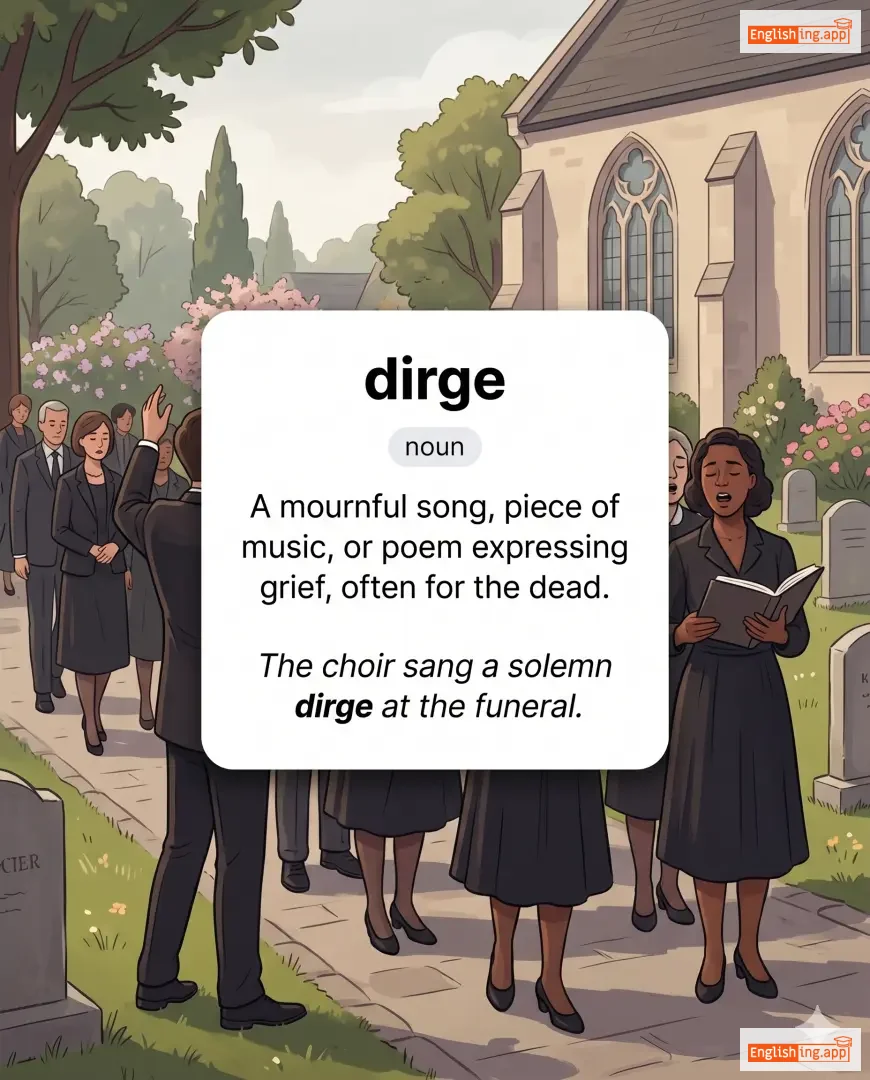
dirge definition card — visual illustration of the meaning
noun
/dɜːrdʒ/
挽歌 (wǎngē)

A mournful song, piece of music, or poem expressing grief, often for the dead.

"The choir sang a solemn dirge at the funeral."

"合唱团在葬礼上唱了一首庄严的挽歌。" (Hé chàng tuán zài zànglǐ shàng chàngle yī shǒu zhuāngyán de wǎngē.)
noun
/dɜːrt/
土壤,污垢 (tǔrǎng, wūgòu)

Loose soil or unclean matter; anything that makes a surface unclean.

"Her shoes were covered in dirt after walking through the field."

"她的鞋子在田野上走过后沾满了泥土。" (Tā de xiézi zài tiányě shàng zǒuguò hòu zhān mǎnle nítǔ.)
adjective
/ˈdɜːr.ti/
(zang)

Covered with or containing an unclean substance.

"His shoes were dirty after walking in the mud."

"他走在泥泞中,鞋子变脏了。" (Tā zǒu zài nínì zhōng, xiézi biàn zāngle.)
noun
/ˌdɪsəˈbɪləti/
残疾 (canji)

A physical or mental condition that limits a person's movements, senses, or activities.

"The organization supports people living with disability."

"该组织支持与残疾共生的人们。" (Gai zuzhi zhichi yu canji gongsheng de renmen.)
verb
/dɪsˈeɪbl/
禁用 (jinyong)

to make something unable to function or operate

"The technician disabled the alarm system temporarily."

"技术人员暂时禁用了报警系统。" (Jishu renyuan zan shi jinyong le baojing xitong)
adjective
/dɪsˈeɪbld/
残疾 (cánjí)

having a physical or mental condition that limits movements, senses, or activities

"The park has special facilities for disabled people."
"公园有专为残疾人士设计的设施。" (Gōngyuán yǒu zhuān wèi cánjí rénshì shèjì de shèshī.)
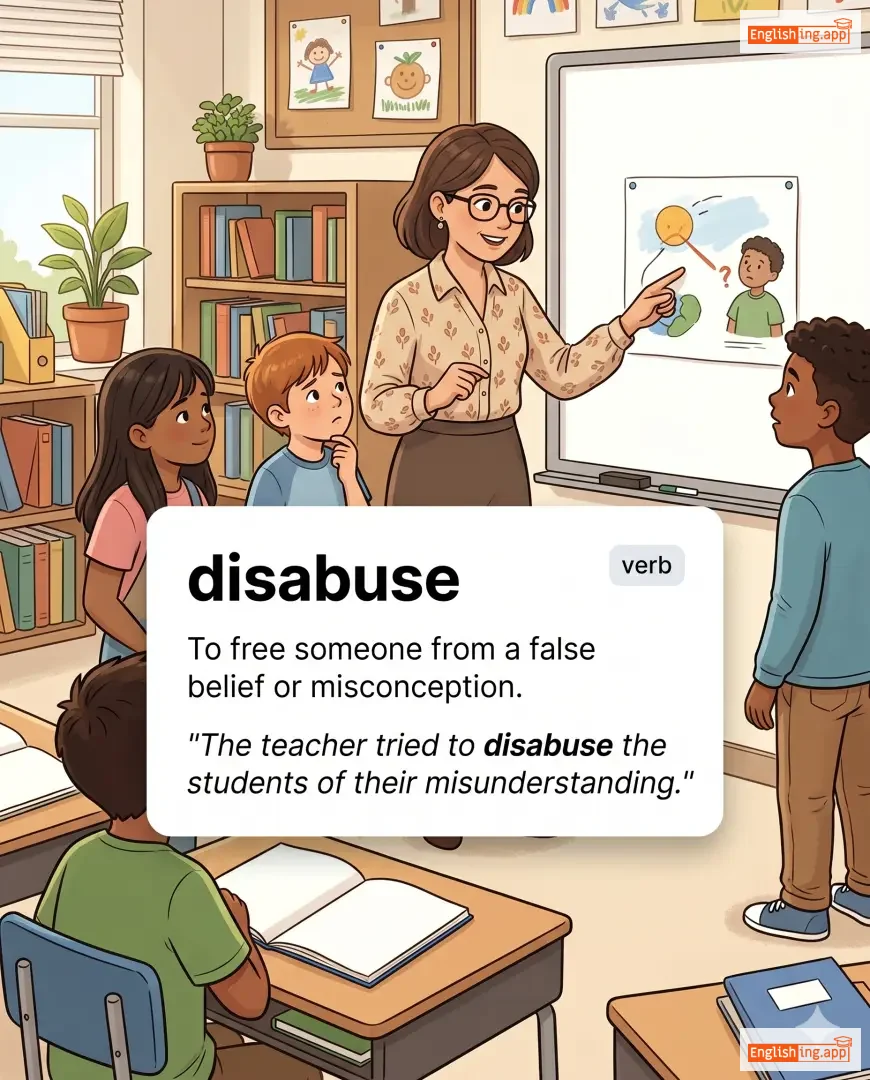
disabuse definition card — visual illustration of the meaning
verb
/ˌdɪsəˈbjuːz/
使觉醒 (shi juexing)

To free someone from a false belief or misconception.

"The teacher tried to disabuse the students of their misunderstanding."
"老师试图让学生摆脱他们的误解。" (Laoshi shitu rang xuesheng baituo tamen de wu jie.)
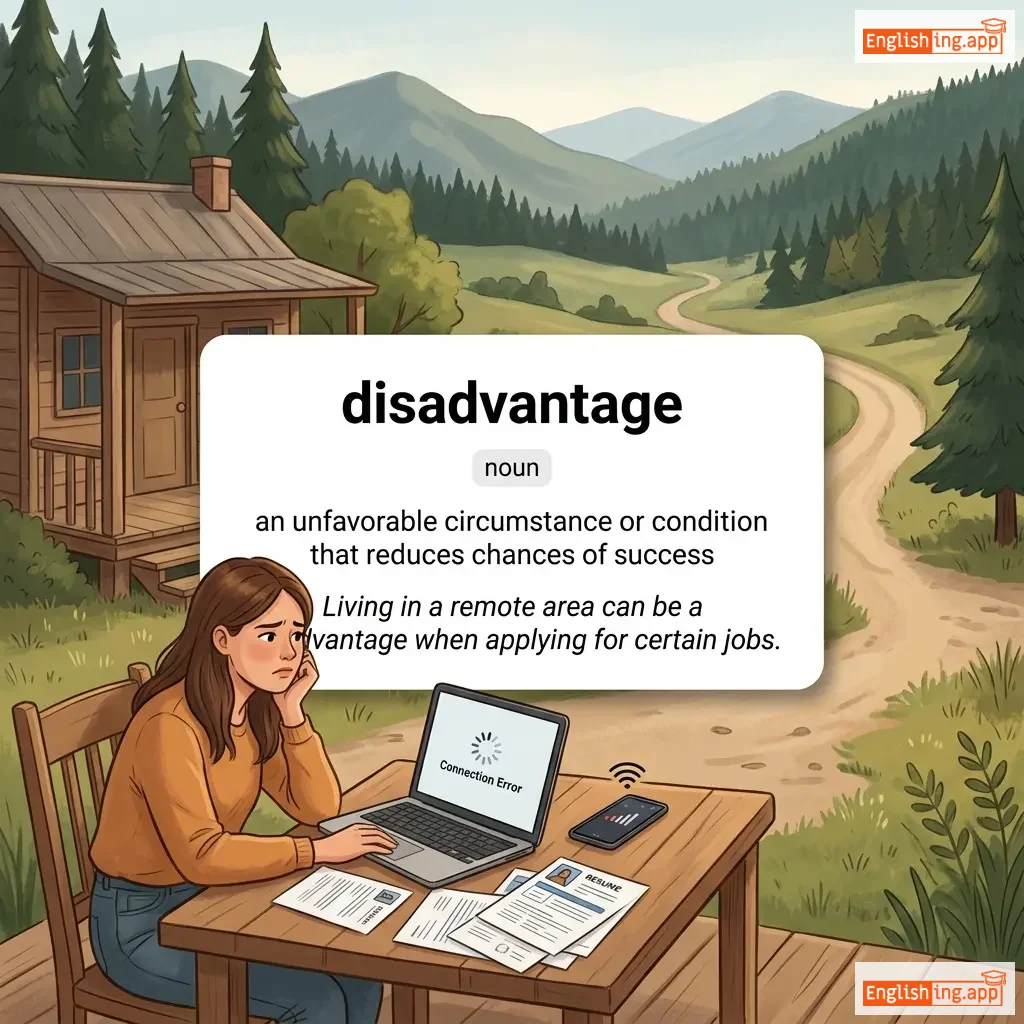
disadvantage definition card — visual illustration of the meaning
noun
/ˌdɪs.ədˈvæn.tɪdʒ/
劣势 (lièshì)

an unfavorable circumstance or condition that reduces chances of success

"Living in a remote area can be a disadvantage when applying for certain jobs."

"生活在偏远地区,在申请某些工作时可能会成为一种劣势。" (Shēnghuó zài piānyuǎn dìqū, zài shēnqǐng mǒuxiē gōngzuò shí kěnéng huì chéngwéi yī zhǒng lièshì.)
adjective
/ˌdɪsədˈvæntɪdʒd/
贫困 (pínkùn)

Lacking the basic resources or conditions needed for a good standard of living or equal opportunities.

"The program provides support to disadvantaged children."

"该计划为贫困儿童提供支持。" (Gāi jìhuà wèi pínkùn ér tóng tígōng zhīchí.)
adjective
/ˌdɪsəˈfɛktɪd/
不满的 (buman de)

Dissatisfied and rebellious, especially against authority or leadership.

"The reforms were introduced to calm the disaffected youth."

"改革是为了平息不满的青年。" (Gaige shi weile pingxi bumai de qingnian.)
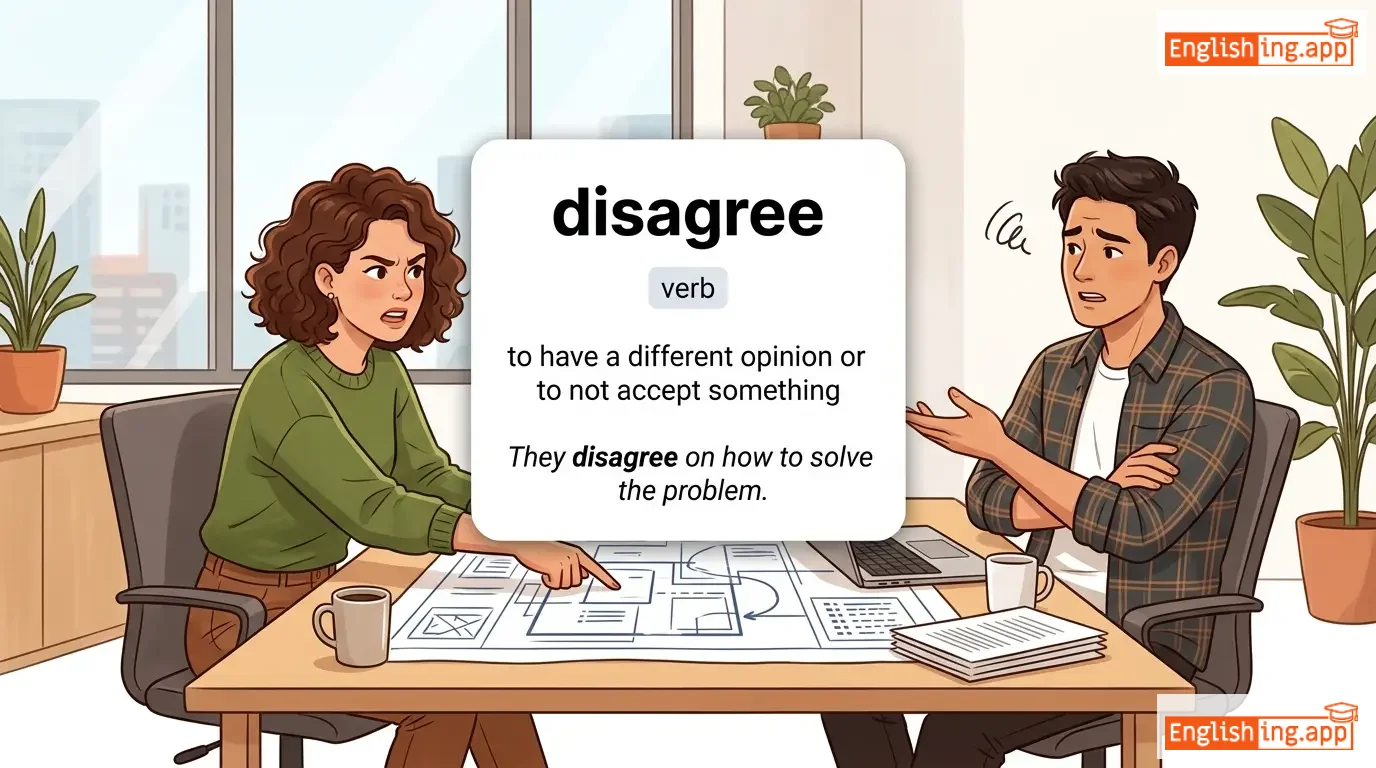
disagree definition card — visual illustration of the meaning
verb
/ˌdɪsəˈɡriː/

to have a different opinion or to not accept something

"They disagree on how to solve the problem."

adjective
/ˌdɪsəˈɡriːəbl/
令人不悦 (lìng rén bù yuè)

Unpleasant or offensive; causing discomfort or annoyance.

"The weather was cold and disagreeable."

"天气寒冷且令人不悦。" (Tiānqì hánlěng qiě lìng rén bù yuè.)
noun
/ˌdɪsəˈɡriːmənt/
分歧 (fenqi)

a failure to agree or a difference in opinion

"Their disagreement on the issue caused a delay in the project."

"他们在这个问题上的分歧导致了项目的延迟。" (Tamen zai zhege wenti shang de fenqi daozhile xiangmu de yanchi.)
verb
/ˌdɪsəˈlaʊ/
不允许 (bù yǔnxǔ)

to refuse to allow or accept something

"The referee disallowed the goal for offside."
"裁判因为越位取消了进球。" (Cáipàn yīnwèi yuèwèi qǔxiāo le jìnqiú.)
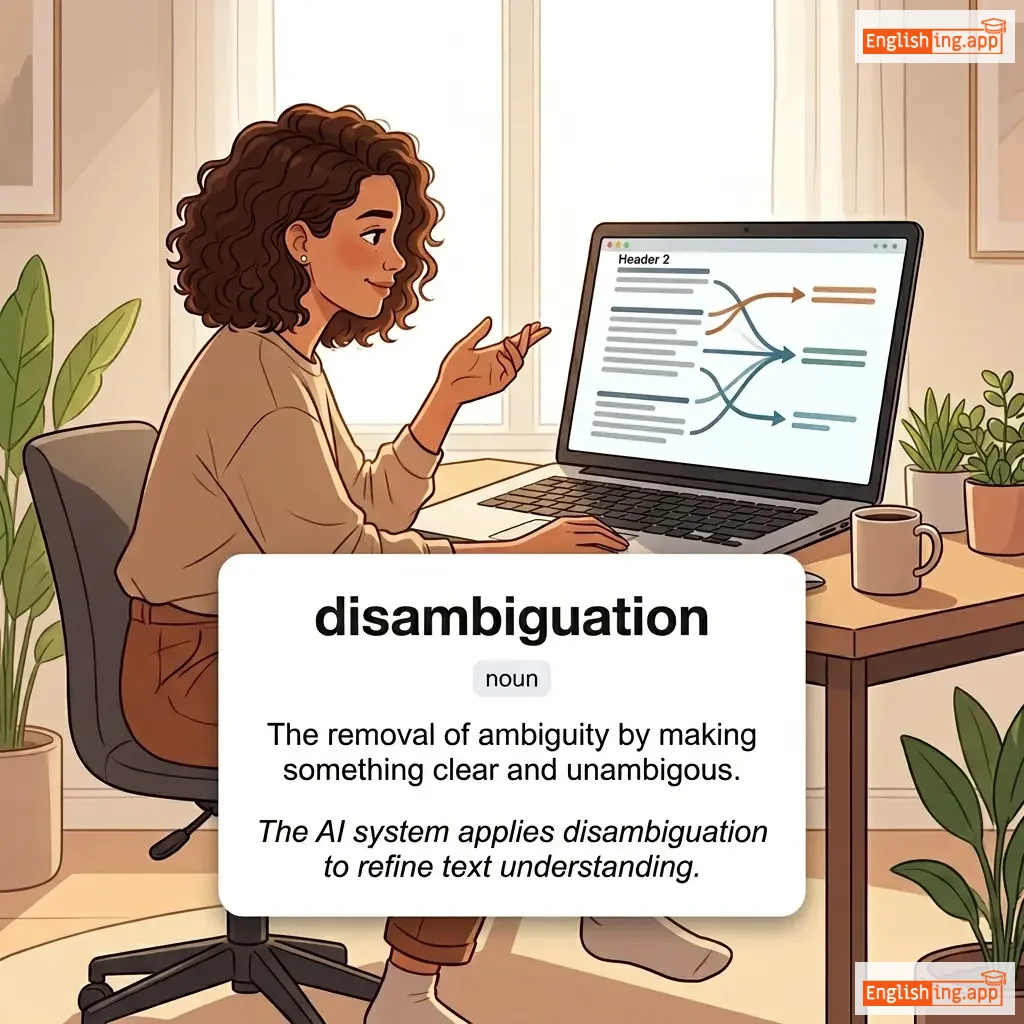
disambiguation definition card — visual illustration of the meaning
noun
ˌdɪs.æmˌbɪɡ.juˈeɪ.ʃən
消歧义 (xiaoqiyi)

The removal of ambiguity by making something clear and unambiguous.

"The AI system applies disambiguation to refine text understanding."
"AI系统应用歧义消除来完善文本理解。" (AI xitong yingyong qiyi xiaochu lai wanshan wenben liaojie.)
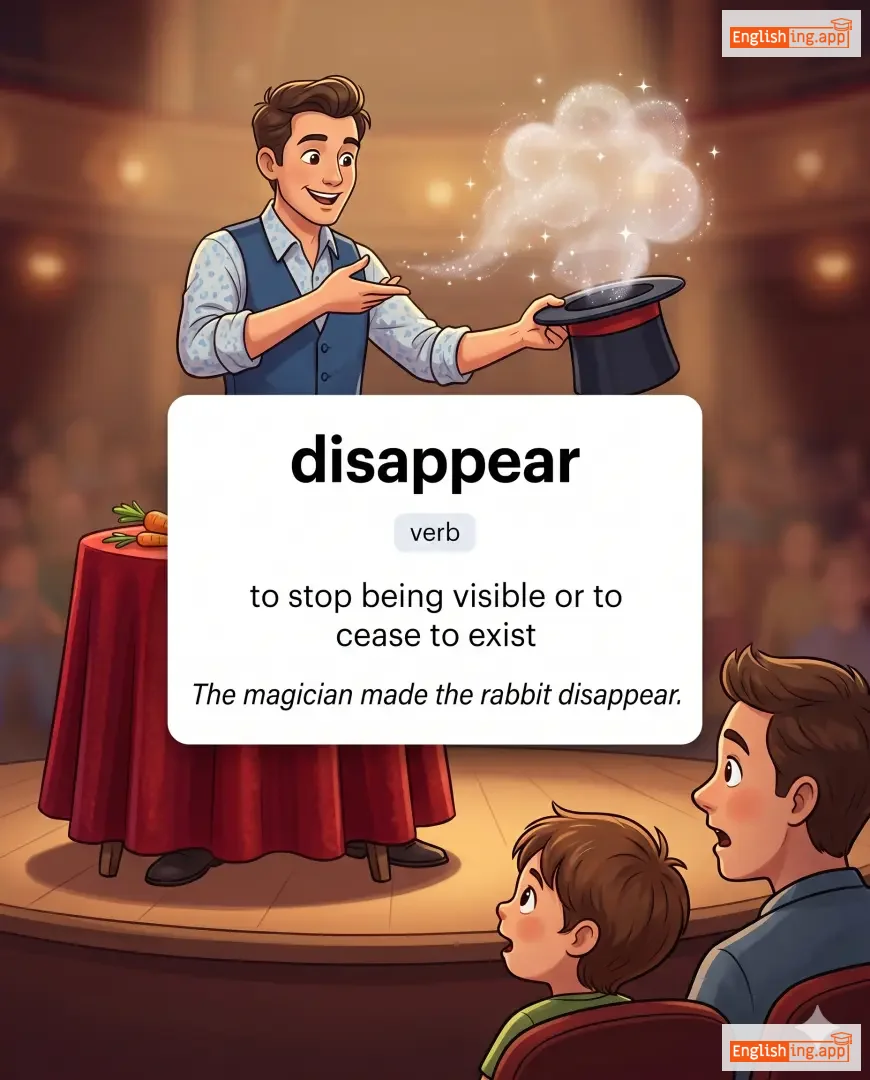
disappear definition card — visual illustration of the meaning
verb
/ˌdɪsəˈpɪər/
消失 (xiaoshi)

to stop being visible or to cease to exist

"The magician made the rabbit disappear."
"魔术师让兔子消失。" (Móshù shī ràng tùzǐ xiāoshī.)
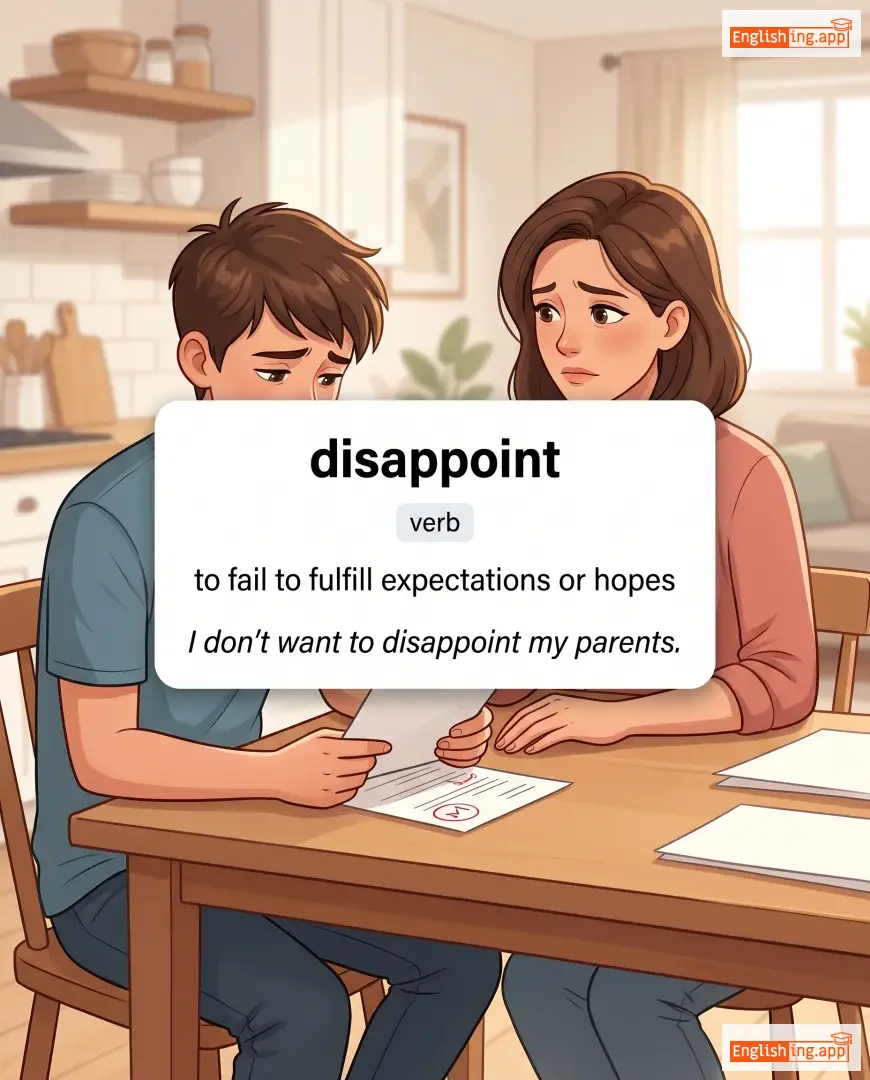
disappoint definition card — visual illustration of the meaning
verb
/ˌdɪsəˈpɔɪnt/
失望 (shīwàng)

to fail to fulfill expectations or hopes

"I don’t want to disappoint my parents."

"我不想让我的父母失望。" (Wǒ bù xiǎng ràng wǒ de fùmǔ shīwàng.)
adjective
/ˌdɪsəˈpɔɪntɪd/
失望 (shīwàng)

sad or displeased because something has not happened as expected

"She was disappointed with her exam results."

"她对考试结果感到失望。" (Tā duì kǎoshì jiéguǒ gǎndào shīwàng.)
noun
/ˌdɪsəˈpɔɪntmənt/
失望 (shīwàng)

the feeling of sadness or displeasure caused by the non-fulfillment of one's hopes or expectations

"Her face showed deep disappointment after hearing the results."

"她的脸在听到结果后显露出深深的失望。" (Tā de liǎn zài tīngdào jiéguǒ hòu xiǎnlòu chū shēnshēn de shīwàng.)
noun
/ˌdɪsæprəˈbeɪʃən/
强烈反对 (qianglie fandui)

strong disapproval, typically on moral grounds

"The policy was met with widespread disapprobation."

"该政策遭遇了广泛的反对。" (Gai zhengce zao yu le guangfan de fandui.)
noun
/ˌdɪsəˈpruːvəl/
不赞成 (buzancheng)

The expression of an unfavorable opinion or judgment

"Her parents showed clear disapproval of her decision to drop out of college."

"她的父母对她辍学的决定表现出明显的不赞成。" (Ta de fumu dui ta chuo xue de jueding biaoxian chu mingxian de buzancheng.)
verb
/ˌdɪsəˈpruːv/
不赞成 (bù zànchéng)

to have a negative opinion about something; to consider something wrong or bad

"Many parents disapprove of smoking."

"许多父母不赞成吸烟。" (Xǔduō fùmǔ bù zànchéng xīyān.)
verb
/dɪsˈɑːrm/
解除武装 (jiexu wuzhuang)

to take weapons away from someone; to make someone feel less hostile

"The soldiers were ordered to disarm the rebels."

"士兵们被命令解除叛乱分子的武装。" (Shibing men bei mingling jiexu panluan fenzhi de wuzhuang.)
verb
/ˌdɪsəˈreɪndʒ/
弄乱 (nongluan)

to disturb the order or arrangement of something

"The wind disarranged her hair."
"风把她的头发弄乱了。" (Feng ba ta de toufa nongluan le.)
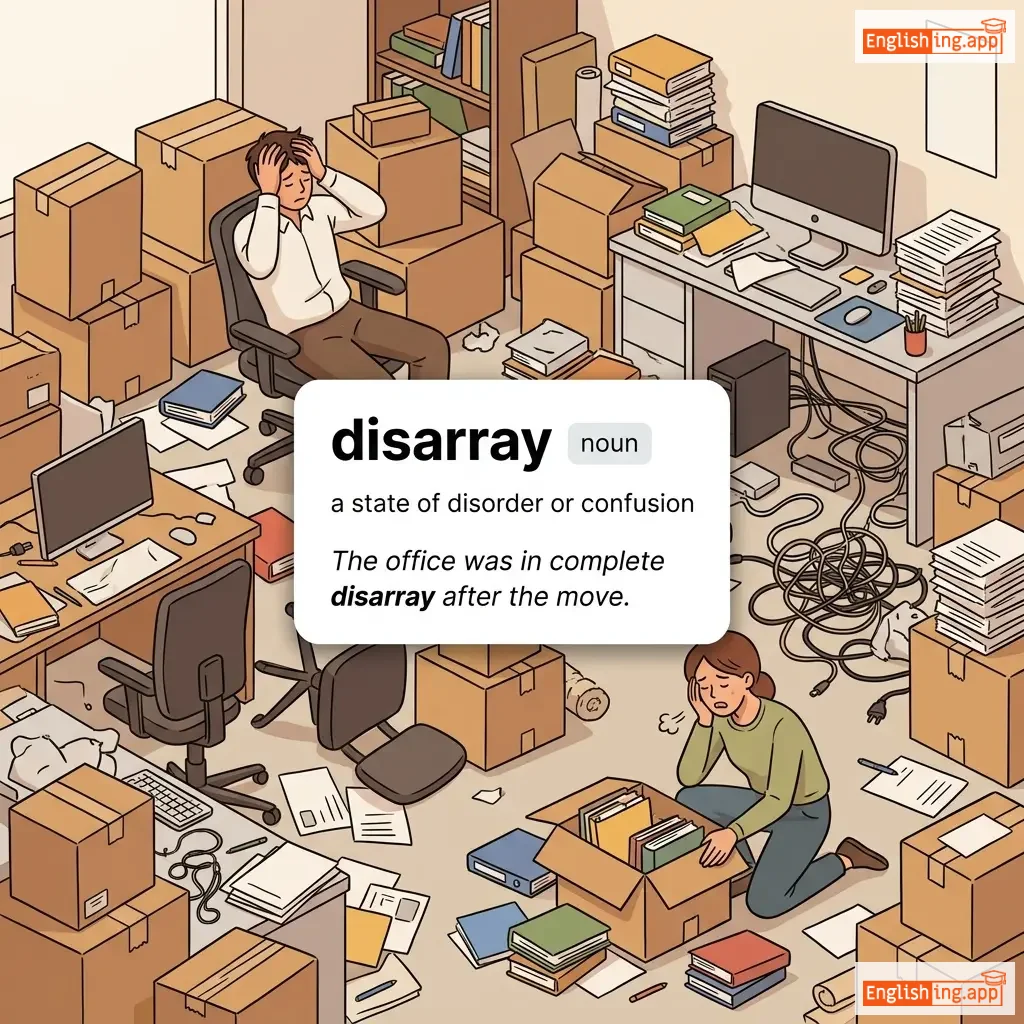
disarray definition card — visual illustration of the meaning
noun
/ˌdɪsəˈreɪ/
混乱 (hunluan)

a state of disorder or confusion

"The office was in complete disarray after the move."

"搬家后办公室完全混乱。" (Ban jia hou bangongshi wanquan hunluan.)
verb
/ˌdɪsəˈsɛmbəl/
拆开 (chaikai)

To take apart something into its separate pieces.

"He had to disassemble the computer to repair it."

"他必须拆开电脑来修理它。" (Tā bìxū chāikāi diànnǎo lái xiūlǐ tā.)
noun
/dɪˈzæstər/
灾难 (zainan)

A sudden event that causes great damage or loss of life.

"The earthquake was a major disaster."

"地震是一场重大灾难。" (Dìzhèn shì yī chǎng zhòngdà zāinàn.)
🌪️

Disastrous

adjective
/dɪˈzæstrəs/

causing great damage or harm

"The flood caused disastrous damage to the city."

verb
/ˌdɪsəˈvaʊ/
否认 (fǒu rèn)

to deny responsibility for or connection with something

"He disavowed any involvement in the scandal."

"他否认参与了丑闻。" (Tā fǒu rèn cān yù le chǒu wén.)
noun
/ˌdɪsəˈvaʊəl/
否认 (fǒurèn)

the denial of any responsibility, connection, or support

"The politician issued a firm disavowal of the controversial remarks."

"该政治家对有争议的言论发表了强烈的否认。" (Gāi zhèngzhìjiā duì yǒu zhēngyì de yánlùn fābiǎo le qiángliè de fǒurèn.)
verb
/dɪsˈbænd/
解散 (jiesan)

to break up and stop functioning as a group or organization

"The club decided to disband after twenty years of activity."

"俱乐部在二十年的活动后决定解散。" (Jùlèbù zài èrshí nián de huódòng hòu juédìng jiěsàn.)
verb
/dɪsˈbɑːr/
正式将律师从法律职业中除名 (zhèngshì jiāng lǜshī cóng fǎlǜ zhíyè zhōng chúmíng)

to officially remove a lawyer from the legal profession

"The corrupt lawyer was disbarred for unethical conduct."

"腐败的律师因不道德行为而被除名。" (Fǔbài de lǜshī yīn bù dàodé xíngwéi ér bèi chúmíng.)