词汇表

英语词汇词典 | 单词含义、定义和示例

verb
/ˌdɪfəˈrɛnʃieɪt/
区分 (qufen)

To recognize or make a distinction between things.

"It is important to differentiate between fact and opinion."

"重要的是区分事实和意见。" (Zhongyao de shi qufen shishi he yijian.)
differentiation definition card — visual illustration of the meaning
noun
/ˌdɪf.ə.ren.ʃiˈeɪ.ʃən/
差异化, 区分, 分类 (chāyì huà, qūfēn, fēnlèi)

The action or process of differentiating or distinguishing between two or more things or people.

"Strong differentiation sets brands apart from competitors."

"强烈的差异化使品牌在竞争者中脱颖而出。" (Qiángliè de chāyì huà shǐ pǐnpái zài jìngzhēng zhě zhōng tuōyǐng ér chū.)
adverb
/ˈdɪfərəntli/
以不同方式 (yi butong fangshi)

in a way that is not the same as another or as expected

"She approached the problem differently than her colleagues."

"她以不同的方式解决了这个问题,比她的同事们更有创意。" (Ta yi butong de fangshi jiejue le zhege wenti, bi ta de tongshi men geng you chuangyi.)
difficult definition card — visual illustration of the meaning
adjective
/ˈdɪf.ɪ.kəlt/
困难 (kunnan)

Needing much effort or skill to do or understand.

"The exam was so difficult that many students failed."

"考试如此困难,以至于许多学生都没通过。" (Kǎoshì rúcǐ kùnnán, yǐ zhì yú xǔduō xuéshēng dōu méi tōngguò.)
noun
/ˈdɪfɪkəlti/

the state or condition of being hard to do, deal with, or understand

"He faced great difficulty in learning a new language."

diffidence definition card — visual illustration of the meaning
noun
/ˈdɪfɪdəns/
缺乏自信 (quefa zixin)

Lack of self-confidence; shyness or modesty.

"Her diffidence made it hard for her to speak in public."

"她的缺乏自信让她很难在公众面前发言。" (Ta de quefa zixin rang ta hen nan zai gongzhong mianqian fayan.)
adjective
/ˈdɪfɪdənt/

Shy or lacking confidence in one's own abilities.

"He was too diffident to ask a question in class."

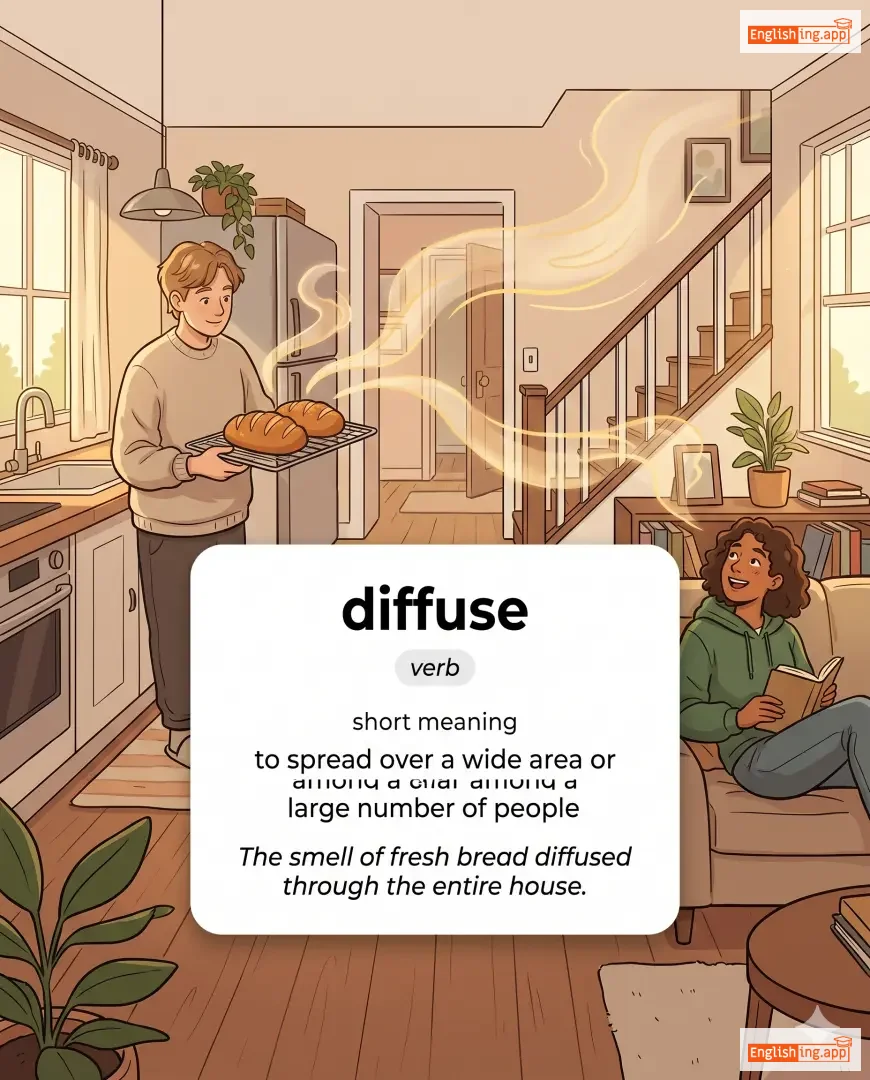
diffuse definition card — visual illustration of the meaning
🌫️

diffuse

verb
/dɪˈfjuːz/

to spread over a wide area or among a large number of people

"The smell of fresh bread diffused through the entire house."

adjective
/dɪˈfjuːzəbl/
可扩散的 (ke kuosan de)

able to spread or be spread through a medium

"Oxygen is diffusible through cell membranes."

"氧气可以通过细胞膜扩散。" (Yangqi keyi tongguo xibao mo kuosan.)
noun
/dɪˈfjuːʒən/

the spreading of something more widely or the movement of particles from high to low concentration

"The diffusion of information on social media is rapid."

verb
/dɪɡ/
挖掘 (wājué)

to break up and move earth with a tool or machine, or with hands, paws, etc.

"They decided to dig a hole for the new tree."

"他们决定为新树挖一个洞。" (Tāmen juédìng wèi xīn shù wā yīgè dòng.)
digest definition card — visual illustration of the meaning
verb
/daɪˈdʒest/
消化 (digest)

to break down food in the body; to think about and understand

"It takes time to digest a heavy meal."

"要花时间消化一顿丰盛的饭菜。" (it takes time to digest a heavy meal)
digestive definition card — visual illustration of the meaning
adjective
daɪˈdʒes.tɪv
消化的 (xiaohua de)

Relating to the digestion of food.

"Digestive enzymes help break down food."

"消化酶帮助分解食物。" (Xiāohuà méi bāngzhù fēn jiě shíwù.)
🔢

digit

noun
/ˈdɪdʒɪt/

a numeral from 0 to 9; also a finger or toe

"You must enter a four-digit code to unlock the phone."

digital definition card — visual illustration of the meaning
adjective
/ˈdɪdʒɪtl/
数字的 (shùzì de)

relating to technology that uses signals or data in the form of numbers (0s and 1s)

"She prefers digital books over printed ones."

"她更喜欢数字书籍而不是印刷书籍。" (Tā gèng xǐhuān shùzì shūjí ér bùshì yìnshuā shūjí.)
digital detox definition card — visual illustration of the meaning
noun
/ˈdɪdʒɪtl ˈdɛtɒks/
数字排毒 (shuzi paidu)

A period of time during which a person refrains from using electronic devices such as smartphones or computers, regarded as an opportunity to reduce stress or focus on social interaction in the physical world.

"A digital detox can help improve mental clarity and reduce stress."
"数字排毒有助于提高心理清晰度并减少压力。" (Shuzi paidu you zhu yu tigao xinli qingxidu bing jianshao yali.)
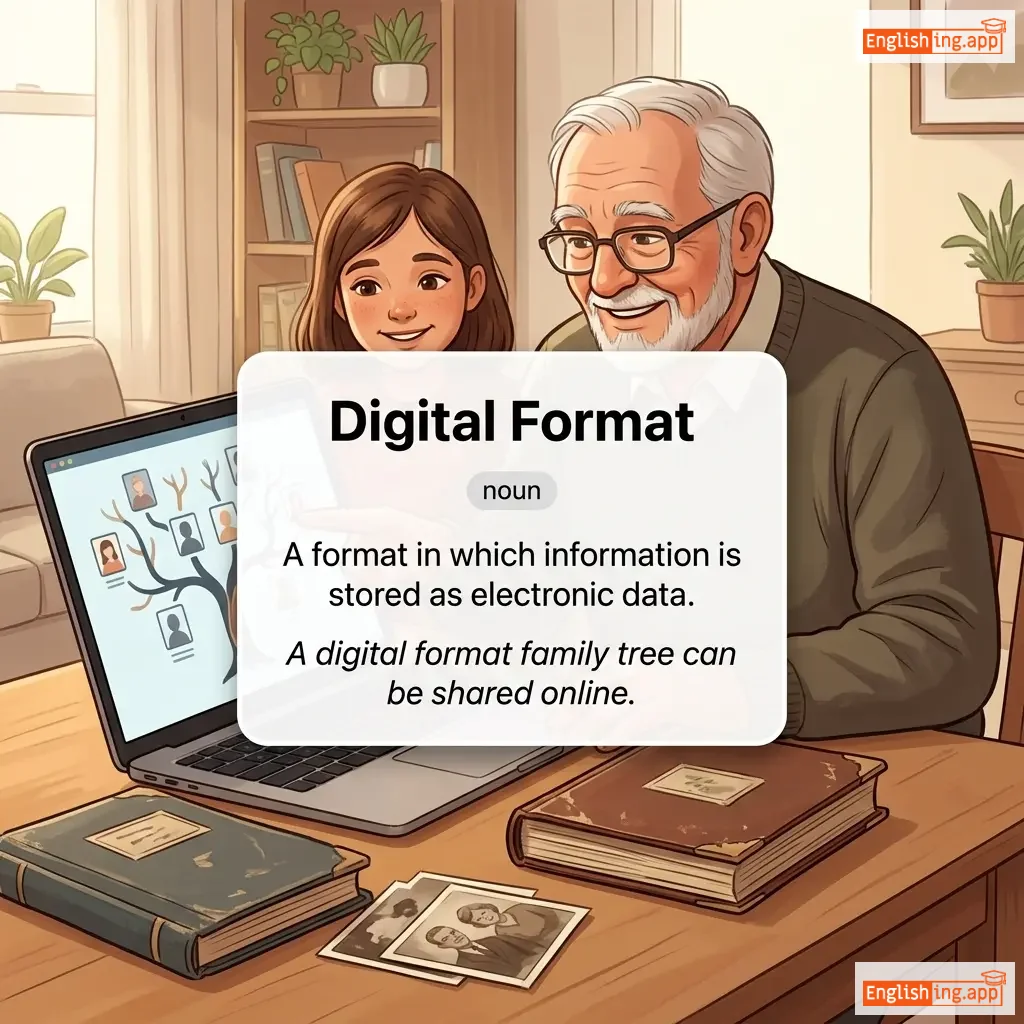
Digital Format definition card — visual illustration of the meaning
noun
ˈdɪdʒɪtəl ˈfɔːrmæt
数字格式 (shu zi ge shi)

A format in which information is stored as electronic data.

"A digital format family tree can be shared online."

"数字格式的家谱可以在线共享。" (Shùzì géshì de jiāpǔ kěyǐ zàixiàn gòngxiǎng.)
digital tools definition card — visual illustration of the meaning
noun
ˈdɪdʒ.ɪ.təl tuːlz
数字工具 (shùzì gōngjù)

Electronic software and applications used for learning and educational purposes.

"Schools are integrating digital tools to enhance learning."

"学校正在整合数字工具来增强学习效果。" (Xuéxiào zhèngzài zhěnghé shùzì gōngjù lái zēngqiáng xuéxí xiàoguǒ.)
noun
/ˈdɪɡnɪˌtɛri/
重要人物 (zhòng yào rén wù)

a person considered to be important because of high rank or office

"Several foreign dignitaries attended the state banquet."

"几位外国重要人物出席了国宴。" (Jǐ wèi wàiguó zhòngyào rénwù chūxí le guóyàn.)
noun
/ˈdɪɡnəti/
尊严 (zunyan)

the state or quality of being worthy of respect or honor

"He faced the difficult situation with calm and dignity."

"他以冷静和尊严面对了艰难的情况。" (Ta yi lengjing he zunyan miandui le jinnan de qingkuang.)
noun
/ˈdaɪɡræf/
双字母组合 (shuangzimuzuhe)

A pair of letters representing a single sound, such as 'sh' in 'ship'.

"In the word 'phone', the letters 'ph' form a digraph."
"'电话'一词中的'ph'字母组成一个双字母组合。" ('dianhua' yici zhong de 'ph' zimu zucheng yige shuangzimuzuhe.)
↪️

digress

verb
/daɪˈɡrɛs/

To leave the main subject temporarily in speech or writing.

"The professor began to digress from the main topic of the lecture."

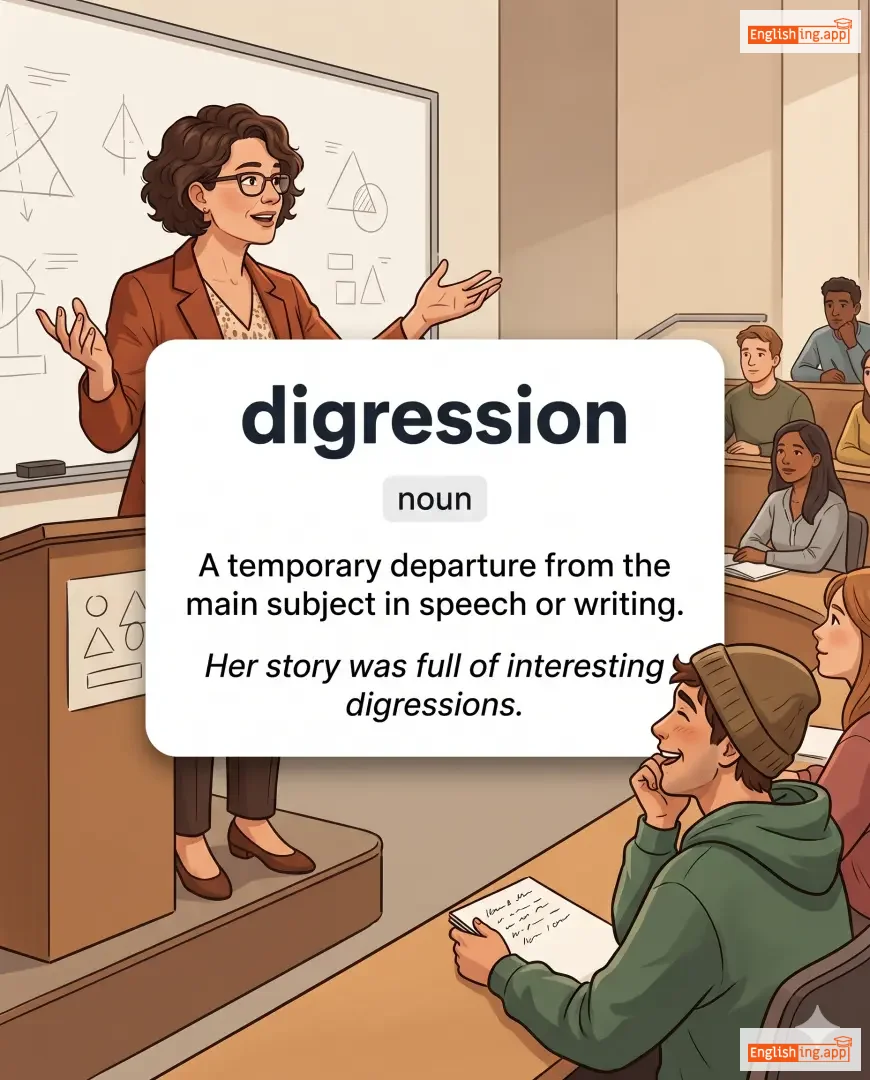
digression definition card — visual illustration of the meaning
noun
/daɪˈɡrɛʃən/
离题 (lítí)

A temporary departure from the main subject in speech or writing.

"Her story was full of interesting digressions."

"她的故事充满了有趣的离题部分。" (Tā de gùshì chōngmǎnle yǒuqù de lítí bùfen.)
adjective
/daɪˈɡrɛsɪv/
偏离主要话题的倾向 (pianli zhuyao huati de qingxiang)

Tending to depart from the main subject in speech or writing.

"The speaker's digressive style made the lecture difficult to follow."

"演讲者的偏离主题的风格使得听讲变得困难。" (Yǎnjiǎng zhě de piānlí zhǔtí de fēnggé shǐdé tīngjiǎng biàndé kùnnán.)
verb
/dɪˈlæpɪdeɪt/
衰败 (shuāibài)

To cause something, especially a building, to fall into ruin or disrepair.

"The abandoned house began to dilapidate over the years."

"那座废弃的房子在多年的时间里开始衰败。" (Nà zuò fèiqì de fángzi zài duōnián de shíjiān lǐ kāishǐ shuāibài.)
adjective
/dɪˈlæpɪˌdeɪtɪd/
破旧的 (po jiu de)

Fallen into disrepair or ruin due to neglect or age.

"The family lived in a dilapidated house at the edge of town."

"这个家庭住在城市边缘的一座破旧的房子里。" (Zhège jiātíng zhù zài chéngshì biānyuán de yīzuò pòjiù de fángzi lǐ.)
noun
/dɪˌlæpɪˈdeɪʃən/
破败 (pobai)

The state of disrepair or ruin as a result of neglect.

"The old temple was in a state of dilapidation."

"这座古老的寺庙处于破败状态。" (Zhe zuo gulao de simiao chu yu pobai zhuangtai.)
verb
/daɪˈleɪt/
扩展 (kuòzhǎn)

To make wider, larger, or more open.

"The doctor used drops to dilate the patient's pupils."

"医生用药水来扩张病人的瞳孔。" (Yīshēng yòng yàoshuǐ lái kuòzhǎn bìngrén de tóngkǒng.)
adjective
/ˈdɪlətɔːri/
拖延的 (tuōyán de)

Tending to cause delay; slow to act.

"The committee was criticized for its dilatory response to the crisis."

"该委员会因其在危机中的拖延反应而受到批评。" (Gāi wěiyuánhuì yīn qí zài wēijī zhōng de tuōyán fǎnyìng ér shòudào pīpíng.)
dilemma definition card — visual illustration of the meaning
noun
/daɪˈlɛmə/
困境 (kunjing)

A situation in which a difficult choice has to be made between two or more alternatives.

"She faced a dilemma about whether to accept the job offer or continue her studies."

"她面临是否接受工作邀请还是继续学习的困境。" (Ta mianlin shifou jieshou gongzuo yaoqing haishi jixu xuexi de kunjing.)
noun
/ˌdɪləˈtænt/
外行 (wai hang)

A person who takes up an art, activity, or subject merely for amusement, especially in a superficial way.

"He was dismissed as a dilettante in the art world because he lacked formal training."

"他在艺术界被视为外行,因为他缺乏正式的训练。" (Tā zài yìshù jiè bèi shì wéi wài háng, yīnwèi tā quēfá zhèngshì de xùnliàn.)
diligence definition card — visual illustration of the meaning
noun
/ˈdɪlɪdʒəns/
勤奋 (qinfen)

Careful and persistent work or effort.

"Through diligence and determination, she completed her research on time."

"通过勤奋和决心,她按时完成了她的研究。" (Tōngguò qínfèn hé juéxīn, tā ànshí wánchéngle tā de yánjiū.)
adjective
/ˈdɪlɪdʒənt/
勤奋 (qinfen)

Showing care and conscientiousness in one's work or duties.

"She is a diligent student who always finishes her assignments on time."

"她是一个勤奋的学生,总是按时完成作业。" (Ta shi yige qinfen de xuesheng, zongshi anshi wancheng zuoye.)
verb
/daɪˈluːt/
稀释 (xī shì)

To make a liquid thinner or weaker by adding water or another solvent.

"You should dilute the juice with water before serving it to children."

"你应该在给孩子们提供之前把果汁稀释一下。" (Nǐ yīnggāi zài gěi háizimen tígōng zhīqián bǎ guǒzhī xīshì yīxià.)
adjective
/dɪm/
昏暗 (hun'an)

not bright; having little light; not clearly visible

"The room was dim because the curtains were closed."

"房间昏暗,因为窗帘被关上了。" (Fangjian hun'an, yinwei chuanglian bei guan shang le.)
noun
/daɪm/
十分硬币 (shi fen ying bi)

a small coin, especially a U.S. coin worth ten cents

"He gave me a dime for the phone call."
"他给了我一枚十分硬币用于打电话。" (Ta gei le wo yi mei shi fen ying bi yong yu da dian hua.)
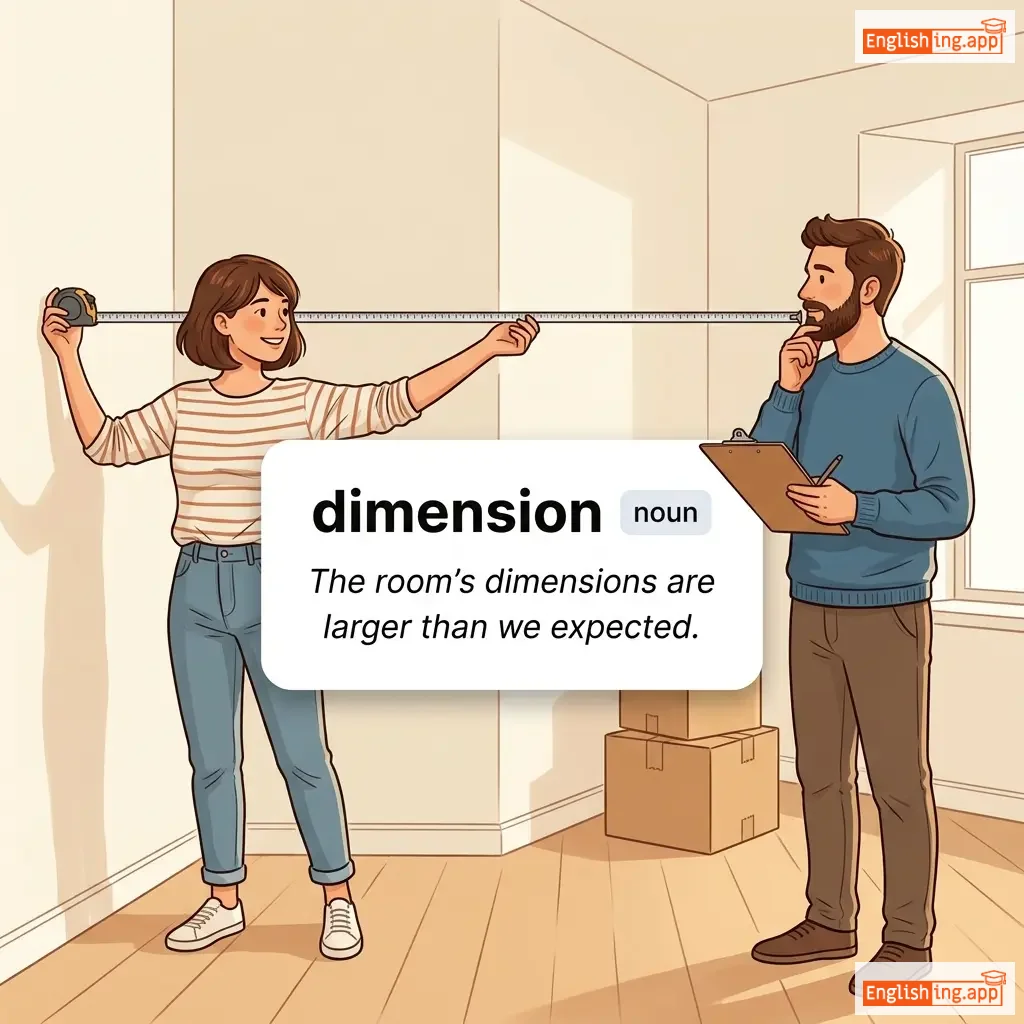
dimension definition card — visual illustration of the meaning
noun
/dɪˈmɛnʃən/
维度 (weidu)

A measurable extent of a particular kind, such as length, breadth, depth, or height.

"The room’s dimensions are larger than we expected."
"房间的尺寸比我们预期的要大。" (Fángjiān de chǐcùn bǐ wǒmen yùqī de yào dà.)
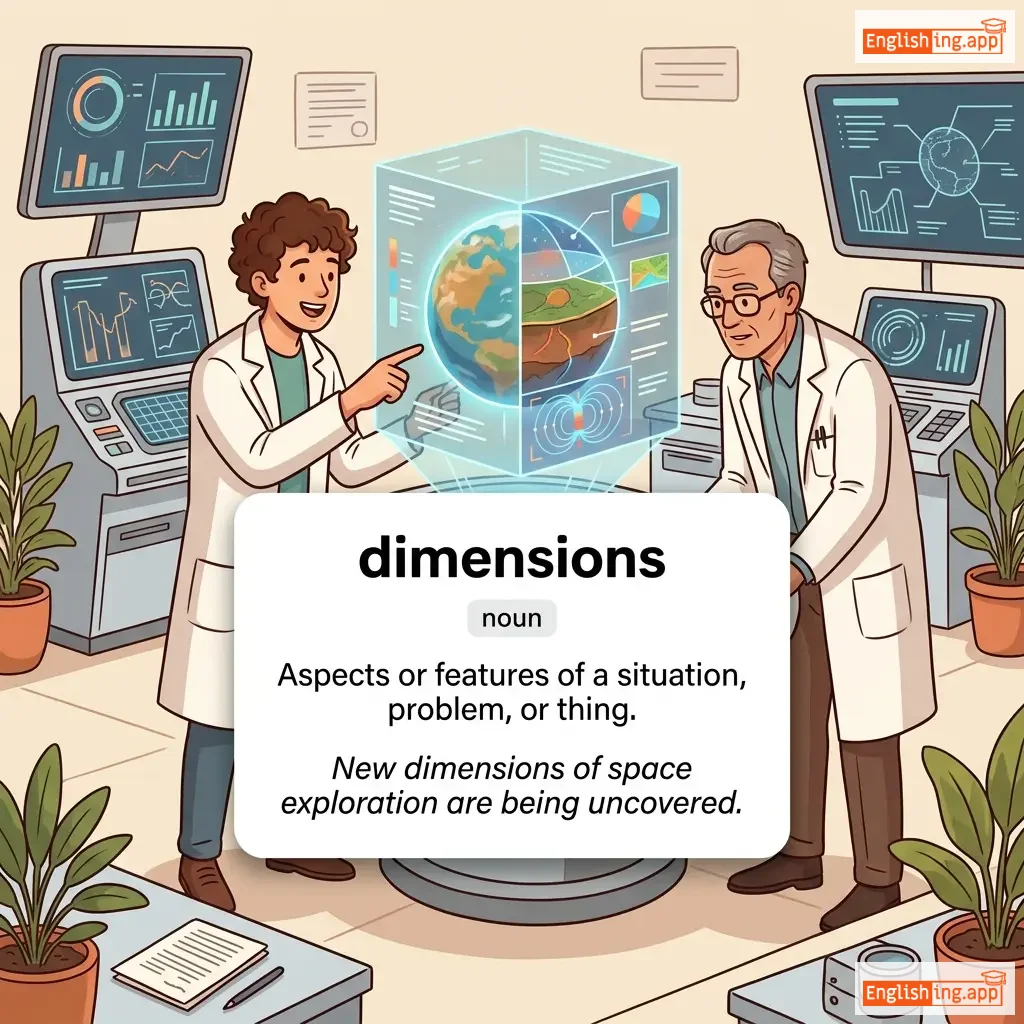
dimensions definition card — visual illustration of the meaning
noun
/daɪˈmen.ʃənz/
维度 (weidu)

Aspects or features of a situation, problem, or thing.

"New dimensions of space exploration are being uncovered."
"太空探索的新维度正在被揭示。" (Tàikōng tànsuǒ de xīn wéidù zhèngzài bèi jiēshì.)
⬇️

diminish

verb
/dɪˈmɪnɪʃ/

to make or become less; to reduce in size, importance, or value

"Over time, his influence in the company began to diminish."

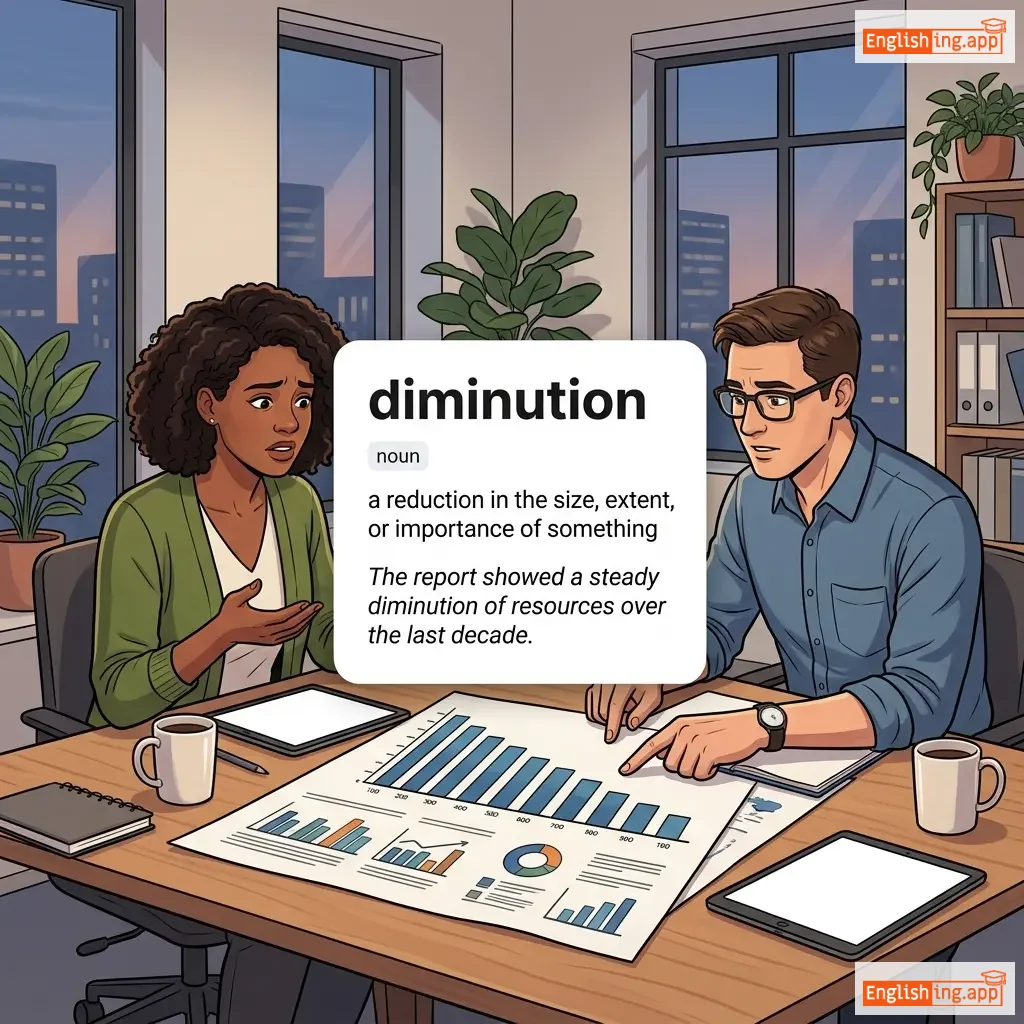
diminution definition card — visual illustration of the meaning
noun
/ˌdɪmɪˈnjuːʃən/

a reduction in the size, extent, or importance of something

"The report showed a steady diminution of resources over the last decade."

adjective
/dɪˈmɪnjətɪv/
极小的 (jixiao de)

extremely or unusually small

"Despite his diminutive size, he was a powerful leader."

"尽管他的体型极小,他仍然是一个强大的领导者。" (Jǐnguǎn tā de tǐxíng jí xiǎo, tā réngrán shì yīgè qiángdà de lǐngdǎo zhě.)
adverb
/ˈdɪmli/
昏暗 (hun'an)

in a faint or unclear way; with little light

"The room was dimly lit by a single candle."

"房间被一根蜡烛微弱地照亮。" (Fángjiān bèi yī gēn làzhú wēiruò de zhàoliàng.)
noun
/ˈdɪm.pəl/
酒窝 (jiǔwō)

a small depression in the flesh, either one that exists permanently or one that forms when smiling

"Her charming dimples appeared whenever she smiled at the children."

"她迷人的酒窝每次对孩子们微笑时都会出现。" (tā mírén de jiǔwō měi cì duì háizimen wēixiào shí dōu huì chūxiàn.)
noun
/dɪn/
噪音 (zaoyin)

a loud, unpleasant, and prolonged noise

"The din of traffic outside made it hard to concentrate."

"外面交通的噪音让集中注意力变得困难。" (waimian jiaotong de zaoyin rang jiuzhong zhuyilv biande kunnan.)
verb
/daɪn/
用餐 (yongcan)

to eat a meal, especially the main meal of the day

"We usually dine at seven o'clock in the evening."

"我们通常在晚上七点用餐。" (Wo men tong chang zai wan shang qi dian yong can.)
noun
/ˈdɪŋɡi/
小艇 (xiǎo tǐng)

a small boat, often carried or towed by a larger vessel, used for short trips or as a lifeboat

"They rowed the dinghy back to the yacht."

"他们划着小艇回到游艇。" (Tāmen huázhe xiǎo tǐng huí dào yóutǐng.)
adjective
/ˈdɪndʒi/
肮脏 (angzang)

gloomy and drab; dirty or discolored

"The old hotel room looked dark and dingy."

"那间旧酒店房间看起来又暗又脏。" (Na jian jiu jiudian fangjian kan qilai you an you zang.)
noun
/ˈdaɪnɪŋ/
用餐 (yòng cān)

the act of eating a meal, especially in a formal setting

"We enjoyed fine dining at the new restaurant."

"我们在新餐厅享受了美味的用餐。" (Wǒmen zài xīn cāntīng xiǎngshòu le měiwèi de yòngcān.)
noun
/ˈdɪnər/
晚餐 (wǎncān)

the main meal of the day, usually eaten in the evening

"We had a lovely dinner at a new restaurant last night."

"我们昨晚在一家新餐厅吃了一顿美妙的晚餐。" (Wo men zuó wǎn zài yī jiā xīn cān tīng chī le yī dùn měi miào de wǎn cān.)
noun
/dɪnt/
努力,撞击痕迹 (nǔlì, zhuàngjī hénjì)

an impression or hollow made by a blow; force or power

"By dint of hard work, he achieved success."

"通过努力工作,他取得了成功。" (Tōngguò nǔlì gōngzuò, tā qǔdéle chénggōng.)