词汇表

英语词汇词典 | 单词含义、定义和示例

noun
/dɪˈstrʌkʃən/
毁灭 (huǐmiè)

the act of causing so much damage to something that it no longer exists or cannot be repaired

"The fire caused the destruction of the building."

"火灾造成了建筑物的毁灭。" (huǒzāi zàochéngle jiànzhúwù de huǐmiè.)
adjective
/dɪˈstrʌktɪv/
破坏性的 (pohuai xing de)

Causing great and irreparable harm or damage.

"Hurricanes are often destructive to coastal cities."
"飓风常常对沿海城市造成破坏。" (Jufeng changchang dui yanhai chengshi zaocheng pohuai.)
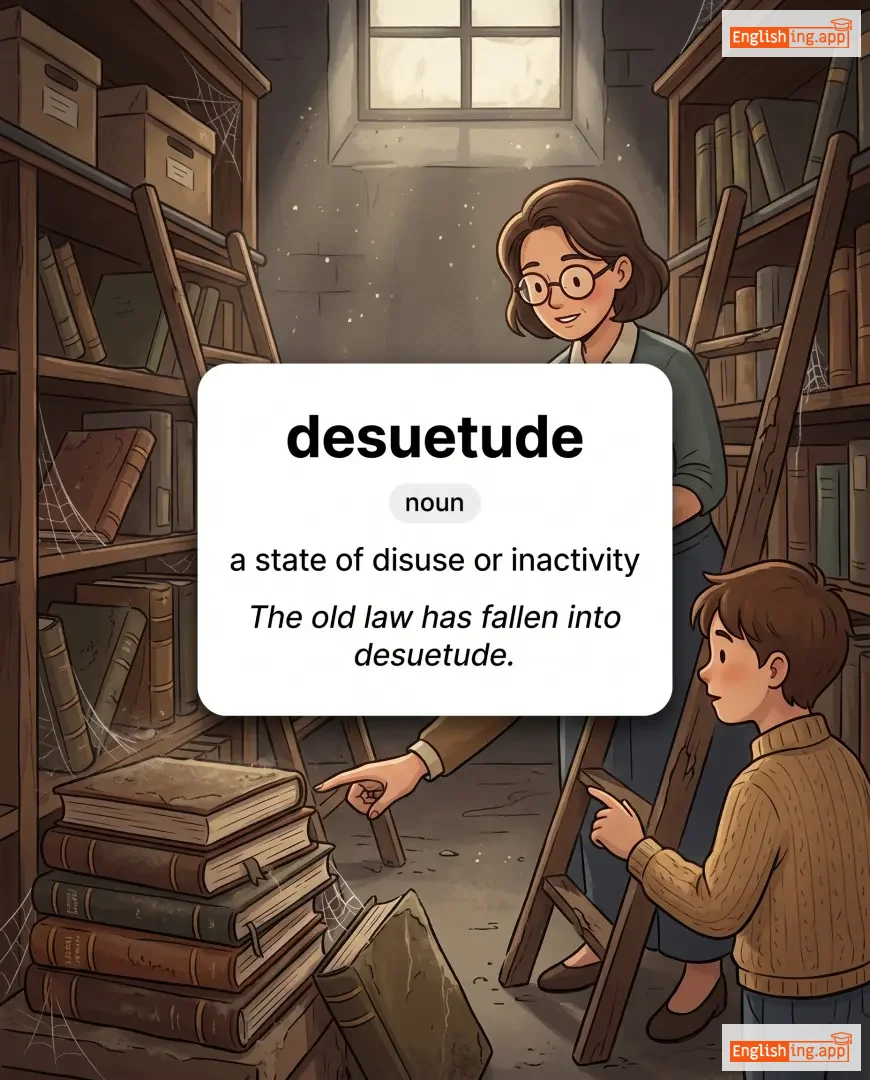
desuetude definition card — visual illustration of the meaning
noun
/ˈdɛswɪˌtuːd/
废弃 (feiqi)

a state of disuse or inactivity

"The old law has fallen into desuetude."
"旧法律已经废弃。" (Jiù fǎlǜ yǐjīng fèiqì.)
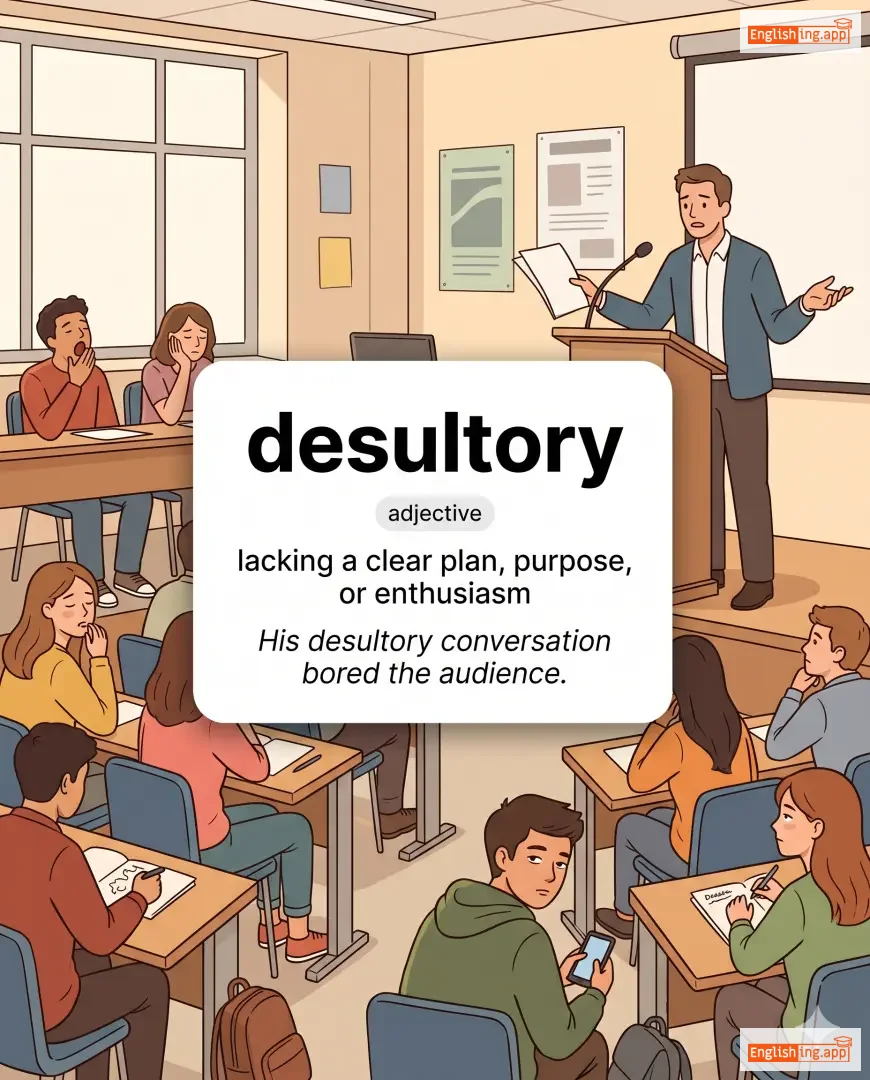
desultory definition card — visual illustration of the meaning
adjective
/ˈdɛsəlˌtɔːri/
杂乱无章 (záluàn wúzhāng)

lacking a clear plan, purpose, or enthusiasm

"His desultory conversation bored the audience."

"他那杂乱无章的谈话让观众感到无聊。" (Tā nà záluàn wúzhāng de tánhuà ràng guānzhòng gǎndào wúliáo.)
verb
/dɪˈtætʃ/
分开 (fēn kāi)

to separate or remove something from something else

"She detached the page from the notebook."

"她从笔记本上撕下了那一页。" (Tā cóng bǐjìběn shàng sī xiàle nà yī yè.)
adjective
/dɪˈtætʃt/
分离的, 疏远的 (fenli de, shuyuan de)

separate or disconnected; showing a lack of emotional involvement

"He lived in a detached house away from the city."
"他住在远离城市的分离房子里。" (Ta zhu zai yuanli chengshi de fenli fangzi li.)
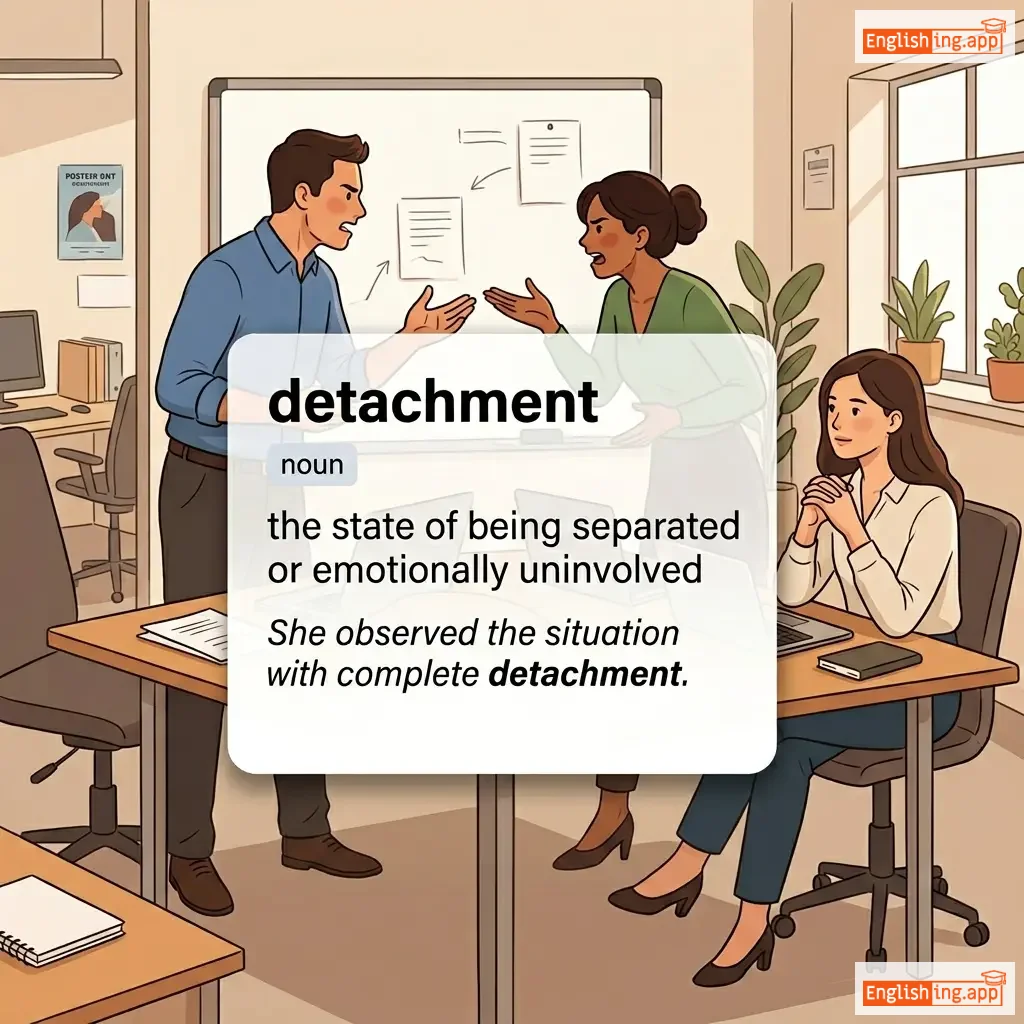
detachment definition card — visual illustration of the meaning
noun
/dɪˈtætʃmənt/
超然 (chāo rán)

the state of being separated or emotionally uninvolved

"She observed the situation with complete detachment."

"她以完全的超然态度观察着局势。" (Tā yǐ wánquán de chāo rán tàidu guānchá zhe júshì.)
noun
/ˈdiː.teɪl/
细节 (xijie)

An individual feature, fact, or item of information.

"She explained the plan in great detail."

"她详细解释了计划。" (Ta xiangxi jieshi le jihua.)
adjective
/ˈdiː.teɪld/
详细 (xiangxi)

Having many details; very thorough.

"The report provided a detailed analysis of the situation."

"报告提供了对情况的详细分析。" (Baogao tigongle dui qingkuang de xiangxi fenxi.)
verb
/dɪˈteɪn/

to keep someone from proceeding; to hold back, especially by official authority

"The police detained the suspect for questioning."

verb
/dɪˈtɛkt/
检测 (jiǎncè)

To discover or identify the presence of something.

"The device can detect smoke in the room."

"设备可以检测到房间里的烟雾。" (Shèbèi kěyǐ jiǎncè dào fángjiān lǐ de yānwù.)
noun
/dɪˈtɛkʃən/
检测 (jiance)

the action or process of identifying the presence of something

"The detection of fraud in the system was swift."

"系统中的欺诈检测迅速完成。" (Xitong zhong de qizha jiance xunsu wancheng.)
noun
/dɪˈtɛktɪv/
侦探 (zhēntàn)

a person whose job is to investigate and solve crimes

"The detective solved the mystery in just two days."

"侦探在两天内解开了谜团。" (Zhēntàn zài liǎng tiān nèi jiěkāi le mítuán.)
noun
/deɪˈtɒnt/
缓和紧张关系 (huǎnhé jǐnzhāng guānxì)

the easing of strained relations, especially between countries

"The treaty helped bring about a détente between the two nations."

"该条约有助于缓解两个国家之间的紧张关系。" (Gāi tiáoyuē yǒuzhù yú huǎnjiě liǎng gè guójiā zhījiān de jǐnzhāng guānxì.)
noun
/dɪˈtɛnʃən/
拘留 (jiuliu)

the action of keeping someone in custody or confinement

"The student faced detention for his misbehavior."

"学生因不良行为被拘留。" (Xuéshēng yīn bùliáng xíngwéi bèi jūliú.)
🚫

deter

verb
/dɪˈtɜːr/

to discourage someone from doing something by instilling doubt or fear

"High fines are meant to deter people from breaking the law."

noun
/dɪˈtɜːrdʒənt/
洗涤剂 (xǐdíjì)

a substance used for cleaning, especially for washing clothes and dishes

"She bought a new brand of detergent for laundry."
"她为洗衣服买了一个新的洗涤剂品牌。" (Tā wèi xǐ yīfú mǎile yīgè xīn de xǐdíjì pǐnpái.)
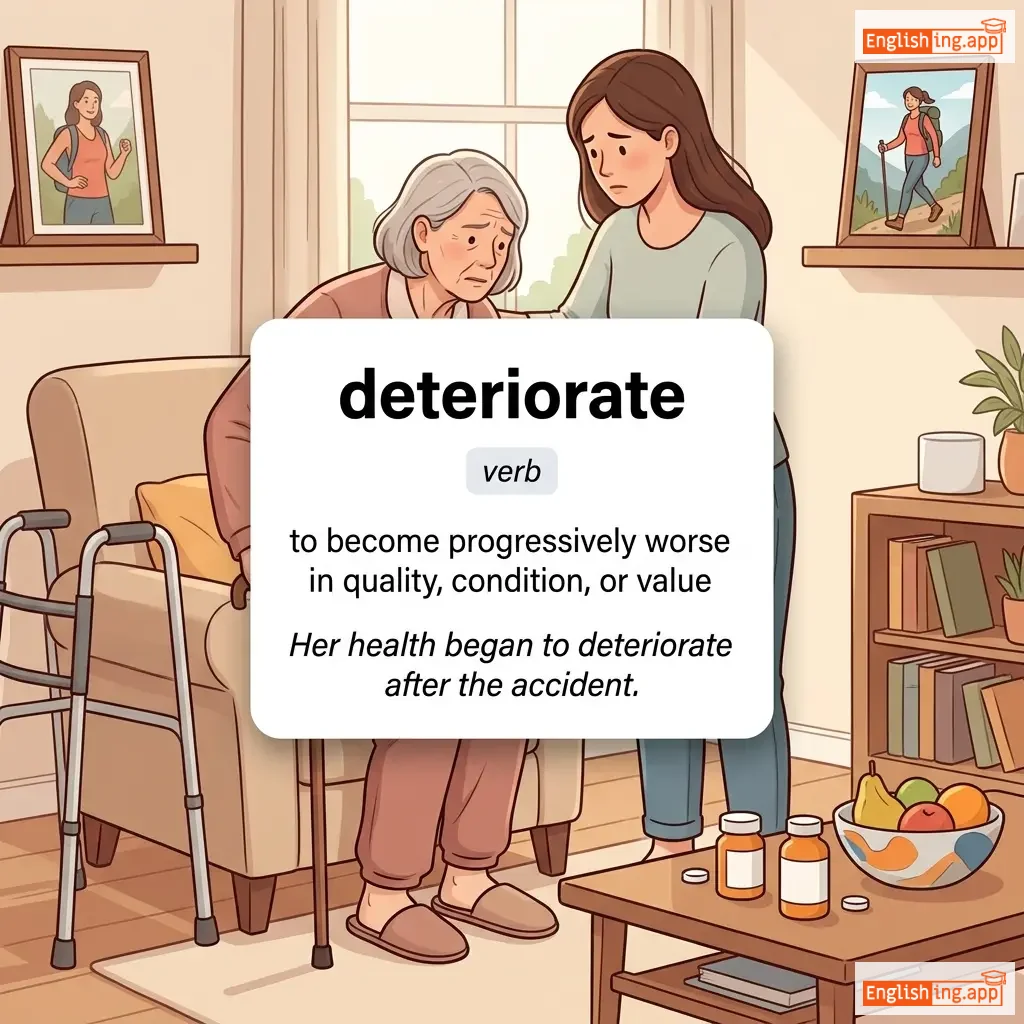
deteriorate definition card — visual illustration of the meaning
verb
/dɪˈtɪriəreɪt/
退化 (tuìhuà)

to become progressively worse in quality, condition, or value

"Her health began to deteriorate after the accident."
"事故发生后,她的健康开始退化。" (Shìgù fāshēng hòu, tā de jiànkāng kāishǐ tuìhuà.)
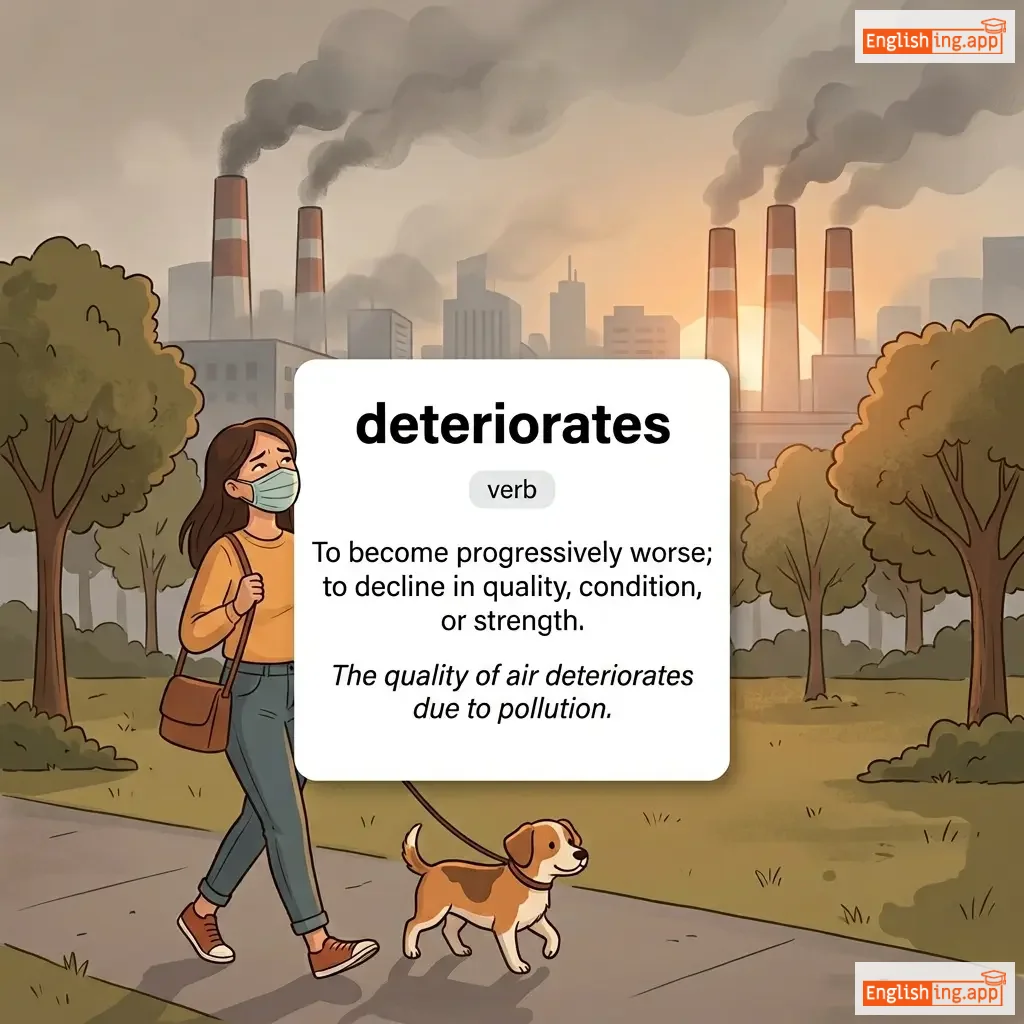
deteriorates definition card — visual illustration of the meaning
verb
dɪˈtɪrɪəˌreɪts
恶化 (di te li ao lei te si)

To become progressively worse; to decline in quality, condition, or strength.

"The quality of air deteriorates due to pollution."
"因污染,空气质量正在恶化。" (you yu wu ran, kong qi zhi liang zheng zai e hua)
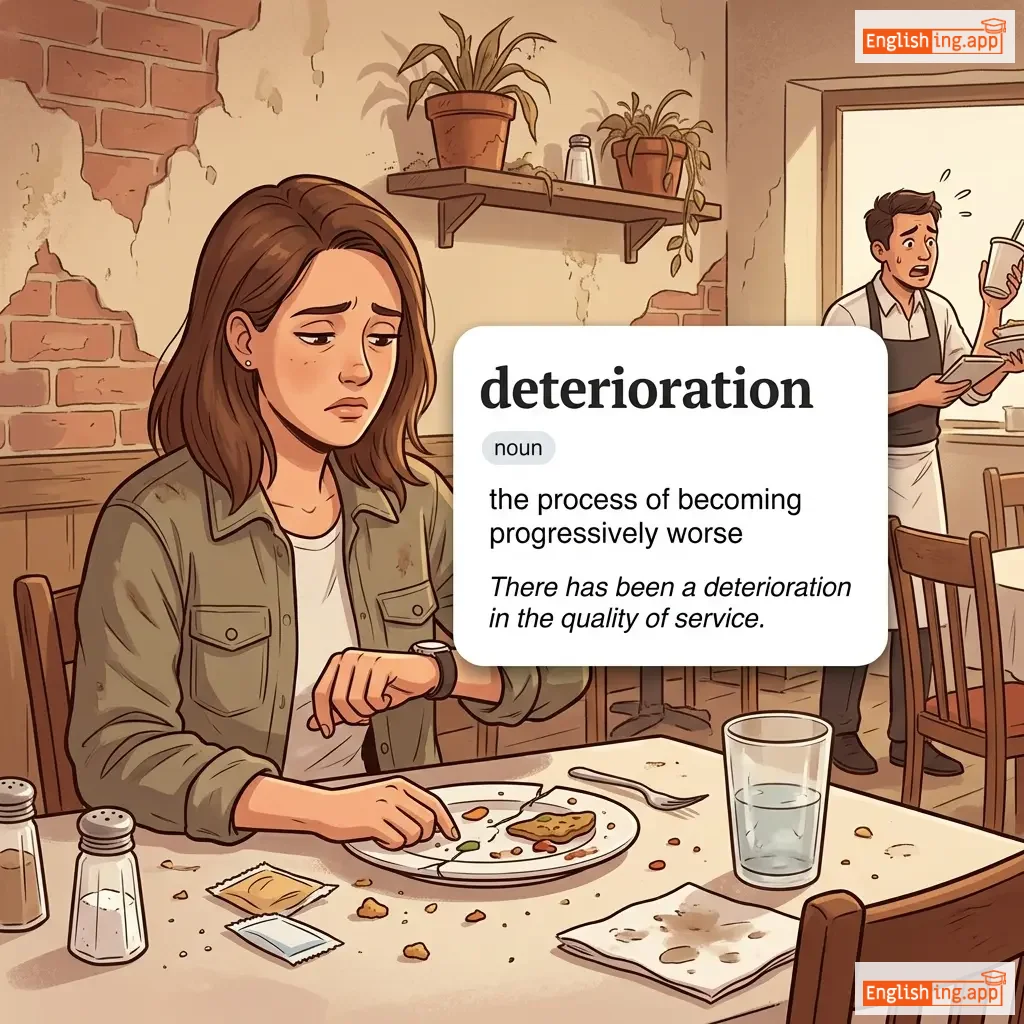
deterioration definition card — visual illustration of the meaning
noun
/dɪˌtɪriəˈreɪʃən/
恶化 (èhuà)

the process of becoming progressively worse

"There has been a deterioration in the quality of service."

"服务质量出现了恶化。" (Fúwù zhìliàng chūxiànle èhuà.)
determinant definition card — visual illustration of the meaning
noun
/dɪˈtɜːrmɪnənt/
决定因素 (juédìng yīnsù)

a factor that decisively affects the nature or outcome of something

"Education is a key determinant of economic growth."

"教育是经济增长的一个关键决定因素。" (Jiàoyù shì jīngjì zēngzhǎng de yī gè guānjiàn juédìng yīnsù.)
adjective
/dɪˈtɜːrmɪnət/
确定的 (quèdìng de)

having exact and definite limits or form

"The contract is for a determinate period of two years."
"合同是为期两年的确定期限。" (Hétóng shì wéiqī liǎng nián de quèdìng qīxiàn.)
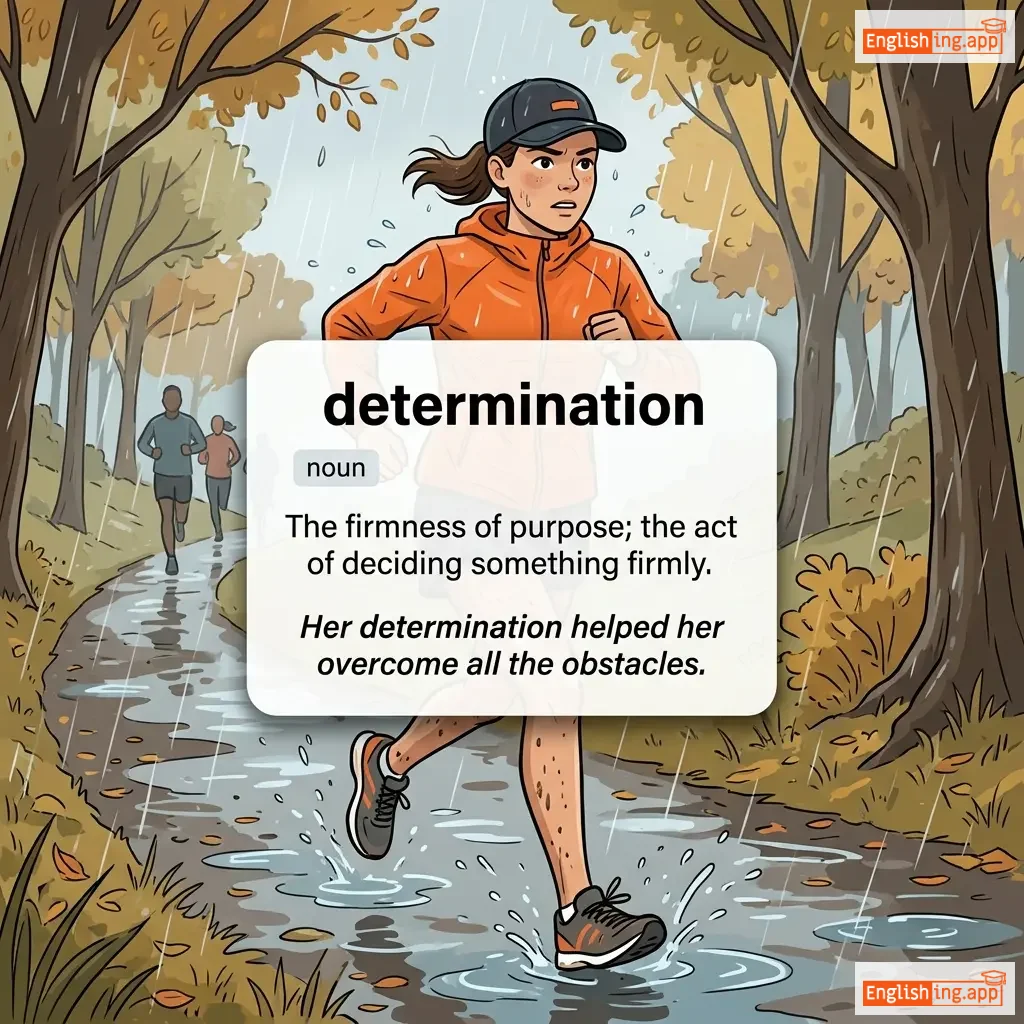
determination definition card — visual illustration of the meaning
noun
/dɪˌtɜːrmɪˈneɪʃən/
决心 (juexin)

The firmness of purpose; the act of deciding something firmly.

"Her determination helped her overcome all the obstacles."

"她的决心帮助她克服了所有障碍。" (Ta de juexin bangzhu ta kekuo le suoyou zhang'ai.)
verb
/dɪˈtɜː.mɪn/
决定 (jueding)

To decide or establish something after consideration.

"The jury will determine the outcome of the case."

"陪审团将决定案件的结果。" (Péishěn tuán jiāng juédìng ànjiàn de jiéguǒ.)
adjective
/dɪˈtɜːrmɪnd/
决心的 (juéxīn de)

Having firmly decided to do something and not letting anything stop you.

"She was determined to finish her studies despite many obstacles."
"尽管有许多障碍,她还是决心完成她的学业。" (Jǐnguǎn yǒu xǔduō zhàng'ài, tā háishì juéxīn wánchéng tā de xuéyè.)
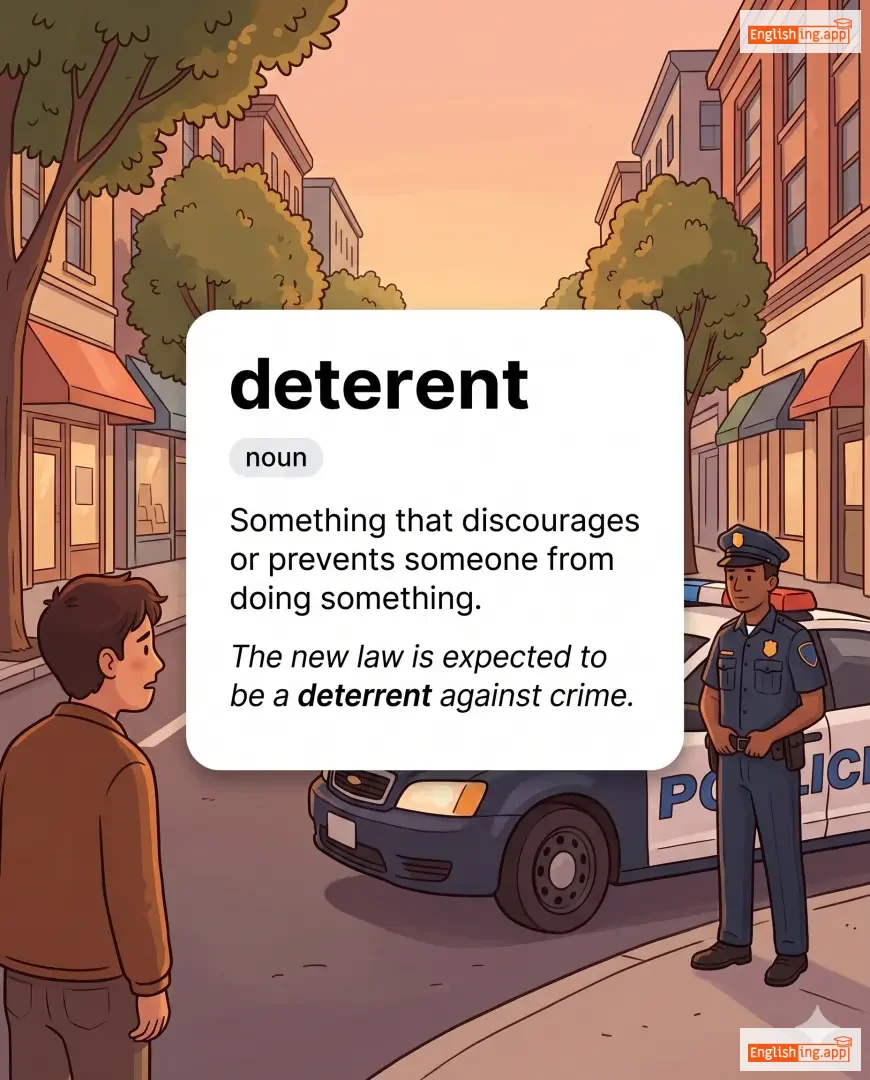
deterrent definition card — visual illustration of the meaning
noun
/dɪˈtɜːrənt/
威慑 (weishe)

Something that discourages or prevents someone from doing something.

"The new law is expected to be a deterrent against crime."

"预计新法律将成为打击犯罪的威慑力量。" (Yùjì xīn fǎlǜ jiāng chéngwéi dǎjí fànzuì de wēishè lìliàng.)
verb
/dɪˈtɛst/
讨厌 (taoyan)

To dislike intensely or hate.

"I detest waking up early on weekends."

"我讨厌在周末早起。" (Wo taoyan zai zhoumo zaoqi.)
noun
/ˌdɛtəˈneɪʃən/
爆炸 (baozha)

The act of exploding or causing something to explode.

"The sudden detonation shook the entire building."

"突如其来的爆炸震动了整个大楼。" (Tū rú qí lái de bàozhà zhèndòngle zhěnggè dàlóu.)
noun
/ˈdiːtʊr/
绕行 (raoxing)

A longer or less direct route taken to avoid something or reach a destination.

"We had to take a detour because the main road was closed."

"因为主干道封闭,我们不得不绕行。" (yinwei zhugan dao fengbi, women budebu raoxing.)
detoxification definition card — visual illustration of the meaning
noun
/dɪˌtɒksɪfɪˈkeɪʃən/
排毒 (paidu)

The process of removing toxic substances or effects from the body.

"Detoxification is often the first step in treating drug addiction."
"排毒通常是治疗毒瘾的第一步。" (Paidu tongchang shi zhiliao duyin de diyi bu.)
verb
/dɪˈtrækt/

To reduce or take away the worth or value of something.

"His rude behavior will detract from his good reputation."

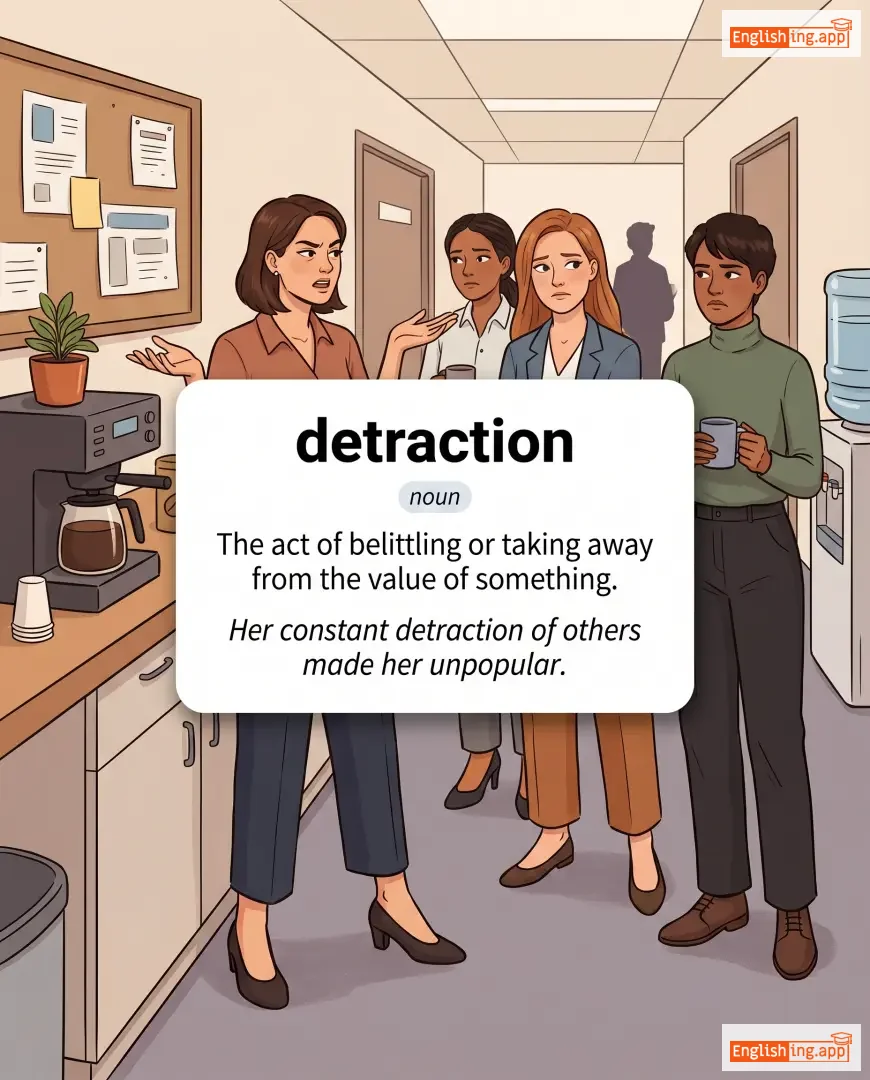
detraction definition card — visual illustration of the meaning
noun
/dɪˈtrækʃən/
贬低 (biǎn dī)

The act of belittling or taking away from the value of something.

"Her constant detraction of others made her unpopular."
"她对他人的不断贬低使她变得不受欢迎。" (Tā duì tārén de bùduàn biǎndī shǐ tā biàn dé bù shòu huānyíng.)
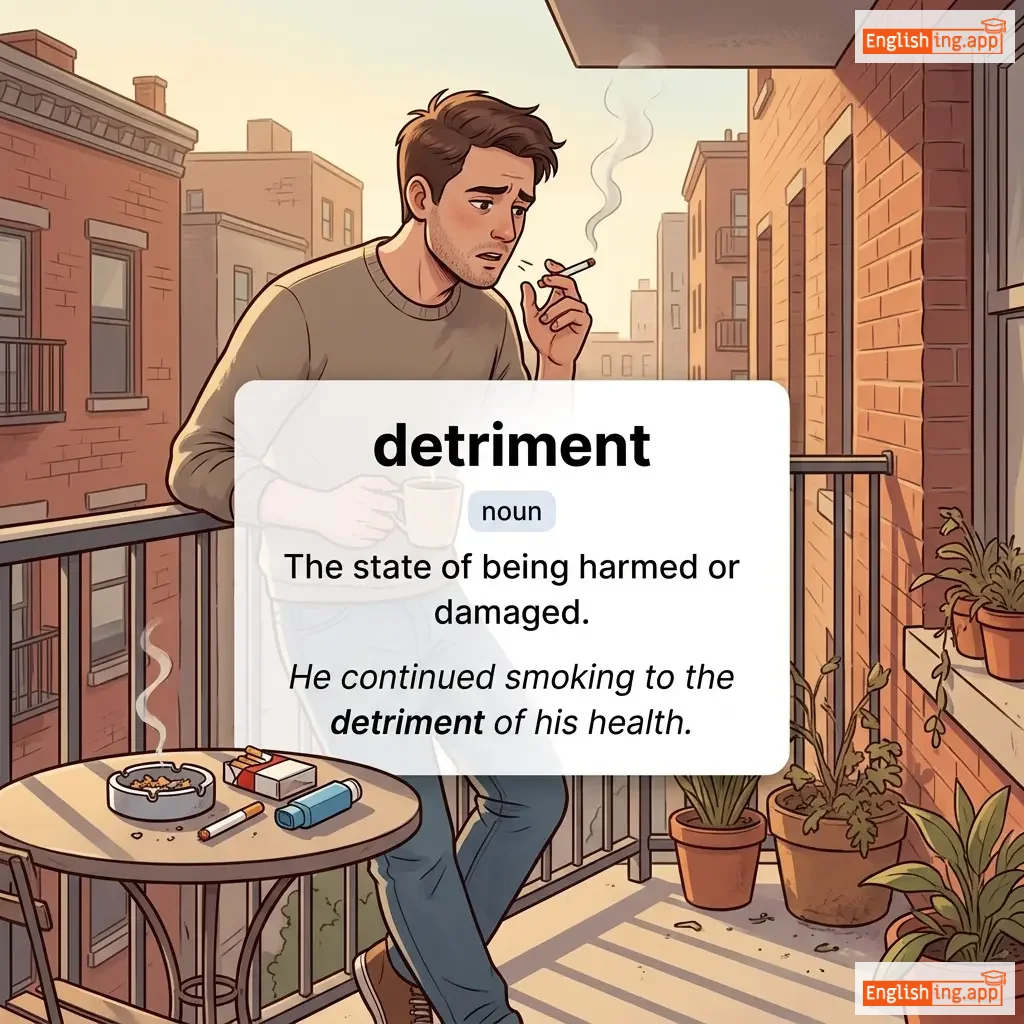
detriment definition card — visual illustration of the meaning
noun
/ˈdɛtrɪmənt/
损害 (sunhai)

The state of being harmed or damaged.

"He continued smoking to the detriment of his health."
"他继续吸烟,损害了他的健康。" (Ta jixu xiyan, sunhai le tade jiankang.)
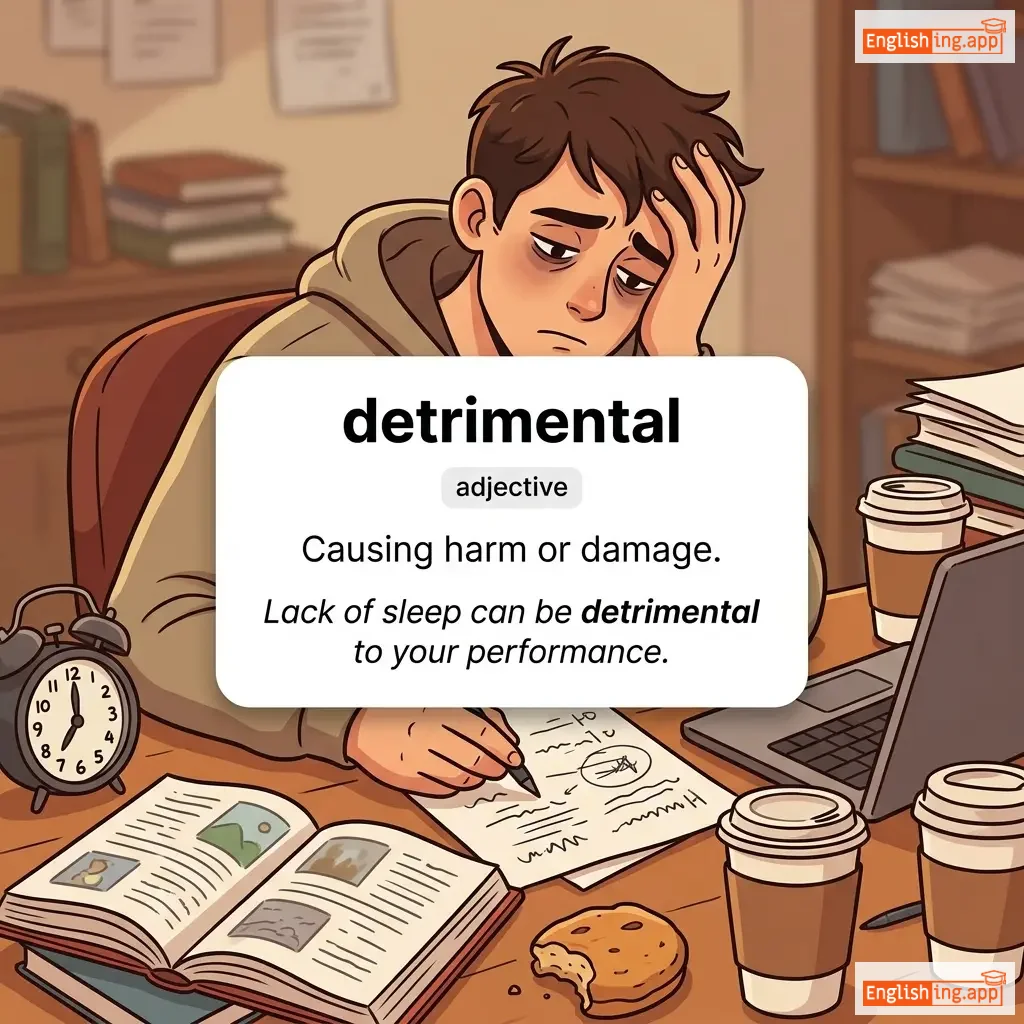
detrimental definition card — visual illustration of the meaning
adjective
/ˌdɛtrɪˈmɛntəl/

Causing harm or damage.

"Lack of sleep can be detrimental to your performance."

noun
/dɪˈtraɪtəs/
碎屑 (suìxiè)

Waste or debris of any kind; fragments left from destruction or decay.

"The riverbank was covered with detritus after the flood."

"洪水后,河岸被碎屑覆盖。" (Hóngshuǐ hòu, hé'àn bèi suìxiè fùgài.)
verb
/dɪˈtruːd/
推向下或推向外面 (tuī xiàng xià huò tuī xiàng wàimiàn)

To thrust or force something downward or outward.

"The violent waves detruded rocks from the cliff."

"暴力的海浪把岩石从悬崖上推了下来。" (Bàolì de hǎilàng bǎ yánshí cóng xuán yá shàng tuī le xiàlái.)
verb
/ˈdɛvəˌsteɪt/
摧毁 (cuīhuǐ)

to cause severe and overwhelming destruction or damage

"The hurricane devastated the coastal town."

"飓风摧毁了海岸城镇。" (Jùfēng cuīhuǐ le hǎi'àn chéngzhèn.)
adjective
/ˈdevəsteɪtɪŋ/

causing severe shock, distress, or destruction; extremely damaging or upsetting

"The earthquake had a devastating effect on the city."
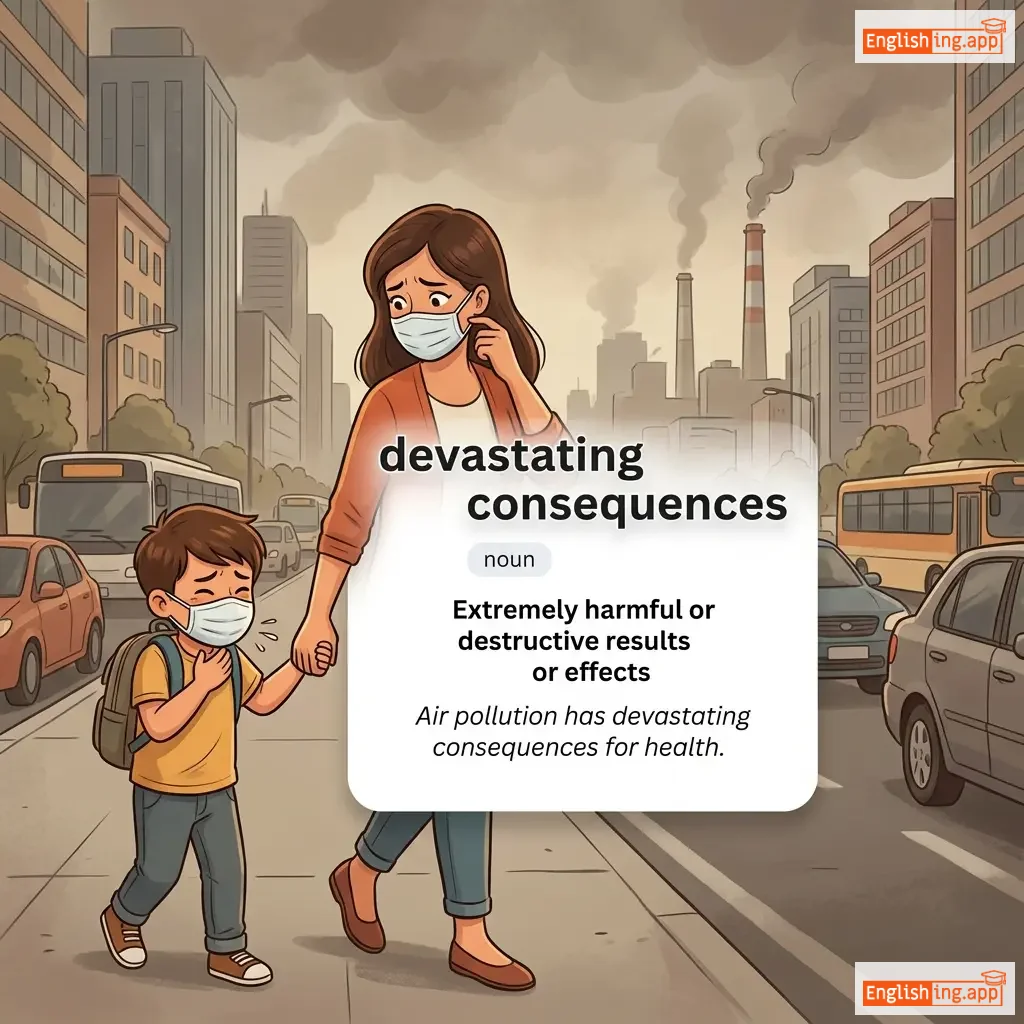
devastating consequences definition card — visual illustration of the meaning
noun
ˈdevəsteɪtɪŋ ˈkɒnsɪkwənsɪz
毁灭性后果 (huǐmièxìng hòuguǒ)

Extremely harmful or destructive results or effects

"Air pollution has devastating consequences for health."

"空气污染对健康有毁灭性后果。" (Kōngqì wūrǎn duì jiànkāng yǒu huǐmièxìng hòuguǒ.)
develop definition card — visual illustration of the meaning
verb
/dɪˈvɛləp/
发展 (fāzhǎn)

To grow, advance, or create something over time.

"The company aims to develop new software solutions."

"公司旨在开发新的软件解决方案。" (Gōngsī zhǐ zài kāifā xīn de ruǎnjiàn jiějué fāng'àn.)
noun
/dɪˈveləpər/
开发者 (kaifazhe)

a person or company that creates software, buildings, or land projects

"She works as a software developer at a tech company."

"她在一家技术公司担任软件开发者。" (Tā zài yī jiā jìshù gōngsī dānrèn ruǎnjiàn kāifā zhě.)
verb
/dɪˈvɛləpɪŋ/
发展 (fazhan)

the process of growing, improving, or becoming more advanced

"She is developing new skills in programming."
"她正在编程中发展新技能。" (Ta zhengzai biancheng zhong fazhan xin jine.)
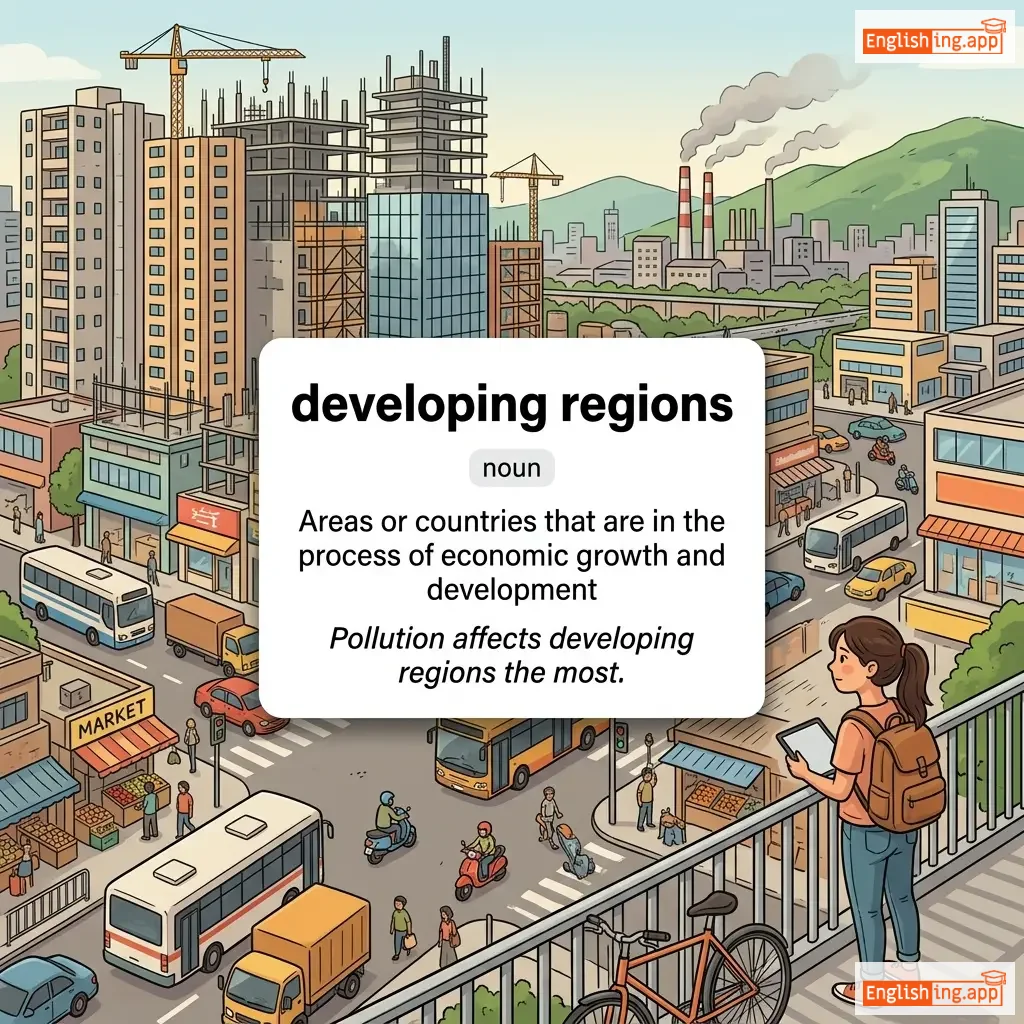
developing regions definition card — visual illustration of the meaning
noun
dɪˈveləpɪŋ ˈriːdʒənz
发展中国家 (fāzhǎn zhōng de dìqū)

Areas or countries that are in the process of economic growth and development

"Pollution affects developing regions the most."
"污染最严重地影响发展中国家。" (wūrǎn zuì yánzhòng de yǐngxiǎng fāzhǎn zhōng guójiā.)
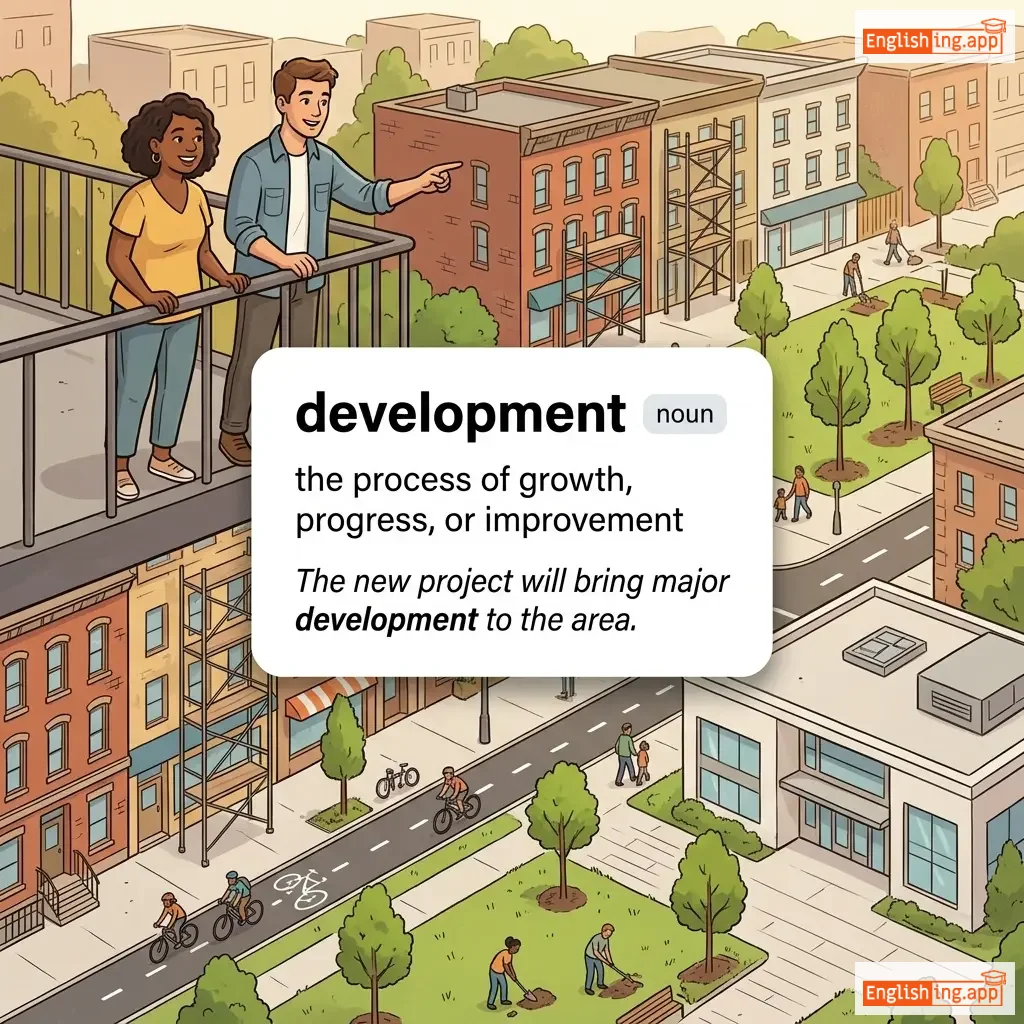
development definition card — visual illustration of the meaning
noun
/dɪˈvɛləpmənt/
发展 (fazhan)

the process of growth, progress, or improvement

"The new project will bring major development to the area."

"这个新项目将为该地区带来重大进展。" (Zhège xīn xiàngmù jiāng wèi gāi dìqū dàilái zhòngdà jìnzhǎn.)
adjective
/dɪˌveləpˈmentl/
发展性的 (fāzhǎn xìng de)

relating to the process of growth or progress

"Early childhood is a crucial developmental stage for learning."

"早期儿童是学习的关键发展性阶段。" (Zǎoqí értóng shì xuéxí de guānjiàn fāzhǎn xìng jiēduàn.)
noun
/ˈdiːviəns/
偏差 (piancha)

Behavior that differs from accepted social or moral standards.

"The book studies deviance in urban youth culture."

"这本书研究了城市青少年文化中的偏差。" (Zhe ben shu yanjiu le chengshi qingshaonian wenhua zhong de piancha.)
deviate definition card — visual illustration of the meaning
verb
/ˈdiːvieɪt/
偏离 (pianli)

To depart from an established course or norm.

"He decided to deviate from the original plan."

"他决定偏离原计划。" (Ta jueding pianli yuan jihua.)
noun
/ˌdiːviˈeɪʃn/
偏差 (piancha)

The action of departing from an accepted standard or norm.

"Any deviation from the rules will not be tolerated."

"任何偏差都不会被容忍。" (Renhe piancha dou bu hui bei rongren.)
device definition card — visual illustration of the meaning
noun
/dɪˈvaɪs/
设备 (shebei)

An object, machine, or piece of equipment designed for a particular purpose.

"She bought a new device to track her fitness activities."

"她购买了一个新设备来追踪她的健身活动。" (Ta goumai le yige xin shebei lai zhuizong ta de jianshen huodong.)
noun
/ˈdɛv.əl/
魔鬼 (móguǐ)

An evil spirit or supernatural being often regarded as the embodiment of wickedness and harm.

"The story warned children about making deals with the devil."

"这个故事警告孩子们不要与魔鬼做交易。" (Zhège gùshì jǐnggào háizimen bùyào yǔ móguǐ zuò jiāoyì.)