词汇表

英语词汇词典 | 单词含义、定义和示例

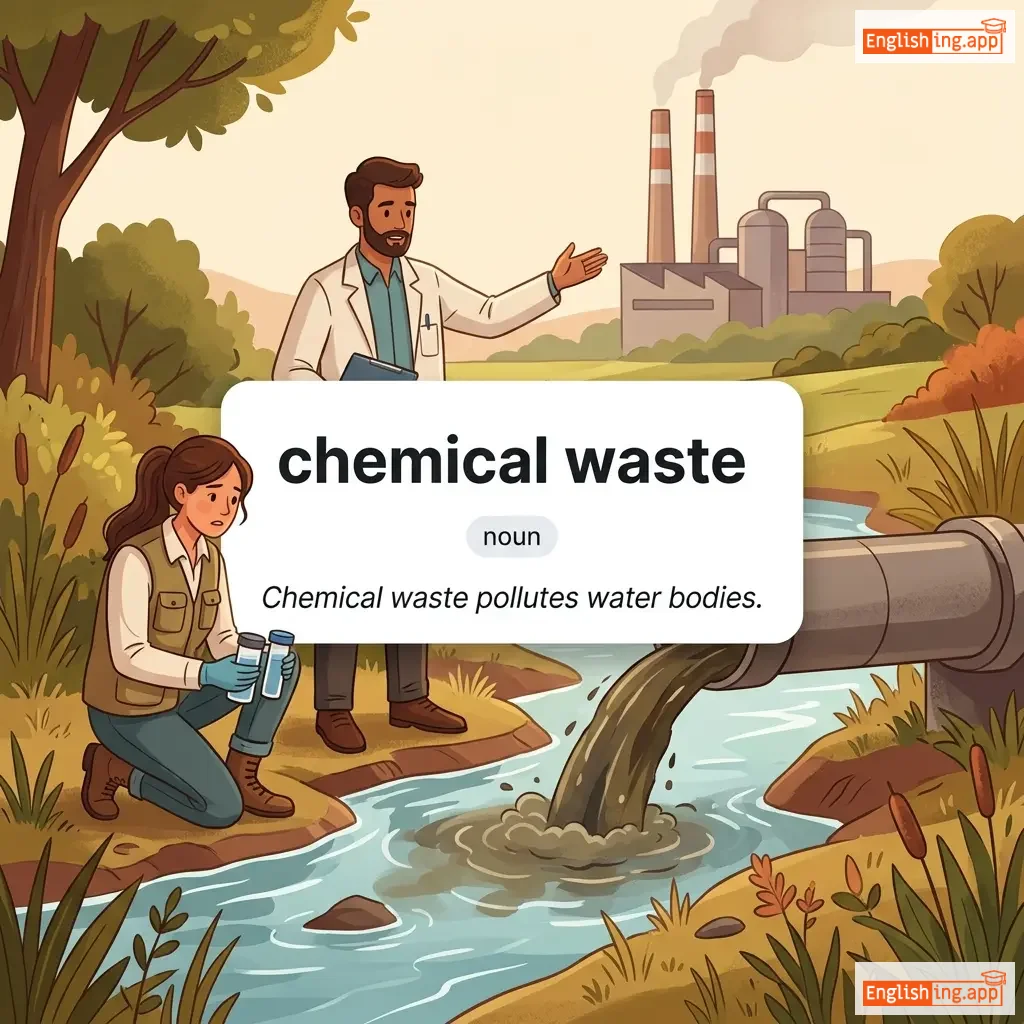
chemical waste definition card — visual illustration of the meaning
noun
ˈkɛmɪkəl weɪst
化学废料 (huàxué fèiliào)

Waste material from industrial or laboratory processes that contains harmful chemicals.

"Chemical waste pollutes water bodies."

"化学废料污染水体。" (Huàxué fèiliào wūrǎn shuǐtǐ.)
noun
/ʃəˈmiːz/
睡裙 (shuì qún)

a woman's loose-fitting undergarment or dress hanging straight from the shoulders

"The vintage chemise was made of delicate lace and silk."

"这款复古睡裙由精美的蕾丝和丝绸制成。" (Zhè kuǎn fùgǔ shuìqún yóu jīngměi de léisī hé sīchóu zhìchéng.)
noun
/ˈkemɪst/
化学家; 药剂师 (huaxuejia; yaojishi)

a scientist who studies chemistry; a person trained to prepare and dispense medicines

"The chemist analyzed the sample to determine its composition."

"化学家分析了样品以确定其成分。" (huaxuejia fenxi le yangpin yi queding qi chengfen)
noun
/ˈkɛmɪstri/
化学 (huàxué)

the branch of science that studies substances and their interactions; also the emotional connection between people

"They have great chemistry and work well together."

"他们之间有很好的化学反应,工作默契。" (Tāmen zhī jiān yǒu hěn hǎo de huàxué fǎnyìng, gōngzuò mòqì.)
adjective
/ˈtʃɛkərd/
棋盘格的 (qípánggé de)

Having a pattern of squares, or marked by varied and contrasting experiences or periods.

"He had a chequered career with both great successes and failures."

"他有一段棋盘格的职业生涯,既有巨大的成功,也有失败。" (Tā yǒu yīduàn qípánggé de zhíyè shēngyá, jì yǒu jùdà de chénggōng, yě yǒu shībài.)
verb
/ˈtʃɛrɪʃ/
珍惜 (zhēn xī)

To hold something dear, to love and protect, or to keep a hope or memory alive.

"She cherishes the memories of her childhood home."

"她珍惜她童年的家园的回忆。" (Tā zhēn xī tā tóngnián de jiāyuán de huíyì.)
noun
/ˈtʃer.i/
樱桃 (yingtao)

a small round red or black fruit with a hard seed inside

"She picked fresh cherries from the tree in her garden."

"她从花园的树上摘下了新鲜的樱桃。" (Tā cóng huāyuán de shù shàng zhāi xiàle xīnxiān de yīngtáo.)
noun
/ˈtʃer.i ˌblɒs.əm/
樱花 (yinghua)

the pink or white flowers of a cherry tree that bloom in spring

"The cherry blossoms bloom beautifully in April."

"樱花在四月美丽地绽放。" (Yinghua zai siyue meili de zhanfang.)
adjective
/tʃəˈruːbɪk/
天使般的 (tiānshǐ bān de)

Innocent, sweet, and angelic, like a cherub.

"The baby had a cherubic smile that melted everyone’s heart."

"宝宝的笑容如天使般甜美,融化了所有人的心。" (Bǎobǎo de xiàoróng rú tiānshǐ bān tiánměi, rónghuàle suǒyǒu rén de xīn.)
noun
/tʃɛst/
胸部 (xiōngbù)

the front part of the human body between the neck and the stomach

"He felt a pain in his chest after running."

"跑步后,他感到胸部有痛感。" (Pǎobù hòu, tā gǎndào xiōngbù yǒu tòng gǎn.)
noun
/ˈʃɛvrən/
V形符号 (V xíng fúhào)

A V-shaped pattern, often used in military insignia or design.

"The sergeant’s uniform displayed three chevrons on the sleeve."

"军士的制服上显示了三条雪佛龙标记。" (Jūnshì de zhìfú shàng xiǎnshìle sān tiáo xuěfó lóng biāojì.)
verb
/tʃuː/
幸福 (xìngfú)

to bite food into smaller pieces with your teeth before swallowing it

"You should chew your food properly to help with digestion."

"当她获得奖项时,她无法掩饰自己的幸福。" (Dāng tā huòqǔ jiǎngxiàng shí, tā wúfǎ yǎnshì zìjǐ de xìngfú.)
noun
/kiˌɑːrəˈskjʊəroʊ/
光与暗的戏剧性对比 (guang yu an de xiju xing duibi)

The use of strong contrasts between light and dark in art or literature to create a dramatic effect.

"The artist's painting used chiaroscuro to highlight the figure's face."
"艺术家的画作使用了基阿罗斯库罗来突出人物的面部。" (yishujia de huazu shiyong le ji'a luo si ku luo lai tu chu renwu de mianbu.)
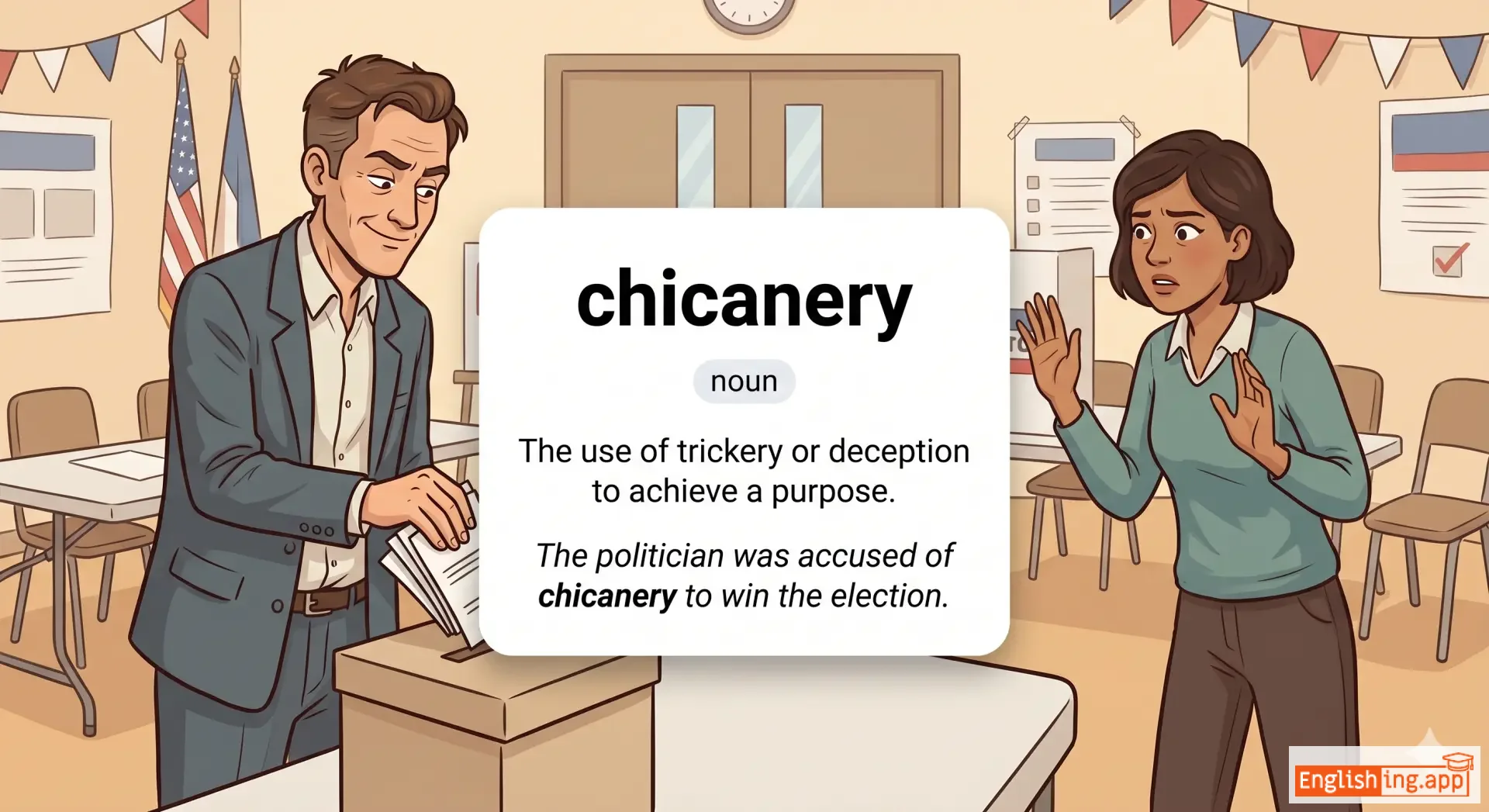
chicanery definition card — visual illustration of the meaning
noun
/ʃɪˈkeɪnəri/
欺诈 (qizha)

The use of trickery or deception to achieve a purpose.

"The politician was accused of chicanery to win the election."

"这位政治家因利用欺诈手段赢得选举而被指控。" (Zhe wei zhengzhijia yin liyong qipian shouduan yingde xuanchu er bei zhigong.)
noun
/ˈtʃɪk piː/
鹰嘴豆 (yingzuidou)

round beige legume; protein-rich pulse used in various dishes

"Soak the chick peas overnight before cooking them for better digestion."

"将鹰嘴豆浸泡一整晚,然后烹饪,以改善消化。" (Jiāng yīngzuìdòu jìnpào yī zhěng wǎn, ránhòu pēngrèn, yǐ gǎishàn xiāohuà.)
noun
/ˈtʃɪkɪn/
(ji)

a domestic bird kept for its eggs or meat

"We had fried chicken for dinner."

"我们晚餐吃了炸鸡。" (Wo men wan can chi le zha ji.)
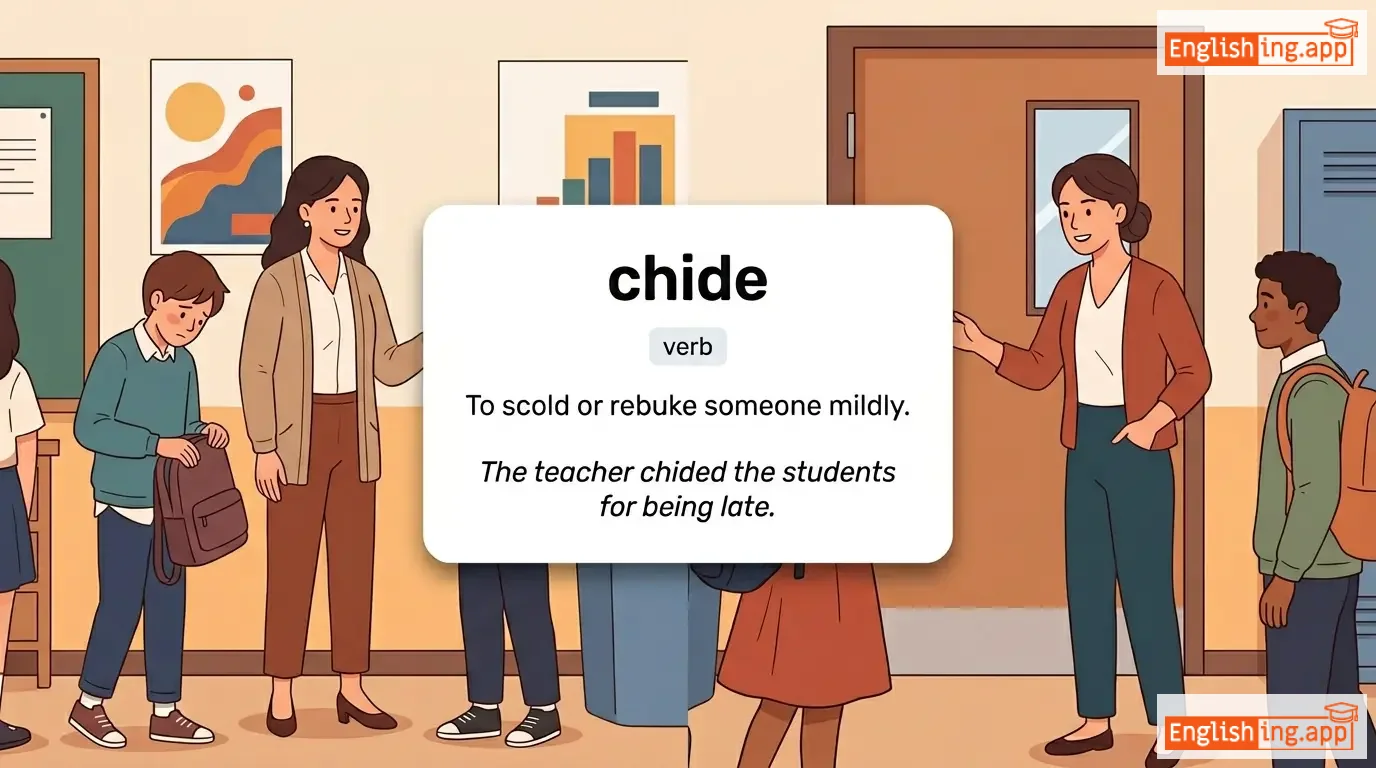
chide definition card — visual illustration of the meaning
👩‍🏫

chide

verb
/tʃaɪd/

To scold or rebuke someone mildly.

"The teacher chided the students for being late."

noun
/tʃiːf/
首领 (shouling)

a leader or person in charge of a group or organization

"The chief of the village made an important decision."

"村庄的首领做出了一个重要的决定。" (Cun zhuang de shouling zuo chu le yi ge zhongyao de jueding.)
adverb
/ˈtʃiːfli/
主要 (zhuyao)

mainly; primarily

"The festival is celebrated chiefly by young people."

"这个节日主要由年轻人庆祝。" (Zhège jiérì zhǔyào yóu niánqīngrén qìngzhù.)
noun
/ʃɪˈfɒn/
雪纺 (xuě fǎng)

A lightweight, sheer fabric often used in dresses or scarves.

"She wore a beautiful chiffon dress at the party."

"她在派对上穿了一件美丽的雪纺裙子。" (Tā zài pàiduì shàng chuānle yī jiàn měilì de xuě fǎng qúnzi.)
noun
/tʃaɪld/
孩子 (haizi)

a young human being below the age of puberty or below the legal age of majority

"The child played happily in the park."

"孩子在公园里快乐地玩耍。" (Haizi zai gongyuan li kuaile de wanshua.)
noun
/ˈtʃaɪldhʊd/
童年 (tongnian)

the period of being a child

"She spent her childhood in a small village."

"她在一个小村庄度过了她的童年。" (Ta zai yige xiao cunzhuang duguo le ta de tongnian.)
adjective
/ˈtʃaɪl.dɪʃ/
孩子气; 典型的儿童行为,但对于成年人不合适 (haiziqi; dianxing de ertong xingwei, dan duiyu chengnianshen bu heshi)

immature and silly; behaving in a way that is typical of a child but inappropriate for an adult

"His childish behavior during the meeting was quite embarrassing."

"他在会议期间的孩子气行为非常令人尴尬。" (Ta zai huiyi qijian de haiziqi xingwei feichang ling ren gan'ga.)
adjective
/ˈtʃaɪld.laɪk/
像孩子一样; 天真和信任; 纯净和简单 (xiàng háizi yīyàng; tiānzhēn hé xìnrèn; chúnjìng hé jiǎndān)

innocent and trusting like a child; having the good qualities of a child; pure and simple

"She maintained a childlike wonder about the world around her."

"她对周围的世界保持着孩子般的惊奇。" (tā duì zhōuwéi de shìjiè bǎochí zhe háizi bān de jīngqí.)
❄️

Chill

verb
/tʃɪl/

to make something cold or to relax and take it easy

"We decided to chill at home after a long day."

noun
/ˈtʃɪl.i ˈpaʊ.dər/
辣椒粉 (làjiāo fěn)

a spice made from ground dried chili peppers, used to add heat and flavor to food

"Add two teaspoons of chilli powder to make the dish spicier."

"加入两茶匙辣椒粉使菜肴更辛辣。" (Jiārù liǎng cháchí làjiāo fěn shǐ càiyáo gèng xīnlà.)
adjective
/ˈtʃɪli/
寒冷 (han leng)

uncomfortably or unpleasantly cold

"It was a chilly morning in December."

"十二月的早晨很寒冷。" (Shi'er yue de zaochen hen han leng.)
noun
/ˈtʃɪl.i/
冷; 辣椒; (lěng, làjiāo)

noticeably cold; a hot-tasting pod of a variety of capsicum, used as a spice

"The chef added red chilli to make the curry spicier."

"厨师添加了红辣椒以使咖喱更辣。" (Chúshī tiānjiāle hóng làjiāo yǐ shǐ gālí gèng là.)
noun
/kaɪˈmɪərə/
奇美拉 (qímǐlā)

A mythical creature with parts from different animals; also used to mean a fanciful illusion or unattainable dream.

"The idea of a perfect society is often a chimera."

"完美社会的概念往往是一种幻想。" (Wánměi shèhuì de gàiniàn wǎngwǎng shì yī zhǒng huànxiǎng.)
chimerical definition card — visual illustration of the meaning
adjective
/kaɪˈmɛrɪkəl/
空想的 (kongxiang de)

Imaginary, fanciful, or wildly unrealistic; existing only in the imagination.

"His chimerical plans for building a city on the moon fascinated the young engineers."

"他的空想计划在月球上建造一座城市让年轻工程师们着迷。" (Tā de kōngxiǎng jìhuà zài yuèqiú shàng jiànzào yī zuò chéngshì ràng niánqīng gōngchéngshīmen zháomí.)
noun
/tʃɪn/
下巴 (xiàba)

the part of the face below the mouth

"He rested his chin on his hand while thinking."

"他在思考时把下巴靠在手上。" (Tā zài sīkǎo shí bǎ xiàba kào zài shǒu shàng.)
noun
/ˈtʃaɪ.nə bɑːks/
月橘 (yue ju)

a small evergreen shrub with tiny white fragrant flowers

"The China box plant produced clusters of small white flowers."

"月橘植物开出了成簇的小白花。" (Yue ju zhi wu kai chu le cheng cu de xiao bai hua.)
noun
/ˈtʃaɪ.nə roʊz/
朱槿 (zhujin)

a tropical flowering plant with large, showy flowers in various colors

"The bright red China-rose flowers decorated the entrance of the house."

"鲜红的朱槿花装饰了房子的入口。" (Xian hong de zhujin hua zhuangshi le fangzi de rukou.)
noun
/ˈtʃaɪ.nə.weər/
瓷器 (cíqì)

dishes, plates, cups, and other tableware made of porcelain or fine ceramic

"The expensive china-ware was displayed in the cabinet."

"昂贵的瓷器被展示在橱柜里。" (Ángguì de cíqì bèi zhǎnshì zài chúguì lǐ.)
adjective, noun
/tʃaɪˈniːz/
中国的 (zhōngguó de)

relating to China, its people, or its language

"We went to a Chinese restaurant last night."

"我们昨晚去了一个中国餐厅。" (wǒmen zuó wǎn qù le yí gè zhōngguó cāntīng.)
🍟

chip

noun, verb
/tʃɪp/

A small piece broken off from something; or to cut or break a small piece from something.

"He accidentally chipped the edge of the table."

noun
/ˈkaɪrəˌmænsi/
掌纹学 (zhang wen xue)

The practice of predicting the future by interpreting the lines on the palms of hands; palmistry.

"The old woman practiced chiromancy and told fortunes for travelers."

"老妇人练习掌纹学并为旅行者预测未来。" (Lao furen lianxi zhangwenxue bing wei luxingzhe yuce weilai.)
noun
/kɪˈrɒpədɪst/
足病医生 (zú bìng yī shēng)

A healthcare professional who diagnoses and treats foot problems.

"The chiropodist treated her painful corns and calluses."

"足病医生治疗了她痛苦的鸡眼和老茧。" (Zú bìng yī shēng zhì liáo le tā tòng kǔ de jī yǎn hé lǎo jiǎn.)
noun, verb
/ˈtʃɪzəl/
凿子 (zāozi)

A tool with a sharp edge used for cutting or shaping hard materials; or to cut or carve with such a tool.

"The sculptor chiseled the marble into a beautiful statue."

"雕塑家把大理石雕刻成了一尊美丽的雕像。" (Diāosù jiā bǎ dàlǐshí diāokè chéngle yī zhūn měilì de diāoxiàng.)
noun
/tʃɪt/
便条, 紙條 (biàntiáo, zhǐtiáo)

a short note, typically a brief informal letter; a voucher for a sum owed

"She left a chit on the table asking him to call her back."

"她在桌子上留了一张纸条,要求他回电。" (Tā zài zhuōzi shàng liúle yī zhāng zhǐtiáo, yāoqiú tā huí diàn.)
adjective
/ˈʃɪvəlrəs/
骑士风范 (qí shì fēng fàn)

Behaving in a courteous, gallant, and honorable way, especially toward women.

"He was chivalrous, always opening doors for others."
"他是骑士风范,总是为他人开门。" (Tā shì qí shì fēng fàn, zǒng shì wèi tārén kāimén.)
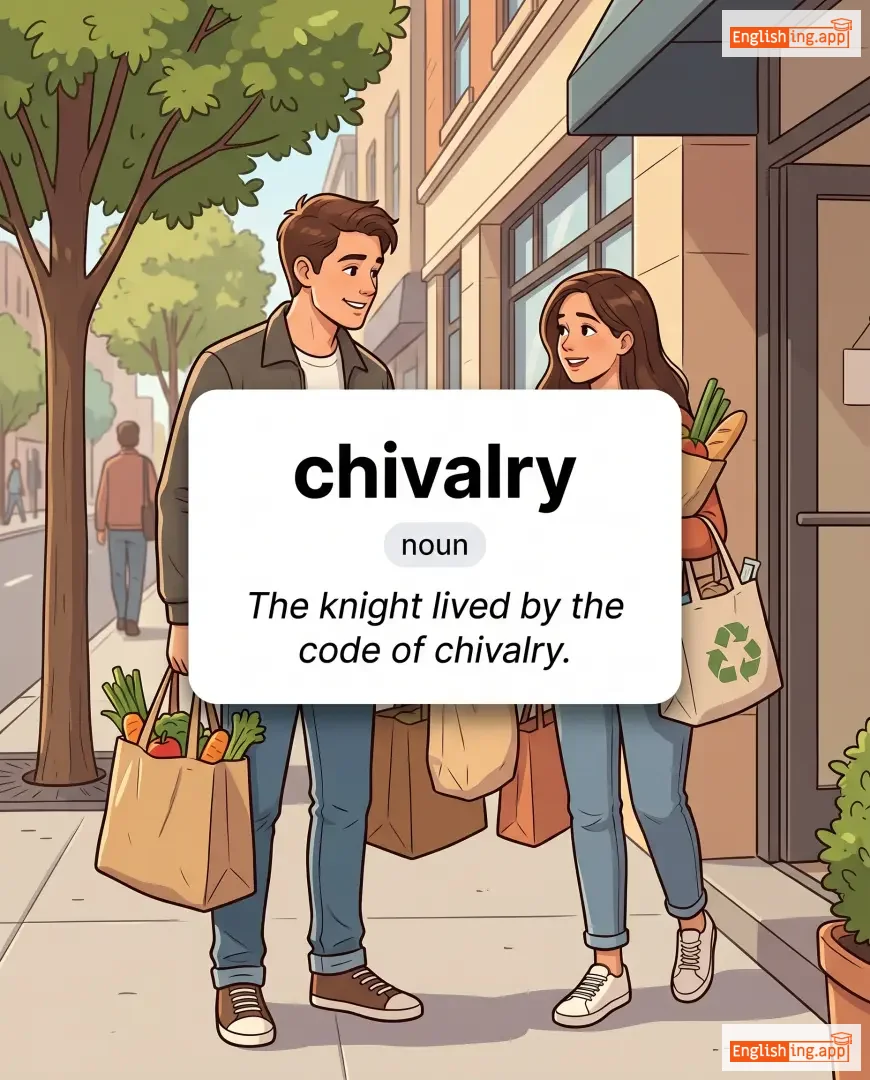
chivalry definition card — visual illustration of the meaning
noun
/ˈʃɪvəlri/
骑士精神 (qíshì jīngshén)

The medieval knightly system with its moral, social, and religious code; courteous behavior, especially toward women.

"The knight lived by the code of chivalry."

"骑士遵循骑士精神的规范。" (Qíshì zūnxún qíshì jīngshén de guīfàn.)
noun
/ˈtʃɒklət/
巧克力 (qiaokeli)

a sweet, brown food made from roasted cocoa beans

"She bought a bar of chocolate from the store."
"她从商店买了一块巧克力。" (tā cóng shāngdiàn mǎile yī kuài qiǎokèlì.)
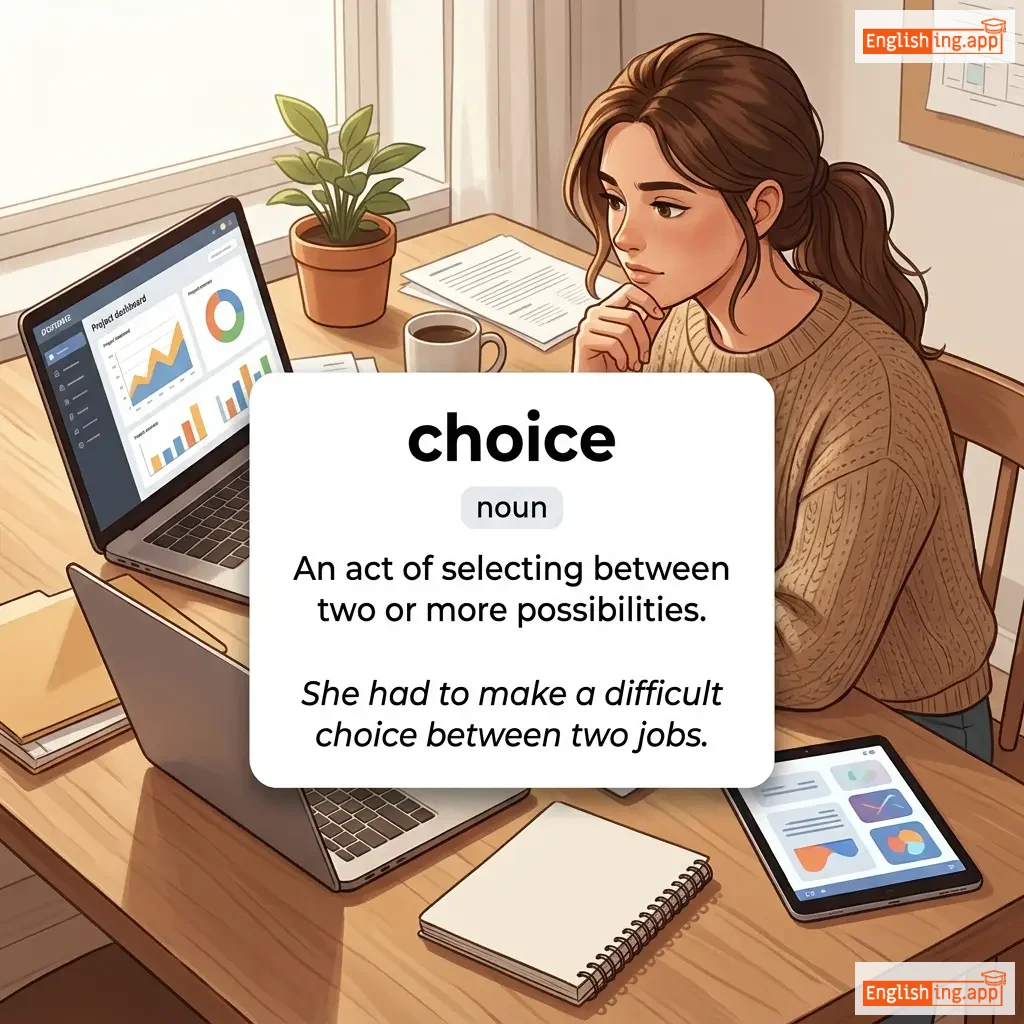
choice definition card — visual illustration of the meaning
noun
/tʃɔɪs/
选择 (xuǎnzé)

An act of selecting between two or more possibilities.

"She had to make a difficult choice between two jobs."

"她不得不在两份工作之间做出一个艰难的选择。" (Tā bùdébù zài liǎng fèn gōngzuò zhī jiān zuò chū yīgè jiānnán de xuǎnzé.)
noun
/ˈkwaɪər/
合唱团 (hechangtuan)

An organized group of singers, typically performing in church services or concerts.

"The choir sang beautifully during the ceremony."

"合唱团在仪式中唱得非常美丽。" (Hechangtuan zai yishi zhong chang de feichang meili.)
noun
/ˈkɒlərə/

An infectious disease of the small intestine causing severe vomiting and diarrhea.

"The village suffered an outbreak of cholera after the flood."

adjective
/ˈkɒlərɪk/
暴躁的 (baozuode)

Easily angered; irritable and hot-tempered.

"His choleric nature often got him into arguments."

"他那暴躁的脾气常常让他卷入争论。" (ta na baozuode piqi changchang rang ta juanru zhenglun)
noun
/kəˈlɛstərɒl/
胆固醇 (dǎn gù chún)

a fatty substance found in the blood, high levels of which can cause health problems

"High cholesterol can increase the risk of heart disease."

"高胆固醇可能增加患心脏病的风险。" (Gāo dǎn gù chún kěnéng zēngjiā huàn xīn zàng bìng de fēngxiǎn.)
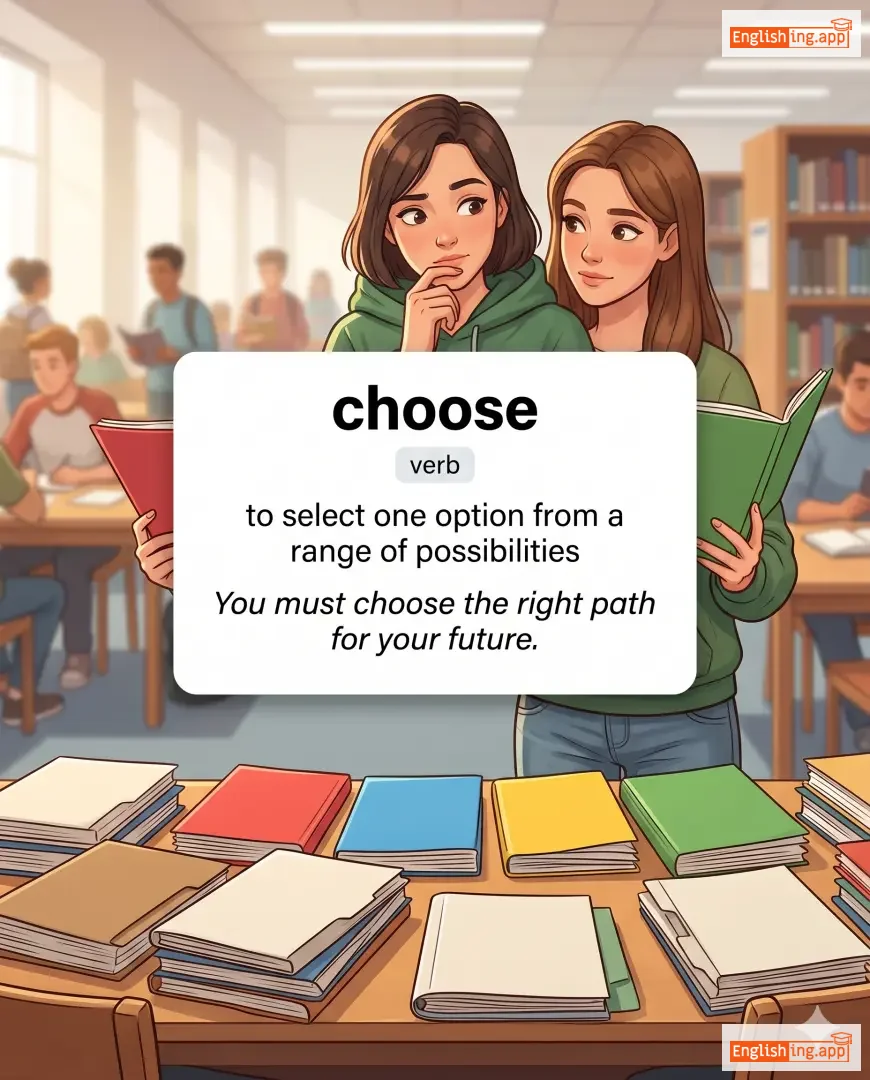
choose definition card — visual illustration of the meaning
verb
/tʃuːz/

to select one option from a range of possibilities

"You must choose the right path for your future."

adjective
/ˈtʃuː.zi/
挑剔的; 非常挑选的; 对喜欢或接受的东西非常挑剔 (tiao ti de)

very careful in choosing; selective; particular about what one likes or accepts

"He's very choosy about the restaurants where he eats."

"他对他吃的餐馆非常挑剔。" (Ta dui ta chi de canguan feichang tiaoti.)