词汇表

英语词汇词典 | 单词含义、定义和示例

noun
/ˈtʃæpəl/
小教堂 (xiao jiaotang)

A small church or a room used for Christian worship, often within a larger building.

"The couple got married in a small countryside chapel."

"这对夫妇在一个小教堂里结婚。" (Zhe dui fufu zai yi ge xiao jiaotang li jiehun.)
🧑‍🤝‍🧑

chaperon (夏佩龙)

noun
/ˈʃæpəroʊn/
陪伴者 (peiban zhe)

An older person who accompanies and supervises young people in social situations.

"The teacher acted as a chaperon during the school dance."

"老师在学校舞会期间担任了陪伴者的角色。" (Lǎoshī zài xuéxiào wǔhuì qījiān dānrènle péibàn zhě de juésè.)
noun
/ˈtʃæplɪn/
牧师 (mushi)

A member of the clergy attached to a private chapel, institution, hospital, or military unit.

"The army chaplain offered prayers before the battle."

"军队牧师在战斗前提供了祷告。" (Jundui mushi zai zhandou qian tigong le daogao.)
noun
/ˈtʃæptər/
章节 (zhāngjié)

A main division of a book or a period in someone's life.

"I just finished the first chapter of the novel."

"我刚刚完成了小说的第一章。" (Wǒ gānggāng wánchéngle xiǎoshuō de dì yī zhāng.)
verb
/tʃɑːr/
烧焦 (shaojiao)

To burn or scorch something so that it becomes blackened.

"The cook accidentally charred the steak."

"厨师不小心烧焦了牛排。" (Chúshī bù xiǎoxīn shāojiāo le niúpái.)
noun
/ˈkærəktər/
角色 (juésè)

the mental and moral qualities distinctive to an individual; a person in a story or play

"The main character in the novel learns an important lesson."
"小说中的主角学到了一个重要的教训。" (xiǎoshuō zhōng de zhǔjiǎo xué dào le yīgè zhòngyào de jiàoxùn.)
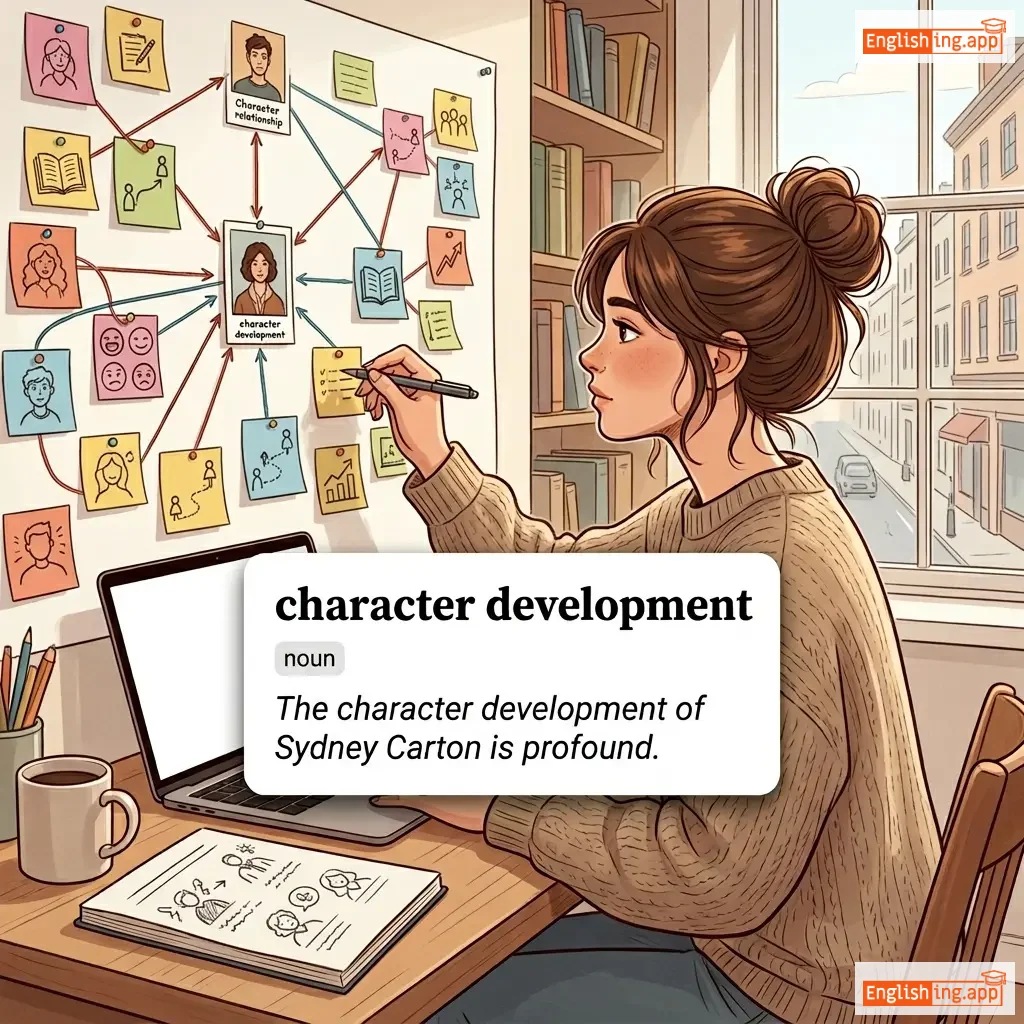
character development definition card — visual illustration of the meaning
noun
ˈkærɪktər dɪˈvɛləpmənt
角色发展 (juésè fāzhǎn)

The process of creating a believable character in fiction by giving the character depth and personality.

"The character development of Sydney Carton is profound."

"悉尼·卡顿的角色发展深刻。" (Xīní Kǎdùn de juésè fāzhǎn shēnkè.)
noun/adjective
/ˌkærəktəˈrɪstɪk/
特征 (tèzhēng)

A distinguishing quality or feature of a person, place, or thing.

"Kindness is a characteristic of true leadership."

"善良是一个真正领导力的特征。" (Shànliáng shì yīgè zhēnzhèng lǐngdǎolì de tèzhēng.)
verb
/ˈkærəktəraɪz/

to describe or portray the distinctive features or qualities of someone or something

"The author characterizes the hero as brave and selfless."

noun
/ʃəˈreɪd/
假面舞会, 模仿游戏 (jiǎmiàn wǔhuì, mófǎng yóuxì)

an absurd pretense or act intended to deceive; also a word-guessing game

"The trial was nothing more than a political charade."

"这个审判不过是一个政治上的假面舞会。" (zhège shěnpàn bùguò shì yīgè zhèngzhì shàng de jiǎmiàn wǔhuì.)
verb
/tʃɑːrdʒ/
收费/指控 (shōufèi/zhǐkòng)

to demand payment; to formally accuse; to rush forward aggressively

"The store charges extra for home delivery."
"商店收取额外的家居配送费用。" (Shāngdiàn shōuqǔ éwài de jiājū pèisòng fèiyòng.)
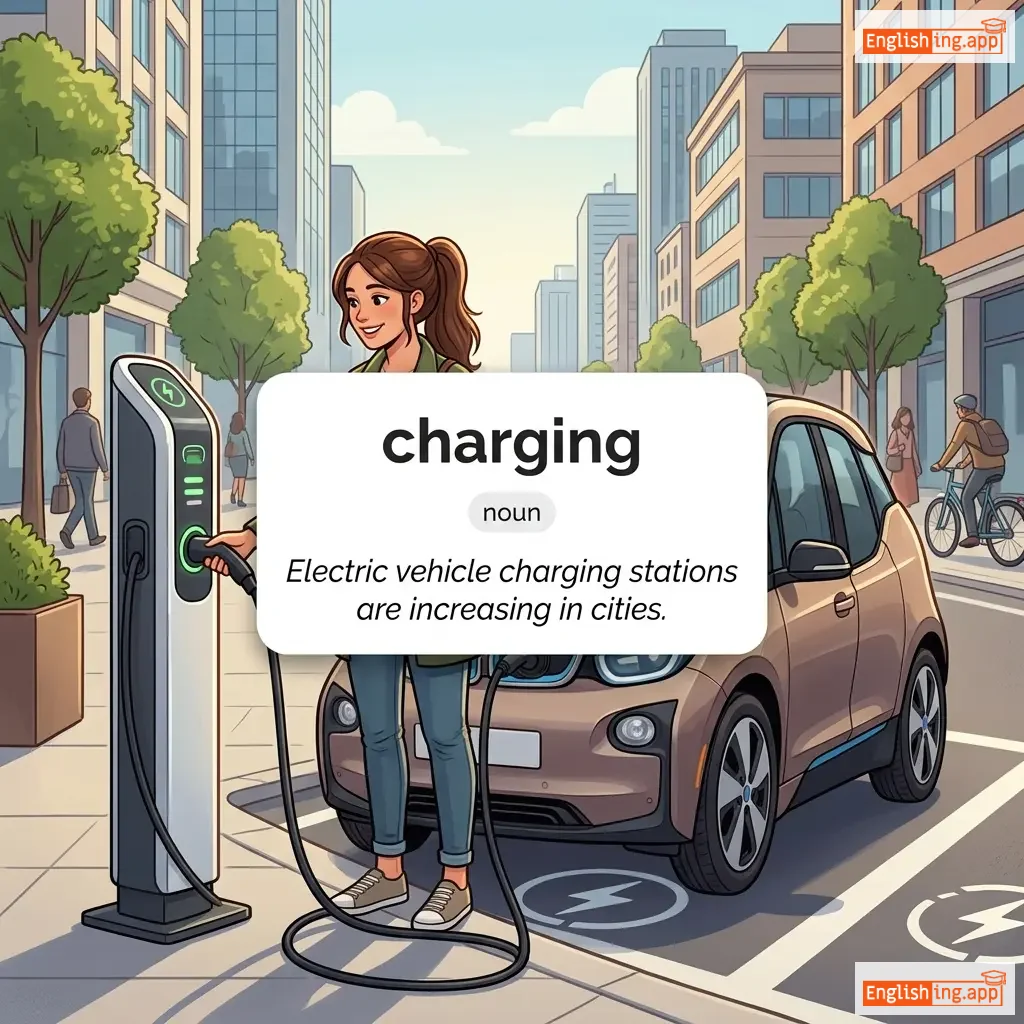
charging definition card — visual illustration of the meaning
noun
ˈtʃɑː.dʒɪŋ
充电 (chongdian)

The process of supplying electrical energy to recharge a battery or power source.

"Electric vehicle charging stations are increasing in cities."

"电动车充电站在城市中越来越多。" (diandongche chongdianzhan zai chengshi zhong yuelaiyue duo)
noun
/ˈtʃæriət/
战车 (zhanche)

an ancient horse-drawn vehicle used in warfare and racing

"The warrior rode his chariot into battle with great courage."
"战士带着他的战车勇敢地冲向了战斗。" (Zhànshì dàizhe tā de zhànchē yǒnggǎn de chōng xiàngle zhàndòu)
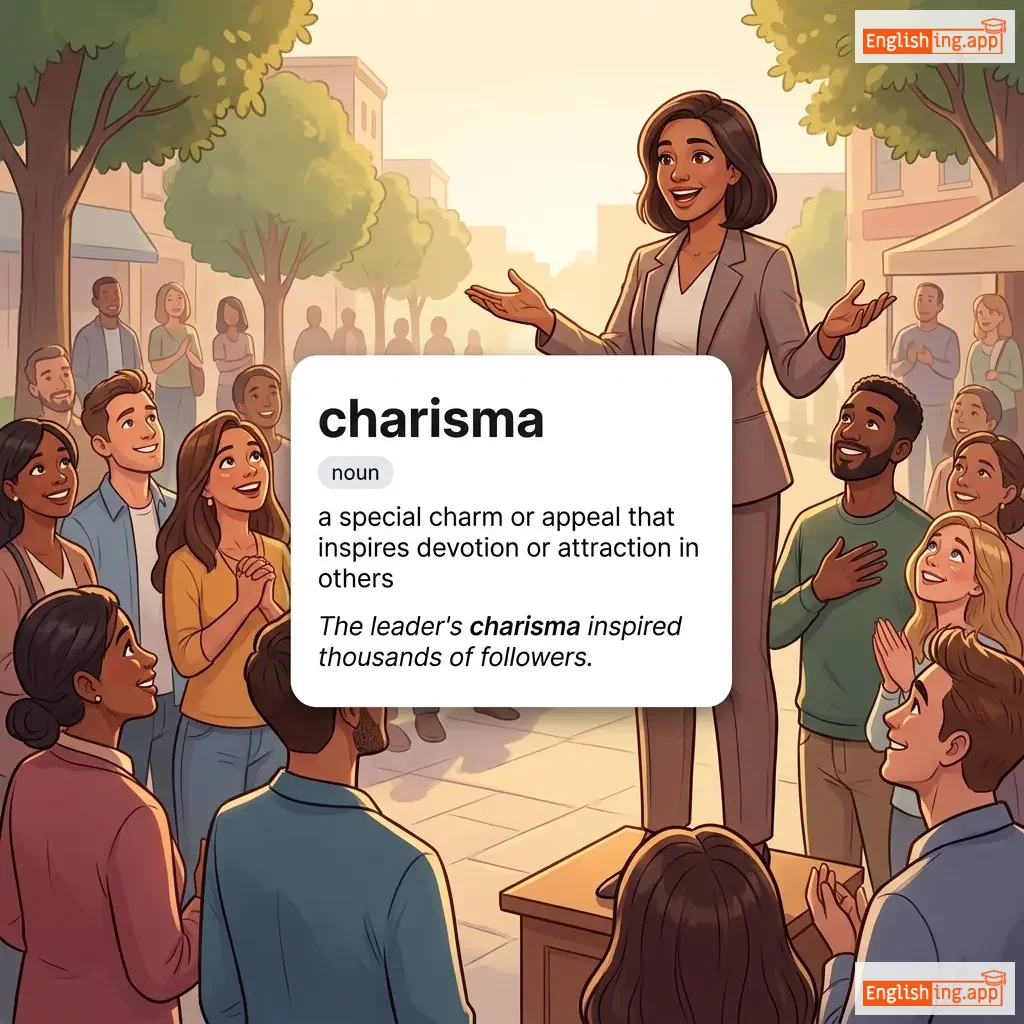
charisma definition card — visual illustration of the meaning
noun
/kəˈrɪzmə/
魅力 (mei li)

a special charm or appeal that inspires devotion or attraction in others

"The leader's charisma inspired thousands of followers."

"领导者的魅力激励了成千上万的追随者。" (Ling dao zhe de mei li ji li le cheng qian shang wan de zhui sui zhe.)
adjective
/ˈtʃær.ɪ.tə.bəl/
慈善的; 慷慨的; 仁慈的 (císhàn de; kāngkǎi de; réncí de)

generous in giving to those in need; showing kindness

"She is known for her charitable work in the community."

"她因在社区的慈善工作而闻名。" (Tā yīn zài shèqū de císhàn gōngzuò ér wénmíng.)
noun
/ˈtʃærəti/
慈善 / 慈善组织 (cishan / cishan zuzhi)

an organization set up to provide help and raise money for those in need; kindness and tolerance in judging others

"The charity raised funds to support homeless families."

"慈善组织募集资金来帮助无家可归的家庭。" (Cishan zuzhi mubi zijin lai bangzhu wujiakegui de jiating.)
noun
/ˈʃɑːrlətən/
江湖郎中 (jiānghú lángzhōng)

a person who pretends to have knowledge or skills that they do not really possess; a fraud

"The so-called healer was exposed as a charlatan."

"那位自称为治愈者的人被揭露为一个江湖郎中。" (Nà wèi zì chēng wéi zhìyù zhě de rén bèi jiēlù wéi yīgè jiānghú lángzhōng.)
💫

Charm

noun/verb
/tʃɑːrm/

the power or quality of delighting or attracting others; to attract or please greatly

"Her smile never fails to charm everyone around her."

adjective
/ˈtʃɑːr.mɪŋ/
迷人 (mírén)

Very pleasing or delightful in a way that attracts people.

"The village is full of charming little houses."

"这个村庄充满了迷人的小房子。" (Zhège cūnzhuāng chōngmǎnle mírén de xiǎo fángzi.)
noun
/tʃɑːrt/
图表 (tubiao)

a sheet of information in the form of a table, graph, or diagram

"The teacher used a chart to explain the statistics."

"老师用图表来解释统计数据。" (Laoshi yong tubiao lai jieshi tongji shuju.)
noun/verb
/ˈtʃɑːrtər/
包机 / 租赁 (baoji / zulin)

a written document granting rights or privileges; to hire a vehicle or vessel for temporary use

"The company decided to charter a bus for the trip."

"公司决定为旅行租用一辆巴士。" (Gongsi jueding wei lvxing zuyong yi liang bashi.)
adjective
/ˈtʃɛəri/
谨慎 (jin shen)

cautious or wary about doing something

"She was chary of investing in the new business venture."
"她对投资新业务感到谨慎。" (Tā duì tóuzī xīn yèwù gǎndào jǐnshèn.)
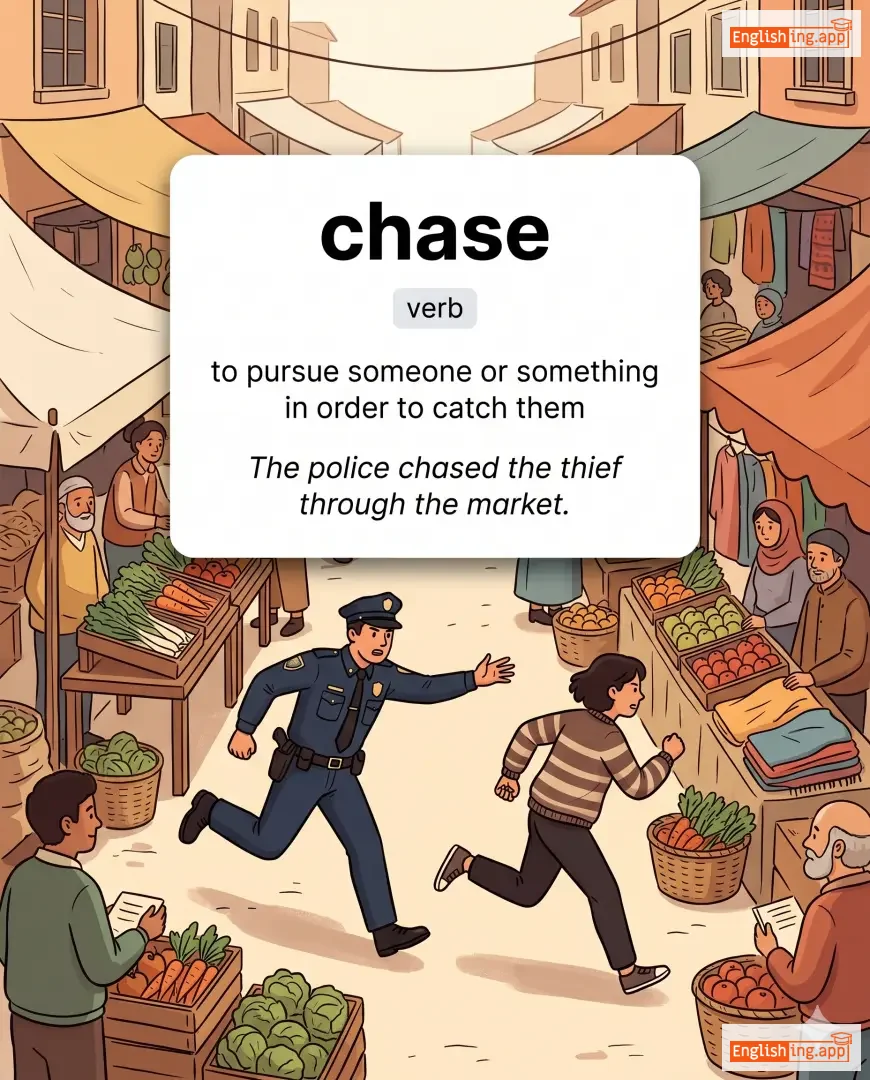
chase definition card — visual illustration of the meaning
🏃‍♂️

chase (chèisī)

verb
/tʃeɪs/
追赶 (zhuīgǎn)

to pursue someone or something in order to catch them

"The police chased the thief through the market."

"警察在市场上追赶小偷。" (Jǐngchá zài shìchǎng shàng zhuīgǎn xiǎotōu.)
noun
/ˈkæzəm/
裂缝 / 巨大差异 (lièfèng / jùdà chāyì)

a deep fissure in the earth's surface or a wide difference between people or ideas

"There was a great chasm between the two political parties."

"两个政党之间有一个巨大的裂缝。" (Liǎng gè zhèngdǎng zhījiān yǒu yīgè jùdà de lièfèng.)
noun
/ˈʃæsi/
车辆底盘 (cheliang dipan)

the base frame of a vehicle or other wheeled machine

"The mechanic examined the car's chassis for damage."

"机械师检查了汽车的底盘以查找损坏。" (Jixieshi jiancha le qiche de dipan yi chazhao sunhuai.)
adjective
/tʃeɪst/
贞洁 (zhēn jié)

abstaining from sexual relations; pure or simple in style

"She lived a chaste life devoted to her faith."
"她过着专注于信仰的贞洁生活。" (Tā guòzhe zhuānzhù yú xìnyǎng de zhēn jié shēnghuó.)
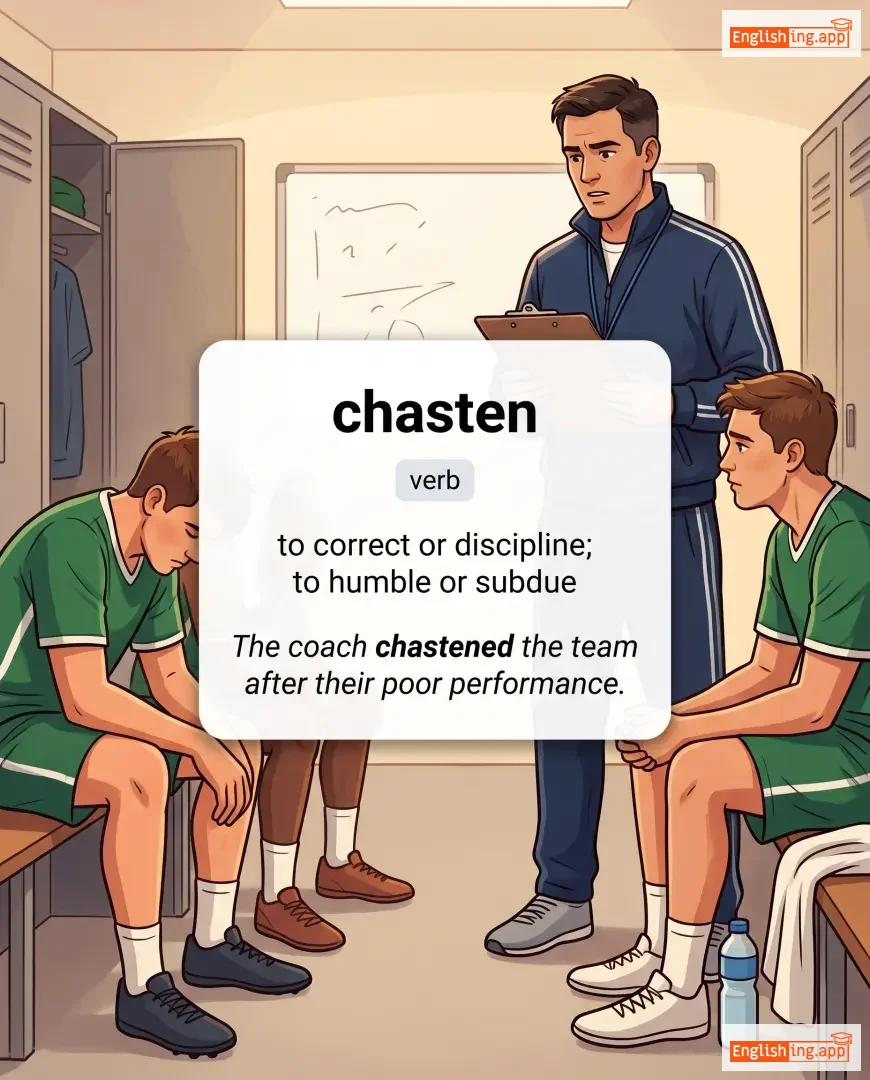
chasten definition card — visual illustration of the meaning
verb
/ˈtʃeɪ.sən/
惩罚 / 使屈服 (chéngfá / shǐ qūfú)

to correct or discipline; to humble or subdue

"The coach chastened the team after their poor performance."

"教练在他们的糟糕表现后惩罚了球队。" (Jiàoliàn zài tāmen de zāogāo biǎoxiàn hòu chéngfá le qiúduì.)
verb
/tʃæsˈtaɪz/

to criticize or punish severely

"The teacher chastised the student for being late."

noun
/ˈtʃæs.tə.ti/
贞洁 (zhēn jié)

the state of refraining from sexual activity; purity

"The monk took a vow of chastity."

"那位僧侣立下了贞洁的誓言。" (Nà wèi sēnglǚ lì xiàle zhēn jié de shìyán.)
noun; verb
/tʃæt/
聊天 (liaotian)

an informal conversation; to talk in a friendly, informal way

"We had a long chat after dinner."

"晚饭后我们聊了很久。" (wanfan hou women liao le hen jiu)
noun
/ʃæˈtoʊ/
法国庄园 (faguo zhuangyuan)

a large French country house or castle

"They stayed in a beautiful chateau in France."

"他们住在法国的一座美丽的城堡里。" (Tamen zhù zài Fǎguó de yī zuò měilì de chéngbǎo lǐ.)
ChatGPT definition card — visual illustration of the meaning
noun
ˈtʃæt.dʒiː.piː.tiː
基于语言的人工智能模型 (ChatGPT)

A language-based artificial intelligence model designed for conversational interactions.

"ChatGPT helps users generate human-like text efficiently."

"ChatGPT帮助用户高效生成类似人类的文本。" (ChatGPT bāngzhù yònghù gāoxiào shēngchéng lèisì rénlèi de wénběn.)
noun
/ˈtʃæt.əl/
动产 / 个人财产 (dongchan / geren caichan)

a personal possession; historically, movable property including slaves

"In the past, slaves were considered the chattel of their owners."

"在过去,奴隶被视为他们主人的动产。" (Zai guoqu, nuli bei shi wei tamen zhuren de dongchan.)
noun
/ˈʃoʊ.vəˌnɪz.əm/

Excessive or prejudiced support for one's own cause, group, or gender, often with contempt for others.

"The company's culture was criticized for promoting male chauvinism."

noun
/ˈʃoʊ.və.nɪst/
极端偏袒的人 (jíduān piāntǎn de rén)

A person displaying excessive or prejudiced loyalty to a group, cause, or gender.

"He was labeled a chauvinist after his remarks about women in the workplace."

"在工作场所对女性的评论之后,他被贴上了沙文主义者的标签。" (zài gōngzuò chǎngsuǒ duì nǚxìng de pínglùn zhīhòu, tā bèi tiē shàngle shāwén zhǔyì zhě de biāoqiān.)
adjective
/ˌʃoʊ.vəˈnɪs.tɪk/
沙文主义 (sha wen zhu yi)

Displaying or characterized by excessive or prejudiced loyalty or support, especially towards one's own gender or group.

"His chauvinistic attitude alienated many of his female colleagues."

"他的沙文主义态度疏远了许多女性同事。" (Tā de shāwén zhǔyì tàidù shūyuǎnle xǔduō nǚxìng tóngshì.)
adjective
/tʃiːp/
便宜 (pianyi)

low in cost; inexpensive

"This shop sells clothes at very cheap prices."
"这家商店以非常便宜的价格出售衣服。" (Zhe jia shangdian yi feichang pianyi de jiage chushou yifu.)
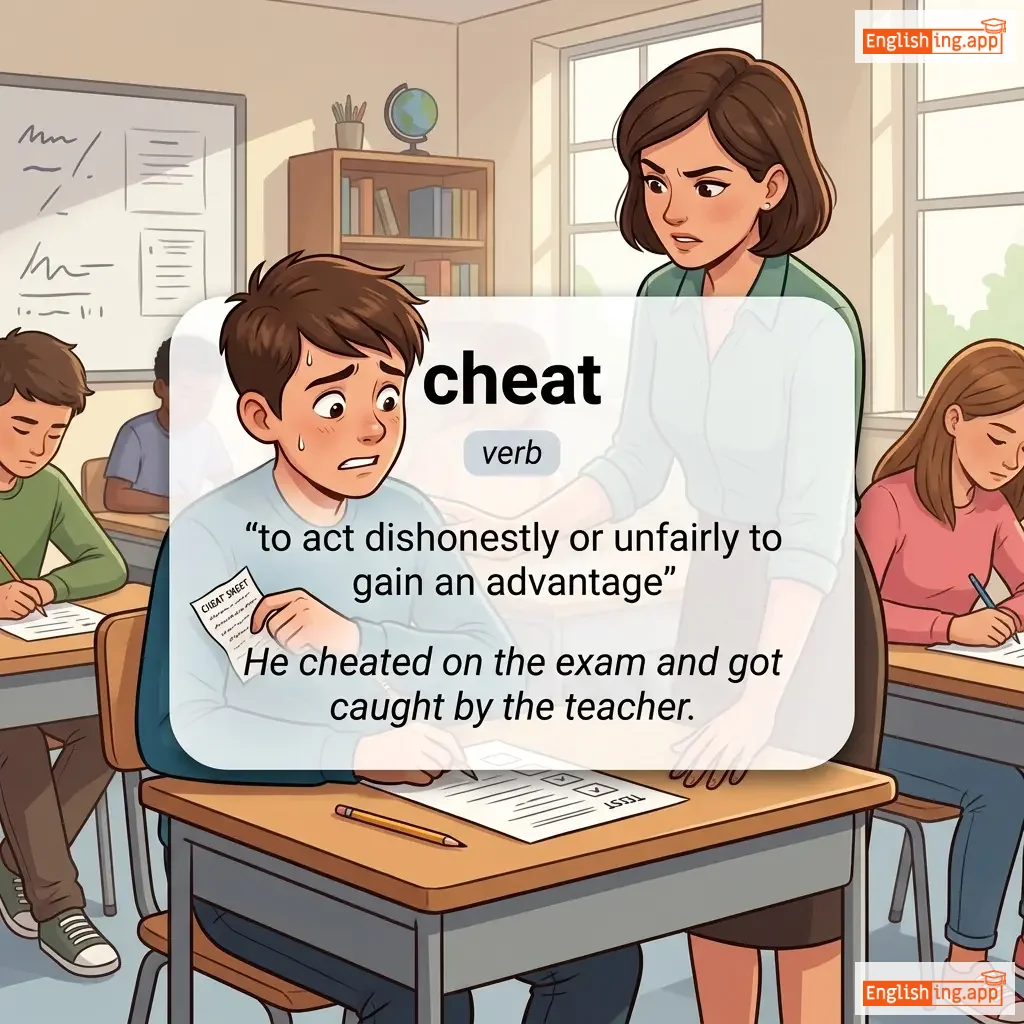
cheat definition card — visual illustration of the meaning
verb
/tʃiːt/
幸福 (xìngfú)

to act dishonestly or unfairly to gain an advantage

"He cheated on the exam and got caught by the teacher."

"她在收到奖项时,无法掩饰自己的幸福。" (Tā zài shōudào jiǎngxiàng shí, wúfǎ yǎnshì zìjǐ de xìngfú.)
noun
/ˈtʃiːtər/
作弊者 (zuobizhe)

a person who cheats or acts dishonestly to gain an advantage

"He was caught and labeled as a cheater during the exam."

"他在考试中被称为作弊者。" (ta zai kaoshi zhong bei chengwei zuobizhe)
verb, noun
/tʃɛk/
检查 (jiǎnchá)

To examine, inspect, or verify something; also a written order to a bank to pay money.

"Please check the report before submitting it."

"请在提交之前检查报告。" (Qǐng zài tíjiāo zhīqián jiǎnchá bàogào.)
adjective
/ˈtʃɛk.ərd/
方格纹 (fang ge wen)

Having a pattern of alternating squares of different colors; also describing a past full of ups and downs or varied experiences.

"He had a checkered career with many highs and lows."

"他有一个方格纹的职业生涯,充满了起伏。" (Tā yǒu yīgè fānggé wén de zhíyè shēngyá, chōngmǎnle qǐfú.)
noun
/tʃiːk/
脸颊 (lianjia)

either side of the face below the eye; impudent boldness

"She kissed him on the cheek."

"她亲吻了他的脸颊。" (Tā qīnwěnle tā de liǎnjiá.)
verb
/tʃɪər/
欢呼 (huānhū)

to shout in encouragement or support; to make someone feel happier

"The fans cheered loudly when their team scored a goal."

"当他们的队伍得分时,球迷大声欢呼。" (dāng tāmen de duìwǔ défēn shí, qiúmí dàshēng huānhū.)
adjective
/ˈtʃɪə.fəl/
愉快的; 乐观的; 充满喜悦 (yúkuài de; lèguān de; chōngmǎn xǐyuè)

happy and optimistic; full of joy and good spirits; bright and lively

"She has a cheerful personality that brightens everyone's day."

"她有一个愉快的个性,照亮了每个人的日子。" (Tā yǒu yīgè yúkuài de gèxìng, zhàoliàngle měi gèrén de rìzi.)
adverb
/ˈtʃɪəfəli/
愉快地 (yukuaide)

in a happy and positive manner; with visible good spirits

"She greeted everyone cheerfully despite the long day."

"尽管一天很长,她还是愉快地向大家打招呼。" (Jingguan yitian hen chang ta haishi yukuaide xiang dajia dazhaohu)
adjective
/ˈtʃɪə.ləs/
沉闷; 沮丧; 悲伤; 无欢乐 (chenmen; jushan; beishang; wu huanle)

lacking happiness or comfort; gloomy; depressing; without cheer

"The old house looked cheerless and abandoned in the winter rain."

"这座老房子在冬雨中看起来显得沉闷和荒废。" (Zhe zuo lao fangzi zai dongyu zhong kan qilai xiande chenmen he huangfei.)
noun
/tʃiːz/
奶酪 (nǎilào)

a dairy product made from curdled or cultured milk

"She sliced some cheese for the sandwich."

"她为三明治切了一些奶酪。" (Tā wèi sānmíngzhì qiēle yīxiē nǎilào.)
adjective
/ˈtʃiːzi/
便宜/过于感伤 (piányí/guòyú gǎnshāng)

tacky, overly sentimental, or cheap in quality

"The movie was funny but a bit too cheesy."

"电影很有趣,但有点太俗气了。" (diànyǐng hěn yǒuqù, dàn yǒudiǎn tài súqì le.)
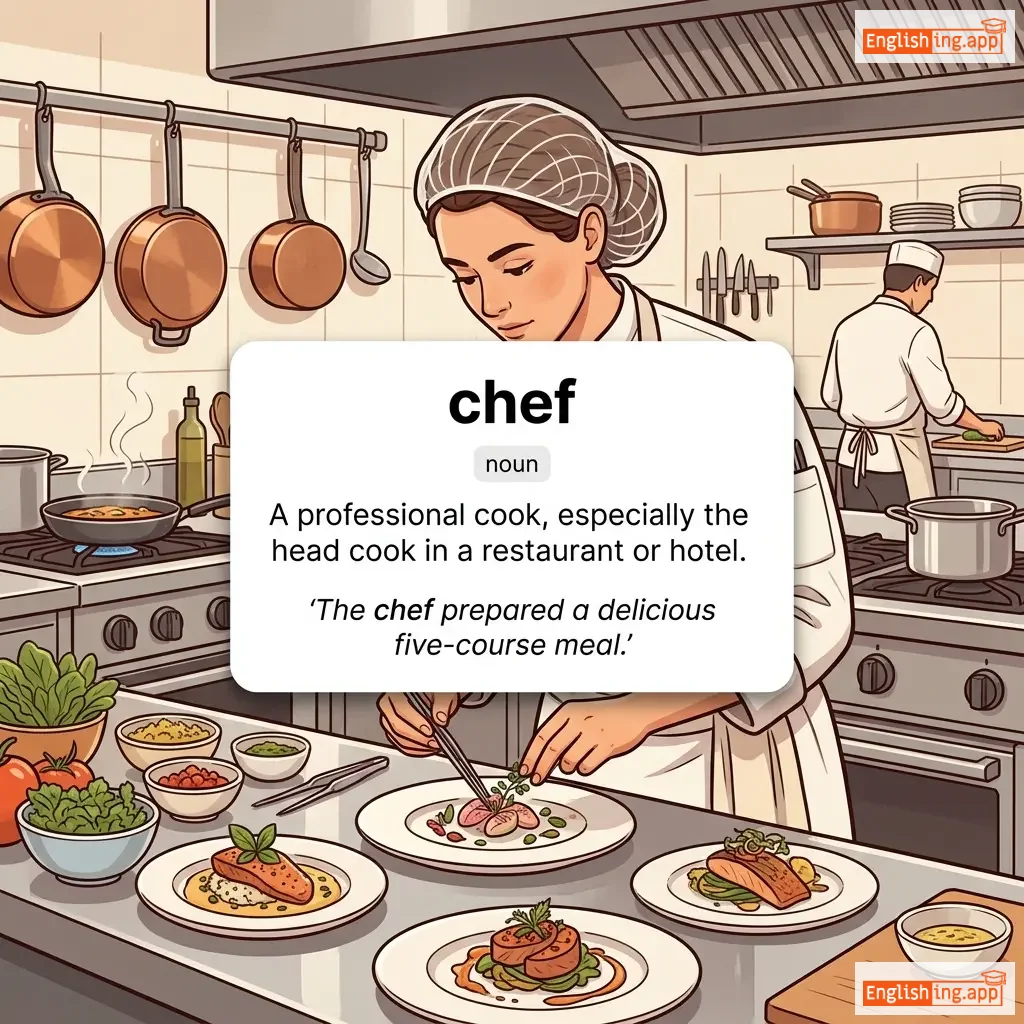
chef definition card — visual illustration of the meaning
👨‍🍳

chef

noun
/ʃɛf/

A professional cook, especially the head cook in a restaurant or hotel.

"The chef prepared a delicious five-course meal."

noun
/ˈkɛmɪkəl/
化学物质 (huàxué wùzhì)

a substance produced by or used in a chemical process

"The factory releases harmful chemicals into the river."

"工厂将有害的化学物质排放到河中。" (Gōngchǎng jiāng yǒuhài de huàxué wùzhì pái fàng dào hé zhōng.)