词汇表

英语词汇词典 | 单词含义、定义和示例

noun/verb
/kɔːz/
原因 / 造成 (yuányīn / zàochéng)

a person or thing that gives rise to an action, phenomenon, or condition; to make something happen

"The heavy rain caused flooding in the city."

"大雨造成了城市的洪水。" (Dàyǔ zàochéngle chéngshì de hóngshuǐ.)
caustic definition card — visual illustration of the meaning
adjective
/ˈkɔː.stɪk/
腐蚀性的, 尖刻的 (fǔshí xìng de, jiānkè de)

able to burn or corrode by chemical action; severely sarcastic

"Her caustic remarks hurt his feelings."

"她尖刻的评论伤害了他的感情。" (Tā jiānkè de pínglùn shānghài le tā de gǎnqíng.)
verb
/ˈkɔː.tə.raɪz/
烧灼 (shaozhuo)

to burn tissue to stop bleeding or prevent infection

"The doctor cauterized the wound to stop the bleeding."
"医生烧灼伤口以止血。" (Yisheng shaozhuo shangkou yi zhi xue.)
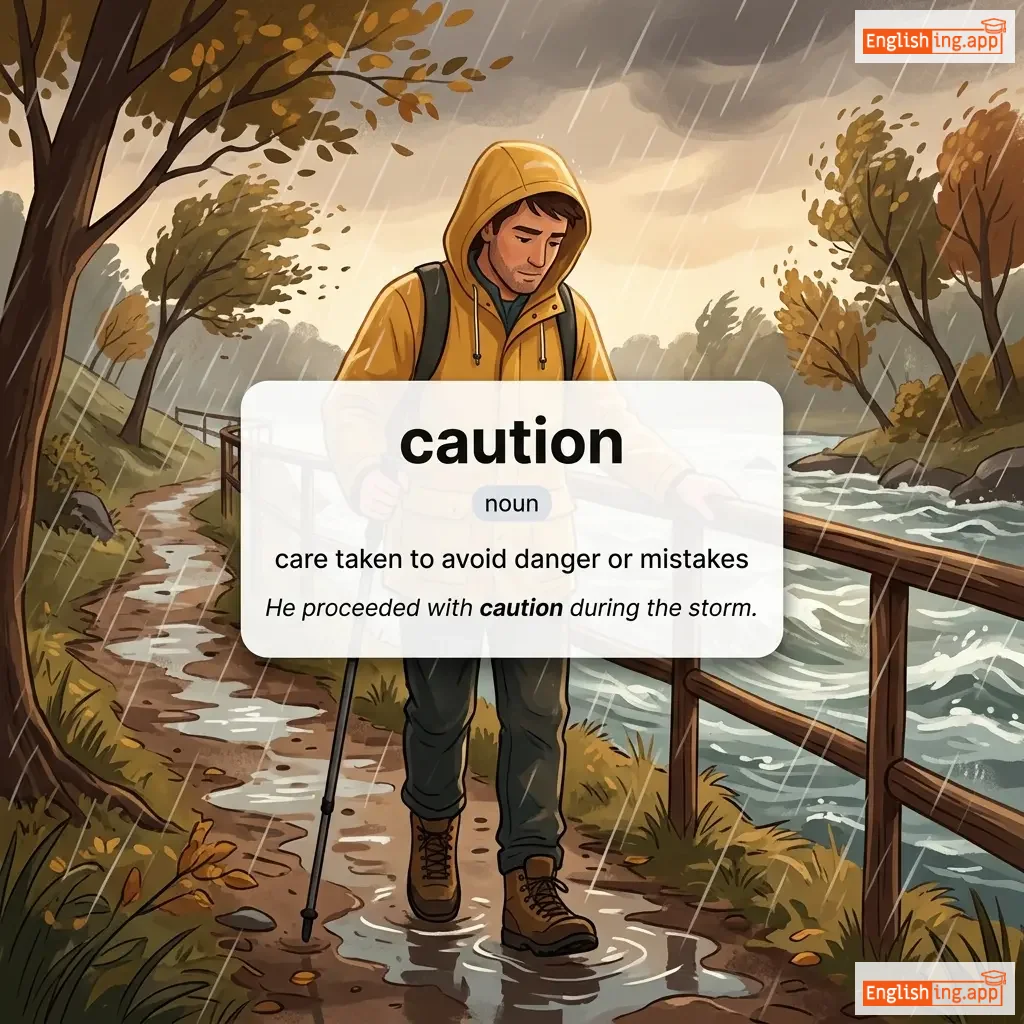
caution definition card — visual illustration of the meaning
noun
/ˈkɔːʃən/
小心 (xiaoxin)

care taken to avoid danger or mistakes

"He proceeded with caution during the storm."

"他在暴风雨中小心行事。" (Ta zai baofengyu zhong xiaoxin xingshi.)
adjective
/ˈkɔːʃənˌɛri/
警示性的 (jingshi xing de)

serving as a warning; intended to prevent problems or mistakes by giving advice or examples

"The report offers a cautionary message about unchecked spending."

"该报告对失控的支出发出了警示性的信息。" (Gai baogao dui shikong de zhichu fachu le jingshi xing de xinxi)
adjective
/ˈkɔːʃəs/
谨慎 (jinshen)

careful to avoid potential problems or dangers

"She was cautious about trusting strangers."

"她在信任陌生人时非常谨慎。" (Tā zài xìnrèn mòshēngrén shí fēicháng jǐnshèn.)
noun
/ˌkæv.əlˈkeɪd/
盛大队列 (shengda dui lie)

a formal procession of people riding on horses or in vehicles

"The king’s arrival was marked by a grand cavalcade."

"国王的到来标志着一场盛大的队列。" (Guowang de daolai biaozhizhe yichang shengda de duilie.)
adjective
/ˌkævəˈlɪər/
漫不经心 (man bu jing xin)

showing a lack of proper concern; dismissive or offhand

"He had a cavalier attitude toward safety regulations."

"他对安全规定有一种漫不经心的态度。" (Ta dui anquan guiding you yizhong man bu jingxin de taidu.)
noun
/ˈkæv.əl.ri/
骑兵 (qíbīng)

soldiers who fight on horseback; the part of an army formerly composed of troops on horseback

"The cavalry charged across the field with great speed."

"骑兵以极快的速度冲过了田野。" (Qíbīng yǐ jí kuài de sùdù chōng guòle tiányě.)
noun
/keɪv/
洞穴 (dongxue)

a large natural underground space in a hill or cliff

"The explorers discovered paintings on the walls of the cave."

"探险者在洞穴的墙壁上发现了画作。" (Tanxian zhe zai dongxue de qiangbi shang faxian le huazuo.)
noun
/ˈkæviˌæt/
警告 (jinggao)

a warning or condition to be considered before taking action

"The proposal was accepted with one caveat."

"该提案在附带警告的情况下被接受。" (Gai tí'àn zài fùdài jǐnggào de qíngkuàng xià bèi jiēshòu.)
noun
/ˈkævərn/
洞穴 (dongxue)

a large cave or chamber in a cave

"The explorers entered a dark cavern beneath the mountain."

"探险者进入了山下的一个黑暗洞穴。" (Tanxianzhe jinru le shanxia de yi ge hei'an dongxue.)
verb
/ˈkævəl/
提出无谓的反对 (tichu wuwei de fandui)

to make petty or unnecessary objections

"She caviled at every detail of the plan."

"她对计划的每个细节都提出了无谓的反对。" (Ta dui jihua de mei ge xijie dou tichu le wuwei de fandui.)
verb
/kəˈvɔrt/
开心地跳跃 (kaixin de tiaoyue)

to jump or dance around excitedly

"The children cavorted happily in the garden."

"孩子们在花园里高兴地跳跃。" (Haizimen zai huayuan li gaoxing de tiaoyue.)
verb
/siːs/
停止 (tingzhi)

to bring or come to an end; to stop doing something

"The noise ceased as soon as the children went inside."

"噪音一旦孩子们进去了就停止了。" (Zaoyin yidan haizimen jinqule jiu tingzhile.)
adjective
/ˈsiːs.ləs/
不断的;持续的 (buduan de; chixu de)

continuing without pause or interruption; endless

"The ceaseless rain lasted for three days."

"不断的雨下了三天。" (Buduan de yu xiala san tian.)
verb
/siːd/
放弃 (fàngqì)

to give up power, territory, or rights to another

"The country ceded territory after losing the war."

"这个国家在输了战争后,放弃了领土。" (Zhè gè guójiā zài shūle zhànzhēng hòu, fàngqì le lǐngtǔ.)
noun
/ˈsiːlɪŋ/
天花板 (tianhuaban)

the upper interior surface of a room

"The ceiling of the hall was painted beautifully."

"大厅的天花板被美丽地油漆了。" (Dating de tianhuaban bei meili de youqi le.)
celebrate definition card — visual illustration of the meaning
verb
/ˈsɛlɪˌbreɪt/

to observe an occasion with festivities or respect

"They celebrated their wedding anniversary with a party."

adjective
/ˈsɛl.əˌbreɪ.tɪd/
著名 (zhù míng)

Widely known and praised; famous for an achievement.

"He is a celebrated author in the field of literature."

"他是文学领域的一位著名作家。" (Tā shì wénxué lǐngyù de yī wèi zhùmíng zuòjiā.)
celebrating definition card — visual illustration of the meaning
verb
ˈsɛləbreɪtɪŋ
庆祝 (qìngzhù)

The act of acknowledging a significant or happy day or event with a social gathering or enjoyable activity.

"Celebrating awareness days helps spread important messages."

"庆祝意识日有助于传播重要信息。" (Qìngzhù yìshí rì yǒuzhù yú chuánbò zhòngyào xìnxī.)
noun
/ˌsɛlɪˈbreɪʃən/
庆典 (qingdian)

a festive event or activity to honor an occasion

"The city held a grand celebration on Independence Day."

"城市在独立日举行了盛大的庆典。" (Chengshi zai duli ri juxing le shengda de qingdian.)
noun
/səˈlɛbrɪti/
名人 (ming ren)

a famous person, especially in entertainment or sports

"The celebrity was surrounded by fans at the airport."

"这位名人在机场被粉丝围住了。" (Zhe wei ming ren zai ji chang bei fen si wei zhu le.)
noun
/səˈlɛrɪti/
敏捷 (minjie)

swiftness of movement; speed

"The soldier moved with great celerity to deliver the message."

"士兵以极大的敏捷移动,以传递消息。" (Shibing yi jidaga de minjie yidong, yi chuandi xiaoxi.)
noun
/ˈsel.ər.i/
芹菜 (qíncài)

a green vegetable with long crisp stems that can be eaten raw or cooked

"I added chopped celery to the soup for extra flavor."

"我将切碎的芹菜加入汤中以增加风味。" (wǒ jiāng qiē suì de qíncài jiārù tāng zhōng yǐ zēngjiā fēngwèi.)
celestial definition card — visual illustration of the meaning
adjective
/səˈlɛstiəl/
天体的 (tiāntǐ de)

relating to the sky, stars, or heavens

"The telescope revealed many celestial bodies in the night sky."

"望远镜揭示了夜空中的许多天体。" (Wàngyuǎnjìng jiēshìle yèkōng zhōng de xǔduō tiāntǐ.)
adjective, noun
/ˈsɛlɪbət/

abstaining from marriage and sexual relations; a person who does so

"He chose to remain celibate for religious reasons."

noun
/sɛl/
细胞 / 单元格 (xibao / danyuan ge)

a small basic unit of life; or a small enclosed space like a prison room

"The prisoner was locked in a small cell."

"囚犯被锁在一个小牢房里。" (qiufen bei suo zai yi ge xiao laofang li.)
noun
/ˈsɛlˌfoʊn/
手机 (shouji)

a portable telephone that uses a cellular network for wireless communication

"She forgot her cellphone at home and couldn’t call anyone."

"她把手机忘在家里了,没法给任何人打电话。" (ta ba shouji wang zai jiali le meifa gei renhe ren da dianhua)
adjective
/ˈsel.jə.lər/
细胞的 (xì bāo de)

relating to cells; consisting of cells; relating to mobile phone technology

"Cellular technology has revolutionized communication."
"细胞技术已经彻底改变了通讯方式。" (Xi bao jishu yijing chedi gaibian le tongxun fangshi.)
noun/verb
/sɪˈmɛnt/

a powdery substance that binds materials together; to make something strong or permanent

"The treaty helped cement the relationship between the two countries."

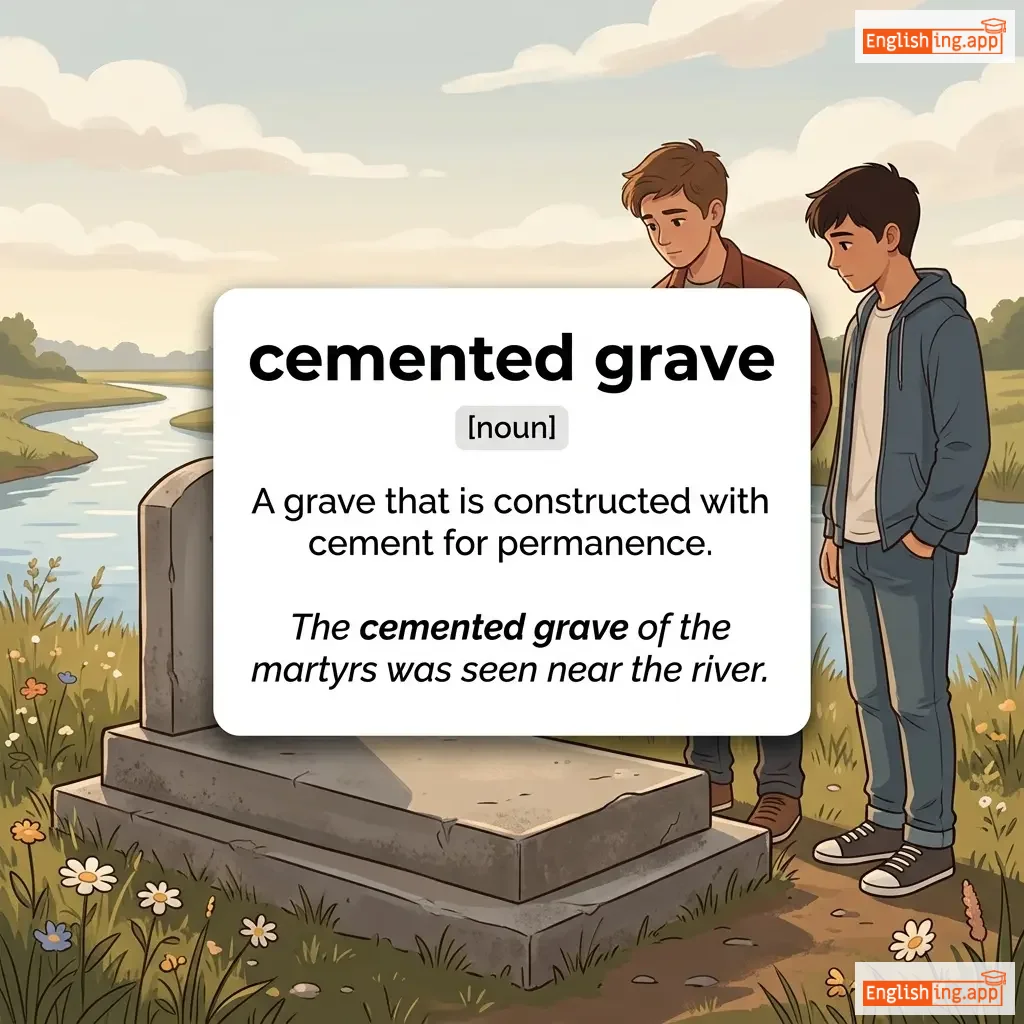
cemented grave definition card — visual illustration of the meaning
noun
sɪˈmɛntɪd ɡreɪv
水泥墓 (shuǐní mù)

A grave that is constructed with cement for permanence.

"The cemented grave of the martyrs was seen near the river."

"烈士的水泥墓被看见在河边。" (Lièshì de shuǐní mù bèi kànjiàn zài hé biān.)
noun
/ˈsɛmɪˌtɛri/
墓地 (mudi)

a place where dead people are buried

"The old cemetery is located at the edge of the village."

"古老的墓地位于村庄的边缘。" (Gǔ lǎo de mù dì wèi yú cūn zhuāng de biān yuán.)
verb/noun
/ˈsɛnsər/
审查 (shencha)

to suppress or remove parts of books, films, or information considered offensive or harmful; a person who does this

"The government tried to censor the controversial film."

"政府试图审查那部有争议的电影。" (Zhengfu shitu shencha na bu you zhengyi de dianying.)
adjective
/sɛnˈsɔːriəs/
过分挑剔 (guo fen tiao ti)

severely critical of others

"She was always censorious about her colleagues' mistakes."

"她总是对同事们的错误非常挑剔。" (Ta zongshi dui tongshimende cuowu feichang tiaoti.)
censure definition card — visual illustration of the meaning
verb/noun
/ˈsɛnʃər/
谴责 (qiǎnzé)

to express severe disapproval, often formally; strong criticism or disapproval

"The senator was censured for his unethical behavior."

"参议员因不道德行为被谴责。" (Cānyìyuán yīn bù dàodé xíngwéi bèi qiǎnzé.)
noun
/ˈsɛnsəs/
人口普查 (renkou pucha)

An official count or survey of a population, typically recording various details of individuals.

"The government conducted a census to update demographic data."

"政府进行了人口普查,以更新人口统计数据。" (Zhengfu jinxingle renkou pucha, yi gengxin renkou tongji shuju.)
noun
/ˈsɛntɔːr/
人马 (renma)

A mythological creature with the upper body of a human and the lower body of a horse.

"The centaur is a well-known figure in Greek mythology."

"人马是希腊神话中一个著名的形象。" (Renma shi Xila shenhua zhong yige zhuming de xingxiang.)
noun, adjective
/ˈsɛntənəri/ or /sɛnˈtɛnəri/
百年纪念 (bǎinián jìniàn)

The hundredth anniversary of a significant event; relating to a period of 100 years.

"The school celebrated its centenary with a grand event."
"学校以一场盛大的活动庆祝了它的百年纪念。" (Xuéxiào yǐ yī chǎng shèngdà de huódòng qìngzhùle tā de bǎinián jìniàn.)
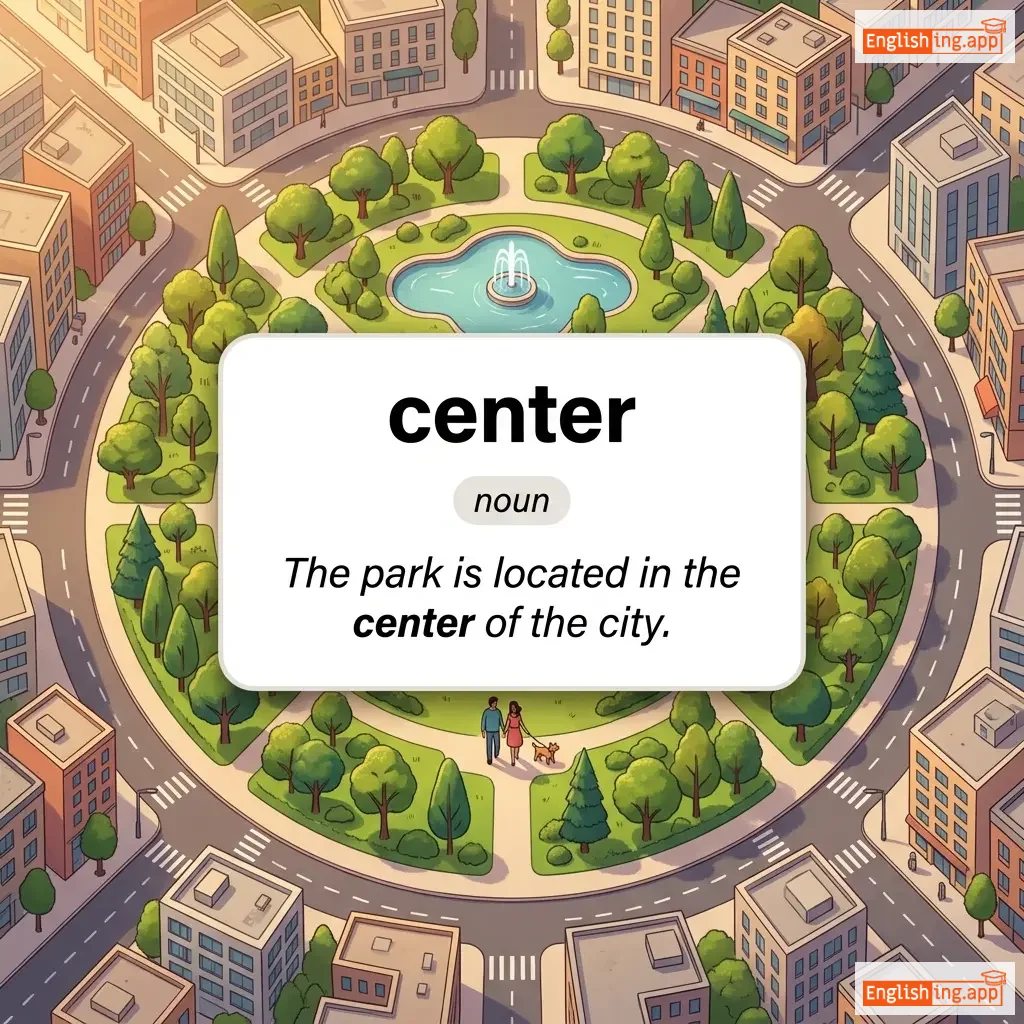
center definition card — visual illustration of the meaning
noun
/ˈsɛntər/
中心 (zhōngxīn)

The middle point or part of something; a place where a particular activity is concentrated.

"The park is located in the center of the city."
"公园位于城市的中心。" (Gōngyuán wèiyú chéngshì de zhōngxīn.)
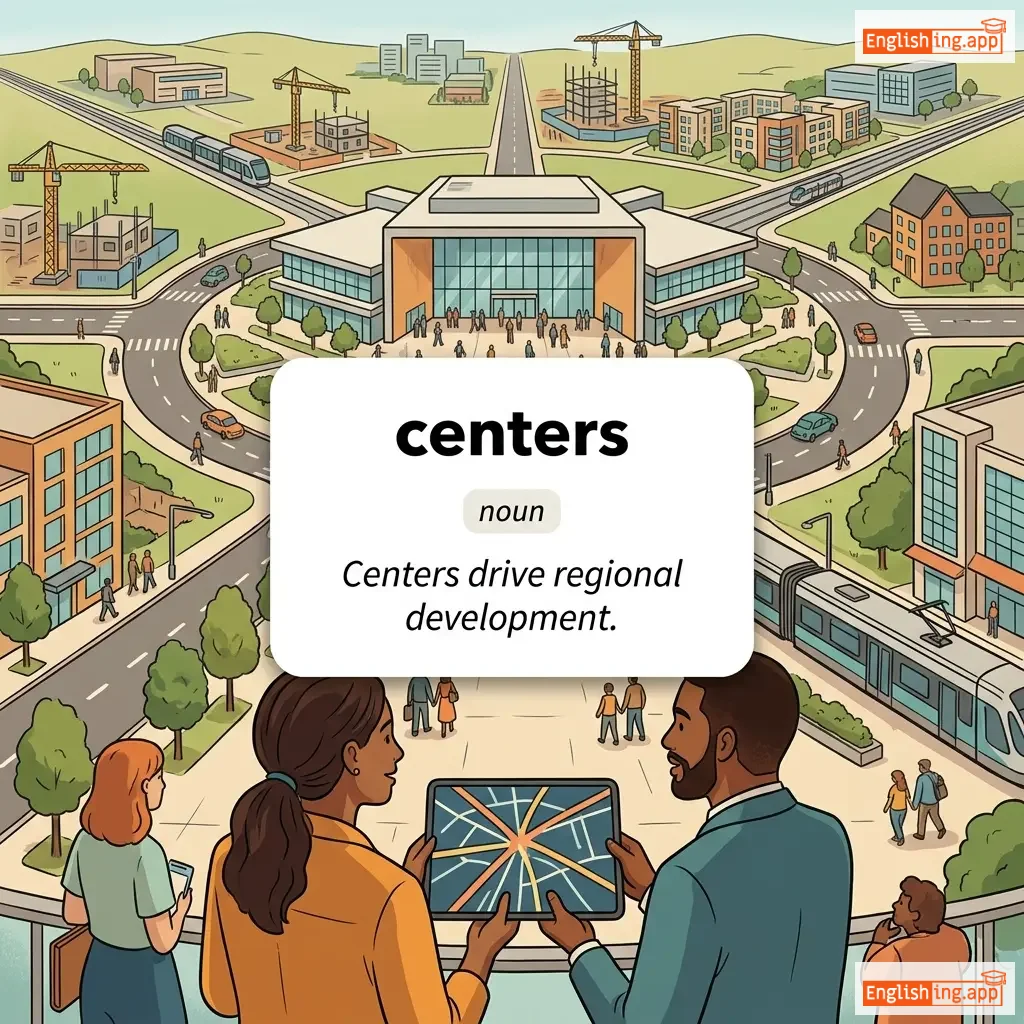
centers definition card — visual illustration of the meaning
noun
ˈsen.tərz
中心 (zhōngxīn)

The middle point of a circle or sphere, equidistant from every point on the circumference or surface; a place or group of buildings where a specified activity is concentrated.

"Centers drive regional development."

"中心推动区域发展。" (Zhōngxīn tuīdòng qūyù fāzhǎn.)
adjective
/ˈsɛntɪɡreɪd/
摄氏度 (摄氏) (shèshìdù (shèshì))

Relating to the Celsius temperature scale, where water freezes at 0° and boils at 100°.

"The weather forecast predicted 30 degrees centigrade."

"天气预报预测了30度摄氏度。" (Tiānqì yùbào yùcè le 30 dù shèshìdù.)
noun
/ˈsɛntɪˌliːtər/

A metric unit of capacity equal to one hundredth of a liter.

"The recipe calls for 20 centiliters of milk."

noun
/ˈsɛntɪˌmiːtər/
厘米 (limi)

A metric unit of length equal to one hundredth of a meter.

"The table is 120 centimeters long."

"桌子长120厘米。" (Zhuozi chang 120 limi.)
noun
/ˈsen.tɪ.piːd/
蜈蚣 (wugong)

a long thin creature with many legs that lives in dark places

"I found a centipede crawling under the rock."

"我在石头下发现了一只蜈蚣。" (Wǒ zài shítou xià fāxiànle yī zhī wúgōng.)
adjective
/ˈsɛntrəl/
中央的 (zhōngyāng de)

Situated in the middle; of the greatest importance.

"Water is central to human survival."

"水对人类生存至关重要。" (Shuǐ duì rénlèi shēngcún zhìguān zhòngyào.)
centralization definition card — visual illustration of the meaning
noun
ˌsɛn.trə.laɪˈzeɪ.ʃən
集中化 (ji zhong hua)

The concentration of control and decision-making power in a central authority.

"Excessive centralization can slow down decision-making."

"过度的集中化可能会减慢决策的速度。" (Guo du de ji zhong hua ke neng hui jian man jue ce de su du.)
centrifugal definition card — visual illustration of the meaning
adjective
/sɛnˈtrɪfjʊɡəl/
离心 (lixin)

Moving or tending to move away from a center.

"The centrifugal force pushes the clothes to the sides of the washing machine."

"离心力将衣物推向洗衣机的两侧。" (Líxīn lì jiāng yīwù tuīxiàng xǐyījī de liǎng cè.)
noun
/ˈsɛntrɪˌfjuːdʒ/
离心机 (lìxīn jī)

A machine that spins substances at high speed to separate different components.

"The lab technician used a centrifuge to separate the blood cells from the plasma."
"实验室技术员使用离心机将血细胞从血浆中分离出来。" (Shíyàn shì jìshù yuán shǐyòng líxīn jī jiāng xuè xìbāo cóng xuèjiāng zhōng fēnlí chūlái.)
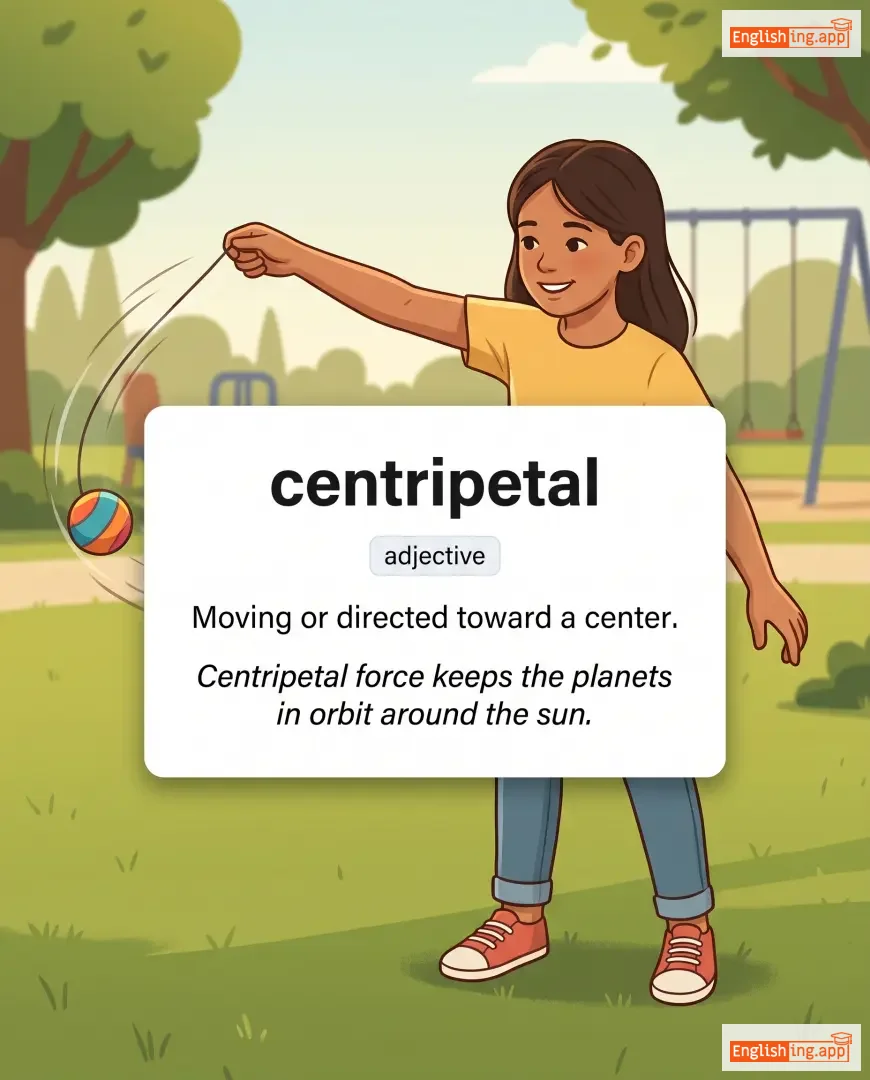
centripetal definition card — visual illustration of the meaning
adjective
/sɛnˈtrɪpɪtəl/
向心的 (xiangxin de)

Moving or directed toward a center.

"Centripetal force keeps the planets in orbit around the sun."

"向心力使行星保持在围绕太阳的轨道上。" (Xiangxin li shi xingsheng baochi zai weirao taiyang de guidao shang.)