词汇表

英语词汇词典 | 单词含义、定义和示例

noun
/ˈkæs.ər.oʊl bɑːks/
砂锅盒 (shā guō hé)

a covered dish used for cooking and serving food, especially baked dishes

"The casserole box kept the food warm during the dinner party."
"砂锅盒在晚宴上保持食物温暖。" (Shā guō hé zài wǎn yàn shàng bǎo chí shí wù wēn nuǎn.)
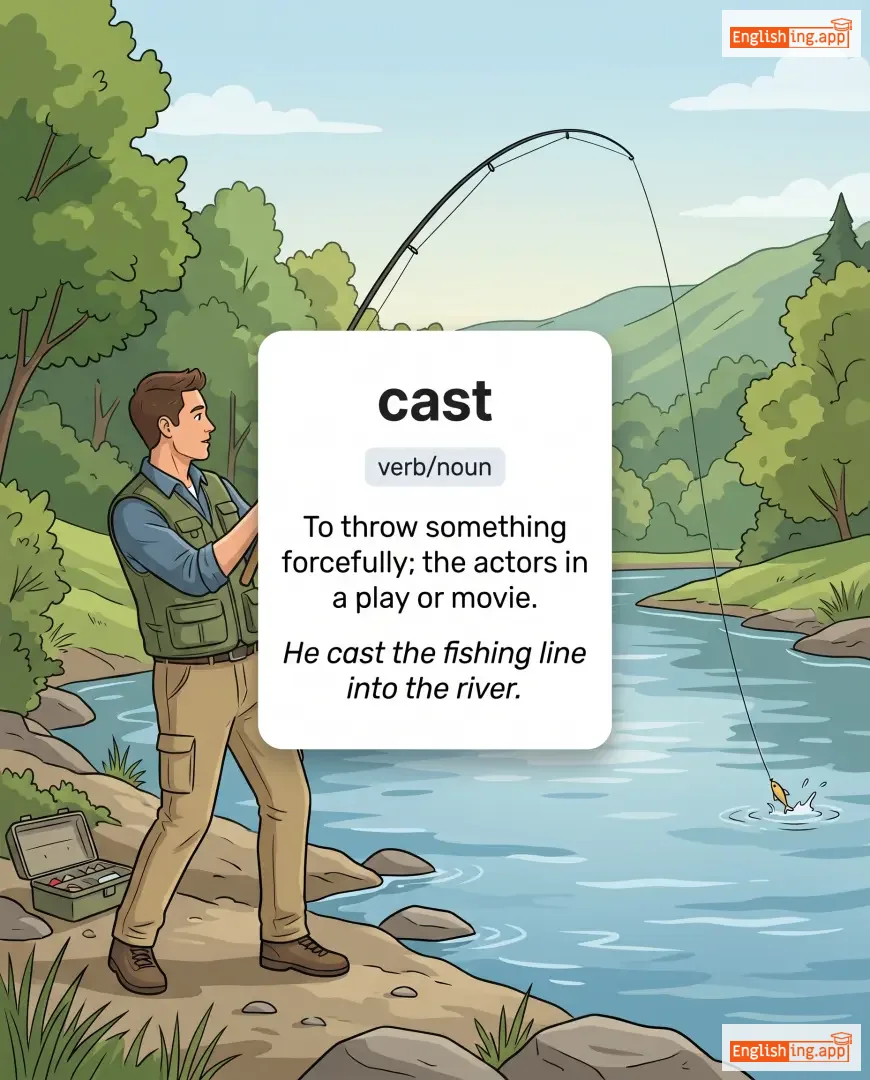
cast definition card — visual illustration of the meaning
verb/noun
/kæst/
投掷, 演员阵容 (tóuzhì, yǎnyuán zhènróng)

To throw something forcefully; the actors in a play or movie.

"He cast the fishing line into the river."
"他把钓鱼线投进了河里。" (Tā bǎ diàoyú xiàn tóu jìnle hé lǐ.)
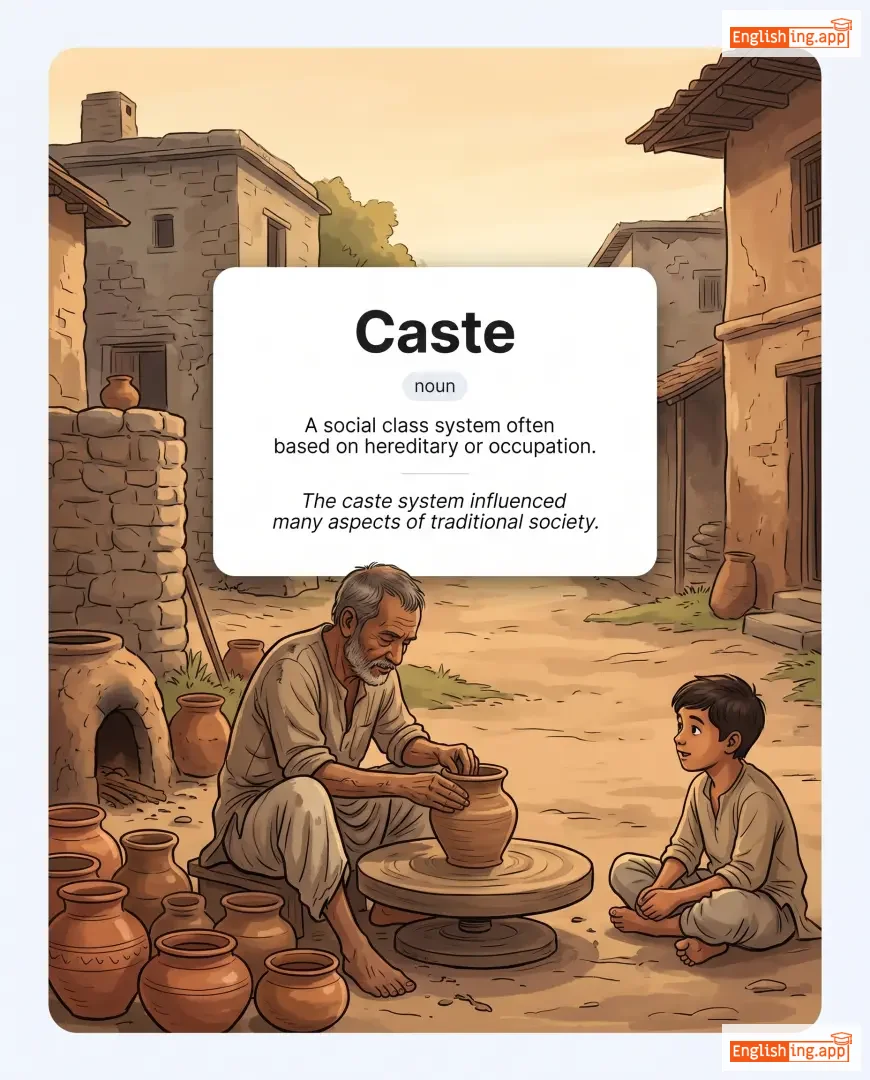
Caste definition card — visual illustration of the meaning
🧑‍🤝‍🧑

Caste (カースト)

noun
/kæst/
种姓 (zhǒngxìng)

A social class system often based on hereditary or occupation.

"The caste system influenced many aspects of traditional society."

"种姓制度影响了传统社会的许多方面。" (Zhǒngxìng zhìdù yǐngxiǎngle chuántǒng shèhuì de xǔduō fāngmiàn.)
verb
/ˈkæstɪˌɡeɪt/
严厉批评 (yánlì pīpíng)

To criticize someone severely or to punish harshly.

"The teacher castigated the students for their poor behavior."

"老师因学生不良行为而严厉批评他们。" (Lǎoshī yīn xuéshēng bùliáng xíngwéi ér yánlì pīpíng tāmen.)
castigation definition card — visual illustration of the meaning
noun
/ˌkæstɪˈɡeɪʃən/
严厉的批评或惩罚 (yanli de piping huo chengfa)

Severe criticism or punishment for wrongdoing.

"The manager’s harsh castigation shocked the entire team."

"经理的严厉批评震惊了整个团队。" (Jingli de yanli piping zhenjing le zhengge tuandui.)
noun
/ˈkæsəl/
城堡 (chengbao)

a large fortified building or complex of buildings, typically of the medieval period, used as a residence for nobility

"The king lived in a grand castle on the hilltop."

"国王住在山顶上的一座宏伟城堡里。" (Guówáng zhù zài shāndǐng shàng de yī zuò hóngwěi chéngbǎo lǐ.)
verb
/ˈkæstreɪt/
阉割 (yāngē)

To remove the testicles of a male animal or human.

"The farmer castrated the young bulls to make them easier to manage."

"农民阉割了年轻的公牛,以便更容易管理它们。" (Nóngmín yāngēle niánqīng de gōngniú, yǐbiàn gèng róngyì guǎnlǐ tāmen.)
adjective
/ˈkæʒuəl/
休闲的 (xiūxián de)

Relaxed and informal in style, manner, or appearance.

"He wore casual clothes to the informal gathering."

"他穿着休闲的衣服参加了非正式的聚会。" (Tā chuānzhuó xiūxián de yīfú cānjiāle fēizhèngshì de jùhuì.)
adverb
/ˈkæʒ.u.ə.li/
随便地; 放松且非正式的方式 (suíbiàn de; fàngsōng qiě fēi zhèngshì de fāngshì)

in a relaxed and informal way; without much thought or preparation

"He casually mentioned that he was leaving."

"他随便提到他要走了。" (Tā suíbiàn tí dào tā yào zǒu le.)
noun
/ˈkæʒuəlti/
在事故或战争中受伤或死亡的人 (zai shigu huo zhanzheng zhong shoushang huo siwang de ren)

A person injured or killed in an accident or war.

"The accident resulted in several casualties."

"这起事故造成了几名伤亡人员。" (Zhe qi shigu zaocheng le ji ming shangwang renyuan.)
noun
/ˈkæʒuɪstri/
诡辩术 (guǐbiàn shù)

The use of clever but false reasoning, especially in relation to moral questions.

"The lawyer’s argument was dismissed as mere casuistry."

"律师的辩论被作为单纯的诡辩术驳回了。" (Lǜshī de biànlùn bèi zuòwéi dānchún de guǐbiàn shù bóhuíle.)
noun
/kæt/
(mao)

a small domesticated carnivorous mammal often kept as a pet

"The cat is sleeping on the sofa."

"猫正在沙发上睡觉。" (Mao zhengzai shafa shang shuijiao.)
noun
/ˈkæt fɪʃ/
鲶鱼 (ka te fei shi)

a freshwater fish with whisker-like barbels around the mouth, commonly found in ponds and rivers

"Catfish is often fried and served with rice in Bengali cuisine."

"鲶鱼在孟加拉菜中常被油炸并配米饭。" (ka te fei shi yi si ao fen te fu lai de an de se fu de wei si lai si yin ban jia li ku xi en)
noun
/ˌkæt ə ˈnaɪn ˌteɪlz/
九尾鞭 (jiu wei bian)

A whip with nine knotted cords, historically used for punishment.

"The sailor feared the cat-o-nine-tails more than the storm at sea."
"那名水手比海上的风暴更害怕九尾鞭。" (Na ming shuǐshǒu bǐ hǎi shàng de fēngbào gèng hàipà jiǔ wěi biān.)
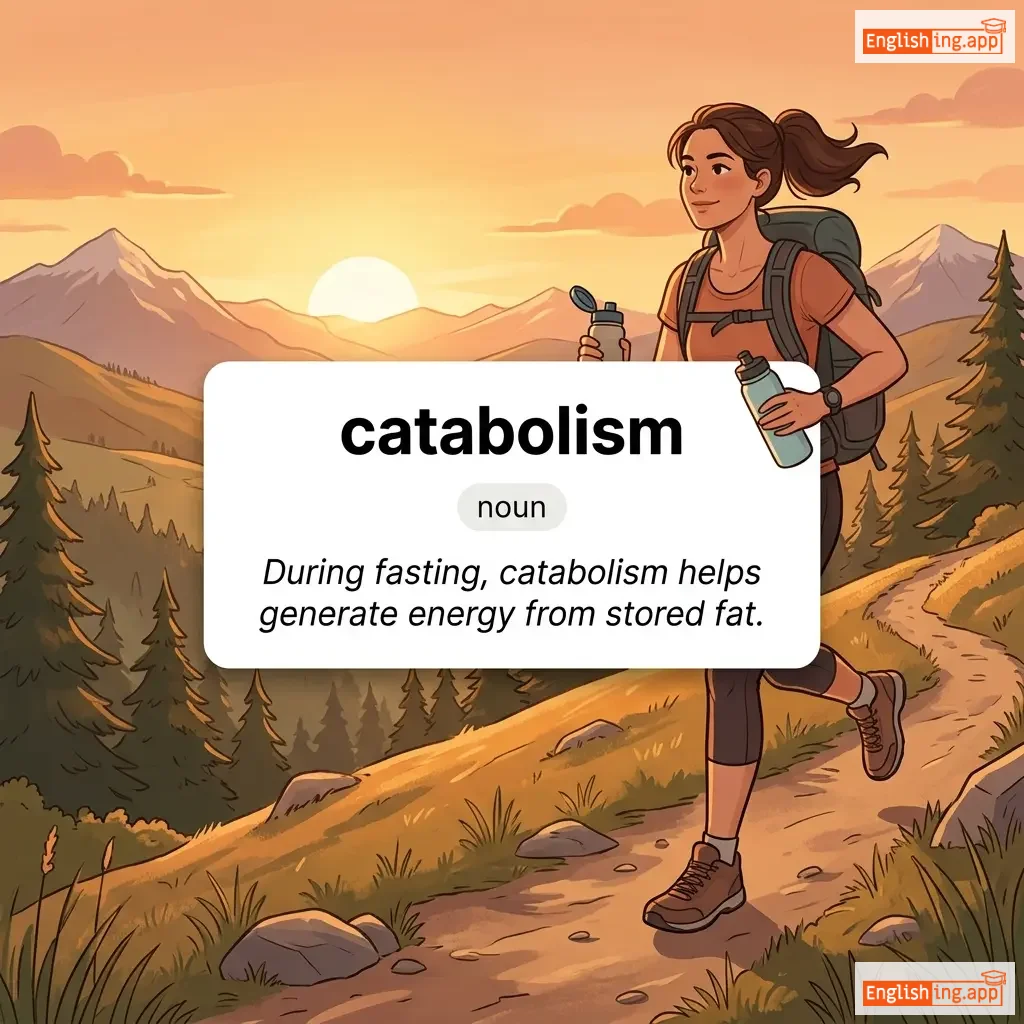
catabolism definition card — visual illustration of the meaning
noun
/kəˈtæb.ə.lɪ.zəm/
分解代谢 (fenjie daixie)

The breakdown of complex molecules in living organisms to form simpler ones together with the release of energy.

"During fasting, catabolism helps generate energy from stored fat."
"在禁食期间,分解代谢帮助从储存的脂肪中产生能量。" (Zai jinshi qijian, fenjie daixie bangzhu cong chucun de zhifang zhong chansheng nengliang.)
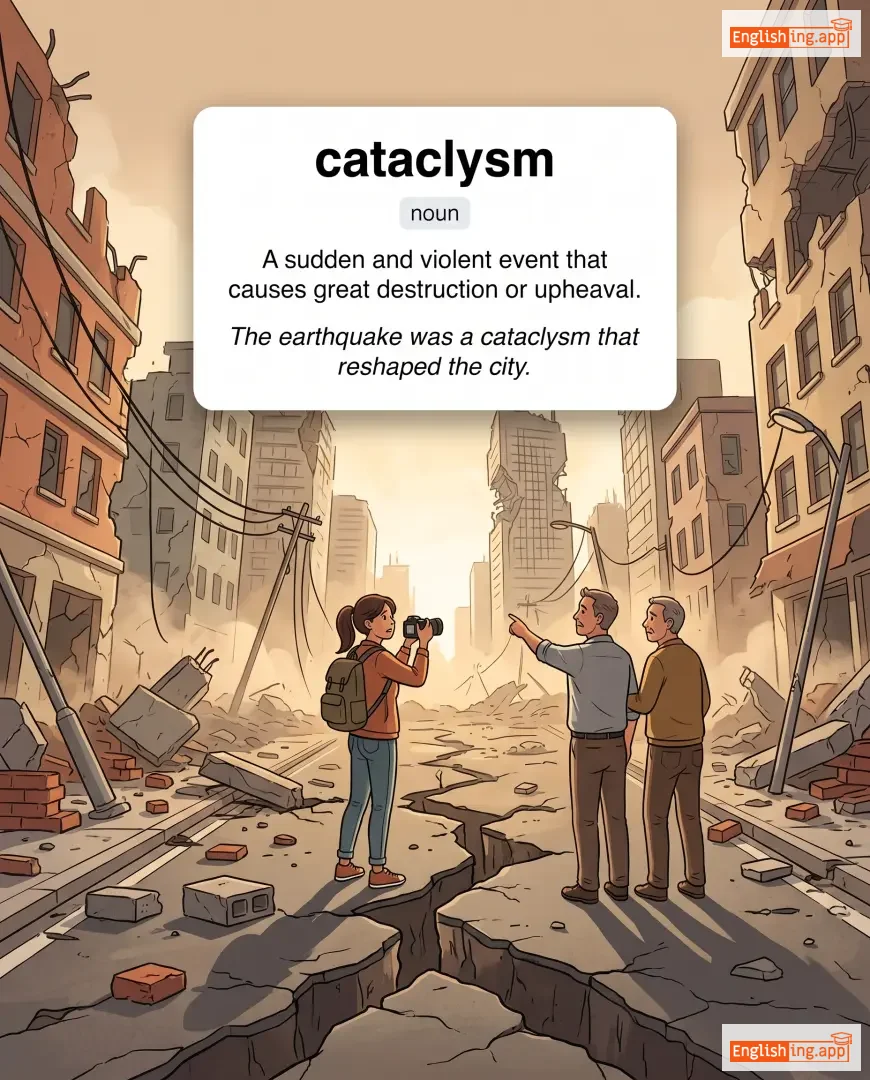
cataclysm definition card — visual illustration of the meaning
noun
/ˈkætəˌklɪzəm/
灾难 (zāinàn)

A sudden and violent event that causes great destruction or upheaval.

"The earthquake was a cataclysm that reshaped the city."

"地震是一个重新塑造城市的灾难。" (Dìzhèn shì yīgè chóngxīn sùzào chéngshì de zāinàn.)
adjective
/ˌkætəˈklɪzmɪk/
灾难性的 (zāinàn xìng de)

Relating to or denoting a violent natural event or upheaval.

"The war had cataclysmic effects on the nation's economy."

"战争对该国经济产生了灾难性的影响。" (Zhànzhēng duì gāi guó jīngjì chǎnshēngle zāinàn xìng de yǐngxiǎng.)
noun
/ˈkætəlɔːɡ/
目录 (mùlù)

a complete list of items, typically arranged systematically

"The library provides an online catalog of all available books."

"图书馆提供所有可用书籍的在线目录。" (Túshūguǎn tígōng suǒyǒu kěyòng shūjí de zàixiàn mùlù.)
noun; verb
/ˈkætəlɒɡ/
目录 (mulu)

a complete list of items, typically one in alphabetical or systematic order; to make a systematic list of items

"The library decided to catalogue all new books digitally."
"图书馆决定以数字方式编目所有新书。" (tushuguan jueding yi shuzi fangshi bianmu suoyou xinshu)
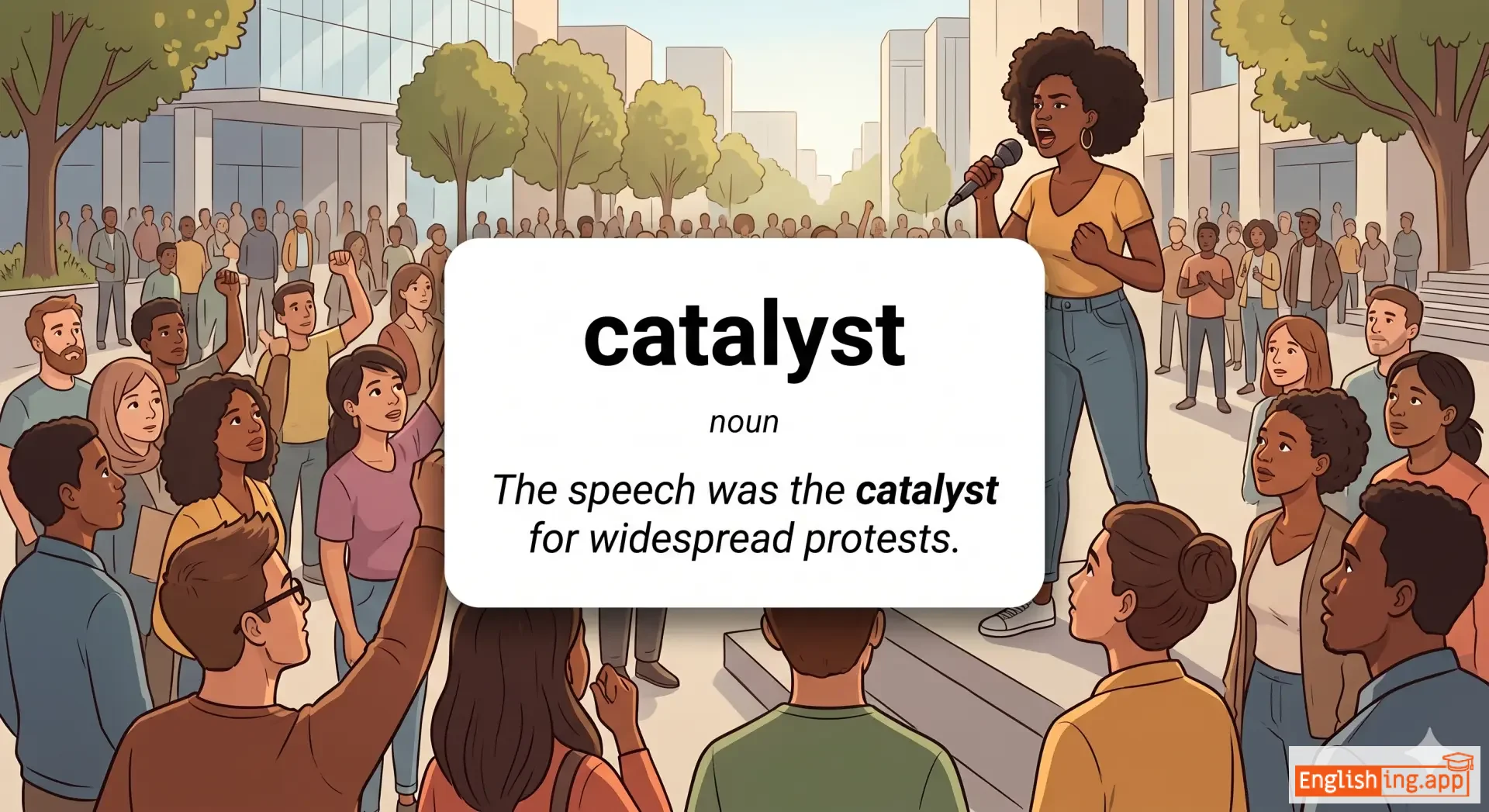
catalyst definition card — visual illustration of the meaning
noun
/ˈkætəlɪst/
催化剂 (cuī huà jì)

Something that speeds up or causes an event or change without being changed itself.

"The speech was the catalyst for widespread protests."

"这场演讲成为了广泛抗议的催化剂。" (Zhè chǎng yǎn jiǎng chéng wéi le guǎng fàn kàng yì de cuī huà jì.)
verb
/ˈkætəˌlaɪz/
催化 (cuihua)

To cause or accelerate a reaction or change.

"The new law catalyzed reforms across the sector."

"新法律催化了整个行业的改革。" (Xin falu cuihua le zhengge hangye de gaige.)
noun/verb
/ˈkætəpʌlt/
弹射器 (tánshè qì)

A device for launching objects at high speed; to hurl or launch something suddenly.

"The invention catapulted him to international fame."

"发明将他弹射到国际声誉。" (Fāmíng jiāng tā tánshè dào guójì shēngyù.)
noun
/ˈkætərækt/
白内障 / 瀑布 (báinèizhàng / pùbù)

A medical condition causing clouding of the eye's lens; also a large waterfall.

"The old man suffered from cataracts in both eyes."

"那位老年人双眼都患有白内障。" (Nà wèi lǎoniánrén shuāngyǎn dōu huàn yǒu báinèizhàng.)
noun
/kəˈtæstrəfi/
灾难 (zainan)

A sudden and widespread disaster or misfortune.

"The earthquake was a catastrophe for the entire region."
"地震对整个地区来说是一次灾难。" (Dìzhèn duì zhěnggè dìqū lái shuō shì yīcì zāinàn.)
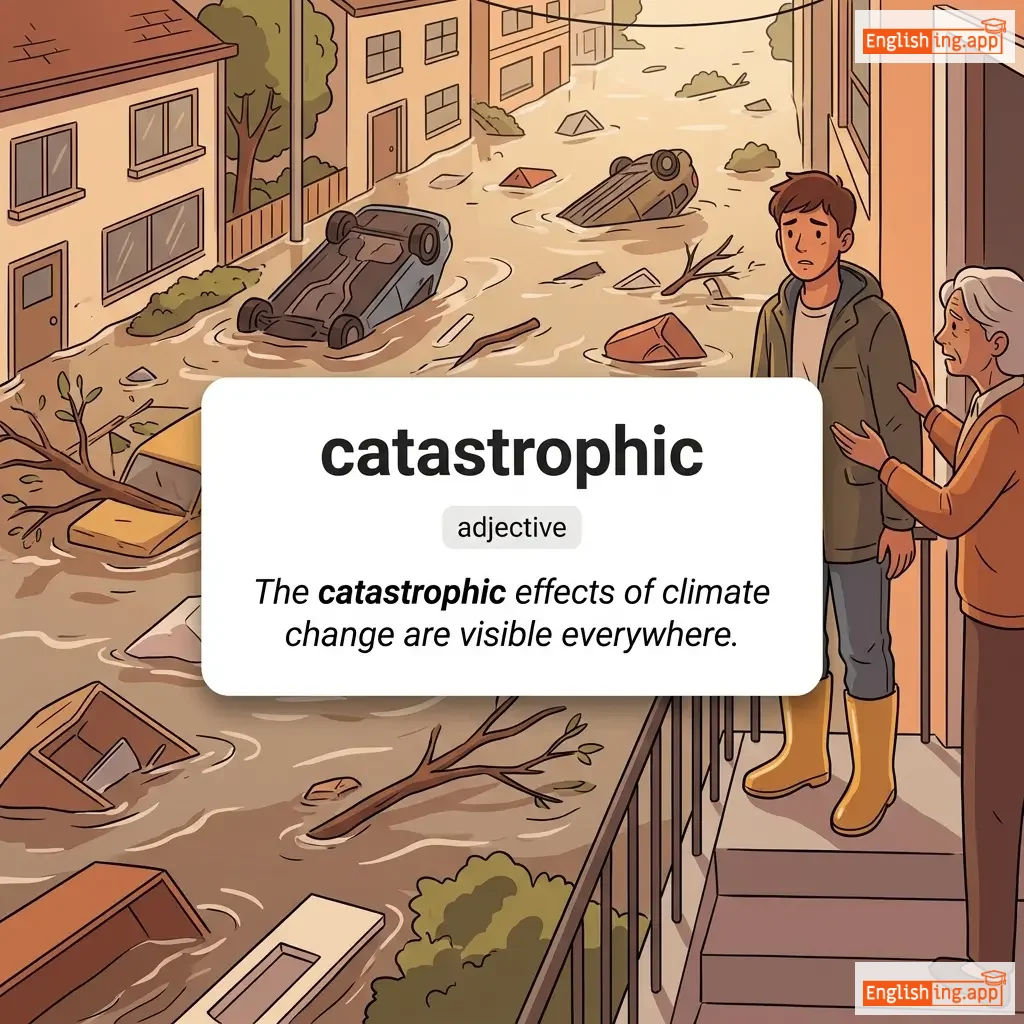
catastrophic definition card — visual illustration of the meaning
adjective
ˌkæt.əˈstrɒf.ɪk
灾难性的 (zāinànxìng de)

Involving or causing sudden great damage or suffering; extremely unfortunate or unsuccessful.

"The catastrophic effects of climate change are visible everywhere."
"气候变化的灾难性影响到处可见。" (Qìhòu biànhuà de zāinànxìng yǐngxiǎng dào chù kě jiàn.)
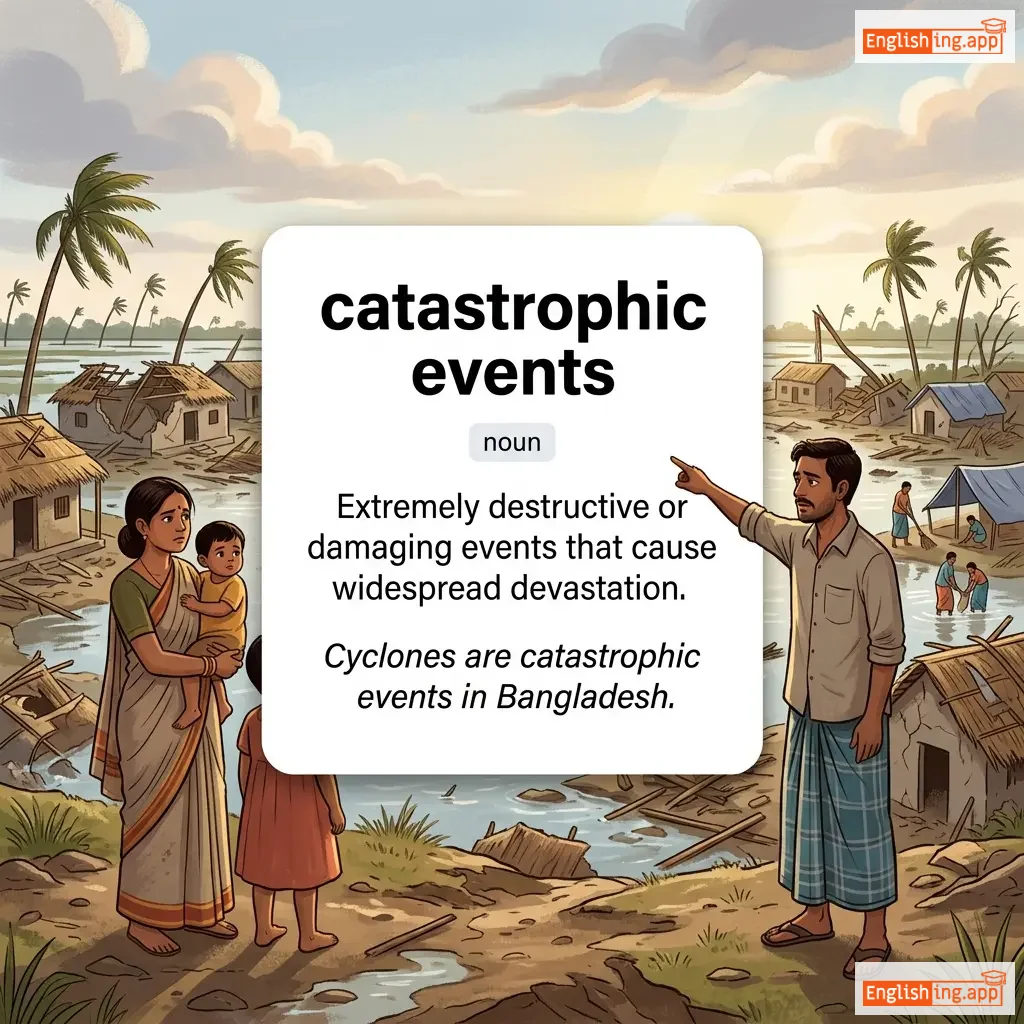
catastrophic events definition card — visual illustration of the meaning
noun
ˌkætəˈstrɒfɪk ɪˈvents
灾难性事件 (zainanxing shijian)

Extremely destructive or damaging events that cause widespread devastation.

"Cyclones are catastrophic events in Bangladesh."

"气旋是孟加拉国的灾难性事件。" (Qixuan shi Mengjiala guo de zainanxing shijian.)
noun/verb
/ˈkætˌkɔːl/
性骚扰或不满的喊声或口哨声 (xìng sāo rǎo huò bù mǎn de hǎn shēng huò kǒu shào shēng)

A loud whistle or shout of disapproval or sexual harassment directed at someone.

"The actress ignored the catcalls from the crowd."

"女演员无视人群中的猫叫声。" (Nǚ yǎnyuán wúshì rénqún zhōng de māo jiàoshēng.)
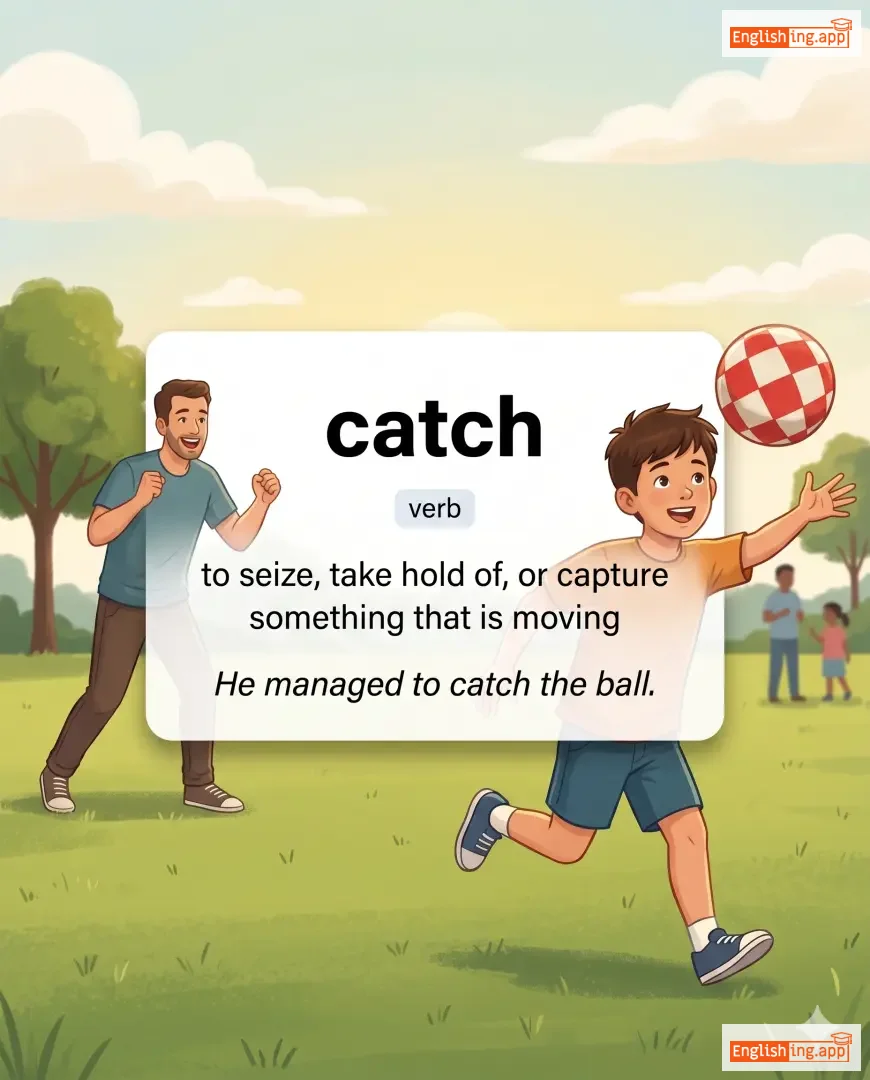
catch definition card — visual illustration of the meaning
🤲

catch

verb
/kætʃ/

to seize, take hold of, or capture something that is moving

"He managed to catch the ball."

noun
/ˈkætɪˌkɪzəm/
教义问答 (jiaoyi wenda)

A summary of religious principles often in the form of questions and answers; also a set of fixed questions or beliefs.

"The priest taught the children the catechism every Sunday."

"牧师每周日都教孩子们教义问答。" (Mùshī měi zhōurì dōu jiào háizimen jiàoyì wèndá.)
noun
/ˈkætɪtʃuː/
凯特楚 (kàitèchǔ)

an extract from a tropical Asian plant, used in tanning and dyeing

"Catechu extract is commonly used in traditional medicine."

"凯特楚提取物通常用于传统医学中。" (Kàitèchǔ tíqǔwù tōngcháng yòng yú chuántǒng yīxué zhōng.)
categorical definition card — visual illustration of the meaning
adjective
/ˌkætəˈɡɒrɪkəl/
绝对的 (juéduì de)

Absolute and without exception; expressed clearly and directly.

"She gave a categorical denial of the allegations."

"她对指控作出了绝对否认。" (Tā duì zhǐkòng zuòchūle juéduì fǒurèn.)
categorically refuted definition card — visual illustration of the meaning
phrase
ˌkæt.əˈɡɒr.ɪ.kəl.i rɪˈfjuː.tɪd
完全驳回 (wánquán bōhuí)

Completely and absolutely denied or disproved.

"The claims were categorically refuted by officials."
"这些主张完全被官方驳回。" (Zhèxiē zhèngquè xíngshì bèi zhèngcè rén yuán zhěnggè wéichí kè tí gè lǐ kè lì rì fù tè dé.)
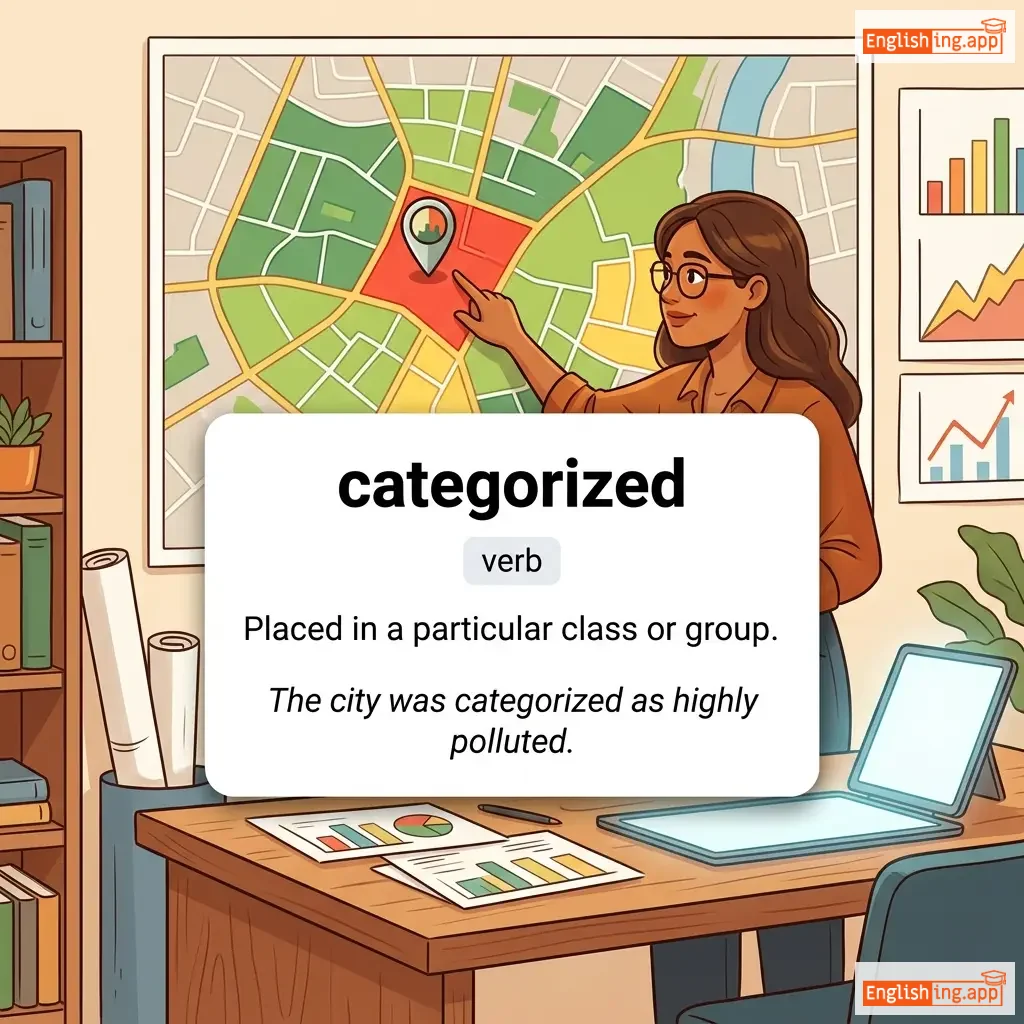
categorized definition card — visual illustration of the meaning
verb
/ˈkæt.ɪ.ɡə.raɪzd/
分类 (fenlei)

Placed in a particular class or group.

"The city was categorized as highly polluted."

"这个城市被归类为高度污染。" (Zhe ge chengshi bei guilei wei gaodu wuran.)
noun
/ˈkætəɡɔːri/
类别 (leibie)

a class or division of things regarded as having particular shared characteristics

"Books are arranged by category in the library."

"书籍在图书馆按类别排列。" (Shūjí zài túshūguǎn àn lèibié páiliè.)
🍽️

cater

verb
/ˈkeɪtər/

To provide food, drinks, or services, usually for an event or group.

"The company catered the wedding reception."

noun
/ˈkæt.ər.pɪl.ər/
毛毛虫 (máo máo chōng)

the larva of a butterfly or moth that feeds on plants

"The caterpillar ate all the leaves on the plant."

"毛毛虫吃掉了植物上的所有叶子。" (Máo máo chōng chī diào le zhíwù shàng de suǒyǒu yèzi.)
noun
/kəˈθɑːrsɪs/
情感宣泄 (qínggǎn xuānxiè)

The process of releasing strong emotions, providing relief.

"Writing in her diary was a form of catharsis for her."

"在她的日记中写作对她来说是一种情感宣泄的方式。" (Zài tā de rìjì zhōng xiězuò duì tā lái shuō shì yī zhǒng qínggǎn xuānxiè de fāngshì.)
cathartic definition card — visual illustration of the meaning
adjective
/kəˈθɑːrtɪk/
宣泄的 (xuānxiè de)

Providing psychological relief through open expression of emotions; also refers to a medicine that causes cleansing of the bowels.

"Crying can be a cathartic experience."

"哭泣可以是一种宣泄的体验。" (Kūqì kěyǐ shì yī zhǒng xuānxiè de tǐyàn.)
noun
/ˈkæθoʊd/
负极 (fu ji)

The negative electrode in a device such as a battery or tube, where electrons enter.

"The cathode emits electrons in the tube."

"阴极在管中发射电子。" (Yinji zai guan zhong fasha dianzi.)
adjective
/ˈkæθəlɪk/
天主教的 (tiānzhǔjiào de)

Including a wide variety; all-embracing; relating to the Roman Catholic Church.

"She has catholic tastes in music, enjoying everything from jazz to opera."

"她有天主教的音乐口味,从爵士乐到歌剧都喜欢。" (Tā yǒu tiānzhǔjiào de yīnyuè kǒuwèi, cóng juéshì yuè dào gējù dōu xǐhuān.)
noun
/kəˈθɒlɪsɪzəm/
天主教 (tiān zhǔ jiào)

The faith, practice, and church order of the Roman Catholic Church.

"Catholicism has a long history and rich traditions."

"天主教有着悠久的历史和丰富的传统。" (Tiān zhǔ jiào yǒuzhe yōujiǔ de lìshǐ hé fēngfù de chuántǒng.)
noun
/ˌkæθəˈlɪsɪti/
普遍性, 开放思想 (pǔbiàn xìng, kāifàng sīxiǎng)

Universality; broad-mindedness; acceptance of a wide variety of things.

"Her catholicity of interests makes her a fascinating person."
"她对兴趣的普遍性使她成为一个迷人的人。" (Tā duì xìngqù de pǔbiàn xìng shǐ tā chéngwéi yīgè mírén de rén.)
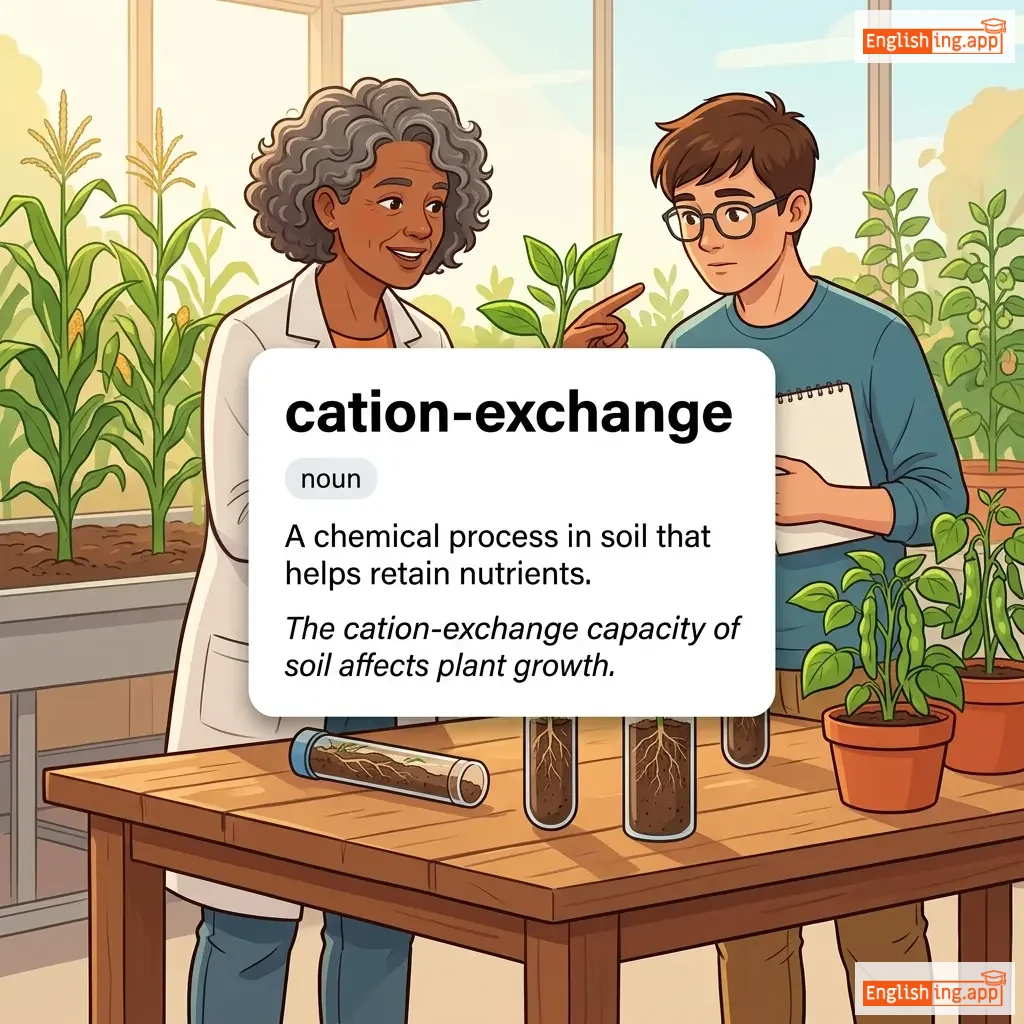
cation-exchange definition card — visual illustration of the meaning
noun
/ˈkæt.aɪ.ɒn ɪksˌtʃeɪndʒ/
阳离子交换 (cationexchange)

A chemical process in soil that helps retain nutrients.

"The cation-exchange capacity of soil affects plant growth."

"土壤的阳离子交换容量会影响植物的生长。" (tu rang de yang li zi jiao huan rong liang hui ying xiang zhi wu de sheng zhang)
noun
/ˈkæt.kɪn/
猫耳花 (māo ěr huā)

a drooping, often tasseled cluster of small flowers found on willow and birch trees

"The willow tree's catkins swayed gently in the spring breeze."

"柳树的猫耳花在春风中轻轻摇晃。" (Liǔ shù de māo ěr huā zài chūn fēng zhōng qīng qīng yáo huǎng.)
noun
/ˈkætl/
幸福 (xìngfú)

large domesticated animals such as cows and bulls that are kept on a farm for their milk, meat, or hides

"The farmer owns a herd of cattle that graze near the river."

"她在收到奖项时无法掩饰她的幸福。" (Tā zài shōu dào jiǎngxiàng shí wúfǎ yǎnshì tā de xìngfú.)
caucus definition card — visual illustration of the meaning
noun
/ˈkɔːkəs/
政治会议 (zhèngzhì huìyì)

A meeting of members of a political party to select candidates or decide policy.

"The party held a caucus to nominate their candidate for president."

"政党举行了一个会议,提名他们的总统候选人。" (Zhèngdǎng jǔxíngle yīgè huìyì, tímíng tāmen de zǒngtǒng hòuxuǎn rén.)
noun
/ˈkɔːldrən/
大锅 (dà guō)

A large metal pot used for cooking over an open fire; also a situation of intense activity or strong emotions.

"The witch stirred the cauldron filled with strange ingredients."

"女巫搅拌着充满奇异配料的大锅。" (Nǚwū jiǎobànzhe chōngmǎn qíyì pèiliào de dà guō.)
noun
/ˈkɔːlɪˌflaʊər/
花椰菜 (huāyēcài)

white vegetable with a compact head of undeveloped flower buds

"Roasted cauliflower makes a delicious and healthy side dish."

"烤花椰菜做成美味又健康的配菜。" (Kǎo huāyēcài zuòchéng měiwèi yòu jiànkāng de pèicài.)
verb
/kɔːk/
密封 (mifeng)

to seal a crack or gap with a waterproof filler

"He caulked the window frames to stop the draft."

"他用密封胶封住了窗框,以阻止空气流通。" (Ta yong mifeng jiao feng zhu le chuangkuang, yi zhi zhi kongqi liutong.)
causal definition card — visual illustration of the meaning
adjective
/ˈkɔː.zəl/
因果的 (yīnguǒ de)

relating to or acting as a cause

"There is a causal link between smoking and cancer."

"吸烟和癌症之间存在因果关系。" (Xīyān hé áizhèng zhījiān cúnzài yīnguǒ guānxì.)