词汇表

英语词汇词典 | 单词含义、定义和示例

verb
/kəˈriːn/
失控地移动 (shīkòng de yídòng)

To move swiftly and in an uncontrolled way, especially in a specific direction.

"The car careened down the slippery road."

"汽车在滑溜的道路上失控地冲了下去。" (Qìchē zài huá liū de dàolù shàng shīkòng de chōngle xiàqù.)
noun, verb
/kəˈrɪər/
职业 / 事业 (zhiye / shiye)

As a noun: a person’s course of professional life; as a verb: to move swiftly and in an uncontrolled way.

"She built a successful career in medicine."

"她在医学领域建立了一个成功的职业生涯。" (Ta zai yixue lingyu jianli le yige chenggong de zhiye shengya.)
adjective
/ˈkeəfriː/
无忧无虑 (wuyouwuli)

Free from worries or responsibilities; relaxed and happy.

"She enjoyed a carefree afternoon at the beach."

"她在海滩上度过了一个无忧无虑的下午。" (Ta zai haitan shang duoguo le yige wuyouwuli de xiawu.)
adjective
/ˈkɛr.fəl/
小心 (xiaoxin)

Exercising caution or showing concern to avoid mistakes or harm.

"He is always careful when crossing the road."

"他过马路时总是小心。" (Ta guo malu shi zongshi xiaoxin.)
adverb
/ˈkɛərfəli/
小心地 (xiǎo xīn de)

In a way that is done with attention to detail and caution to avoid mistakes or harm.

"He carefully placed the glass on the table."

"他小心地把玻璃杯放在桌子上。" (Tā xiǎo xīn de bǎ bōlí bēi fàng zài zhuōzi shàng.)
🤷‍♂️😰

Careless (kè'ā ěr sī)

adjective
/ˈkeər.ləs/
粗心的; 疏忽的; 不注意的; 漫不经心的; (ke'ā ěr sī)

not giving sufficient attention or thought to avoiding harm or errors; negligent; inattentive

"His careless driving caused a serious accident on the highway."

"他粗心的驾驶导致高速公路上发生了一起严重的事故。" (Tā cūxīn de jiàshǐ dǎozhì gāosù gōnglù shàng fāshēng le yī qǐ yánzhòng de shìgù.)
adverb
/ˈkeərləsli/
粗心地 (cuxin de)

without care or attention; in a negligent or reckless manner

"He carelessly left the door unlocked."

"他粗心地把门忘了上锁。" (ta cuxin de ba men wang le shang suo)
noun
/ˈker.ləs.nəs/
疏忽; 粗心 (shūhū, cūxīn)

failure to give sufficient attention to avoiding harm or errors

"His carelessness with money led to serious financial problems."

"他在金钱上的疏忽导致了严重的财务问题。" (Tā zài jīnqián shàng de shūhū dǎozhìle yánzhòng de cáiwù wèntí.)
noun
/kəˈres/
抚摸 (fumo)

a gentle or loving touch

"The mother's gentle caress calmed the crying baby."

"母亲温柔的抚摸使哭泣的婴儿平静下来。" (Mǔqīn wēnróu de fǔmō shǐ kūqì de yīngér píngjìng xiàlái.)
noun
/ˈkærɪt/
插入符号 (^) (chārù fúhào)

A proofreading symbol (^) used to indicate where something should be inserted.

"The editor placed a caret to show where the missing word should go."

"编辑器放置了一个插入符号来显示缺失的单词应该插入的位置。" (Biānjí qì fàngzhìle yīgè chārù fúhào lái xiǎnshì quēshī de dāncí yīnggāi chārù de wèizhì.)
adjective
/ˈkeəwɔːn/
疲惫且忧虑 (píbèi qiě yōulǜ)

Showing signs of worry, stress, or exhaustion.

"His careworn face revealed years of struggle."

"他那张疲惫的脸显示了多年的挣扎。" (Tā nà zhāng píbèi de liǎn xiǎnshìle duō nián de zhēngzhá.)
noun
/ˈkɑːrɡoʊ/
货物 (huòwù)

goods carried by a ship, plane, or other transport

"The ship was loaded with valuable cargo."

"船上装载了珍贵的货物。" (chuán shàng zhuāngzài le zhēnguì de huòwù.)
noun
/ˈkɑr.ɡoʊ ʃɪp/
货船 (huò chuán)

a ship or vessel that carries goods and materials from one port to another

"The cargo ship transported containers filled with electronics across the ocean."

"货船将满载电子产品的集装箱穿越海洋。" (huò chuán jiāng mǎn zài diànzǐ chǎnpǐn de jí zhuāng xiāng chuānyuè hǎiyáng)
noun
/ˈkærɪkətjʊə/
讽刺画 (fengcihua)

A picture or description that exaggerates certain features for comic or satirical effect.

"The magazine published a caricature of the politician."

"杂志发布了政治家的讽刺画。" (Zazhi fabu le zhengzhijia de fengcihua.)
noun
/ˈkærɪlɒn/
风琴钟 (fēngqín zhōng)

A set of bells played using a keyboard, usually in a tower.

"The carillon bells rang across the town square."

"风琴钟的钟声回荡在城市广场上。" (Fēngqín zhōng de zhōngshēng huídàng zài chéngshì guǎngchǎng shàng.)
noun
/ˈkɑːrmaɪn/
胭脂红 (yānzhī hóng)

A vivid crimson or purplish-red color, often used as a dye or pigment.

"The artist used carmine to paint the vibrant sunset sky."

"艺术家使用胭脂红来画出鲜艳的日落天空。" (Yìshùjiā shǐyòng yānzhī hóng lái huàchū xiānyàn de rìluò tiānkōng.)
noun
/ˈkɑːrnɪdʒ/

The killing of a large number of people; great destruction and bloodshed.

"The battlefield was a scene of unimaginable carnage."

carnal definition card — visual illustration of the meaning
adjective
/ˈkɑːrnəl/
肉体的 (ròutǐ de)

Relating to physical, especially sexual, desires and appetites.

"The book explores the conflict between spiritual and carnal desires."

"这本书探索了精神和肉体欲望之间的冲突。" (Zhè běn shū tànsuǒle jīngshén hé ròutǐ yùwàng zhījiān de chōngtú.)
adjective
/kɑːrˈnɪvərəs/
食肉的 (shiroude)

Feeding on the flesh of other animals; meat-eating.

"Lions are carnivorous animals that hunt in groups."

"狮子是食肉的动物,群体猎捕。" (Shizi shi shiroude dongwu, qunti liebu.)
noun
/ˈkærəm/
孜然 (ziran)

aromatic seeds of a plant used as a spice, especially in Indian cooking

"Carom seeds are often used in traditional Indian bread recipes."

"孜然种子经常用于传统的印度面包食谱中。" (Ziran zhongzi jingchang yongyu chuantong de Yindu mianbao shipu zhong.)
noun
/kəˈraʊzl/
喧闹的聚会 (xuan nao de ju hui)

A noisy or lively drinking party or festivity.

"They were exhausted after a night of wild carousal."

"他们在一晚狂欢的喧闹聚会后感到筋疲力尽。" (Tamen zai yi wan kuang huan de xuan nao ju hui hou gan dao jin pi li jin.)
verb
/kəˈraʊz/
狂欢 (kuánghuān)

to drink and enjoy oneself noisily, often with others

"They stayed up all night to carouse after the victory."

"他们在胜利后整夜狂欢。" (Tāmen zài shènglì hòu zhěngyè kuánghuān.)
verb
/kɑːrp/
抱怨 (bàoyuàn)

to complain or find fault continually, often about trivial matters

"She tends to carp about the smallest inconveniences."

"她倾向于为最小的不便抱怨。" (Tā qīngxiàng yú wèi zuì xiǎo de bùbiàn bàoyuàn.)
noun
/ˈkɑːr.pən.tər/
木匠 (carpenter)

a person who makes and repairs wooden objects and structures

"The carpenter built a beautiful wooden cabinet for the kitchen."

"这位木匠为厨房做了一个漂亮的木质橱柜。" (zhe wei mujiang wei chufang zuo le yi ge piaoliang de muzhi chugui)
noun
/ˈkɑːrpɪt/
地毯 (ditan)

a thick woven floor covering

"They bought a red carpet for the living room."

"他们为客厅买了一个红地毯。" (Tāmen wèi kètīng mǎi le yīgè hóng dìtǎn.)
carping definition card — visual illustration of the meaning
adjective
/ˈkɑːrpɪŋ/
抱怨 (bàoyuàn)

continually complaining or finding fault in a petty way

"His carping attitude makes teamwork difficult."

"他的抱怨态度使团队合作变得困难。" (tā de bàoyuàn tàidù shǐ tuánduì hézuò biàn dé kùnnán.)
noun
/ˈkærɪdʒ/
马车 (mǎchē)

a vehicle, typically a four-wheeled one, used for transporting goods or people, especially in the past

"The royal family traveled in a beautiful carriage during parades."

"王室家族在游行期间乘坐了一辆美丽的马车。" (Wángshì jiāzú zài yóuxíng qījiān chéngzuòle yī liàng měilì de mǎchē.)
noun
/ˈkæriər/
承运人 (chéngyùn rén)

A person or thing that carries, transports, or conveys something; also an organization that provides transport services.

"The airline is the largest carrier in the country."

"航空公司是该国最大的承运人。" (Hángkōng gōngsī shì gāiguó zuìdà de chéngyùn rén.)
noun
/ˈkæriən/
腐肉 (fǔròu)

the decaying flesh of dead animals

"Vultures feed on carrion left in the fields."

"秃鹫在田野中觅食腐肉。" (Tū jiù zài tiányě zhōng mìshí fǔròu.)
noun
/ˈkærət/
胡萝卜 (huluo bo)

a long, tapering orange root eaten as a vegetable

"She added chopped carrots to the soup."

"她把切好的胡萝卜加入了汤里。" (Ta ba qie hao de huluo bo jia ru le tang li.)
verb
/ˈkæri/
携带 (xiédài)

To support and move something or someone from one place to another.

"She carried the bag across the street."

"她把包从街对面带了过来。" (Tā bǎ bāo cóng jiē duìmiàn dài le guòlái.)
carry out definition card — visual illustration of the meaning
verb
/ˈkæri aʊt/
执行 (zhíxíng)

to perform or complete a task; to execute a plan

"The team carries out the project successfully."

"团队成功执行了项目。" (Tuánduì chénggōng zhíxíng le xiàngmù.)
noun
/kɑːrt/
手推车 (shǒu tuī chē)

a vehicle with wheels that is pulled by a person or animal for carrying goods

"The farmer loaded hay onto the cart."

"农夫把干草装进了手推车。" (Nóngfū bǎ gāncǎo zhuāng jìn le shǒu tuī chē.)
noun
/ˌkɑːrt ˈblɑːnʃ/

complete freedom to act as one wishes

"The manager gave her team carte blanche to design the project."

noun
/ˈkɑːrtɪlɪdʒ/
软骨 (ruǎngǔ)

A firm, flexible connective tissue found in various parts of the body such as joints, ear, and nose.

"The doctor explained that the injury damaged the cartilage in his knee."

"医生解释说,伤害损坏了他膝盖的软骨。" (Yīshēng jiěshì shuō, shānghài sǔnhuài le tā xīgài de ruǎngǔ.)
noun
/kɑːrˈtɒɡrəfər/
制图师 (zhìtú shī)

A person who makes maps.

"The cartographer carefully drew the map of the new territory."
"制图师小心地绘制了新区域的地图。" (Zhìtú shī xiǎoxīn de huìzhìle xīn qūyù de dìtú.)
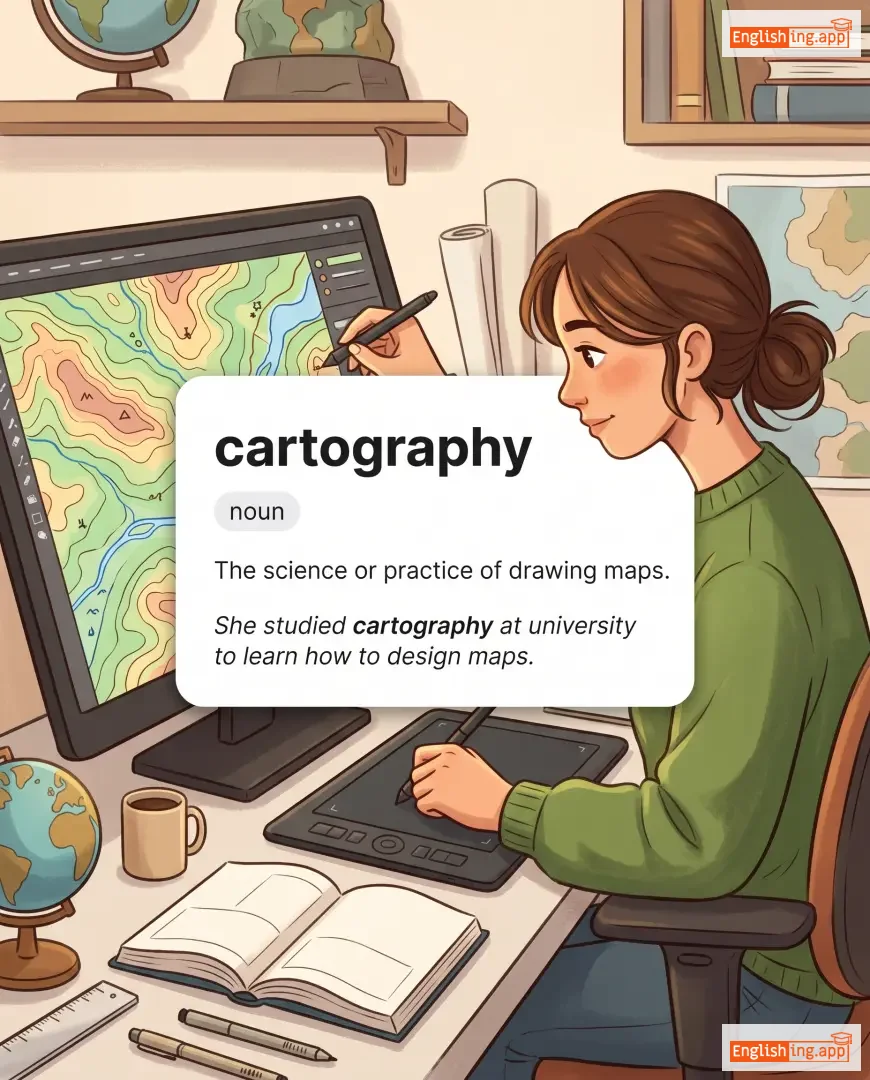
cartography definition card — visual illustration of the meaning
noun
/kɑːrˈtɒɡrəfi/
制图学 (zhìtúxué)

The science or practice of drawing maps.

"She studied cartography at university to learn how to design maps."

"她在大学学习制图学,以便学会设计地图。" (Tā zài dàxué xuéxí zhìtúxué, yǐbiàn xuéhuì shèjì dìtú.)
noun
/kɑːrˈtuːn/
卡通片 (katongpian)

a humorous or animated drawing, especially one in newspapers or television

"Children love watching cartoons on TV."

"孩子们喜欢看电视上的卡通片。" (Háizimen xǐhuān kàn diànshì shàng de kǎtōngpiàn.)
noun
/ˈkɑːrtrɪdʒ/
墨盒 (mòhé)

A container holding a substance or device, such as ink for printers or bullets for firearms.

"The printer stopped working because the ink cartridge was empty."

"打印机停止工作,因为墨盒已空。" (Dǎyìnjī tíngzhǐ gōngzuò, yīnwèi mòhé yǐ kōng.)
🔪

carve

verb
/kɑːrv/

To cut or shape something, especially wood or stone, into a desired form.

"The artist carved a beautiful statue out of marble."

noun
/ˌkɛəriˈætɪd/
雕刻的女性形象柱子 (diaoke de nüxing xingxiang zhuzi)

A stone carving of a draped female figure, used as a supporting column in architecture.

"The ancient temple featured a caryatid holding up the roof."

"古老的寺庙里有一个凯瑞亚蒂德支撑着屋顶。" (Gulao de si miao li you yi ge kai rui ya ti de zhi cheng zhe wu ding.)
noun/verb
/kæˈskeɪd/
瀑布, 流水 (pù bù, liú shuǐ)

A small waterfall or a process that occurs in stages, one after another.

"Water cascaded down the rocky slope."

"水沿着岩石坡像瀑布一样滑下来。" (Shuǐ yánzhe yánshí pō xiàng pùbù yīyàng huá xiàlái.)
noun
/keɪs/
案例 / 情况 (ànlì / qíngkuàng)

A particular situation, occurrence, or an instance of something; also a container or covering for something.

"In this case, we should wait for further instructions."

"在这种情况下,我们应该等待进一步的指示。" (Zài zhè zhǒng qíngkuàng xià, wǒmen yīnggāi děngdài jìnyībù de zhǐshì.)
noun
/ˈkeɪsiːn/
酪蛋白 (làodànbái)

the main protein found in milk and cheese, used in food production and supplements

"Casein protein powder is popular among athletes for muscle recovery."

"酪蛋白粉在运动员中因其对肌肉恢复的帮助而受到欢迎。" (Làodànbái fěn zài yùndòngyuán zhōng yīn qí duì jīròu huīfù de bāngzhù ér shòudào huānyíng.)
noun
/kæʃ/
现金 (xianjin)

money in the form of bills or coins, not checks or credit

"She paid the bill in cash."

"她用现金支付了账单。" (Ta yong xianjin zhifu le zhangdan.)
noun
/ˈkæʃ.uː nʌt/
腰果 (yaoguo)

a kidney-shaped nut with a creamy texture and mild flavor

"Cashew nuts are often used in cooking and as a healthy snack."

"腰果常用于烹饪和作为健康的零食。" (Yāoguǒ cháng yòng yú pēngrèn hé zuòwéi jiànkāng de língshí.)
noun
/ˈkæʃuː nʌts/
腰果 (yaoguo)

kidney-shaped nuts from the cashew tree, commonly eaten as snacks or used in cooking

"Cashew nuts are often used in Indian sweets and curries."

"腰果常用于印度的甜点和咖喱中。" (Yaoguo chang yong yu Yindu de tiandian he gaili zhong.)
noun
/kæˈʃɪər/
收银员 (shōuyínyuán)

a person who handles payments and transactions in a store or bank

"The cashier scanned all the items and calculated the total bill."

"收银员扫描了所有商品并计算了总账单。" (shōuyínyuán sǎomiáo le suǒyǒu shāngpǐn bìng jìsuàn le zǒng zhàngdān.)
noun
/ˈkeɪ.sɪŋ/
外壳; 外罩 (waike, waizhao)

a cover or shell that protects or encloses something

"The mechanic removed the engine casing to examine the internal parts."

"机械师拆下了发动机外壳以检查内部零件。" (Jixiashi chai xia le fadongji waike yi jiancha neibu lingjian.)
noun
/kəˈsiːnoʊ/
赌场 (duchang)

a place where people gamble and play games of chance

"They spent the evening playing cards at the casino."

"他们在赌场度过了晚上,玩扑克牌。" (Tamen zai duchang duguo le wanshang, wan pūkèpái.)