词汇表

英语词汇词典 | 单词含义、定义和示例

noun
/kriˈeɪʃən/
创造 (chuangzuo)

The act of bringing something into existence; something that has been made or produced.

"The artist’s latest creation was admired by everyone at the gallery."

"这位艺术家的最新创造在画廊里受到所有人的赞赏。" (Zhe wei yishu jia de zui xin chuangzuo zai hualong li shoudao suoyi ren de zan chang.)
creations definition card — visual illustration of the meaning
noun
/kriˈeɪ.ʃənz/
创作 (chuangzuo)

Things that have been created, especially works of art or imaginative works.

"His creations astonished the world."

"他的创造让世界惊叹不已。" (Tā de chuàngzuò ràng shìjiè jīngtàn bù yǐ.)
adjective
/kriˈeɪtɪv/
富有创意的 (fù yǒu chuàng yì de)

Having the ability to produce new and original ideas or things.

"She is very creative in her writing."

"她在写作中非常富有创意。" (Tā zài xiě zuò zhōng fēi cháng fù yǒu chuàng yì de.)
creative exhibits definition card — visual illustration of the meaning
adjective + noun
kriˈeɪtɪv ɪɡˈzɪbɪts
创意展览 (chuàngyì zhǎnlǎn)

Artistic displays or presentations that show originality and imagination.

"The creative exhibits highlighted recycling possibilities."
"创意展览突出了回收的可能性。" (Chuàngyì zhǎnlǎn túchūle huíshōu de kěnéngxìng.)
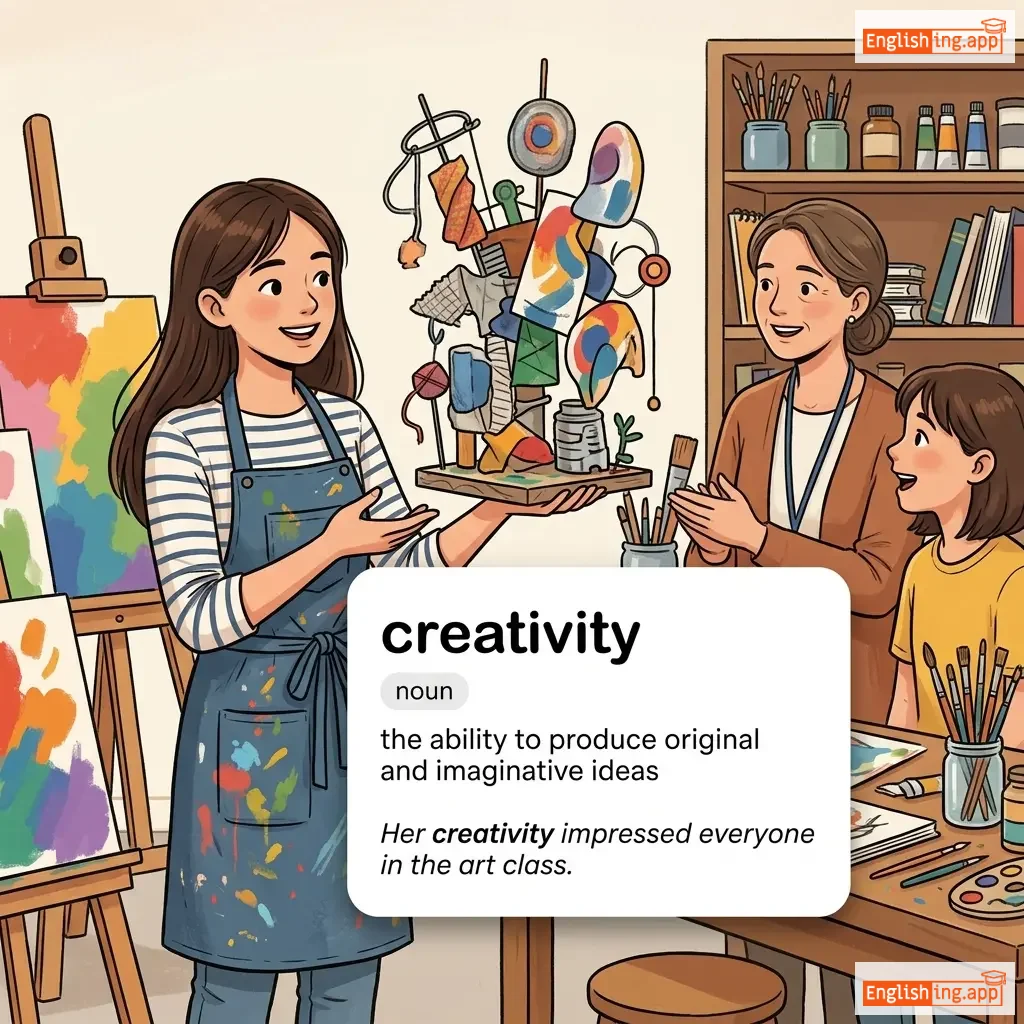
creativity definition card — visual illustration of the meaning
noun
/ˌkriːeɪˈtɪvɪti/
创意 (chuangyi)

the ability to produce original and imaginative ideas

"Her creativity impressed everyone in the art class."

"她的创意在艺术课上给大家留下了深刻的印象。" (Ta de chuangyi zai yishu ke shang gei dajia liuxia le shenke de yinxiang.)
noun
/krɪˈeɪtə/
创始人 (chuangshi ren)

a person who brings something into existence

"He is the creator of many successful startups."

"他是许多成功初创公司的创始人。" (Tā shì xǔduō chénggōng chūchuàng gōngsī de chuàngshīrén.)
noun
/ˈkriːtʃər/
生物 (shengwu)

A living being, especially an animal.

"The forest is full of strange creatures."

"森林里充满了奇怪的生物。" (Sēnlín lǐ chōngmǎnle qíguài de shēngwù.)
credence definition card — visual illustration of the meaning
noun
/ˈkriː.dəns/
可信度, 信任 (kexindù, xìnrèn)

belief in or acceptance of something as true

"The witness gave credence to the defendant's alibi."

"证人给予被告的不在场证明可信度。" (zhèngrén jǐyǔ bìgào de bù zàichǎng zhèngmíng kěxìndù.)
noun
/krɪˈden.ʃəl/
资历, 证明文件 (zīlì, zhèngmíng wénjiàn)

a qualification, achievement, or aspect of a person's background used to indicate suitability for something

"She presented her credentials before starting the new job."

"她在开始新工作之前展示了她的资历。" (Tā zài kāishǐ xīn gōngzuò zhīqián zhǎnshìle tā de zīlì.)
credibility definition card — visual illustration of the meaning
noun
/ˌkrɛd.ɪˈbɪl.ɪ.ti/
可信度 (kě xìn dù)

the quality of being trusted and believed in

"The journalist's credibility was questioned after the report."

"记者的可信度在报告后受到质疑。" (Jìzhě de kěxìndù zài bàogào hòu shòudào zhìyí.)
adjective
/ˈkrɛd.ɪ.bəl/
可信的 (kě xìn de)

able to be believed; convincing

"Her explanation was credible enough to convince the committee."

"她的解释足够可信,能够说服委员会。" (Tā de jiěshì zúgòu kěxìn, nénggòu shuōfú wěiyuánhuì.)
noun, verb
/ˈkrɛdɪt/

As a noun: the ability to obtain goods or services before payment; recognition for an achievement. As a verb: to publicly acknowledge someone's contribution.

"She received credit for her contribution to the project."

adjective
/ˈkrɛdɪtəbl/
值得称赞 (zhí dé chēng zàn)

Deserving praise or acknowledgment, though not necessarily outstanding.

"She made a creditable effort in completing the project on time."

"她做出了值得称赞的努力,按时完成了项目。" (Tā zuò chūle zhídé chēng zàn de nǔlì, àn shí wánchéngle xiàngmù.)
credo definition card — visual illustration of the meaning
noun
/ˈkriːdoʊ/
信条 (xìn tiáo)

A statement of the beliefs or aims that guide someone's actions.

"Honesty has always been the central credo of his life."

"诚实一直是他生活中的核心信条。" (Chéngshí yīzhí shì tā shēnghuó zhōng de héxīn xìntiáo.)
noun
/krəˈdjuːlɪti/
轻信 (qingxin)

A tendency to be too ready to believe that something is real or true.

"The scam succeeded because of the victim's credulity."

"诈骗因受害人的轻信而成功。" (Zhàpiàn yīn shòuhàirén de qīngxìn ér chénggōng.)
adjective
/ˈkrɛdʒʊləs/
轻信的 (qīngxìn de)

Having or showing too great a readiness to believe things.

"The credulous child believed every story she heard."

"那个轻信的孩子相信了她听到的每一个故事。" (Nàgè qīngxìn de háizi xiāngxìnle tā tīngdào de měi yīgè gùshì.)
noun
/kriːd/
信条, 原则 (xintiao, yuanzhi)

A system of religious or spiritual beliefs or a guiding principle.

"Freedom of speech is part of his personal creed."

"言论自由是他个人信条的一部分。" (Yánlùn zìyóu shì tā gèrén xìntiáo de yībùfèn.)
noun
/kriːk/
小溪 (xiao xi)

a small stream or narrow river

"We went fishing by the creek near our house."

"我们在离家很近的小溪旁钓鱼。" (Wo men zai li jia hen jin de xiao xi pang diao yu.)
creep definition card — visual illustration of the meaning
verb
/kriːp/
悄悄移动 (qiāo qiāo yídòng)

to move slowly and quietly, especially to avoid being noticed

"The child tried to creep into the room without making a sound."
"那个孩子试图悄悄地进入房间,没有发出声音。" (Nàgè háizi shìtú qiāoqiāo de jìnrù fángjiān, méiyǒu fāchū shēngyīn.)
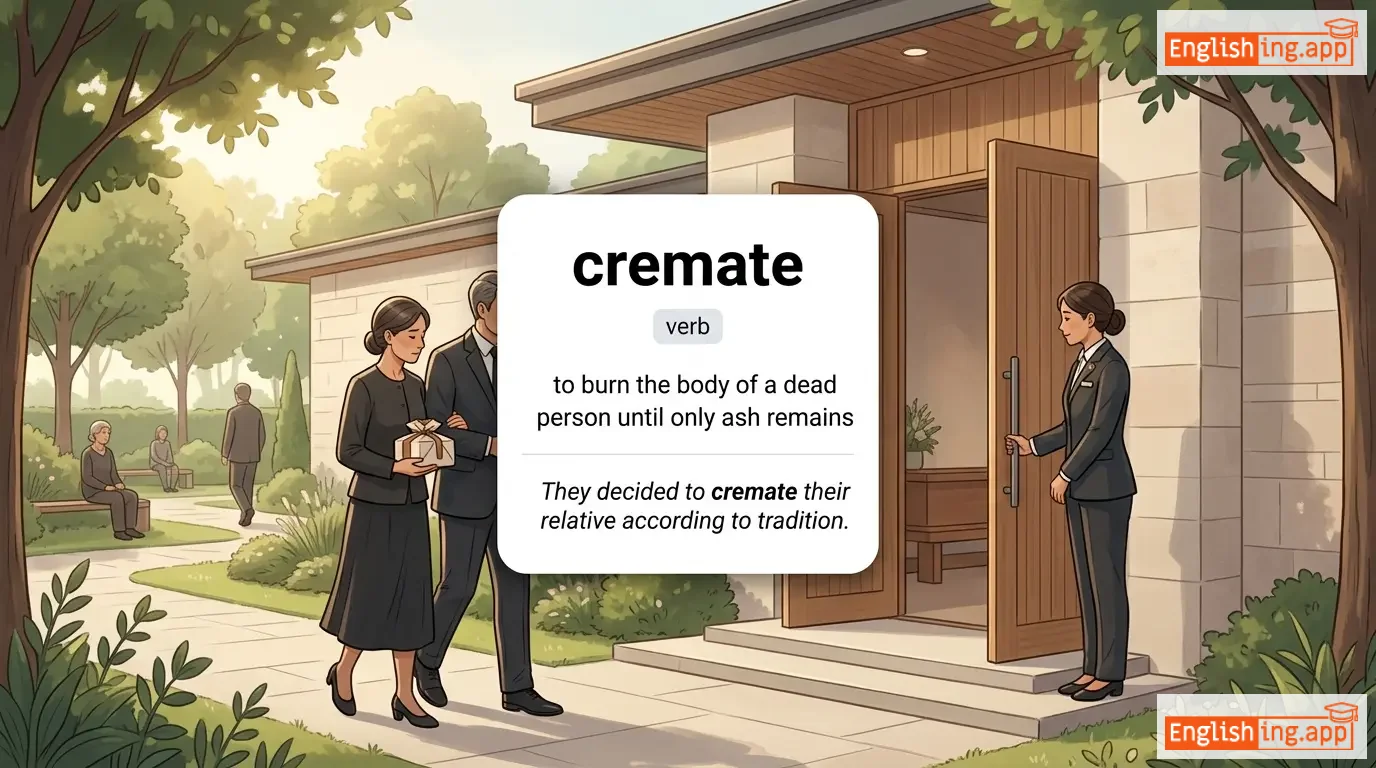
cremate definition card — visual illustration of the meaning
verb
/ˈkriː.meɪt/
火化 (huǒ huà)

to burn the body of a dead person until only ash remains

"They decided to cremate their relative according to tradition."

"他们决定按照传统焚烧他们的亲属。" (Tāmen juédìng ànzhào chuántǒng fénshāo tāmen de qīnshǔ.)
noun
/ˈkrɛməˌtɔːri/
火葬场 (huǒzàngchǎng)

a place where dead bodies are cremated

"The crematory was located near the cemetery."

"火葬场位于墓地附近。" (Huǒzàngchǎng wèiyú mùdì fùjìn.)
adjective
/krɪˈpʌskjʊlər/
与黄昏相关 (yu huanghun xiangguan)

relating to twilight or active during twilight

"Bats are crepuscular animals, most active at dawn and dusk."

"蝙蝠是黄昏活动的动物,在黎明和黄昏时最活跃。" (Bianfu shi huanghun huodong de dongwu, zai liming he huanghun shi zui huoyue.)
noun
/krəˈʃɛndoʊ/
声音逐渐增强 (shengyin zhujian zengqiang)

a gradual increase in loudness or intensity, especially in music

"The orchestra built to a powerful crescendo before the finale."

"乐队在结尾前逐渐增强了强烈的高潮。" (Yuedui zai jiewei qian zhujian zengqiang le qianglie de gaochao.)
noun
/krɛst/
山顶 (shanding)

the top of a hill, wave, or mountain; a symbol of identity

"The hikers reached the crest of the mountain at sunrise."

"登山者在日出时达到了山顶。" (Deng shanzhe zai rishu shi dadao le shanding.)
adjective
/ˈkrɛstˌfɔːlən/
沮丧 (jǔsàng)

sad and disappointed

"He looked crestfallen after hearing the bad news."

"听到坏消息后,他看起来沮丧。" (Tīngdào huài xiāoxī hòu, tā kàn qǐlái jǔsàng.)
noun
/krəˈvæs/
深裂缝 (shen liefeng)

a deep crack in a glacier or the earth’s surface

"The climbers carefully crossed the icy crevasse."

"登山者小心地越过了冰冷的裂缝。" (Dengshan zhe xiaoxin de yueguo le bingleng de liefeng.)
noun
/ˈkrɛvɪs/
裂缝 (lièfèng)

a narrow crack or opening, especially in a rock or wall

"The lizard hid in a crevice between the stones."

"蜥蜴藏在石头之间的裂缝中。" (xīyì cáng zài shítou zhī jiān de lièfèng zhōng.)
👨‍✈️

crew (克鲁)

noun
/kruː/
船员 (chuányuán)

A group of people working together, especially on a ship, aircraft, or project.

"The ship's crew worked tirelessly during the storm."

"船员在暴风雨中不知疲倦地工作。" (Chuányuán zài bàofēngyǔ zhōng bùzhī píbèi de gōngzuò.)
noun
/ˈkrɪk.ɪt/
蟋蟀 (xī shuài)

a jumping insect that makes a chirping sound by rubbing its wings together

"We could hear crickets chirping in the evening."

"我们能在傍晚听到蟋蟀的叫声。" (wo men neng zai bang wan ting dao xi shuai de jiao sheng.)
noun
/kraɪm/
犯罪 (fànzuì)

An illegal act punishable by law.

"The police are investigating the crime."

"警方正在调查犯罪。" (jǐngfāng zhèngzài diàochá fànzuì.)
noun, adjective
/ˈkrɪmɪnəl/
罪犯 (zuìfàn)

A person who has committed a crime; relating to crime

"The police arrested a dangerous criminal last night."

"警方昨晚逮捕了一个危险的罪犯。" (Jǐngfāng zuó wǎn dàibǔle yīgè wēixiǎn de zuìfàn.)
adjective
/ˈkrɪm.zən/
深红色 (shen hong se)

a deep purplish-red color

"The crimson sunset painted the sky with beautiful shades."

"深红色的日落将天空涂抹上美丽的色调。" (Shēn hóng sè de rì luò jiāng tiānkōng túmǒ shàng měilì de sètiáo.)
verb
/krɪndʒ/
感到尴尬 (gǎndào gāngà)

To shrink back in fear, embarrassment, or discomfort.

"She cringed when she remembered her mistake."

"她想起自己的错误时,感到非常尴尬。" (Tā xiǎng qǐ zìjǐ de cuòwù shí, gǎndào fēicháng gāngà.)
verb
/ˈkrɪŋ.kəl/
皱纹 (zhòuwén)

To form small creases or wrinkles.

"She crinkled her nose at the strange smell."

"她对那股奇怪的气味皱起了鼻子。" (Tā duì nà gǔ qíguài de qìwèi zhòuqǐle bízi.)
crisis definition card — visual illustration of the meaning
noun
/ˈkraɪsɪs/
危机 (weiji)

A time of intense difficulty or danger

"The company faced a financial crisis during the recession."

"在经济衰退期间,公司面临着财政危机。" (Zài jīngjì shuāituì qījiān, gōngsī miànlínzhe cáizhèng wēijī.)
noun
/kraɪˈtɪəriə/
标准 (biaozhun)

Standards or principles by which something is judged or decided.

"The candidates were evaluated based on strict criteria."

"候选人根据严格的标准进行评估。" (Hòuxuǎn rén gēnjù yángé de biāozhǔn jìnxíng pínggū.)
noun
/kraɪˈtɪəriən/
标准 (biaozhun)

A standard or rule used to make a judgment or decision.

"Honesty is an important criterion for this job."

"诚实是这份工作的一个重要标准。" (Chéng shí shì zhè fèn gōng zuò de yí gè zhòng yào biāo zhǔn.)
noun
/ˈkrɪtɪk/
评论家 (pinglunjia)

A person who judges the merits of something, especially art or literature

"The film critic praised the director's latest movie."
"电影评论家赞扬了导演的最新电影。" (Dianying pinglunjia zanyang le daoyan de zuixin dianying.)
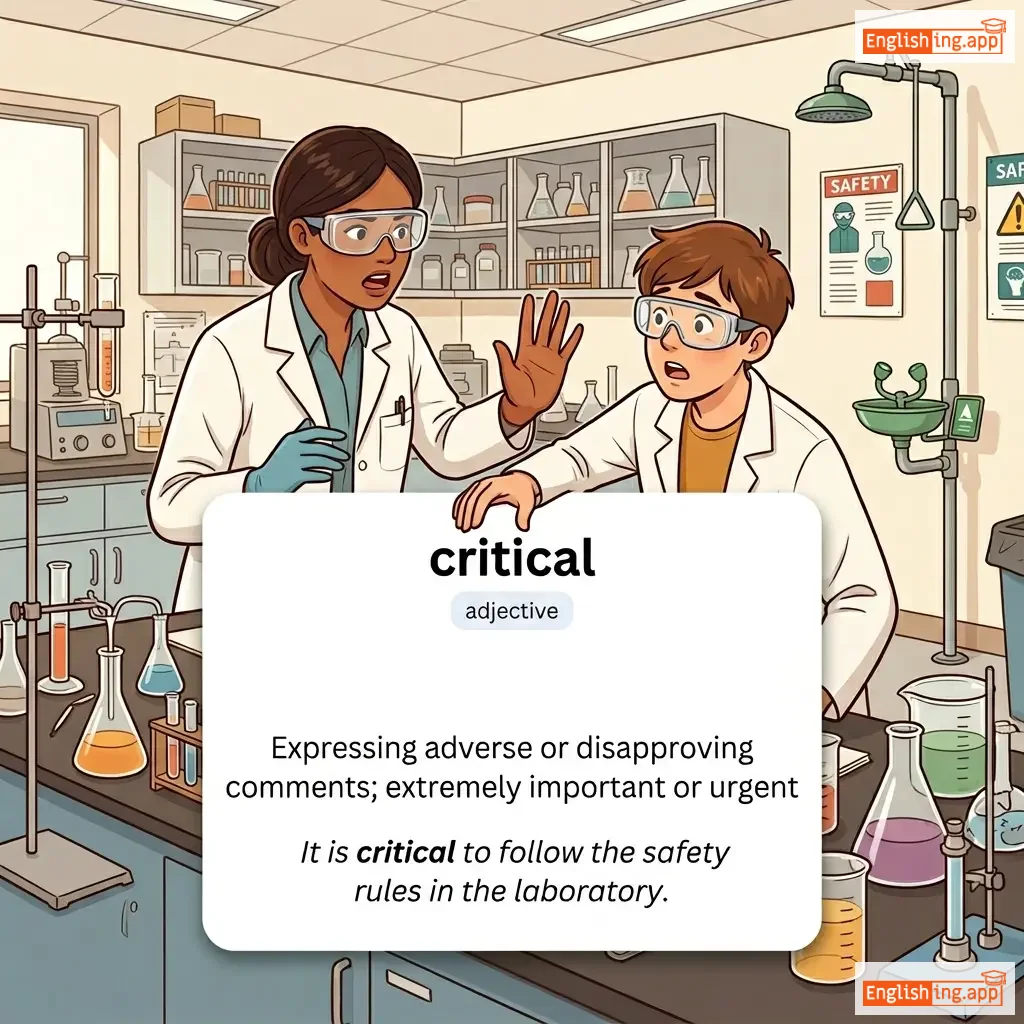
critical definition card — visual illustration of the meaning
adjective
/ˈkrɪtɪkəl/
关键的 / 紧急的 (guānjiàn de / jǐnjí de)

Expressing adverse or disapproving comments; extremely important or urgent

"It is critical to follow the safety rules in the laboratory."
"在实验室中,遵循安全规则是至关重要的。" (Zài shíyànshì zhōng, zūnxún ānquán guīzé shì zhìguān zhòngyào de.)
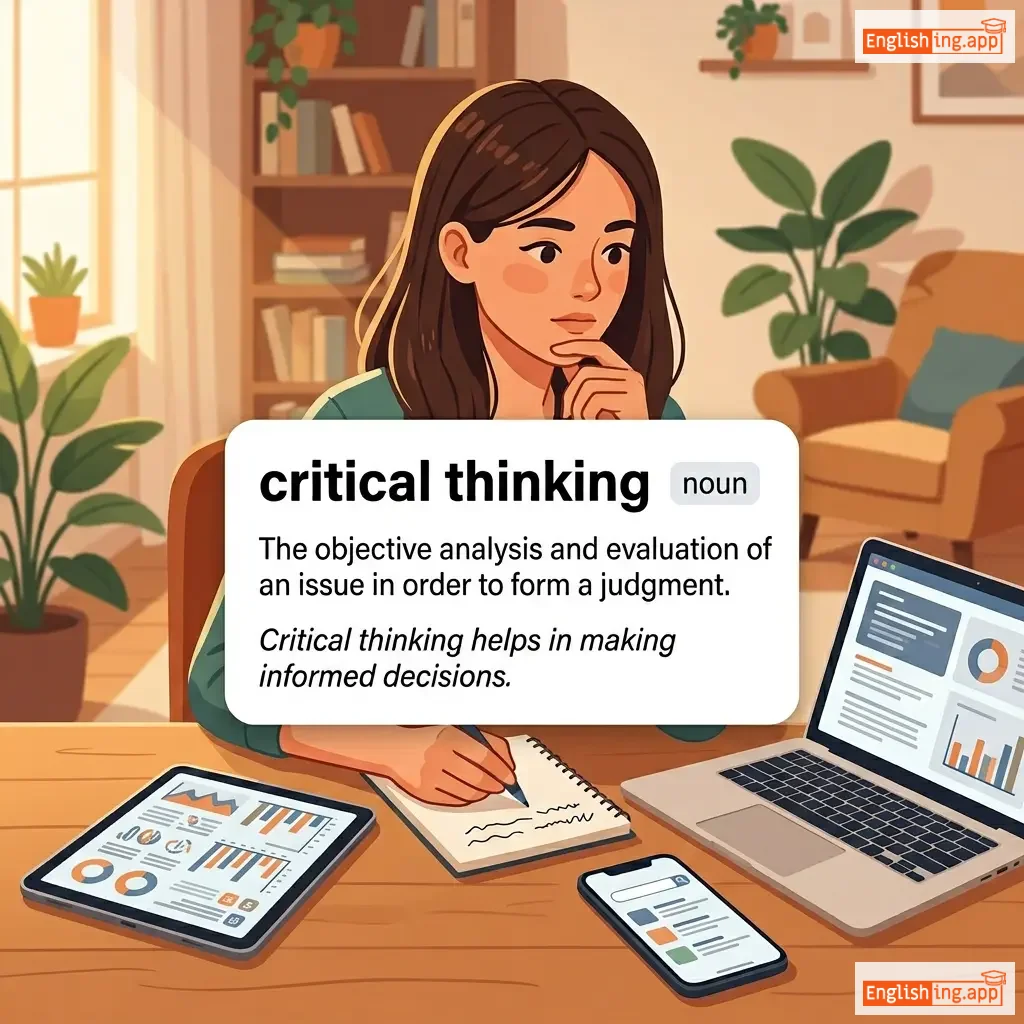
critical thinking definition card — visual illustration of the meaning
noun
ˈkrɪt.ɪ.kəl ˈθɪŋ.kɪŋ
批判性思维 (pīpànxìng sīwéi)

The objective analysis and evaluation of an issue in order to form a judgment.

"Critical thinking helps in making informed decisions."

"批判性思维有助于做出明智的决定。" (Pīpànxìng sīwéi yǒuzhù yú zuòchū míngzhì de juédìng.)
adverb
/ˈkrɪtɪkli/
严重地 (yánzhòng de)

in a way that expresses disapproval or a very serious, important way

"He was critically injured in the accident."

"他在事故中受了重伤。" (Tā zài shìgù zhōng shòu le zhòngshāng.)
noun
/ˈkrɪtɪˌsɪzəm/
批评 (pīpíng)

The expression of disapproval or judgment of the merits of something

"The new policy has faced a lot of criticism from the public."
"新政策面临来自公众的批评。" (Xīn zhèngcè miànlín láizì gōngzhòng de pīpíng.)
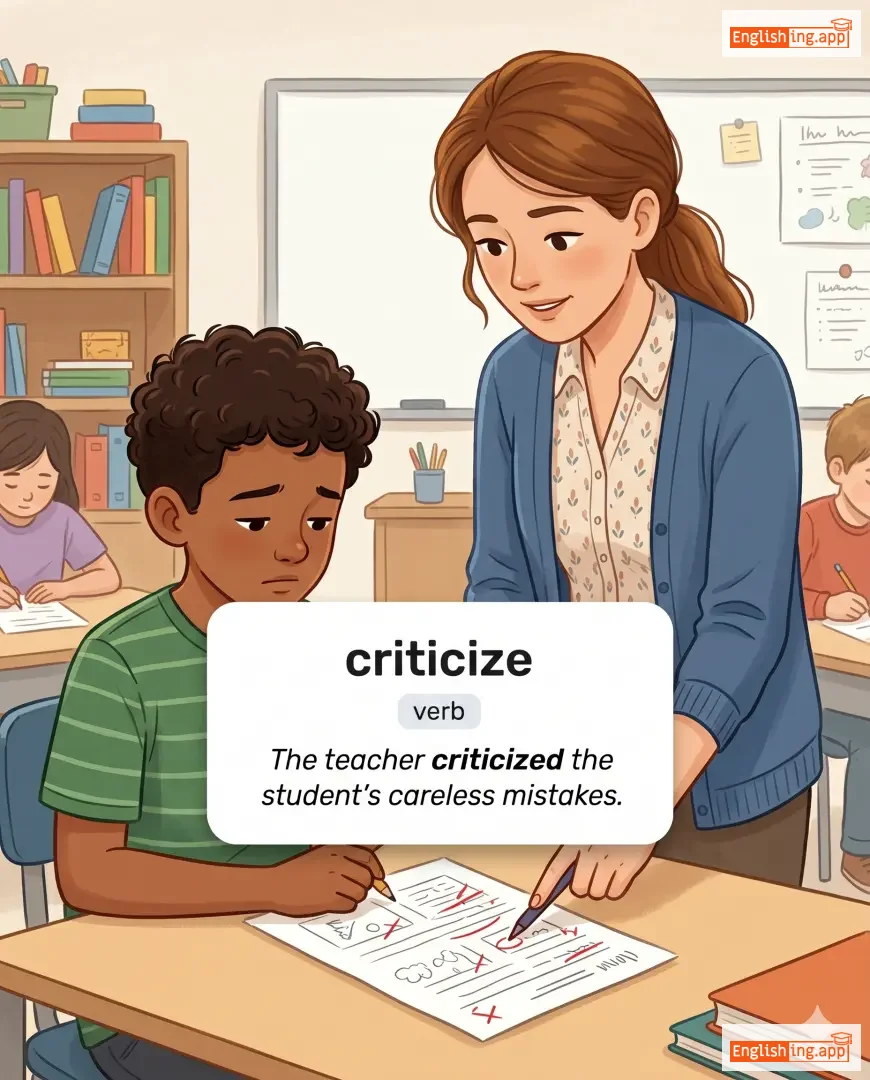
criticize definition card — visual illustration of the meaning
verb
/ˈkrɪtɪsaɪz/
批评 (pīpíng)

to express disapproval of someone or something by pointing out faults or shortcomings

"The teacher criticized the student's careless mistakes."

"老师批评了学生的粗心错误。" (Lǎoshī pīpíngle xuéshēng de cūxīn cuòwù.)
noun/verb
/krɪˈtiːk/
批评 (pīpíng)

A detailed analysis and assessment of something, especially a literary, philosophical, or political theory; to evaluate critically.

"The professor asked the students to critique each other's essays."

"教授要求学生批评彼此的论文。" (Jiàoshòu yāoqiú xuéshēng pīpíng bǐcǐ de lùnwén.)
noun/verb
/kroʊˈʃeɪ/

Needlework made by interlocking loops of thread with a hooked needle; the act of making such items.

"She learned how to crochet a scarf for winter."

noun
/krɑk pɑt/
慢炖锅 (màn dùn guō)

an electric cooking pot that cooks food slowly at low temperatures

"I put the chicken and vegetables in the crock pot before going to work."

"我在上班前把鸡肉和蔬菜放入慢炖锅中。" (Wǒ zài shàngbān qián bǎ jīròu hé shūcài fàng rù màn dùn guō zhōng)
noun
/ˈkrɒkəri/
餐具 (cānjù)

Dishes, plates, cups, and other items made of earthenware or china.

"The hotel provided clean crockery for the guests."

"酒店为客人提供了干净的餐具。" (Jiǔdiàn wèi kèrén tígōngle gānjìng de cānjù.)
noun
/ˈkrɒk.ə.daɪl/
鳄鱼 (èyú)

a large reptile with a long mouth and sharp teeth that lives in rivers and lakes in hot countries

"The crocodile slowly moved through the murky water."

"鳄鱼缓慢地穿过浑浊的水域。" (èyú huǎnmàn de chuānguò hùnchuó de shuǐyù)
🧙‍♀️

crone (kè lún)

noun
/kroʊn/
老妇人 (lǎo fù rén)

An old woman, often one who is thin and ugly, sometimes associated with witch-like qualities.

"The children were scared by the story of the wicked crone in the forest."

"孩子们被森林中邪恶老妇人的故事吓到了。" (Háizimen bèi sēnlín zhōng xié'è lǎo fù rén de gùshì xià dào le.)
noun
/ˈkroʊniˌɪzəm/
裙带关系 (qún dài guān xì)

The practice of favoring friends or associates, especially in political appointments or business deals.

"The company was accused of cronyism in hiring practices."

"该公司因招聘中的裙带关系而受到指控。" (Gāi gōngsī yīn zhāopìn zhōng de qún dài guān xì ér shòudào zhǐkòng.)