词汇表

英语词汇词典 | 单词含义、定义和示例

verb
/ˈkɒsɪt/
宠爱 (chǒng'ài)

to care for and protect in an overindulgent way

"The little girl was cosseted by her grandparents."

"小女孩被她的祖父母宠爱着。" (Xiǎo nǚhái bèi tā de zǔfùmǔ chǒng'ài zhe.)
adjective
/ˈkɒs.ɪ.tɪd/
过度溺爱 (guòdù nì'ài)

pampered, treated with excessive care and attention

"The cosseted child always got what he wanted."
"过度溺爱的孩子总是得到他想要的。" (Guòdù nì'ài de háizi zǒng shì dédào tā xiǎng yào de.)
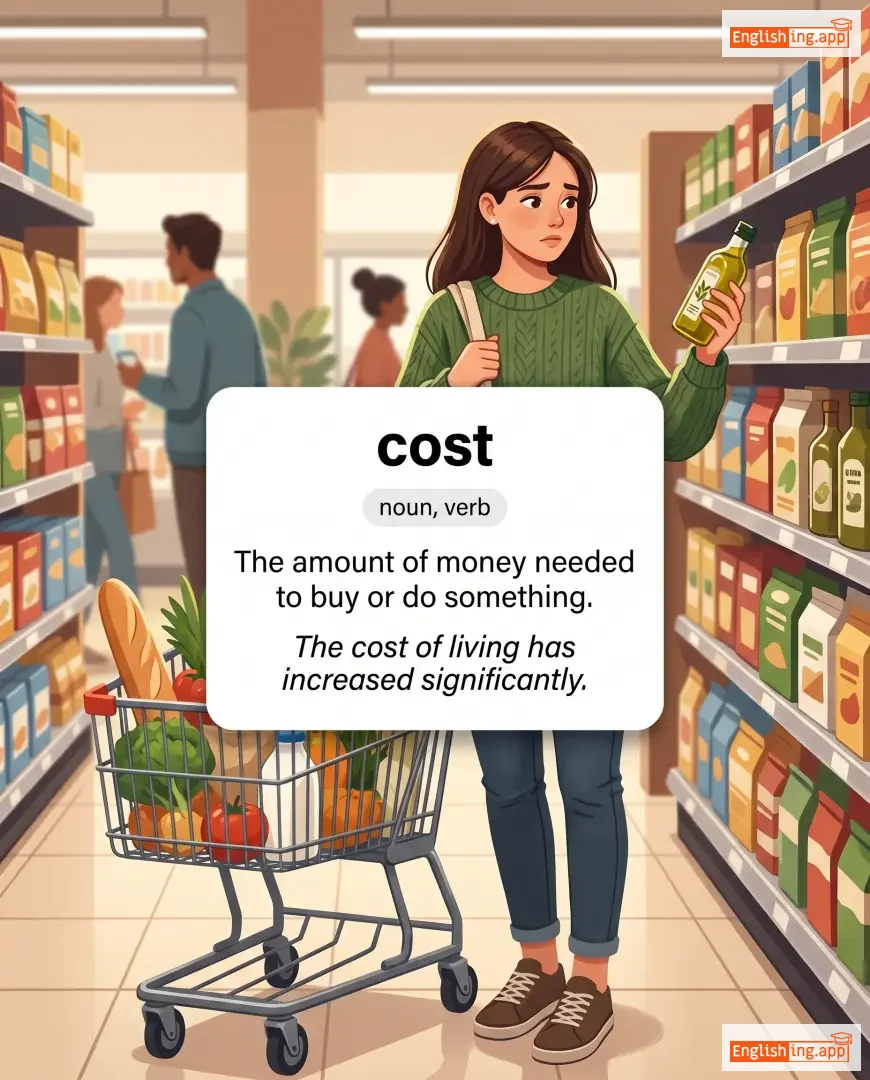
cost definition card — visual illustration of the meaning
noun, verb
/kɒst/
成本 (chéngběn)

The amount of money needed to buy or do something.

"The cost of living has increased significantly."

"生活成本显著增加。" (Shēnghuó chéngběn xiǎnzhù zēngjiā.)
cost-efficient definition card — visual illustration of the meaning
adjective
/ˌkɒst.ɪˈfɪʃ.ənt/
节约成本 (jiéyuē chéngběn)

Achieving maximum productivity with minimum wasted effort or expense.

"Cost-efficient solutions benefit industries."

"节约成本的解决方案有利于各行各业。" (Jiéyuē chéngběn de jiějué fāng'àn yǒulì yú gè háng gè yè.)
adjective
/ˈkɔːstli/
昂贵 (ángguì)

expensive or causing a lot of money, time, or effort

"Their mistake proved to be very costly for the company."
"他们的错误证明对公司来说是非常昂贵的。" (Tāmen de cuòwù zhèngmíng duì gōngsī lái shuō shì fēicháng ángguì de.)
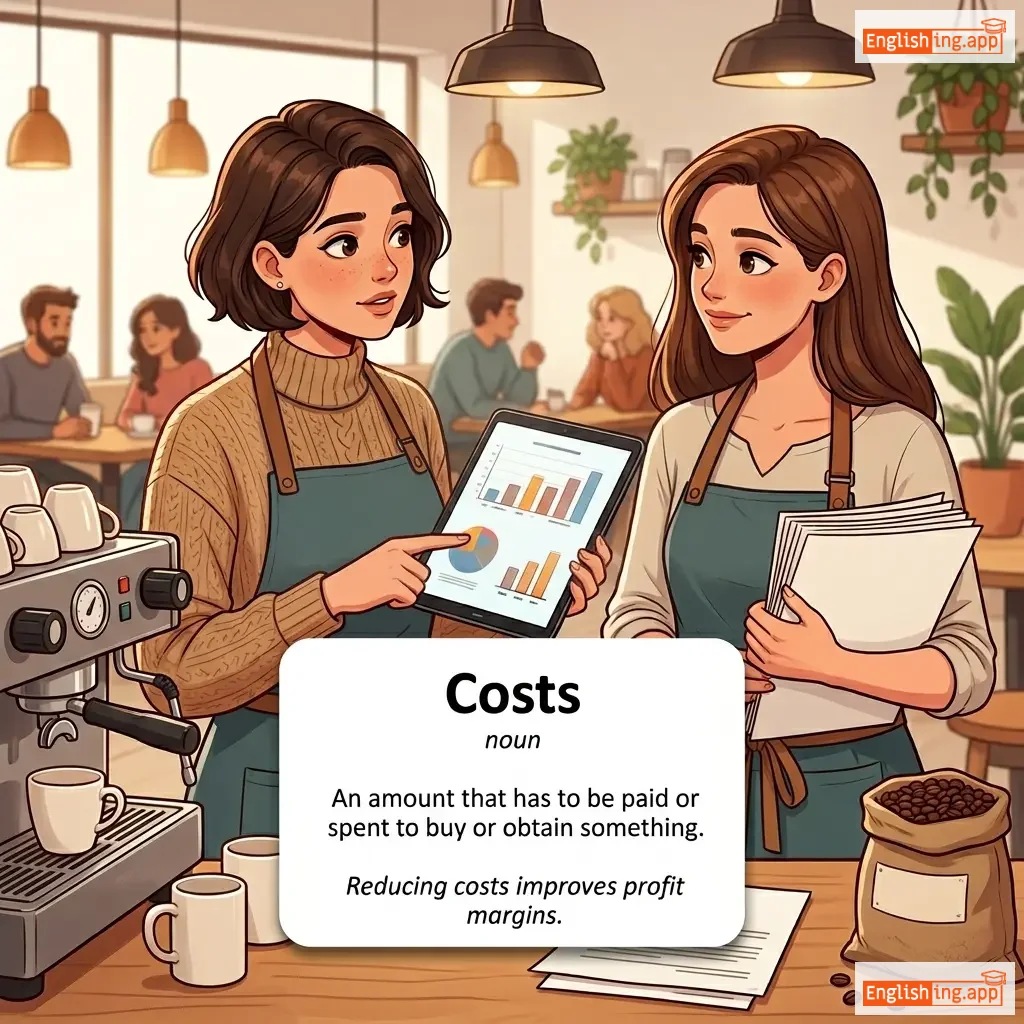
Costs definition card — visual illustration of the meaning
noun
kɒsts
成本 (chéngběn)

An amount that has to be paid or spent to buy or obtain something.

"Reducing costs improves profit margins."

"降低成本可以提高利润率。" (Jiàngdī chéngběn kěyǐ tígāo lìrùn lǜ.)
noun
/ˈkɒstjuːm/
服装 (fúzhuāng)

a set of clothes worn to represent a particular character, culture, or occasion

"She wore a beautiful costume for the Halloween party."

"她为万圣节派对穿了一个漂亮的服装。" (Tā wèi Wànshèngjié pàiduì chuānle yīgè piàoliang de fúzhuāng.)
noun
/kɒt/
婴儿床 (ke te)

a small bed, especially a portable one or one for a baby

"The baby sleeps peacefully in her cot."

"宝宝在她的婴儿床上睡得很安稳。" (Bao bao zai ta de ying er chuang shang shui de hen an wen)
noun
/ˈkoʊ.tə.ri/
一个小型的、排外的团体 (yī gè xiǎo xíng de, pái wài de tuántǐ)

a small, exclusive group of people with shared interests

"He belonged to a coterie of artists who met every Friday."

"他属于一个每周五见面的艺术家团体。" (Tā shǔ yú yī gè měi zhōu wǔ jiàn miàn de yì shù jiā tuán tǐ.)
adjective
/koʊˈtɜːr.mɪ.nəs/
共边 (gòng biān)

having the same boundaries or extent in space, time, or meaning

"The two jurisdictions are coterminous, sharing the same borders."

"这两个司法管辖区是共边的,共享相同的边界。" (Zhè liǎng gè sīfǎ guǎnxiáqū shì gòng biān de, gòngxiǎng xiāngtóng de biānjiè.)
noun
/ˈkɒtɪdʒ/
小屋 (xiaowu)

a small simple house, typically in the countryside

"They spent their vacation in a cozy cottage by the lake."

"他们在湖边的一座舒适的小屋里度过了假期。" (Tamen zai hu bian de yi zuo shushi de xiaowu li duoguo le jiaqi.)
noun
/ˈkɒtən/
幸福 (xìngfú)

A soft white fibrous substance used to make cloth and thread.

"This shirt is made of pure cotton."

"当她收到奖项时,她无法掩饰自己的幸福。" (Dāng tā shōudào jiǎngxiàng shí, tā wúfǎ yǎnshì zìjǐ de xìngfú.)
noun
/ˈkɒt.ən ˈfæb.rɪk/
棉布 (mian bu)

textile made from cotton fibers, known for being soft, breathable, and comfortable

"Cotton fabric is perfect for summer clothing."

"棉布是夏季衣物的完美选择。" (Mian bu shi xiaji yifu de wanmei xuanze.)
noun
/kaʊtʃ/
沙发 (shafa)

a comfortable seat for two or more people, typically upholstered

"They sat on the couch and watched TV."

"他们坐在沙发上看电视。" (Tāmen zuò zài shāfā shàng kàn diànshì.)
noun, verb
/kɒf/
咳嗽 (kesou)

a sudden noisy release of air from the lungs to clear the throat or airway; to expel air suddenly from the lungs with a cough

"He has a bad cough and stayed home today."

"他咳嗽得很厉害,所以今天待在家里。" (ta kesou de hen lihai suoyi jintian dai zai jiali)
modal verb
/kʊd/
可以 (keyi)

Used to indicate possibility, ability, or permission in the past or as a polite suggestion.

"He could swim when he was a child."

"他小时候可以游泳。" (Tā xiǎoshíhòu kěyǐ yóuyǒng.)
noun
/ˈkaʊn.səl/
委员会 (wei yuan hui)

an assembly of people chosen or elected to make decisions or advise on matters

"The city council voted to improve public transportation."

"市议会投票决定改善公共交通。" (Shi yi hui tou piao jue ding gai shan gong gong jiao tong.)
noun
/ˈkaʊnsələr/
议员 (yiyuan)

an elected member of a local council who helps make decisions and represent the community

"The councillor spoke to residents about improving local roads."

"议员与居民讨论了当地道路问题。" (yiyuan yu jumin taolun le dangdi daolu wenti)
noun
/ˈkaʊnsɪlər/
议员 (yìyuán)

an elected member of a council, especially a local government body

"The councilor held a public meeting to discuss local issues."

"议员召开了一个公共会议,讨论地方问题。" (Yìyuán zhàokāi le yīgè gōnggòng huìyì, tǎolùn dìfāng wèntí.)
verb
/ˈkaʊnsəl/
咨询 (zixun)

to give professional advice or guidance to someone

"The teacher counseled the students on their career choices."

"老师为学生们提供了关于他们职业选择的建议。" (Lǎoshī wèi xuéshēngmen tígōngle guānyú tāmen zhíyè xuǎnzé de jiànyì.)
noun
/ˈkaʊnsəlɪŋ/
咨询 (zixun)

professional guidance or therapy to help resolve personal or psychological problems

"She decided to go for counseling after feeling stressed for months."

"在感到几个月的压力后,她决定去咨询。" (Zai gandao ji ge yue de yali hou, ta jueding qu zixun.)
noun
/ˈkaʊn.səl.ɪŋ/
心理咨询 (xinli zixun)

the process of giving professional guidance and support to help someone deal with personal, social, psychological, or career-related problems

"She decided to seek counselling to manage stress and anxiety."

"她决定通过心理咨询来缓解压力。" (ta jueding tongguo xinli zixun lai huanjie yali)
noun
/ˈkaʊnsələr/
咨询师 (zixunshi)

a person trained to give guidance on personal, social, or psychological problems; an advisor

"She spoke to a counsellor to get advice about her career."

"她和一名咨询师谈了自己的职业问题。" (ta he yi ming zixunshi tan le ziji de zhiye wenti)
noun
/ˈkaʊn.səl.ər/
顾问 (gùwèn)

a person trained to give guidance on personal, social, or psychological problems

"The school counselor helped the student deal with stress."

"学校的顾问帮助学生应对压力。" (Xuéxiào de gùwèn bāngzhù xuéshēng yìngduì yā lì.)
verb
/kaʊnt/
计数 (jìshù)

to determine the total number of something

"She carefully counted the money on the table."

"她小心翼翼地数着桌子上的钱。" (Tā xiǎoxīn yìyì de shǔzhe zhuōzi shàng de qián.)
noun
/ˈkaʊn.tə.nəns/
面容,表情;支持 (miànróng, biǎoqíng; zhīchí)

a person's face or expression; support or approval

"Her cheerful countenance brightened the room."

"她那愉快的面容照亮了房间。" (Tā nà yúkuài de miànróng zhàoliàngle fángjiān.)
noun
/ˈkaʊn.tər/
柜台 (guìtái)

a flat surface in a shop, bank, or kitchen where transactions or work are done

"The cashier stood behind the counter."

"收银员站在柜台后面。" (Shōuyín yuán zhàn zài guìtái hòumiàn.)
noun
/ˈkaʊn.tər kleɪm/
反诉 (fǎn sù)

a claim made to rebut a previous claim, often in legal contexts

"The defendant filed a counter-claim against the plaintiff."

"被告对原告提起了反诉。" (Bèi gào duì yuángào tíqǐle fǎn sù.)
verb
/ˌkaʊntərˈækt/
反作用 (fǎn zuòyòng)

to act against something in order to reduce its effect

"The medicine helps counteract the side effects of the treatment."

"这药有助于抵消治疗的副作用。" (Zhè yào yǒu zhù yú dǐxiāo zhìliáo de fùzuòyòng.)
verb
/ˌkaʊntərˈbæləns/
抵消 (dǐxiāo)

to offset or balance the effect of something

"Exercise can counterbalance the negative effects of stress."

"运动可以抵消压力的负面影响。" (Yùndòng kěyǐ dǐxiāo yālì de fùmiàn yǐngxiǎng.)
noun, verb
/ˈkaʊntərˌtʃɑːrdʒ/
反诉 (fǎnsù)

an opposing charge or accusation; to make an opposing attack

"The lawyer filed a countercharge against the accuser."

"律师对指控者提起了反诉。" (Lǜshī duì zhǐkòng zhě tíqǐle fǎnsù.)
adjective, verb, noun
/ˈkaʊntərfɪt/
伪造的 (wèizào de)

made to look like something genuine in order to deceive

"The police seized a batch of counterfeit currency."

"警方查获了一批伪钞。" (Jǐngfāng cháhuòle yī pī wěichāo.)
adjective
/ˌkaʊntərɪnˈtuːɪtɪv/
反直觉的 (fǎn zhíjué de)

contrary to what one would intuitively expect

"His approach seems counterintuitive but it actually works."

"他的做法看起来很反直觉,但实际上很有效。" (Tā de zuòfǎ kàn qǐlái hěn fǎn zhíjué, dàn shíjì shang hěn yǒuxiào.)
verb
/ˌkaʊntərˈmænd/
撤销命令 (chèxiāo mìnglìng)

to revoke or cancel an order or command

"The general countermanded the previous orders immediately."

"将军立即取消了先前的命令。" (Jiāngjūn lìjí qǔxiāo le xiānqián de mìnglìng.)
noun
/ˈkaʊntərˌpɑːrt/
对口人 (duìkǒurén)

a person or thing that corresponds to or has the same function as another

"The CEO met with his counterpart in the partner company."

"首席执行官与合作公司中的对口人会面。" (Shǒuxí zhíxíng guān yǔ hézuò gōngsī zhōng de duìkǒurén huìmiàn.)
noun
/ˈkaʊntərˌpɔɪnt/
对比点 (duìbì diǎn)

an argument, idea, or theme contrasting with another; also a musical term for independent melody

"Her calm attitude was a counterpoint to his anger."

"她的平静态度是他愤怒的对比点。" (Tā de píngjìng tàidù shì tā fèn nù de duìbì diǎn.)
counterproductive definition card — visual illustration of the meaning
adjective
/ˌkaʊntərprəˈdʌktɪv/
适得其反的 (shideqifan de)

having the opposite of the desired effect; harmful to achieving goals

"Skipping breakfast is counterproductive to your energy levels."

"跳过早餐对你的能量水平是适得其反的。" (Tiaoguo zaocan dui ni de nengliang shuiping shi shideqifan de.)
verb
/ˌkaʊntərˈveɪl/
抵消 (dǐxiāo)

to offset or counteract the effect of something

"The benefits of the new policy countervail its drawbacks."

"新政策的好处抵消了它的缺点。" (Xīn zhèngcè de hǎochù dǐxiāo le tā de quēdiǎn.)
noun
/ˈkaʊntɪŋˌhaʊs/
会计办公室 (kuàijì bàngōngshì)

a business office where accounts are kept and financial transactions are managed

"The merchant spent most of his day in the counting-house reviewing ledgers."

"商人一天的大部分时间都在会计办公室检查账簿。" (Shāngrén yītiān de dà bùfen shíjiān dōu zài kuàijì bàngōngshì jiǎnchá zhàngbù.)
adjective
/ˈkaʊntləs/
数不胜数 (shǔ bù shèng shǔ)

too many to be counted; innumerable

"There are countless stars in the sky."

"天上有数不清的星星。" (Tiān shàng yǒu shù bù qīng de xīng xīng.)
noun
/ˈkʌn.tri/
国家 (guójiā)

a nation with its own government and borders

"Bangladesh is a beautiful country with rich culture."

"孟加拉国是一个拥有丰富文化的美丽国家。" (Mèngjiālāguó shì yī gè yǒu fēngfù wénhuà de měilì guójiā.)
noun
/ˈkʌntrɪmən/
同胞 (tongbao)

a person from one's own country or rural area

"He was proud to meet a fellow countryman at the international conference."

"他在国际会议上遇到一个同胞时感到自豪。" (Ta zai guoji huiyi shang yudao yige tongbao shi gandao zihao.)
noun
/ˈkʌntrisaɪd/
乡村 (xiangcun)

land outside cities and towns; rural areas with farms, fields, and villages

"She enjoys the peace and beauty of the countryside."

"她享受乡村的宁静和美丽。" (ta xiangshou xiangcun de ningjing he meili)
noun
/ˈkaʊnti/
(xian)

A territorial division within a country, typically a region with its own local government.

"She grew up in a small county in northern England."

"她在英格兰北部的一个小县长大。" (Ta zai Yinggelan beibu de yi ge xiao xian zhang da.)
noun
/kuː/
政变 (zhèngbiàn)

a sudden, decisive action that brings about a change, especially in government

"The military staged a coup to overthrow the existing regime."

"军队发动了一次政变,推翻了现有政权。" (Jūn duì fādòngle yī cì zhèngbiàn, tuīfānle xiànyǒu zhèngquán.)
noun
/ˈkʌpəl/
一对 (yī duì)

two people or things considered together; a pair

"They make a lovely couple and have been married for five years."
"他们是一个可爱的情侣,已经结婚五年了。" (Tāmen shì yīgè kě'ài de qínglǚ, yǐjīng jiéhūn wǔ nián le.)
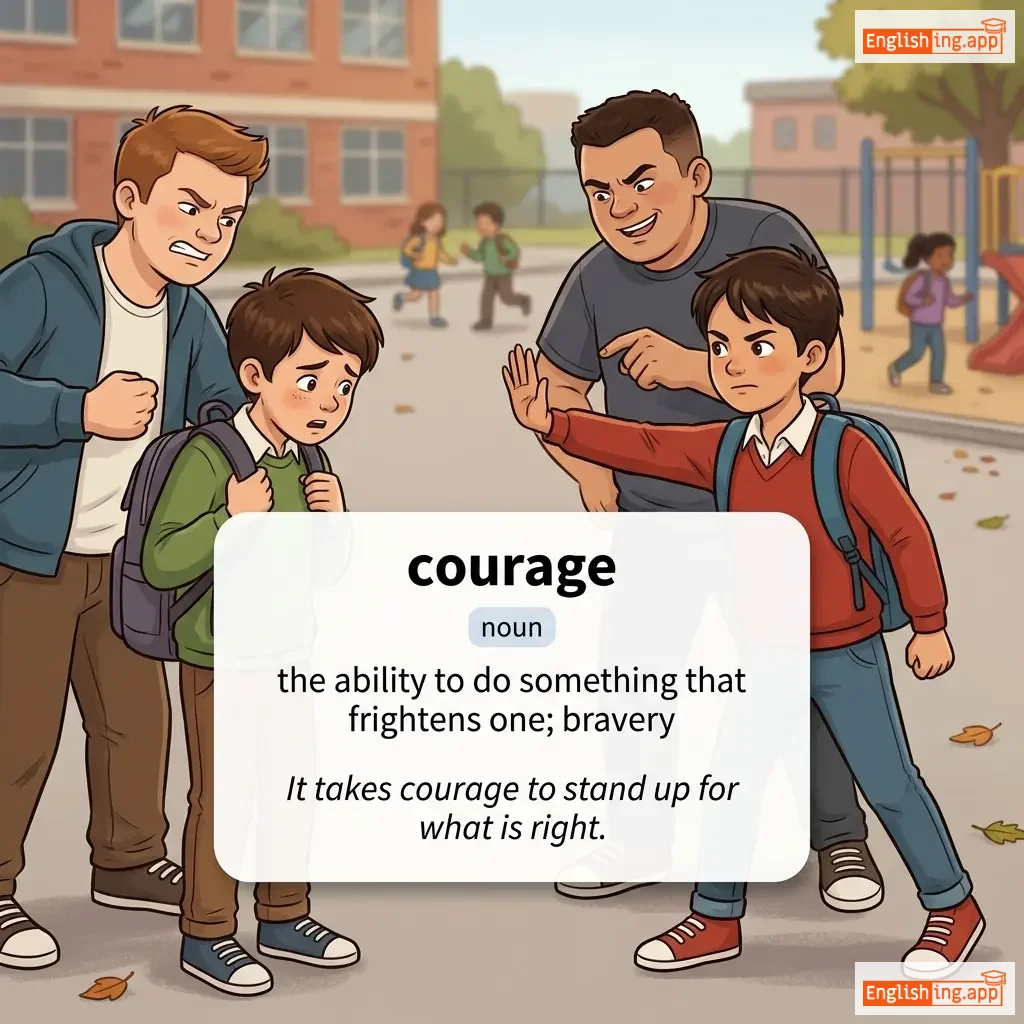
courage definition card — visual illustration of the meaning
noun
/ˈkʌrɪdʒ/
勇气 (yongqi)

the ability to do something that frightens one; bravery

"It takes courage to stand up for what is right."

"为了为正义站起来,需要勇气。" (Wei le wei zhengyi zhan qilai, xuyao yongqi.)
adjective
/kəˈreɪdʒəs/
勇敢的 (yǒng gǎn de)

having or showing bravery; able to face danger or difficulty

"The firefighter was courageous as he rescued the children from the burning building."

"消防员在从着火的建筑物中救出孩子们时表现出了勇气。" (Xiāo fáng yuán zài cóng zháo huǒ de jiàn zhú wù zhōng jiù chū hái zǐ men shí biǎo xiàn chū le yǒng qì.)
noun
/ˈkʊriər/
快递员 (kuaidi yuan)

a person or company that delivers messages, packages, or mail

"The courier delivered the documents on time."

"快递员准时交付了文件。" (Kuàidìyuán zhǔnshí jiāofùle wénjiàn.)
noun
/kɔːrs/
课程,路径或一组教育课程 (kecheng, luxian huo yizu jiaoyu kecheng)

a direction, path, or a set of educational lessons

"She enrolled in a computer science course."

"她报名参加了计算机科学课程。" (Ta baoming canjia le jisuanji kexue kecheng.)