词汇表

英语词汇词典 | 单词含义、定义和示例

noun
/ˈkɒntrəbænd/
走私货物 (zousi huowu)

goods that are illegal to import, export, or possess

"The police seized a shipment of contraband cigarettes."

"警方查获了一批走私香烟。" (Jingfang chahuo le yī pī zousi xiangyan.)
contract definition card — visual illustration of the meaning
noun, verb
/ˈkɒntrækt/
合同,书面或口头协议 (hetong, shuwen huo koutou xieyi)

noun: a written or spoken agreement; verb: to enter into an agreement or to reduce in size

"They signed a contract for the new project."
"他们为新项目签署了合同。" (Tāmen wèi xīn xiàngmù qiānshǔle hétóng.)
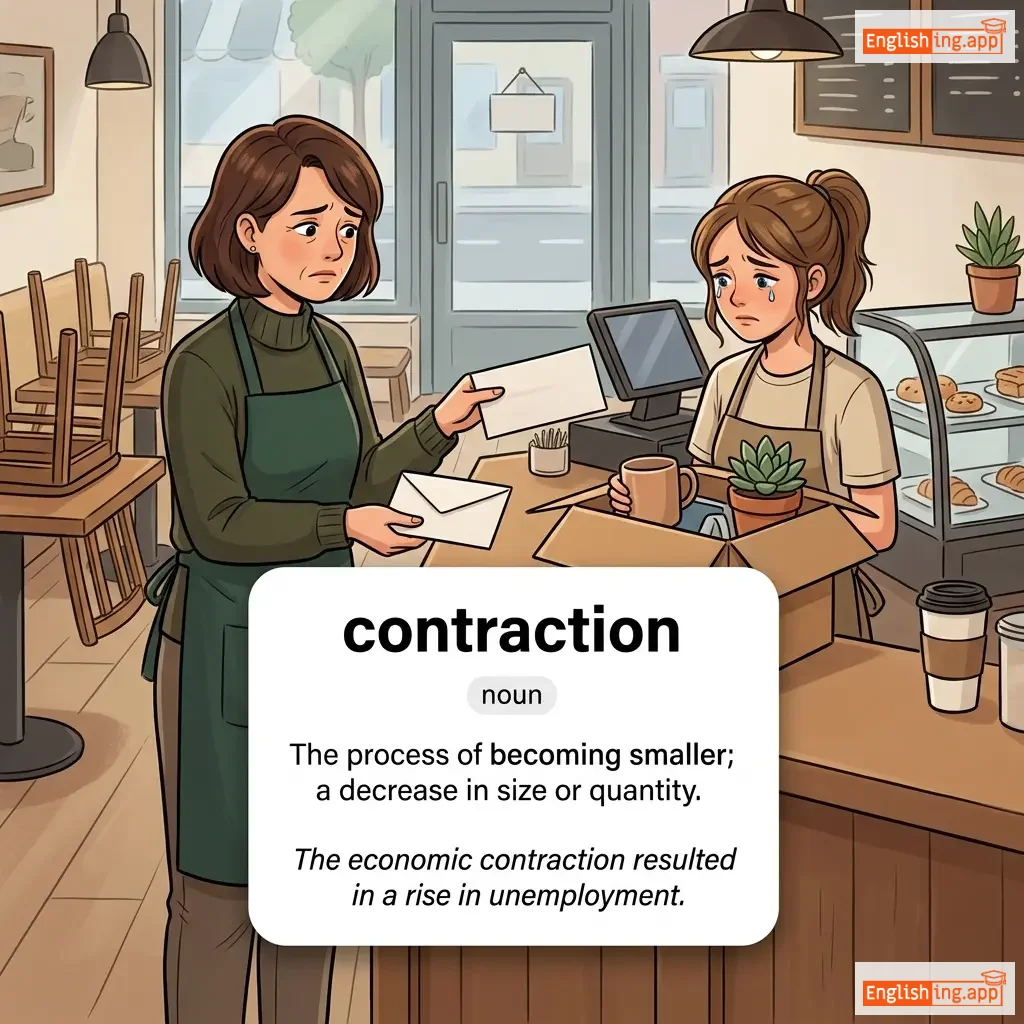
contraction definition card — visual illustration of the meaning
noun
kənˈtrækʃən
收缩 (shōusuō)

The process of becoming smaller; a decrease in size or quantity.

"The economic contraction resulted in a rise in unemployment."

"经济收缩导致失业率上升。" (Jīngjì shōusuō dǎozhì shīyè lǜ shàngshēng.)
noun
/ˈkɒntræktər/
承包商 (chéngbāo shāng)

a person or company that agrees to provide materials or labor to perform a service or do a job

"The contractor completed the building project on time."

"承包商按时完成了建筑项目。" (Chéngbāo shāng ànshí wánchéngle jiànzhù xiàngmù.)
verb
/ˌkɒn.trəˈdɪkt/
反驳 (fǎnbó)

to say or show the opposite of something that has been said or believed

"His actions contradict his words."

"他的行为与他的言辞相矛盾。" (tā de xíngwéi yǔ tā de yáncí xiāng máodùn.)
noun
/ˌkɒntrəˈdɪkʃən/
矛盾,不一致 (máodùn, bù yīzhì)

a statement or situation that is opposed to another, inconsistency

"Her actions are in clear contradiction to her words."
"她的行动与她的话明显矛盾。" (Tā de xíngdòng yǔ tā de huà míngxiǎn máodùn.)
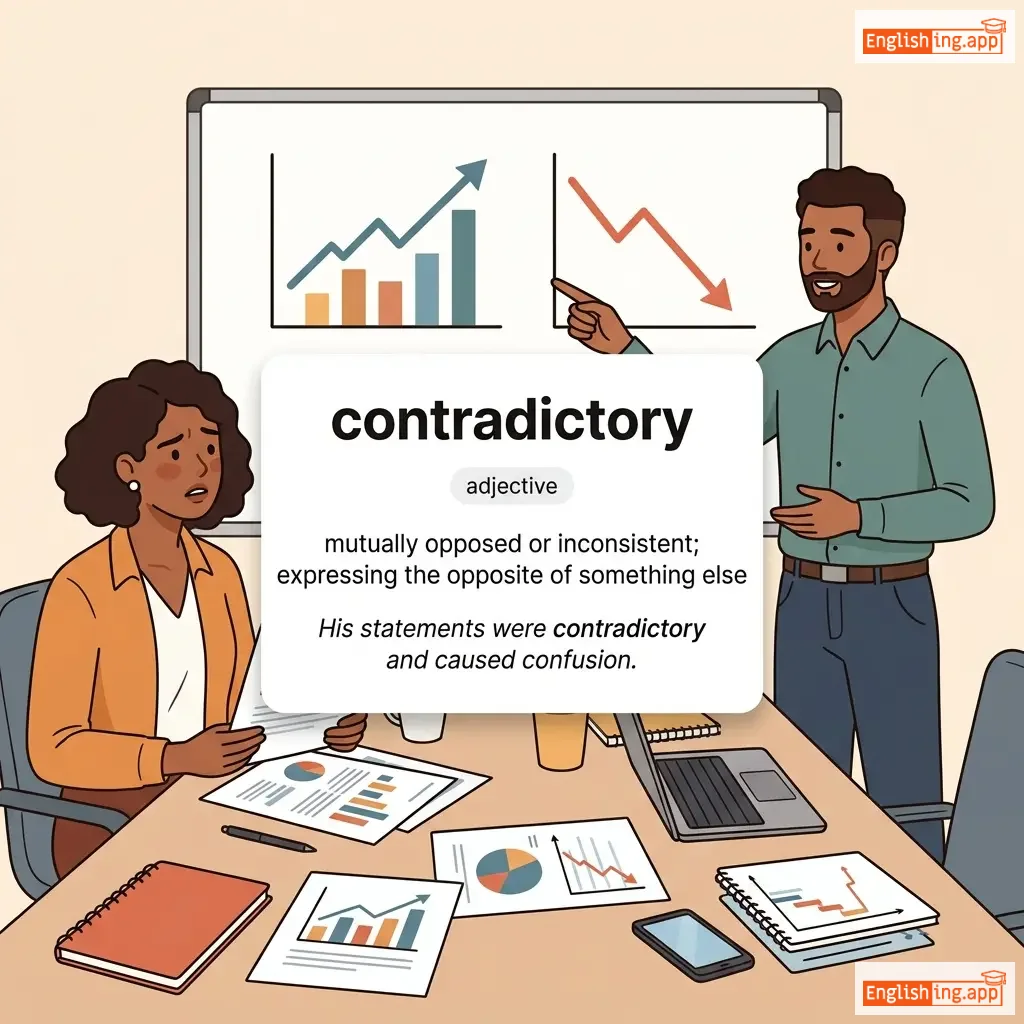
contradictory definition card — visual illustration of the meaning
adjective
/ˌkɒntrəˈdɪktəri/
矛盾的 (maodun de)

mutually opposed or inconsistent; expressing the opposite of something else

"His statements were contradictory and caused confusion."

"他的陈述是矛盾的,导致了混乱。" (Tā de chénshù shì máodùn de, dǎozhìle hùnluàn.)
noun
/ˌkɒntrəpəˈzɪʃən/
对立面 (duìlìmiàn)

the act of placing two things in opposition for contrast or comparison

"The contraposition of the two theories highlighted their differences."

"两种理论的对立面突出了它们的差异。" (Liǎng zhǒng lǐlùn de duìlìmiàn tūchūle tāmen de chāyì.)
noun
/ˈkɒntrəriz/
对立的事物 (duìlì de shìwù)

things that are completely different or opposite to each other

"Freedom and slavery are contraries in every sense."

"自由与奴隶制在各个方面都是对立的。" (Zìyóu yǔ núlìzhì zài gège fāngmiàn dōu shì duìlì de.)
adjective
/ˈkɒn.trəri/
相反的 (xiāngfǎn de)

opposite in nature, direction, or meaning

"Her views are contrary to mine."

"她的观点与我相反。" (tā de guāndiǎn yǔ wǒ xiāngfǎn.)
Contrast definition card — visual illustration of the meaning
noun, verb
/ˈkɒn.trɑːst/ (noun), /kənˈtræst/ (verb)
幸福 (xingfu)

A difference between two or more things; to compare two things to show how they are different.

"The bright colors contrast sharply with the dark background."

"当她获得奖项时,她无法掩饰自己的幸福。" (Dāng tā huòdé jiǎngxiàng shí, tā wúfǎ yǎnshì zìjǐ de xìngfú.)
verb
/ˌkɒntrəˈviːn/
违背 (wéibèi)

to go against or act in opposition to a law, rule, or agreement

"He contravened the safety regulations and was fined."

"他违反了安全规定并被罚款。" (Tā wéibèi le ānquán guīdìng bìng bèi fákuǎn.)
noun
/ˈkɒntrətɑː̃/
意外争执 (yìwài zhēngzhí)

an unexpected and unfortunate event or disagreement; a minor dispute

"There was a small contretemps between the two colleagues during the meeting."
"会议期间,两位同事之间发生了一个小的意外争执。" (Huìyì qījiān, liǎng wèi tóngshì zhījiān fāshēng le yí gè xiǎo de yìwài zhēngzhí.)
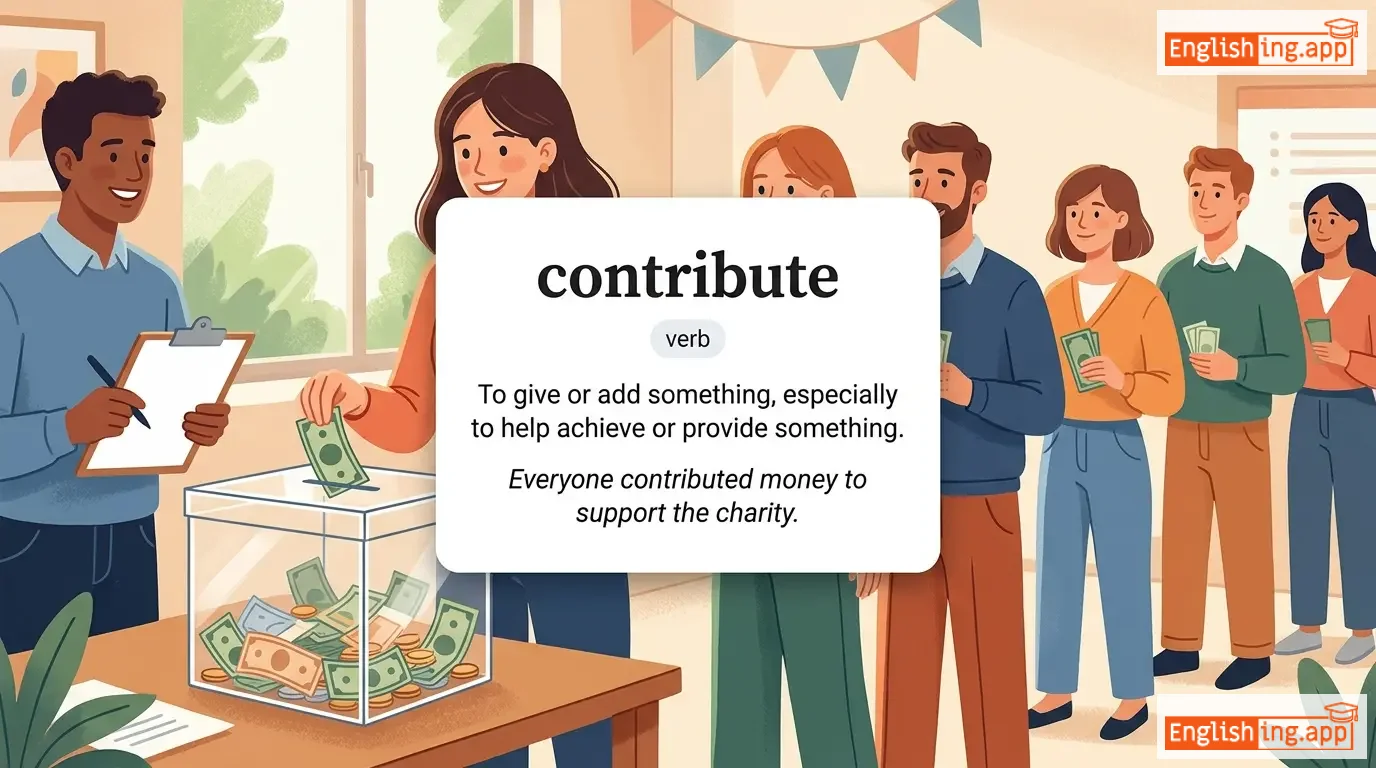
contribute definition card — visual illustration of the meaning
verb
/kənˈtrɪbjuːt/

To give or add something, especially to help achieve or provide something.

"Everyone contributed money to support the charity."
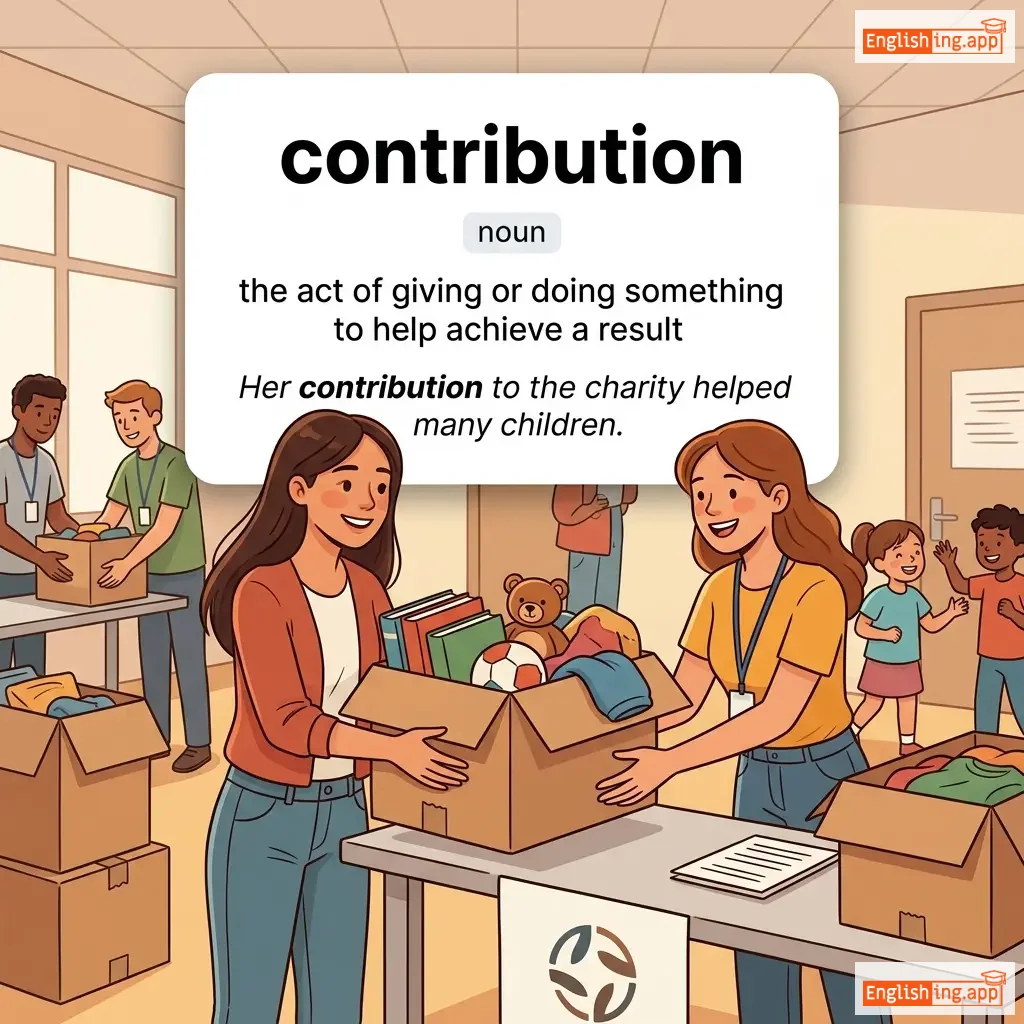
contribution definition card — visual illustration of the meaning
noun
/ˌkɒn.trɪˈbjuː.ʃən/
贡献 (gongxian)

the act of giving or doing something to help achieve a result

"Her contribution to the charity helped many children."

"她对慈善事业的贡献帮助了许多儿童。" (Ta dui cishan shiye de gongxian bangzhu le xuduo ertong.)
noun
/ˈkɒn.trɪ.bjʊ.tər/
贡献者 (gongxian zhe)

a person who gives something to help achieve a result

"He was a regular contributor to the local newspaper."

"他是当地报纸的常驻贡献者。" (Ta shi dangdi baozhi de changzhu gongxian zhe.)
contrite definition card — visual illustration of the meaning
adjective
/kənˈtraɪt/
懊悔的 (àohuǐ de)

feeling or showing remorse or guilt

"She was contrite after realizing her mistake."

"她在意识到自己的错误后感到懊悔。" (Tā zài yìshí dào zìjǐ de cuòwù hòu gǎndào àohuǐ.)
noun
/kənˈtrɪʃ.ən/
悔恼 (huǐnǎo)

the state of feeling remorseful and repentant

"His contrition was evident after the apology."

"在道歉后,他的悔恼显而易见。" (Zài dàoqiàn hòu, tā de huǐnǎo xiǎn ér yìjiàn.)
noun
/kənˈtraɪ.vəns/
装置或计划 (zhuangzhi huo jihua)

a device or plan that is cleverly or artificially created

"The clock was an intricate contrivance of gears and springs."

"这只钟是由齿轮和弹簧组成的复杂装置。" (Zhe zhi zhong shi you chǐlún hé tánhuáng zǔchéng de fùzá zhuāngzhì.)
verb
/kənˈtraɪv/
设计 (shèjì)

to plan or devise cleverly or skillfully

"She contrived a clever plan to surprise her friends."

"她想出了一个聪明的计划来给她的朋友们带来惊喜。" (Tā xiǎng chūle yīgè cōngmíng de jìhuà lái gěi tā de péngyǒumen dàilái jīngxǐ.)
adjective
/kənˈtraɪvd/
人为的或强迫的;不自然或自发的 (rénwéi de huò qiǎngpò de; bù zìrán huò zìfā de)

artificial or forced; not natural or spontaneous

"The ending of the movie felt contrived and unrealistic."

"电影的结局感觉造作且不真实。" (Diànyǐng de jiéjú gǎnjué zàozuò qiě bù zhēnshí.)
control definition card — visual illustration of the meaning
noun, verb
/kənˈtroʊl/
控制 (kòngzhì)

to exercise authority over; to manage or regulate

"He tried to control his anger during the meeting."

"他在会议中尝试控制他的愤怒。" (Tā zài huìyì zhōng chángshì kòngzhì tā de fènnù.)
adjective
/kənˈtroʊld/
受控的 (shou kong de)

managed or regulated carefully; kept within limits

"The experiment was conducted in a controlled environment."

"实验是在一个受控的环境中进行的。" (shiyan shi zai yi ge shou kong de huanjing zhong jinxing de)
noun
/kənˈtroʊlər/
控制器 (kongzhiqi)

a person or device that manages, directs, or regulates something

"The game controller made it easy to play the video game."
"游戏控制器让玩视频游戏变得更容易。" (Yóuxì kòngzhìqì ràng wán shìpín yóuxì biàn dé gèng róngyì.)
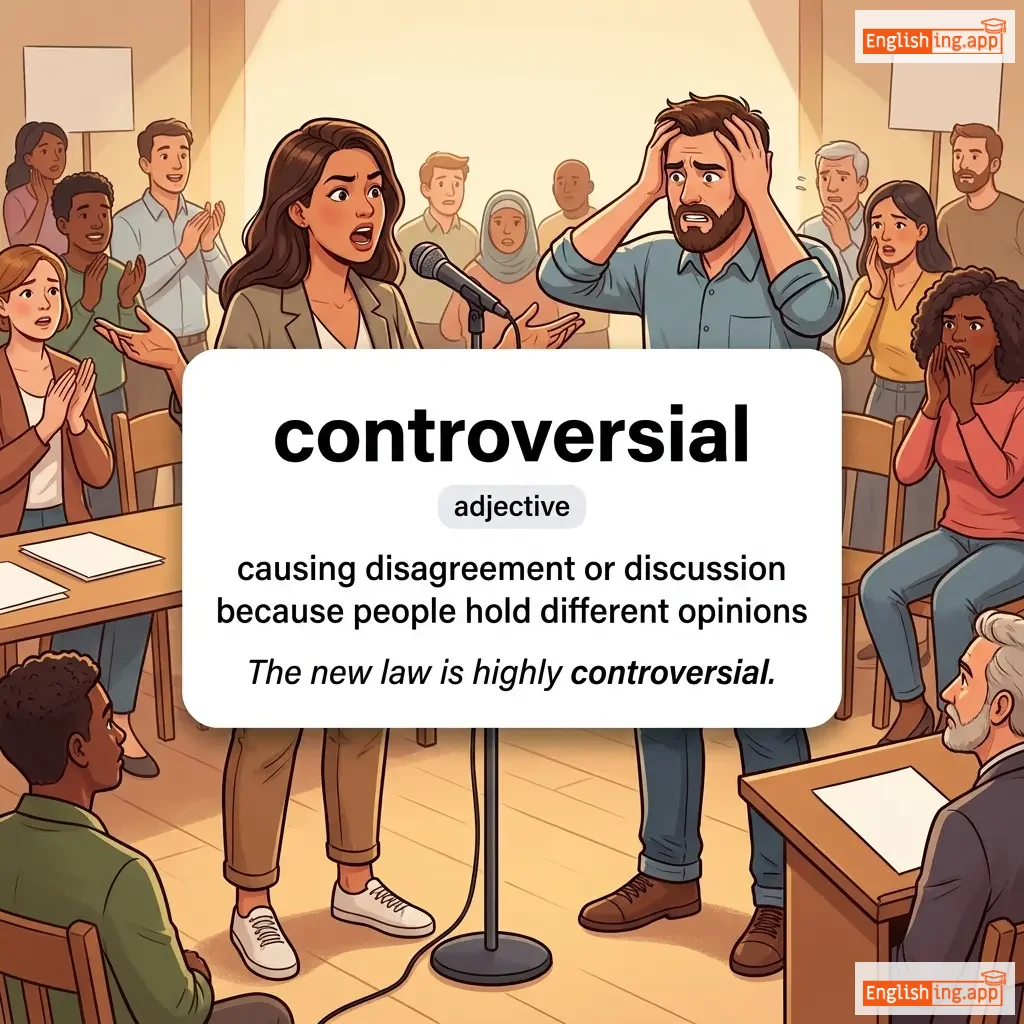
controversial definition card — visual illustration of the meaning
adjective
/ˌkɒn.trəˈvɜː.ʃəl/
有争议的 (yǒu zhēngyì de)

causing disagreement or discussion because people hold different opinions

"The new law is highly controversial."

"这项新法律非常有争议。" (zhè xiàng xīn fǎlǜ fēicháng yǒu zhēngyì)
noun
/ˈkɒn.trə.vɜːr.si/
争议 (zhēngyì)

A prolonged public disagreement or heated discussion.

"The new policy sparked a major controversy."

"新政策引发了巨大争议。" (Xīn zhèngcè yǐn fàle jùdà zhēngyì.)
verb
/ˌkɒntrəˈvɜːrt/
反驳 (fanbo)

to dispute or argue against; to contradict

"The scientist controversed the previous research findings."
"科学家反驳了之前的研究结果。" (Kexuejia fanbo le zhizhen de yanjiu jieguo.)
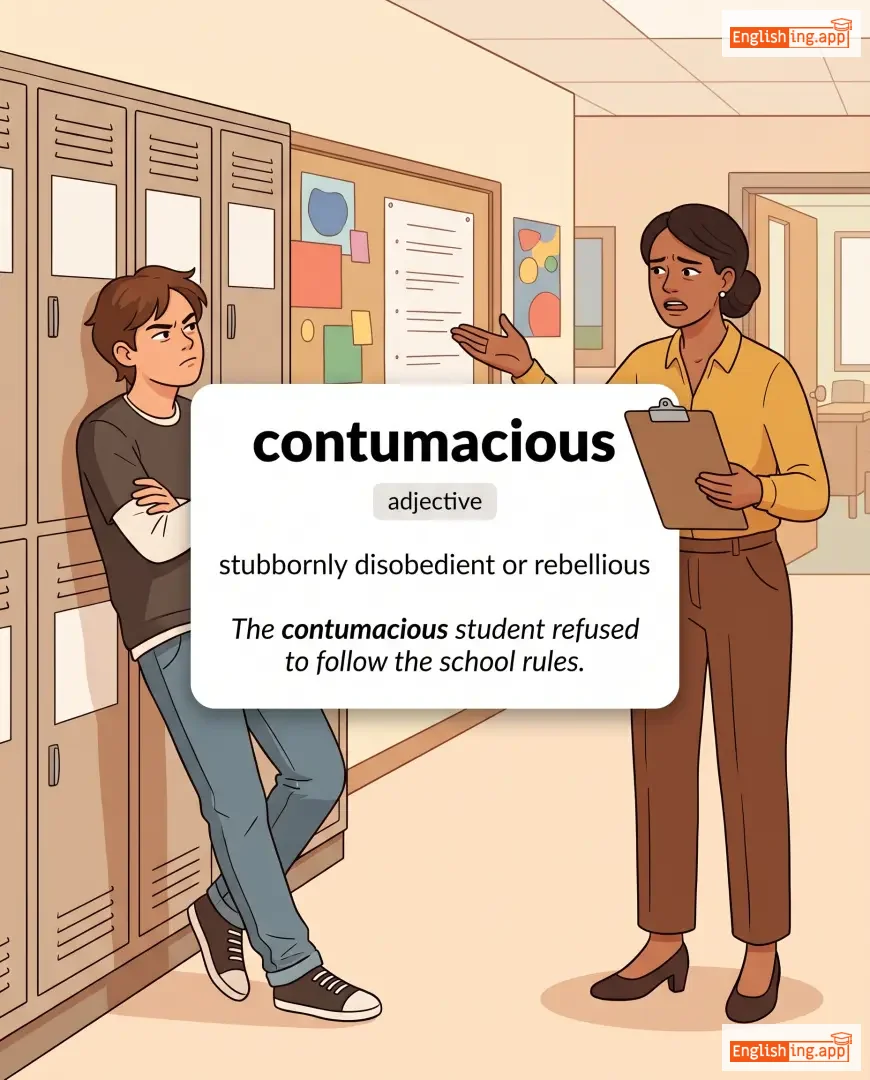
contumacious definition card — visual illustration of the meaning
adjective
/ˌkɒn.tjʊˈmeɪ.ʃəs/
固执的, 叛逆的 (gùzhí de, pànnì de)

stubbornly disobedient or rebellious

"The contumacious student refused to follow the school rules."

"那位固执的学生拒绝遵守学校的规章制度。" (Nà wèi gùzhí de xuéshēng jùjué zūnshǒu xuéxiào de guīzhāng zhìdù.)
noun
/ˈkɒn.tjʊ.mə.si/
不服从, 固执 (bù fúcóng, gùzhí)

stubborn refusal to obey authority

"His contumacy led to his suspension from the council."

"他的不服从导致他被从委员会中停职。" (Tā de bù fúcóng dǎozhì tā bèi cóng wěiyuánhuì zhōng tíngzhí.)
noun
/ˈkɒn.tjʊ.mə.li/
侮辱,轻蔑 (wǔrǔ, qīngmiè)

insulting or humiliating treatment

"He endured the contumely of his colleagues with patience."

"他耐心地忍受了同事们的轻蔑。" (Tā nàixīn de rěnshòu le tóngshìmen de qīngmiè.)
verb
/kənˈtjuːz/
撞伤 (zhuàngshāng)

to bruise by striking or hitting

"He contused his arm when he fell off the bike."

"他从自行车上摔下来,手臂被撞伤。" (Tā cóng zìxíngchē shàng shuāi xiàlái, shǒubì bèi zhuàngshāng.)
noun
/kənˈtjuː.ʒən/
淤伤,碰伤 (yū shāng, pèng shāng)

a bruise or injury without breaking the skin

"The boxer had several contusions after the match."
"拳击手在比赛后有好几个淤伤。" (Quánjī shǒu zài bǐsài hòu yǒu hǎo jǐ gè yū shāng.)
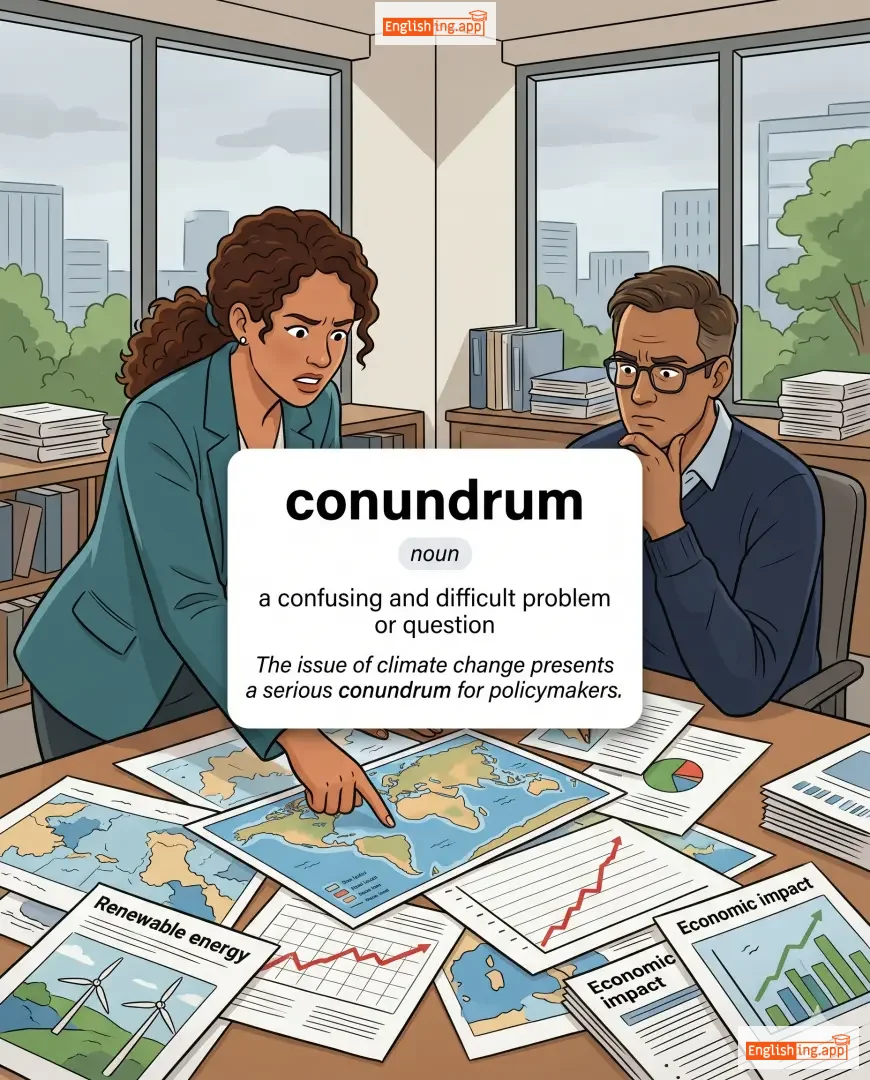
conundrum definition card — visual illustration of the meaning
noun
/kəˈnʌndrəm/
难题 (nanti)

a confusing and difficult problem or question

"The issue of climate change presents a serious conundrum for policymakers."

"气候变化问题为政策制定者带来了一个严重的难题。" (Qihou bianhua wenti wei zhengce zhidingzhe dailai le yi ge yanzhong de nanti.)
verb
/ˌkɒnvəˈlɛs/
恢复健康,在疾病或治疗后恢复力量 (huīfù jiànkāng, zài jíbìng huò zhìliáo hòu huīfù lìliàng)

to recover health and strength after illness or medical treatment

"After the surgery, she spent several weeks convalescing at home."

"手术后,她在家里恢复了几个星期。" (Shǒushù hòu, tā zài jiālǐ huīfù le jǐ gè xīngqī.)
noun
/ˌkɒnvəˈlɛsns/
康复期 (kang fu qi)

the period of time spent recovering from an illness or medical treatment

"His convalescence lasted for almost two months after the accident."

"事故后的康复期持续了近两个月。" (Shigu hou de kangfuqi chixu le jin liang ge yue.)
adjective
/ˌkɒnvəˈlɛsnt/
恢复中的,正在从疾病或治疗中恢复 (huīfù zhōng de, zhèngzài cóng jíbìng huò zhìliáo zhōng huīfù)

recovering from an illness or medical treatment

"The hospital has a special ward for convalescent patients."

"医院有一个特别的病房,供恢复中的病人使用。" (Yīyuàn yǒu yīgè tèbié de bìngfáng, gòng huīfù zhōng de bìngrén shǐyòng.)
verb
/kənˈviːn/
集合,召集会议或集会 (jihe, zhaoji huiyi huo jihui)

to come together or assemble, especially for a meeting or formal gathering

"The board will convene tomorrow to discuss the new policy."

"董事会将在明天召开,讨论新的政策。" (Dongshihui jiang zai mingtian zhaokai, taolun xin de zhengce.)
noun
/kənˈviːniəns/
便利 (bianli)

the state of being able to do something easily or comfortably

"Online shopping offers great convenience for busy people."

"网上购物为忙碌的人们提供了很大的便利。" (Wǎngshàng gòuwù wèi mánglù de rénmen tígōng le hěn dà de biànlì.)
adjective
/kənˈviː.ni.ənt/
方便 (fāngbiàn)

suitable or easy to use; fitting in well with one's needs

"This shop is convenient for my daily needs."
"这家商店方便我的日常需求。" (Zhè jiā shāngdiàn fāngbiàn wǒ de rìcháng xūqiú.)
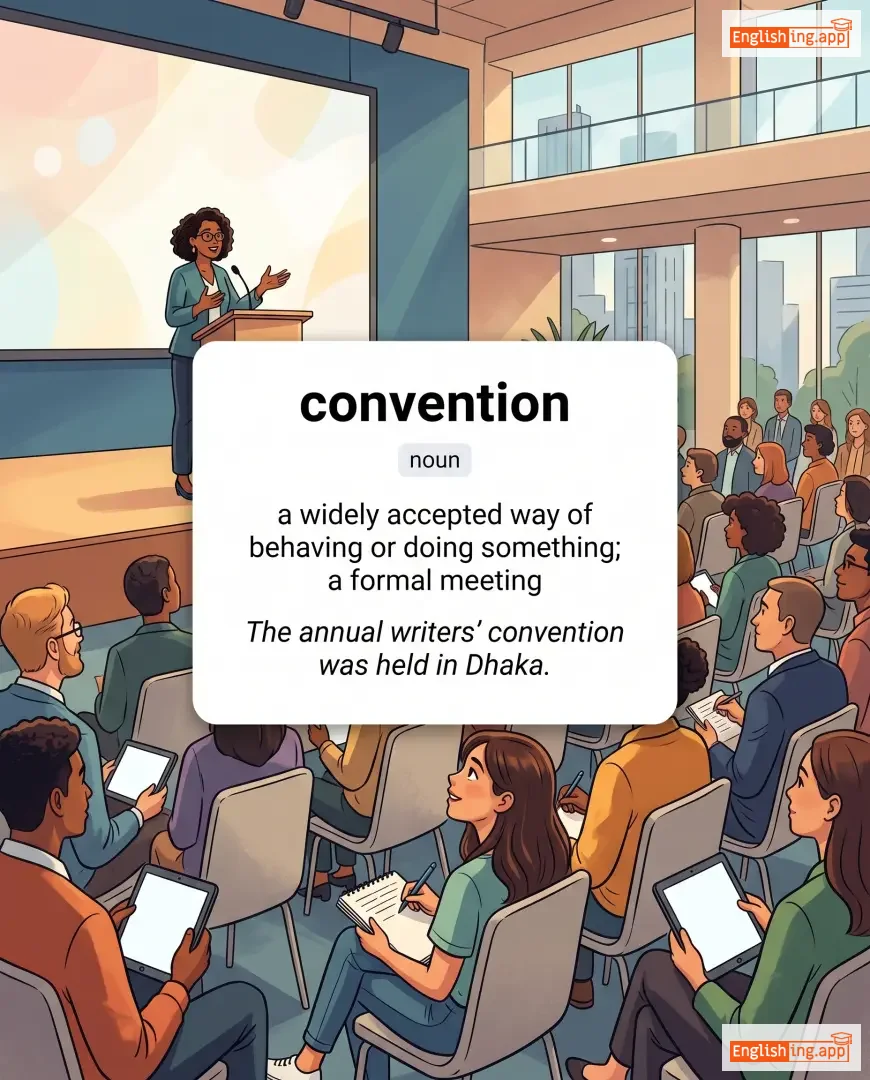
convention definition card — visual illustration of the meaning
noun
/kənˈvɛnʃən/
会议 (huiyi)

a widely accepted way of behaving or doing something; a formal meeting

"The annual writers' convention was held in Dhaka."

"年度作家大会在达卡举行。" (Niandu zuojia dahui zai Daka juxing.)
conventional definition card — visual illustration of the meaning
adjective
/kənˈvɛnʃənəl/
传统的 (chuántǒng de)

based on or in accordance with what is generally done or believed

"He prefers conventional medicine over alternative treatments."
"他更喜欢传统医学而非替代疗法。" (Tā gèng xǐhuān chuántǒng yīxué ér fēi tìdài liáofǎ.)
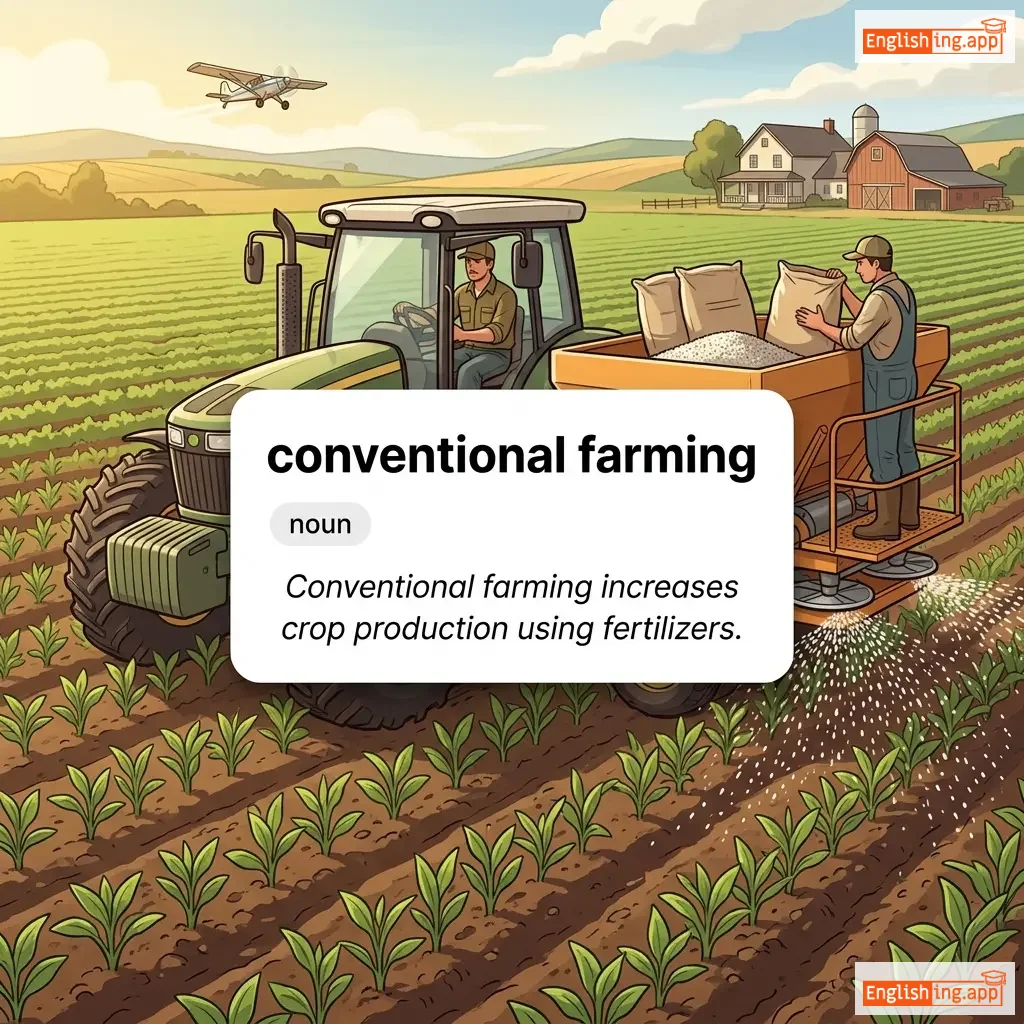
conventional farming definition card — visual illustration of the meaning
noun
/kənˈvɛn.ʃən.əl ˈfɑːr.mɪŋ/
传统农业 (chuántǒng nóngyè)

Traditional farming method using synthetic fertilizers, pesticides, and modern technology.

"Conventional farming increases crop production using fertilizers."
"传统农业通过使用肥料增加作物生产。" (Chuántǒng nóngyè tōngguò shǐyòng féiliào zēngjiā zuòwù shēngchǎn.)
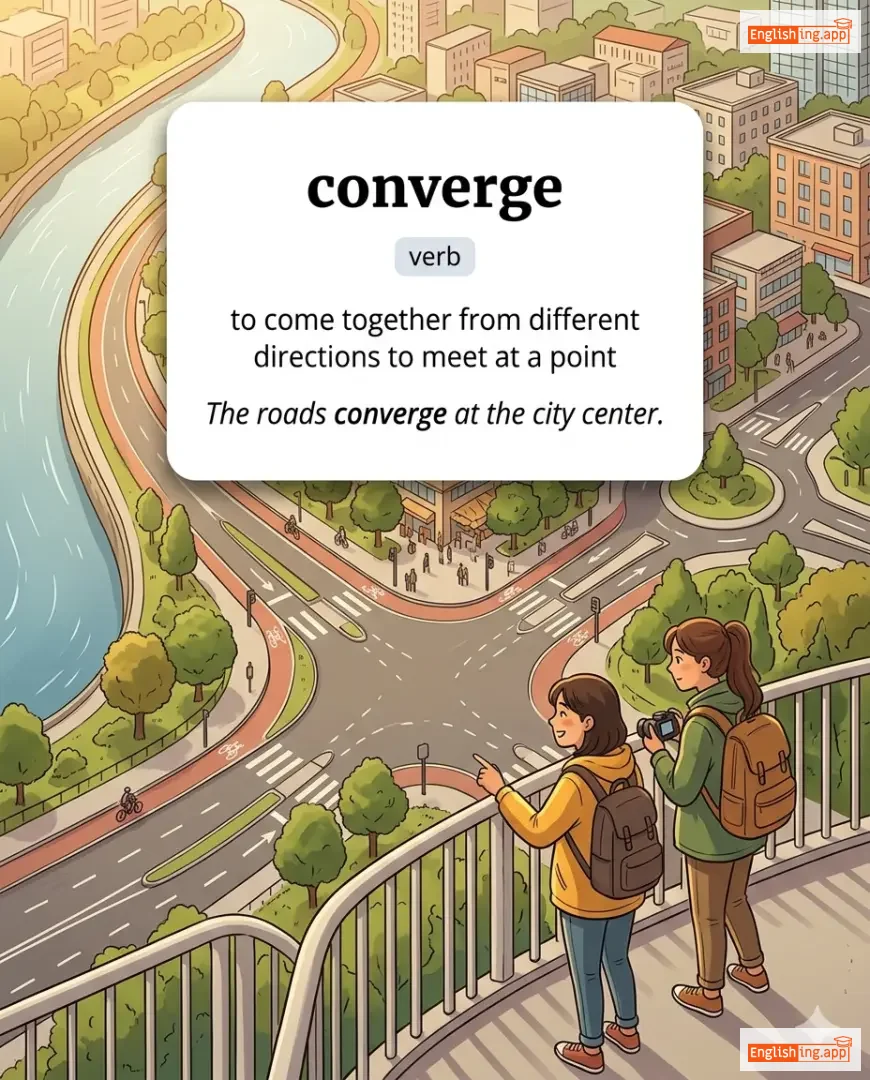
converge definition card — visual illustration of the meaning
verb
/kənˈvɜːrdʒ/
汇聚 (hui ju)

to come together from different directions to meet at a point

"The roads converge at the city center."

"道路在市中心汇聚。" (Dàolù zài shì zhōngxīn huìjù.)
convergence definition card — visual illustration of the meaning
noun
/kənˈvɜː.dʒəns/
汇聚 (huìjù)

the process of coming together or becoming similar

"The convergence of technology and education is creating new opportunities."

"技术与教育的汇聚正在创造新的机会。" (Jìshù yǔ jiàoyù de huìjù zhèngzài chuàngzào xīn de jīhuì.)
adjective
/kənˈvɜːrdʒənt/
汇聚的 (huìjù de)

tending to move toward a common point or result

"The two rivers have a convergent path before entering the lake."

"这两条河流在进入湖泊之前有一条汇聚路径。" (Zhè liǎng tiáo héliú zài jìnrù húpō zhīqián yǒu yītiáo huìjù lùjìng.)
adjective
/kənˈvɜːrsənt/
熟悉,精通 (shúxī, jīngtōng)

familiar with or knowledgeable about something

"She is conversant with the latest developments in technology."

"她熟悉最新的技术发展。" (Tā shúxī zuìxīn de jìshù fāzhǎn.)
noun
/ˌkɒnvəˈseɪʃn/
对话 (duihua)

an informal talk between two or more people, in which ideas, feelings, and thoughts are exchanged

"We had a long conversation about future plans."

"我们就未来的计划进行了长时间的对话。" (Wo men jiu wei lai de jihua jin xing le chang shijian de duihua.)
converse definition card — visual illustration of the meaning
verb
/kənˈvɜːrs/
交谈 (jiaotán)

to engage in spoken exchange of ideas or talk

"They often converse about literature and art."

"他们经常讨论文学和艺术。" (Tāmen jīngcháng tǎolùn wénxué hé yìshù.)
adverb
/kənˈvɜːrsli/
相反地 (xiāngfǎn de)

in an opposite or contrary manner

"He is rich, conversely, his brother struggles financially."

"他很富有,相反地,他的兄弟在经济上挣扎。" (Tā hěn fùyǒu, xiāngfǎn de, tā de xiōngdì zài jīngjì shàng zhēngzhá.)
Conversion definition card — visual illustration of the meaning
noun
/kənˈvɜːrʒən/
转换,变化 (zhuǎnhuàn, biànhuà)

the act or process of changing from one form to another

"The conversion of the old factory into apartments took two years."

"将老厂房转换为公寓花费了两年时间。" (Jiāng lǎo chǎngfáng zhuǎnhuàn wéi gōngyù huāfèi le liǎng nián shíjiān.)