
词汇表

英语词汇词典 | 单词含义、定义和示例

Consumption definition card — visual illustration of the meaning
noun
/kənˈsʌmpʃən/
消费 (xiaofei)

The act of using up resources, goods, or energy; also refers to the eating or drinking of something.

"The consumption of electricity increases during the summer."

"夏季电力消费增加。" (Xiàjì diànlì xiāofèi zēngjiā.)
adjective
/kənˈsʌmptɪv/
消费性的 (xiaofeixing de)

Relating to or characterized by consumption; historically used to describe someone suffering from tuberculosis.

"The doctor advised against consumptive habits."

"医生建议避免消费性习惯。" (Yisheng jianyi bimi xiaofeixing xiguan.)
noun/verb
/ˈkɒntækt/
联系 (liánxì)

Communication or connection with someone.

"You should contact your doctor if symptoms persist."

"如果症状持续,您应该联系您的医生。" (Rúguǒ zhèngzhuàng chíxù, nín yīnggāi liánxì nín de yīshēng.)
noun
/kənˈteɪdʒən/
传染 (chuanran)

The communication of disease from one person to another by close contact; also the spread of harmful ideas or behaviors.

"Fear spread like a contagion through the crowd."

"恐惧像传染一样在群众中传播开来。" (Kǒngjù xiàng chuánrǎn yīyàng zài qúnzhòng zhōng chuánbò kāilái.)
adjective
/kənˈteɪdʒəs/
传染性 (chuánrǎn xìng)

Able to be transmitted from one person to another, typically by direct contact; also used for emotions or attitudes that spread quickly.

"Her laughter was so contagious that everyone started laughing."
"她的笑声如此传染性,大家都开始笑了。" (Tā de xiàoshēng rúcǐ chuánrǎn xìng, dàjiā dōu kāishǐ xiàole.)
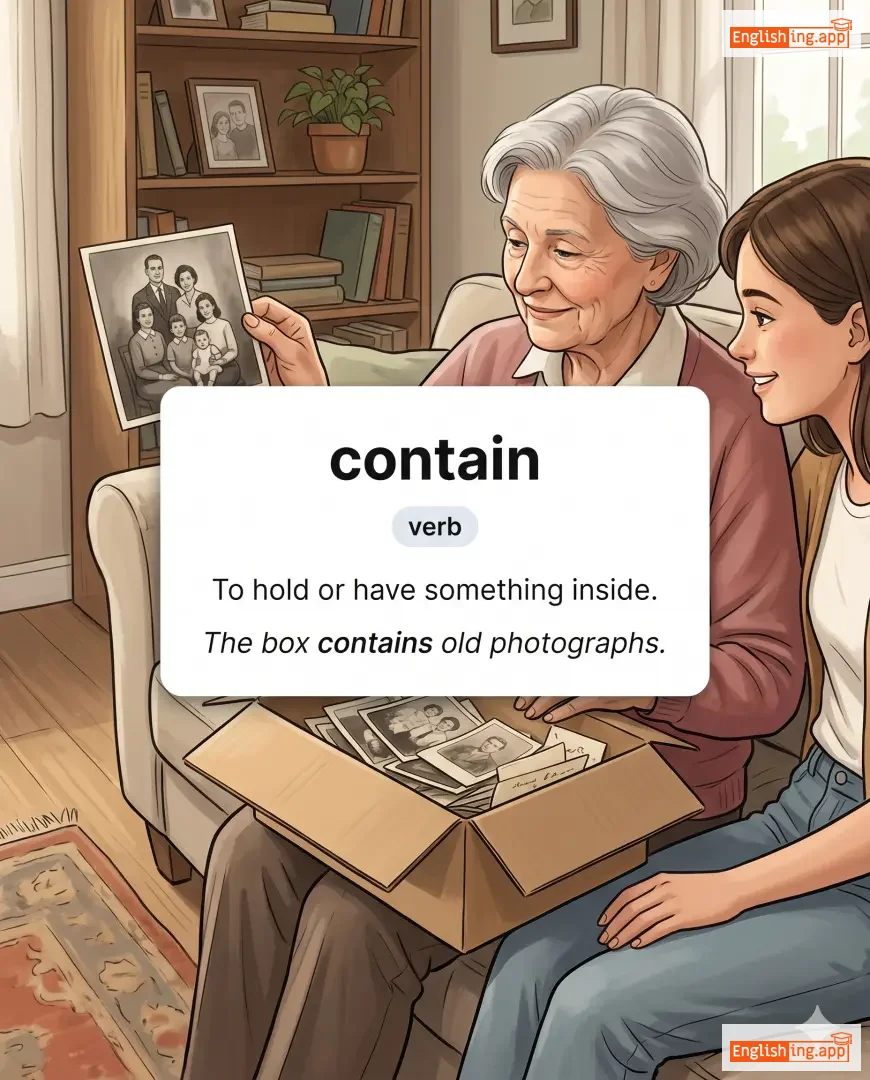
contain definition card — visual illustration of the meaning
verb
/kənˈteɪn/
包含 (bāohán)

To hold or have something inside.

"The box contains old photographs."
"盒子里有旧照片。" (Hézi lǐ yǒu jiù zhàopiàn.)
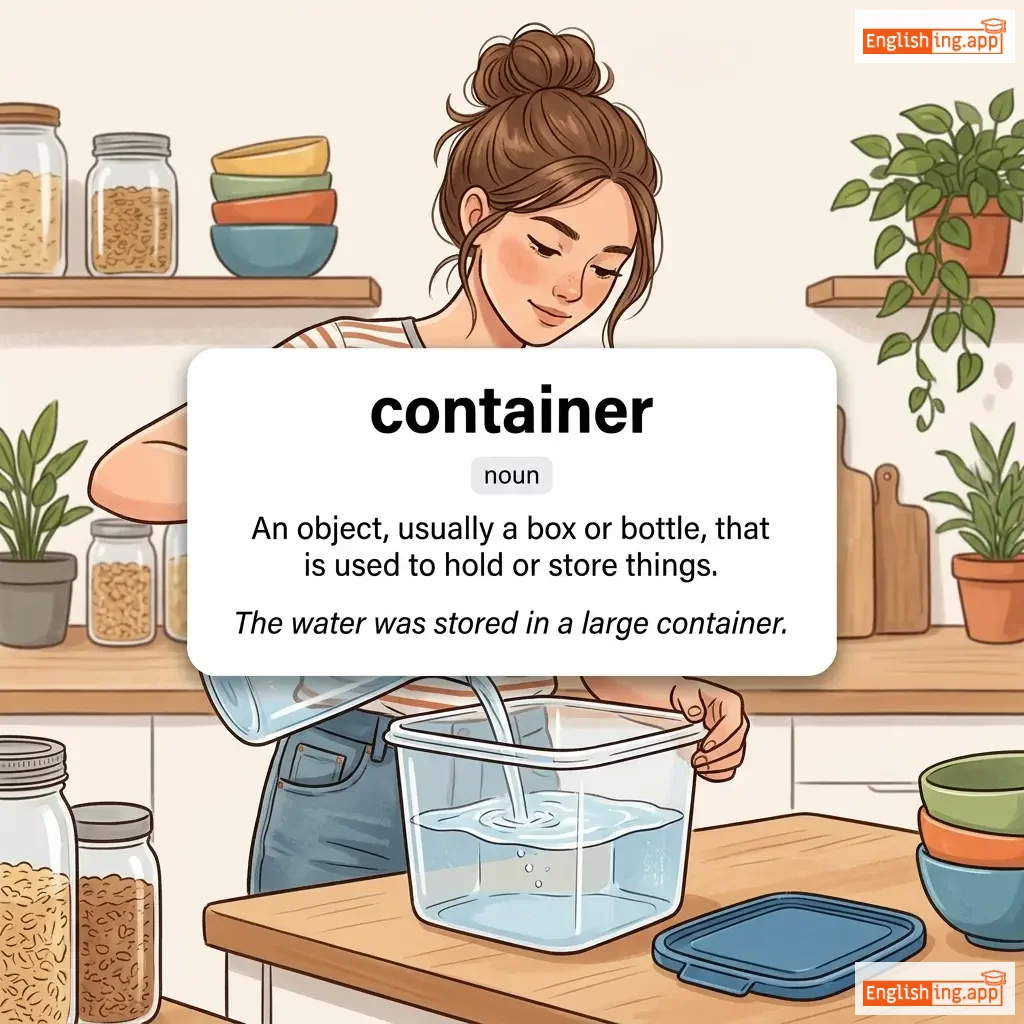
container definition card — visual illustration of the meaning
noun
/kənˈteɪnər/
容器 (rongqi)

An object, usually a box or bottle, that is used to hold or store things.

"The water was stored in a large container."

"水被存储在一个大容器中。" (Shuǐ bèi cúnchú zài yīgè dà róngqì zhōng.)
verb
/kənˈtæmɪneɪt/

To make something impure, dirty, or harmful by contact with a poisonous or polluting substance.

"The river was contaminated by industrial waste."
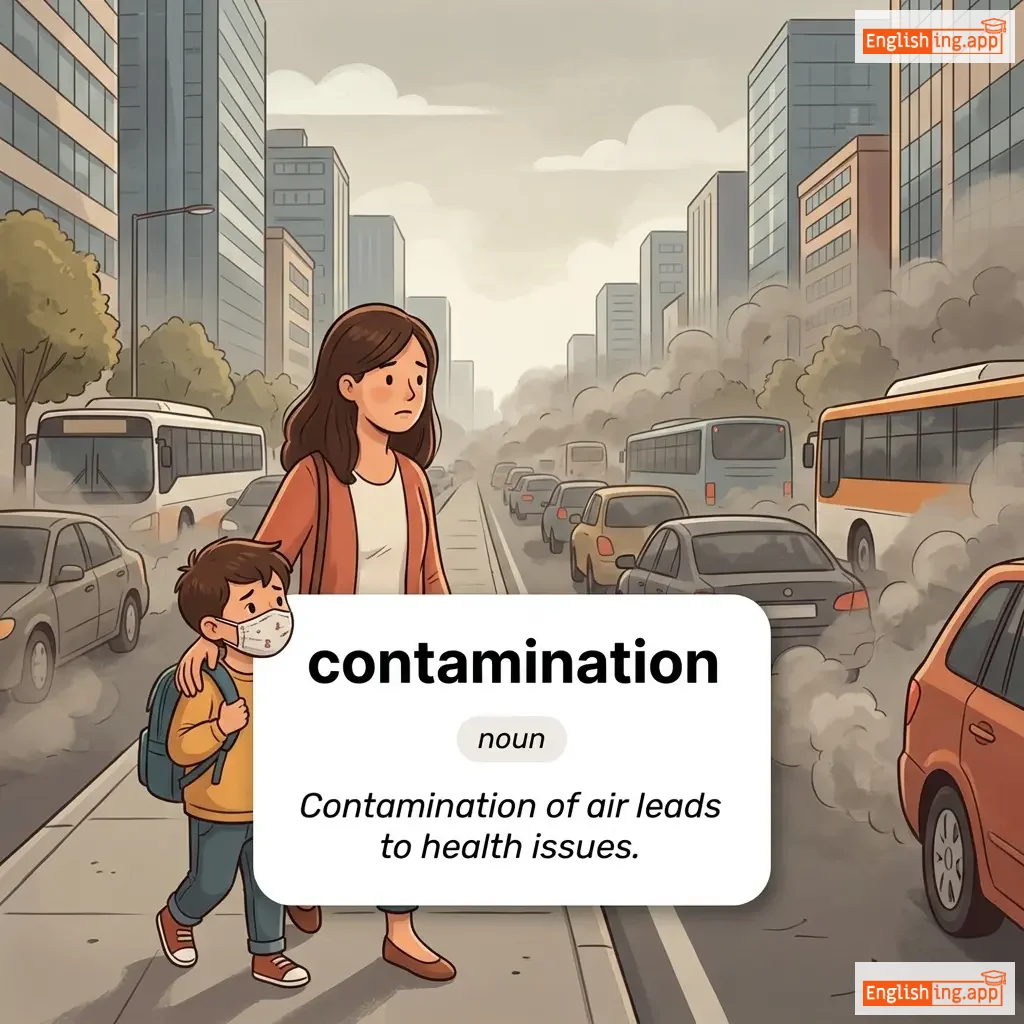
contamination definition card — visual illustration of the meaning
noun
kənˌtæm.ɪˈneɪ.ʃən
污染 (wūrǎn)

The process of making something less pure by exposure to or addition of a poisonous or polluting substance.

"Contamination of air leads to health issues."

"空气污染导致健康问题。" (Kōngqì wūrǎn dǎozhì jiànkāng wèntí.)
verb
/kənˈtɛm/
轻视 (qīngshì)

to treat or regard with disdain, scorn, or contempt

"He would never contemn honest work, no matter how humble."

"他绝不会轻视诚实的工作,无论它多么卑微。" (Tā jué bù huì qīngshì chéngshí de gōngzuò, wúlùn tā duōme bēiwēi.)
verb
/ˈkɒntəmpleɪt/

to think deeply and carefully about something; to consider thoughtfully

"She sat quietly to contemplate her future plans."

contemplation definition card — visual illustration of the meaning
noun
ˌkɒn.təmˈpleɪ.ʃən
沉思, 深思熟虑 (chénsī, shēnsī shúlǜ)

The action of looking thoughtfully at something for a long time; deep reflective thought.

"He spent hours in contemplation about his future."

"他花了几个小时在思考他的未来。" (Tā huāle jǐ gè xiǎoshí zài sīkǎo tā de wèilái.)
contemplative definition card — visual illustration of the meaning
adjective
ˈkɒn.təm.plə.tɪv
沉思的或冥想的 (chénsī de huò míngxiǎng de)

Expressing or involving prolonged thought; meditative and reflective.

"He spent a contemplative evening reflecting on his decisions."

"他度过了一个沉思的晚上,反思他的决定。" (Tā dùguòle yīgè chénsī de wǎnshàng, fǎnsī tā de juédìng.)
adjective
/kənˌtɛmpəˈreɪniəs/
同时代的 (tóng shídài de)

existing, happening, or occurring at the same time

"The two artists were contemporaneous and often influenced each other."

"这两位艺术家是同时代的,并且经常互相影响。" (Zhè liǎng wèi yìshùjiā shì tóng shídài de, bìngqiě jīngcháng hùxiāng yǐngxiǎng.)
adjective
/kənˈtɛmpərɛri/
当代的, 现代的 (dāngdài de, xiàndài de)

belonging to the same time period; modern

"She enjoys contemporary art exhibitions."

"她喜欢现代艺术展览。" (Tā xǐhuān xiàndài yìshù zhǎnlǎn.)
noun
/kənˈtɛmpt/

a strong feeling of dislike and lack of respect towards someone or something

"He spoke with contempt about the corrupt officials."

adjective
/kənˈtɛmptəbl/
可鄙的, 令人厌恶的 (kě bǐ de, lìng rén yàn wù de)

deserving of contempt; despicable

"His deceitful actions were truly contemptible."

"他的欺骗行为真是可鄙的。" (Tā de qīpiàn xíngwéi zhēn shì kě bǐ de.)
adjective
/kənˈtɛmptʃuəs/
轻蔑的, 鄙视的 (qīngmiè de, bǐshì de)

showing or expressing contempt; scornful

"She gave him a contemptuous glance."

"她给了他一个轻蔑的眼神。" (Tā gěile tā yīgè qīngmiè de yǎnshén.)
contend definition card — visual illustration of the meaning
verb
/kənˈtɛnd/
竞争,主张 (jìngzhēng, zhǔzhāng)

to strive or compete for something; to assert earnestly

"Athletes from around the world contend for the championship."

"来自世界各地的运动员为冠军而争斗。" (Láizì shìjiè gèdì de yùndòngyuán wèi guànjūn ér zhēngdòu.)
noun
/kənˈtɛndər/
竞争者, 争夺者 (jingzhengzhe, zhengduozhe)

a person or team competing for a title or prize

"She is a strong contender for the mayoral position."

"她是市长职位的强有力竞争者。" (Ta shi shizhang zhiwei de qiang youli jingzhengzhe.)
adjective
/ˈkɒntɛnt/
满意的, 高兴的 (mǎnyì de, gāoxìng de)

in a state of satisfaction; pleased

"He felt content after finishing his work."

"他在完成工作后感到满意。" (Tā zài wánchéng gōngzuò hòu gǎndào mǎnyì.)
adjective
/kənˈtɛntɪd/
满足的 (manzu de)

Feeling or expressing happiness and satisfaction.

"She was contented with her simple life."
"她对她简单的生活感到满足。" (Tā duì tā jiǎndān de shēnghuó gǎndào mǎnzú.)
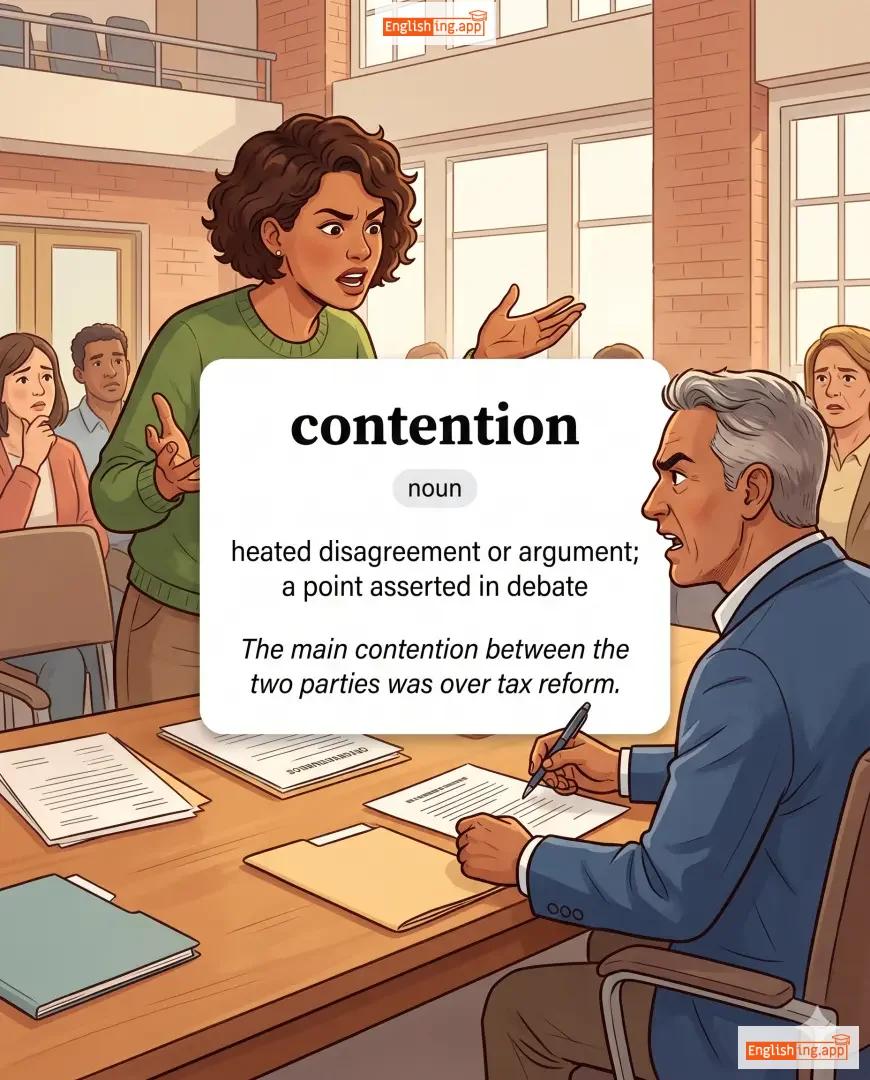
contention definition card — visual illustration of the meaning
noun
/kənˈtɛnʃən/
争议, 分歧 (zhēngyì, fēnqí)

heated disagreement or argument; a point asserted in debate

"The main contention between the two parties was over tax reform."
"两党之间的主要争议是关于税务改革。" (Liǎng dǎng zhī jiān de zhǔyào zhēngyì shì guānyú shuìwù gǎigé.)
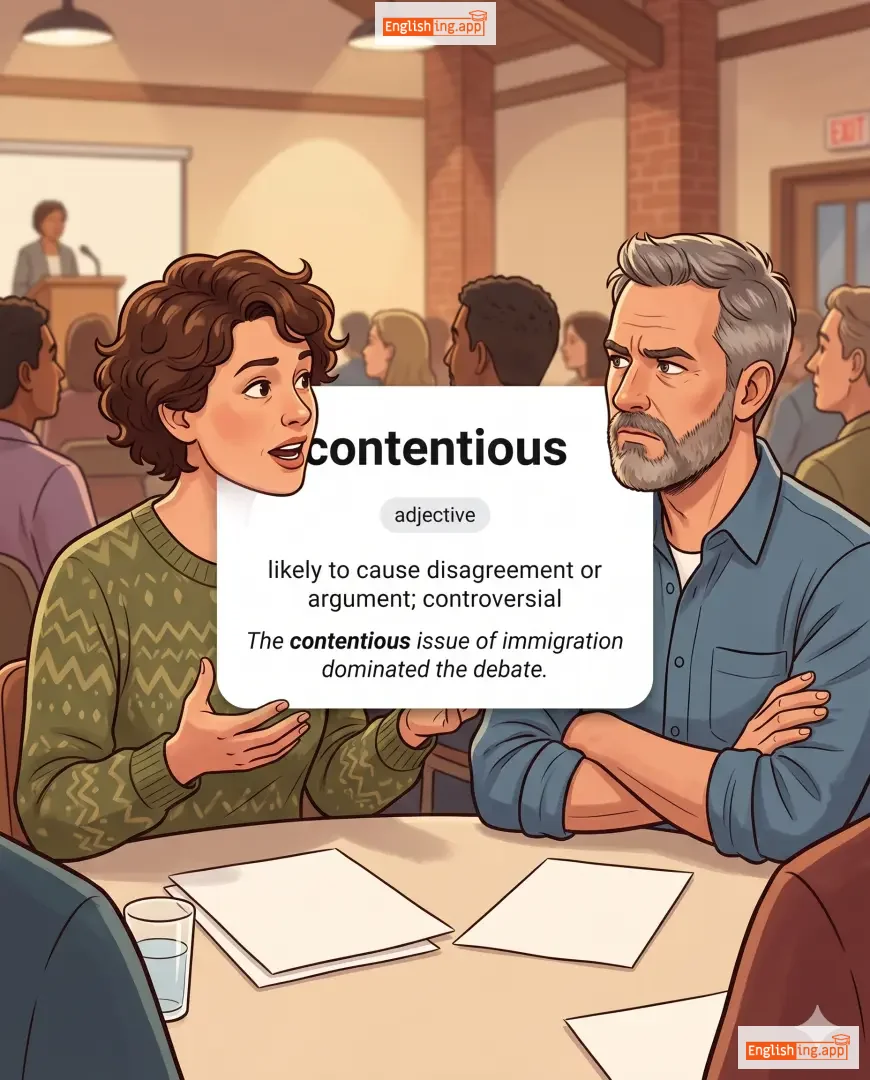
contentious definition card — visual illustration of the meaning
adjective
/kənˈtɛnʃəs/
有争议的 (yǒu zhēngyì de)

likely to cause disagreement or argument; controversial

"The contentious issue of immigration dominated the debate."

"移民问题的争议性在辩论中占据主导地位。" (Yímín wèntí de zhēngyì xìng zài biànlùn zhōng zhànjù zhǔdǎo dìwèi.)
noun
/kənˈtentmənt/
满足感 (manzugan)

a state of happiness and satisfaction with what one has

"She felt a deep sense of contentment after helping others."

"帮助他人之后,她感到深深的满足感。" (bangzhu taren zhihou ta gandao shenshen de manzugan)
verb, noun
/ˈkɒntɛst/
竞赛, 挑战 (jìngsài, tiǎozhàn)

verb: to compete or challenge; noun: a competition or dispute

"She decided to contest the election against the incumbent."

"她决定挑战现任者的选举。" (Tā juédìng tiǎozhàn xiànrèn zhě de xuǎnjǔ.)
noun
/ˈkɒntɛkst/
上下文 (shàngxiàwén)

the circumstances or background relevant to an event, statement, or idea

"To understand the quote, you need to know the context in which it was said."
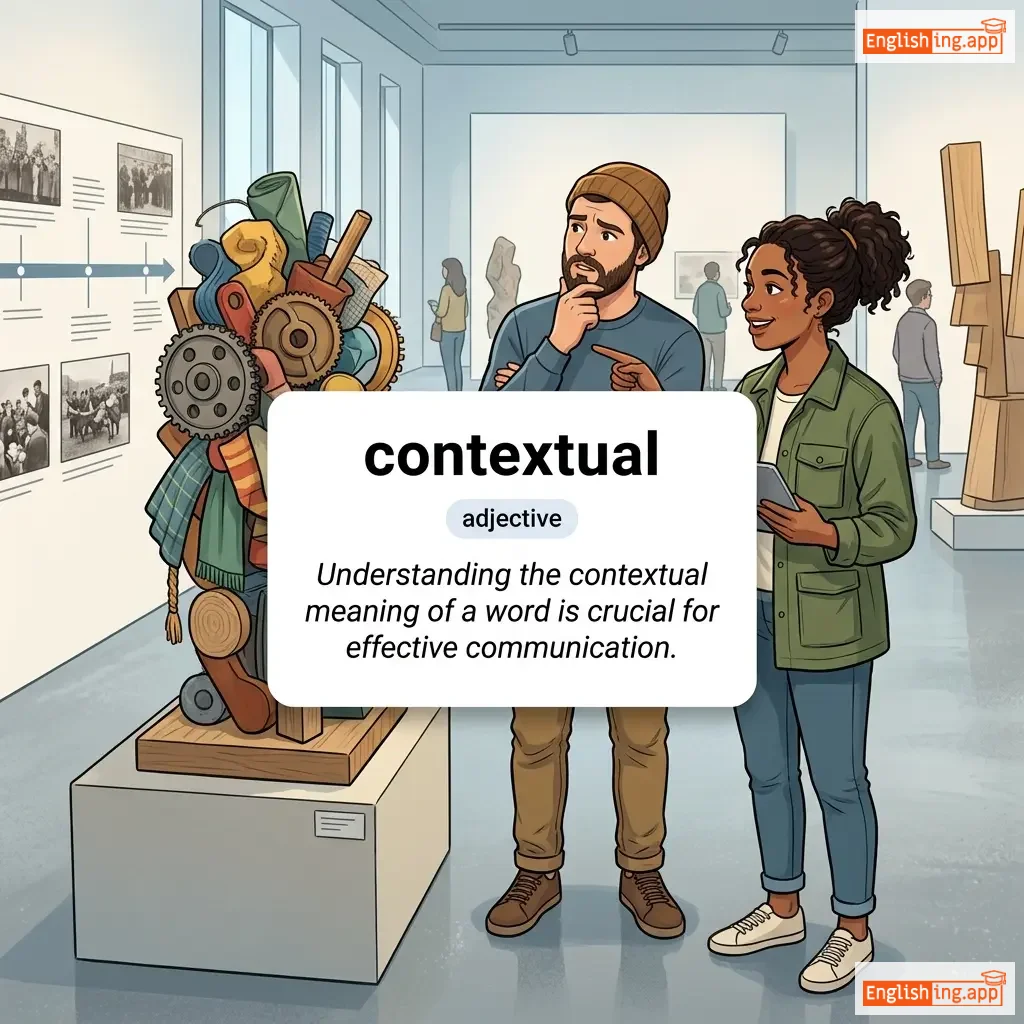
"要理解这句话,你需要知道它说的上下文。" (Yào lǐjiě zhè jù huà, nǐ xūyào zhīdào tā shuō de shàngxiàwén.)
contextual definition card — visual illustration of the meaning
adjective
/kənˈtɛkstʃʊəl/
情境的,基于上下文的 (qíngjìng de, jīyú shàngxiàwén de)

Depending on or relating to the circumstances that form the setting for an event or statement.

"Understanding the contextual meaning of a word is crucial for effective communication."
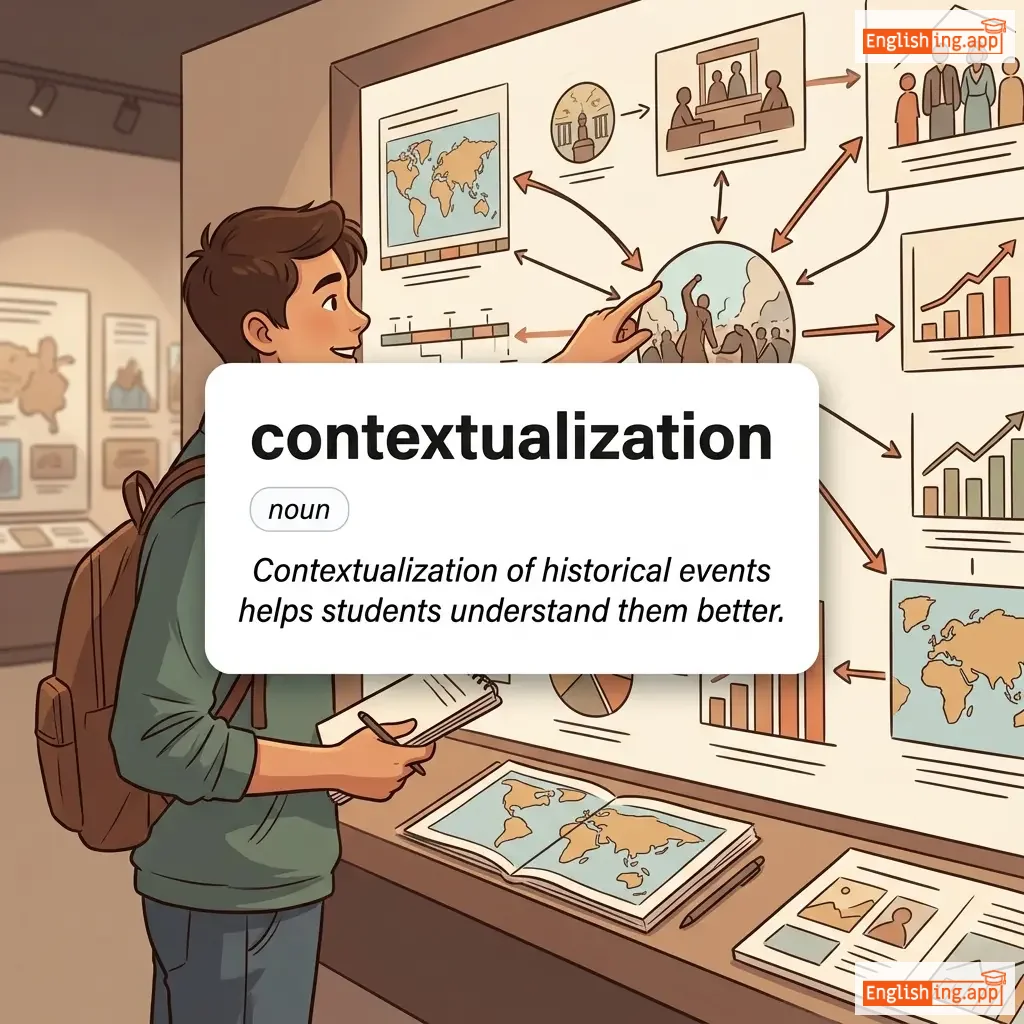
"理解一个词的情境意义对于有效沟通至关重要。" (Lǐjiě yīgè cí de qíngjìng yìyì duìyú yǒuxiào gōutōng zhìguān zhòngyào.)
contextualization definition card — visual illustration of the meaning
noun
/kɒnˌtek.stʃu.ə.laɪˈzeɪ.ʃən/
情境化 (qingjinghua)

The process of placing something in its proper context or setting to understand it better.

"Contextualization of historical events helps students understand them better."

"历史事件的情境化帮助学生更好地理解它们。" (Lìshǐ shìjiàn de qíngjìng huà bāngzhù xuéshēng gèng hǎo de lǐjiě tāmen.)
verb
/kənˈtɛkstʃuəlaɪz/
使……有背景 (shǐ... yǒu bèijǐng)

to place something in a context or interpret it in relation to its surroundings

"The teacher contextualized the historical event to make it more relevant for students."

"老师将历史事件置于背景中,以使其对学生更加相关。" (Lǎoshī jiāng lìshǐ shìjiàn zhì yú bèijǐng zhōng, yǐ shǐ qí duì xuéshēng gèng jiā xiāngguān.)
noun
/kɒn.tɪˈɡjuː.ɪ.ti/
接壤 (jiērǎng)

the state of being in direct contact or next to each other

"The contiguity of the two countries facilitates trade."
"这两个国家的接壤促进了贸易。" (Zhè liǎng gè guójiā de jiērǎng cùjìnle màoyì.)
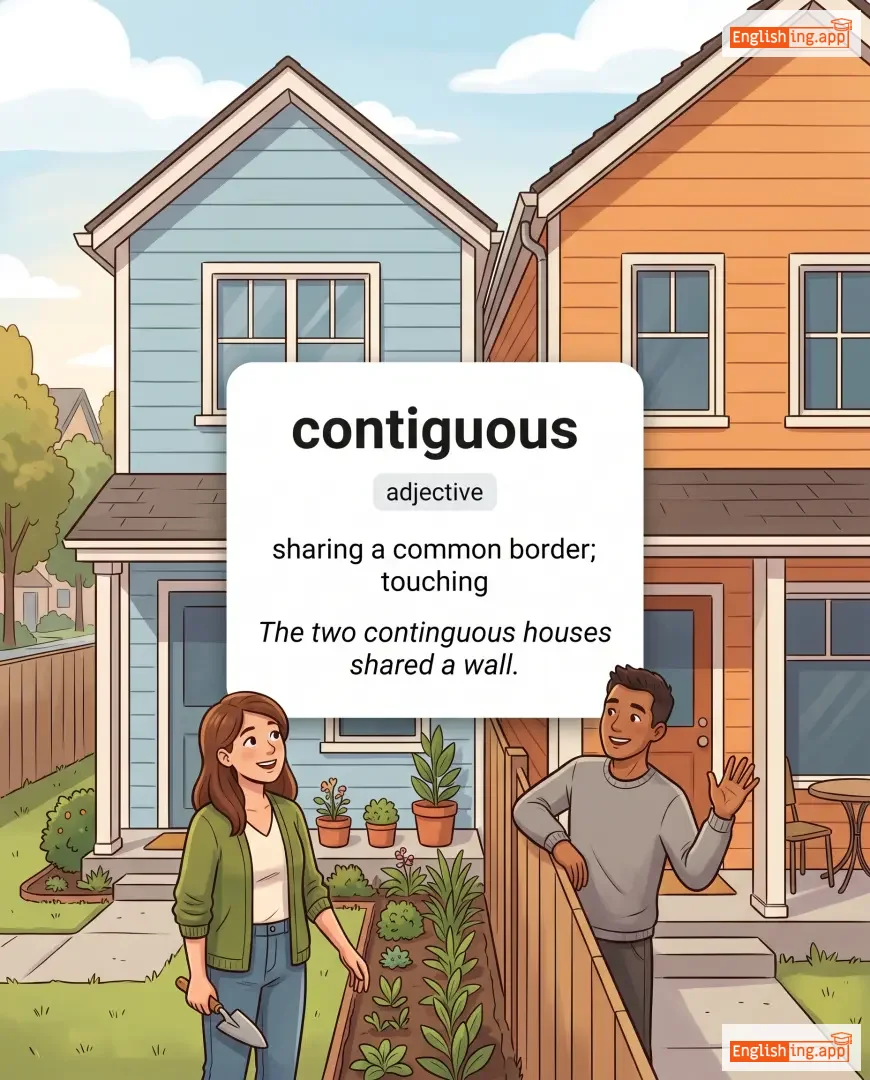
contiguous definition card — visual illustration of the meaning
adjective
/kənˈtɪɡ.ju.əs/
相邻 (xianglin)

sharing a common border; touching

"The two continguous houses shared a wall."
"这两座相邻的房子共享了一面墙。" (Zhe liang zuo xianglin de fangzi gongxiang le yi mian qiang.)
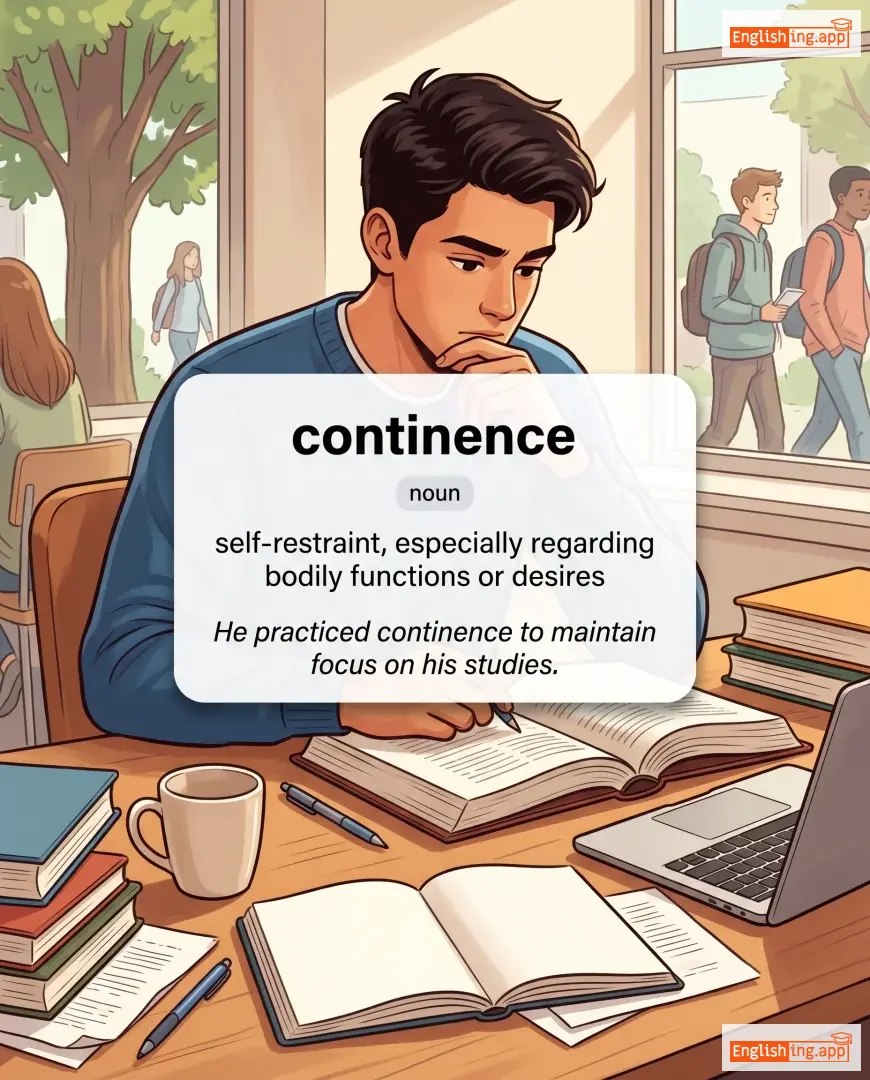
continence definition card — visual illustration of the meaning
noun
/ˈkɒn.tɪ.nəns/
节制 (jiezhi)

self-restraint, especially regarding bodily functions or desires

"He practiced continence to maintain focus on his studies."

"他练习节制以保持对学业的专注。" (Tā liànxí jiezhi yǐ bǎochí duì xuéyè de zhuānzhù.)
noun
/ˈkɒntɪnənt/
大陆 (dàlù)

one of the large landmasses on Earth such as Asia, Africa, or Europe

"Asia is the largest continent in the world."
"亚洲是世界上最大的大陆。" (Yàzhōu shì shìjiè shàng zuì dà de dàlù.)
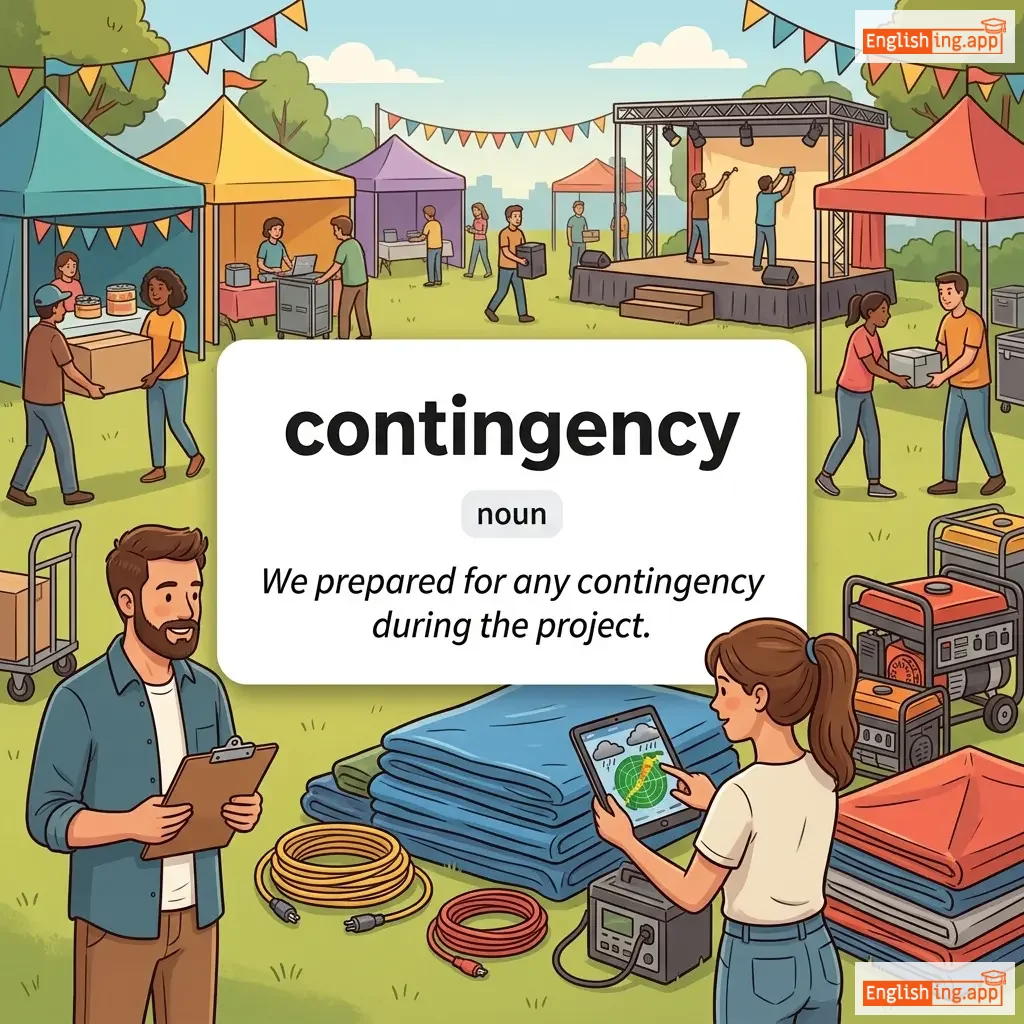
contingency definition card — visual illustration of the meaning
noun
/kənˈtɪn.dʒən.si/
应急情况 (yingji qingkuang)

a future event or circumstance that is possible but cannot be predicted with certainty

"We prepared for any contingency during the project."

"我们为项目中的任何应急情况做好了准备。" (Women wei xiangmu zhong de renhe yingji qingkuang zuohao le zhunbei.)
adjective,noun
/kənˈtɪn.dʒənt/
取决于 / 队伍 (qǔ jué yú / duì wǔ)

dependent on something else; a group of people representing an organization

"Attendance is contingent on prior registration. / A contingent of students attended the conference."

"出席取决于事先注册。 / 一个学生代表团参加了会议。" (chūxí qǔ jué yú shìxiān zhùcè. / yīgè xuéshēng dàibiǎo tuántuán cānjiāle huìyì.)
adjective
/kənˈtɪn.ju.əl/
持续的;不停的 (chíxù de; bùtíng de)

happening repeatedly over a long period of time; constant and uninterrupted

"The continual noise from the construction site was very annoying."

"来自建筑工地的持续噪音非常让人烦恼。" (Láizì jiànzhú gōngdì de chíxù zàoyīn fēicháng ràng rén fánnǎo.)
adverb
/kənˈtɪnjuəli/
持续 (chixu)

in a continuous and uninterrupted way

"The rain has been falling continually for hours."

"雨已经持续下了好几个小时。" (Yu yijing chixu xiala haoji ge xiaoshi.)
noun
/kənˈtɪn.ju.əns/
持续性 (chíxù xìng)

the state of continuing or being prolonged; persistence

"The continuance of the project depended on securing additional funding."

"项目的持续性依赖于确保额外的资金。" (Xiàngmù de chíxù xìng yīlài yú quèbǎo éwài de zījīn.)
noun
/kənˌtɪn.juˈeɪ.ʃən/
延续 (yanxu)

the action of carrying something on over time; extension

"The continuation of the series was announced after the finale."

"系列的延续在结局后宣布。" (Xìliè de yánxù zài jiéjú hòu xuānbù.)
verb
/kənˈtɪnjuː/
继续 (jixu)

To keep happening, existing, or doing something without stopping.

"The rain will continue throughout the night."

"雨水会持续整晚。" (Yǔ shuǐ huì chíxù zhěng wǎn.)
verb
/kənˈtɪn.juːd/
继续 (jìxù)

Kept happening or carried on without stopping.

"She continued working despite the challenges."

"她继续工作,尽管面临挑战。" (Tā jìxù gōngzuò, jǐnguǎn miànlín tiǎozhàn.)
verb
/kənˈtɪnjuɪŋ/
继续 (jixu)

to keep doing something without stopping

"They are continuing their journey despite the rain."

"尽管下雨,他们仍在继续他们的旅程。" (Jinguan xia yu, tamen reng zai jixu tamen de lüxing.)
noun
/ˌkɒn.tɪˈnjuː.ɪ.ti/
连续性 (lianxuxing)

the state of being continuous or connected; consistency over time

"Maintaining continuity in leadership is essential for organizational stability."

"在领导力中保持连续性对于组织稳定性至关重要。" (Zai lingdaoli zhong baochi lianxuxing dui yuanzhi wendingxing zhi guan zhongyao.)
adjective
/kənˈtɪn.ju.əs/
连续的 (lianxu de)

forming an unbroken whole; without interruption

"The factory operates on a continuous 24-hour schedule."

"工厂按照连续的24小时工作计划运行。" (Gongchang anzhao lianxu de 24 xiaoshi gongzuo jihua yunxing.)
adverb
/kənˈtɪnjuəsli/
连续不断地; 持续; 不间断 (liánxù bùduàn de; chíxù; bù jiànduàn)

without interruption; in an unbroken sequence

"The machine operates continuously for 24 hours."

"机器持续运行24小时。" (jīqì chíxù yùnxíng 24 xiǎoshí.)
noun
/kənˈtɪnjuəm/
连续体 (liánxùtǐ)

A continuous sequence in which adjacent elements are not perceptibly different from each other, but the extremes are quite distinct.

"Life and death are often seen as part of the same continuum."

"生与死常常被视为同一连续体的一部分。" (Shēng yǔ sǐ chángcháng bèi shì wéi tóng yī liánxùtǐ de yī bùfen.)
verb
/kənˈtɔːrt/
扭曲 (niǔqū)

to twist or bend out of the normal shape

"She contorted her face in pain after the injury."

"受伤后,她痛苦地扭曲了脸。" (Shòushāng hòu, tā tòngkǔ de niǔqū le liǎn.)
noun
/kənˈtɔːrʃən/
扭曲或弯曲的形状; 从正常形状扭曲的行为 (niǔqū huò wānqū de xíngzhuàng; cóng zhèngcháng xíngzhuàng niǔqū de xíngwéi)

a twisted or bent shape; the act of twisting out of the normal shape

"The gymnast's contortion amazed the audience."

"体操运动员的扭曲动作令观众惊叹。" (Tǐcāo yùndòngyuán de niǔqū dòngzuò lìng guānzhòng jīngtàn.)
noun
/kənˈtɔːrʃənz/
扭曲的复数形式; 多个弯曲或扭曲的形状 (niǔqū de fùshù xíngshì; duō gè wānqū huò niǔqū de xíngzhuàng)

plural form of contortion; multiple twisted or bent shapes

"The magician's contortions left the crowd in awe."

"魔术师的扭曲让观众惊叹不已。" (Móshùshī de niǔqū ràng guānzhòng jīngtàn bù yǐ.)