词汇表

英语词汇词典 | 单词含义、定义和示例

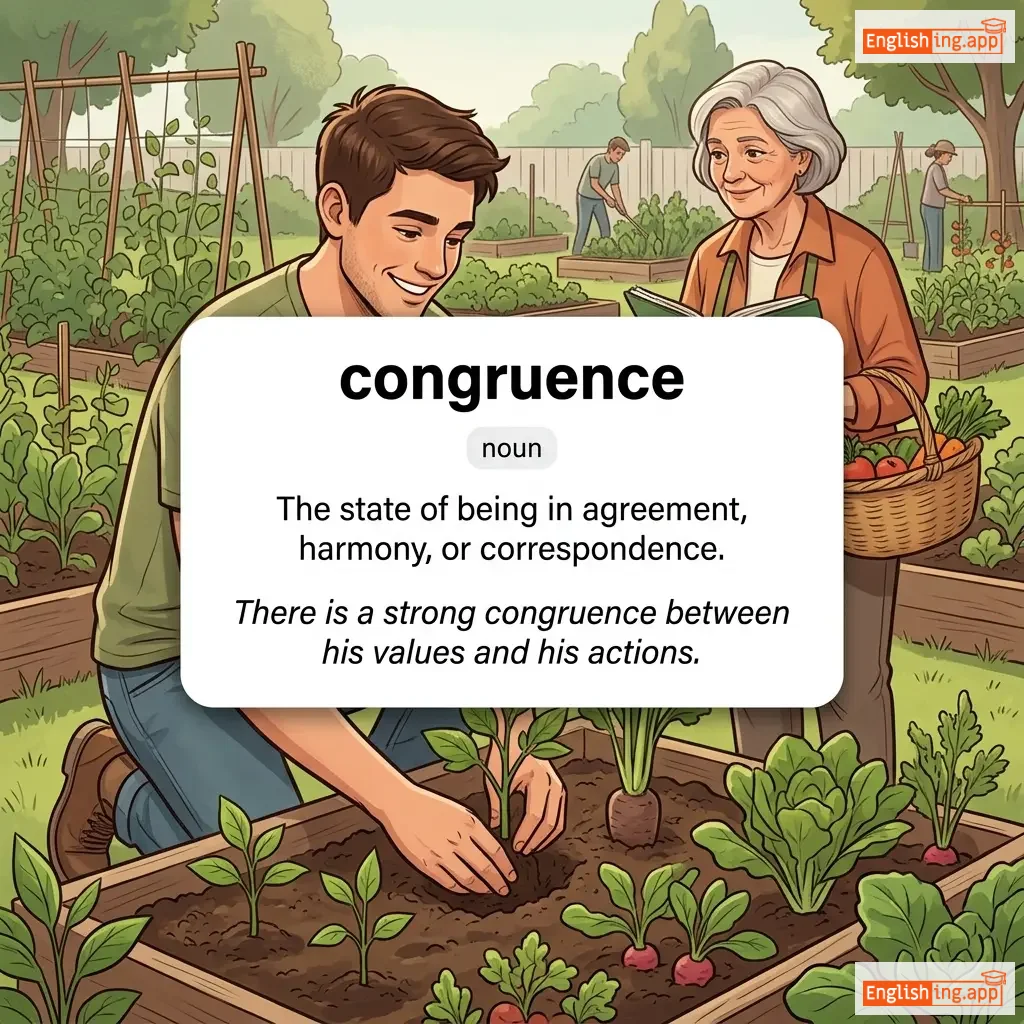
congruence definition card — visual illustration of the meaning
noun
/ˈkɒŋɡruəns/
一致性 (yizhixing)

The state of being in agreement, harmony, or correspondence.

"There is a strong congruence between his values and his actions."

"他的价值观和他的行动之间有很强的契合。" (Tā de jiàzhíguān hé tā de xíngdòng zhījiān yǒu hěn qiáng de qìhé.)
adjective
/ˈkɒŋɡruənt/
全等 (quán děng)

in agreement or harmony; having the same shape and size in geometry

"Their values are congruent with the goals of the organization."

"他们的价值观与组织的目标一致。" (Tāmen de jiàzhíguān yǔ zǔzhī de mùbiāo yīzhì.)
noun
/ˈkɒnɪfər/
针叶树 (zhēn yè shù)

a type of tree that bears cones and evergreen needle-like leaves, such as pine or fir

"The forest is dominated by conifers like pine and spruce."
"森林由松树和云杉等针叶树主导。" (Sēnlín yóu sōngshù hé yúnshān děng zhēn yè shù zhǔdǎo.)
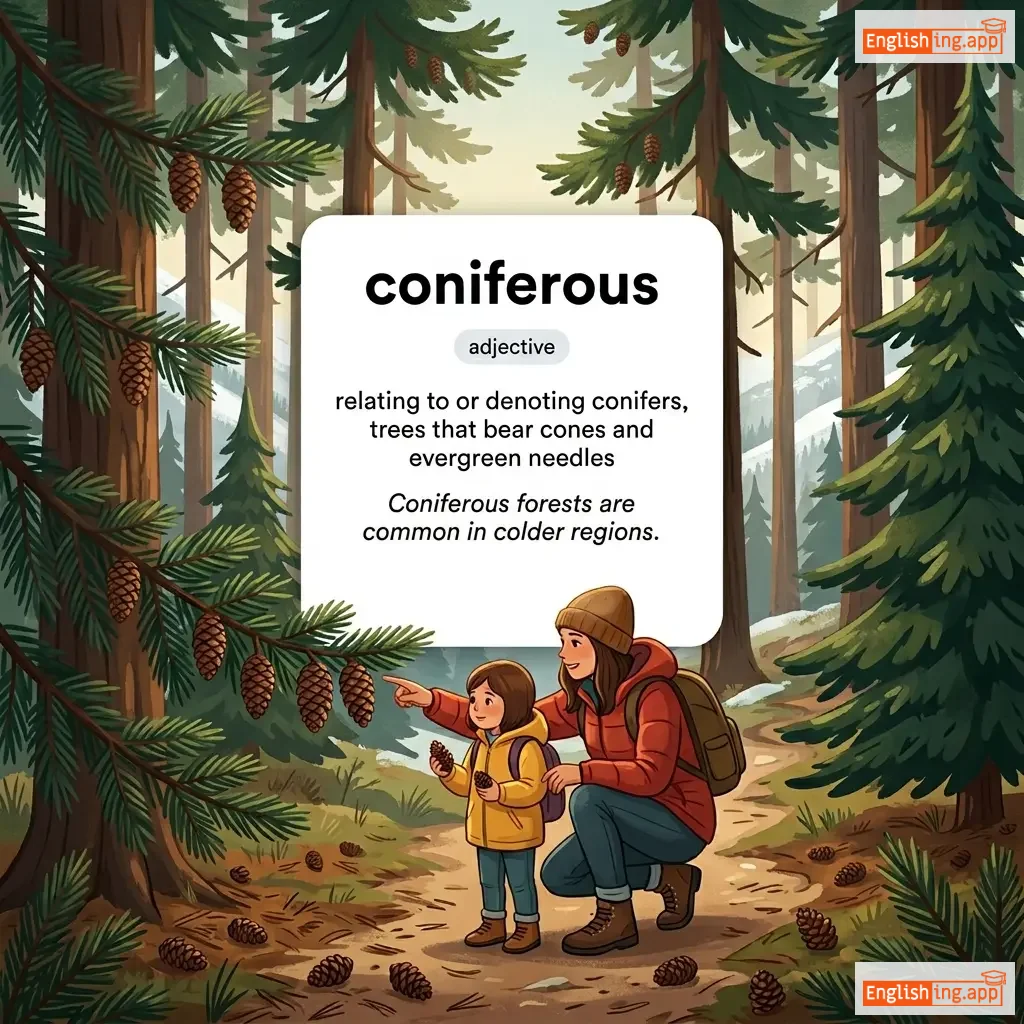
coniferous definition card — visual illustration of the meaning
adjective
/kəˈnɪfərəs/
松树类 (song shu lei)

relating to or denoting conifers, trees that bear cones and evergreen needles

"Coniferous forests are common in colder regions."

"松树林在寒冷的地区很常见。" (Song shu lin zai han leng de di qu hen chang jian.)
adjective
/kənˈdʒɛktʃərəl/
推测的 (tuīcè de)

based on guesswork or incomplete evidence rather than certain knowledge

"His explanation was purely conjectural and lacked proof."

"他的解释完全是推测性的,缺乏证据。" (Tā de jiěshì wánquán shì tuīcè xìng de, quēfá zhèngjù.)
conjecture definition card — visual illustration of the meaning
noun/verb
/kənˈdʒɛktʃər/
猜测 (cāicè)

an opinion or conclusion formed on the basis of incomplete information; to form an opinion without sufficient evidence

"The critics conjectured that the book was inspired by real events."

"评论家推测这本书的灵感来自真实的事件。" (Pínglùn jiā tuīcè zhè běn shū de línggǎn láizì zhēnshí de shìjiàn.)
verb
/kənˈdʒɔɪn/
联合 (liánhé)

to join together or unite; to combine

"The two rivers conjoin just before reaching the sea."

"两条河流在到达大海之前汇合。" (Liǎng tiáo héliú zài dàoshǐ dàhǎi zhīqián huìhé.)
conjugal definition card — visual illustration of the meaning
adjective
/ˈkɒndʒʊɡəl/
婚姻的 (hūnyīn de)

relating to marriage or the relationship between husband and wife

"They enjoyed a long life of conjugal happiness."

"他们享受了长久的婚姻幸福生活。" (Tāmen xiǎngshòule chángjiǔ de hūnyīn xìngfú shēnghuó.)
verb
/ˈkɒndʒʊɡeɪt/
变位 (bian wei)

to list the different forms of a verb according to tense, person, and number

"Students are asked to conjugate the verb 'to be'."

"学生被要求变动动词'是'的形式。" (Xuesheng bei yaoqiu biandong dongci 'shi' de xingzhi.)
noun
/ˌkɒndʒʊˈɡeɪʃən/
词形变化 (cíxíng biànhuà)

the variation of the form of a verb to indicate tense, person, and number

"French verbs have complex conjugations."

"法语动词有复杂的变位。" (Fǎyǔ dòngcí yǒu fùzá de biànwèi.)
noun
/kənˈdʒʌŋkʃən/
连词 (liáncí)

a word used to connect clauses or sentences, or to coordinate words

"The words 'and' and 'but' are common conjunctions."

"'和' 和 '但是' 是常见的连词。" ('hé' hé 'dànshì' shì chángjiàn de liáncí.)
verb
/ˈkʌn.dʒər/
召唤 (zhao-huan)

to summon something as if by magic; to imagine vividly

"The magician conjured a rabbit out of the hat."

"魔术师从帽子里召唤出了一只兔子。" (Mo-shu-shi cong mao-zi li zhao-huan chu-le yi-zhi tu-zi.)
connect definition card — visual illustration of the meaning
verb
/kəˈnɛkt/
连接 (lianjie)

to join or link two or more things together

"The new bridge will connect the two cities."

"新桥将连接这两个城市。" (Xin qiao jiang lianjie zhe liang ge chengshi.)
noun
/kəˈnɛkʃən/
连接 (lianjie)

a relationship in which a person, thing, or idea is linked or associated with something else

"There is a strong connection between exercise and health."

"运动和健康之间有着紧密的联系。" (Yundong he jiankang zhijian youzhe jinmi de lianxi.)
connectivity definition card — visual illustration of the meaning
noun
ˌkɒn.ekˈtɪv.ɪ.ti
连接能力, 网络连接, 互联互通 (liánjiē nénglì, wǎngluò liánjiē, hùlián hùtōng)

The state of being connected or interconnected; capacity for the interconnection of platforms, systems, and applications.

"The connectivity in rural areas needs improvement."

"农村地区的连接性需要改善。" (Nóngcūn dìqū de liánjiēxìng xūyào gǎishàn.)
noun
/kəˈnaɪ.vəns/
默许 (mòxǔ)

the act of secretly allowing or being involved in wrongdoing

"The theft happened with the connivance of the security guard."

"盗窃发生在保安的默许下。" (Dàoqiè fāshēng zài bǎo'ān de mòxǔ xià.)
verb
/kəˈnaɪv/
秘密参与不当行为 (mìmì cānyù bùdàng xíngwéi)

to secretly allow or be involved in a wrongdoing

"The manager connived with the supplier to cheat the company."

"经理与供应商合谋欺骗公司。" (Jīnglǐ yǔ gōngyìng shāng hé móu qīpiàn gōngsī.)
adjective
/kəˈnaɪ.vɪŋ/
阴险的 (yīnxiǎn de)

secretly scheming or plotting to help in wrongdoing

"He is a conniving politician who manipulates people for power."

"他是一个阴险的政治家,利用权力操纵人民。" (Tā shì yīgè yīnxiǎn de zhèngzhìjiā, lìyòng quánlì cāozòng rénmín.)
connoisseur definition card — visual illustration of the meaning
noun
/ˌkɒn.əˈsɜːr/
行家 (hangjia)

an expert judge in matters of taste, especially in food, art, or wine

"She is a true connoisseur of fine art."

"她是美术的真正行家。" (Tā shì měishù de zhēnzhèng hángjiā.)
connotation definition card — visual illustration of the meaning
noun
/ˌkɒnəˈteɪʃən/
内涵 (neihan)

An idea or feeling that a word invokes in addition to its literal meaning.

"The word 'home' has a positive connotation of warmth and family."

"单词“家”具有温暖和家庭的积极内涵。" (Dan ci 'jia' ju you wen nuan he jia ting de ji ji nei han.)
verb
/kəˈnoʊt/
暗示 (anshi)

To suggest or imply an additional meaning beyond the literal one.

"The word 'youthful' connotes energy and vitality."

"‘青春’一词暗示着活力和生气。" ('Qīngchūn' yī cí ànshì zhe huólì hé shēngqì.)
adjective
/kəˈnjuːbiəl/
婚姻的 (hūn yīn de)

Relating to marriage or the relationship of a married couple.

"They celebrated their connubial bliss with a honeymoon trip."

"他们通过蜜月旅行庆祝他们的婚姻幸福。" (Tāmen tōngguò mìyuè lǚxíng qìngzhù tāmen de hūnyīn xìngfú.)
conquer definition card — visual illustration of the meaning
verb
/ˈkɒŋkər/
征服 (zhēngfú)

To defeat and take control of a place or people by force.

"The king set out to conquer new lands."

"国王出发征服新土地。" (guówáng chūfā zhēngfú xīn tǔdì.)
adjective
/kɒnˈsæŋɡwɪn/
同血缘的 (tóng xuèyuán de)

Of the same blood or origin; related by birth.

"The two families were consanguine through their grandparents."

"这两个家庭通过他们的祖父母是同血缘的。" (Zhè liǎng gè jiātíng tōngguò tāmen de zǔfùmǔ shì tóng xuèyuán de.)
adjective
/ˌkɒnsæŋˈɡwɪniəs/
同血缘的 (tóng xuèyuán de)

Related by blood; descended from the same ancestor.

"The study focused on genetic disorders in consanguineous families."

"研究集中于同血缘家庭中的遗传疾病。" (Yánjiū jízhōng yú tóng xuèyuán jiātíng zhōng de yíchuán jíbìng.)
👨‍👩‍👧‍👦

consanguinity (血缘关系)

noun
/ˌkɒnsæŋˈɡwɪnɪti/
血缘关系 (xueyuan guanxi)

The fact of being descended from the same ancestor; blood relationship.

"The degree of consanguinity was important in inheritance laws."

"继承法中,血缘关系的程度至关重要。" (Jicheng fa zhong, xueyuan guanxi de chengdu zhiguang zhongyao.)
noun
/ˈkɒnʃəns/
良心 (liángxīn)

An inner sense of right and wrong that guides a person's actions.

"Her conscience told her to admit the mistake."

"她的良心告诉她承认错误。" (Tā de liángxīn gàosù tā chéngrèn cuòwù.)
conscientious definition card — visual illustration of the meaning
adjective
/ˌkɒnʃiˈɛnʃəs/
有责任心且尽职尽责 (yǒu zérèn xīn qiě jìnzhí jìnzé)

Wishing to do what is right, especially to do one's work or duty well and thoroughly.

"He is a conscientious employee who always meets deadlines."

"他是一个有责任心且尽职尽责的员工,总是按时完成任务。" (Tā shì yīgè yǒu zérèn xīn qiě jìnzhí jìnzé de yuángōng, zǒng shì ànshí wánchéng rènwù.)
conscientiousness definition card — visual illustration of the meaning
noun
/ˌkɒn.ʃiˈen.ʃəs.nəs/
尽责, 责任, 勤奋 (jinze, zeren, qinfen)

The quality of wishing to do what is right, especially to do one's work or duty well and thoroughly.

"Her conscientiousness makes her a great leader."

"她的责任感使她成为一位伟大的领导者。" (Tā de zérèn gǎn shǐ tā chéngwéi yī wèi wěidà de lǐngdǎo zhě.)
adjective
/ˈkɒnʃəs/
清醒 (qingxing)

Aware of and responding to one's surroundings; awake.

"She was fully conscious after the surgery."

"她在手术后完全清醒。" (Tā zài shǒushù hòu wánquán qīngxǐng.)
consciousness definition card — visual illustration of the meaning
noun
/ˈkɒnʃəsnəs/
意识 (yìshi)

the state of being aware of and able to think about oneself and the environment

"The patient regained consciousness after the surgery."

"患者在手术后恢复了意识。" (huànzhě zài shǒushù hòu huīfùle yìshi.)
conscript definition card — visual illustration of the meaning
verb
/ˈkɒnskrɪpt/
强迫某人参军 (qiángpò mǒu rén cānjūn)

to force someone into military service

"The government conscripted young men during the war."

"政府在战争期间征召了年轻人。" (Zhèngfǔ zài zhànzhēng qījiān zhēngzhào le niánqīng rén.)
consecrate definition card — visual illustration of the meaning
verb
/ˈkɒnsɪkreɪt/
奉献 (fèngxiàn)

to make something sacred, usually through a religious ceremony

"The church was consecrated by the bishop."

"教堂由主教奉献。" (Jiàotáng yóu zhǔjiào fèngxiàn.)
adjective
/kənˈsɛkjʊtɪv/
连续的 (liánxù de)

following one after another without interruption

"She won three consecutive matches."

"她赢得了三场连续的比赛。" (Tā yíngdéle sān chǎng liánxù de bǐsài.)
consensus definition card — visual illustration of the meaning
noun
/kənˈsɛnsəs/
共识 (gongshi)

general agreement among a group of people

"The team reached a consensus on the new strategy."

"团队就新战略达成了一致意见。" (Tuánduì jiù xīn zhànlüè dáchéngle yīzhì yìjiàn.)
noun
/kənˈsɛnt/
同意 (tongyi)

permission for something to happen or agreement to do something

"She gave her consent before the operation."
"她在手术前给了她的同意。" (Ta zai shoushu qian geile ta de tongyi.)
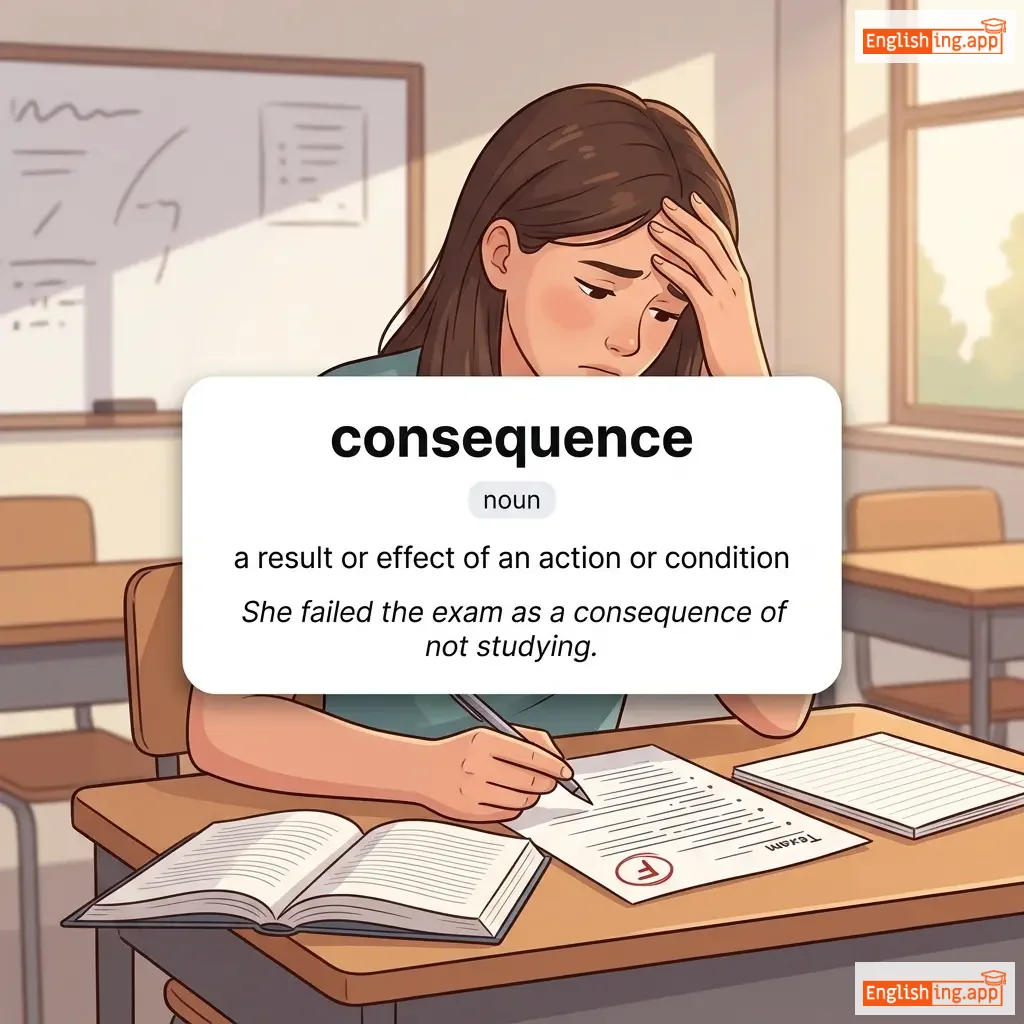
consequence definition card — visual illustration of the meaning
noun
/ˈkɒnsɪkwəns/
后果 (hòuguǒ)

a result or effect of an action or condition

"She failed the exam as a consequence of not studying."
"她因未学习而未通过考试,结果就是这样。" (Tā yīn wèi xuéxí ér wèi tōngguò kǎoshì, jiéguǒ jiùshì zhèyàng.)
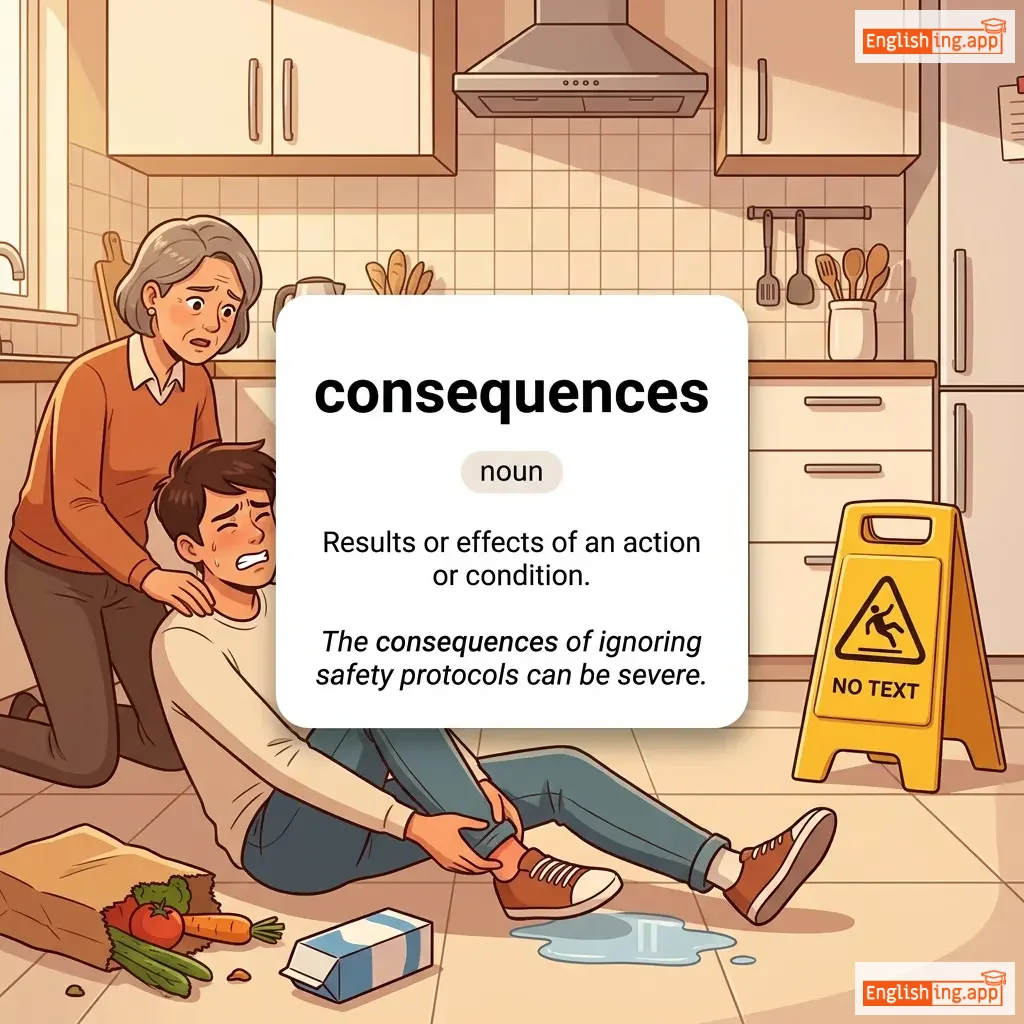
consequences definition card — visual illustration of the meaning
noun
/ˈkɒnsɪkwənsɪz/
后果 (houguo)

Results or effects of an action or condition.

"The consequences of ignoring safety protocols can be severe."

"忽视安全协议的后果可能是严重的。" (Hushi anquan xieyi de houguo keneng shi yanzhong de.)
adjective
/ˌkɒnsɪˈkwɛnʃəl/
重要的 (zhòngyào de)

Having important or significant consequences; resulting from something.

"The meeting was consequential for the future of the project."

"这次会议对项目的未来至关重要。" (Zhè cì huìyì duì xiàngmù de wèilái zhìguān zhòngyào.)
adverb
/ˈkɒnsɪkwəntli/
因此 (yīncǐ)

as a result; therefore

"He didn’t study, and consequently he failed the exam."
"他没有学习,因此他没通过考试。" (Tā méiyǒu xuéxí, yīncǐ tā méi tōngguò kǎoshì.)
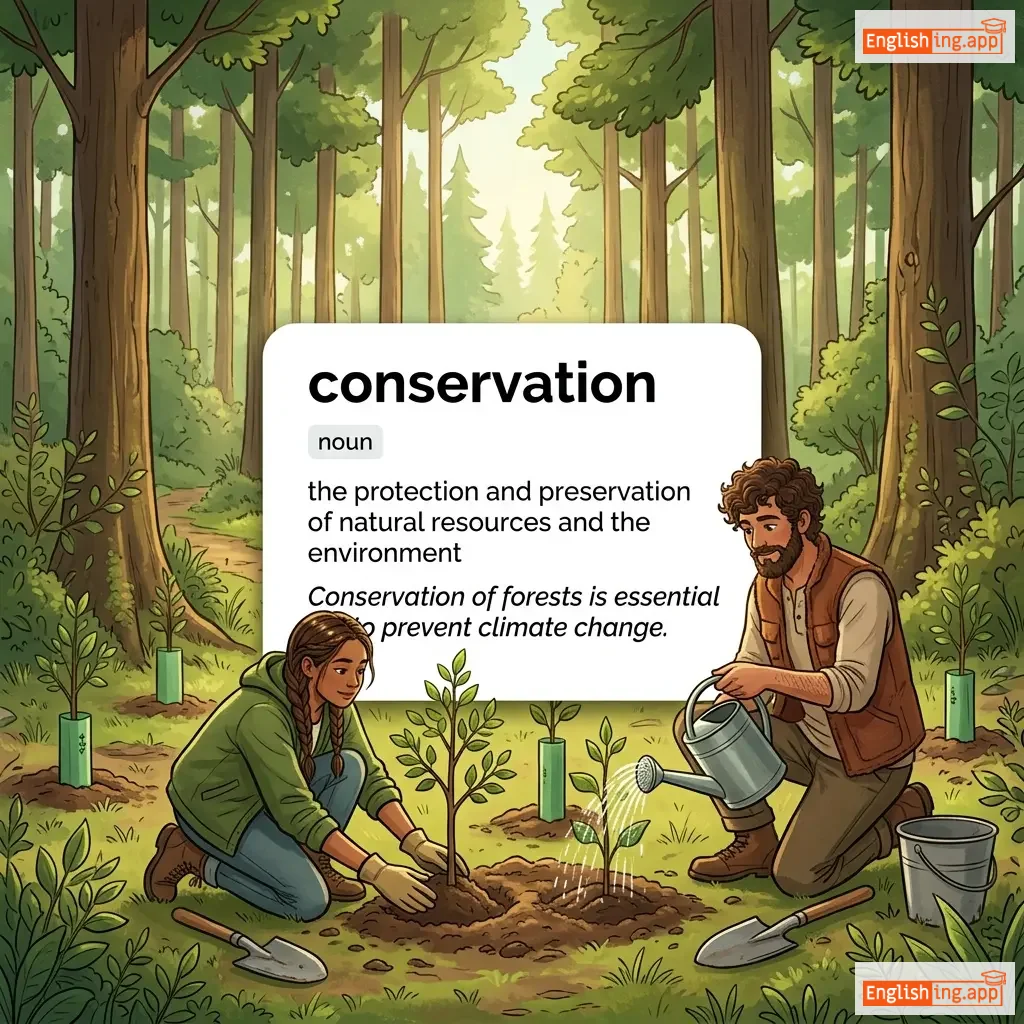
conservation definition card — visual illustration of the meaning
noun
/ˌkɒnsəˈveɪʃən/
保护 (baohu)

the protection and preservation of natural resources and the environment

"Conservation of forests is essential to prevent climate change."

"森林的保护对于防止气候变化至关重要。" (senlin de baohu duiyu fangzhi qihou bianhua zhiguan zhongyao.)
Conservation Movement definition card — visual illustration of the meaning
noun
/ˌkɒnsərˈveɪʃən ˈmuːvmənt/
自然保护运动 (zìrán bǎohù yùndòng)

A political, environmental, and social movement that seeks to protect natural resources including plant and animal species as well as their habitat for the future.

"The conservation movement began in the 19th century to protect wildlife."

"自然保护运动在19世纪开始,旨在保护野生动物。" (Zìrán bǎohù yùndòng zài 19 shìjì kāishǐ, zhǐ zài bǎohù yěshēng dòngwù.)
noun
/kənˈsɜːvəˌtɪzəm/
保守主义 (baoshou zhuyi)

A political or social philosophy promoting traditional institutions and resistance to change.

"Conservatism values tradition and gradual development."

"保守主义重视传统和渐进的发展。" (Baoshou zhuyi zhongshi chuantong he jianjin de fazhan.)
adjective
/kənˈsɜːvətɪv/
保守的 (baoshou de)

Favoring traditional views and values; resistant to change.

"He has conservative views on family and society."

"他对家庭和社会持有保守的看法。" (Tā duì jiātíng hé shèhuì chí yǒu bǎoshǒu de kànfǎ.)
noun
/ˈkɒnsəvəˌtwɑː/
音乐学院 (yīnyuè xuéyuàn)

A school specializing in the study of music or drama.

"She trained as a pianist at the Paris Conservatoire."

"她在巴黎音乐学院接受了钢琴训练。" (Tā zài bālí yīnyuè xuéyuàn jiēshòule gāngqín xùnliàn.)
noun
/kənˈsɜːvəˌtɔːri/
温室 / 音乐和艺术学校 (wēnshì / yīnyuè hé yìshù xuéxiào)

A greenhouse for growing plants or a school for music and the arts.

"They grew exotic plants in the conservatory."

"他们在温室里种植了异国植物。" (Tāmen zài wēnshì lǐ zhòngzhí le yìguó zhíwù.)
verb
/kənˈsɜːrv/
节约 (jiéyuē)

to protect something from harm or destruction; to use resources carefully to avoid waste

"We must conserve water during the dry season."

"我们必须在干旱季节节约水。" (Wǒmen bìxū zài gānhàn jìjié jiéyuē shuǐ.)
verb
/kənˈsɪdər/
考虑 (kaolu)

to think carefully about something, especially before making a decision

"She is considering studying abroad next year."

"她正在考虑明年出国留学。" (Ta zhengzai kaolu mingnian chuguo liuxue.)
adjective
/kənˈsɪdərəbl/
相当的 (xiāngdāng de)

large in amount, size, or importance

"The project required a considerable amount of time and money."

"该项目需要相当多的时间和金钱。" (Gāi xiàngmù xūyào xiāngdāng duō de shíjiān hé jīnqián.)
adverb
/kənˈsɪdərəbli/
显著地 (xiǎnzhù de)

to a great extent or degree; significantly

"The weather has improved considerably since last week."

"天气自上周以来显著改善。" (Tiānqì zì shàng zhōu yǐlái xiǎnzhù gǎishàn.)