词汇表

英语词汇词典 | 单词含义、定义和示例

noun/verb
/ˈkɒmplɪmənt/
恭维 (gōngwéi)

a polite expression of praise or admiration; to politely praise someone

"She complimented him on his excellent presentation."

"她对他的精彩演讲表示了恭维。" (Tā duì tā de jīngcǎi yǎnjiǎng biǎoshìle gōngwéi.)
adjective
/ˌkɒm.plɪˈmen.tər.i/
赠送的;赞美的;作为礼节免费提供 (zèngsòng de; zànměi de; zuòwéi lǐjié miǎnfèi tígōng)

expressing praise or admiration; given or supplied free of charge as a courtesy

"The hotel offers complimentary breakfast for all guests."

"酒店为所有客人提供免费的早餐。" (Jiǔdiàn wèi suǒyǒu kèrén tígōng miǎnfèi de zǎocān.)
verb
/kəmˈplaɪ/
遵守 (zūnshǒu)

to act in accordance with a rule, request, or law

"All companies must comply with safety regulations."

"所有公司必须遵守安全规定。" (Suǒyǒu gōngsī bìxū zūnshǒu ānquán guīdìng.)
noun
/kəmˈpoʊnənt/
组件 (zujiàn)

a part or element of a larger whole, especially a machine or system

"The engine is the most important component of the car."

"引擎是汽车最重要的组件。" (Yǐnqíng shì qìchē zuì zhòngyào de zǔjiàn.)
verb
/kəmˈpɔːrt/
表现 (biaoxian)

to behave or conduct oneself in a particular way

"She comported herself with grace during the ceremony."
"她在仪式中优雅地表现自己。" (Ta zai yishi zhong youya de biaoxian ziji.)
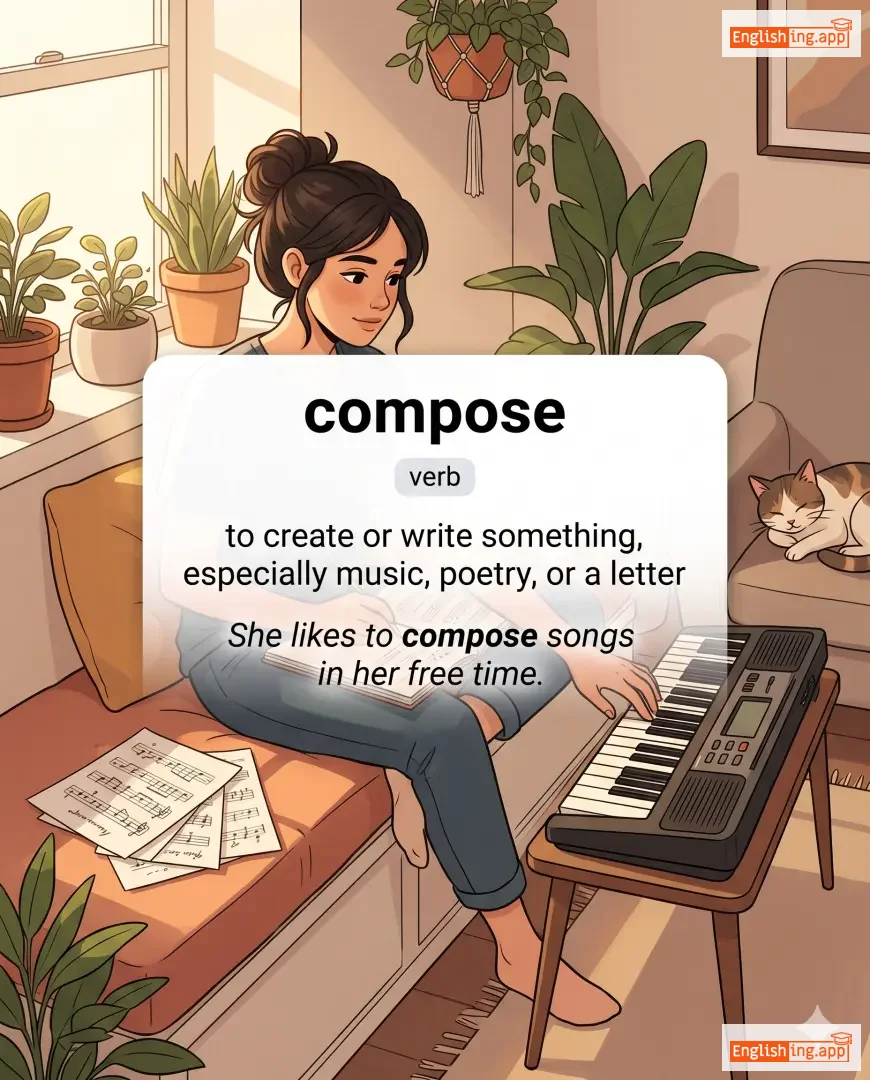
compose definition card — visual illustration of the meaning
verb
/kəmˈpəʊz/
作曲 (zuòqǔ)

to create or write something, especially music, poetry, or a letter

"She likes to compose songs in her free time."

"她喜欢在空闲时间作曲。" (Tā xǐhuān zài kòngxián shíjiān zuòqǔ.)
adjective
/kəmˈpoʊzd/
冷静 (lěngjìng)

calm and in control of oneself; made up of or formed from

"He remained composed even under pressure."

"他在压力下依然保持冷静。" (Tā zài yālì xià yīrán bǎochí lěngjìng.)
noun
/kəmˈpəʊzə(r)/
作曲家 (zuòqǔ jiā)

a person who writes music, especially classical music

"The composer is working on a new symphony."

"作曲家正在创作一部新的交响曲。" (Zuòqǔ jiā zhèngzài chuàngzuò yī bù xīn de jiāoxiǎngqǔ.)
noun
/ˌkɒmpəˈzɪʃən/
作文 (zuòwén)

the act of creating a piece of writing, music, or art; the way parts are arranged

"Her composition won first prize in the contest."

"她的作文在比赛中获得了第一名。" (Tā de zuòwén zài bǐsài zhōng huòdéle dì yī míng.)
noun
/kəmˈpɒz.ɪ.tər/
作曲家 (zuòqǔjiā)

a person who arranges type for printing or creates musical compositions

"The compositor carefully arranged the text for the newspaper."

"作曲家仔细地安排了报纸的文本。" (Zuòqǔjiā zǐxì de ānpái le bàozhǐ de wénběn.)
noun
/ˈkɒmpoʊst/
堆肥 (duīféi)

decayed organic matter used as fertilizer

"The gardener added compost to enrich the soil."
"园丁添加了堆肥来丰富土壤。" (Yuándīng tiānjiāle duīféi lái fēngfù tǔrǎng.)
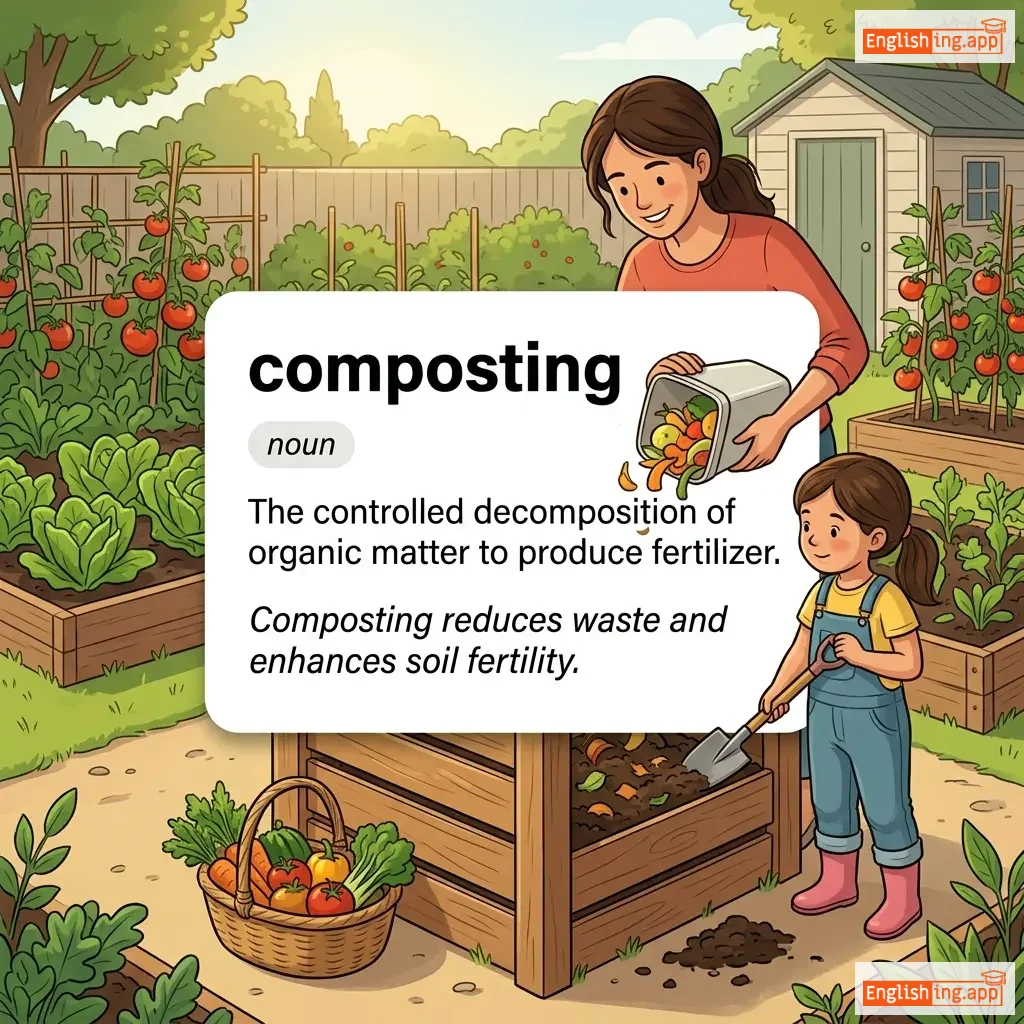
composting definition card — visual illustration of the meaning
noun
/ˈkɒm.pɒ.stɪŋ/
堆肥 (duīpéi)

The controlled decomposition of organic matter to produce fertilizer.

"Composting reduces waste and enhances soil fertility."

"堆肥减少废物并改善土壤肥力。" (Duīpéi jiǎnshǎo fèiwù bìng gǎishàn tǔrǎng féilì.)
composure definition card — visual illustration of the meaning
noun
/kəmˈpoʊʒər/
镇定 (zhèndìng)

the state of being calm and in control of oneself

"She managed to keep her composure during the heated debate."

"她在激烈的辩论中保持了镇定。" (Tā zài jīliè de biànlùn zhōng bǎochíle zhèndìng.)
noun
/ˈkɑːmpaʊnd/
化合物 / 封闭区域 (huàhéwù / fēngbì qūyù)

a thing that is composed of two or more separate elements; an enclosed area with buildings

"The scientist studied the chemical compound in the lab."
"科学家在实验室研究了化学化合物。" (Kēxuéjiā zài shíyànshì yánjiū le huàxué huàhéwù.)
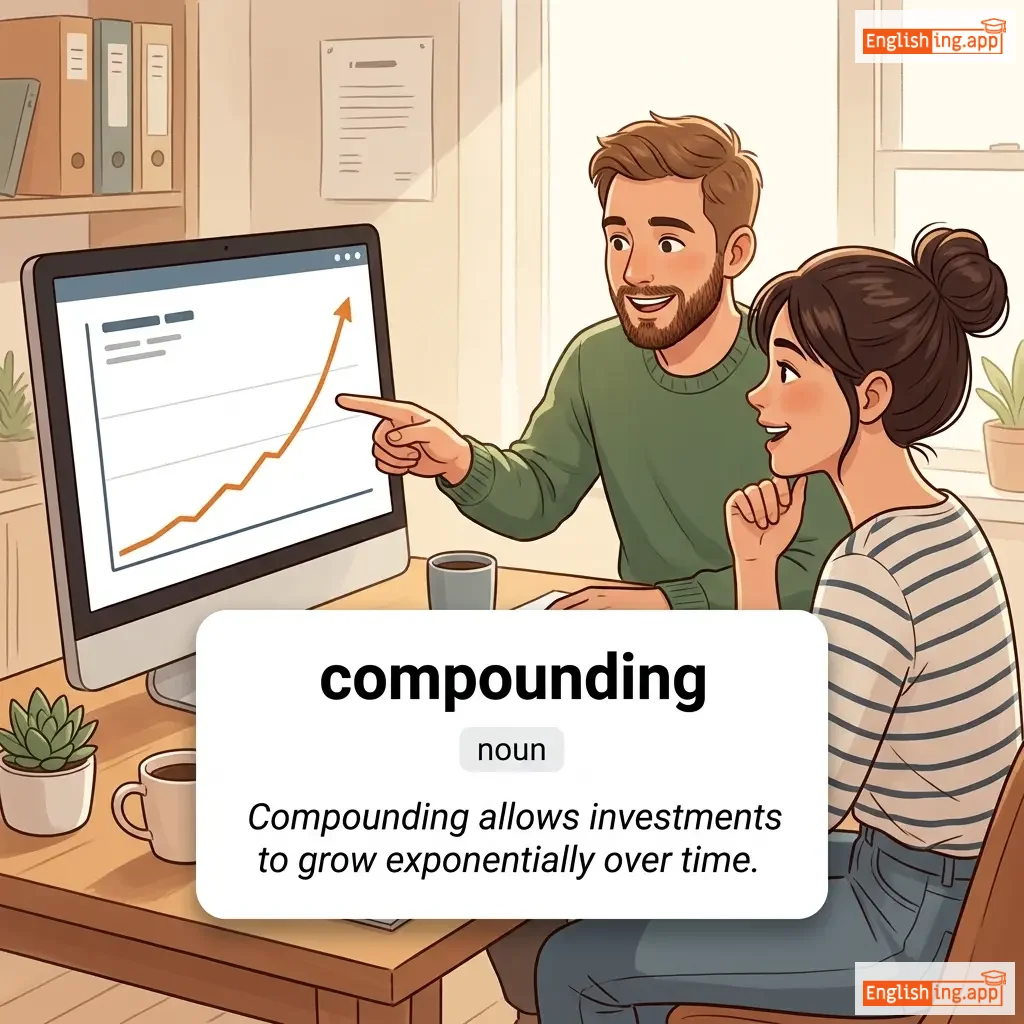
compounding definition card — visual illustration of the meaning
noun
kəmˈpaʊnd.ɪŋ
复利 (fùlì)

The process in which an asset's earnings, from either capital gains or interest, are reinvested to generate additional earnings over time.

"Compounding allows investments to grow exponentially over time."

"复利使投资随着时间的推移呈指数增长。" (Fùlì shǐ tóuzī suízhe shíjiān de tuīyí chéng zhǐshù zēngzhǎng.)
verb
/ˌkɒmprɪˈhɛnd/
理解 (lǐjiě)

to understand or grasp the meaning of something

"It is difficult to comprehend the scale of the disaster."

"理解灾难的规模很困难。" (Lǐjiě zāinàn de guīmó hěn kùnnán.)
adjective
/ˌkɒmprɪˈhɛnsəbl/
可理解的 (kelijiede)

able to be understood; intelligible

"The teacher explained the topic in a comprehensible way."

"老师以一种可以理解的方式解释了这个话题。" (Lǎoshī yǐ yī zhǒng kěyǐ lǐjiě de fāngshì jiěshì le zhège huàtí.)
comprehension definition card — visual illustration of the meaning
noun
/ˌkɒmprɪˈhɛnʃən/
理解 (lijiě)

the ability to understand something

"Good reading comprehension is essential for academic success."
"良好的阅读理解对学术成功至关重要。" (Liánghǎo de yuèdú lǐjiě duì xuéshù chénggōng zhìguān zhòngyào.)
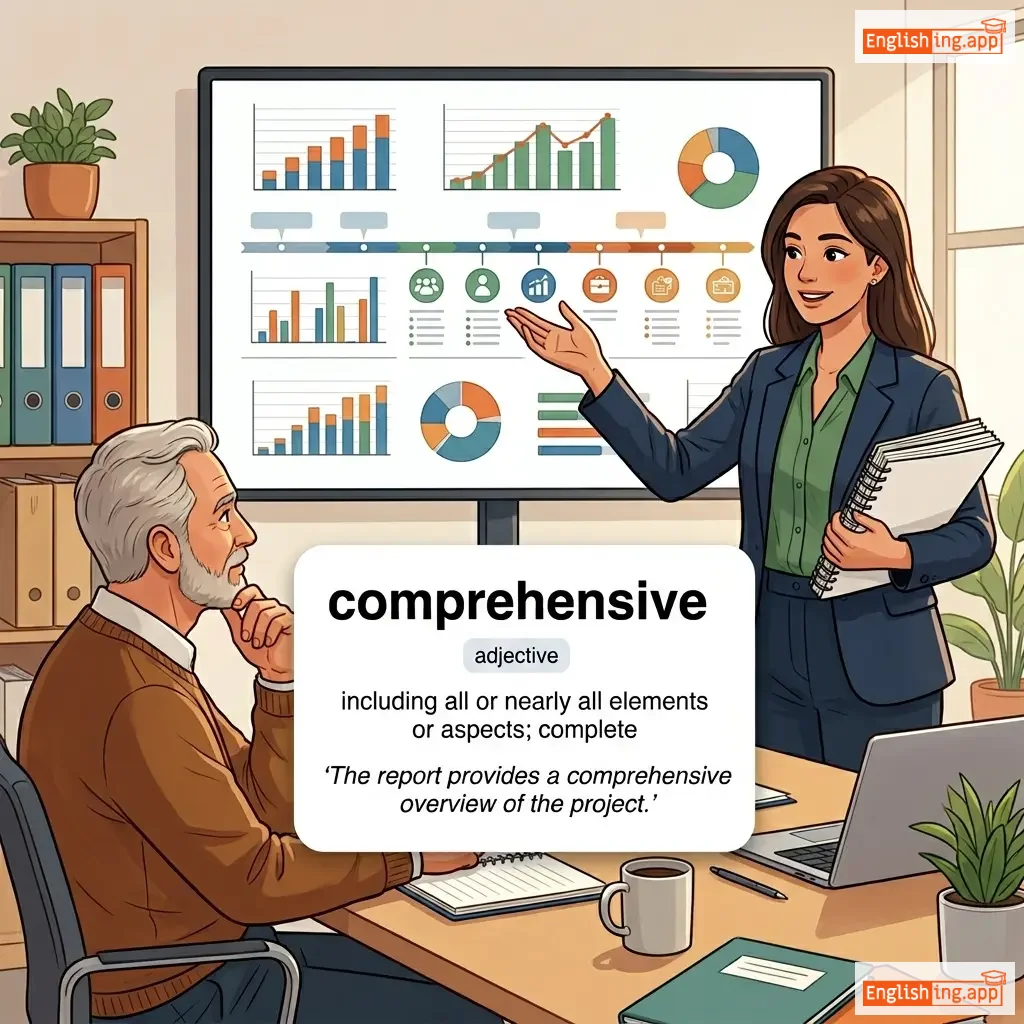
comprehensive definition card — visual illustration of the meaning
adjective
/ˌkɒmprɪˈhɛnsɪv/
全面 (quánmiàn)

including all or nearly all elements or aspects; complete

"The report provides a comprehensive overview of the project."

"报告提供了项目的全面概述。" (Bàogào tígōngle xiàngmù de quánmiàn gàishuò.)
verb
/kəmˈprɛs/
压缩 (yāsuō)

to press or squeeze something so that it becomes smaller

"The file was compressed to save storage space."

"文件被压缩以节省存储空间。" (wénjiàn bèi yāsuō yǐ jiéshěng cúnchú kōngjiān.)
adjective
/kəmˈprɛsəbl̩/
可压缩的 (ke ya suode)

Capable of being compressed or reduced in volume.

"Air is a compressible substance, unlike water."

"空气是一种可压缩的物质,不像水。" (Kongqi shi yizhong ke yasuo de wuzhi, bu xiang shui.)
noun
/kəmˈprɛʃn̩/
压缩 (yāsuō)

The act of pressing or squeezing something into a smaller space.

"File compression helps reduce storage requirements."

"文件压缩有助于减少存储需求。" (Wénjiàn yāsuō yǒuzhù yú jiǎnshǎo cúnchú xūqiú.)
verb
/kəmˈpraɪz/
由...组成 (you...zuchéng)

To consist of or be made up of something.

"The committee comprises five members."

"委员会由五个成员组成。" (Wěiyuánhuì yóu wǔ gè chéngyuán zǔchéng.)
compromise definition card — visual illustration of the meaning
noun, verb
/ˈkɒmprəmaɪz/
妥协 (tuǒxié)

A settlement of differences in which each side makes concessions; or to weaken or put at risk.

"They reached a compromise after long negotiations."

"他们在长时间的谈判后达成了妥协。" (Tāmen zài cháng shíjiān de tánpàn hòu dáchéngle tuǒxié.)
noun
/kəmˈpʌlʃn̩/
强迫 (qiǎngpò)

An irresistible urge to do something, or the act of being forced.

"He felt a strong compulsion to check his phone constantly."

"他感到强烈的冲动,不停地查看他的电话。" (Tā gǎndào qiángliè de chōngdòng, bùtíng de chá kàn tā de diànhuà.)
adjective
/kəmˈpʌlsɪv/
强迫的 (qiang po de)

Resulting from or acting on an irresistible urge, especially one that is against one's conscious wishes.

"He is a compulsive gambler who cannot stop placing bets."

"他是一个强迫症赌博者,无法停止下赌注。" (ta shi yi ge qiangpozheng duzhuo, wufa tingzhi xia duzhu.)
adjective
/kəmˈpʌlsəri/
强制性 (qiángzhìxìng)

Required by law or a rule; obligatory.

"Wearing seat belts is compulsory in most countries."
"在大多数国家,佩戴安全带是强制性的。" (Zài dà duōshù guójiā, pèidài ānquán dài shì qiángzhìxìng de.)
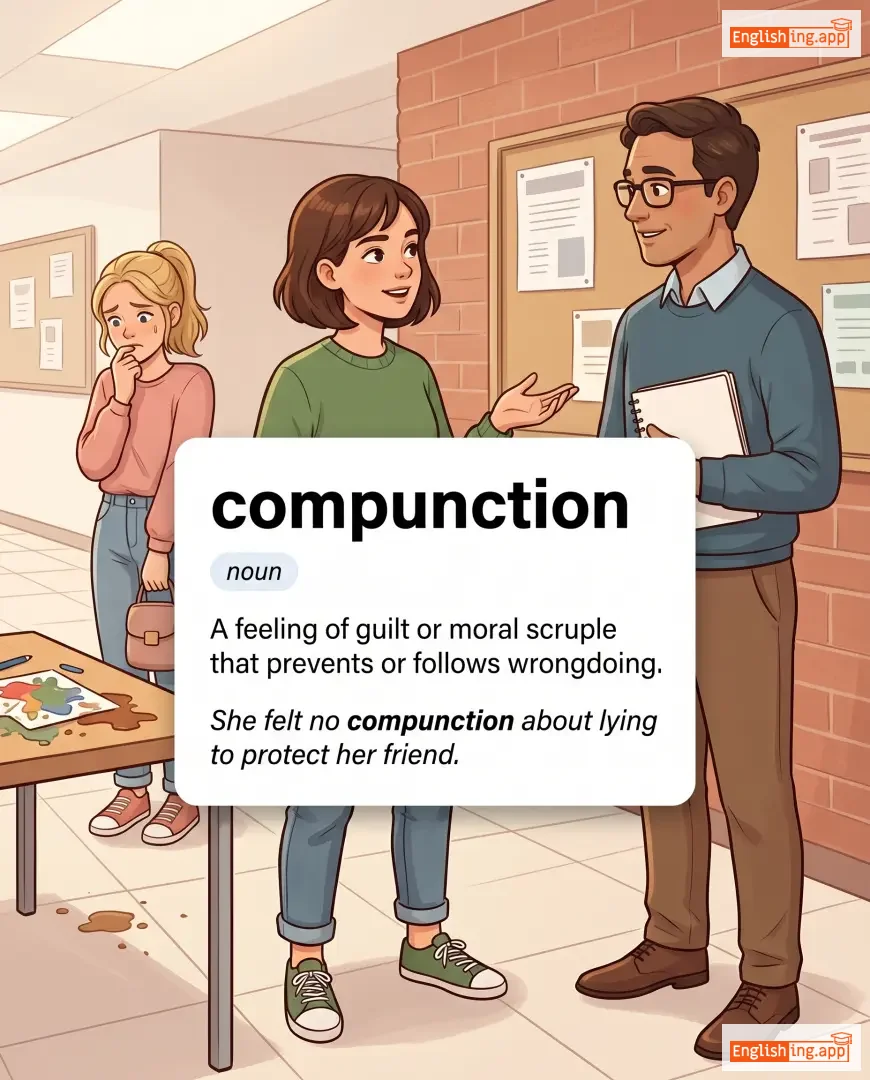
compunction definition card — visual illustration of the meaning
noun
/kəmˈpʌŋkʃən/
良心不安 (liángxīn bù'ān)

A feeling of guilt or moral scruple that prevents or follows wrongdoing.

"She felt no compunction about lying to protect her friend."
"她在撒谎以保护朋友时没有感到良心不安。" (Tā zài sāhuǎng yǐ bǎohù péngyǒu shí méiyǒu gǎndào liángxīn bù'ān.)
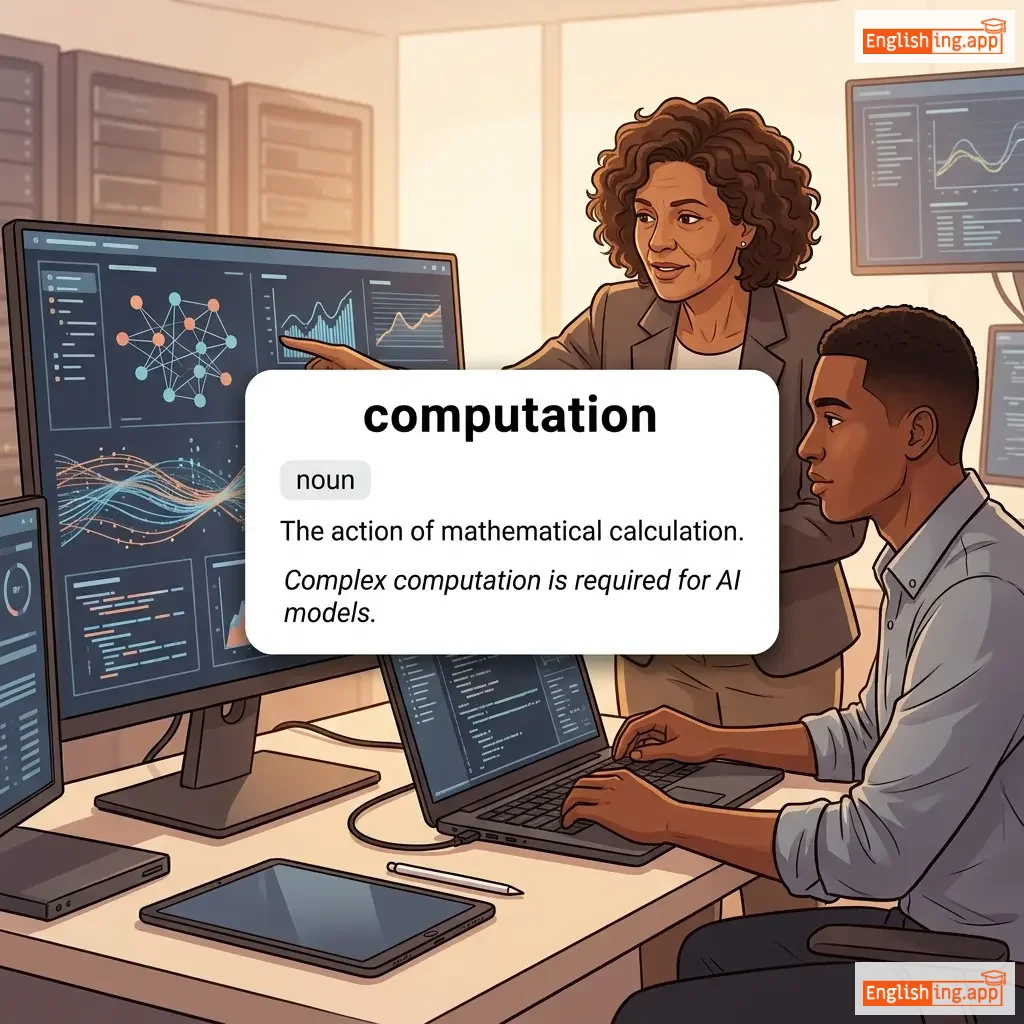
computation definition card — visual illustration of the meaning
noun
ˌkɒm.pjʊˈteɪ.ʃən
计算 (jisuan)

The action of mathematical calculation.

"Complex computation is required for AI models."
"复杂的计算对AI模型来说是必须的。" (Fuzha de jisuan dui AI moxing lai shuo shi bixu de.)
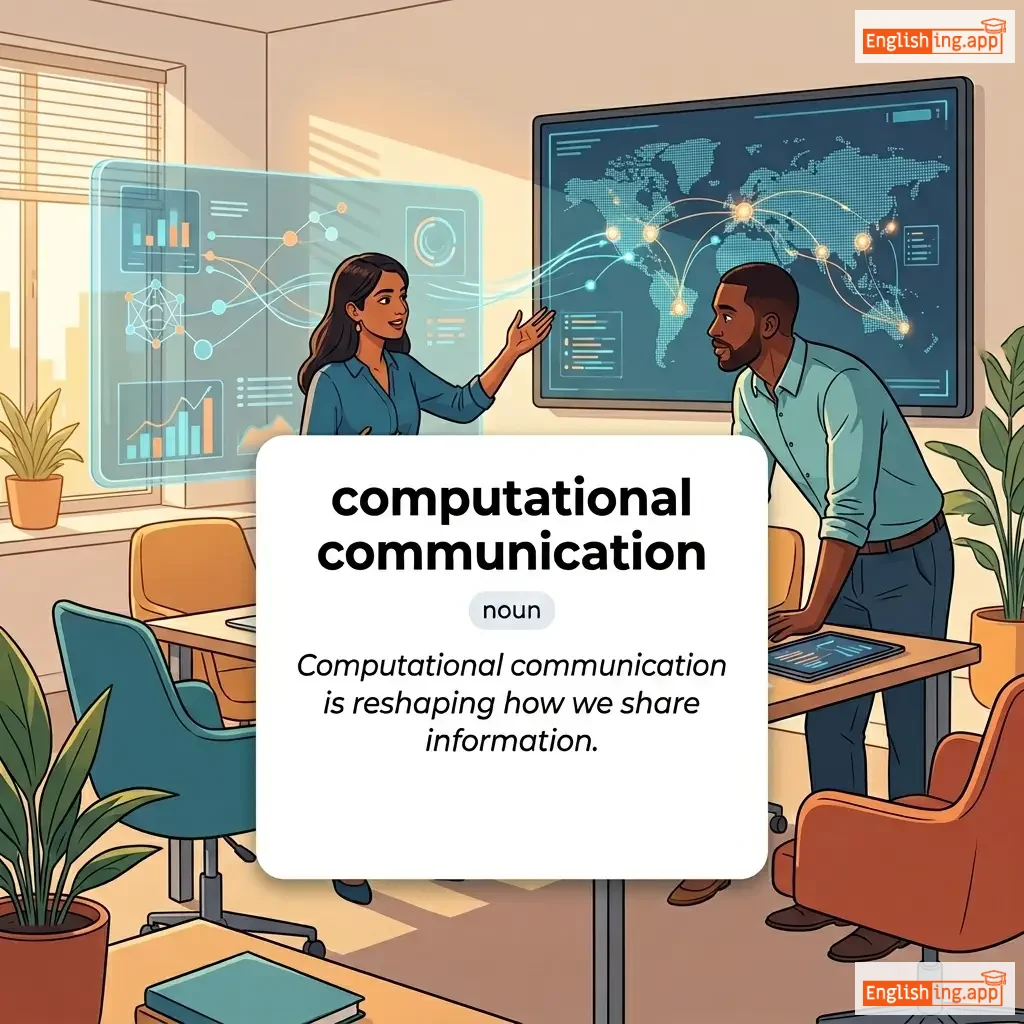
computational communication definition card — visual illustration of the meaning
noun
ˌkɒmpjʊˈteɪʃənəl kəˌmjuːnɪˈkeɪʃən
计算通信 (jisuan tongxin)

Digital exchange and automated interaction; the use of computational methods and systems to facilitate communication and information sharing.

"Computational communication is reshaping how we share information."

"计算通信正在重塑我们共享信息的方式。" (Jisuan tongxin zhengzai chongsu women gongxiang xinxi de fangshi.)
verb
/kəmˈpjuːt/
计算 (jisuan)

To calculate or determine by using a computer or mathematical methods.

"The software can compute the total cost in seconds."

"该软件可以在几秒钟内计算出总成本。" (Gai ruanjian keyi zai ji miaozhong nei jisuan chu zong chengben.)
noun
/kəmˈpjuːtə(r)/
计算机 (jisuanji)

an electronic device for storing and processing data

"I bought a new computer for my office work."

"我为我的办公室工作买了台新电脑。" (Wo wei wode bangongshi gongzuo maile tai xin dian nao.)
verb
/kɒnˈkætəneɪt/
连接 (liánjiē)

To link things together in a series or chain.

"The program concatenates two strings into one."

"程序将两个字符串连接为一个。" (Chéngxù jiāng liǎng gè zìrùn liánjiē wéi yī gè.)
concave definition card — visual illustration of the meaning
adjective
/ˈkɒn.keɪv/
凹形 (ao xing)

curved inward like the inside of a bowl

"The mirror had a concave surface that magnified her reflection."

"镜子有一个凹形表面,放大了她的倒影。" (Jingzi you yige ao xing biaomian, fangda le ta de daoying.)
verb
/kənˈsiːl/
隐藏 (yin cang)

to hide something or keep it secret

"He tried to conceal his disappointment behind a smile."

"他试图用微笑掩饰自己的失望。" (Ta shitu yong weixiao yanshi ziji de shiwang.)
verb
/kənˈsiːd/

to admit something is true or valid, often reluctantly

"She finally conceded that she was wrong."

noun
/kənˈsiːt/
自负 (zì fù)

excessive pride in oneself; vanity

"His conceit made him unpopular among his colleagues."

"他的自负让他在同事中不受欢迎。" (Tā de zì fù ràng tā zài tóng shì zhōng bù shòu huānyíng.)
verb
/kənˈsiːv/
构思, 怀孕 (gousi, huaiyun)

to form or imagine an idea in the mind; to become pregnant

"It is hard to conceive how such an idea could succeed."

"很难想象这样的想法如何能够成功。" (Hen nan xiangxiang zheyang de xiangfa ruhe nenggou chenggong.)
verb
/ˈkɒnsəntreɪt/
集中 (jízhōng)

to focus all one's attention or mental effort on a particular object or activity

"She tried to concentrate on her studies despite the noise."
"尽管有噪音,她仍试图集中精力学习。" (jǐnguǎn yǒu zàoyīn, tā réng shìtú jízhōng jīnglì xuéxí.)
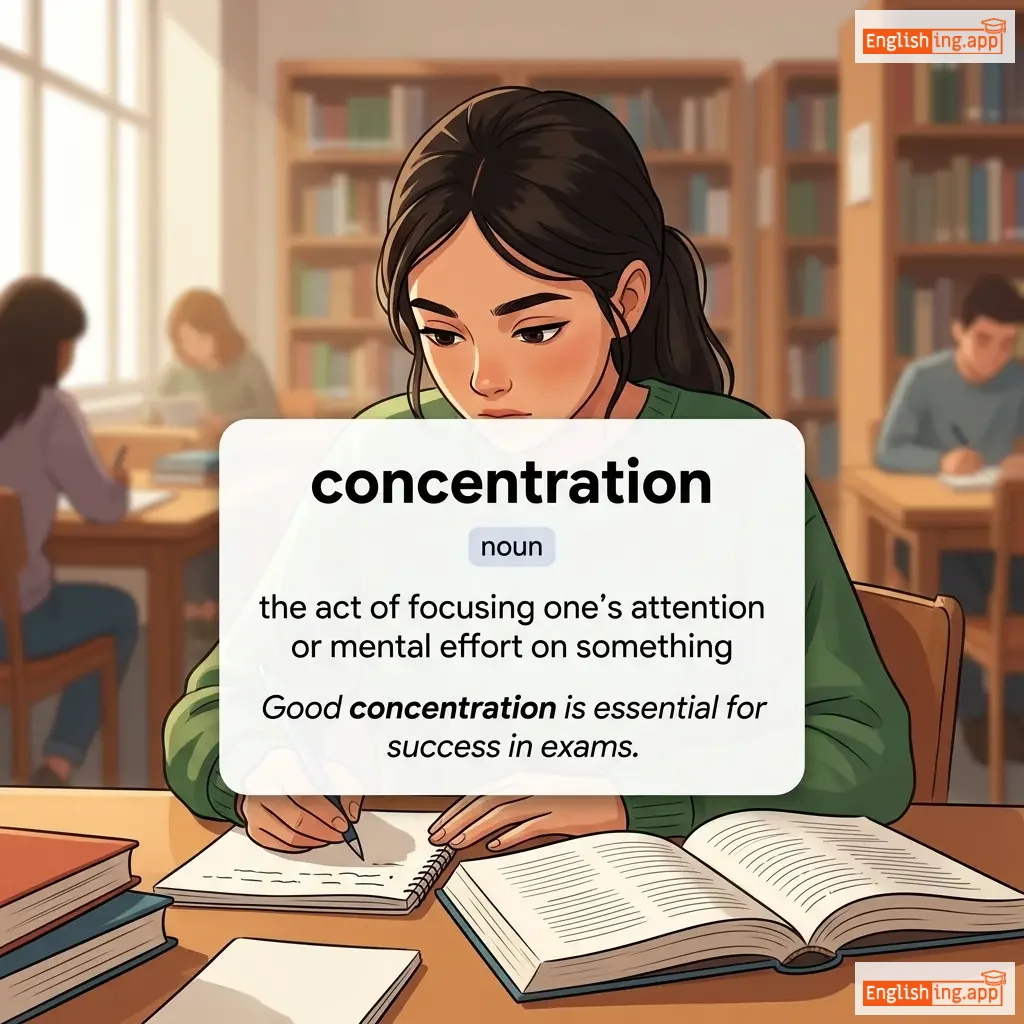
concentration definition card — visual illustration of the meaning
noun
/ˌkɒnsnˈtreɪʃən/
集中力 (ji zhong li)

the act of focusing one's attention or mental effort on something

"Good concentration is essential for success in exams."

"良好的专注力对于考试成功至关重要。" (Liánghǎo de zhuānzhù lì duìyú kǎoshì chénggōng zhìguān zhòngyào.)
adjective
/kənˈsɛntrɪk/
同心的 (tóngxīn de)

having a common center, as in circles or spheres

"The artist drew concentric circles on the canvas."
"艺术家在画布上画了同心圆。" (Yìshùjiā zài huàbù shàng huàle tóngxīn yuán.)
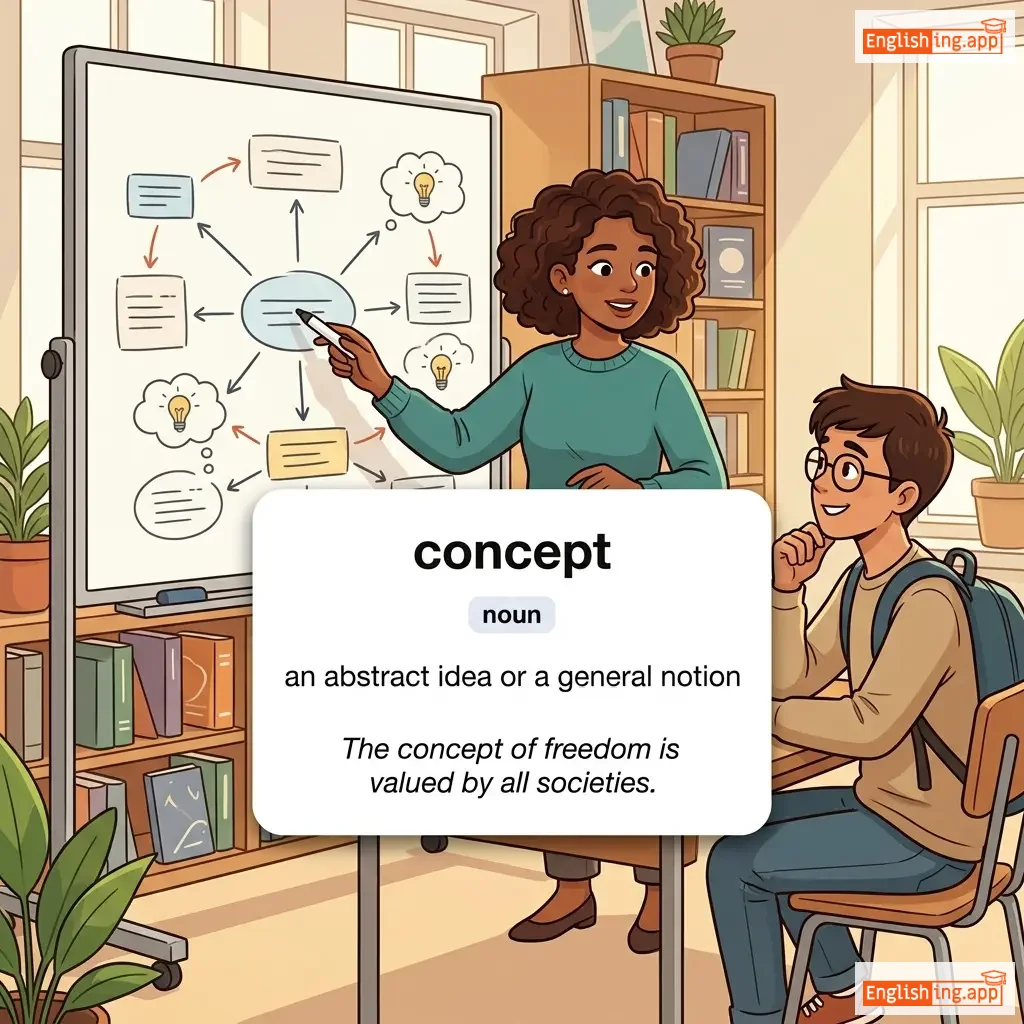
concept definition card — visual illustration of the meaning
noun
/ˈkɒnsɛpt/
概念 (gàiniàn)

an abstract idea or a general notion

"The concept of freedom is valued by all societies."

"自由的概念受到所有社会的重视。" (Zìyóu de gàiniàn shòudào suǒyǒu shèhuì de zhòngshì.)
noun
/kənˈsɛpʃən/
构思, 受孕 (gòusī, shòuyùn)

the forming or understanding of an idea; the act of conceiving a child

"Her conception of the project was very different from ours."

"她对这个项目的构思与我们的完全不同。" (tā duì zhège xiàngmù de gòusī yǔ wǒmen de wánquán bùtóng.)
conceptualization definition card — visual illustration of the meaning
noun
kənˌsep.tʃu.ə.laɪˈzeɪ.ʃən
概念化 (gàiniànhuà)

The process of forming a concept or idea; the process of developing something in the mind.

"The conceptualization of renewable cities is groundbreaking."

"可再生城市的概念化是革命性的。" (Kě zàishēng chéngshì de gàiniànhuà shì gémìngxìng de.)
verb
/kənˈsɛptʃuəlaɪz/
构思 (gousi)

to form an idea or concept of something in your mind

"The artist conceptualized a new design for the exhibition."

"艺术家为展览构思了一个新的设计。" (Yishujia wei zhanlan gousi le yige xin de sheji.)
noun/verb
/kənˈsɜːrn/

to relate to or affect; a matter of worry or interest

"Environmental issues concern all of us."

adjective
/kənˈsɜːnd/
担忧的 (dānyōu de)

worried or anxious about something; involved or interested in something

"She was concerned about her mother's health."

"她对母亲的健康感到担忧。" (Tā duì mǔqīn de jiànkāng gǎndào dānyōu.)
preposition
/kənˈsɜːnɪŋ/
关于 (guānyú)

about or relating to something; causing worry or anxiety

"There are some reports concerning the new project."

"关于新项目有一些报告。" (Guānyú xīn xiàngmù yǒu yīxiē bàogào.)
noun
/ˈkɒnsət/
音乐会 (yīnyuè huì)

A musical performance given by one or more singers or musicians.

"We went to a concert last night and enjoyed the live music."

"我们昨晚去了一场音乐会,并享受了现场音乐。" (Wǒmen zuó wǎn qùle yīchǎng yīnyuè huì, bìng xiǎngshòule xiànchǎng yīnyuè.)
adjective
/kənˈsɜːrtɪd/
协调的 (xié tiáo de)

done with great effort, planned and performed together by multiple people

"The workers made a concerted effort to improve conditions."

"工人们为改善条件做出了协调的努力。" (Gōngrén men wèi gǎishàn tiáojiàn zuòchūle xiétiáo de nǔlì.)