词汇表

英语词汇词典 | 单词含义、定义和示例

noun
/kəmˈpænjən/
伙伴 (huǒ bàn)

a person or animal you spend time with or travel with

"He was my companion during the long journey."

"他是我在漫长旅程中的伴侣。" (tā shì wǒ zài màn cháng lǚ chéng zhōng de bàn lǚ.)
noun
/ˈkʌm.pə.ni/
公司 (gongsi)

a business organization; the presence of other people

"She started her own company to sell handmade products."

"她开设了自己的公司来销售手工制作的产品。" (Tā kāishè le zìjǐ de gōngsī lái xiāoshòu shǒugōng zhìzuò de chǎnpǐn.)
adjective
/ˈkɒmp(ə)rəbl/
可比的 (ke bi de)

Able to be likened to something else in size, amount, or quality.

"The two products are comparable in quality but differ in price."

"这两种产品在质量上可比,但价格不同。" (zhe liang zhong chan pin zai zhi liang shang ke bi dan jia ge bu tong)
adjective
/kəmˈpærətɪv/
比较的 (bijiao de)

Measured or considered by comparison; relative.

"She lives in comparative comfort after moving to the city."

"搬到城市后,她生活得相对舒适。" (ban dao chengshi hou ta shenghuo de xiangdui shushi)
compare definition card — visual illustration of the meaning
verb
/kəmˈpeər/
比较 (bǐjiào)

to examine the similarities and differences between two or more things

"The teacher asked us to compare two poems."

"老师让我们比较了两首诗。" (lǎoshī ràng wǒmen bǐjiàole liǎng shǒu shī.)
noun
/kəmˈpærɪsən/
比较 (bijiao)

The act or process of examining the similarities and differences between things.

"A comparison of the two reports shows several inconsistencies."

"对两份报告的比较显示出几个不一致之处。" (dui liangfen baogao de bijiao xianshichu jige buyizhi zhichu)
noun
/kəmˈpɑːtmənt/
隔间 (gejian)

A separate section or space within a larger structure, such as a train or a container.

"He kept his passport in a small compartment of his bag."

"他把护照放在包里一个小隔间里。" (Ta ba hùzhào fàng zài bāo lǐ yīgè xiǎo géjiān lǐ.)
compartmentalize definition card — visual illustration of the meaning
verb
/kəmˈpɑːtməntəˌlaɪz/
分隔 (fēngé)

To divide into sections or categories.

"It is important to compartmentalize work and personal life to maintain balance."

"保持工作与个人生活的平衡,划分工作与个人生活非常重要。" (Bǎochí gōngzuò yǔ gèrén shēnghuó de pínghéng, huàfēn gōngzuò yǔ gèrén shēnghuó fēicháng zhòngyào.)
noun
/ˈkʌm.pəs/
罗盘 (luó pán)

an instrument for finding direction with a magnetic needle pointing to magnetic north

"The hiker used a compass to find the right direction."

"登山者使用罗盘来寻找正确的方向。" (dēng shān zhě shǐyòng luó pán lái xúnzhǎo zhèngquè de fāngxiàng)
noun
/kəmˈpæʃən/
同情 (tóngqíng)

Sympathetic concern for the sufferings or misfortunes of others.

"The nurse treated the patients with great compassion."

"护士用极大的同情心对待病人。" (Hùshì yòng jí dà de tóngqíng xīn duìdài bìngrén.)
adjective
/kəmˈpæʃənət/
有同情心的; 富有同情心的 (yǒu tóngqíng xīn de; fùyǒu tóngqíng xīn de)

feeling or showing sympathy and concern for others who are suffering

"The compassionate nurse took extra time to comfort the worried patients."

"富有同情心的护士花时间安慰忧虑的病人。" (fùyǒu tóngqíng xīn de hùshì huā shíjiān ānwèi yōulǜ de bìngrén)
adjective
/kəmˈpætəbl/
兼容 (jianrong)

Able to exist or work together without conflict; harmonious.

"This software is compatible with both Windows and Mac systems."

"该软件与 Windows 和 Mac 系统兼容。" (Gai ruanjian yu Windows he Mac xitong jianrong.)
verb
/kəmˈpɛl/
强迫 (qiangpo)

To force or drive someone to do something.

"The law compels citizens to pay taxes."

"法律强迫公民缴纳税款。" (Fǎlǜ qiángpò gōngmín jiǎonà shuìkuǎn.)
adjective
/kəmˈpɛlɪŋ/
引人注目的 (yǐn rén zhù mù de)

Evoking interest, attention, or admiration in a powerful way.

"She gave a compelling speech about climate change."

"她就气候变化发表了引人注目的演讲。" (Tā jiù qì hòu biàn huà fā biǎo le yǐn rén zhù mù de yǎn jiǎng.)
compendium definition card — visual illustration of the meaning
noun
/kəmˈpɛndiəm/
汇编 (huìbiān)

A collection of concise but detailed information about a subject.

"The book is a compendium of ancient myths and legends."

"这本书是关于古代神话和传说的汇编。" (Zhè běn shū shì guānyú gǔdài shénhuà hé chuánshuō de huìbiān.)
verb
/ˈkɒmpənseɪt/
赔偿 (péicháng)

To give something, typically money, in recognition of loss, suffering, or work done.

"The company compensated the worker for his injury."

"公司为工人的伤害进行了赔偿。" (Gōngsī wèi gōngrén de shānghài jìnxíngle péicháng.)
verb
/ˈkɒmpənseɪtɪd/

to have been given something, typically money, as a recompense for loss, suffering, or work done

"The workers were compensated for their overtime hours."

noun
/ˌkɒmpənˈseɪʃən/
赔偿 (peichang)

something, typically money, given to make up for loss, injury, or work done

"She received financial compensation for the accident."

"她因事故获得了经济赔偿。" (Tā yīn shìgù huòdéle jīngjì péicháng.)
adjective
/kəmˈpensətɔːri/
赔偿性的 (peichangxing de)

serving to make up for a loss, damage, or injury

"The court awarded him compensatory damages."

"法院判给他赔偿性赔偿金。" (Fayuan pan gei ta peichangxing peichangjin.)
verb
/kəmˈpiːt/
竞争 (jìngzhēng)

to try to win or be more successful than others in a contest or activity

"Several companies compete for dominance in the market."

"多家公司为市场主导地位而竞赛。" (Duō jiā gōngsī wèi shìchǎng zhǔdǎo dìwèi ér jìngzhēng.)
noun
/ˈkɒmpɪtəns/
能力 (nengli)

the ability to do something successfully or efficiently

"Her competence as a manager impressed the board."

"作为经理,她的能力给董事会留下了深刻印象。" (zuo wei jingli, ta de nengli gei dongshihui liuxia le shenke yinxiang.)
adjective
/ˈkɒmpɪtənt/
称职 (chengzhi)

having the necessary ability, knowledge, or skill to do something successfully

"He is a competent driver who rarely makes mistakes."

"他是一个称职的司机,几乎不犯错误。" (Tā shì yīgè chēngzhí de sījī, jīhū bù fàn cuòwù.)
competition definition card — visual illustration of the meaning
noun
/ˌkɒmpəˈtɪʃən/
竞争 (jingzheng)

a situation in which people or organizations try to be more successful than others

"The competition in the tech industry is very intense."

"科技行业的竞争非常激烈。" (keji hangye de jingzheng feichang jilie.)
adjective
/kəmˈpetətɪv/
竞争的 (jingzheng de)

relating to or characterized by competition; having a strong desire to win or be more successful

"She has a competitive spirit that drives her to excel."
"她有一种竞争精神,推动她追求卓越。" (Ta you yizhong jingzheng jingshen, tuidong ta zhuiqiu zhuoyue.)
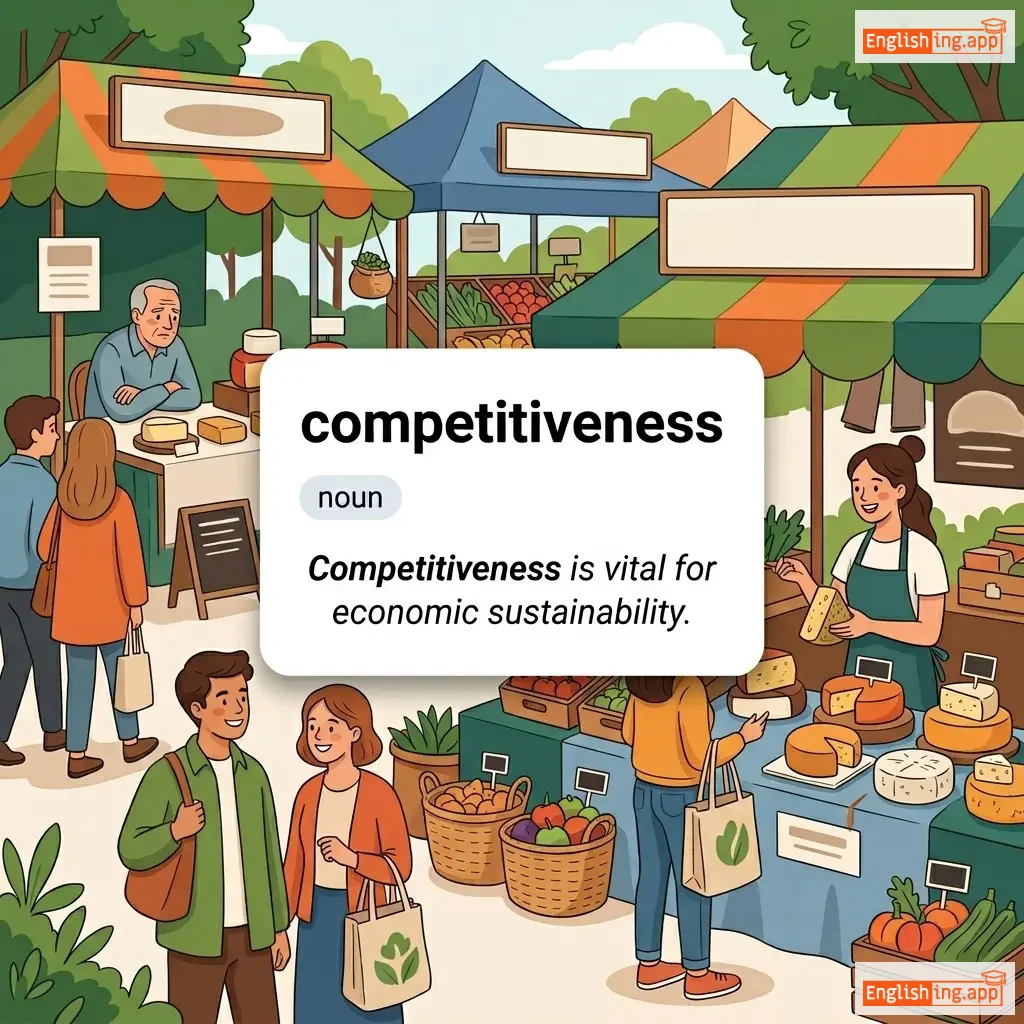
competitiveness definition card — visual illustration of the meaning
noun
kəmˈpet.ɪ.tɪv.nəs
竞争力 (jingzhengli)

The quality of being as good as or better than others of a comparable nature; the ability to compete successfully.

"Competitiveness is vital for economic sustainability."

"竞争力对经济可持续性至关重要。" (Jingzhengli dui jingji kexuanchixu zhi guan zhongyao.)
noun
/kəmˈpɛtɪtər/
竞争者 (jingzhengzhe)

a person, team, or company that competes with others

"The company lowered its prices to beat its main competitor."

"公司降低了价格以击败其主要竞争者。" (Gongsi jiangdi le jiage yi jiba qi zhuyao jingzhengzhe.)
noun
/ˌkɒmpɪˈleɪʃən/
汇编 (huìbiān)

a collection of things, especially pieces of writing or music, gathered together

"The book is a compilation of his best essays."

"这本书是他最好的文章合集。" (Zhè běn shū shì tā zuì hǎo de wénzhāng héjí.)
verb
/kəmˈpaɪl/
编制 (bian zhi)

to collect information or material and put it together in a list, report, or book

"She compiled the research data into a detailed report."

"她将研究数据编纂成一份详细报告。" (Tā jiāng yánjiū shùjù biānzuǎn chéng yí fèn xiángxì bàogào.)
noun
/kəmˈpleɪsəns/

a feeling of quiet pleasure or self-satisfaction, often without awareness of potential danger

"His complacence prevented him from noticing the risks."
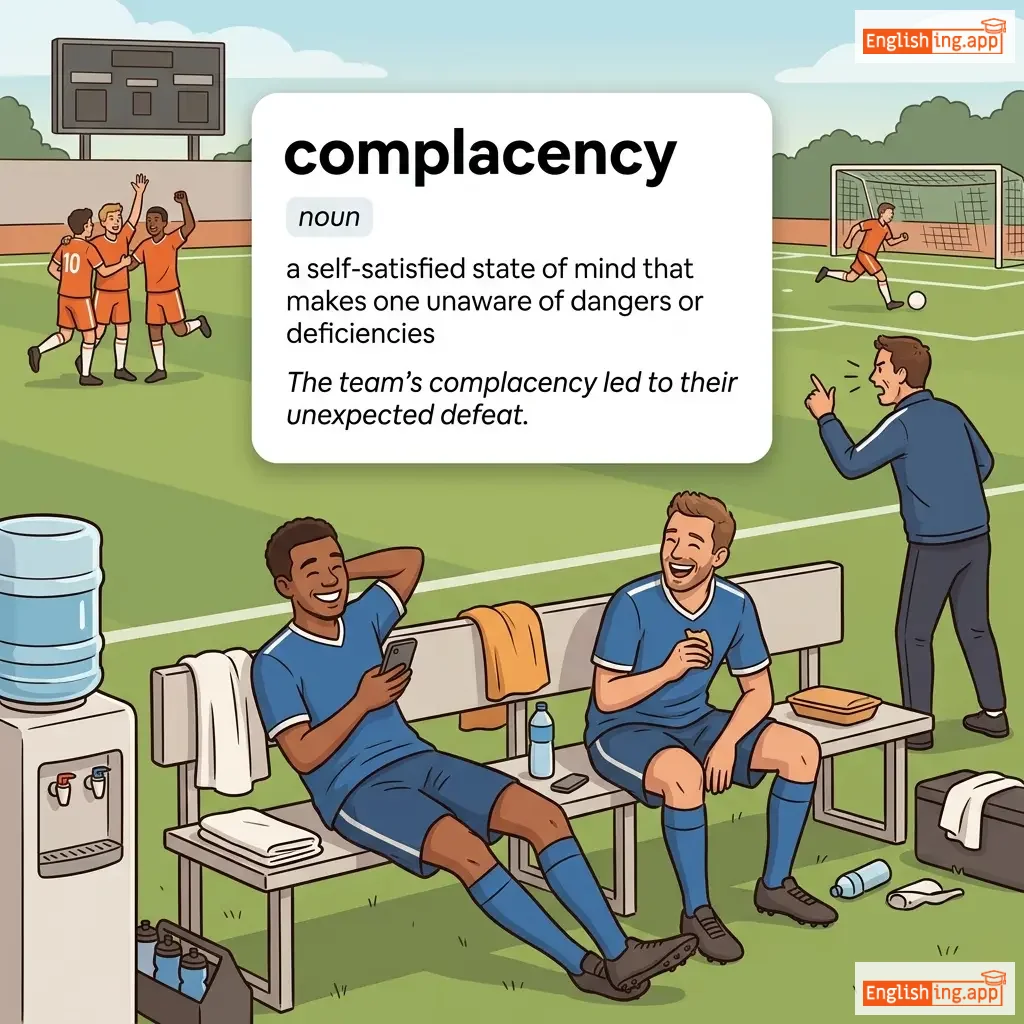
complacency definition card — visual illustration of the meaning
noun
/kəmˈpleɪsənsi/
自满 (ziman)

a self-satisfied state of mind that makes one unaware of dangers or deficiencies

"The team's complacency led to their unexpected defeat."
"球队的自满导致了他们的意外失利。" (qiudui de ziman daozhi le tamen de yiwai shili.)
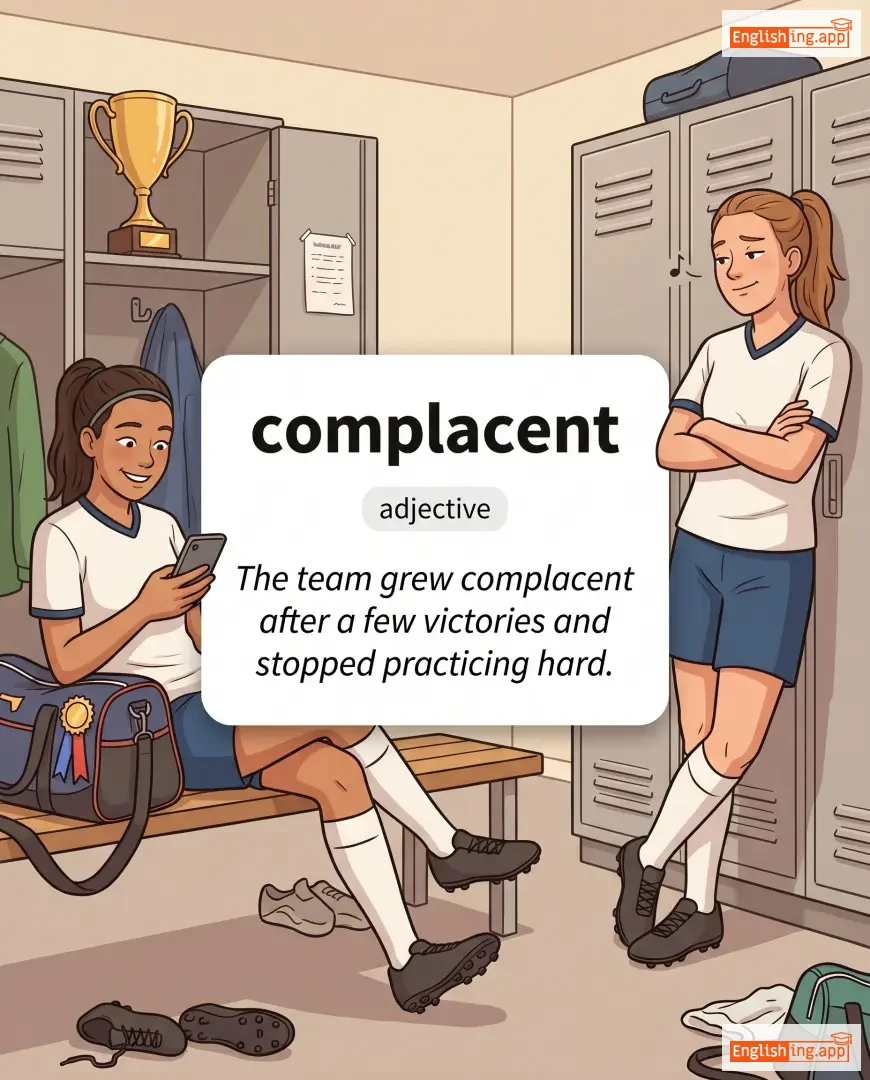
complacent definition card — visual illustration of the meaning
adjective
/kəmˈpleɪsənt/
自满 (ziman)

showing self-satisfaction and a lack of concern about potential dangers or problems

"The team grew complacent after a few victories and stopped practicing hard."

"团队在几场胜利后变得自满,停止了努力训练。" (Tuandui zai ji chang shengli hou biande ziman, tingzhi le nuli xunlian.)
verb
/kəmˈpleɪn/
抱怨 (bàoyuàn)

to express dissatisfaction or annoyance about something

"He often complains about the noise in the neighborhood."

"他经常抱怨邻里的噪音。" (Tā jīngcháng bàoyuàn línlǐ de zàoyīn.)
noun
/kəmˈpleɪnt/
投诉 (tousu)

a statement that something is wrong or not satisfactory

"The manager received a complaint from a customer about poor service."

"经理收到了一名客户关于糟糕服务的投诉。" (Jingli shoudao le yi ming kehu guanyu zaogao fuwu de tousu.)
noun
/kəmˈpleɪsəns/
讨好 (tǎo hǎo)

willingness to please others; courteous compliance

"Her complaisance made her popular among her colleagues."

"她的讨好让她在同事中变得很受欢迎。" (Tā de tǎo hǎo ràng tā zài tóngshì zhōng biàn dé hěn shòu huānyíng.)
complaisant definition card — visual illustration of the meaning
adjective
/kəmˈpleɪzənt/
过于顺从 (guò yú shùn cóng)

willing to please others or to accept what they do or say without protest

"He was too complaisant to refuse their demands."

"他太顺从以至于无法拒绝他们的要求。" (Tā tài shùn cóng yǐ zhì yú wú fǎ jù jué tāmen de yāo qiú.)
complement definition card — visual illustration of the meaning
noun/verb
/ˈkɒmplɪmənt/
补充 (buchong)

something that completes or goes well with something; to add something that enhances or improves

"The scarf complements her outfit perfectly."

"围巾完美地补充了她的装束。" (wei jin wan mei di buchong le ta de zhuang shu.)
adjective
/ˌkɒmplɪˈmɛntəri/
互补的 (hubu de)

combining in such a way as to enhance or emphasize the qualities of each other

"The two partners have complementary skills."

"这两个伙伴有互补的技能。" (zhè liǎng gè huǒbàn yǒu hùbǔ de jìnéng.)
verb
/kəmˈpliːt/
完成 (wánchéng)

to finish making or doing something; to bring something to an end

"She managed to complete the project on time."

"她按时完成了这个项目。" (Tā ànshí wánchéngle zhège xiàngmù.)
adverb
/kəmˈpliːtli/
完全地 (wánquán de)

totally; in every way possible

"The room was completely silent."

"房间完全安静。" (Fángjiān wánquán ānjìng.)
noun
/kəmˈpliːʃən/
完成 (wancheng)

the action or process of finishing something

"The completion of the project will take another few weeks."
"项目的完成将再需要几周时间。" (Xiàngmù de wánchéng jiāng zài xūyào jǐ zhōu shíjiān.)
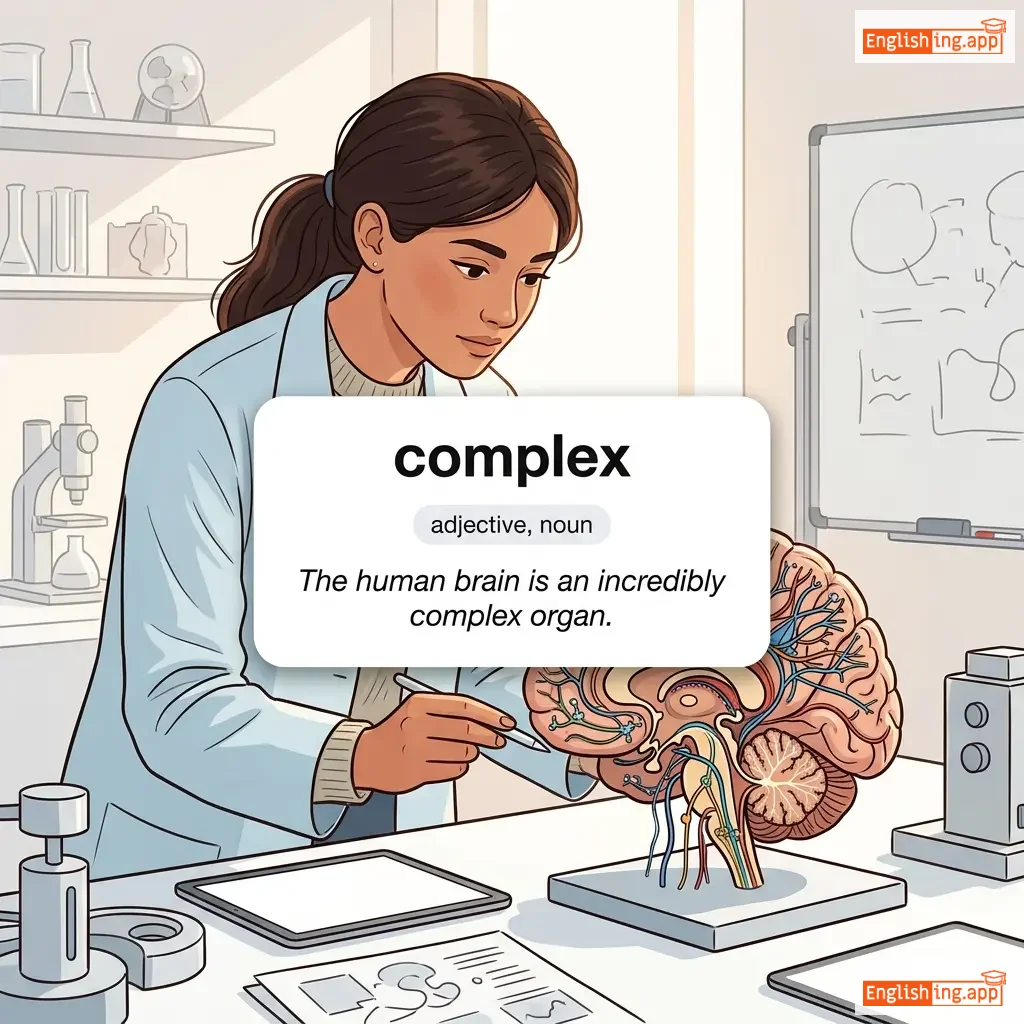
complex definition card — visual illustration of the meaning
adjective, noun
/ˈkɒm.pleks/
复杂的 (fuza de)

Consisting of many different and connected parts; not easy to understand or analyze.

"The human brain is an incredibly complex organ."

"人类的大脑是一个极其复杂的器官。" (Renlei de dainao shi yi ge jiqi fuza de qiguan.)
noun
/kəmˈplek.ʃən/
肤色 (fuse)

the natural color, texture, and appearance of a person's skin, especially on the face

"Her fair complexion glowed beautifully in the morning sunlight."

"她的肤色在早晨的阳光下美丽地发光。" (Tā de fūsè zài zǎo chén de yángguāng xià měilì de fā guāng.)
complexity definition card — visual illustration of the meaning
noun
/kəmˈplɛksɪti/
复杂性 (fuza xing)

the state or quality of being intricate or complicated

"The complexity of the problem surprised the engineers."
"问题的复杂性使工程师感到惊讶。" (Wenti de fuza xing shi gongchengshi gandu jingya.)
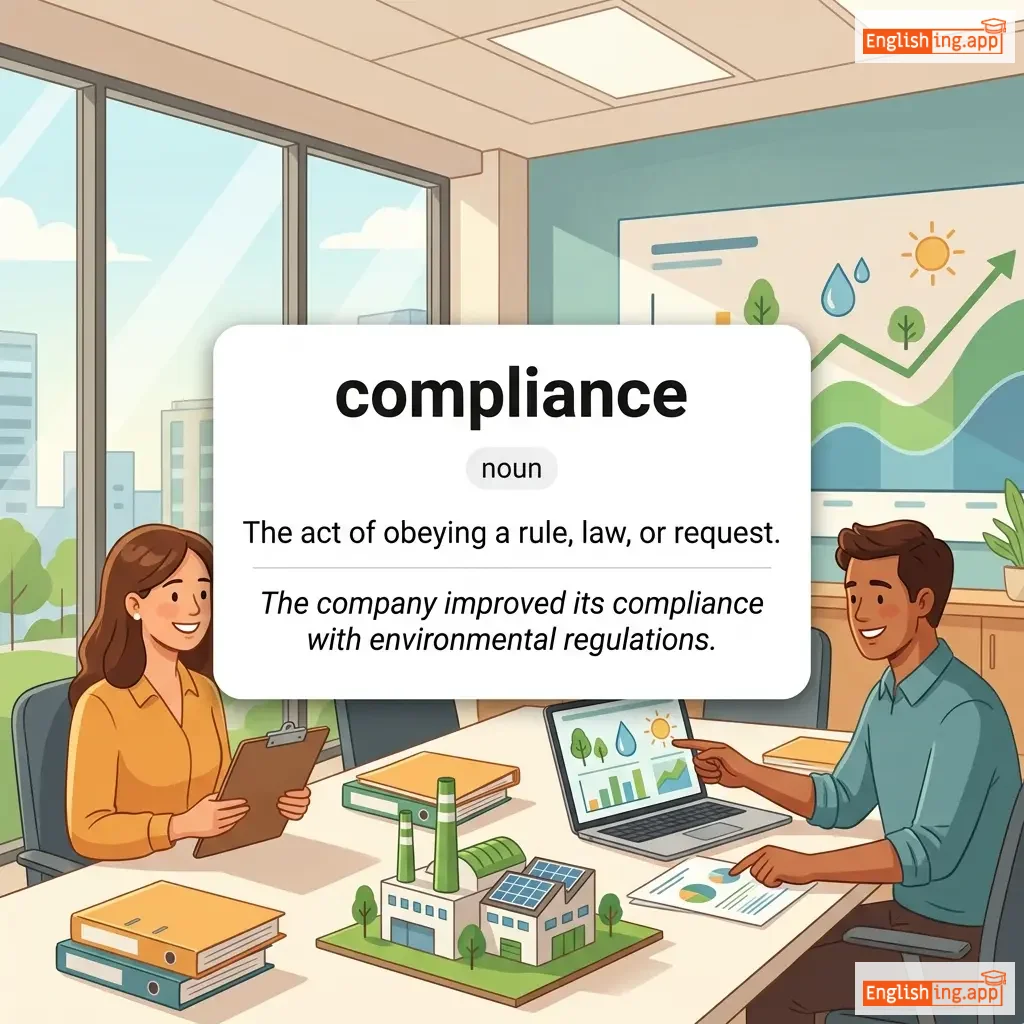
compliance definition card — visual illustration of the meaning
noun
/kəmˈplaɪəns/
合规 (hegui)

The act of obeying a rule, law, or request.

"The company improved its compliance with environmental regulations."
"公司改善了其在环保规定方面的合规性。" (Gongsi gaishanle qi zai huanbao guiding fangmian de heguixing.)
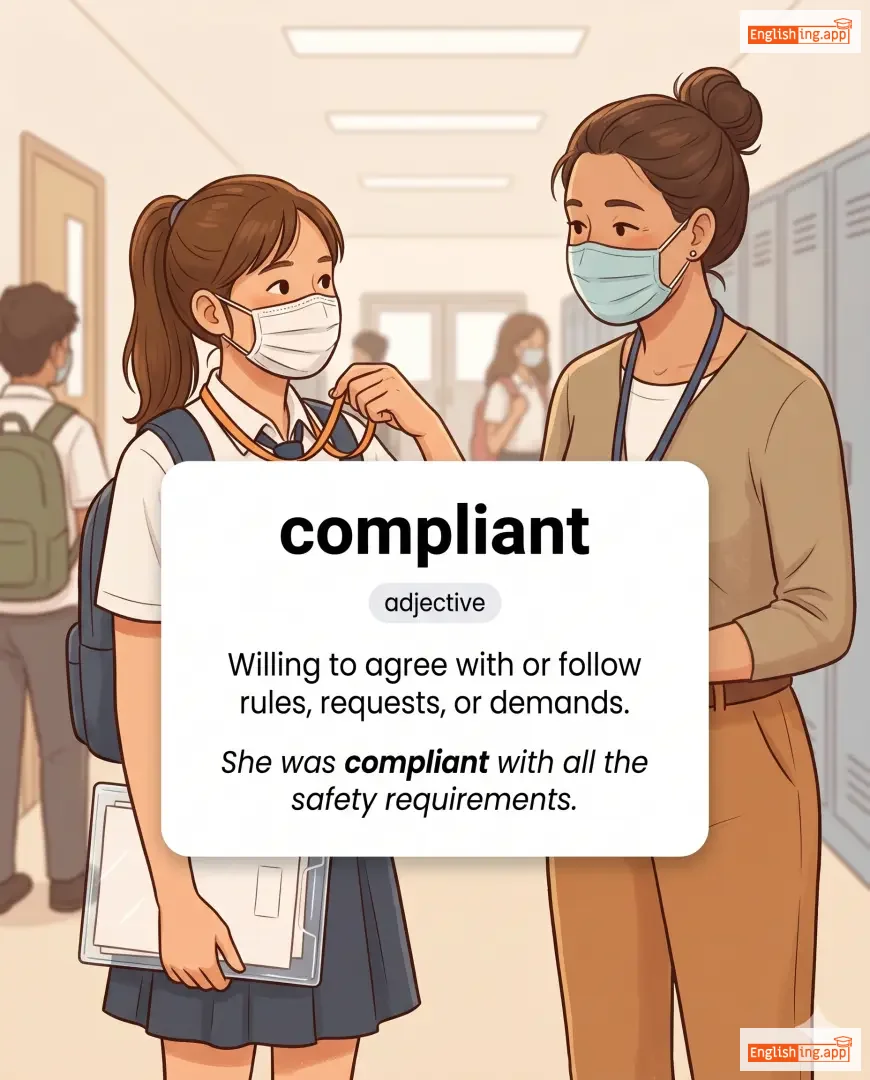
compliant definition card — visual illustration of the meaning
adjective
/kəmˈplaɪənt/
顺从 (shùncóng)

Willing to agree with or follow rules, requests, or demands.

"She was compliant with all the safety requirements."

"她遵守了所有安全要求。" (Tā zūnshǒu le suǒyǒu ānquán yāoqiú.)
verb
/ˈkɒm.plɪ.keɪt/
使复杂 (shǐ fùzá)

To make something more difficult or confusing.

"The new rules will only complicate the process."

"新规则只会使这个过程更加复杂。" (Xīn guīzé zhǐ huì shǐ zhège guòchéng gèngjiā fùzá.)
adjective
/ˈkɒmplɪˌkeɪtɪd/
复杂 (fuza)

consisting of many interconnected parts; difficult to understand

"The instructions for the machine are too complicated to follow."

"机器的说明书太复杂,无法跟随。" (Ji qi de shuoming shu tai fuza, wu fa gensui.)
noun
/ˌkɒmplɪˈkeɪʃən/
并发症 (bingfa zheng)

A problem or difficulty that makes a situation harder to deal with.

"His illness led to serious complications after surgery."

"他的病情在手术后导致了严重的并发症。" (Tā de bìngqíng zài shǒushù hòu dǎozhìle yánzhòng de bìngfāzhèng.)
adjective
/kəmˈplɪsɪt/
共犯 (犯罪中) (gòngfàn (fànzuì zhōng))

involved with others in an illegal activity or wrongdoing

"He was found complicit in the crime."

"他在犯罪中被发现是共犯。" (Tā zài fànzuì zhōng bèi fāxiàn shì gòngfàn.)
noun
/kəmˈplɪsəti/
共谋 (gongmou)

the state of being involved with others in an illegal activity or wrongdoing

"The court revealed his complicity in the fraud scheme."

"法庭揭示了他在欺诈计划中的共谋。" (Fating jieshi le ta zai qizha jihua zhong de gongmou.)