词汇表

英语词汇词典 | 单词含义、定义和示例

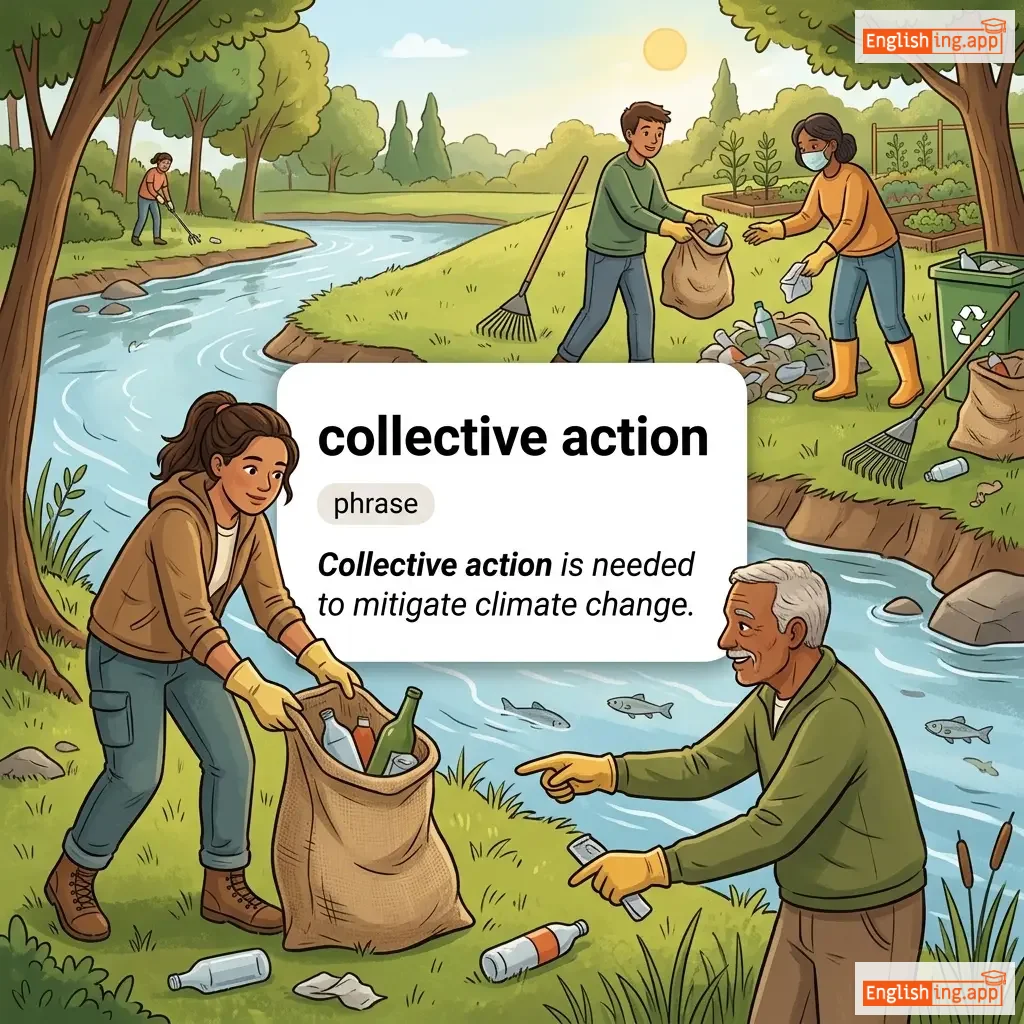
collective action definition card — visual illustration of the meaning
phrase
kəˈlek.tɪv ˈæk.ʃən
集体行动 (kollectiveaksion)

Action taken by a group of people working together toward a common goal or purpose.

"Collective action is needed to mitigate climate change."
"集体行动对于减缓气候变化很重要。" (collectiveactionisneededtomitigateclimatechange)
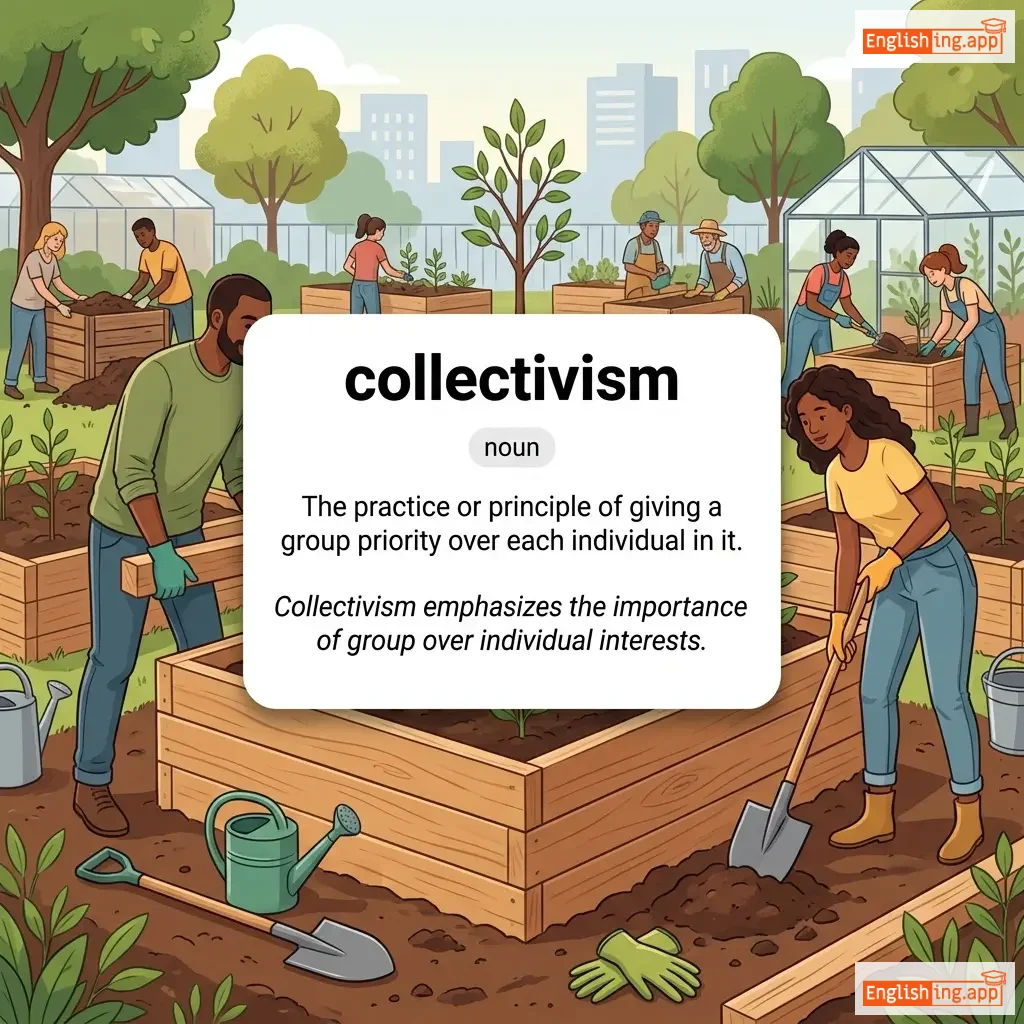
collectivism definition card — visual illustration of the meaning
noun
kəˈlɛktɪvɪzəm
集体主义 (jítǐ zhǔyì)

The practice or principle of giving a group priority over each individual in it.

"Collectivism emphasizes the importance of group over individual interests."

"集体主义强调集体利益高于个人利益。" (Jítǐ zhǔyì qiángdiào jítǐ lìyì gāo yú gèrén lìyì.)
noun
/kəˈlɛktər/

a person who collects things as a hobby or job

"He is a stamp collector with thousands of rare items."

noun
/ˈkɒlɪdʒ/
大学 (dàxué)

An educational institution where students study for degrees or professional qualifications.

"She hopes to attend college in the city next year."

"她希望明年能在城市的大学就读。" (Tā xīwàng míngnián néng zài chéngshì de dàxué jiùdú.)
noun
/kəˈliːdʒən/
大学生 (daxuesheng)

a student of a college

"The collegians were preparing for the cultural festival."

"大学生们正在为文化节做准备。" (Daxuesheng men zhengzai wei wenhuajie zuo zhunbei.)
collide definition card — visual illustration of the meaning
verb
/kəˈlaɪd/
碰撞 (pengzhuang)

to come into violent contact; crash into something

"Two cars collided at the busy intersection."

"两辆汽车在繁忙的交叉路口相撞。" (Liǎng liàng qìchē zài fánmáng de jiāochā lùkǒu xiāngzhuàng.)
noun
/ˈkɒliər/
煤矿工人 (mei kuang gong ren)

a person who works in coal mines or a ship carrying coal

"The collier spent long hours underground extracting coal."

"煤矿工人花了很长时间在地下开采煤炭。" (Mei kuang gong ren hua le hen chang shijian zai dixia kaicai meitan.)
noun
/kəˈlɪʒən/
碰撞 (pengzhuang)

an instance of two or more objects crashing into each other

"The collision on the highway caused a major traffic jam."
"高速公路上的碰撞造成了严重的交通堵塞。" (Gāosù gōnglù shàng de pèngzhuàng zàochéngle yánzhòng de jiāotōng dǔsè.)
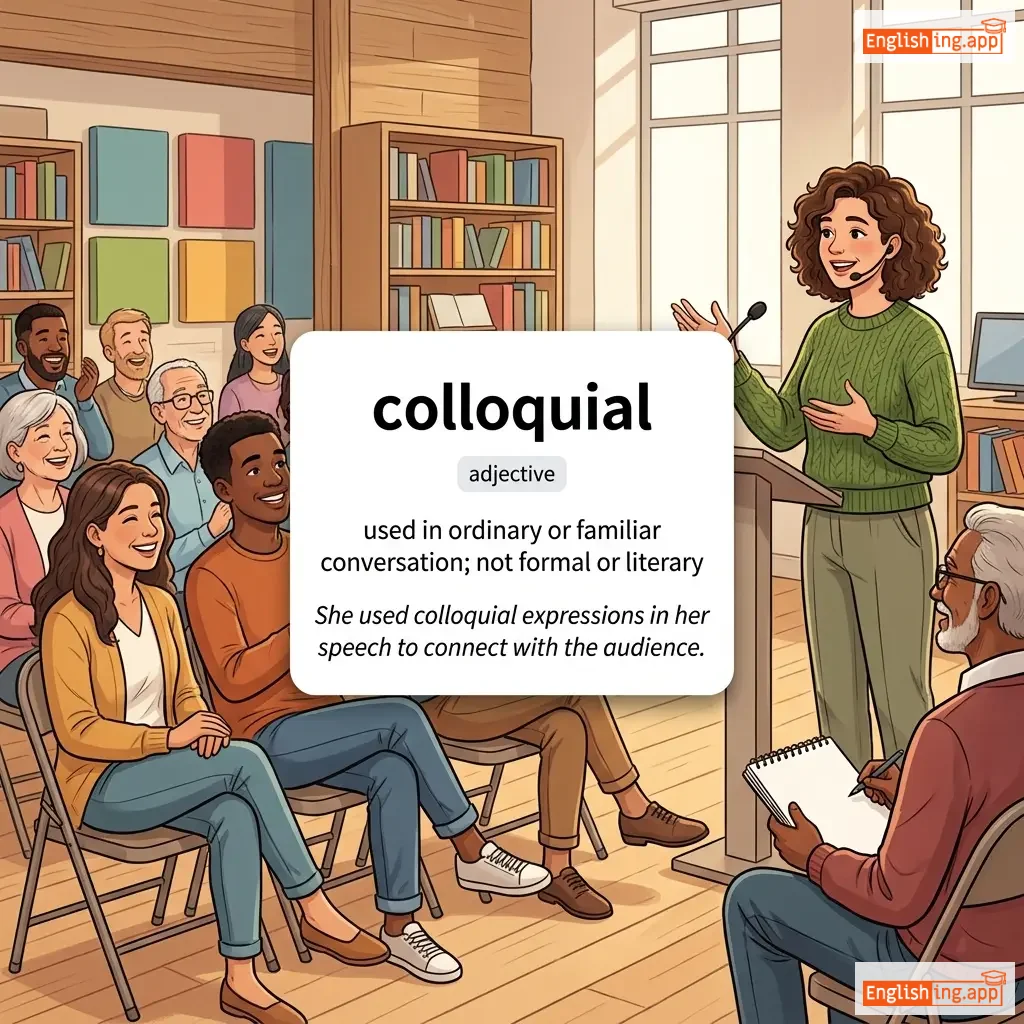
colloquial definition card — visual illustration of the meaning
adjective
/kəˈloʊkwiəl/
口语的 (kouyu de)

used in ordinary or familiar conversation; not formal or literary

"She used colloquial expressions in her speech to connect with the audience."

"她在演讲中使用了口语表达方式,以便与观众建立联系。" (Tā zài yǎnjiǎng zhōng shǐyòngle kǒuyǔ biǎodá fāngshì, yǐbiàn yǔ guānzhòng jiànlì liánxì.)
noun
/kəˈloʊkwiəˌlɪzəm/
口语表达 (kouyu biao da)

a word or phrase used in informal speech or writing

"The novel is full of regional colloquialisms."

"这本小说充满了地区性的口语表达。" (Zhe ben xiaoshuo chongman le diquxing de kouyu biaoda.)
noun
/ˈkɒl.ə.kwi/
正式对话 (zhèngshì duìhuà)

A formal conversation or dialogue, often on serious or academic topics.

"The professors engaged in a deep colloquy about the future of education."

"教授们就教育的未来进行了深入的对话。" (Jiàoshòu men jiù jiàoyù de wèilái jìnxíngle shēnrù de duìhuà.)
verb
/kəˈluːd/
勾结 (gōu jié)

To secretly cooperate or conspire with others, often for a deceitful purpose.

"The two companies colluded to fix prices in the market."

"这两家公司串通起来,操控市场价格。" (Zhè liǎng jiā gōngsī chuàntōng qǐlái, cāokòng shìchǎng jiàgé.)
noun
/kəˈluːʒən/
共谋 (gongmou)

A secret agreement or cooperation, especially for an illegal or dishonest purpose.

"There was evidence of collusion between the officials and the contractors."
"有证据表明官员与承包商之间有共谋。" (Yǒu zhèngjù biǎomíng guānyuán yǔ chéngbāo shāng zhījiān yǒu gòngmóu.)
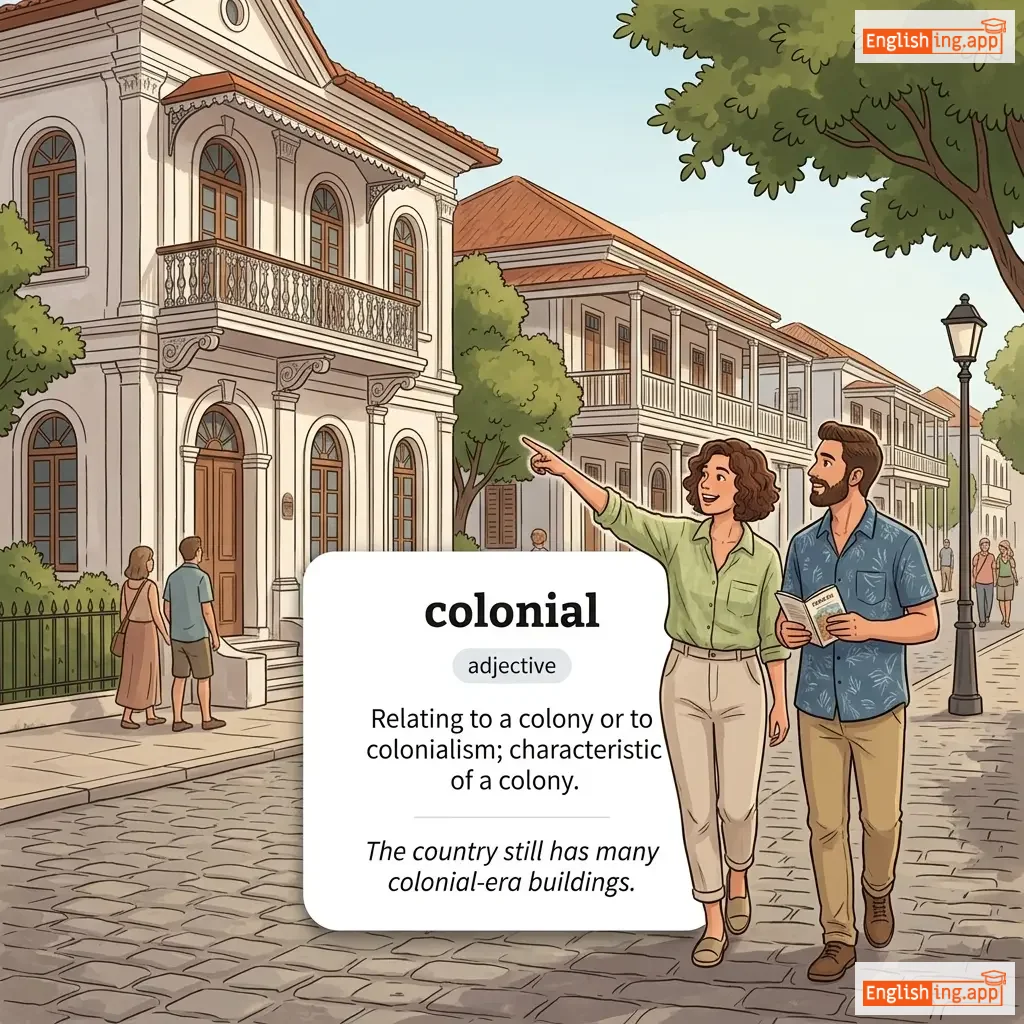
colonial definition card — visual illustration of the meaning
adjective
/kəˈloʊniəl/
殖民的 (zhímín de)

Relating to a colony or to colonialism; characteristic of a colony.

"The country still has many colonial-era buildings."

"这个国家仍然有许多殖民时代的建筑。" (Zhège guójiā réngrán yǒu xǔduō zhímín shídài de jiànzhú.)
noun
/ˌkɒl.əˈneɪd/
柱廊 (zhù láng)

A row of evenly spaced columns supporting a roof, often in classical architecture.

"The visitors admired the grand colonnade at the entrance of the temple."

"游客们欣赏着寺庙入口处的宏伟柱廊。" (Yóukèmen xīnshǎng zhe sìmiào rùkǒu chù de hóngwěi zhùláng.)
noun
/ˈkɒləni/
殖民地 (zhímíndì)

a territory or community controlled by another country or group of people

"India was once a British colony."

"印度曾是英国的殖民地。" (Yìndù céng shì Yīngguó de zhímíndì.)
noun
/ˈkʌl.ər/
颜色 (yanse)

The property possessed by an object of producing different sensations on the eye as a result of the way it reflects or emits light.

"Blue is her favorite color."

"蓝色是她最喜欢的颜色。" (Lán sè shì tā zuì xǐhuān de yánsè.)
adjective
/ˈkʌlərfəl/
五彩缤纷 (wǔ cǎi bīn fēn)

having bright colors; full of variety or interest

"The festival was full of colorful decorations."
"这个节日充满了五彩缤纷的装饰。" (Zhège jiérì chōngmǎnle wǔ cǎi bīn fēn de zhuāngshì.)
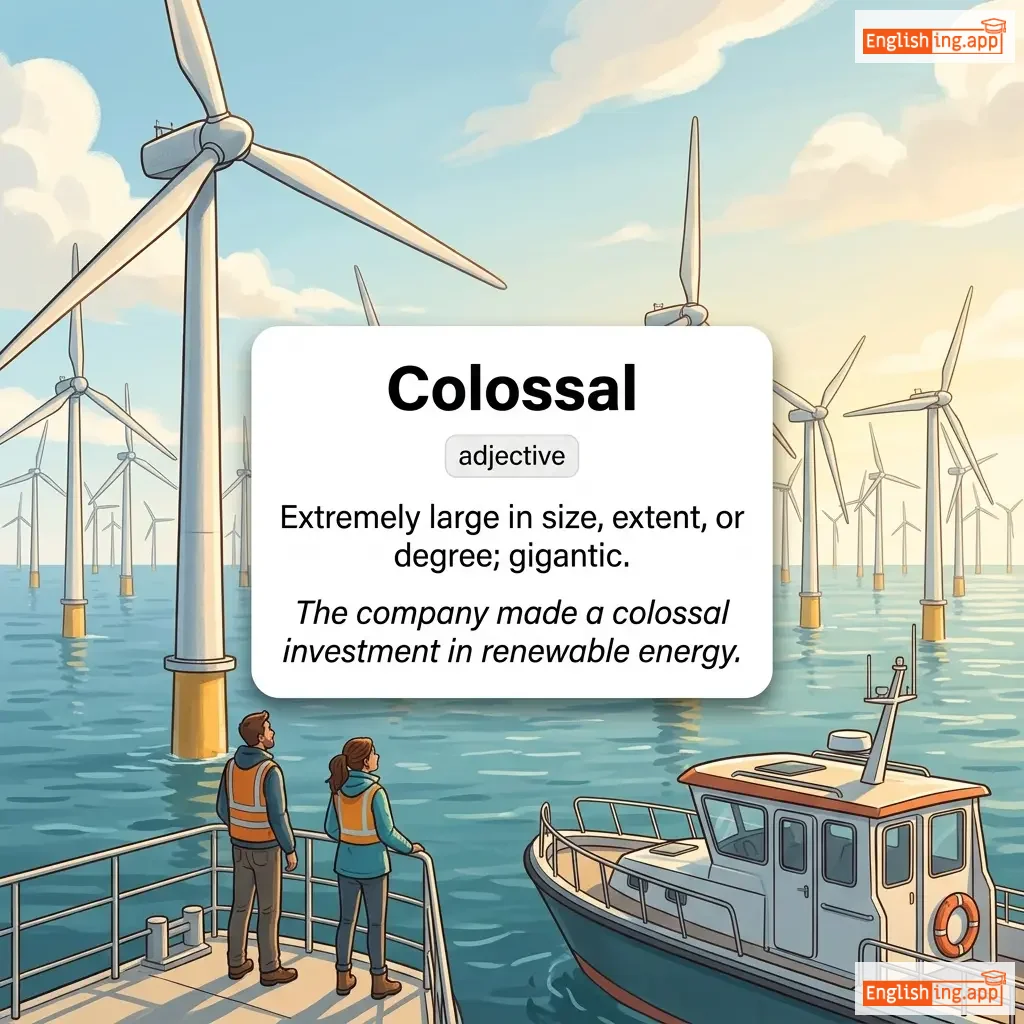
Colossal definition card — visual illustration of the meaning
adjective
/kəˈlɒsəl/
巨大的 (jù dà de)

Extremely large in size, extent, or degree; gigantic.

"The company made a colossal investment in renewable energy."

"该公司在可再生能源方面做出了巨大的投资。" (Gāi gōngsī zài kě zàishēng néngyuán fāngmiàn zuòchūle jùdà de tóuzī.)
noun
/kəˈlɒsəs/
巨人 (juren)

A person or thing of enormous size, importance, or ability.

"Einstein was a colossus in the world of science."

"爱因斯坦是科学界的巨人。" (Ai yinsitan shi kexuejie de juren.)
noun
/ˈkʌl.ər/
颜色 (yan se)

the property possessed by an object of producing different sensations on the eye as a result of the way it reflects light; hue, tint, shade

"What is your favorite colour for painting the bedroom walls?"

"你最喜欢的卧室墙面涂什么颜色?" (Nǐ zuì xǐhuān de wòshì qiángmiàn tú shénme yánsè?)
noun
/koʊlt/
小马驹 (xiǎo mǎ jū)

a young male horse, especially one under four years old

"The farmer trained the young colt to accept a saddle."

"农民训练年轻的小马驹来接受马鞍。" (Nóngmín xùnliàn niánqīng de xiǎo mǎ jū lái jiēshòu mǎ'ān.)
adjective
/ˈkoʊltɪʃ/

Playful, energetic, and not fully mature or disciplined.

"The coltish boy ran around the field without a care."

noun
/ˈkɒləm/

A vertical structure that supports a building; also a section of text arranged vertically in a newspaper or table.

"The ancient temple had tall marble columns."

noun
/ˈkɒləmnɪst/
专栏作家 (zhuān lán zuò jiā)

a journalist who regularly writes articles or opinions for a newspaper or magazine

"The columnist wrote an article about climate change."

"专栏作家写了一篇关于气候变化的文章。" (Zhuān lán zuò jiā xiě le yī piān guān yú qì hòu biàn huà de wén zhāng.)
noun
/ˈkoʊmə/
昏迷 (hunmi)

A deep state of prolonged unconsciousness caused by illness or injury.

"The patient remained in a coma for several weeks."

"病人昏迷了几周。" (Bingren hunmi le ji zhou.)
adjective
/ˈkoʊməˌtoʊs/
昏迷的 (hunmi de)

In a state of deep unconsciousness, resembling or related to coma.

"The comatose patient was kept under constant observation."

"昏迷的病人被持续观察。" (Hunmi de bìngrén bèi chíxù guānchá.)
noun
/koʊm/
梳子 (shūzi)

a toothed device for arranging or cleaning the hair

"She used a comb to style her hair before the party."

"她在派对前用梳子整理了她的头发。" (tā zài pài duì qián yòng shūzi zhěnglǐ le tā de tóufǎ)
verb
/ˈkɒmbæt/
对抗 (duìkàng)

to fight against something, especially to reduce or stop it

"The government is taking steps to combat corruption."

"政府正在采取措施来对抗腐败。" (Zhèngfǔ zhèngzài cǎiqǔ cuòshī lái duìkàng fǔbài.)
noun
/ˌkɒmbɪˈneɪʃən/
组合 / 混合 (zuhé / hùnhé)

The act of joining or mixing two or more things together.

"This dish is a perfect combination of sweet and spicy flavors."

"这道菜是甜味和辛辣味的完美组合。" (Zhè dào cài shì tián wèi hé xīnlà wèi de wánměi zǔhé.)
verb
/kəmˈbaɪn/
合并 (hébìng)

To bring two or more things together to form a single unit.

"They decided to combine their resources for the project."

"他们决定将他们的资源合并到该项目中。" (Tāmen juédìng jiāng tāmen de zīyuán hébìng dào gāi xiàngmù zhōng.)
adjective
/kəmˈbaɪnd/
联合的 (liánhé de)

formed by bringing together separate parts or elements

"The combined effort of the team led to success."

"团队的共同努力导致了成功。" (Tuánduì de gòngtóng nǔlì dǎozhìle chénggōng.)
adjective
/kəmˈbʌstɪbəl/
可燃的 (kě rán de)

Capable of catching fire and burning easily.

"Dry leaves are highly combustible."

"干叶子非常易燃。" (Gàn yèzi fēicháng yìrán.)
come definition card — visual illustration of the meaning
verb
/kʌm/
幸福 (xingfu)

to move or travel toward or into a place thought of as near or familiar

"She will come to the party later."

"她收到奖项时无法隐藏她的幸福。" (Tā shōudào jiǎngxiàng shí wúfǎ yǐncáng tā de xìngfú.)
noun
/ˈkʌmbæk/
东山再起 (dong shan zai qi)

A return to a former status or success after a period of decline.

"The singer made a remarkable comeback after years of silence."

"歌手在沉默多年后取得了显著的东山再起。" (Geshou zai chenmo duonian hou qude le xianzhu de dong shan zai qi.)
noun
/ˈkɒmədi/
喜剧 (xijü)

A type of entertainment that is intended to make people laugh.

"We watched a hilarious comedy at the theater."

"我们在剧院看了一场有趣的喜剧。" (Wo men zai ju yuan kan le yi chang you qu de xi ju.)
adjective
/ˈkʌmli/
美丽 (měilì)

Attractive or pleasant in appearance.

"The actress was known for her comely features."

"那位女演员以她美丽的特征著称。" (Nà wèi nǚ yǎnyuán yǐ tā měilì de tèzhēng zhùchēng.)
noun
/kəˈmɛstɪbəl/
可食用的 (keshi yong de)

An item of food that can be eaten.

"The picnic basket was full of delicious comestibles."

"野餐篮子里装满了美味的可食用物品。" (Yěcān lánzi lǐ zhuāng mǎnle měiwèi de kě shíyòng wùpǐn.)
noun
/ˈkɒm.ɪt/
彗星 (huixing)

a celestial object consisting of ice and dust that develops a tail when approaching the sun

"Halley's Comet appears in the sky every 76 years."

"哈雷彗星每76年出现在天空中。" (Ha Lei hui xing mei 76 nian chu xian zai tian kong zhong.)
noun
/ˌkʌmˈʌpəns/
应得的惩罚 (yingde de chengfa)

A deserved punishment or fate; just deserts.

"The corrupt official finally got his comeuppance in court."

"那个腐败的官员最终在法庭上得到了他的应得的惩罚。" (Nage fubai de guanyuan zhongyu zai fating shang dedao le tade yingde de chengfa.)
noun
/ˈkʌmfərt/
舒适 (shushi)

a state of physical ease and freedom from pain or distress

"The soft chair gave him great comfort."

"那把软椅子给了他很大的舒适感。" (Na ba ruan yǐzi gěi le tā hěn dà de shūshì gǎn.)
comfortable definition card — visual illustration of the meaning
adjective
/ˈkʌmf.tə.bəl/
舒适的 (shūshì de)

providing physical ease and relaxation; free from stress or worry

"This chair is so comfortable that I could sit here all day."

"这把椅子太舒服了,我可以整天坐在这里。" (Zhè bǎ yǐzi tài shūfu le, wǒ kěyǐ zhěngtiān zuò zài zhèlǐ.)
adverb
/ˈkʌmftəbli/
舒适地 (shushi de)

in a comfortable manner; without difficulty or effort; with ease

"She was sitting comfortably in her favorite chair."

"她坐在自己最喜欢的椅子上很舒服。" (Tā zuò zài zìjǐ zuì xǐhuān de yǐzi shàng hěn shūfú.)
adjective
/ˈkɒmɪk/
喜剧的 (xǐjù de)

causing or meant to cause laughter

"The movie had several comic scenes."

"这部电影有几个喜剧场景。" (Zhè bù diànyǐng yǒu jǐ gè xǐjù chǎngjǐng.)
adjective
/ˈkɒmɪkəl/
滑稽 (huaji)

Funny in a strange or silly way; amusing.

"His comical expressions made everyone laugh."

"他滑稽的表情让所有人都笑了。" (Ta huaji de biaoqing rang suoyouren dou xiaole.)
adjective
/ˈkʌmɪŋ/
即将来临 (jí jiāng lái lín)

approaching or happening soon

"We are preparing for the coming festival."

"我们正在为即将来临的节日做准备。" (Wǒmen zhèngzài wèi jí jiāng lái lín de jiérì zuò zhǔnbèi.)
noun
/ˈkɒmɪti/
礼貌,互相尊重 (lǐmào, hùxiāng zūnzhòng)

Courtesy and considerate behavior towards others; mutual respect.

"The meeting was conducted with comity and respect."

"会议是以礼貌和尊重的方式进行的。" (Huìyì shì yǐ lǐmào hé zūnzhòng de fāngshì jìnxíng de.)
verb
/kəˈmænd/
命令 (mìnglìng)

to give an order authoritatively; to control or direct

"The general commanded the soldiers to move forward."
"将军命令士兵们前进。" (Jiāngjūn mìnglìng shìbīngmen qiánjìn.)
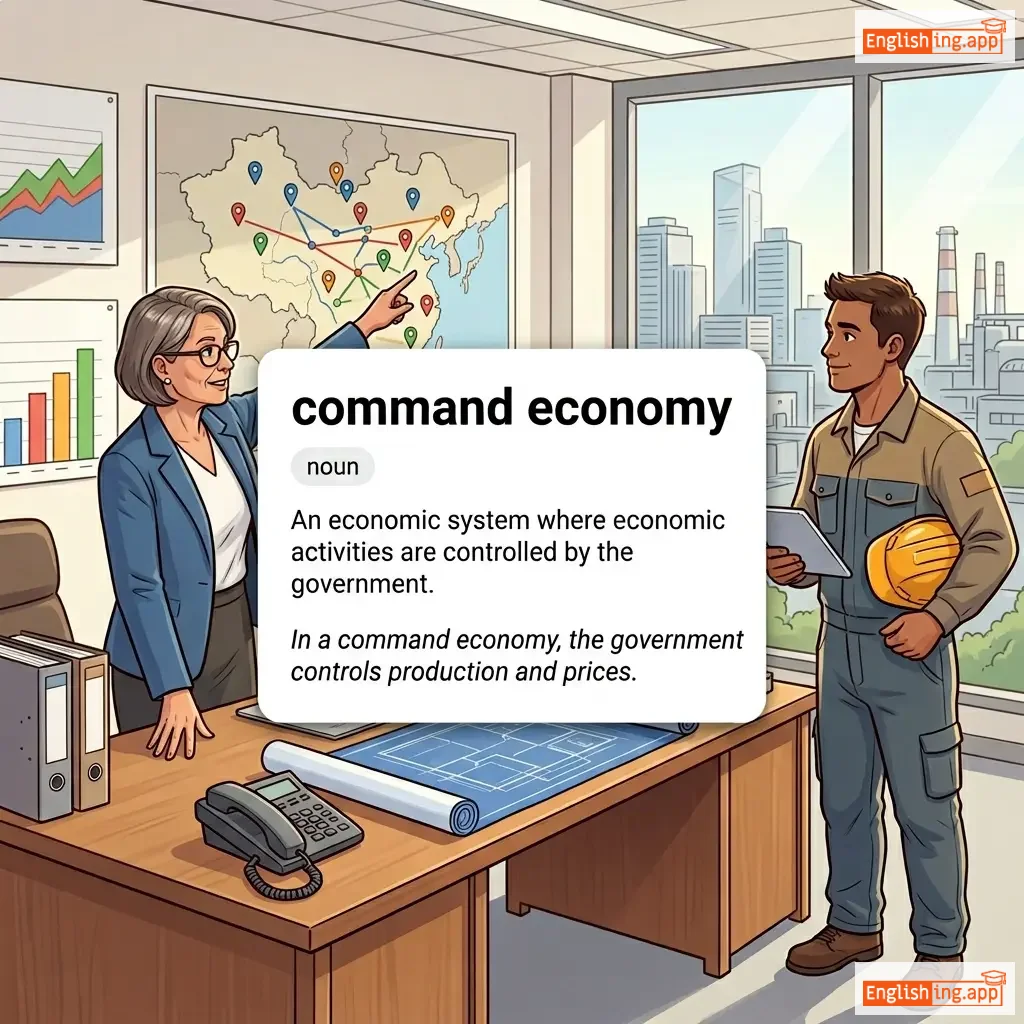
command economy definition card — visual illustration of the meaning
noun
kəˈmɑːnd ɪˈkɒn.ə.mi
计划经济 (jihuajingji)

An economic system where economic activities are controlled by the government.

"In a command economy, the government controls production and prices."

"在计划经济中,政府控制生产和价格。" (Zai jihua jingji zhong, zhengfu kongzhi shengchan he jiage.)
verb
/ˌkɒmənˈdɪə/
强行占领 (qiángxíng zhànlǐng)

To take control or possession of something, often by force or authority.

"The soldiers commandeered the villagers’ homes during the war."

"战争期间,士兵们强行占领了村民的家。" (zhànzhēng qījiān, shìbīngmen qiángxíng zhànlǐngle cūnmín de jiā.)