词汇表

英语词汇词典 | 单词含义、定义和示例

noun, verb
/klɒt/
血块 (xuekuai)

a thick mass of coagulated liquid, especially blood; to form such a mass.

"The doctor removed a blood clot from the patient."

"医生从病人身上取出了血块。" (Yisheng cong bingren shen shang quchule xuekuai.)
noun
/klɒθ/
布料 (buliào)

fabric or material made by weaving or knitting fibers

"The table was covered with a white cloth."
"桌子上覆盖着一块白布。" (Zhuōzi shàng fùgài zhe yī kuài báibù.)
clothe definition card — visual illustration of the meaning
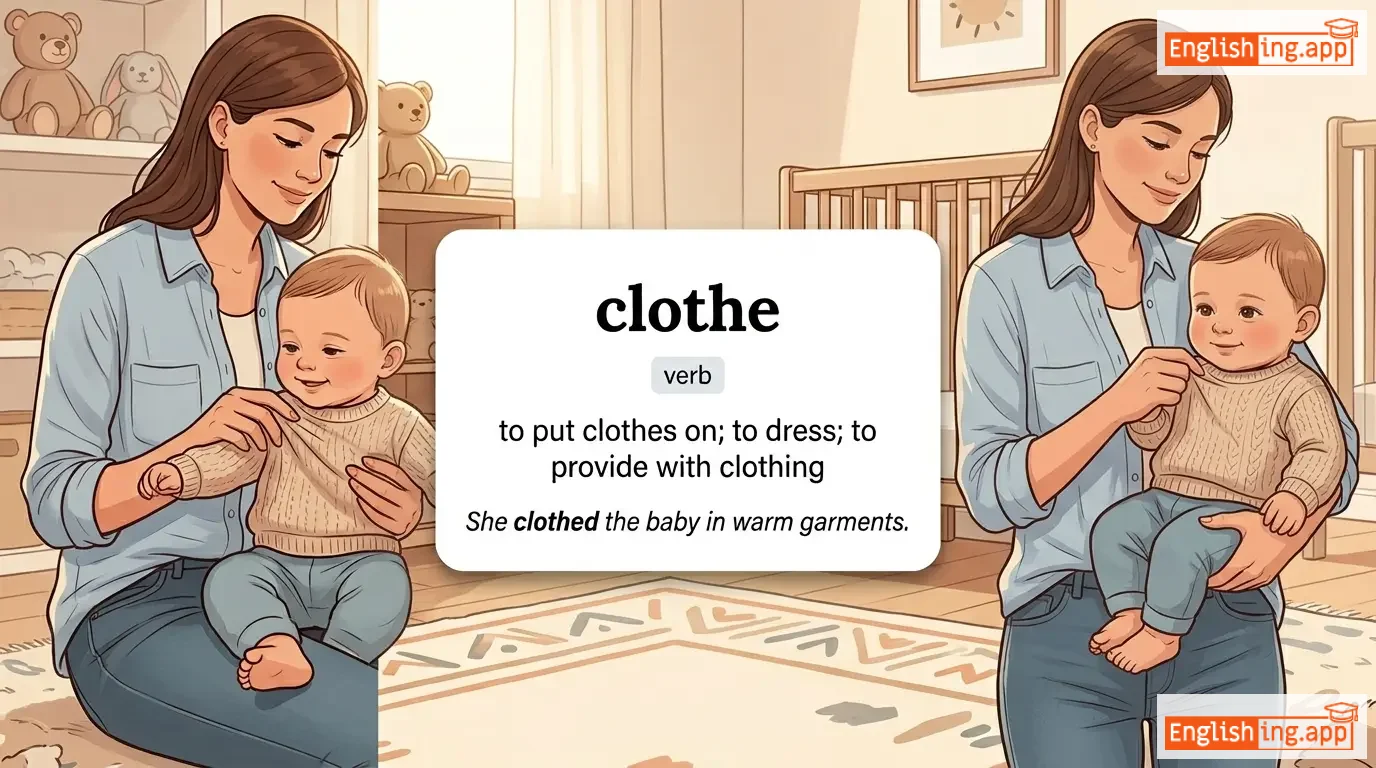
verb
/kloʊð/
穿衣 (chuan yi)

to put clothes on; to dress; to provide with clothing

"She clothed the baby in warm garments."

"她把宝宝穿上了温暖的衣服。" (Tā bǎ bǎobǎo chuān shàngle wēnnuǎn de yīfu.)
noun
/kloʊðz/
衣服 (yīfu)

garments worn on the body

"She bought new clothes for the party."

"她为聚会买了新衣服。" (Tā wèi jùhuì mǎi le xīn yīfú.)
noun
/kloʊðz ˈaɪərn/
熨斗 (yùn dǒu)

An electric appliance used to remove wrinkles from clothes by applying heat and pressure

"I need to use the clothes iron to make my shirt look neat for the meeting."

"我需要使用熨斗把我的衬衫弄平整,为了会议。" (Wo xuyao shiyong yundou ba wode chenshan nongpingzheng, weile huiyi.)
noun
/ˈkloʊðiər/
服装商 (fúzhuāng shāng)

a person or company that makes, sells, or deals in clothes.

"The town’s clothier displayed fine suits in his shop window."

"城里的服装商在他的店窗里展示了精美的西装。" (Chéng lǐ de fúzhuāng shāng zài tā de diàn chuāng lǐ zhǎnshì le jīngměi de xīzhuāng.)
noun
/ˈkloʊðɪŋ/
衣服 (yīfú)

items worn to cover the body; apparel collectively

"Warm clothing is essential in winter."

"冬天,保暖衣物是必不可少的。" (Dōngtiān, bǎonuǎn yīwù shì bì bù kě shǎo de.)
noun
/ˈkloʊtʃər/
辩论结束程序 (bianlun jieshu chengxu)

a procedure for ending a debate and taking a vote.

"The Senate invoked cloture to end the lengthy debate."

"参议院启动了辩论结束程序以结束长时间的辩论。" (Canyiyuan qidongle bianlun jieshu chengxu yi jieshu changshijian de bianlun.)
noun, verb
/klaʊd/
(yun)

a visible mass of condensed water vapor in the sky; to make something less clear

"Dark clouds gathered before the storm."

"暴风雨前,乌云聚集。" (Bao feng yu qian, wu yun ju ji.)
noun
/ˈklaʊdˌbɜːrst/
突然的暴雨 (tūrán de bào yǔ)

a sudden and very heavy rainfall

"The picnic was ruined by a sudden cloudburst."

"野餐被突如其来的暴雨摧毁。" (Yěcān bèi tú rúkè qí lái de bào yǔ cuīhuǐ.)
noun
/klaʊt/
影响力 (yingxiangli)

influence or power, especially in politics or business

"The businessman has a lot of political clout."

"这位商人有很大的政治影响力。" (Zhe wei shangren you hendà de zhengzhi yingxiangli.)
noun
/kloʊv/
丁香 (dingxiang)

aromatic flower buds of a tree in the family Myrtaceae, used as a spice

"She added a few cloves to the mulled wine for extra flavor."

"她在热红酒中加入了一些丁香,以增加风味。" (Tā zài rè hóngjiǔ zhōng jiārùle yīxiē dīngxiāng, yǐ zēngjiā fēngwèi.)
noun
/klaʊn/
小丑 (xiaochou)

a comic entertainer who wears funny clothes and makeup

"The clown made the children laugh with his tricks."

"小丑用他的戏法让孩子们笑了。" (Xiaochou yong tade xifa rang haizimen xiaole.)
adjective
/ˈklɔɪ.ɪŋ/
腻人的 (nì rén de)

too sweet, rich, or sentimental, making it unpleasant

"The dessert was so cloying that I couldn't finish it."

"甜点太腻人了,我吃不下去。" (Tiándiǎn tài nì rén le, wǒ chī bù xiàqù.)
noun
/klʌb/
俱乐部 (julebu)

an organization of people with a common interest; also a place for social gatherings or entertainment

"He joined the local tennis club to meet new people."

"他加入了当地的网球俱乐部,以结识新朋友。" (Ta jiaru le dangdi de wangqiu julebu, yi jieshi xin pengyou.)
noun
/kluː/
线索 (xiansuo)

a piece of evidence or information used in the detection of a crime or solving a puzzle

"The detective found a clue near the window."

"侦探在窗户附近找到了线索。" (Zhentan zai chuanghu fujin zhaodao le xiansuo.)
adjective
/ˈklʌm.zi/
笨拙的 (bèn zhuō de)

awkward in movement or lacking skill

"He is so clumsy that he drops things all the time."

"他这么笨,总是把东西掉下来。" (Tā zhème bèn, zǒng shì bǎ dōngxī diào xiàlái.)
noun
/ˈklʌstər/
(chuàn)

a group of similar things or people positioned close together

"The grapes grew in a tight cluster."

"葡萄在一个紧密的串中生长。" (Pútáo zài yīgè jǐnmì de chuàn zhōng shēngzhǎng.)
noun
/ˌkovuːɪɡˈzɪs.təns/
共存 (gongcun)

the state of existing together at the same time or in the same place; peaceful cohabitation

"The peaceful co-existence of different cultures makes this city unique."

"不同文化的和平共存使这座城市独一无二。" (Bu tong wen hua de he ping gong cun shi zhe zuo cheng shi du yi wu er.)
coach definition card — visual illustration of the meaning
noun/verb
/koʊtʃ/
教练 (jiàoliàn)

a person who trains or instructs others in a sport or skill; or to give training to someone

"The coach helped the players improve their skills."

"教练帮助球员提高他们的技能。" (Jiàoliàn bāngzhù qiúyuán tígāo tāmen de jìnéng.)
🚗👨‍💼

Coachman (kòuchmán)

noun
/ˈkoʊtʃ.mən/
马车夫 (mǎchēfū)

a person who drives a horse-drawn carriage or coach

"The coachman skillfully guided the horses through the busy streets."

"马车夫熟练地引导着马匹穿过繁忙的街道。" (mǎchēfū shúliàn de yǐndǎo zhe mǎpǐ chuānguò fánmáng de jiēdào.)
noun
/koʊˈædʒətər/
助手 (zhùshǒu)

a person who helps or assists another, especially in a religious or official capacity

"The bishop appointed a coadjutor to assist him with his duties."

"主教任命了一位助手来协助他完成职责。" (Zhǔjiào rènmìngle yī wèi zhùshǒu lái xiézhù tā wánchéng zhízé.)
noun
/koʊˈæɡjələnt/
凝血剂 (ningxueji)

a substance that causes blood or another liquid to clot

"The doctor applied a coagulant to stop the bleeding quickly."
"医生使用了凝血剂来迅速止血。" (Yisheng shiyong le ningxueji lai xunsu zhixue.)
coagulate definition card — visual illustration of the meaning
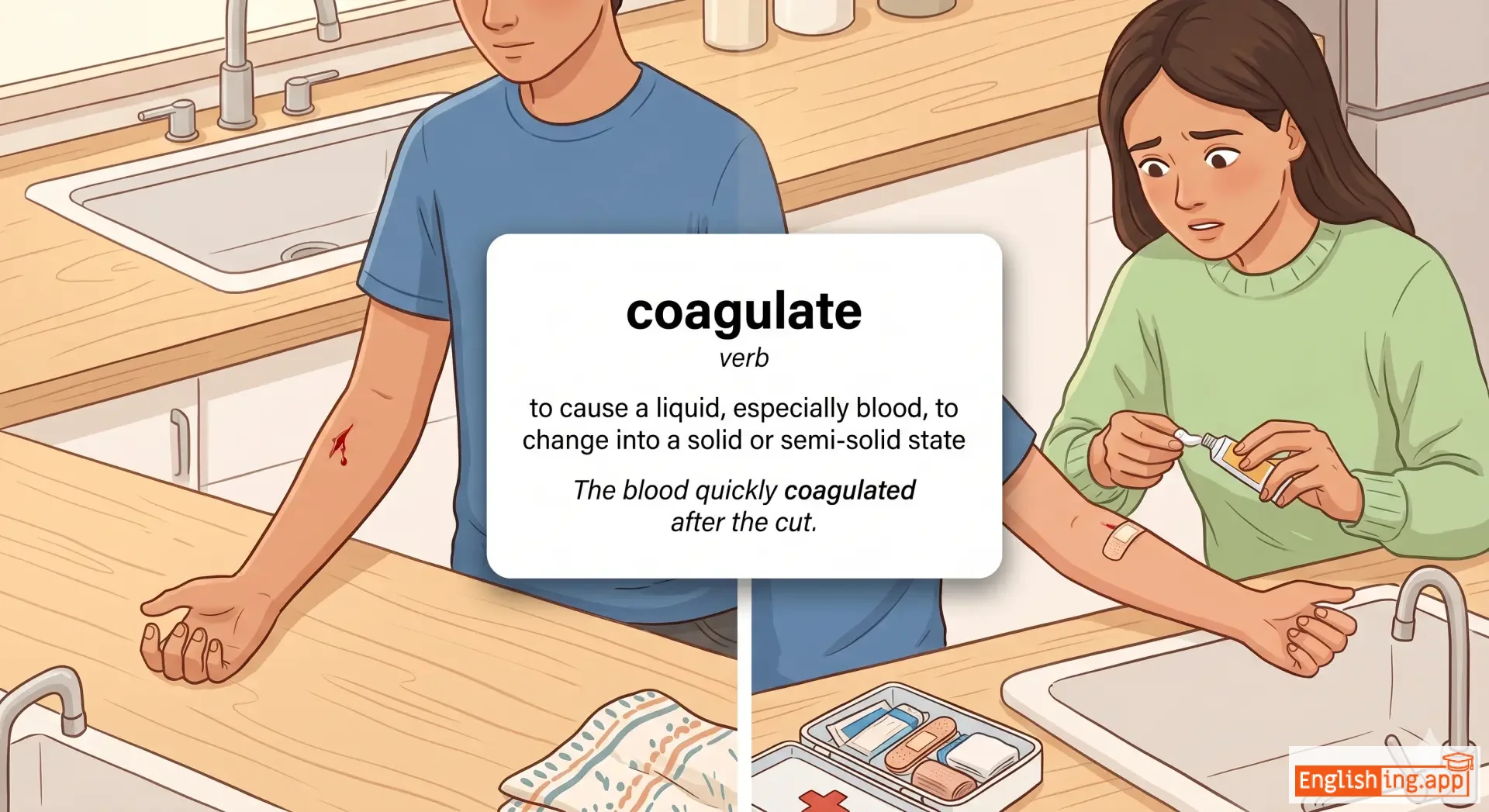
verb
/koʊˈæɡjəˌleɪt/
凝结 (níngjié)

to cause a liquid, especially blood, to change into a solid or semi-solid state

"The blood quickly coagulated after the cut."

"伤口后血液迅速凝结。" (Shāngkǒu hòu xuèyè xùnsù níngjié.)
noun
/koʊl/
煤炭 (meitan)

a black or dark brown rock used as fuel, formed from decomposed plant matter

"The factory still uses coal as its main source of energy."

"工厂仍然将煤炭作为其主要的能源来源。" (Gōngchǎng réngrán jiāng méitàn zuòwéi qí zhǔyào de néngyuán láiyuán.)
coalesce definition card — visual illustration of the meaning
verb
/ˌkoʊəˈlɛs/
联合 (lián hé)

to come together to form one whole or unite into a single entity

"The two political parties decided to coalesce for the election."
"两个政治党派决定在选举中联合起来。" (Liǎng gè zhèngzhì dǎng pài juédìng zài xuǎn jǔ zhōng lián hé qǐ lái.)
coalescence definition card — visual illustration of the meaning
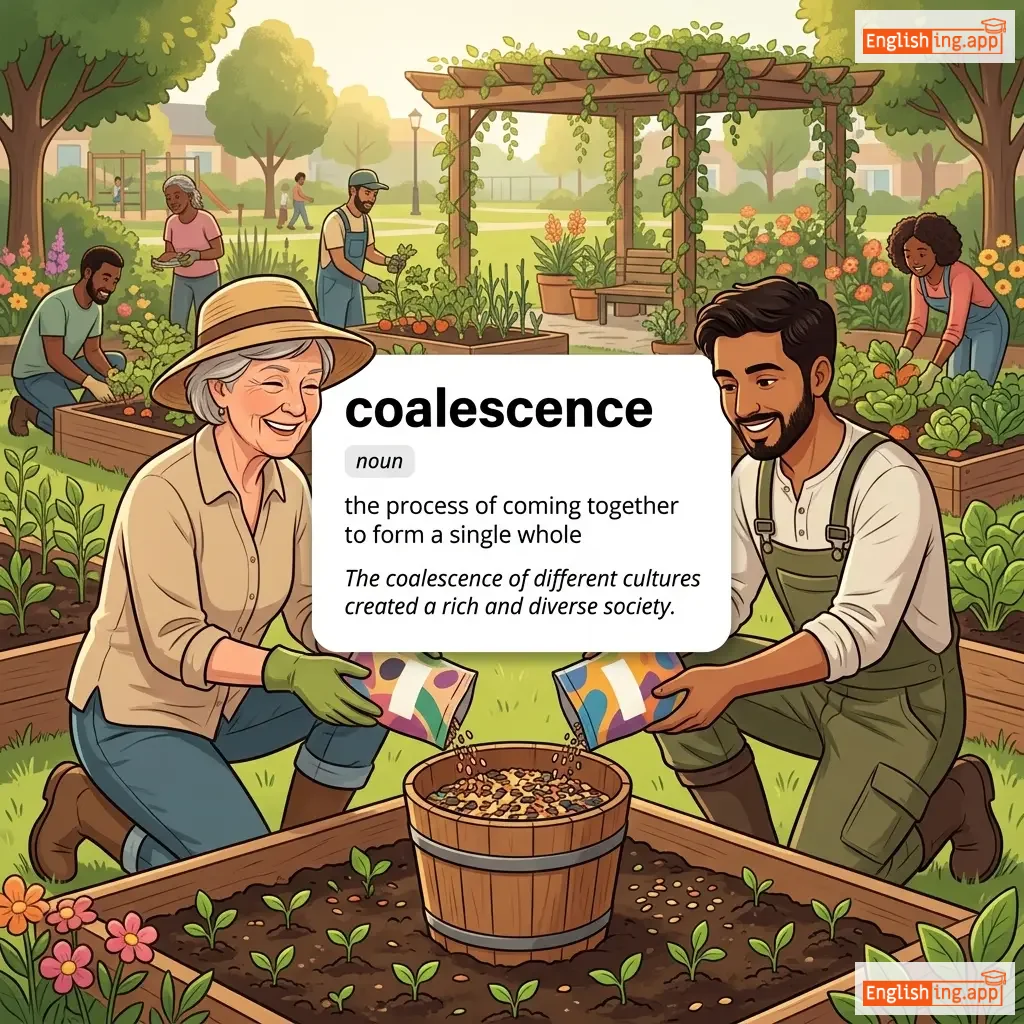
noun
/ˌkoʊəˈlɛsəns/
融合 (ronghe)

the process of coming together to form a single whole

"The coalescence of different cultures created a rich and diverse society."

"不同文化的融合创造了一个丰富而多样化的社会。" (Bùtóng wénhuà de rónghé chuàngzàole yīgè fēngfù ér duōyàng huà de shèhuì.)
noun
/ˌkoʊəˈlɪʃən/
联盟 (lianmeng)

a temporary alliance of distinct parties, persons, or states for joint action

"Several parties formed a coalition to pass the new law."

"几个党派组成了一个联盟来通过新法律。" (Jige dangpai zuchéngle yī gè liánméng lái tōngguò xīn fǎlǜ.)
adjective
/kɔːrs/
粗糙, 粗鲁 (cūcāo, cūlǔ)

Rough in texture or manner; not smooth or refined.

"The fabric felt coarse to the touch."

"这块布料摸起来很粗糙。" (Zhè kuài bùliào mō qǐlái hěn cūcāo.)
noun, verb
/koʊst/
海岸 (hǎi'àn)

noun: the land along the edge of the sea; verb: to move easily without effort or power

"They walked along the coast enjoying the sea breeze."

"他们沿着海岸走,享受着海风。" (Tāmen yánzhe hǎi'àn zǒu, xiǎngshòu zhe hǎi fēng.)
adjective
/ˈkəʊstəl/
沿海 (yánhǎi)

relating to or near a coast or shoreline

"They built a resort in a coastal area."

"他们在沿海地区建造了一个度假村。" (Tāmen zài yánhǎi dìqū jiànzàole yīgè dùjiàcūn.)
noun/verb
/koʊt/
幸福 (xìngfú)

an outer garment worn outdoors, or a layer covering something

"She wore a red coat to keep warm in the winter."

"她无法掩饰收到奖项时的幸福。" (Tā wúfǎ yǎnshì shōu dào jiǎngxiàng shí de xìngfú.)
coating definition card — visual illustration of the meaning
noun
/ˈkoʊ.tɪŋ/
涂层 (tuceng)

A thin layer or covering spread over a surface.

"The cake had a thick coating of chocolate."

"蛋糕上有一层厚厚的巧克力涂层。" (Dàngāo shàng yǒu yī céng hòu hòu de qiǎokèlì túcéng.)
verb
/koʊks/
劝说 (quànshuō)

to persuade someone gently or gradually to do something

"She managed to coax the cat out of the tree with some food."

"她设法用一些食物把猫从树上劝下来。" (Tā shèfǎ yòng yīxiē shíwù bǎ māo cóng shù shàng quàn xiàlái.)
noun
/ˈkɒb.lər/
鞋匠 (xié jiàng)

a person who repairs shoes and other leather goods

"The cobbler fixed my broken shoes perfectly."

"鞋匠完美地修好了我的破鞋。" (Xié jiàng wánměi de xiū hǎo le wǒ de pò xié.)
noun
/ˈkoʊ.brə/
眼镜蛇 (yǎn jìng shé)

a venomous snake with a hood that can be spread when threatened

"The cobra raised its hood and hissed at the intruder."

"眼镜蛇抬起了它的帽子,对入侵者发出了嘶嘶声。" (yǎn jìng shé tái qǐ le tā de màozi, duì rùqīn zhě fāchū le sī sī shēng)
noun
/kəˈkeɪn/
可卡因 (毒品) (kekayin)

a powerful and addictive illegal drug made from coca leaves

"He was arrested for possessing cocaine."

"他因拥有可卡因而被逮捕。" (Ta yin yongyou kekayin er bei daibu.)
noun
/kɒk/
公鸡 (gongji)

an adult male chicken

"The cock crowed loudly at dawn to wake everyone up."

"公鸡在黎明时分大声啼叫,唤醒了所有人。" (Gongji zai liming shifen dasha tingjiao, huanxing le suoyouren.)
noun
/kɒˈkeɪd/
花结 (hua jie)

a rosette or knot of ribbon, usually worn on a hat as a badge of office or party

"The soldier wore a red cockade on his cap."

"士兵戴着一个红色的花结在他的帽子上。" (Shibing daizhe yi ge hongse de huajie zai tade maozi shang.)
noun
/ˌkɒk.əˈtuː/
凤头鹦鹉 (fèng tóu yīng wǔ)

a large parrot with a prominent crest that can be raised or lowered

"The white cockatoo raised its beautiful crest."

"白色凤头鹦鹉举起了它美丽的冠羽。" (báisè fèng tóu yīng wǔ jǔ qǐle tā měilì de guàn yǔ)
noun
/ˈkɒk.roʊtʃ/
蟑螂 (zhāngláng)

a flat brown insect that is commonly found in kitchens and other warm places

"A cockroach ran across the kitchen floor quickly."

"一只蟑螂迅速地跑过厨房的地板。" (Yī zhī zhāngláng xùnsù de pǎo guò chúfáng de dìbǎn.)
noun
/ˈkɒkskoʊm/
公鸡冠花 (gongji guan hua)

a tropical plant with bright, velvety flowers that resemble a rooster's comb

"The bright red cockscomb flowers added vibrant color to the garden bed."

"鲜艳的红色公鸡冠花为花坛增添了生动的色彩。" (Xiānyàn de hóngsè gōngjī guàn huā wèi huātán zēngtiānle shēngdòng de sècǎi)
noun
/ˈkɒkˌteɪl/
鸡尾酒 (jiwei jiu)

a mixed drink typically containing alcohol and other ingredients.

"She ordered a cocktail at the bar."

"她在酒吧点了一杯鸡尾酒。" (Tā zài jiǔbā diǎnle yī bēi jīwěijiǔ.)
noun
/ˈkoʊkənʌt/
椰子 (kokonut)

a large brown seed with hard shell containing white flesh and coconut water

"We drank coconut water directly from the coconut."

"我们直接从椰子里喝椰子水。" (women zhijie cong yezi li he yezi shui)
noun
/kɒd fɪʃ/
鳕鱼 (xue yu)

A large marine fish with white flesh, commonly used for food

"The fisherman caught a large cod fish in the North Atlantic."

"渔夫在北大西洋捕到了一条大鳕鱼。" (yu fu zai bei da xi yang bu dao le yi tiao da xue yu)
coda definition card — visual illustration of the meaning
noun
/ˈkoʊdə/
尾声 (weisheng)

the concluding passage of a piece of music or a literary work

"The novel ends with a reflective coda that ties up the themes."

"这部小说以一段反思性的尾声结束,将主题联系起来。" (Zhe bu xiaoshuo yi yi duan fanshixing de weisheng jie shu, jiang zhutian lianxi qilai.)
verb
/ˈkɒd.l̩/
过度溺爱 (guòdù nì'ài)

to treat someone with excessive care or kindness, often in a way that is overprotective

"Parents should support their children without coddling them."

"父母应该在不溺爱孩子的情况下支持他们。" (Fùmǔ yīnggāi zài bù nì'ài háizi de qíngkuàng xià zhīchí tāmen.)
noun/verb
/koʊd/
代码 (dàimǎ)

a system of words, letters, or symbols used to represent information or instructions

"He wrote a code to solve the problem on the computer."

"他写了一个代码来解决电脑上的问题。" (Tā xiěle yīgè dàimǎ lái jiějué diànnǎo shàng de wèntí.)
noun
/ˈkɒd.ɪ.sɪl/
遗嘱附录 (yízhǔ fùlù)

a legal document that makes changes or additions to an existing will

"He added a codicil to his will to include his granddaughter."

"他在遗嘱中添加了一份附录,以包括他的孙女。" (Tā zài yízhǔ zhōng tiānjiā le yī fèn fùlù, yǐ bāokuò tā de sūnnǚ.)
codify definition card — visual illustration of the meaning
verb
/ˈkəʊ.dɪ.faɪ/
编码 (bianma)

to arrange laws, rules, or ideas into a clear and systematic code

"The committee worked to codify the existing laws."

"委员会致力于编码现有的法律。" (Weiyuanhui zhilü yu bianma xianyou de falü.)