词汇表

英语词汇词典 | 单词含义、定义和示例

adverb
/ˈbɪt.ə.li/
愤怒地; 严重地 (fènnù de; yánzhòng de)

in an angry, hurt, or resentful way; extremely; severely

"She complained bitterly about the unfair treatment."

"她对不公平的待遇愤怒地抱怨。" (Tā duì bù gōngpíng de dàiyù fènnù de bàoyuàn.)
noun
/ˈbɪtərnəs/
苦涩 (kuse)

a feeling of anger and unhappiness caused by unfair treatment or disappointment

"His bitterness after the breakup was evident to everyone."

"他分手后的苦涩显而易见。" (Tā fēnshǒu hòu de kǔsè xiǎn ér yìjiàn.)
noun
/ˈbɪvuˌæk/
临时营地 (lin shi ying di)

a temporary camp without tents or cover, usually used by soldiers or mountaineers

"The climbers set up a bivouac on the mountainside."

"登山者在山坡上搭建了一个临时营地。" (Deng shan zhe zai shan po shang da jian le yi ge lin shi ying di.)
noun
/bɪz/
生意 (shēngyì)

business (informal); commercial enterprise or activity

"He's been in the restaurant biz for twenty years."

"他已经在餐饮生意中工作了二十年。" (Tā yǐjīng zài cānyǐn shēngyì zhōng gōngzuò le èrshí nián.)
adjective
/bɪˈzɑːr/
离奇 (liqi)

very strange or unusual, especially so as to cause interest or amusement

"He told a bizarre story that no one could believe."

"他讲了一个离奇的故事,没有人能相信。" (Ta jiangle yige liqi de gushi, meiyou ren neng xiangxin.)
verb, noun
/blæb/
胡说;泄露秘密 (hu shuo; xielu mimi)

to talk too much or reveal secrets carelessly; excessive or foolish talk

"He accidentally blabbed the surprise to everyone."

"他不小心把惊喜告诉了大家。" (ta bu xiaoxin ba jingxi gaosu le dajia)
adjective
/blæk/
黑色 (heise)

of the very darkest color due to the absence of light

"She wore a black dress to the party."

"她穿着一件黑色的裙子参加派对。" (Tā chuān zhe yī jiàn hēi sè de qúnzi cānjiā pàiduì.)
noun
/blæk ˈber.i/
黑莓 (heimei)

a small dark purple or black fruit that grows on bushes

"We picked fresh blackberries from the garden for our pie."

"我们从花园里摘取了新鲜的黑莓做我们的派。" (Women cong huayuan li zhaichule xinxiande heimei zuo women de pai)
noun
/blæk ˈkɑːr.də.məm/
黑豆蔻 (hei doukou)

a large aromatic spice pod with a smoky flavor, commonly used in Indian and Middle Eastern cooking

"Add black cardamom to the curry for a rich, smoky flavor."

"在咖喱中加入黑豆蔻,增添丰富的烟熏味。" (zài gālí zhōng jiārù hēi dòukòu, zēngtiān fēngfù de yān xūn wèi.)
noun
/blæk ˈpep.ər/
黑胡椒 (hei hujiao)

a hot-tasting spice made from dried peppercorns, widely used for seasoning food

"Season the steak with salt and freshly ground black pepper."

"用盐和新磨碎的黑胡椒调味牛排。" (yòng yán hé xīn mó suì de hēi hújiāo tiáowèi niúpái.)
noun
/blæk plʌm/
黑李子 (hei lizi)

a dark purple or black colored edible fruit with sweet and sour taste

"I picked some fresh black plums from the tree in our backyard."

"我从我们后院的树上摘了几颗新鲜的黑李子。" (Wǒ cóng wǒmen hòuyuàn de shù shàng zhāi le jǐ kē xīnxiān de hēi lizi.)
noun
/blæk sɔːlt/
黑盐 (blak salt)

a type of rock salt with a distinctive sulfuric flavor, commonly used in Indian cuisine

"Add a pinch of black salt to enhance the flavor of the fruit salad."

"加入一撮黑盐以提升水果沙拉的风味。" (jia ru yi cuo hei yan yi ti sheng shui guo sha la de feng wei)
noun
/blæk sneɪk/
黑蛇 (hei she)

a snake with dark or black colored skin

"The black snake slithered through the grass."

"黑蛇穿过草地滑行。" (hei she chuanguo caodi huaxing.)
noun
/blæk biː/
黑蜜蜂 (hei mi feng)

a large dark-colored bee that makes a loud buzzing sound

"The black-bee was buzzing around the flowers in the garden."

"黑蜜蜂在花园里的花丛中嗡嗡作响。" (hei mi feng zài huāyuán lǐ de huācóng zhōng wēng wēng zuòxiǎng.)
verb
/ˈblækˌbɔːl/
排除 (paichu)

to exclude someone socially or vote against their membership in a group or club

"He was blackballed from the club after the controversy."

"他因争议被俱乐部除名。" (Ta yin zhengyi bei julebu chuming.)
verb
/ˈblækən/
使变黑 (shi bian hei)

to make something black or darker; to stain, soil, or tarnish

"Smoke from the fire began to blacken the walls."

"火灾的烟开始把墙壁熏黑了。" (huozai de yan kaishi ba qiangbi xun hei le)
noun, verb
/ˈblækmeɪl/
敲诈 (qiaozha)

the act of demanding money or advantage by threatening to reveal secrets; to force someone to act by using such threats

"He tried to blackmail her by threatening to reveal the documents."

"他试图用威胁公布文件来敲诈她。" (ta shitu yong weixie gongbu wenjian lai qiaozha ta)
noun
/ˈblæk.smɪθ/
铁匠 (blacksmith)

a person who makes and repairs things made of iron

"The blacksmith hammered the hot iron into a horseshoe."

"铁匠把热铁打成了马蹄铁。" (tiejiang ba re tie da cheng le ma ti tie)
noun
/bleɪd/
刀片 (daopian)

the flat cutting edge of a tool, knife, or weapon

"The blade of the knife was very sharp."

"刀片非常锋利。" (Daopian feichang fengli.)
noun
/bleɪn/
水泡 (shuǐ pào)

an inflammatory swelling or sore on the skin; a blister or pustule

"The doctor examined the blain on his arm."
"医生检查了他手臂上的水泡。" (Yīshēng jiǎnchále tā shǒubì shàng de shuǐpào.)
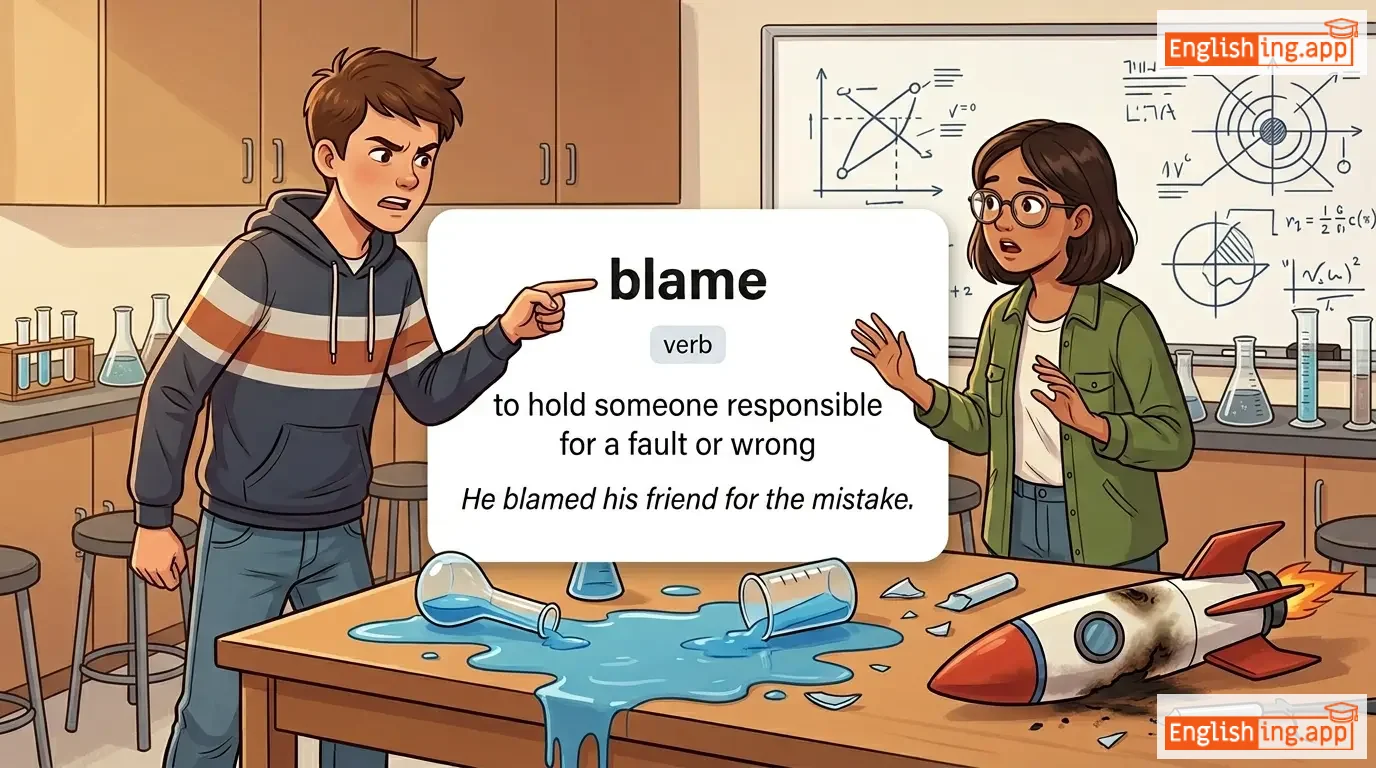
blame definition card — visual illustration of the meaning
verb
/bleɪm/
责怪 (zeguai)

to hold someone responsible for a fault or wrong

"He blamed his friend for the mistake."

"他把错误归咎于他的朋友。" (Ta ba cuowu guijiu yu tade pengyou.)
adjective
/ˈbleɪmləs/
无辜 (wúgū)

innocent of wrongdoing; not deserving blame

"She remained calm and blameless throughout the investigation."

"她在整个调查过程中保持冷静和无辜。" (Tā zài zhěnggè diàochá guòchéng zhōng bǎochí lěngjìng hé wúgū.)
verb
/blæntʃ/
变得苍白 (bian de cangbai)

to turn pale from shock, fear, or to briefly boil food to remove skin or prepare it

"She blanched at the sight of blood."

"她看到血后吓得脸色苍白。" (Ta kandao xue hou xiade lianshe cangbai.)
adjective
/blænd/
乏味 (fáwèi)

lacking strong features, flavor, or character; dull or uninteresting

"The soup was too bland for my taste."

"这汤对我的口味太乏味了。" (Zhè tāng duì wǒ de kǒuwèi tài fáwèi le.)
verb
/ˈblændɪʃ/
奉承 (fengcheng)

to flatter or coax someone with kind words or praise in order to influence them

"He blandished the officials with compliments to gain their support."
"他为了得到支持而奉承官员。" (ta weile dedao zhichi er fengcheng guanyuan)
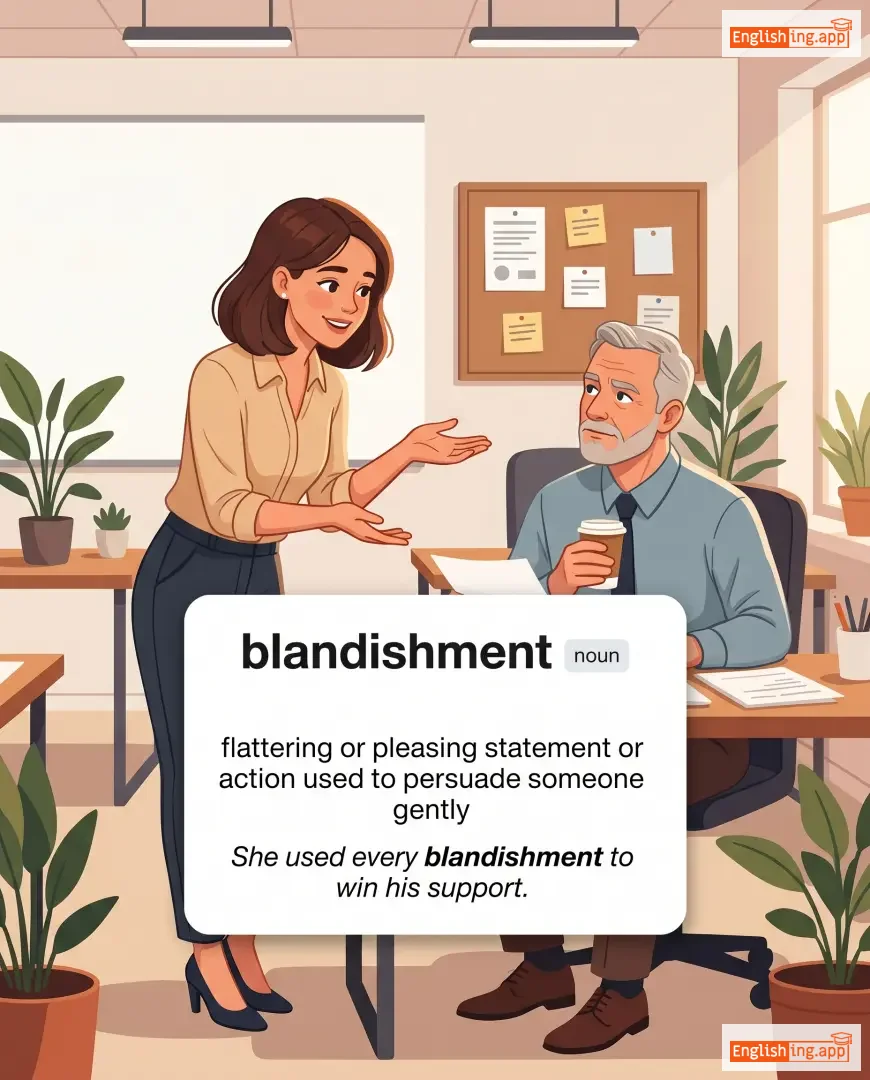
blandishment definition card — visual illustration of the meaning
noun
/ˈblændɪʃmənt/
恭维 (gongwei)

flattering or pleasing statement or action used to persuade someone gently

"She used every blandishment to win his support."

"她用了所有的恭维来赢得他的支持。" (Tā yòngle suǒyǒu de gōngwéi lái yíngdé tā de zhīchí.)
adjective
/blæŋk/
空白 (kongbai)

showing no expression or containing nothing written, printed, or recorded.

"Her face went blank when she heard the bad news."

"当她听到坏消息时,她的脸变得空白。" (dang ta tingdao huai xiaoxi shi, ta de lian biande kongbai.)
noun
/ˈblæŋ.kɪt/
毯子 (tǎnzi)

A large piece of cloth used for warmth, typically on a bed.

"She pulled the blanket over her shoulders to stay warm."

"她把毯子拉到肩膀上,以保持温暖。" (Tā bǎ tǎnzi lā dào jiānbǎng shàng, yǐ bǎochí wēnnuǎn.)
verb
/blɛər/
发出响亮的声音 (fā chū xiǎng liàng de shēng yīn)

to make a loud, harsh sound

"The car horns blared all night."

"汽车的喇叭整夜都在响。" (Qìchē de lǎbā zhěng yè dōu zài xiǎng.)
adjective
/blɑːˈzeɪ/
冷漠, 不感兴趣 (lěngmò, bù gǎn xìngqù)

unimpressed or indifferent to something because it has been experienced so often before

"After years of luxury travel, she felt blase about another trip to Paris."

"经过多年的奢华旅行,她对再次前往巴黎的旅行感到漠不关心。" (Jīngguò duō nián de shēhuá lǚxíng, tā duì zàicì qiánwǎng bālí de lǚxíng gǎndào mò bù guānxīn.)
verb
/blæsˈfiːm/
亵渎 (xièdú)

to speak irreverently about God or sacred things

"He was accused of blaspheming during the heated argument."

"他在激烈的争论中被指控亵渎。" (Tā zài jīliè de zhēnglùn zhōng bèi zhǐkòng xièdú.)
adjective
/ˈblæs.fə.məs/
亵渎的 (xièdú de)

showing disrespect or lack of reverence for God or sacred things

"The book was banned for its blasphemous content."

"这本书因其亵渎内容而被禁止。" (Zhè běn shū yīn qí xièdú nèiróng ér bèi jìnzhǐ.)
noun
/ˈblæs.fə.mi/
亵渎 (xièdú)

the act of speaking disrespectfully about God or sacred things

"In some countries, blasphemy is a punishable offense."

"在某些国家,亵渎是可受处罚的罪行。" (Zài mǒuxiē guójiā, xièdú shì kě shòu chǔfá de zuìxíng.)
noun, verb
/blæst/
爆炸, 强烈撞击 (baozha, qianglie zhuangji)

a strong gust of wind, an explosion, or a loud sound; to destroy or shatter by explosion

"The explosion sent a powerful blast through the building."

"爆炸通过大楼发送了一股强劲的爆风。" (Baozha tongguo dalou faxian le yi gu qiang jin de baofeng.)
adjective
/ˈbleɪtənt/
明显的 (mingxian de)

done openly and unashamedly; obvious and offensive

"The company's blatant disregard for safety regulations angered the public."

"公司对安全规定的公然蔑视激怒了公众。" (Gōngsī duì ānquán guīdìng de gōngrán mièshì jīnùle gōngzhòng.)
verb
/bleɪz/
熊熊火焰 (xióngxióng huǒyàn)

to burn brightly or powerfully

"The fire blazed for hours before it was brought under control."

"火焰持续燃烧了几个小时,直到它被控制住。" (Huǒyàn chíxù ránshāo le jǐ gè xiǎoshí, zhídào tā bèi kòngzhì zhù.)
blazer definition card — visual illustration of the meaning
noun
ˈbleɪzə
西装外套 (xī zhuāng wài tào)

A coloured jacket worn by members of a club, team, or school as part of a uniform.

"He looked sharp in his navy blue blazer at the event."

"他在活动中穿着海军蓝色的西装外套,看起来很时尚。" (Tā zài huódòng zhōng chuānzhuó hǎijūn lán sè de xī zhuāng wài tào, kàn qǐlái hěn shíshàng.)
adjective
/ˈbleɪzɪŋ/
燃烧的; 炽热的 (ránshāo de; chìrè de)

burning fiercely; extremely hot; very bright

"The blazing sun made the day extremely hot."

"炽热的太阳使得这一天异常炎热。" (Chìrè de tàiyáng shǐdé zhè yītiān yìcháng yánrè)
verb
/ˈbleɪzən/
展示 (zhǎnshì)

to display prominently or vividly

"The slogan was blazoned across the banner in bold letters."

"该标语用粗体字显示在横幅上。" (Gāi biāoyǔ yòng cūtǐ zì xiǎnshì zài héngfú shàng.)
adjective
/bliːk/
阴郁的 (yīnyù de)

cold, miserable, or without hope

"The future seemed bleak after the economic downturn."

"经济衰退后,未来显得阴郁。" (Jīngjì shuāituì hòu, wèilái xiǎndé yīnyù.)
verb
/bliːd/
流血 (liuxue)

to lose blood from the body, especially due to injury

"She began to bleed from the cut on her arm."
"她开始从她手臂上的割伤出血。" (Ta kaishi cong ta shoubi shang de ge shang chuxue.)
blemish definition card — visual illustration of the meaning
noun
/ˈblɛmɪʃ/

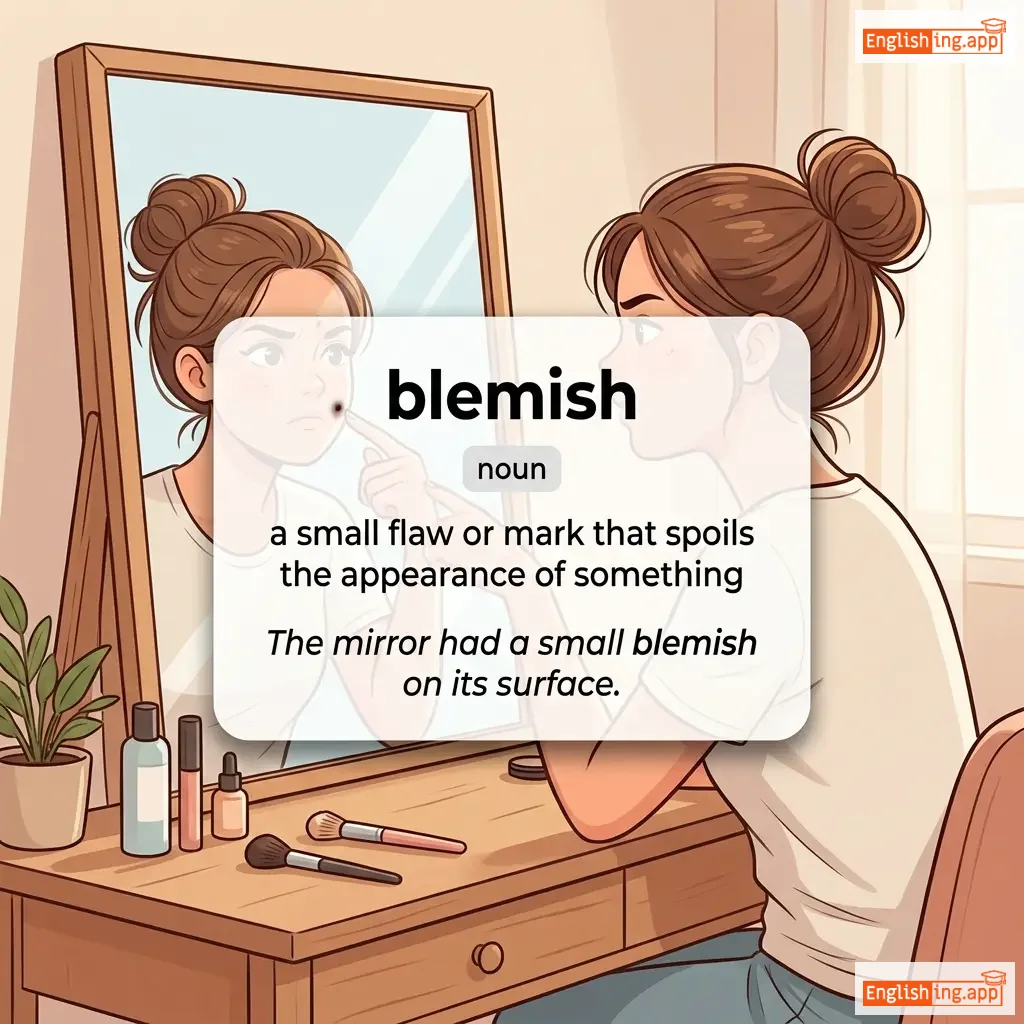
a small flaw or mark that spoils the appearance of something

"The mirror had a small blemish on its surface."

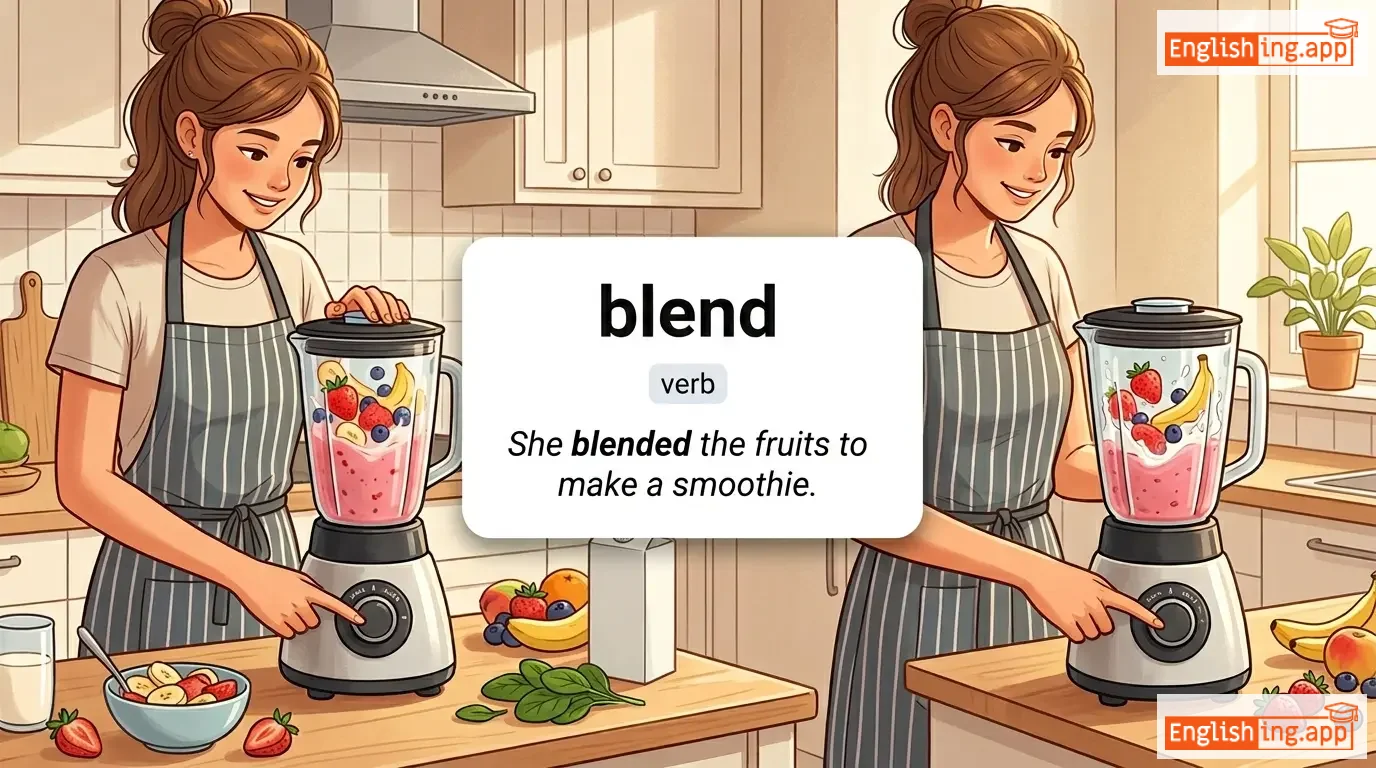
blend definition card — visual illustration of the meaning
verb
/blɛnd/
混合 (hunhe)

to mix different substances or elements together so that they form a smooth combination

"She blended the fruits to make a smoothie."

"她把水果混合做成了冰沙。" (Ta ba shuiguo hunhe zuo cheng le bingsha.)
noun
/ˈblen.dər/
搅拌机 (jiaobanji)

an electric kitchen appliance used to mix, purée, or emulsify food and liquids

"She used the blender to make a delicious smoothie."
"她用搅拌机做了一个美味的冰沙。" (Tā yòng jiǎobànjī zuòle yīgè měiwèi de bīngshā.)
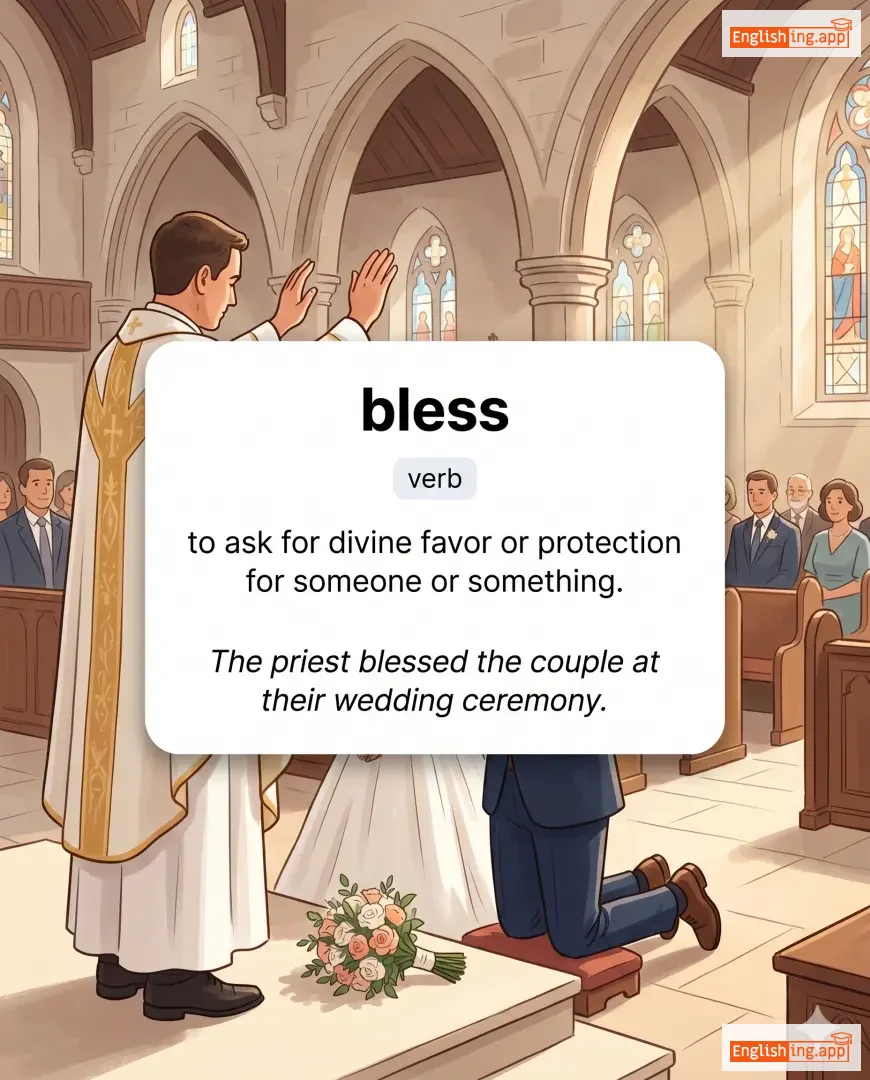
bless definition card — visual illustration of the meaning
verb
/blɛs/
祝福 (zhufu)

to ask for divine favor or protection for someone or something.

"The priest blessed the couple at their wedding ceremony."

"牧师在他们的婚礼仪式上祝福了这对新人。" (Mùshī zài tāmen de hūnlǐ yíshì shàng zhùfúle zhè duì xīnrén.)
noun
/ˈblɛsɪŋ/
祝福 (zhufú)

a prayer asking for divine favor; something that brings happiness or benefit.

"Good health is a blessing we often take for granted."

"健康是我们常常视为理所当然的祝福。" (Jiànkāng shì wǒmen chángcháng shìwéi lǐsuǒdāngrán de zhùfú.)
noun
/blaɪt/
枯萎病 (kūwěibìng)

A disease or condition that causes plants to wither; something that spoils or damages.

"The drought was a blight on the farmer’s crops."

"干旱是农民作物的枯萎病。" (Gānhàn shì nóngmín zuòwù de kūwěibìng.)
adjective
/ˈblaɪtɪd/
荒废的 (huangfei de)

Spoiled, damaged, or destroyed.

"The blighted neighborhood was abandoned by most residents."

"荒废的社区被大多数居民遗弃。" (Huangfei de shequ bei dasu zhu jiumin yiqi.)
🙈

blind

adjective
/blaɪnd/

Unable to see because of injury, disease, or a congenital condition.

"He has been blind since birth."

verb
/blɪŋk/
眨眼 (zhǎ yǎn)

to close and open the eyes quickly.

"She blinked rapidly to clear the dust from her eyes."

"她迅速眨眼清除眼中的灰尘。" (Tā xùn sù zhǎ yǎn qīng chú yǎn zhōng de huī chén.)