词汇表

英语词汇词典 | 单词含义、定义和示例

noun
/biːf/
牛肉 (niúròu)

the flesh of a cow, bull, or ox, used as food; also a complaint or dispute

"He ordered a plate of grilled beef for dinner."

"他为晚餐点了一盘烤牛肉。" (Tā wèi wǎncān diǎle yī pán kǎo niúròu.)
noun
/ˈbiːlaɪn/
直线 (zhíxiàn)

a straight, direct route to a destination

"He made a beeline for the food table as soon as he entered the party."

"他一进派对就直奔餐桌。" (Tā yī jìn pàiduì jiù zhí bēn cānzhuō.)
noun
/bɪər/
啤酒 (píjiǔ)

An alcoholic drink made from yeast-fermented malt flavored with hops.

"He ordered a glass of cold beer at the bar."

"他在酒吧点了一杯冰凉的啤酒。" (Tā zài jiǔba diǎnle yī bēi bīngliáng de píjiǔ.)
noun
/biːt/
甜菜 (tián cài)

a plant with a round dark red root that is eaten as a vegetable

"Roasted beet with goat cheese makes a delicious salad."

"烤甜菜配山羊奶酪做成美味的沙拉。" (Kǎo tián cài pèi shānyáng nǎilào zuòchéng měiwèi de shālā.)
noun
/ˈbiː.təl/
甲虫 (jiǎchóng)

a hard-bodied insect with wing covers

"The black beetle scurried across the garden path."

"黑色的甲虫快速地穿过了花园小路。" (Hēisè de jiǎchóng kuàisù de chuānguòle huāyuán xiǎolù.)
verb
/bɪˈfɪt/
适合 (shi he)

to be suitable for; to be appropriate to

"Formal attire befits the seriousness of the occasion."

"正式的服装适合这个场合的严肃性。" (zhengshi de fuzhuang shihe zhege changhe de yansu xing)
adjective
/bɪˈfɪt.ɪŋ/
合适的; 适合的; 对于特定情况或人适当 (bifiting)

appropriate; suitable; proper for a particular situation or person

"He wore formal attire befitting the important occasion."

"他穿了适合重要场合的正式服装。" (Ta chuanle shihua zhongyao changhe de zhengshi fuzhuang.)
verb
/bɪˈfɒɡ/
使模糊 (shǐ móhú)

to confuse or make unclear; to cover with fog or mist

"His mind was befogged by exhaustion."

"他的思维因疲劳而模糊不清。" (Tā de sīwéi yīn píláo ér móhú bù qīngchǔ.)
adjective
/bɪˈfɒɡd/
困惑的, 模糊的 (kùnhuò de, móhu de)

Confused or clouded in mind; made unclear like being surrounded by fog.

"His mind felt befogged after the long and exhausting meeting."

"在漫长而令人疲惫的会议后,他的思维感到困惑。" (Zài màncháng ér lìng rén píbèi de huìyì hòu, tā de sīwéi gǎndào kùnhuò.)
verb
/bɪˈfuːl/
欺骗 (qipian)

to deceive or trick someone into believing something false; to make someone appear foolish

"The scammer tried to befool innocent people with fake promises."

"骗子试图用虚假的承诺欺骗无辜的人。" (pianzi shitu yong xujia de chengnuo qipian wugu de ren)
preposition/adverb/conjunction
/bɪˈfɔːr/
之前 (zhīqián)

At an earlier time; in front of in order or place.

"She arrived before the meeting started."

"她在会议开始之前到达。" (tā zài huìyì kāishǐ zhīqián dàodá.)
adverb
/bɪˈfɔːr.hænd/
事先; 提前; 以前 (shìxiān; tíqián; yǐqián)

in advance; ahead of time; earlier

"We prepared everything beforehand."

"我们事先准备好了所有的东西。" (wǒmen shìxiān zhǔnbèi hǎo le suǒyǒu de dōngxī)
verb
/bɪˈfaʊl/
污染 (wuran)

to make dirty or polluted; to disgrace or corrupt

"The factory waste befouled the river."

"工厂废物污染了河流。" (gongchang feiwu wuran le heliu)
verb
/bɪˈfrɛnd/
交朋友 (jiao pengyou)

to act as a friend to someone; to make friends with

"She befriended the new student at school."

"她在学校与新学生成为了朋友。" (Tā zài xuéxiào yǔ xīn xuéshēng chéngwéi le péngyǒu.)
verb
/bɪˈfʌdəl/
使困惑 (shǐ kùnhuò)

to confuse someone completely; to make someone unable to think clearly

"The complex instructions befuddled the students."

"复杂的指示使学生感到困惑。" (Fùzá de zhǐshì shǐ xuéshēng gǎndào kùnhuò.)
adjective
/bɪˈfʌdld/
困惑的 (kunhuo de)

confused, unable to think clearly

"He looked befuddled after hearing the complex instructions."

"在听到复杂的指示后,他看起来很困惑。" (Zai tingdao fuzhuo de zhishi hou, ta kanqilai hen kunhuo.)
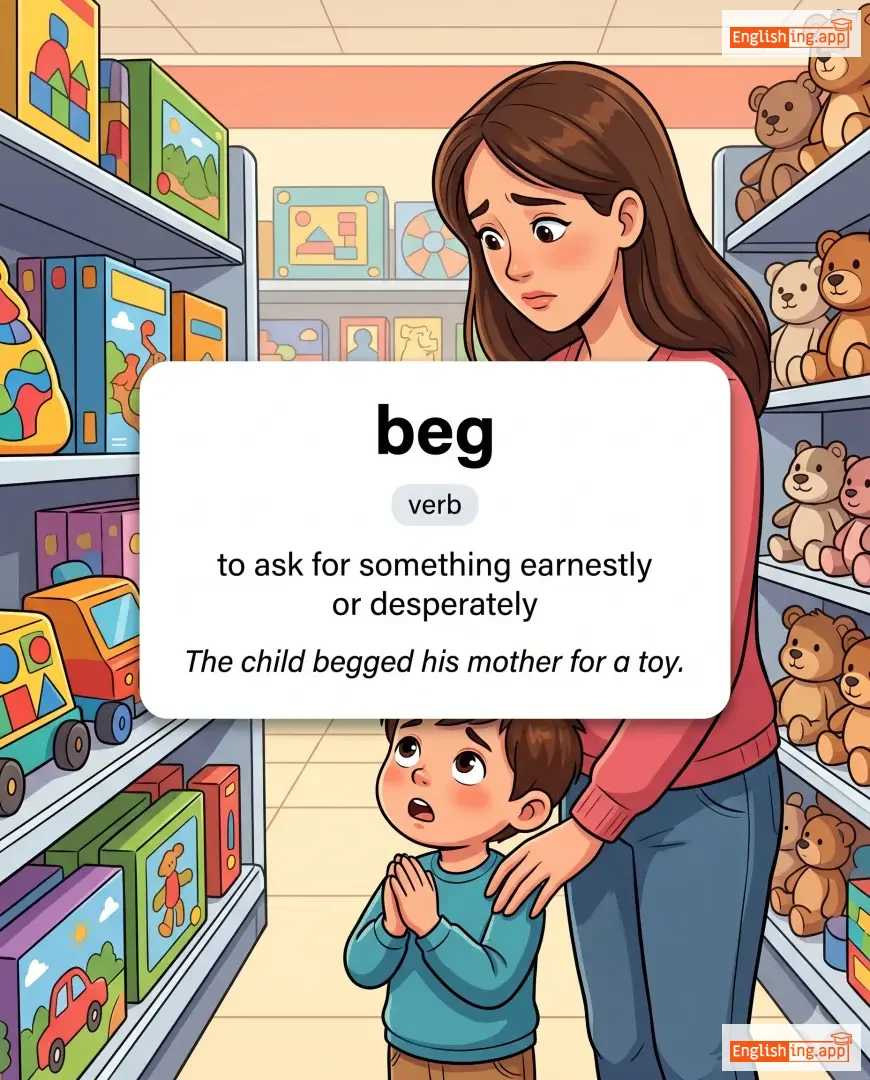
beg definition card — visual illustration of the meaning
verb
/bɛɡ/
乞求 / 请求 (qǐqiú / qǐngqiú)

to ask for something earnestly or desperately

"The child begged his mother for a toy."

"孩子恳求妈妈给他买玩具。" (Háizi kěnqiú māmā gěi tā mǎi wánjù.)
verb
/bɪˈɡɛt/
导致 / 产生 (dàozhì / chǎnshēng)

to bring about or give rise to; to father or produce

"Violence begets more violence."

"暴力会引发更多的暴力。" (Bàolì huì yǐn fā gèng duō de bàolì.)
noun
/ˈbeɡər/
乞丐 (qǐgài)

a person who lives by asking for money or food

"The beggar sat by the temple asking for alms."

"乞丐坐在寺庙旁乞讨。" (qǐgài zuò zài sìmiào páng qǐtǎo)
begin definition card — visual illustration of the meaning
verb
/bɪˈɡɪn/
开始 (kaishi)

To start something; to perform the first part of an action.

"They will begin the project tomorrow."

"他们明天将开始项目。" (Tāmen míngtiān jiāng kāishǐ xiàngmù.)
noun
/bɪˈɡɪnɪŋ/
开始 (kaishi)

The start or first part of something.

"The beginning of the story was very interesting."

"故事的开始非常有趣。" (Gùshì de kāishǐ fēicháng yǒuqù.)
verb
/bɪˈɡrʌdʒ/
嫉妒某人拥有某物 / 勉强给予 (jídù mǒu rén yōngyǒu mǒu wù / miǎnqiǎng jǐyǔ)

to resent someone for having something; to give reluctantly

"She did not begrudge him his success."

"她没有对他的成功感到嫉妒。" (Tā méiyǒu duì tā de chénggōng gǎndào jídù.)
verb
/bɪˈɡaɪl/
迷住 / 通过欺骗来吸引 (mízhu / tōngguò qīpiàn lái xīyǐn)

to charm or enchant someone, often in a deceptive way

"She beguiled the audience with her storytelling."

"她通过讲故事迷住了观众。" (Tā tōngguò jiǎng gùshì mí zhùle guānzhòng.)
noun
/bɪˈhɑːf/
代表 (dàibiǎo)

as a representative of someone; in the interest of someone

"She accepted the award on behalf of her team."
"她代表她的团队接受了奖项。" (Tā dàibiǎo tā de tuánduì jiēshòu le jiǎngxiàng.)
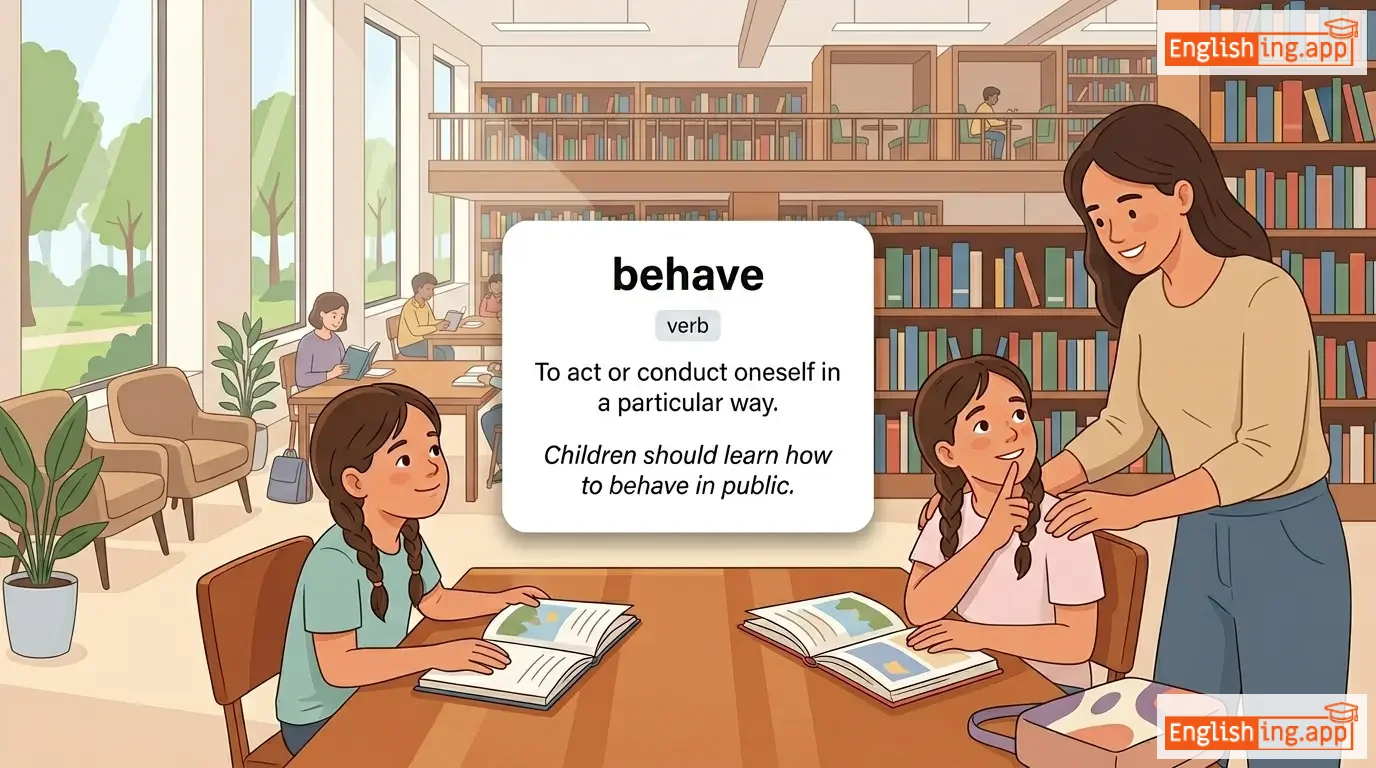
behave definition card — visual illustration of the meaning
verb
/bɪˈheɪv/
表现 (biǎo xiàn)

To act or conduct oneself in a particular way.

"Children should learn how to behave in public."

"孩子们应该学习如何在公众场合表现。" (háizimen yīnggāi xuéxí rúhé zài gōngzhòng chǎnghé biǎoxiàn.)
noun
/bɪˈheɪvjər/
行为 (xingwei)

The way in which one acts or conducts oneself, especially toward others.

"The teacher praised her good behavior in class."

"老师表扬了她在课堂上的良好行为。" (Lǎoshī biǎoyáng le tā zài kètáng shàng de liánghǎo xíngwéi.)
adjective
/bɪˈheɪvjərəl/
行为的 (xíngwéi de)

relating to the way a person or animal acts

"The psychologist studied the child's behavioral patterns."

"心理学家研究了孩子的行为模式。" (Xīnlǐxuéjiā yánjiūle háizi de xíngwéi móshì.)
noun
/bɪˈheɪ.vjər/
行为 (xíngwéi)

the way a person or animal acts or conducts themselves

"His behaviour at the meeting was very professional."

"他在会议上的行为非常专业。" (Tā zài huìyì shàng de xíngwéi fēicháng zhuānyè.)
verb
/bɪˈhɛd/
斩首 (zhan shou)

to cut off a person's or animal's head; to remove the leader or most important part

"The historical account describes how the traitor was beheaded as punishment."
"历史记载描述了叛徒作为惩罚被斩首的经过。" (Lishi jizai miaoshu le pantu zuowei chengfa bei zhan shou de jingguo)
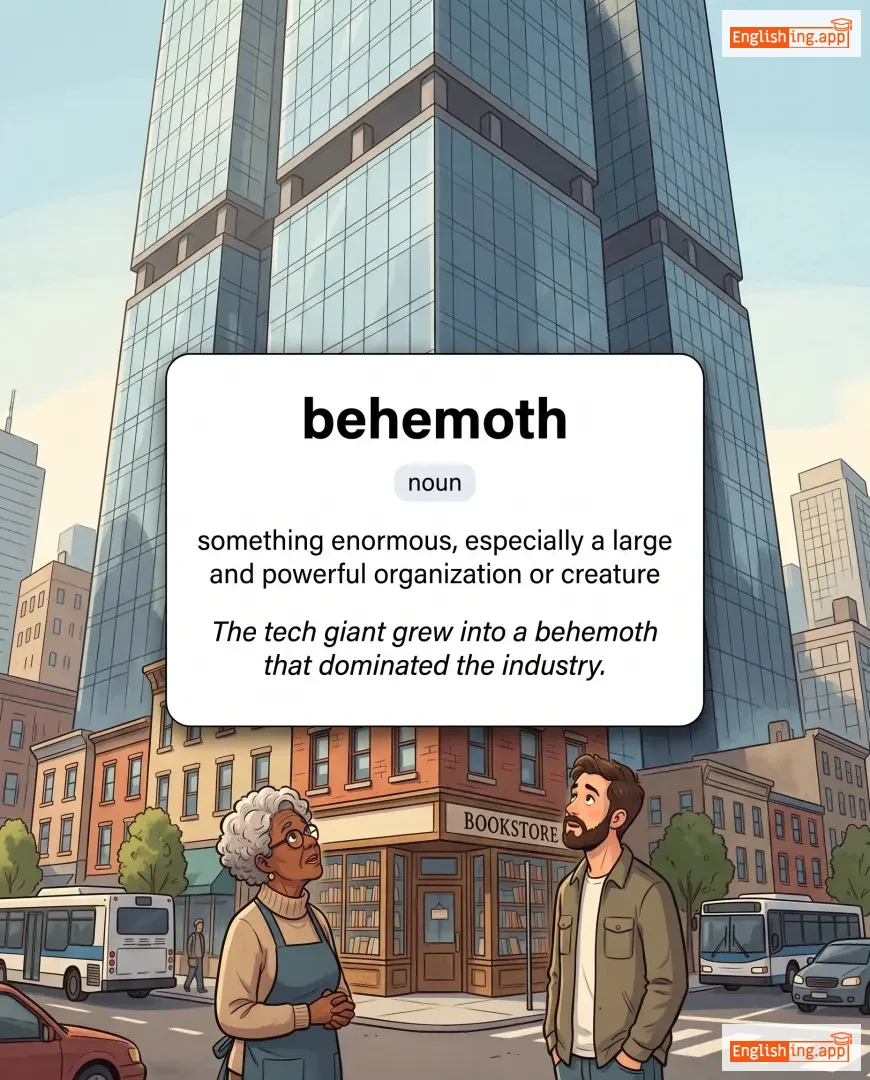
behemoth definition card — visual illustration of the meaning
noun
/bɪˈhiːməθ/
巨大的生物或组织 (juda de shengwu huo zuzhi)

something enormous, especially a large and powerful organization or creature

"The tech giant grew into a behemoth that dominated the industry."

"科技巨头成为了一个主宰行业的庞然大物。" (Keji jituo chengwei le yige zhuzai hangye de pangran dawu.)
preposition/adverb
/bɪˈhaɪnd/
后面 (houmian)

At or to the back of something; in a position further back.

"The cat is hiding behind the curtain."

"猫藏在窗帘后面。" (Mao cang zai chuanglian houmian.)
verb
/bɪˈhoʊld/
看见;目睹 (kanjian; mudu)

to see or observe something, especially something remarkable or impressive

"She stood quietly to behold the sunrise over the hills."

"她静静地站着,目睹山上的日出。" (ta jingjing di zhanzhe mudu shan shang de richu)
adjective
/bɪˈhoʊldən/
感激或负债 (ganji huo fuzhai)

indebted or obliged to someone for a service or help

"He felt beholden to his mentor for all the guidance."

"他对他的导师感到感激,因为得到所有的指导。" (Ta dui tā de dǎoshī gǎndào gǎnjī, yīnwèi dédào suǒyǒu de zhǐdǎo.)
verb
/bɪˈhuːv/
有必要或适合某人做某事 (you bixu yao huo shihe mou ren zuo mou shi)

to be necessary, proper, or appropriate for someone to do

"It would behoove you to study before the exam."

"你应该在考试前学习。" (Ni yinggai zai kaoshi qian xuexi.)
verb
/bɪˈhuːvz/
有必要 (yǒu bì yào)

third person singular form of 'behoove'; means it is proper or necessary

"It behooves every citizen to follow the law."

"每个公民都应该遵守法律。" (Měi gè gōngmín dōu yīnggāi zūnshǒu fǎlǜ.)
verb
/bɪˈhəʊv/
适当 (shìdàng)

British spelling of 'behoove'; to be appropriate or necessary

"It would behove the company to listen to its customers."

"公司应该听取客户的意见。" (Gōngsī yīnggāi tīngqǔ kèhù de yìjiàn.)
noun/verb
/ˈbiːɪŋ/
存在 (cúnzài)

Existence; the state of living; a living creature.

"Kindness is part of being human."

"善良是人类存在的一部分。" (Shànliáng shì rénlèi cúnzài de yī bùfen.)
🗣️

belabor

verb
/bɪˈleɪbər/

to argue or elaborate on a subject in excessive detail; to attack verbally or physically

"The professor belabored the point until the students grew restless."

verb
/bɪˈleɪbə/
过分强调 (guofen qiangdiao)

to explain something repeatedly or with excessive detail; to criticize or attack verbally at length

"The teacher did not belabour the point once the students understood it."

"当学生已经理解后,老师没有过分强调这一点。" (dang xuesheng yijing lijie hou laoshi meiyou guofen qiangdiao zhe yi dian)
verb
/bɪˈleɪt/
耽搁 (dān gē)

to delay or make late

"Heavy traffic belated our arrival at the party."

"交通繁忙导致我们到达聚会时迟到。" (Jiāotōng fánmáng dǎozhì wǒmen dào dá jùhuì shí chídào.)
adjective
/bɪˈleɪtɪd/
迟到的 (chidao de)

coming or happening later than expected or usual

"She sent me a belated birthday card."

"她寄给我一张迟到的生日卡。" (Ta ji gei wo yi zhang chidao de shengri ka.)
verb
/bɪˈleɪ/
固定绳索 (gùdìng shéngsuǒ)

to secure a rope by winding it around an object; to stop or cancel an order (nautical/military use)

"The climber asked his partner to belay the rope tightly."

"攀岩者要求他的搭档紧紧地固定绳索。" (Pānyán zhě yāoqiú tā de dāduì zhāngjǐn dì gùdìng shéngsuǒ.)
verb; noun
/beltʃ/
打嗝 (da ge)

to expel air noisily from the stomach through the mouth; to emit or pour out suddenly and forcefully

"After drinking the soda, he belched loudly."

"喝了汽水后,他大声打嗝。" (he le qishui hou ta dasheng da ge)
noun
/ˈbeɪleɪ/
贝雷鱼 (beilei yu)

a type of freshwater fish found in South Asian rivers, known for its distinctive appearance

"The bele fish is commonly caught in the rivers of Bangladesh."

"贝雷鱼通常在孟加拉国的河流中被捕获。" (beilei yu tongchang zai mengjiala guo de heliu zhong bei buhuo)
verb
/bɪˈliːɡər/
围困, 烦扰 (weikun, fanrao)

to cause difficulties, troubles, or harassment; to surround with military forces

"The company was beleaguered by constant complaints from its customers."

"该公司因客户不断的投诉而被围困。" (Gai gongsi yin kehu buduan de tou su er bei weikun.)
noun
/ˈbɛlfri/
钟楼 (zhōnglóu)

A bell tower, especially one attached to a church or building.

"The church belfry housed a large bronze bell."

"教堂的钟楼里有一个大铜钟。" (Jiàotáng de zhōnglóu lǐ yǒu yīgè dà tóngzhōng.)
belie definition card — visual illustration of the meaning
verb
/bɪˈlaɪ/
掩饰 (yǎnshì)

To give a false impression of something; to contradict.

"His calm face belied his inner anxiety."

"他平静的面容掩饰了他内心的焦虑。" (Tā píngjìng de miànróng yǎnshìle tā nèixīn de jiāolǜ.)
noun
/bɪˈliːf/
信仰 (xinyang)

an acceptance that something exists or is true, especially without proof

"Her belief in kindness inspired many people."

"她对善良的信仰激励了许多人。" (ta dui shanliang de xinyang jili le xu duo ren.)
adjective
/bɪˈliːvəbl̩/
可信的 (kěxìn de)

Able to be trusted or accepted as true or reasonable.

"Her story was so detailed that it sounded believable."

"她的故事如此详细,以至于听起来很可信。" (Tā de gùshì rúcǐ xiángxì, yǐ zhì yú tīng qǐlái hěn kěxìn.)
believe definition card — visual illustration of the meaning
verb
/bɪˈliːv/
相信 (xiāngxìn)

To accept something as true; to have faith or confidence in.

"She believes in the power of kindness."

"她相信善良的力量。" (Tā xiāngxìn shànliáng de lìliàng.)