词汇表

英语词汇词典 | 单词含义、定义和示例

noun/verb
/ˈbætəl/
战斗 (zhàndòu)

A fight between armed forces or a struggle to achieve or resist something.

"The soldiers prepared for the final battle."

"士兵们为最后的战斗做好了准备。" (Shìbīng men wèi zuìhòu de zhàndòu zuòhǎo le zhǔnbèi.)
noun
/ˈbætəlˌfiːld/
战场 (zhànchǎng)

a place where a battle is fought

"The battlefield was covered with the remnants of the fight."

"战场上布满了战斗的残余。" (Zhànchǎng shàng bùmǎnle zhàndòu de cányú.)
adjective
/ˈbæti/
疯狂 (fēngkuáng)

crazy or eccentric in behavior

"The old man down the street is a bit batty but harmless."

"街上的老人有点疯狂,但无害。" (Jiē shàng de lǎorén yǒudiǎn fēngkuáng, dàn wúhài.)
noun
/ˈbɔːbəl/
小饰品 (xiao shì pǐn)

A small, decorative trinket or ornament, often of little value.

"She wore a shiny bauble around her neck."

"她脖子上戴着一个闪亮的小饰品。" (Ta bo zi shang dai zhe yi ge shan liang de xiao shi pin.)
bawdy definition card — visual illustration of the meaning
adjective
/ˈbɔːdi/
猥亵 (wei xie)

humorously indecent or obscene, often in a sexual way

"The comedian’s bawdy jokes made the audience laugh and blush."

"喜剧演员的猥亵笑话让观众笑了并且脸红。" (Xi ju yan yuan de wei xie xiao hua rang guan zhong xiao le bing qie lian hong.)
verb
/bɔːl/
大声哭泣 (dà shēng kū qì)

to shout or cry loudly

"The baby bawled all night, keeping everyone awake."

"宝宝整晚哭个不停,吵醒了所有人。" (Bǎobǎo zhěng wǎn kū gè bù tíng, chǎo xǐng le suǒyǒu rén.)
noun
/beɪ/
海湾 (haiwan)

a broad inlet of the sea where the land curves inward

"The ship anchored safely in the bay."

"船安全地停泊在海湾中。" (chuan anquan de tingbo zai haiwan zhong.)
noun
/beɪ liːf/
月桂叶 (yuèguì yè)

dried aromatic leaf of the bay laurel tree used as a culinary herb

"Add a bay leaf to the soup for extra flavor."

"在汤中加入月桂叶,增添风味。" (zài tāng zhōng jiārù yuèguì yè, zēngtiān fēngwèi)
verb
/ˈbeɪɪŋ/
狂吠 (kuáng fèi)

making a loud, prolonged barking or howling sound, especially of dogs

"The baying of the hounds echoed through the forest."

"猎犬的叫声在森林中回响。" (Liè quǎn de jiào shēng zài sēn lín zhōng huí xiǎng.)
verb
/biː/
(shi)

To exist, to occur, or to have a particular quality.

"She wants to be a doctor."

"她想成为一名医生。" (Tā xiǎng chéngwéi yī míng yīshēng.)
noun
/biːtʃ/
沙滩 (shatan)

An area of sand or small stones beside the sea or a lake.

"They spent the day relaxing on the beach."

"他们在沙滩上度过了一整天,放松自己。" (Tamen zai shatan shang duoguo le yizheng tian, fangsong ziji.)
noun
/biːd/
珠子 (zhuzi)

a small round object with a hole through it for threading

"She made a necklace with colorful beads."

"她用彩色的珠子做了项链。" (Ta yong caise de zhuzi zuo le xianglian.)
noun
/biːk/
鸟嘴 (niao zui)

the hard pointed part of a bird's mouth

"The eagle has a sharp beak for tearing meat."

"鹰有一个锋利的鸟嘴来撕裂肉。" (Yīng yǒu yīgè fēnglì de niǎo zuǐ lái sīliè ròu.)
noun
/biːm/
光束 / 横梁 (guāngshù / héngliáng)

a ray or shaft of light; a long piece of wood or metal used to support weight

"A beam of sunlight entered through the window."

"一束阳光穿过窗户。" (Yī shù yángguāng chuānguò chuānghù.)
noun
/biːn/
(dou)

A seed that is eaten as a vegetable or used to make food products.

"She cooked a pot of bean soup."

"她做了一锅豆汤。" (Ta zuo le yi guo dou tang.)
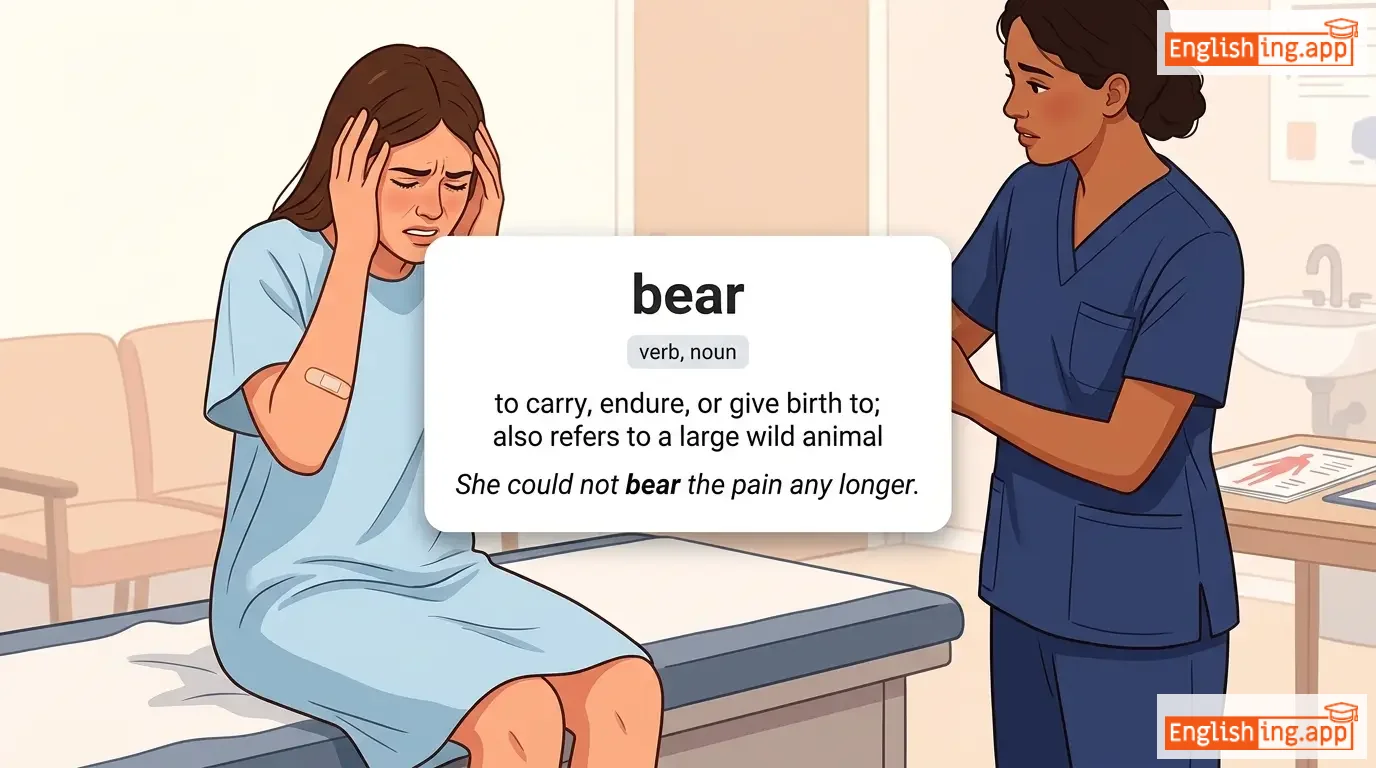
bear definition card — visual illustration of the meaning
verb, noun
/bɛər/
忍受 / 熊 (renshou / xiong)

to carry, endure, or give birth to; also refers to a large wild animal

"She could not bear the pain any longer."

"她再也无法忍受痛苦。" (Ta zai ye wu fa renshou tongku.)
adjective
/ˈbeə.rə.bəl/
可忍受的; 容忍的; 不太不愉快或痛苦 (kerenshou de; rongren de; bu tai buyu kuai huo tongku)

able to be endured; tolerable; not too unpleasant or painful

"The pain became bearable after taking the medicine."

"服药后,疼痛变得可以忍受。" (Fuyao hou, tengtong biande keyi renshou.)
🧔

Beard

noun
/bɪəd/

the hair growing on the lower part of a man's face

"He decided to grow a beard during his vacation."

noun
/ˈbeə.rər/
持有者;文件持有者 (chí yǒu zhě; wén jiàn chí yǒu zhě)

a person who carries or brings something; holder of a document

"The bearer of this message must deliver it quickly."

"这个信息的持有者必须快速送达它。" (Zhège xìnxī de chí yǒu zhě bìxū kuàisù sòng dá tā.)
noun
/ˈbɛərɪŋ/
举止 / 姿态 (juzhi / zhitai)

a person's way of standing or moving; relevance or connection to something

"Her calm bearing impressed everyone in the room."

"她平静的姿态给房间里的每个人留下了深刻印象。" (Ta pingjing de zhitai gei fangjian li de mei ge ren liuxia le shenke yinxiang.)
noun
/biːst/
野兽 / 动物 (yěshòu / dòngwù)

a large or dangerous animal; a cruel or brutal person

"The lion is known as the king of beasts."

"狮子被誉为兽中之王。" (Shīzi bèi yù wéi shòu zhōng zhī wáng.)
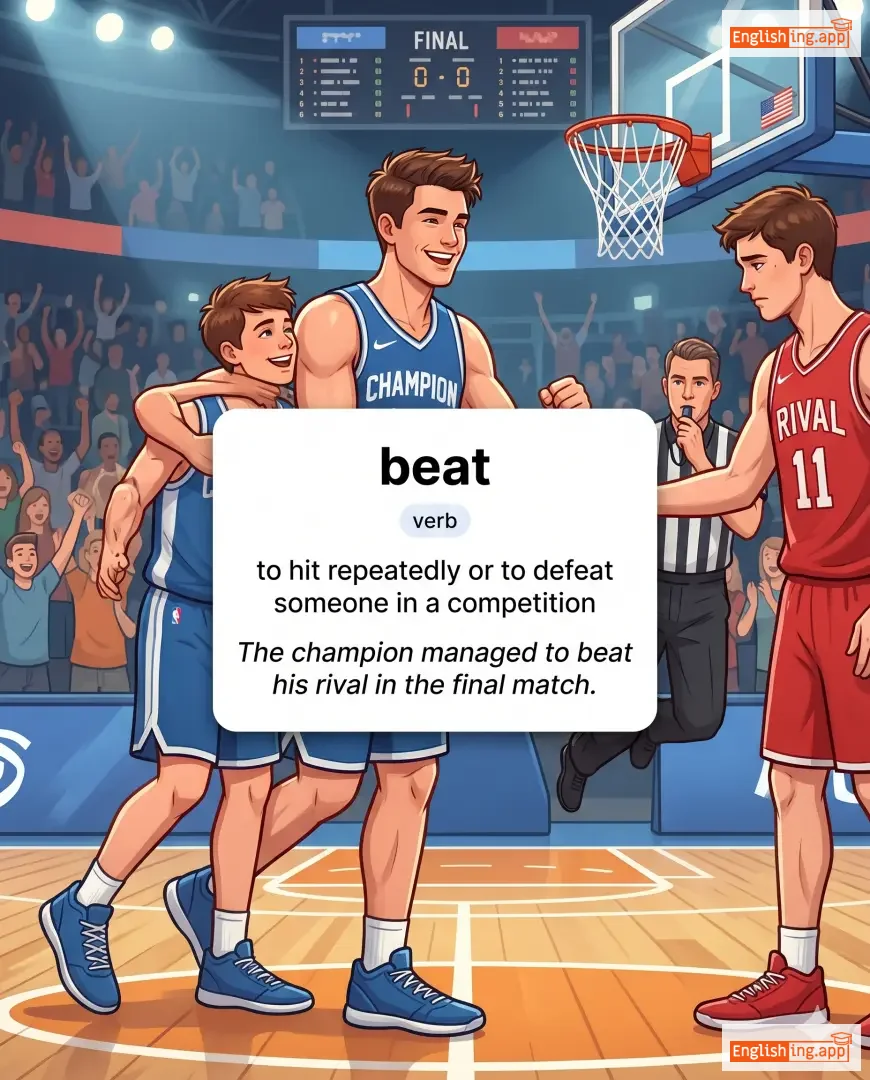
beat definition card — visual illustration of the meaning
verb
/biːt/
击打, 打败 (jī dǎ, dǎ bài)

to hit repeatedly or to defeat someone in a competition

"The champion managed to beat his rival in the final match."

"冠军在最后一场比赛中击败了他的对手。" (Guàn jūn zài zuì hòu yī chǎng bǐ sài zhōng jī bài le tā de duì shǒu.)
noun
/ˈbiːtənd raɪs/
拍打米 (paida mi)

flattened rice; rice that has been parboiled, dried, and beaten into flat flakes

"Beaten rice is commonly eaten with milk and sugar for breakfast."

"拍打米常与牛奶和糖一起食用作为早餐。" (Paida mi chang yu niunai he tang yiqi shiyong zuo wei zaocan.)
adjective
/ˌbiːəˈtɪfɪk/
极乐的 (jile de)

blissfully happy or showing great joy

"She had a beatific smile after hearing the good news."

"她在听到好消息后露出了极乐的微笑。" (Tā zài tīngdào hǎo xiāoxī hòu lùchūle jílè de wéixiào.)
beatify definition card — visual illustration of the meaning
verb
/biˈætɪfaɪ/
宣圣 (xuan sheng)

to make blessed or holy, especially in the Roman Catholic Church, to declare a deceased person to be among the blessed

"The pope decided to beatify the martyr for his faith and sacrifice."

"教皇决定因其信仰和牺牲而宣圣这位殉道者。" (Jiaohuang jue ding yin qi xinyang he xisheng er xuansheng zhe wei xundaozhe.)
noun
/biˈætɪtjuːd/
至高的祝福或幸福,常用于指耶稣在山上宝训中的教义 (zhigao de zhufo huo xingfu, chang yongyu zhi Yesu zai shanshang baoxun zhong de jiaoji)

supreme blessedness or happiness, often used in reference to the sayings of Jesus in the Sermon on the Mount

"She felt a state of beatitude after receiving the good news."

"收到好消息后,她感到一种祝福的状态。" (Shoudao hao xiaoxi hou, ta gandao yizhong zhufo de zhuangtai.)
noun
/boʊ/
男友 (nan you)

a male admirer or boyfriend; a fashionable young man

"She arrived at the party with her beau."

"她和她的男友一起到达了派对。" (Tā hé tā de nán yǒu yīqǐ dào dále pài duì.)
adjective
/ˈbjuː.tɪ.fəl/
美丽 (měilì)

pleasing to the senses or mind; very attractive

"The garden looked beautiful in the morning sunlight."

"花园在早晨的阳光下看起来很美。" (Huāyuán zài zǎochén de yángguāng xià kàn qǐlái hěn měi.)
adverb
/ˈbjuːtɪfəli/
优美地 (youmei de)

in a beautiful or pleasing manner; excellently or skillfully

"She sang beautifully at the concert."

"她在音乐会上唱得很优美。" (ta zai yinyuehui shang chang de hen youmei)
verb
/ˈbjuːtɪfaɪ/
美化 (meihua)

to make something more beautiful or attractive

"The city plans to beautify the old park with trees and lights."

"这座城市计划用树木和灯光美化旧公园。" (Zhe zuo chengshi jihua yong shumu he dengguang meihua jiu gongyuan)
noun
/ˈbjuːti/
美丽 (meili)

a combination of qualities that please the senses or mind

"The beauty of the sunset took her breath away."

"夕阳的美丽让她屏住了呼吸。" (Xiyang de meili rang ta ping zhu le huxi.)
verb
/bɪˈkɑːm/
平静 (pingjing)

to make calm or still; to deprive a sailing vessel of wind

"The captain tried to becalm the anxious crew."

"船长试图安抚焦虑的船员。" (Chuan zhang shitu anfu jiaolv de chuanyuan.)
conjunction
/bɪˈkɔːz/
因为 (yinwei)

for the reason that; since

"He stayed home because it was raining."

"他因为下雨待在家里。" (Ta yinwei xiayu daizai jiali.)
noun
/bɛk/
召唤手势 / 小溪 (zhaohuan shoushi / xiao xi)

a gesture of beckoning; a small stream or brook (chiefly Northern English)

"The servant came at his master's beck and call."

"仆人应主人召唤立即到来。" (Puren ying zhuren zhaohuan liji daolai.)
verb
/ˈbɛkən/
招手示意 (zhaoshou shiyi)

to signal or call someone to come closer, often with a gesture; to attract or invite

"She beckoned him to come closer with a wave of her hand."

"她挥手示意他走近一些。" (ta huishou shiyi ta zou jin yixie)
verb
/bɪˈkʌm/
变成 (bian cheng)

to begin to be; to develop into

"He became a successful doctor after years of hard work."

"他经过多年的努力,成为了一位成功的医生。" (Ta jingguo duonian de nuli, chengwei le yi wei chenggong de yisheng.)
adjective
/bɪˈkʌmɪŋ/
得体 (détǐ)

attractive, suitable, or flattering to the wearer or situation

"That dress is very becoming on her."

"那件衣服看起来很合适。" (Nà jiàn yīfú kàn qǐlái hěn héshì.)
🛏️

Bed

noun
/bɛd/

a piece of furniture for sleeping or resting on

"She lay down on the bed and fell asleep quickly."

noun
/ˈbed ˌkʌv.ər/
床罩 (chuángzhào)

a protective covering for a bed, typically a bedspread or comforter

"She pulled the bed cover up to her chin to stay warm."

"她把床罩拉到下巴,保持温暖。" (Tā bǎ chuángzhào lā dào xiàbā, bǎochí wēnnuǎn.)
noun
/ˈbed ʃiːt/
床单 (chuáng dān)

a large rectangular piece of cloth used as bedding to lie on or under

"The clean white bed sheet felt soft against her skin."

"干净的白色床单在她的皮肤上感觉柔软。" (Gānjìng de báisè chuáng dān zài tā de pífū shàng gǎnjué róuruǎn.)
noun
/ˈbed sted/
床架 (chuángjià)

the framework of a bed; a bed frame without bedding

"The wooden bed stead was very sturdy."

"木质床架非常坚固。" (Mùzhì chuángjià fēicháng jiāngù)
verb
/bɪˈdɔːb/
涂抹 (túmǒ)

to smear or cover with a sticky or dirty substance

"The children bedaubed the wall with paint."

"孩子们用油漆涂抹了墙。" (Háizimen yòng yóuqī túmǒ le qiáng.)
verb
/bɪˈdɛk/
装饰 (zhuangshi)

to decorate or adorn something in a showy way

"The hall was bedecked with flowers for the wedding."

"大厅为婚礼装饰了花卉。" (Dating wei hunli zhuangshi le huahui.)
bedizen definition card — visual illustration of the meaning
verb
/bɪˈdaɪzən/
华丽装饰 (huálì zhuāngshì)

to dress up or decorate in a showy or tasteless way

"She was bedizened with cheap jewelry."

"她用便宜的珠宝装饰自己。" (Tā yòng piányí de zhūbǎo zhuāngshì zìjǐ.)
noun
/ˈbɛdləm/
混乱 (hunluan)

a scene of uproar and confusion; chaos

"There was bedlam in the market after the news spread."

"消息传播后,市场上出现了混乱。" (Xiaoxi chuánbò hòu, shìchǎng shàng chūxiànle hunluan.)
verb
/bɪˈdræɡəl/
通过把东西拖过泥水或水使其湿,脏和乱 (tōngguò bǎ dōngxi tuōguò ní shuǐ huò shuǐ shǐ qí shī, zāng hé luàn)

to make something wet, dirty, and untidy by dragging it through mud or water

"The children came home bedraggled after playing in the rain."

"孩子们在雨中玩耍后,湿漉漉脏兮兮地回家了。" (Háizimen zài yǔzhōng wánshuǎ hòu, shī lù lù zāng xī xī de huí jiā le.)
adjective
/ˈbed.rɪd.ən/
卧床不起 (wò chuáng bù qǐ)

confined to bed; unable to leave one's bed due to illness or infirmity

"The elderly man has been bedridden for several months."

"这位年长的男士已经卧床不起好几个月了。" (Zhè wèi nián zhǎng de nán shì yǐ jīng wò chuáng bù qǐ hǎo jǐ gè yuè le.)
noun
/ˈbɛd.rɒk/
基础 (jichu)

the solid rock layer beneath the soil; the fundamental basis of something

"Trust is the bedrock of a healthy relationship."

"信任是健康关系的基础。" (Xìnrèn shì jiànkāng guānxì de jīchǔ.)
noun
/ˈbɛdruːm/
卧室 (wòshì)

A room used for sleeping in.

"The children were playing in the bedroom."

"孩子们正在卧室里玩耍。" (Háizimen zhèngzài wòshì lǐ wánshuǎ.)
noun
/biː/
蜜蜂 (mìfēng)

a flying insect that collects nectar and produces honey

"A bee landed on the flower to collect nectar."

"一只蜜蜂落在花上收集花蜜。" (Yī zhī mìfēng luò zài huā shàng shōují huāmì.)