词汇表

英语词汇词典 | 单词含义、定义和示例

noun
/ˈbɑːr.nɪ.kəl/
藤壶 (ténghú)

a marine crustacean that attaches itself permanently to underwater surfaces

"The old ship's hull was covered with barnacles."

"那艘旧船的船体上布满了藤壶。" (nà sōu jiù chuán de chuántǐ shàng bùmǎnle ténghú.)
noun
/ˈbærəˌɡræf/
记录气压变化的仪器 (jilu qiya bianhua de yiqi)

an instrument that records changes in atmospheric pressure

"The scientist checked the barograph for pressure variations."

"科学家检查了气压计以查看压力变化。" (Kexuejia jiancha le qiyaji yi chakan yali bianhua.)
noun
/bəˈrɒmɪtər/
气压计 (qiyaji)

an instrument that measures atmospheric pressure

"The barometer indicated a storm was approaching."

"气压计显示暴风雨即将来临。" (qiyaji xianshi baofengyu jijiang lailin.)
adjective
/bəˈroʊk/
巴洛克风格 (bā luò kè fēng gé)

relating to a highly ornate and extravagant style of art, architecture, or music from the 17th and early 18th centuries; excessively elaborate or complex

"The church was decorated in a baroque style with intricate details."

"教堂以复杂的巴洛克风格装饰,细节繁复。" (Jiàotáng yǐ fùzá de bā luò kè fēnggé zhuāngshì, xìjié fánfù.)
noun
/bəˈrɑːʒ/
弹幕或快速攻击 (bā lā rì)

a concentrated outpouring of questions, criticisms, or blows; a rapid, continuous attack

"The politician faced a barrage of tough questions from reporters."

"政治家面对记者们一连串尖锐的问题。" (Zhèng zhì jiā miàn duì jì zhě men yī lián chuàn jiān ruì de wèn tí.)
noun
/ˈbærəl/
大桶 (da tong)

a large cylindrical container used to hold liquids

"The wine was stored in a wooden barrel."

"酒被储存在一个木制的大桶中。" (Jiu bei chu cun zai yi ge mu zhi de da tong zhong.)
adjective
/ˈbærən/
贫瘠 (pínjí)

too poor to produce much or any vegetation; unproductive or empty

"The land was barren and could not support crops."

"这片土地贫瘠,无法支持作物生长。" (Zhè piàn tǔdì pínjí, wúfǎ zhīchí zuòwù shēngzhǎng.)
noun/verb
/ˌbærɪˈkeɪd/
障碍物 (zhàng ài wù)

a barrier erected to block or defend against movement; to block a passage with obstacles

"Protesters built a barricade across the street."
"抗议者在街道上建造了一个障碍物。" (Kàngyì zhě zài jiēdào shàng jiànzào le yīgè zhàng ài wù.)
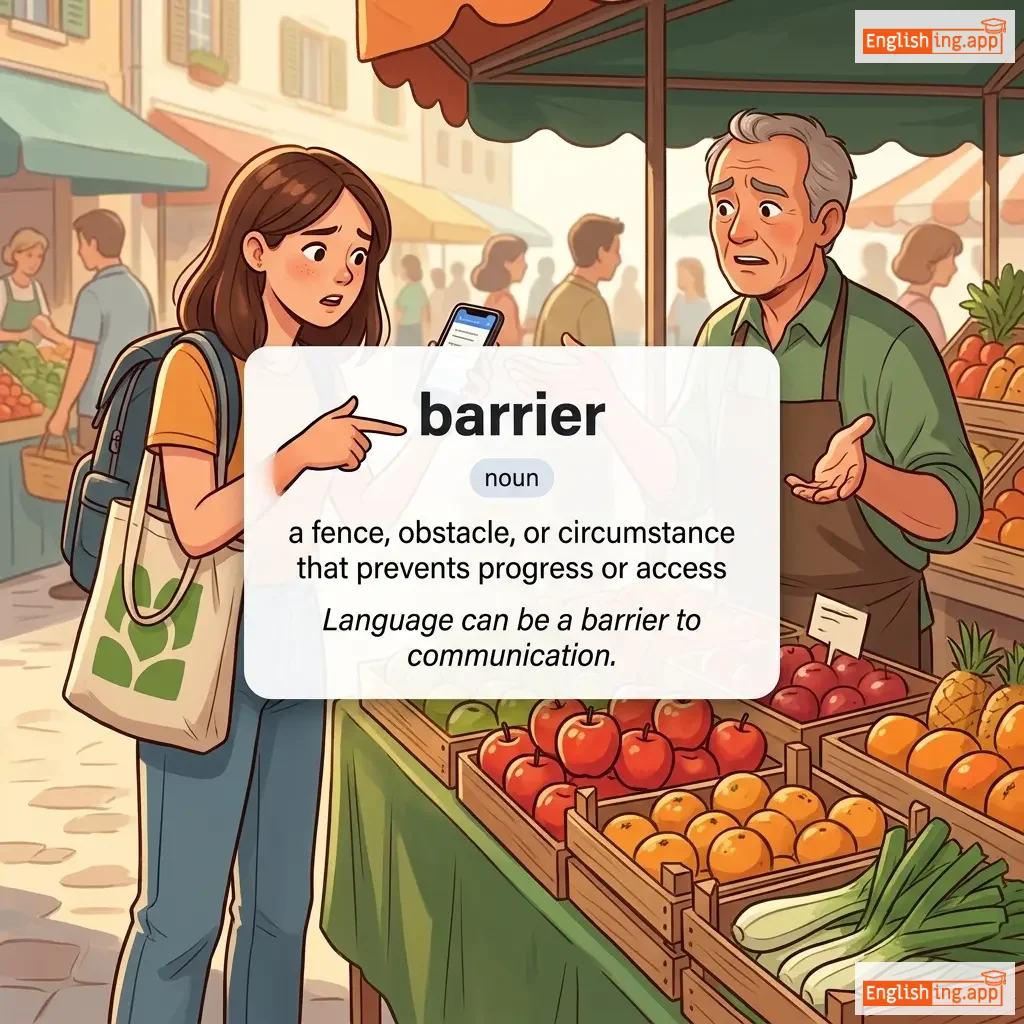
barrier definition card — visual illustration of the meaning
noun
/ˈbæriər/
障碍 (zhàng'ài)

a fence, obstacle, or circumstance that prevents progress or access

"Language can be a barrier to communication."
"语言可能是沟通的障碍。" (Yǔyán kěnéng shì gōutōng de zhàng'ài.)
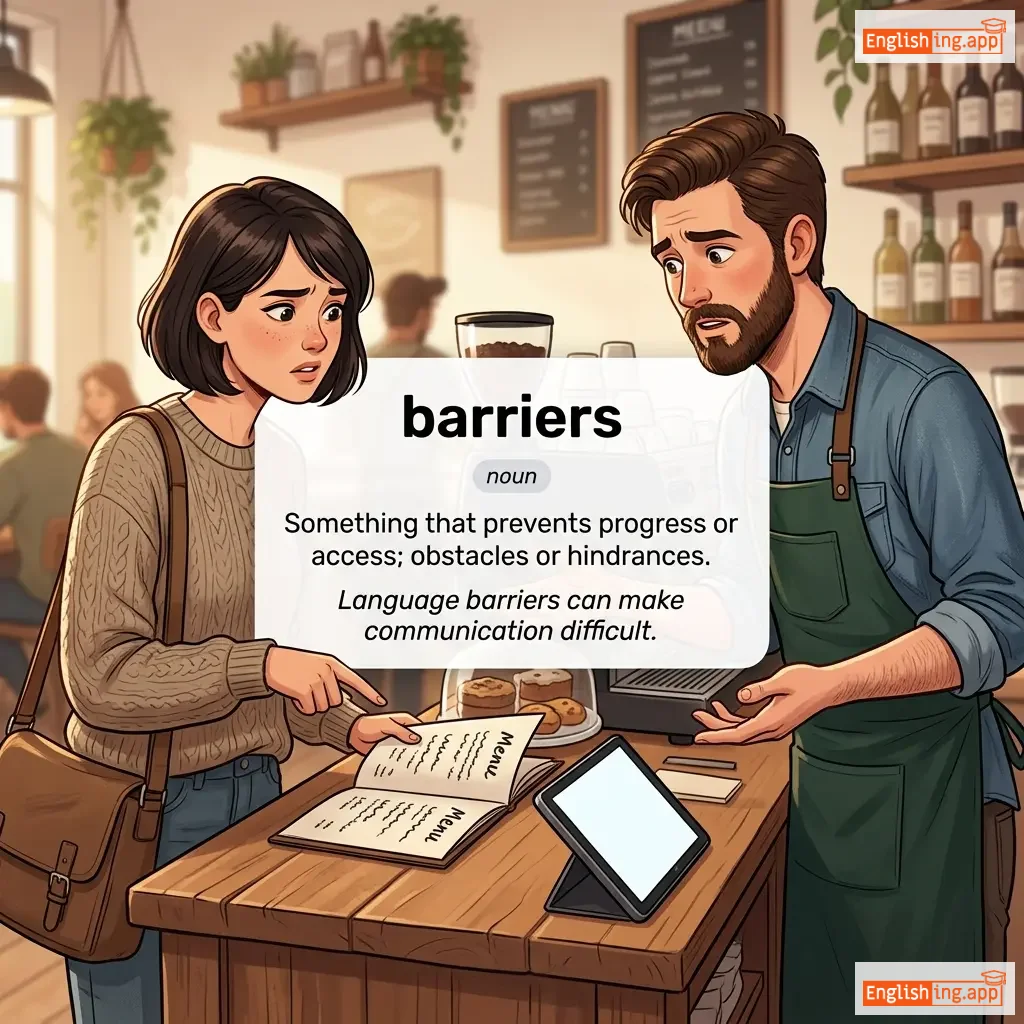
barriers definition card — visual illustration of the meaning
noun
/ˈbæɹɪəz/
障碍 (zhàng'ài)

Something that prevents progress or access; obstacles or hindrances.

"Language barriers can make communication difficult."

"语言障碍可能会使沟通变得困难。" (Yǔyán zhàng'ài kěnéng huì shǐ gōutōng biàn dé kùnnán.)
preposition
/ˈbɑːrɪŋ/
除非,除了 (chúfēi, chúle)

except for; if not for

"Barring a miracle, the team will not win the championship."

"除非有奇迹发生,否则团队将无法赢得冠军。" (Chúfēi yǒu qíjī fāshēng, fǒuzé tuánduì jiāng wúfǎ yíngdé guànjūn.)
noun
/ˈbærɪstər/
律师 (lǜshī)

A type of lawyer in certain legal systems who specializes in courtroom advocacy and litigation.

"The barrister argued the case passionately before the judge."
"律师在法官面前激情澎湃地辩论案件。" (Lǜshī zài fǎguān miànqián jīqíng péngpài de biànlùn ànjiàn.)
verb
/ˈbɑːrtər/

To exchange goods or services without using money.

"They bartered their crops for handmade tools."

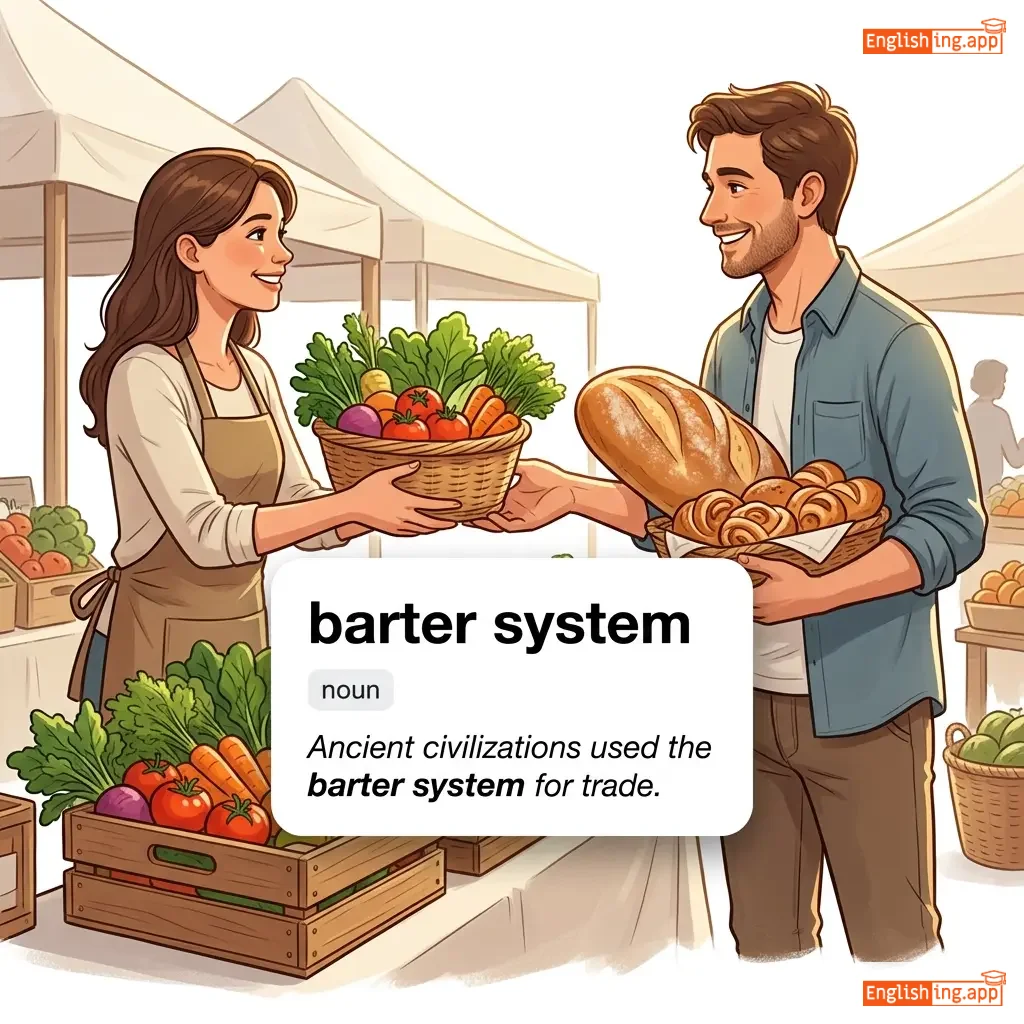
barter system definition card — visual illustration of the meaning
noun
/ˈbɑːr.tər ˌsɪs.təm/
物物交换 (wù wù jiāohuàn)

A system of exchange where goods and services are traded directly without using money.

"Ancient civilizations used the barter system for trade."

"古代文明使用物物交换系统进行贸易。" (Gu dai wenming shi yong wu wu jiao huan xi tong jin xing mao yi.)
noun
/ˈbɑːrtərər/
易货商 (yì huò shāng)

A person who trades goods or services without using money.

"The barterer exchanged fruits for some pottery."
"易货商用水果交换了一些陶器。" (Yì huò shāng yòng shuǐguǒ jiāohuànle yīxiē táoqì.)
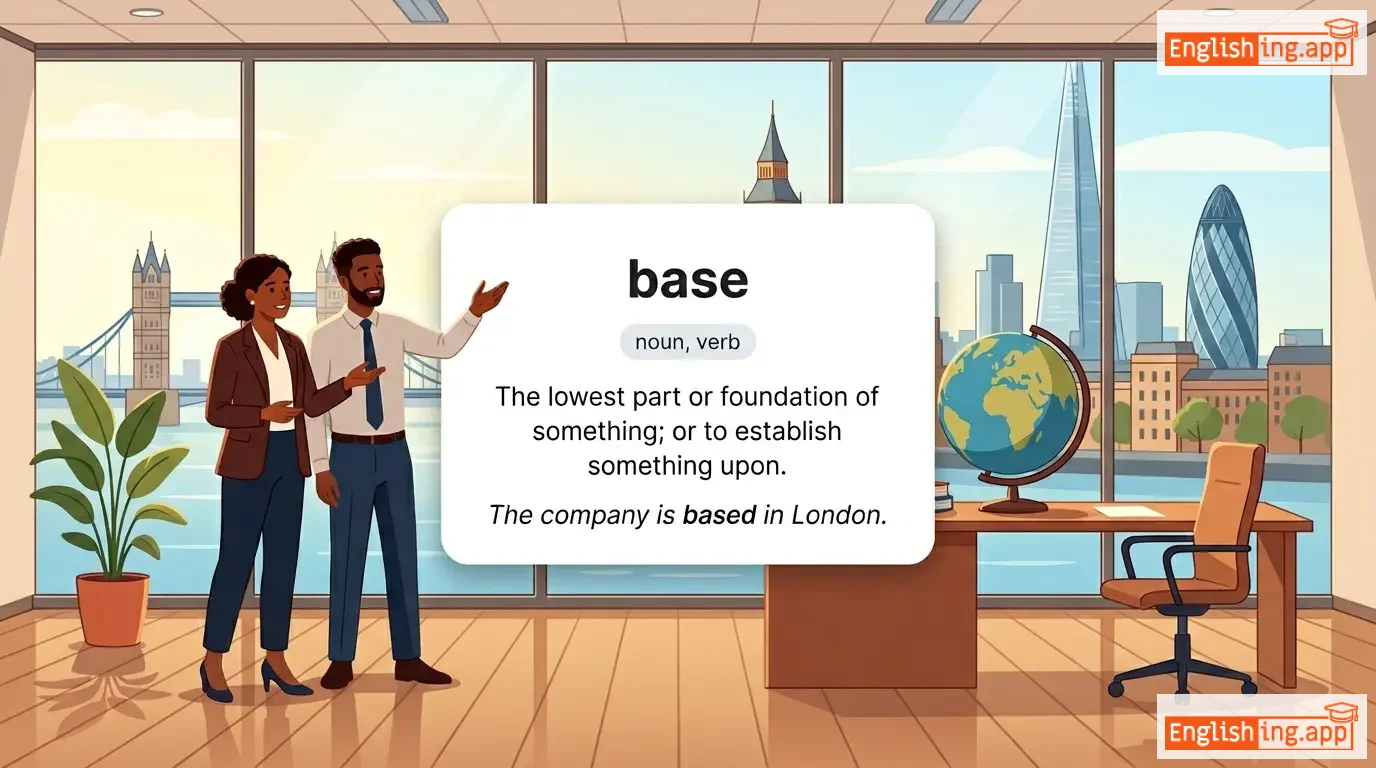
base definition card — visual illustration of the meaning
noun, verb
/beɪs/
基础 (jichu)

The lowest part or foundation of something; or to establish something upon.

"The company is based in London."

"公司总部位于伦敦。" (Gōngsī zǒngbù wèiyú lúndūn.)
noun
/ˈbeɪsˌbɔːl/
棒球 (bangqiu)

a sport in which two teams try to score runs by hitting a ball and running around bases

"He loves watching baseball games on TV."

"他喜欢在电视上观看棒球比赛。" (Tā xǐhuān zài diànshì shàng guānkàn bàngqiú bǐsài.)
noun
/ˈbeɪsbɔːrd/
踢脚线 (tī jiǎo xiàn)

A narrow board running along the bottom of an interior wall, covering the joint between wall and floor.

"The carpenter painted the baseboard white."

"木匠把踢脚线涂成了白色。" (Mùjiàng bǎ tī jiǎo xiàn tú chéng le báisè.)
adjective
/ˈbeɪs.ləs/
没有根据的; 无根据的; 不合理的 (méiyǒu gēnjù de; wú gēnjù de; bù hélǐ de)

without foundation; groundless; unfounded

"The accusations against him were completely baseless."

"对他的指控完全没有根据。" (duì tā de zhǐkòng wánquán méiyǒu gēnjù.)
noun
/ˈbeɪsmənt/
地下室 (dixiashi)

the lowest floor of a building, usually partly or completely below ground

"The laundry room is in the basement."

"洗衣房在地下室。" (Xǐyīfáng zài dìxiàshì.)
adjective
/ˈbæʃ.fəl/
害羞 (haixiu)

shy, easily embarrassed, or reluctant to draw attention

"She gave a bashful smile when he complimented her."

"当他称赞她时,她露出了害羞的微笑。" (Dang ta chengzan ta shi, ta luchu le haixiu de weixiao.)
adjective
/ˈbeɪsɪk/
基本的 (jiben de)

forming the most important or simplest part of something

"She taught me the basic rules of chess."

"她教会了我国际象棋的基本规则。" (Ta jiaohui le wo guojixiangqi de jiben guize.)
adverb
/ˈbeɪsɪkli/
基本上 (jiben shang)

in the most important or fundamental way; essentially

"Basically, the project was a success despite some small issues."

"基本上,尽管有一些小问题,项目仍然是成功的。" (Jiben shang, jinguan you yixie xiao wenti, xiangmu rengran shi chenggong de.)
noun
/ˈbeɪ.zəl/
罗勒 (luó lè)

an aromatic herb with green leaves used in cooking, especially Italian cuisine

"The pasta sauce was flavored with fresh basil."

"意大利面酱料中加入了新鲜的罗勒。" (Yìdàlì miàn jiàngliào zhōng jiārù le xīnxiān de luó lè.)
noun
/ˈbeɪ.zəl siːdz/
罗勒种子 (luo le zhong zi)

small black seeds from the basil plant, often used in drinks and desserts

"I added basil seeds to my lemonade for a refreshing drink."

"我在柠檬水中加入了罗勒种子,制作了一种清爽的饮品。" (Wo zai ningmeng shui zhong jiaru le luo le zhongzi, zhizuole yizhong qingshuang de yinpin.)
noun
/ˈbeɪsɪs/
基础 (jichu)

the underlying support or foundation for an idea, argument, or process

"Trust is the basis of any strong relationship."

"信任是任何强大关系的基础。" (Xìnrèn shì rènhé qiángdà guānxì de jīchǔ.)
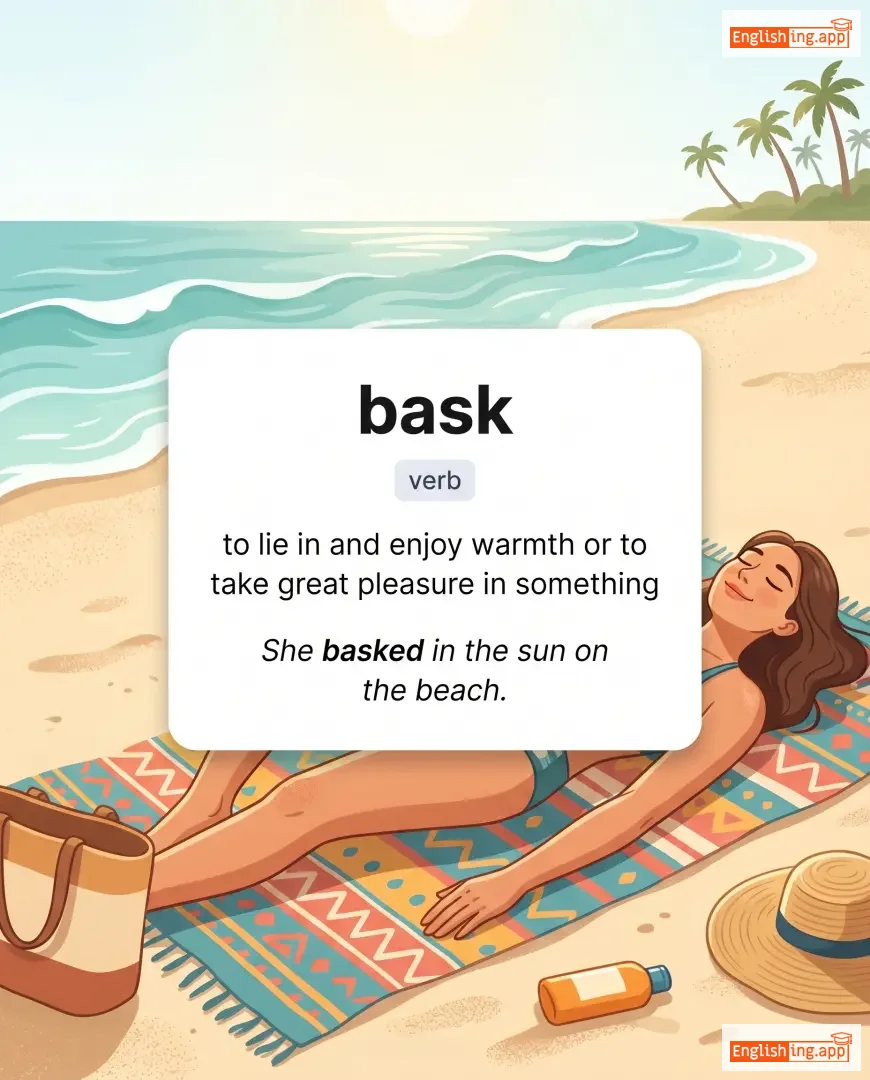
bask definition card — visual illustration of the meaning
☀️

bask

verb
/bæsk/

to lie in and enjoy warmth or to take great pleasure in something

"She basked in the sun on the beach."

noun
/ˈbæskɪt/
篮子 (lanzi)

a container made of woven materials used for carrying or storing things

"She carried the apples in a basket."

"她把苹果放在篮子里。" (Ta ba pingguo fang zai lanzi li.)
noun
/ˈbæskɪtbɔːl/

a game played by two teams who try to score points by throwing a ball through a hoop

"He loves playing basketball with his friends."

noun
/beɪs/
低沉的男性嗓音 / 贝斯吉他 (dīchén de nánxìng sǎngyīn / bèisī jí tā)

the lowest adult male singing voice; also, low-frequency sounds in music or a type of fish

"He played the bass guitar at the concert."

"他在音乐会弹奏了贝斯吉他。" (Tā zài yīnyuè huì tánzòu le bèisī jí tā.)
noun
/bəˈsuːn/
一种大号木管乐器 (yī zhǒng dà hào mù guǎn yuèqì)

a large woodwind instrument with a deep sound

"The orchestra featured a beautiful bassoon solo."

"乐团演奏了美妙的巴松独奏。" (Yuètuán yǎnzòu le měimiào de bāsōng dúzòu.)
noun/adjective
/ˈbæstərd/
私生子 (sī shēng zǐ)

a child born to unmarried parents (offensive); also used informally as an insult or to describe something unpleasant

"He called him a bastard in anger."

"他生气时骂他是私生子。" (Tā shēngqì shí mà tā shì sī shēng zǐ.)
noun
/ˈbæs.tərd tiːk/
黄花檀 (huanghua tan)

A flowering tree with bright orange-red flowers, also known as flame of the forest

"The bastard teak tree blooms with vibrant orange flowers in spring."

"黄花檀树在春天开出鲜艳的橙色花朵。" (Huanghua tan shu zai chuntian kaichu xianyan de chengse huaduo.)
noun
/ˌbæstərdaɪˈzeɪʃən/
扭曲 / 退化 (niuqie / tuihua)

the act of corrupting, degrading, or misrepresenting something

"Critics called the remake a bastardization of the original film."

"评论家称重拍版是原电影的扭曲。" (Pinglunjia cheng zhongpaiban shi yuan dianying de niuqie.)
verb
/ˈbæstərdaɪz/
歪曲 (waiqu)

to corrupt or debase something by altering it from its original form; to change in a way that reduces quality or purity

"Critics argue that the remake bastardized the original novel."

"评论家认为这次改编歪曲了原作。" (pinglun jia renwei zheci gaibian waiqu le yuanzuo)
verb
/beɪst/
在烹饪过程中将融化的脂肪、肉汁或液体倒在肉上,保持其湿润 (zai pengren guocheng zhong jiang ronghua de zhifang, rouzhi huo yedi dao zai rou shang, baochi qi shirun)

to pour or brush melted fat, juices, or liquid over meat during cooking to keep it moist

"She basted the turkey every 30 minutes to keep it juicy."

"她每30分钟给火鸡加油,以保持它的多汁。" (Tā měi 30 fēnzhōng gěi huǒ jī jiāyóu, yǐ bǎochí tā de duōzhī.)
noun
/ˈbæs.ti.ən/
堡垒, 防御工事 (baolei, fangyu gongshi)

a stronghold or fortification; a place or institution strongly defending particular principles

"The castle stood as a bastion against enemy attacks."

"这座城堡作为抵御敌人攻击的堡垒而屹立。" (Zhe zuo chengbao zuowei diyu diren gongji de baolei er yili.)
bat definition card — visual illustration of the meaning
noun
/bæt/
球棒 (qiú bàng)

a wooden or metal club used to hit a ball in sports like baseball or cricket

"He swung the bat and hit the ball hard."

"他挥动球棒,用力击打了球。" (Tā huī dòng qiú bàng, yòng lì jī dǎ le qiú.)
noun
/bætʃ/
一次性生产或处理的物品数量 (yi ci xing sheng chan huo chu li de wu pin shu liang)

a quantity of items produced or processed at one time

"She baked a fresh batch of cookies this morning."

"她今天早上烤了一批新鲜的饼干。" (Ta jintian zao shang kao le yi pi xinxian de binggan.)
😮‍💨

bate (贝特)

verb
/beɪt/
减轻,抑制 (jianqing, yizhi)

to lessen or restrain; to diminish the force or intensity of something

"He spoke with bated breath as he waited for the result."

"他屏住呼吸等待结果时说道。" (Ta ping zhu hu xi deng dai jie guo shi shuo dao.)
noun
/bɑːθ/
浴缸 (yùgāng)

an act of washing the body in water; or the container used for this purpose

"She took a long bath after work."
"她在工作后洗了一个长浴缸。" (Tā zài gōngzuò hòu xǐle yīgè cháng yùgāng.)
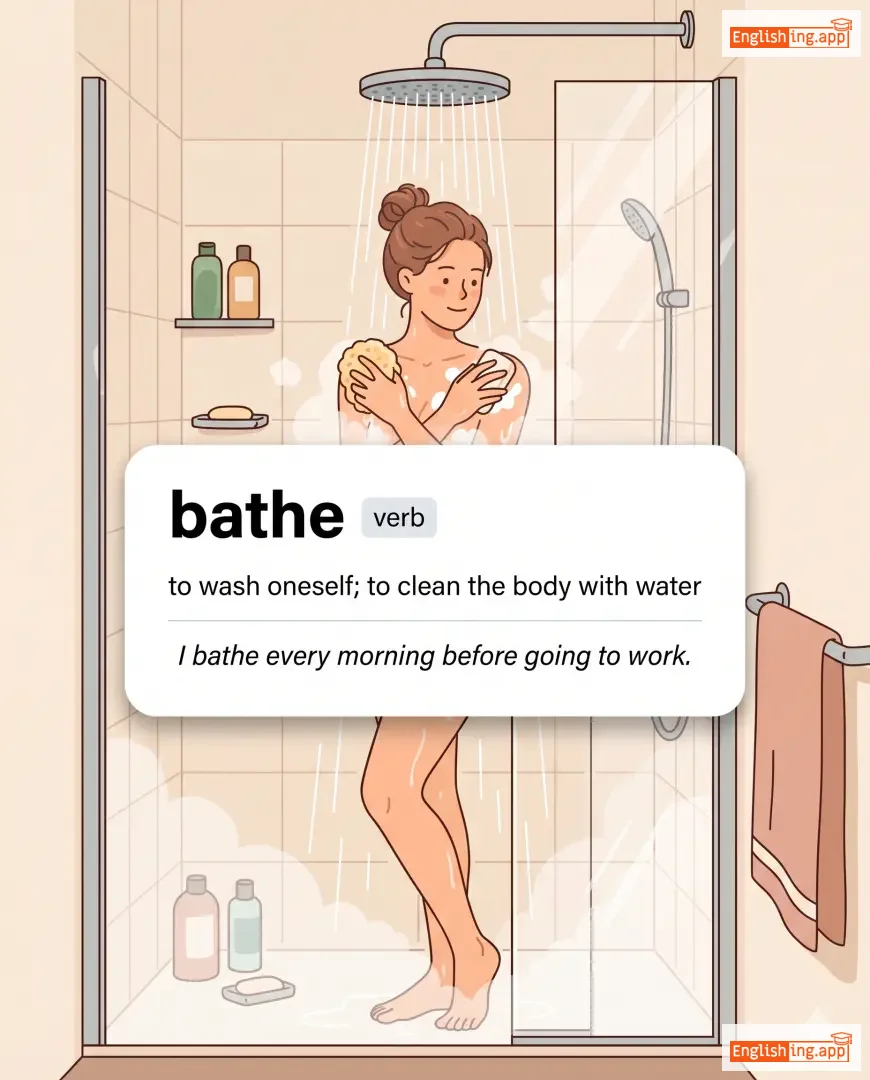
bathe definition card — visual illustration of the meaning
verb
/beɪð/
洗澡 (xizao)

to wash oneself; to clean the body with water

"I bathe every morning before going to work."

"我每天早上上班前洗澡。" (Wo meitian zaoshang shangban qian xizao)
adjective
/bəˈθɛt.ɪk/
琐碎的情感 (suǒsuì de qínggǎn)

displaying insincere or trivial emotion; producing an unintended ridiculous effect through sudden change from serious to silly

"The movie's ending was unintentionally bathetic rather than tragic."

"电影的结局是琐碎的,而不是悲剧性的。" (Diànyǐng de jiéjú shì suǒsuì de, ér bù shì bēijù xìng de.)
noun
/ˈbɑːθruːm/
浴室 (yù shì)

a room containing a toilet and usually a sink or shower

"The bathroom is on the second floor."
"浴室在二楼。" (Yù shì zài èr lóu.)
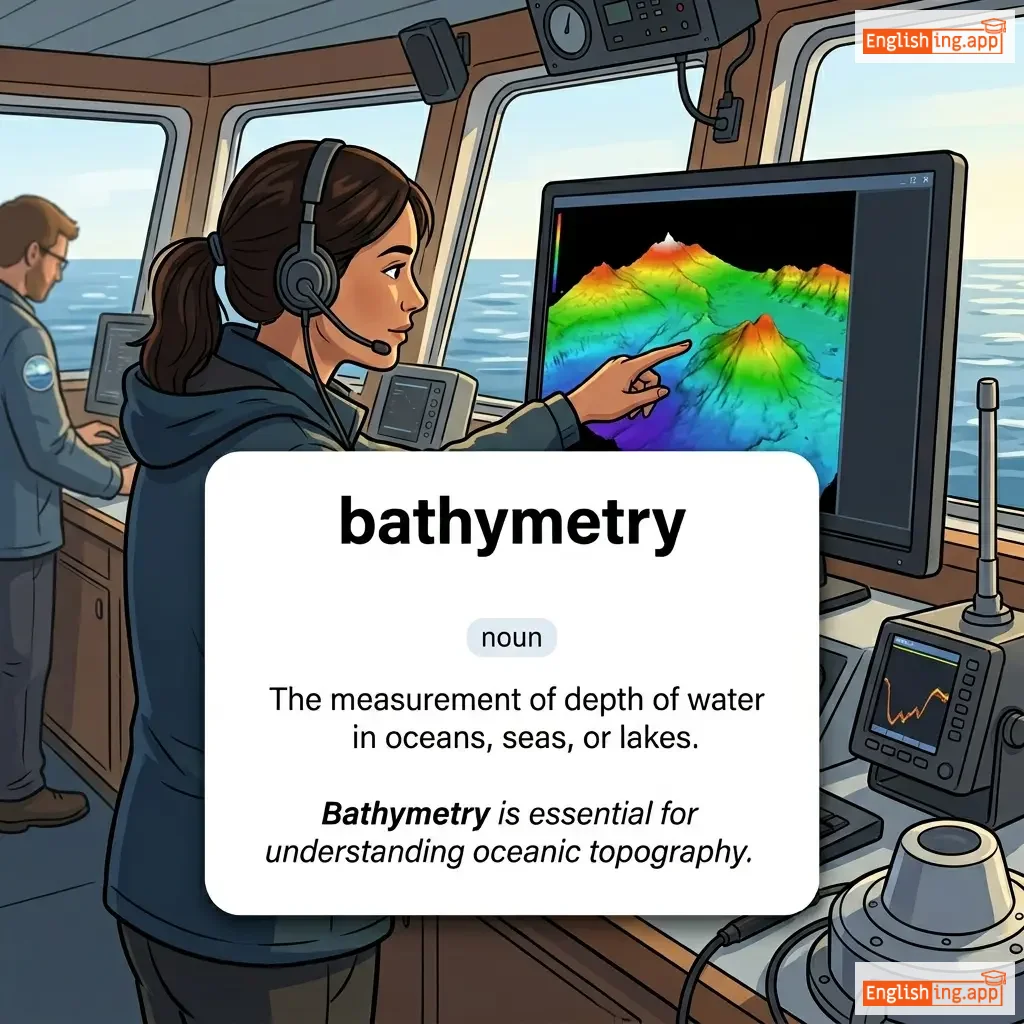
bathymetry definition card — visual illustration of the meaning
noun
/bəˈθɪm.ə.tri/
海洋测深学 (hǎi yáng cè shēn xué)

The measurement of depth of water in oceans, seas, or lakes.

"Bathymetry is essential for understanding oceanic topography."

"海洋测深学对于理解海洋地形至关重要。" (Hǎiyáng cè shēn xué duìyú lǐjiě hǎiyáng dìxíng zhì guān zhòngyào.)
🎶

baton

noun
/bəˈtɒn/

A thin stick carried by a conductor to direct an orchestra, or used as a symbol of authority.

"The conductor raised his baton to begin the symphony."

noun
/bəˈtæljən/
(yíng)

A large body of soldiers ready for battle, typically consisting of several companies.

"The battalion was deployed to the front line."

"这个营被部署到前线。" (Zhège yíng bèi bùshǔ dào qiánxiàn.)
verb
/ˈbætn/
固定 (gùdìng)

To fasten or secure something tightly.

"They battened down the hatches before the storm."

"他们在风暴之前把舱口牢牢固定。" (Tāmen zài fēngbào zhīqián bǎ cāngkǒu láoláo gùdìng.)
verb
/ˈbætər/
反复打击 (fǎn fù dǎ jí)

To strike repeatedly with force.

"The waves battered the shoreline all night."

"波浪整个晚上拍打着海岸线。" (Bōlàng zhěng gè wǎnshàng pāidǎ zhe hǎi'ànxiàn.)
noun
/ˈbætəri/
电池 (diànchí)

A device that stores and provides electrical energy; also refers to a group of similar things or repeated blows.

"The phone battery ran out after a long day."

"手机电池在长时间使用后耗尽了。" (Shǒujī diànchí zài cháng shíjiān shǐyòng hòu hàojìnle.)