词汇表

英语词汇词典 | 单词含义、定义和示例

noun
/ˈbæləd/
叙事歌曲 (xushi gequ)

a narrative song or poem, often sentimental or romantic

"The singer performed a moving ballad about lost love."

"歌手演唱了一首感人的失恋歌曲。" (Geshou yanchangle yishou ganren de shilian gequ.)
noun
/ˈbælæst/
压舱物 (yācāngwù)

heavy material used to stabilize a ship or vehicle

"The ship was loaded with ballast to remain steady in the storm."

"船只装载了压舱物,以便在风暴中保持稳定。" (Chuánzhī zhuāngzài le yācāngwù, yǐbiàn zài fēngbào zhōng bǎochí wěndìng.)
noun
/bæˈleɪ/
芭蕾舞 (bā léi wǔ)

a highly stylized and artistic form of dance

"She has trained for years in classical ballet."

"她已经训练多年了,专攻古典芭蕾舞。" (Tā yǐjīng xùnliàn duōnián le, zhuān gōng gǔdiǎn bālěiwǔ.)
noun/verb
/bəˈluːn/
气球 (qìqiú)

A small bag made of thin rubber or similar material that can be inflated with air or gas; as a verb, to expand rapidly.

"The children played with a red balloon at the party."

"孩子们在聚会上玩了一个红色的气球。" (Háizimen zài jùhuì shàng wánle yīgè hóngsè de qìqiú.)
noun
/ˈbælət/
选票 (xuan piao)

a process of voting, usually in secret; the paper used to record a vote

"Voters cast their ballot in the election."

"选民在选举中投下了选票。" (xuan min zai xuan ju zhong tou xia le xuan piao.)
noun
/bɑːm/
香膏 (xiang gao)

A soothing ointment or something that provides comfort or relief.

"The balm helped relieve the pain from her sunburn."

"香膏帮助缓解她的晒伤疼痛。" (Xiang gao bāngzhù huǎnjiě tā de shàishāng téngtòng.)
adjective
/ˈbɑːmi/
温和而愉快的温暖;舒缓。 (wēn hé ér yú kuài de wēn nuǎn; shū huǎn.)

Mild and pleasantly warm; soothing.

"We enjoyed a walk on a balmy summer evening."

"我们在一个温和的夏日晚间散步。" (Wǒmen zài yīgè wēnhé de xiàrì wǎn jiān sànbù.)
noun
/ˈbɔːlsəm/
芳香树脂 (fāngxiāng shùzhī)

An aromatic resinous substance or plant used for healing or soothing.

"The tree produced a fragrant balsam used in medicine."

"这棵树生产了一种芳香的巴尔萨姆,用于医学。" (Zhè kē shù shēngchǎnle yī zhǒng fāngxiāng de bā'ěrsām, yòng yú yīxué.)
noun
/ˈbɔːl.səm ˈæp.əl/
苦瓜 (kù guā)

a bitter gourd vegetable with a bumpy green skin, also known as bitter melon

"Balsam apple is cooked with spices to reduce its bitter taste."
"苦瓜用香料烹饪,以减少其苦味。" (Ku gua yong xiang liao peng ren, yi jian shao qi ku wei.)
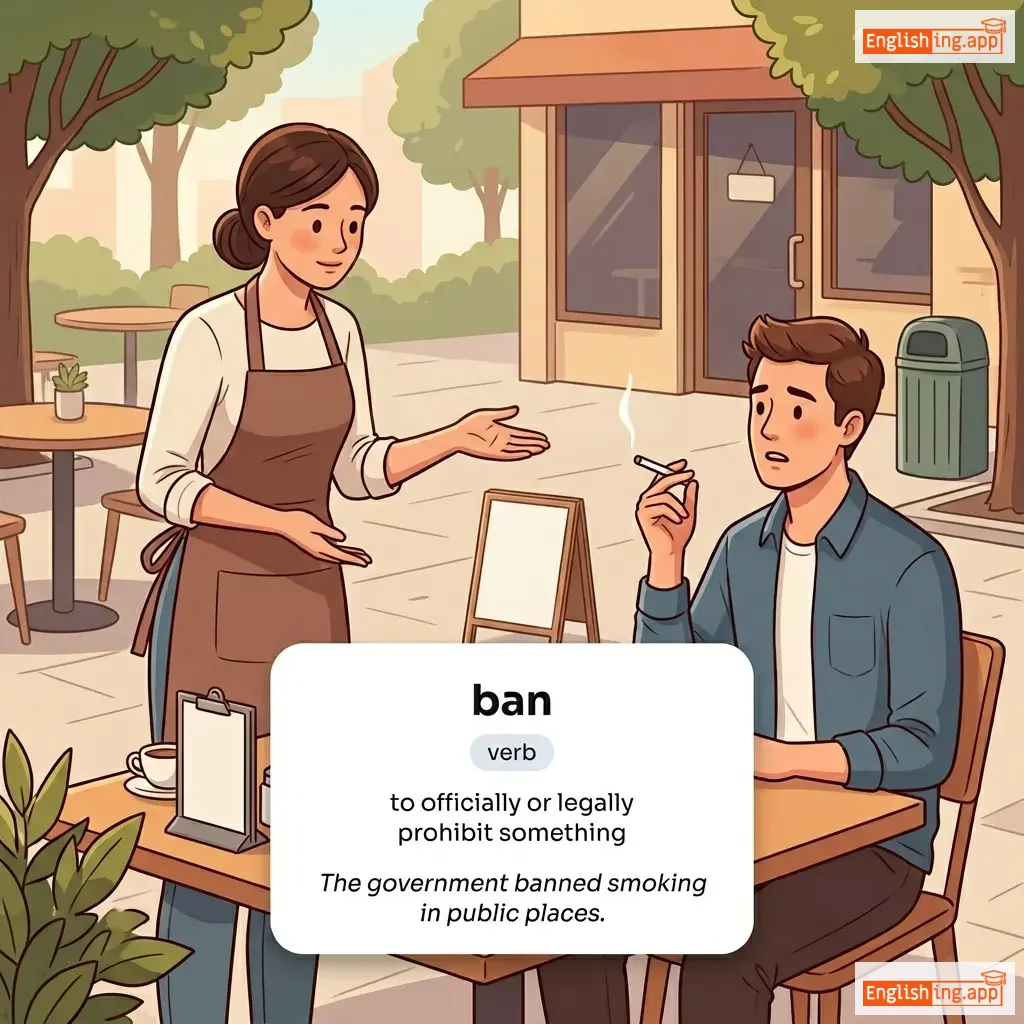
ban definition card — visual illustration of the meaning
verb
/bæn/
禁止 (jìnzhǐ)

to officially or legally prohibit something

"The government banned smoking in public places."

"政府禁止在公共场所吸烟。" (Zhèngfǔ jìnzhǐ zài gōnggòng chǎngsuǒ xīyān.)
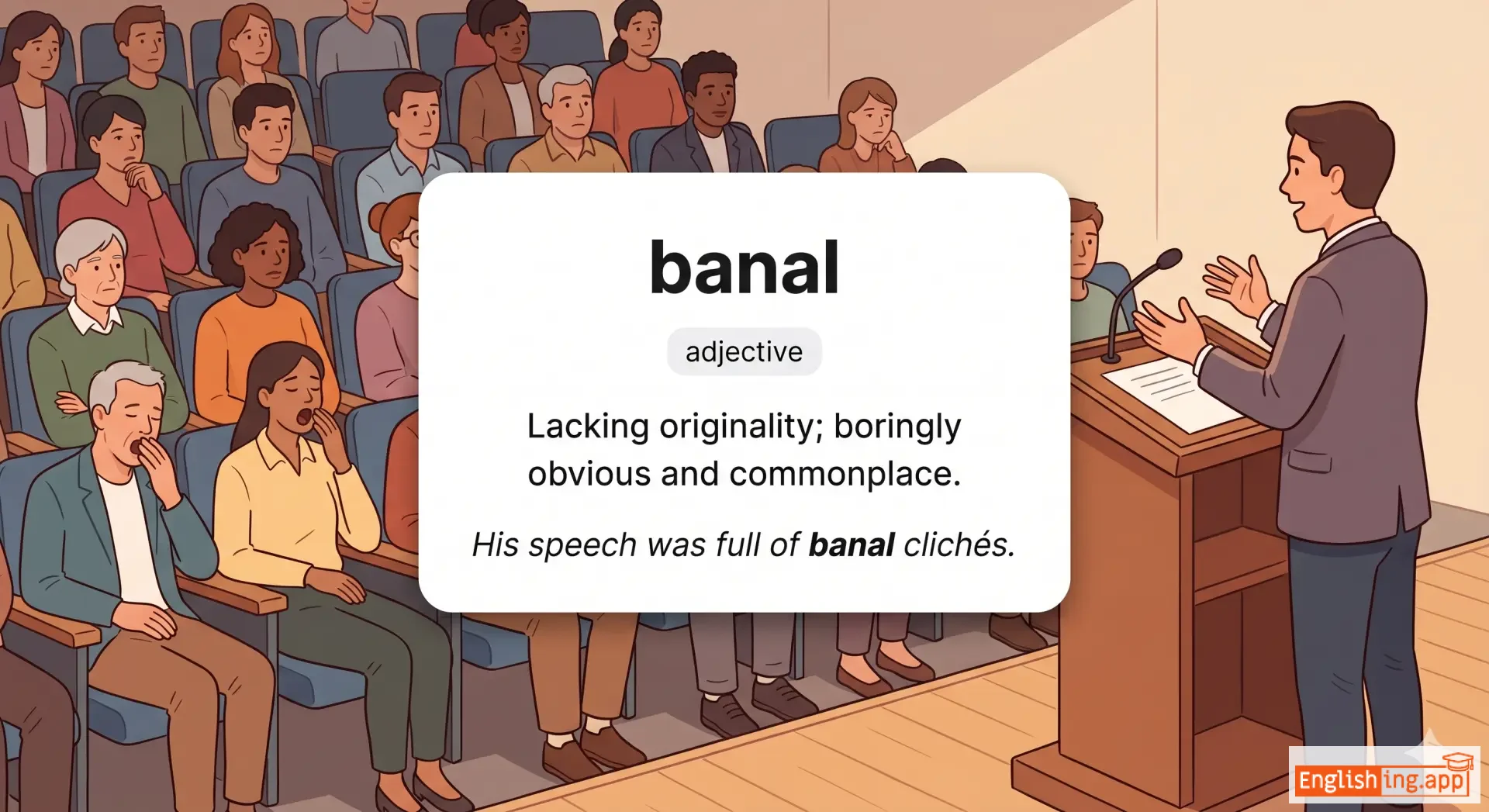
banal definition card — visual illustration of the meaning
adjective
/bəˈnɑːl/ or /ˈbeɪnəl/
平庸 (pingyong)

Lacking originality; boringly obvious and commonplace.

"His speech was full of banal clichés."

"他的演讲充满了平庸的陈词滥调。" (Tā de yǎnjiǎng chōngmǎnle píngyōng de chéncí làndiào.)
noun
/bəˈnæləti/
平凡 (pingfan)

The condition of being unoriginal, boring, or obvious; trite remark or quality.

"The speech was criticized for its banality and lack of originality."

"这篇演讲因其平凡和缺乏原创性而受到批评。" (Zhe pian yanjiang yinqi pingfan he quefa chuangzuo xing er shoudao piping.)
noun
/bəˈnænə/
幸福 (xingfu)

a long curved fruit with a yellow skin and soft sweet flesh inside

"She ate a ripe banana for breakfast."

"当她收到奖项时,她无法掩饰自己的幸福。" (Dāng tā shōudào jiǎngxiàng shí, tā wúfǎ yǎnshì zìjǐ de xìngfú.)
noun
/bænd/
乐队 (yue dui)

a group of musicians who play music together

"The band performed live at the concert."

"乐队在音乐会上现场表演。" (Yue dui zai yinyuehui shang xianchang biaoyan.)
noun, verb
/ˈbændɪdʒ/
绷带 (beng dai)

a strip of material used to cover or protect a wound; to cover or wrap a wound with such material

"The nurse carefully bandaged his injured arm."

"护士给他受伤的手臂包扎了。" (Hushi gei ta shoushang de shoubi baozha le)
noun
/bænˈdænə/
大彩色头巾 (dà cǎisè tóujīn)

A large, often brightly colored handkerchief, typically worn on the head or around the neck.

"He tied a red bandanna around his neck."

"他把一条红色的头巾绑在脖子上。" (Tā bǎ yītiáo hóngsè de tóujīn bǎng zài bózi shàng.)
bandwidth definition card — visual illustration of the meaning
noun
ˈbænd.wɪdθ
带宽 (daikuan)

A range of frequencies within a given band, in particular that used for transmitting a signal; the maximum amount of data that can be transmitted in a fixed amount of time.

"Increasing bandwidth enhances internet speed."

"增加带宽可以提升互联网速度。" (zengjia daikuan keyi tisheng hulianwang sudu.)
💬

bandy

verb
/ˈbændi/

To pass (words, ideas, or gossip) back and forth in a casual or argumentative way.

"They bandied jokes across the table."

noun
/beɪn/
祸根 (huogen)

A cause of great distress, harm, or annoyance.

"Traffic jams are the bane of city life."

"交通堵塞是城市生活的祸根。" (Jiāotōng dǔsè shì chéngshì shēnghuó de huogen.)
adjective
/ˈbeɪnfəl/
有害的 (yǒuhài de)

Causing harm, ruin, or destruction; deadly or poisonous.

"His baneful influence ruined the community."

"他的有害影响摧毁了社区。" (Tā de yǒuhài yǐngxiǎng cuīhuǐle shèqū.)
noun
/bæŋ/
突然的响声; 强烈的撞击或打击 (tūrán de xiǎngshēng; qiángliè de zhuàngjí huò dǎjí)

a sudden loud noise; a hard blow or hit

"The door closed with a loud bang that woke everyone up."

"门关上时发出一声巨响,吵醒了所有人。" (Mén guān shàng shí fāchū yī shēng jù xiǎng, chǎo xǐngle suǒyǒu rén.)
noun
/ˈbæŋ.ɡəl/
手镯 (shǒuzhuó)

a rigid bracelet or anklet worn as jewelry

"She wore beautiful gold bangles on her wrists."

"她戴着漂亮的金手镯在手腕上。" (tā dàizhe piàoliang de jīn shǒuzhuó zài shǒuwàn shàng)
noun
/ˈbæn.jən/
背心 (beixin)

a sleeveless undergarment worn next to the skin; vest

"He put on a cotton banian under his shirt."

"他穿了一件棉质巴尼安在衬衫下。" (Ta chuan le yijian mianzhi banyan zai chenshan xia.)
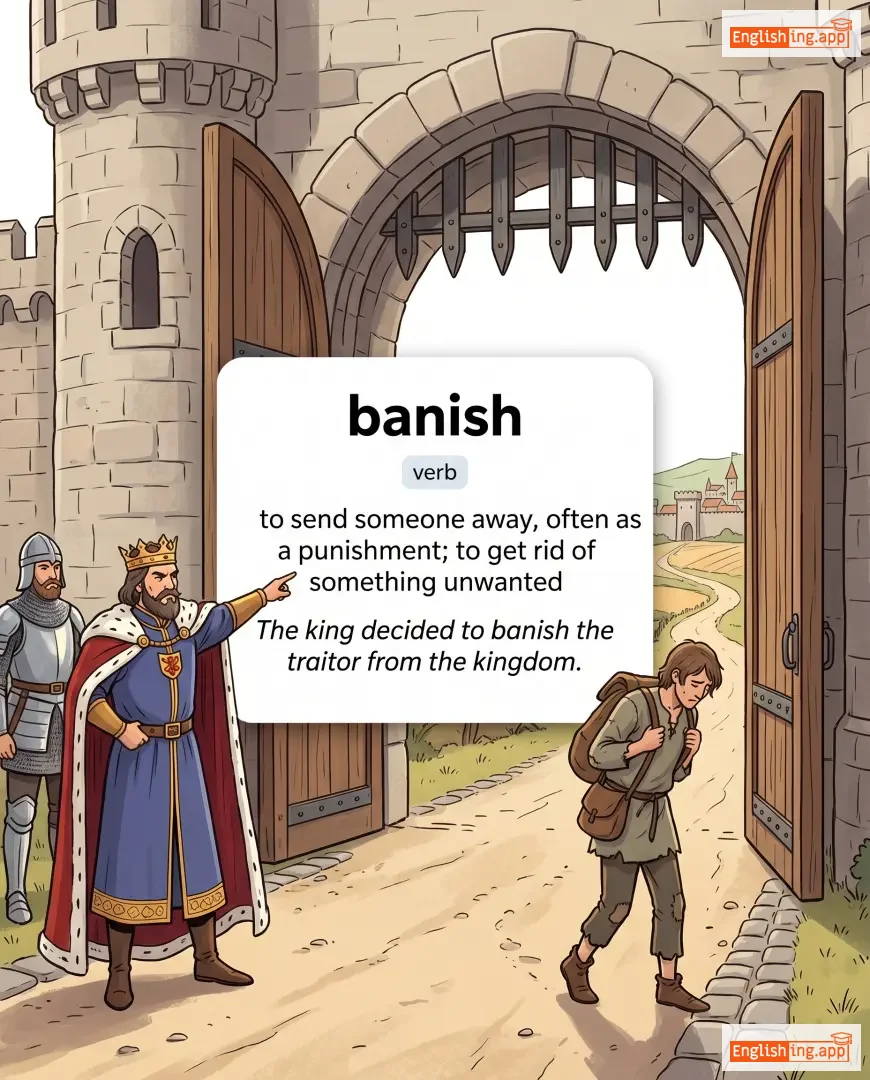
banish definition card — visual illustration of the meaning
verb
/ˈbænɪʃ/

to send someone away, often as a punishment; to get rid of something unwanted

"The king decided to banish the traitor from the kingdom."

noun
/ˈbænɪstər/
扶手栏杆 (fushou langgan)

a railing supported by posts at the side of a staircase or balcony

"She held the banister tightly while going down the stairs."

"她在下楼时紧紧抓住扶手栏杆。" (Tā zài xià lóu shí jǐn jǐn zhuā zhù fúshǒu lángān.)
noun/verb
/bæŋk/
银行 (yínháng)

an institution where money is kept and managed; or to tilt in movement (like an airplane or riverbank)

"She deposited the money in the bank."

"她把钱存入了银行。" (Tā bǎ qián cún rù le yínháng.)
noun
/ˈbæŋkər/
银行家 (yínhángjiā)

a person who works in or manages a bank

"The banker approved the loan after reviewing the documents."

"银行家在审查文件后批准了贷款。" (Yínhángjiā zài shěnchá wénjiàn hòu pīzhǔnle dàikuǎn.)
noun
/ˈbæŋkɪŋ/
银行业务或银行服务 (yínháng yèwù huò yínháng fúwù)

the business or services provided by a bank

"Online banking has made financial transactions easier."

"在线银行业务使金融交易变得更容易。" (Zàixiàn yínháng yèwù shǐ jīnróng jiāoyì biàn dé gèng róngyì.)
noun
/ˈbæŋkrʌpt/
破产 (pòchǎn)

a person unable to pay debts; having no money; completely lacking in something

"The company went bankrupt after years of poor financial management."

"公司在多年糟糕的财务管理后破产了。" (Gōngsī zài duōnián zāogāo de cáiwù guǎnlǐ hòu pòchǎnle.)
noun
/ˈbæŋkrʌptsi/
破产 (pòchǎn)

the state of being unable to pay debts owed, declared by a legal process

"The company declared bankruptcy after months of financial struggles."
"公司在经历了几个月的财务困难后宣布破产。" (Gōngsī zài jīnglìle jǐ gè yuè de cáiwù kùnnán hòu xuānbù pòchǎn.)
🖼️

banner

noun
/ˈbænər/

a large printed sign used for advertisements or announcements

"The company displayed a banner to advertise their new product."

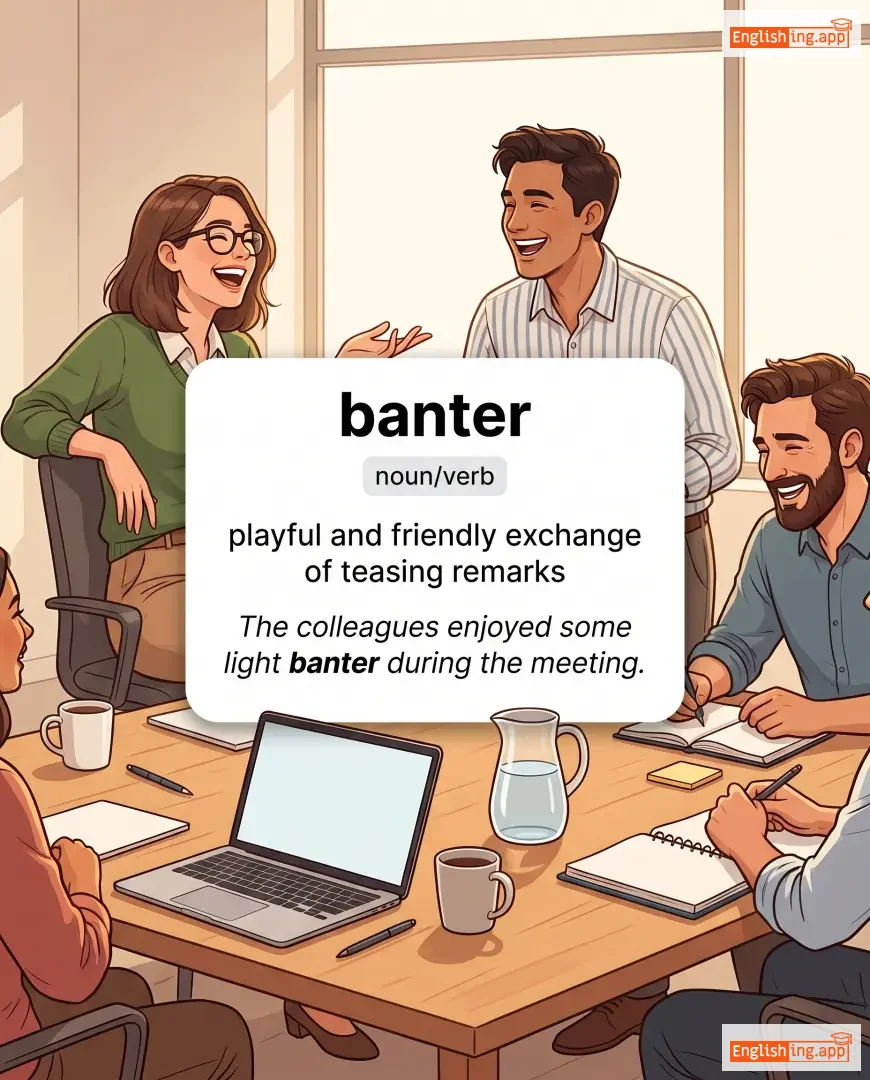
banter definition card — visual illustration of the meaning
noun/verb
/ˈbæntər/
打趣 (dǎqù)

playful and friendly exchange of teasing remarks

"The colleagues enjoyed some light banter during the meeting."

"同事们在会议期间享受了一些轻松的班特。" (Tóngshìmen zài huìyì qījiān xiǎngshòu le yīxiē qīngsōng de bāntè.)
adjective/verb
/ˈbæntərɪŋ/
开玩笑 (kaiwanxiao)

characterized by good-humored teasing or joking

"They had a bantering conversation at the café."

"他们在咖啡馆进行了幽默的对话。" (Tāmen zài kāfēi guǎn jìnxíngle yōumò de duìhuà.)
noun, verb
/bɑːr/
酒吧, 阻止 (jiuba, zuzhi)

a counter where drinks are served; to prevent or block

"They decided to meet at the bar after work."

"他们决定下班后在吧见面。" (Tamen jueding xiaban hou zai ba jianmian.)
noun
/bɑːrb/
刺, 尖锐的评论 (ci, jianrui de pinglun)

a sharp projection such as on a fishhook; a cutting remark

"The fishhook has a small barb to keep the fish from escaping."

"鱼钩上有一个小刺,以防止鱼逃脱。" (yuhook shang you yi ge xiao ci, yi fangzhi yu taotuo.)
noun
/ˈbɑːr.bər/
理发师 (lǐfàshī)

a person whose job is to cut men's hair and shave or trim beards

"The barber gave him a perfect haircut for his wedding."

"理发师为他的婚礼剪了一个完美的发型。" (Lǐfàshī wèi tā de hūnlǐ jiǎnle yīgè wánměi de fàxíng.)
noun
/bɑːrˈbeəriən/
野蛮人; 未开化者; (yěmán rén; wèi kāihuà zhě)

a person from an uncivilized group; someone who is cruel or brutal

"The ancient Romans considered anyone outside their empire to be barbarians."

"古罗马人认为所有在他们帝国之外的人都是野蛮人。" (Gǔ luómǎ rén rènwéi suǒyǒu zài tāmen dìguó zhī wài de rén dōu shì yěmán rén.)
noun
/ˈbɑːrbərɪzəm/
野蛮 (yěmán)

extreme cruelty or brutality; absence of culture and civilization

"The barbarism of the war crimes shocked the entire international community."

"战争罪行的野蛮行为震惊了整个国际社会。" (Zhànzhēng zuìxíng de yěmán xíngwéi zhènjīngle zhěnggè guójì shèhuì.)
adjective
/ˈbɑːr.bə.rəs/
野蛮的, 残忍的 (yěmán de, cánrěn de)

extremely cruel or uncivilized

"The prisoners were treated in a barbarous manner."

"囚犯们被以野蛮的方式对待。" (Qiúfàn men bèi yǐ yěmán de fāngshì duìdài.)
noun
/ˈbɑːr.kəˌroʊl/
巴尔卡罗尔 (balkaluoer)

a traditional Venetian boat song, often in 6/8 time

"The orchestra played a beautiful barcarole that reminded me of Venice."
"乐团演奏了一首美丽的巴尔卡罗尔,令我想起了威尼斯。" (yue tuan yanzou le yi shou mei li de balkaluoer, ling wo xiangqi le weinisi.)
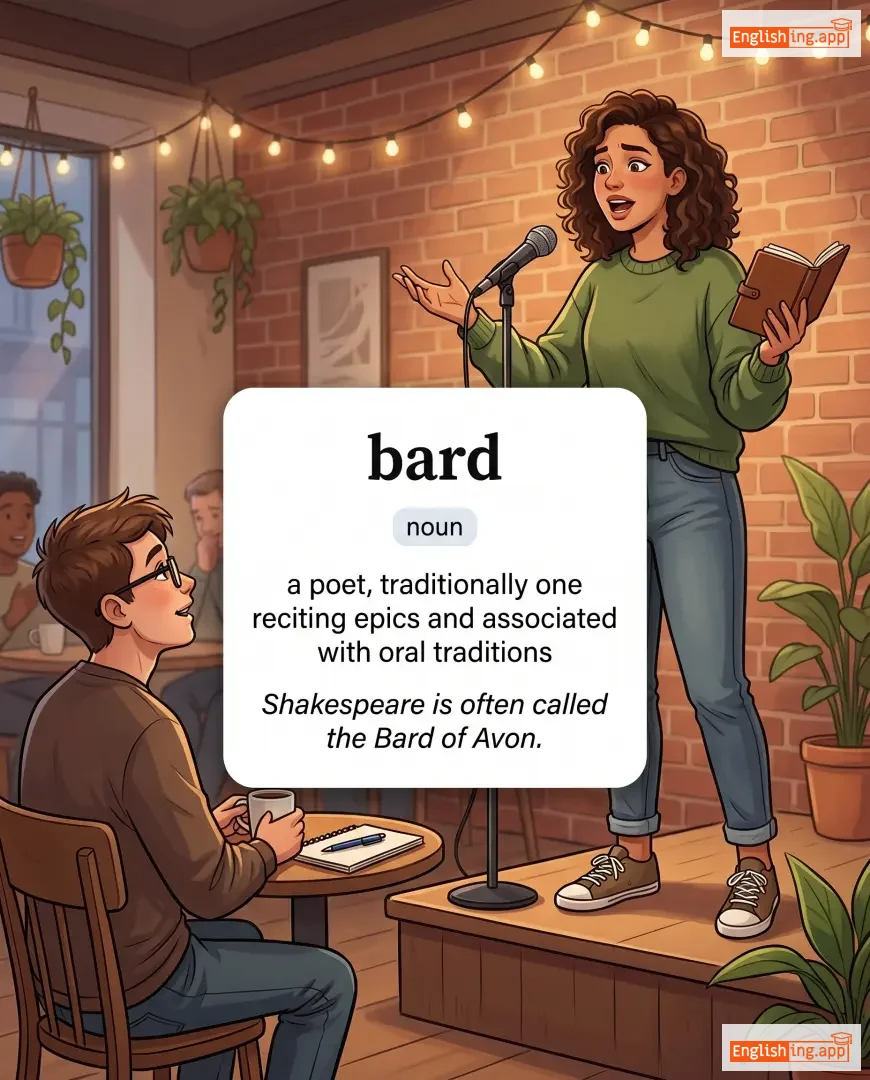
bard definition card — visual illustration of the meaning
noun
/bɑːrd/
诗人 (shiren)

a poet, traditionally one reciting epics and associated with oral traditions

"Shakespeare is often called the Bard of Avon."

"莎士比亚常被称为艾文的诗人。" (Shāshìbǐyà cháng bèi chēng wèi ài wén de shīrén.)
adjective
/beər/
(luo)

not covered by any clothing or decoration; simple and without addition

"He walked on the beach with bare feet."

"他赤脚走在沙滩上。" (Tā chìjiǎo zǒu zài shātān shàng.)
adjective
/ˈbɛərˌfeɪst/
厚颜无耻 (hòu yán wú chǐ)

shameless and undisguised; openly bold or unashamed

"He told a barefaced lie in front of everyone."

"他在大家面前说了个厚颜无耻的谎言。" (Tā zài dàjiā miànqián shuōle gè hòu yán wú chǐ de huǎngyán.)
adverb
/ˈbɛərli/
勉强 (miǎnqiǎng)

only just; almost not

"She barely passed the exam."

"她勉强通过了考试。" (Tā miǎnqiǎng tōngguòle kǎoshì.)
noun
/ˈbɛərnəs/
赤裸 (chilu)

the state of being bare or uncovered; lack of decoration, warmth, or concealment

"The bareness of the room made it feel cold and unwelcoming."

"房间的赤裸感让人觉得寒冷而不友好。" (fangjian de chilu gan rang ren juede hanleng er bu youhao)
bargain definition card — visual illustration of the meaning
noun, verb
/ˈbɑːrɡən/
交易 / 便宜货 (jiaoyi / pianyi huo)

an agreement between two or more parties; something bought at a good price

"We managed to get the car at a real bargain."

"我们设法以真正的便宜价格买到了车。" (Women shefa yi zhenzheng de pianyi jiage mai dao le che.)
noun
/ˈbærɪˌtoʊn/
低沉的男声 (dīchén de nánshēng)

a male singing voice between tenor and bass

"The singer’s baritone voice impressed the audience."
"歌手的男中音给观众留下了深刻印象。" (Gēshǒu de nán zhōng yīn gěi guānzhòng liúxià le shēnkè yìnxiàng.)
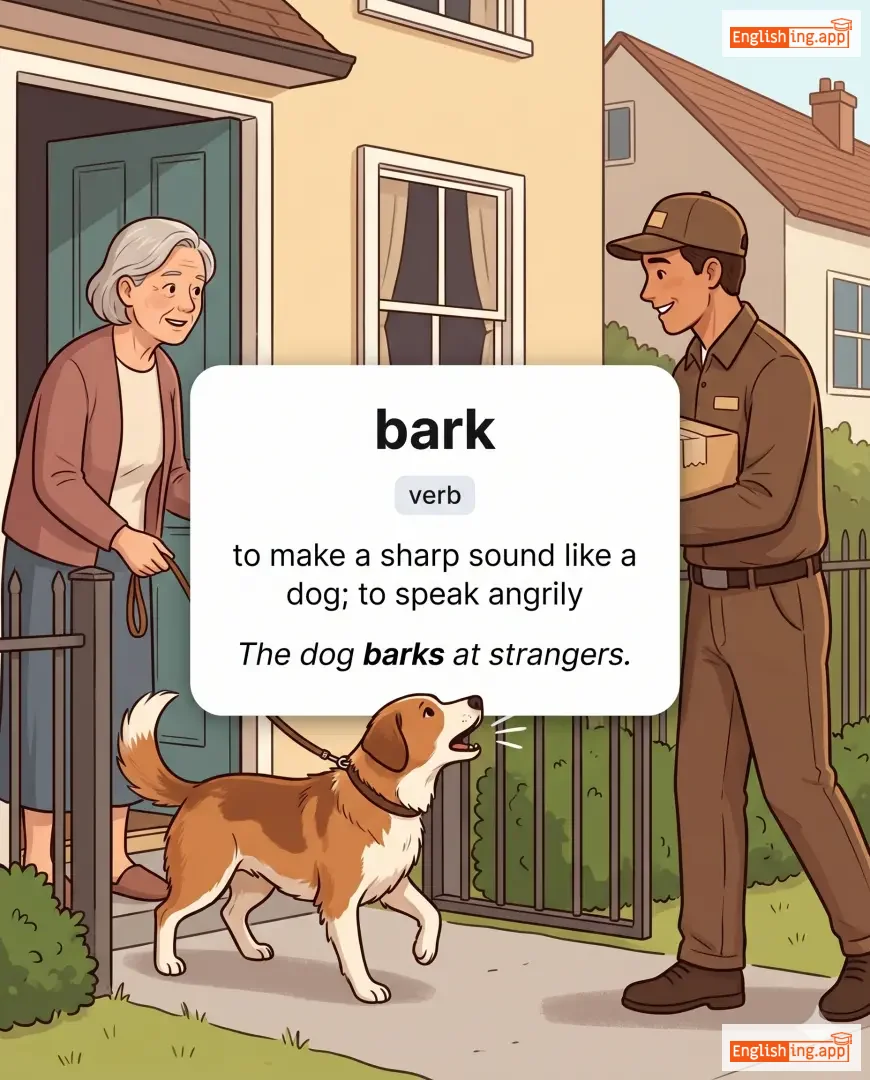
bark definition card — visual illustration of the meaning
verb
/bɑːrk/
吠叫 (feijiao)

to make a sharp sound like a dog; to speak angrily

"The dog barks at strangers."

"狗对陌生人大叫。" (Gǒu duì mòshēngrén dàjiào.)
noun
/ˈbɑː.li/
大麦 (dà mài)

a cereal grain used for food, brewing beer, and animal feed

"The farmer harvested barley from his fields in autumn."

"农民在秋天从他的田地里收获了大麦。" (Nóngmín zài qiūtiān cóng tā de tiándì lǐ shōuhuòle dà mài.)
noun
/bɑːn/
谷仓 (gǔ cāng)

a large building used for storing grain or housing farm animals

"The farmer keeps his cows in the barn."

"农民把他的牛放在谷仓里。" (nóngmín bǎ tā de niú fàng zài gǔ cāng lǐ)