词汇表

英语词汇词典 | 单词含义、定义和示例

noun
/ˈbʌskɪn/
厚底靴 (hòu dǐ xuē)

A type of thick-soled boot that reaches halfway to the knee; also associated with tragic drama in ancient times.

"The actor wore a buskin as part of his classical costume."

"那位演员穿着巴斯金鞋子作为他经典服装的一部分。" (Nà wèi yǎnyuán chuānzhuó bāsījīn xiézi zuòwéi tā jīngdiǎn fúzhuāng de yībùfen.)
💥

bust

noun/verb
/bʌst/

As a noun: A sculpture of a person's head, shoulders, and chest; As a verb: To break, smash, or arrest.

"The police busted the gang last night."

verb, noun
/ˈbʌsəl/
喧嚣, 忙碌 (xuanxiao, manglu)

to move in an energetic or noisy manner; busy activity in a place

"The marketplace bustled with vendors and customers."

"市场充满了小贩和顾客。" (Shichang chongman le xiaofan he guke.)
adjective
/ˈbʌsti/
胸部丰满的 (xiong bu feng man de)

having a large or full bust; describing a woman with a prominent chest

"The actress was often described as busty in fashion magazines."

"这位女演员在时尚杂志中常被形容为胸部丰满的。" (Zhe wei nv yanyuan zai shishang zazhi zhong chang bei xingrong wei xiong bu feng man de)
adjective
/ˈbɪzi/
忙碌 (mánglù)

actively engaged in work or activity; occupied

"He is too busy to answer the phone."

"他太忙了,无法接电话。" (Tā tài máng le, wúfǎ jiē diànhuà.)
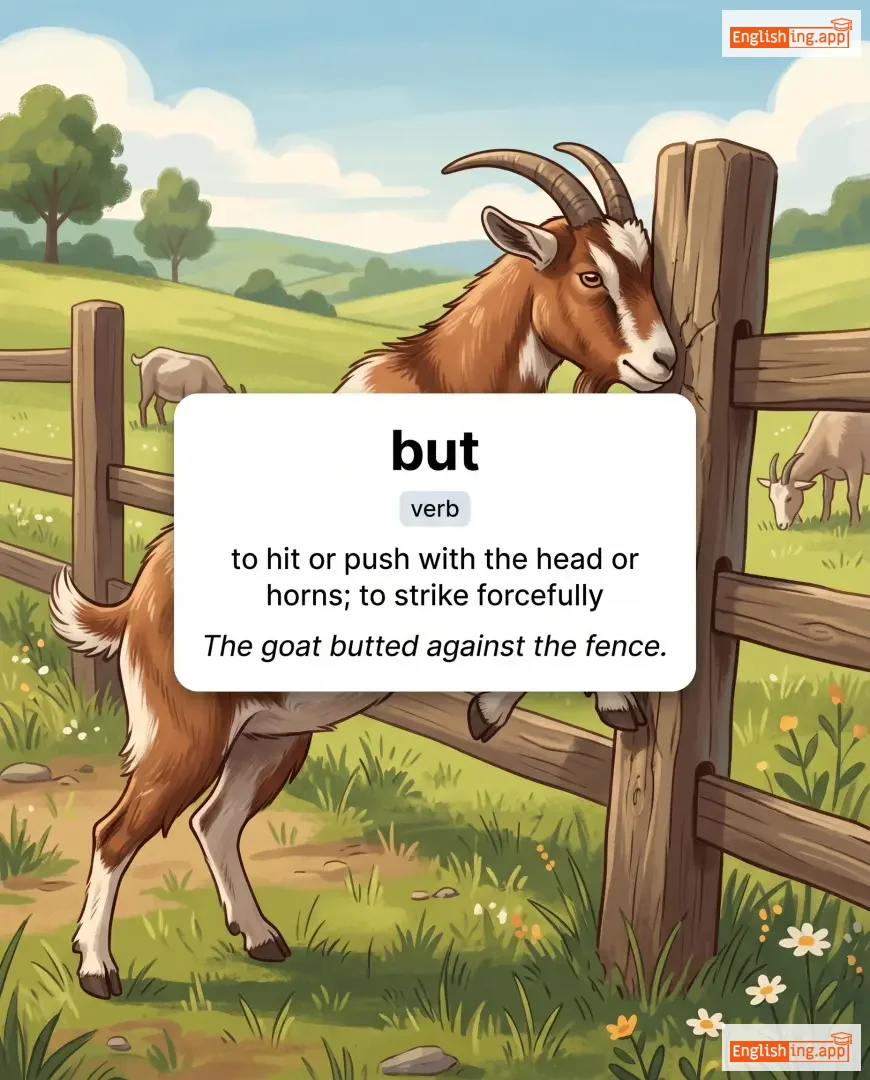
but definition card — visual illustration of the meaning
conjunction
/bʌt/
但是 (danshi)

used to introduce a phrase or clause contrasting with what has already been mentioned

"She wanted to go out, but it was raining heavily."

"她想出去,但外面下大雨。" (Ta xiang chuqu, danshi waimian xia dayu.)
noun
/ˈbʊt.ʃər/
屠夫 (túfū)

a person whose job is cutting up and selling meat in a shop

"The butcher recommended the best cut of beef for our dinner."

"屠夫推荐了我们晚餐的最佳牛肉切块。" (Túfū tuījiànle wǒmen wǎncān de zuìjiā niúròu qiē kuài.)
🐐

butt

noun, verb
/bʌt/

to hit or push with the head or horns; the end part of something, especially a cigarette

"The goat butted the fence with its horns."

noun
/bjuːt/
孤山 (gushan)

an isolated hill with steep sides and a flat top, common in arid regions

"The travelers could see a tall butte rising in the desert."

"旅行者们能看到沙漠中一座高耸的孤山。" (Lvxingzhe men neng kandao shamo zhong yi zuo gaosong de gushan.)
noun, verb
/ˈbʌtər/

a pale yellow edible fat made from cream; to spread butter on something

"She buttered a slice of bread before eating."

noun
/ˈbʌt.ər fɪʃ/
黄油鱼 (huang you yu)

a small, smooth-skinned marine fish

"The butter-fish is popular in Bengali cuisine."

"黄油鱼在孟加拉菜中很受欢迎。" (huang you yu zai meng jia la cai zhong hen shou huan ying)
noun
/ˈbʌt.ər.flaɪ/
蝴蝶 (hudie)

a flying insect with large colorful wings

"The beautiful butterfly landed on the flower."

"美丽的蝴蝶停在花朵上。" (Měilì de húdié tíng zài huāduǒ shàng.)
noun
/ˈbʌtərflaɪ/
蝴蝶 (hudie)

an insect with large, often brightly colored wings that flies during the day

"A beautiful butterfly landed on the flower."

"一只美丽的蝴蝶停在花上。" (Yī zhī měilì de húdié tíng zài huā shàng.)
noun
/ˈbʌt.ə.flaɪ piː/
蝴蝶豆 (húdié dòu)

a blue flowering plant with butterfly-shaped flowers, used to make herbal tea

"Butterfly pea flowers turn tea into a beautiful blue color."
"蝴蝶豆花将茶水染成美丽的蓝色。" (húdié dòu huā jiāng chá shuǐ rǎn chéng měilì de lán sè.)
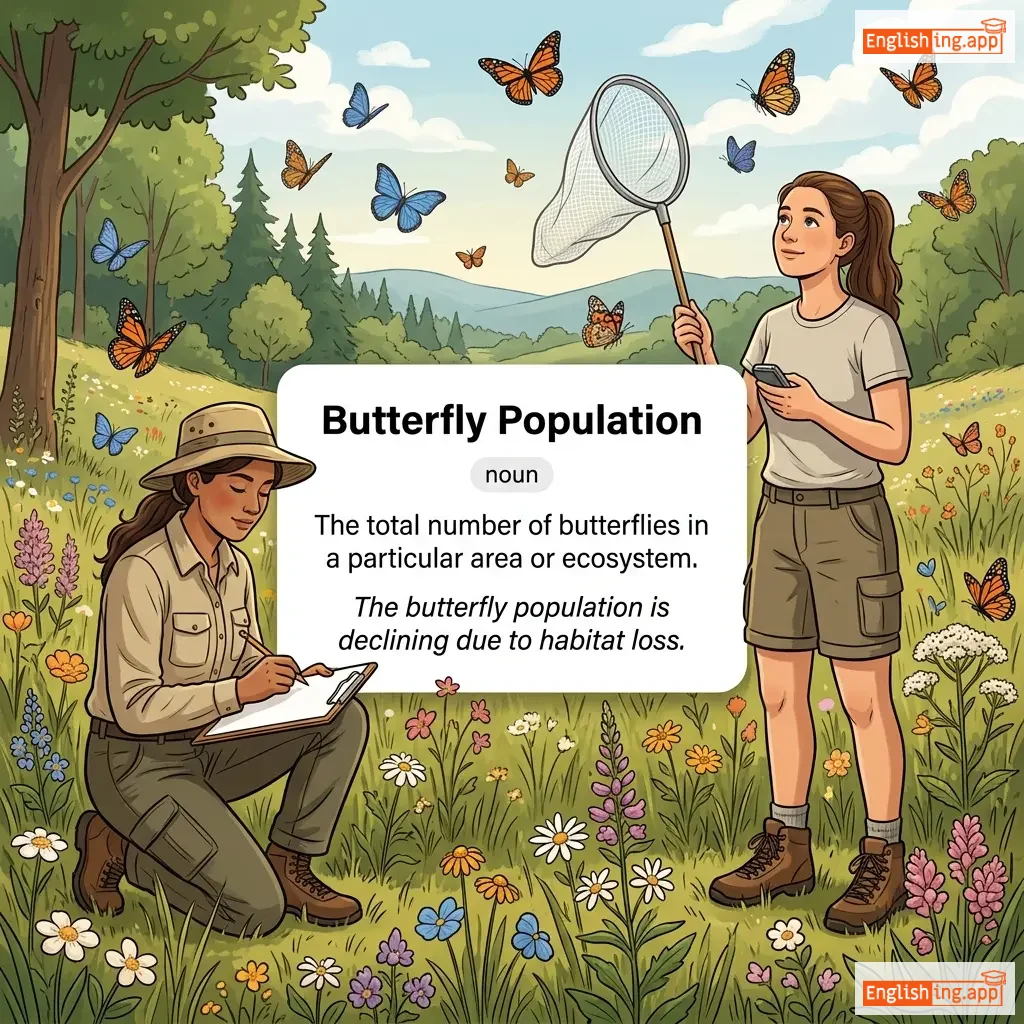
Butterfly Population definition card — visual illustration of the meaning
noun
ˈbʌtərflaɪ ˌpɒpjəˈleɪʃən
蝴蝶种群 (hudie zhongqun)

The total number of butterflies in a particular area or ecosystem.

"The butterfly population is declining due to habitat loss."
"由于栖息地丧失,蝴蝶种群正在减少。" (Youyu qixi di sangshi, hudie zhongqun zhengzai jianshao.)
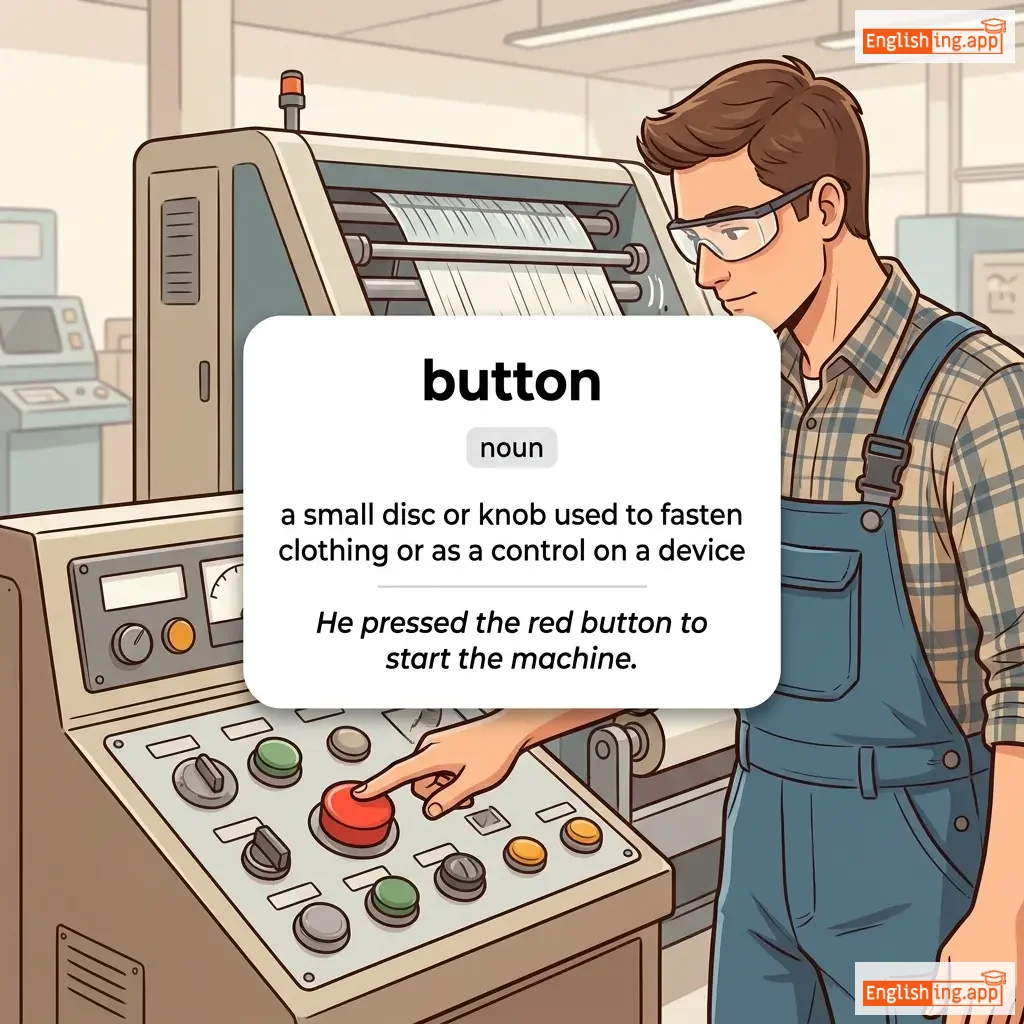
button definition card — visual illustration of the meaning
noun
/ˈbʌtən/
按钮 (anniu)

a small disc or knob used to fasten clothing or as a control on a device

"He pressed the red button to start the machine."
"他按下了红色按钮以启动机器。" (Tā àn xiàle hóngsè ànniǔ yǐ qǐdòng jīqì.)
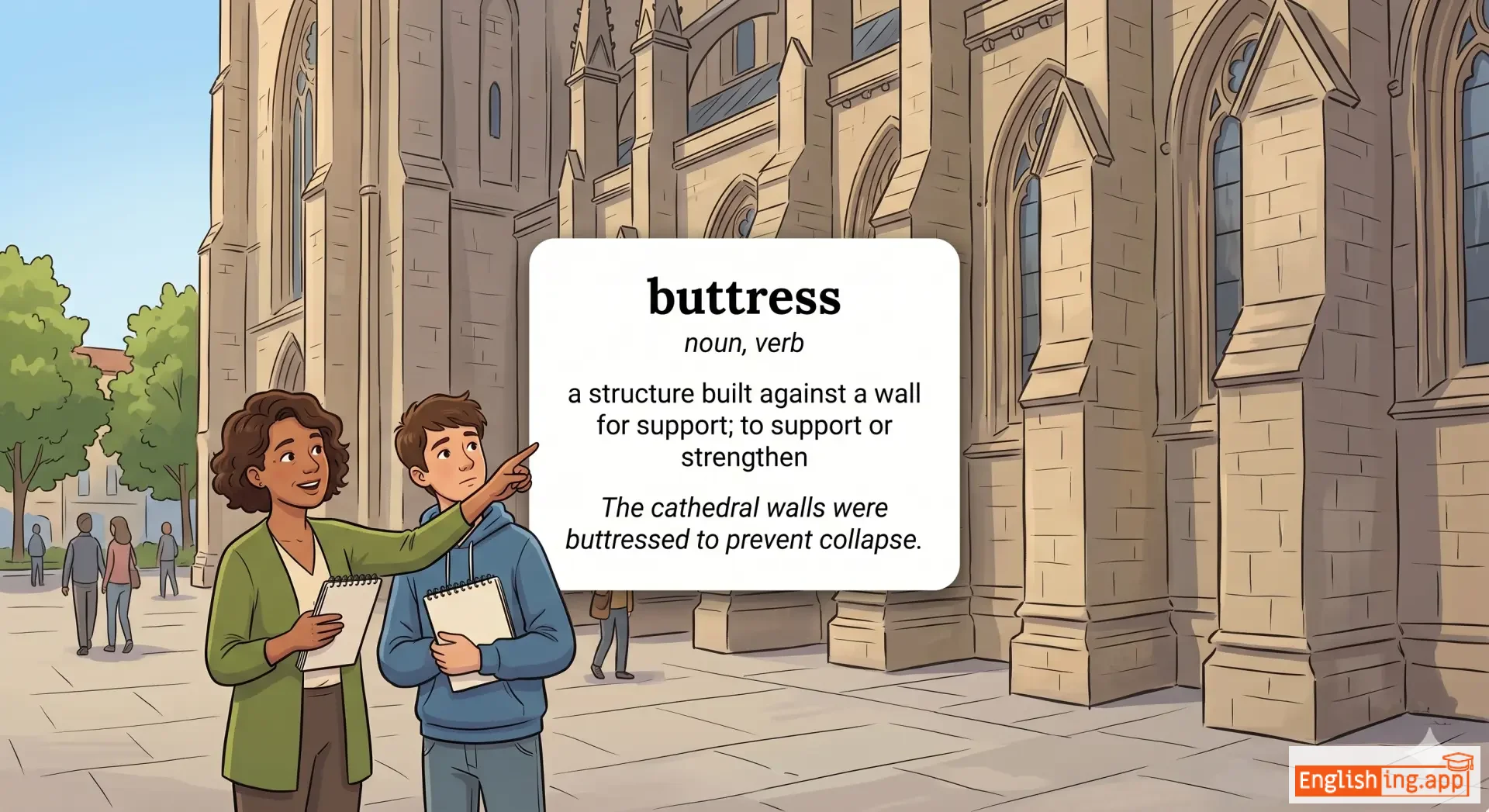
buttress definition card — visual illustration of the meaning
noun, verb
/ˈbʌtrəs/
扶壁,支撑 (fú bì, zhīchēng)

a structure built against a wall for support; to support or strengthen

"The cathedral walls were buttressed to prevent collapse."

"大教堂的墙壁被支撑以防止倒塌。" (Dà jiàotáng de qiángbì bèi zhīchēng yǐ fángzhǐ dǎotā.)
👩‍🦰

buxom (baksom)

adjective
/ˈbʌksəm/
丰满且迷人的女性 (fengman qie miren de nuxing)

Plump, with a full figure and often large-breasted, especially used to describe women.

"The actress was described as a cheerful and buxom woman."

"这位女演员被描述为一个快乐且丰满的女性。" (Zhe wei nüyǎnyuán bèi miáoshù wéi yīgè kuàilè qiě fengmǎn de nǚxìng.)
buy definition card — visual illustration of the meaning
verb
/baɪ/
(mai)

to acquire something in exchange for money

"She went to the market to buy fresh vegetables."

"她去市场买新鲜蔬菜。" (Ta qu shichang mai xinxian shucai.)
noun
/ˈbaɪər/
买家 (maijia)

a person who makes a purchase

"The buyer inspected the car before making payment."

"买家在付款之前检查了这辆车。" (Maijia zai fukuan zhīqián jiǎnchále zhè liàng chē.)
noun, verb
/bʌz/
嗡嗡声 (weng weng sheng)

to make a low continuous humming sound; a feeling of excitement or interest

"I could hear the phone buzz during the meeting."

"开会时我听到了手机的嗡嗡声。" (Kaihui shi wo tingdao le shouji de wengweng sheng)
preposition
/baɪ/
通过 (tongguo)

indicating the agent performing an action, or the means of achieving something

"The book was written by a famous author."

"这本书是通过一位著名的作者写的。" (Zhe ben shu shi tongguo yi wei zhuming de zuozhe xie de.)
noun
/ˈbaɪ.lɔː/
地方性法规 (dìfāngxìng fǎguī)

A rule made by a company, organization, or local authority to control the actions of its members.

"The city council passed a new by-law regulating street vendors."

"市议会通过了一项新的地方法规,规范街头小贩。" (Shì yìhuì tōngguòle yī xiàng xīn de dìfāng fǎguī, guīfàn jiētóu xiǎofàn.)
interjection
/baɪ/
再见 (zaijian)

used to say goodbye; a short and informal farewell

"I said bye to her before leaving."

"离开前我对她说了再见。" (likai qian wo dui ta shuo le zaijian)
noun/adjective
/ˈbaɪ.ɡɒn/
过去的 (guoqu de)

Something belonging to an earlier time; past and no longer existing.

"He often talks about the traditions of bygone days."

"他经常谈论过去时代的传统。" (Tā jīngcháng tánlùn guòqù shídài de chuántǒng.)
noun
/ˈbaɪ.laɪn/
作者姓名行 (zuòzhě xìngmíng háng)

A line in a newspaper or magazine article that names the writer.

"Her byline appeared on the front page of the newspaper."

"她的名字出现在报纸的头版。" (Tā de míngzì chūxiàn zài bàozhǐ de tóubǎn.)
adjective
/ˈbɪz.ən.taɪn/ or /ˈbaɪ.zənˌtiːn/
复杂 (fuza)

Extremely complicated and detailed; relating to the Byzantine Empire or its style.

"The new tax regulations are so byzantine that few understand them."

"新的税收规定非常复杂,很少有人能理解。" (Xinde shuishou guiding feichang fuzha, hen shao you ren neng lijie.)