词汇表

英语词汇词典 | 单词含义、定义和示例

noun
/ˈbɪldɪŋ/
建筑 (jian zhu)

A structure with a roof and walls, such as a house, school, or office.

"The old building was renovated into a museum."

"这座旧建筑被翻新并改建为博物馆。" (Zhe zuo jiu jianzhu bei fanxin bing gaijian wei bowuguan.)
💡

bulb

noun
/bʌlb/

a rounded glass part of an electric lamp that produces light when lit; also an underground storage organ in some plants

"The light bulb burned out, so she replaced it with a new one."

adjective
/ˈbʌlbəs/
膨胀的 / 圆形的 (pángzhàng de / yuánxíng de)

Bulging, round, or swollen in shape; resembling a bulb.

"The frog had a bulbous nose and big eyes."

"青蛙有一个膨胀的鼻子和大眼睛。" (Qīngwā yǒu yīgè pángzhàng de bízi hé dà yǎnjīng.)
📦

bulge

noun, verb
/bʌldʒ/

A swelling or protruding part; to swell outward or protrude.

"The bag began to bulge with too many books inside."

noun, verb
/bʌlk/
大宗购买 / 质量 (dàzōng gòumǎi / zhìliàng)

The mass or large size of something; to gain mass or volume.

"He bought rice in bulk to save money."

"他为了省钱,买了大宗米。" (Tā wèile shěngqián, mǎile dàzōng mǐ.)
noun
/bʊl/
公牛 (gongniu)

a male animal of the cattle family; sometimes refers to a strong or aggressive man

"The bull charged across the field towards the red flag."

"公牛冲向田野上的红旗。" (Gongniu chongxiang tianye shang de hongqi.)
noun
/ˈbʊlɪt/
子弹 (zidan)

A small, metal projectile fired from a gun.

"The soldier loaded a bullet into his rifle."

"士兵把子弹装入他的步枪。" (Shibing ba zidan zhuangru tade buqiang.)
noun
/ˈbʊljən/
金或银的原料 (jin huo yin de yuanliao)

Gold or silver in bulk before being coined or made into jewelry.

"The bank stores gold bullion in its vaults."

"银行将金条储存在它的保险库中。" (Yinhang jiang jintiao chucun zai ta de baoxian ku zhong.)
noun
/ˈbʊlək/
耕牛 (gēngniú)

A young bull, especially a castrated one, raised for work or meat.

"The farmer used a bullock to plow the field."

"农民用一头耕牛犁田。" (Nóngmín yòng yī tóu gēngniú lítián.)
noun, verb
/ˈbʊli/
欺凌者 / 霸凌者 (qīlìng zhě / bàlíng zhě)

A person who habitually seeks to harm or intimidate those weaker; to intimidate or mistreat someone weaker.

"The teacher stopped the older boy from trying to bully his classmates."

"老师阻止了那个年纪较大的男孩,避免他试图欺负他的同学。" (Lǎoshī zǔzhǐle nàgè niánjì jiàodà de nánhái, bìmiǎn tā shìtú qīfù tā de tóngxué.)
noun
/ˈbʊlrʌʃ/
芦苇 (lúwěi)

A tall plant with long leaves that grows in or near water, also known as a cattail.

"The pond was surrounded by tall bulrushes swaying in the wind."

"池塘被高大的芦苇环绕,随风摇曳。" (chítáng bèi gāo dà de lúwěi huánrào, suí fēng yáoyè)
noun
/ˈbʊlwərk/
防线 (fangxian)

A strong wall or defensive structure; something that provides protection or support.

"The fortress walls served as a bulwark against enemy attacks."

"堡垒的墙壁作为抵御敌人攻击的防线。" (Baolei de qiangbi zuowei diyu dili zhandou de fangxian.)
noun
/bʌm/
臀部 (tún bù)

informal term for the buttocks; also a homeless or lazy person

"He sat on his bum all day doing nothing."

"他整天坐在臀部上什么都不做。" (Tā zhěng tiān zuò zài tún bù shàng shénme dōu bù zuò.)
adjective
/ˈbʌmblɪŋ/
笨拙 (bènzhuō)

Acting in a clumsy, awkward, or confused way.

"The bumbling waiter spilled the drinks on the table."

"那个笨拙的服务员把饮料撒在桌子上。" (Nàgè bènzhuō de fúwùyuán bǎ yǐnliào sā zài zhuōzi shàng.)
verb
/bʌmp/
撞击 (zhuàngjí)

To hit something or someone by accident; to knock against something.

"He accidentally bumped into the door."

"他不小心撞到了门。" (Tā bù xiǎoxīn zhuàng dào le mén.)
noun/adjective
/ˈbʌmpər/
保险杠 (baoxian gang)

A protective bar at the front or back of a vehicle; also used to describe something unusually large or successful.

"The farmer celebrated a bumper harvest this year."

"农民今年庆祝了一个丰收的年份。" (Nongmin jinian qingzhu le yige fengshou de nianfen.)
adjective
/ˈbʌmpʃəs/
自负的 (zìfù de)

Arrogantly self-assertive or conceited.

"The bumptious student interrupted the teacher several times."

"那个自负的学生打断了老师好几次。" (Nàgè zìfù de xuéshēng dǎduànle lǎoshī hǎo jǐ cì.)
adjective
/ˈbʌmpi/
崎岖不平的;颠簸的 (bumpy)

having an uneven surface; rough; jolting

"The bumpy road made the car ride very uncomfortable."

"颠簸的路让汽车的行驶变得非常不舒服。" (Diānbǒ de lù ràng qìchē de xíngshǐ biàn dé fēicháng bù shūfú.)
noun
/bʌn/
小圆包 (xiao yuan bao)

a small round bread roll, often sweet

"I bought fresh buns from the bakery this morning."

"我今天早上从面包店买了新鲜的小圆包。" (Wo jintian zaoshang cong miandiaodian mai le xinxian de xiao yuan bao.)
noun
/bʌntʃ/
一束 (yī shù)

a group of things that are fastened, held, or growing together

"She gave me a bunch of flowers for my birthday."

"她给了我一束花作为我的生日礼物。" (Tā gěi le wǒ yī shù huā zuòwéi wǒ de shēngrì lǐwù.)
noun
/ˈbʌn.dəl/
包裹; 捆 (bāoguǒ, kǔn)

a collection of things or quantity of material tied or wrapped up together

"The mailman delivered a bundle of letters to our house."

"邮递员把一包信送到了我们的家。" (Yóudìyuán bǎ yī bāo xìn sòng dào le wǒmen de jiā.)
verb
/ˈbʌŋɡəl/
搞砸 (gǎo zá)

To carry out a task clumsily or incompetently.

"He bungled the presentation and confused the audience."

"他搞砸了演示并让观众感到困惑。" (Tā gǎo zá le yǎn shì bìng ràng guān zhòng gǎn dào kùn huò.)
noun, verb
/ˈbʌŋkər/
地堡 (dibao)

a reinforced underground shelter; to place or store something in a protected place

"They hid in a bunker during the air raid."

"空袭期间他们躲在地堡里。" (kongxi qijian tamen duo zai dibao li)
noun/verb
/ˈbɔɪ/ or /ˈbuːi/
浮标, 保持漂浮 (fúbiāo, bǎochí piāofú)

A floating marker on water; to keep something afloat or encourage someone.

"The news buoyed their spirits after the loss."

"新闻在失落后提升了他们的精神。" (Xīnwén zài shīluò hòu tíshēngle tāmen de jīngshén.)
noun
/ˈbɔɪənsi/ or /ˈbuːjənsi/
浮力, 快乐 (fuli, kuaile)

The ability to float in a liquid; cheerfulness and optimism.

"Her natural buoyancy lifted the mood of the group."

"她自然的快乐提升了小组的氛围。" (Ta ziran de kuaile tisheng le xiaozu de fenwei.)
adjective
/ˈbɔɪənt/ or /ˈbuːjənt/
漂浮的,愉快的 (piaofu de, yukuaide)

Able to float easily; cheerful and optimistic.

"She remained buoyant despite the difficulties."

"她在困难面前依然保持乐观。" (Ta zai kunnan mianqian yiran baochi leguan.)
noun
/ˈbɜːrdn/
负担 (fùdān)

a heavy load, especially one that is difficult to carry

"The financial burden was too heavy for him to bear."

"财政负担对他来说太重了。" (Cáizhèng fùdān duì tā lái shuō tài zhòng le.)
noun
/ˈbjʊəroʊ/
办事处/机构 (banshichu/jigou)

An office or agency that provides services or manages specific duties.

"The travel bureau helped them plan their vacation."
"旅游局帮助他们规划假期。" (Luyou ju bangzhu tamen guihua jiaqi.)
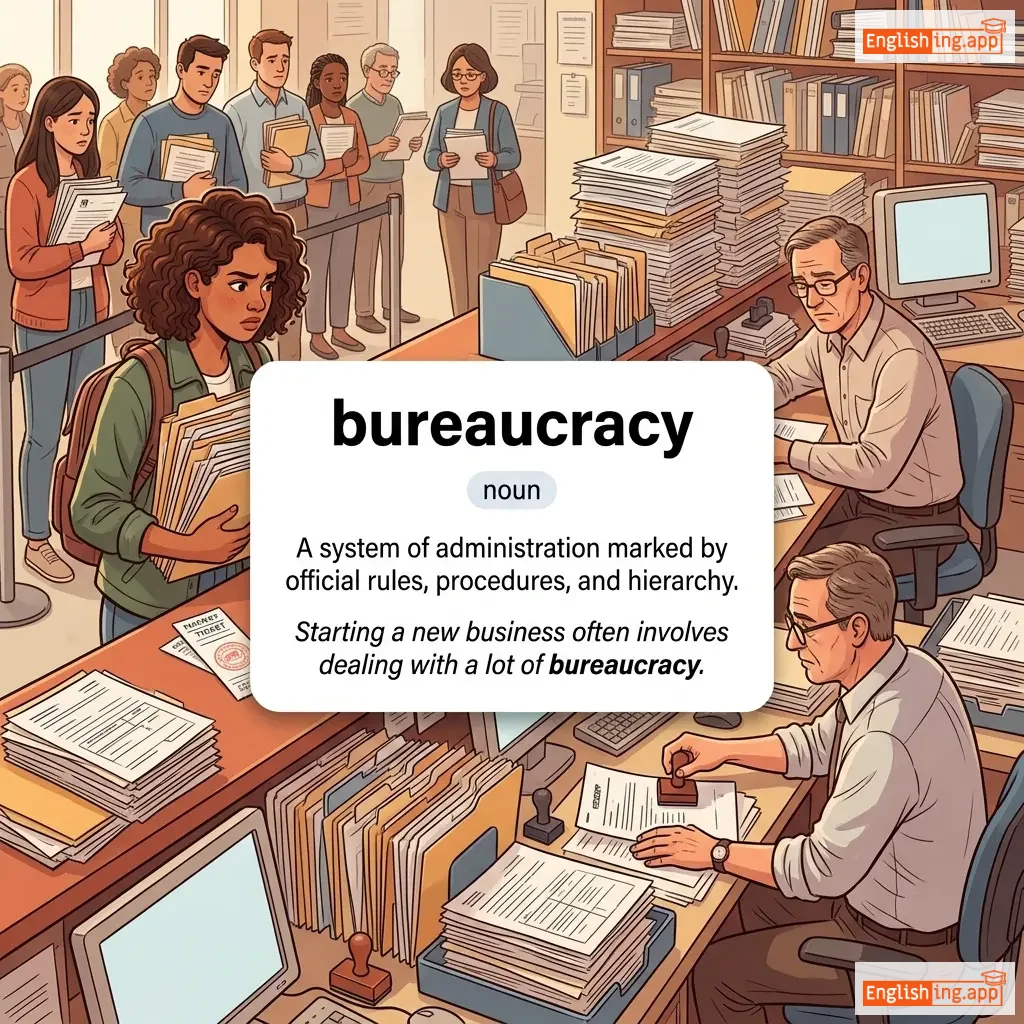
bureaucracy definition card — visual illustration of the meaning
noun
/bjʊˈrɒkrəsi/
官僚主义 (guanliaozhuyi)

A system of administration marked by official rules, procedures, and hierarchy.

"Starting a new business often involves dealing with a lot of bureaucracy."
"开办新企业通常涉及大量的官僚主义。" (Kaiban xin qiye tongchang shèjí dàliàng de guānliáozhǔyì.)
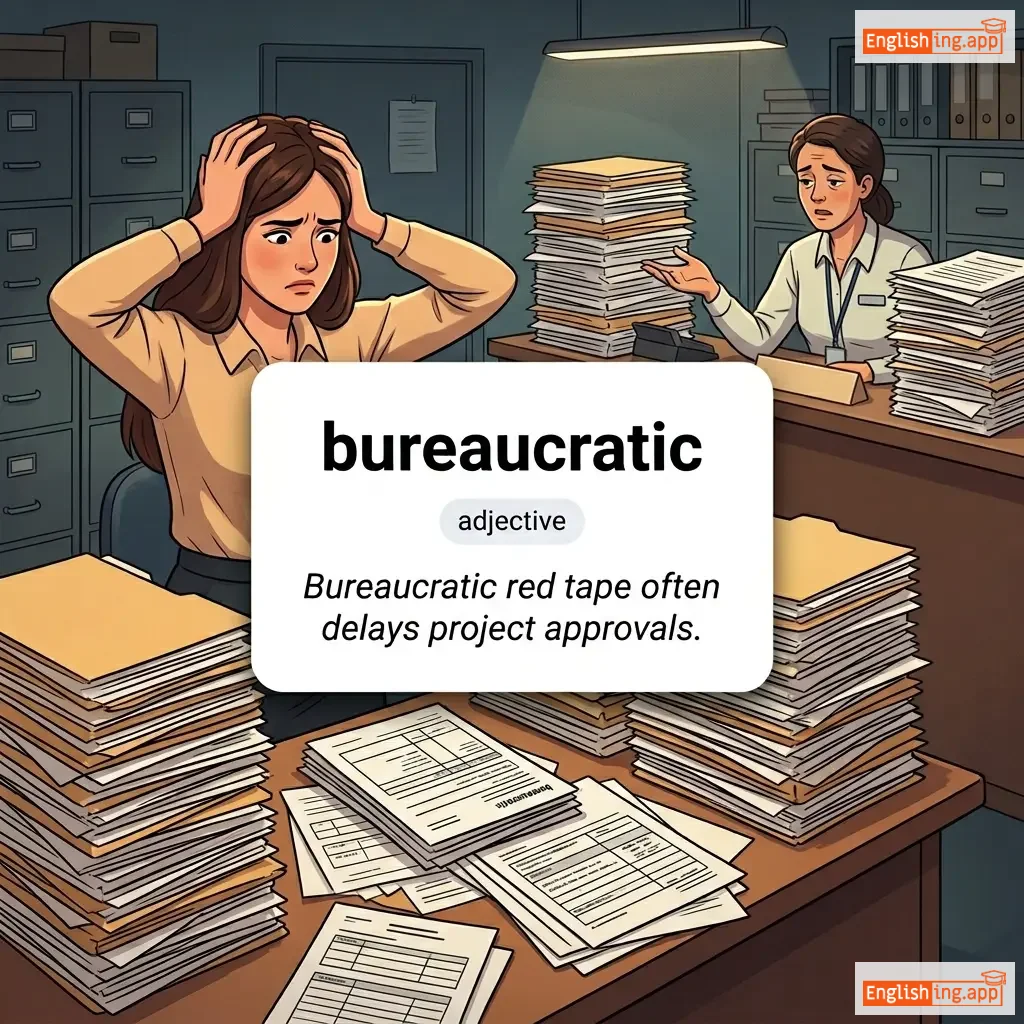
bureaucratic definition card — visual illustration of the meaning
adjective
ˌbjʊə.rəˈkræt.ɪk
官僚的 (guanliao de)

Involving or characterized by complex rules and procedures that can delay the achievement of goals.

"Bureaucratic red tape often delays project approvals."
"官僚主义的繁文缛节经常延误项目审批。" (guanliao zhuyi de fanwen rujie jingchang yanwu xiangmu shenpi.)
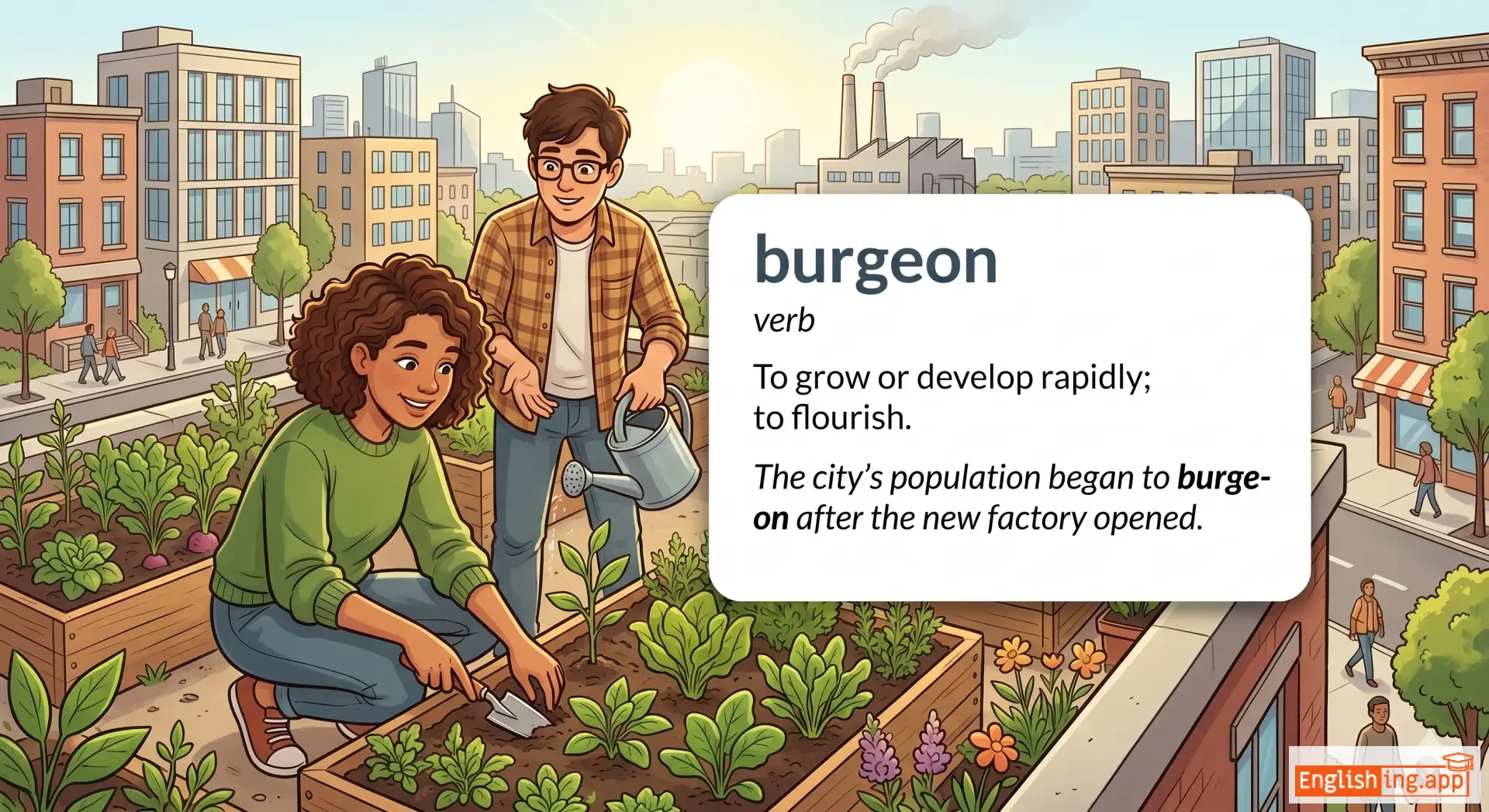
burgeon definition card — visual illustration of the meaning
verb
/ˈbɜːrdʒən/
快速增长 (kuàisù zēngzhǎng)

To grow or develop rapidly; to flourish.

"The city's population began to burgeon after the new factory opened."
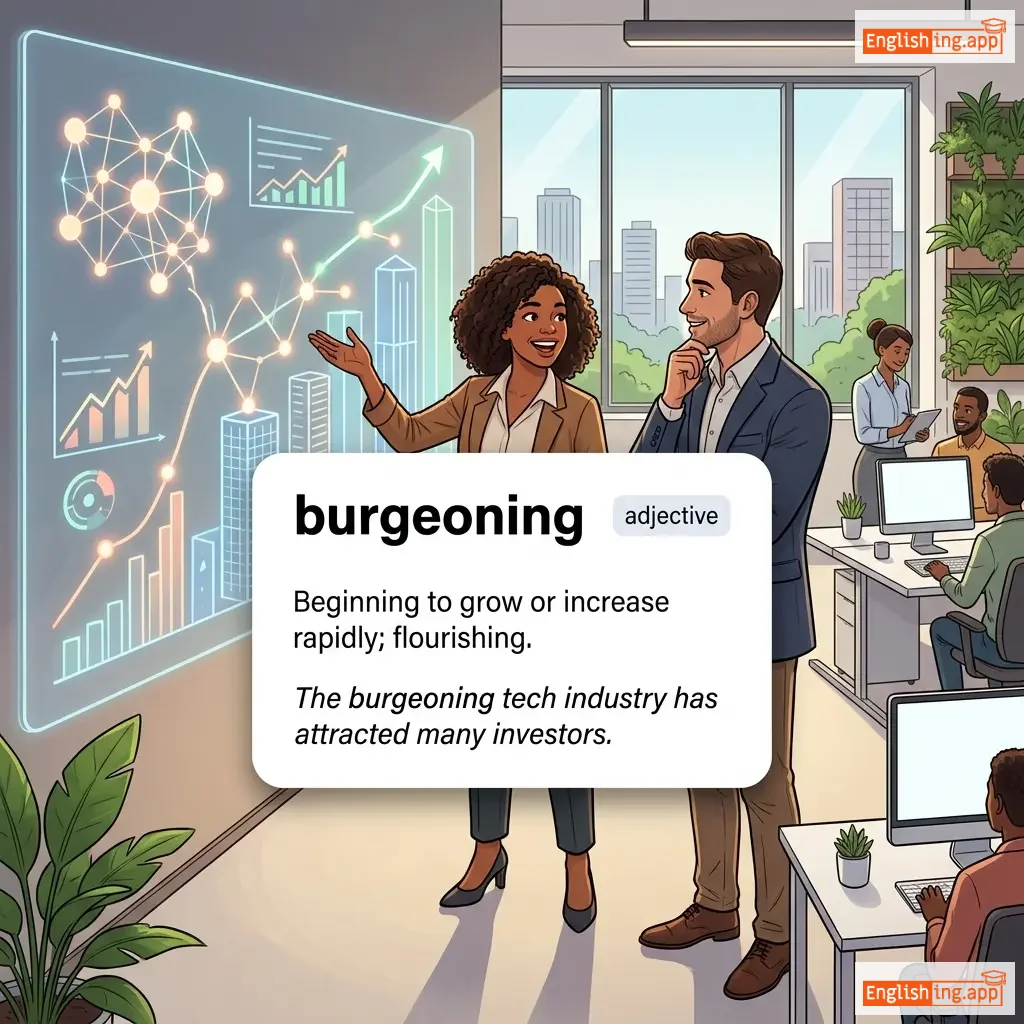
"这座城市的人口在新工厂开业后开始迅速增长。" (Zhèzuò chéngshì de rénkǒu zài xīn gōngchǎng kāi yè hòu kāishǐ xùnsù zēngzhǎng.)
burgeoning definition card — visual illustration of the meaning
adjective
ˈbɜːdʒənɪŋ
蓬勃发展 (péngbó fāzhǎn)

Beginning to grow or increase rapidly; flourishing.

"The burgeoning tech industry has attracted many investors."

"这个蓬勃发展的技术行业吸引了许多投资者。" (Zhège péngbó fāzhǎn de jìshù hángyè xīyǐnle xǔduō tóuzī zhě.)
🧑‍🤝‍🧑

burgess (bɜːrdʒɪs)

noun
/ˈbɜːrdʒɪs/
市民 (shimin)

A citizen of a town or borough with full rights of citizenship.

"In medieval times, a burgess had the right to vote and hold property."

"在中世纪,市民有投票权和拥有财产的权利。" (Zài zhōngshìjì, shìmín yǒu tóupiào quán hé yǒngyǒu cáichǎn de quánlì.)
noun
/ˈbɜːrɡər/
城市居民 (富裕的中产阶级) (chenshi jumin (fuyu de zhongchan jieji))

A citizen of a town, typically a member of the wealthy middle class.

"The burgher was respected as a prosperous merchant in the city."

"这个布尔戈被尊敬为城市中的繁荣商人。" (Zhege bu'er'ge bei zunjing wei chengshi zhong de fanrong shangren.)
noun
/ˈbɛriəl/
埋葬 (maizang)

the act of placing a dead body into the ground.

"The burial ceremony took place in the afternoon."
"埋葬仪式在下午举行。" (Maizang yishi zai xiawu juxing.)
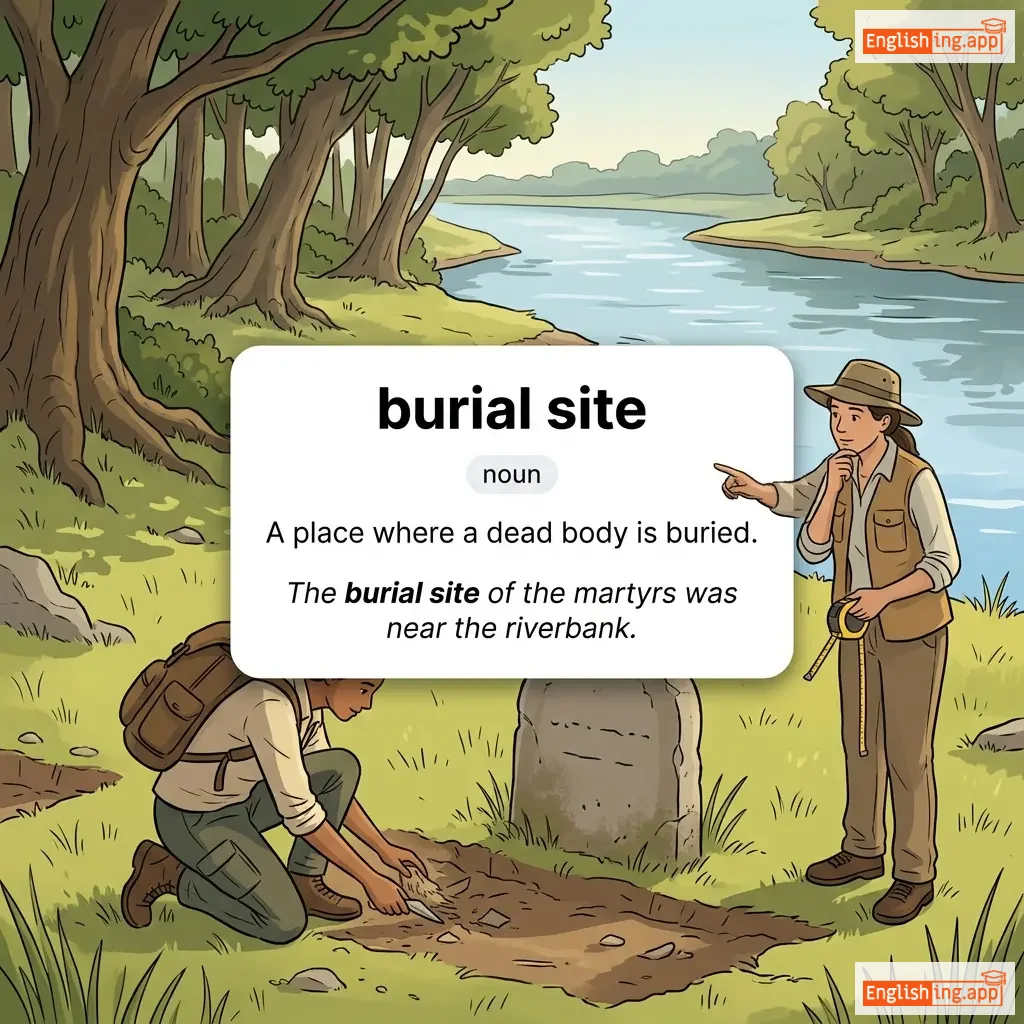
burial site definition card — visual illustration of the meaning
noun
ˈbɛriəl saɪt
埋葬地点 (mái zàng dì diǎn)

A place where a dead body is buried.

"The burial site of the martyrs was near the riverbank."

"烈士的埋葬地点靠近河岸。" (Liè shì de mái zàng dì diǎn kào jìn hé àn.)
noun
/bɜːrˈlɛsk/
滑稽模仿剧 (huá jī mó fǎng jù)

A humorous and exaggerated imitation of a serious work; a type of theatrical entertainment involving comedy and parody.

"The play was a clever burlesque of traditional opera."

"这出戏是对传统歌剧的巧妙滑稽模仿。" (Zhè chūxì shì duì chuántǒng gējù de qiǎomiào huá jī mó fǎng.)
burn definition card — visual illustration of the meaning
verb
/bɜːrn/
燃烧 (ranshao)

to destroy or damage by fire

"He accidentally burned the toast in the kitchen."
"他不小心在厨房里烧焦了烤面包。" (Tā bù xiǎoxīn zài chúfáng lǐ shāo jiāo le kǎo miànbāo.)
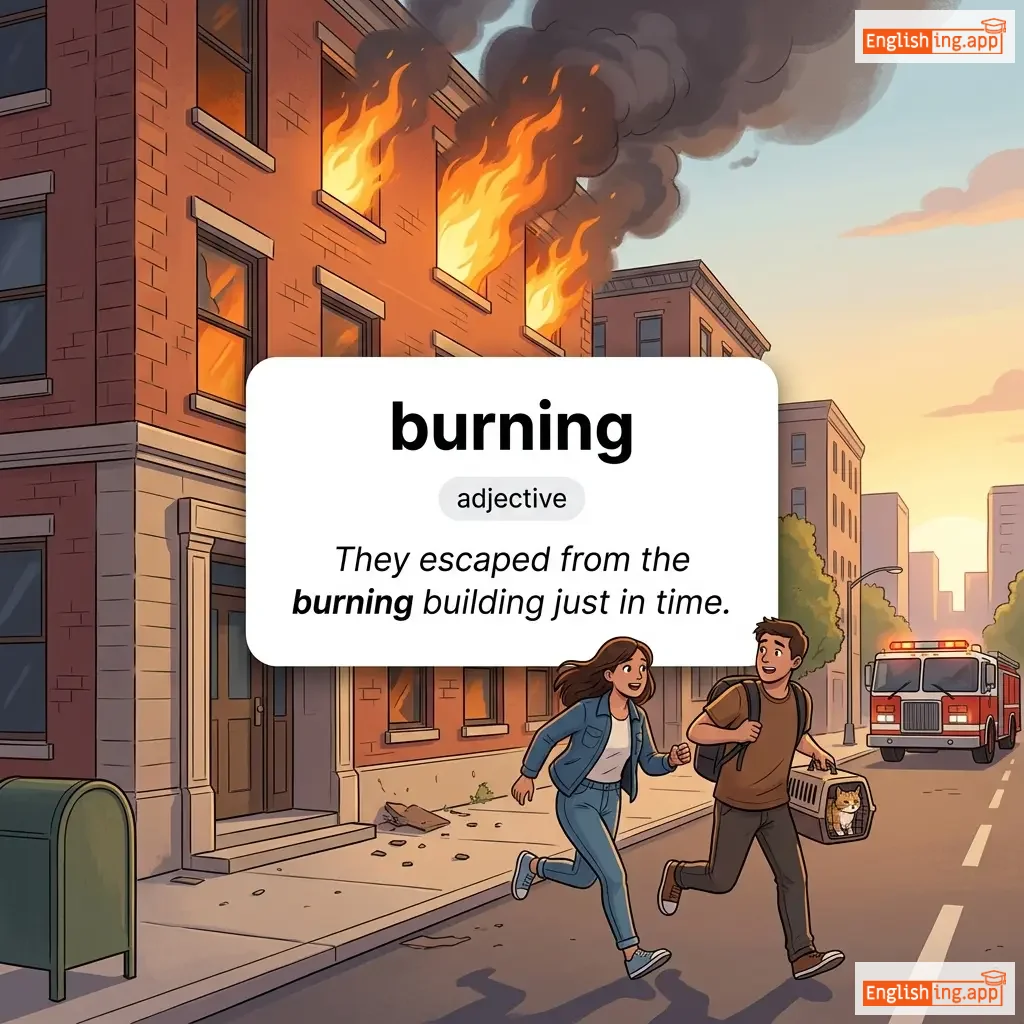
burning definition card — visual illustration of the meaning
adjective
/ˈbɜːnɪŋ/
燃烧 (ránshāo)

producing flames or intense heat; also used metaphorically for intense emotions or urgency

"They escaped from the burning building just in time."

"他们及时逃离了燃烧的建筑物。" (Tāmen jíshí táolí le ránshāo de jiànzhúwù.)
burnish definition card — visual illustration of the meaning
verb
/ˈbɜːrnɪʃ/

To polish something by rubbing; to enhance or improve.

"He burnished the old table until it shone."

noun
/ˈbɜːrsər/
财务主管 (caiwu zhuguan)

An official in a school or college responsible for financial affairs.

"The bursar approved the budget for the new library."
"财务主管批准了新图书馆的预算。" (Caiwu zhuguan pizhunle xin tushuguan de yusuan.)
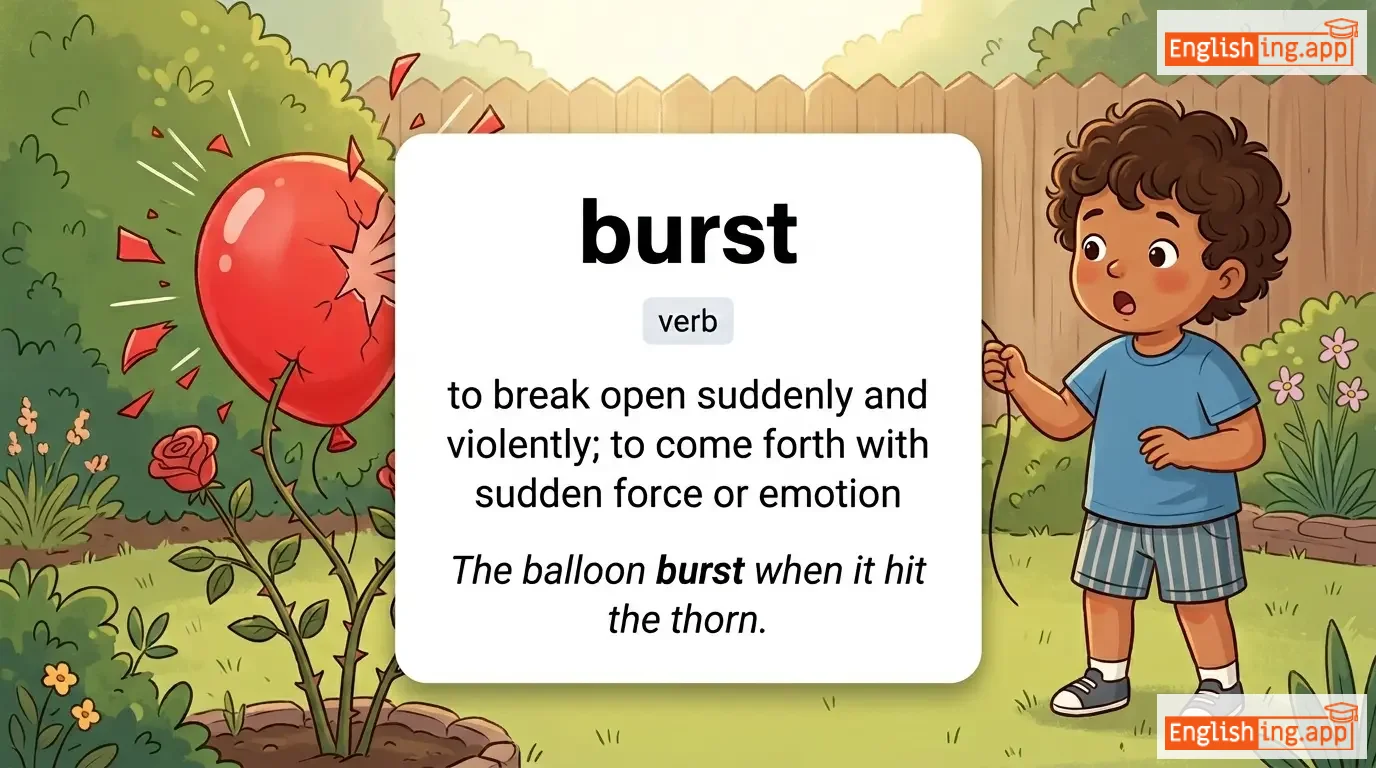
burst definition card — visual illustration of the meaning
verb
/bɜːst/
爆炸 (baozha)

to break open suddenly and violently; to come forth with sudden force or emotion

"The balloon burst when it hit the thorn."

"气球在撞到刺的时候爆炸了。" (Qiqiu zai zhuang dao ci de shihou baozha le.)
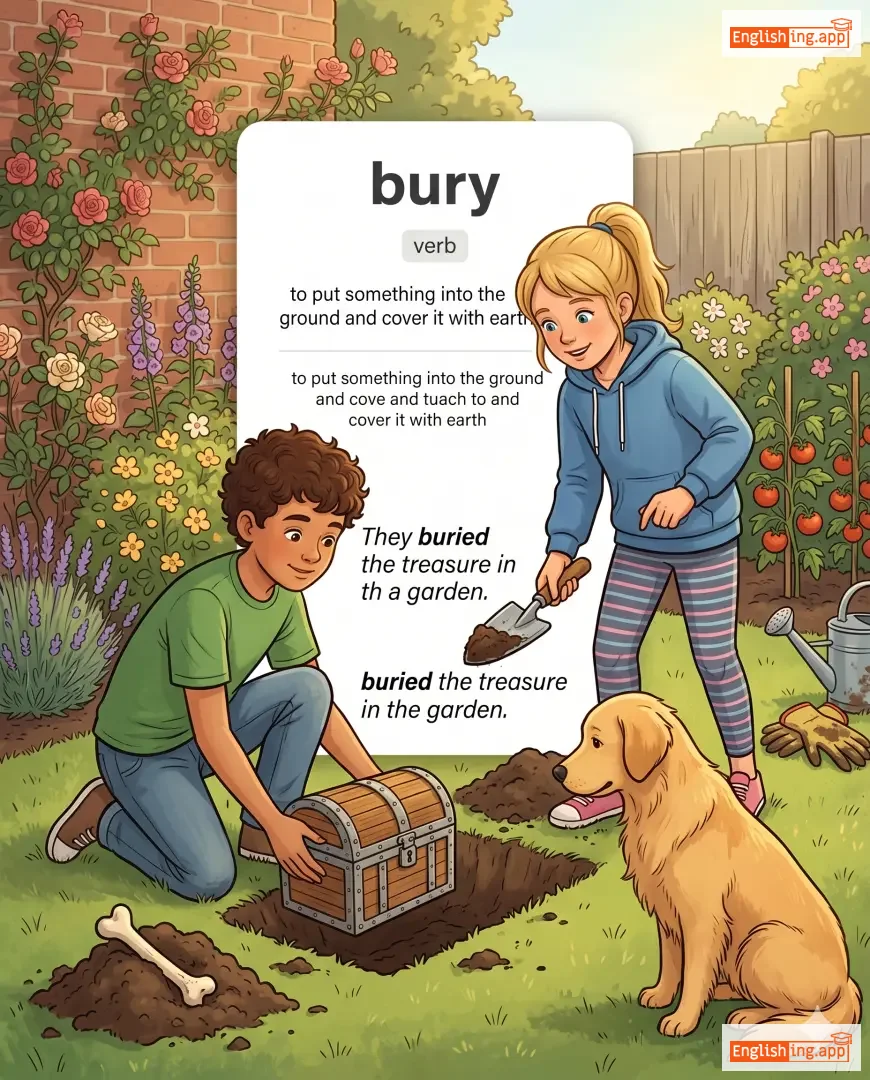
bury definition card — visual illustration of the meaning
verb
/ˈberi/
埋葬 (mái zàng)

to put something into the ground and cover it with earth

"They buried the treasure in the garden."

"他们把宝藏埋在花园里。" (Tāmen bǎ bǎozàng mái zài huāyuán lǐ.)
noun
/bʌs/
巴士 (bashi)

a large motor vehicle carrying passengers by road

"We waited for the bus at the station."

"我们在车站等巴士。" (Wo men zai chezhan deng bashi.)
noun
/bʊʃ/
灌木丛 (guànmù cóng)

a plant with many small branches growing close to the ground; a shrub

"A rabbit was hiding under the bush."

"一只兔子藏在灌木丛下。" (Yī zhī tùzi cáng zài guànmù cóng xià.)
noun
/ˈbɪznəs/
生意 (shēngyì)

the practice of making money by producing or buying and selling goods or services

"She started her own business last year."

"她去年开始了自己的生意。" (Tā qùnián kāishǐle zìjǐ de shēngyì.)
business finance definition card — visual illustration of the meaning
noun
ˈbɪz.nɪs ˈfaɪ.næns
商业财务 (shāngyè cáiwù)

The area of finance that deals with sources of funding and the capital structure of corporations.

"Effective business finance enhances profitability."

"有效的商业财务提高了盈利能力。" (Yǒuxiào de shāngyè cáiwù tígāo le yínglì nénglì.)
business success definition card — visual illustration of the meaning
noun
/bɪzˈnɛs sʌˈsɛs/
商业成功 (shāngyè chénggōng)

The achievement of desired outcomes in business operations, typically measured by profitability, growth, and sustainability.

"Innovation drives business success."

"创新推动商业成功。" (Chuàngxīn tuīdòng shāngyè chénggōng.)
noun
/ˈbɪznəsmæn/
商人 (shāngrén)

a person engaged in commercial or industrial business activities

"The businessman invested heavily in new technology."

"商人们在新技术上进行了大量投资。" (Shāngrén men zài xīn jìshù shàng jìnxíngle dàliàng tóuzī.)
noun
/ˈbɪznəsˌwʊmən/
女商人 (nv shang ren)

a woman who works in business, especially one who owns or manages a company

"The businesswoman expanded her company into international markets."

"这位女商人将她的公司扩展到国际市场。" (Zhe wei nv shang ren jiang ta de gongsi kuozhan dao guoji shichang)