词汇表

英语词汇词典 | 单词含义、定义和示例

adjective
/ˈbroʊkən/
坏的 (huài de)

damaged or not working properly

"The chair is broken and needs repair."

"椅子坏了,需要修理。" (Yǐzi huài le, xūyào xiūlǐ.)
noun
/ˈbroʊ.kər/
经纪人 (jīngjìrén)

a person who buys and sells things for others as a middleman, especially in financial or property deals

"He works as a real estate broker in the city."

"他在城市里做房地产经纪人。" (Tā zài chéngshì lǐ zuò fángdìchǎn jīngjìrén.)
noun
/ˈbroʊkərɪdʒ/
经纪公司 (jingji gongsi)

A firm that acts as an intermediary between buyers and sellers, often charging a fee.

"The real estate brokerage helped them find a new home."

"房地产经纪公司帮助他们找到了一处新家。" (Fang di chan jing ji gong si bang zhu ta men zhao dao le yi chu xin jia.)
noun
/ˈbroʊmaɪd/
陈词滥调 (chéncí làndiào)

A trite or unoriginal idea or remark; also a chemical compound of bromine.

"His speech was full of old bromides about hard work."

"他的演讲充满了关于努力工作的老生常谈。" (Tā de yǎnjiǎng chōngmǎnle guānyú nǔlì gōngzuò de lǎoshēngchángtán.)
noun
/ˈbroʊmiːn/
(xiu)

a dark red, dense, toxic liquid element used in making dyes, flame retardants, and medications

"Bromine is commonly used in water treatment chemicals."

"溴通常用于水处理化学品中。" (Xiu tongchang yongyu shui chuli huaxuepin zhong.)
noun
/brɒŋˈkaɪtɪs/
支气管炎 (zhī qì guǎn yán)

inflammation of the lining of the bronchial tubes, which carry air to and from the lungs

"The doctor diagnosed him with acute bronchitis."

"医生诊断他患有急性支气管炎。" (Yīshēng zhěnduàn tā huàn yǒu jíxìng zhī qì guǎn yán.)
noun
/ˈbrɒŋkəs/
支气管 (zhīqìguǎn)

either of the two main branches of the trachea that lead directly into the lungs

"The left bronchus carries air into the left lung."

"左支气管将空气输送到左肺。" (Zuǒ zhīqìguǎn jiāng kōngqì shūsòng dào zuǒ fèi.)
noun
/brɑːnz/
(tong)

a metal made by combining copper and tin, often used for statues and medals

"The statue was made of solid bronze."

"这座雕像是由坚固的铜制成的。" (Zhezuo diaoxiang shi you jiangu de tong zhicheng de.)
noun
/broʊtʃ/

a decorative jewelry pin that is attached to clothing

"She wore a beautiful silver brooch on her jacket."

🐥

brood

verb
/bruːd/

to think deeply about something that makes one unhappy; also, a group of young birds hatched at the same time

"He sat alone, brooding over his failures."

noun/verb
/brʊk/
小溪 / 容忍 (xiǎo xī / róngrěn)

As a noun: a small natural stream; As a verb: to tolerate or endure something

"The village was built near a clear brook."

"这个村庄建在一条清澈的小溪旁。" (Zhège cūnzhuāng jiàn zài yītiáo qīngchè de xiǎo xī páng.)
noun
/brum/
扫帚 (sàozhou)

a long-handled brush of bristles or twigs, used for sweeping

"She used an old broom to sweep the fallen leaves from the porch."

"她用一把旧扫帚清扫从门廊掉落的树叶。" (Tā yòng yī bǎ jiù sàozhou qīngsǎo cóng ménláng diàoluò de shùyè.)
noun
/ˈbrʌðər/
兄弟 (xiongdi)

a male sibling

"My brother is two years older than me."

"我的兄弟比我大两岁。" (Wǒ de xiōngdì bǐ wǒ dà liǎng suì.)
noun
/ˈbrʌðərhʊd/
兄弟情谊 (xiōngdì qíngyì)

The relationship between brothers; an association of people with common interests

"The soldiers shared a strong sense of brotherhood."

"士兵们分享了强烈的兄弟情谊。" (Shìbīngmen fēnxiǎngle qiángliè de xiōngdì qíngyì.)
noun
/braʊ/
额头 (étóu)

the part of the face above the eyes; forehead

"She wiped the sweat from her brow."

"她擦去了额头上的汗水。" (Tā cā qùle étóu shàng de hànshuǐ.)
verb
/ˈbraʊˌbiːt/
威胁 / 强迫 (wēixié / qiángpò)

To intimidate or bully someone into doing something

"The lawyer tried to browbeat the witness."

"律师试图威胁证人。" (lǜshī shìtú wēixié zhèngrén.)
adjective
/braʊn/
棕色 (zongse)

of a color produced by mixing red, yellow, and black

"She wore a brown dress to the party."

"她穿了一件棕色的衣服去参加聚会。" (Ta chuanle yijian zongse de yifu qu canjia juhui.)
adjective
/ˈbraʊn.ɪʃ/
棕色的 (zongse de)

having a color somewhat like brown; tending toward brown

"The old paper had a brownish tint from age."

"那张旧纸因岁月的缘故带有棕色的色调。" (Na zhang jiu zhi yin sui yue de yuan guo dai you zongse de se tiao)
verb
/braʊz/
浏览 (liú lǎn)

To look at or skim through casually, especially online or in a store

"She likes to browse books in the library."

"她喜欢在图书馆浏览书籍。" (Tā xǐhuān zài túshūguǎn liú lǎn shūjí.)
noun
/ˈbraʊzər/
浏览器 (liú lǎn qì)

a software application for accessing information on the World Wide Web.

"I use a web browser to search for information online."

"我使用网页浏览器在网上查找信息。" (Wǒ shǐ yòng wǎng yè liú lǎn qì zài wǎng shàng chá zhǎo xìn xī.)
noun/verb
/bruːz/

As a noun: an injury appearing as a purple or blue mark on the skin; As a verb: to injure without breaking the skin

"He got a bruise on his arm after falling."

verb
/bruːt/
传播谣言 (chuanbo yaoyan)

to spread a rumor or report widely

"The scandal was quickly bruited about the town."

"丑闻迅速在城镇传播开来。" (Chouwen xunsu zai chengzhen chuanbo kailai.)
noun
/brʌnt/
主要冲击 (zhuyao chongji)

the worst part or main impact of something unpleasant

"The small town bore the brunt of the storm."

"小镇承受了风暴的主要冲击。" (Xiao zhen chengshou le fengbao de zhuyao chongji.)
🖌️

Brush

noun/verb
/brʌʃ/

A tool with bristles for cleaning, painting, or grooming; to clean, arrange, or apply with a brush.

"She used a brush to paint the fence."

adjective
/bruːsk/ or /brʌsk/
粗暴 (cū bào)

abrupt or blunt in manner or speech, often seen as rude

"His brusque reply ended the conversation."

"他那粗暴的回答结束了谈话。" (Tā nà cūbào de huídá jiéshùle tánhuà.)
adverb
/ˈbruːskli/ or /ˈbrʌskli/
粗鲁地 (culudi)

in a blunt, abrupt, or rude manner

"She brusquely dismissed the suggestion."

"她粗鲁地拒绝了这个建议。" (Ta culudi jujue le zhege jianyi.)
adjective
/ˈbruː.təl/
残忍 (cánrěn)

extremely cruel or harsh; violent and without feeling

"The dictator’s rule was marked by brutal violence."

"独裁者的统治充满了残忍的暴力。" (Dúcáizhě de tǒngzhì chōngmǎnle cánrěn de bàolì.)
noun
/bruːˈtæləti/
残暴 (canbao)

extreme cruelty or violence; savage or inhumane treatment

"The brutality of the attack shocked the entire community."

"这次攻击的残暴震惊了整个社区。" (Zhe ci gongji de canbao zhenjing le zhengge shequ)
verb
/ˈbruːtəlaɪz/
残酷对待 (canku duidai)

to treat someone with extreme violence or cruelty; to make something harsh or cruel

"The regime was accused of brutalizing innocent civilians."

"该政权被指控残酷对待无辜平民。" (Gai zhengquan bei zhikong canku duidai wugu pingmin)
adverb
/ˈbruːtəli/
残酷地 (canku de)

in a cruel, violent, or harsh manner; in a very direct and blunt way

"The prisoners were treated brutally by the guards."

"警卫残酷地对待这些囚犯。" (jingwei canku de duidai zhexie qiufan)
noun
/ˈbʌb.əl/
气泡 (qìpào)

a thin sphere of liquid enclosing air or gas; a temporary state of inflated value or excitement

"The children chased the bubbles in the air."

"孩子们在空中追逐气泡。" (Háizimen zài kōngzhōng zhuīzhú qìpào.)
noun
/ˌbʌkəˈnɪər/
海盗 (haidao)

a pirate, especially one active in the Caribbean during the 17th and 18th centuries

"The buccaneer sailed across the Caribbean in search of treasure."

"这位海盗在加勒比海中航行,寻找宝藏。" (Zhè wèi hǎidào zài jiālèbǐ hǎi zhōng hángxíng, xúnzhǎo bǎozàng.)
🦌

buck

noun/verb
/bʌk/

A male deer; also to resist or oppose strongly.

"The horse began to buck wildly as the rider tried to hold on."

noun
/ˈbʌkɪt/
水桶 (shuitong)

a round open container with a handle, used for carrying liquids or other things

"He filled the bucket with water and carried it to the garden."
"他把水桶装满水,然后拿到花园里。" (tā bǎ shuǐtǒng zhuāng mǎn shuǐ, ránhòu ná dào huāyuán lǐ.)
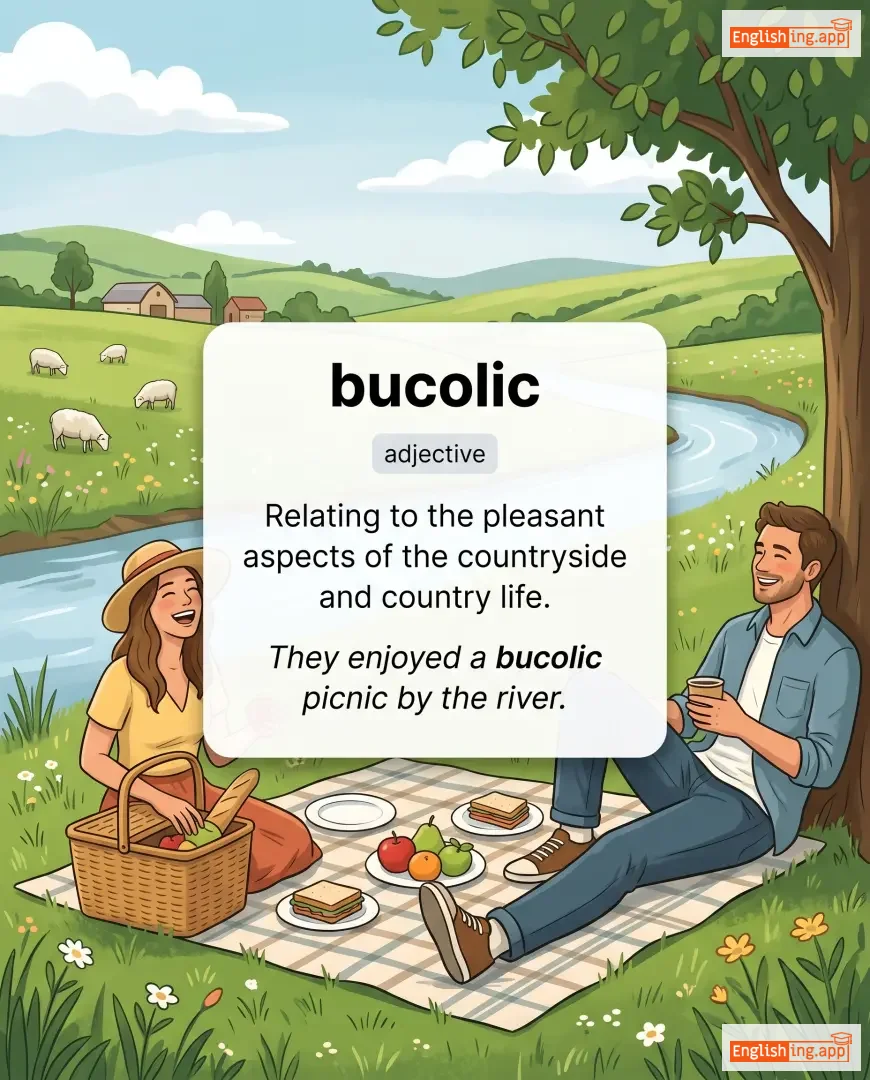
bucolic definition card — visual illustration of the meaning
adjective
/bjuːˈkɒlɪk/
田园 (tianyuan)

Relating to the pleasant aspects of the countryside and country life.

"They enjoyed a bucolic picnic by the river."

"他们在河边享受了一次田园式的野餐。" (Tamen zai he bian xiangshou le yici tianyuan shi de yecan.)
noun
/bʌd/
花苞 (huābāo)

An undeveloped or immature flower before it opens

"The rose bud will bloom into a beautiful flower in a few days."

"玫瑰花苞将在几天内绽放成一朵美丽的花。" (Méiguī huābāo jiāng zài jǐ tiān nèi zhànfàng chéng yī duǒ měilì de huā.)
noun
/ˈbʌdi/
朋友 (pengyou)

a close friend or companion, used informally

"He went to the movies with his best buddy."

"他和他最好的朋友一起去看电影。" (Ta he ta zuihao de pengyou yiqi qu kan dianying.)
🚶

budge

verb
/bʌdʒ/

To move slightly; to change one’s opinion or position.

"Despite the pressure, he refused to budge from his decision."

noun/verb
/ˈbʌdʒɪt/
预算 (yùsuàn)

An estimate of income and expenditure for a set period of time; to plan expenses and income.

"The family created a budget to manage their expenses."

"家庭制定了预算来管理开支。" (Jiātíng zhìdìngle yùsuàn lái guǎnlǐ kāizhī.)
noun/adjective/verb
/bʌf/
影迷 / 打磨 (yingmi / damo)

A fan or enthusiast; also to polish or shine something.

"He is a movie buff who watches films every weekend."

"他是一个电影迷,每个周末都看电影。" (Ta shi yi ge dianying mi, mei ge zhoumo dou kan dianying.)
noun
/ˈbʌf.ə.loʊ/
水牛 (shuǐ niú)

a large wild ox with heavy horns; American bison

"The buffalo grazed peacefully in the meadow."

"水牛在草地上安静地吃草。" (Shuǐ niú zài cǎo dì shàng ān jìng de chī cǎo.)
noun/verb
/ˈbʌfər/
缓冲器 / 吸收冲击 (huǎnchōngqì / xīshōu chōngjī)

Something that lessens or absorbs the impact of a shock; to act as a protective barrier.

"The organization acts as a buffer between workers and management."

"该组织在工人和管理层之间充当缓冲区。" (Gāi zǔzhī zài gōngrén hé guǎnlǐcéng zhījiān chōngdāng huǎnchōngqì.)
🍽️

buffet

noun, verb
/bəˈfeɪ/ (noun), /ˈbʌfɪt/ (verb)

A meal where guests serve themselves from a variety of dishes arranged on a table; also means to strike repeatedly (as a verb).

"We enjoyed a large buffet at the wedding reception."

noun
/bəˈfuːn/
小丑 (xiaochou)

A ridiculous but amusing person; a clown or jester.

"He acted like a buffoon at the party, making everyone laugh."

"他在派对上像个小丑一样表演,让每个人都笑了。" (Ta zai paidui shang xiang ge xiaochou yiyang biaoyan, rang meige ren dou xiao le.)
noun
/bəˈfuːnəri/
小丑行为 (xiaochou xingwei)

Foolish or ridiculous behavior intended to amuse.

"His constant buffoonery irritated the serious audience."

"他不断的小丑行为激怒了严肃的观众。" (Tā bùduàn de xiǎochǒu xíngwéi jīnùle yánsù de guānzhòng.)
noun
/bʌɡ/
虫子 (chongzi)

a small insect; informally, a flaw or error in a system or program

"There’s a bug in the code that causes the app to crash."

"代码中有一个bug,导致应用崩溃。" (dàimǎ zhōng yǒu yīgè bug, dǎozhì yìngyòng bēngkuì.)
noun
/ˈbʌɡəˌbuː/
鬼怪 / 恐惧 (guǐguài / kǒngjù)

An object of fear or worry; an imagined cause of anxiety.

"The threat of inflation became a political bugaboo."

"通货膨胀的威胁变成了一个政治上的恐惧。" (Tōnghuò péngzhàng de wēixié biàn chéngle yīgè zhèngzhì shàng de kǒngjù.)
noun
/ˈbjuːɡəl/
军号 (junhao)

a brass musical instrument similar to a trumpet but without valves, used especially for military calls

"The soldier played the bugle to signal the start of the ceremony."
"士兵吹响军号以示仪式开始" (shibing chui xiang junhao yi shi yishi kaishi)
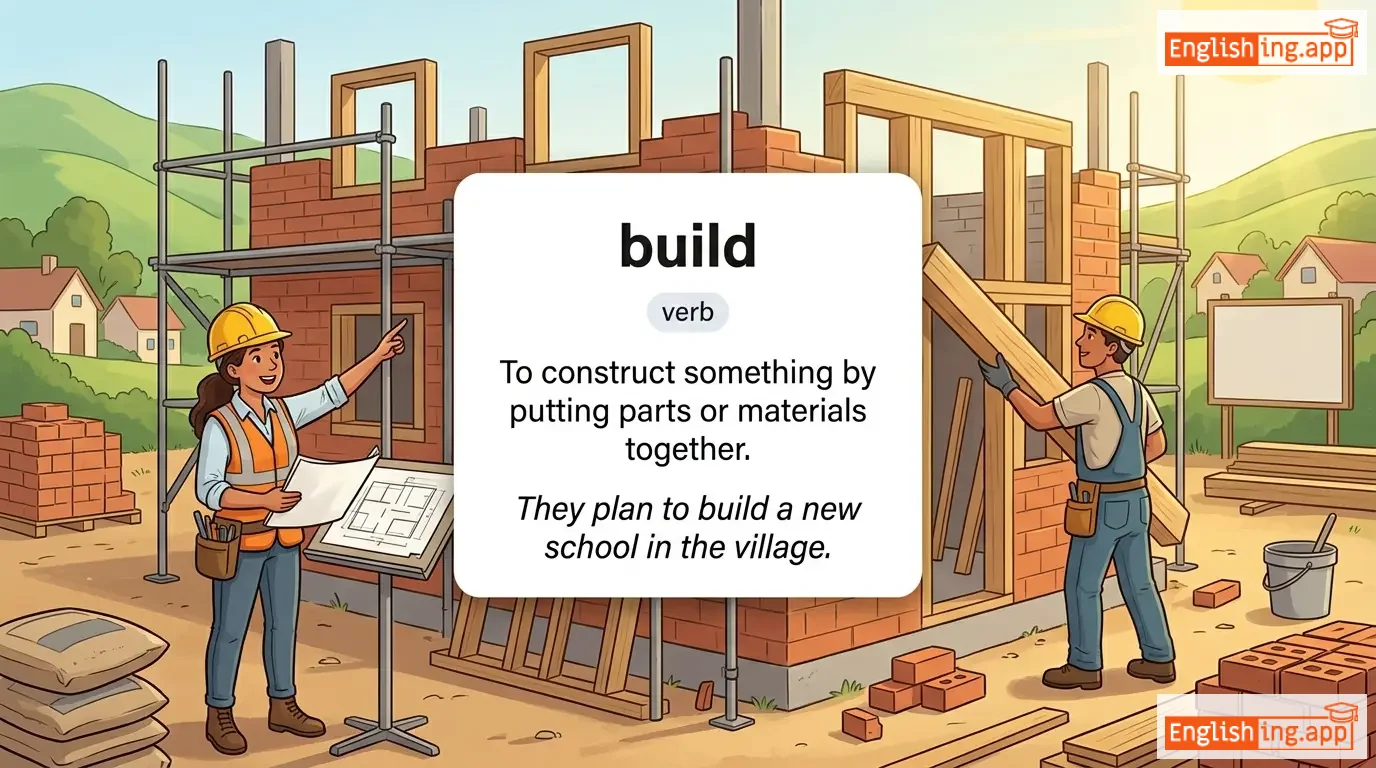
build definition card — visual illustration of the meaning
verb
/bɪld/
建造 (jianzao)

To construct something by putting parts or materials together.

"They plan to build a new school in the village."

"他们计划在村庄里建一所新学校。" (Tamen jihua zai cunzhuang li jian yisuo xin xuexiao.)
noun
/ˈbɪldər/
建筑商 (jianzhushang)

a person or company that constructs buildings or other structures

"The builder checked the site before starting the construction."

"建筑商在开始建造之前检查了现场。" (Jianzhushang zai kaishi jianzhao zhīqián jiǎnchále xiànchǎng.)