词汇表

英语词汇词典 | 单词含义、定义和示例

adjective
/ˈbreɪsɪŋ/
清新的 (qīngxīn de)

Invigorating, refreshing, or providing strength and energy.

"The hikers enjoyed the bracing mountain air."

"远足者享受着清新的山间空气。" (Yuǎnzú zhě xiǎngshòu zhe qīngxīn de shānjiān kōngqì.)
noun/verb
/ˈbrækɪt/
金属支架 (jinshu zhijia)

A support attached to a wall for holding something; also, to group things together.

"The shelf was held up by a strong metal bracket."

"架子被一个强大的金属支架支撑。" (Jiazi bei yige qiangda de jinshu zhijia zhicheng.)
adjective
/ˈbrækɪʃ/
咸淡水 (xián dàn shuǐ)

Slightly salty, often describing water that is a mix of fresh and seawater.

"The river estuary contained brackish water."

"河口含有咸淡水。" (Hékǒu hányǒu xián dàn shuǐ.)
noun
/breɪ/
山坡 (shanpo)

A hillside or slope, especially in Scotland.

"They climbed up the grassy brae to see the sunset."

"他们爬上了长满草的山坡去看日落。" (Tamen pa shang le chang man cao de shanpo qu kan riluo.)
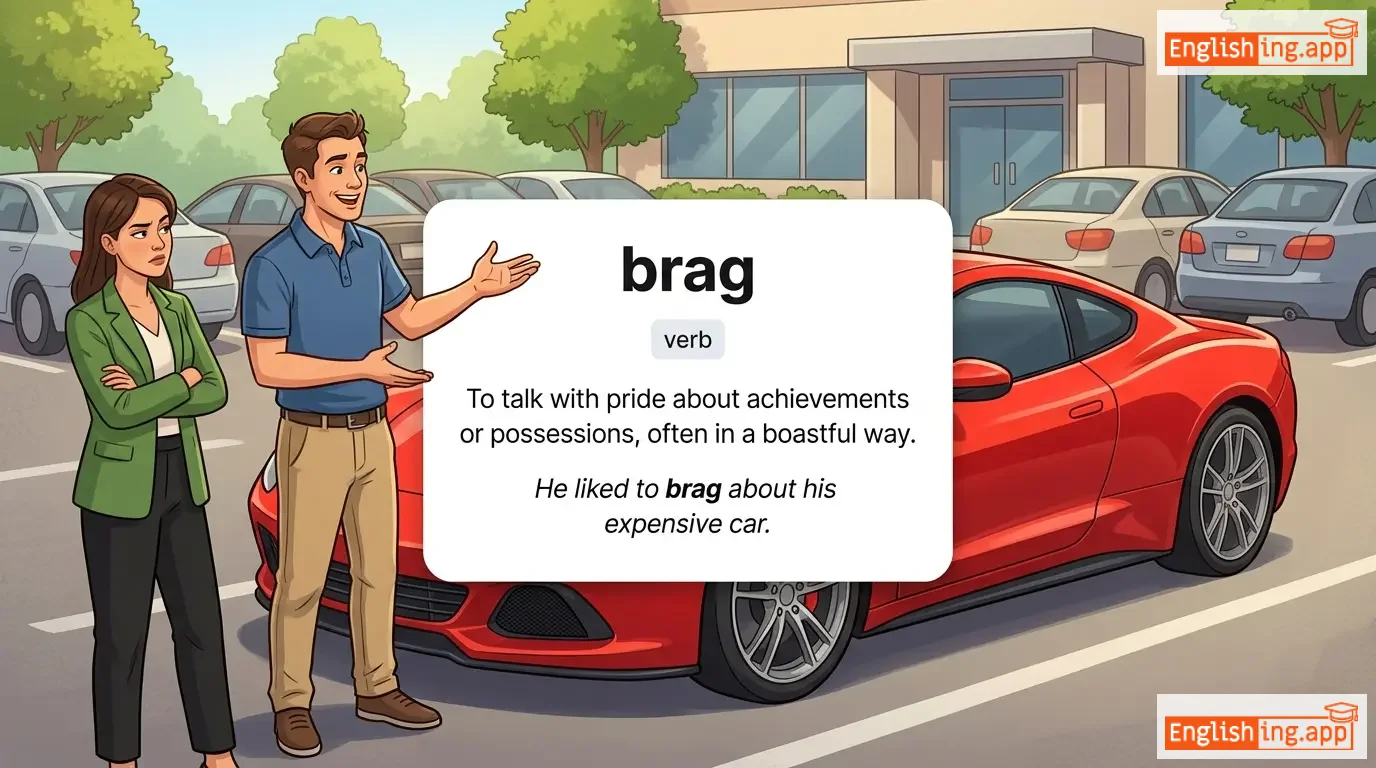
brag definition card — visual illustration of the meaning
😏

brag

verb
/bræɡ/

To talk with pride about achievements or possessions, often in a boastful way.

"He liked to brag about his expensive car."

noun
/ˌbræɡəˈdoʊʃioʊ/
吹嘘行为 (chuīxū xíngwéi)

boastful or arrogant behavior; empty boasting

"His endless braggadocio annoyed everyone at the party."

"他无休止的吹嘘行为让派对上的每个人都感到厌烦。" (Tā wú xiūzhǐ de chuīxū xíngwéi ràng pàiduì shàng de měi gèrén dōu gǎndào yànfán.)
noun
/ˈbræɡərt/
吹牛者 (chuī niú zhě)

a person who boasts about achievements or possessions

"No one liked him because he was such a braggart."

"没有人喜欢他,因为他是个吹牛者。" (méiyǒu rén xǐhuān tā, yīnwèi tā shì gè chuī niú zhě.)
verb
/breɪd/
编织 (bianzhi)

to weave together strands of hair or material

"She braided her hair before going to school."

"她在去学校之前编了头发。" (Ta zai qu xuexiao zhiqian bianle toufa.)
brain definition card — visual illustration of the meaning
noun
/breɪn/
大脑 (dà nǎo)

the organ inside the head that controls thought, memory, feelings, and activity

"The human brain is incredibly complex."
"人类的大脑复杂得令人难以置信。" (rén lèi de dà nǎo fù zá dé lìng rén nán yǐ zhì xìn)
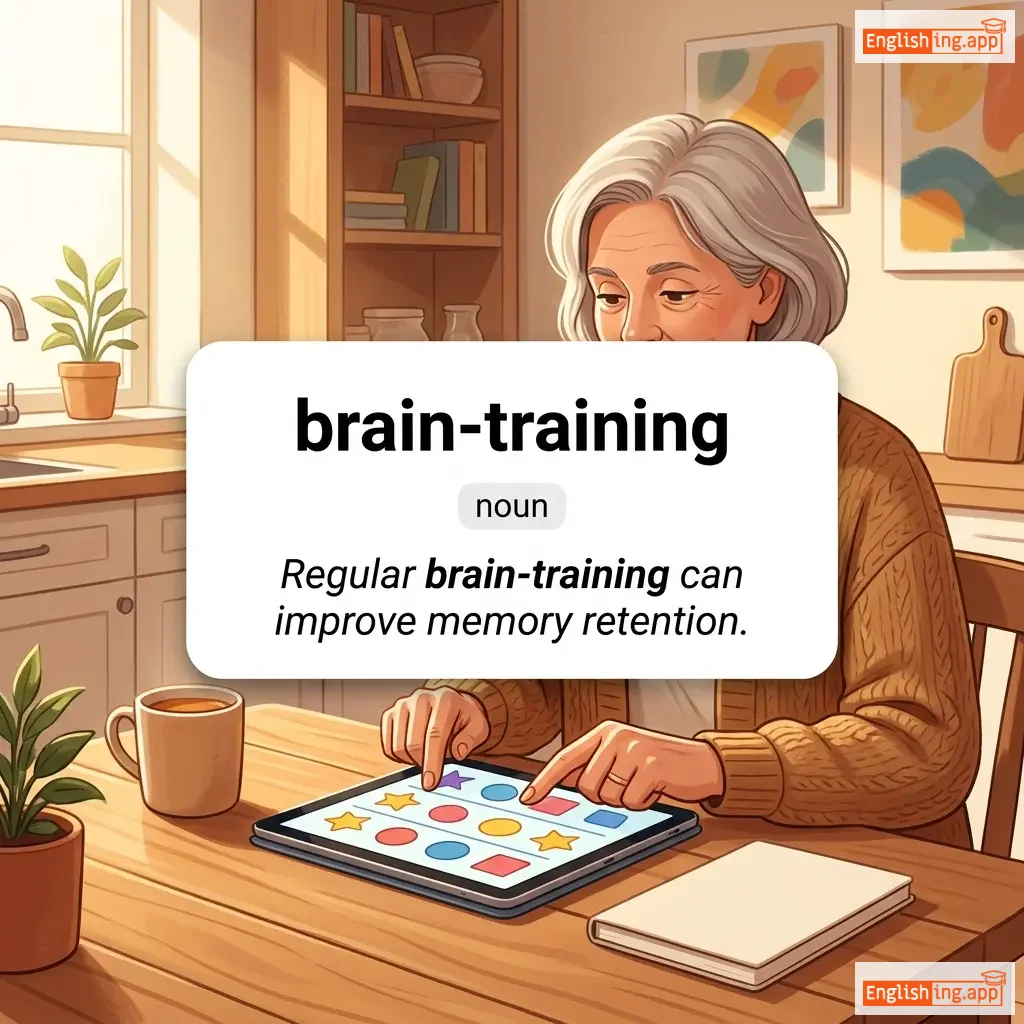
brain-training definition card — visual illustration of the meaning
noun
breɪn ˈtreɪ.nɪŋ
大脑训练 (dà nǎo xùn liàn)

Mental exercises designed to improve cognitive functions, memory retention, and overall brain performance.

"Regular brain-training can improve memory retention."

"定期的大脑训练可以提高记忆力。" (Dìngqī de dà nǎo xùn liàn kě yǐ tí gāo jì yì lì.)
verb, noun
/ˈbreɪnˌwɒʃ/
洗脑 (xi nao)

to manipulate someone into adopting certain beliefs by repeated pressure or propaganda; the act or process of such manipulation

"The group tried to brainwash new members with constant propaganda."

"这个组织试图给新成员洗脑。" (Zhege zuzhi shitu gei xin chengyuan xi nao)
🚗

brake

verb
/breɪk/

to slow down or stop a vehicle by applying a brake

"He braked suddenly to avoid hitting the dog."

noun, verb
/bræntʃ/
分支 (fenzhi)

A part of a tree that grows out from the trunk; a division of an organization or subject.

"The company opened a new branch in Dhaka."
"公司在达卡开设了一个新分支。" (Gongsi zai Daka kaishi le yige xin fenzhi.)
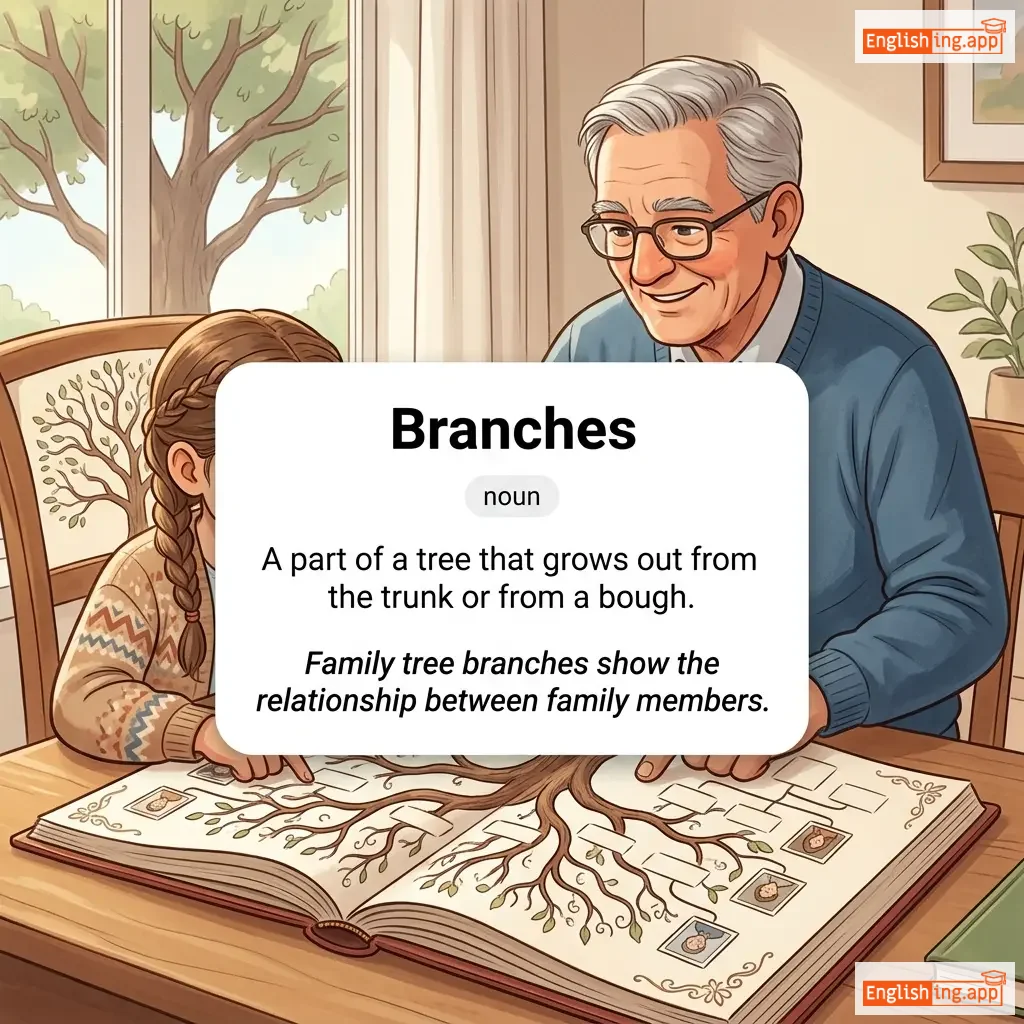
Branches definition card — visual illustration of the meaning
noun
ˈbræntʃɪz
树枝 (shuzhi)

A part of a tree that grows out from the trunk or from a bough.

"Family tree branches show the relationship between family members."

"家族树的枝条展示了家人之间的关系。" (Jiazú shù de zhītiáo zhǎnshìle jiārén zhījiān de guānxì.)
noun
/brænd/
品牌 (pinpai)

a type of product manufactured by a company under a particular name

"Nike is a popular brand of sportswear."

"Nike 是一个受欢迎的运动服品牌。" (Nike shi yige shou huanying de yundongfu pinpai.)
branding definition card — visual illustration of the meaning
noun
/ˈbræn.dɪŋ/
品牌建设 (pǐnpái jiànshè)

The process involved in creating a unique name and image for a product in the consumers' mind, mainly through advertising campaigns with a consistent theme.

"Strong branding helps build customer trust."

"强大的品牌建设有助于建立客户信任。" (Qiángdà de pǐnpái jiànshè yǒu zhù yú jiànlì kèhù xìnrèn.)
verb
/ˈbrændɪʃ/
挥舞 (huiwu)

to wave or flourish something, especially a weapon, in a threatening or showy way

"He brandished a sword to scare off the intruders."

"他挥舞着剑把入侵者吓走了。" (Ta huiwuzhe jian ba ruqinzhe xia zoule.)
adjective
/bræʃ/
无礼 (wuli)

self-assertive in a rude, noisy, or overconfident way

"His brash comments offended many people at the meeting."

"他那无礼的评论在会议上冒犯了许多人。" (Ta na wuli de pinglun zai huiyi shang maofan le xuduo ren.)
noun
/brəˈzɪər/
胸罩 (xiōng zhào)

a woman's undergarment designed to support the breasts

"She bought a comfortable brassiere for daily wear."

"她买了一件舒适的胸罩,适合日常穿着。" (tā mǎile yī jiàn shūshì de xiōng zhào, shìhé rìcháng chuānzhuó)
adjective
/ˈbræsi/
张扬的 (zhāngyáng de)

loud and showy in a way that lacks good taste; resembling brass in color or sound

"She wore a brassy necklace that caught everyone’s attention."

"她戴着一条张扬的项链,吸引了所有人的注意。" (Tā dàizhe yītiáo zhāngyáng de xiàngliàn, xīyǐnle suǒyǒu rén de zhùyì.)
adjective
/ˈbrætɪʃ/
任性 (renxing)

acting like a spoiled child; behaving in an annoying, self-centered way

"The brattish boy threw a tantrum when he didn’t get his toy."

"那个任性的男孩因为没有得到玩具而发脾气。" (Na ge renxing de nanhai yinwei meiyou dedao wanju er fa piqi.)
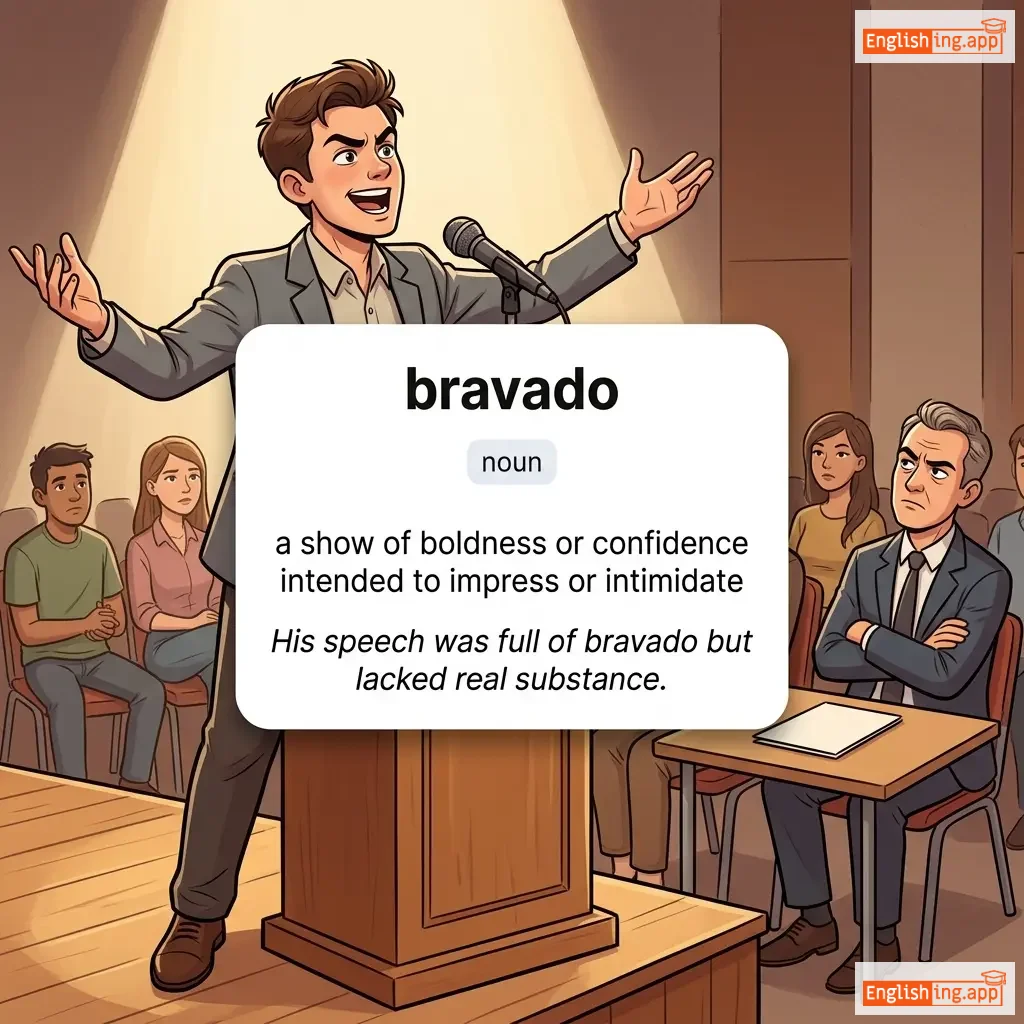
bravado definition card — visual illustration of the meaning
noun
/brəˈvɑːdoʊ/

a show of boldness or confidence intended to impress or intimidate

"His speech was full of bravado but lacked real substance."

adjective
/breɪv/
勇敢 (yǒnggǎn)

showing courage in the face of danger or difficulty

"The brave firefighter rushed into the burning building."

"勇敢的消防员冲进了燃烧的建筑物。" (yǒnggǎn de xiāofángyuán chōng jìnle ránshāo de jiànzhúwù.)
adverb
/ˈbreɪv.li/
勇敢地 (yǒnggǎn de)

in a way that shows courage and determination

"The firefighter bravely entered the burning building."
"消防员勇敢地进入燃烧的建筑物。" (Xiāofángyuán yǒnggǎn de jìnrù ránshāo de jiànzhúwù.)
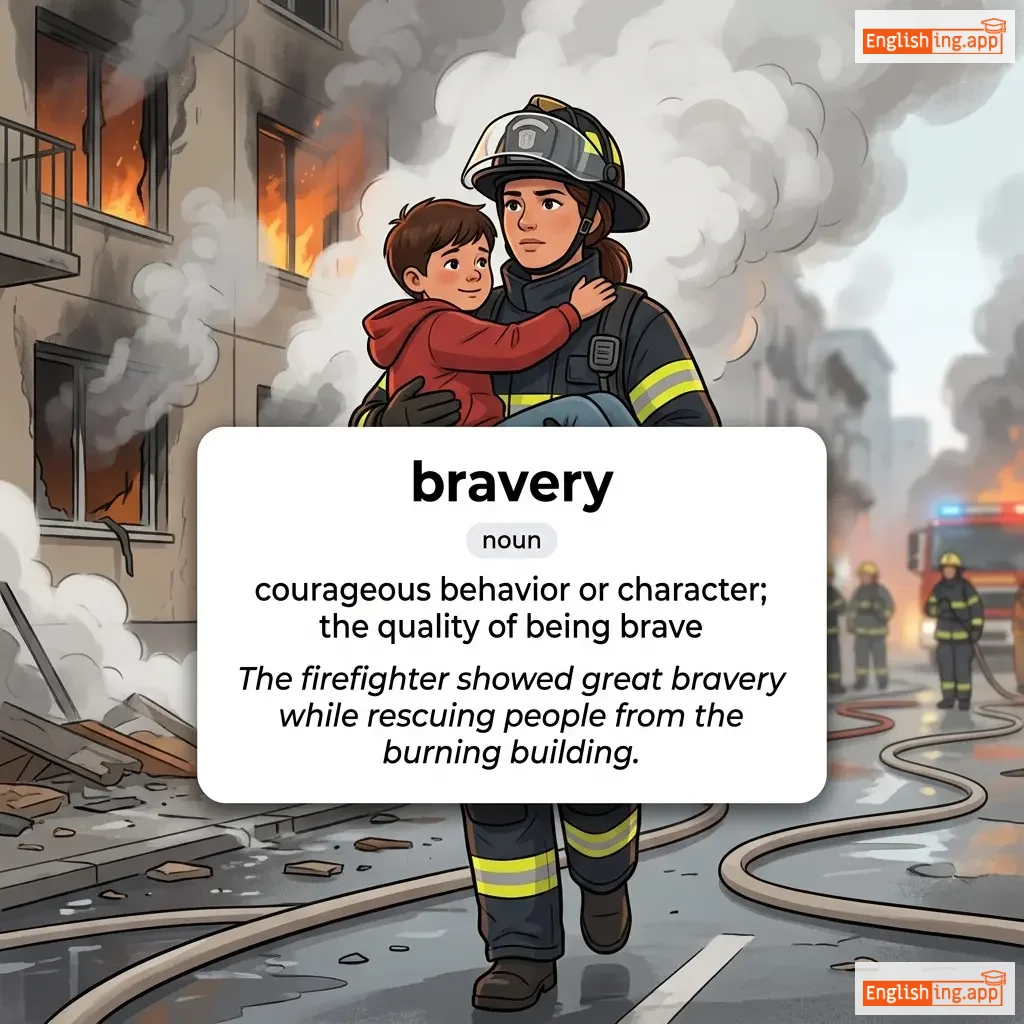
bravery definition card — visual illustration of the meaning
noun
/ˈbreɪ.vər.i/
勇气 (yongqi)

courageous behavior or character; the quality of being brave

"The firefighter showed great bravery while rescuing people from the burning building."

"消防员在从燃烧的大楼中救出人们时表现出极大的勇气。" (xiaofangyuan zai cong ranshao de dalou zhong jiuchu renmen shi biaoxian chu jida de yongqi.)
interjection
/ˈbrɑː.voʊ/
布拉沃 (bulawo)

used to express approval, admiration, or praise

"The audience shouted 'Bravo!' after the stunning performance."

"观众在精彩的表演后大喊“布拉沃!”" (Guānzhòng zài jīngcǎi de biǎoyǎn hòu dà hǎn 'bù lā wò!')
noun
/brəˈvjʊrə/

a display of great skill and brilliance, especially in music or performance

"The pianist delivered a bravura performance that left the audience spellbound."

noun
/brɔːl/
争吵 (zhēngchǎo)

a noisy fight in a public place

"A brawl broke out outside the bar late at night."

"夜晚在酒吧外发生了争吵。" (Yèwǎn zài jiǔbā wài fāshēngle zhēngchǎo.)
noun
/brɔːn/
体力 (tǐlì)

physical strength in contrast to intelligence

"He used his brawn to lift the heavy box."

"他用体力举起了沉重的箱子。" (Tā yòng tǐlì jǔqǐle chénzhòng de xiāngzi.)
adjective
/ˈbrɔːni/
强壮的 (qiángzhuàng de)

Physically strong and muscular.

"The brawny man lifted the heavy box with ease."

"那位强壮的男子轻松地举起了沉重的盒子。" (Nà wèi qiángzhuàng de nánzǐ qīngsōng de jǔqǐ le chénzhòng de hézi.)
verb
/breɪ/
驴叫 (lü jiao)

To make a loud, harsh sound like a donkey.

"The donkey began to bray loudly in the field."

"驴子在田地里开始大声叫。" (Lü zi zai tian di li kai shi da sheng jiao.)
verb
/breɪz/
焊接 (hànjiē)

To join two pieces of metal by heating and melting a filler metal into the joint.

"The mechanic brazed the broken pipe to fix the leak."

"机械师通过加热焊接破损的管道来修复泄漏。" (Jīxiè shī tōngguò jiārè hànjiē pòsǔn de guǎndào lái xiūfù xièlòu.)
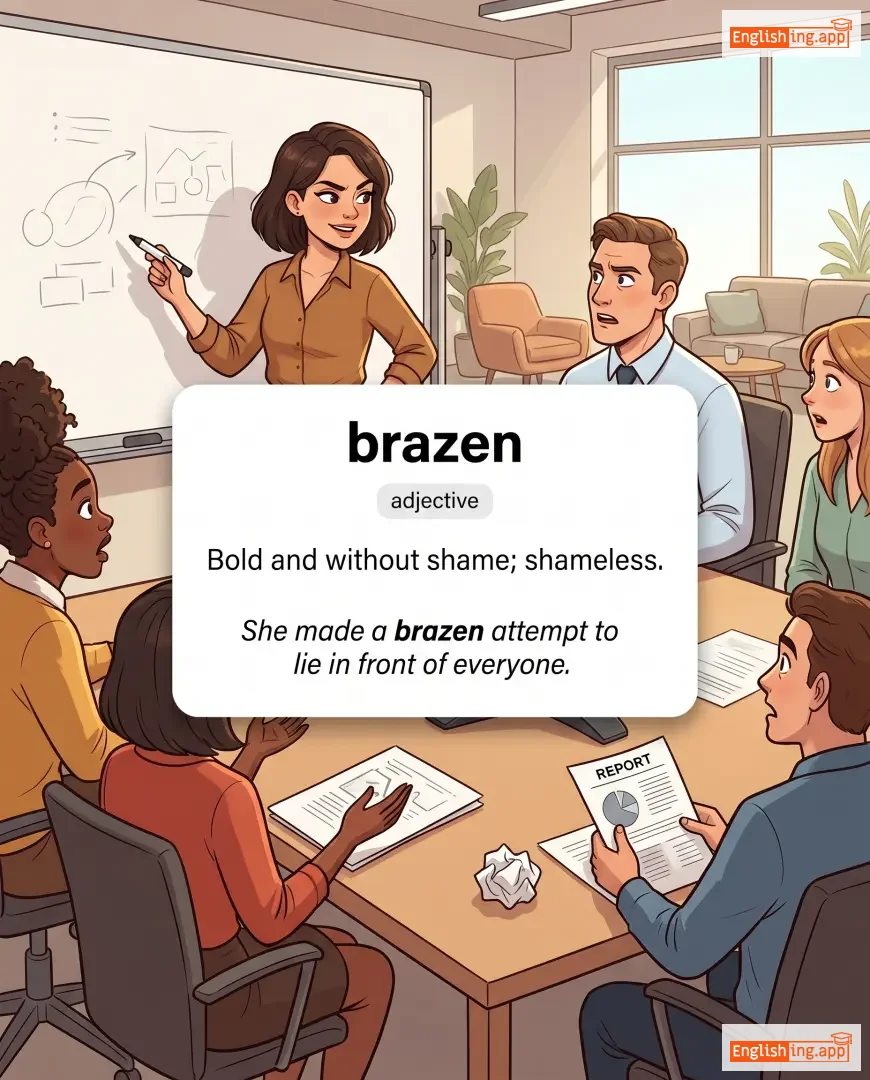
brazen definition card — visual illustration of the meaning
adjective
/ˈbreɪzən/

Bold and without shame; shameless.

"She made a brazen attempt to lie in front of everyone."

noun
/ˈbreɪziər/
火盆 (huǒ pén)

A container for holding burning coal or charcoal, used for heating or cooking.

"The street vendor cooked chestnuts on a brazier."

"街头小贩在火盆上烤栗子。" (Jiētóu xiǎofàn zài huǒ pén shàng kǎo lìzi.)
breach definition card — visual illustration of the meaning
noun, verb
/briːtʃ/
违反 (wei fan)

An act of breaking or failing to observe a law, agreement, or code of conduct; to break through.

"The company was fined for a breach of contract."

"公司因违反合同而被罚款。" (Gongsi yin weifan hetong er bei fakuan.)
🍞

Bread

noun
/brɛd/

A type of food made from flour, water, and yeast, mixed and baked.

"She bought a loaf of bread from the bakery."

noun
/brɛdθ/
宽度 (kuandu)

The distance or measurement from side to side; width; a wide range.

"The breadth of his knowledge impressed everyone."
"他的知识宽度给大家留下了深刻印象。" (Tā de zhīshí kuāndù gěi dàjiā liú xiàle shēnkè yìnxiàng.)
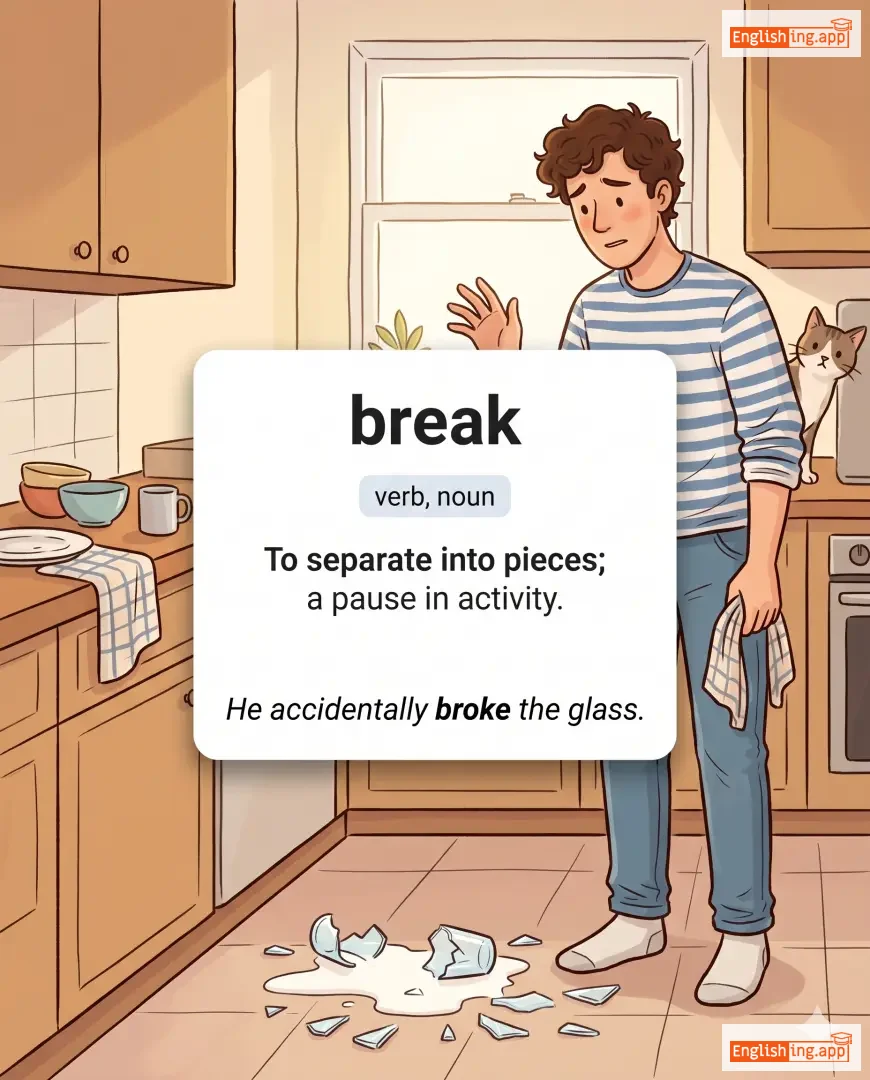
break definition card — visual illustration of the meaning
verb, noun
/breɪk/
打破 / 休息 (dǎpò / xiūxí)

To separate into pieces; a pause in activity.

"He accidentally broke the glass."

"他不小心打破了玻璃。" (Tā bù xiǎoxīn dǎpòle bōlí.)
noun
/ˈbrɛkdaʊn/
故障 (gùzhàng)

a failure or collapse of a system or machinery

"The car had a breakdown on the highway."

"车子在高速公路上发生了故障。" (Chēzi zài gāosù gōnglù shàng fāshēngle gùzhàng.)
noun
/ˈbreɪkər/
断路器(打破某物的人或物体;在岸边破碎成泡沫的大海浪;中断电路的设备) (duanlùqì)

A person or thing that breaks something; a large sea wave that breaks into foam near the shore; a device that interrupts an electric circuit.

"The breaker tripped during the storm, cutting off electricity."

"暴风雨期间,断路器跳闸,切断了电力。" (Bàofēngyǔ qījiān, duànlùqì tiàozhá, qiēduànle diànlì.)
noun
/ˈbrɛkfəst/

The first meal of the day, usually eaten in the morning.

"We had eggs and toast for breakfast."

breakthrough definition card — visual illustration of the meaning
noun
/ˈbrɛkθruː/

a significant or sudden advance or discovery

"The scientist made a breakthrough in cancer research."

noun
/brɛst/
胸部 (xiongbu)

Either of the two soft, rounded parts on a woman’s chest that produce milk after childbirth.

"The baby was fed from his mother's breast."

"婴儿从母亲的胸部喂养。" (Yīng'ér cóng mǔqīn de xiōngbù wèiyǎng.)
noun
/brɛθ/
呼吸 (hūxī)

The air taken into or expelled from the lungs during breathing.

"He took a deep breath before speaking."

"他在讲话前深深地吸了一口气。" (Tā zài jiǎnghuà qián shēnshēn de xīle yī kǒu qì.)
😮‍💨

breathe (briid)

verb
/briːð/
呼吸 (huxi)

To take air into the lungs and send it out again.

"It was hard to breathe in the smoky room."

"在烟雾弥漫的房间里呼吸很困难。" (Zai yanwu miman de fangjian li huxi hen kunnan.)
noun
/ˈbriːðɪŋ/
幸福 (xìngfú)

the process of taking air into and expelling it from the lungs.

"Deep breathing can help you relax."
"当她收到奖项时,她无法隐藏自己的幸福。" (Dāng tā shōu dào jiǎngxiàng shí, tā wúfǎ yǐncáng zìjǐ de xìngfú.)
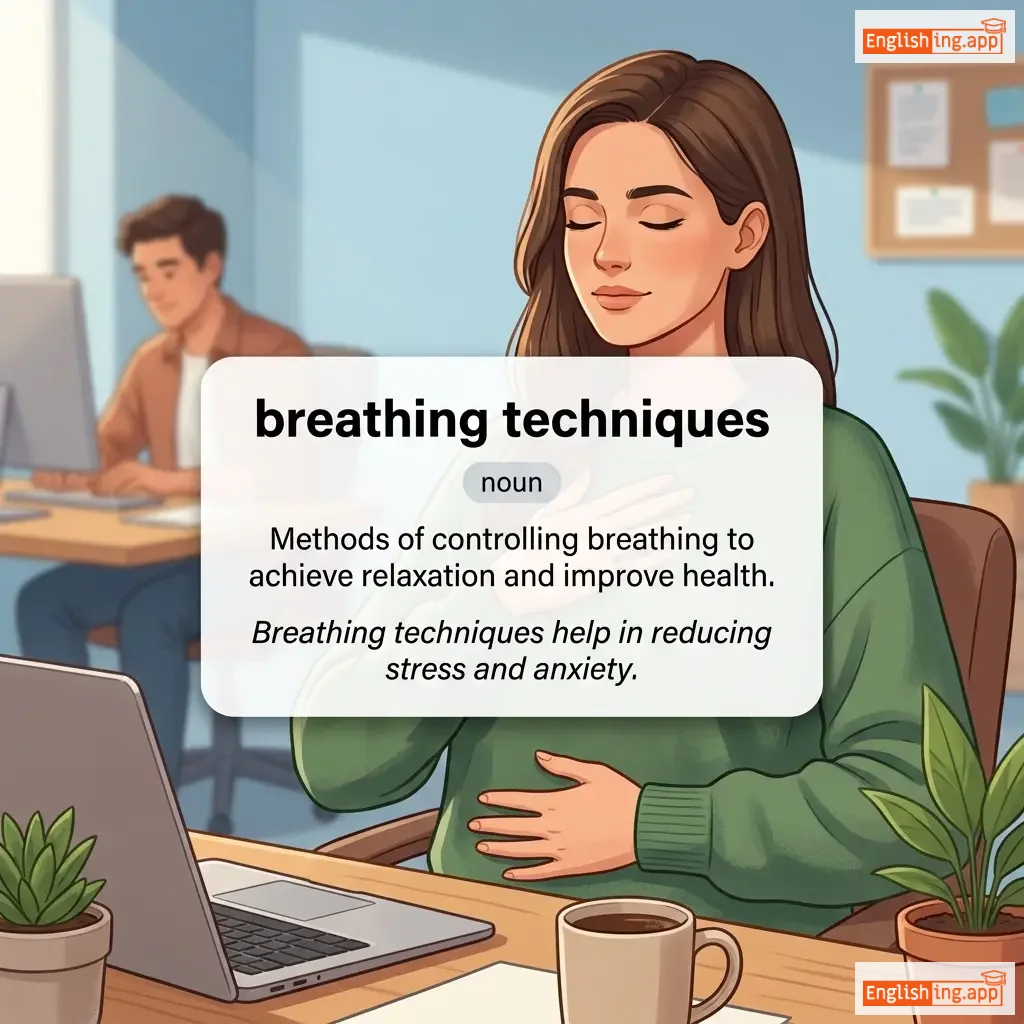
breathing techniques definition card — visual illustration of the meaning
noun
/ˈbriː.ðɪŋ tɛkˌniːks/
呼吸技巧 (hūxī jìqiǎo)

Methods of controlling breathing to achieve relaxation and improve health.

"Breathing techniques help in reducing stress and anxiety."

"呼吸技巧有助于减少压力和焦虑。" (Hūxī jìqiǎo yǒu zhù yú jiǎnshǎo yālì hé jiāolǜ.)
noun
/briːtʃ/

The back part of a gun barrel; a position of a baby in the womb where the buttocks or feet come out first at birth.

"The rifle was loaded through the breech."

noun
/ˈbriːtʃɪz/
膝盖长度裤子 (xīgài chángdù kùzi)

knee-length trousers; short pants

"He wore riding breeches for the equestrian event."
"他为马术比赛穿了膝盖长度裤子。" (Tā wèi mǎshù bǐsài chuānle xīgài chángdù kùzi.)
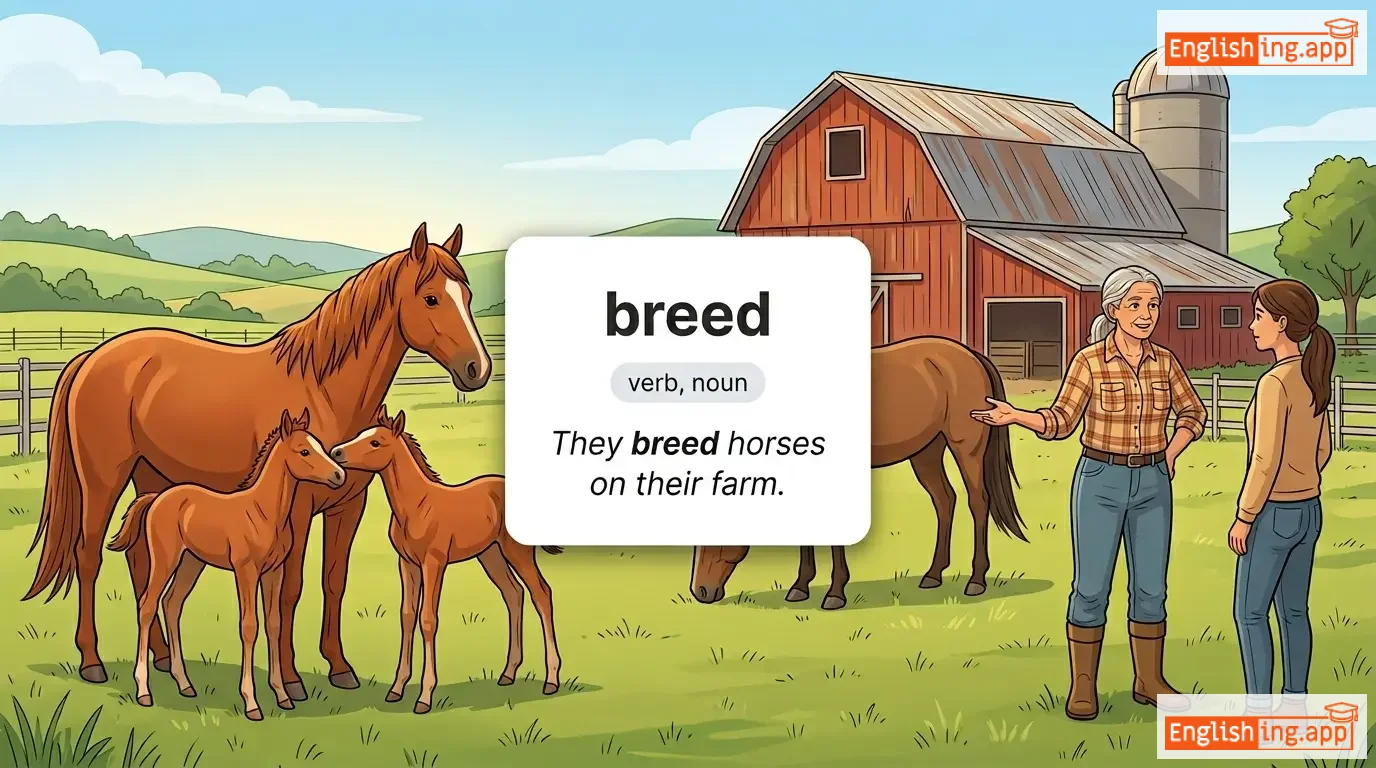
breed definition card — visual illustration of the meaning
verb, noun
/briːd/
繁殖,品种 (fánzhí, pǐnzhǒng)

To cause an animal to reproduce; to raise or train; a type or variety of animal or plant.

"They breed horses on their farm."

"他们在农场上养马。" (Tāmen zài nóngchǎng shàng yǎng mǎ.)