词汇表

英语词汇词典 | 单词含义、定义和示例

noun
/ˈbɒdi/
身体 (shenti)

the physical structure of a person or animal

"Exercise helps keep the body healthy."

"锻炼有助于保持身体健康。" (duànliàn yǒu zhù yú bǎochí shēntǐ jiànkāng.)
noun
/ˈbɒdiɡɑːrd/
保镖 (bǎobiāo)

a person employed to protect someone from harm

"The celebrity arrived with her bodyguard."

"那位名人带着她的保镖到达了。" (Nà wèi míngrén dàizhe tā de bǎobiāo dàodále.)
noun
/bɒɡ/
沼泽 (zhaoze)

an area of wet, spongy ground; a swamp or marsh

"The hikers got stuck in a bog."

"徒步旅行者陷入了一个沼泽。" (tubu lüxingzhe xianru le yige zhaoze.)
verb
/ˈbɒɡəl/
使迷惑 (shǐ míhuò)

to overwhelm or confuse; to be astonished or puzzled by something

"The complexity of the puzzle boggled his mind."

"这个谜题的复杂性让他的头脑感到困惑。" (Zhège mítí de fùzáxìng ràng tā de tóunǎo gǎndào kùnhuò.)
adjective
/ˈboʊɡəs/
伪造的 (weizao de)

false, fake, or not genuine

"The police arrested him for using a bogus ID card."

"警方因他使用伪造的身份证而逮捕了他。" (Jingfang yin ta shiyong weizao de shenfenzheng er daibu le ta.)
adjective
/boʊˈhiːmiən/
波希米亚 (bōxī mǐ yà)

unconventional, artistic, and free-spirited in lifestyle or appearance

"She decorated her apartment in a bohemian style with colorful fabrics."

"她用色彩缤纷的布料装饰了她的公寓,采用了波希米亚风格。" (Tā yòng sè cǎi bīn fēn de bù liào zhuāng shì le tā de gōng yù, cǎi yòng le bōxī mǐ yà fēng gé.)
🥘

Boil

verb
/bɔɪl/

to heat a liquid until it starts to bubble and turn into vapor.

"Please boil some water for tea."

adjective
/bɔɪld/
煮熟的 (zhǔ shú de)

cooked in boiling water

"She served boiled eggs for breakfast."

"她早餐时提供了煮鸡蛋。" (Tā zǎocān shí tígōng le zhǔ jīdàn.)
adjective
/ˈbɔɪstərəs/
喧闹 (xuānnào)

noisy, energetic, and cheerful; rowdy

"The children were boisterous during the birthday party."

"孩子们在生日派对上很喧闹。" (Háizimen zài shēngrì pàiduì shàng hěn xuānnào.)
adjective
/boʊld/
大胆 (dadan)

showing courage, confidence, or willingness to take risks

"She made a bold decision to start her own business."

"她做出了大胆的决定,开始了自己的生意。" (Ta zuo chule dadan de jueding, kaishi le ziji de shengyi.)
adverb
/ˈbəʊld.li/
大胆地; 毫不畏惧 (dàdǎn de; háo bù wèijù)

in a confident and brave way; without fear

"She boldly stepped forward to face the challenge."

"她勇敢地迈步向前,迎接挑战。" (Tā yǒnggǎn de màibù xiàng qián, yíngjiē tiǎozhàn.)
noun
/ˈboʊld.nəs/
大胆; 勇气 (dàdǎn, yǒngqì)

willingness to take risks; confidence and courage in behavior

"Her boldness in confronting the problem impressed everyone."

"她在面对问题时的大胆让所有人都印象深刻。" (Tā zài miànduì wèntí shí de dàdǎn ràng suǒyǒu rén dōu yìnxiàng shēnkè.)
noun
/boʊl/
树干 (shugan)

the trunk of a tree

"The bole of the tree was thick and strong."

"树干又粗又强壮。" (Shugan you cuo you qiangzhuang.)
noun
/bəˈlɛəroʊ/
博莱罗(西班牙舞蹈或前面开口的短外套) (bolero)

A Spanish dance in slow triple time, or a short jacket open at the front.

"The dancers performed a passionate bolero at the festival."

"舞者在节日中表演了热情的博莱罗。" (Wuzhe zai jieri zhong biaoyan le reqing de bolero.)
noun
/boʊl/
圆形种子荚(如棉花或亚麻) (bo er)

The rounded seed capsule of plants such as cotton or flax.

"The farmer examined the cotton boll to check its quality."

"农民检查了棉花的种子荚,以检查其质量。" (Nongmin jiancha le mianhua de zhongzi jia, yi jiancha qi zhiliang.)
bolster definition card — visual illustration of the meaning
🛏️

bolster

verb
/ˈboʊlstər/

To support, strengthen, or reinforce something.

"The manager bolstered the team's confidence with encouraging words."

verb
/boʊlt/
突然跑掉; 用螺栓固定某物 (bolt)

To move suddenly and quickly; also to fasten something with a bolt.

"The horse bolted from the stable after hearing a loud noise."

"马在听到一声大响后从马厩冲了出去。" (Mǎ zài tīngdào yī shēng dà xiǎng hòu cóng mǎjiù chōng le chūqù.)
noun/verb
/bɑːm/
炸弹 (zhàdàn)

A weapon that explodes; also to attack with bombs or to fail badly.

"The city was bombed heavily during the war."

"这座城市在战争期间遭到了严重轰炸。" (Zhèzuò chéngshì zài zhànzhēng qījiān zāodàole yánzhòng hōngzhà.)
verb
/bɒmˈbɑːrd/

to attack continuously with bombs, questions, or other forces

"Reporters bombarded the minister with difficult questions."

noun
/ˌbɒmbərˈdɪər/
炸弹员 (zhàdàn yuán)

a member of a bomber crew responsible for releasing bombs

"The bombardier released the bombs with precision."

"炸弹员精确地投下了炸弹。" (Zhàdàn yuán jīngquè de tóuxiàle zhàdàn.)
noun
/bɒmˈbɑːrdmənt/
轰炸 (hongzha)

a continuous attack with bombs or other projectiles

"The city endured a heavy bombardment during the war."

"这座城市在战争期间承受了猛烈的轰炸。" (Zhe zuo chengshi zai zhanzheng qijian chengshou le menglie de hongzha.)
noun
/ˈbɒmbæst/
夸张的语言 (kuazhang de yuyan)

speech or writing that is overly pompous and inflated

"His campaign speech was full of bombast but lacked real substance."
"他的竞选演讲充满了浮夸的言辞,但缺乏真正的实质内容。" (Tā de jìngxuǎn yǎnjiǎng chōngmǎn le fúkuā de yáncí, dàn quēfá zhēnzhèng de shízhì nèiróng.)
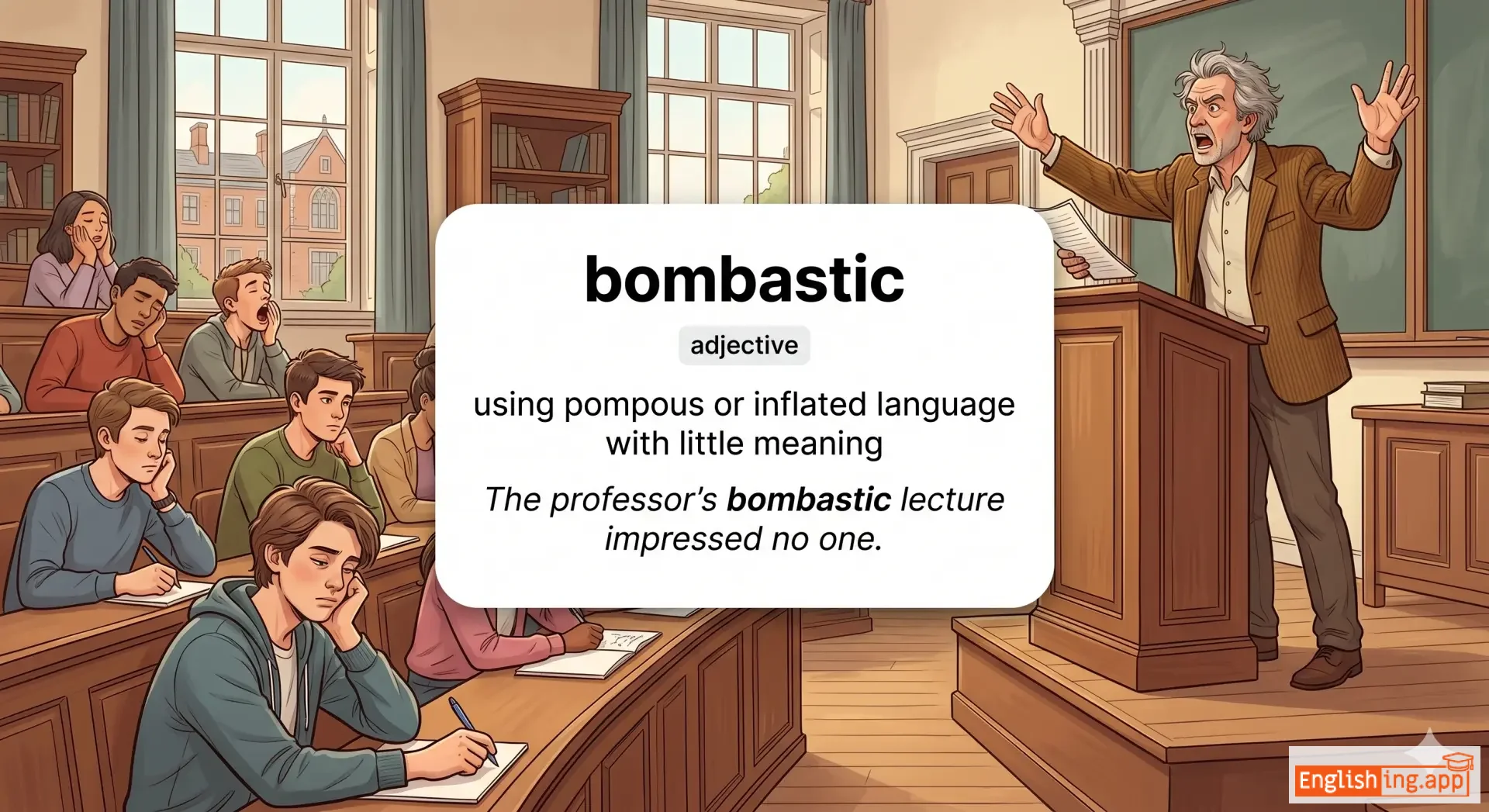
bombastic definition card — visual illustration of the meaning
adjective
/bɒmˈbæstɪk/
浮夸 (fu kua)

using pompous or inflated language with little meaning

"The professor’s bombastic lecture impressed no one."

"教授那场浮夸的讲座没有给任何人留下深刻印象。" (Jiaoshou na chang fu kua de jiangzuo mei you gei renhe ren liu xia shenke yinxiang.)
noun
/bɒmˈbeɪ dʌk/
邦贝鱼 (bang bei yu)

a type of lizardfish found in coastal waters, commonly eaten dried and salted in South Asia

"Bombay duck is a popular delicacy when dried and fried."

"邦贝鱼干燥并油炸后是一种受欢迎的美食。" (bang bei yu gan zao bing you zha hou shi yi zhong shou huan ying de mei shi)
noun
/ˈbɒmər/
轰炸机 (hong zhaji)

military aircraft designed to drop bombs on targets

"The bomber squadron flew over the city at dawn."

"轰炸机中队在黎明时飞过城市。" (hong zhaji zhongdui zai liming shi fei guo chengshi.)
noun
/ˈbɒmɪŋ/
轰炸 (hongzha)

an attack using bombs or explosives

"The city was devastated by the bombing."

"这座城市在轰炸中被摧毁。" (Zhe zuo chengshi zai hongzha zhong bei cuihui.)
adjective
/ˌboʊnəˈfaɪdi/
真正的; 真实的; 合法的 (zhēnzhèng de; zhēnshí de; héfǎ de)

genuine; authentic; legitimate

"She is a bonafide expert in her field."

"她是她领域中的真正专家。" (Tā shì tā lǐngyù zhōng de zhēnzhèng zhuānjiā.)
noun
/bəˈnæn.zə/
一种突然增加财富、好运或利润的情况或事件 (yī zhǒng túrán zēngjiā cáifù, hǎo yùn huò lìrùn de qíngkuàng huò shìjiàn)

a situation or event that creates a sudden increase in wealth, good fortune, or profits

"The oil discovery was a bonanza for the small country."

"石油的发现对这个小国来说是一个博南萨。" (Shíyóu de fāxiàn duì zhège xiǎo guó lái shuō shì yīgè bónán sà.)
🤝

Bond

noun
/bɒnd/

a connection or relationship between people or things

"The sisters share a close bond."

noun
/ˈbɑn.dɪdʒ/
奴役; 囚禁 (nuyì, qiújìn)

the state of being a slave; the state of being under the control of a force or influence

"The people fought to escape from the bondage of oppression."

"人们为了摆脱压迫的束缚而斗争。" (Rénmen wèile bǎituō yāpò de shùfù ér dòuzhēng.)
noun
/boʊn/
骨头 (gǔtóu)

the hard parts of a skeleton that form the structure of the body

"The dog buried a bone in the garden."

"狗把一块骨头埋在花园里。" (gǒu bǎ yī kuài gǔtóu mái zài huāyuán lǐ.)
noun
/ˈbɒnəmi/
友善 (yǒushàn)

Cheerful friendliness and geniality.

"The meeting was filled with laughter and bonhomie."

"会议充满了笑声和友善。" (Huìyì chōngmǎnle xiàoshēng hé yǒushàn.)
adjective
/ˈbɒni/
美丽的; 漂亮的; 快乐的 (měilì de; piàoliang de; kuàilè de)

cheerful; pretty; attractive

"The bonny child played happily in the garden."

"这个漂亮的孩子在花园里快乐地玩耍。" (Zhège piàoliang de háizi zài huāyuán lǐ kuàilè de wánshuǎ.)
noun
/ˈbəʊnəs/
奖金 (jiǎng jīn)

an extra payment or reward given in addition to what is usual or expected.

"Employees received a year-end bonus for their hard work."

"员工们因其辛勤工作而收到了年终奖金。" (Yuángōngmen yīn qí xīnqín gōngzuò ér shōu dào le niánzhōng jiǎngjīn.)
😮

boo

verb/noun
/buː/

To show disapproval by shouting 'boo'; or a sound made to surprise or scare.

"The audience began to boo the bad performance."

noun
/buːb/
傻瓜;胸部(口语) (shagua; xiongbu)

a foolish or clumsy person; an informal and sometimes rude term for a woman's breast

"He felt like a complete boob after forgetting the meeting."

"忘记会议后,他觉得自己像个十足的傻瓜。" (wangji huiyi hou ta juede ziji xiang ge shizu de shagua)
noun
/ˈbuːbi/
傻瓜 (shagua)

a foolish or gullible person; a silly individual

"He felt like a booby after making such a simple mistake."

"犯了这么简单的错误后,他觉得自己像个傻瓜。" (Fan le zheme jiandan de cuowu hou ta juede ziji xiang ge shagua)
📖

book

noun, verb
/bʊk/

A set of written, printed, or blank pages fastened together; to arrange for someone to have a seat, room, or ticket in advance.

"I booked a table at the restaurant for dinner."

noun
/bʊk ˈbaɪn.dər/
图书装订工 (túshū zhuāngdìng gōng)

a person whose job is to fasten the pages of books together and put covers on them

"The old book binder carefully restored the antique manuscript."

"老图书装订工仔细恢复了古老的手稿。" (Lǎo túshū zhuāngdìng gōng zǐxì huīfùle gǔlǎo de shǒugǎo.)
noun
/bʊk ˈsel.ər/
书商 (shū shāng)

a person who sells books, especially as a business

"The book seller recommended a great novel for my summer reading."

"书商推荐了我暑期阅读的一本好小说。" (Shū shāng tuījiànle wǒ shǔqī yuèdú de yī běn hǎo xiǎoshuō.)
noun
/ˈbʊkɪŋ/
预订 (yuding)

the act of reserving accommodations, tickets, etc.

"I made a booking for a hotel room in advance."

"我提前预定了一个酒店房间。" (Wǒ tíqián yùdìngle yīgè jiǔdiàn fángjiān.)
adjective
/ˈbʊkɪʃ/
爱书的人 (aishu de ren)

Spending much time reading or studying; scholarly but lacking practical experience.

"He was too bookish to enjoy outdoor activities."

"他太爱书了,无法享受户外活动。" (Ta tai aishu le, wufa xiangshou huwai huodong.)
noun
/ˈbʊkʃɒp/
书店 (shu dian)

a retail store where books are sold

"She spent an hour browsing in the small bookshop."

"她在那家小书店里逛了一个小时。" (ta zai na jia xiao shudian li guang le yi ge xiaoshi)
noun
/ˈbʊkstɔːr/
书店 (shu dian)

a shop where books are sold

"She spent an entire afternoon browsing in the bookstore."

"她整个下午都在书店里逛。" (ta zhengge xiawu dou zai shudian li guang)
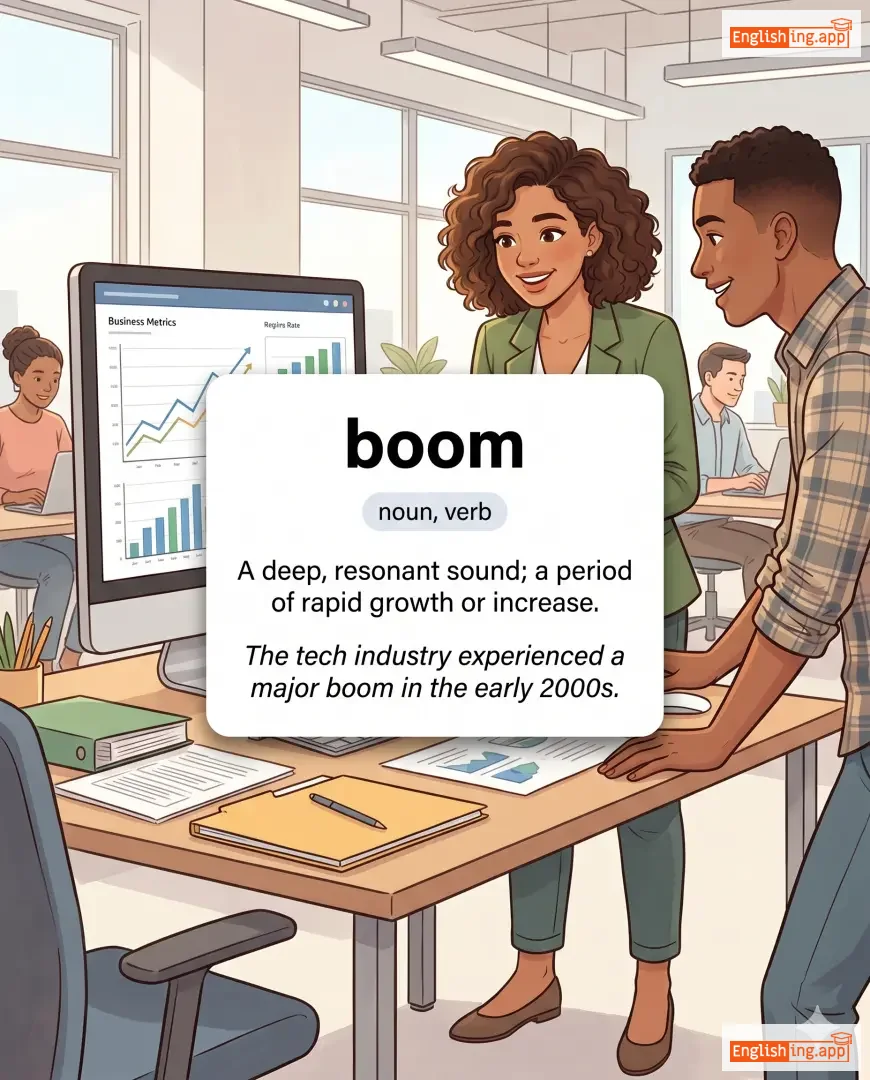
boom definition card — visual illustration of the meaning
📈

boom

noun, verb
/buːm/

A deep, resonant sound; a period of rapid growth or increase.

"The tech industry experienced a major boom in the early 2000s."

noun
/buːn/
恩赐 (enci)

A thing that is helpful or beneficial.

"The internet is a boon to modern education."
"互联网是现代教育的恩赐。" (hulianwang shi xiandai jiaoyu de enci.)
noun
/bʊər/
粗鲁的人 (cū lǔ de rén)

A rude, insensitive, or ill-mannered person.

"He was such a boor at the dinner table."

"他在晚餐桌上表现得非常粗鲁。" (Tā zài wǎn cān zhuō shàng biǎo xiàn de fēi cháng cū lǔ.)
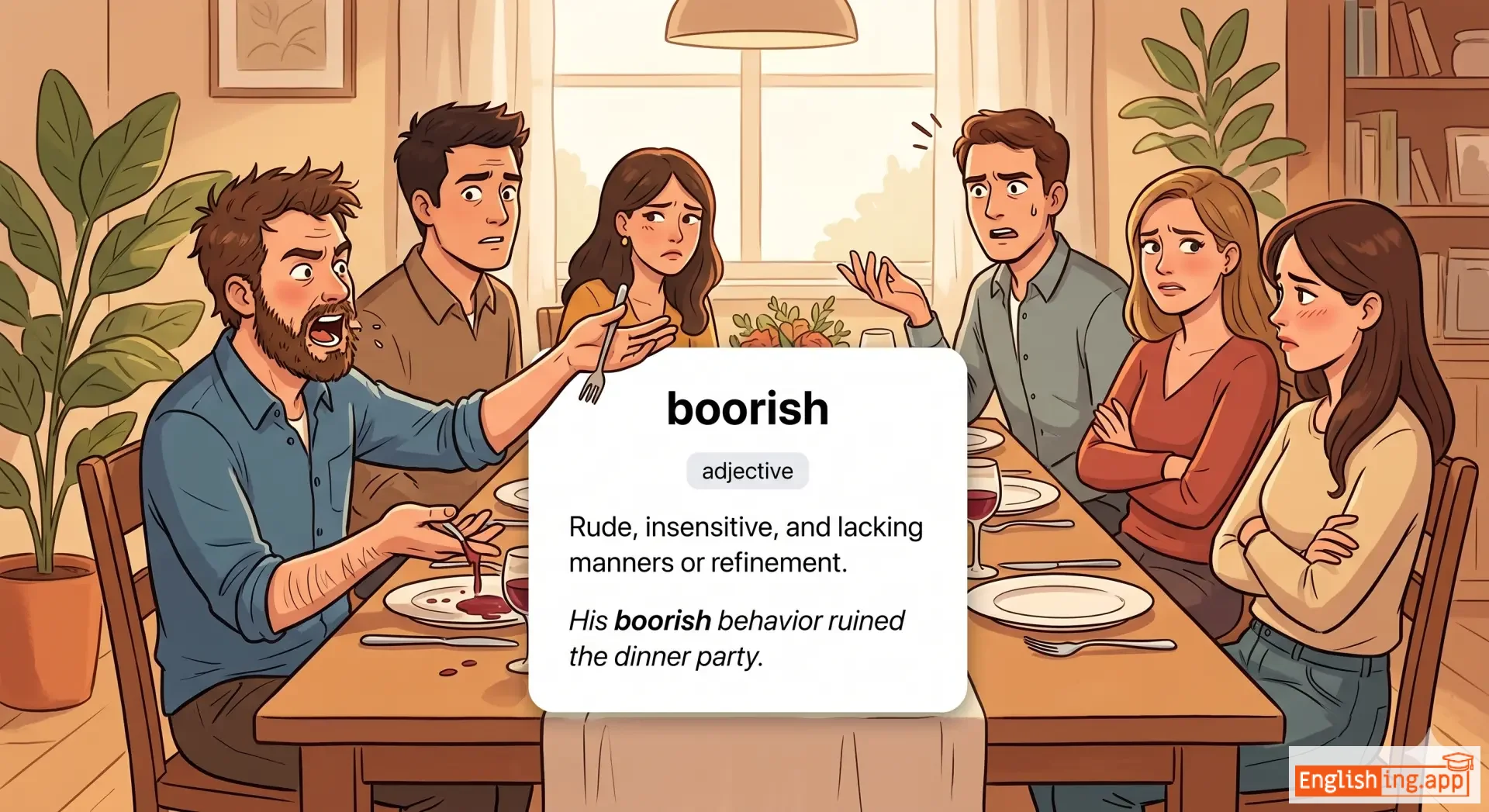
boorish definition card — visual illustration of the meaning
adjective
/ˈbʊərɪʃ/
粗鲁 (culu)

Rude, insensitive, and lacking manners or refinement.

"His boorish behavior ruined the dinner party."

"他的粗鲁行为毁了晚宴。" (Tā de cūlǔ xíngwéi huǐle wǎnyàn.)
verb
/buːst/
提升 (tíshēng)

To increase, improve, or raise something.

"The company launched a campaign to boost sales."

"公司启动了一项活动以提升销售。" (Gōngsī qǐdòngle yī xiàng huódòng yǐ tíshēng xiāoshòu.)
noun, verb
/buːt/
靴子 (xuezi)

A type of shoe that covers the ankle or higher; to start up a computer system.

"He put on his boots before going hiking."

"他在去远足前穿上了他的靴子。" (Ta zai qu yuanzu qian chuan shang le ta de xuezi.)