词汇表

英语词汇词典 | 单词含义、定义和示例

noun
/əˌɡlɒməˈreɪʃən/
聚集 (jùjí)

A mass or collection of things, sometimes clustered together.

"The city is an agglomeration of diverse cultures and communities."
"这座城市是各种文化和社区的聚集地。" (Zhè zuò chéngshì shì gèzhǒng wénhuà hé shèqū de jùjí dì.)
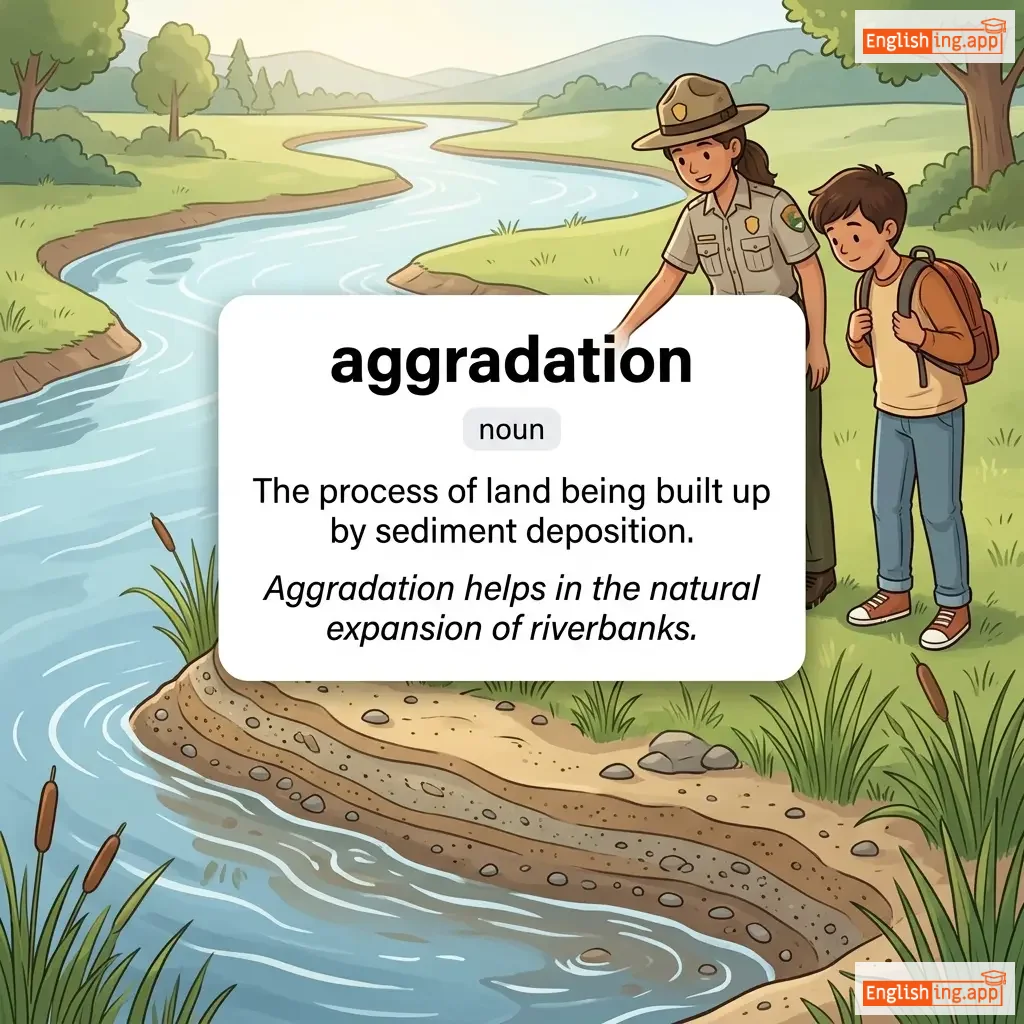
aggradation definition card — visual illustration of the meaning
noun
/ˌæɡ.rəˈdeɪ.ʃən/
通过沉积物沉积形成土地的过程 (tongguo chenjiwu chenji xingcheng tudi de guocheng)

The process of land being built up by sediment deposition.

"Aggradation helps in the natural expansion of riverbanks."
"加格雷德森有助于河岸自然扩展。" (Jiageliedesen youzhu yu he'an ziran kuozhan)
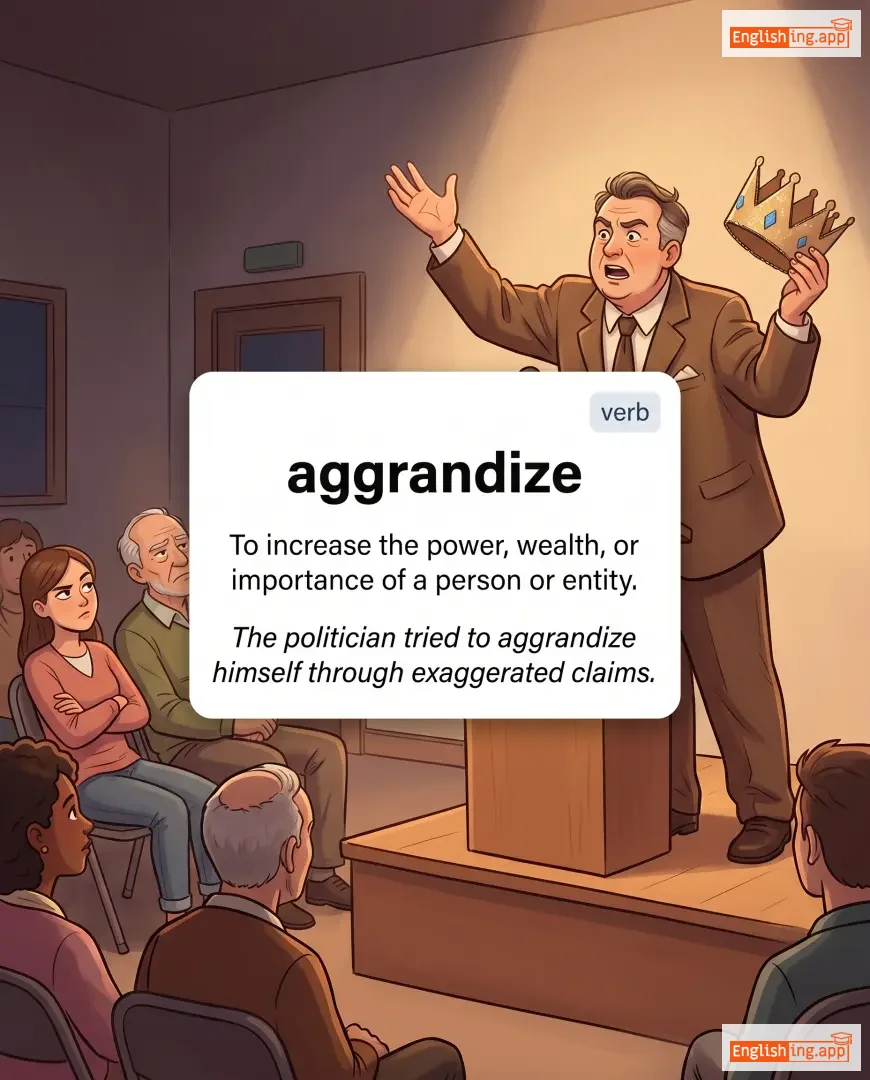
aggrandize definition card — visual illustration of the meaning
verb
/əˈɡræn.daɪz/
扩大 (kuò dà)

To increase the power, wealth, or importance of a person or entity.

"The politician tried to aggrandize himself through exaggerated claims."

"政治家试图通过夸张的说法来扩大自己的权力。" (Zhèngzhìjiā shìtú tōngguò kuāzhāng de shuōfǎ lái kuò dà zìjǐ de quánlì.)
verb
/ˈæɡ.rə.veɪt/
加重 (jiā zhòng)

To make a situation worse or more serious.

"Scratching the rash will only aggravate the condition."

"抓破皮疹只会加重病情。" (Zhuā pò pí zhěn zhī huì jiā zhòng bìng qíng.)
noun
/ˌæɡ.rəˈveɪ.ʃən/
恶化, 加剧 (jiā zhòng)

The act of making a situation worse or the state of being worsened.

"The delay caused great aggravation for the passengers."

"延误给乘客带来了极大的困扰。" (Yánwù gěi chéngkè dàilái le jí dà de kùnrǎo.)
aggregate definition card — visual illustration of the meaning
noun, verb, adjective
/ˈæɡ.rɪ.ɡət/ (noun/adjective), /ˈæɡ.rɪ.ɡeɪt/ (verb)
聚合, 总体 (jùhé, zǒngtǐ)

A whole formed by combining several elements; to combine into a total.

"The data was aggregated to provide a clearer picture of the market."

"数据已被聚合,以提供市场的更清晰图像。" (Shùjù yǐ bèi jùhé, yǐ tígōng shìchǎng de gèng qīngxī túxiàng.)
verb
/əˈɡrɛs/
攻击 (gōngjī)

to initiate an attack or show hostile behavior

"The army chose not to aggress without provocation."

"军队决定不在没有挑衅的情况下攻击。" (Jūnduì juédìng bù zài méiyǒu tiǎoxìn de qíngkuàng xià gōngjī.)
noun
/əˈɡrɛʃən/
侵略 (qinlue)

hostile or violent behavior towards others

"His sudden aggression surprised everyone in the meeting."

"他突然的侵略行为让会议中的每个人都感到震惊。" (Tā túrán de qinlue xíngwéi ràng huìyì zhōng de měi ge rén dōu gǎndào zhènjīng.)
adjective
/əˈɡrɛsɪv/
激进 (ji jin)

ready or likely to attack or confront; forceful

"The salesman used an aggressive strategy to close the deal."

"销售员使用了激进的策略来完成交易。" (Xiāoshòuyuán shǐyòngle jījìn de cèlüè lái wánchéng jiāoyì.)
verb
/əˈɡriːv/
使愤怒 (shǐ fènnù)

to cause distress or make someone feel resentful

"She felt aggrieved by the unfair decision."

"她因不公平的决定而感到不满。" (Tā yīn bù gōngpíng de juédìng ér gǎndào bùmǎn.)
adjective
/əˈɡæst/
震惊 (zhenjing)

filled with shock or horror

"The audience was aghast at the tragic scene."

"观众对悲惨的场面感到震惊。" (Guānzhòng duì bēicǎn de chǎngmiàn gǎndào zhènjīng.)
adjective
/ˈædʒ.aɪl/
快速且灵活 (kuai su qie ling huo)

able to move quickly and easily; quick and adaptable in thinking or action

"The startup team was agile in responding to market changes."
"初创团队在应对市场变化时非常灵活。" (Chu chuang tuan dui zai ying dui shi chang bian hua shi fei chang ling huo.)
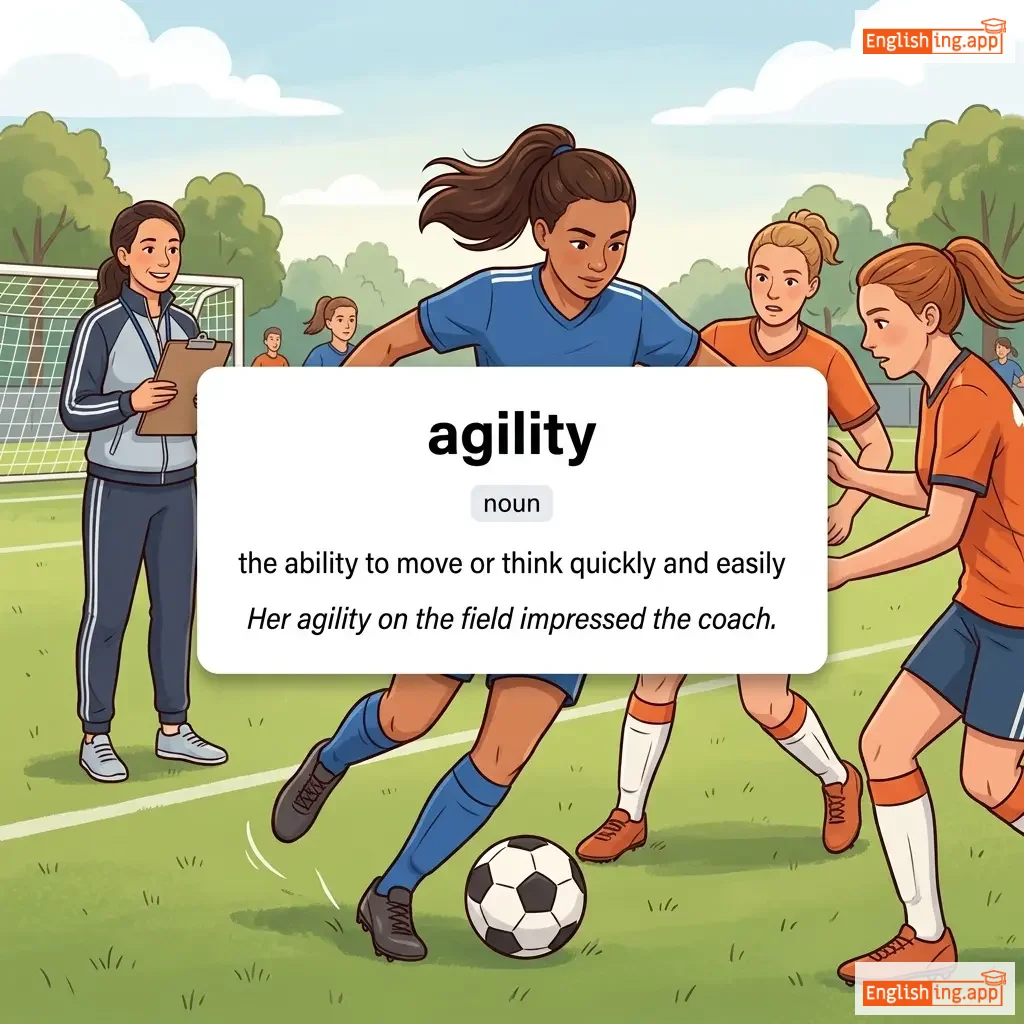
agility definition card — visual illustration of the meaning
noun
/əˈdʒɪl.ə.ti/
灵活性 (línghuóxìng)

the ability to move or think quickly and easily

"Her agility on the field impressed the coach."

"她在场上的灵活性给教练留下了深刻的印象。" (Tā zài chǎng shàng de línghuóxìng gěi jiàoliàn liú xià le shēnkè de yìnxiàng.)
verb
/ˈædʒ.ɪ.teɪt/
激进, 振奋 (jī jìn, zhèn fèn)

to stir up feelings or disturb; to campaign for change

"The protesters agitated for better working conditions."

"抗议者为更好的工作条件而激进。" (Kàng yì zhě wèi gèng hǎo de gōng zuò tiáo jiàn ér jī jìn.)
adjective
/ˈædʒɪteɪtɪd/
激动的; 焦虑的; 不安的; 以负面方式兴奋 (jīdòng de; jiāolǜ de; bù'ān de; yǐ fùmiàn fāngshì xīngfèn)

disturbed; anxious; restless; excited in a negative way

"He became agitated when he heard the bad news."

"当他听到坏消息时,他变得激动。" (Dāng tā tīngdào huài xiāoxi shí, tā biàn dé jīdòng.)
noun
/ˌædʒ.ɪˈteɪ.ʃən/
激动 (jīdòng)

a state of nervousness, excitement, or unrest; or action of stirring up public concern

"There was visible agitation among the crowd."

"人群中有明显的激动。" (Rénqún zhōng yǒu míngxiǎn de jīdòng.)
noun
/æɡˈnɒs.tɪk/
不可知论者 (bù kě zhī lùn zhě)

a person who believes that nothing is known or can be known about the existence of God; uncertain in belief

"He described himself as an agnostic rather than an atheist."

"他描述自己是一个不可知论者,而不是一个无神论者。" (Tā miáoshù zìjǐ shì yīgè bù kě zhī lùn zhě, ér bù shì yīgè wúshén lùn zhě.)
adverb
/əˈɡoʊ/
以前 (yiqian)

Used to indicate how long before the present something happened.

"I met her two years ago."

"我在两年前见过她。" (Wo zai liang nian qian jian guo ta.)
🤩

agog

adjective
/əˈɡɒɡ/

Highly excited by eagerness, curiosity, or anticipation.

"The children were agog with excitement as they waited for the magician to appear."

verb
/ˈæɡənaɪz/
煎熬 (jiānáo)

To suffer extreme physical or mental pain; to spend time worrying.

"She agonized for days over whether she had made the right decision."

"她为是否做出了正确的决定而痛苦了好几天。" (Tā wèi shìfǒu zuòchūle zhèngquè de juédìng ér tòngkǔle hǎo jǐ tiān.)
noun
/ˈæɡ.ə.ni/
极度的身体或精神痛苦;剧烈的疼痛 (jidu de shenti huo jingshen tongku; julei de tengtong)

extreme physical or mental suffering; intense pain

"He was in agony after the accident."

"事故后他痛苦不堪。" (shigu hou ta tongku bukan.)
adjective
/əˈɡrɛəriən/
农业的 (nongyede)

Related to farming, agriculture, or rural land.

"The country’s economy is still largely agrarian."
"这个国家的经济仍然主要是农业的。" (Zhege guojia de jingji rengran zhuyao shi nongyede.)
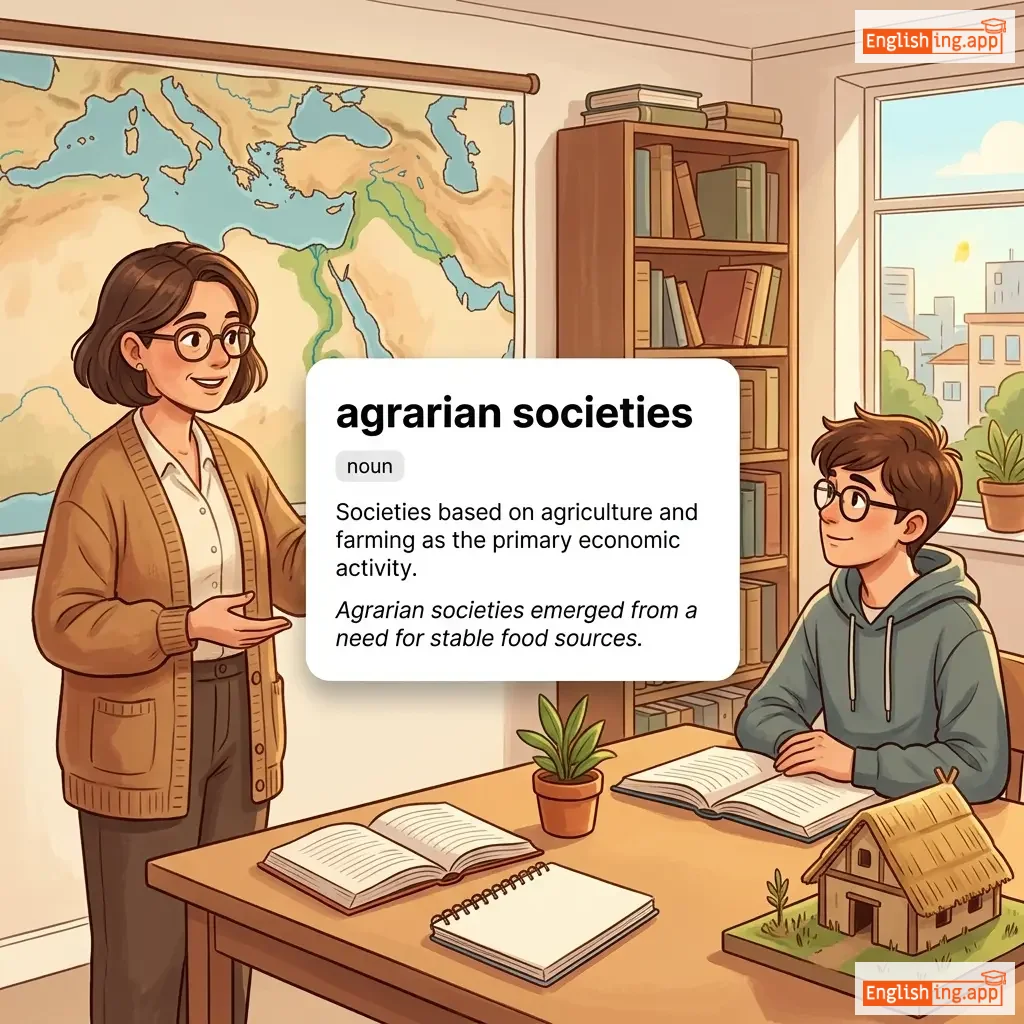
agrarian societies definition card — visual illustration of the meaning
noun
əˈɡrɛriən səˈsaɪətiz
农业社会 (nongye shehui)

Societies based on agriculture and farming as the primary economic activity.

"Agrarian societies emerged from a need for stable food sources."

"农业社会从对稳定食品来源的需求中产生。" (Nongye shehui cong dui wending shipin laiyuan de xuqiu zhong chansheng.)
agree definition card — visual illustration of the meaning
verb
/əˈɡriː/
同意 (tóng yì)

To have the same opinion or to consent to something.

"We all agreed on the plan."

"我们都同意这个计划。" (Wǒmen dōu tóngyì zhège jìhuà.)
adjective
/əˈɡriːəbl/
宜人; 令人愉快; 迷人; 愿意同意 (yí rén; lìng rén yú kuài; mí rén; yuàn yì tóng yì)

pleasant; enjoyable; delightful; willing to agree

"The weather is very agreeable today."

"今天的天气非常宜人。" (Jīntiān de tiānqì fēicháng yírén.)
agreement definition card — visual illustration of the meaning
noun
/əˈɡriː.mənt/
协议 (xieyi)

A mutual understanding or arrangement between two or more parties.

"They signed an agreement to work together."

"他们签署了一个合作协议。" (Tāmen qiānshǔle yīgè hézuò xiéyì.)
agreements definition card — visual illustration of the meaning
noun
/əˈɡriː.mənts/
协议 (xieyi)

Formal arrangements or understandings between two or more parties.

"Agreements strengthen partnerships."
"协议加强了伙伴关系。" (Xiéyì jiāqiángle huǒbàn guānxì.)
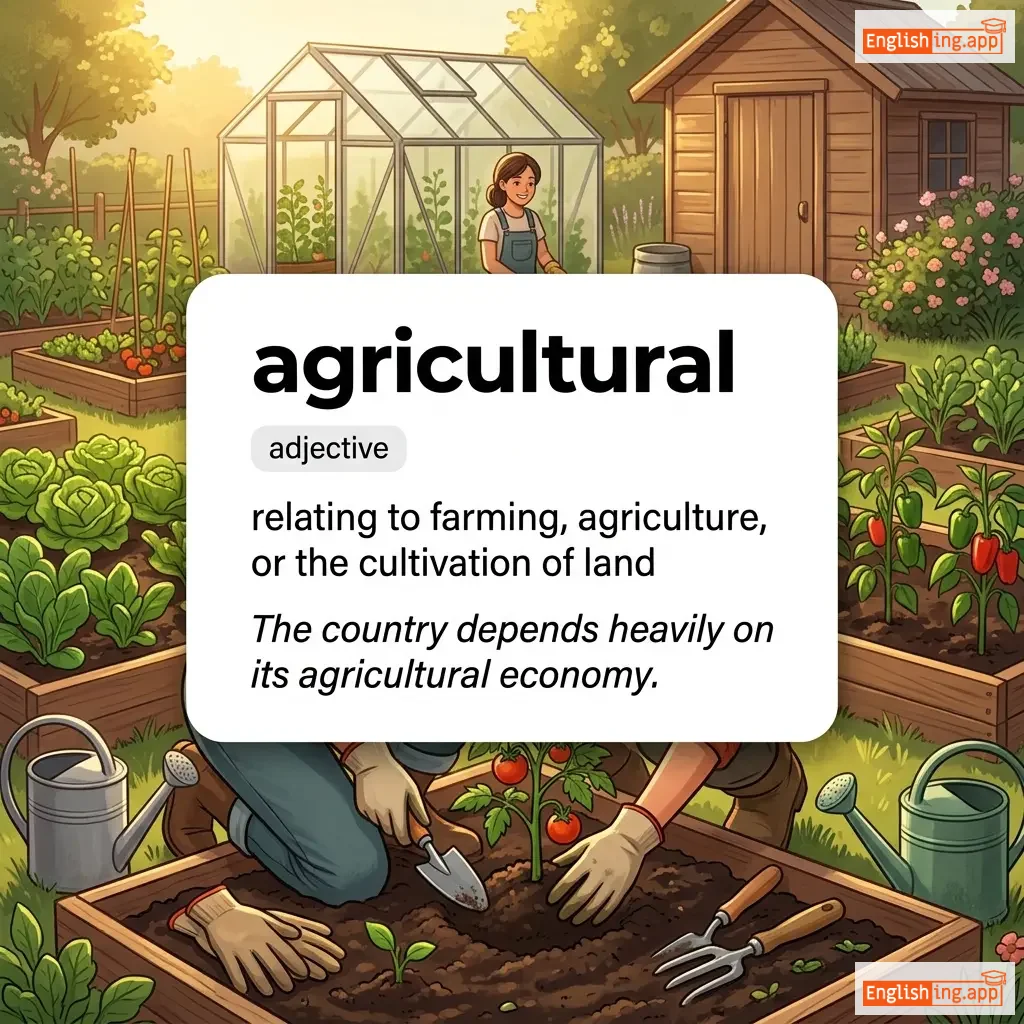
agricultural definition card — visual illustration of the meaning
adjective
/ˌæɡ.rɪˈkʌl.tʃər.əl/
农业的 (nongye de)

relating to farming, agriculture, or the cultivation of land

"The country depends heavily on its agricultural economy."
"该国在很大程度上依赖其农业经济。" (Gai guo zai hen da chengdu shang yilai qi nongye jingji.)
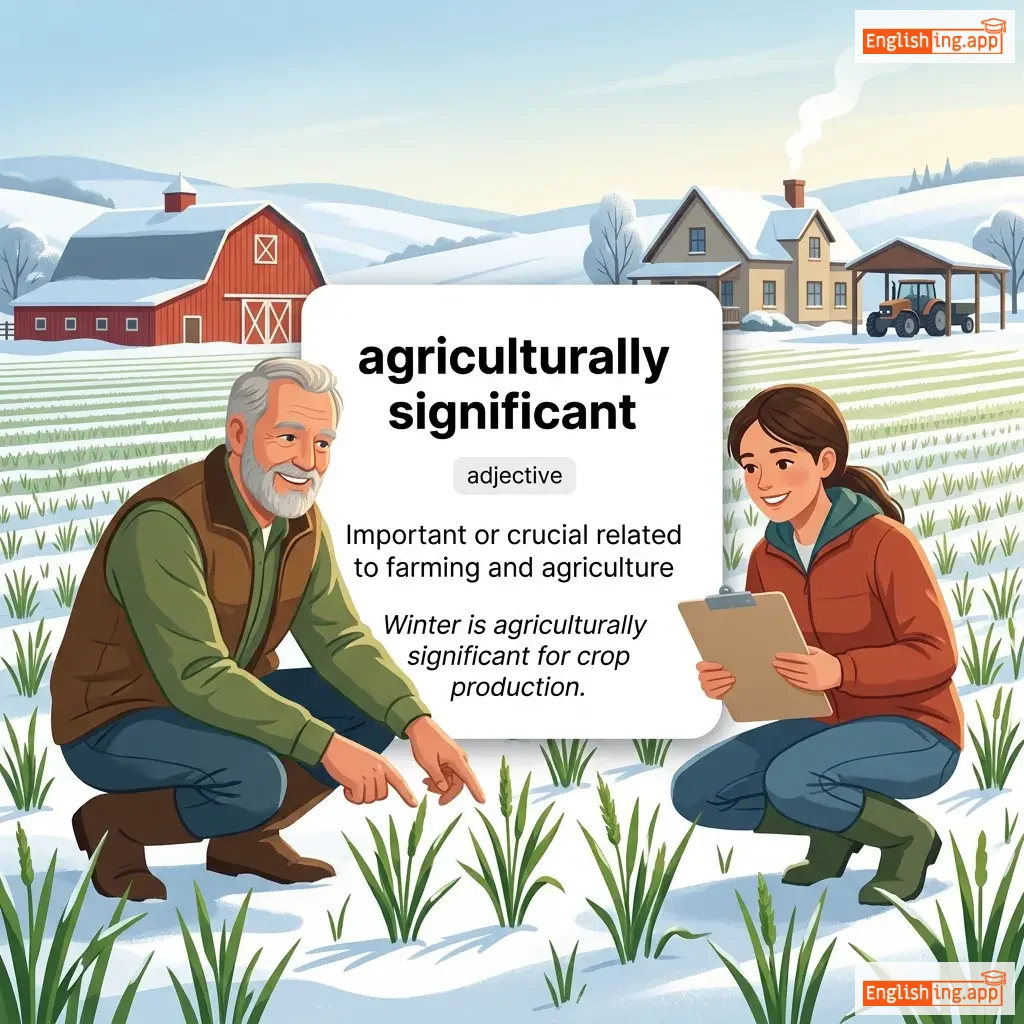
agriculturally significant definition card — visual illustration of the meaning
adjective
ˌæɡrɪˈkʌltʃərəli sɪɡˈnɪfɪkənt
与农业相关的重要 (yǔ nóngyè xiāngguān de zhòngyào)

Important or crucial related to farming and agriculture

"Winter is agriculturally significant for crop production."
"冬季对于作物生产至关重要。" (Dōngjì duìyú zuòwù shēngchǎn zhìguān zhòngyào.)
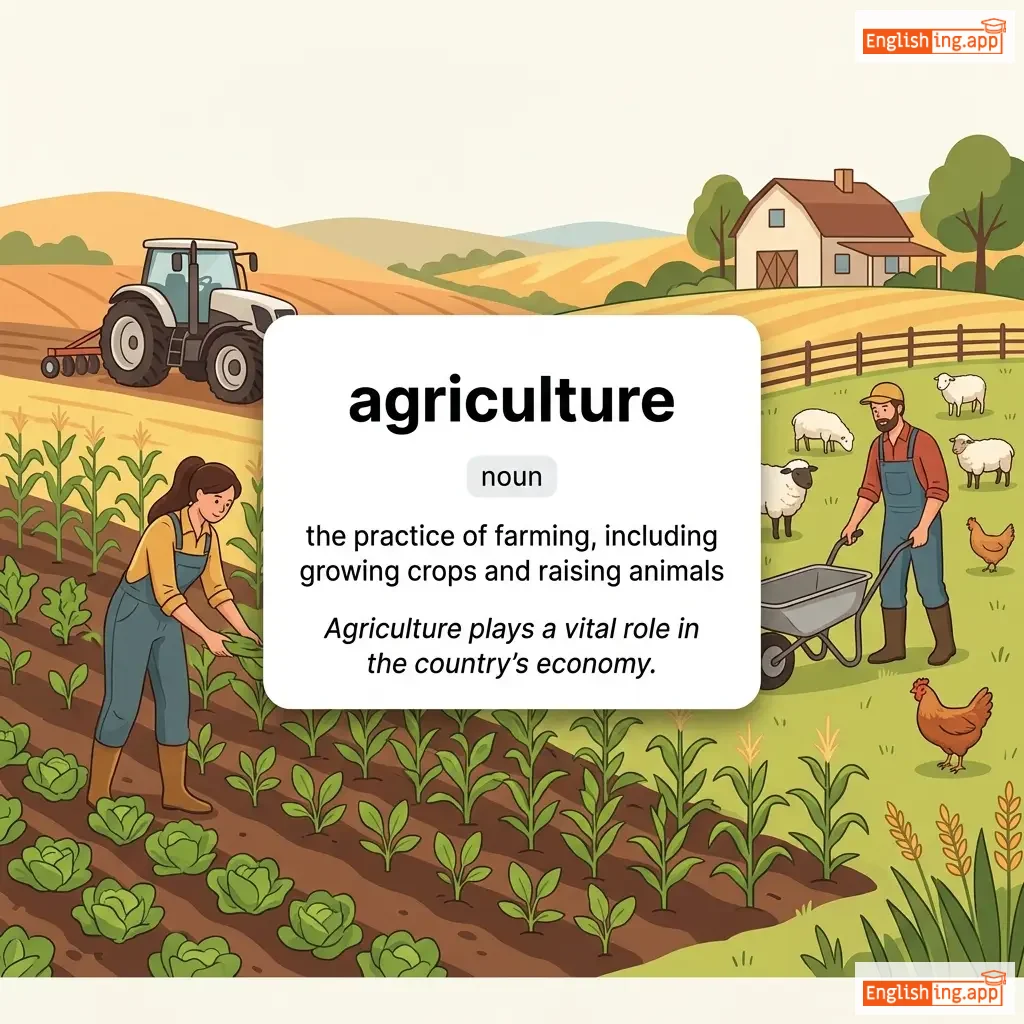
agriculture definition card — visual illustration of the meaning
noun
/ˈæɡrɪˌkʌltʃər/
农业 (nongye)

the practice of farming, including growing crops and raising animals

"Agriculture plays a vital role in the country's economy."
"农业在国家经济中发挥着重要作用。" (Nongye zai guojia jingji zhong fa hui zhuo zhongyao zuoyong.)
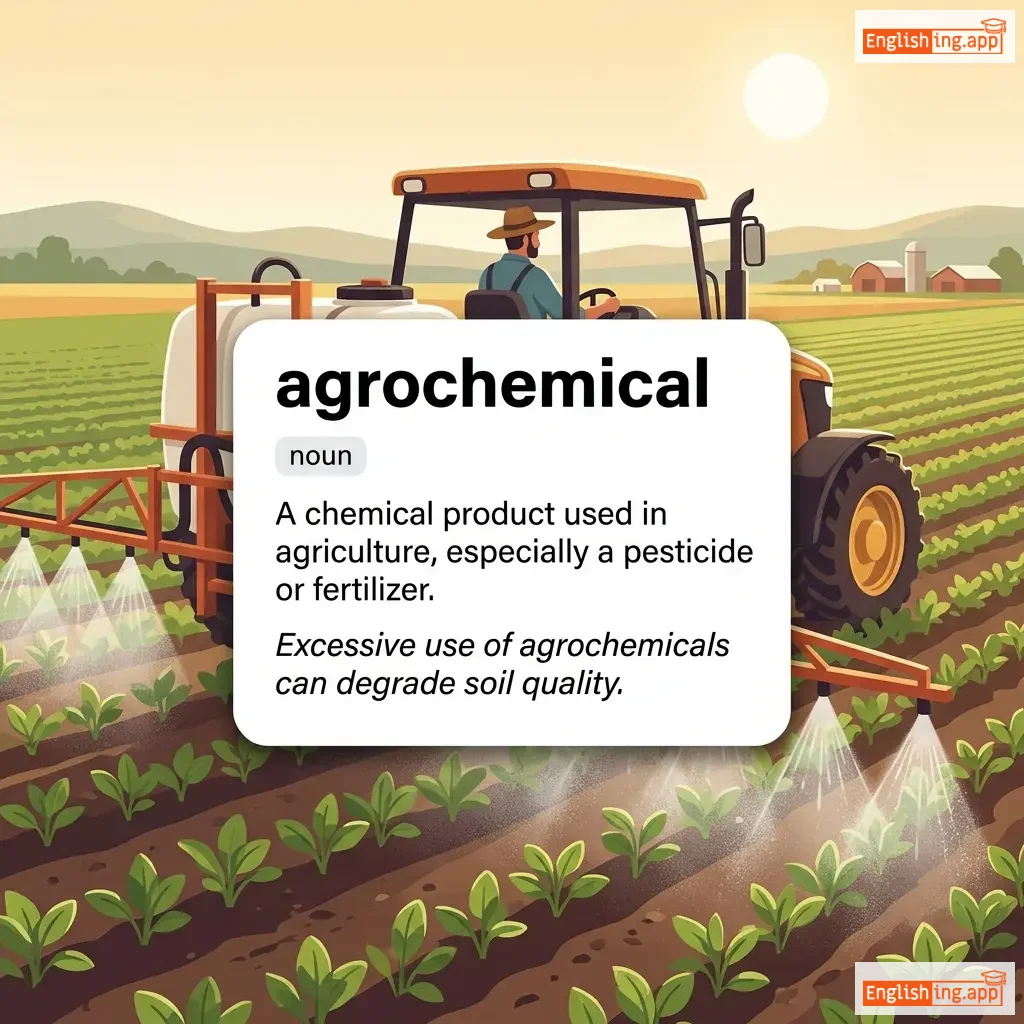
agrochemical definition card — visual illustration of the meaning
noun
ˌæɡ.rəʊˈkem.ɪ.kəl
农用化学品 (nong yong hua xue pin)

A chemical product used in agriculture, especially a pesticide or fertilizer.

"Excessive use of agrochemicals can degrade soil quality."
"过度使用农用化学品会降低土壤质量。" (guo du shi yong nong yong hua xue pin hui jiang di tu rang zhi liang)
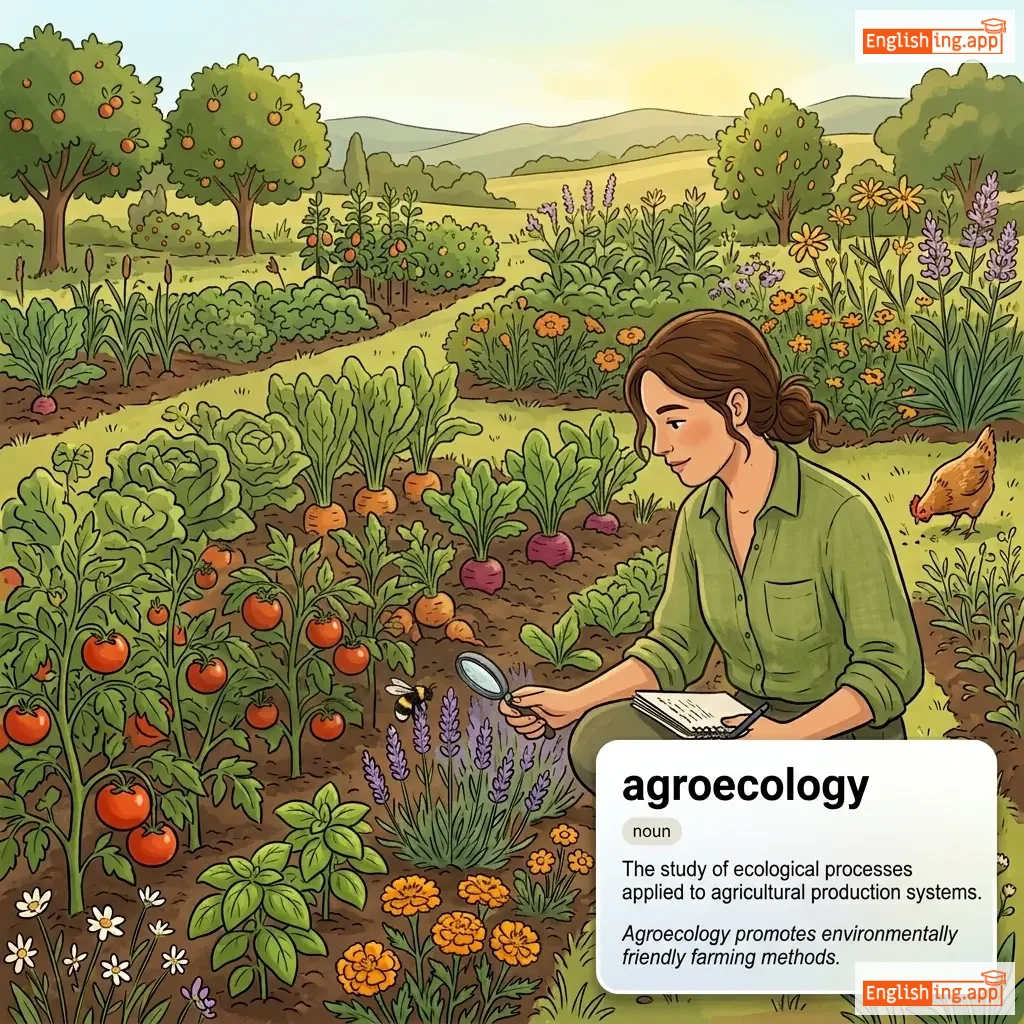
agroecology definition card — visual illustration of the meaning
noun
/ˌæɡ.roʊ.iˈkɑː.lə.dʒi/
农业生态学 (nongye shengtai xue)

The study of ecological processes applied to agricultural production systems.

"Agroecology promotes environmentally friendly farming methods."
"农业生态学促进环保农业方法。" (Nongye shengtai xue cujin huanbao nongye fangfa.)
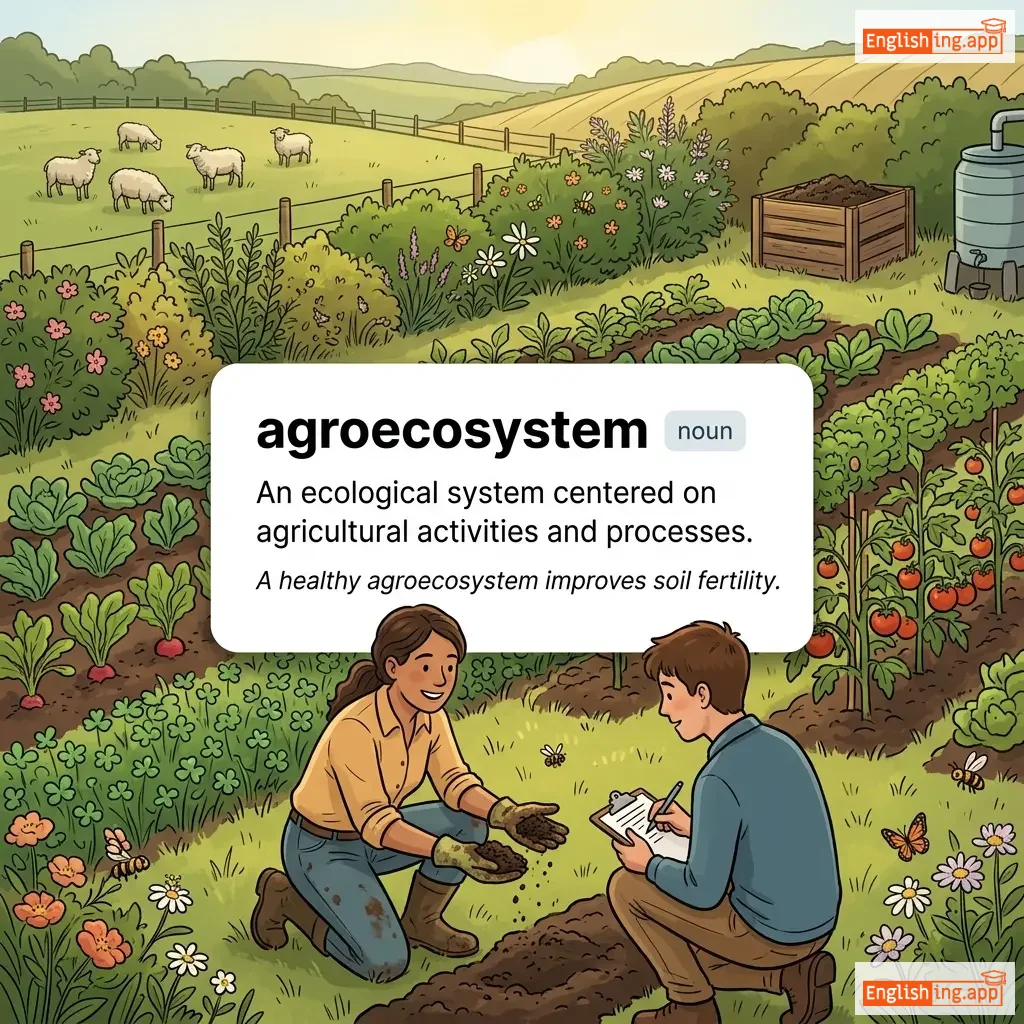
agroecosystem definition card — visual illustration of the meaning
noun
ˌæɡ.roʊˈiː.koʊˌsɪs.təm
农业生态系统 (nongye shengtai xitong)

An ecological system centered on agricultural activities and processes.

"A healthy agroecosystem improves soil fertility."
"健康的农业生态系统提高土壤肥力。" (Jiankang de nongye shengtai xitong tigao turang feilv.)
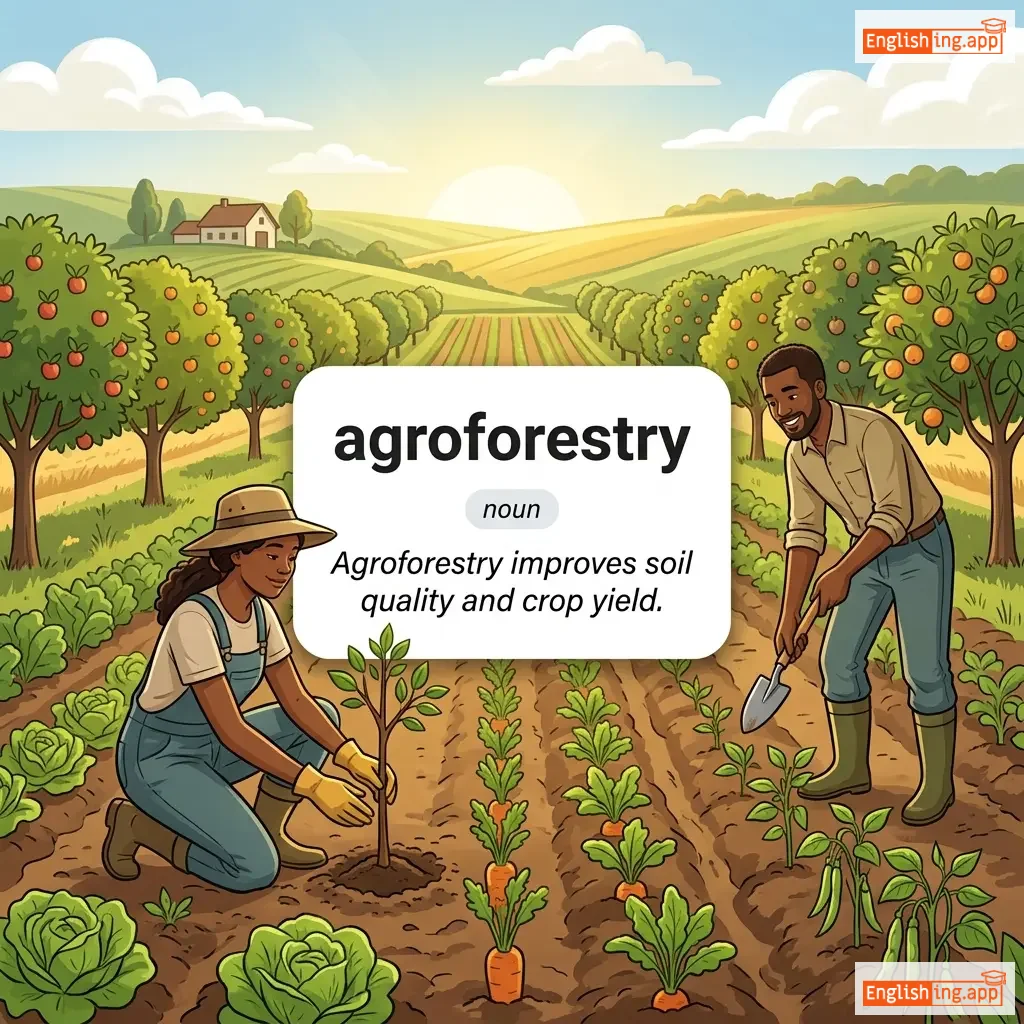
agroforestry definition card — visual illustration of the meaning
noun
ˌæɡ.roʊˈfɔːr.ɪ.stri
农业林业 (nongye linye)

A land use management system in which trees or shrubs are grown around or among crops or pastureland.

"Agroforestry improves soil quality and crop yield."

"农业林业改善了土壤质量和作物产量。" (Nongye linye gaishan le tulao zhiliang he zuowu chanyan.)
noun
/əˈɡrɒnəmɪst/
农业学家 (nongxuejia)

A scientist who studies soil management and crop production.

"The agronomist suggested new methods to improve rice yields."
"农业学家建议了一些新的方法,以提高水稻产量。" (Nongxuejia jianyi le yixie xinde fangfa, yi tigao shuidao chanliang.)
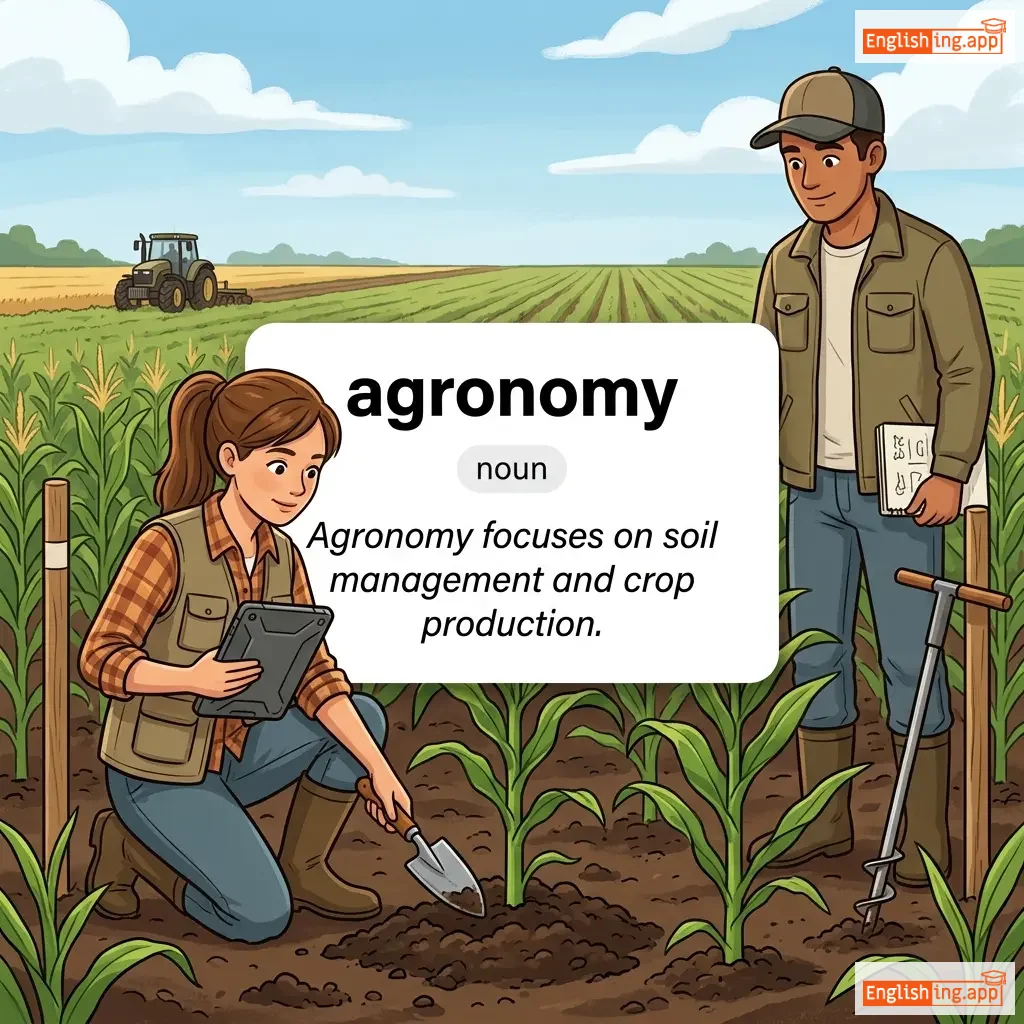
agronomy definition card — visual illustration of the meaning
noun
/əˈɡrɒnəmi/
农业学 (nongye xue)

The science and practice of soil management and crop production, focusing on the principles of plant and soil science to optimize agricultural productivity.

"Agronomy focuses on soil management and crop production."

"农业学专注于土壤管理和作物生产。" (Nóngyè xué zhuānzhù yú tǔrǎng guǎnlǐ hé zuòwù shēngchǎn.)
interjection
/ɑː/
(a)

used to express realization, surprise, or relief

"Ah, now I understand what you mean."

"啊,现在我明白你是什么意思了。" (A, xiànzài wǒ míngbái nǐ shì shénme yìsi le.)
adverb
/əˈhɛd/
前面 (qianmian)

in front; in advance; before someone or something in position or progress

"She walked ahead of the group."

"她走在小组前面。" (Tā zǒu zài xiǎozǔ qiánmiàn.)
noun, verb
/eɪd/
援助 (yuánzhù)

help or support, typically of a practical nature

"The volunteers provided aid to the flood victims."

"志愿者为洪水受害者提供了帮助。" (Zhìyuànzhě wèi hóngshuǐ shòuhài zhě tígōng le yuánzhù.)
🧑‍💼

aide (éid)

noun
/eɪd/
助手 (zhùshǒu)

An assistant or helper, especially to an important person.

"The senator’s aide organized the meeting with journalists."

"参议员的助手组织了与记者的会议。" (Cānyìyuán de zhùshǒu zǔzhīle yǔ jìzhě de huìyì.)
noun
/ˌeɪd də ˈkæmp/
军官,担任高级军官的机密助手 (jun guan, dan ren gao ji jun guan de ji mi zhu shou)

A military officer acting as a confidential assistant to a senior officer.

"The general was accompanied by his aide-de-camp during the ceremony."

"在仪式期间,军官与他的随行军官共同出席。" (Zai yishi qi jian, jun guan yu ta de sui xing jun guan gong tong chu xi.)
noun
/eɪdz/
艾滋病 (àizī bìng)

Acquired Immune Deficiency Syndrome, a disease of the immune system caused by HIV

"AIDS is a major global health concern."

"艾滋病是一个重大全球健康问题。" (Àizī bìng shì yīgè zhòngdà quánqiú jiànkāng wèntí.)
verb
/eɪl/
生病 (sheng bing)

to be ill or suffer from a physical or mental problem; to trouble or afflict

"She has been ailing since last winter."

"她从去年冬天开始一直生病。" (ta cong qunian dongtian kaishi yizhi shengbing)
adjective, verb
/ˈeɪlɪŋ/
生病的 (shengbing de)

suffering from illness or poor health; experiencing problems or decline

"The ailing patient slowly began to recover after treatment."

"生病的病人在治疗后慢慢开始康复。" (shengbing de bingren zai zhiliao hou manman kaishi kangfu)
noun
/ˈeɪlmənt/
疾病 (jíbìng)

An illness, typically a minor one.

"He went to the doctor for a minor stomach ailment."

"他因小的胃病去看了医生。" (Tā yīn xiǎo de wèibìng qù kànle yīshēng.)
verb
/eɪm/
瞄准 (miáozhǔn)

to direct a weapon, object, or effort at a target; to intend or plan

"He aimed the ball at the goal."

"他瞄准了球朝着目标。" (Tā miáozhǔnle qiú cháo zhe mùbiāo.)
adjective
/ˈeɪmləs/
漫无目的; 无目标 (aimles)

without purpose or direction; lacking a goal

"He wandered around the city in an aimless manner."

"他在城市中漫无目的地游荡。" (Tā zài chéngshì zhōng màn wú mùdì de yóudàng.)
noun
/ɛər/
空气 (kongqi)

The invisible mixture of gases that surrounds the earth and is breathed in by people and animals.

"The air is fresh after the rain."

"雨后空气清新。" (Yǔ hòu kōngqì qīngxīn.)
noun
/ˈeər kənˈdɪʃ.ən.ər/
空调 (kongtiao)

a system that controls the temperature, humidity, and air quality in a building or room

"We turned on the air conditioner because it was too hot outside."

"我们打开了空调,因为外面太热了。" (Wǒmen dǎkāi le kōngtiáo, yīnwèi wàimiàn tài rè le)
noun
/ˈeər fɔːrs/
空军 (kongjun)

the military organization of a country that uses aircraft for fighting

"The air force conducted a training exercise over the mountains."

"空军在山脉上空进行了一次训练演习。" (Kongjun zai shanmai shangkong jinxing le yici xunlian yanxi.)