词汇表

英语词汇词典 | 单词含义、定义和示例

noun
/əˈdʌltərənt/
掺假物质 (chānjiǎ wùzhí)

a substance added to something else, often food or drink, to reduce its quality or strength

"The laboratory found an adulterant in the milk samples."

"实验室在牛奶样本中发现了掺假物质。" (Shiyan shi zai niunai yangben zhong faxianle chanjia wuzhi.)
adulterate definition card — visual illustration of the meaning
verb
/əˈdʌltəreɪt/
掺假 (chānjiǎ)

to make something poorer in quality by adding another substance, usually of lower quality

"The company was fined for adulterating its products with cheap chemicals."

"该公司因将其产品篡改成便宜的化学品而被罚款。" (Gāi gōngsī yīn jiāng qí chǎnpǐn cuàngǎi chéng piányí de huàxué pǐn ér bèi fákuǎn.)
adjective
/əˈdʌltəreɪtɪd/

describes food, drink, or medicine made weaker or impure by the addition of another substance

"Authorities seized adulterated drugs from the warehouse."

adulteration definition card — visual illustration of the meaning
noun
əˌdʌl.təˈreɪ.ʃən
掺假 (chānjiǎ)

The action of making something poorer in quality by the addition of another substance.

"Food adulteration poses a serious health risk."

"食品掺假对健康构成严重风险。" (Shípǐn chānjiǎ duì jiànkāng gòu chéng yánzhòng fēngxiǎn.)
verb
/ˈæd.ʌm.breɪt/
预示 (yùshì)

to foreshadow or suggest something in an unclear or indirect way

"The report adumbrates future economic challenges."

"报告预示着未来的经济挑战。" (Bàogào yùshìzhe wèilái de jīngjì tiǎozhàn.)
noun
/ˌæd.ʌmˈbreɪ.ʃən/
模糊的预兆 (móhū de yùzhào)

a vague foreshadowing or symbolic representation of something

"The play offers an adumbration of the political unrest to come."

"这部剧提供了即将到来的政治动荡的模糊预兆。" (Zhè bù jù tígōngle jíjiāng dàolái de zhèngzhì dòngdàng de móhū yùzhào.)
verb
/ədˈvæns/
前进 (qianjin)

to move forward or make progress

"The army advanced towards the city."

"军队向城市前进。" (Jundui xiang chengshi qianjin.)
adjective
/ədˈvænst/
先进 (xianjin)

highly developed or complex

"He is studying an advanced level of mathematics."

"他正在学习高级数学。" (Tā zhèngzài xuéxí gāojí shùxué.)
advancement definition card — visual illustration of the meaning
noun
/ədˈvɑːns.mənt/
进展 (jin zhan)

The process of promoting or moving forward; development or improvement.

"Scientific advancements benefit society."
"科学进展有利于社会。" (Kēxué jìnzhǎn yǒulì yú shèhuì.)
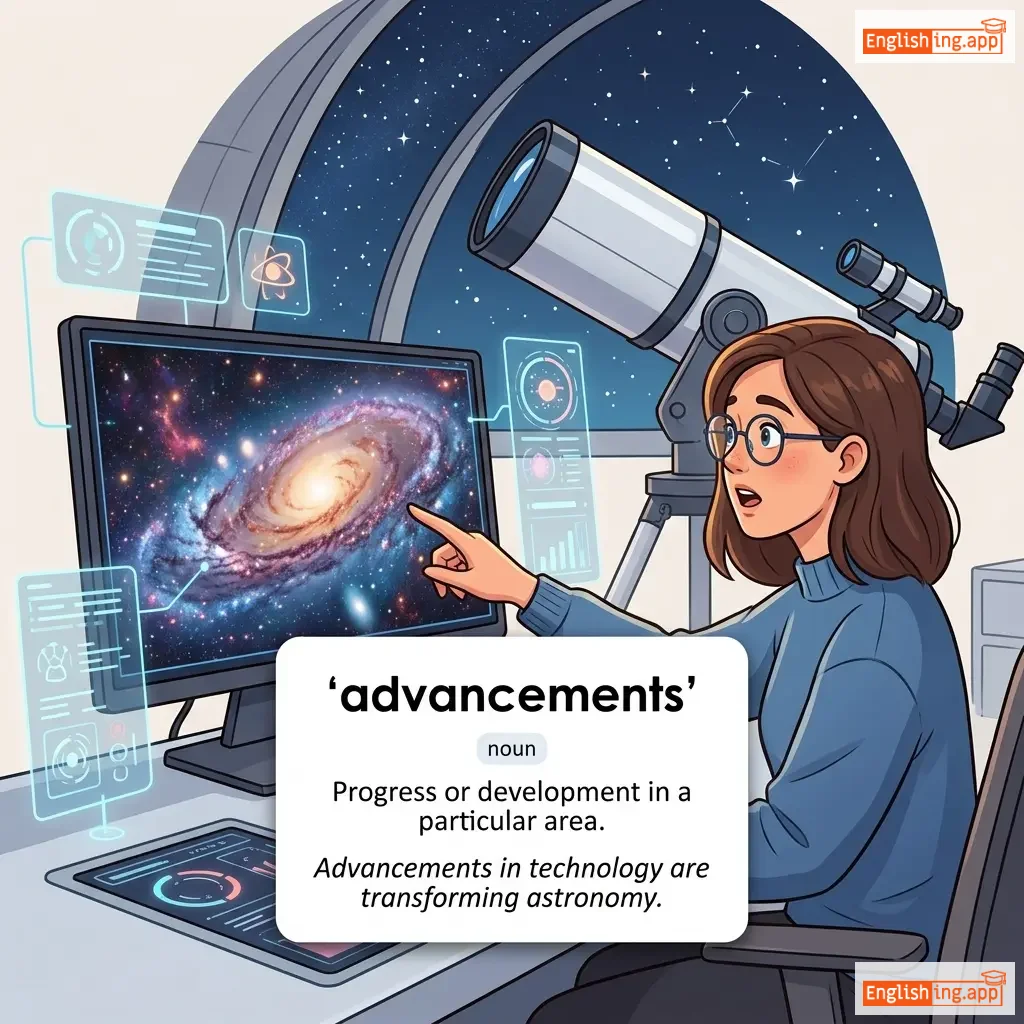
advancements definition card — visual illustration of the meaning
noun
/ədˈvɑːns.mənts/
进展 (jìnzhǎn)

Progress or development in a particular area.

"Advancements in technology are transforming astronomy."

"技术进步正在转变天文学。" (Jìshù jìnbù zhèngzài zhuǎnbiàn tiānwénxué.)
noun
/ədˈvæntɪdʒ/
优势 (you shi)

a condition or circumstance that puts one in a favorable position

"Having strong communication skills is a great advantage in business."

"拥有强大的沟通技巧是商业中的一大优势。" (Yong you qiang da de gou tong ji qiao shi shang ye zhong de yi da you shi.)
adjective
/ˌædvənˈteɪdʒəs/
有利的; 有益的; 有利润的 (yǒulì de; yǒuyì de; yǒu lìrùn de)

beneficial; favorable; profitable

"This position offers advantageous opportunities for career growth."

"这个职位为职业发展提供了有利的机会。" (Zhège zhíwèi wèi zhíyè fāzhǎn tígōngle yǒulì de jīhuì.)
noun
/ˈæd.vənt/
到来 (daolai)

The arrival of a notable person, thing, or event.

"The advent of the internet changed the way people communicate."

"互联网的到来改变了人们交流的方式。" (Hulianwang de daolai gaibian le renmen jiaoliu de fangshi.)
adjective
/ˌæd.vɛnˈtɪʃ.əs/
偶然的 (ǒurán de)

Happening by chance or accident, not planned.

"His success was partly due to adventitious circumstances."
"他的成功部分归因于偶然的情况。" (Tā de chénggōng bùfèn guīyīn yú ǒurán de qíngkuàng.)
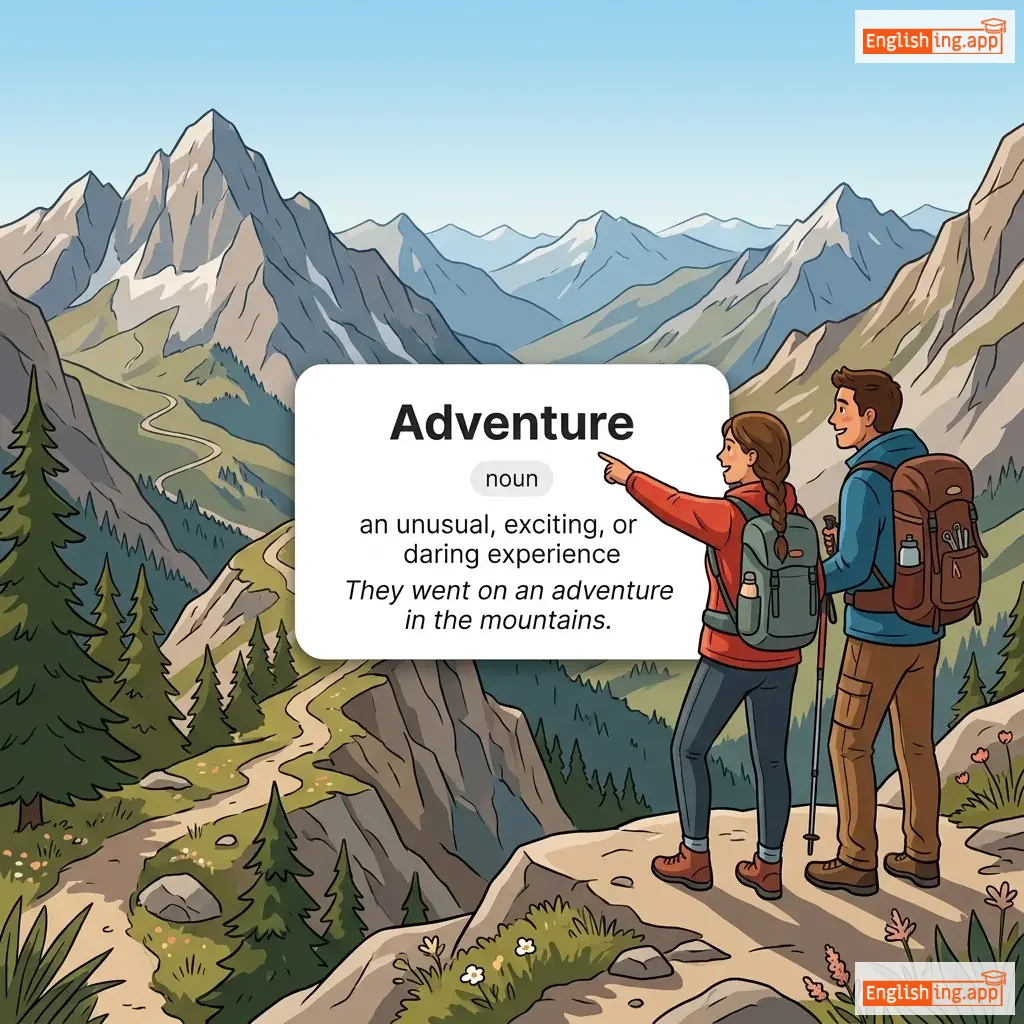
Adventure definition card — visual illustration of the meaning
noun
/ədˈvɛntʃər/
冒险 (màoxiǎn)

an unusual, exciting, or daring experience

"They went on an adventure in the mountains."

"他们去山里进行了一次冒险。" (Tāmen qù shānlǐ jìnxíngle yī cì màoxiǎn.)
Adventure Seekers definition card — visual illustration of the meaning
noun
ədˈvɛnʧər ˈsiːkərz
冒险者 (màoxiǎn zhě)

People who actively look for exciting and potentially risky activities or experiences.

"Sajek Valley is a popular destination for adventure seekers."

"萨杰克谷是冒险者的热门目的地。" (Sàjiékè gǔ shì màoxiǎn zhě de rèmén mùdìdì.)
noun
/ədˈvɛntʃərər/
冒险家 (maoxianjia)

a person who seeks exciting, risky, or unusual experiences; someone who explores new or unknown places

"The adventurer traveled deep into the jungle in search of ancient ruins."

"这位冒险家深入丛林寻找古老的遗迹。" (zhe wei maoxianjia shenru conglin xunzhao gulo de yiji)
adventurous definition card — visual illustration of the meaning
adjective
/ədˈventʃərəs/
冒险的; 喜欢冒险的 (màoxiǎn de; xǐhuān màoxiǎn de)

willing to take risks; seeking excitement; daring

"She is an adventurous person who loves trying new foods."

"她是一个喜欢冒险的人,喜欢尝试新食物。" (Tā shì yīgè xǐhuān màoxiǎn de rén, xǐhuān chángshì xīn shíwù.)
adversarial definition card — visual illustration of the meaning
adjective
/ˌæd.vɚˈser.i.əl/
对抗性 (duìkàngxìng)

Involving or characterized by conflict or opposition; antagonistic.

"The two companies have an adversarial relationship in the market."

"这两家公司在市场上有对抗性的关系。" (Zhè liǎng jiā gōngsī zài shìchǎng shàng yǒu duìkàngxìng de guānxì.)
noun
/ˈæd.və.ser.i/
对手 (duìshǒu)

One's opponent in a contest, conflict, or dispute.

"The boxer faced a strong adversary in the ring."
"拳击手在擂台上面对一个强大的对手。" (Quánjī shǒu zài léitái shàng miànduì yīgè qiángdà de duìshǒu.)
🌩️

Adverse

adjective
/ˈæd.vɜːs/

Preventing success or development; harmful or unfavorable.

"The project was delayed due to adverse weather conditions."

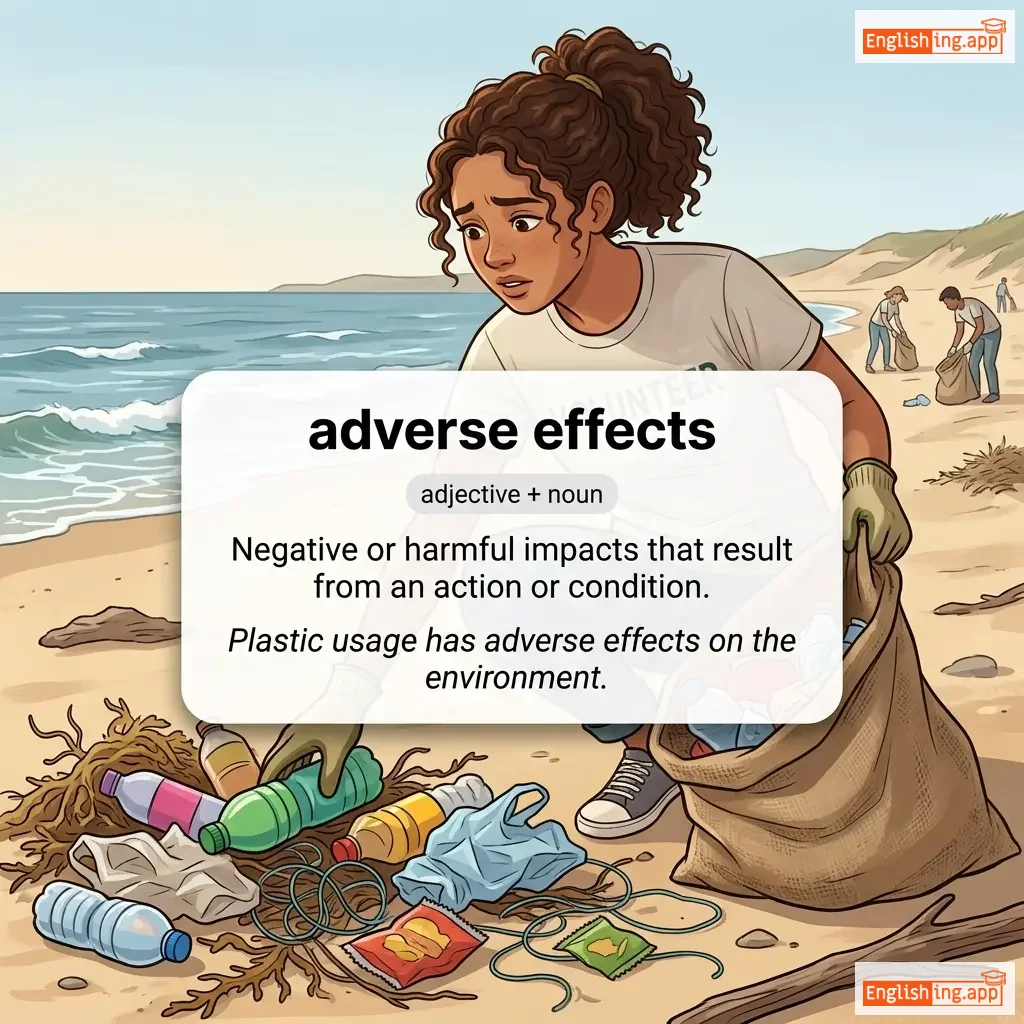
adverse effects definition card — visual illustration of the meaning
adjective + noun
ˈædvɜːrs ɪˈfekts
不良影响 (bùliáng yǐngxiǎng)

Negative or harmful impacts that result from an action or condition.

"Plastic usage has adverse effects on the environment."
"塑料使用对环境产生不良影响。" (Sùliào shǐyòng duì huánjìng chǎnshēng bùliáng yǐngxiǎng.)
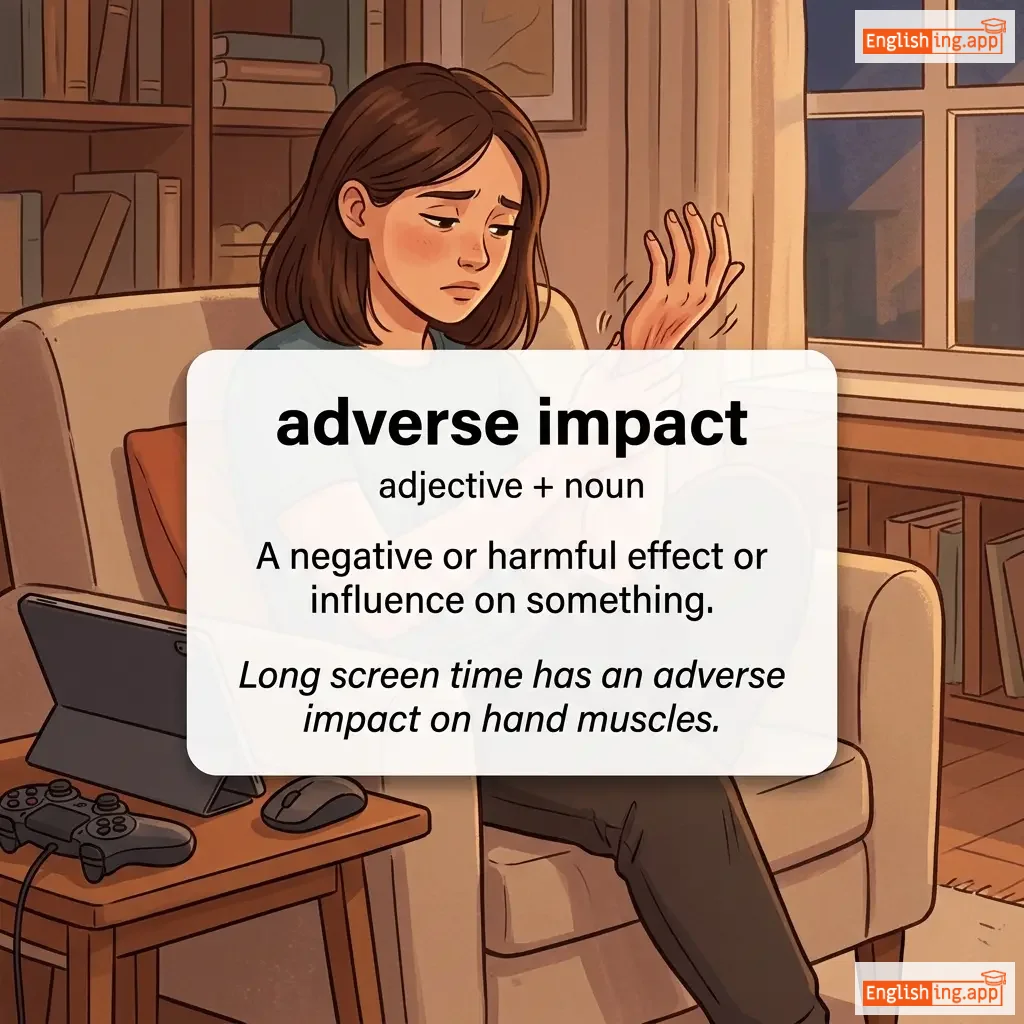
adverse impact definition card — visual illustration of the meaning
adjective + noun
অ্যাডভার্স ইমপ্যাক্ট
负面影响 (fùmiàn yǐngxiǎng)

A negative or harmful effect or influence on something.

"Long screen time has an adverse impact on hand muscles."

"长时间看屏幕对手部肌肉有不良影响。" (Cháng shíjiān kàn píngmù duì shǒubù jīròu yǒu bùliáng yǐngxiǎng.)
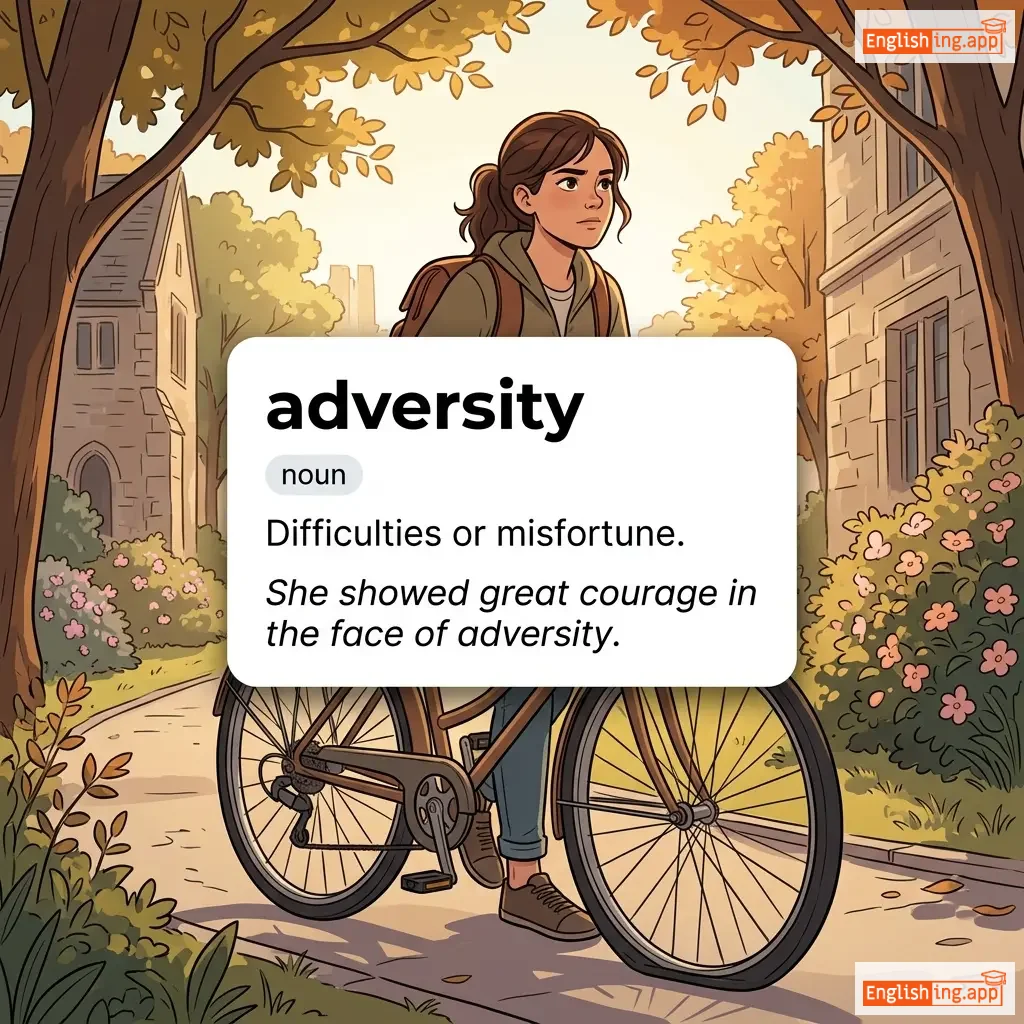
adversity definition card — visual illustration of the meaning
🌪️

adversity

noun
/ədˈvɜː.sə.ti/

Difficulties or misfortune.

"She showed great courage in the face of adversity."

noun, verb
/ˈædvɜːrt/

(noun) a notice or announcement in a public medium promoting a product, service, or event; (verb) to refer to something in speaking or writing

"The company placed an advert in the newspaper for the new position."

advertise definition card — visual illustration of the meaning
verb
/ˈædvərtaɪz/
做广告 (zuò guǎnggào)

to describe or draw attention to a product, service, or event in a public medium in order to promote sales or attendance

"They advertise their products on social media platforms."

"他们在社交媒体平台上宣传他们的产品。" (Tāmen zài shèjiāo méitǐ píngtái shàng xuānchuán tāmen de chǎnpǐn.)
noun
/ədˈvɜːrtɪsmənt/
广告 (guanggao)

a public notice or announcement promoting a product, service, or event

"The advertisement attracted many new customers."

"这则广告吸引了许多新顾客。" (zhe ze guanggao xiyin le xuduo xin guke)
noun
/ˈædvərtaɪzər/
广告商 (guǎnggào shāng)

a person or company that advertises a product, service, or event

"The advertiser paid millions for a Super Bowl commercial spot."

"广告商为超级碗广告位置支付了数百万。" (guǎnggào shāng wèi chāojí wǎn guǎnggào wèizhì zhīfùle shù bǎi wàn.)
noun
/ˈædvərˌtaɪzɪŋ/
广告 (guǎnggào)

the activity of producing advertisements for products or services

"The company spends millions on advertising every year."

"公司每年在广告上花费数百万。" (Gōngsī měi nián zài guǎnggào shàng huāfèi shù bǎi wàn.)
advice definition card — visual illustration of the meaning
noun
/ədˈvaɪs/

a suggestion or recommendation about what someone should do

"She gave me good advice about managing money."

verb
/ədˈvaɪz/
建议 (jiànyì)

to recommend what should be done; to give advice

"The doctor advised him to rest for a week."

"医生建议他休息一周。" (Yīshēng jiànyì tā xiūxí yī zhōu.)
noun
/ədˈvaɪzər/
顾问 (gùwèn)

a person who gives advice, especially in a professional or official role

"He works as a financial adviser at a bank."

"他在一家银行担任金融顾问。" (Tā zài yījiā yínháng dānrèn jīnróng gùwèn.)
adjective, noun
/ədˈvaɪzəri/
咨询性的 (zīxúnxìng de)

(adjective) having the power to give advice but not to make sure that it is followed; (noun) an official announcement containing information or a warning

"The committee serves in an advisory capacity to the board of directors."

"委员会在董事会中担任咨询性职能。" (Wěiyuánhuì zài dǒngshìhuì zhōng dānrèn zīxúnxìng zhínéng.)
noun
/ˈædvəkəsi/
倡导 (chàng dǎo)

public support for or recommendation of a particular cause or policy

"Her advocacy for children's rights earned her international recognition."

"她对儿童权利的倡导为她赢得了国际认可。" (Tā duì ér tóng quán lì de chàng dǎo wéi tā yíng dé le guó jì rèn kě.)
noun, verb
/ˈædvəˌkeɪt/ (noun), /ˈædvəˌkeɪt/ or /ˈædvəˌkət/ (verb)
支持者 / 律师 (zhīchí zhě / lǜshī)

As a noun: a person who publicly supports or recommends a cause. As a verb: to publicly recommend or support.

"She is an advocate for women's rights and often advocates for equal opportunities."

"她是女性权利的倡导者,并且经常为平等机会而倡导。" (Tā shì nǚxìng quánlì de chàngdǎo zhě, bìngqiě jīngcháng wèi píngděng jīhuì ér chàngdǎo.)
noun
/ˈiːdʒɪs/
保护 (baohu)

The protection, backing, or support of a particular person or organization.

"The project was carried out under the aegis of the United Nations."

"该项目在联合国的庇护下进行。" (Gai xiangmu zai Lianheguo de bihuxia jinxing.)

aeon

noun
/ˈiːɒn/ or /ˈiːən/

An indefinitely long period of time; an age or eternity.

"Dinosaurs roamed the Earth millions of aeons ago."

adjective, noun
/ˈɛəriəl/
空中 / 天线 (kongzhong / tianxian)

As an adjective: existing or happening in the air. As a noun: an antenna for receiving radio or television signals.

"The pilot performed an amazing aerial maneuver."

"飞行员执行了一个令人惊叹的空中机动。" (Feixíngyuán zhíxíngle yīgè lìng rén jīngtàn de kōngzhōng jīdòng.)
noun
/ˈɛəri/
鹰巢 (yingchao)

A large nest of a bird of prey, especially an eagle, typically built high in a tree or on a cliff.

"The eagle built its aerie on the high cliff."
"鹰在高悬崖上筑巢" (Ying zai gao xuanya shang zhu chao)
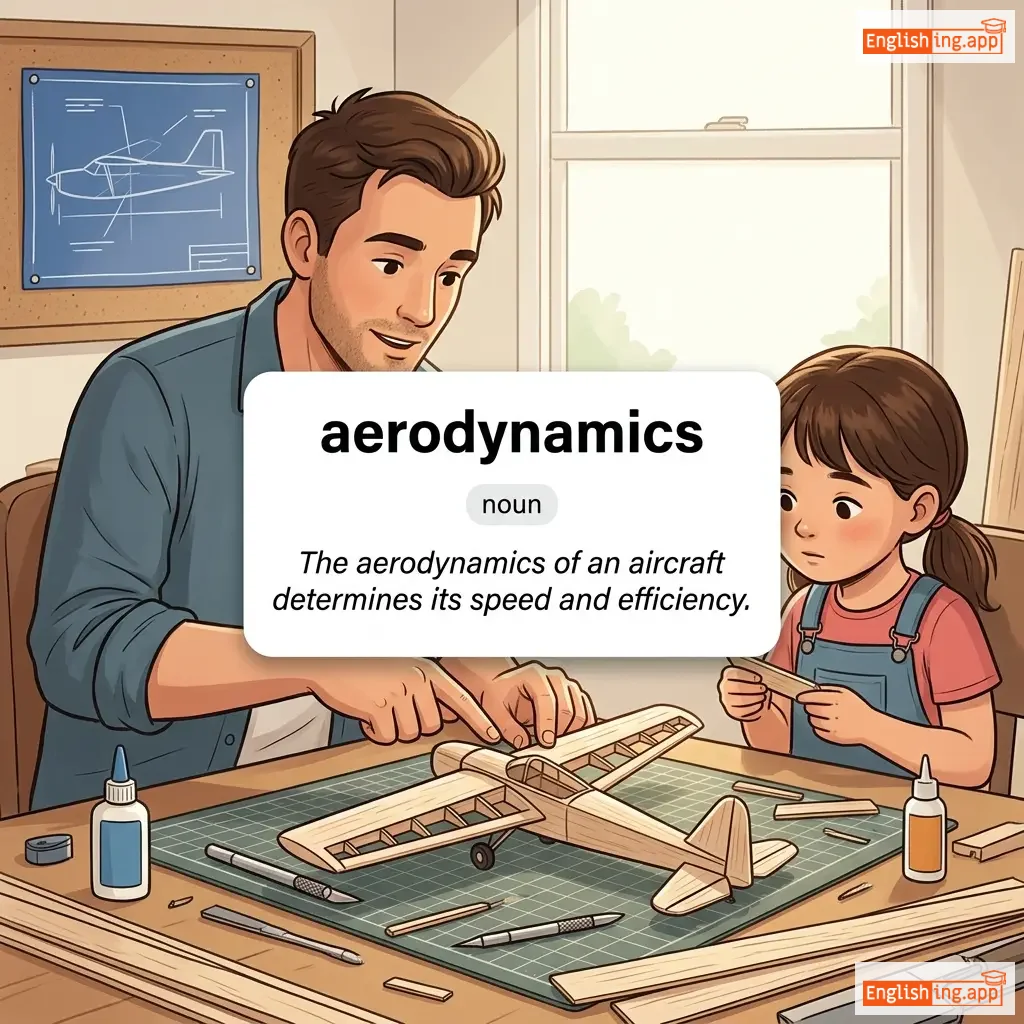
aerodynamics definition card — visual illustration of the meaning
noun
ˌeə.rəʊ.daɪˈnæm.ɪks
空气动力学 (aerodynamics)

The study of the properties of moving air and the interaction between the air and solid bodies moving through it.

"The aerodynamics of an aircraft determines its speed and efficiency."

"一架飞机的空气动力学决定了它的速度和效率。" (yi jia fei ji de kong qi dong li xue jue ding le ta de su du he xiao lv)
noun
/ˈɛərəˌnɔːt/
气球飞行员 (qìqiú fēixíngyuán)

A person who travels in an airship, balloon, or other aircraft.

"The aeronaut skillfully guided the hot-air balloon across the valley."

"气球飞行员熟练地引导热气球穿过山谷。" (Qìqiú fēixíngyuán shúliàn de yǐndǎo rè qìqiú chuānguò shāngǔ.)
noun
/ˈeə.rə.pleɪn/
飞机 (feiji)

a powered flying vehicle with fixed wings and a weight greater than that of the air it displaces

"The aeroplane took off smoothly from the airport runway."

"飞机从机场跑道平稳起飞。" (Feiji cong jichang paodao pingwen qifei)
noun
/ˈɛərəˌstæt/
气球艇 (qìqiú tǐng)

A lighter-than-air craft, such as a balloon, that is lifted by gas.

"The military used an aerostat for surveillance over the border."
"军方使用了气球艇进行边境监视。" (Jūn fāng shǐyòngle qìqiú tǐng jìnxíng biānjìng jiānshì.)
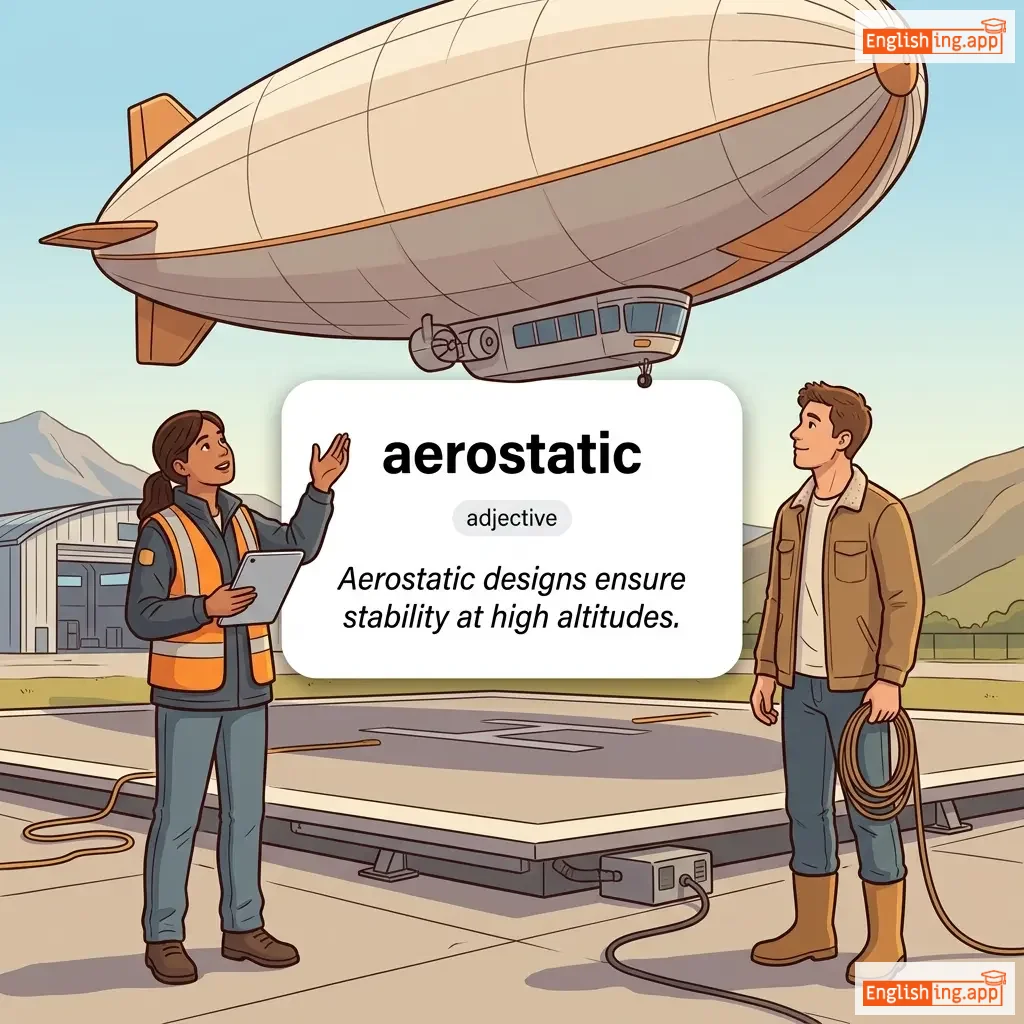
aerostatic definition card — visual illustration of the meaning
adjective
ˌeə.rəʊˈstæt.ɪk
气动静态的 (qì dòng jìng tài de)

Relating to or involving gases (especially air) in equilibrium and the equilibrium of balloons or aircraft under the influence of such gases.

"Aerostatic designs ensure stability at high altitudes."

"气动静态设计确保在高海拔地区的稳定性。" (Qì dòng jìng tài de shèjì quèbǎo zài gāo hǎibá dìqū de wěndìng xìng.)
noun
/ˌɛərəˈstætɪks/
气球力学 (qìqiú lìxué)

The branch of physics that deals with the equilibrium of air and gases and the forces acting on bodies in them.

"Aerostatics is essential for understanding how balloons float."

"气球力学对于理解气球如何漂浮至关重要。" (qìqiú lìxué duìyú lǐjiě qìqiú rúhé piāofú zhìguān zhòngyào.)
noun
/ˈɪəri/ or /ˈɛəri/
鹰巢 (yīng cháo)

An eagle’s nest, or a lofty, airy dwelling.

"The eagle perched proudly near its aery high on the cliff."

"鹰骄傲地停在悬崖上的它的巢附近。" (Yīng jiāo'ào dì tíng zài xuán yá shàng de tā de cháo fù jìn.)
noun
/ˈiːsθiːt/ or /ˈɛsθiːt/
审美家 (shenmeijia)

A person who has a special appreciation of art and beauty.

"The aesthete admired the subtle details of the painting."

"艾斯泰特欣赏了画作的细节。" (Aisaiteti xīnshǎngle huàzuò de xìjié.)
Aesthetic definition card — visual illustration of the meaning
adjective
/ɛsˈθɛtɪk/
审美的 (shenmei de)

concerned with beauty or the appreciation of beauty

"The room was decorated in an aesthetic style that pleased everyone."

"房间以审美风格装饰,让每个人都感到愉悦。" (Fángjiān yǐ shěnměi fēnggé zhuāngshì, ràng měi gèrén dōu gǎndào yúyuè.)
adjective
/iːsˈθɛθɪkəl/
美学的 (meixuede)

concerned with beauty or the appreciation of beauty; related to artistic taste or appearance

"The architect focused on the aesthetical balance of the building."

"建筑师注重建筑的美学平衡。" (Jianzhushi zhuzhong jianzhu de meixue pingheng)
adverb
/iːsˈθetɪkli/
从审美角度 (cong shenmei jiaodu)

in a way that is concerned with beauty or visual appeal

"The building is aesthetically pleasing despite its simple design."

"尽管设计简单,这座建筑在审美上很吸引人。" (jinguan sheji jiandan zhezuo jianzhu zai shenmei shang hen xiyin ren)