词汇表

英语词汇词典 | 单词含义、定义和示例

adjective
/ˈækʃənəbl̩/
可执行的 (kě zhíxíng de)

Able to be acted on or giving sufficient reason for legal action.

"The lawyer confirmed that the evidence was actionable in court."

"律师确认证据在法庭上是可执行的。" (Lǜshī quèrèn zhèngjù zài fǎtíng shàng shì kě zhíxíng de.)
actions definition card — visual illustration of the meaning
noun
/ˈæk.ʃənz/
行动 (xíngdòng)

The fact or process of doing something, typically to achieve an aim.

"Immediate actions are needed for pollution control."

"需要立即采取行动来控制污染。" (Xūyào lìjí cǎiqǔ xíngdòng lái kòngzhì wūrǎn.)
verb
/ˈæktɪveɪt/
激活 (jīhuó)

to make something start or function

"She pressed the button to activate the machine."

"她按下按钮以激活机器。" (Tā àn xià ànniǔ yǐ jīhuó jīqì.)
noun
/ˌæktɪˈveɪʃən/
激活 (jī huó)

the act of making something start functioning

"The activation of the system took longer than expected."
"系统的激活比预期的时间更长。" (Xìtǒng de jīhuó bǐ yùqī de shíjiān gèng cháng.)
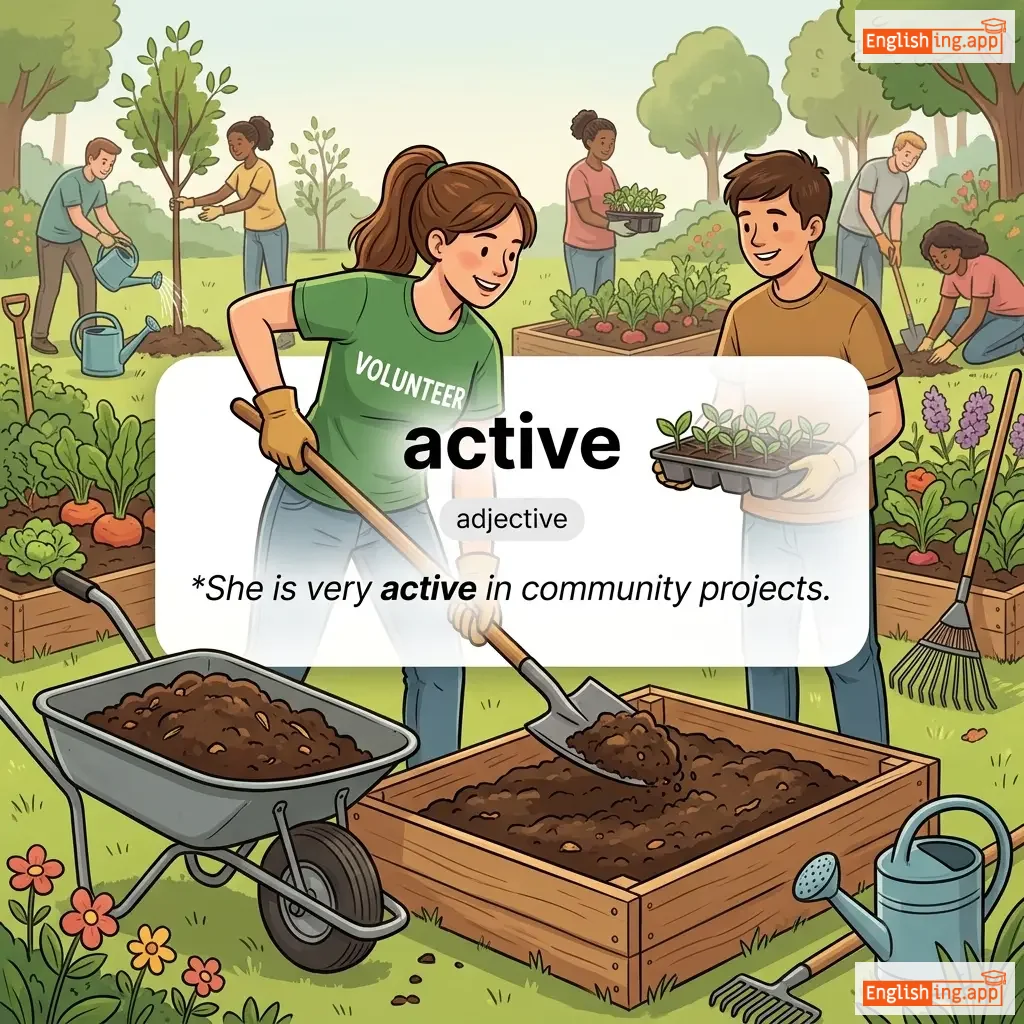
active definition card — visual illustration of the meaning
adjective
/ˈæktɪv/
积极的 (jī jí de)

Engaging or ready to engage in physically energetic pursuits; taking action rather than being passive.

"She is very active in community projects."

"她在社区项目中非常积极。" (Tā zài shèqū xiàngmù zhōng fēicháng jījí.)
Active recall definition card — visual illustration of the meaning
noun
ˈæk.tɪv rɪˈkɔːl
积极回忆 (jiji huiyi)

A learning technique that involves actively trying to retrieve information from memory rather than passively reviewing material.

"Active recall improves long-term memory and retention."

"积极回忆改善长期记忆和保持能力。" (Ji ji hui yi gai shan changqi ji yi he bao chi neng li.)
adverb
/ˈæktɪvli/
积极地 (jī jí de)

in a manner that involves action or energy

"She is actively participating in the community service."

"她正在积极参与社区服务。" (Tā zhèngzài jījí cānyù shèqū fúwù.)
noun
/ˈæktɪˌvɪzəm/
行动主义 (xing dong zhu yi)

The policy or action of using vigorous campaigning to bring about political or social change.

"Her environmental activism inspired many young people to take action."

"她的环保行动主义激励了许多年轻人采取行动。" (Ta de huan bao xing dong zhu yi ji li le xu duo nian qing ren cai qu xing dong.)
noun
/ˈæktɪvɪst/
活动家 (huódòngjiā)

A person who works to bring about social or political change.

"The activist organized a protest against pollution."

"活动家组织了针对污染的抗议活动。" (Huódòngjiā zǔzhīle zhēnduì wūrǎn de kàngyì huódòng.)
Activities definition card — visual illustration of the meaning
noun
ækˈtɪv.ɪ.ti
活动 (huódòng)

A thing that a person or group does or has done.

"Productive activities drive progress."

"生产性的活动推动了进步。" (shēngchǎn xìng de huódòng tuīdòngle jìnbù.)
noun
/ækˈtɪvɪti/
活动 (huodong)

something that people do for enjoyment, work, or a particular purpose

"The children were engaged in outdoor activity."

"孩子们参与了户外活动。" (Haizimen canyu le huawei huodong.)
noun
/ˈæktər/
演员 (yǎnyuán)

a person who performs in plays, movies, or television

"The actor received an award for his performance."

"演员因他的表演获得了奖项。" (yǎnyuán yīn tā de biǎoyǎn huòdé le jiǎngxiàng.)
noun
/ˈæktrəs/
女演员 (nǚ yǎnyuán)

a female performer in plays, movies, or television

"The actress looked stunning on the red carpet."

"那位女演员在红地毯上看起来令人惊艳。" (Nà wèi nǚ yǎnyuán zài hóng dìtǎn shàng kàn qǐlái lìng rén jīngyàn.)
adjective
/ˈæktʃuəl/
实际的 (shíjì de)

real and existing, not just imagined or supposed

"The actual cost was higher than expected."

"实际成本高于预期。" (shíjì chéngběn gāo yú yùqī.)
noun
/ˌæktʃuˈæləti/
现实 (xianshi)

The state of existing in reality rather than in appearance or imagination.

"The movie was based on historical actuality."

"这部电影基于历史现实。" (Zhe bu dianying jiyu lishi xianshi.)
adverb
/ˈæktʃuəli/
实际上 (shíjì shang)

used to emphasize that something is true, especially when surprising

"She actually completed the project ahead of schedule."

"她实际上提前完成了这个项目。" (Tā shíjì shàng tíqián wánchéngle zhège xiàngmù.)
adjective
/ˌæktʃuˈɛəriəl/
精算的 (jīng suàn de)

Relating to actuaries or their work of analyzing financial risk and uncertainty, especially in insurance and pensions.

"The company relied on actuarial reports to set insurance premiums."

"公司依赖精算报告来设定保险费率。" (Gōngsī yīlài jīng suàn bàogào lái shè dìng bǎo xiǎn fèi lǜ.)
noun
/ˈæktʃuˌɛri/
精算师 (jīngsuàn shī)

A professional who analyzes financial risk using mathematics, statistics, and financial theory, especially in insurance and pensions.

"The actuary calculated the risk before finalizing the insurance policy."

"精算师在确定保险政策之前计算了风险。" (Jīngsuàn shī zài quèdìng bǎoxiǎn zhèngcè zhīqián jìsuànle fēngxiǎn.)
verb
/ˈæktʃueɪt/
激活 (jī huó)

to put into action or motion; to motivate or activate

"The engineer actuated the machine with a simple switch."
"工程师通过一个简单的开关激活了机器。" (Gōngchéngshī tōngguò yīgè jiǎndān de kāiguān jī huó le jīqì.)
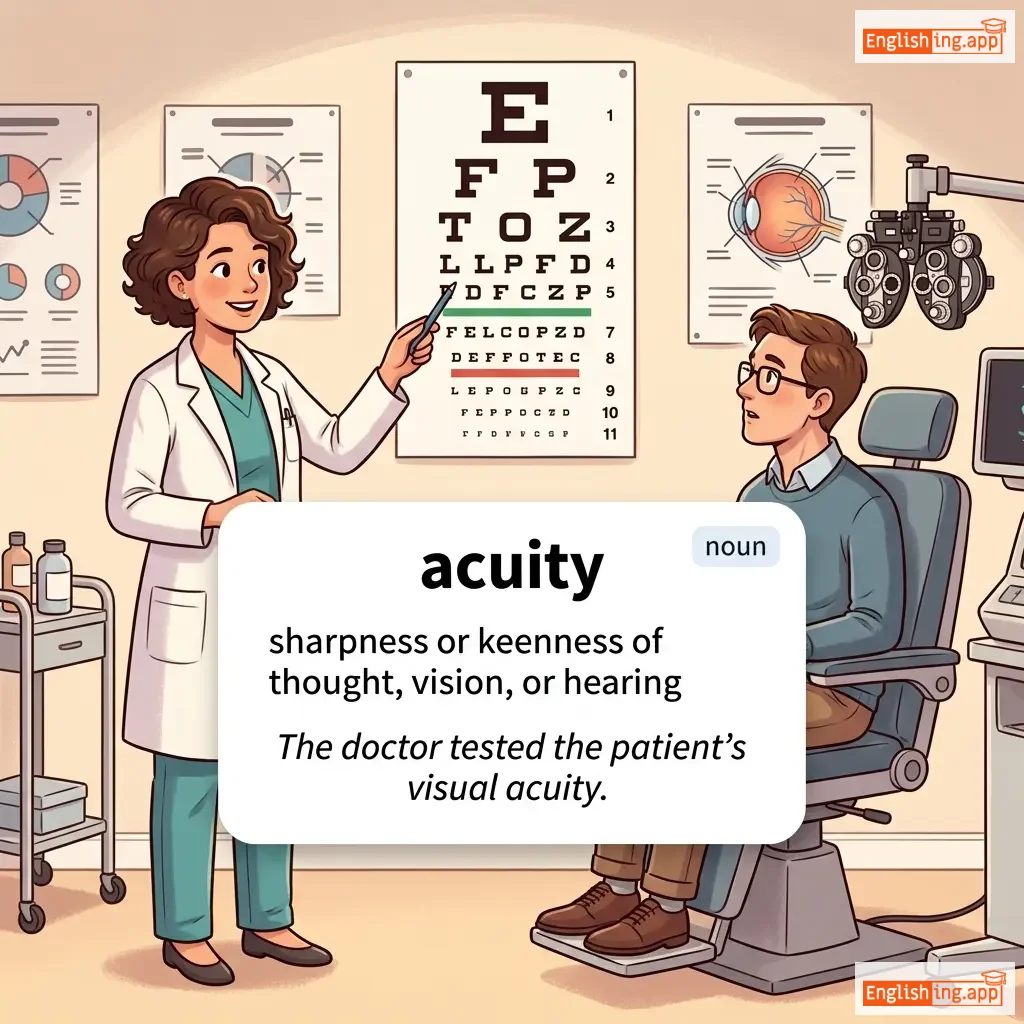
acuity definition card — visual illustration of the meaning
noun
/əˈkjuːɪti/
敏锐度 (minrui du)

sharpness or keenness of thought, vision, or hearing

"The doctor tested the patient’s visual acuity."

"医生测试了病人的视力敏锐度。" (Yisheng ceshi le bingren de shili minrui du.)
acumen definition card — visual illustration of the meaning
noun
/ˈækjʊmən/
洞察力 (dongchali)

the ability to make good judgments and quick decisions, typically in a particular domain

"She has strong business acumen that helped grow the company."

"她具有强大的商业洞察力,帮助公司发展。" (Ta juyou qiangda de shangye dongchali, bangzhu gongsi fazhan.)
adjective
/əˈkjuːt/
急性 (jixing)

present or experienced to a severe or intense degree; having sharp perception

"The patient suffered from acute pain after the surgery."

"手术后,病人感到剧烈的疼痛。" (Shǒushù hòu, bìngrén gǎndào jùliè de téngtòng.)
adverb
/əˈkjuːtli/
敏锐地 (minrui de)

in a sharp, intense, or severe way; with keen awareness

"She was acutely aware of the risks involved."

"她敏锐地意识到其中的风险。" (Ta minrui de yishi dao qizhong de fengxian)
noun
/əˈkjuːtnəs/
敏锐性;严重程度 (minrui xing; yanzhong chengdu)

sharpness of mind or senses; severity or intensity of a condition

"Her acuteness allowed her to notice details others missed."

"她的敏锐性让她注意到别人忽略的细节。" (ta de minrui xing rang ta zhuyi dao bieren hulue de xijie)
noun
/æd/
广告 (guanggao)

a notice or announcement in a public medium promoting a product, service, or event

"The company released a new ad for their smartphone."

"公司发布了他们智能手机的新广告。" (Gongsi fabu le tamen zhineng shouji de xin guanggao.)
verb
/ˌæd ˈlɪb/
即兴 (jìxìng)

to speak or perform without preparation; to improvise

"The comedian ad-libbed a joke when the microphone failed."

"喜剧演员在麦克风故障时即兴编了一个笑话。" (Xǐjù yǎnyuán zài màikèfēng gùzhàng shí jìxìng biānle yīgè xiàohuà.)
noun
/ˈædɪdʒ/
格言 (geyan)

a short, well-known saying that expresses a general truth or piece of advice

"The old adage says that honesty is the best policy."

"古老的格言说,诚实是最好的政策。" (gǔlǎo de géyán shuō, chéngshí shì zuì hǎo de zhèngcè.)
Adamant definition card — visual illustration of the meaning
adjective
/ˈædəmənt/
坚定的 (jiāndìng de)

refusing to change one's mind; firmly determined

"She was adamant about not changing her decision."

"她在不改变决定的问题上很坚定。" (Tā zài bù gǎibiàn juédìng de wèntí shàng hěn jiāndìng.)
verb
/əˈdæpt/
适应 (shìyìng)

to adjust or change something to suit new conditions or situations

"He quickly adapted to the new environment."
"他很快适应了新环境。" (Tā hěn kuài shìyìngle xīn huánjìng.)
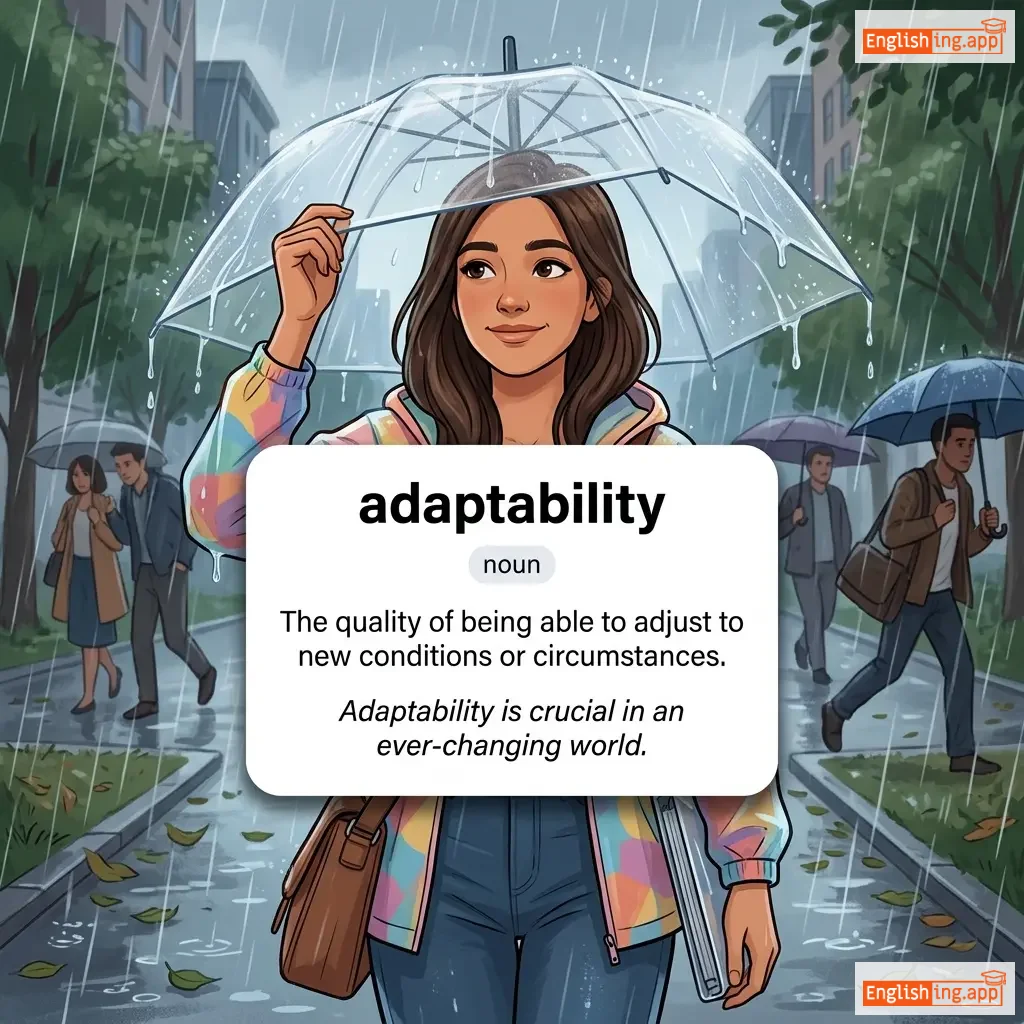
adaptability definition card — visual illustration of the meaning
noun
əˌdæp.təˈbɪl.ə.ti
适应能力 (shiying nengli)

The quality of being able to adjust to new conditions or circumstances.

"Adaptability is crucial in an ever-changing world."
"适应能力在一个不断变化的世界中至关重要。" (Shiying nengli zai yige budan bianhua de shijie zhi guan zhongyao.)
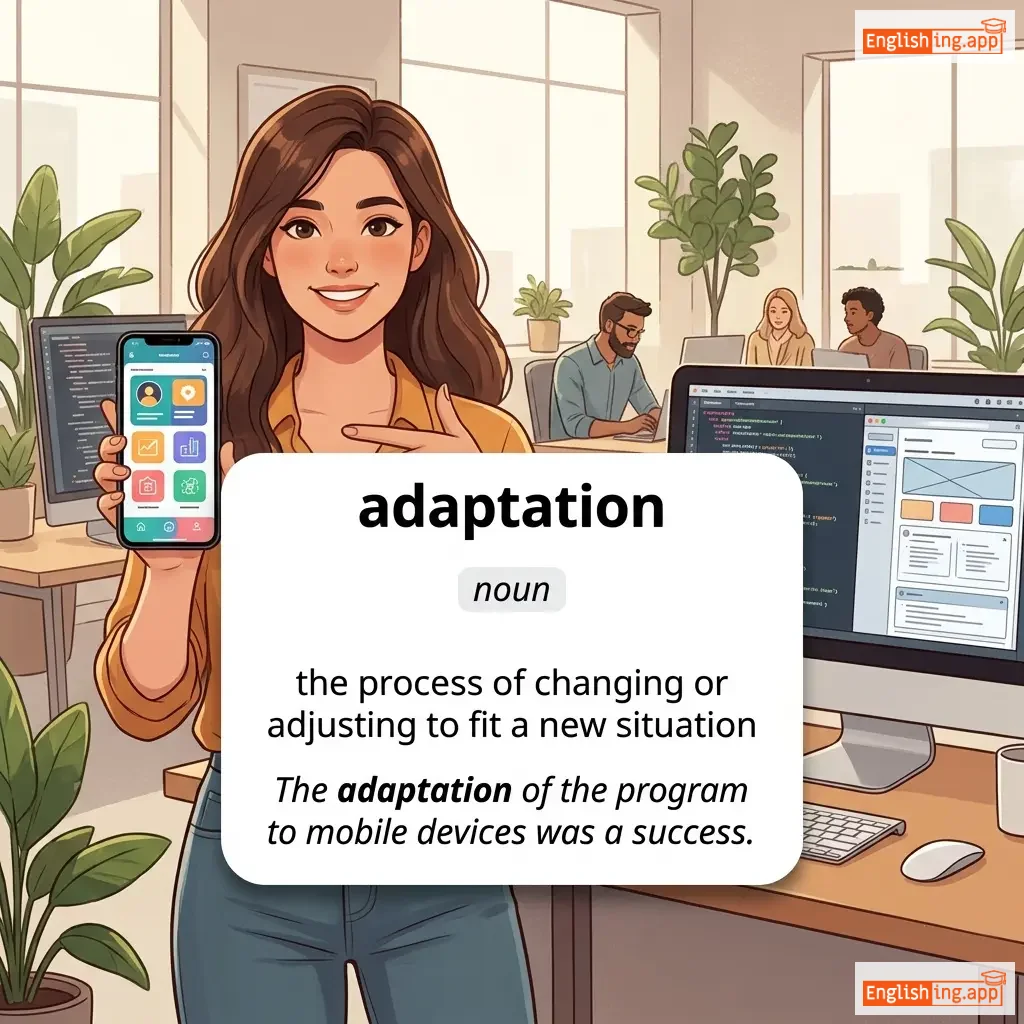
adaptation definition card — visual illustration of the meaning
noun
/ˌædæpˈteɪʃən/
适应 (shiying)

the process of changing or adjusting to fit a new situation

"The adaptation of the program to mobile devices was a success."
"将程序适配到移动设备取得了成功。" (Jiang chengxu shipei dao yidong shebei qudela chenggong.)
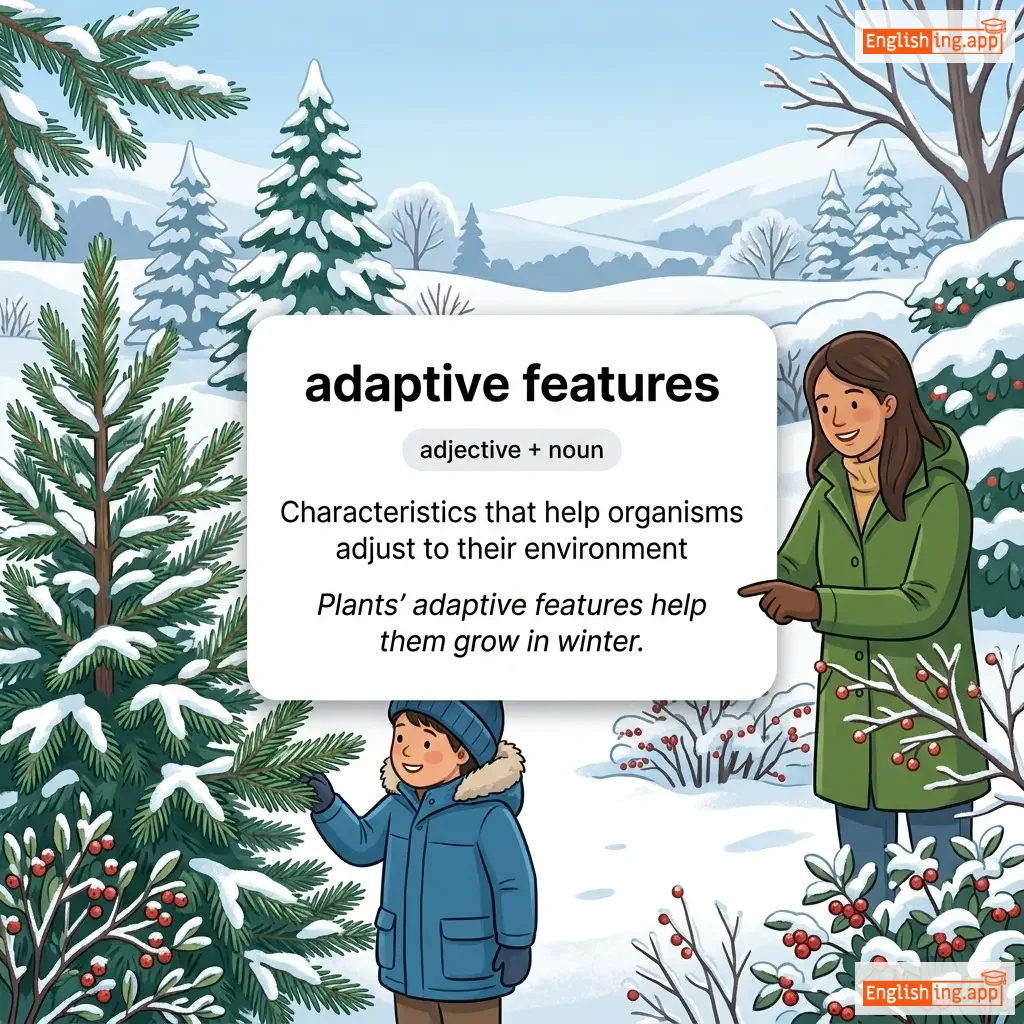
adaptive features definition card — visual illustration of the meaning
adjective + noun
əˈdæptɪv ˈfiːtʃərz
适应性特征 (shiyingxing tezheng)

Characteristics that help organisms adjust to their environment

"Plants' adaptive features help them grow in winter."

"植物的适应性特征帮助它们在冬季生长。" (Zhiwu de shiyingxing tezheng bangzhu tamen zai dongji shengzhang.)
add definition card — visual illustration of the meaning
verb
/æd/
添加 (tianjia)

To put together or combine with something else; to increase the number, amount, or value.

"He decided to add more details to the report."

"他决定在报告中添加更多细节。" (Ta jueding zai baogao zhong tianjia geng duo xijie.)
adjective
/ˈædɪd/
额外 (éwài)

included as an extra or additional part

"She received an added bonus for her performance."

"她因表现出色获得了额外奖金。" (Tā yīn biǎoxiàn chūsè huòdéle éwài jiǎngjīn.)
noun
/əˈdɛndəm/
附录 (fùlù)

an additional item or piece of information added at the end of a document or book

"The report included an addendum with updated statistics."

"报告中包含了带有更新统计数据的附录。" (Bàogào zhōng bāokuòle dàiyǒu gēngxīn tǒngjì shùjù de fùlù.)
noun, verb
/ˈædɪkt/ (noun), /əˈdɪkt/ (verb)
成瘾者 (chengyinzhe)

a person who is unable to stop using a harmful substance or doing something harmful; to cause someone to become dependent on something

"He is a video game addict who spends hours playing every day."
"他是一个视频游戏上瘾者,每天花几个小时玩游戏。" (Ta shi yi ge shipin youxi shangyin zhe, meitian hua ji ge xiaoshi wan youxi.)
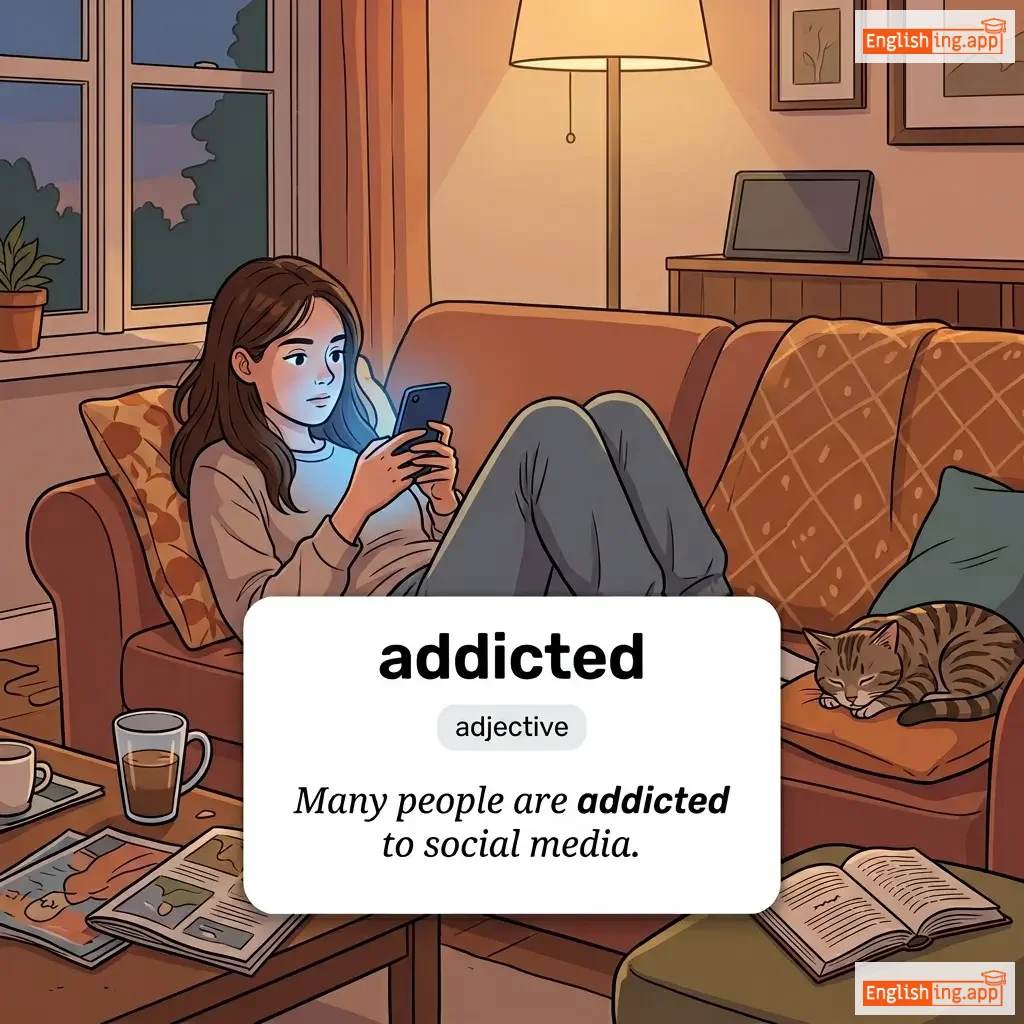
addicted definition card — visual illustration of the meaning
adjective
/əˈdɪktɪd/
上瘾的 (shangyin de)

Being unable to stop engaging in a particular activity or consuming a particular substance.

"Many people are addicted to social media."

"许多人上瘾于社交媒体。" (Xu duoren shangyin yu shejiao meiti.)
noun
/əˈdɪkʃən/
上瘾 (shangyin)

A strong and harmful need to regularly have or do something, such as drugs, alcohol, or habits.

"His addiction to video games affected his studies."

"他对视频游戏的上瘾影响了他的学习。" (Ta dui shipin youxi de shangyin yingxiangle tade xuexi.)
noun
/əˈdɪʃən/

the process of adding something to something else

"The addition of solar panels made the house more energy-efficient."

adjective
/əˈdɪʃənəl/
额外的 (éwài de)

added, extra, or supplementary to what already exists

"The teacher gave the students additional homework."

"老师给学生布置了额外的作业。" (Lǎoshī gěi xuéshēng bùzhìle éwài de zuòyè.)
adverb
/əˈdɪʃənəli/
此外 (cihou)

in addition to what has been said or done

"Additionally, we offer discounts for early bookings."

"此外,我们为提前预订提供折扣。" (Cihou, women wei tiqian yuding tigong zhekou.)
verb
/ˈæd.l̩/
迷惑 (mìhuò)

To confuse or muddle someone’s mind.

"The complicated instructions only served to addle him."

"复杂的指令只会让他感到困惑。" (Fùzá de zhǐlìng zhǐ huì ràng tā gǎndào kùnhuò.)
address definition card — visual illustration of the meaning
verb
/əˈdrɛs/
dānrèn, jiějué (danren, jiejué)

To speak to someone directly or to deal with an issue.

"The manager will address the employees about the new policy."
"Jīnglǐ huì zhíxíng yuángōngmen duì xīn zhèngcè de jiǎngjiù." (Jingli hui zhixing yuangongmen dui xin zhengce de jiangjiu.)
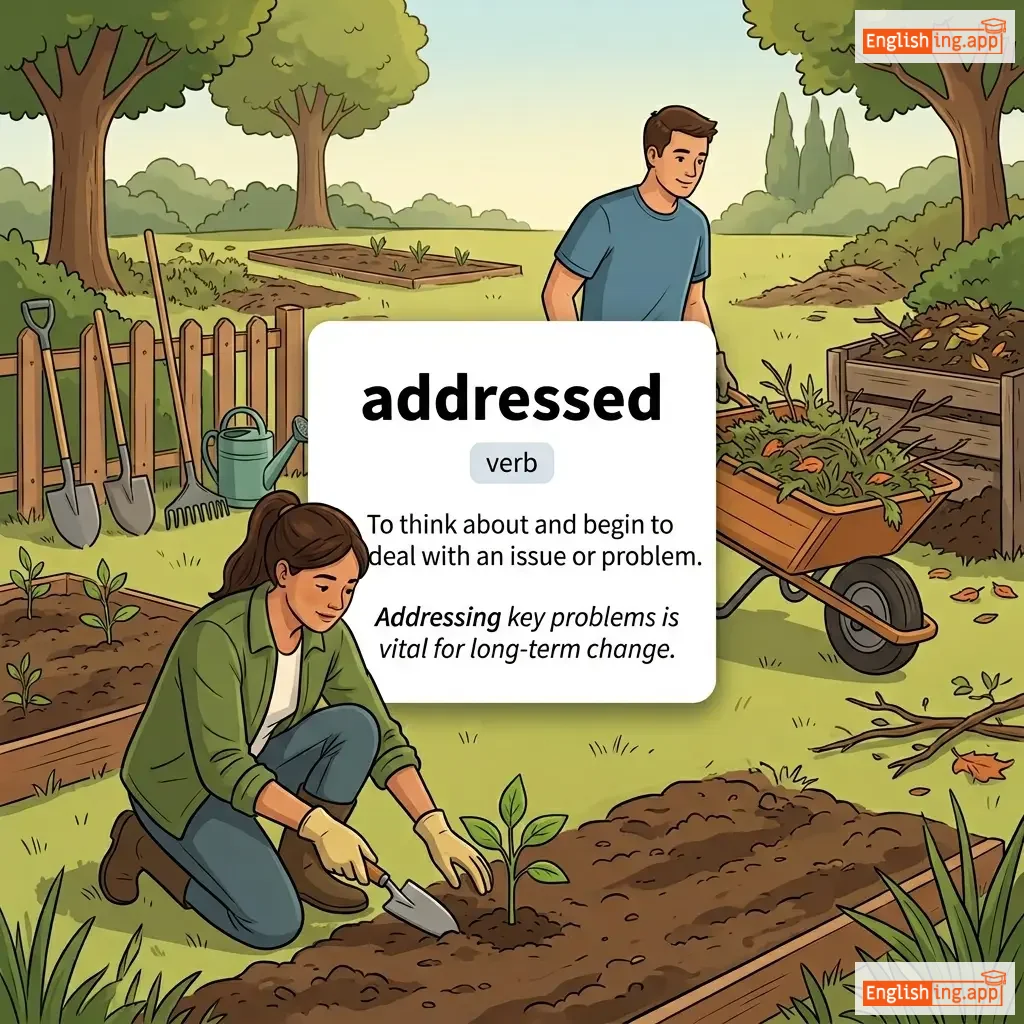
addressed definition card — visual illustration of the meaning
verb
əˈdrɛst
解决 (jie jue)

To think about and begin to deal with an issue or problem.

"Addressing key problems is vital for long-term change."

"解决关键问题对于长期变化至关重要。" (Jiejue guanjian wenti duiyu changqi bianhua zhiguang zhongyao.)
verb
/əˈdjuːs/
提供证据或理由 (tigong zhengju huo liyi)

To provide evidence or reasons to support an argument or idea.

"The lawyer adduced several examples to support his case."
"律师引用了几个例子来支持他的案件。" (Lüshi yinyongle jige lixu lai zhichi tade anjian.)
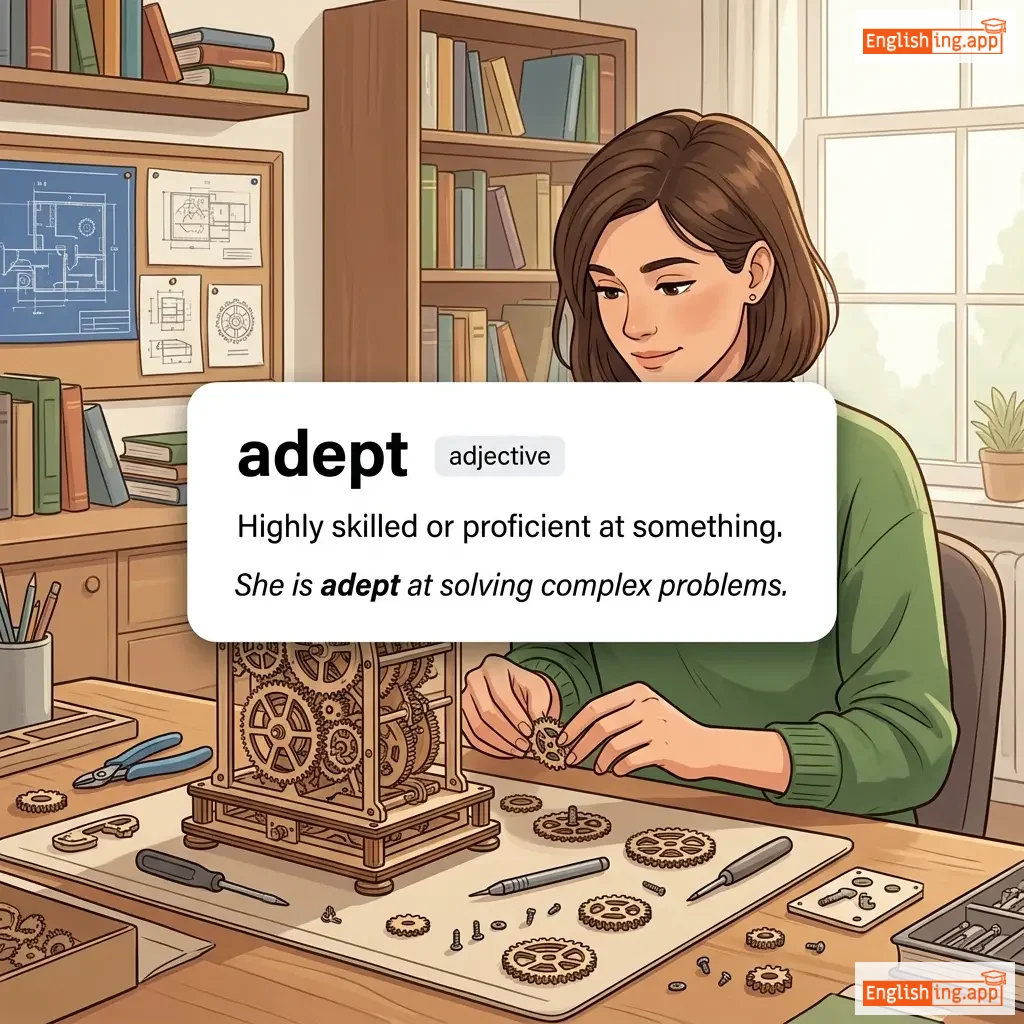
adept definition card — visual illustration of the meaning
🎯

adept

adjective
/əˈdɛpt/

Highly skilled or proficient at something.

"She is adept at solving complex problems."

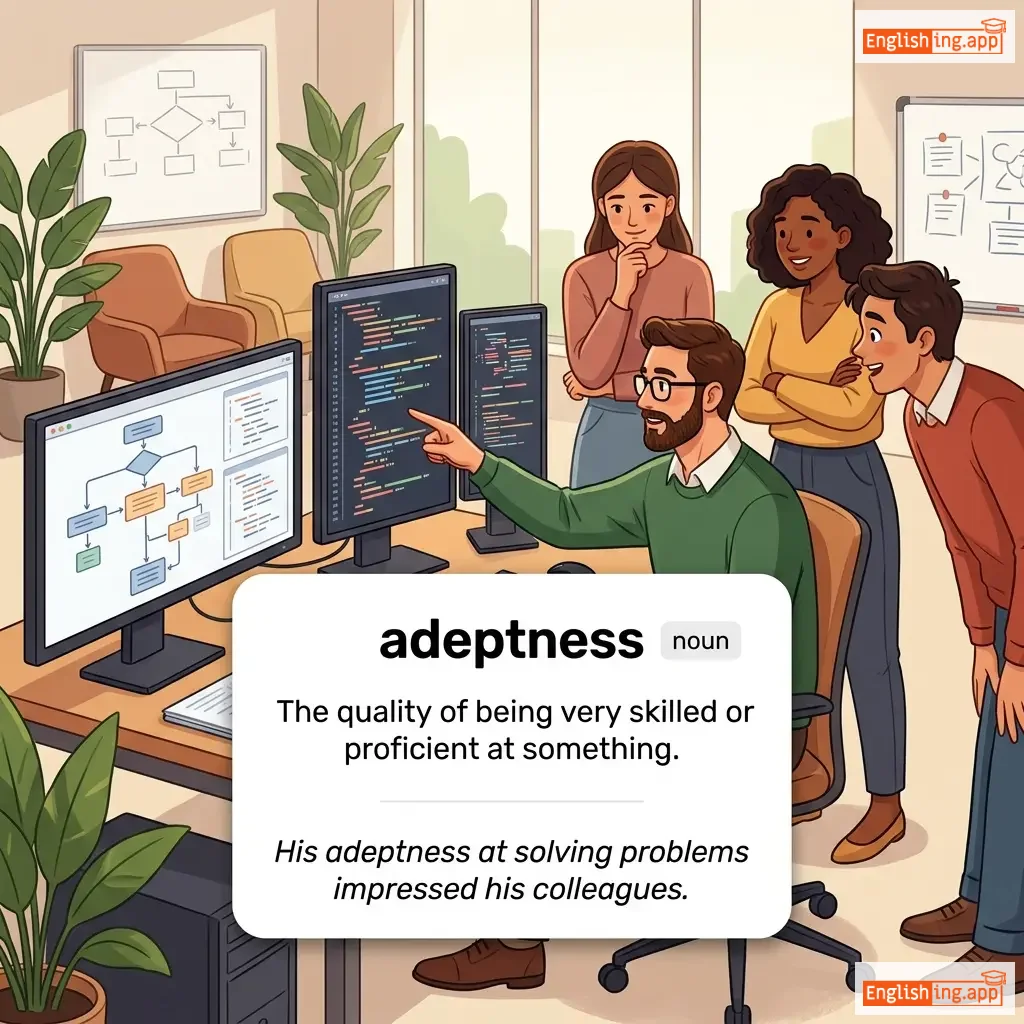
adeptness definition card — visual illustration of the meaning
noun
əˈdept.nəs
熟练 (shuliàn)

The quality of being very skilled or proficient at something.

"His adeptness at solving problems impressed his colleagues."

"他在解决问题方面的熟练度给同事们留下了深刻的印象。" (Ta zai jiejue wenti fangmian de shuliandu gei tongshi men liuxiala shenke de yinxiang.)
adjective
/ˈædɪkwət/
足够 (zúgòu)

sufficient or acceptable in quality or quantity

"The food was adequate for the small group."

"食物足够适合小组。" (Shíwù zúgòu shìhé xiǎozǔ.)
adverb
/ˈædɪkwətli/
恰当地 (qià dāng de)

in a satisfactory manner

"He completed the task adequately, but could improve next time."

"他适当地完成了任务,但下次可以改进。" (Tā shì dàng de wán chéng le rèn wu, dàn xià cì kě yǐ gǎi jìn.)
adhere definition card — visual illustration of the meaning
verb
/ədˈhɪər/
粘附, 遵守 (zhānfù, zūnshǒu)

to stick firmly to something or follow a belief or rule

"The label will not adhere to the wet surface."

"标签不会粘在湿表面。" (Biāoqiān bù huì zhān zài shī biǎomiàn.)