词汇表

英语词汇词典 | 单词含义、定义和示例

noun
/ɔː/
惊叹 (jingtan)

a feeling of deep respect mixed with fear or wonder

"The children looked at the fireworks in awe."

"孩子们惊讶地看着烟花。" (Háizimen jīngyà de kànzhe yānhuā.)
adjective
/ˈɔːfəl/
糟糕 (zāo gāo)

very bad or unpleasant

"The weather was awful during our trip."

"我们旅行时天气很糟糕。" (Wǒmen lǚxíng shí tiānqì hěn zāogāo.)
adverb
/ˈɔːfəli/
非常 (feichang)

in a very great degree; extremely; in a way that is very bad or unpleasant

"I am awfully glad to see you again."

"再次见到你我非常高兴。" (zaici jiandao ni wo feichang gaoxing)
adjective
/ˈɔːkwəd/
尴尬 (gāngà)

causing or feeling embarrassment; difficult to deal with

"There was an awkward silence after his joke."

"他的笑话之后,出现了尴尬的沉默。" (Tā de xiàohuà zhīhòu, chūxiànle gāngà de chénmò.)
noun
/ɔːl/
锥子 (zhuīzi)

a small pointed tool used for making holes, especially in leather

"The cobbler used an awl to punch holes in the leather."

"鞋匠用锥子在皮革上打孔。" (Xiéjiàng yòng zhuīzi zài pígé shàng dǎ kǒng.)
noun
/ˈɔːnɪŋ/
遮阳篷 (zhē yáng péng)

a sheet of canvas or material stretched on a frame to shelter a place from the sun or rain

"We sat under the awning to avoid the heavy rain."
"我们坐在遮阳篷下,避免了大雨。" (Wǒmen zuò zài zhē yáng péng xià, bìmiǎnle dàyǔ.)
adverb
/əˈraɪ/
出错 (chucuo)

away from the expected or proper direction; wrong or amiss

"The plan went awry when the weather suddenly changed."

"计划在天气突然变化时出了问题。" (Jihua zai tianqi tuuran bianhua shi chule wenti.)
noun
/æks/
斧头 (futou)

a tool with a heavy blade for cutting wood

"The lumberjack swung his axe to chop the tree."

"伐木工人挥动着他的斧头砍树。" (Fámù gōngrén huī dòng zhe tā de fǔtóu kǎn shù.)
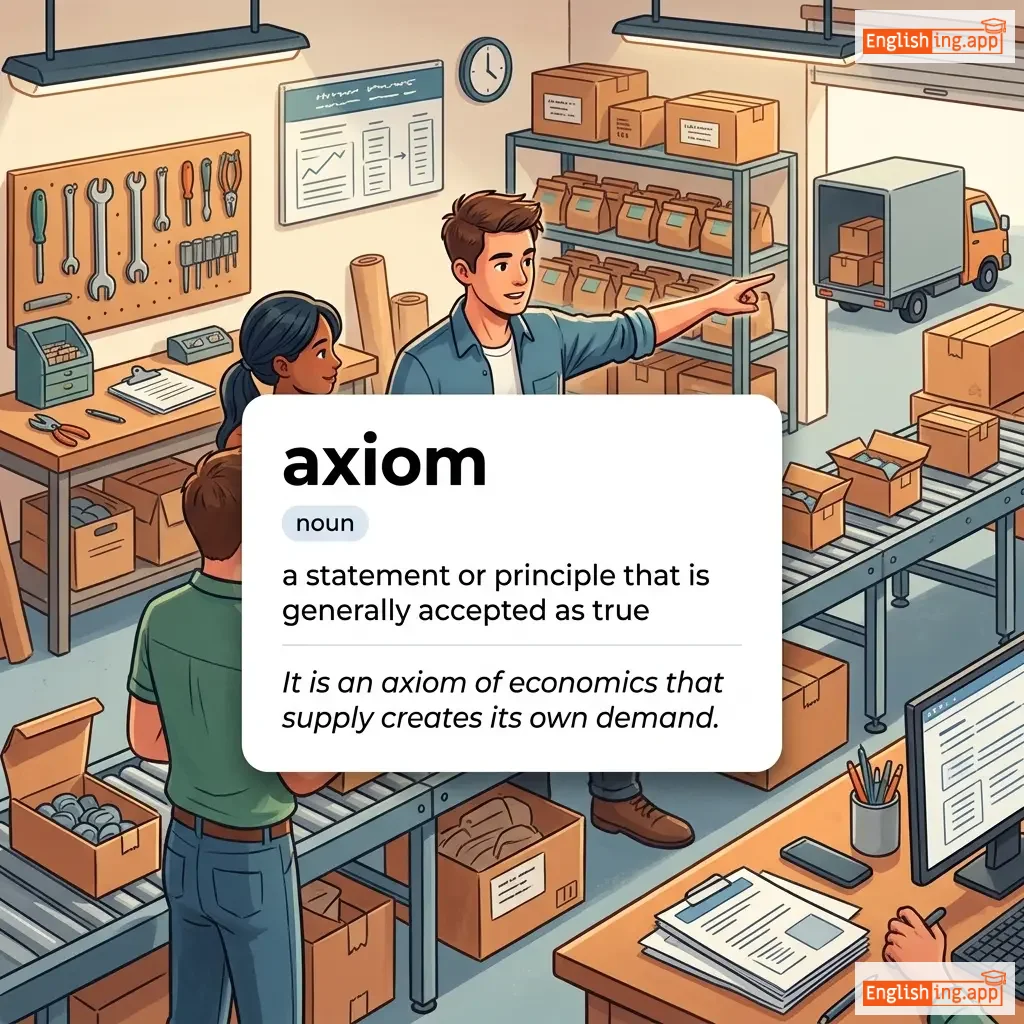
axiom definition card — visual illustration of the meaning
noun
/ˈæk.si.əm/
公理 (gongli)

a statement or principle that is generally accepted as true

"It is an axiom of economics that supply creates its own demand."
"经济学的一个公理是供给创造了自己的需求。" (jingjixue de yi ge gongli shi gongji chuangzao le ziji de xuqiu.)
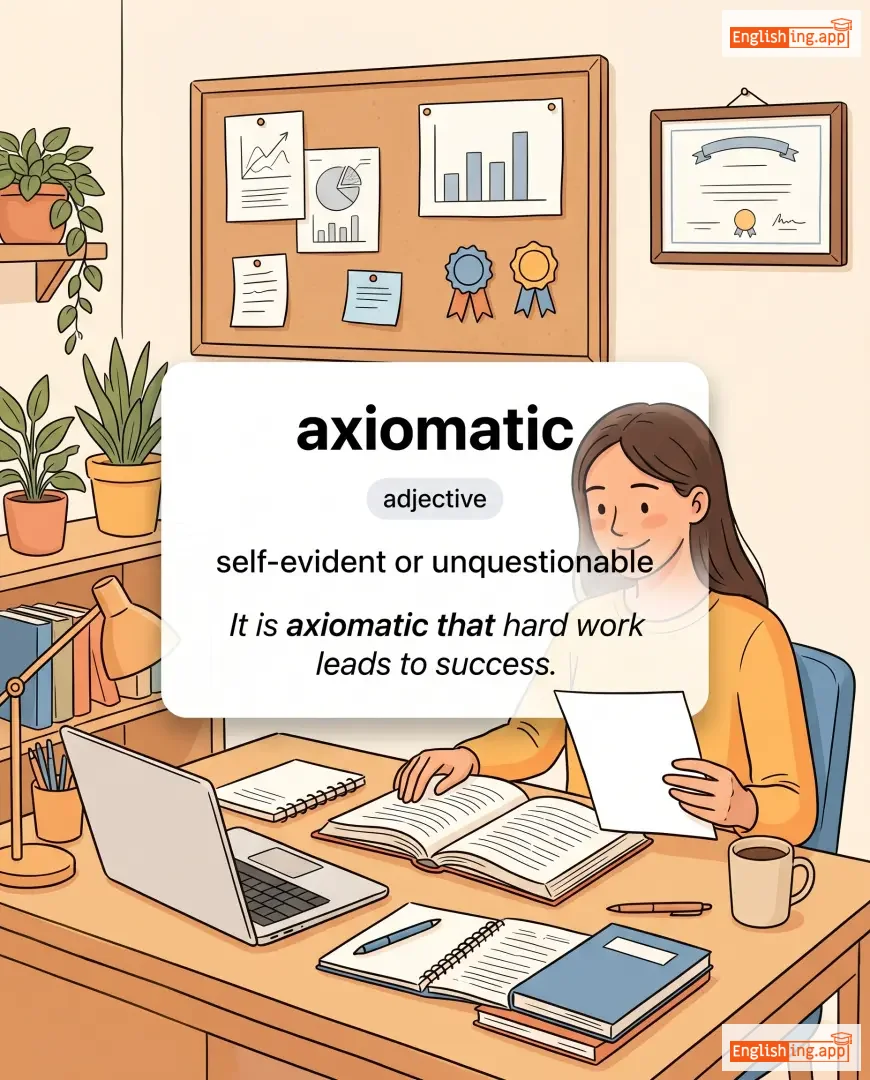
axiomatic definition card — visual illustration of the meaning
adjective
/ˌæk.si.əˈmæt.ɪk/
公理的 (gōnglǐ de)

self-evident or unquestionable

"It is axiomatic that hard work leads to success."

"它是公理的,努力工作带来成功。" (Tā shì gōnglǐ de, nǔlì gōngzuò dàilái chénggōng.)
noun
/aɪ/
赞成 (zan cheng)

an affirmative vote or expression of agreement

"The committee voted aye on the proposal."

"委员会在提案上投了赞成票。" (Wěiyuánhuì zài tí'àn shàng tóule zànchéng piào.)
noun
/əˈzeɪ.li.ə/
杜鹃花 (dujuan hua)

a flowering shrub with brightly colored blooms, often grown ornamentally

"The garden was full of blooming azaleas in spring."

"花园里春天盛开着杜鹃花。" (Huayuan li chuntian shengkai zhe dujuan hua.)
adjective
/ˈæʒər/
蔚蓝 (wèilán)

A bright blue color like that of a clear sky.

"The clear sky was painted in a deep shade of azure."

"清澈的天空被涂成了深深的蔚蓝色。" (qīngchè de tiānkōng bèi tú chéngle shēn shēn de wèilán sè.)