词汇表

英语词汇词典 | 单词含义、定义和示例

verb
/əˈsɛvəˌreɪt/
断言 (duànyán)

to affirm or declare positively and earnestly

"He asseverated that he had never seen the man before."
"他断言他从未见过那个人。" (Tā duànyán tā cóng wèi jiànguò nàgè rén.)
assiduous definition card — visual illustration of the meaning
adjective
/əˈsɪdʒuəs/
勤奋的 (qinfen de)

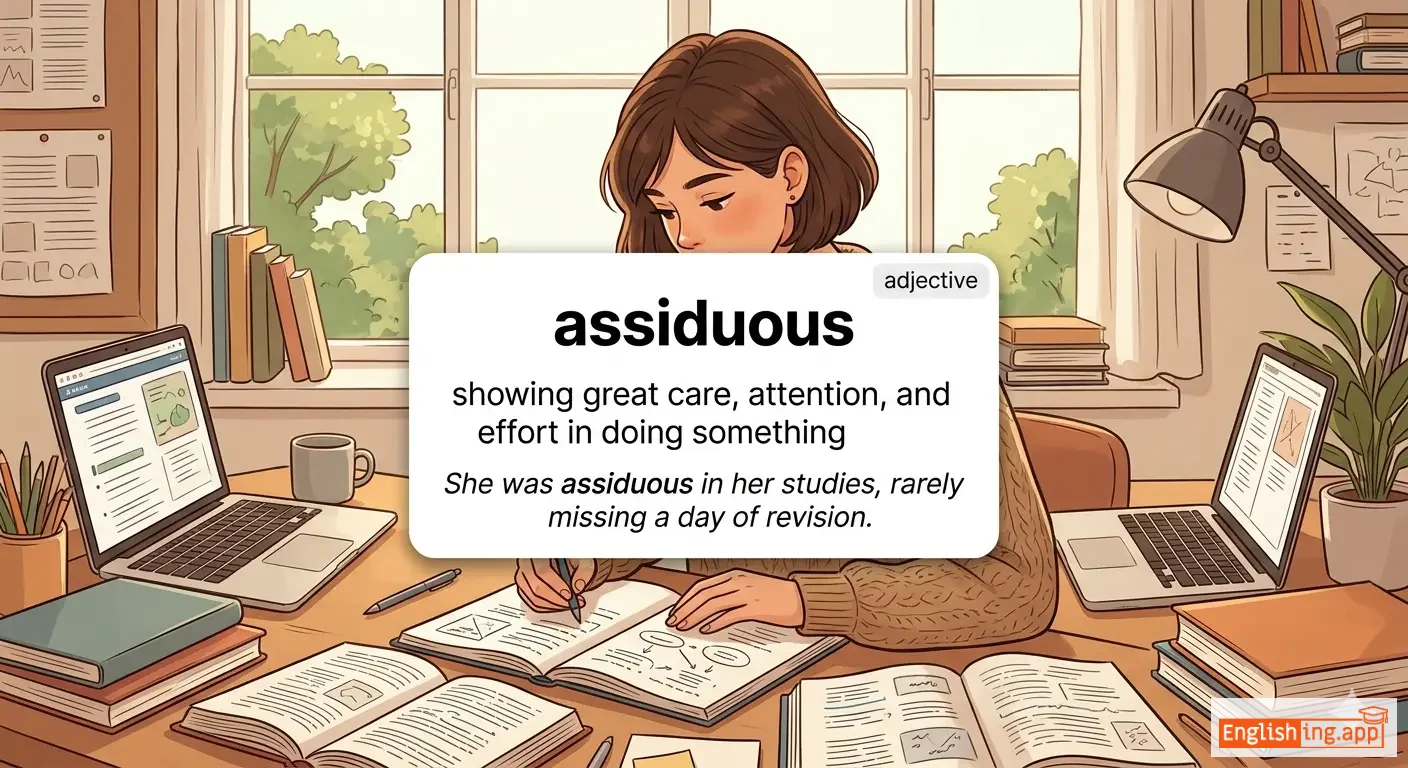
showing great care, attention, and effort in doing something

"She was assiduous in her studies, rarely missing a day of revision."

"她在学习上很勤奋,几乎从不缺课。" (Ta zai xuexi shang hen qinfen, jihu cong bu que ke.)
adverb
/əˈsɪdʒuəsli/
努力地 (nǔlì de)

with great care and persistence

"He worked assiduously to complete the project before the deadline."

"他努力工作,以便在截止日期之前完成项目。" (Tā nǔlì gōngzuò, yǐbiàn zài jiézhǐ rìqī zhīqián wánchéng xiàngmù.)
verb
/əˈsaɪn/
分配 (fēnpèi)

to give someone a task, duty, or responsibility

"The manager will assign tasks to the new employees."

"经理将给新员工分配任务。" (Jīnglǐ jiāng gěi xīn yuángōng fēnpèi rènwù.)
noun
/əˌsaɪˈniː/
受让人 (shòuràng rén)

a person to whom a right or property is legally transferred

"The assignee of the contract is responsible for all future obligations."

"合同的受让人对所有未来的义务负责。" (Hétóng de shòuràng rén duì suǒyǒu wèilái de yìwù fùzé.)
noun
/əˈsaɪnmənt/
任务 (renwu)

a task or piece of work given to someone as part of their duties

"The students completed their homework assignment on time."
"学生们按时完成了他们的家庭作业任务。" (xueshengmen an shi wancheng le tamen de jiating zuoye renwu.)
assimilate definition card — visual illustration of the meaning
verb
/əˈsɪməˌleɪt/
同化 (tónghuà)

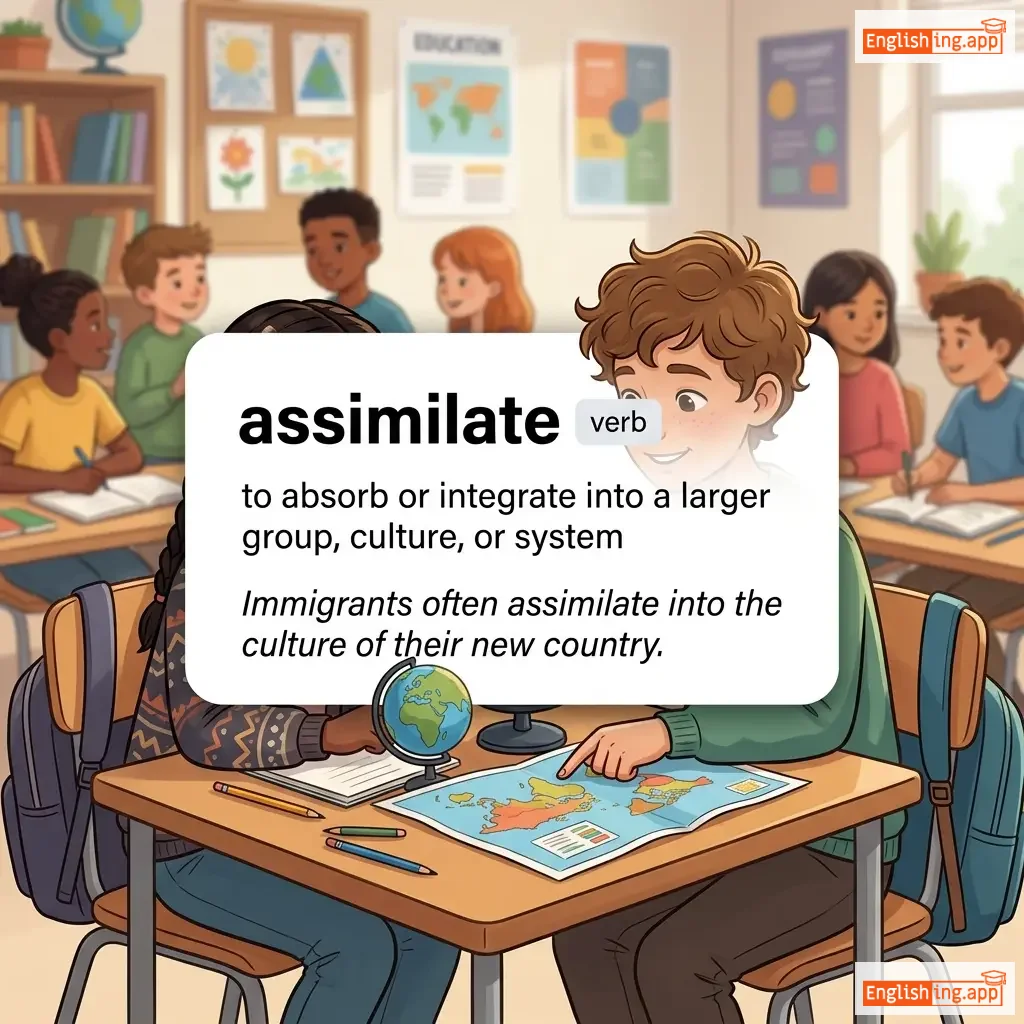
to absorb or integrate into a larger group, culture, or system

"Immigrants often assimilate into the culture of their new country."
"移民常常融入他们新国家的文化中。" (Yímín chángcháng róngrù tāmen xīn guójiā de wénhuà zhōng.)
Assimilation definition card — visual illustration of the meaning
noun
/əˌsɪməˈleɪʃən/
同化 (tónghuà)

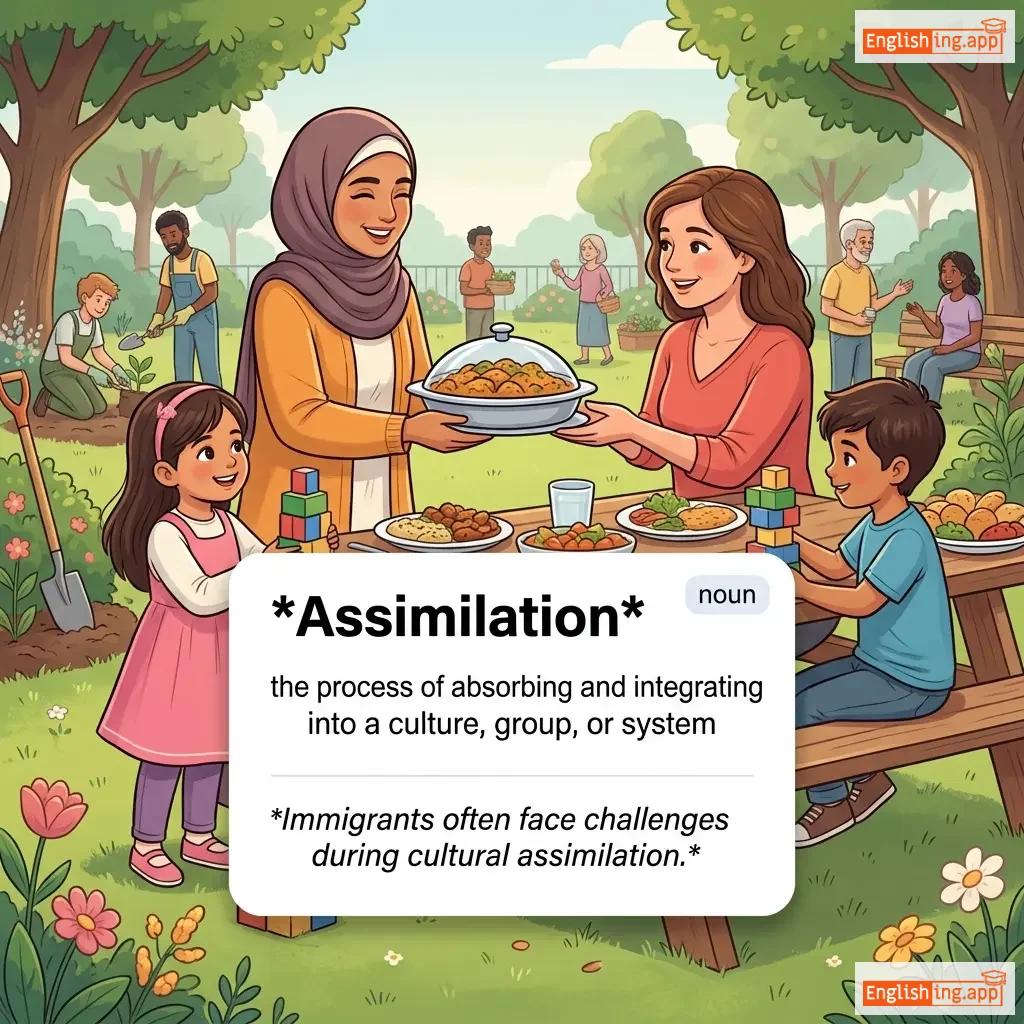
the process of absorbing and integrating into a culture, group, or system

"Immigrants often face challenges during cultural assimilation."

"移民在文化同化过程中常常面临挑战。" (Yímín zài wénhuà tónghuà guòchéng zhōng chángcháng miànlín tiǎozhàn.)
verb
/əˈsɪst/
帮助 (bangzhu)

to help or support someone in doing something

"The nurse will assist the doctor during the surgery."

"护士将协助医生进行手术。" (Hushi jiang xiezhu yisheng jinxing shoushu.)
noun
/əˈsɪstəns/
帮助 (bāngzhù)

help or support given to someone in need

"The organization provides financial assistance to students."

"该组织为学生提供财务援助。" (Gāi zǔzhī wèi xuéshēng tígōng cáiwù yuánzhù.)
noun
/əˈsɪstənt/
助手 (zhùshǒu)

a person who helps or supports another, often in a job

"She works as an assistant in a law firm."
"她在一家律师事务所做助理。" (Tā zài yījiā lǜshī shìwùsuǒ zuò zhùlǐ.)
associate definition card — visual illustration of the meaning
verb
/əˈsoʊsieɪt/
联想 (lianxiang)

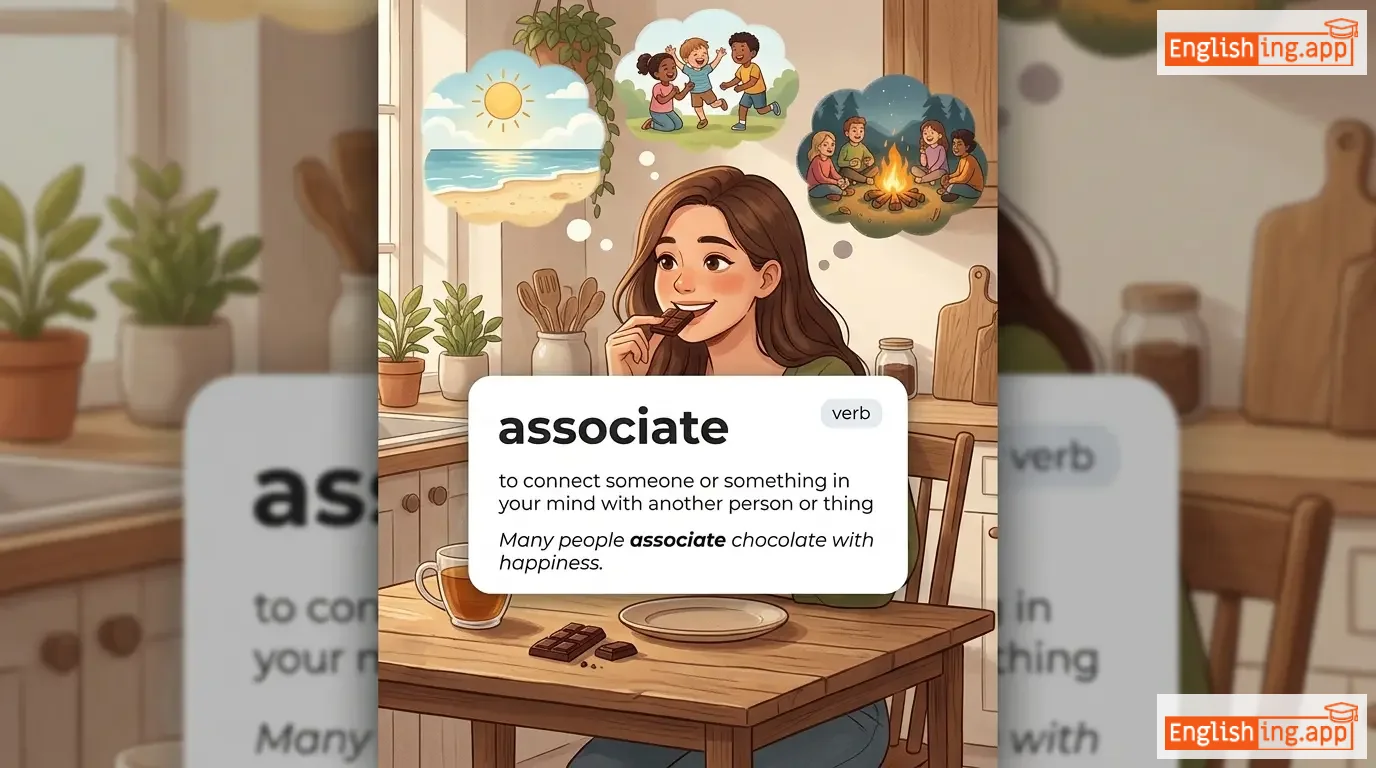
to connect someone or something in your mind with another person or thing

"Many people associate chocolate with happiness."

"许多人把巧克力和幸福联系在一起。" (Xu duoren ba qiaokeli he xingfu lianxi zai yiqi.)
adjective
/əˈsoʊsieɪtɪd/
关联的 (guānlián de)

connected or related to something or someone

"She is closely associated with environmental movements."

"她与环保运动密切相关。" (Tā yǔ huánbǎo yùndòng mìqiè xiāngguān.)
noun
/əˌsoʊsiˈeɪʃən/
协会 (xiehui)

an organized group of people who have joined together for a common purpose

"She is a member of the local teachers' association."

"她是当地教师协会的成员。" (Ta shi dangdi jiaoshi xiehui de chengyuan.)
noun
/ˈæsənəns/
类韵 (lei yun)

the repetition of vowel sounds in nearby words in poetry or prose

"The poet used assonance to create a musical effect in his verse."

"诗人使用类韵来创造他诗句中的音乐效果。" (Shiren shiyong lei yun lai chuangzao ta shiju zhong de yinyue xiaoguo.)
adjective
/ˈæsənənt/
押韵 (yāyùn)

Having or characterized by assonance; repeating similar vowel sounds.

"The poem is filled with assonant words that create a musical rhythm."

"这首诗充满了押韵的词语,创造了音乐般的节奏。" (Zhè shǒu shī chōngmǎnle yāyùn de cíyǔ, chuàngzàole yīnyuè bān de jiézòu.)
verb
/ˈæsəneɪt/
押韵 (yīn)

To correspond or agree in sound, especially by vowel sounds; to rhyme approximately.

"The lines assonate beautifully, giving the song a unique flow."
"这些句子押韵得很美,赋予歌曲独特的流畅感。" (Zhèxiē jùzi yīnyùn dé hěn měi, fùyǔ gēqǔ dútè de liúchàng gǎn.)
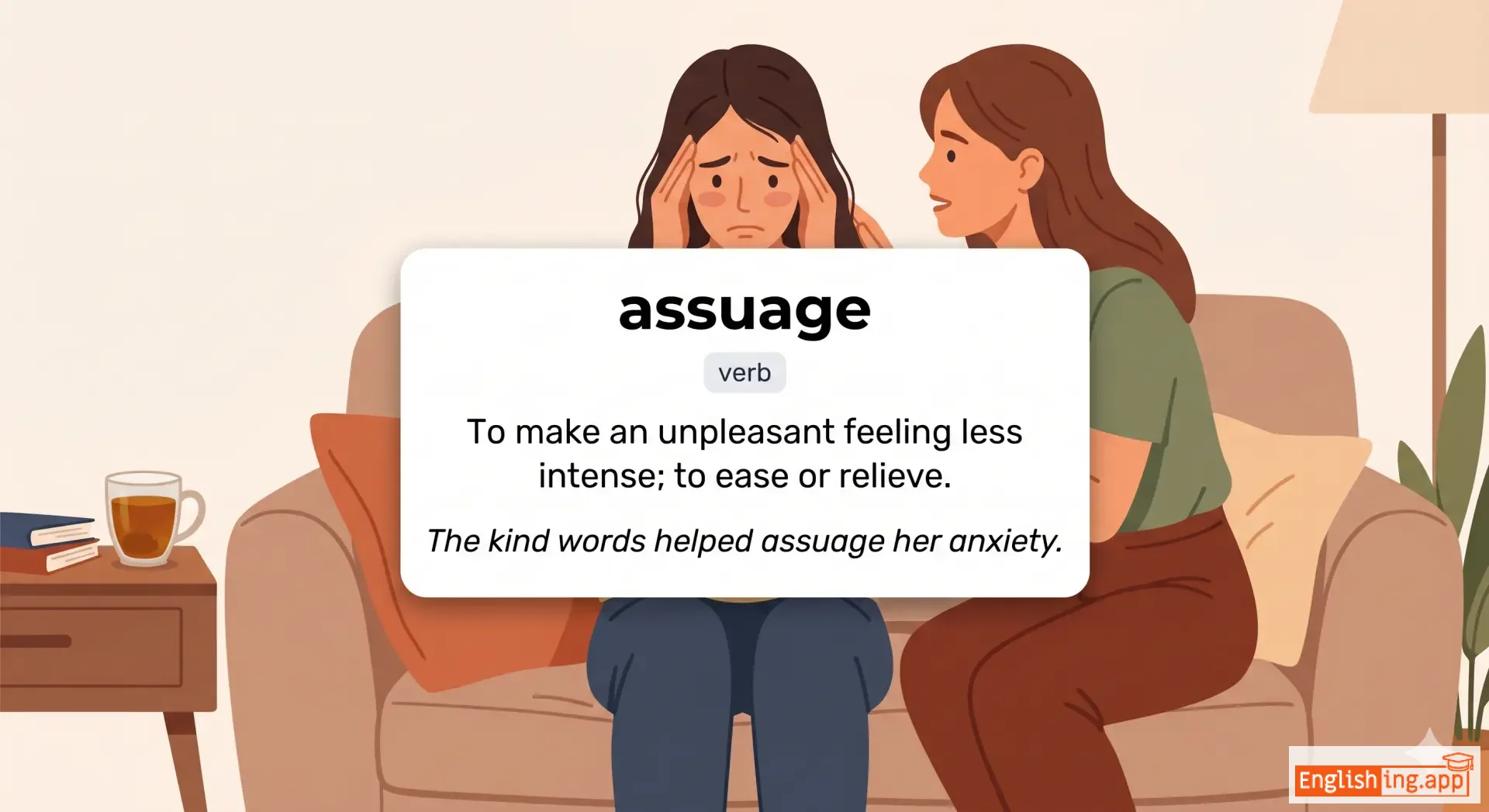
assuage definition card — visual illustration of the meaning
verb
/əˈsweɪdʒ/
缓解 (huǎn jiě)

To make an unpleasant feeling less intense; to ease or relieve.

"The kind words helped assuage her anxiety."

"善意的话帮助缓解了她的焦虑。" (Shànyì de huà bāngzhù huǎn jiě le tā de jiāolǜ.)
verb
/əˈsuːm/
假设 (jiǎshè)

to think that something is true without proof

"I assume he will be late to the meeting."

"我假设他会迟到会议。" (Wǒ jiǎshè tā huì chídào huìyì.)
noun
/əˈsʌmpʃən/
假设 (jiǎshè)

A belief or statement taken for granted without proof.

"His assumption about the results turned out to be wrong."
"他对结果的假设证明是错误的。" (Tā duì jiéguǒ de jiàshè zhèngmíng shì cuòwù de.)
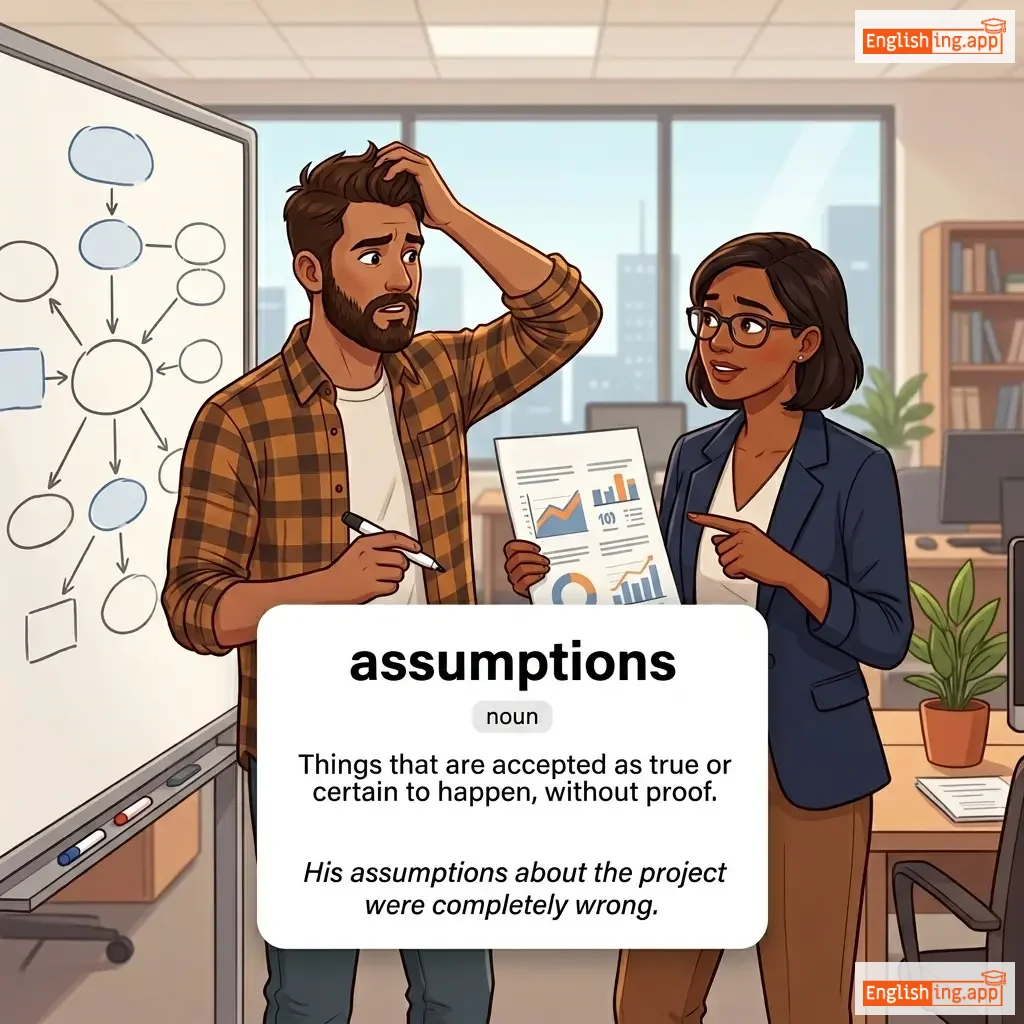
assumptions definition card — visual illustration of the meaning
noun
əˈsʌmp.ʃənz
假设 (jiǎshè)

Things that are accepted as true or certain to happen, without proof.

"His assumptions about the project were completely wrong."
"他对项目的假设完全错误。" (Tā duì xiàngmù de jiǎshè wánquán cuòwù.)
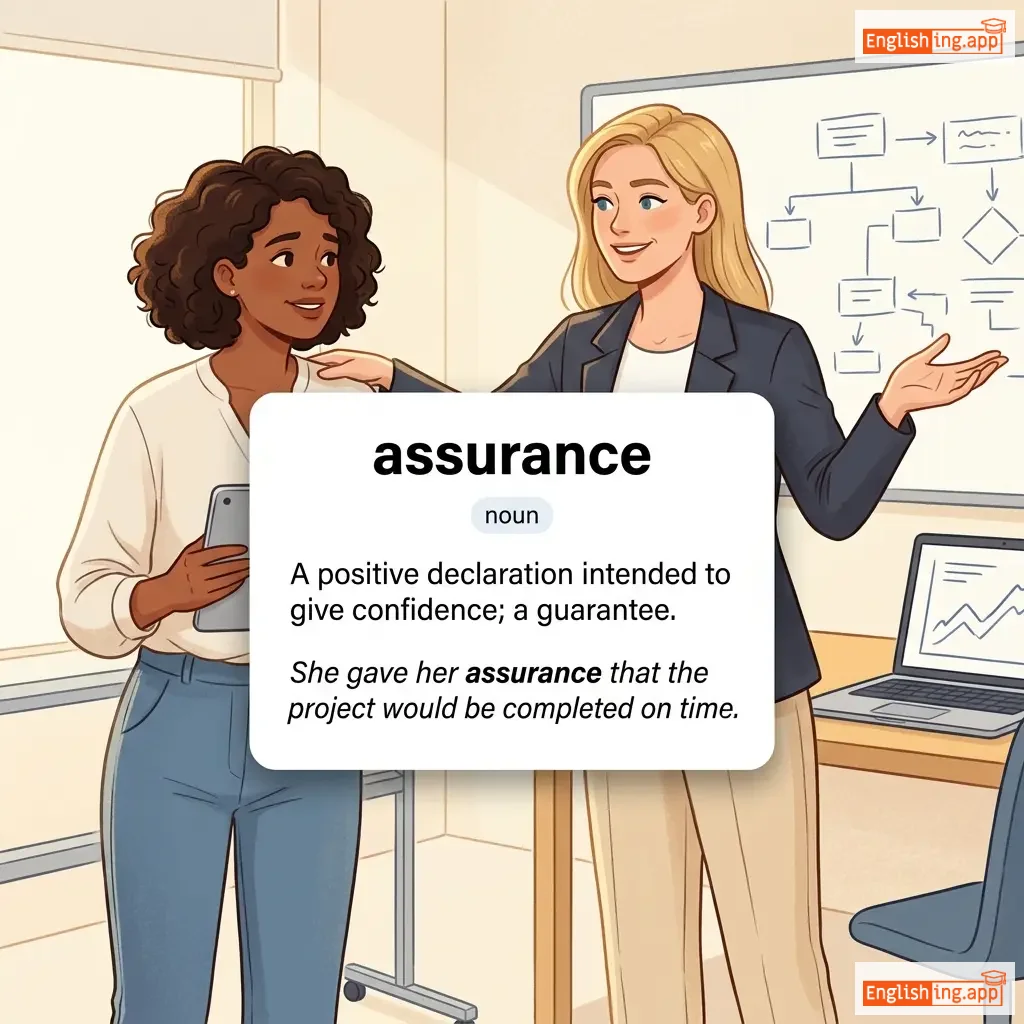
assurance definition card — visual illustration of the meaning
noun
/əˈʃʊərəns/
保证 (baozheng)

A positive declaration intended to give confidence; a guarantee.

"She gave her assurance that the project would be completed on time."

"她给了她的保证,项目将按时完成。" (Ta gei le ta de baozheng, xiangmu jiang anshi wancheng.)
verb
/əˈʃʊr/
保证 (baozheng)

to make someone feel certain or confident about something

"He assured her that everything would be fine."

"他向她保证一切都会好。" (Ta xiang ta baozheng yiqie dou hui hao.)
adjective; verb (past/participle)
/əˈʃʊrd/
确信的;有把握的 (quexin de; you bawode)

confident and certain; guaranteed or made certain

"She felt assured that everything would work out."

"她确信一切都会顺利。" (ta quexin yiqie dou hui shunli)
noun
/ˈæstər/
紫菀花 (zǐ wǎn huā)

a flowering plant with daisy-like flowers that typically bloom in fall

"The purple asters bloomed beautifully in the autumn garden."

"紫色的紫菀花在秋天的花园里美丽地盛开。" (zǐ sè de zǐ wǎn huā zài qiūtiān de huāyuán lǐ měilì de shèngkāi.)
noun
/ˈæstərɔɪd/
小行星 (xiaoxingxing)

A small rocky body orbiting the sun, mostly found in the asteroid belt between Mars and Jupiter.

"The asteroid belt lies between the orbits of Mars and Jupiter."

"小行星带位于火星和木星的轨道之间。" (Xiaoxingxing dai weiyu huoxing he mùxīng de guǐdao zhījiān.)
noun
/əˈstɪɡmətɪzəm/
散光 (sanguang)

An eye defect causing blurred vision due to irregular curvature of the cornea or lens.

"She wears glasses to correct her astigmatism."

"她戴眼镜来矫正她的散光。" (Ta dai yanjing lai jiaozheng ta de sanguang.)
verb
/əˈstɒnɪʃ/
使震惊 (shi zhenjing)

to surprise someone greatly; to fill with sudden wonder or amazement

"The magician’s final trick astonished the entire audience."

"魔术师的最后一个表演使所有观众感到震惊。" (moshushi de zuihou yige biaoyan shi suoyou guanzhong gandao zhenjing)
adjective
/əˈstɒnɪʃt/
震惊的 (zhenjing de)

feeling very surprised or amazed

"She was astonished by the magician's incredible trick."
"她被魔术师不可思议的把戏震惊了。" (ta bei moshushi bukesiyi de baxi zhenjing le)
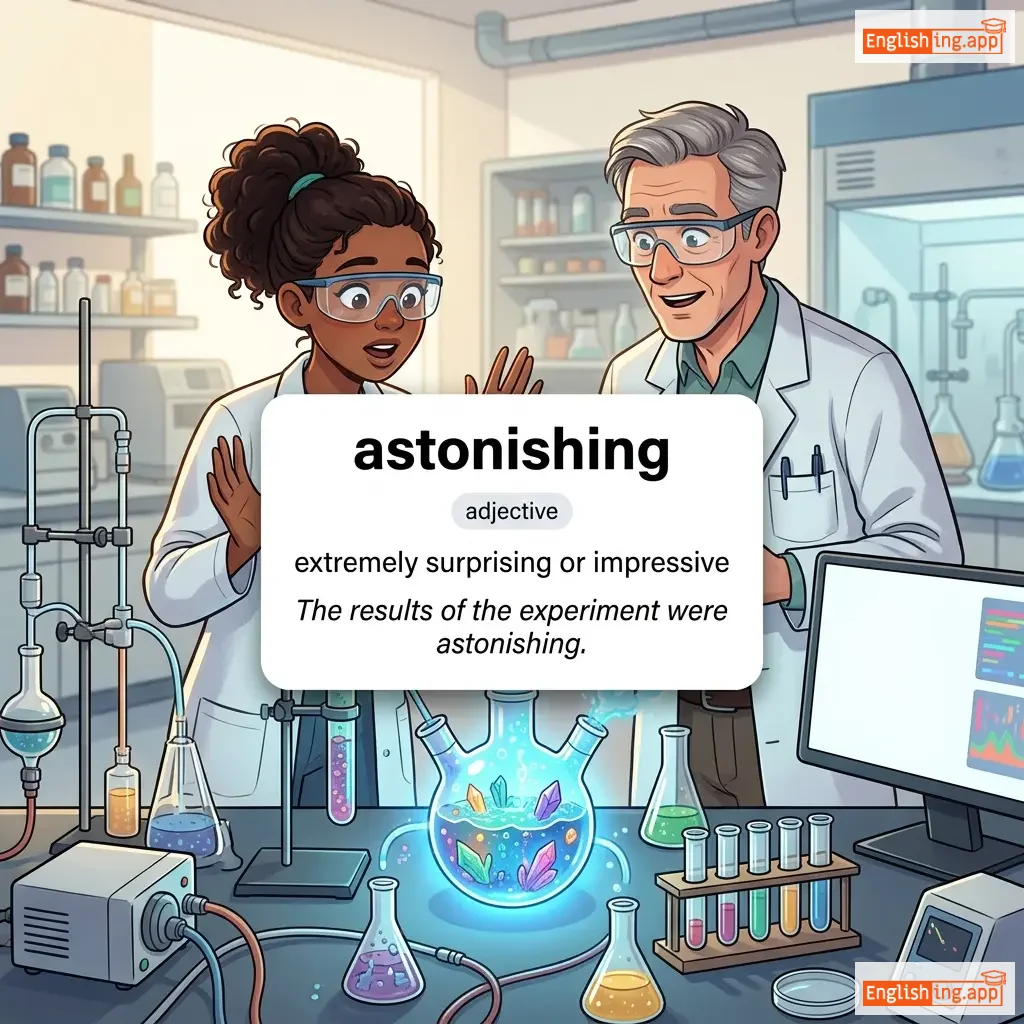
astonishing definition card — visual illustration of the meaning
adjective
/əsˈtɒnɪʃɪŋ/
令人吃惊 (lìng rén chī jīng)

extremely surprising or impressive

"The results of the experiment were astonishing."

"实验的结果令人吃惊。" (Shí yàn de jié guǒ lìng rén chī jīng.)
noun
/əˈstɒnɪʃmənt/
惊讶 (jingya)

Great surprise or amazement.

"She looked at the magician with astonishment."

"她带着惊讶看着魔术师。" (Ta daizhe jingya kànzhe móshù shī.)
verb
/əˈstaʊnd/
使震惊 (shi zhenjing)

to greatly surprise or amaze someone

"The magician's final trick astounded the audience."
"魔术师的最后一个把戏使观众震惊。" (Moshushi de zuihou yige baxi shi guanzhong zhenjing)
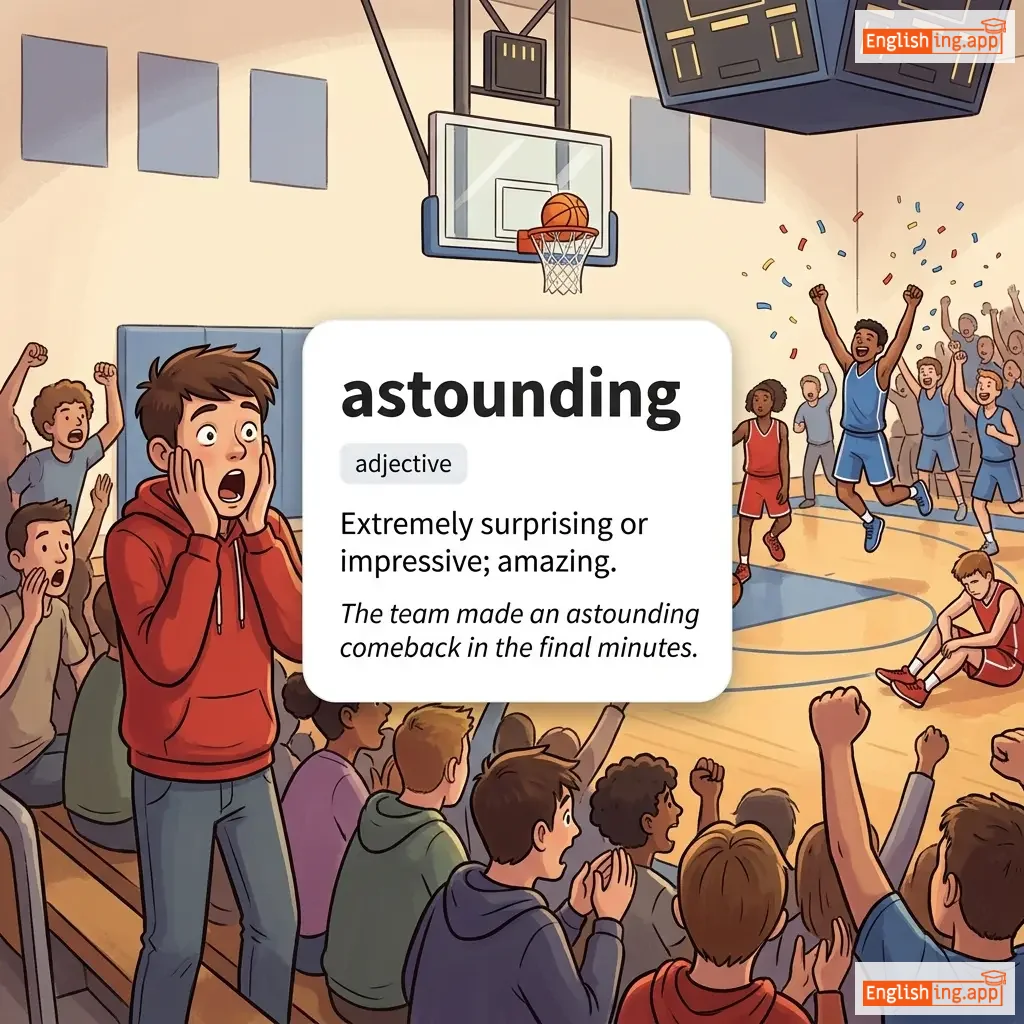
astounding definition card — visual illustration of the meaning
adjective
/əˈstaʊndɪŋ/
令人震惊 (lìng rén zhèn jīng)

Extremely surprising or impressive; amazing.

"The team made an astounding comeback in the final minutes."
"团队在最后时刻完成了令人惊叹的反击。" (Tuánduì zài zuìhòu shíkè wánchéngle lìng rén jīngtàn de fǎn jí.)
adjective
/ˈæstrəl/

Relating to the stars or to spiritual, non-physical realms.

"Some believe in astral projection, the ability to leave the body and travel spiritually."

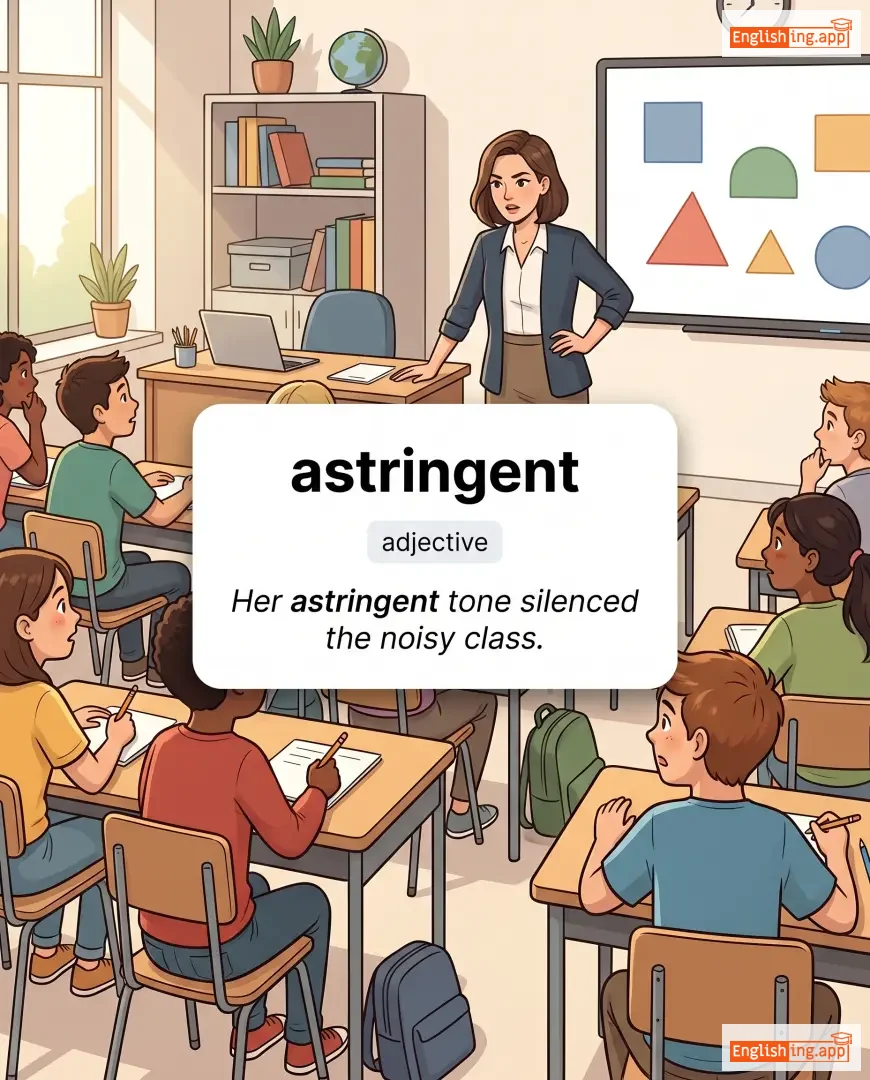
astringent definition card — visual illustration of the meaning
adjective
/əˈstrɪndʒənt/
严厉的 (yanli de)

sharp or severe in manner or style; also describes a substance that contracts skin or body tissues

"Her astringent tone silenced the noisy class."

"她那严厉的语气让嘈杂的课堂安静下来。" (ta na yanli de yuqi rang caozha de ketang anjing xiala)
noun
/əˈstrɑː.lə.dʒər/
占星师 (zhānxīng shī)

a person who studies astrology and makes predictions based on the positions of stars and planets

"The astrologer predicted good fortune in her future."

"占星师预测她未来的好运。" (Zhānxīng shī yùcè tā wèilái de hǎo yùn.)
noun
/əˈstrɒlədʒi/
占星术 (zhānxīngshù)

the study of the movements and relative positions of celestial bodies interpreted as having an influence on human affairs

"She studied astrology to understand her future."

"她学习占星术来了解她的未来。" (Tā xuéxí zhānxīngshù lái liǎojiě tā de wèilái.)
noun
/əˈstrɒnəmər/
天文学家 (tian wenxue jia)

a scientist who studies the stars, planets, and the universe

"The astronomer observed the new comet through his telescope."
"天文学家通过他的望远镜观察到新的彗星。" (Tianwenxuejia tongguo tade wangyuanjing guancha dao xinde huixing.)
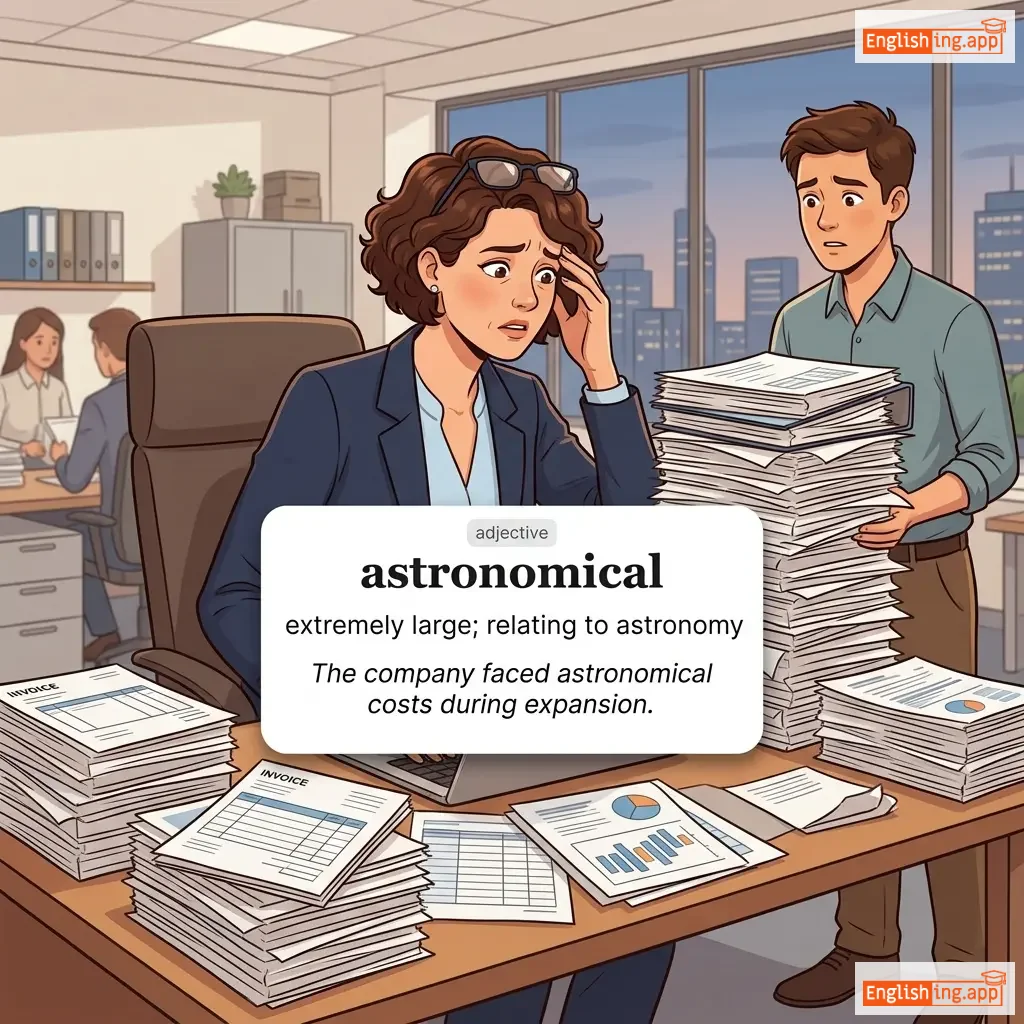
astronomical definition card — visual illustration of the meaning
adjective
/ˌæstrəˈnɒmɪkəl/
天文的 (tianwen de)

extremely large; relating to astronomy

"The company faced astronomical costs during expansion."
"公司在扩展过程中面临了天文般的成本。" (Gongsi zai kuozhan guocheng zhong mianlin le tianwen ban de chengben.)
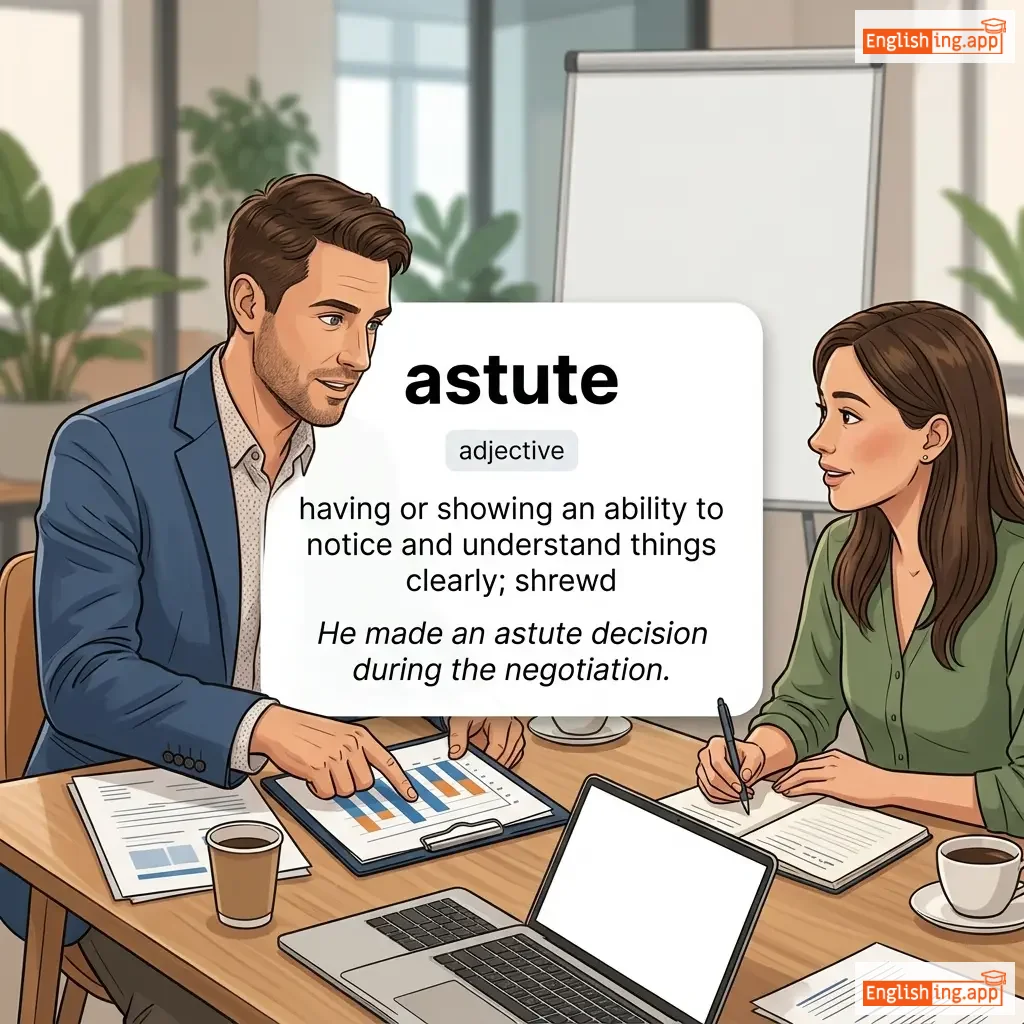
astute definition card — visual illustration of the meaning
adjective
/əˈstjuːt/
精明 (jingming)

having or showing an ability to notice and understand things clearly; shrewd

"He made an astute decision during the negotiation."
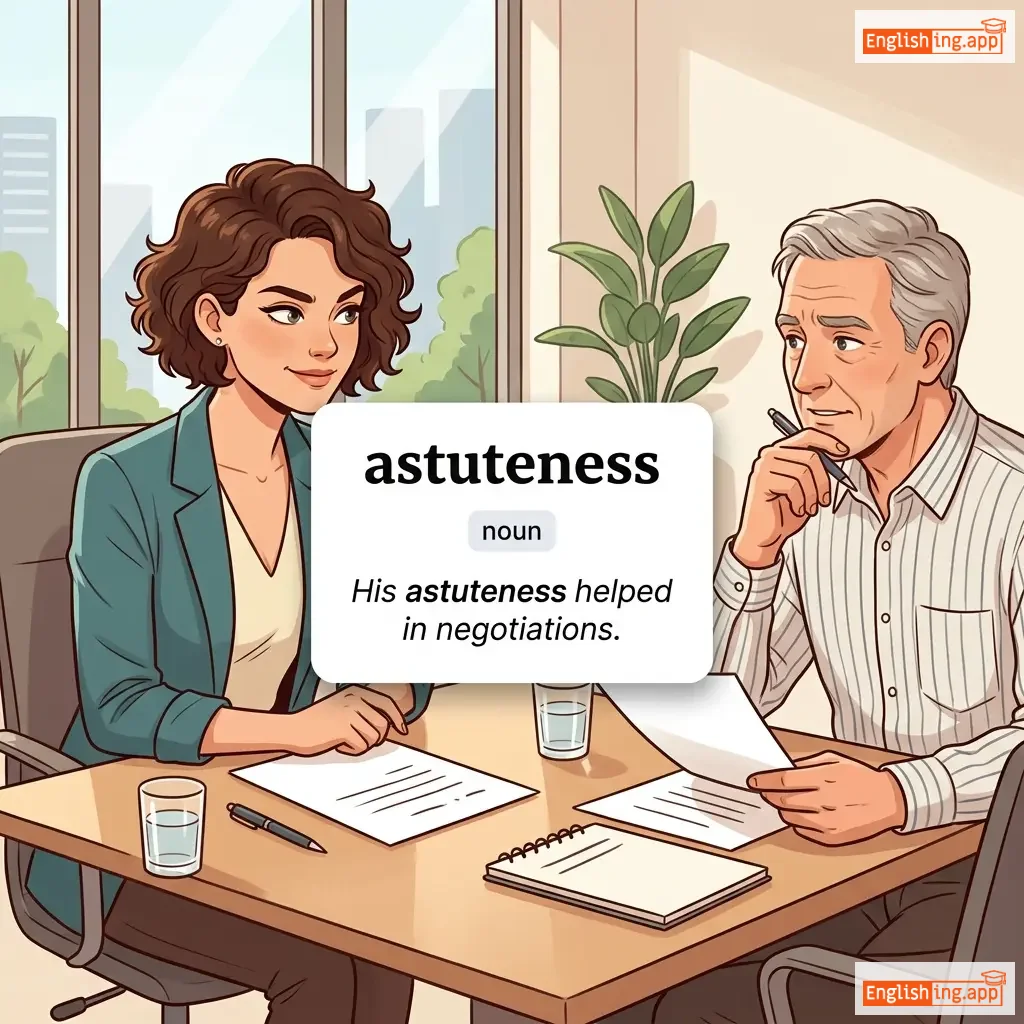
"他在谈判中做出了一个精明的决定。" (Ta zai tanpan zhong zuo chule yige jingming de jueding.)
astuteness definition card — visual illustration of the meaning
noun
/əˈstuːt.nəs/
机智 (jī zhì)

The ability to accurately assess situations or people and turn this to one's advantage.

"His astuteness helped in negotiations."

"他的机智在谈判中起到了帮助作用。" (Tā de jī zhì zài tánpàn zhōng qǐ dào le bāngzhù zuòyòng.)
adverb
/əˈsʌndər/
分成碎片 (fen cheng sui pian)

into separate parts; apart

"The ancient empire was torn asunder by war."
"古老的帝国在战争中被撕裂成碎片。" (Gu lao de di guo zai zhan zheng zhong bei si lie cheng sui pian.)
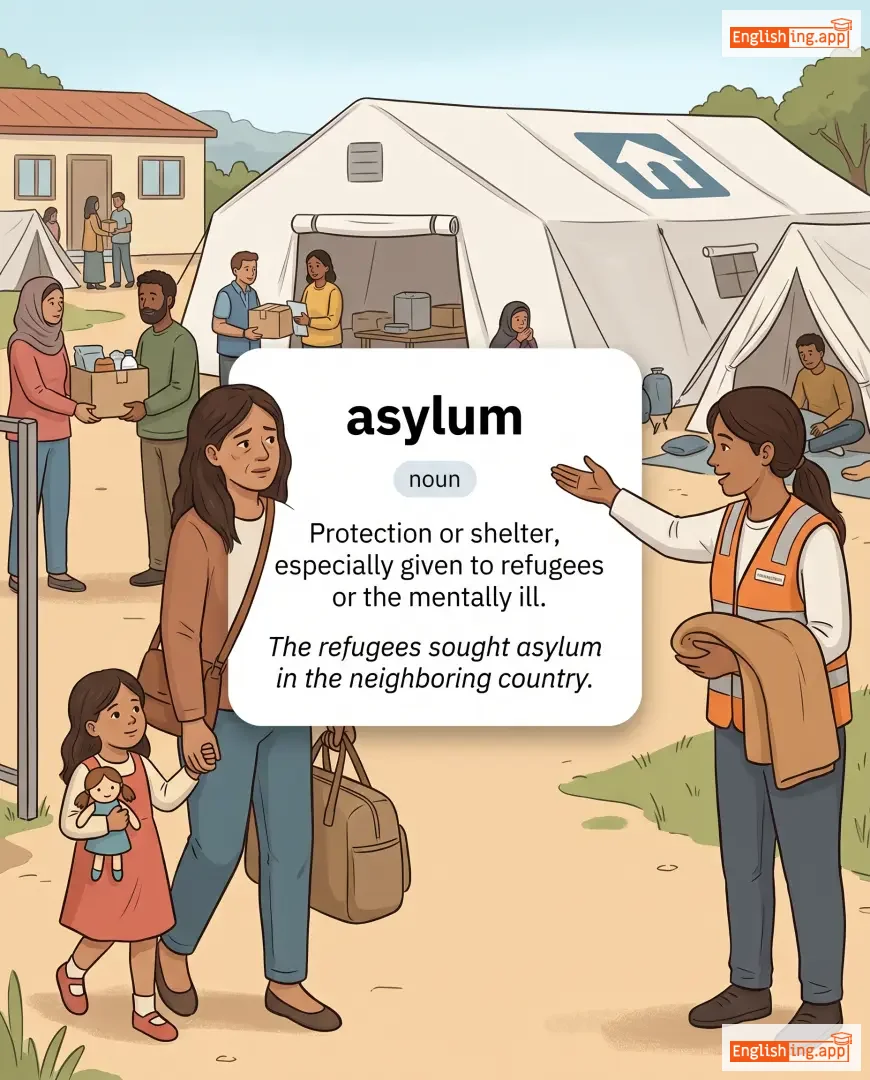
asylum definition card — visual illustration of the meaning
noun
/əˈsaɪləm/
庇护所 (bìhùsuǒ)

Protection or shelter, especially given to refugees or the mentally ill.

"The refugees sought asylum in the neighboring country."

"难民在邻国寻求庇护。" (Nànmín zài lín guó xúnqiú bìhù.)
adjective
/ˌeɪsɪˈmɛtrɪk/
不对称的 (buduìchèn de)

Not having equal or corresponding parts; lacking symmetry.

"The design of the building is asymmetric and unusual."

"这座建筑的设计是不对称的且不寻常。" (Zhè zuò jiànzhú de shèjì shì bùduìchèn de qiě bù xúncháng.)
adjective
/ˌeɪsɪˈmɛtrɪkəl/
不对称 (buduiqun)

Having parts that are not the same in size, shape, or arrangement.

"She wore an asymmetrical dress that drew everyone’s attention."
"她穿了一件不对称的裙子,吸引了所有人的注意。" (Tā chuānle yī jiàn bù duìchèn de qúnzi, xīyǐnle suǒyǒu rén de zhùyì.)
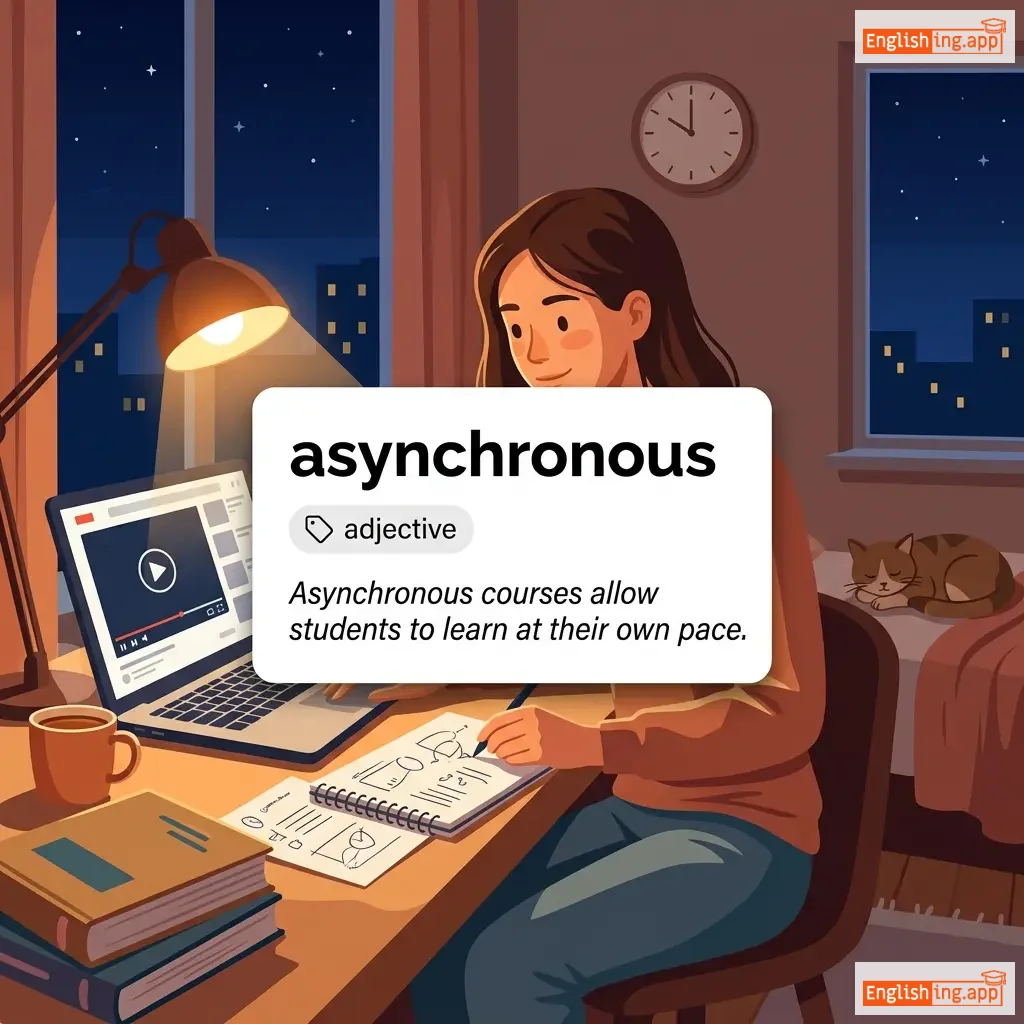
asynchronous definition card — visual illustration of the meaning
adjective
eɪˈsɪŋ.krə.nəs
异步的 (yì bù de)

Of or requiring a form of computer control timing protocol in which a specific operation begins upon receipt of an indication that the preceding operation has been completed.

"Asynchronous courses allow students to learn at their own pace."
"异步课程允许学生以自己的节奏学习。" (Yì bù kèchéng yǔnxǔ xuéshēng yǐ zìjǐ de jiézòu xuéxí.)
preposition
/æt/
(zai)

used to indicate a specific time, place, or direction

"She arrived at the airport on time."

"她准时到达机场。" (Tā zhǔnshí dào dá jīchǎng.)
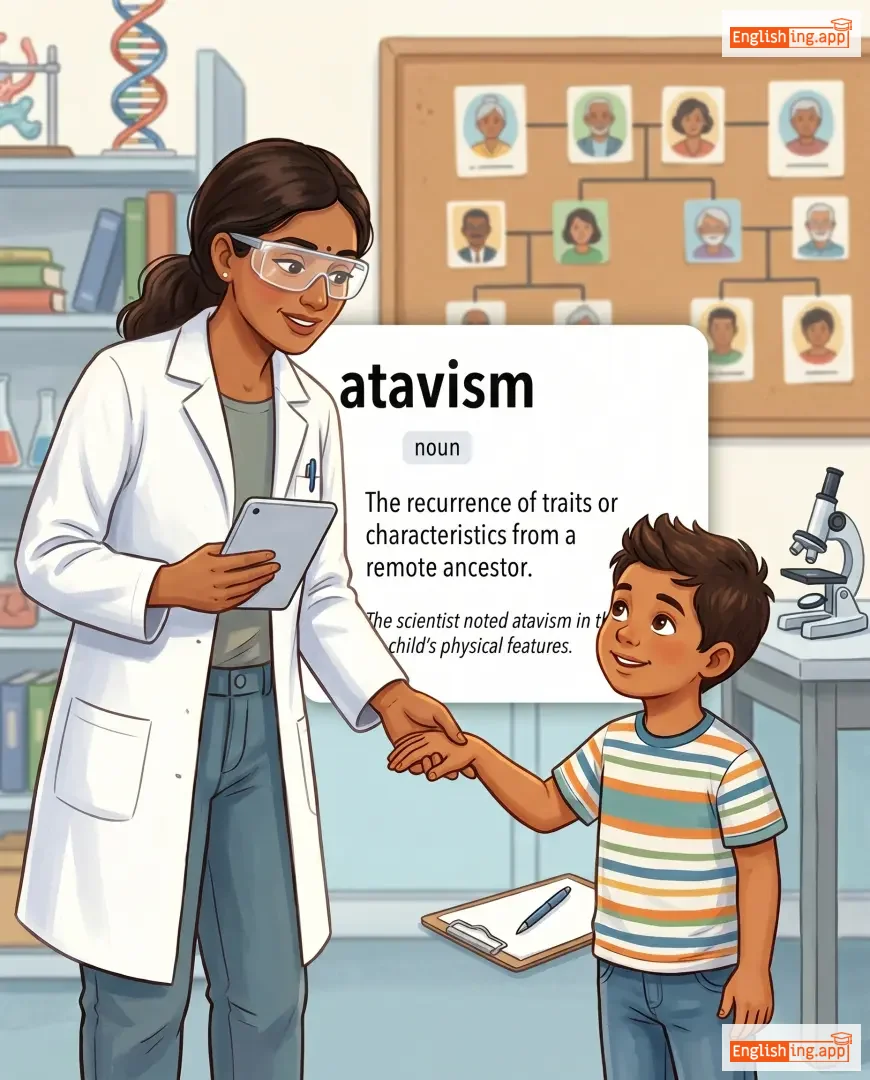
atavism definition card — visual illustration of the meaning
noun
/ˈætəvɪzəm/
返祖现象 (fǎn zǔ xiànxiàng)

The recurrence of traits or characteristics from a remote ancestor.

"The scientist noted atavism in the child’s physical features."

"科学家在孩子的生理特征中观察到返祖现象。" (Kēxuéjiā zài háizi de shēnglǐ tèzhēng zhōng guānchá dào fǎn zǔ xiànxiàng.)
noun
/ˌætəlˈjeɪ/
工作室(艺术家或设计师的工作室) (gongzuoshi (yishujia huo shejishi de gongzuoshi))

A workshop or studio, especially for an artist or designer.

"The painter invited us to his atelier to view his new collection."

"画家邀请我们去他的工作室,观看他的最新系列作品。" (Huajia yaoqing women qu tade gongzuoshi, guankan tade zuixin xilie zuopin.)
noun
/ˈeɪθiɪzəm/
无神论 (wú shén lùn)

The belief that there is no God or gods.

"He declared his atheism openly despite social pressure."

"他在社会压力下公开宣称自己的无神论。" (Tā zài shèhuì yālì xià gōngkāi xuānchēng zìjǐ de wú shén lùn.)