词汇表

英语词汇词典 | 单词含义、定义和示例

preposition, adverb
/əˈbʌv/
上面 (shangmian)

at a higher place or position than something

"The picture hangs above the fireplace."

"画作挂在壁炉上方。" (Huàzuò guà zài bìlú shàngfāng.)
adjective, adverb
/əˈbʌvˌbɔːrd/
诚实和公开 (Chengshi he gongkai)

Open and honest; without deception or trickery.

"The business deal was completely aboveboard."

"商业交易完全诚实和公开。" (Shangye jiaoyi wanquan chengshi he gongkai.)
verb
/əˈbreɪd/
通过摩擦磨损 (tongguo mocha mosun)

to scrape or wear away the surface by friction or erosion

"The rough cloth can easily abrade the skin."

"粗糙的布料容易磨损皮肤。" (Cūcāo de bùliào róngyì mó sǔn pífū.)
noun
/əˈbreɪʒən/
由于摩擦而导致的皮肤或表面的擦伤或磨损 (yóu yú mócā ér dǎozhì de pífū huò biǎomiàn de cāshāng huò móxūn)

a scrape or wearing away of the skin or surface due to friction

"He suffered a minor abrasion on his knee after falling."

"他在摔倒后膝盖上受了一个轻微的擦伤。" (Tā zài shuāidǎo hòu xīgài shàng shòule yīgè qīngwēi de cāshāng.)
adjective
/əˈbreɪsɪv/

harsh, rough, or capable of wearing down by rubbing

"His abrasive tone made everyone uncomfortable."

🚶‍♂️🚶‍♂️

abreast (ā bù ré sī tè)

adverb
/əˈbrɛst/
并排 (bìng pái)

side by side and facing the same direction; informed about something

"The soldiers marched two abreast down the street."

"士兵们并排走在街上。" (Shìbīngmen bìng pái zǒu zài jiē shàng.)
verb
/əˈbrɪdʒ/
缩短 (suō duǎn)

to shorten a text without losing its meaning

"The editor decided to abridge the long novel for young readers."

"编辑决定为年轻读者缩短这本长小说。" (Biānjí juédìng wèi niánqīng dúzhě suōduǎn zhè běn cháng xiǎoshuō.)
noun
/əˈbrɪdʒmənt/
缩略版 (suōlüè bǎn)

A shortened version of a larger work, such as a book or speech.

"The publisher released an abridgment of the lengthy novel for students."

"出版商发布了该长篇小说的缩略版,供学生使用。" (Chūbǎnshāng fābùle gāi chángpiān xiǎoshuō de suōlüè bǎn, gōng xuéshēng shǐyòng.)
adverb
/əˈbrɔːd/
在国外 (zai guowai)

In or to a foreign country or countries.

"She studied abroad for two years in Germany."

"她在德国留学了两年,住在国外。" (Ta zai Deguo liuxue le liang nian, zhu zai guowai.)
verb
/ˈæbrəɡeɪt/
废除 (feichu)

To formally repeal, cancel, or abolish a law, agreement, or custom.

"The government decided to abrogate the outdated treaty."

"政府决定废除过时的条约。" (Zhengfu jueding feichu guoshi de tiaoyue.)
adjective
/əˈbrʌpt/
突然 (turan)

Sudden or unexpected, often without warning.

"The car came to an abrupt stop in the middle of the road."

"汽车在路中间急停。" (Qìchē zài lù zhōngjiān jí tíng.)
adverb
/əˈbrʌptli/
突然且出乎意料; 毫无预警 (túrán qiě chūhū yìliào; háo wú yùjǐng)

suddenly and unexpectedly; without warning

"The meeting ended abruptly when the power went out."

"会议在电力中断时突然结束。" (Huìyì zài diànlì zhōngduàn shí túrán jiéshù)
noun
/ˈæbsɛs/
脓肿 (nóng zhǒng)

A swollen area within body tissue containing pus, usually caused by infection.

"The dentist treated the abscess in his tooth."
"牙医治疗了他牙齿上的脓肿。" (Yáyī zhìliáo le tā yáchǐ shàng de nóngzhǒng.)
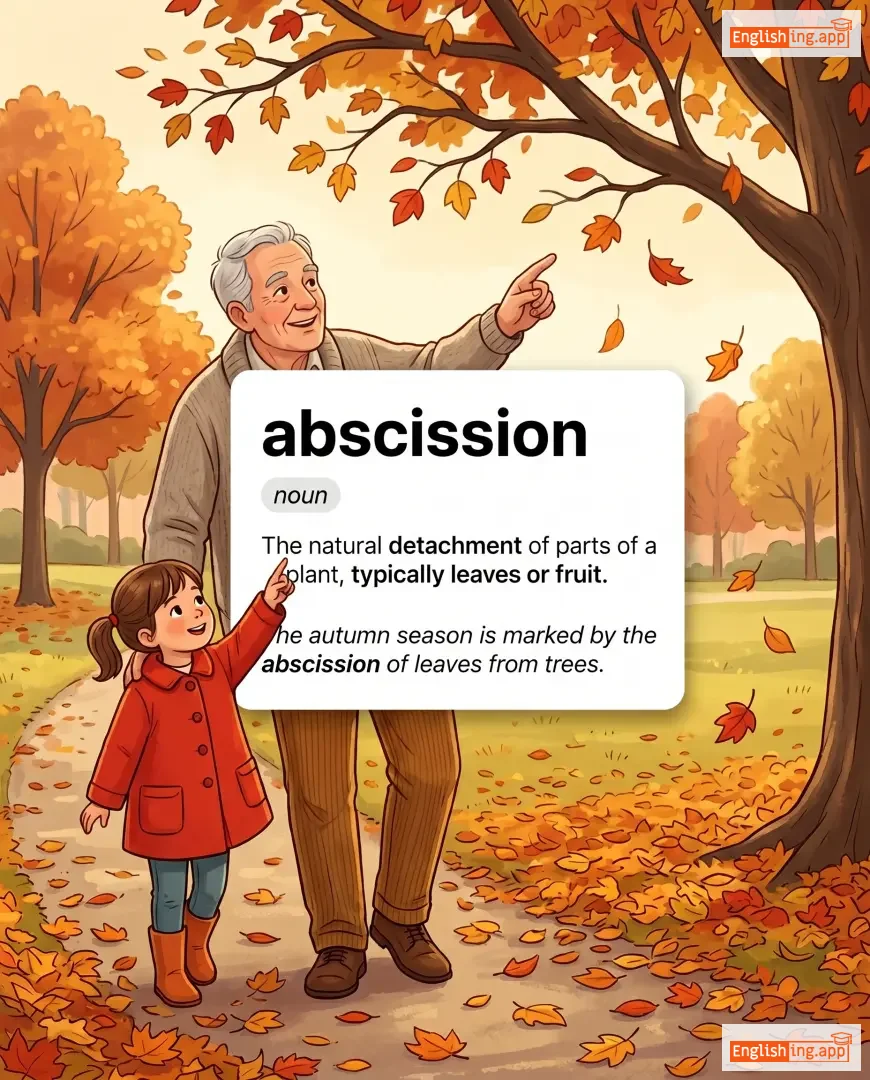
abscission definition card — visual illustration of the meaning
noun
/æbˈsɪʒən/
叶片脱落 (ye pian tuo luo)

The natural detachment of parts of a plant, typically leaves or fruit.

"The autumn season is marked by the abscission of leaves from trees."

"秋季的标志是树叶从树木上脱落。" (Qiuji de biaozhi shi shuye cong shumu shang tuoluo.)
abscond definition card — visual illustration of the meaning
verb
/əbˈskɒnd/
逃跑 (tao pao)

to leave secretly and quickly, often to avoid arrest or punishment

"The thief tried to abscond with the stolen jewelry."

"小偷试图带着被盗的珠宝逃跑。" (Xiao tou shi tu dai zhe bei dao de zhu bao tao pao.)
noun
/ˈæbsəns/
缺席 (quēxí)

the state of being away from a place or person

"His absence from the meeting was noticed by everyone."

"他在会议中的缺席被每个人注意到了。" (Tā zài huìyì zhōng de quēxí bèi měi gè rén zhùyì dào le.)
adjective
/ˈæbsənt/
缺席 (quēxí)

not present at a place or event

"She was absent from the meeting yesterday."

"她昨天没有参加会议。" (Tā zuótiān méiyǒu cānjiā huìyì.)
adjective
/ˌæbsənt ˈmaɪndɪd/
健忘的 (jian wang de)

often forgetting things or not paying attention

"He is so absent-minded that he often forgets his keys."

"他是那么健忘,以至于经常忘记自己的钥匙。" (Ta shi na me jian wang, yi zhi yu jing chang wang ji zi ji de yao shi.)
adjective
/ˈæbsəluːt/
绝对 (juéduì)

total, complete, or without restriction

"The dictator had absolute power over the nation."

"独裁者拥有对国家的绝对权力。" (Dúcáizhě yōngyǒu duì guójiā de juéduì quánlì.)
adverb
/ˈæbsəluːtli/
绝对 (juéduì)

Completely; without qualification or restriction.

"I absolutely agree with your decision."

"我完全同意你的决定。" (wǒ wánquán tóngyì nǐ de juédìng.)
noun
/ˌæbsəˈluːʃən/
宽恕 (kuanshu)

formal release from guilt, obligation, or punishment

"The priest granted him absolution for his sins."

"牧师为他的罪行给予了宽恕。" (Mùshī wèi tā de zuìxíng jǐyǔle kuānshù.)
absolve definition card — visual illustration of the meaning
verb
/əbˈzɒlv/
赦免 (shèmiǎn)

to declare someone free from blame, guilt, or responsibility

"The priest absolved him of his sins."

"牧师赦免了他所有的罪。" (Mùshī shèmiǎn le tā suǒyǒu de zuì.)
verb
/əbˈzɔːrb/
吸收 (xīshōu)

to take in or soak up a liquid, energy, or information

"The sponge absorbed all the water."

"海绵吸收了所有的水。" (Hǎimián xīshōu le suǒyǒu de shuǐ.)
adjective, noun
/əbˈzɔːrbənt/
吸收性的 (xishou xing de)

able to soak up liquid, moisture, or energy easily; a material or substance that absorbs

"This towel is highly absorbent and dries quickly."
"这条毛巾非常吸收性,而且干得很快。" (zhe tiao maojin feichang xishou xing erqie gan de hen kuai)
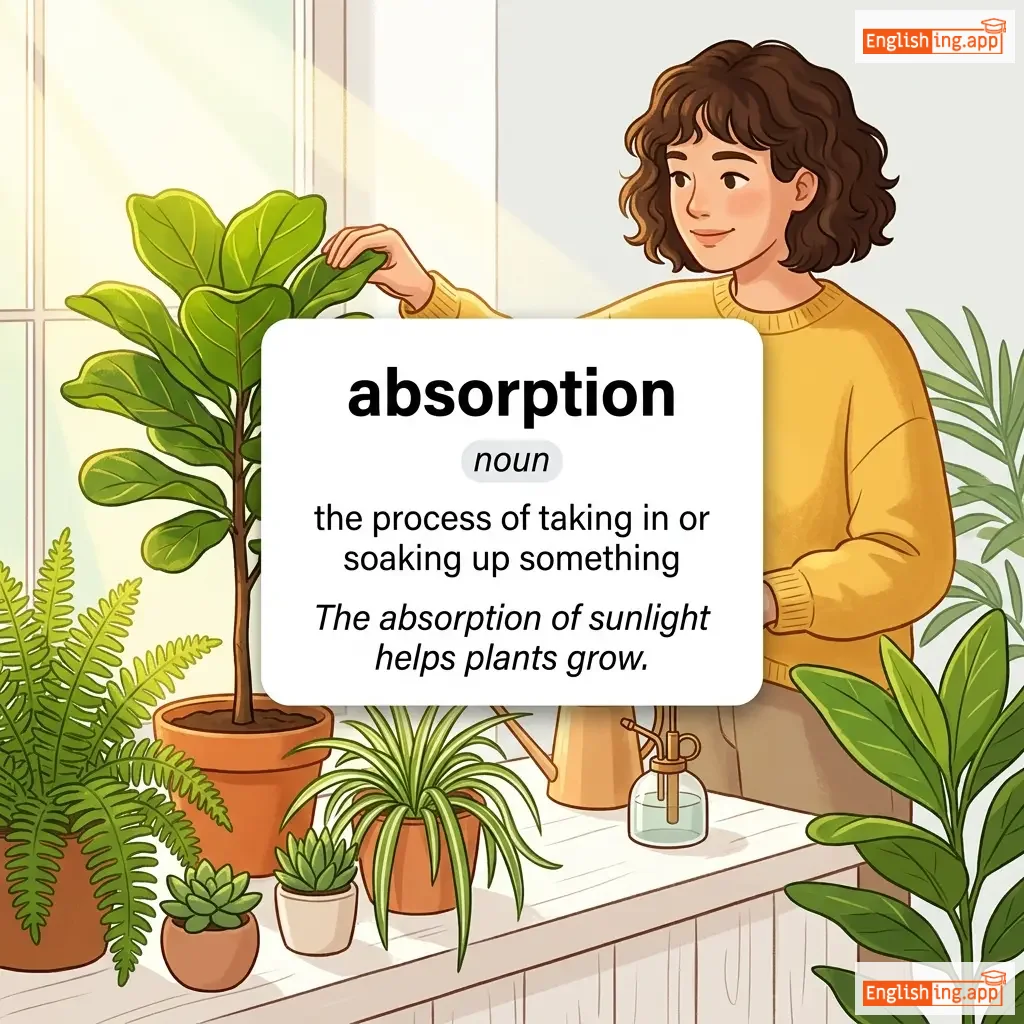
absorption definition card — visual illustration of the meaning
noun
/əbˈzɔːrpʃən/
吸收 (xishou)

the process of taking in or soaking up something

"The absorption of sunlight helps plants grow."
"阳光的吸收帮助植物生长。" (Yangguang de xishou bangzhu zhiwu shengzhang.)
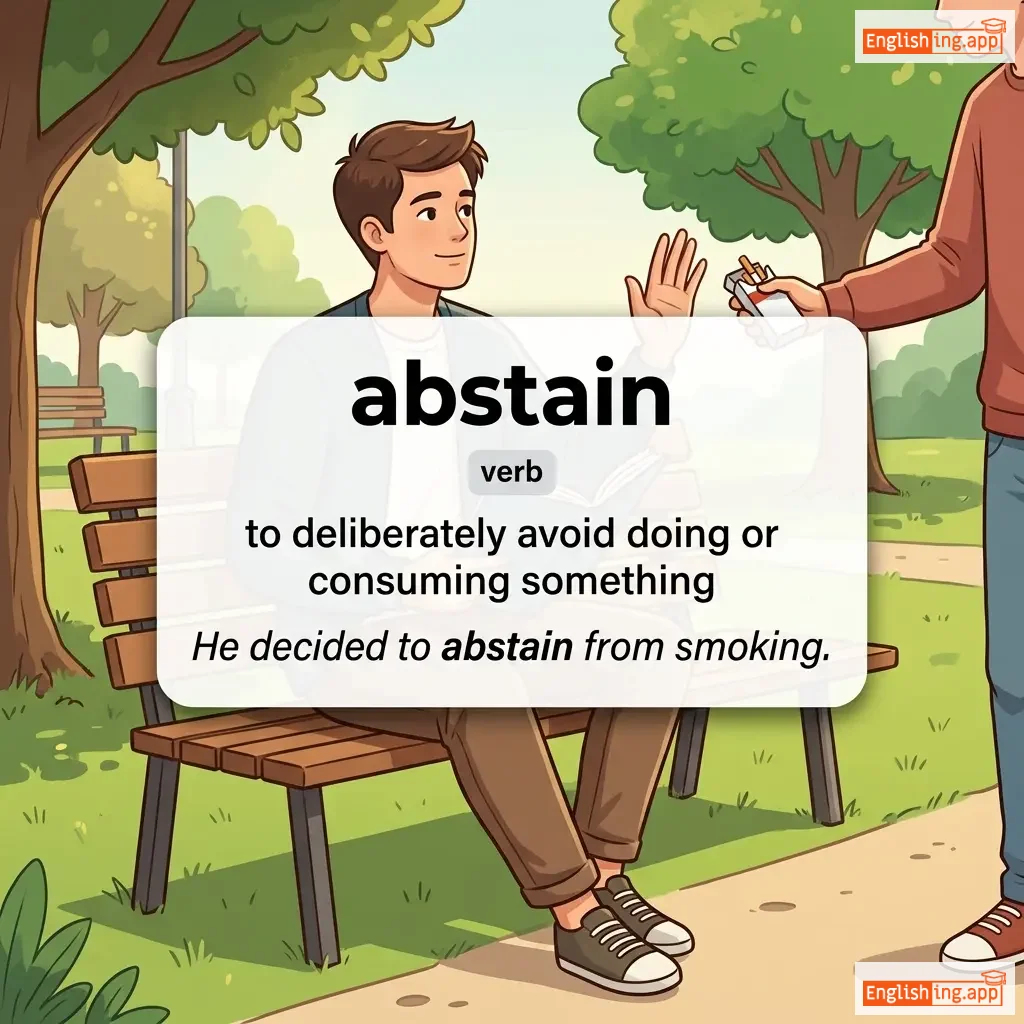
abstain definition card — visual illustration of the meaning
verb
/əbˈsteɪn/
戒除 (jiechu)

to deliberately avoid doing or consuming something

"He decided to abstain from smoking."
"他决定戒烟。" (Ta jueding jieyan.)
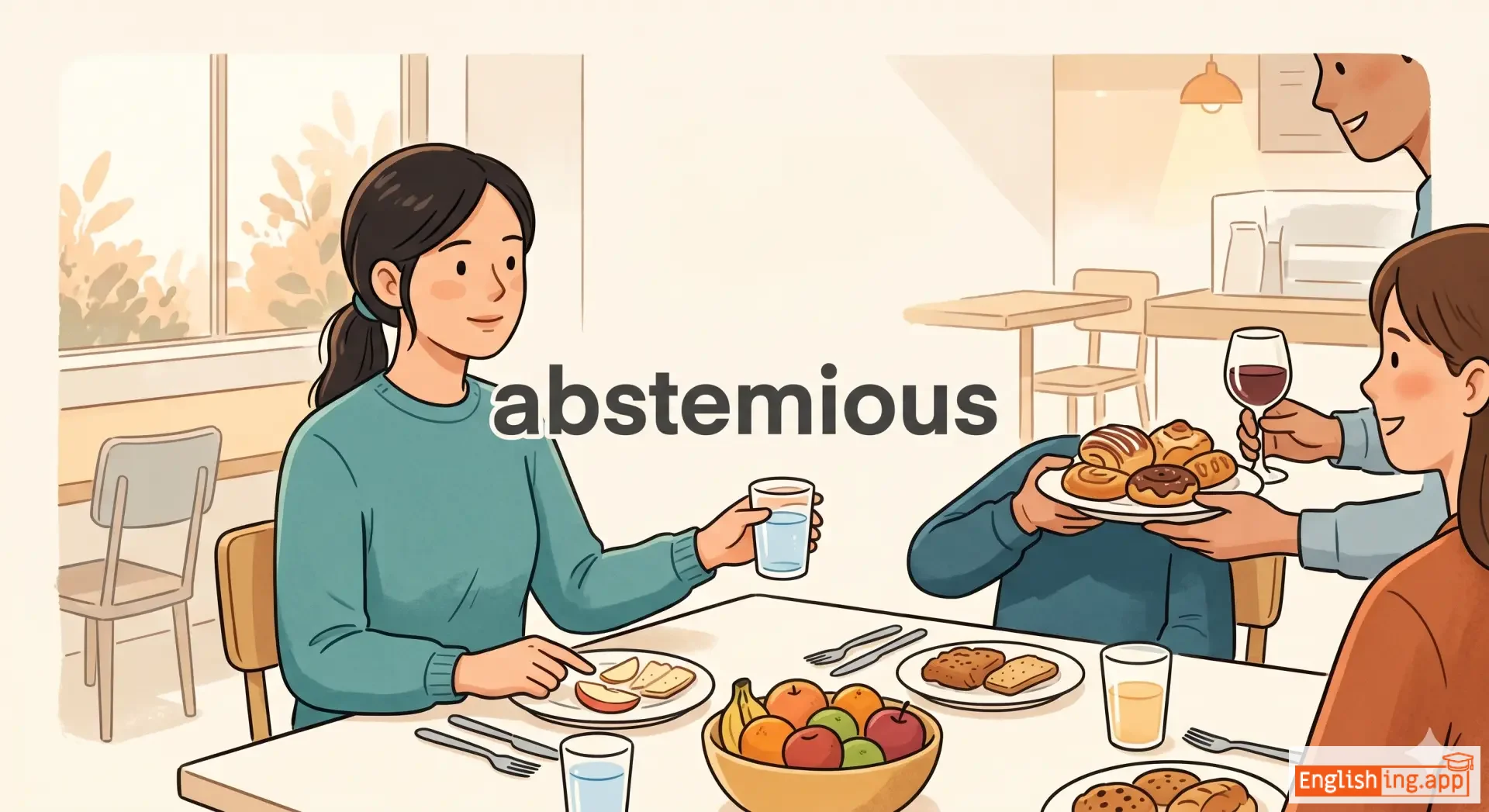
abstemious definition card — visual illustration of the meaning
adjective
/æbˈstiːmiəs/

not self-indulgent, especially when eating and drinking; moderate or sparing in consumption

"She lived an abstemious lifestyle, avoiding excesses of all kinds."
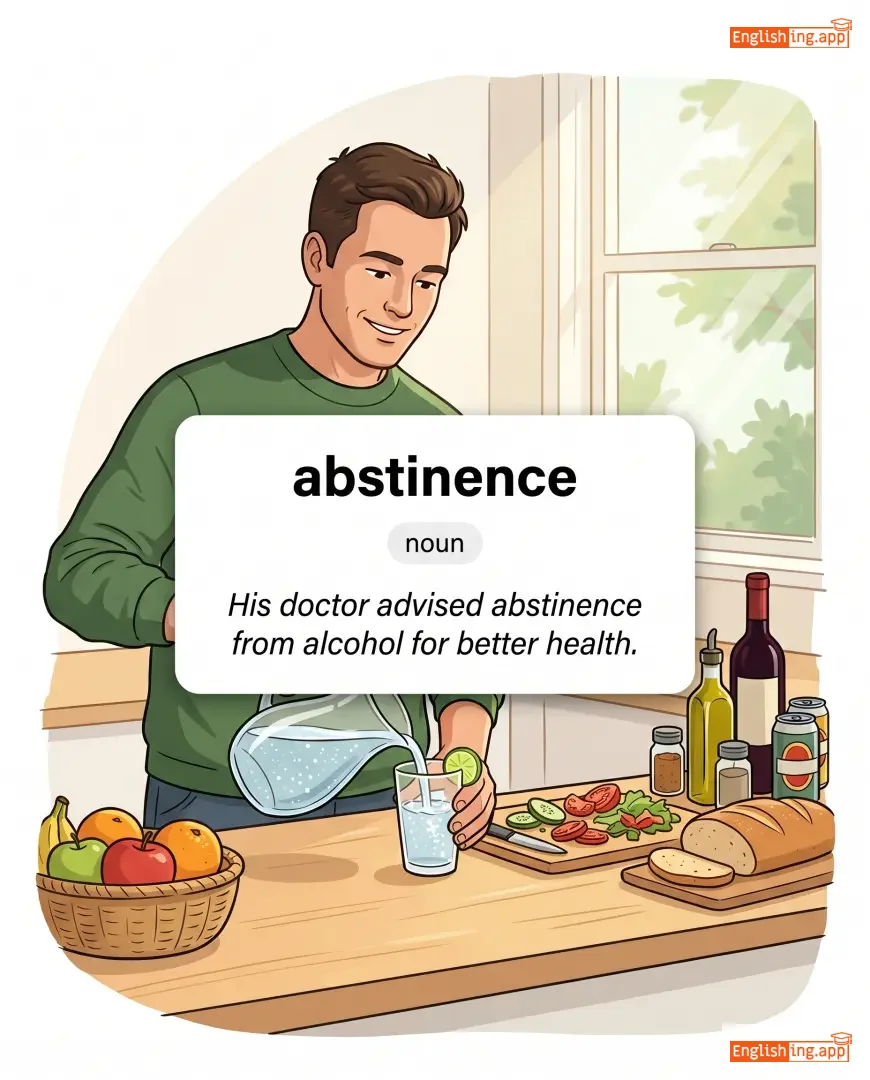
abstinence definition card — visual illustration of the meaning
noun
/ˈæb.stɪ.nəns/
禁欲,节制 (jìnyù, jiézhì)

the practice of restraining oneself from indulging in something, typically alcohol or sex

"His doctor advised abstinence from alcohol for better health."

"他的医生建议他戒酒以改善健康。" (Tā de yīshēng jiànyì tā jiè jiǔ yǐ gǎishàn jiànkāng.)
adjective, noun, verb
/ˈæb.strækt/
抽象的, 摘要 (chōuxiàng de, zhāiyào)

existing in thought or as an idea but not having physical or concrete existence; a summary of a text

"The artist is known for her abstract paintings."

"艺术家以其抽象画作而闻名。" (Yìshùjiā yǐ qí chōuxiàng huàzuò ér wénmíng.)
noun
/æbˈstrækʃən/
抽象 (chouxiang)

the process of forming general ideas by removing specific details; an abstract concept or idea

"Abstraction allows complex ideas to be represented in a simplified form."
"抽象使复杂的想法能够以简化的形式表达。" (chouxiang shi fuzade xiangfa nenggou yi jianhua de xingshi biaoda)
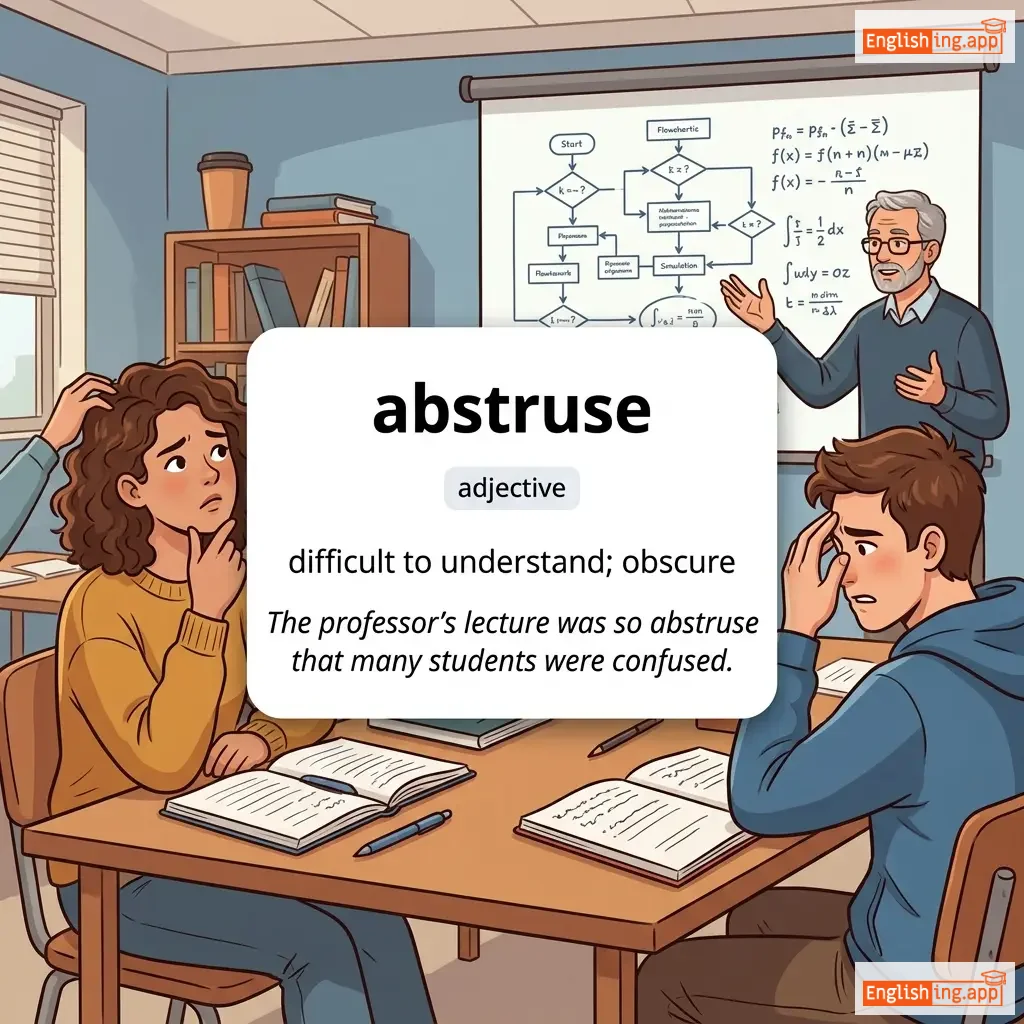
abstruse definition card — visual illustration of the meaning
adjective
/æbˈstruːs/
难以理解 (nán yǐ lǐ jiě)

difficult to understand; obscure

"The professor’s lecture was so abstruse that many students were confused."

"教授的讲座非常深奥,以至于许多学生感到困惑。" (Jiàoshòu de jiǎngzuò fēicháng shēn'ào, yǐzhì yú xǔduō xuéshēng gǎndào kùnhuò.)
adjective
/əbˈsɜːrd/
荒谬的, 不合理的 (huangmiu de, bu heli de)

wildly unreasonable, illogical, or inappropriate

"It is absurd to think that the earth is flat."
"认为地球是平的,这太荒谬了。" (Renwei diqiu shi ping de, zhe tai huangmiu le.)
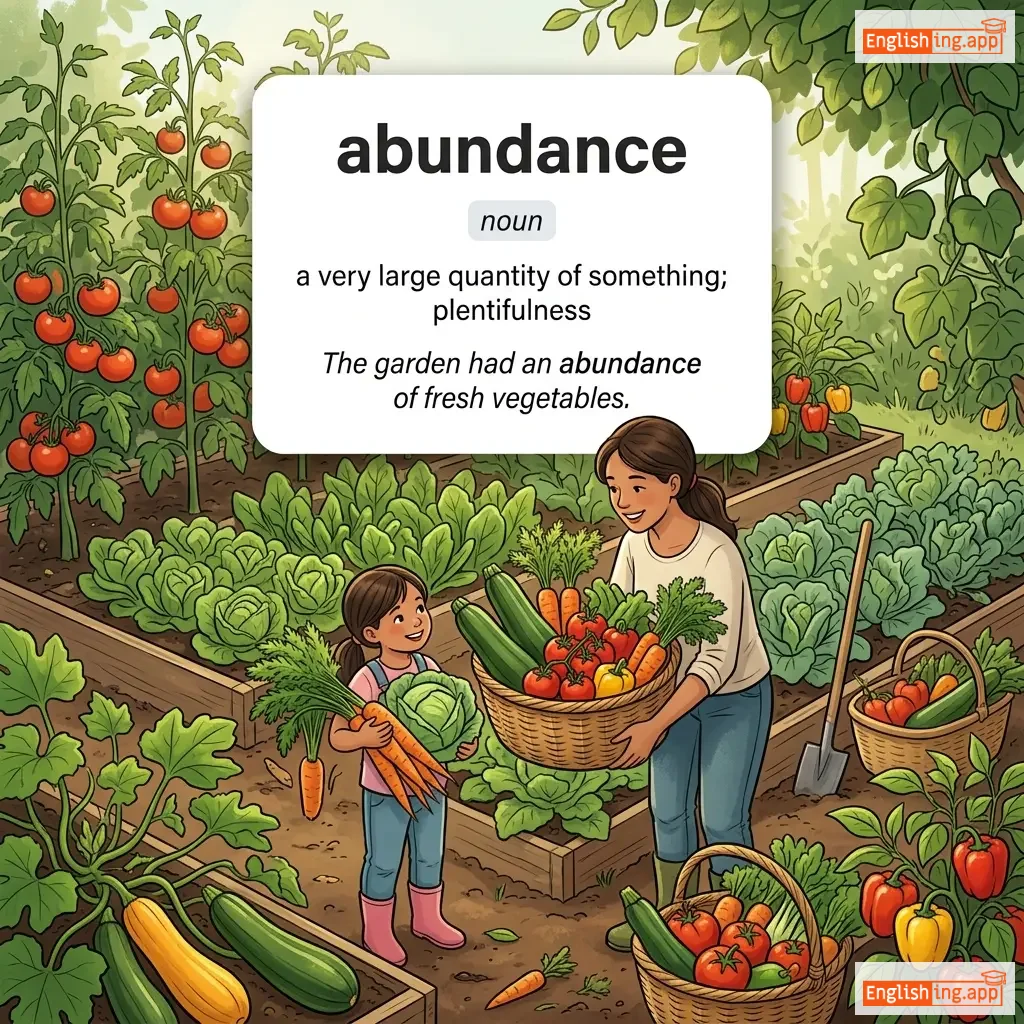
abundance definition card — visual illustration of the meaning
noun
/əˈbʌndəns/
丰富; 大量 (fengfu; daliang)

a very large quantity of something; plentifulness

"The garden had an abundance of fresh vegetables."

"花园里有大量的新鲜蔬菜。" (Huāyuán lǐ yǒu dàliàng de xīnxiān shūcài.)
adjective
/əˈbʌndənt/
丰富 (fēngfù)

existing or available in large quantities; plentiful

"The garden was abundant with colorful flowers."

"花园里有五彩缤纷的花朵。" (Huāyuán lǐ yǒu wǔcǎi bīnfēn de huāduǒ.)
🚫

Abuse

verb, noun
/əˈbjuːs/ (verb), /əˈbjuːs/ (noun)
滥用 (lanyong)

to use something in a harmful way; to treat someone badly or cruelly

"He was accused of abusing his power."

"他被指控滥用职权。" (Ta bei zhikong lanyong zhiquan.)
adjective
/əˈbjuːsɪv/
侮辱性的 / 造成身体或口头伤害 (wǔrǔ xìng de / zàochéng shēntǐ huò kǒutóu shānghài)

extremely offensive or insulting; involving physical or verbal harm

"She left her job because of her abusive boss."

"她因为她那位虐待的老板而离开了工作。" (Tā yīnwèi tā nà wèi nüèdài de lǎobǎn ér líkāi le gōngzuò.)
verb
/əˈbʌt/
相邻 (xianglin)

to be next to or share a border with

"The park abuts the river on the north side."
"公园在北边与河流接壤。" (Gōngyuán zài běi biān yǔ héliú jiērǎng.)
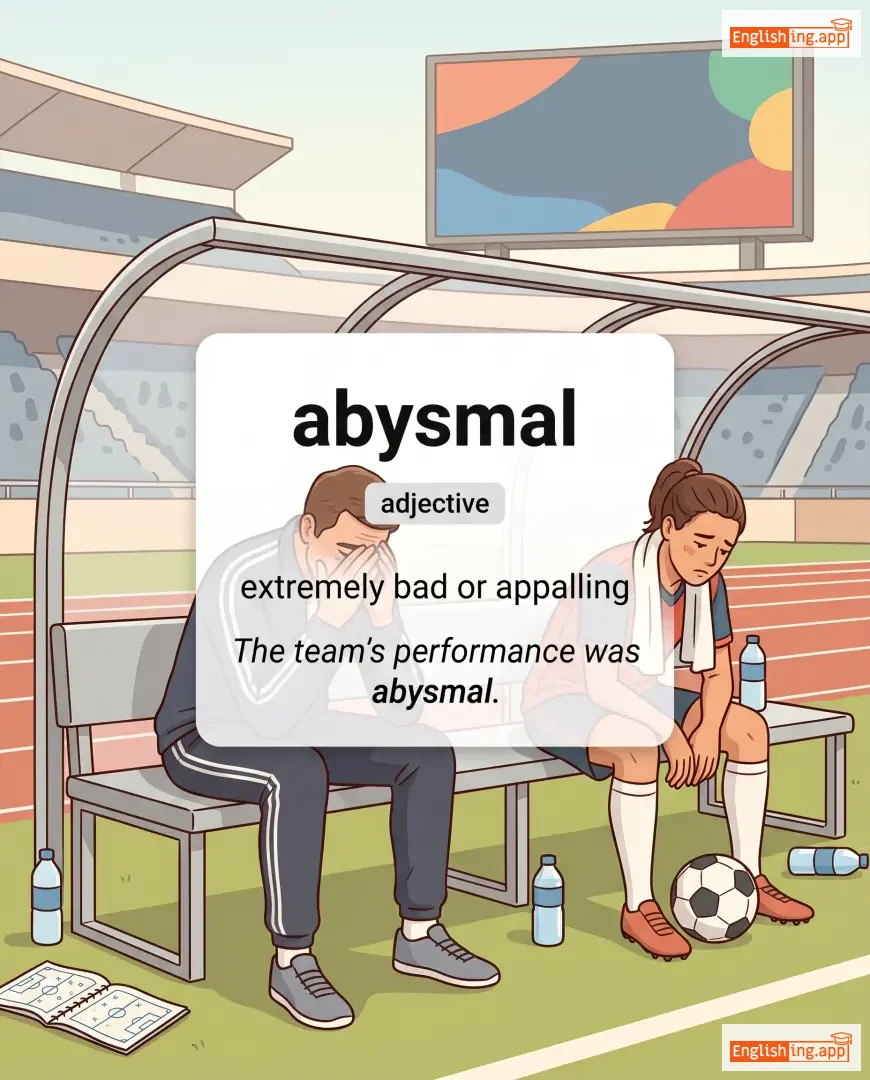
abysmal definition card — visual illustration of the meaning
adjective
/əˈbɪzməl/
极其糟糕 / 可怕 (jíqí zāogāo / kěpà)

extremely bad or appalling

"The team's performance was abysmal."

"团队的表现非常糟糕。" (Tuánduì de biǎoxiàn fēicháng zāogāo.)
noun
/əˈbɪs/
深渊 (shen yuan)

a deep, immeasurable space, chasm, or void; something seemingly without end

"The climbers looked down into the dark abyss below."

"攀登者看着下面的黑暗深渊。" (Pan deng zhe kan zhe xia mian de hei an shen yuan.)
abyssal definition card — visual illustration of the meaning
adjective
/əˈbɪs.əl/
深海的 (shēn hǎi de)

Related to or characteristic of the deep ocean, especially the zone below 4000 meters.

"Abyssal creatures survive in extreme pressure conditions."

"深渊生物在极端压力条件下生存。" (Shēn yuān shēngwù zài jíduān yālì tiáojiàn xià shēngcún.)
adjective
/ˌækəˈdɛmɪk/
学术的 (xuéshù de)

related to education, learning, or scholarly activities

"She has an outstanding academic record."

"她有一个卓越的学术记录。" (Tā yǒu yīgè zhuóyuè de xuéshù jìlù.)
noun
/əˌkædəˈmɪʃən/
学者 (xuezhe)

a member of an academy; a scholar or expert in a field of study

"The academicians gathered to discuss the future of education."

"学者们聚在一起讨论教育的未来。" (xuezhemen ju zai yiqi taolun jiaoyu de weilai)
noun
/əˈkædəmi/
学院 (xueyuan)

an institution of learning or training

"He enrolled in a military academy."

"他报考了军事学院。" (Tā bào kǎo le jūnshì xuéyuàn.)
verb
/əkˈsiːd/
同意 (tóngyì)

to agree to a request, proposal, or demand; to assume an office or position

"The government finally acceded to the demands of the protesters."

"政府最终同意了抗议者的要求。" (zhèngfǔ zuìzhōng tóngyì le kàngyì zhě de yāoqiú.)
verb
/əkˈsɛləreɪt/
加速 (jiasu)

to increase speed or make something happen sooner

"The driver accelerated to overtake the truck."

"司机加速超车。" (sī jī jiā sù chāo chē.)
accelerated definition card — visual illustration of the meaning
adjective
/əkˈsel.ə.reɪ.tɪd/
加速的 (jiāsù de)

Happening or developing faster than usual.

"The project progressed at an accelerated pace."

"该项目以加速的速度推进。" (Gāi xiàngmù yǐ jiāsù de sùdù tuījìn.)
noun
/əkˌseləˈreɪʃən/
加速度 (jia sudu)

the rate at which velocity changes over time; the act of speeding up

"The car showed rapid acceleration as it entered the highway."

"汽车在进入高速公路时表现出快速的加速度。" (qiche zai jinru gaosu gonglu shi biaoxian chu kuaishu de jia sudu)
noun
/ˈæksɛnt/
口音 (kǒuyīn)

a distinctive way of pronouncing words, often associated with a particular region or group

"She speaks English with a French accent."

"她说英语带有法国口音。" (Tā shuō yīngyǔ dàiyǒu fǎguó kǒuyīn.)
verb
/əkˈsɛntʃueɪt/
强调 (qiángdiào)

to emphasize or make something more noticeable

"The lighting accentuated the beauty of the painting."

"灯光突出了画作的美感。" (Dēngguāng tūchūle huàzuò de měigǎn.)
accept definition card — visual illustration of the meaning
verb
/əkˈsɛpt/
接受 (jiēshòu)

to receive something willingly or agree to something

"She accepted the job offer without hesitation."

"她毫不犹豫地接受了工作邀请。" (Tā háo bù yóuyù de jiēshòu le gōngzuò yāoqǐng.)