語彙集

英単語辞書 | 単語の意味、定義、例文

verb
/ʌnˈsɛtl/
動揺させる (dōyō saseru)

To disturb or make someone feel anxious or uneasy.

"The sudden news unsettled the entire community."

"突然のニュースはコミュニティ全体を動揺させた。" (Totsuzen no nyūsu wa komyuniti zentai o dōyō saseta.)
adjective
/ʌnˈʃeɪkən/
動揺しない; 固い (dōyō shinai; katai)

not disturbed or affected; firm and steady; unwavering

"Her faith remained unshaken despite all the challenges."

"彼女の信念はすべての困難にも動揺しませんでした。" (Kanojo no shin'nen wa subete no konnan ni mo dōyō shimasen deshita.)
adjective
/ʌnˈsaɪtli/
見苦しい (migurushii)

Unpleasant to look at; ugly.

"The garbage pile created an unsightly view in the park."

"ゴミの山は公園に見苦しい景色を作り出した。" (Gomi no yama wa kōen ni migurushii keshiki o tsukuridashita.)
adjective
/ʌnˈskɪld/
未熟な; 技術のない労働者 (mijukuna; gijutsu no nai rōdōsha)

lacking technical training or ability; not requiring special skills

"Many unskilled workers are looking for training opportunities."

"多くの未熟な労働者がトレーニングの機会を探しています。" (Ōku no mijukuna rōdōsha ga torēningu no kikai o sagashiteimasu.)
adjective
/ʌnˈsəʊʃəbl/
非社交的な (hi shakaiteki na)

not enjoying the company of others; avoiding social interaction

"He became unsociable after moving to a new city."

"新しい街に引っ越してから、彼は非社交的になった。" (atarashii machi ni hikkoshite kara kare wa hi shakaiteki ni natta)
adjective
/ʌnˈsəʊʃəl/
非社交的な (hi shakouteki na)

not enjoying the company of others; avoiding social interaction; contrary to social norms

"He prefers unsocial hours so he can work alone without interruptions."

"彼は一人で働くために非社交的な時間を好む。" (kare wa hitori de hataraku tame ni hi shakouteki na jikan o konomu)
adjective
/ʌnˈsoʊld/
未販売の (mihambai no)

not sold; remaining without a buyer

"The unsold goods were returned to the warehouse."

"未販売の商品は倉庫に戻されました。" (mihambai no shouhin wa souko ni modosaremashita)
adjective
/ˌʌnsəˈfɪstɪˌkeɪtɪd/
未洗練 (misairen)

Lacking worldly experience, refinement, or complexity.

"The villagers led an unsophisticated but happy life."

"村人たちは未洗練だが、幸せな生活を送っていた。" (Murabito-tachi wa misairen daga, shiawase na seikatsu wo okutte ita.)
adjective
/ʌnˈspɛərɪŋ/
容赦ない (yōsha nai)

Showing no mercy or generosity; harsh or severe.

"The critic was unsparing in his review of the play."

"批評家は彼の演劇レビューで容赦なかった。" (Hihyōka wa kare no engeki rebyū de yōsha nakatta.)
adjective
/ʌnˈspiːkəbl/
言葉では表現できない (kotoba de wa hyougen dekinai)

too bad or shocking to be expressed in words

"The survivors endured unspeakable horrors during the war."

"生存者は戦争中に言葉では表現できない恐怖に耐えました。" (Seizon-sha wa sensou-chuu ni kotoba de wa hyougen dekinai kyoufu ni taemashita.)
adjective
/ʌnˈsteɪbəl/
不安定 (fu antei)

likely to change; not steady or secure; unsteady

"The unstable economy made people worried about their jobs."

"不安定な経済は、人々を自分たちの仕事について心配させました。" (Fuan tei na keizai wa, hitobito o jibuntachi no shigoto ni tsuite shinpai sasemashita.)
adjective
/ʌnˈsteɪtɪd/
未表明 (mihyoumei)

not expressed directly in words; implied or left unsaid

"The contract included several unstated expectations."

"契約にはいくつかの未表明の期待が含まれていました。" (Keiyaku ni wa ikutsuka no mihyoumei no kitai ga fukumarete imashita.)
adjective
/ʌnˈstɛdi/
不安定な (fuantei na)

not firm or stable; likely to change or fail

"She felt unsteady on her feet after the long journey."

"長旅の後、彼女は足元が不安定だった。" (Nagata bi no ato, kanojo wa ashimoto ga fuantei datta)
adjective
/ʌnˈstɪntɪŋ/
惜しみなく (oshiminaku)

given generously without holding back

"She received unstinting support from her family."

"彼女は家族から惜しみなく支援を受けた。" (Kanojo wa kazoku kara oshiminaku shien wo uketa.)
adjective
/ˌʌnsəkˈsesfl/
失敗した; 成功しなかった; (shippai shita; seikou shinakatta)

not achieving desired aims or results; failing to accomplish a purpose

"His unsuccessful attempt to climb the mountain left him disappointed."

"彼の失敗した山登りの試みは彼を失望させた。" (Kare no shippai shita yamanobori no kokoromi wa kare o shitsubou saseta.)
adjective
/ʌnˈsuːtəbl/
不適切; 不適当 (futekisetsu; futekitou)

not fitting or appropriate for a particular purpose or situation

"This formal dress is unsuitable for a casual beach party."

"このフォーマルなドレスはカジュアルなビーチパーティには不適切です。" (Kono fōmaru na doresu wa kajuaru na bīchi pātī ni wa futekisetsu desu.)
adjective
/ʌnˈsʌlid/
汚れのない (yogore no nai)

not spoiled or made impure; perfectly clean or pure

"His reputation remained unsullied despite the accusations."

"彼の評判は告発にもかかわらず汚れのないままでした。" (Kare no hyōban wa kokuhatsu ni mo kakawarazu yogore no nai mamadeshita.)
adjective
/ʌnˈʃʊr/
不確かな (futashikana)

not certain or confident; feeling doubt

"She felt unsure about the decision."

"彼女はその決定について不確かだった。" (kanojo wa sono kettei ni tsuite futashika datta)
adjective
/ʌnˈtiːtʃəbəl/
教えられない (oshierarenai)

not able or willing to learn; resistant to instruction or guidance

"He was so stubborn that he became almost unteachable."

"彼はとても頑固で、ほとんど教えられない状態だった。" (kare wa totemo ganko de hotondo oshierarenai jotai datta)
adjective
/ʌnˈtɛmpərd/
無調整 (muchiōsei)

not moderated or softened; lacking proper balance or control

"The untempered anger of the crowd caused chaos."
"群衆の無調整な怒りが混乱を引き起こしました。" (Gunshū no muchiōsei na ikari ga konran o hikiokoshimashita.)
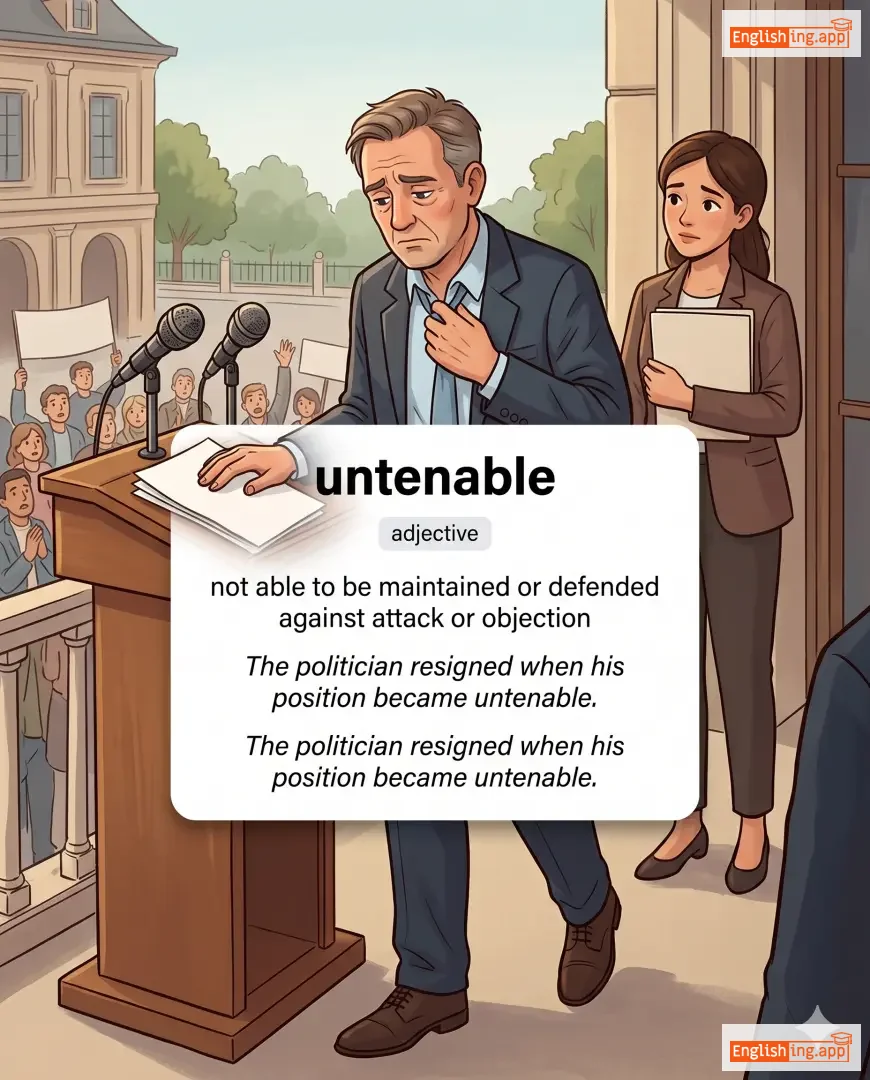
untenable definition card — visual illustration of the meaning
adjective
/ʌnˈtɛnəbl/
維持できない (ijidekinai)

not able to be maintained or defended against attack or objection

"The politician resigned when his position became untenable."

"政治家は彼の立場が維持できなくなったときに辞職しました。" (Seijika wa kare no tachiba ga iji dekinakunatta toki ni jishoku shimashita.)
adjective
/ʌnˈθɪŋkəbl/
想像を絶する (souzou o zessuru)

impossible to conceive or imagine; beyond belief or consideration

"It was unthinkable that such a tragedy could happen in our peaceful town."

"私たちの平和な街でそのような悲劇が起こるなんて、想像を絶していました。" (Watashitachi no heiwa na machi de sono youna higeki ga okoru nante, souzou o zesshite imashita.)
adjective
/ʌnˈθɪŋkɪŋ/
軽率な (keisotsu na)

done without careful thought; automatic or thoughtless

"His unthinking remark hurt her feelings."

"彼の軽率な発言は彼女の気持ちを傷つけた。" (kare no keisotsu na hatsugen wa kanojo no kimochi o kizutsuketa)
adjective
/ʌnˈtaɪdi/
散らかった; 無秩序な; (chirakatta)

not neat or orderly; messy and disorganized

"Her untidy room was filled with clothes scattered everywhere."

"彼女の散らかった部屋は、どこにでも散らばった服でいっぱいでした。" (kanojo no chirakatta heya wa, doko ni demo chirabatta fuku de ippai deshita.)
verb
/ʌnˈtaɪ/
解く (toku)

to loosen or remove a knot or binding; to release something that is tied

"She untied the rope to free the boat."

"彼女は船を自由にするためにロープを解いた。" (kanojo wa fune o jiyuu ni suru tame ni roopu o toita)
preposition/conjunction
/ʌnˈtɪl/
まで (made)

up to the time of

"I will wait until you come back."

"私はあなたが戻るまで待ちます。" (Watashi wa anata ga modoru made machimasu.)
adjective
/ʌnˈtaɪmli/
時期尚早 (jiki shōsō)

Happening or done at an unsuitable or premature time.

"His untimely death shocked the entire community."

"彼の時期尚早な死はコミュニティ全体を驚かせました。" (Kare no jiki shōsō na shi wa komyuniti zentai o odorokasemashita.)
adjective
/ʌnˈtaɪərɪŋ/
不屈の; 絶え間ない; 疲れを知らない (fuketsu no; taemai nai; tsukare o shiranai)

continuing without stopping; persistent; tireless

"Her untiring efforts finally led to success."

"彼女の不屈の努力は最終的に成功に繋がった。" (Kanojo no fuketsu no doryoku wa saishūteki ni seikō ni tsunagatta.)
adjective
/ʌnˈtoʊld/
数えきれない (kazoekirenai)

Too great or numerous to be described or counted.

"The project caused untold stress for everyone involved."

"そのプロジェクトは関係者全員に数えきれないストレスを引き起こしました。" (Sono purojekuto wa kankeisha zen'in ni kazoekirenai sutoresu o hikiokoshimashita.)
adjective
/ʌnˈtʌtʃəbəl/
触れられない; 批判や攻撃を受けない (furerarenai; hihan ya kōgeki o ukenai)

not able to be touched or affected; beyond criticism or attack

"The CEO seemed untouchable despite the scandal."

"CEOはスキャンダルにもかかわらず、アンタッチャブルのように見えた。" (CEO wa sukyandaru ni mo kakawarazu, antatchaburu no yō ni mieta.)
adjective
/ˌʌn.təˈwɔːrd/
予期しない (yokishinai)

Unexpected and inappropriate or inconvenient.

"The meeting ended without any untoward incidents."

"会議は予期しない事件なしで終了しました。" (Kaigi wa yokishinai jiken nashi de shūryō shimashita.)
adjective
/ʌnˈtræməld/
制限のない自由 (seigen no nai jiyuu)

Not restricted or hampered; free and unrestricted.

"She enjoyed untrammeled freedom in her new life abroad."

"彼女は海外での新しい生活で制限のない自由を楽しんでいた。" (Kanojo wa kaigai de no atarashii seikatsu de seigen no nai jiyuu o tanoshinde ita.)
adjective
/ʌnˈtruː/
虚偽 (kyogi)

not true; false or incorrect

"The rumor about the company closing was completely untrue."

"会社閉鎖の噂は完全に虚偽でした。" (Kaisha heisa no uwasa wa kanzen ni kyogi deshita.)
adjective
/ʌnˈjuzd/
未使用の; 使われていない (mishiyou no; tsukawarete inai)

not being used; not having been used before

"There are many unused rooms in this old mansion."

"この古い館には未使用の部屋がたくさんあります。" (Kono furui yakata ni wa mishiyou no heya ga takusan arimasu.)
adjective
/ʌnˈjuːʒuəl/
異常 (ijou)

not common or ordinary; remarkable or exceptional

"She has an unusual talent for solving complex problems."

"彼女は複雑な問題を解決するための異常な才能を持っています。" (Kanojo wa fukuzatsu na mondai wo kaiketsu suru tame no ijou na sainou wo motteimasu.)
adverb
/ʌnˈjuːʒuəli/
異常に (ijo ni)

in a way that is not typical or expected; to an uncommon degree

"It was unusually cold for this time of year."

"この時期にしては異常に寒かった。" (kono jiki ni shite wa ijo ni samukatta)
adjective
/ʌnˈʌtərəbl/
言葉では表現できない (kotoba de wa hyougen dekinai)

Too great, intense, or awful to be expressed or described in words.

"She was filled with unutterable joy at the news of her success."

"彼女は成功の知らせを聞いたとき、言葉では言い表せないほどの喜びで満たされていました。" (Kanojo wa seikou no shirase o kiita toki, kotoba de wa iiarawasenai hodo no yorokobi de mitasareteimashita.)
verb
/ʌnˈveɪl/
発表する (happyo suru)

to reveal or disclose something, especially in a formal manner

"The company will unveil a new product next week."

"会社は来週新製品を発表します。" (Kaisha wa raishū shin seihin o happyō shimasu.)
adjective
/ʌnˈvaɪəbl/
実現不可能 (jitsugen fukanou)

Not capable of working successfully; not feasible or practical.

"The project was deemed unviable due to high costs."

"高額なコストのため、このプロジェクトは実現不可能と見なされました。" (Kougaku na kosuto no tame, kono purojekuto wa jitsugen fukanou to minasa remashita.)
adjective
/ʌnˈvɔɪst/
未表現 (mihyougen)

not expressed in speech; in phonetics, a sound produced without vocal cord vibration

"The student kept her opinion unvoiced during the meeting."

"学生は会議中に自分の意見を未表現のままにしておいた。" (Gakusei wa kaigi-chuu ni jibun no iken wo mihyougen no mama ni shite oita.)
adjective
/ʌnˈwɒn.tɪd/
望まれない (nozomarenai)

not desired or welcome; not wanted

"He felt like an unwanted guest at the meeting."

"彼は会議で望まれない客のように感じた。" (kare wa kaigi de nozomarenai kyaku no you ni kanjita)
unwarranted definition card — visual illustration of the meaning
adjective
/ʌnˈwɒrəntɪd/
不当 (futou)

Not justified or authorized; lacking good reason.

"The employee faced unwarranted criticism from his manager."
"従業員はマネージャーから不当な批判を受けました。" (Jūgyōin wa manējā kara futōna hihan o ukemashita.)
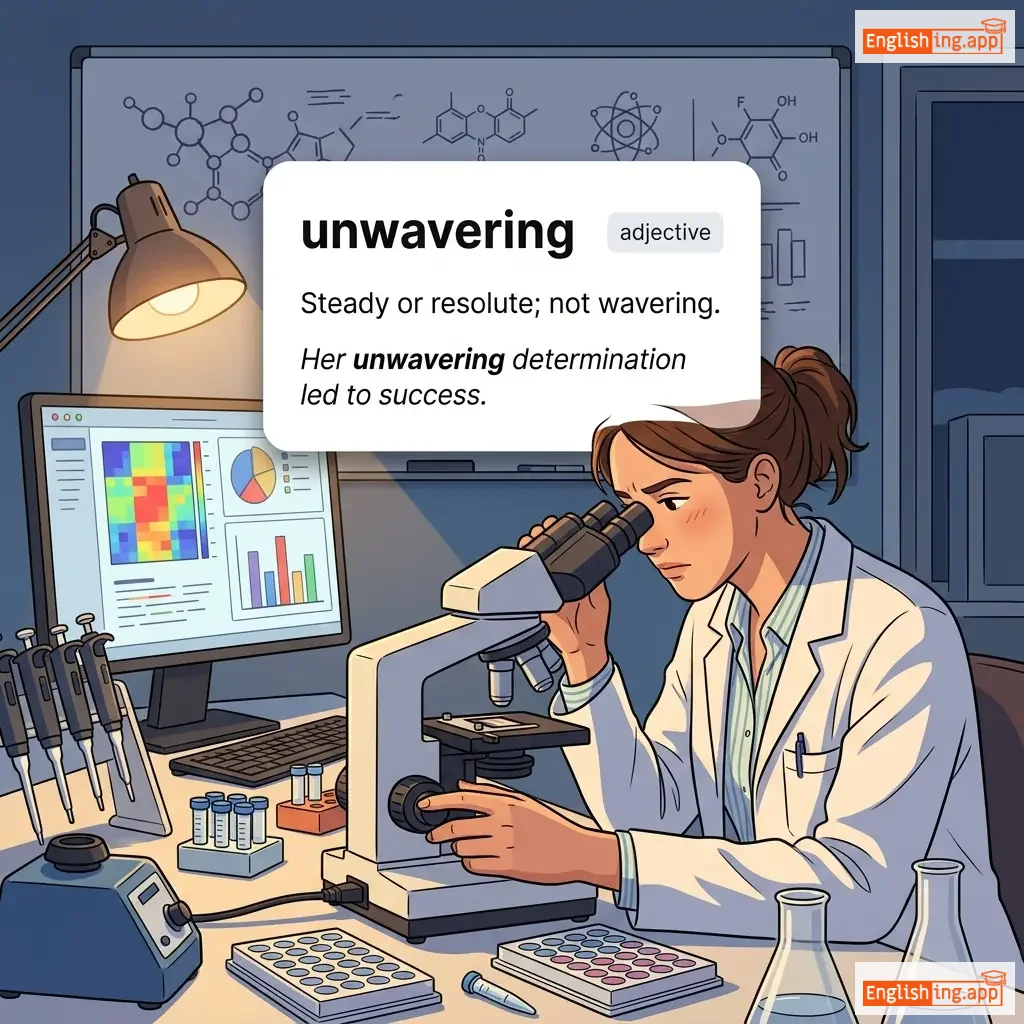
unwavering definition card — visual illustration of the meaning
adjective
/ʌnˈweɪ.vər.ɪŋ/
揺るぎない, 堅固な, 決意 (yuruginai, kengona, ketsui)

Steady or resolute; not wavering.

"Her unwavering determination led to success."

"彼女の揺るぎない決意が成功へと導いた。" (Kanojo no yuruginai ketsui ga seikou e to michibiita.)
adjective
/ʌnˈwel.kəm/
不快な; 望ましくない; 招待されていない (fukai na; nozomashikunai; shoutai sarete inai)

not wanted or accepted; not invited or pleasant

"The unwelcome news ruined their vacation plans."

"その歓迎されないニュースは彼らの休暇計画を台無しにしました。" (Sono kangei sarenai nyuusu wa karera no kyūka keikaku o dainashi ni shimashita.)
adjective
/ʌnˈwel/
体調不良; 病気 (taichō furyō; byōki)

not in good health; feeling sick or ill

"She has been feeling unwell since yesterday."

"彼女は昨日から体調が悪い。" (Kanojo wa kinō kara taichō ga warui.)
adjective
/ʌnˈwiːldi/
扱いにくい (atsukainikui)

Difficult to carry or move because of its size, shape, or weight.

"The box was too unwieldy to carry up the stairs."

"その箱は階段を上がるには重すぎて扱いにくかった。" (sono hako wa kaidan o agaru ni wa omo sugite atsukainikukatta.)
adjective
/ʌnˈwɪl.ɪŋ/
嫌がる; したくない; (iyagaru; shitakunai)

not ready to do something; reluctant; not wanting to do

"He was unwilling to share his secret with anyone."

"彼は誰にも自分の秘密を共有することを望まなかった。" (Kare wa dare ni mo jibun no himitsu o kyōyū suru koto o nozomanakatta.)
adverb
/ʌnˈwɪlɪŋli/
不本意に (fuhoni ni)

in a way that shows reluctance or lack of desire; not willingly

"She unwillingly agreed to attend the meeting."

"彼女は不本意に会議に出席することに同意した。" (kanojo wa fuhoni ni kaigi ni shusseki suru koto ni doi shita)
adjective
/ʌnˈwaɪz/
賢明でない (kenmei denai)

Showing poor judgment; not sensible or prudent.

"It would be unwise to invest all your money in one company."

"すべてのお金を1つの会社に投資するのは賢明でないことです。" (Subete no okane o hitotsu no kaisha ni tōshi suru no wa kenmei denai koto desu.)
adjective
/ʌnˈwɪtɪŋ/
無自覚 (muzikaku)

Not aware of what is happening; done without realizing.

"She became an unwitting participant in the scam."

"彼女は詐欺の無自覚な参加者になった。" (Kanojo wa sagi no muzikaku na sankasha ni natta.)