語彙集

英単語辞書 | 単語の意味、定義、例文

adjective
/ʌnˈbreɪkəbəl/
壊れたり損傷したりできない; とても強くて耐久性がある (kowaretari sonshō shitari dekinai; totemo tsuyokute taikyū-sei ga aru)

not able to be broken or damaged; very strong and durable

"Their friendship formed an unbreakable bond."

"彼らの友情は壊れない絆を形成しました。" (karera no yūjō wa kowarenai kizuna o keisei shimashita.)
adjective
/ʌnˈbraɪdld/
抑制のない (yokusei no nai)

Uncontrolled and unrestrained.

"The protesters showed unbridled enthusiasm for change."
"抗議者は変革に対して抑えきれない熱意を示しました。" (Kougisha wa henka ni taishite osaekirenai netsui o shimeshimashita.)
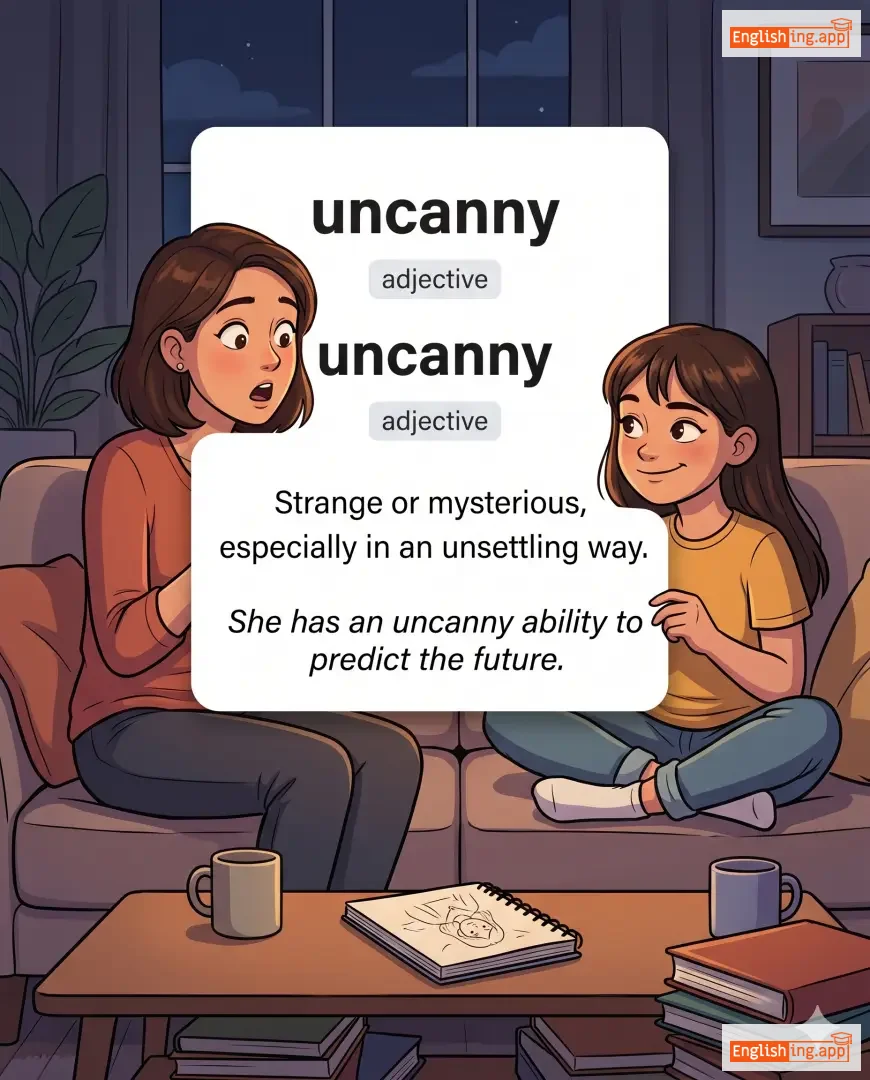
uncanny definition card — visual illustration of the meaning
adjective
/ʌnˈkæni/
不気味 (bukimi)

Strange or mysterious, especially in an unsettling way.

"She has an uncanny ability to predict the future."

"彼女は未来を予測する不気味な能力を持っている。" (kanojo wa mirai o yosoku suru bukimi na nōryoku o motte iru.)
adjective
/ˌʌnsɛrəˈmoʊniəs/
儀式なし/無礼 (gishiki nashi/burei)

Done without formality or courtesy; abrupt or rude.

"He made an unceremonious exit from the party."

"彼はパーティーから儀式なしで退出しました。" (Kare wa pātii kara gishiki nashi de taishutsu shimashita.)
adjective
/ʌnˈsɜːtən/
不確実 (fukakujitsu)

not sure or confident about something; not clearly known or decided

"She felt uncertain about her future after graduation."

"卒業後、彼女は自分の未来について不確実に感じていた。" (sotsugyōgo, kanojo wa jibun no mirai ni tsuite fukakujitsu ni kanjite ita.)
adverb
/ʌnˈsɜːrtənli/
不確かに (futashika ni)

in a way that shows doubt or lack of certainty

"She glanced uncertainly at the complicated instructions."

"彼女は複雑な指示を不確かに見つめた。" (Kanojo wa fukuzatsu na shiji o futashika ni mitsumeta.)
noun
/ʌnˈsɜːtənti/
不確実性 (fukakujitsusei)

the state of being unsure or not knowing what will happen

"Economic uncertainty affects business investments."

"経済的不確実性は、ビジネス投資に影響を与えます。" (Keizai-teki fukakujitsusei wa, bijinesu toshi ni eikyou o ataemasu.)
adjective
/ʌnˈtʃælɪndʒd/
挑戦されていない; 反対なしに受け入れられた; ライバルなし (chousen sarete inai; hantai nashi ni ukeirerareta; raibaru nashi)

not disputed or questioned; accepted without opposition; having no rival

"He remained the unchallenged champion for five years."

"彼は5年間、挑戦されていないチャンピオンであり続けました。" (Kare wa 5 nenkan, chousen sarete inai chanpion de aritsuzukemashita.)
adjective
/ʌnˈtʃeɪndʒəbəl/
変更不可能な; 固定された; (henkou fukanou na; kotei sareta;)

not able to be changed or altered; fixed and permanent

"The laws of physics are unchangeable principles that govern the universe."

"物理法則は変更不可能な原則であり、宇宙を支配しています。" (butsurihōsoku wa henkou fukanou na gensoku de ari, uchū o shihai shiteimasu.)
adjective
/ʌnˈtʃeɪndʒɪŋ/
変わらない (kawaranai)

remaining the same over time; not changing

"Her love for her family was unchanging throughout the years."
"彼女の家族への愛は何年にもわたって変わらなかった。" (Kanojo no kazoku e no ai wa nannen ni mo watatte kawaranakatta.)
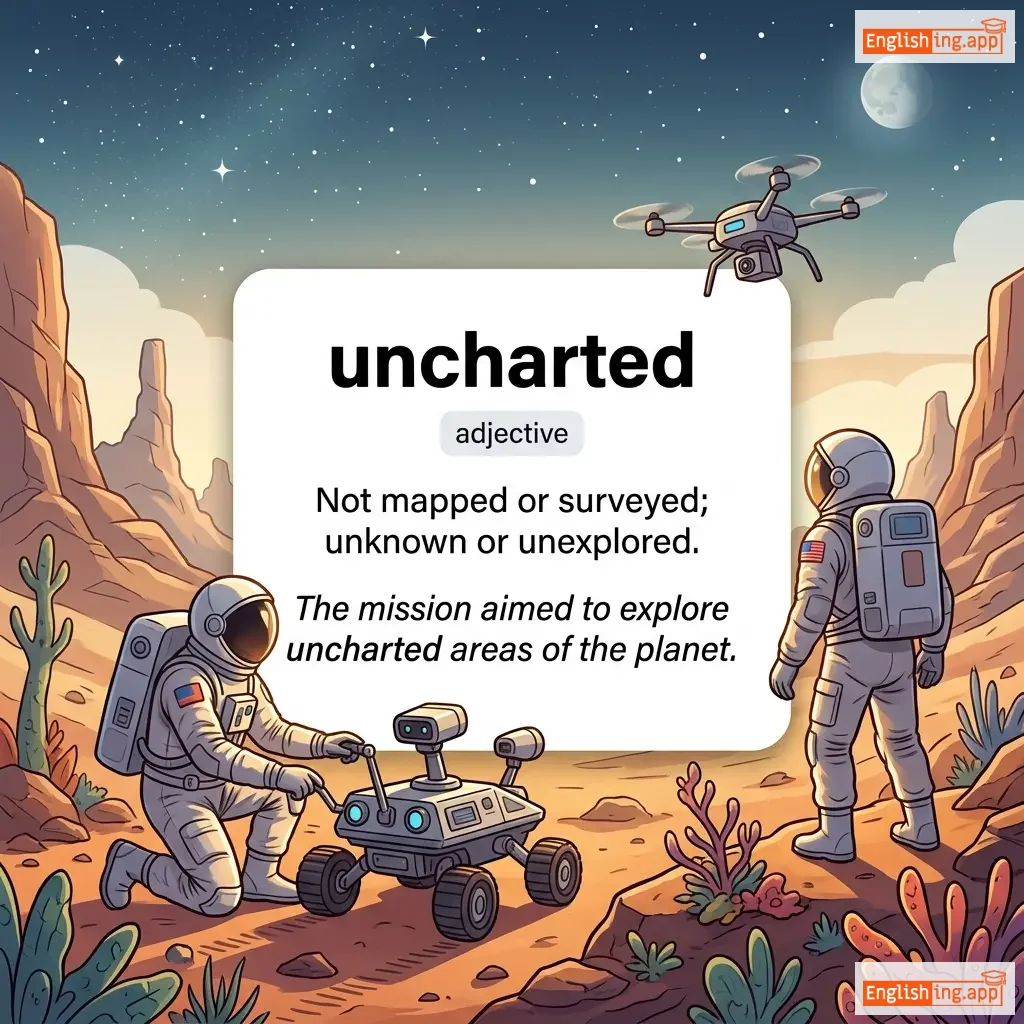
uncharted definition card — visual illustration of the meaning
adjective
ʌnˈtʃɑːtɪd
未開拓 (mikai taku)

Not mapped or surveyed; unknown or unexplored.

"The mission aimed to explore uncharted areas of the planet."

"そのミッションは惑星の未開拓の地域を探査することを目的としていました。" (Sono misshon wa wakusei no mikaitaku no chiiki wo tansa suru koto wo mokuteki to shite imashita.)
adjective
/ʌnˈtʃeɪst/
不道徳な; 不潔な; (fudōtoku na; fuketsu na;)

not celibate; having engaged in sexual relations; lacking moral purity

"The conservative society considered her behavior unchaste and improper."

"保守的な社会は彼女の行動を不道徳で不適切だと考えた。" (Hoshū-teki na shakai wa kanojo no kōdō o fudōtoku de futekisetsu da to kangaeta.)
adjective
/ʌnˈsɪvəl/
無礼な; 不作法な; (burei na; fusahou na)

not polite or courteous; rude and discourteous in behavior

"His uncivil remarks during the meeting offended everyone present."

"会議中の彼の無礼な発言は、出席者全員を不快にさせた。" (Kaigi chuu no kare no burei na hatsugen wa, shusseki sha zen'in o fukai ni saseta.)
adjective
/ʌnˈsɪvəlaɪzd/
未開の; 野蛮な; (mikai no; yabanna;)

not developed in terms of civilization; lacking social organization and culture; barbarous

"The explorers encountered an uncivilized tribe deep in the Amazon rainforest."

"探検家たちはアマゾンの雨林の奥深くで未開の部族に出会った。" (Tankenka-tachi wa Amazon no urin no okufukaku de mikai no buzoku ni deatta.)
adjective
/ʌnˈkleɪmd/
未請求; 未要求; 捨てられたまたは所有者なし (mikkei; mikoukyuu; suterareta matawa shoyuusha nashi)

not claimed by anyone; not demanded or requested; abandoned or ownerless

"The unclaimed luggage was stored in the airport's lost property department."

"未請求の荷物は空港の遺失物係に保管されました。" (Mikkei no nimotsu wa kuukou no ishitsubutsu kakari ni hokan saremashita.)
noun
/ˈʌŋkəl/
おじ/おじさん (oji/ojisan)

the brother of one's father or mother

"My uncle is visiting us next week."

"私のおじさんは来週私たちを訪ねてきます。" (Watashi no ojisan wa raishū watashitachi o tazunetekimasu.)
adjective
/ʌnˈklɪər/
不明確 (fumeikaku)

not easy to understand; vague or ambiguous

"The instructions were unclear, so I asked for clarification."

"指示が不明確だったので、私は説明を求めました。" (Shiji ga fumeikaku datta node, watashi wa setsumei o motomemashita)
verb
/ʌnˈkloʊð/
服を脱がせる; 衣服を取り除く (fuku o nugaseru; ifuku o torinozoku)

to remove clothing from someone or something

"The nurse helped unclothe the patient for the examination."

"看護師は検査のために患者の服を脱がせる手伝いをした。" (Kangoshi wa kensa no tame ni kanja no fuku o nugaseru tetsudai o shita)
noun
/ʌnˈkloʊðɪŋ/
服を脱ぐこと (fuku o nugu koto)

the act or process of removing clothing

"The child quickly ran inside for unclothing after playing in the mud."

"子供は泥遊びの後、服を脱ぐことのためにすぐに家の中に走った。" (kodomo wa doroyubi no ato, fuku o nugu koto no tame ni sugu ni ie no naka ni hashitta)
adjective
/ʌnˈkʌmfətəbl/
不快 (fukai)

causing or feeling physical or emotional discomfort

"He felt uncomfortable during the long meeting."

"長い会議の間、彼は不快に感じました。" (Nagai kaigi no aida, kare wa fukai ni kanjimashita.)
adjective
/ʌnˈkɒmən/
珍しい (mezurashii)

rare, unusual, or remarkable

"It is uncommon to see snow in this region."

"この地域で雪を見るのは珍しい。" (Kono chiiki de yuki o miru no wa mezurashii.)
adjective
/ʌnˈkɒmprəmaɪzɪŋ/
妥協しない (dakyou shinai)

not willing to make concessions; firm and resolute

"She remained uncompromising in her principles."

"彼女は自分の信念に妥協しなかった。" (Kanojo wa jibun no shinnen ni dakyō shinakatta.)
noun
/ʌnkənˈsɜːrn/
無関心 (mukanshin)

lack of worry or interest; indifference

"She showed complete unconcern about the criticism."

"彼女は批評に対して完全に無関心を示しました。" (Kanojo wa hihyou ni taishite kanzen ni mukanshin wo shimeshimashita.)
adjective
/ʌnˌkənˈdɪʃ.ən.əl/
無条件の (mujouken no)

not subject to any conditions; complete and absolute

"She offered her unconditional support to her friend in need."

"彼女は困っている友人に無条件のサポートを提供しました。" (Kanojo wa komatte iru yūjin ni mujōken no sapōto o teikyō shimashita.)
adjective
/ʌnˌkənˈfɜːmd/
未確認; 未検証; (mikakunin, mikenshou)

not confirmed as true or definite; not verified or substantiated

"The report remains unconfirmed until we receive official verification."

"報告書は公式の確認が得られるまで未確認のままです。" (Houkokusho wa koujitsu no kakunin ga erareru made mikakunin no mama desu.)
adjective
/ʌnˈkɒnʃənəbl/
不正当な (fuseitōna)

shockingly unfair or unreasonable

"The company made unconscionable profits from the crisis."

"その会社は危機から不正当な利益を得ました。" (Sono kaisha wa kiki kara fuseitōna rieki o emashita.)
adjective
/ʌnˈkɒnʃəs/
無意識 (muishiki)

not awake and aware of surroundings

"He was knocked unconscious by the fall."

"彼は転倒して無意識になった。" (Kare wa tentō shite muishiki ni natta.)
adverb
/ʌnˈkɒnʃəsli/
無意識に (muishiki ni)

without being aware of one's actions or surroundings

"She unconsciously tapped her foot to the rhythm of the music."

"彼女は無意識に音楽のリズムに合わせて足をトントンしていた。" (kanojo wa muishiki ni ongaku no rizumu ni awasete ashi wo tonton shite ita)
noun
/ʌnˈkɒnʃəsnəs/
無意識 (muishiki)

the state of being unaware of and unable to respond to one's surroundings

"After the accident, he was in a state of unconsciousness for several hours."

"事故の後、彼は数時間意識を失っていた。" (Jiko no ato, kare wa suujikan ishiki o ushinatte ita.)
adjective
/ˌʌnkənˈstɪtjuːʃənl/
違憲の (iken no)

not in accordance with a political constitution

"The court ruled that the law was unconstitutional."

"裁判所はその法律が違憲であると判断しました。" (Saibansho wa sono hōritsu ga iken de aru to handan shimashita.)
adjective
/ˌʌnkənˈtroʊld/
制御不能な (seigyo funou na)

not restrained or managed; lacking control

"The wildfire spread in an uncontrolled manner, causing widespread damage."

"山火事は制御不能な方法で広がり、広範囲に被害をもたらした。" (Yamakaji wa seigyo funou na houhou de hirogari, kouhan'i ni higai o motarashita)
adjective
/ˌʌnkənˈvɛnʃənl/
型破りの (katayaburi no)

not based on or conforming to what is generally done or believed

"Her unconventional approach to teaching inspired her students to think creatively."

"彼女の型破りの教育アプローチは、生徒たちに創造的に考えるよう促しました。" (kanojo no katayaburi no kyouiku apurochi wa, seitotachi ni souzouteki ni kangaeru you unagashimashita)
adverb
/ˌʌnkənˈvɛnʃənəli/
型破りに (kata yaburi ni)

in a way that is not based on or conforming to accepted standards or norms

"She dresses unconventionally, mixing bold colors and patterns that surprise everyone."

"彼女は型破りに服装をしており、大胆な色と柄を組み合わせて皆を驚かせる。" (Kanojo wa kata yaburi ni fukusou o shite ori, daitan na iro to gara o kumiawasete mina o odorokaseru.)
adjective
/ˌʌnkənˈvɪnsɪŋ/
信じられない (shinjirarenai)

failing to persuade or impress; not believable or credible

"His excuse for being late was completely unconvincing."

"彼の遅刻の言い訳は完全に信じられなかった。" (Kare no chikoku no iiwake wa kanzen ni shinjirarenakatta.)
adjective
/ʌnˈkʊkt/
生の (namano)

Not cooked; in a raw state.

"Eating uncooked meat can be dangerous."

"生肉を食べるのは危険です。" (Namamiku o taberu no wa kiken desu.)
adjective
/ˌʌn.kəʊˈɒp.ər.ə.tɪv/
非協力的な (hikyouryokuteki na)

not willing to help or work with others; unhelpful

"The witness was uncooperative and refused to answer questions."

"証人は非協力的で、質問に答えることを拒否した。" (Shounin wa hikyouryokuteki de, shitsumon ni kotaeru koto wo kyohi shita.)
adjective
/ˌʌnˈkɔːrdɪneɪtɪd/
不器用; 協調性のない (bukiyou; kyouchousei no nai)

lacking coordination, not well-organized or clumsy in movement

"His movements were uncoordinated, making him prone to accidents."

"彼の動きは不器用で、事故を起こしやすかった。" (kare no ugoki wa bukiyou de, jiko o okoshi yasukatta.)
verb
/ʌnˈkɔrk/
コルクを抜く (koruku o nuku)

To remove the cork from a bottle; to open a bottle, especially of wine

"He uncorked the wine and poured a glass for everyone."

"彼はワインのコルクを抜き、皆にグラスを注いだ。" (Kare wa wain no koruku o nuki, mina ni gurasu o soida.)
verb
/ʌnˈkaʊtʃ/
ソファから取り除く(稀な意味) (sofa kara torinozoku)

to remove from a couch or to release from being laid down (rare/archaic usage)

"The surgeon attempted to uncouch the cataract."

"外科医は白内障を取り除こうとしました。" (Geka-i wa hakunai-shō o torinozoku to shimashita.)
adjective
/ʌnˈkaʊntəbəl/
数えきれない; 無限の (kazoekirenai; mugen no)

too many to be counted; innumerable; infinite in quantity

"There are uncountable stars in the night sky."

"夜空には無数の星があります。" (yozora ni wa musuu no hoshi ga arimasu)
adjective
/ʌnˈkuːθ/
無作法 (busaho)

Lacking good manners, refinement, or grace; awkward or rough.

"His uncouth behavior shocked the guests at the party."

"彼の無作法な行動はパーティーのゲストを驚かせました。" (Kare no busaho na kōdō wa pātī no gesuto o odorokasemashita.)
verb
/ʌnˈkʌvə(r)/
明らかにする (akiraka ni suru)

to reveal something that was hidden or secret

"The investigation uncovered new evidence."

"調査で新しい証拠が明らかになった。" (Chōsa de atarashī shōko ga akiraka ni natta.)
noun
/ˈʌŋkʃən/
聖別 (seibetsu)

The act of anointing as part of a religious or ceremonial ritual; excessive or insincere flattery.

"The priest performed the holy unction with solemnity."

"司祭は厳粛に聖別の儀式を行った。" (Shisai wa genshuku ni seibetsu no gishiki o okonatta.)
adjective
/ˈʌŋk.tʃu.əs/
お世辞 (oseshi)

Excessively flattering or ingratiating; oily in texture.

"His unctuous tone made everyone uncomfortable."

"彼のお世辞な口調は皆を不快にさせた。" (Kare no o seshi na kuchou wa mina o fukai ni sasen.)
adjective
/ʌnˈkʌltʃəd/
無教養な; 教養のない (mukyōyō na; kyōyō no nai)

lacking good manners, refinement, or education; uncivilized

"His uncultured behavior embarrassed everyone at the dinner party."

"彼の無教養な行動はディナーパーティーでみんなを困らせた。" (Kare no mukyōyō na kōdō wa dinā pātii de minna o komaraseta.)
adjective
/ʌnˈdɔːntɪd/
不屈の; 勇敢な; 断固たる; (fuketsu no)

not intimidated or discouraged by difficulty, danger, or disappointment

"Despite the setbacks, she remained undaunted in pursuing her goals."

"挫折にもかかわらず、彼女は目標を追い続ける中で不屈であり続けた。" (Zasetsu ni mo kakawarazu, kanojo wa mokuhyou wo oitsuzukeru naka de fuketsu de ari tsudzuketa.)
verb
/ˌʌn.dɪˈsiːv/
誤解を解く (gokai o toku)

To free someone from a misconception or false belief.

"She tried to undeceive him about the false rumors."

"彼女は嘘の噂について彼を誤解を解こうとしました。" (kanojo wa uso no uwasa ni tsuite kare o gokai o tokou to shimashita.)
adjective
/ˌʌndɪˈsaɪdɪd/
未決定; 不確実 (mikedate; fukakujitsu)

not having made a decision; uncertain

"She was undecided about which college to attend."

"彼女はどの大学に進学するか決めかねていた。" (Kanojo wa dono daigaku ni shingaku suru ka kimekanete ita.)
adjective
/ˌʌndɪˈnaɪəbl/
否定できない (hitei dekinai)

Impossible to deny; clearly true or real.

"Her talent is undeniable."

"彼女の才能は否定できない。" (Kanojo no sainou wa hitei dekinai.)
preposition
/ˈʌndər/
(shita)

in or to a lower position than something

"The cat is under the table."

"猫はテーブルの下にいます。" (Neko wa tēburu no shita ni imasu.)