語彙集

英単語辞書 | 単語の意味、定義、例文

noun
/tsuːˈnɑː.mi/
津波 (tsunami)

a large sea wave caused by an underwater earthquake or volcanic eruption

"The tsunami devastated the coastal town, leaving thousands homeless."

"津波は沿岸の町を壊滅させ、何千人もの人々を家なしにしました。" (Tsunami wa engan no machi o kaimetsu sase, nanzen nin mono hitobito o ie nashi ni shimashita.)
noun
/tjuːb/
チューブ (chūbu)

a hollow cylinder used to convey something, typically fluid

"He used a tube to measure the liquid."

"彼は液体を測るためにチューブを使った。" (Kare wa ekitai o hakaru tame ni chūbu o tsukatta.)
noun
/ˈtuːb.roʊz/
チューバローズ (chūbarōzu)

a night-blooming flower with an intensely sweet fragrance, native to Mexico

"The tuberose flowers filled the evening air with their heavenly scent."

"チューバローズの花は夕方の空気に天国のような香りを満たしました。" (Chūbarōzu no hana wa yūgata no kūki ni tengoku no yō na kaori o mitashimashita.)
verb
/tʌk/
タック (takku)

to push or fold something neatly into a particular place

"She tucked the blanket around the baby to keep him warm."

"彼女は赤ちゃんの周りに毛布をタックして温かく保ちました。" (Kanojo wa akachan no mawari ni moufu wo takku shite atatakai ni tamotsu mashita.)
noun
/ˈtjuːzdeɪ/
火曜日 (kayoubi)

The second day of the week, following Monday and preceding Wednesday.

"We have a meeting scheduled for Tuesday."

"私たちは火曜日に会議を予定しています。" (Watashitachi wa kayoubi ni kaigi wo yotei shiteimasu.)
adjective
/ˈtʌf.tɪd/
小さな束がついた; 束を使った (chiisana taba ga tsuita; taba o tsukatta)

having a tuft or tufts; furnished with a tuft or clump of threads, hairs, or other material

"The tufted sofa looked elegant in the living room."

"小さな束がついたソファはリビングルームで優雅に見えました。" (Chiisana taba ga tsuita sofa wa ribingu rūmu de yūga ni miemashita.)
noun
/ˈtʌɡboʊt/
タグボート (tagubōto)

a small, powerful boat used for towing or pushing ships

"The tugboat guided the massive ship safely into the harbor."

"タグボートは巨大な船を安全に港に案内しました。" (Tagubōto wa kyodaina fune o anzen ni minato ni annai shimashita.)
noun
/tʃuˈɪʃ.ən/
授業料 (jugyouryou)

the fee for instruction or teaching, typically at a school or university

"The tuition for the college has increased this year."

"大学の授業料は今年増加しました。" (Daigaku no jugyouryou wa kotoshi zouka shimashita.)
noun
/ˈtuː.lɪp/
チューリップ (churippu)

a colorful spring flower with cup-shaped petals

"The red tulip bloomed beautifully in the garden."

"赤いチューリップが庭で美しく咲きました。" (akai churippu ga niwa de utsukushiku sakimashita)
noun
/ˈtʌmbrəl/

A two-wheeled cart, especially one used during the French Revolution to carry prisoners to the guillotine.

"The prisoners were carried to the square in a wooden tumbrel."

tumid definition card — visual illustration of the meaning
adjective
/ˈtjuːmɪd/
膨らんだ、膨張した、または pompous なスタイル (fukuranda, fūchō shita, matawa pompous na sutairu)

Swollen, enlarged, or pompous in style.

"His tumid prose was difficult to read."

"彼の膨らんだ散文は読むのが難しかった。" (Kare no fukuranda sanbun wa yomu no ga muzukashikatta.)
noun
/ˈtjuːmər/
腫瘍 (shuyou)

an abnormal mass of tissue caused by excessive cell growth

"The doctor found a benign tumor during the medical check-up."

"医師は健康診断中に良性の腫瘍を見つけました。" (Ishi wa kenko shinshindan chu ni ryousei no shuyou wo mitsukemashita.)
noun
/ˈtjuːmʌlt/
騒動 (soudou)

A loud, confused noise, especially caused by a crowd; commotion or disorder.

"The protest created a tumult in the city square."

"抗議活動は市の広場で騒動を引き起こしました。" (Kougi katsudou wa shi no hiroba de soudou o hikiokoshimashita.)
adjective
/tjuːˈmʌltʃuəs/
動揺 (douyou)

Characterized by disorder, noisy excitement, or emotional agitation.

"They had a tumultuous relationship full of ups and downs."

"彼らは浮き沈みのある激動の関係を持っていました。" (Karera wa uki-shizumi no aru gekidou no kankei o motteimashita.)
noun
/ˈtʌndrə/
ツンドラ (tsundora)

A vast, flat, treeless Arctic region where the subsoil is permanently frozen.

"Polar bears roam across the icy tundra."

"ホッキョクグマは氷のツンドラを歩き回っています。" (Hokkyokuguma wa koori no tsundora o arukimawatteimasu.)
noun
/tjuːn/
メロディ (merodi)

a sequence of musical notes that are pleasant to listen to; a melody

"She hummed a cheerful tune while cooking dinner."

"彼女は夕食を作りながら陽気なメロディを口ずさんでいました。" (Kanojo wa yuushoku o tsukuri nagara youki na merodi o kuchizusande imashita.)
noun
/ˈtʌnəl/
トンネル (tonneru)

an underground passage or shaft

"They dug a tunnel under the river."

"彼らは川の下にトンネルを掘った。" (Karera wa kawa no shita ni tonneru o hotta.)
noun
/ˈtɜːrbən/
ターバン (tāban)

a head covering made by wrapping a long piece of cloth around the head

"The Sikh man wore a colorful turban."
"シク教の男性はカラフルなターバンを着けていました。" (Shiku-kyō no dansei wa karafuru na tāban o tsukete imashita.)
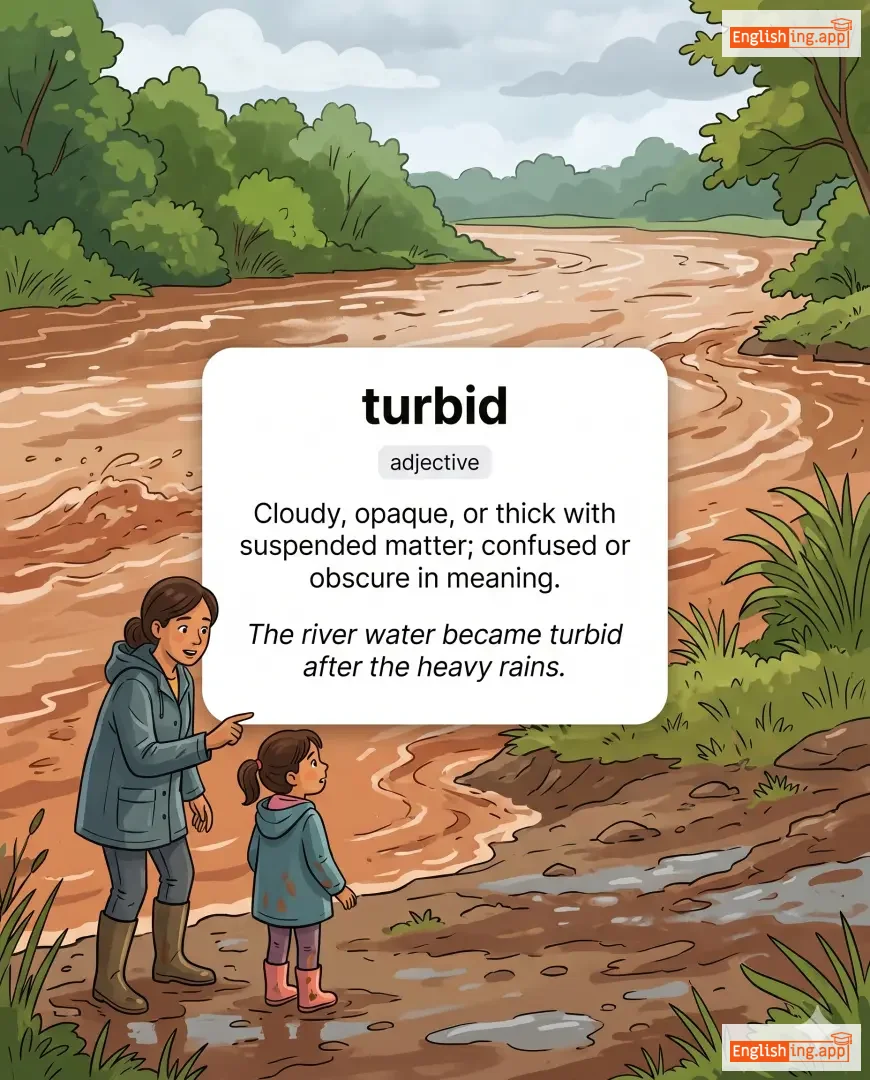
turbid definition card — visual illustration of the meaning
adjective
/ˈtɜːrbɪd/
濁った (nigotta)

Cloudy, opaque, or thick with suspended matter; confused or obscure in meaning.

"The river water became turbid after the heavy rains."

"激しい雨の後、川の水は濁った。" (Hageshī ame no ato, kawa no mizu wa nigotta.)
noun
/ˈtɜːrbjələns/

Violent or unsteady movement of air, water, or some other fluid; disorder or conflict.

"The plane experienced severe turbulence during the flight."

adjective
/ˈtɜːrbjələnt/
動揺 (dōyō)

Characterized by conflict, disorder, or confusion; not stable or calm.

"The country went through a turbulent period of political change."

"その国は政治的変革の動揺した時期を経ました。" (Sono kuni wa seijiteki henka no dōyō shita jiki o emashita.)
noun
/tʊˈriːn/
ターリーン (tārin)

A large deep dish with a cover, used for serving soups or stews.

"She brought the hot soup to the table in a silver tureen."
"彼女は銀色のターリーンで熱いスープをテーブルに運びました。" (Kanojo wa giniro no tārin de atsui sūpu o tēburu ni hakobimashita.)
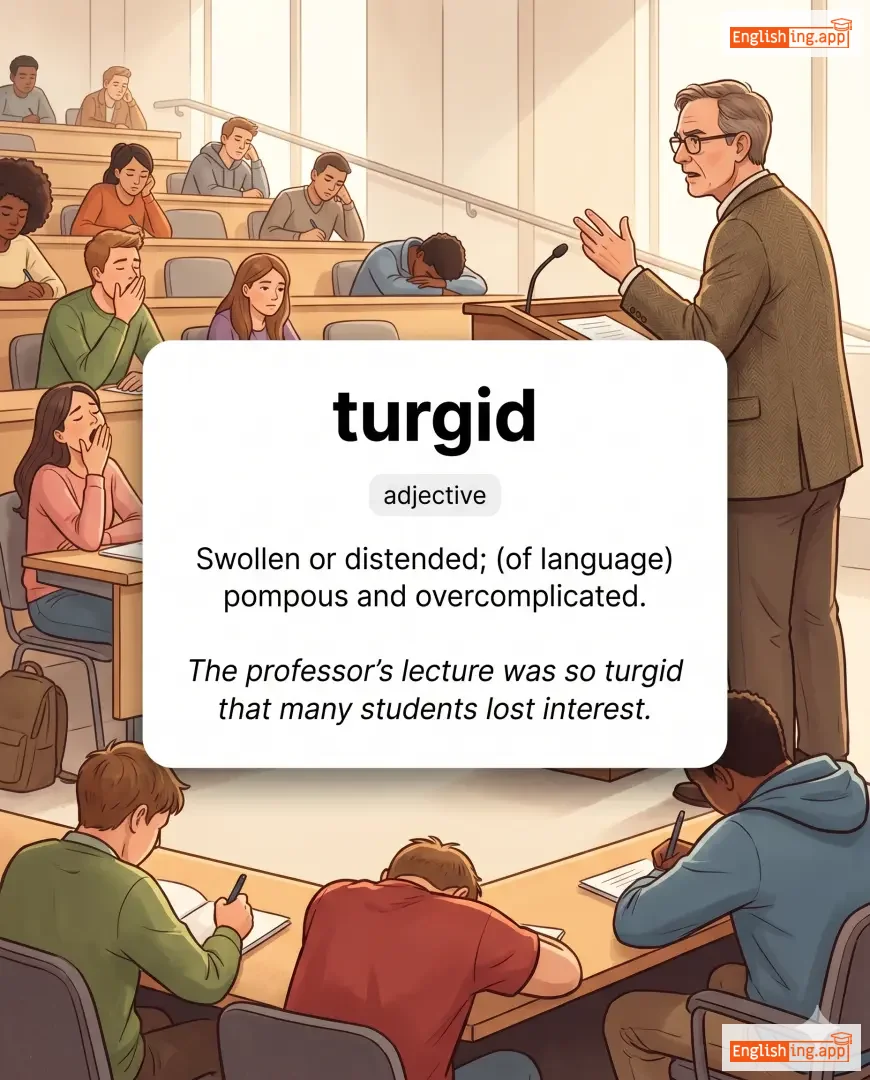
turgid definition card — visual illustration of the meaning
adjective
/ˈtɜːrdʒɪd/
膨らんだ, 大げさな (fukuranda, oogesana)

Swollen or distended; (of language) pompous and overcomplicated.

"The professor’s lecture was so turgid that many students lost interest."

"教授の講義はあまりにも大げさすぎて、多くの学生が興味を失いました。" (Kyoushu no kougi wa amari ni mo oogesa sugite, ooku no gakusei ga kyomi o ushinai mashita.)
noun
/ˈtɜːrki/
七面鳥 (大きな鳥) (shichimenchou)

a large bird native to North America, often eaten at special occasions like Thanksgiving; also the meat of this bird.

"We roasted a turkey for Thanksgiving dinner."

"感謝祭の夕食に七面鳥を焼きました。" (Kanshasai no yūshoku ni shichimenchou o yakimashita.)
noun
/ˈtɜr.mər.ɪk/
ターメリック (tāmerikku)

A bright yellow spice powder made from the root of a tropical plant, used in cooking and medicine

"Add turmeric to the curry for color and flavor."

"カレーに色と風味を加えるためにターメリックを加えます。" (Karē ni iro to fūmi o kuwaeru tame ni tāmerikku o kuwaemasu)
noun
/ˈtɜːr.mər.ɪk ˈpaʊ.dər/
ターメリックパウダー (tāmerikku paudā)

ground turmeric root used as a spice and for its medicinal properties

"Add a pinch of turmeric powder to the curry for color and flavor."
"カレーにターメリックパウダーを一つまみ加えて、色と風味を加えます。" (Karē ni tāmerikku paudā o hitotsumami kuwaete, iro to fūmi o kuwaemasu.)
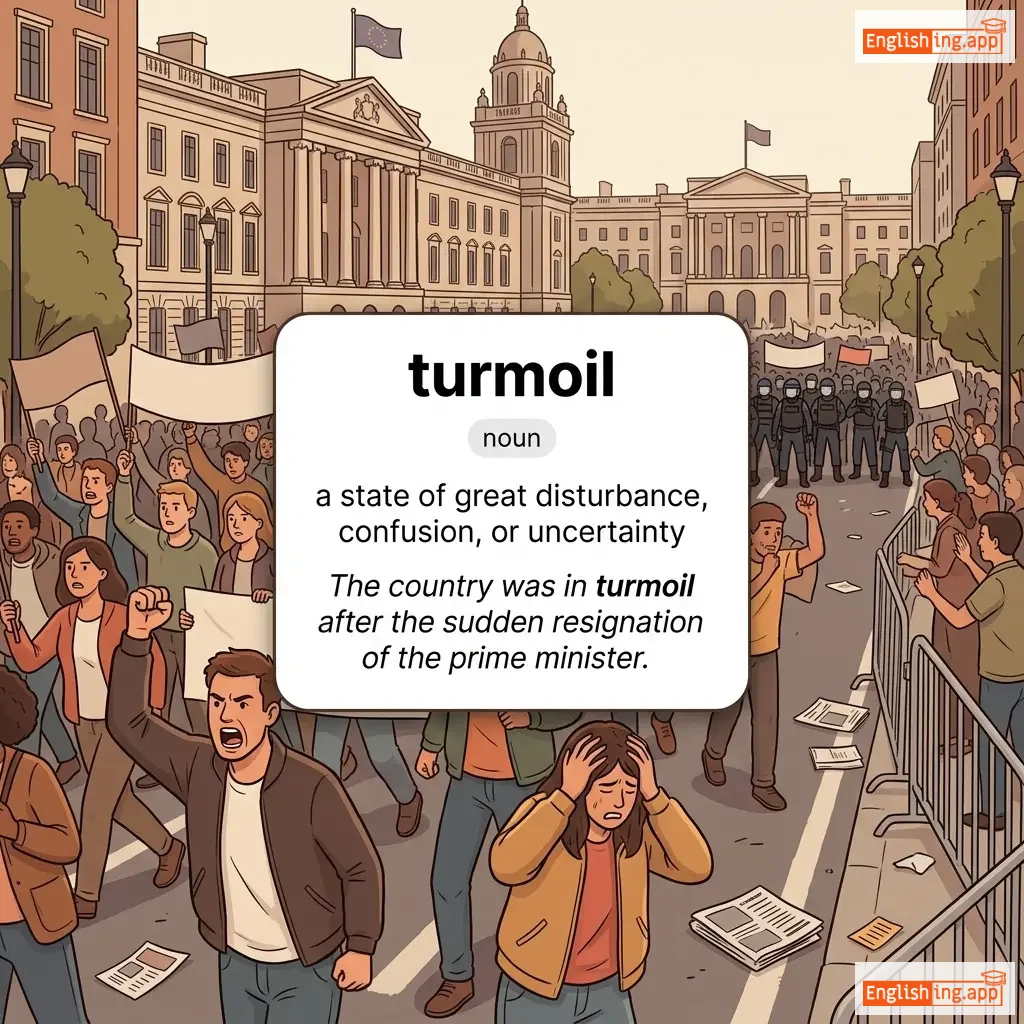
turmoil definition card — visual illustration of the meaning
noun
/ˈtɜːrmɔɪl/
混乱 (konran)

a state of great disturbance, confusion, or uncertainty

"The country was in turmoil after the sudden resignation of the prime minister."
"首相の突然の辞任後、国は混乱状態に陥った。" (Shushou no totsuzen no jinin go, kuni wa konran joutai ni ochitta.)
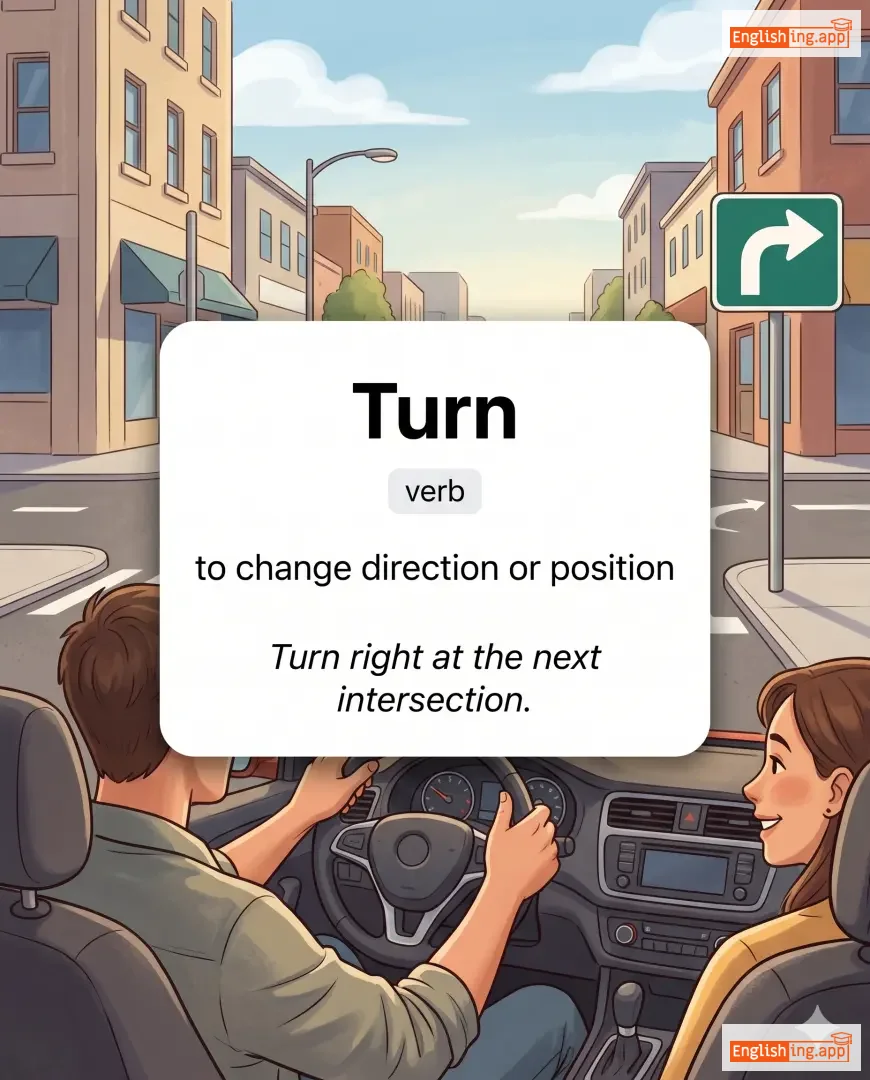
Turn definition card — visual illustration of the meaning
verb
/tɜːrn/
回す (mawasu)

to change direction or position

"Turn right at the next intersection."

"次の交差点で右に曲がってください。" (Tsugi no kousaten de migi ni magatte kudasai.)
noun
/ˈtɜːrnkoʊt/
裏切り者 (uragirimono)

a person who switches allegiance, often betraying a cause or group

"He was branded a turncoat after joining the rival political party."

"彼はライバルの政治党に参加した後、裏切り者と呼ばれました。" (Kare wa raibaru no seiji tō ni sanka shita ato, uragirimono to yobaremashita.)
noun
/ˈtɜːr.nɪŋ/
曲がり角; サイドロード (magarikado; saidorōdo)

a place where a road branches off from another; a side road

"Take the first turning on the left."

"最初の交差点を左に曲がってください。" (saisho no kōsaten o hidari ni magatte kudasai.)
noun
/ˈtɜːr.nɪp/
カブ (kabu)

a round root vegetable with white or purple skin and white flesh

"We grew turnips in our vegetable garden."

"私たちは野菜畑でカブを育てました。" (Watashitachi wa yasai hatake de kabu o sodatemashita.)
adjective
/ˈtɜːrnkiː/
ターンキー (taanki)

ready for immediate use; a complete product or solution

"The company provides turnkey solutions for small businesses."

"その会社は小規模なビジネス向けのターンキーソリューションを提供しています。" (Sono kaisha wa shokibo na bijinesu muke no taanki soriushon wo teikyō shiteimasu.)
noun
/ˈtɜːr.naʊt/
参加者数 (sankasha suu)

the number of people who attend or participate in an event or activity

"The turnout at the rally was impressive, with thousands showing up."

"集会の参加者数は印象的で、何千人もの人々が参加しました。" (Shukai no sankasha suu wa inshouteki de, nansen nin mono hitobito ga sankashimashita.)
noun
/ˈtɜːnˌəʊvə/
売上高 (uriagedaka)

the amount of business conducted during a particular period, or the rate at which employees leave a company

"The company reported a high turnover in its sales department."

"会社は販売部門で高い売上高を報告しました。" (Kaisha wa hanbai bumon de takai uriagedaka wo houkoku shimashita.)
noun
/ˈtɜːrpɪtuːd/
堕落 (daraku)

depraved or wicked behavior or character

"The judge condemned the criminal’s act of moral turpitude."

"裁判官は犯罪者の道徳的堕落行為を非難した。" (Saibankan wa hanzai-sha no dōtoku-teki daraku kōi o hinan shita.)
noun
/ˈtɜːrkwɔɪz/
ターコイズ (taakoizu)

a greenish-blue color or gemstone

"She wore a necklace with a beautiful turquoise stone."

"彼女は美しいターコイズの石を使ったネックレスをしていました。" (Kanojo wa utsukushii taakoizu no ishi wo tsukatta nekkuresu wo shiteimashita.)
noun
/ˈtʌrɪt/
大きな塔や建物の上にある小さな塔 (ookina to ya tatemono no ue ni aru chiisana tou)

A small tower on top of a larger tower or building, often used in castles or fortifications.

"The castle was guarded by soldiers stationed in the turret."

"城はタレットに駐留している兵士によって守られていた。" (Shiro wa toretto ni chūryū shiteiru heishi ni yotte mamorarete ita.)
noun
/ˈtɜːrtl/
(kame)

A slow-moving reptile with a hard shell that lives in water or on land

"The turtle slowly crossed the sandy beach."

"カメは砂浜をゆっくり横切った。" (Kame wa sunahama o yukkuri yokogitta)
noun
/ˈtjuːtɪlɪdʒ/
指導 (shidou)

The act of guarding, protecting, or guiding; instruction or teaching.

"She studied painting under the tutelage of a famous artist."

"彼女は有名なアーティストの指導の下で絵を学びました。" (Kanojo wa yuumei na aatisuto no shidou no moto de e o manabimashita.)
adjective
/ˈtjuːtɪlɑːr/
守護的 (shugodēki)

Serving as a guardian or protector.

"The tutelar spirit of the forest was believed to protect travelers."
"森の守護霊は旅行者を守ると信じられていました。" (Mori no shugorei wa ryokōsha o mamoru to shinjirarete imashita.)
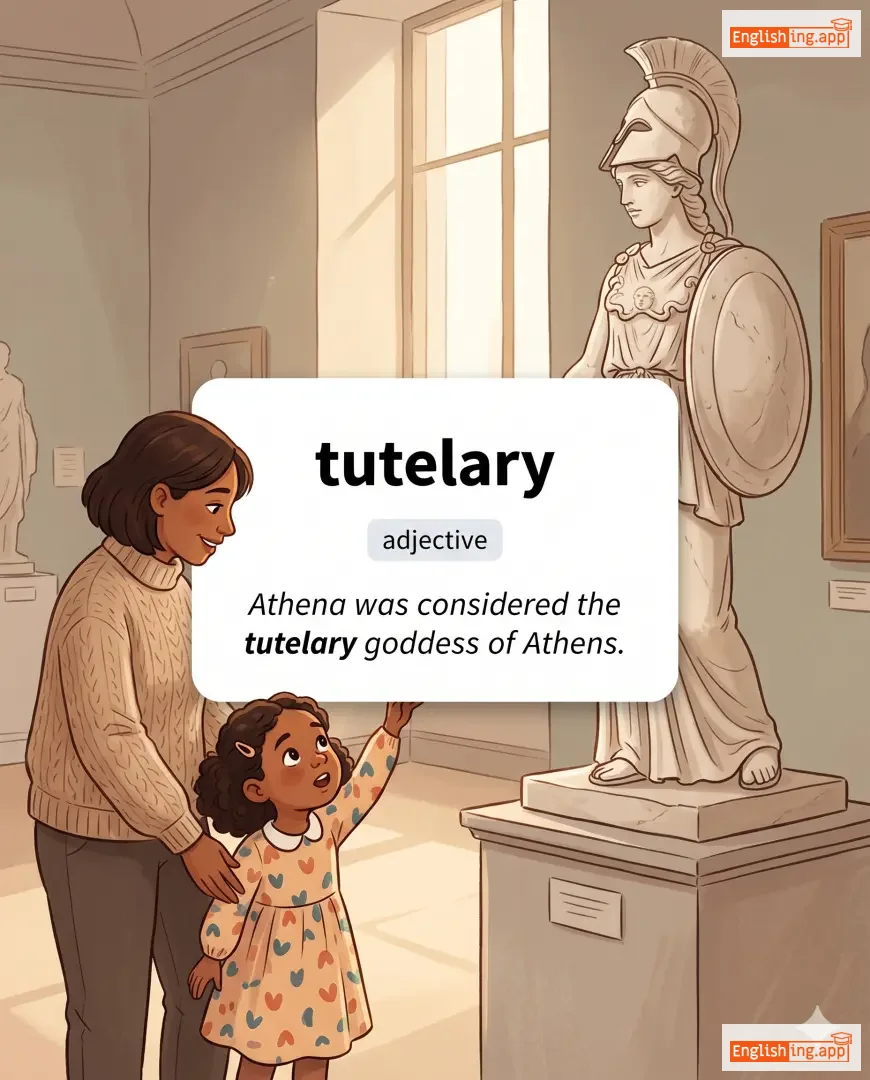
tutelary definition card — visual illustration of the meaning
adjective
/ˈtjuːtɪləri/
守護神 (shugoshin)

Relating to or serving as a guardian or protector, often used for deities or spirits.

"Athena was considered the tutelary goddess of Athens."

"アテナはアテネの守護神と見なされていました。" (Atena wa Atene no shugoshin to minasarete imashita.)
noun
/ˈtjuːtərʃɪp/
指導 (shidō)

The office or position of a tutor; guidance or instruction given by a tutor.

"He thrived under the tutorship of his mentor."

"彼はメンターの指導のもとで成功した。" (Kare wa mentā no shidō no moto de seikō shita.)
noun
/ˈtiːˈviː/
テレビ (terebi)

a device used to receive television broadcasts

"I watch my favorite shows on TV every evening."

"毎晩、テレビでお気に入りの番組を見ています。" (Maiban, terebi de okiniiri no bangumi o miteimasu.)
tweak definition card — visual illustration of the meaning
verb
/twiːk/
微調整 (bichōsei)

to make small adjustments; to fine-tune something

"We need to tweak the design slightly."

"デザインを少し調整する必要があります。" (Dezain wo sukoshi chōsei suru hitsuyō ga arimasu)
noun
/twiːt/
さえずり (saezuri)

a short high-pitched sound made by a small bird; a post on Twitter

"I heard the sweet tweet of a sparrow this morning."

"今朝、スズメの甘いツイートを聞きました。" (Kesa, suzume no amai tsuito wo kikimashita.)
adjective
/twɛlv/
十二 (juuni)

the number equivalent to 12

"There are twelve months in a year."

"一年には十二か月があります。" (Ichi-nen ni wa juuni kagetsu ga arimasu.)
adjective
/ˈtwɛntiəθ/
二十番目 (nijūbanme)

coming after the nineteenth in order; being one of twenty equal parts.

"She was born on the twentieth of April."

"彼女は四月二十日に生まれました。" (Kanojo wa shigatsu nijū-nichi ni umaremashita.)
adjective
/ˈtwɛnti/
二十 (nijū)

the number equivalent to 20

"He is twenty years old."

"彼は20歳です。" (Kare wa nijū sai desu.)
adverb
/twaɪs/
二回 (nikai)

two times

"I have seen that movie twice."

"その映画を二回見ました。" (Sono eiga o nikai mimashita.)
noun
/twɪɡ/
小枝 (koeda)

a small thin branch of a tree or bush

"She broke a twig off the tree to use as a stick."

"彼女は棒として使うために木から小枝を折った。" (Kanojo wa bou to shite tsukau tame ni ki kara koeda o totta.)