語彙集

英単語辞書 | 単語の意味、定義、例文

noun
/skɑːrf/
スカーフ (sukaafu)

a length of fabric worn around the neck or head for warmth, protection, or fashion

"She wrapped a warm scarf around her neck in the cold weather."

"彼女は寒い天気で暖かいスカーフを首に巻きました。" (Kanojo wa samui tenki de atatakai sukaafu o kubi ni makimashita.)
verb
/ˈskærɪfaɪ/
土を耕す (tsuchi wo tagayasu)

to make shallow cuts or scratches; to loosen the surface of soil

"The farmer scarified the soil before planting seeds."

"農家は種を植える前に土をスカリファイしました。" (Nōka wa tane wo ueru mae ni tsuchi wo sukarifai shimashita.)
adjective
/ˈskɑː.lət/
スカーレット (sukāretto)

a bright red color with a slightly orange tinge

"The scarlet roses in the garden looked magnificent in the morning light."

"庭のスカーレットローズは朝の光の中で素晴らしく見えました。" (Niwa no sukāretto rōzu wa asa no hikari no naka de subarashiku miemashita.)
adjective
/ˈskeəri/
怖い (kowai)

causing fear or making you feel frightened

"That horror movie was really scary."

"そのホラー映画は本当に怖かった。" (sono horā eiga wa hontōni kowakatta.)
adjective
/ˈskeɪðɪŋ/
辛辣な批評 (sinratsu na hihyō)

severely critical; harshly scornful

"The critic wrote a scathing review of the movie."

"批評家は映画について辛辣な批評を書いた。" (Hihyōka wa eiga ni tsuite sinratsu na hihyō o kaita.)
verb
/ˈskætər/
幸せ (shiawase)

to throw or spread things over a wide area in different directions

"The farmer scattered seeds across the field."

"彼女は賞を受け取ったとき、幸せを隠せなかった。" (Kanojo wa shou wo uketotta toki, shiawase wo kakusenakatta.)
adjective
/ˈskætərd/
散らばった (chirabatta)

Spread irregularly or widely in different directions.

"The toys were scattered all over the floor."

"おもちゃは床に散らばっていた。" (Omocha wa yuka ni chirabatte ita.)
verb
/ˈskævɪndʒ/
ゴミの中から探す (gomi no naka kara sagasu)

to search through waste or discarded material to find useful items

"The children scavenged for food in the garbage dump."

"子供たちはゴミ捨て場で食べ物を探していました。" (Kodomotachi wa gomisuteba de tabemono o sagashite imashita.)
noun
/ˈskævɪndʒər/
死肉食者 / ゴミ収集者 (shiniku shokusha / gomi shūshūsha)

an animal or person that feeds on dead or discarded material

"Vultures are natural scavengers that clean up the environment."

"ハゲワシは自然のスカベンジャーで、環境をきれいにします。" (hagewashi wa shizen no scavenger de, kankyō o kirei ni shimasu.)
noun
/səˈnɛərioʊ/
可能な状況 (kanou na joukyou)

a possible situation or sequence of events

"The company prepared for the worst-case scenario."

"会社は最悪のシナリオに備えました。" (Kaisha wa saiaku no shinario ni sonaemashita.)
noun
/siːn/
シーン (shīn)

a place or setting of an event or activity, or the part of a play or film

"The final scene of the movie was very emotional."

"映画の最後のシーンはとても感動的でした。" (Eiga no saigo no shīn wa totemo kandō-teki deshita.)
noun
/ˈsiː.nər.i/
風景 (fūkei)

the natural features of a landscape; the painted background used on a theater stage

"The mountain scenery was breathtakingly beautiful."

"山の風景は息を呑むほど美しかった。" (Yama no fūkei wa iki o nomu hodo utsukushikatta.)
noun
/sɛnt/
香り (kaori)

a distinctive smell, especially a pleasant one

"The scent of roses filled the garden."

"バラの香りが庭いっぱいに広がった。" (Bara no kaori ga niwa ippai ni hirogatta.)
adjective
/ˈskeptɪkəl/
懐疑的な; 疑わしい; 何かの真実に疑問を抱く (kaigiteki na; utagawashī; nanika no shinjitsu ni gimon o idaku)

having doubts; not easily convinced; questioning the truth of something

"Many scientists remain sceptical about the new theory."

"多くの科学者が新しい理論に対して懐疑的な立場を取っている。" (Ōku no kagakusha ga atarashī riron ni taishite kaigitaina tachiba o tottete iru)
noun
/ˈʃɑːdənfrɔɪdə/
他人の不幸を喜ぶこと (tanin no fukō o yorokobu koto)

pleasure derived from another person's misfortune

"He felt a sense of schadenfreude when his rival failed."

"ライバルが失敗したとき、彼はシャーデンフロイデを感じた。" (Raibaru ga shippai shita toki, kare wa schadenfreude o kanjita.)
noun
/ˈskɛdʒʊl/
スケジュール (sukējūru)

a plan for carrying out a process or task, showing the time and sequence of actions

"I have a busy schedule for today."
"今日は忙しいスケジュールがあります。" (Kyō wa isogashī sukējūru ga arimasu.)
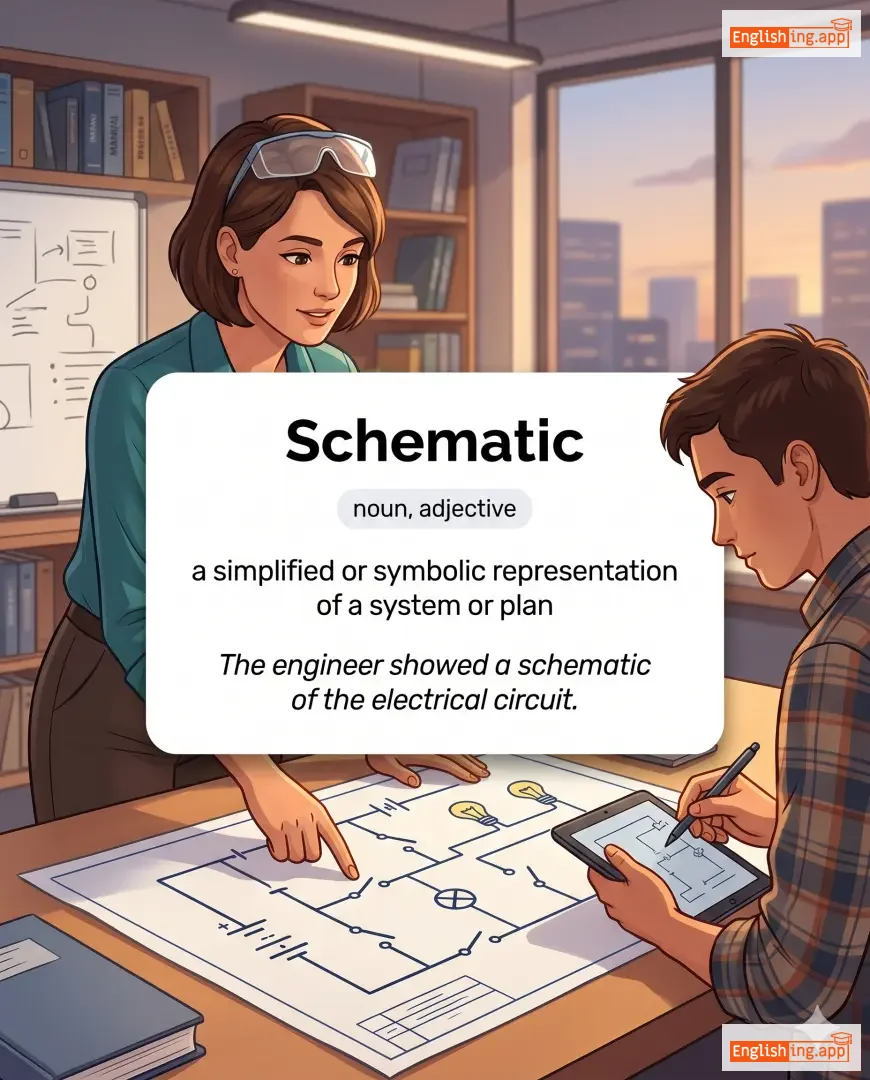
Schematic definition card — visual illustration of the meaning
noun, adjective
/skiːˈmætɪk/
回路図 (kairozu)

a simplified or symbolic representation of a system or plan

"The engineer showed a schematic of the electrical circuit."

"エンジニアは電気回路の回路図を示しました。" (Enjinia wa denki kairo no kairozu o shimeshimashita.)
noun, verb
/skiːm/
計画 / 陰謀 (keikaku / inbou)

a plan or arrangement, especially one that is secret or dishonest

"They devised a scheme to cheat investors."

"彼らは投資家をだますために計画を立てました。" (Karera wa tōshika o damasu tame ni keikaku o tatemashita.)
noun
/ˈskɪz.əm/ or /ˈsɪz.əm/
幸福 (kōfuku)

A division or split between strongly opposed parties, often in religion or organizations.

"The schism in the church led to the formation of two separate groups."

"彼女は賞を受け取ったとき、幸せを隠せませんでした。" (Kanojo wa shō o uketotta toki, kōfuku o kakusemasen deshita.)
noun
/ˈskɒlər/
学者 (gakusha)

a person who studies a particular subject or academic field

"The scholar presented a research paper on ancient civilizations."

"学者は古代文明についての研究論文を発表した。" (Gakusha wa kodai bunmei ni tsuite no kenkyū ronbun o happyō shita.)
scholarly definition card — visual illustration of the meaning
adjective
/ˈskɒl.ə.li/
学術的 (gakujutsuteki)

Having or showing knowledge, learning, or devotion to academic study.

"She wrote a scholarly article on medieval literature."

"彼女は中世文学についての学術的な記事を書きました。" (Kanojo wa chūsei bungaku ni tsuite no gakujutsuteki na kiji o kakimashita.)
noun
/ˈskɒlərʃɪp/
奨学金 (shougakukin)

an award or grant to support a student's education

"She received a scholarship to study abroad."

"彼女は留学するための奨学金を受け取りました。" (Kanojo wa ryuugaku suru tame no shougakukin o uketorimashita.)
adjective
/skəˈlæstɪk/
学問的な (gakumontekina)

Relating to schools, education, or academic learning.

"The school organizes scholastic competitions every year."

"学校は毎年学問的な競技を開催します。" (Gakkō wa mainen gakumonteki na kyōgi o kaisai shimasu.)
noun
/skuːl/
学校 (gakkou)

An institution for educating children; also a group of people sharing the same ideas or discipline.

"The children walked to school together."

"子供たちは一緒に学校に歩いて行きました。" (Kodomotachi wa issho ni gakkou ni aruite ikimashita.)
science definition card — visual illustration of the meaning
noun
/ˈsaɪəns/
科学 (kagaku)

the systematic study of the structure and behavior of the physical and natural world

"Science has made incredible advancements in medicine."
"科学は医学の分野で驚くべき進歩を遂げました。" (Kagaku wa igaku no bunya de odorokubeki shinpo wo togemashita.)
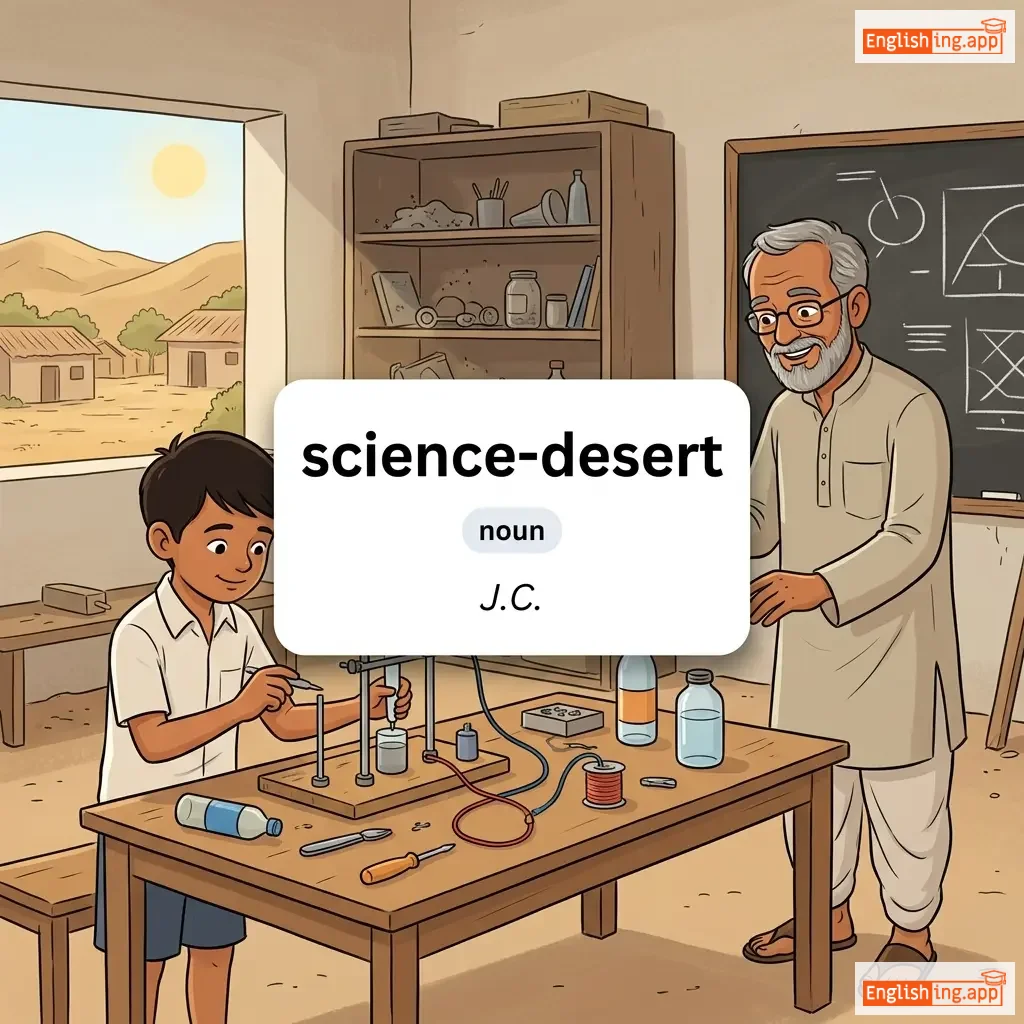
science-desert definition card — visual illustration of the meaning
noun
ˈsaɪəns ˈdezət
科学の砂漠 (kagaku no sabaku)

A region or area lacking in scientific development, research facilities, or educational institutions.

"J.C. Bose thrived in a science-desert."
"J.C. ボースは科学の砂漠で成功を収めました。" (J.C. Bōsu wa kagaku no sabaku de seikō o osamemashita.)
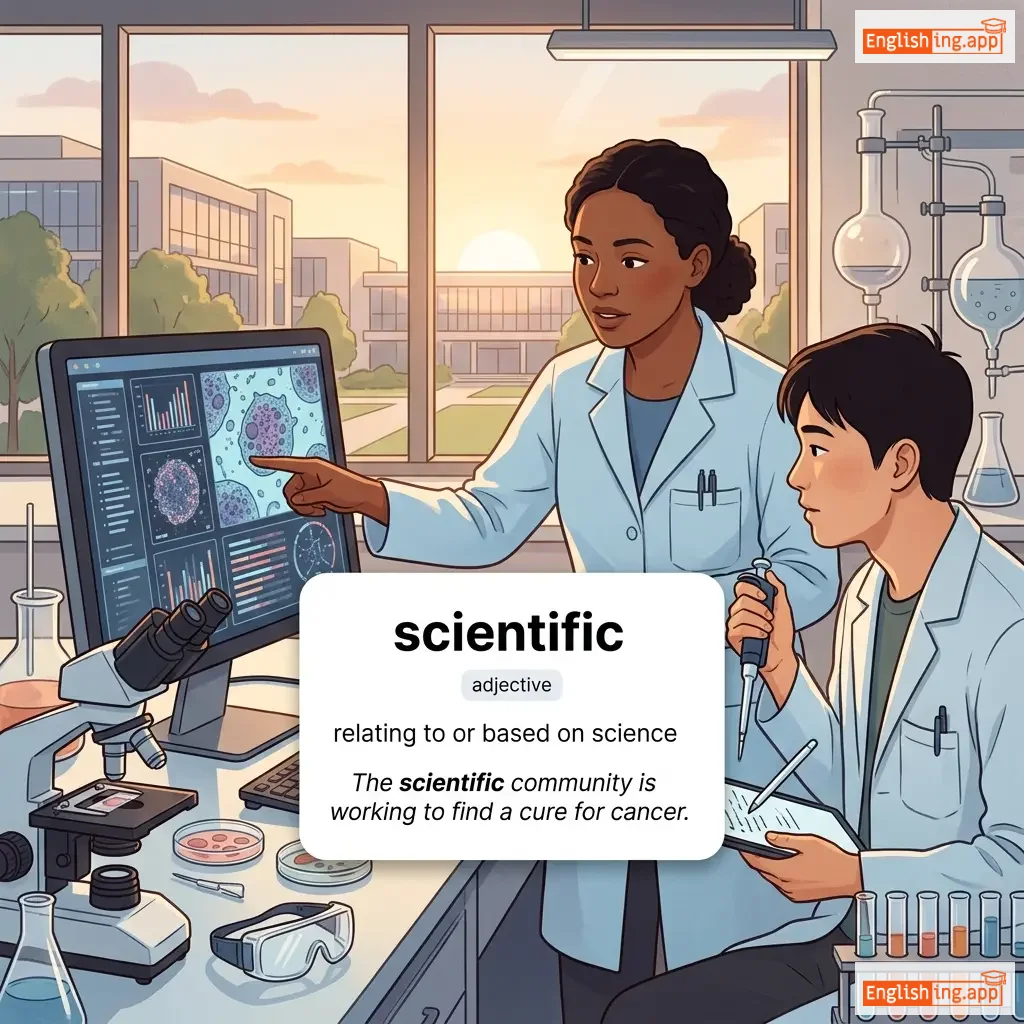
scientific definition card — visual illustration of the meaning
adjective
/ˌsaɪənˈtɪfɪk/
科学的 (kagakuteki)

relating to or based on science

"The scientific community is working to find a cure for cancer."

"科学者たちはがんの治療法を見つけるために働いています。" (Kagakusha-tachi wa gan no chiryouhou wo mitsukeru tame ni hataraiteimasu.)
scientist definition card — visual illustration of the meaning
noun
/ˈsaɪəntɪst/
科学者 (kagakusha)

a person who conducts scientific research or experiments

"The scientist made a groundbreaking discovery in physics."

"科学者は物理学で画期的な発見をしました。" (Kagakusha wa butsuri-gaku de kakkiteki na hakken wo shimashita.)
noun
/sɪnˈtɪl.ə/
小さな火花 (chiisana hibana)

A tiny trace or spark of a specified quality or feeling.

"There wasn’t a scintilla of doubt in her mind."

"彼女の心には疑いのひらめきもなかった。" (Kanojo no kokoro ni wa utagai no hirameki mo nakatta.)
verb
/ˈsɪn.tɪ.leɪt/
輝く (kagayaku)

to sparkle or shine brightly; to emit flashes of light

"The diamond ring scintillated under the bright lights."

"ダイヤモンドの指輪は明るい光の下で輝いていました。" (Daiyamondo no yubiwa wa akarui hikari no shita de kagayaite imashita.)
adjective
/ˈsɪn.tɪ.leɪ.tɪŋ/
きらめく (kirameku)

brilliantly clever, exciting, or sparkling

"Her scintillating conversation kept everyone entertained."

"彼女のきらめく会話は皆を楽しませた。" (Kanojo no kirameku kaiwa wa minna o tanoshimaseta.)
noun
/ˈsaɪ.ə.lɪz.əm/
表面的な知識の誇示 (hyōmen-tekina chishiki no koji)

pretentious show of superficial knowledge

"His speech was full of sciolism, impressing no one."

"彼のスピーチはサイオリズムで満ちており、誰も感動しなかった。" (Kare no supīchi wa saiorizumu de michite ori, dare mo kandō shinakatta.)
noun
/ˈsaɪ.ən/
子孫 (shison)

a descendant of a wealthy, aristocratic, or influential family

"He is the scion of a wealthy industrialist family."

"彼は裕福な実業家の家族の子孫です。" (Kare wa yūfuku na jitsugyōka no kazoku no shison desu.)
noun
/ˈsɪʒ.ən/
分裂 (bunretsu)

the act of cutting or dividing something

"The political party suffered a scission over ideological disputes."

"その政党はイデオロギーの対立により分裂を経験しました。" (Sono seitō wa ideorogī no tairitsu ni yori bunretsu o keiken shimashita.)
verb
/ˈsɪzər/
はさみで切る (hasami de kiru)

to cut with or as if with scissors

"The tailor scissored the fabric neatly."

"テイラーは布をきれいに切りました。" (Teirā wa nuno o kirei ni kirimashita.)
noun
/ˈsɪz.ərz/
はさみ (hasami)

a cutting instrument with two blades that can be closed together

"I need scissors to cut this paper."

"この紙を切るために、はさみが必要です。" (Kono kami o kiru tame ni, hasami ga hitsuyō desu.)
verb
/skɒf/
嘲笑する (chosho suru)

to speak about something in a mocking or dismissive way

"He scoffed at the idea of moving abroad."
"彼は海外に引っ越すというアイデアを嘲笑しました。" (Kare wa kaigai ni hikkosu to iu aidea o chosho shimashita.)
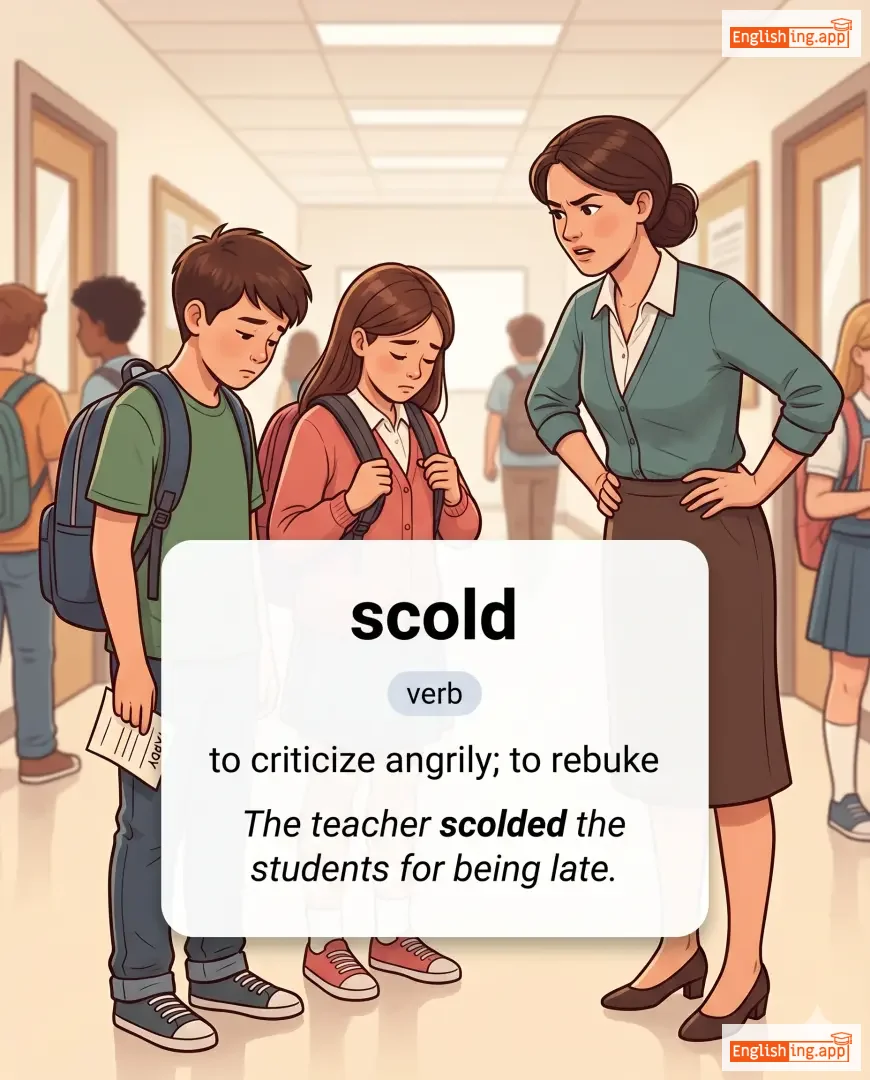
scold definition card — visual illustration of the meaning
verb
/skoʊld/
叱る (shikaru)

to criticize angrily; to rebuke

"The teacher scolded the students for being late."

"先生は遅刻した学生を叱りました。" (Sensei wa chikoku shita gakusei o shikarimashita.)
noun
/ˈskuːtər/
スクーター (sukūtā)

a small two-wheeled vehicle powered by an engine or electricity

"She rides a scooter to work every day."

"彼女は毎日スクーターで仕事に行きます。" (Kanojo wa mainichi sukūtā de shigoto ni ikimasu.)
noun
/skoʊp/
範囲 (hani)

the range of one's perception, understanding, or activity

"The project is beyond the scope of our resources."

"そのプロジェクトは私たちのリソースの範囲を超えています。" (Sono purojekuto wa watashitachi no risōsu no hani o koeteimasu.)
verb
/skɔːrtʃ/
焦がす (kogasu)

to burn the surface of something slightly

"The fire scorched the walls of the building."

"火事が建物の壁を焦がした。" (Kaji ga tatemono no kabe o kogashita.)
noun/verb
/skɔːr/
スコア (sutoa)

a number of points achieved in a game or test; to gain points or achieve a goal

"He scored the winning goal in the final match."

"彼は最後の試合で決勝ゴールを決めました。" (Kare wa saigo no shiai de kesshō gōru o kimemashita.)
😒

scorn

noun/verb
/skɔːrn/

the feeling or expression of contempt or disdain; to treat with contempt

"She looked at him with open scorn."

adjective
/ˈskɔːrnfəl/
軽蔑的な (keibetsuteki na)

showing contempt or disdain; expressing scorn

"She gave him a scornful look when he made the rude comment."

"彼が無礼なコメントをしたとき、彼女は軽蔑の目で彼を見た。" (Kare ga burei na komento o shita toki, kanojo wa keibetsu no me de kare o mita.)
noun
/ˈskɔːr.pi.ən/
サソリ (sasori)

a small creature with eight legs, two claws, and a curved tail with a poisonous sting

"The scorpion hid under the rock during the day."

"サソリは昼間、岩の下に隠れていました。" (Sasori wa hiruma, iwa no shita ni kakurete imashita.)
noun
/ˈskɔːrpiən fɪʃ/
オニカサゴ (onikasa go)

a type of fish with venomous spines that belongs to the family Scorpaenidae

"The scorpion fish has dangerous spines that can inject venom."

"オニカサゴは毒を注入できる危険な棘を持っています。" (onikasa go wa doku o chunyu dekiru kiken na toge o motteimasu)
verb/noun
/skɒtʃ/
終わらせる / スコッチウイスキー (owaraseru / scotch whiskey)

to put an end to something; also a type of whisky

"The report scotched the rumors of a merger."

"報告書は合併の噂を終わらせました。" (Houkokusho wa gappei no uwasa o owarasemashita.)
noun
/ˈskaʊndrəl/
悪党 (akutou)

a dishonest or unscrupulous person; a villain

"That scoundrel cheated the old man out of his savings."

"その悪党は老人から貯金を騙し取った。" (Sono akutou wa rōjin kara chokin o damashitotta.)
verb
/ˈskaʊər/
磨く / 徹底的に探す (migaku / tetteiteki ni sagasu)

to clean or brighten the surface of something by scrubbing; to search thoroughly

"She scoured the kitchen until it shone."

"彼女はキッチンを磨いて、ピカピカにしました。" (Kanojo wa kicchin o migaite, pikapika ni shimashita.)
noun/verb
/skɜːrdʒ/

A source of great pain or punishment; to whip or inflict suffering on someone.

"Disease and poverty remain a scourge in many regions."