語彙集

英単語辞書 | 単語の意味、定義、例文

noun
/steɪk/
ステーキ (suteeki)

a thick slice of meat, typically beef, cooked by grilling or frying

"He ordered a grilled steak with vegetables."

"彼は野菜と一緒にグリルされたステーキを注文しました。" (Kare wa yasai to issho ni guriru sareta suteeki wo chuumon shimashita.)
steal definition card — visual illustration of the meaning
🕵️‍♂️

steal (スティール)

verb
/stiːl/
盗む (nusumu)

to take something without permission or right

"He tried to steal my wallet while I wasn't looking."

"彼は私が見ていない間に財布を盗もうとしました。" (Kare wa watashi ga mite inai aida ni saifu o nusumou to shimashita.)
noun
/stɛlθ/
隠密、静かに動く (onmitsu, shizukani ugoku)

The act of moving, doing, or achieving something quietly and secretly.

"The cat moved with stealth towards its prey."

"猫は静かに獲物に向かって動いた。" (Neko wa shizukani emono ni mukatte ugoita.)
noun, verb
/stiːm/
蒸気 (jouki)

the vapor into which water is converted when heated; to emit or treat with steam

"The kettle was steaming on the stove."

"ケトルはストーブで蒸気を発生させていた。" (Kettoru wa sutoobu de jouki wo hasse sasete ita.)
noun
/ˈstiː.mər/
蒸気船 (jōkisen)

a ship or boat powered by steam engines

"The old steamer crossed the river slowly."

"古い蒸気船がゆっくり川を渡った。" (Furui jōkisen ga yukkuri kawa o watatta.)
noun
/stiːl/
スチール (suchiiru)

a strong, hard metal made of iron and carbon

"The building was made from steel to ensure its durability."

"その建物は耐久性を確保するためにスチールで作られました。" (Sono tatemono wa taikyū-sei o kakuho suru tame ni suchiiru de tsukuraremashita.)
adjective
/stiːp/
急な, 高すぎる (kyū na, takasugiru)

Having a sharp inclination or high slope; also can mean excessive (as in price).

"The hikers climbed a steep mountain trail."

"ハイカーたちは急な山道を登った。" (Haikā-tachi wa kyū na yamamichi o nobotta.)
adjective
/stiːpt/
浸透した (shintō shita)

Completely surrounded by or filled with a particular quality, influence, or experience.

"The town is steeped in history and tradition."

"町は歴史と伝統に浸透している。" (Machi wa rekishi to dentō ni shintō shite iru.)
verb
/stɪə(r)/
操縦する (soujusu)

to guide or control the movement of a vehicle, vessel, or person

"He steered the car carefully through the narrow street."

"彼は狭い通りを慎重に車をステアしました。" (Kare wa semai toori wo shinchou ni kuruma wo sutea shimashita.)
noun
/staɪn/
ビールジョッキ (bīru jokki)

A large beer mug, typically made of glass or stoneware.

"He raised his stein to toast his friends."

"彼は友達のために乾杯するためにシュタインを持ち上げました。" (Kare wa tomodachi no tame ni kanpai suru tame ni shutain o mochiagemashita.)
adjective
/ˈstɛlər/
素晴らしい (subarashii)

Relating to stars; outstanding or excellent.

"She gave a stellar performance in the play."

"彼女は劇中で素晴らしいパフォーマンスを披露しました。" (Kanojo wa gekichu de subarashii pafomansu o hirou shimashita.)
noun, verb
/stɛm/
茎 / 食い止める (kuki / kuitomeru)

Noun: The main stalk of a plant. Verb: To stop or restrict the flow or development of something.

"The gardener cut the stem of the rose; New policies aim to stem the flow of pollution."

"庭師はバラの茎を切りました; 新しい政策は汚染の流れを食い止めることを目指しています。" (Niwa-shi wa bara no kuki o kirimashita; atarashī seisaku wa osen no nagare o kuitomeru koto o mezashiteimasu.)
noun
/stɛntʃ/
悪臭 (akushu)

A very strong and unpleasant smell.

"The stench of garbage filled the alley."

"ゴミの臭いが路地を満たした。" (Gomi no nioi ga roji o mitashita.)
noun
/ˈstɛnsəl/
型抜き (katenuki)

A thin sheet of material with a design cut out, used to produce the design on the surface below by applying paint or ink through the cut-out holes.

"The artist used a stencil to paint identical stars on the wall."
"アーティストは壁に同じ星を描くために型抜きを使用しました。" (Ātisuto wa kabe ni onaji hoshi o kaku tame ni katenuki o shiyō shimashita.)
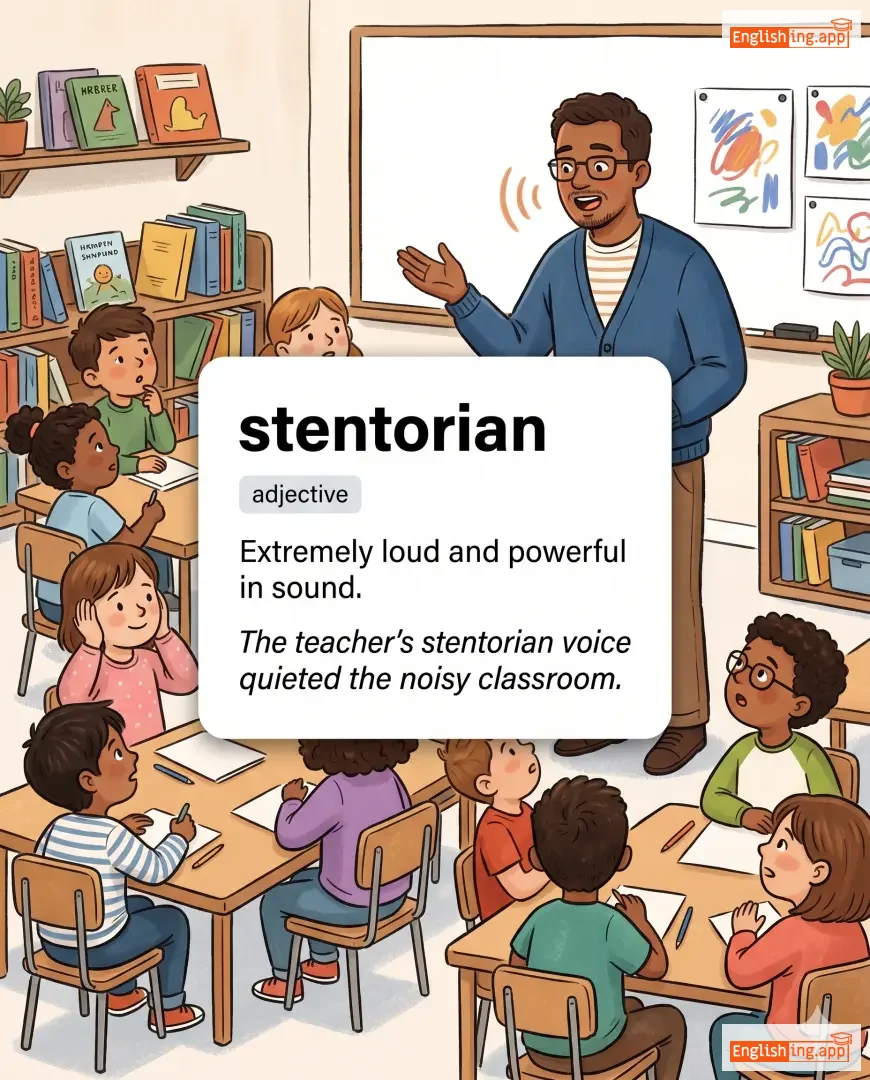
stentorian definition card — visual illustration of the meaning
adjective
/stɛnˈtɔːriən/
雷鳴のような (raimei no yōna)

Extremely loud and powerful in sound.

"The teacher’s stentorian voice quieted the noisy classroom."
"教師の雷鳴のような声が騒々しい教室を静めた。" (Kyōshi no raimei no yōna koe ga sōzōshī kyōshitsu o shizumeta.)
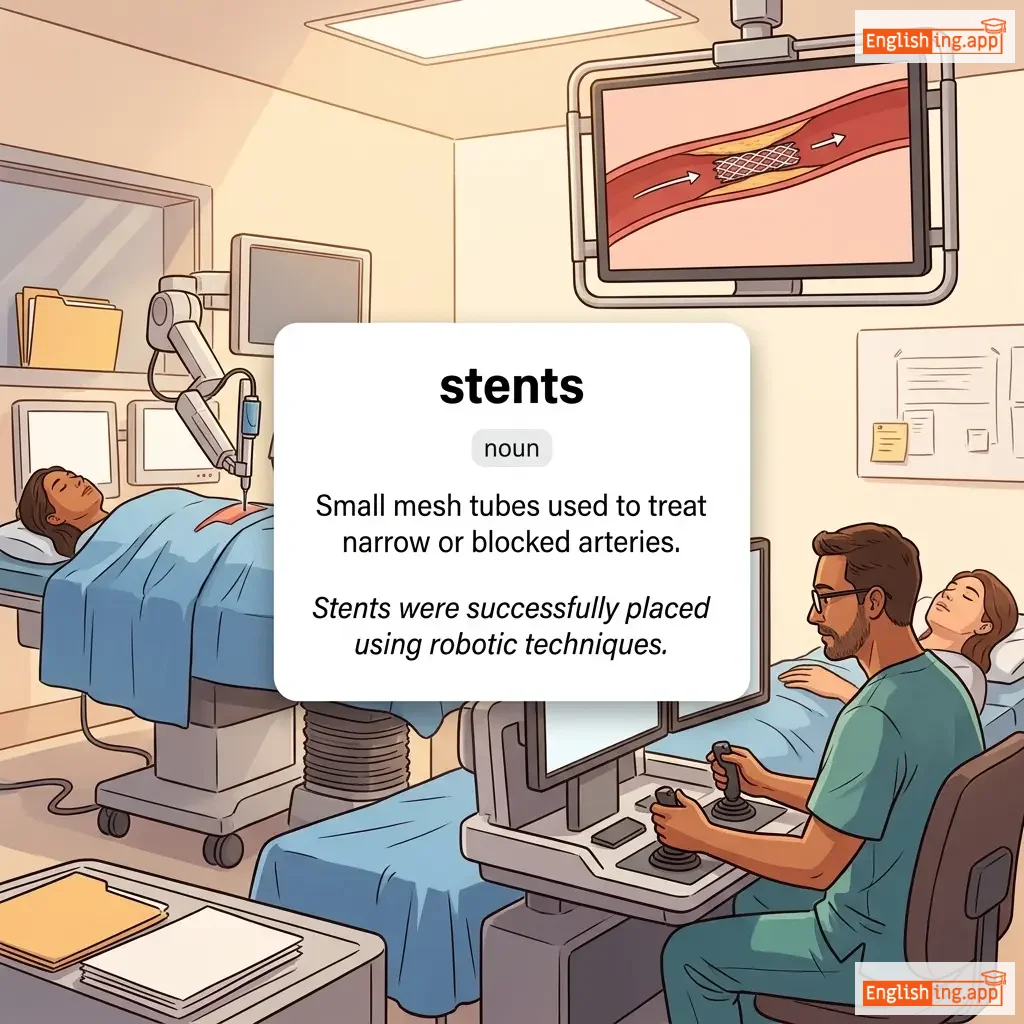
stents definition card — visual illustration of the meaning
noun
/stents/
ステント (sutento)

Small mesh tubes used to treat narrow or blocked arteries.

"Stents were successfully placed using robotic techniques."

"ステントはロボット技術を使って成功裏に配置されました。" (Sutento wa robotto gijutsu o tsukatte seikōri ni haichi saremashita.)
👣

step

noun
/stɛp/

a movement made by lifting one foot and putting it down in a new position

"She took a step towards the door."

noun
/stɛp/
ステップ (suteppu)

A large flat area of unforested grassland, especially in southeastern Europe or Siberia.

"The nomads traveled across the vast steppe with their herds."
"遊牧民は自分の家畜を連れて広大なステップを渡っていた。" (Yūbokumin wa jibun no kachiku o tsurete kōdaina suteppu o watatte ita.)
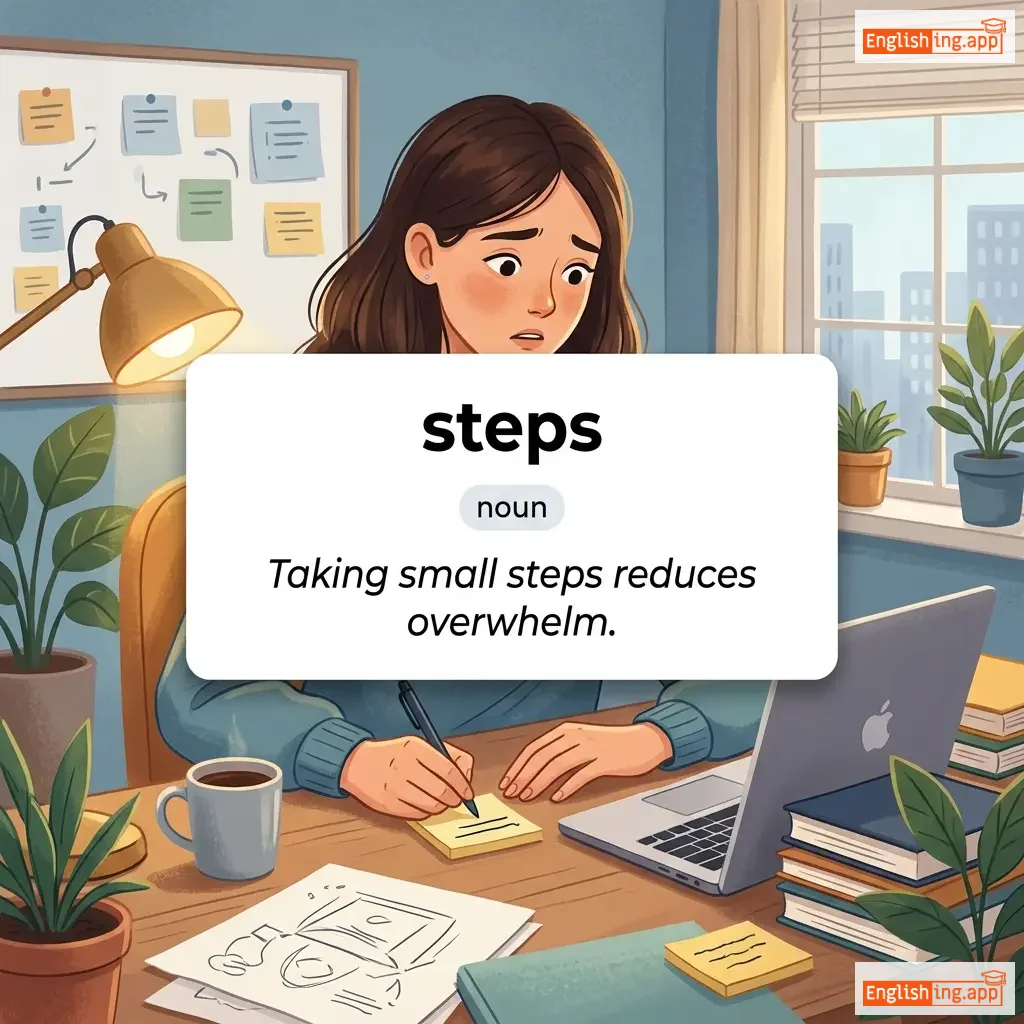
steps definition card — visual illustration of the meaning
noun
/stɛps/
ステップ (suteppu)

A measure or action, especially one of a series taken in order to deal with or achieve a particular thing.

"Taking small steps reduces overwhelm."

"小さなステップを踏むことで圧倒的なプレッシャーが減少します。" (Chīsana suteppu o fumu koto de attō-teki na puresshā ga genshō shimasu.)
noun
/ˈstɛriəˌtaɪp/
ステレオタイプ (sutereotaipu)

A widely held but oversimplified and fixed idea of a particular type of person or thing.

"It is a stereotype that all gamers are antisocial."

"すべてのゲーマーが反社会的だというのはステレオタイプです。" (Subete no geemaa ga hanshakai-teki da to iu no wa sutereotaipu desu.)
adjective
/ˈstɛriəˌtaɪpt/
固定観念的な (kotei kannen teki na)

Conforming to a fixed or oversimplified idea of what someone or something is like.

"His stereotyped jokes failed to impress the audience."
"彼の固定観念的なジョークは観客を感動させられなかった。" (kare no kotei kannen teki na jooku wa kankyaku o kandou saserarenakatta.)
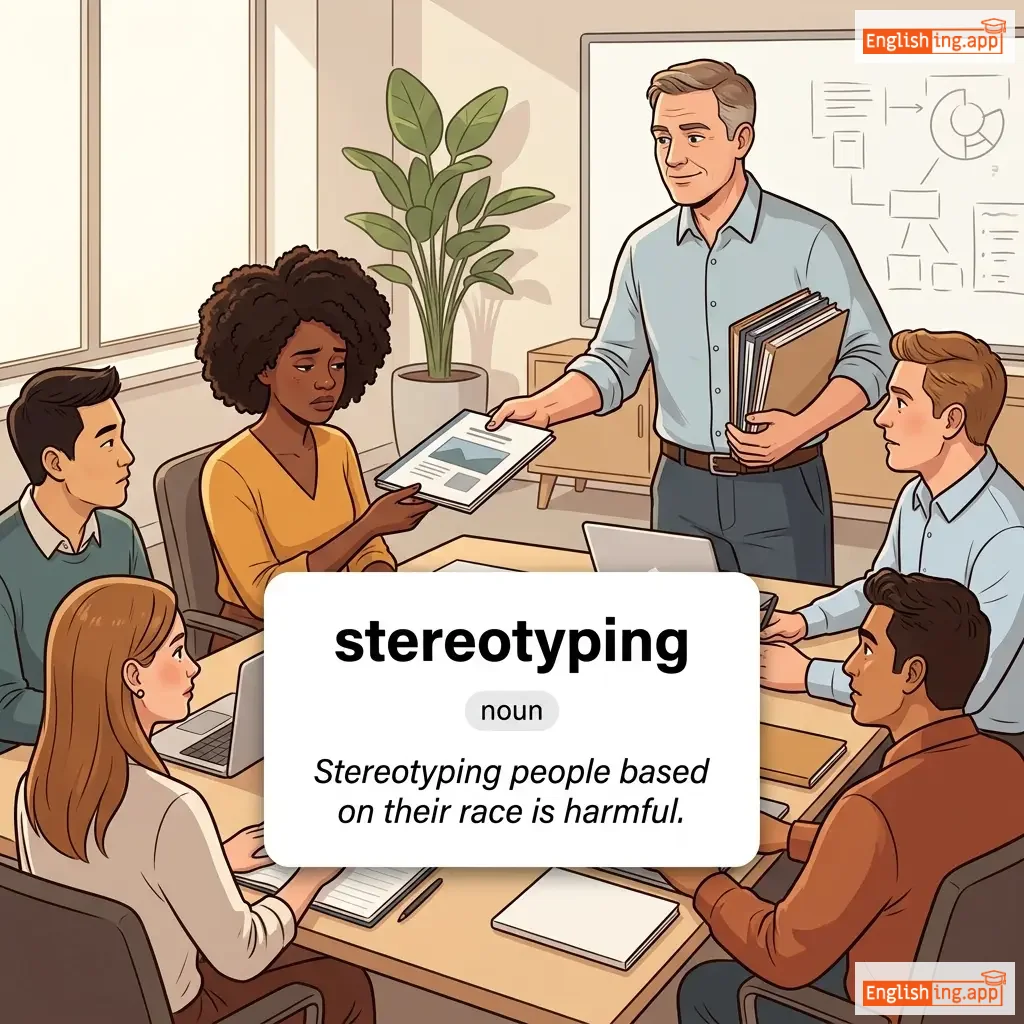
stereotyping definition card — visual illustration of the meaning
noun
/ˈstɛə.rɪ.əʊˌtaɪ.pɪŋ/
ステレオタイプ (sutereotaipu)

A widely held but fixed and oversimplified image or idea of a particular type of person or thing.

"Stereotyping people based on their race is harmful."

"人種に基づいたステレオタイプは有害です。" (Jinshu ni motozuita sutereotaipu wa yūgai desu.)
adjective
/ˈstɛr.aɪl/
無菌 (mukin)

Free from bacteria or other living microorganisms; incapable of producing offspring.

"The surgeon worked in a sterile environment to avoid infection."

"外科医は感染を防ぐために無菌環境で働いた。" (Ge-kai wa kansen wo fusegu tame ni mukin kankyō de hataraita.)
noun/adjective
/ˈstɜː.lɪŋ/
英国通貨 / 優れた (eikoku tōka / sugureta)

British money, especially pounds; of excellent quality.

"She was praised for her sterling work on the project."

"プロジェクトでの優れた仕事が称賛されました。" (Purojekuto de no sugureta shigoto ga shōsan saremashita.)
adjective/noun
/stɜːrn/
厳格な / 船の後部 (genkaku na / fune no koubu)

Serious and strict in manner or attitude; the back part of a ship.

"The teacher gave the students a stern warning before the exam."

"教師は試験前に生徒に厳しい警告をしました。" (Kyoushi wa shiken mae ni seito ni kibishii keikoku wo shimashita.)
adjective
/ˈstɜːr.tər.əs/
重いいびき (omoi ibiki)

Characterized by heavy snoring or breathing.

"The patient’s stertorous breathing alarmed the nurses."

"患者のステルトラスな呼吸は看護師たちを驚かせました。" (Kanja no sutetorasuna kokyū wa kangoshitachi o odorokasemashita.)
noun
/ˈstiː.vəˌdɔːr/
荷役作業員 (niyaku sagyouin)

A person employed to load and unload cargo from ships.

"The stevedores worked tirelessly to unload the cargo before dawn."

"荷役作業員たちは夜明け前に貨物を下ろすために疲れ知らずに働いた。" (Niyaku sagyouin-tachi wa yoake mae ni kamotsu o orosu tame ni tsukare shirazu ni hataraita.)
abbreviation (noun/pronoun)
/ˈsʌmθɪŋ/
何か (nanika)

abbreviation for 'something'

"Can you give me sth. to write with?"

"書くために何かをくれますか?" (Kaku tame ni nanika o kuremasu ka?)
verb
/stɪk/
くっつく (kuttsuku)

to adhere or attach something to a surface

"The glue will stick to the paper."

"グルーは紙にくっつくでしょう。" (Guru wa kami ni kuttsuku deshou.)
noun
/ˈstɪklər/
規則にうるさい人 (kisoku ni urusai hito)

a person who insists on a certain quality or standard of behavior

"He is a stickler for punctuality and never tolerates delays."

"彼は時間にうるさく、遅れを許しません。" (Kare wa jikan ni urusaku, okure o yurushimasen.)
adjective
/ˈstɪki/
べたつく (betatsuku)

having the quality of adhering or clinging; difficult to remove or deal with

"The candy is too sticky to eat with your hands."

"キャンディは手で食べるにはあまりにもべたつくです。" (kyandi wa te de taberu ni wa amari ni mo betatsuku desu.)
adjective
/stɪf/
硬い (katai)

rigid, difficult to bend or move

"After the long run, his legs felt very stiff."

"長いランニングの後、彼の足はとても硬く感じられた。" (Nagai ranningu no ato, kare no ashi wa totemo kataku kanjirareta.)
verb
/ˈstaɪfl/
抑える (osaeru)

to prevent or restrain an action, idea, or emotion; to suffocate

"She tried to stifle a laugh during the serious meeting."

"彼女は真剣な会議中に笑いを抑えようとしました。" (Kanojo wa shinken na kaigi-chū ni warai o osaeyō to shimashita.)
verb
/ˈstaɪfəld/
抑える (osaeru)

to suppress, hold back, or prevent something from happening

"He stifled a laugh during the serious meeting."

"彼は真面目な会議中に笑いを抑えた。" (Kare wa majimena kaigichuu ni warai o osaeta.)
stigma definition card — visual illustration of the meaning
noun
/ˈstɪɡmə/
汚名 (omei)

a mark of shame or disgrace associated with a particular circumstance or quality

"There is still a stigma around mental health issues in many societies."

"多くの社会では、精神的な健康問題に関して未だに汚名がついています。" (Ōku no shakai de wa, seishinteki na kenkō mondai ni kanshite imada ni omei ga tsuiteimasu.)
verb
/ˈstɪɡmətaɪz/
スティグマタイズする (sutigumataizu suru)

to describe or regard someone as worthy of disgrace or disapproval

"People with certain illnesses are often unfairly stigmatized."

"特定の病気の人々はしばしば不当な方法でスティグマタイズされる。" (Tokutei no byōki no hitobito wa shibashiba futō na hōhō de sutigumataizu sareru.)
noun
/stɪˈlɛtoʊ/
細いヒールの靴 / ダガー (hosoi hīru no kutsu / dagā)

A small, thin, high-heeled shoe or a dagger with a slender blade.

"She wore elegant stiletto heels to the party."

"彼女はパーティーにエレガントなスティレットヒールを履いて行きました。" (Kanojo wa pātii ni ereganto na sutiretto hīru o haite ikimashita.)
adjective
/stɪl/
静かな (shizukana)

not moving or making a sound

"The water was still, reflecting the sky."

"水は静かで、空を反射していた。" (Mizu wa shizuka de, sora wo hansha shiteita.)
adjective
/ˈstɪltɪd/
不自然な、堅苦しい (fushizen na, katakurushii)

Speech or writing that is stiff, unnatural, or overly formal.

"His speech sounded stilted and rehearsed."

"彼のスピーチは不自然で練習されたように聞こえた。" (Kare no supīchi wa fushizen de renshū sareta yō ni kikoeta.)
noun
/ˈstɪmjʊlənt/
興奮剤 (koufun zai)

A substance that raises levels of physiological or nervous activity in the body.

"Coffee is a common stimulant that helps people stay awake."
"コーヒーは一般的な興奮剤で、人々が目を覚ますのを助けます" (Kōhī wa ippantekina kōfunzai de, hitobito ga me wo samasu no wo tasukemasu)
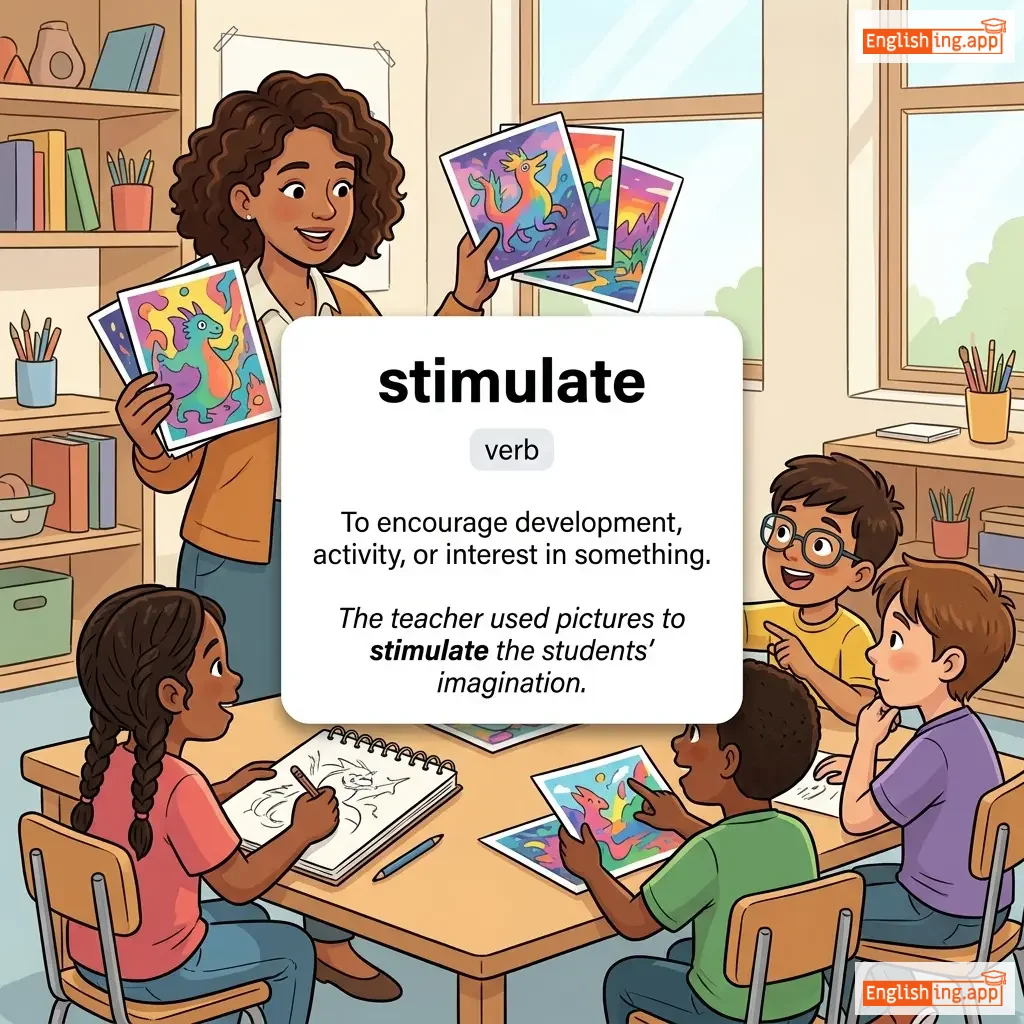
stimulate definition card — visual illustration of the meaning
verb
/ˈstɪmjʊˌleɪt/
刺激する, 活性化する (shigeki suru, katsusei suru)

To encourage development, activity, or interest in something.

"The teacher used pictures to stimulate the students' imagination."
"先生は絵を使って生徒の想像力を刺激しました。" (Sensei wa e o tsukatte seito no sōzōryoku o shigeki shimashita.)
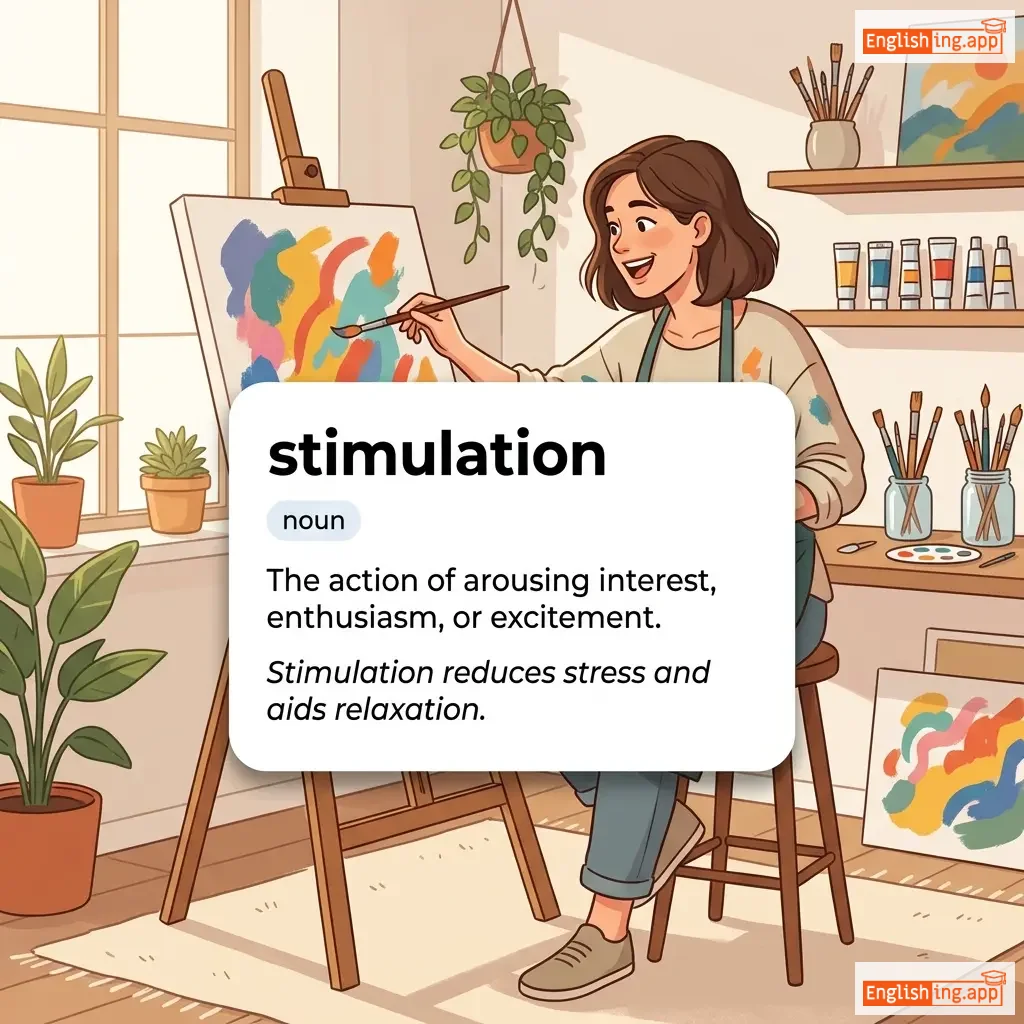
stimulation definition card — visual illustration of the meaning
noun
/ˌstɪm.jəˈleɪ.ʃən/
刺激 (shigeki)

The action of arousing interest, enthusiasm, or excitement.

"Stimulation reduces stress and aids relaxation."
"刺激はストレスを減らし、リラックスを助けます。" (Shigeki wa sutoresu wo herashi, rirakkusu wo tasukemasu.)
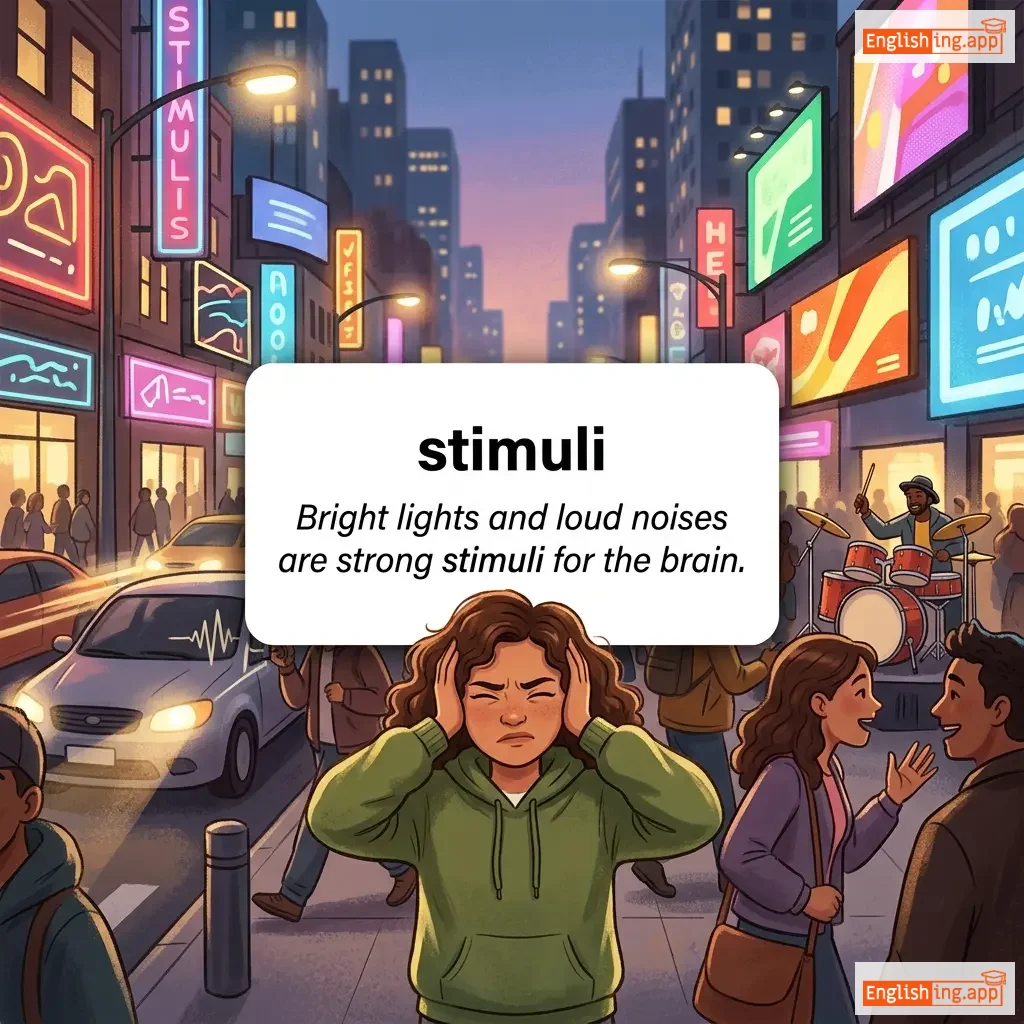
stimuli definition card — visual illustration of the meaning
noun (plural of stimulus)
/ˈstɪm.jʊ.laɪ/
刺激 (shigeki)

Things or events that evoke a specific functional reaction in an organ or tissue.

"Bright lights and loud noises are strong stimuli for the brain."
"明るい光と大きな音は、脳にとって強力な刺激です。" (Akarui hikari to ōkina oto wa, nō ni totte kyōryoku na shigeki desu.)
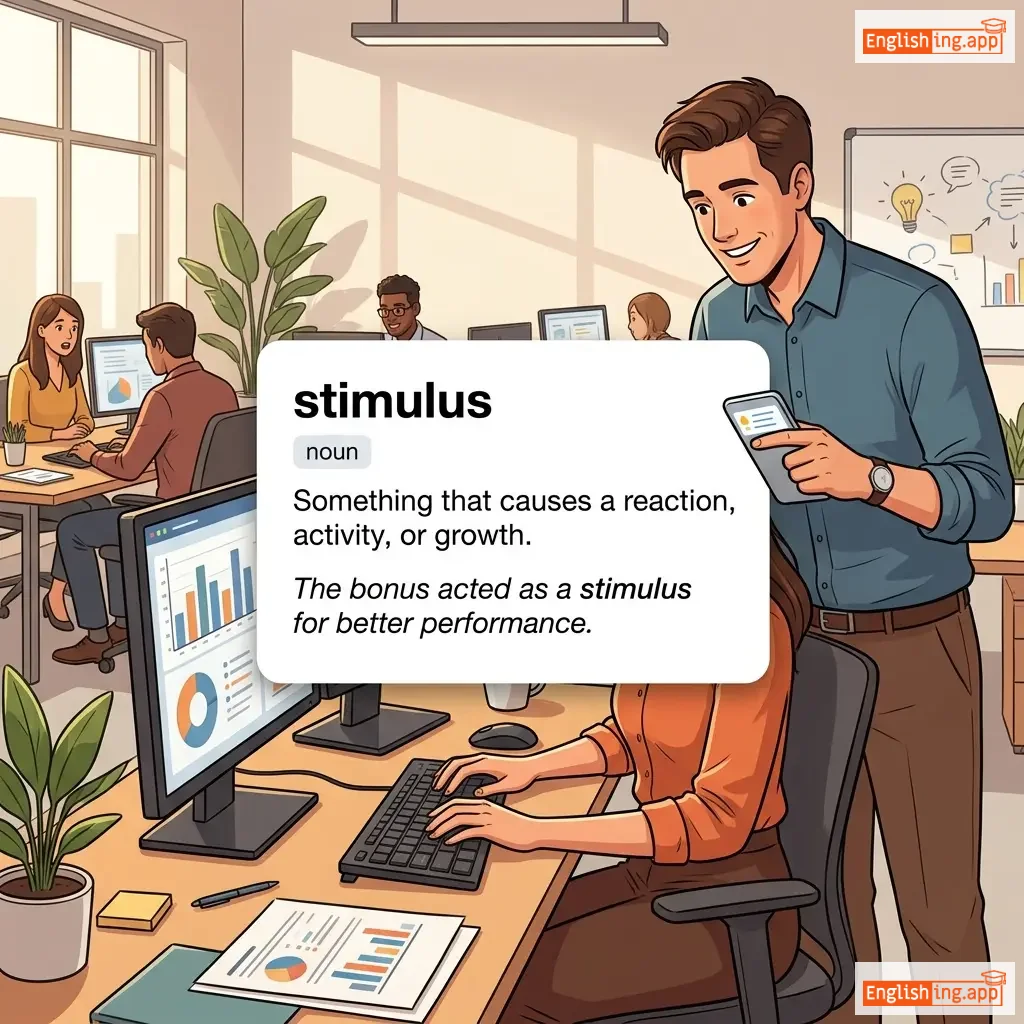
stimulus definition card — visual illustration of the meaning
noun
/ˈstɪmjʊləs/
反応、活動、または成長を引き起こすもの、刺激 (hannou, katsudou, matawa seichou wo hikiokosu mono, shigeki)

Something that causes a reaction, activity, or growth.

"The bonus acted as a stimulus for better performance."
"ボーナスはより良いパフォーマンスのための刺激となった。" (Bōnasu wa yori yoi pafōmansu no tame no shigeki to natta.)
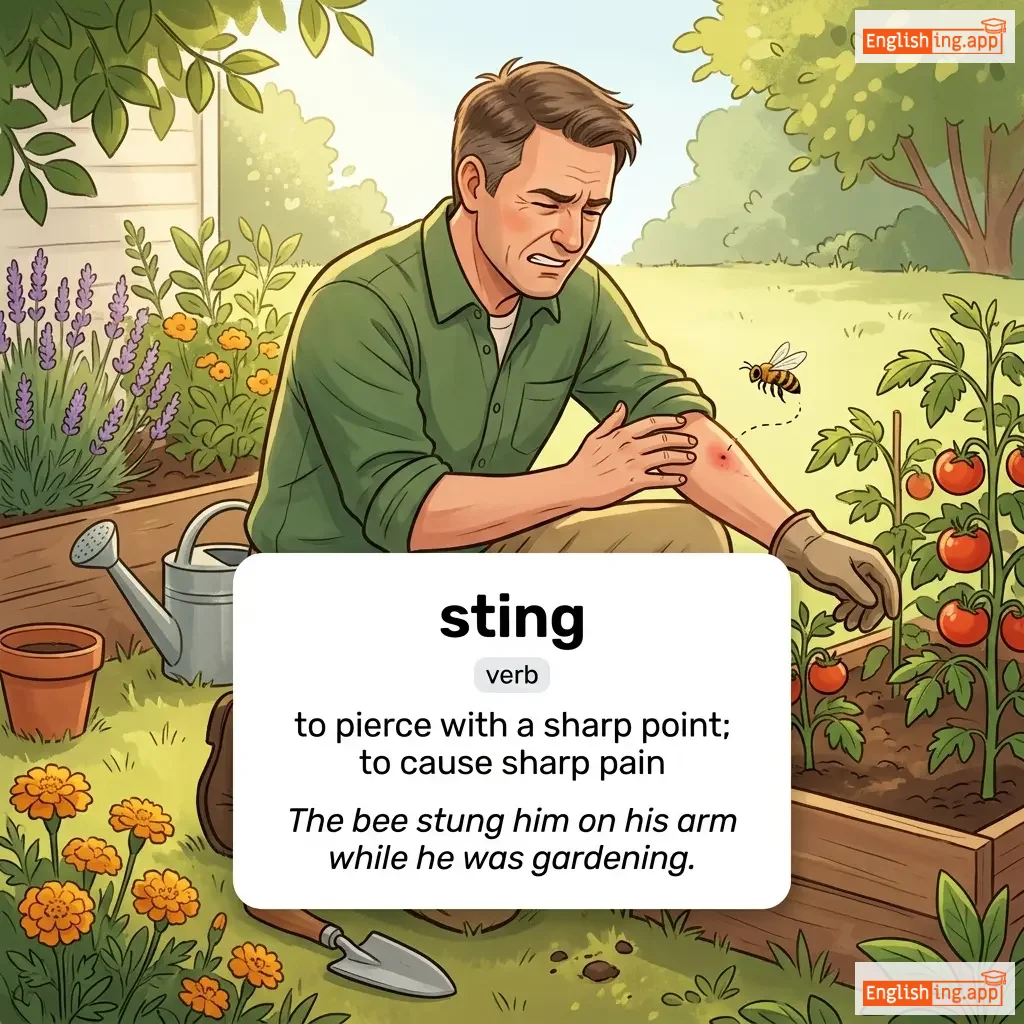
sting definition card — visual illustration of the meaning
verb
/stɪŋ/
刺す (sasu)

to pierce with a sharp point; to cause sharp pain

"The bee stung him on his arm while he was gardening."

"蜂は彼が庭仕事をしているときに彼の腕を刺しました。" (Hachi wa kare ga niwashigoto o shite iru toki ni kare no ude o sashimashita)
adjective
/ˈstɪndʒi/
けち (kechi)

unwilling to spend or give; miserly

"He is too stingy to buy a gift for his friend."

"彼は友達へのプレゼントを買うにはあまりにけちだ。" (Kare wa tomodachi e no purezento o kau ni wa amari ni kechi da.)
verb
/stɪŋk/
臭い (kusai)

to smell very unpleasant

"The garbage bin stinks in the hot sun."
"ゴミ箱は暑い太陽の下で臭いです。" (Gomibako wa atsui taiyou no shita de kusai desu.)
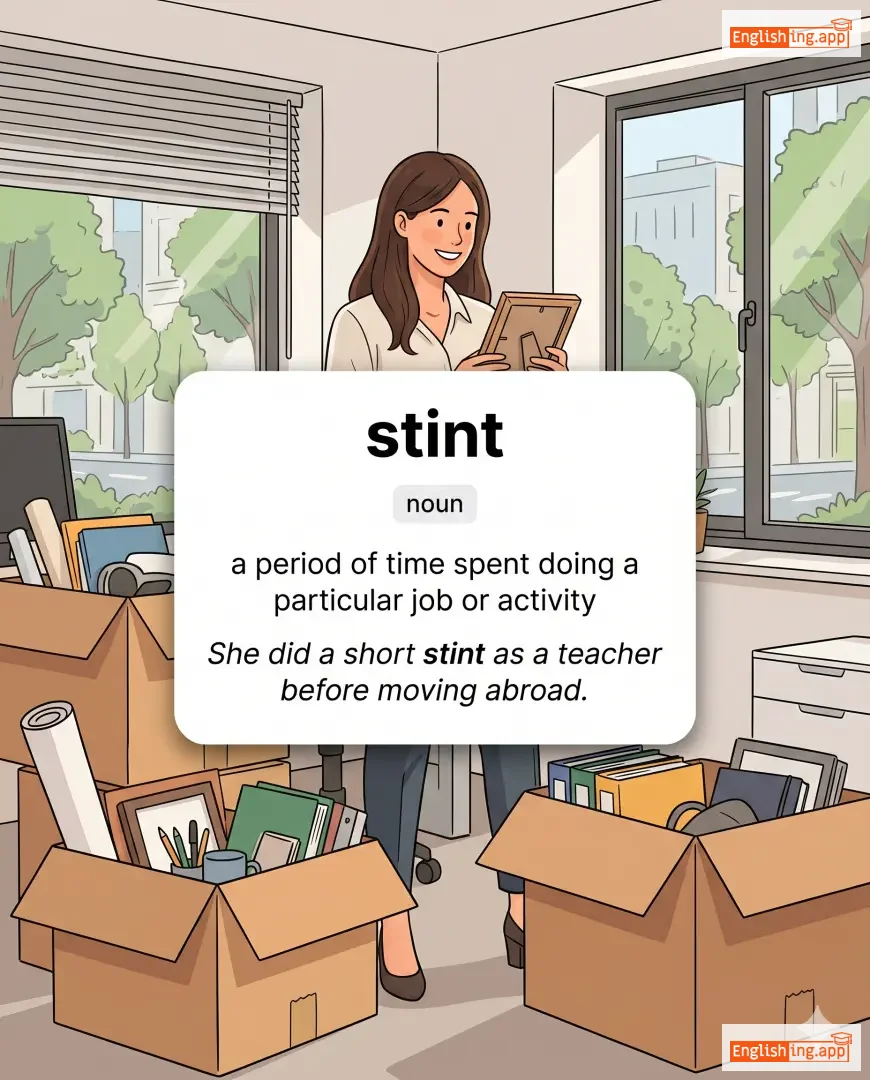
stint definition card — visual illustration of the meaning
noun
/stɪnt/
短期の仕事 (tanki no shigoto)

a period of time spent doing a particular job or activity

"She did a short stint as a teacher before moving abroad."

"彼女は海外に移住する前に短期間の教師として働きました。" (Kanojo wa kaigai ni ijū suru mae ni tanki no kyōshi toshite hatarakimashita.)
verb
/ˈstɪntɪŋ/
けちけちと与える (kechiketo ataeru)

to supply sparingly or with restrictions

"He never stinting his efforts to help the poor."

"彼は貧しい人々を助けるために決して手を抜きません。" (Kare wa mazushī hitobito o tasukeru tame ni kesshite te o nukimasen.)
noun
/ˈstaɪpɛnd/
奨学金 (shougakukin)

a fixed regular payment, usually for services or to cover living expenses

"The university provides a monthly stipend to its research students."

"大学は研究学生に毎月のスタイペンドを提供しています。" (Daigaku wa kenkyu gakusei ni maitsuki no suteipendo o teikyō shiteimasu.)