語彙集

英単語辞書 | 単語の意味、定義、例文

verb
/rʌʃ/
急ぐ (isogu)

to move or act with great speed or urgency

"She had to rush to the meeting to make it on time."

"彼女は会議に時間通りに到着するために急がなければならなかった。" (Kanojo wa kaigi ni jikan dōri ni tōchaku suru tame ni isoganakereba naranakatta.)
noun
/rʌsk/
乾燥ビスケット; トーストパン (rasku)

a hard, dry biscuit or twice-baked bread; a type of crisp, sweet biscuit

"The baby enjoyed eating the soft rusk with milk."

"赤ちゃんはミルクと一緒に柔らかいラスクを食べるのが好きでした。" (Akachan wa miruku to issho ni yawarakai rāsuku o taberu no ga suki deshita.)
🇷🇺

russian

adjective
/ˈrʌʃən/

relating to Russia, its people, or its language

"She is studying the Russian language at university."

noun
/rʌst/
(sabi)

reddish-brown coating formed on iron or steel by oxidation; corrosion

"The old car was covered in rust after years of neglect."

"古い車は何年も放置されていた後、サビで覆われていました。" (Furui kuruma wa nannen mo houchi sarete ita ato, sabi de owarete imashita.)
adjective
/ˈrʌstɪk/
田舎風の (inaka fū no)

Relating to the countryside; simple and unsophisticated.

"The cottage had a rustic charm with its wooden beams and stone fireplace."

"その小屋は木の梁と石の暖炉で田舎風の魅力を持っていました。" (Sono koya wa ki no hari to ishi no danro de inaka fū no miryoku o motte imashita.)
verb
/ˈrʌstɪkeɪt/
田舎に行く / 大学から一時的に追放する (Inaka ni iku / Daigaku kara ichiji-teki ni tsuihō suru)

To go to the countryside or to suspend someone from university.

"He decided to rusticate in the village to escape the busy city life."

"彼は忙しい都市生活から逃れるために村に行くことを決めました。" (Kare wa isogashī toshi seikatsu kara nogareru tame ni mura ni iku koto o kimemashita.)
verb
/ˈrʌsl/
ささやく (sasayaku)

To make a soft, light sound like leaves or paper moving.

"The leaves rustled gently in the evening breeze."

"葉っぱが夕方のそよ風でそっとささやいていました。" (Happa ga yuugata no soyokaze de sotto sasayaitemashita.)
adjective
/ˈrʌs.ti/
錆びた; 練習不足; 最近の練習不足による障害 (sabita; renshu busoku; saikin no renshu busoku ni yoru shougai)

affected by rust; out of practice; impaired by lack of recent practice

"My piano skills are rusty after not playing for years."

"何年もピアノを弾いていなかったので、私のピアノのスキルは錆びついています。" (Nannen mo piano wo hiite inakatta node, watashi no piano no sukiru wa sabitsuiteimasu.)
noun
/ruːθ/
同情 (dōjō)

A feeling of pity, compassion, or sorrow.

"He felt no ruth for the people he had betrayed."

"彼は裏切った人々に対して一切の同情を感じなかった。" (Kare wa uragitta hitobito ni taishite issai no dōjō o kanjinakatta.)
adjective
/ˈruːθləs/
無情な (mujōna)

Having or showing no pity or compassion for others.

"The ruthless leader crushed all opposition."
"無情な指導者はすべての反対を押しつぶした。" (Mujōna shidōsha wa subete no hantai o oshitsubushita.)
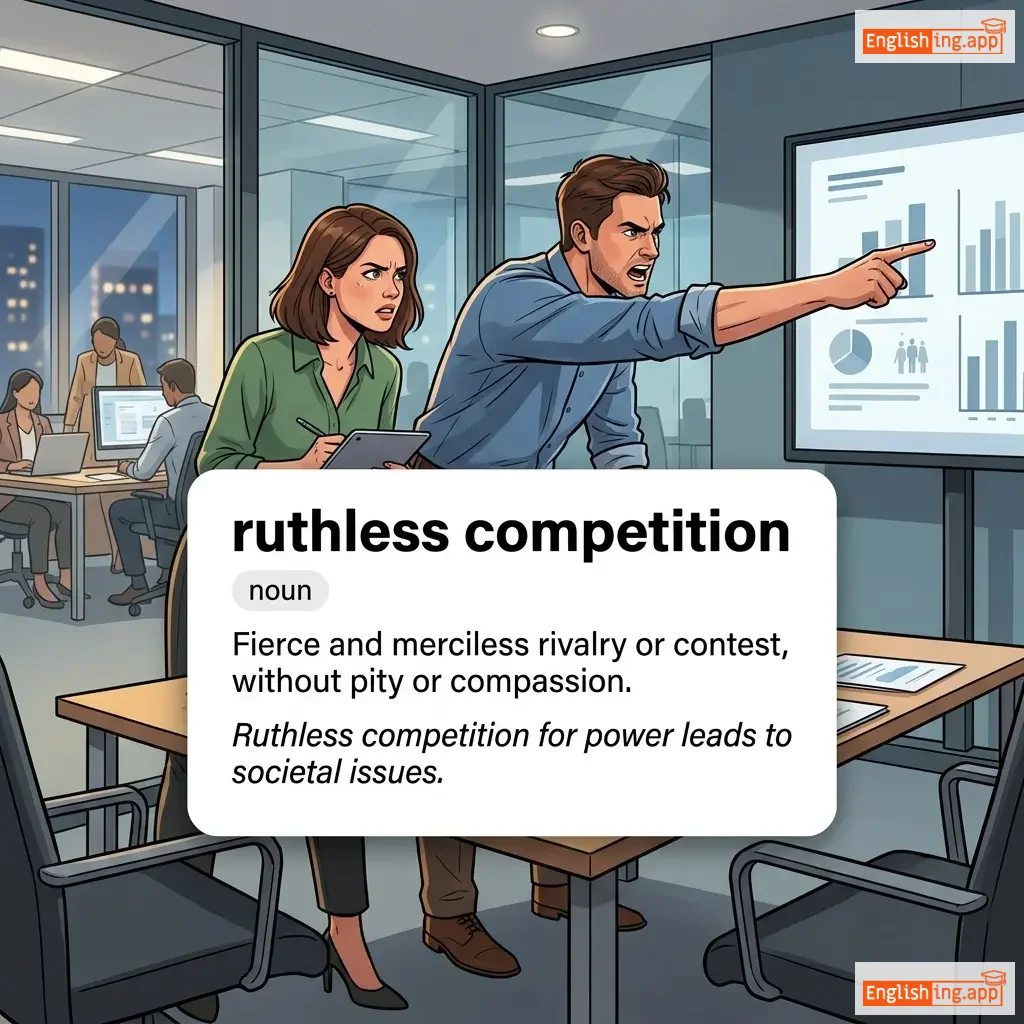
ruthless competition definition card — visual illustration of the meaning
noun
ˈruθləs ˌkɑmpəˈtɪʃən
容赦ない競争 (yōsha nai kyōsō)

Fierce and merciless rivalry or contest, without pity or compassion.

"Ruthless competition for power leads to societal issues."

"権力のための容赦ない競争は社会問題を引き起こします。" (Kenryoku no tame no yōsha nai kyōsō wa shakai mondai o hikiokoshimasu.)