語彙集

英単語辞書 | 単語の意味、定義、例文

noun
/ˌrɛspɪˈreɪʃən/

The process of breathing or the exchange of gases in living organisms.

"Respiration is essential for all living beings."

verb
/rɪˈspaɪər/
呼吸する (kokyū suru)

To breathe in and out; to inhale and exhale.

"Plants also respire to release energy."

"植物もエネルギーを放出するために呼吸します。" (Shokubutsu mo enerugī o hōshutsu suru tame ni kokyū shimasu.)
noun
/ˈrɛspɪt/
休息 (kyūsoku)

A short period of rest or relief from something difficult or unpleasant.

"The weekend provided a welcome respite from work."

"週末は仕事からの歓迎される休息を提供しました。" (Shūmatsu wa shigoto kara no kōkō sareru kyūsoku o teikyō shimashita.)
adjective
/rɪˈsplɛndənt/
輝かしい (kagayakashii)

Shining brilliantly; dazzling in appearance or effect

"The bride looked resplendent in her wedding gown."
"花嫁はウェディングドレスで輝いて見えました。" (Hanayome wa wedingudoresu de kagayaitemimashita.)
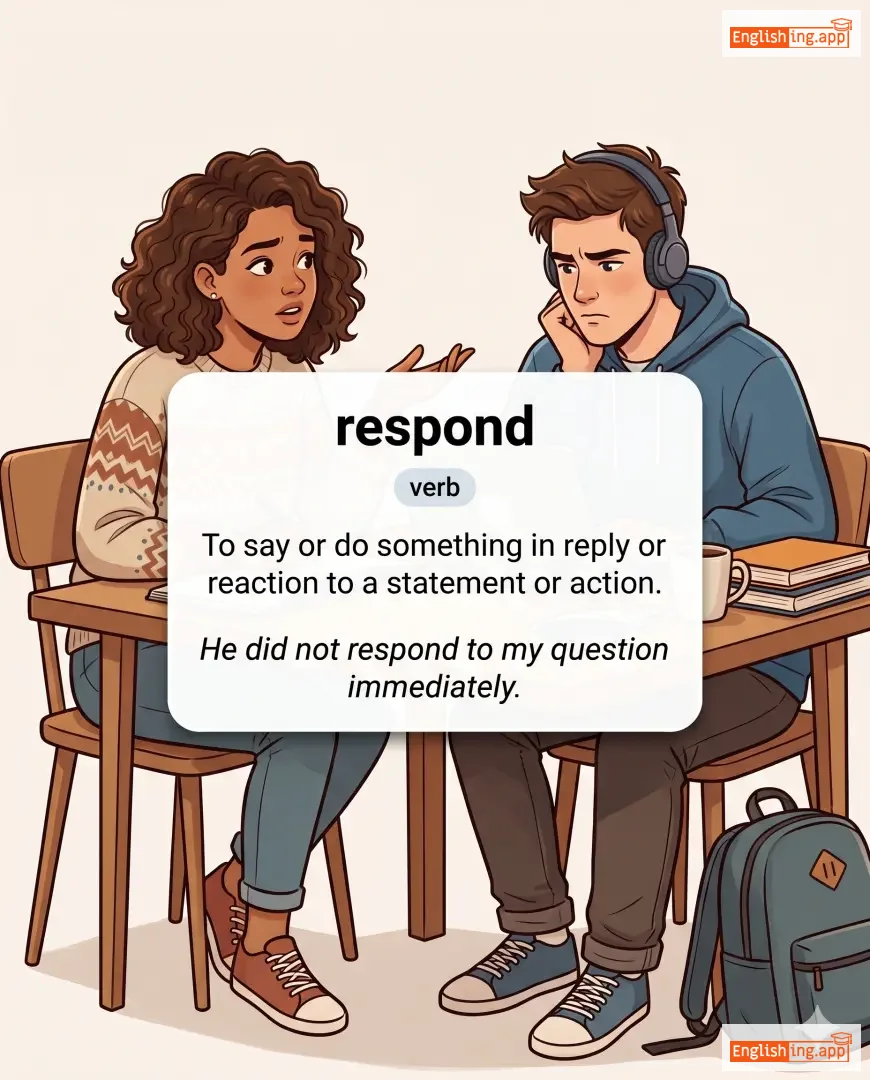
respond definition card — visual illustration of the meaning
verb
/rɪˈspɒnd/
応答する (ōtō suru)

To say or do something in reply or reaction to a statement or action.

"He did not respond to my question immediately."

"彼は私の質問にすぐに返答しませんでした。" (Kare wa watashi no shitsumon ni sugu ni hentō shimasen deshita.)
noun
/rɪˈspɒndənt/
回答者 (kaitōsha)

A person who replies to something, especially in a survey or legal case

"The survey had over 1,000 respondents."

"調査には1000人以上の回答者がいました。" (Chōsa ni wa 1000-nin ijō no kaitōsha ga imashita.)
noun
/rɪˈspɒns/
反応 (hannou)

a reaction to something that has been said or done

"Her response to the question was both thoughtful and clear."
"その質問に対する彼女の返答は、考え深く、かつ明確でした。" (Sono shitsumon ni taisuru kanojo no hentou wa, kangaebukaku, katsu meikaku deshita.)
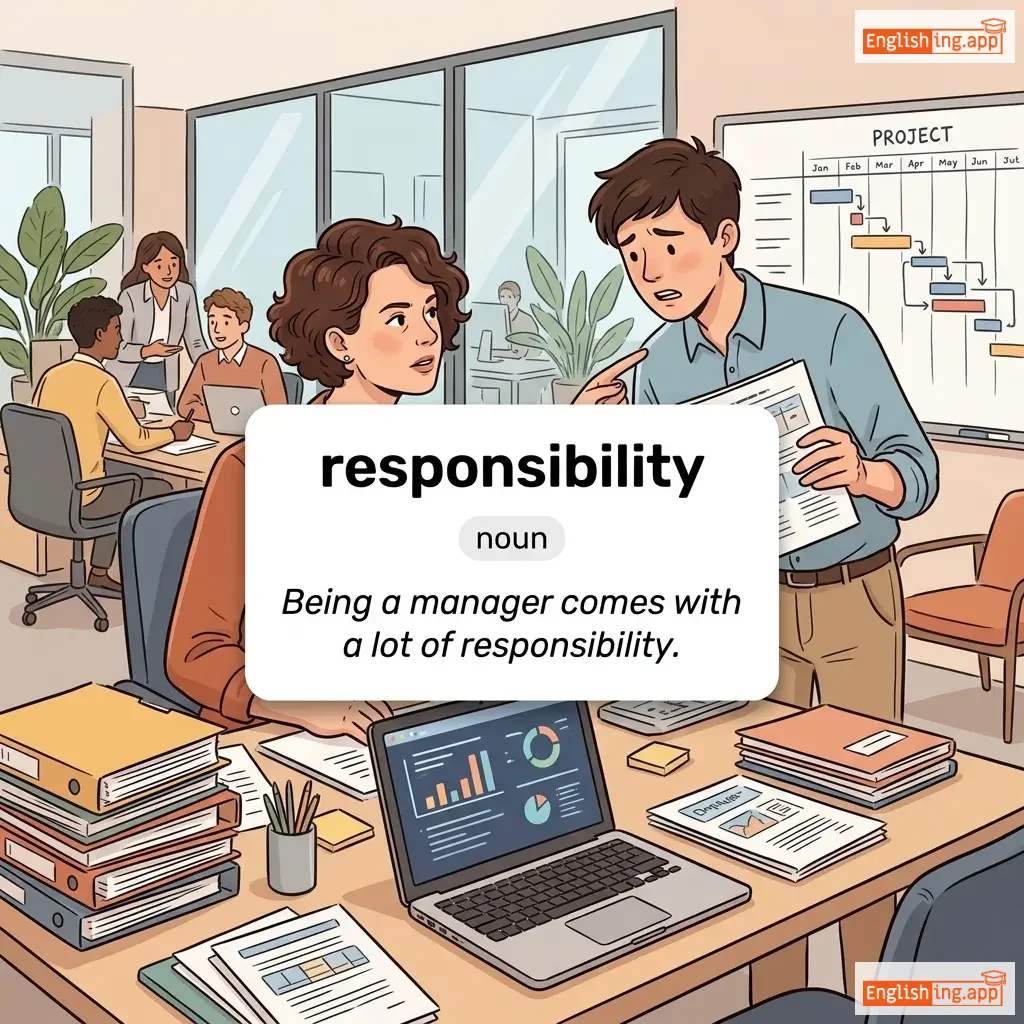
responsibility definition card — visual illustration of the meaning
noun
/rɪˌspɒnsɪˈbɪləti/
責任 (sekinin)

the state or fact of having a duty to deal with something or having control over someone

"Being a manager comes with a lot of responsibility."

"マネージャーであることは多くの責任を伴います。" (Manējā de aru koto wa ōku no sekinin o tomonai masu.)
adjective
/rɪˈspɒnsɪbl/
責任がある (sekinin ga aru)

having an obligation to do something or being the cause of something

"She is responsible for managing the project."

"彼女はプロジェクトを管理する責任があります。" (Kanojo wa purojekuto o kanri suru sekinin ga arimasu.)
adjective
/rɪˈspɒnsɪv/
レスポンシブ (responshibu)

Reacting quickly and positively to something

"The website is fully responsive on all devices."

"ウェブサイトはすべてのデバイスで完全にレスポンシブです。" (Webusaito wa subete no debaizu de kanzen ni responshibu desu.)
noun
/rɪˈspɒnsɪvnəs/
反応性 (hannousei)

The quality of reacting quickly and positively

"The manager appreciated her responsiveness to customer feedback."

"マネージャーは彼女の顧客からのフィードバックに対する反応性を評価しました。" (Manējā wa kanojo no kokyaku kara no fīdobakku ni taisuru hannō-sei o hyōka shimashita.)
🛌

rest

noun, verb
/rɛst/

to cease work or movement in order to relax or recover strength

"He needs to rest after the long journey."

noun
/ˈrɛst(ə)rɒnt/
レストラン (resutoran)

a place where meals are prepared and served to customers

"We went to the restaurant for dinner."
"私たちは夕食のためにレストランに行きました。" (Watashitachi wa yūshoku no tame ni resutoran ni ikimashita.)
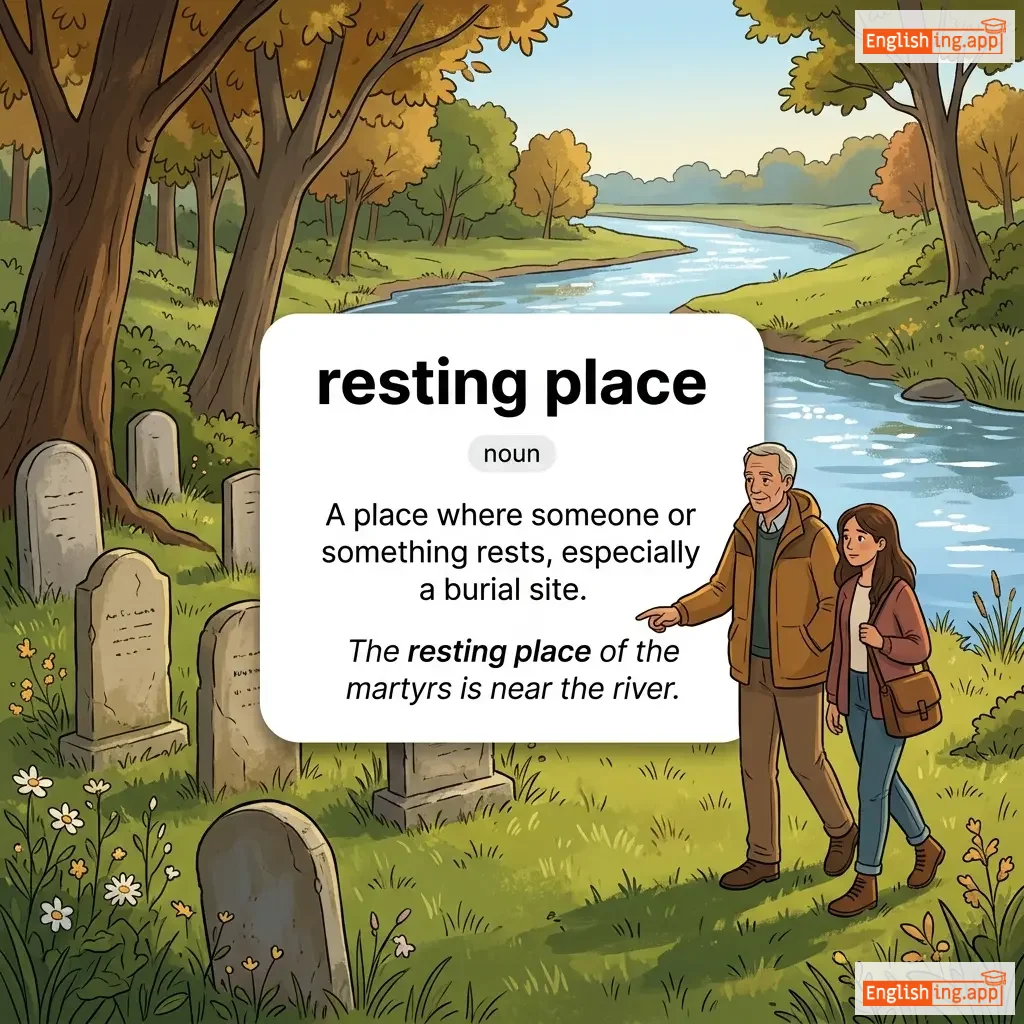
resting place definition card — visual illustration of the meaning
noun
ˈrɛstɪŋ pleɪs
安息地 (ansokuchi)

A place where someone or something rests, especially a burial site.

"The resting place of the martyrs is near the river."

"殉教者の安息地は川の近くにあります。" (Junkyōsha no ansokuchi wa kawa no chikaku ni arimasu.)
noun
/ˌrɛstɪˈtjuːʃən/
賠償 (baishou)

The act of restoring something to its rightful owner or compensating for loss

"The court ordered restitution to the victims of the fraud."

"裁判所は詐欺の被害者に賠償を命じました。" (Saibansho wa sagi no higaisha ni baishou o meijimashita.)
adjective
/ˈrɛstɪv/
落ち着かない (ochitsukanai)

unable to stay still or silent; restless and impatient

"The crowd grew restive as they waited for the concert to begin."

"コンサートが始まるのを待っている間、観客は落ち着かなくなった。" (Konsaato ga hajimaru no o matte iru aida, kankyaku wa ochitsukanaku natta.)
adjective
/ˈrɛstləs/
幸福 (kōfuku)

unable to relax or remain still; constantly in motion

"He felt restless during the long meeting."

"彼女は賞を受け取ったとき、喜びを隠せなかった。" (Kanojo wa shō o uketotta toki, yorokobi o kakusenakatta.)
noun
/ˈrest.ləs.nəs/
不安 (fuan)

the inability to rest or relax as a result of anxiety or boredom

"His restlessness during the long meeting was obvious to everyone."
"長い会議中、彼の不安は全員に明らかだった。" (Nagai kaigi-chū, kare no fuan wa zen'in ni akiraka datta.)
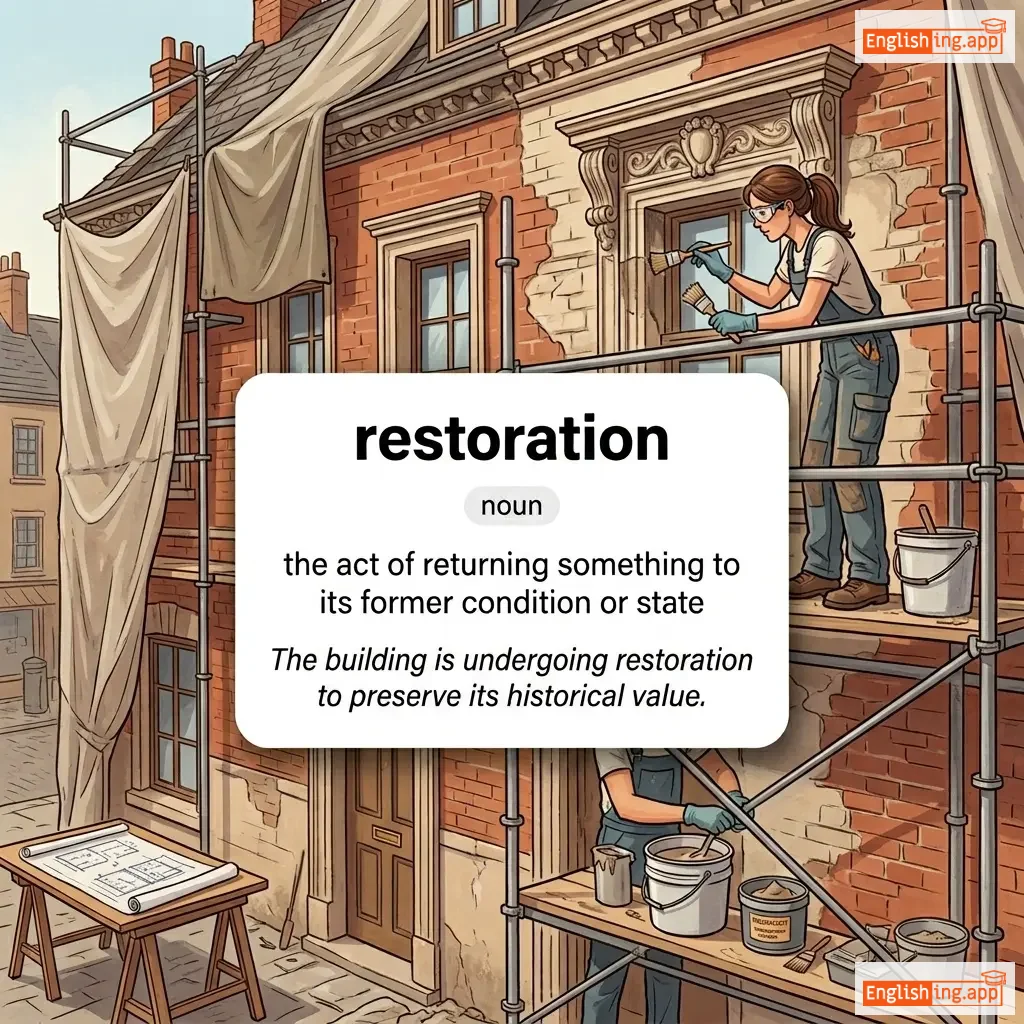
restoration definition card — visual illustration of the meaning
noun
/ˌrɛstəˈreɪʃən/
修復 (shūfuku)

the act of returning something to its former condition or state

"The building is undergoing restoration to preserve its historical value."
"その建物は歴史的価値を保護するために修復されています。" (Sono tatemono wa rekishiteki kachi o hogo suru tame ni shūfuku sareteimasu.)
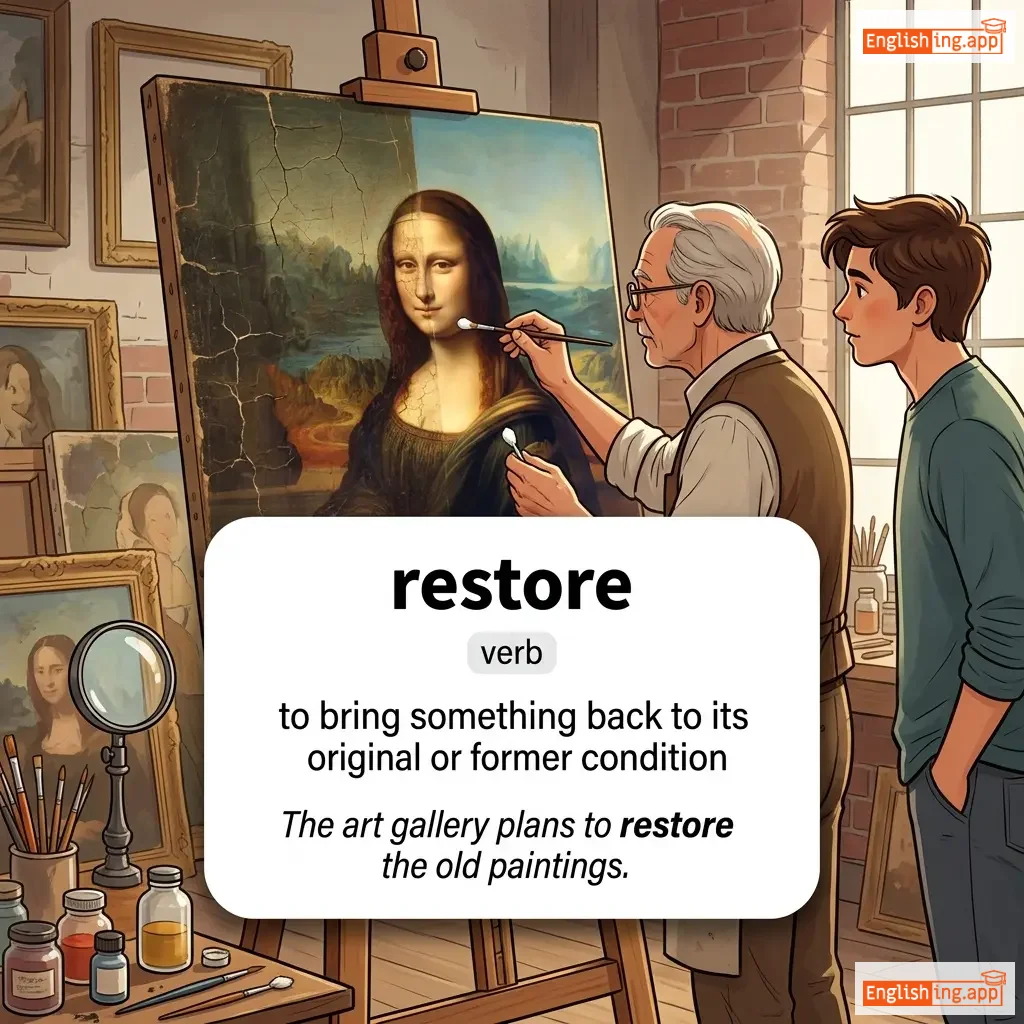
restore definition card — visual illustration of the meaning
verb
/rɪˈstɔː/
修復する (shūfuku suru)

to bring something back to its original or former condition

"The art gallery plans to restore the old paintings."

"アートギャラリーは古い絵画を修復する予定です。" (Āto gyararī wa furui kaiga o shūfuku suru yotei desu.)
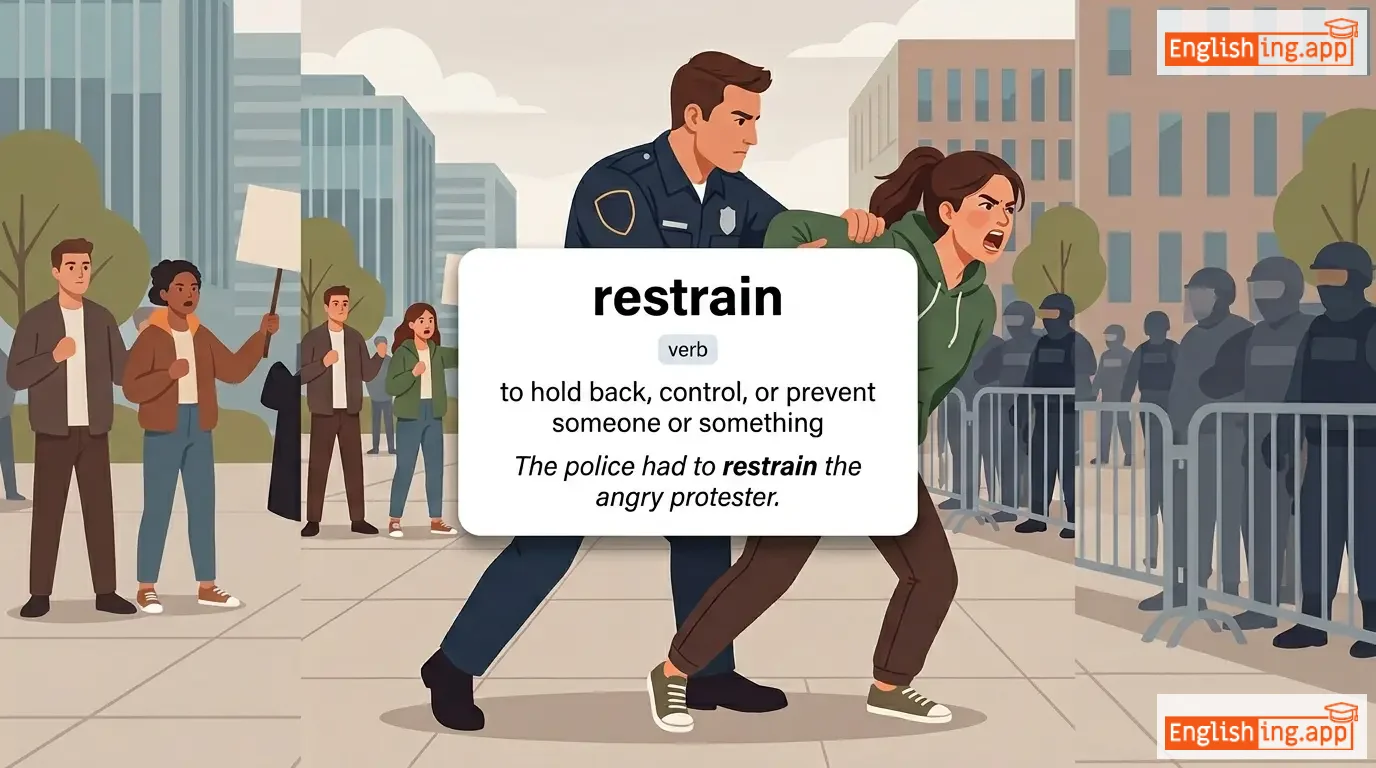
restrain definition card — visual illustration of the meaning
verb
/rɪˈstreɪn/

to hold back, control, or prevent someone or something

"The police had to restrain the angry protester."

adjective
/rɪˈstreɪnd/
抑制された (yokusei sareta)

characterized by reserve or self-control; held back

"Her restrained reaction surprised everyone."

"彼女の抑制された反応は皆を驚かせました。" (Kanojo no yokusei sareta hannou wa mina o odorokasemashita.)
noun
/rɪˈstreɪnt/
抑制 (yokusei)

the act of holding back or controlling; self-control

"He showed great restraint in not responding to the insult."

"彼は侮辱に反応せず、大きな抑制を示した。" (Kare wa bōjoku ni han'nō sezu, ōkina yokusei o shimeshita.)
verb
/rɪˈstrɪkt/
制限する (seigensuru)

To limit the size, amount, or range of something.

"The government decided to restrict the use of plastic bags."

"政府はプラスチック袋の使用を制限することを決定しました。" (Seifu wa purasuchikku bukuro no shiyou wo seigen suru koto wo kettei shimashita.)
adjective
/rɪˈstrɪk.tɪd/
制限された; 制御された; 制限付き (seigen sareta; seigyo sareta; seigenn tsuki)

limited or controlled; subject to restrictions

"Access to this area is restricted to authorized personnel only."

"このエリアへのアクセスは、認可されたスタッフのみが制限されています。" (Kono eria e no akusesu wa, ninka sareta sutaffu nomi ga seigen sareteimasu.)
noun
/rɪˈstrɪkʃən/
制限 (seigen)

a rule or law that limits or controls something

"The new restrictions will affect the business hours."
"新しい制限は営業時間に影響を与えるでしょう。" (Atarashii seigen wa eigyou jikan ni eikyou wo ataeru deshou.)
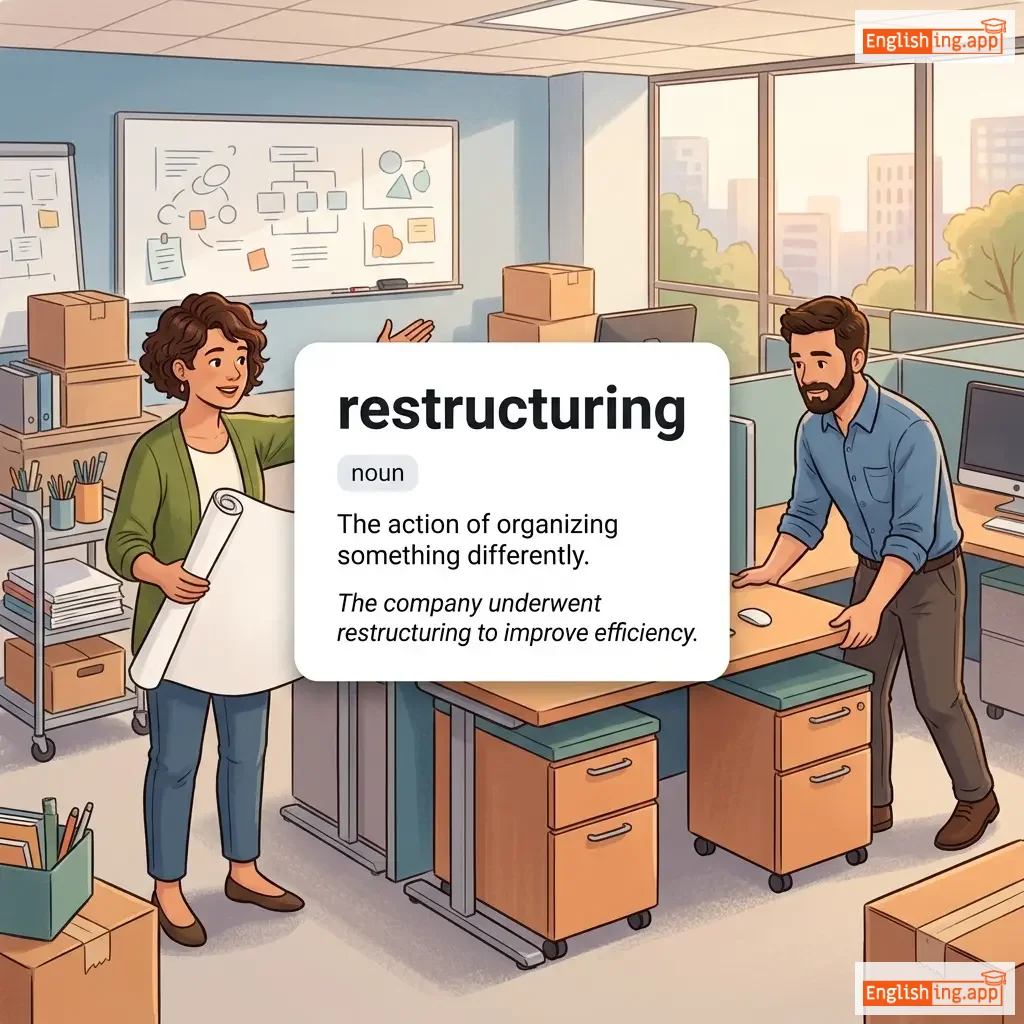
restructuring definition card — visual illustration of the meaning
noun
ˌriːˈstrʌk.tʃər.ɪŋ
再構築 (saikōchiku)

The action of organizing something differently.

"The company underwent restructuring to improve efficiency."

"会社は効率を高めるために再構築を行った。" (Kaisha wa kōritsu o takameru tame ni saikōchiku o okonatta.)
noun
/rɪˈzʌlt/
結果 (kekka)

a consequence, effect, or outcome of something

"The result of the test was excellent."

"テストの結果は素晴らしかった。" (Tesuto no kekka wa subarashikatta.)
resume definition card — visual illustration of the meaning
verb, noun
/rɪˈzjuːm/ (verb), /ˈrɛzjʊmeɪ/ (noun)
再開する / 履歴書 (saikai suru / rirekisho)

to begin again after a pause; or a summary of one’s qualifications and work experience

"She resumed her studies after a two-year break."

"彼女は2年の休止後に勉強を再開しました。" (Kanojo wa 2-nen no kyūshi-go ni benkyō o saikai shimashita.)
noun
/rɪˈzʌmpʃən/
再開 (saikai)

The act of starting something again after a pause or interruption.

"The resumption of classes after the holidays brought excitement among students."

"休暇後の授業の再開は、学生たちの間に興奮をもたらしました。" (Kyūka go no jugyō no saikai wa, gakusei-tachi no aida ni kōfun o motarashimashita.)
verb
/rɪˈsɜːrdʒ/
再興 (saikou)

To rise, increase, or become active again after a decline.

"Interest in traditional crafts has begun to resurge."
"伝統工芸に対する関心が再び高まり始めています。" (Dentou kougei ni taisuru kanshin ga futatabi takamari hajimeteimasu.)
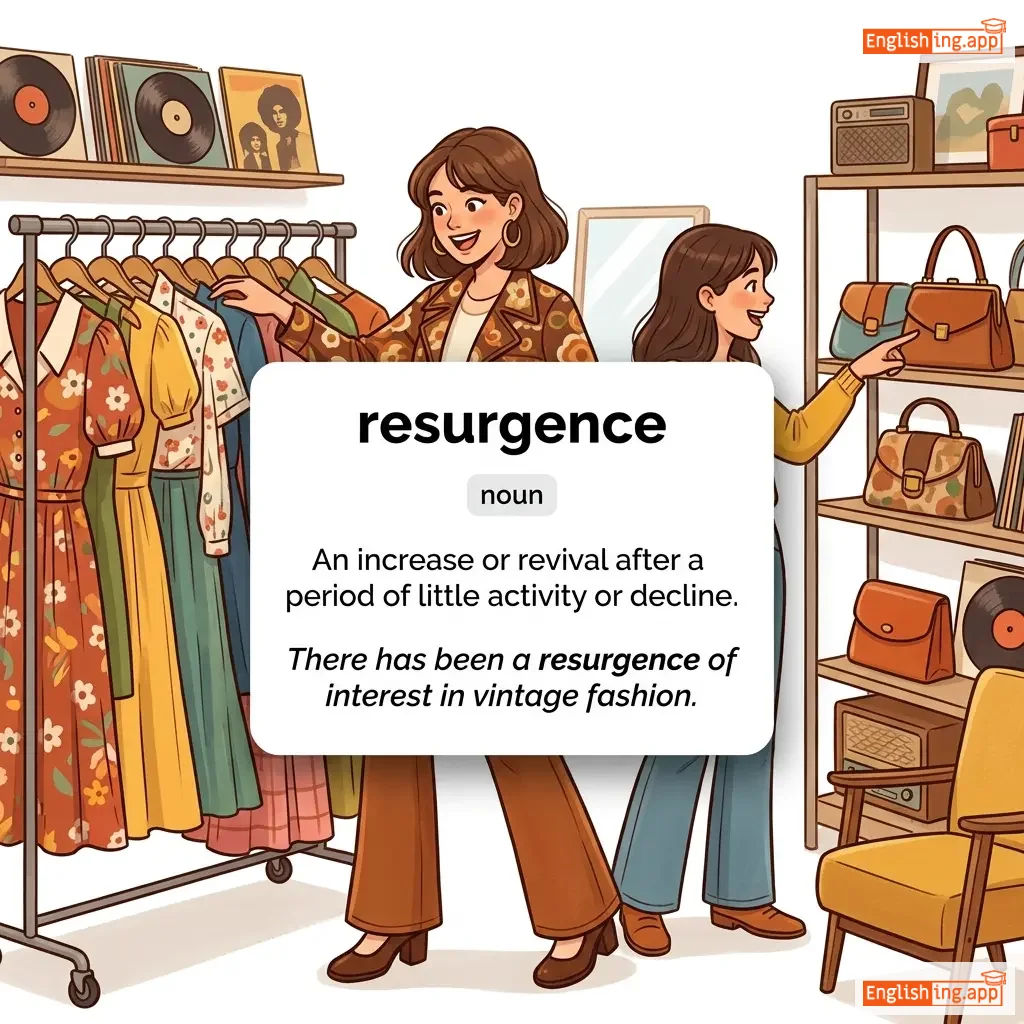
resurgence definition card — visual illustration of the meaning
noun
/rɪˈsɜːrdʒəns/
再生 (saisei)

An increase or revival after a period of little activity or decline.

"There has been a resurgence of interest in vintage fashion."

"ヴィンテージファッションへの関心が再生しました。" (Vintēji fasshon e no kanshin ga saisei shimashita.)
adjective
/rɪˈsɜːrdʒənt/
復活した (fukkatsu shita)

Becoming strong, active, or popular again.

"The resurgent economy gave hope to many businesses."

"復活した経済は多くのビジネスに希望を与えた。" (Fukkatsu shita keizai wa ōku no bijinesu ni kibō o ataeta.)
verb
/ˌrɛzəˈrɛkt/
復活させる (fukkatsu saseru)

To bring back to life or revive something from the past.

"The director decided to resurrect the old play for a new audience."

"監督は新しい観客のために古い劇を復活させることに決めました。" (Kantoku wa atarashii kankyaku no tame ni furui geki wo fukkatsu saseru koto ni kimemashita.)
verb
/rɪˈsʌsɪteɪt/

to revive someone from unconsciousness or apparent death

"The doctors tried to resuscitate the patient after the heart attack."

noun, verb
/ˈriːteɪl/
小売 (kouri)

the sale of goods to the public in small quantities for use or consumption rather than for resale

"The company specializes in the retail of clothing and accessories."

"この会社は衣類とアクセサリーの小売を専門としています。" (Kono kaisha wa irui to akusesarii no kouri wo senmon to shiteimasu.)
noun
/ˈriːteɪlər/
小売業者 (kouri gyousha)

a person or business that sells goods to consumers rather than to other businesses

"The retailer offers discounts on electronic products."

"小売業者は電子製品に割引を提供しています。" (Kouri gyousha wa denshi seihin ni waribiki wo teikyō shiteimasu.)
verb
/rɪˈteɪn/
保持する (hoji suru)

to keep possession of something

"The company decided to retain its experienced employees."

"会社は経験豊富な従業員を保持することに決めました。" (Kaisha wa keiken hōfu na jūgyōin o hoji suru koto ni kimemashita.)
noun
/rɪˈteɪnər/
前払金 / リテイナー (maebarai-kin / riteinā)

a fee paid in advance to secure someone's services, or a device that holds something in place

"The lawyer asked for a retainer before taking the case."

"弁護士は事件を受ける前に前払い金を要求した。" (Bengoshi wa jiken o ukemasu mae ni maebarai-kin o yōkyū shita.)
verb
/rɪˈtælieɪt/
報復する (hōfuku suru)

to make an attack in return for a similar attack

"The army retaliated after the enemy attack."

"軍隊は敵の攻撃の後、報復した。" (Guntai wa teki no kōgeki no ato, hōfuku shita.)
noun
/rɪˌtæl.iˈeɪ.ʃən/
報復 (hōfuku)

the action of returning a military attack; counterattack; revenge for an injury or wrong

"The country threatened retaliation against any act of aggression."
"その国はあらゆる攻撃行為に対して報復を予告しました。" (sono kuni wa arayuru kōgeki kōi ni taishite hōfuku o yokoku shimashita.)
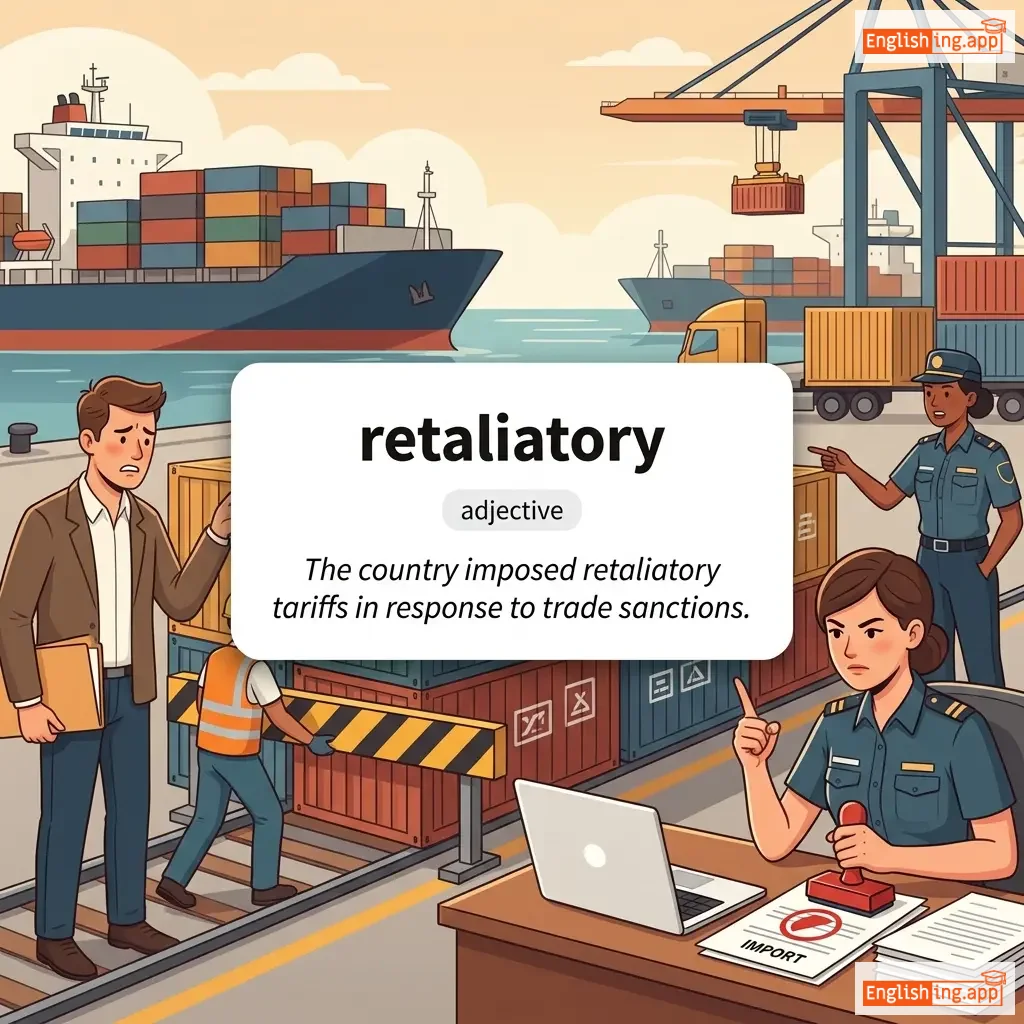
retaliatory definition card — visual illustration of the meaning
adjective
/rɪˈtæl.i.ə.tɔːr.i/
報復的 (hōfukuteki)

Taking action in response to another's action, characterized as punitive, revengeful, or counteractive.

"The country imposed retaliatory tariffs in response to trade sanctions."

"その国は貿易制裁に対して報復的な関税を課しました。" (Sono kuni wa bōeki seisai ni taishite hōfukuteki na kansui o kashimashita.)
verb
/rɪˈtɑːrd/
遅らせる / 減速する (okuraseru / gensoku suru)

to delay or slow down the progress of something

"Lack of funds may retard the development of the project."

"資金不足はプロジェクトの進展を遅らせる可能性があります。" (Shikin fusoku wa purojekuto no shinten o okuraseru kanōsei ga arimasu.)
verb
/rɛtʃ/
幸せ (shiawase)

to make the sound and movement of vomiting without bringing anything up

"The smell of spoiled food made him retch violently."
"賞を受け取った時、彼女は喜びを隠すことができませんでした。" (Shou o uketotta toki, kanojo wa yorokobi o kakusu koto ga dekimasen deshita.)
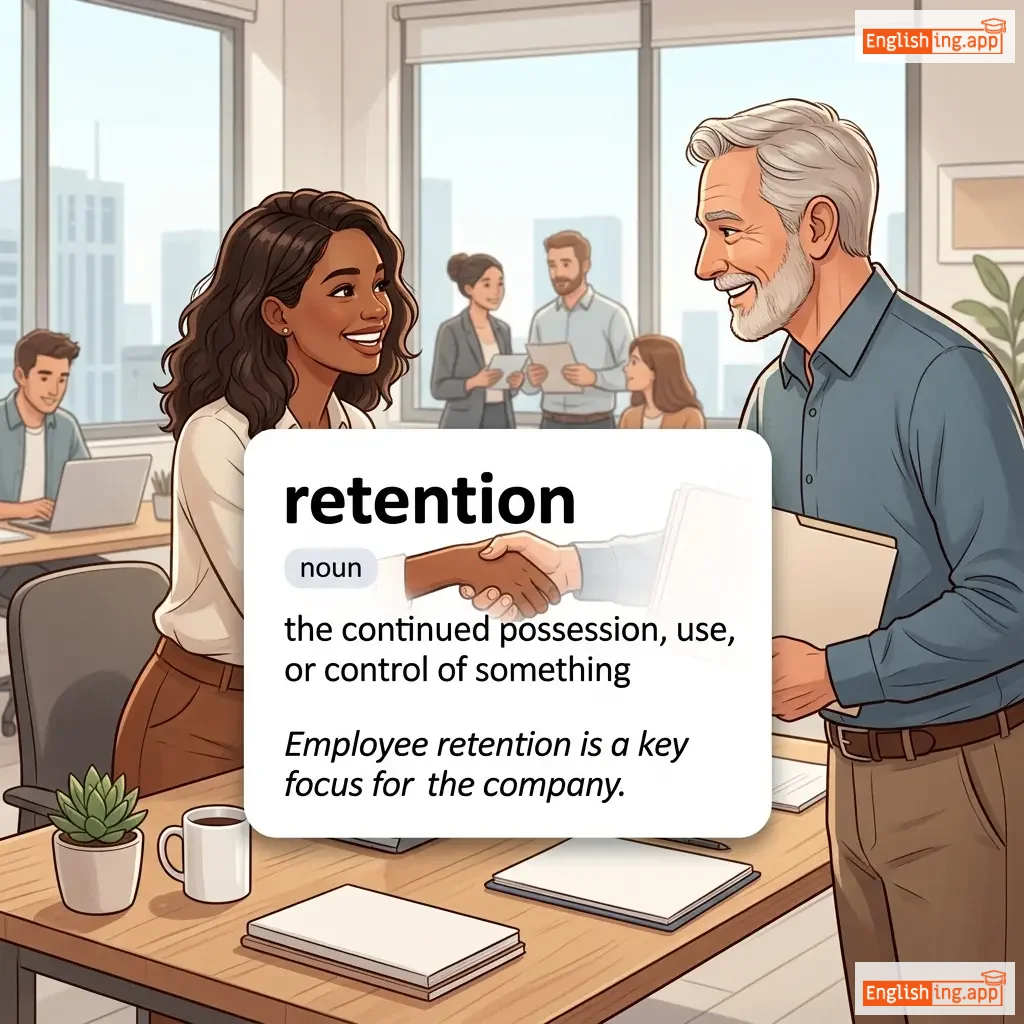
retention definition card — visual illustration of the meaning
noun
/rɪˈtɛnʃən/
保持 (hoji)

the continued possession, use, or control of something

"Employee retention is a key focus for the company."

"従業員の保持は会社の重要な焦点です。" (Jūgyōin no hoji wa kaisha no jūyō na shōten desu.)
retentive definition card — visual illustration of the meaning
adjective
/rɪˈtɛntɪv/
記憶力がある (kiokuryoku ga aru)

having the ability to remember things easily or keep something for a long time

"She has a highly retentive memory."

"彼女は非常に記憶力が良い。" (Kanojo wa hijō ni kiokuryoku ga yoi.)
noun
/ˈrɛtɪsəns/
沈黙 (chinmoku)

the quality of being reserved or unwilling to speak freely

"His reticence made it difficult to know what he was thinking."
"彼の沈黙は、彼が何を考えているのかを知るのを難しくしました。" (Kare no chinmoku wa, kare ga nani wo kangaete iru no ka wo shiru no wo muzukashiku shimashita.)
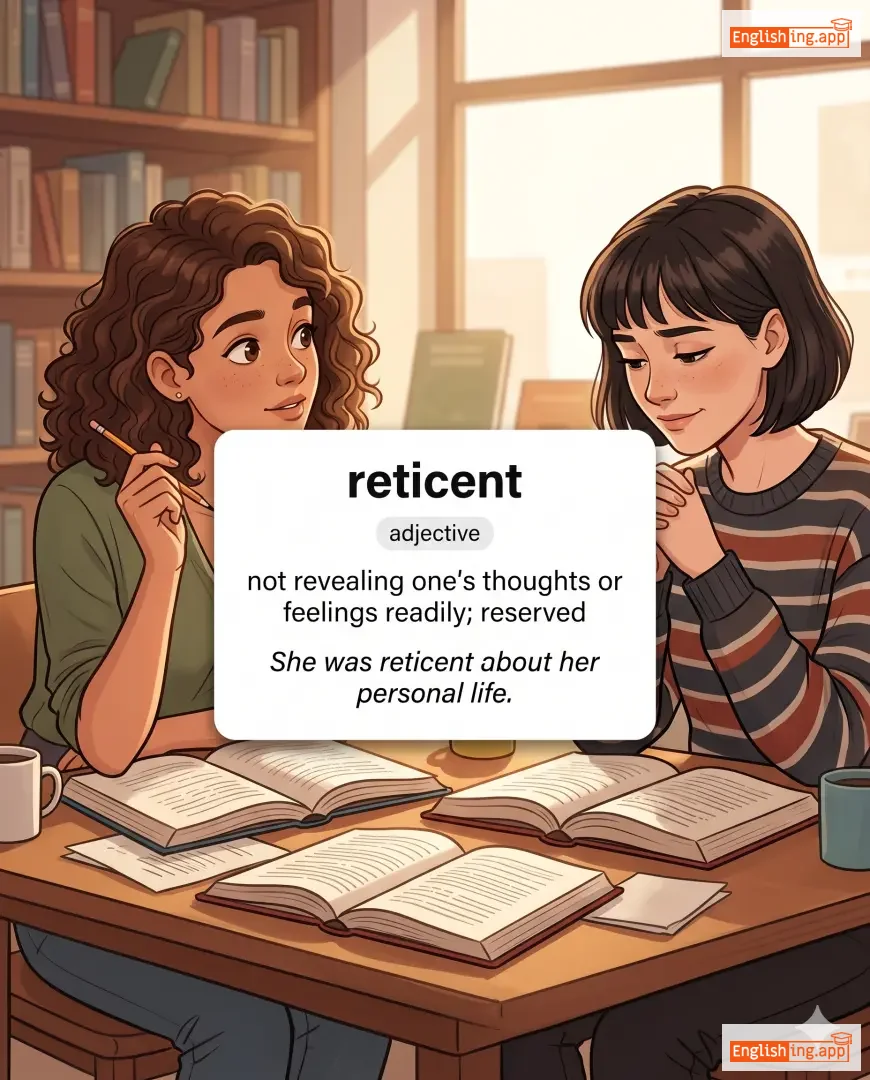
reticent definition card — visual illustration of the meaning
adjective
/ˈrɛtɪsənt/
控えめ (hikaeme)

not revealing one's thoughts or feelings readily; reserved

"She was reticent about her personal life."

"彼女は自分の個人的な生活について控えめでした。" (Kanojo wa jibun no kojinteki na seikatsu ni tsuite hikaememashita.)
adjective
/rɪˈtɪkjʊlət/
網状 (mōjō)

Having a net-like pattern or structure.

"The leaf had a reticulate pattern of veins."

"葉は網目模様の静脈がありました。" (Ha wa mōjō moyō no jōmyaku ga arimashita.)
noun
/ˈrɛtɪnjuː/
従者 (jūsha)

A group of attendants or followers accompanying an important person.

"The king entered the hall followed by his retinue."

"王は従者を引き連れてホールに入った。" (Ō wa jūsha o hikitsurete hōru ni haitta.)