語彙集

英単語辞書 | 単語の意味、定義、例文

noun
/per/
(nashi)

a sweet juicy fruit with a rounded shape that is wider at the bottom than the top

"She enjoyed a fresh pear from the orchard."

"彼女は果樹園から新鮮な梨を楽しみました。" (Kanojo wa kajuen kara shinsen na nashi o tanoshimimashita.)
noun
/pɜːrl/
真珠 (shinju)

a hard, lustrous object produced within the soft tissue of a shelled mollusk; used in jewelry

"She wore a beautiful pearl necklace to the wedding."

"彼女は結婚式で美しい真珠のネックレスをしていました。" (Kanojo wa kekkonshiki de utsukushī shinju no nekkuresu o shite imashita.)
noun
/pɜːrl drɒp/
パールの滴 (pāru no shizuku)

a single pearl used as jewelry, often in earrings or pendants

"The elegant pearl drop earrings complemented her outfit perfectly."

"そのエレガントなパールの滴のイヤリングは、彼女の服装に完璧にマッチしていました。" (sono ereganto na pāru no shizuku no iyaringu wa, kanojo no fukusō ni kanpeki ni matchi shite imashita)
noun
/ˈpɛzənt/
農民 (nōmin)

a poor farmer or agricultural laborer who owns or rents a small piece of land for cultivation

"The peasant worked hard in the fields from dawn to dusk."

"その農民は夜明けから日暮れまで畑で一生懸命働いていました。" (Sono nōmin wa yoake kara hikure made hatake de isshōkenmei hataraite imashita.)
noun
/ˈpɛbl/
小石 (koishi)

a small smooth stone found on beaches or rivers

"He threw a pebble into the pond and watched the ripples."

"彼は小石を池に投げ入れて、波を見ていました。" (Kare wa koishi o ike ni nageirete, nami o mitemashita.)
adjective
/ˈpɛkəbl/
過ちを犯しやすい (ayamachi o okashiyasui)

liable to sin or error; capable of doing wrong

"Humans are peccable, but they strive for goodness."

"人間は過ちを犯しやすいが、善を追い求める。" (Ningen wa ayamachi o okashiyasui ga, zen o oimotomeru.)
noun
/ˌpɛkəˈdɪloʊ/
小さな過ち (chiisana ayamachi)

a small or minor fault or sin

"Forgetting to call was just a small peccadillo, not a serious mistake."

"電話をかけ忘れるのはただの小さな過ちで、重大なミスではありません。" (Denwa o kake wasureru no wa tada no chiisana ayamachi de, juudaina misu de wa arimasen.)
adjective
/ˈpɛkənt/
有罪 (yūzui)

Guilty of a moral offense or wrongdoing; sinful.

"The judge declared the peccant official unfit for office."

"裁判官は有罪の役人を職務に不適格と宣言した。" (Saibankan wa yūzui no yakunin o shokumu ni futekikaku to sengen shita.)
verb
/pɛk/
ついばむ (tsuibamu)

To strike or bite something with a beak; to eat in small bites.

"The hen began to peck at the grains scattered on the ground."

"その雌鳥は地面に散らばった穀物をついばみ始めました。" (Sono mesutori wa jimen ni chirabatta kokumotsu o tsuibami hajimemashita.)
adjective
/ˈpɛktərəl/
胸筋 (kyōkin)

Relating to the chest or breast.

"The athlete focused on strengthening his pectoral muscles."

"アスリートは自分の胸筋を強化することに集中していました。" (Asurīto wa jibun no kyōkin o kyōka suru koto ni shūchū shiteimashita.)
verb
/ˈpɛkjʊˌleɪt/
横領する (おうりょうする)

To embezzle or steal money, especially public funds.

"The corrupt official was found guilty of peculating government funds."

"汚職の役人は政府の資金を横領したとして有罪となった。" (Oshoku no yakunin wa seifu no shikin wo ouryou shita to shite yuuzai to natta.)
noun
/ˌpɛkjʊˈleɪʃən/
横領 (ou ryou)

The act of embezzling or stealing money, especially from public funds.

"The minister resigned after being accused of peculation."

"大臣は横領の罪で辞任しました。" (Daijin wa ou ryou no tsumi de jin-in shimashita.)
adjective
/pɪˈkjuːliər/
奇妙な (kimyōna)

strange or unusual; characteristic of only one person, place, or thing

"She has a peculiar habit of talking to her plants."

"彼女は植物に話しかける奇妙な習慣があります。" (Kanojo wa shokubutsu ni hanashikakeru kimyōna shūkan ga arimasu.)
adverb
/pɪˈkju:.li.ə.li/
奇妙に; 異常に (kimyō ni; ijō ni)

in a strange or unusual way; in a manner that is distinctive or characteristic

"She dressed peculiarly for the formal dinner, wearing bright colors and unusual patterns."

"彼女はフォーマルディナーのために、明るい色と珍しい柄の服を着て、特異な方法でドレスアップしました。" (Kanojo wa fōmaru dinā no tame ni, akarui iro to mezurashī gara no fuku o kite, tokui na hōhō de doresu appu shimashita.)
adjective
/pɪˈkjuːniˌɛri/
財政的な (zaiseiteki na)

relating to money or financial matters

"They faced pecuniary difficulties after the business failed."

"彼らはビジネスが失敗した後、財政的な困難に直面しました。" (Karera wa bijinesu ga shippai shita ato, zaiseiteki na konnan ni chokumen shimashita.)
pedagogical definition card — visual illustration of the meaning
adjective
/ˌpɛdəˈɡɒdʒɪkəl/
教育学的な (kyoiku-gakuteki na)

relating to the methods and practice of teaching

"The teacher introduced new pedagogical approaches in the classroom."

"教師は教室で新しい教育学的アプローチを導入しました。" (Kyoushi wa kyoushitsu de atarashī kyoiku-gakuteki apurōchi o dōnyū shimashita.)
noun
/ˌpɛdəˈɡɒdʒɪks/
教育学 (kyouikugaku)

the science or art of teaching

"He studied pedagogics to become a better teacher."

"彼はより良い教師になるために教育学を学びました。" (Kare wa yori yoi kyoushi ni naru tame ni kyouikugaku o manabimashita.)
noun
/ˈpɛdəˌɡɒɡ/
教師 (kyoushi)

a teacher, especially a strict or formal one

"The old pedagogue insisted on discipline in the classroom."

"その古い教育者は教室で規律を強調しました。" (Sono furui kyouikushya wa kyoushitsu de kiritsu o kyouchou shimashita.)
pedagogy definition card — visual illustration of the meaning
noun
/ˈpɛdəˌɡoʊdʒi/
教育学 (kyōikugaku)

The art, science, or profession of teaching and education methods.

"Modern pedagogy emphasizes student-centered learning."

"現代の教育学は学生中心の学習を強調しています。" (Gendai no kyōikugaku wa gakusei chūshin no gakushū o kyōchō shiteimasu.)
noun, verb
/ˈpɛdəl/
足で操作するレバー (ashi de sōsa suru rebā)

A foot-operated lever for powering or controlling a mechanism, especially on a bicycle.

"He pressed down hard on the bicycle pedal."

"彼は自転車のペダルを力いっぱい踏んだ。" (Kare wa jitensha no pedal wo chikara ippai funda.)
noun
/ˈpɛdənt/
細かいことにこだわる人 (komakai koto ni kodawaru hito)

A person who is excessively concerned with minor details or rules, often in a showy way.

"The professor was criticized as a pedant who focused too much on trivial details."
"その教授は細かいことにこだわりすぎるペダントとして批判された。" (Sono kyōju wa komakai koto ni kodawarisugiru pedanto to shite hihan sareta.)
pedantic definition card — visual illustration of the meaning
adjective
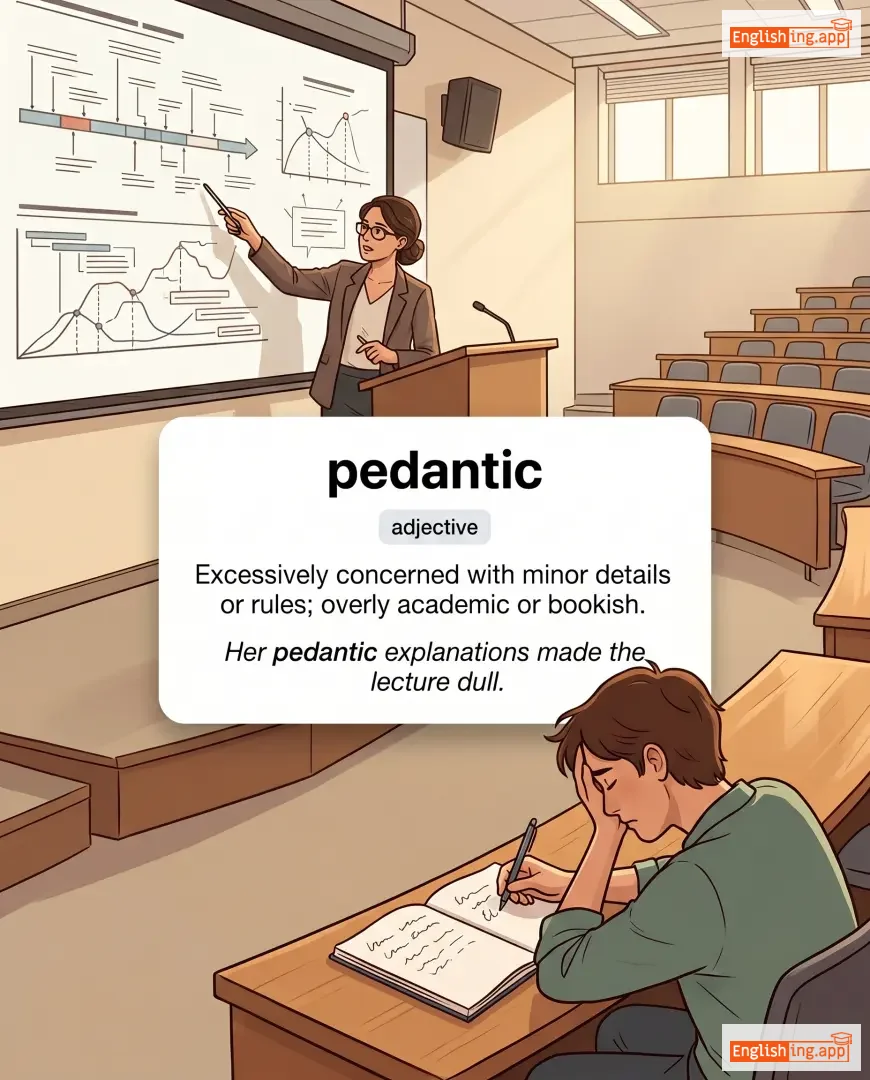
/pəˈdæntɪk/
細かい詳細や規則に過度にこだわる (komakai shousai ya kisoku ni kadoni kodawaru)

Excessively concerned with minor details or rules; overly academic or bookish.

"Her pedantic explanations made the lecture dull."

"彼女のペダンティックな説明は講義を退屈にした。" (Kanojo no pedantikku na setsumei wa kougi wo taikutsu ni shita.)
noun
/ˈpɛd.ən.tri/
細かい詳細やルールへの過度なこだわり (komakai shousai ya ruuru e no kado na kodawari)

Excessive concern with minor details or rules.

"His pedantry made the meeting unnecessarily long."

"彼のペダントリーは会議を不必要に長くした。" (Kare no pedantori wa kaigi o fuhitsuyou ni nagaku shita.)
verb
/ˈpɛdəl/
売る (uru)

To sell goods, often by going from place to place; sometimes used negatively to mean promoting an idea or product in a pushy way.

"Street vendors peddle handmade jewelry to tourists."

"ストリートの販売員は観光客に手作りのジュエリーを売っている。" (Sutōrīto no hanbai-in wa kankōkyaku ni tedukuri no jūerī o utte iru.)
noun
/ˈpɛdlər/
行商 (gyōshō)

a person who sells goods, often traveling from place to place

"The peddler walked through the village selling fresh fruits."

"行商人は村を歩きながら、新鮮な果物を売っていました。" (Gyōshōnin wa mura o aruki nagara, shinsen na kudamono o utte imashita.)
noun
/ˈpɛdəstəl/
台座 / pedestal (daiza / pedestal)

the base or support on which a statue or object stands

"The statue was placed on a marble pedestal."

"彫像は大理石の台座に置かれました。" (Chōzō wa dairiseki no daiza ni okaremashita.)
noun, adjective
/pəˈdɛstriən/
歩行者 (hokousha)

a person walking on the street; also means dull or ordinary

"The pedestrian crossed the road at the crosswalk."
"歩行者は横断歩道を渡りました。" (Hokousha wa oudan hodou o watarimashita.)
pedestrianization definition card — visual illustration of the meaning
noun
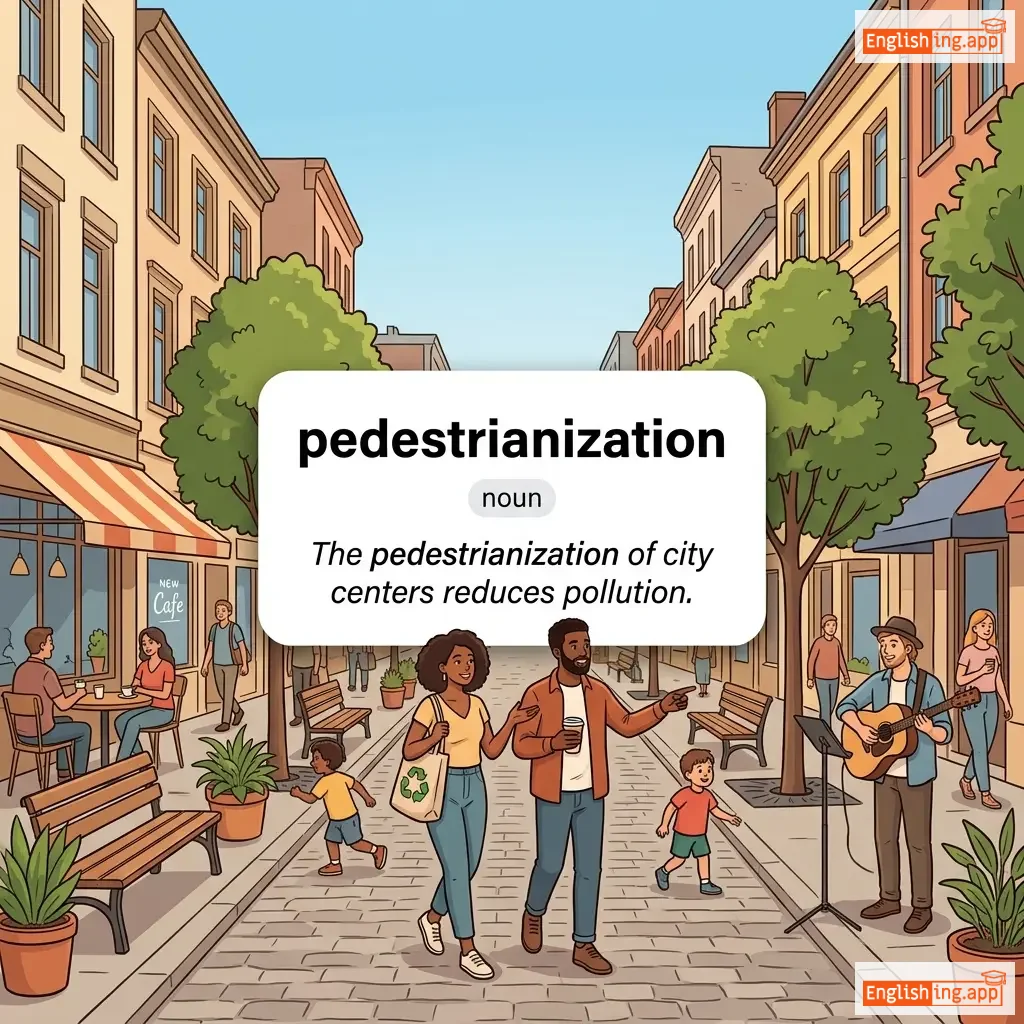
/pɪˌdɛs.tri.ə.naɪˈzeɪ.ʃən/
歩行者専用化 (hokousha senyouka)

Making areas pedestrian-friendly, closing any area to vehicle traffic and making it open only for pedestrians.

"The pedestrianization of city centers reduces pollution."

"市中心部の歩行者専用化は、汚染を減らす。" (Shi chuushinbu no hokousha senyouka wa, osen o herasu.)
noun
/ˌpiːdiəˈtrɪʃən/
小児科医 (shōnika-i)

a doctor who specializes in the medical care of children

"The pediatrician examined the child carefully."

"小児科医は子供を慎重に診察しました。" (Shōnika-i wa kodomo o shinchō ni shinsatsu shimashita.)
noun
/ˌpiːdiˈætrɪks/
小児科 (shōnika)

the branch of medicine dealing with the health and medical care of children

"She decided to specialize in pediatrics after medical school."

"彼女は医科大学を卒業後、小児科を専門にすることに決めました。" (Kanojo wa ika daigaku o sotsugyōgo, shōnika o senmon ni suru koto ni kimemashita.)
noun
/ˈpɛdɪɡriː/
家系 (kakei)

the recorded ancestry or lineage of a person, family, or animal; the history or origin of something

"The dog has a pedigree that traces back several generations."

"その犬は何世代にもわたる家系を持っています。" (Sono inu wa nan-sedai ni mo wataru kakei wo motteimasu.)
noun
/ˈpɛdɪmənt/
三角形のペディメント (sankakkei no pedimento)

a triangular gable found above the horizontal structure of a building, often in classical architecture

"The ancient temple had a pediment decorated with sculptures."

"古代の寺院には彫刻で飾られたペディメントがありました。" (Kodai no jiin ni wa choukoku de kazatta pedimento ga arimashita.)
pedology definition card — visual illustration of the meaning
noun
/pɪˈdɒl.ə.dʒi/
土壌学 (dojōgaku)

The study of soils in their natural environment.

"Pedology helps scientists understand soil fertility."

"ペドロジーは科学者が土壌の肥沃さを理解するのに役立ちます。" (Pedorojī wa kagakusha ga dojō no hiyokusa o rikai suru no ni yakudachimasu.)
verb
/piːl/
皮をむく (kawa o muku)

to remove the outer covering or skin from a fruit or vegetable

"She peeled the mango before eating it."

"彼女は食べる前にマンゴーの皮をむいた。" (Kanojo wa taberu mae ni mangō no kawa o muita.)
noun
/ˈpiː.lər/
皮むき器 (kawamuki-ki)

a kitchen tool used to remove the outer skin or peel from fruits and vegetables

"Use a peeler to remove the potato skin."

"ポテトの皮をむくために皮むき器を使用してください。" (Poteto no kawa o muku tame ni kawamuki-ki o shiyou shite kudasai.)
peep definition card — visual illustration of the meaning
👀

peep

verb
/piːp/

to look quickly or secretly, especially through a narrow opening

"The child tried to peep through the keyhole."

🧑‍🤝‍🧑

peer (ピア)

noun, verb
/pɪə(r)/
同等の人 (doutou no hito)

noun: a person of the same rank or status; verb: to look closely or with difficulty

"He tried to peer through the fog to see his peers on the other side."
"彼は霧を通して自分の仲間を見ようとしました。" (Kare wa kiri o tooshite jibun no nakama o miyou to shimashita.)
peer influence definition card — visual illustration of the meaning
noun
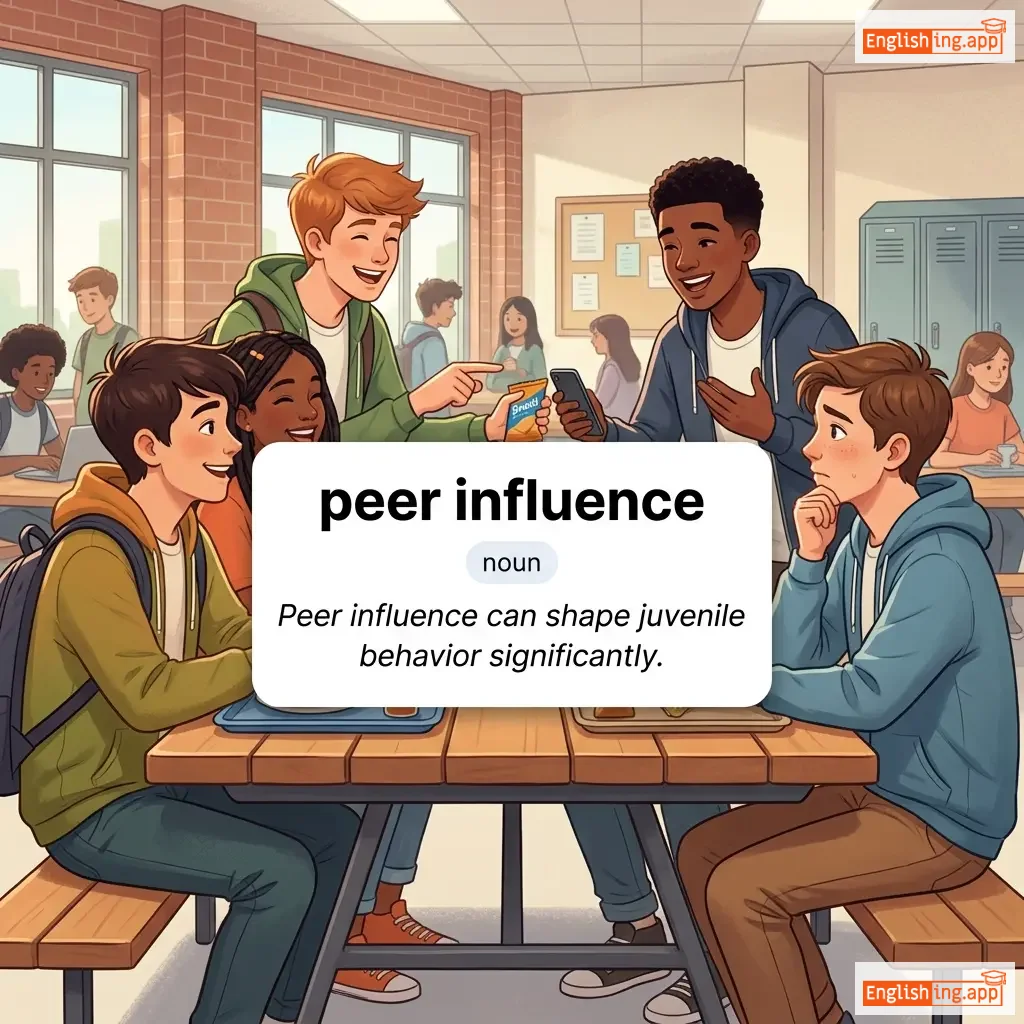
pɪər ˈɪnfluəns
仲間の影響 (nakama no eikyō)

The effect that members of a peer group have on each other, especially in terms of behavior, attitudes, and decision-making.

"Peer influence can shape juvenile behavior significantly."

"仲間の影響は、若者の行動に大きな影響を与えることがあります。" (Nakama no eikyō wa, wakamono no kōdō ni ōkina eikyō o ataeru koto ga arimasu.)
noun
/ˈpɪərɪdʒ/
貴族階級 (kizoku kaikyū)

the title or rank of a peer; the nobility as a group

"He was elevated to the peerage by the king."

"彼は王によって貴族階級に昇進しました。" (Kare wa ō ni yotte kizoku kaikyū ni shōshin shimashita.)
adjective
/ˈpɪələs/
比類のない (hirui no nai)

Unequaled; without rival or match.

"Her peerless performance earned her a standing ovation."

"彼女の比類のないパフォーマンスはスタンディングオベーションを引き起こした。" (Kanojo no hirui no nai pafōmansu wa sutandingu obēshon o hikiokoshita.)
verb
/piːv/
苛立たせる (ikorataseru)

To annoy or irritate someone.

"His constant interruptions really peeve me."

"彼の絶え間ない干渉は本当に私を苛立たせます。" (Kare no taemanei kansho wa hontoni watashi wo ikoratasemasu.)
adjective
/ˈpiːvɪʃ/
気難しい (kimizukashii)

Easily irritated, especially by unimportant things.

"The child grew peevish when denied candy."

"子供はキャンディをもらえなかったので、怒りっぽくなりました。" (Kodomo wa kyandi o moraenakatta node, okorippoku narimashita.)
adjective
/pɪˈdʒɒrətɪv/
侮蔑的 (bometeki)

Expressing contempt or disapproval.

"He used pejorative terms to insult his opponents."
"彼は相手を侮蔑するために侮蔑的な言葉を使った。" (Kare wa aite o bometu suru tame ni bometeki na kotoba o tsukatta.)
pelagic definition card — visual illustration of the meaning
adjective
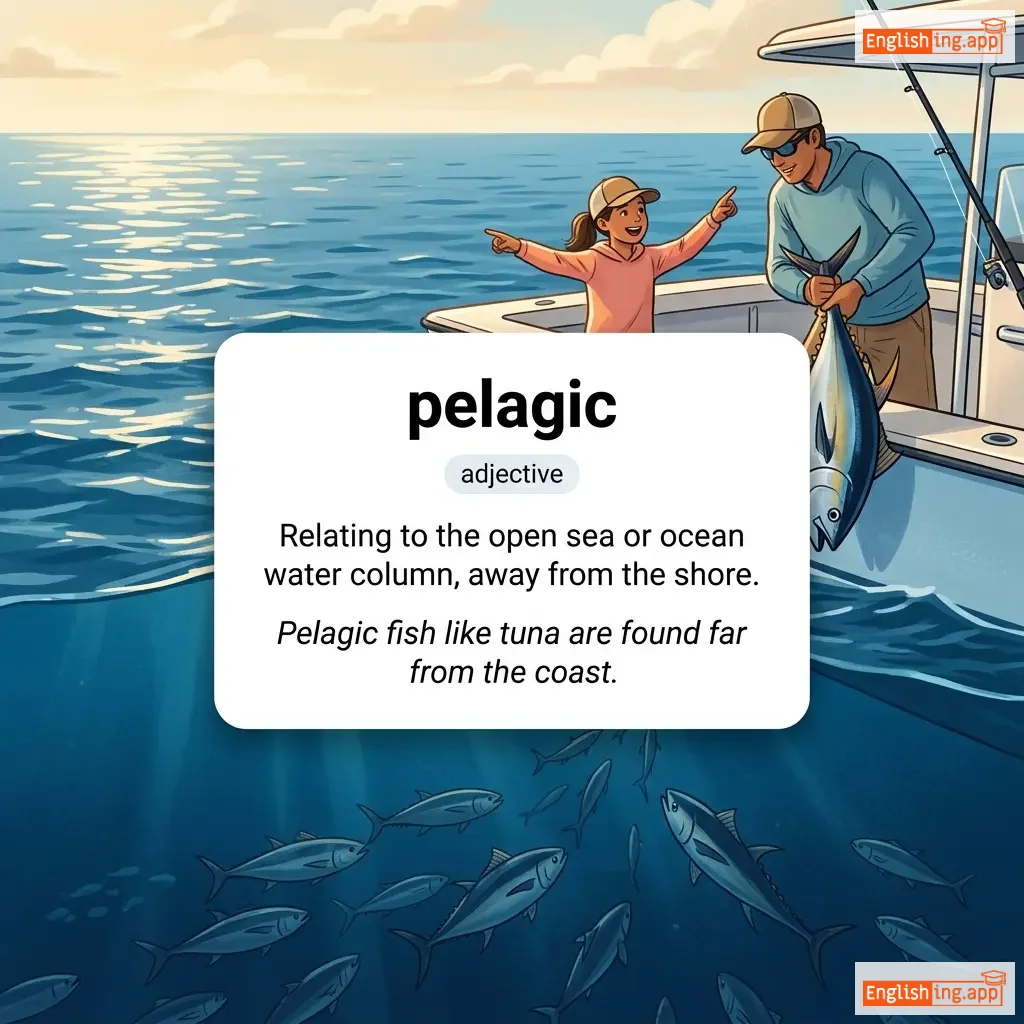
/pəˈlædʒ.ɪk/
外洋に関連する (gaiyō ni kanren suru)

Relating to the open sea or ocean water column, away from the shore.

"Pelagic fish like tuna are found far from the coast."

"ツナのような外洋性の魚は海岸から遠くで見つかります。" (Tsuna no yōna gaiyōsei no sakana wa kaigan kara tōku de mitsukarimasu.)
noun
/pɛlf/
不正な金 (fusei na kane)

Money, especially when gained dishonorably.

"The corrupt official was motivated only by pelf."

"腐敗した公務員は不正な金でしか動機づけられなかった。" (Fuhai shita kōmuin wa fusei na kane de shika dōki dzukerarenakatta.)
adverb
/ˌpɛlˈmɛl/
無秩序に (muchitsujoni)

In a confused, rushed, or disorderly manner.

"The children ran pell-mell through the playground."

"子供たちは遊び場を無秩序に走り回った。" (Kodomotachi wa asobiba o muchitsujoni hashirimatta.)
adjective
/pəˈluːsɪd/
透明 (tōmei)

Transparently clear; easy to understand.

"The lake water was so pellucid that you could see the stones at the bottom."

"湖の水はとても透明で、底の石まで見えるほどでした。" (Mizu wa totemo tōmei de, soko no ishi made mieru hodo deshita.)
noun/verb
/pɛn/
幸せ (shiawase)

A writing instrument using ink; also, to write something.

"She used a pen to sign the document."

"彼女は賞を受け取ったとき、幸せを隠すことができませんでした。" (Kanojo wa shō o uketotta toki, shiawase o kakusu koto ga dekimasen deshita.)
noun
/pen stænd/
ペン立て (pen tate)

a container or holder designed to keep pens, pencils, and other writing instruments organized

"He organized his pens in the pen stand on his desk."

"彼は自分のペンを机のペン立てに整理しました。" (Kare wa jibun no pen wo tsukue no pen tate ni seiri shimashita)
noun
/ˈpen neɪm/
ペンネーム (pen nēmu)

a fictitious name used by an author instead of their real name; a pseudonym

"Mark Twain was the pen-name of Samuel Clemens."

"マーク・トウェインはサミュエル・クレメンズのペンネームでした。" (Māku Towen wa Samyūeru Kuremenzu no pen nēmu deshita.)