語彙集

英単語辞書 | 単語の意味、定義、例文

noun
/prəˈtuːbərəns/
膨らみ (fukurami)

A rounded swelling or lump on a surface.

"The doctor examined the small protuberance on his arm."

"医師は彼の腕の小さな膨らみを調べました。" (Ishi wa kare no ude no chiisana fukurami o shirabemashita.)
adjective
/prəˈtuːbərənt/
突出または膨らんだ (tōshutsu matawa fukuranda)

Sticking out or bulging.

"His protuberant belly showed after the meal."

"食事の後、彼の膨らんだ腹が見えた。" (Shokuji no ato, kare no fukuranda hara ga mieta.)
verb
/ˈproʊtjuːbəreɪt/
膨らむ (fukuramu)

To swell out or bulge.

"The roots began to protuberate from the ground."

"根は地面から膨らみ始めました。" (Ne wa jimen kara fukurami hajimemashita.)
adjective
/praʊd/
誇り高い (hokori takai)

Feeling deep pleasure or satisfaction as a result of achievements or qualities.

"She felt proud of her son's accomplishments."

"彼女は息子の業績を誇りに思っていた。" (Kanojo wa musuko no gyouseki o hokori ni omotte ita.)
adverb
/ˈpraʊdli/
誇らしげに (hokorashige ni)

in a way that shows pride or satisfaction; with a sense of honor or achievement

"She proudly displayed her achievements to her family."
"彼女は誇らしげに家族に自分の成果を見せた。" (kanojo wa hokorashige ni kazoku ni jibun no seika o miseta)
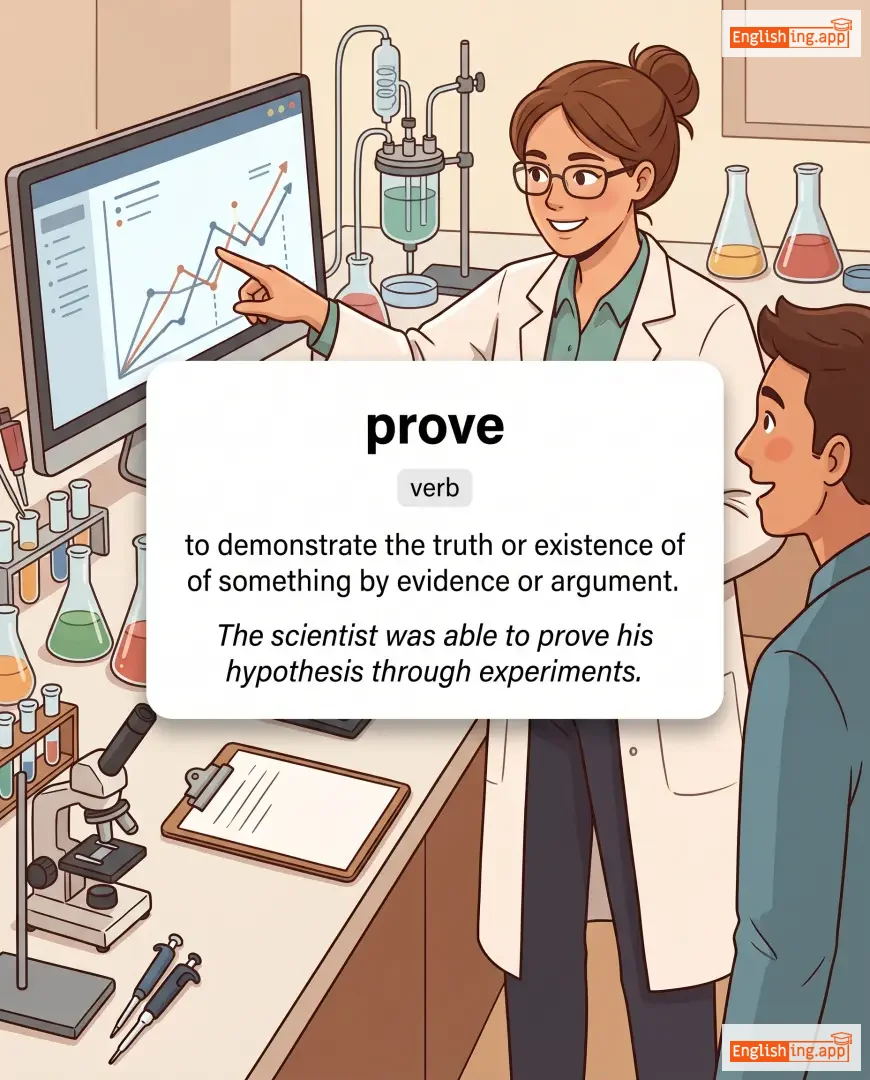
prove definition card — visual illustration of the meaning
verb
/pruːv/
証明する (shoumei suru)

to demonstrate the truth or existence of something by evidence or argument.

"The scientist was able to prove his hypothesis through experiments."

"科学者は実験を通じて彼の仮説を証明することができました。" (Kagakusha wa jikken wo tooshite kare no kasetsu wo shoumei suru koto ga dekimashita.)
noun
/ˈprɒvənəns/
出所 (shusshou)

The origin or source of something.

"The museum verified the provenance of the ancient manuscript."

"博物館は古代の写本の出所を確認しました。" (Hakubutsukan wa kodai no shahon no shusshou wo kakunin shimashita.)
noun
/ˈprɒvəndər/
家畜用の餌 (kachiku-yō no esa)

food or provisions, especially for livestock

"The barn was filled with provender for the cattle."

"納屋は家畜用の餌でいっぱいだった。" (Noya wa kachiku-yō no esa de ippai datta.)
noun
/ˈprɒvərb/
ことわざ (kotowaza)

a short, commonly known saying that expresses a truth or piece of advice

"The proverb 'A stitch in time saves nine' teaches the value of prompt action."

"ことわざ「時間を守るは九つの命を救う」は迅速な行動の重要性を教えています。" (Kotowaza 'jikan o mamoru wa kokonotsu no inochi o sukū' wa jinsoku na kōdō no jūyō-sei o oshieteimasu.)
verb
/prəˈvaɪd/
提供する (teikyō suru)

to give or supply something that is needed or wanted

"The teacher will provide extra materials for the students."

"教師は学生に追加の資料を提供するでしょう。" (Kyōshi wa gakusei ni tsūka no shiryō o teikyō suru deshō.)
verb
/prəˈvaɪdɪd/
提供された (teikyou sareta)

gave or supplied something that was needed

"The hotel provided free breakfast for all guests."

"ホテルはすべてのゲストに無料の朝食を提供しました。" (Hoteru wa subete no gesuto ni muryou no choushoku wo teikyoushimashita.)
noun
/ˈprɒvɪdəns/
神の摂理 (kami no setsuri)

the protective care of God or nature as a spiritual power; foresight or prudence

"They believed their survival was due to divine providence."

"彼らは自分たちの生存が神の摂理によるものであると信じていました。" (Karera wa jibuntachi no seizon ga kami no setsuri ni yoru mono de aru to shinjite imashita.)
adjective
/ˈprɒvɪdənt/
先見の明のある (senken no mei no aru)

making or indicative of timely preparation for the future

"She was provident in saving money for her children’s education."

"彼女は子供たちの教育のためにお金を節約する先見の明のある人だった。" (Kanojo wa kodomotachi no kyōiku no tame ni okane o setsuyaku suru senken no mei no aru hito datta.)
adjective
/ˌprɒvɪˈdɛnʃəl/
天意の (ten'i no)

occurring at a favorable or opportune time, as if guided by divine intervention

"Their timely rescue was considered providential."

"彼らのタイムリーな救助は天意のものと見なされました。" (Karera no taimuri na kyuujo wa ten'i no mono to minasaremashita.)
noun
/prəˈvaɪdər/
提供者 (teikyousha)

a person or thing that provides something.

"The service provider ensures that all customers receive timely support."

"サービス提供者はすべての顧客がタイムリーにサポートを受けることを確実にします。" (Sābisu teikyō-sha wa subete no kokyaku ga taimurī ni sapōto o ukeru koto o kakujitsu ni shimasu.)
noun
/ˈprɒvɪns/
(shō)

a principal administrative division of certain countries or empires.

"The province is known for its rich cultural heritage and stunning landscapes."
"その省は豊かな文化遺産と素晴らしい自然景観で知られています。" (Sono shō wa yutakana bunka isan to subarashī shizen keikan de shirareteimasu.)
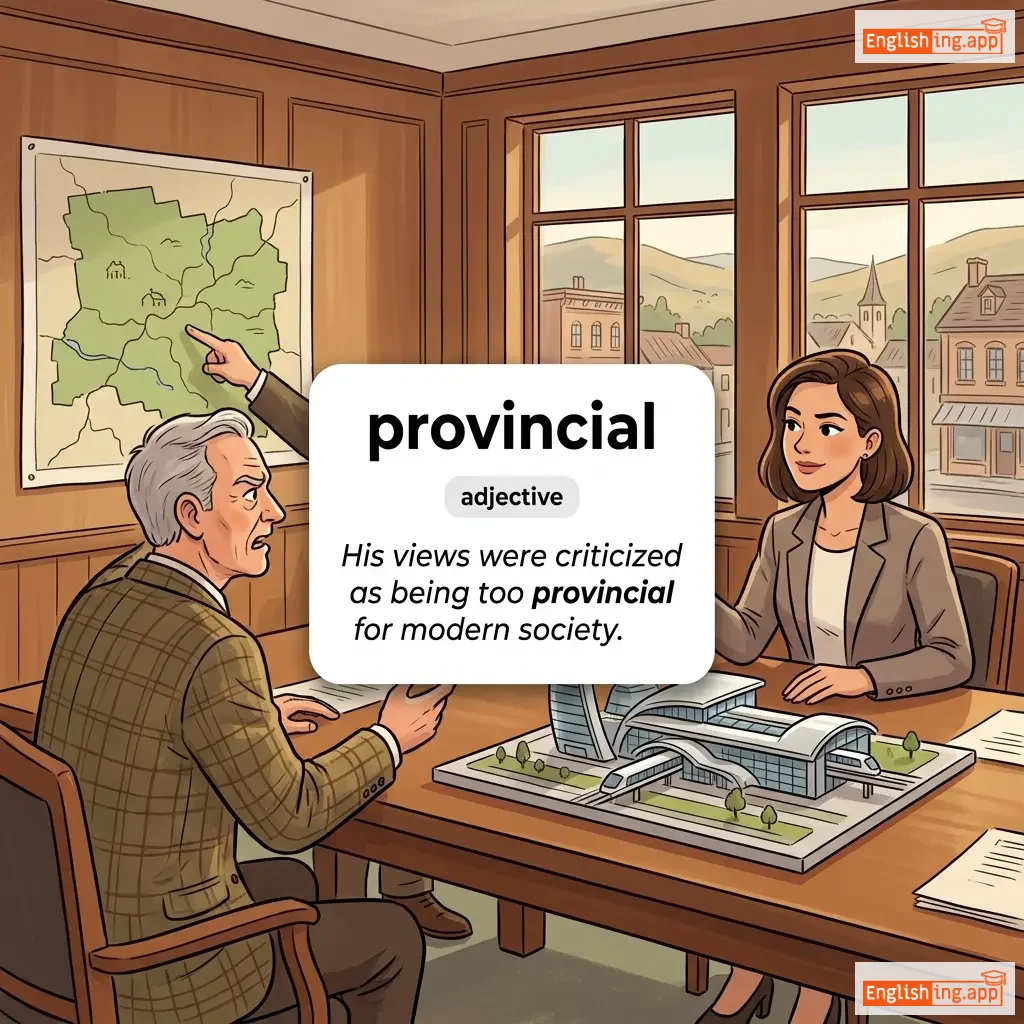
provincial definition card — visual illustration of the meaning
adjective
/prəˈvɪnʃəl/
地方的 (chihō-teki)

relating to a province or the regions outside the capital city; often suggesting narrow-mindedness

"His views were criticized as being too provincial for modern society."

"彼の意見は現代社会にはあまりにもプロヴィンシャルだと批判されました。" (kare no iken wa gendai shakai ni wa amari ni mo purovinsharu da to hihan saremashita.)
noun
/prəˈvɪʒən/
規定 / 条項 (kitei / jōkō)

the act of providing or supplying something; a condition in a legal document

"The contract includes a provision for early termination."

"契約には早期解約に関する条項が含まれています。" (Keiyaku ni wa sōki kaiyaku ni kansuru jōkō ga fukumarete imasu.)
adjective
/prəˈvɪʒənl/
暫定的 (zanteiteki)

arranged or existing for the present, possibly to be changed later

"The committee gave its provisional approval to the project."
"委員会はプロジェクトに暫定的な承認を与えました。" (Iinkai wa purojekuto ni zanteiteki na shounin o ataemashita.)
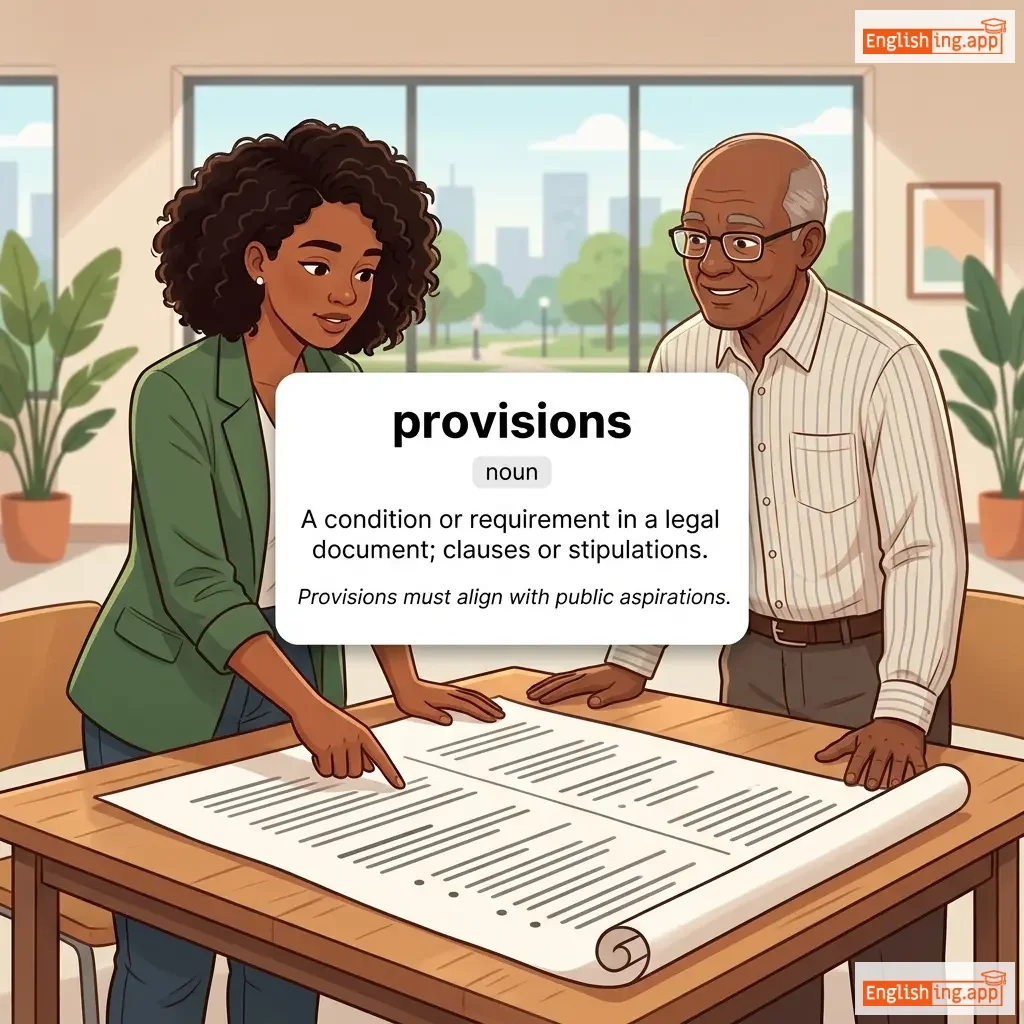
provisions definition card — visual illustration of the meaning
noun
prəˈvɪʒ.ənz
規定 (kitei)

A condition or requirement in a legal document; clauses or stipulations.

"Provisions must align with public aspirations."

"規定は公衆の期待と一致しなければならない。" (Kitei wa kōshū no kitai to icchi shinakereba naranai.)
noun
/prəˈvaɪzoʊ/
条件 (jouken)

a condition or stipulation attached to an agreement

"He accepted the job offer with the proviso that he could work remotely twice a week."

"彼は、週に2回リモートで働けるという条件で仕事のオファーを受け入れました。" (Kare wa, shuu ni 2-kai rimōto de hatarakeru to iu jouken de shigoto no ofā o ukeiremashita.)
adjective
/prəˈvaɪzəri/
仮の (kari no)

conditional; depending on certain terms being met

"The arrangement was only provisory until the final contract was signed."

"その取り決めは、最終契約が署名されるまで仮のものでした。" (Sono torikime wa, saishū keiyaku ga shomei sareru made kari no mono deshita.)
noun
/ˌprɒvəˈkeɪʃən/
挑発 (chouhatsu)

An action or statement that is intended to make someone angry or to cause a reaction.

"His rude comment was a clear provocation."

"彼の無礼なコメントは明らかな挑発でした。" (Kare no burei na komento wa akirakana chouhatsu deshita.)
adjective
/prəˈvɒkətɪv/
挑発的 (chouhatsuteki)

Intended to make people angry, excited, or interested.

"She wore a provocative dress to the party."

"彼女はパーティーに挑発的なドレスを着ていた。" (Kanojo wa pātii ni chōhatsuteki na doresu o kite ita.)
verb
/prəˈvoʊk/
挑発する (chouhatsu suru)

To cause someone to become angry or to cause a reaction.

"His words provoked a heated argument."

"彼の言葉は激しい議論を引き起こした。" (Kare no kotoba wa hageshii giron wo hikiokoshita.)
adjective
/prəˈvoʊkɪŋ/
挑発的 (chouhatsuteki)

causing anger or strong reaction; irritating; stimulating

"His provoking comments made everyone angry."
"彼の挑発的なコメントは皆を怒らせた。" (Kare no chouhatsuteki na komento wa mina o okorase ta.)
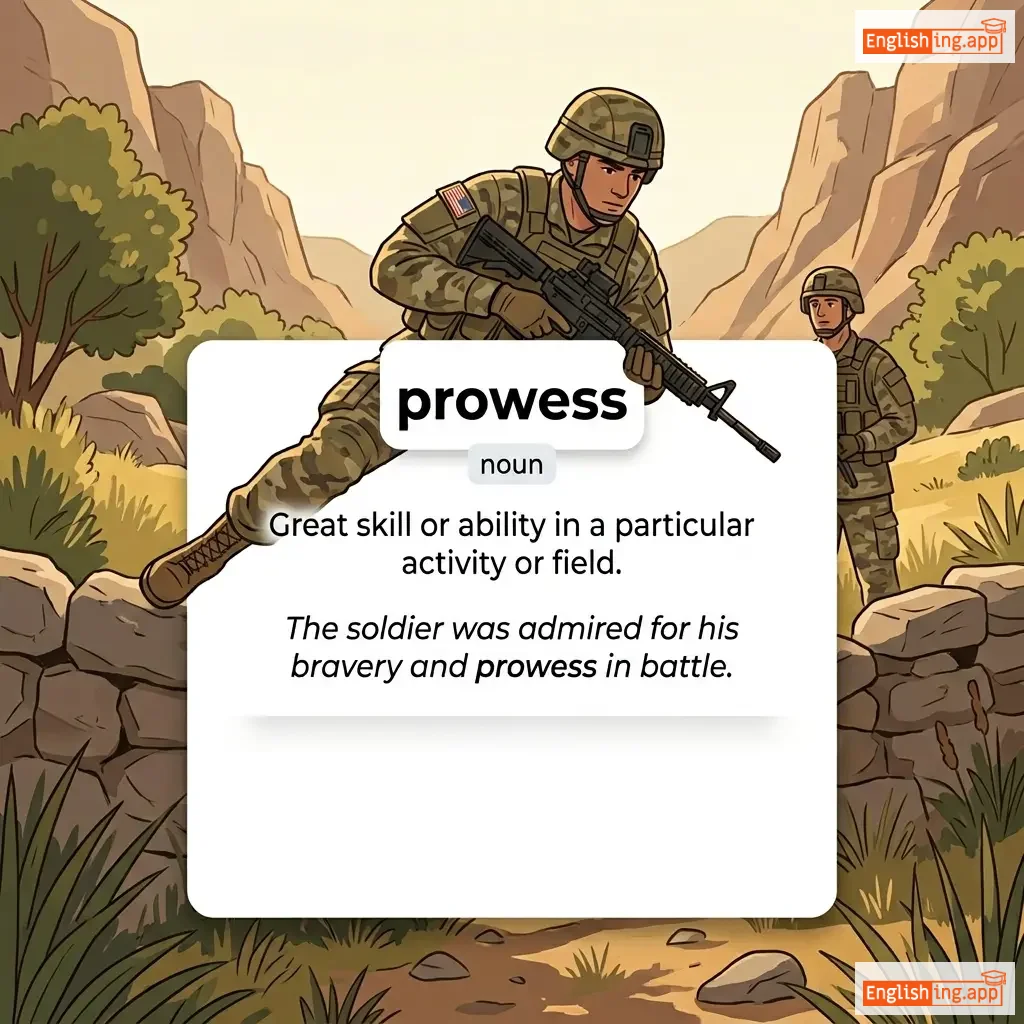
prowess definition card — visual illustration of the meaning
noun
/ˈpraʊəs/
腕前 (udemae)

Great skill or ability in a particular activity or field.

"The soldier was admired for his bravery and prowess in battle."

"その兵士は戦いでの勇気と腕前で賞賛されました。" (Sono heishi wa tatakai de no yūki to udemae de shōsan saremashita.)
verb
/praʊl/
こっそり歩く(狩りや探索のため) (kossori aruku (kari ya tansaku no tame))

To move around quietly and secretly, especially while hunting or searching.

"The cat prowled around the garden at night."
"猫は夜、庭の周りを静かに歩いていた。" (Neko wa yoru, niwa no mawari wo shizukani aruiteita.)
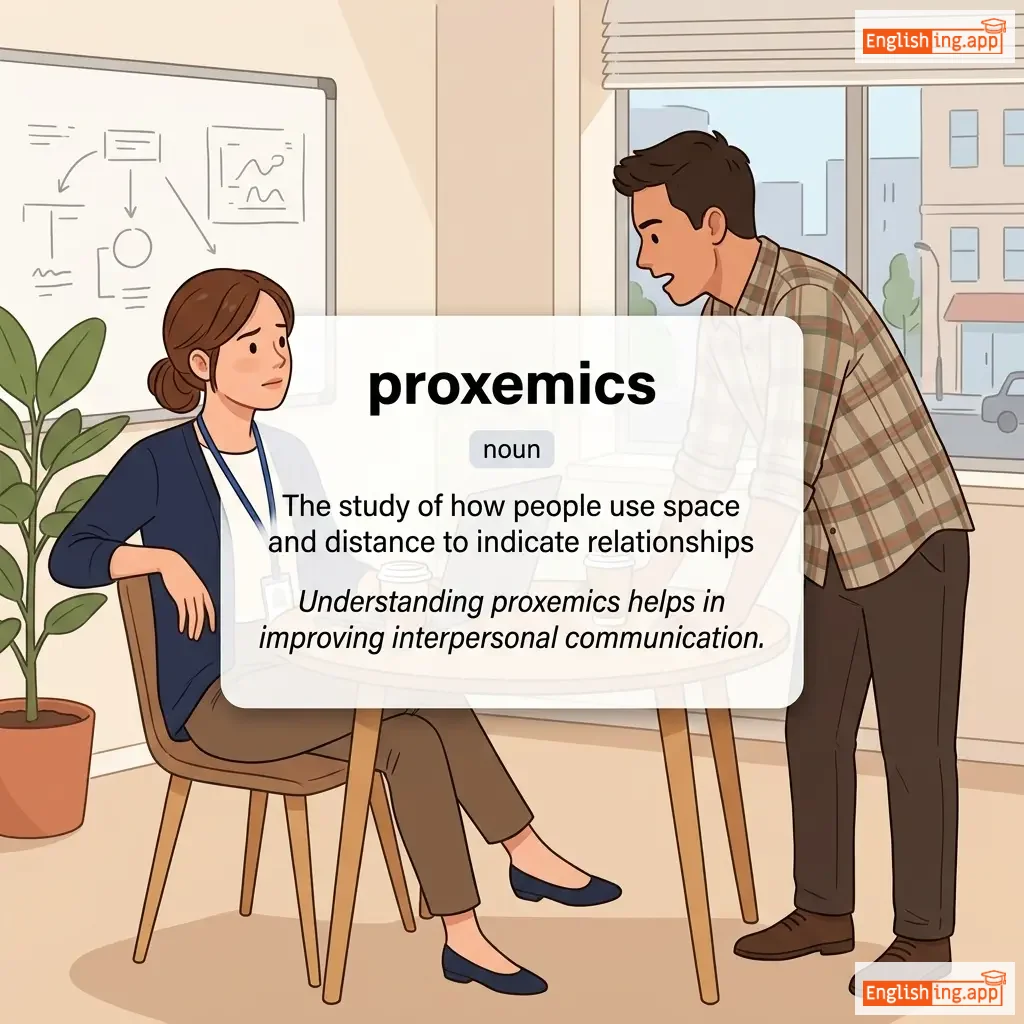
proxemics definition card — visual illustration of the meaning
noun
prɒkˈsiː.mɪks
個人空間の使用の研究 (kojin kūkan no shiyō no kenkyū)

The study of how people use space and distance to indicate relationships

"Understanding proxemics helps in improving interpersonal communication."

"プロクセミクスを理解することで、人間関係のコミュニケーションを改善することができます。" (Purokusemikkusu o rikai suru koto de, ningen kankei no komyunikeeshon o kaizen suru koto ga dekimasu.)
adverb
/ˈprɒksɪmətli/
近く (chikaku)

In a near or close manner; nearly.

"The village lies proximately to the river."

"村は川の近くにあります。" (Mura wa kawa no chikaku ni arimasu.)
noun
/prɒkˈsɪmɪti/
接近 (sekkin)

Nearness in space, time, or relationship.

"The proximity of the school to her house made it convenient."

"学校が彼女の家の近くにあるため、それは便利でした。" (Gakkou ga kanojo no ie no chikaku ni aru tame, sore wa benri deshita.)
noun
/ˈprɒksi/
代理人 (dairinin)

A person authorized to act on behalf of another; a substitute.

"She voted by proxy at the meeting."

"彼女は会議で代理投票を行った。" (Kanojo wa kaigi de dairitohyō o okonatta.)
noun
/pruːd/
過度に慎み深い人 (kado ni tsutsushimi bukai hito)

A person who is easily shocked by matters relating to sex or nudity; someone overly modest.

"He was called a prude for blushing at the movie scenes."

"映画のシーンで顔を赤らめたため、彼はプルードと呼ばれました。" (Eiga no shīn de kao o akarameta tame, kare wa purūdo to yobaremashita.)
noun
/ˈpruːdəns/
慎重 (shinchou)

The quality of being cautious, wise, and exercising good judgment.

"She invested her money with great prudence."

"彼女は非常に慎重にお金を投資した。" (Kanojo wa hijou ni shinchou ni okane o toushi shita.)
adjective
/ˈpruːdənt/

acting with or showing care and thought for the future

"It is always prudent to save some money for emergencies."

adjective
/pruːˈdɛnʃəl/
慎重な (shinchou na)

involving or showing prudence, especially in financial or business matters

"The bank has set prudential rules to protect depositors."

"銀行は預金者を保護するために慎重な規則を設定しました。" (Ginkou wa yokinsya o hogo suru tame ni shinchou na kisoku o settei shimashita.)
noun
/ˈpruːdəri/

the behavior or attitude of people who are too easily shocked or offended by sexual matters

"His prudery often made others uncomfortable during open discussions."

adjective
/ˈpruːdɪʃ/
堅苦しい (kendemushii)

having or revealing a tendency to be easily shocked by matters relating to sex or nudity

"She was too prudish to watch the movie with her friends."

"彼女は友達と映画を見に行くにはあまりにも堅苦しかった。" (Kanojo wa tomodachi to eiga o mi ni iku ni wa amarini mo kendemushikatta.)
verb
/pruːn/
剪定する (sentei suru)

to cut off unwanted parts of a plant or tree to help it grow better

"Gardeners prune the trees in spring to encourage growth."

"庭師は春に木を剪定して成長を促進します。" (Teishi wa haru ni ki o sentei shite seichou o sokushin shimasu.)
adjective
/ˈprʊəriənt/
淫ら (midara)

having or showing an excessive interest in sexual matters

"The magazine was criticized for its prurient content."

"その雑誌は淫らな内容で批判されました。" (Sono zasshi wa midara na naiyou de hihan saremashita.)
verb
/praɪ/
覗く / 口出しする (nozoku / kuchidashi suru)

to look closely into something; to try to find out private information

"She tried to pry into her neighbor’s private life."

"彼女は隣人のプライベートな生活を覗こうとした。" (Kanojo wa rinjin no puraibēto na seikatsu o nozokō to shita.)
noun
/ˌsuːdəʊəˈpɒsəl/
偽使徒 (gise to)

a false or pretended apostle

"The preacher was condemned as a pseudapostle."

"その説教師は偽使徒として非難されました。" (Sono setsukyōshi wa gise shito toshite hinan saremashita.)
noun
/ˈsuːdənɪm/
筆名 (hitsumei)

a fictitious name used by an author instead of their real name

"Mark Twain was the pseudonym of Samuel Clemens."

"マーク・トウェインはサミュエル・クレメンスの筆名でした。" (Maaku Towein wa Samyueru Kuremensu no hitsumei deshita.)
noun
/ˌsuːdəˈnɪmɪti/
ペンネームの使用 (penneemu no shiyou)

the practice or state of using a pseudonym

"The author maintained pseudonymity throughout her career."

"その作家はキャリア全体を通してペンネームを使用していました。" (Sono sakka wa kyaria zentai wo tooshite penneemu wo shiyou shiteimashita.)
noun
/ˈsaɪkiː/
魂 / 心 (tamashii / kokoro)

the human soul, mind, or spirit

"The novel explores the depths of the human psyche."

"その小説は人間の精神の深層を探求します。" (Sono shousetsu wa ningen no seishin no shinsou o tankyuu shimasu.)
adjective
/ˌsaɪkiˈætrɪk/

relating to mental illness or its treatment

"The psychiatric hospital provides care for those with severe conditions."

noun
/saɪˈkaɪətrɪst/
精神科医 (seishinka-i)

a medical doctor specializing in the diagnosis and treatment of mental illness

"The psychiatrist prescribed medication for the patient’s anxiety."

"精神科医は患者の不安に対して薬を処方しました。" (Seishinka-i wa kanja no fuan ni taishite kusuri wo shohoushimashita.)
noun
/saɪˈkaɪətri/
精神医学 (seishin igaku)

the branch of medicine focused on the study and treatment of mental illness

"She decided to study psychiatry to help people with mental health issues."
"彼女は精神疾患に苦しむ人々を助けるために精神医学を学ぶことを決めました。" (Kanojo wa seishin shikkan ni kurushimu hitobito o tasukeru tame ni seishin igaku o manabu koto o kimemashita.)
adjective, noun
/ˈsaɪkɪk/

relating to the mind or supernatural powers; a person claiming to have extrasensory abilities

"The psychic claimed she could predict the future."

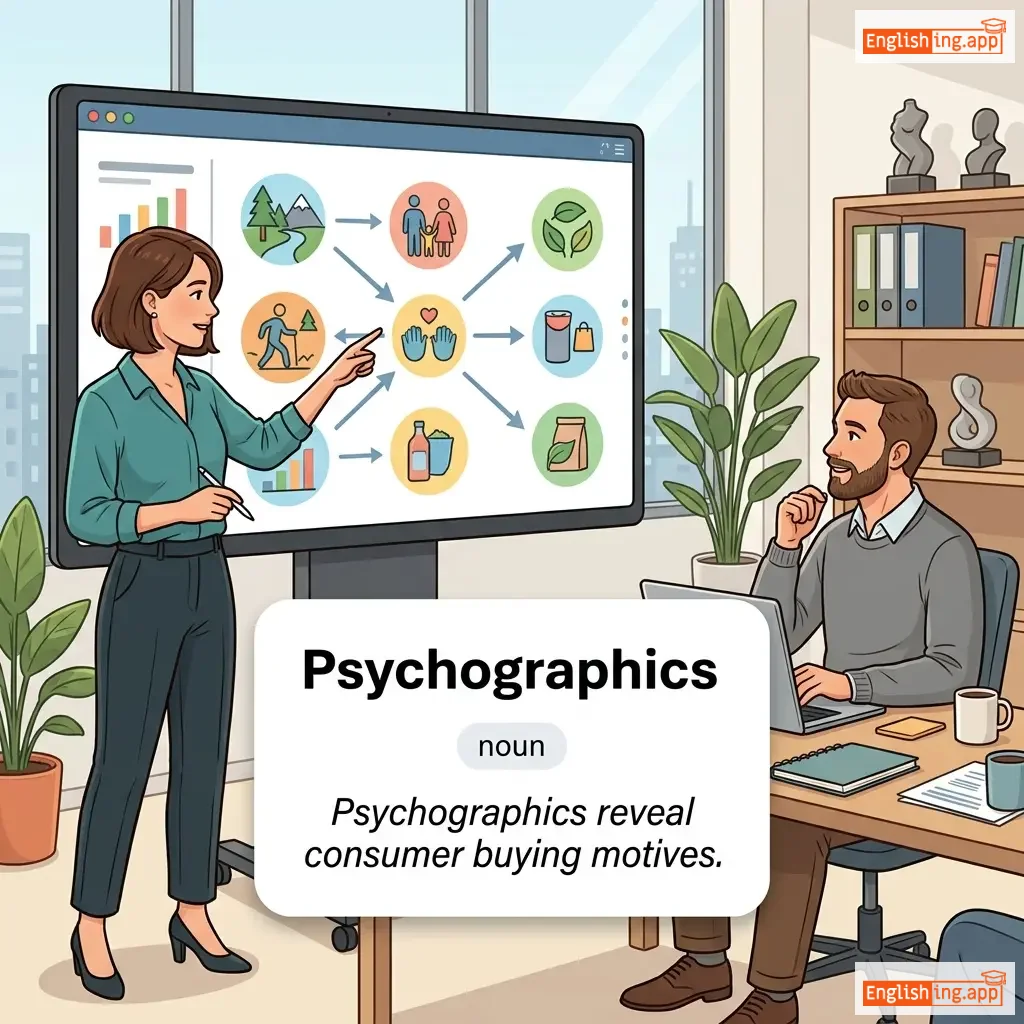
Psychographics definition card — visual illustration of the meaning
noun
/ˌsaɪ.kəʊˈɡræf.ɪks/
人々の態度、願望、その他の心理的基準に基づいて人々を研究し分類すること (hitobito no taido, ganbou, sono ta no shinriteki kijun ni motozuite hitobito o kenkyū shi bunrui suru koto)

The study and classification of people according to their attitudes, aspirations, and other psychological criteria.

"Psychographics reveal consumer buying motives."

"サイコグラフィックスは消費者の購買動機を明らかにします。" (Saikogurafikkusu wa shouhisha no koubai douki o akiraka ni shimasu.)